The Orthodox Bible Buyer's Guide: Every Edition Compared & Ranked
Eastern Orthodox • Eastern Catholic • Every Major Edition Compared • 2025 Guide
The Orthodox Bible Buyer’s Guide
Which Orthodox Bible should you buy? Every major edition compared — Orthodox Study Bible, EOB, Brenton Septuagint, portable New Testament — with honest reviews and a clear recommendation for every type of reader.
“Do not neglect the reading of Scripture. When you pray, you speak to God. When you read, God speaks to you.”— Saint Ambrose of Milan • Doctor of the Church • 4th Century
Quick Reference — Best Orthodox Bible by Use Case
- Best Overall
- Orthodox Study Bible → View on Amazon
- Best for Daily Reading
- Orthodox Bible in English (EOB 78 Books) → View on Amazon
- Best for Travel
- EOB New Testament Portable → View on Amazon
- Best for Greek Scholars
- Septuagint (Greek & English, Brenton) → View on Amazon
- Deepest Canon
- Ethiopian Bible → View on Amazon
Jump to a Section
What Makes an Orthodox Bible Different?
Most people shopping for a Bible for the first time do not realize how significantly an Orthodox Bible differs from what they grew up with. The difference is not cosmetic — it is a question of canon, source text, and seventeen centuries of theological reasoning about which books belong in the Old Testament and which translation of those books is authoritative.
Here is the core issue: Protestant Bibles contain 66 books — 39 in the Old Testament (translated from the Hebrew Masoretic text), 27 in the New Testament. Catholic Bibles contain 73 books — they include 7 additional books called the deuterocanon (Tobit, Judith, 1–2 Maccabees, Sirach, Wisdom, and Baruch), which Protestants call the Apocrypha and exclude. Orthodox Bibles contain 78 books — the full Catholic deuterocanon plus 1 Esdras, 3 Maccabees, the Prayer of Manasseh, and Psalm 151, all drawn from the Septuagint.
The Orthodox Church does not use the Hebrew Masoretic text as its Old Testament. It uses the Septuagint — the Greek translation of the Hebrew scriptures made in Alexandria around 250 BC by Jewish scholars for Greek-speaking Jewish communities. This is the scripture quoted throughout the New Testament. When Matthew writes "a virgin shall conceive," he is quoting the Septuagint's parthenos — a word that specifically means virgin. The Hebrew Masoretic text at that verse uses almah, which means "young woman." These are not the same translation.
Orthodox theology is built on the Septuagint. The Church Fathers commented on it. The liturgies quote it. The New Testament was written in its vocabulary. An Orthodox Bible is, at its foundation, a Septuagint Bible — and every edition reviewed in this guide is evaluated partly on how faithfully it renders or works with that text.
The New Testament presents fewer complications: all major Orthodox Bibles use a reliable translation of the Greek New Testament. The differences between editions — Orthodox Study Bible, EOB, portable NT — are more about features, layout, and intended use than about translation philosophy. That said, the choices matter, and the guide below explains exactly what each edition is optimized for.
Side-by-Side Comparison
| Edition | Books | OT Source | NT Translation | Commentary | Best For |
|---|---|---|---|---|---|
| Orthodox Study Bible Best Seller |
76+ | Septuagint (new trans.) | NKJV | ✓ Extensive Church Father commentary | Study, converts, parish use, all readers |
| Orthodox Bible in English (EOB) | 78 | Septuagint (complete) | Based on Greek NT | — Reading edition only | Daily prayer, devotional reading, large print |
| EOB New Testament Portable | NT only (27) | — NT only | Greek-based EOB NT | — Reading edition only | Travel, daily carry, purse/bag |
| Septuagint: Greek & English (Brenton) | OT only (Septuagint) | Full Greek LXX text | — OT only | — Parallel text only | Greek scholars, seminary students, LXX study |
Review No. 1 • Best Overall
The Orthodox Study Bible

The Orthodox Study Bible is the definitive English-language Orthodox Bible and the best place to start for anyone new to the tradition or serious about understanding Scripture in its Eastern Christian context. It has been the go-to Orthodox Study Bible since its publication, and for good reason: nothing else combines a complete Septuagint Old Testament, the New King James New Testament, and an extensive apparatus of patristic commentary in a single volume designed specifically for the Orthodox and Eastern Catholic reader.
The commentary is the heart of the book. Drawn from the writings of the Church Fathers — Chrysostom, Basil, Gregory of Nyssa, Athanasius, Jerome, Augustine, and dozens of others — it illuminates the text in the way the tradition has always read it. This is not a Protestant commentary retrofitted with Orthodox labels, nor a Catholic commentary with the Eastern saints added in. It is an Orthodox commentary built from the ground up on the patristic tradition.
For converts especially, the Orthodox Study Bible solves a specific problem: you arrive in the Church with years of Bible reading in a Protestant or Catholic translation, encountering liturgies and homilies that quote passages you do not recognize. The Septuagint Old Testament reads differently from the Hebrew text — different word choices, different verse numbering in the Psalms, different emphases. The Orthodox Study Bible brings you into the text the Church actually prays with.
The Orthodox Study Bible is equally useful for Eastern Catholics — Melkite, Greek Catholic, Ukrainian Greek Catholic, Maronite, Coptic Catholic, and others. The Septuagint Old Testament and the patristic commentary are the heritage of all Eastern Christianity, not exclusively Orthodox. Eastern Catholics who want a Bible that reflects the ancient Antiochene, Alexandrian, and Byzantine traditions will find the Orthodox Study Bible more aligned with their liturgical and theological heritage than any Western Catholic Bible.
Review No. 2 • Best for Daily Reading
Orthodox Bible in English — The Complete 78-Book Canon

Where the Orthodox Study Bible is a study tool designed to equip the reader with the full patristic apparatus, the Orthodox Bible in English (EOB) is designed for one thing above all: reading. The enlarged text, spacious line height, and clean two-column structure eliminate the friction of long reading sessions. There are no marginal notes competing for attention, no commentary pulling the eye away from the text. Just the complete Orthodox canon — all 78 books — in a clear, focused layout designed for prayer, lectio divina, and extended engagement with Scripture.
The complete 78-book Orthodox canon is the key feature here. The Orthodox Study Bible has been noted by some readers as not containing the full Orthodox canon as received in all Orthodox jurisdictions. The EOB makes no such compromise — it contains the complete Septuagint Old Testament including all the books of the Orthodox deuterocanon alongside the Greek New Testament in English. For readers who want the full depth of the Orthodox biblical tradition in a single volume designed for reading rather than study, this is the edition.
The noticeably larger type size compared to the Orthodox Study Bible is a genuine practical advantage — the text is larger, the lines are more generously spaced, and extended reading sessions in this Bible will be noticeably less tiring than in a compact study Bible. For those who read for an hour each morning, or who use the Bible for extended daily prayer, this matters significantly.
Review No. 3 • Best for Travel
EOB New Testament Portable Edition

The Portable EOB New Testament exists for one purpose: to put the Orthodox New Testament in your bag without adding meaningful weight or bulk. At 4.7 × 7.1 inches with a zippered burgundy leather binding, it fits comfortably in a backpack, purse, laptop bag, or briefcase — and the zippered closure means pages and spine are protected whether it is riding in a bag next to keys and pens or traveling in checked luggage.
The production details are genuinely excellent for this price point. The 35gsm bible paper — notably thinner than standard paper, cutting weight while maintaining opacity — gives this small volume surprising depth of content. Gilded page edges, rounded corners, and two ribbon page markers bring the book up to a quality level that feels appropriate for daily sacred use rather than throwaway convenience. This is a New Testament you can use for years, not a disposable travel companion.
Who needs this? Anyone who reads the New Testament regularly and is not always near their full Bible. Commuters who read on public transit. Travelers who pack light. Anyone who wants to keep a New Testament at their work desk without bringing a full study Bible. People who go through the New Testament epistle by epistle in a prayer rule. The zippered case is especially practical — it is the difference between arriving with a book that looks cared for and one that has absorbed everything from the bottom of a bag for six months.
Review No. 4 • For Scholars
The Brenton Septuagint — Greek & English Parallel

The Brenton Septuagint is not a Bible for everyday reading. It is a scholarly tool for anyone who wants access to the actual Greek text of the Septuagint — the text that the Apostles, the Church Fathers, and the New Testament authors were reading, quoting, and building their theology upon. The complete Greek text of the LXX appears in parallel columns with Lancelot Brenton's 1851 English translation — the translation that, despite being nearly two centuries old, remains the standard English rendering of the Septuagint as a single volume.
The value of this book is most apparent the moment you want to understand why an Orthodox homily interprets a passage the way it does, or why an Eastern Christian theologian reads Isaiah 7:14 differently than a Protestant apologist, or what the New Testament is actually quoting when Paul cites the Old Testament. All of those questions ultimately resolve at the Greek text of the Septuagint, and this is the standard English-language access point to that text.
A practical note: this is a photo-reproduction of the 1851 Samuel Bagster & Sons edition, which means the typesetting is Victorian. The Greek is clear and the parallel English readable, but the layout is older than anything you would find in a modern critical edition. For academic purposes, the Göttingen Septuagint is the scholarly standard. But for the vast majority of readers — Greek students, parish clergy, theology enthusiasts, and serious students who want to go deeper — the Brenton is the most accessible and affordable entry point to the Greek Old Testament that the Church has always used.
Genesis 6:3 in the Hebrew Masoretic text reads: "My spirit shall not abide in man forever, for he is flesh: his days shall be 120 years." The Septuagint reads it differently: "his years shall be 120." This affects whether the 120 years refers to a lifespan limit or to the time remaining until the flood — a question that patristic commentators, medieval theologians, and modern biblical scholars have all weighed in on.
This is one of thousands of textual variants between the Hebrew Masoretic tradition and the Greek Septuagint that have shaped Orthodox theology, hymnography, and liturgical practice. Understanding why Orthodox Christianity reads the Bible the way it does ultimately requires access to the Greek text itself. The Brenton Septuagint is that access.
Decision Guide
Which Orthodox Bible Is Right for You?
The question most people come to this page with is not "tell me everything about every Orthodox Bible" — it is "which one should I buy?" Here is the clearest possible answer, organized by who you are and what you need.
You are new to Orthodoxy or the Eastern Church
Buy the Orthodox Study Bible. It was designed specifically for this situation — the patristic commentary will explain the tradition as you read, the liturgical guides will help you follow along in services, and the Septuagint text will orient you to the Old Testament the Church actually uses.
Orthodox Study Bible on Amazon →You read your Bible daily for prayer and devotion
Buy the EOB 78-Book Edition. The large print, clean layout, and complete canon are designed for extended reading without fatigue. If you already own the Orthodox Study Bible, this is the natural companion for your daily reading practice.
EOB 78-Book Edition on Amazon →You travel frequently or commute
Buy the EOB Portable New Testament. It fits in any bag, the zippered leather case protects it in transit, and the quality gilded pages mean this is a Bible you can use for years, not a throwaway compact edition.
EOB Portable NT on Amazon →You are studying Greek or attending seminary
Buy the Brenton Septuagint. The parallel Greek/English columns make it the essential reference for anyone working with the text at a scholarly level. Use it alongside the Orthodox Study Bible rather than instead of it.
Brenton Septuagint on Amazon →You want the most complete Orthodox Bible library
Buy all three primary volumes: Orthodox Study Bible (for study and parish use), EOB 78-Book Edition (for daily reading), and the Portable NT (for travel). Together they cover every reading context. Under $100 for all three.
Start with the Orthodox Study Bible →You want to understand why Orthodox readings differ
Buy the Orthodox Study Bible first, then add the Brenton Septuagint. The Study Bible will ground you in the tradition; the Brenton will give you access to the Greek text that explains many of the differences between Orthodox, Catholic, and Protestant readings.
Brenton Septuagint on Amazon →Special Section
The Ethiopian Bible: A Special Case
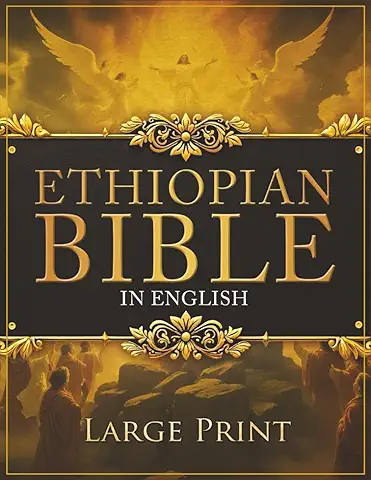
The Ethiopian Orthodox Tewahedo Church has the largest biblical canon of any Christian tradition — typically cited as 81 books, though the exact count depends on how certain texts are grouped. The canon includes texts such as the Book of Enoch (1 Enoch), the Book of Jubilees, 1–3 Meqabyan, the Ascension of Isaiah, and other texts that the Greek Septuagint tradition does not canonize. For Orthodox, Catholic, and Protestant Christians alike, these texts are not Scripture — but they are ancient, and they illuminate the world in which both the Hebrew and Greek scriptures were written.
The Ethiopian Bible listed below is not an Orthodox Bible in the traditional sense of that phrase — it is not the Septuagint-based canon of the Greek, Russian, Romanian, Serbian, or Antiochene Orthodox churches. It is a collection of the texts in the Ethiopian tradition, many of which are genuinely ancient and theologically interesting even if they are outside the canonically received Orthodox Bible. It is mentioned here for readers who want to go even further — beyond the Septuagint canon into the full spectrum of ancient Christian scriptural tradition.
Frequently Asked Questions
Orthodox Bible Questions — Answered
The Scripture the Church Has Always Read
Every Orthodox Bible in this guide is a different door into the same tradition — the ancient Church's engagement with the Word of God as the Apostles received it, the Fathers interpreted it, and the liturgy has prayed it for seventeen centuries. Whether you start with the Orthodox Study Bible for its depth, the EOB for its clarity, the portable NT for its portability, or the Brenton Septuagint for its scholarship — you are entering the same house.
Start where you are. The right Bible is the one you will actually open.
Orthodox Study Bible on Amazon → EOB Complete Bible →