Armenian Apostolic Church Beliefs: The Complete Guide
Oriental Orthodox Christianity • Founded 301 AD • First Christian Nation • Apostolic Tradition
Armenian Apostolic Church Beliefs: The Complete Guide to What Armenians Believe, Worship, and Practice
The oldest national Christian church in the world holds beliefs that most Western Christians barely know exist — a theology forged in apostolic fire, defended at the Battle of Avarayr at the cost of everything, and encoded in a sacred alphabet created for Scripture alone. This is the most comprehensive guide to Armenian Christian belief available anywhere.
Armenian Apostolic Church — At a Glance
- Founded
- 301 AD; apostolic origins traced to Thaddaeus (Jude) and Bartholomew; Gregory the Illuminator and King Tiridates III officially established the church
- Classification
- Oriental Orthodox (not Eastern Orthodox, not Catholic)
- Christology
- Miaphysite: one united nature in Christ (divine and human)
- Councils Accepted
- Nicaea (325), Constantinople I (381), Ephesus (431); rejected Chalcedon (451)
- Headquarters
- Holy See of Etchmiadzin, Armenia (Catholicos of All Armenians); also Catholicosate of Cilicia (Antelias, Lebanon)
- Liturgical Language
- Classical Armenian (Grabar); the 5th-century language of the “Queen of Translations”
- Divine Liturgy
- The Badarak (Anaphora of Saint Athanasius)
- Sacraments
- Seven Holy Mysteries; infants receive Baptism, Chrismation & Communion simultaneously
- Global Faithful
- ~7–9 million worldwide; 3 million in Armenia; largest diaspora in Russia, USA, France, Lebanon
- Key Saints
- Gregory the Illuminator, Mesrop Mashtots, Vartan Mamikonian, Gregory of Narek, Thaddaeus & Bartholomew
- Greatest Theologian
- Saint Gregory of Narek — Doctor of the Universal Church (declared 2015 by Pope Francis)
- Related Church
- Armenian Catholic Church (same tradition; in full communion with Rome since 1742)
The Apostolic Foundation: Why Armenia Calls Itself the First Christian Nation
Long before Constantine legalized Christianity in the Roman Empire in 313 AD, a king of Armenia had already declared it the official religion of his nation. That moment — traditionally dated to 301 AD — makes Armenia the first country in recorded history to adopt Christianity as its state religion. It is the foundational fact of Armenian identity, the event around which everything else — the theology, the liturgy, the saints, the alphabet, the martyrs, the genocide, the diaspora — is organized. Understanding Armenian Apostolic Church beliefs requires beginning here, because Armenians do not experience their faith as a personal spiritual choice. They experience it as a national birthright and a blood covenant sealed at a cost Western Christians have barely begun to understand.
The apostolic claim predates even the 301 conversion. The Armenian Apostolic Church traces its founding not to Gregory the Illuminator but to two of Christ's own apostles — Thaddaeus (Jude the Apostle, called Addai in Syriac) and Bartholomew — who, according to ancient tradition preserved in Armenian historical sources going back to the 5th century, preached in the Armenian highlands in the 1st century AD. Thaddaeus is traditionally said to have arrived around 43–66 AD, and both apostles are venerated as the co-founders and patron saints of the Armenian church. Their relics are preserved at the Monastery of Saint Thaddaeus (Qara Kelisa, the Black Church) in northwestern Iran — one of the oldest surviving Christian structures in the world, standing as physical evidence of Armenia's apostolic claim.
These apostolic origins are why the church is called "apostolic" rather than simply "Armenian." The name is a theological statement: we were not founded by a council, a reformer, or a political act. We were founded by men who walked with Christ. This claim shapes the Armenian church's entire theological posture — conservative, ancient, resistant to novelty, deeply suspicious of doctrinal developments that depart from what the apostles taught. When Armenians rejected the Council of Chalcedon in 451 AD, it was not because they were indifferent to orthodoxy. It was because they believed they were protecting the apostolic faith against what they perceived as a Greek philosophical imposition on the simple truth of Christ.
The 301 conversion itself is one of the most dramatic stories in Christian history. Gregory the Illuminator — a Christian nobleman who had refused to participate in pagan worship — was imprisoned in a pit (the Khor Virap, "Deep Pit") by King Tiridates III for thirteen years. When the king fell into a severe mental illness that his court physicians could not cure, a vision instructed his sister that only Gregory could heal him. Gregory was pulled from the pit, healed the king, and converted him to Christianity. Tiridates then declared Christianity the official religion of Armenia. Gregory was consecrated the first Catholicos (patriarch) of the Armenian church, traveling to Caesarea in Cappadocia to receive his episcopal ordination — a historical detail that links Armenian Christianity to the broader apostolic succession of the ancient church.
For Armenians, this is not merely history. It is identity. The faith is not something Armenians added to their culture at some point — it is the ground on which everything Armenian was built. The Armenian alphabet, created 100 years later, was created for the Bible. The first sentence ever written in Armenian is from the Book of Proverbs. Armenian literature begins with Scripture. Armenian martyrology begins with the Battle of Avarayr in 451 AD, when Vartan Mamikonian and thousands of Armenian soldiers died fighting the Persian Zoroastrian empire's attempt to force Armenians to renounce Christianity — the same year the Council of Chalcedon was being held far to the west, without Armenian participation, issuing decrees that would affect Armenian theology for the next 1,600 years.
Gregory the Illuminator is the most important saint in the entire Armenian tradition — the apostle-equivalent who converted a nation, the founder of its institutional church, and the man after whom one of the world's greatest mystical theologians (Gregory of Narek) was named a thousand years later. His story — thirteen years in a pit, healing a king, transforming a nation — reads like something from the Acts of the Apostles because in the Armenian understanding, it is. He is titled "Equal to the Apostles" in the Armenian church's calendar and is venerated as a patron for conversion, healing, and the protection of the Armenian people. Read his complete biography here.
Part II
The Armenian Confession of Faith: What Armenians Profess and Why It Matters
The core of Armenian Apostolic Christian belief is expressed in the Nicene Creed — the same foundational statement of faith used by Catholics, Eastern Orthodox, and most major Christian denominations. Armenians recite it in every Divine Liturgy in Classical Armenian, and it declares the same essential truths: one God in three persons, Father, Son, and Holy Spirit; the Son become incarnate, crucified, risen, and ascended; the Church as holy and apostolic; and the coming resurrection of the dead and eternal life.
What the Armenian church adds to this foundation is a distinctive theological character shaped by fifteen centuries of independent development, persecution, and mystical depth. The Armenian confession is not merely a set of propositions to be affirmed — it is a way of life, a liturgical culture, and a martyrological identity. Armenian Christianity has never had the luxury of being a comfortable majority faith receiving government support. For most of its history it has been a small nation surrounded by empires — Persian, Byzantine, Arab, Mongol, Ottoman, Soviet — each of which at various times tried to extinguish it. What Armenians believe is inseparable from the fact that their ancestors died to keep believing it.
The core Armenian theological convictions, properly understood, include:
Monotheism and the Trinity: One God eternally existing in three co-equal, co-eternal persons. Father, Son, and Holy Spirit are fully and equally divine, not three gods but one God in three hypostases. This is identical to the Catholic and Orthodox position and is not a point of difference with other Christians.
The Incarnation: The eternal Son of God became fully human in Jesus Christ, born of the Virgin Mary, without ceasing to be divine. This is the center of Armenian theological attention, and the precise manner of expressing this union is where Armenian theology diverges from Chalcedonian Christianity (see Part III below).
The Resurrection: Christ rose bodily from the dead on the third day. This is a non-negotiable and central Armenian Christian belief, and Armenian Easter (Zatik) is the most important feast of the liturgical year.
The Holy Spirit: The Holy Spirit proceeds from the Father alone (not "and the Son" as in the Western Filioque addition to the Creed). Like Eastern Orthodoxy and unlike Roman Catholicism, the Armenian church recites the Creed without the Filioque clause. This reflects the original Nicene text and is a point of agreement with the Eastern Orthodox against Rome.
The Church: The Armenian Apostolic Church is one, holy, catholic (universal), and apostolic. Apostolicity is especially emphasized: the Armenian church claims direct succession from the apostles Thaddaeus and Bartholomew, through an unbroken chain of consecrations to Gregory the Illuminator and forward to the present Catholicos. This apostolic succession is the source of the church's authority to administer sacraments and proclaim doctrine.
Theosis: The ultimate purpose of human life is union with God — not merely forgiveness of sins or going to heaven, but actual participation in the divine nature (2 Peter 1:4). This concept, called theosis or divinization, is common to all Eastern Christian traditions and is the deep structure beneath Armenian spirituality. Saint Gregory of Narek's entire Book of Lamentations is a sustained exercise in this movement — the soul stripping itself bare before God in order to be filled with him.
The Armenian Apostolic Church uses the Nicene-Constantinopolitan Creed as its foundational statement of faith — but it also has its own Confessions of Faith developed by Armenian theologians across the centuries, particularly in response to the Chalcedonian controversy. The most important of these is the profession attributed to Catholicos Sahak I (d. 439 AD) and formalized at the First Council of Dvin (506 AD), which definitively rejected the Chalcedonian formula and articulated the Miaphysite position in Armenian terms.
What distinguishes the Armenian confession is not what it denies but what it insists upon: that Christ is not split into two persons, two consciousnesses, two wills operating separately — he is one Lord, one Christ, one Son, one Savior, fully divine and fully human in a single indivisible act of incarnate love. The Armenian church has always maintained that its faith is more protective of Christ's full unity — and therefore more protective of the reality of salvation — than the Chalcedonian formula that divided East from West.
Part III
Armenian Christology: What Miaphysitism Actually Means — and Why It Matters
The single most misunderstood aspect of Armenian Apostolic Church beliefs is its Christology — specifically, what Armenians mean when they say that Jesus Christ has "one nature." For centuries, Western Christians have classified the Armenian church as "Monophysite" — meaning they believe Christ has only one nature (the divine), with the human nature absorbed or swallowed up. This label is not only inaccurate; the Armenian church itself considers it offensive and theologically slanderous. Understanding the real Armenian position requires understanding what actually happened at the Council of Chalcedon in 451 AD and why Armenians rejected it.
The Council of Chalcedon (451 AD) was convened to settle the Christological controversy that had been raging for decades. Against the teaching of Eutyches (who did teach that Christ's humanity was absorbed into his divinity, a genuine Monophysite position), and against what was perceived as an overemphasis on Christ's two natures by Nestorius and his followers (see the Church of the East article), Chalcedon defined Christ as having two complete natures — divine and human — "without confusion, without change, without division, without separation," united in one person and one hypostasis.
The Armenian church — and with it the Coptic, Ethiopian, Syriac Orthodox, and Malankara churches that together form the Oriental Orthodox family — rejected this formula. Not because they denied Christ's humanity (they absolutely affirmed it), but because they believed the "two natures" language was philosophically dangerous and insufficiently rooted in Scripture and apostolic tradition. Their position, articulated by Cyril of Alexandria's formula before Chalcedon, uses the phrase "one incarnate nature of the Word of God" — meaning that after the Incarnation, divinity and humanity are so perfectly, permanently, and inseparably united in Christ that it is more accurate to speak of a single, unified nature than of two natures operating alongside each other.
The key word is mia in Greek, meaning "one" — and the Armenian position is called Miaphysitism, not Monophysitism. The distinction is crucial:
Monophysitism (condemned as heresy by all sides): Christ has one nature — the divine — with the human absorbed, dissolved, or replaced. The human Jesus is not really human. This is what Eutyches taught and what Chalcedon condemned. The Armenian church explicitly rejects this.
Miaphysitism (the Armenian and Oriental Orthodox position): Christ has one united nature — simultaneously divine and human — perfectly and inseparably joined after the Incarnation in such a way that neither the divinity nor the humanity is diminished, confused, or lost. He is fully God and fully human, but as one undivided reality, not two natures operating in parallel. The prefix mia means "one" in the sense of a unified whole, not "only" in the sense of excluding the other.
Modern ecumenical scholarship has increasingly recognized that the Chalcedonian and Miaphysite positions are not as far apart as the historical schism suggests. Both affirm Christ as truly divine and truly human. Both reject the Eutychian confusion of natures and the Nestorian division of persons. The difference is largely one of philosophical vocabulary and emphasis, not of the fundamental conviction about who Christ is and what he accomplished. In 1971, a joint theological consultation between Eastern Orthodox and Oriental Orthodox churches concluded that "the theological differences that have divided us are more terminological than substantive." The Catholic Church and the Coptic Orthodox Church issued a similar joint declaration in 1988. The Armenian Apostolic Church has engaged in similar ecumenical dialogue, though full communion between these traditions has not been restored.
The Second Council of Dvin (554 AD) formalized Armenia's rejection of Chalcedon in canonical terms, placing the Armenian church squarely in the Oriental Orthodox family alongside Egypt, Ethiopia, and Syria. This was not merely a theological decision — it was also a political one, asserting Armenian ecclesiastical independence from the Byzantine Empire and its Chalcedonian imperial church. The Armenian church's rejection of Chalcedon has been a mark of its identity and independence ever since.
For Armenians, the Miaphysite Christology is not an abstract theological position but a lived spiritual reality. When they receive Holy Communion, they receive the body and blood of the one Christ — not of a figure whose humanity and divinity are held at arm's length from each other. When they venerate the cross, they venerate the instrument on which God himself died in the flesh. When they pray the prayers of Gregory of Narek, they are praying to a Christ whose full humanity makes him the most intimate and compassionate of intercessors. The oneness of Christ's nature, in Armenian spirituality, is not a problem to be solved but a mystery to be adored.
The Seven Holy Mysteries: Armenian Sacramental Theology
The Armenian Apostolic Church recognizes seven Holy Mysteries — the Armenian term, following the Greek mysteria, is preferred over "sacrament" to emphasize their sacred, hidden character as channels of divine grace rather than mere religious rituals. These seven mysteries are Baptism (Mkrtutiwn), Chrismation (Divapatutiwn), Holy Communion (Surp Harsutyun), Penance (Khostovanagrutiwn), Holy Unction (Surp Ogilov Otsbyutiwn), Marriage (Amsnutiwn), and Holy Orders (Kahanasakanutiwn). What distinguishes Armenian sacramental practice from both Roman Catholic and Eastern Orthodox is not primarily the list but the manner of administration and the deep-rooted theological vision behind each mystery.
I. Baptism (Mkrtutiwn)
Administered by triple immersion in the name of the Trinity. Infants are baptized shortly after birth — the Armenian church has never practiced believer's baptism. The priest immerses the infant three times, pronouncing the Trinitarian formula. The water must be blessed, and the ceremony includes exorcism prayers, anointing with oil, and breathing on the child — echoing the breath of God at creation. Original sin is forgiven, the person becomes a member of the Body of Christ, and divine grace is infused. Baptism leaves an indelible spiritual mark and may not be repeated.
II. Chrismation (Divapatutiwn)
Anointing with holy Myrrh (Muron) administered immediately after Baptism — not at a later age as in Roman Confirmation. The Muron is a sacred ointment blessed by the Catholicos and distributed to all Armenian churches. Anointing is performed on the forehead, eyes, nostrils, mouth, ears, chest, hands, and feet — the whole person consecrated to God. The Holy Spirit descends upon the newly baptized, conferring spiritual gifts, strength in faith, and the seal of the Spirit. This mystery completes initiation into the Body of Christ.
III. Holy Communion (Surp Harsutyun)
The Eucharist is the center of Armenian worship life — the reason for the Divine Liturgy (Badarak) and the most frequent of the seven mysteries. The Armenian church uses unleavened bread (like Roman Catholics, unlike Eastern Orthodox) and wine mixed with water in a single chalice. Both the bread and the cup are consecrated as the true Body and Blood of Christ. Communion is given to infants immediately after Baptism and Chrismation — making newborns full communicants from their first day of Christian life. The Eucharistic theology is Real Presence: Christ is truly, substantially present under the forms of bread and wine.
IV. Penance (Khostovanagrutiwn)
Confession of sins to a priest, who pronounces absolution on behalf of God. The Armenian church, like Catholicism and Orthodoxy, understands the priest as acting in persona Christi — the absolution is God's, not the priest's. Penance is required for serious sin and is a prerequisite for receiving Holy Communion worthily. The tradition of spiritual fatherhood — a confessor who knows the soul well and can give wise counsel — is central to Armenian piety. Gregory of Narek's Book of Lamentations is, among other things, a model of extended penitential prayer — not as self-punishment but as an act of trusting intimacy with God.
V. Holy Unction (Surp Ogilov Otsbyutiwn)
Anointing of the sick with blessed oil, praying for healing of body and soul. Unlike the Roman Catholic historical practice of reserving this sacrament for the dying ("Last Rites"), the Armenian church understands Holy Unction primarily as a sacrament of healing for the living — for anyone suffering from illness, weakness, or spiritual distress. It is administered by a priest, may be received multiple times, and involves prayer, anointing, and the forgiveness of sins. The healing may be spiritual even when it is not immediately physical, and the mystery deepens the recipient's trust in God's care.
VI. Marriage (Amsnutiwn)
The joining of a man and woman in holy matrimony, understood as a sacred mystery in which human love becomes an icon of Christ's love for the Church. The Armenian wedding ceremony (Aris Khorhurdu) is one of the most elaborate and beautiful in all of Christianity — involving the exchange of crowns (as in Eastern Orthodox), a common cup of wine, the joining of hands under a cross, and extensive prayers for fertility, fidelity, and growth in the image of God. Marriage is indissoluble, though the Armenian church has historically permitted remarriage after divorce in limited circumstances of pastoral mercy.
VII. Holy Orders (Kahanasakanutiwn)
Ordination of deacons, priests, and bishops by the laying on of hands by a bishop in apostolic succession. The Armenian church's three-fold ordained ministry traces its succession from the apostles through Gregory the Illuminator and the Catholicos of All Armenians. Deacons assist at the Badarak and perform works of service. Priests celebrate the sacraments and preach. Bishops govern dioceses and are the only ministers who can ordain. The Catholicos (patriarch) is the supreme bishop, elected by a national church council. Married men may be ordained as priests; bishops are drawn from celibate clergy.
The Threefold Initiation of Infants
One of the most theologically significant — and historically ancient — features of Armenian sacramental practice is the simultaneous administration of Baptism, Chrismation, and Communion to infants. When an Armenian child is baptized, they receive all three initiatory mysteries in a single ceremony. This reflects the early church practice of initiating converts at the Easter Vigil through immersion, anointing, and immediate Communion — and the Armenian church's theological conviction that these three mysteries form a single, inseparable act of incorporation into Christ. An Armenian infant leaves the baptismal ceremony as a full communicant member of the Body of Christ.
Unlike Roman Catholics: Armenians use triple immersion (not pouring); administer Communion to infants; do not separate Confirmation from Baptism; use unleavened bread in the Eucharist but insist this is not Romanizing — it reflects ancient Antiochene practice; do not accept papal primacy or infallibility.
Unlike Eastern Orthodox: Armenians use unleavened bread (Eastern Orthodox use leavened); the Armenian church is not Chalcedonian; the liturgical rite is the Badarak (not the Byzantine Divine Liturgy of Chrysostom or Basil); the Eucharistic prayer is the Anaphora of Athanasius; the Sign of the Cross is made right to left (same as Orthodox) but with distinct hand gestures.
In common with both: Real Presence in the Eucharist; apostolic succession; seven sacraments; veneration of saints and icons; infant baptism; the Nicene Creed (minus the Filioque in the Armenian case); extensive fasting traditions; the liturgical year centered on the Resurrection.
Part V
The Armenian Bible: The “Queen of Translations”
Among the treasures of world Christian scholarship, few are as remarkable as the Armenian Bible — a translation so exquisite, so faithful to its sources, and so philosophically refined that medieval scholars called it the "Queen of Translations." Its creation in the 5th century was not merely a translation project but a civilizational act: the Armenian alphabet did not exist before it was needed to translate the Bible, and the man who created it — Saint Mesrop Mashtots — created it specifically so that Armenians could read Scripture in their own language. The first sentence ever written in the Armenian alphabet, by Mesrop's disciple Hohannes Ekeghetzetsi, was from the Book of Proverbs: "To know wisdom and instruction; to perceive the words of understanding."
The creation of the Armenian alphabet (circa 405 AD) by Mesrop Mashtots, with the support of Catholicos Sahak I, was a theological act as much as a linguistic one. Before this, Armenian Christians worshipped in Syriac or Greek — languages inaccessible to ordinary Armenians. The creation of a native script was a declaration of theological independence: Armenia would not be dependent on Byzantine or Persian-Christian mediation to access the Word of God. This move proved prescient when Armenia began its long theological divergence from Constantinople.
The translation was accomplished with remarkable scholarly care. Mesrop and his students traveled to Constantinople and Alexandria, learning from the finest biblical scholars of their age. The primary source for the Old Testament was the Greek Septuagint, with comparison to Syriac Peshitta texts; the New Testament was translated from the Greek. The result was a translation of exceptional literary quality — preserving nuance and theological precision while rendering the texts into the natural idiom of Classical Armenian. Modern scholars have noted that the Armenian version sometimes preserves Greek manuscript readings not found in any surviving Greek text, suggesting access to manuscripts now lost — making the Armenian Bible a resource for textual scholarship as well as liturgical use.
The Armenian Bible includes the deuterocanonical books accepted by Catholics and Orthodox (Tobit, Judith, 1–2 Maccabees, Wisdom, Sirach, Baruch, and additions to Daniel and Esther) and has historically included some additional texts. The Armenian tradition preserves the Third Epistle to the Corinthians (not found in Greek or Latin canonical texts) as part of the Acts of Paul. The Letter of the Corinthians to Paul and Paul's reply (3 Corinthians) was included in the Armenian New Testament canon for centuries — a remarkable window into early Armenian biblical reception. Modern editions note this without necessarily treating it as fully canonical. The Armenian church does not accept the Protestant reduction of the biblical canon to the Hebrew Old Testament books only.


Part VI
The Divine Liturgy: The Badarak — The Heart of Armenian Worship
The word Badarak (Պատարագ) means "sacrifice" or "offering" in Classical Armenian — and the choice of this word rather than "liturgy" or "mass" tells you everything about how Armenians understand what they are doing when they worship. The Badarak is not primarily a community gathering, a teaching moment, or a devotional service. It is a sacrifice: the re-presentation of the one sacrifice of Christ on Calvary, made present on the altar through the ministry of the priest, the prayers of the gathered people, and the transforming power of the Holy Spirit. Every element of the Badarak — its vestments, its prayers, its incense, its music — is oriented toward this reality.
The Badarak in its current form dates to the 5th and 6th centuries, though its core Eucharistic prayer — the Anaphora of Saint Athanasius — is rooted in the ancient Antiochene liturgical tradition. The Armenian church adopted and adapted this anaphora from the Syriac liturgical tradition shared with the churches of the East, shaping it in the same period when Mesrop Mashtots was creating the Armenian alphabet and translating the Bible. The Badarak is conducted primarily in Classical Armenian (Grabar) — the same language as the 5th-century biblical translation — with the understanding that this sacred language carries the accumulated weight of fifteen centuries of Armenian prayer.
Structure of the Badarak
The Badarak has several major sections, each with its own significance in the theological drama of the liturgy:
The Office of Preparation (Patarazmunq): A pre-liturgy rite conducted in the vestibule or the sanctuary before the people gather. The priest vests in elaborate liturgical garments — each vestment accompanied by a prayer — and prepares the bread (unleavened) and wine. The vestments themselves are theological statements: the amice (shapik) symbolizes the linen wrappings of Christ's burial; the alb (shurjhar) symbolizes the garment of righteousness; the chasuble (vaqas) symbolizes the purple robe placed on Christ in mockery of kingship. The preparation culminates in a procession of the gifts to the altar.
The Liturgy of the Word (Khosk Badaragel): After opening prayers, the deacon calls the congregation to attention with the command "Khaghaghutyun amenayin" ("Peace to all"). Psalm verses, epistle readings, and the Gospel are chanted, with the Gospel always received standing. Homilies (sermons) are delivered in the vernacular. The Nicene Creed is recited by the entire congregation.
The Liturgy of the Faithful: The central eucharistic action. The catechumens were historically dismissed at this point (this practice has evolved); the faithful stand for the Anaphora. The priest begins the great prayer of consecration with the ancient dialogue "The Lord be with you / And with your spirit," "Lift up your hearts / We lift them up to the Lord." The Anaphora of Saint Athanasius proceeds through thanksgiving for creation and redemption, the Sanctus (Surb Surb), the Institution Narrative (the words of Christ at the Last Supper), the epiclesis (invocation of the Holy Spirit for consecration), intercessions for the living and the dead, and the final doxology. The consecration is the moment when bread and wine become the Body and Blood of Christ.
Communion and Dismissal: The priest receives Communion first, then distributes to the faithful. The blessing and dismissal conclude the liturgy. Music — Armenian liturgical chant (Sharakan) — is woven throughout.
The Badarak uses unleavened bread — like the Roman rite — but this is not a borrowing from Rome. The Armenian church traces this practice to the Antiochene tradition shared with the early Syrian church. The Eastern Orthodox use of leavened bread represents a later development in Byzantine practice that the Armenian church never adopted.
The liturgical language is Classical Armenian (Grabar) — a language no longer spoken in everyday life, but preserved in the liturgy as a sacred tongue binding every Armenian Christian to 1,600 years of ancestors who prayed in the same words. When an Armenian in Los Angeles, Paris, or Beirut attends the Badarak, they hear exactly the same language as their great-grandparents heard before the Genocide. The liturgy is itself an act of cultural resurrection.
The Eucharist is distributed to infants from their first day of Christian life (immediately after Baptism and Chrismation). There is no "First Communion" ceremony separate from Baptism in the traditional Armenian practice. This reflects the ancient theology that Baptism, Chrismation, and Eucharist are a single act of initiation into the Body of Christ.
Part VII
Fasting, Feasts & the Armenian Liturgical Calendar
The Armenian liturgical calendar is one of the richest and most distinctive in all of Christianity. It organizes the entire year around the great events of salvation history — the Incarnation, the Baptism of Christ, the Transfiguration, the Crucifixion, the Resurrection, Pentecost, and the Dormition of the Virgin Mary — and it does so in ways that sometimes diverge significantly from both the Roman Catholic and Eastern Orthodox calendars. The Armenian church is the only Christian tradition to celebrate the Nativity (Christmas) and Epiphany (Theophany) together on the same day — January 6 — preserving the ancient undivided Christian tradition of these two feasts before Rome moved the Nativity to December 25 in the 4th century. For Armenians, the feast of January 6 is Surp Dzununt — the holy birth and baptism of Christ celebrated as one.
The Five Major Fasting Seasons
The Armenian Apostolic Church observes five major fasts, or Posts. Fasting in the Armenian tradition means abstaining from all animal products — meat, poultry, fish, dairy, and eggs — on fast days, reducing meals to a single evening meal or lighter fare throughout the day. The fasting discipline is understood not as punishment but as a means of spiritual discipline: reorienting the soul from bodily pleasures toward prayer, repentance, and deeper attention to God.
1. The Fast of Advent (before the Nativity/Epiphany, January 6): A period of preparation for the feast of Christ's birth and baptism, typically 50 days. Fasting is observed especially on Wednesdays and Fridays during this season.
2. Arajavorats (The Fast of the Forerunner — Fast of St. Sarkis): This is unique to the Armenian church — a fast observed in January or February (five weeks before Great Lent), commemorating the martyrs Sarkis and his son Martiros. It lasts three days and is followed by the feast of Saint Sarkis, who is associated with love and courtship. The fast of Arajavorats has no equivalent in any other Christian tradition, making it a distinctively Armenian observance.
3. Great Lent (Medz Bahk): The most important and strictly observed of the five fasts, beginning on the Monday seven weeks before Armenian Easter and lasting forty days. The first week is a strict fast; the Wednesdays and Fridays throughout Great Lent are obligatory fast days. Holy Week is the most intense period, with special daily liturgies and the commemoration of Christ's Passion and Death. Armenian Easter (Zatik) is the apex of the entire liturgical year.
4. The Fast of the Apostles: Observed the week after Pentecost Sunday, lasting about ten days. It commemorates the apostles' preparation for their missionary journeys after receiving the Holy Spirit. Its length and intensity vary somewhat by practice.
5. The Fast of the Assumption (Asdvadzadzin): A two-week fast in August preceding the feast of the Dormition and Assumption of the Virgin Mary (Surp Asdvadzadzin). This is one of the most beloved feasts in the Armenian calendar — a harvest feast, celebrated outdoors in Armenia with the blessing of grapes and other first fruits. The connection of the Virgin Mary to agricultural blessing is an ancient aspect of Armenian popular piety.
Unique Armenian Feasts: What Other Churches Don’t Have
Vardavar (Transfiguration): The Armenian church celebrates the Transfiguration of Christ fourteen weeks after Easter, calling it Vardavar. In popular tradition — overlaying a much older pagan feast of water and roses — Vardavar is celebrated by dousing each other with water. The theological connection is to the waters of Baptism and the light of the Transfiguration. In Armenia today it remains one of the most joyfully celebrated days of the popular calendar, with water fights in the streets.
The Feast of the Holy Translators (Surp Tarkmanchats): Unique to the Armenian church, this feast honors Mesrop Mashtots, Catholicos Sahak I, and their circle of scholars who created the Armenian alphabet and translated the Bible. There is no equivalent feast in any other Christian tradition — only Armenians have canonized the act of translation as a liturgical commemoration. The feast is observed on the third Saturday of October.
The Feast of the Holy Right Hand of Gregory the Illuminator: The right hand of the founding saint is preserved as a relic at the Mother See of Holy Etchmiadzin and is carried in solemn procession on this feast day. It is used to consecrate Catholicos-elect patriarchs — a tangible, physical link to the church's apostolic founder across seventeen centuries.
Part VIII
The Virgin Mary in Armenian Belief: Theotokos, Perpetual Virgin, Supreme Intercessor
No topic more vividly illustrates both the depth of Armenian piety and its independence from Western categories than the Armenian church's devotion to the Virgin Mary. In Armenian, Mary is called Surp Asdvadzadzin — Holy God-Bearer, the exact Armenian equivalent of the Greek Theotokos. This title, defended by Cyril of Alexandria at the Council of Ephesus in 431 AD (which Armenia accepted), is not merely a honorific for Armenians: it is a Christological confession. To call Mary the God-Bearer is to confess that the child she bore was God — not a human being who later became divine, not a divine being who merely appeared human, but the eternal Son of God made flesh in her womb. Armenian Marian theology is therefore inseparable from Armenian Christology.
The Armenian church holds the following beliefs about the Virgin Mary:
Theotokos (God-Bearer): Mary is fully and truly the Mother of God — not merely the mother of Jesus's human nature, but the mother of the one person who is both divine and human. This is defined dogma in the Armenian church, accepted at Ephesus 431 and never questioned. The entire Miaphysite theological tradition is predicated on it.
Perpetual Virginity: Mary was a virgin before, during, and after the birth of Christ. References in Scripture to "brothers of the Lord" are understood as cousins (following Jerome's interpretation) or as children of Joseph from a previous marriage. Perpetual virginity is the consistent teaching of the Armenian theological tradition.
Sinlessness: The Armenian church regards Mary as having been preserved from personal sin through the special grace of God, though it does not define this in the precise terms of the Roman Catholic dogma of the Immaculate Conception (1854). The Armenian theology predates the Western scholastic categories in which the Immaculate Conception was defined, and the Armenian church has not adopted those categories as its own. What Armenians affirm is that Mary was uniquely prepared by God for her role and was in a special sense "full of grace" (Luke 1:28) — but the precise mechanism of that preparation is not defined as dogma.
Dormition and Assumption: Mary died (the Armenian church speaks of her "dormition" — her holy sleep) and was taken body and soul into the presence of God. The feast of the Dormition of the Theotokos (Surp Asdvadzadzin) in August is one of the five great feasts of the Armenian year and is observed with a preceding two-week fast, the blessing of grapes, and elaborate liturgical celebration. The exact manner of her glorification is received with the same reverent silence as in the Eastern Orthodox tradition, without the precise dogmatic formulation of the Roman Catholic 1950 definition.
Intercession: Mary is the supreme intercessor among all the saints, the most direct channel of prayer to her Son. Armenian Christians pray to her constantly in the liturgy, in personal devotion, and in times of crisis. The prayer Der Voghormya ("Lord have mercy") is always followed by invocations of the Theotokos in the Badarak. In popular Armenian piety, Mary is the most frequently invoked of all holy figures after God himself.
Part IX
Saints, Icons & Khachkar Crosses: Armenian Sacred Art and Veneration
The Armenian Apostolic Church venerates saints as holy members of the Body of Christ whose prayers are powerful before God and who serve as intercessors and models of the Christian life. The theological distinction — present in both Catholic and Orthodox traditions and shared by the Armenian church — is between veneration (Gr. proskynesis; Arm. pataskhanutyun) offered to saints and worship (Gr. latreia; Arm. badaragel) offered to God alone. To pray to a saint is not to worship a human being; it is to ask a holy person in God's presence to pray on your behalf — exactly what you would ask a living friend to do, but with the additional power of one whose prayer flows from direct union with God.
The Armenian calendar commemorates hundreds of saints — Apostles, martyrs, confessors, bishops, monastics, holy women, and warriors for the faith. Armenian saints matter not only to Armenians but to the wider Christian world: figures like Gregory the Illuminator, Mesrop Mashtots, Gregory of Narek, and the martyrs of the Battle of Avarayr are increasingly recognized across Eastern Catholic, Eastern Orthodox, and even Roman Catholic contexts as universal Christian treasures.
The Armenian Icon Tradition
Icons — sacred images of Christ, the Theotokos, and the saints — are venerated in Armenian churches and homes as windows into the divine presence. The Armenian approach to icons is similar to the Eastern Orthodox in its theological foundation (icons are made possible by the Incarnation; to venerate an icon of Christ is to confess that God truly took human form and could be depicted) but distinctively Armenian in its artistic tradition. Armenian manuscript illumination is one of the glories of medieval art, producing illuminated biblical and liturgical texts of extraordinary beauty between the 10th and 17th centuries. The figures in Armenian sacred art often show more expressive, emotionally intense characteristics than Byzantine icons, reflecting the passionate theological character of the Armenian tradition.
The Armenian church does not use three-dimensional statues in liturgical veneration — this is a characteristic it shares with Eastern Orthodoxy rather than with Roman Catholicism. Icons are flat painted images, and the practice of kissing them and burning incense before them is the normal expression of veneration.
The Khachkar: A Uniquely Armenian Sacred Art Form
No symbol is more distinctively Armenian than the khachkar — literally "cross-stone." These are carved stone steles, typically standing several feet tall, featuring elaborate interlaced geometric and floral patterns surrounding a central cross. They serve as memorial crosses, victory markers, grave markers, and objects of veneration. More than 40,000 khachkars survive across Armenia and the wider Armenian diaspora — in churches, cemeteries, monasteries, and museum collections. Each khachkar is unique; no two are identical, because the interlaced knotwork patterns surrounding the cross are carved by hand and reflect the individual craftsman's creativity within the tradition's theological grammar.
Theologically, the khachkar expresses the Armenian understanding of the cross as a living, blooming reality — not an instrument of death but a tree of life. The floral patterns that grow from and around the cross are not decoration; they are a visual theology of resurrection. Christ's death on the cross is the seed from which eternal life flowers. The khachkar tradition reaches back at least to the 9th century and continues in contemporary Armenian art.


The greatest warrior saint of the Armenian tradition and the supreme embodiment of the Armenian willingness to die for the Christian faith. Vartan Mamikonian led the Armenian army at the Battle of Avarayr (451 AD) against the vastly larger forces of the Sasanian Persian Empire, which was attempting to compel Armenians to convert to Zoroastrianism. Vartan and 1,036 of his nobles died on the battlefield. The Armenians lost the battle militarily but won it spiritually — the Persian Empire eventually abandoned its forced conversion campaign, and Armenia remained Christian. The feast of Surp Vartan is one of the most emotionally charged days of the Armenian liturgical year, understood not as a defeat to be mourned but as a martyrdom to be celebrated. Read about the Armenian warrior saints here.
Part X
The Narek & Armenian Prayer Life: How Armenians Pray
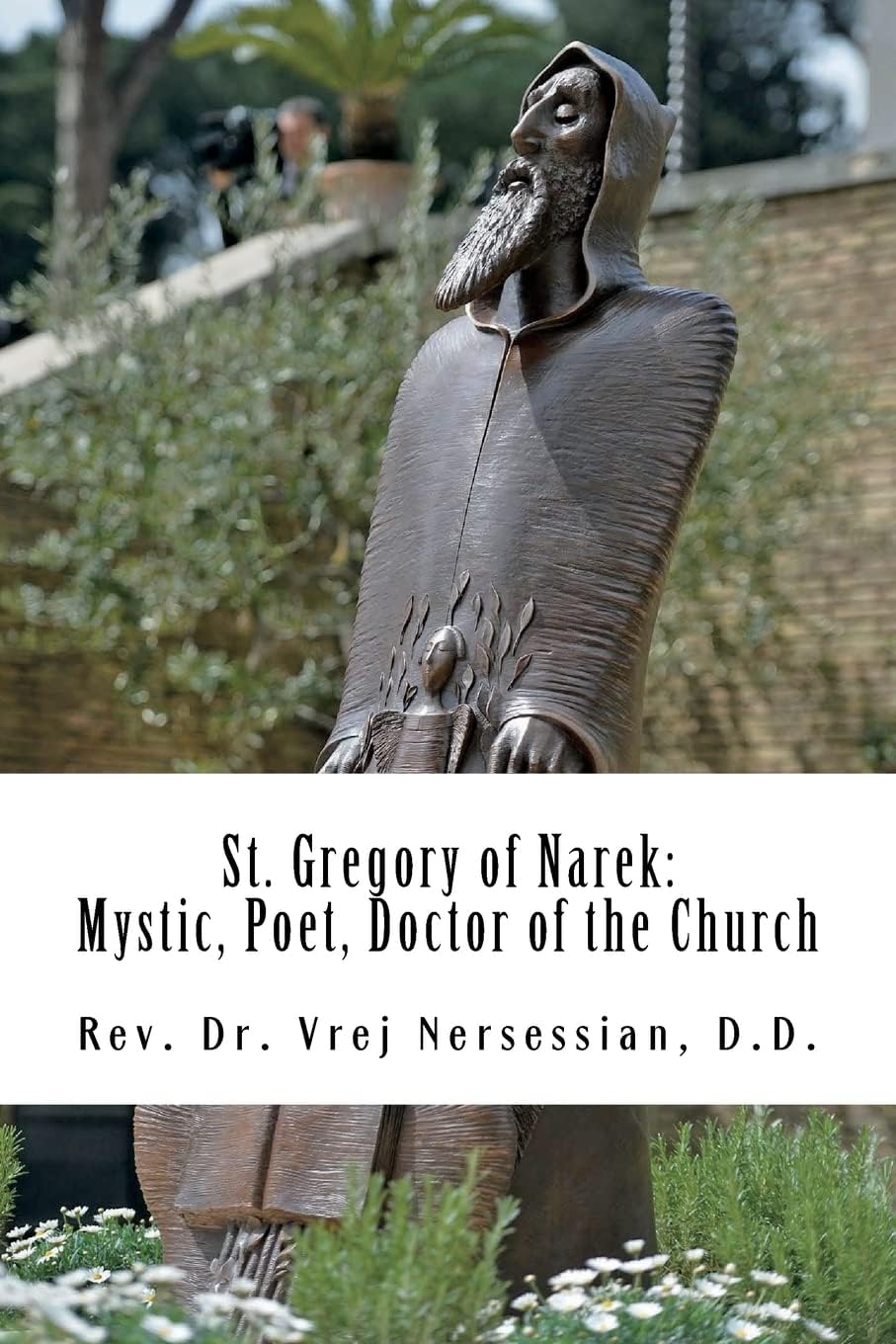
If you want to understand what Armenian Christians actually believe in their bones — not in their catechism but in their hearts — you need to read the Narek. The full title is Matean Voghbergutyan — the "Book of Lamentations" or "Book of Sorrowful Songs" — written by Saint Gregory of Narek (951–1003 AD), a monk at the monastery of Narekavank on the western shore of Lake Van. It consists of 95 prayer-poems, each one a sustained conversation with God — not the polished, controlled prayer of a theologian performing his devotions, but the raw, anguished, intimate speech of a soul that cannot stop speaking to God because it cannot survive without him.
The Narek holds a place in Armenian life that has no equivalent in any other Christian tradition. It is kept in Armenian households as one keeps a Bible. Sick people have the Narek opened at random and the text placed on their bodies as a source of healing. Travelers carry it into danger. Parents read from it over sleeping children. Gregory himself says in the preface that he intends the book for anyone who reads it to pray as though the words were their own — to enter into his prayer and make it theirs. For a thousand years, Armenians have done exactly that. The Narek is Armenian Christianity's most intimate self-portrait.
In 2015, Pope Francis declared Gregory of Narek a Doctor of the Universal Church — only the 36th person in history to receive this title, and the first from the Oriental Orthodox tradition. This declaration was not a diplomatic gesture. It was an acknowledgment that the Narek belongs to the whole Church, that Gregory's insights into divine mercy, human sinfulness, and the soul's relentless pursuit of God are not particular to any tradition but universal. An Armenian who was never in communion with Rome was declared a teacher for all of Christianity — and the Armenian church, which did not ask for this declaration, received it with a mixture of pride and the quiet confidence of a tradition that always knew what it had.
"I am the first among sinners, the last among the forgiven. I am the weight of unease, the shadow of unworthiness. And yet I speak to you, O Lord, because you have placed the capacity for speech in this mouth of dust."
— Gregory of Narek, Book of Lamentations, Prayer 1"It is not the greatness of my guilt that I speak of, but the greater greatness of your mercy which, even now, holds me back from the abyss."
— Gregory of Narek, Book of Lamentations"Like a patient parent, gentle as a nurse, forgiving as a lover — you have suffered my failures not with coldness but with the burning constancy of one who will not let go."
— Gregory of Narek, Book of Lamentations"The door to your mercy is never locked against the one who knocks, however broken the hand that knocks or however long it has delayed its return."
— Gregory of Narek, Book of Lamentations, Prayer 24


Other Dimensions of Armenian Prayer Life
The Sharakan (Armenian Hymnody): The corpus of Armenian liturgical hymns, called Sharan, is one of the world's oldest continuous musical traditions. Sharakan compositions date from the 5th century through the medieval period and are still sung in their original modal forms in the Armenian Badarak. The great hymnographers of the Armenian tradition — including Sahak I, Nerses the Gracious (Shnorhali), and Gregory of Narek himself — composed texts of extraordinary theological depth set to the ancient Armenian musical modes (the Eight Tones, similar to the Byzantine oktoechos). Armenian liturgical chant is an immersive sonic theology — hearing it once, even without understanding the words, communicates something of what Armenian Christianity feels like from the inside.
The Psalms: The 150 Psalms are central to Armenian prayer, as in all ancient Christian traditions. The Badarak incorporates psalm verses throughout. Armenian monks historically prayed the entire psalter weekly. The penitential psalms (Psalm 51, the Miserere, is particularly beloved) provide the scriptural framework for the kind of prayer that Gregory of Narek brought to its fullest artistic expression.
Household Prayer: Armenian Christian household piety — historically maintained even through the Soviet-era forced atheism of Soviet Armenia and the diaspora conditions of immigrant life — has centered on the household altar (often an icon of Christ and the Theotokos with a candle), prayer before meals, the blessing of children, and the reading of the Narek. The Armenian home is understood as a little church, and the parents as the first priests of their children's faith.
Part XI
Salvation, Sin & Armenian Soteriology: How Armenians Understand Redemption
Armenian theology understands salvation not primarily as a forensic transaction — a divine verdict of "not guilty" issued in response to Christ's payment of a debt — but as a process of transformation: the gradual healing and divinization of human nature, made possible by the Incarnation of the Son of God, administered through the sacraments, and completed in the direct vision of God in eternity. This understanding is shared with Eastern Orthodoxy and, in its deepest forms, with the Catholic mystical tradition — but it is foreign to much of Western Protestant theology, which has tended to center soteriology on justification rather than transformation.
Original Sin: The Armenian church accepts the reality of original sin — the inherited wound inflicted on human nature by Adam and Eve's disobedience, transmitted to all human beings and resulting in weakness of will, tendency toward sin, mortality, and spiritual blindness. However, the Armenian understanding of original sin is closer to the Eastern than the Western (Augustinian) model: it emphasizes the damage to human nature more than inherited guilt. We inherit a broken nature, not primarily the legal guilt of Adam's act. Baptism heals this wound, incorporating the person into the Body of Christ and beginning the process of restoration.
Theosis: The goal of the Christian life is deification — the participation of human beings in the divine nature (2 Peter 1:4), not the dissolution of humanity into God but the transformation of humanity by union with God. As Saint Athanasius wrote, "God became man so that man might become God." The Armenian mystical tradition — most fully expressed in Gregory of Narek — centers on this movement: the soul, by grace, being purified, illumined, and ultimately united with God in a love that transfigures rather than annihilates. This is not earned; it is received as gift. But receiving it requires the cooperation of a willing soul.
The Role of the Sacraments: The seven mysteries are not optional enhancements to a salvation already fully accomplished at the moment of personal faith. They are the channels through which divine grace actually enters and transforms human life. Baptism is not merely a symbol; it actually remits sin and incorporates the person into Christ. The Eucharist is not a memorial meal; it actually joins the communicant to the Body and Blood of Christ. The sacraments are the medicine of immortality (a phrase going back to Saint Ignatius of Antioch in the 2nd century) — the means by which the divine life heals and transforms the human.
Prayers for the Dead: The Armenian church prays regularly for the deceased faithful. The Requiem service (Hokeharuts, literally "Soul Mass") is a central feature of Armenian liturgical life, typically held on Saturdays (the traditional day of prayer for the dead), at funerals, and at annual memorial occasions. The theological basis is the belief that the souls of the dead continue in God's presence, that their ultimate state is not yet fully determined before the general resurrection, and that the prayers of the living can assist the dead — either by God's mercy shortening whatever purification is needed, or by simply expressing the communion of love that transcends death. The Armenian church does not define Purgatory in Roman Catholic dogmatic terms, but it prays for the dead with consistent liturgical practice that presupposes prayer can help them.
Heaven, Hell, and the General Resurrection: The Armenian church teaches that at death, the soul goes to God's presence for particular judgment. At the end of time, the general resurrection of all bodies will occur; all will stand before the Last Judgment of Christ; the righteous will enter eternal life with God (heaven), and the unrepentant wicked will be separated from God (hell). Neither the Armenian church nor any Oriental Orthodox church has issued precise dogmatic statements about the nature of hell or whether it is eternal in exactly the same sense for all individuals — the tradition, like Gregory of Narek's own theology of mercy, tends toward pastoral reticence about the final state of specific souls, preferring to emphasize the boundlessness of divine love and the urgency of repentance and prayer.
Part XII
Armenian Apostolic Church vs. Other Christian Traditions
One of the most frequently asked questions about the Armenian Apostolic Church is where exactly it stands in relation to the other major Christian traditions. The short answer: it is Oriental Orthodox — a family of ancient churches that separated from both the Eastern (Byzantine) Orthodox and the Roman Catholic churches in the 5th century over the Council of Chalcedon. It is not in full communion with Eastern Orthodoxy, Roman Catholicism, or Protestantism. But it shares far more with the first two than it divides. The following comparison table and the explanation below aim to give the most precise picture available.
| Feature | Armenian Apostolic | Eastern Orthodox | Roman Catholic | Armenian Catholic |
|---|---|---|---|---|
| Classification | Oriental Orthodox | Eastern Orthodox (Chalcedonian) | Roman Catholic (Chalcedonian) | Eastern Catholic (Chalcedonian) |
| Councils Accepted | Nicaea, Constantinople I, Ephesus (3 councils) | Seven Ecumenical Councils | 21 Ecumenical Councils including Vatican I & II | All Catholic Councils |
| Christology | Miaphysite: one united nature | Chalcedonian: two natures in one person | Chalcedonian: two natures in one person | Chalcedonian: two natures in one person |
| Head of Church | Catholicos of All Armenians (Etchmiadzin) | Ecumenical Patriarch (symbolic); each autocephalous church has own head | Pope of Rome | Pope of Rome (through Patriarch of Cilicia) |
| Liturgical Rite | Armenian Rite (Badarak, Anaphora of Athanasius) | Byzantine Rite (Chrysostom or Basil) | Roman Rite (Ordinary/Extraordinary Form) | Armenian Rite (same as Apostolic) |
| Liturgical Language | Classical Armenian (Grabar) | Greek, Church Slavonic, Arabic, and others | Latin (traditional); vernacular (post-Vatican II) | Classical Armenian (Grabar) — same as Apostolic |
| Eucharistic Bread | Unleavened | Leavened (prosphora) | Unleavened (usually) | Unleavened (same as Apostolic) |
| Infant Communion | Yes — from Baptism onward | Yes (wine only in some traditions) | No — First Communion at age of reason | Practice varies; generally follows Apostolic tradition |
| Filioque | No (Spirit proceeds from Father only) | No (Spirit proceeds from Father only) | Yes (Spirit proceeds from Father and Son) | No in liturgy; accepts Roman teaching |
| Immaculate Conception | Not defined as dogma; Mary's special grace affirmed | Not defined as dogma | Defined dogma (1854) | Accepts Roman dogma |
| Papal Infallibility | Not accepted | Not accepted | Defined dogma (Vatican I, 1870) | Accepted |
| Purgatory | Not defined; prayers for dead practiced | Not defined; prayers for dead practiced | Defined doctrine | Accepts Roman teaching |
| Married Clergy | Yes (priests may be married before ordination) | Yes (same rule) | No (Latin rite; Eastern Catholics may differ) | Yes (same as Apostolic tradition) |
Part XIII
The Two Catholicosates: Etchmiadzin and Cilicia
A question that confuses many people encountering the Armenian Apostolic Church for the first time is: why are there two patriarchs? The short answer is that the Armenian church has two catholicosates — the Holy See of Holy Etchmiadzin (in Armenia) and the Catholicosate of Cilicia (now based in Antelias, Lebanon) — and these two bodies are in full communion with each other but maintain separate jurisdictions. Both are authentically Armenian Apostolic; they are not in schism. They represent a historical division of administrative authority rooted in centuries of Armenian diaspora and exile, not a theological disagreement.
The Holy See of Holy Etchmiadzin is the Mother See of all Armenian Christianity, located in the city of Vagharshapat (now called Etchmiadzin) in Armenia, just outside Yerevan. It is the oldest catholicosate in the world — founded by Gregory the Illuminator in the early 4th century — and the Catholicos of All Armenians based there is the supreme head of the Armenian Apostolic Church globally. The name Etchmiadzin means "the Only-Begotten descended" — from a vision Gregory reportedly received of Christ descending to earth and striking a place with a golden hammer, indicating where the first Armenian cathedral should be built. That cathedral, the Mother Cathedral of Holy Etchmiadzin (a UNESCO World Heritage Site), has been continuously in use since the 4th century.
The Catholicosate of Cilicia traces its origins to the medieval Armenian Kingdom of Cilicia (in modern southern Turkey), which was established by Armenian nobles fleeing the Seljuk invasions of historic Armenia in the 11th century. The Cilician Catholicosate was founded there in 1058 and eventually became autonomous. After the fall of the Kingdom of Cilicia and the subsequent Ottoman persecutions, the Catholicosate moved repeatedly and eventually settled in Antelias, Lebanon, in 1930, where it remains today. The Catholicosate of Cilicia includes the dioceses of Lebanon, Syria, Cyprus, Iran, Greece, and several diaspora communities including Canada and parts of the Middle East.
In North America, the split between the two catholicosates is visible in the existence of two separate Armenian Apostolic diocese bodies. The Eastern Diocese of the Armenian Church of America (headquartered in New York) and the Western Diocese (headquartered in Burbank, California) are under the jurisdiction of the Holy See of Etchmiadzin. The Armenian Church of America (Diocese of the Armenian Church) under the Catholicosate of Cilicia also has parishes in the United States, primarily in the northeast. For ordinary Armenian Americans attending Sunday Badarak, the two jurisdictions are liturgically identical — same Badarak, same saints, same theology — and many Armenians are not aware of which jurisdiction their local parish belongs to.
Part XIV
Armenian Catholic vs. Armenian Apostolic: The Key Difference Explained
When Western Catholics or curious outsiders encounter the Armenian church, one of the most confusing things they discover is the existence of two Armenian churches: the Armenian Apostolic Church and the Armenian Catholic Church. Both use the Armenian liturgical tradition. Both celebrate the same Badarak. Both venerate the same saints. Both pray in Classical Armenian. From the outside, a Sunday service in an Armenian Catholic church and a Sunday service in an Armenian Apostolic church can look and sound nearly identical. So what exactly is the difference?
The Armenian Catholic Church came into existence through a series of contacts between individual Armenian bishops and the Roman Catholic Church in the 17th and 18th centuries, culminating in the formal establishment of the Armenian Catholic Patriarchate in 1742. Armenian Catholics are Armenians who entered into full communion with the Pope of Rome — accepting papal primacy, papal infallibility (as defined at Vatican I), the Council of Chalcedon, and the doctrinal definitions of the Roman Catholic Church (including the Immaculate Conception and the Assumption of Mary as defined dogmas) — while maintaining their Armenian liturgical tradition, language, calendar, and spirituality.
The following are the key differences:
Communion with Rome: Armenian Catholics are in full communion with the Pope; Armenian Apostolics are not. For Catholics, this is the decisive ecclesiological difference. For Armenians, especially those shaped by the experience of the Genocide and the Armenian national identity, the question of Roman communion can have political and cultural overtones as well as theological ones.
Christology: Armenian Catholics accept the Council of Chalcedon's two-natures formula; Armenian Apostolics maintain the Miaphysite (one-nature) position. In practice, both traditions confess Christ as fully divine and fully human, and both traditions would affirm the other's basic faith in Christ. The difference is in the philosophical vocabulary used to express this faith, not in the fundamental conviction.
Liturgy: Almost identical. Both use the Badarak (the Anaphora of Saint Athanasius), Classical Armenian (Grabar), the same vestments and ceremonial. Armenian Catholics have made some minor adaptations in response to Roman norms over the centuries, but the basic liturgical experience is the same. Anyone who attends both without knowing which is which might not easily tell the difference.
Size: The Armenian Apostolic Church is dramatically larger — approximately 7–9 million faithful worldwide compared to the Armenian Catholic Church's estimated 350,000–500,000. The Apostolic church is the national church of Armenia; the Catholic church is a diaspora minority within the Armenian community globally.
For a fuller treatment of this comparison, see: Armenian Catholic vs. Armenian Apostolic: The Full Guide.
Part XV
The Armenian Apostolic Church Today: Global Presence, Diaspora, and Living Faith
The Armenian Apostolic Church is today the national church of the Republic of Armenia and the spiritual home of approximately 7–9 million Armenians worldwide. In Armenia itself, the church is the dominant religious institution; approximately 94% of the population identifies as Armenian Apostolic, making Armenia one of the most religiously homogeneous Christian nations on earth. The Mother Cathedral of Holy Etchmiadzin — one of the oldest continuously functioning Christian churches in the world — receives pilgrims from across the Armenian diaspora every year.
The diaspora is enormous and historically significant. The Armenian Genocide of 1915–1923, in which the Ottoman Empire killed an estimated 600,000 to 1.5 million Armenians and forcibly expelled the survivors, created the largest Armenian diaspora in history. Communities established in its aftermath are found throughout the world: in Russia (the largest diaspora, approximately 2.5 million), France (approximately 600,000), the United States (approximately 500,000), Lebanon (before the civil war and recent crises, approximately 150,000), Syria, Iran, Argentina, Brazil, Australia, and dozens of other countries. In every diaspora community, the Armenian Apostolic church has served not only as a religious institution but as the primary guardian of Armenian language, culture, and collective memory.
In the United States, the Armenian Apostolic presence is concentrated in Los Angeles (the largest Armenian-American population), New York, Boston, Detroit, Fresno, and other cities. The Eastern Diocese of the Armenian Church of America (Etchmiadzin jurisdiction) and the Diocese under the Catholicosate of Cilicia together maintain approximately 70–80 parishes across the country. The church operates Armenian-language schools, cultural organizations, and charitable institutions alongside its parishes.
The Armenian church's relationship with its own survival is inseparable from its theology of martyrdom. Armenians do not understand the Genocide primarily as a political atrocity (though it was that) but as a martyrdom — the suffering of the Armenian people as a consequence of their refusal to apostatize under Ottoman pressure. The connection to Avarayr (451 AD) — when Vartan Mamikonian and his nobles died rather than renounce Christianity under Persian pressure — is not an academic historical parallel for Armenians. It is a living theological pattern: the Armenian people have repeatedly been given the choice between survival as apostates and death as Christians, and their church has consistently interpreted their choosing death as an act of faith.
The Armenian church today is engaged in active ecumenical dialogue. Its relations with the Eastern Orthodox churches have been particularly warm — a reflection of theological proximity even without full communion. The dialogue with the Roman Catholic Church has produced significant agreed statements, particularly on Christology. In 1996, the Armenian Catholicos Karekin I and Pope John Paul II signed a Common Declaration affirming their shared faith in Christ as "perfect God as to his divinity, perfect man as to his humanity" — language intended to bridge the Chalcedonian divide. Ecumenical progress continues, though full communion between the Oriental Orthodox and either the Eastern Orthodox or the Roman Catholic Church remains a future hope rather than a present reality.


Frequently Asked Questions
Armenian Apostolic Church Beliefs — Questions & Answers
The Faith That Chose Death Over Apostasy
The Armenian Apostolic Church is the oldest national Christian church in the world — and it has remained Armenian, remained apostolic, and remained Christian through everything: the Persian empire’s ultimatum at Avarayr, the Arab conquest, the Mongol invasions, the Ottoman Empire, the Genocide, Soviet atheism, and now the challenges of diaspora and modernity. It has done so not because of political power or cultural dominance — Armenians have almost never had those things — but because of a theological conviction so deep it has been worth dying for, again and again, across seventeen centuries.
What the Armenian Apostolic Church believes is not a peculiar ethnic religion. It is one of the oldest and most complete expressions of apostolic Christianity on earth — a tradition that carries the Book of Lamentations of Gregory of Narek, the hymns of Ephrem's spiritual cousins in the Syriac-Armenian world, the theology of a church that created an alphabet for the Bible alone, and the memory of a people who have proven, more than any other nation in history, that faith can survive anything.
The Narek is still prayed. The Badarak is still chanted in Grabar. The khachkar still stands in churchyards from Yerevan to Los Angeles. The faith that Gregory the Illuminator brought out of a pit in 301 AD is still alive.
Browse All Armenian Christianity Articles →