The Second Council of Dvin: Who Called It, What the 87 Canons Decided, and Why It Matters
554 AD · Dvin, Sasanian Armenia · The Complete History
The Second Council of Dvin
The council that permanently defined Armenian Christianity, adopted the Armenian calendar, condemned two heresies, and wrote 87 canons that shaped the Church for fifteen centuries
At a Glance
In the summer of 554 AD, eighteen bishops gathered in the city of Dvin — Armenia's ancient capital, set on the Metsamor River in the shadow of Mount Ararat, deep inside Sasanian Persia's administrative territory. They had been summoned by Catholicos Nerses II of Bagrevand, the patriarch of all Armenians. What they decided in that room would define Armenian Christianity for the next fifteen centuries and establish a doctrinal boundary that still separates the Armenian Apostolic Church from both Eastern Orthodoxy and Roman Catholicism to this day.
They formally and definitively rejected the Council of Chalcedon (451 AD) and its definition of Christ as having two natures — divine and human — united in one person. They adopted instead the Miaphysite Christology of Cyril of Alexandria: one united, composite, inseparable nature of Christ, both divine and human, in a single reality. They condemned the Khoujik sect, a Nestorian-Manichaean hybrid spreading through merchant networks. And they officially adopted a new Armenian ecclesiastical calendar — setting the epoch of Armenian history at 552 AD — that Armenian historians and the Armenian Church use to this day.
The Second Council of Dvin was not a single dramatic rupture. It was the conclusion of a process more than a century in the making — a slow, theologically deliberate separation from the Chalcedonian world that began with Armenia's absence from Chalcedon itself, was formalized at the First Council of Dvin in 506, and was now sealed permanently and without ambiguity. To understand it fully is to understand the entire arc of Armenian Christian history from the apostles through the medieval councils, and to grasp why the Armenian Church occupies the unique theological and cultural position it holds today.
The City of Dvin: Armenia's Ancient Capital
Before we can understand what happened inside the walls of Dvin in 554, we must understand the city itself — because the choice of venue was never accidental. Dvin was not merely a meeting place. It was the political, administrative, ecclesiastical, and cultural heart of Armenia. To hold a council in Dvin was to hold it at the center of the Armenian world.
Origins and Foundation
The site of Dvin had been occupied since at least the third millennium BC. Archaeological excavations begun in 1937 have uncovered evidence of Late Bronze Age and Early Iron Age settlements beneath the citadel hill, including metal workshops and sanctuary structures from the beginning of the first millennium BC. The city as a major urban center, however, was formally founded by King Khosrov III Kotak (r. c. 330–338 AD), who took an existing settlement and royal hunting park and transformed it into a capital city of substance. He chose the site wisely: situated on a natural promontory by the Metsamor (formerly called the Azat or Garni) River, about 35 kilometers south of modern Yerevan in the fertile Ararat valley, the site combined defensibility, agricultural richness, and proximity to the major trade routes linking Persia, Byzantium, India, and the Mediterranean world.
Khosrov's son, King Tiran, moved the full royal residence to Dvin, completing the transfer of Armenia's capital from the ancient city of Artashat (Artaxata). By the fifth century, Dvin was a thriving metropolis. Six major trade routes radiated from it, connecting Armenia's economy to the entire known world. The city's population in its early phase was estimated at around 45,000 in the mid-fourth century; by its medieval peak in the eighth and ninth centuries, contemporary sources and modern estimates suggest a population of 100,000 to 150,000 — making it one of the largest cities anywhere east of Constantinople.
Dvin Under the Sasanians: The Marzpanate Period
The political context of the Second Council of Dvin cannot be separated from the city's role under Persian rule. In 387 AD, Armenia was partitioned between the Roman Empire and the Sasanian Persian Empire. In 428 AD, the Armenian Arsacid kingdom in the Persian sphere was abolished entirely, and Dvin became the administrative capital of Persian Armenia — the seat of the Sasanian-appointed marzpan (governor). The marzpan's palace and the state archives listing the titles and privileges of Armenia's noble families were located in Dvin. The Persians had deliberately chosen Dvin over the older capital of Vagharshapat (the seat of the Armenian Catholicos since Gregory the Illuminator) precisely to disassociate the new regime from the Arsacid dynasty and to strengthen loyalty to the Persian viceroy.
But — crucially — the Persians also moved the seat of the Armenian Catholicos to Dvin. The administrative head and archival center of the Armenian Church thus became co-located with the Persian provincial government. The Catholicos of All Armenians would remain in Dvin for the next 450 years, until the early tenth century. This proximity was both useful and dangerous: the Armenian Church had direct access to the administrative center of power, but was also perpetually subject to political pressure from Persian overlords who preferred — and at times violently demanded — Zoroastrian religious conformity.
The Cathedral of Saint Gregory at Dvin
At the heart of Dvin stood the Cathedral of Saint Gregory the Illuminator, Armenia's most important church at the time of the council. It had begun as a pagan temple in the third century before being converted into a Christian church in the fourth century after Armenia's conversion. By the fifth century it had been rebuilt as a monumental three-nave basilica measuring 30.41 by 58.17 meters — the largest church in Armenia at the time. Its interior floor was decorated with multi-colored mosaic slabs in geometric patterns; the apse floor later received a mosaic of the Holy Virgin, the oldest such depiction discovered in Armenia. The cathedral stood at the center of the patriarchal complex where the Catholicos resided, surrounded by the administrative buildings of the Church. It was in this complex — within sight of the Ararat plain and the perpetual watchfulness of the mountain — that the bishops gathered in 554.
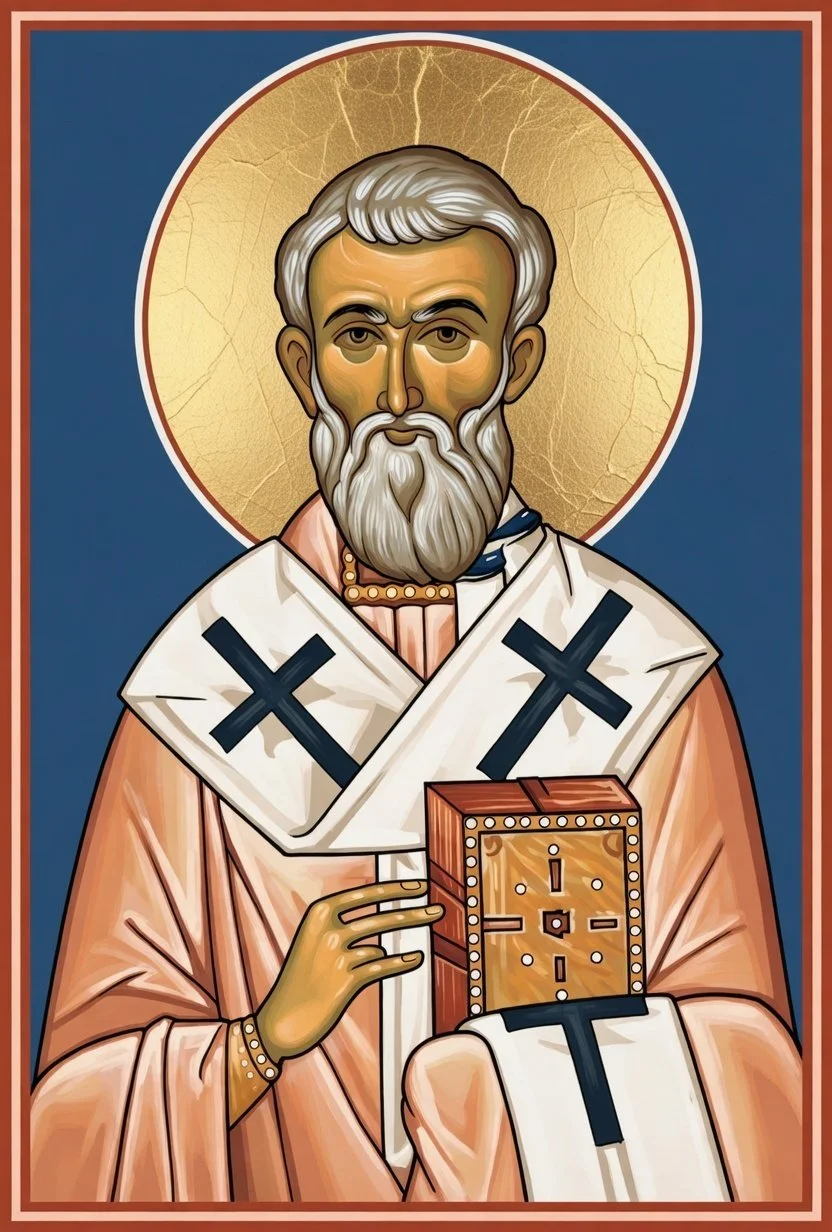
Saint Gregory the Illuminator
The founder of Armenian Christianity and the first Catholicos of the Armenian Church — whose cathedral in Dvin was the center of the council's proceedings. Patron for generational healing and impossible conversions.
Get the Prayer Card →Dvin's Legacy: What Remains Today
The city of Dvin endured conquests by Heraclius (623 AD), the Arab invasion of 640 AD, and continued as the center of the Arab province of Arminiya before a catastrophic earthquake in 893 AD destroyed much of it, killing most of its estimated 70,000 inhabitants. Mongol invasions in the thirteenth century delivered the final blow. Today, the site of ancient Dvin is a large archaeological hill between the modern villages of Hnaberd and Verin Dvin in Armenia's Ararat Province, about 45 minutes south of Yerevan by car. Systematic excavations since 1937 have uncovered the cathedral foundations, citadel remains, market structures, craft workshops, and thousands of artifacts now displayed in Armenian national museums. The site is on UNESCO's Tentative World Heritage List — a recognition of its significance as one of the great early medieval cities of the Christian world.
The Christological Crisis: From Nicaea to Chalcedon
The Second Council of Dvin cannot be understood without understanding the century of Christological controversy that preceded it. The question at the heart of that controversy is one of the most consequential theological disputes in human history: What exactly is Jesus Christ? How do his divinity and his humanity relate to each other? The answer the Council of Chalcedon gave in 451 AD was the answer Armenia refused to accept — and Dvin in 554 was the moment that refusal became permanent and irreversible.
The Council of Nicaea (325 AD) and the Divinity Question
The First Council of Nicaea settled the prior question: Is Jesus Christ fully divine? Against Arius, who taught that Christ was a created being — the highest of God's creations, but not co-eternal and co-equal with the Father — Nicaea declared that Christ is of the same substance (homoousios) as the Father. Fully, truly, eternally God. The Armenian Church, represented at Nicaea through its delegation (the Catholicos himself was not present but sent representatives), accepted the Nicene definition without reservation. Saint Aristakes, son of Gregory the Illuminator, returned from Nicaea carrying the Creed to Armenia. The Armenian Church has never wavered from Nicene orthodoxy.
The Next Question: How Does Divinity Unite With Humanity?
Once Nicaea settled Christ's full divinity, the next question became inevitable: How does that full divinity relate to his full humanity? In the fifth century, two schools of thought emerged that would tear the Church apart:
The Antiochene School, associated with Theodore of Mopsuestia and Nestorius (who became Patriarch of Constantinople in 428 AD), emphasized the distinction between Christ's divine and human natures. In their framework, the divine Logos and the human Jesus were two distinct subjects joined in a moral and voluntary union. Critics accused them of effectively teaching two persons — a divine Christ and a human Jesus — held together by will and cooperation. This was called Nestorianism, and it was condemned at the Council of Ephesus in 431 AD.
The Alexandrian School, associated above all with Cyril of Alexandria (patriarch 412–444 AD), insisted on the absolute unity of Christ's person. Cyril's formula was that after the Incarnation, there is "one incarnate nature of the divine Word" — mia physis tou theou logou sesarkōmenē in Greek. The divine and human are not two natures in cooperation; they are one unified, composite reality. This formula, Cyril insisted, was the only way to protect the reality of the Incarnation and the saving efficacy of Christ's sacrifice — because if the person who suffered and died on the cross was a merely human Jesus rather than the divine Word incarnate, the Redemption loses its infinite weight.
Eutyches and the Extremes: The Problem That Created Chalcedon
In the early 440s, an elderly Constantinopolitan monk named Eutyches took the Alexandrian position to what his opponents considered an extreme: after the Incarnation, he taught, Christ's human nature was absorbed into the divine, leaving only one — divine — nature. His critics accused him of effectively denying the reality of Christ's humanity. This position — called Monophysitism (from monos, single, and physis, nature) — was condemned at the Council of Chalcedon in 451.
But the Council of Chalcedon did not simply condemn Eutyches. It went further. It defined that Christ has two natures — divine and human — united without confusion, without change, without division, without separation in one person (hypostasis). The key phrase from Pope Leo I's Tome, read at Chalcedon, was that each nature retains its own properties, acting through one person. This dyophysite (two-nature) formula was the theological and political compromise intended to reconcile the Antiochene and Alexandrian traditions.
For many Eastern Christians, it failed. The Alexandrians — and the Armenians — read Chalcedon's two-nature formula as a disguised rehabilitation of Nestorianism. If Christ has two natures, each with its own properties, who is the one person? Is it the divine Word, or some tertium quid that is neither fully divine nor fully human? The Armenians, looking at the dyophysite formula, heard the echo of Theodore of Mopsuestia — the Antiochene theologian who was the intellectual grandfather of Nestorius and whose works were not condemned at Chalcedon.
Armenia and Chalcedon: Why the Council Was Rejected
The Empty Chair: Armenia's Absence from Chalcedon
One fact about the Council of Chalcedon is almost never mentioned in Western treatments of the event, but it is indispensable to understanding the Armenian response: Armenia was not there. The Council of Chalcedon met from October 8 to November 1, 451 AD. The Battle of Avarayr — the Armenian war against Sasanian Persia's demand that Armenia convert to Zoroastrianism — was fought on May 26, 451 AD. Armenia was in crisis. Its army was fighting and dying for the right to remain Christian. Its bishops were in no position to travel to a council in Byzantine territory. While the Byzantine Emperor Marcian was hosting the most important theological council in a century, the Armenians were burying their dead on the field of Avarayr.
The decrees of Chalcedon were later translated into Armenian — a language that had only recently received its alphabet, invented by Mesrop Mashtots just four decades earlier, in 405 AD. The translators and theologians who studied the Chalcedonian definition read it through the lens of the Cyrillian tradition they had inherited. What they found troubled them. The Tome of Leo — the letter from Pope Leo I that had been read at Chalcedon and celebrated as the definitive expression of its Christology — sounded to Armenian ears like Nestorian language about Christ's natures operating in distinct ways. The Armenians had already condemned Nestorianism at earlier councils. Chalcedon, in their reading, appeared to rehabilitate it.
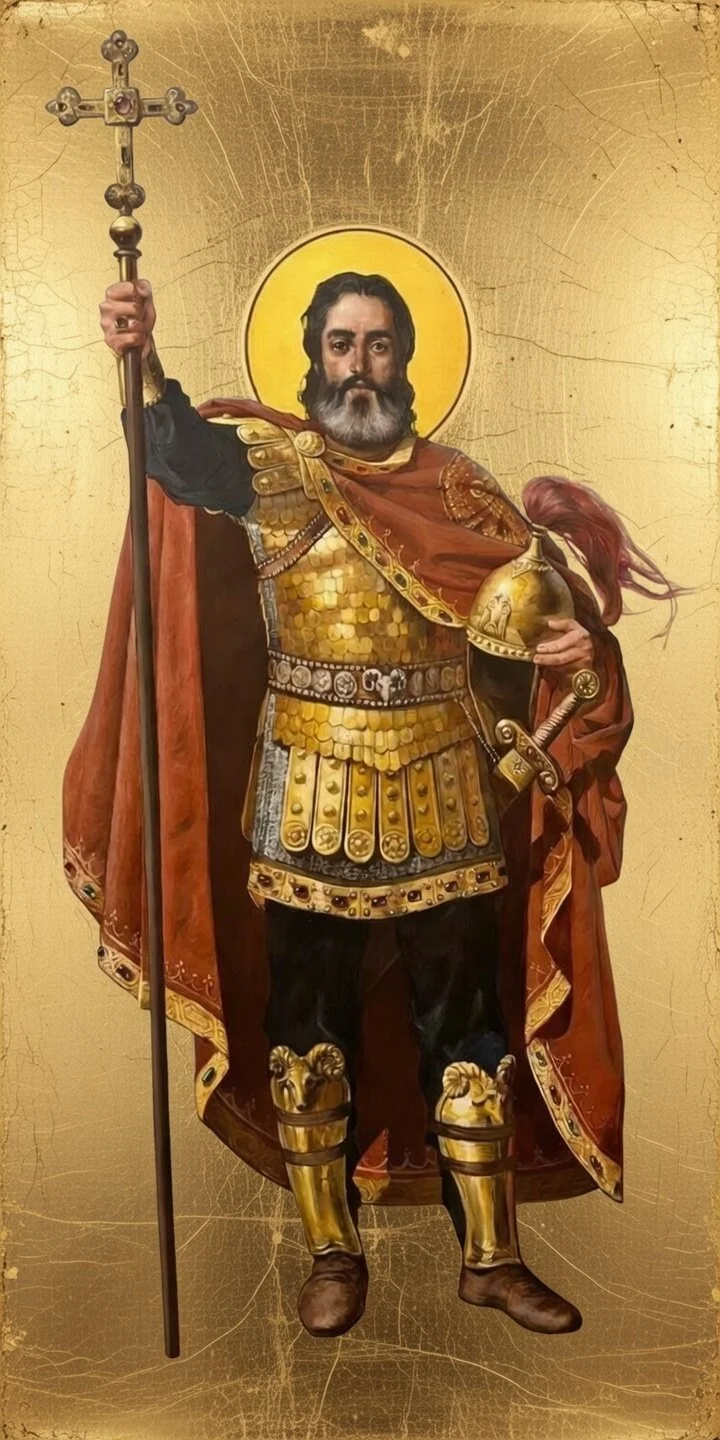
Saint Vartan Mamikonian
The Armenian general who died at the Battle of Avarayr on the same day Chalcedon opened — defending Armenia's Christianity against Persia while the great council met without Armenian representation. Patron for defending the faith against impossible odds.
Get the Prayer Card →The Political Dimension: Chalcedon as Byzantine Imperialism
There was also a political dimension that cannot be set aside. The Council of Chalcedon was deeply enmeshed with Byzantine imperial politics. Emperor Marcian convened it; the Empress Pulcheria shaped its atmosphere; Byzantine bishops dominated its proceedings. For the Armenians — living under Persian rule, not Byzantine — accepting the Chalcedonian definition would have meant ecclesiastical submission to Constantinople and, by extension, cultural and political alignment with the Byzantine Empire that was periodically at war with Persia over Armenia's territory. Rejecting Chalcedon was not only a theological act. It was a declaration of Armenian ecclesiastical independence from both Byzantine religious imperialism and the political entanglements that came with it.
Earlier Armenian Councils Against Chalcedon
Before Dvin, the Armenian Church had already registered its opposition at multiple councils. The Council of Vagarshapat (491 AD) made the rift from Byzantium — on theological grounds — definitive. The First Council of Dvin (506 AD) formally accepted the Henotikon, the Byzantine emperor Zeno's compromise formula, which carefully avoided affirming the Chalcedonian two-nature definition. These earlier actions were the buildup; the Second Council of Dvin was the final, unambiguous declaration.
The First Council of Dvin (506 AD): The Precedent
The First Council of Dvin is the essential precursor to understanding the Second. Held in 506 AD (some sources say 505) under Catholicos Babgen I Umtsetsi, it assembled not only Armenian bishops but also delegations from the Georgian and Caucasian Albanian churches — demonstrating that this was conceived as a regional ecumenical act of the three Caucasian churches together. According to the Book of Epistles of the Armenian Church, 20 bishops, 14 laymen, and many Nakharars (Armenian noble princes) attended.
The Henotikon and the First Council's Limits
The immediate occasion for the First Council was the Henotikon of Emperor Zeno (482 AD). The Henotikon was a carefully worded imperial letter designed to achieve theological peace after the disruptions caused by Chalcedon. It condemned Nestorius and Eutyches by name; it affirmed the authority of the first three ecumenical councils (Nicaea, Constantinople, Ephesus); and — crucially — it said nothing whatsoever about the Chalcedonian two-nature definition. It neither affirmed Chalcedon nor condemned it. It was a deliberate doctrinal silence.
The First Council of Dvin accepted the Henotikon. In doing so, it kept open a theoretical possibility of conciliation with Constantinople — as long as Constantinople never insisted on explicit Chalcedonian subscription. But it also formally rejected any interpretation of the Henotikon that implied acceptance of Chalcedon. The Council condemned Chalcedon's dyophysite formula as tending toward Nestorianism and reaffirmed the Cyrillian one-nature tradition.
Karekin Sarkissian, one of the foremost scholars of Armenian Church history, has described the First Council of Dvin as containing "the first official and formal rejection of the Council of Chalcedon by the Armenian Church." But it stopped short of the complete, formal severance that would come in 554. The door to Constantinople was not yet slammed; it was simply not walked through.
Key distinction: The First Council of Dvin (506) was the Armenian Church's first official rejection of Chalcedon, made in cooperation with the Georgian and Albanian churches. The Second Council of Dvin (554) was the permanent, unambiguous, and legally binding declaration — encoded in 87 canons — that settled the question forever.
Between the Councils: The Decades of Tension (506–554)
The nearly fifty years between the First and Second Councils of Dvin were not quiet. They were filled with theological correspondence, Persian political pressure, growing influence from Syrian Miaphysite Christianity, and the continued failure of Byzantine attempts to draw the Armenians back toward Chalcedon. Understanding this period explains why the Second Council of Dvin was not a sudden decision but an inevitable conclusion.
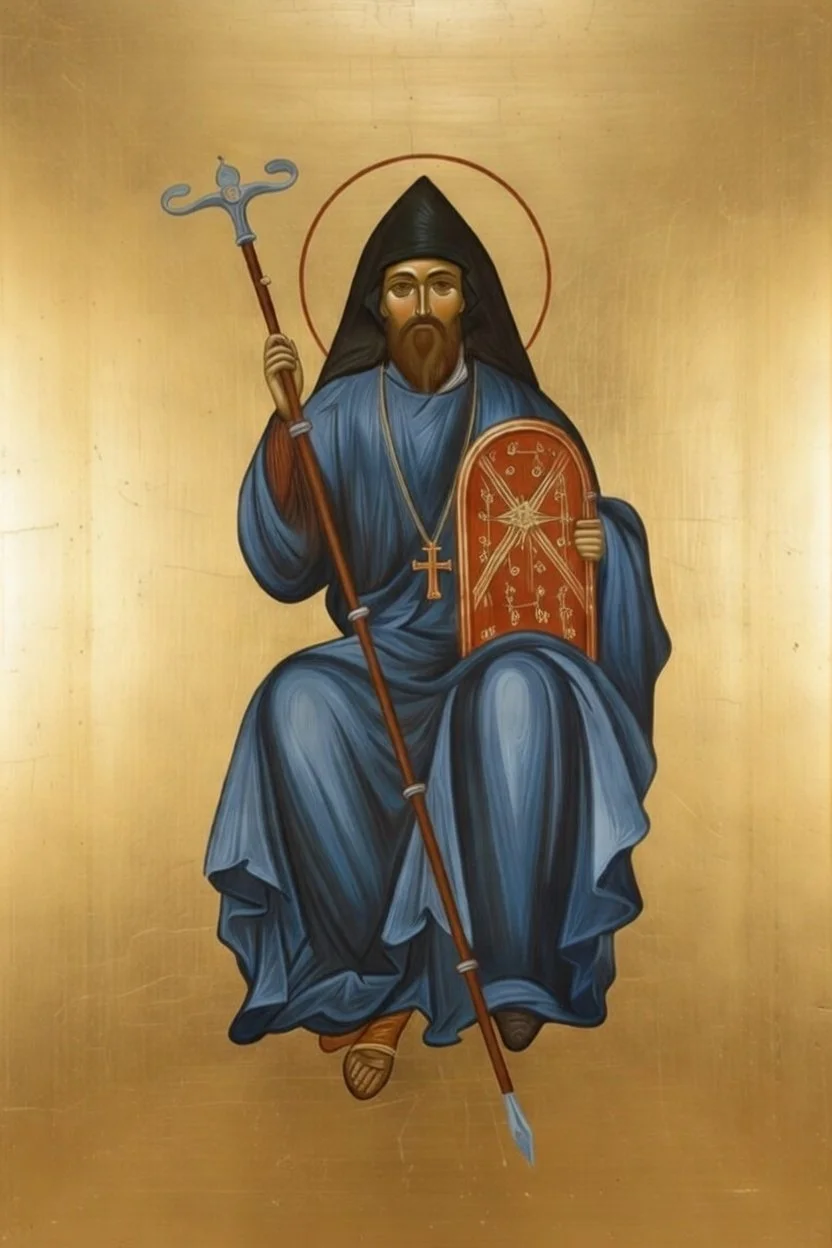
Saint Mesrop Mashtots
The inventor of the Armenian alphabet (405 AD), whose creation of a written Armenian language made it possible for Armenia to translate, study, and form its own theological tradition — the intellectual foundation that enabled the Second Council of Dvin's independence of thought. Venerated in the Eastern Orthodox Menaion on February 19.
Get the Prayer Card →Catholicos Nerses II of Bagrevand: The Man Who Called the Council
Every council is also the story of the person who convened it. Nerses II of Bagrevand — sometimes spelled Nerses II Astaraketzi, from his birthplace of Aschdarag (Ascharag) in the district of Bagrevand in northwestern Armenia — was Catholicos of All Armenians from 548 to 557. He is a figure whose significance to Armenian Church history is entirely out of proportion to how little attention he receives in general Western scholarship.
Lineage and Background
Nerses II came from the district of Bagrevand, a region in historical Armenia corresponding to parts of modern eastern Turkey (near what was the city of Manzikert/Malazgirt). The Bagrevand district had deep significance in Armenian Church history: it was an ancient and prestigious ecclesiastical territory. The Catholic Encyclopedia describes Nerses II as having been born at Aschdarag in Bagrevand — a detail that places him in the heartland of the Armenian Church's historical memory, not in the cosmopolitan capital of Dvin but in the older territories of the Church's inland foundations.
His theological orientation is described by Catholic sources as "Jacobite Monophysite" — using the polemical term applied to all Oriental Orthodox Christians by Chalcedonian writers, a designation the Armenian Church itself has always rejected as inaccurate (see the Miaphysitism section below). What this characterization captures accurately is that Nerses II was thoroughly committed to the Cyrillian theological tradition and entirely opposed to any form of Chalcedonian two-nature Christology.
His Pontificate and the Road to 554
Nerses II became Catholicos at a moment of mounting theological pressure. The recent Fifth Ecumenical Council (553 AD) at Constantinople had tried yet again to find a formula that might satisfy the Oriental churches — condemning Theodore of Mopsuestia's works, a move the Armenians welcomed — while insisting on the authority of Chalcedon, which the Armenians could not accept. For Nerses II, the theological situation after 553 clarified rather than complicated the path forward: Constantinople had proven once more that it would not abandon the dyophysite formula. The time had come not for further negotiation but for a definitive declaration.
The council he called in 554 was not a reactive or defensive action. It was a positive act of ecclesiastical self-definition: establishing what the Armenian Church believed, how it governed itself, and what calendar it used. That it also said clearly and permanently what it rejected — Chalcedon, the Khoujik heresy — was inseparable from that positive assertion of Armenian Christian identity.
After the Council: Death in Office
Nerses II died in 557, just three years after the council he convened — leaving behind a Church that was now more clearly defined, more self-consciously Armenian, and more firmly planted in the Oriental Orthodox world than it had ever been. He is the architect of the Armenian Church's permanent theological posture and deserves far greater recognition than he typically receives.
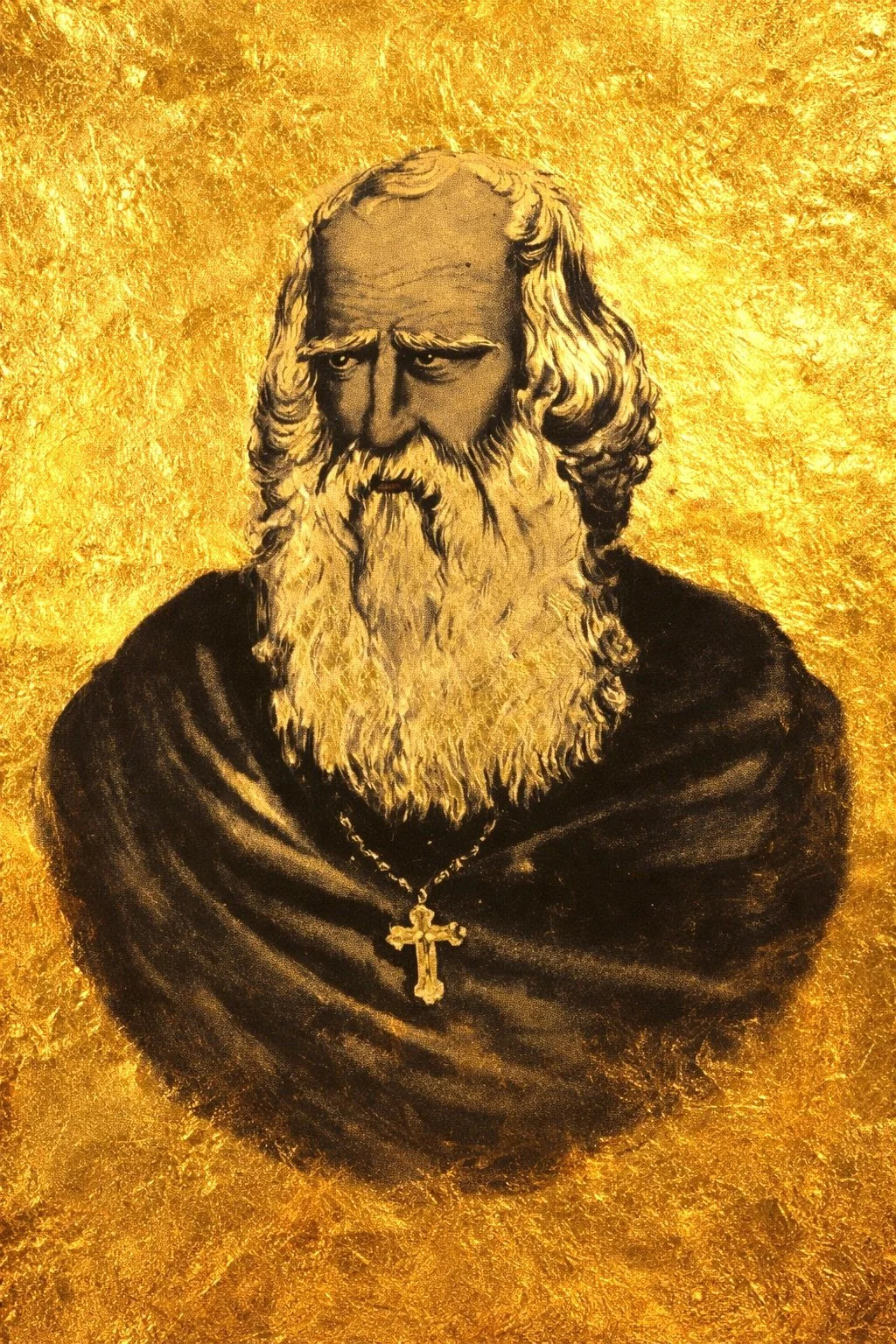
Saint Nerses the Great (Nerses I)
The 4th-century Catholicos and reforming patriarch who laid the institutional foundations of the Armenian Church — and through whose lineage and tradition Nerses II of Bagrevand drew his ecclesiastical authority. Great-grandson of Gregory the Illuminator. Patron for pastoral courage and Church reform.
Get the Prayer Card →The Second Council of Dvin: What Happened
Assembly and Participants
The Second Council of Dvin convened in 554 AD (the Encyclopaedia Iranica notes variant dates of 552, 554, or 555 in different sources; most modern scholarship settles on 554). Catholicos Nerses II of Bagrevand presided. Eighteen bishops of the Armenian Church participated. Unlike the First Council of Dvin in 506, this council did not include delegations from the Georgian or Albanian churches — a significant change that reflected the increasing divergence between the Armenian Church and its Caucasian neighbors, who would eventually follow different paths on the Chalcedonian question.
The council was also attended by Armenian Nakharars — the hereditary noble princes who, in the absence of an Armenian king under the Persian marzpanate system, constituted the political leadership of Armenia. This was consistent with the Armenian synodal tradition: ecclesiastical councils were not purely clerical affairs. The nobility's presence gave the council's decisions civic weight alongside their canonical authority.
The Doctrinal Declaration
The council's primary theological action was explicit and unambiguous. The bishops formally declined to accept the canons of the Council of Chalcedon (451 AD). The reasons stated in the conciliar documents were consistent with the Armenian Church's longstanding position: the Chalcedonian dyophysite formula — defining Christ as having two natures, divine and human, in one person — was seen as opening the door to the Nestorian heresy that had been condemned at Ephesus (431 AD). The decrees of Chalcedon had, in the Armenian bishops' observation, in practice allowed Nestorianism to spread through parts of the Christian world that accepted them. The Tome of Pope Leo I, the doctrinal foundation of Chalcedon, was specifically rejected as theologically inadequate by this standard.
The council reaffirmed the Cyrillian formula as the authoritative expression of Armenian Christology: after the Incarnation, the divine Word has one united, composite nature — divine and human — inseparable and indivisible, in a single subject. Christ is not two natures operating through one person; Christ is one united reality, both fully divine and fully human, in a single incarnate nature.
The Armenian Calendar Adoption
The Second Council of Dvin also formally adopted the Armenian ecclesiastical calendar. The epoch of the Armenian calendar — Year 1 — corresponds to 552 AD in the Julian calendar. Armenian historians of the period used this calendar to date events, adding 551 to convert to the standard Christian era. The adoption of an independent calendar was an act of deep ecclesiastical self-confidence: Armenia was not going to organize its liturgical and historical life around Byzantine reckoning. It would count its own years from its own epoch. This decision has endured; the Armenian calendar is still used today in Armenian Apostolic liturgical contexts.
The Condemnation of the Khoujik Sect
In addition to the Chalcedonian question and the calendar adoption, the council addressed a specific local heresy that had been infiltrating Armenia through merchant networks: the Khoujik sect. This movement combined elements of Nestorianism — the theological tendency the council was most opposed to — with elements of Manichaeism, the dualistic Persian religion that taught the opposition of light and darkness as cosmic principles. The Khoujik sect had apparently entered Armenia through traders from Persia, mixing Nestorian Christological tendencies with dualistic cosmological ideas incompatible with Christian monotheism. The council condemned this sect by name and established canons to address its influence and to deal with those who had been drawn into it.
The 87 Canons: A Complete Overview
The Second Council of Dvin adopted 87 canons — a substantial canonical corpus that shaped the internal life of the Armenian Church for centuries. These canons are preserved in the Armenian Book of Canon Law (Kanonagirk Hayots), compiled and systematized under Catholicos Saint Hovhannes Otsnetsi (717–728 AD). The Book of Canon Law (published in its modern critical edition in two volumes by the scholar Dr. Vasken Hakobyan) remains the foundational document of Armenian Church governance to this day.
The 87 canons of the Second Council of Dvin fall into several broad categories. Their content reveals the full scope of the council's concerns: not only theology but the sacramental life of the Church, monastic discipline, the clergy's moral conduct, marriage law, the Church's stance toward apostasy, and the administration of justice within the Christian community.
Doctrinal and Christological Canons
The foundational rejection of Chalcedon's dyophysite formula; affirmation of the Cyrillian Miaphysite Christology; condemnation of the Tome of Leo; condemnation of Nestorianism in all its forms; condemnation of the Khoujik heresy; and the positive statement of Armenian Christological faith based on Cyril of Alexandria's formula of the one incarnate nature of the divine Word.
Sacramental Life
A significant portion of the 87 canons — described by one major source as approximately 38 canons — deal with the development and regulation of Armenian teaching on the Sacraments. These include rules about the proper administration of Baptism, the Eucharist, Chrismation (confirmation), Holy Orders, and the anointing of the sick. The canons establish liturgical norms that would distinguish Armenian practice from both Byzantine and Latin traditions.
Monastic Life and Discipline
A substantial group of canons regulated the life of monks and monasteries in Armenia — an increasingly important institution in the sixth-century Church. These canons addressed the relationship of monastic communities to episcopal authority, the conduct expected of monks, rules about accepting or dismissing members, the physical structure and governance of monasteries, and the distinctive role of monasticism in Armenian spiritual life.
Clerical Conduct and Marriage
Canons establishing moral standards for the clergy at every level — bishops, priests, deacons. Rules about clerical marriage (in the Armenian tradition, priests may be married; bishops are typically monks). Standards governing a clergyman's household, his public conduct, his relationship to civil authorities, and the consequences for serious moral failures.
Marriage and Family Law
Canons governing Christian marriage in Armenia — the degrees of consanguinity within which marriage was forbidden, the Church's authority over marriage disputes, rules about remarriage after the death of a spouse, the proper setting for the blessing of marriages (in the sanctuary), and regulations about marriages between Christians and non-Christians in the Sasanian Persian context.
Apostasy and Reconciliation
Living under Persian Zoroastrian rule, Armenian Christians faced constant pressure to apostacize. The council addressed this directly: what happens to Christians who convert to Zoroastrianism under duress and later wish to return? These canons established the conditions and process for reconciliation — a pastoral necessity given the political reality of Armenia under the Sasanians.
Episcopal Authority and Administration
Canons defining the scope and limits of episcopal authority; the relationship between the Catholicos and the bishops; rules about episcopal elections and the authority required to ordain a new bishop; the Catholicos's sole authority to bless the Holy Myron (chrism oil); and the resolution of disputes between bishops.
Liturgical Practice and Fasting
Rules establishing distinctive Armenian liturgical practices — fasting regulations, the proper order of services, the observance of the liturgical calendar, and the regulations about days on which certain sacraments or blessings may or may not be performed. These canons increasingly distinguished Armenian practice from Byzantine norms.
The Church as Court of Justice
In Armenia under Persian rule, the Armenian Church functioned not only as a spiritual institution but as a court of justice for the Christian community — arbitrating civil disputes, upholding social order, and exercising a quasi-judicial function that the Armenian state could no longer provide. The council's canons addressed this function explicitly, establishing the Church's authority as a mediating and adjudicating body.
The canonical legacy: The 87 canons of the Second Council of Dvin were compiled into the Armenian Book of Canon Law (Kanonagirk Hayots) under Catholicos Hovhannes Otsnetsi in the early eighth century, alongside canons from other Armenian councils and the received canons of the universal Church. This compilation remains the foundational canonical document of the Armenian Apostolic Church. When scholars cite "the canons of Dvin," they are typically drawing on Hakobyan's modern critical edition of this canonical corpus.
The "Twelve Canons" Question: Clarifying the Confusion
One of the most common search queries about this council asks about "twelve canons" — as though the Second Council of Dvin adopted only twelve. This is a genuine scholarly confusion worth addressing directly, because it leads to misidentification of which council produced which canons.
The Second Council of Dvin (554 AD) adopted 87 canons. Multiple independent sources — the Wikipedia article on the council, the Armenian Book of Canon Law as summarized in scholarly literature, and the Encyclopaedia Iranica — agree on this figure.
The "twelve canons" almost certainly refers to a different Council of Dvin: the Third Council of Dvin, held in 648 AD, under Catholicos Nerses III Ishkhantsi (641–661). According to the Book of Canon Law, the Council of Dvin in 648 "adopted 12 canons to resist the invasions of the Arabs in defense of the Armenian princes." These twelve canons were pastoral and political responses to the Arab conquest of Armenia — a crisis that was entirely different in character from the Christological questions of 554.
There is also a Council of Dvin IV (720 AD), held under Catholicos Hovhannes Otsnetsi, which "established 32 canons" dealing primarily with clerical conduct: excessive drinking, the blessing of marriages in church rather than in secular settings, and the exclusive authority of the Catholicos to bless the Holy Myron oil.
The confusion likely arises because general references to "the Council of Dvin and its canons" are sometimes imprecise about which of the four councils at Dvin is meant. The table below clarifies:
| Council | Year | Catholicos | Canons | Primary Subject |
|---|---|---|---|---|
| First Council of Dvin | 506 AD | Babgen I Umtsetsi | Unstated (formal rejection of Chalcedon; acceptance of Henotikon) | Christology; Henotikon; first formal anti-Chalcedonian declaration |
| Second Council of Dvin | 554 AD | Nerses II of Bagrevand | 87 canons | Permanent rejection of Chalcedon; Miaphysite definition; Armenian calendar; condemnation of Khoujik sect; sacramental and monastic reform |
| Third Council of Dvin | 607/609–610 AD | Abraham I of Aghbatan (elected at this council) | ~7 (first session); total unstated | Ending the Chalcedonian schism in Armenia; re-condemning Chalcedon after the Chalcedonian Catholicosate of 591–610 |
| Council of Dvin (648) | 648 AD | Nerses III Ishkhantsi | 12 canons | Response to Arab invasion; defense of Armenian princes and ecclesiastical order |
| Fourth Council of Dvin | 720 AD | Hovhannes Otsnetsi | 32 canons | Clerical conduct; marriage regulations; sacramental authority |
Miaphysitism Explained: What the Armenians Actually Believed
The theological position affirmed at the Second Council of Dvin is almost universally misnamed in popular and even some scholarly literature. It is called Monophysitism. It is not Monophysitism. The distinction is not pedantic — it is essential to understanding both what the council actually declared and why the separation between the Armenian Church and the Chalcedonian churches is now, fifteen centuries later, considered by many theologians to be based on a misunderstanding.
Monophysitism (Eutychianism) vs. Miaphysitism
| Position | Greek Term | Teaching | Armenian Church's View |
|---|---|---|---|
| Nestorianism | Dyoprosopism | Christ has two natures and effectively two persons (a divine Logos and a human Jesus) joined in moral union | Condemned at Ephesus (431); the heresy Chalcedon was seen as rehabilitating |
| Monophysitism (Eutychianism) | Monophysis | After the Incarnation, Christ's human nature was absorbed into the divine, leaving only one — divine — nature. The humanity effectively disappears. | Explicitly rejected and condemned by the Armenian Church. The Armenians do not hold this position. |
| Dyophysitism (Chalcedonian) | Dyophysis | Christ has two natures — divine and human — each retaining its own properties, united in one person/hypostasis without confusion, change, division, or separation | Rejected at Dvin (554) as tending toward Nestorianism in practice |
| Miaphysitism (Armenian/Oriental Orthodox) | Mia physis | After the Incarnation, Christ has one united, composite, inseparable nature — both divine and human — in a single reality. The humanity is fully real and fully present but inseparably united with the divinity in one nature. | The Armenian Church's position, following Cyril of Alexandria. The Greek word mia means "one unified/composite" — different from monos (single, alone). |
Why "Mia" Is Not "Mono"
The critical distinction is linguistic and theological. The Greek word monos means "single" or "alone" — it implies exclusivity. Mia (feminine of heis, one) means "one" in the sense of unified or composite — it does not imply that one element has eliminated the other. Cyril of Alexandria's formula — mia physis tou theou logou sesarkōmenē ("one incarnate nature of the divine Word") — uses mia to describe a nature that is genuinely one but genuinely composite: it contains real humanity and real divinity in an inseparable union.
The Armenians, Copts, Ethiopians, Syriacs, and Eritreans who rejected Chalcedon were not teaching that Christ has no human nature. They were teaching that his human nature is so perfectly and irrevocably united with his divine nature that to speak of "two natures" is to impose a separation that does not exist in reality. Christ does not have two sets of properties that operate in parallel. He is one person with one integrated mode of being — one nature that is both divine and human simultaneously.
The Modern Ecumenical Recognition
In the late twentieth century, Catholic, Orthodox, and Oriental Orthodox theologians engaged in a series of formal dialogues that produced a remarkable conclusion: the Christological differences between the Chalcedonian and non-Chalcedonian churches may be more terminological than substantive. In 1971, a joint statement between the Catholic Church and the Coptic Orthodox Church declared that both sides "believe in the same Lord Jesus Christ." In 1988–1990, similar agreed statements were reached between the Eastern Orthodox Church and the Oriental Orthodox churches. The Joint Commission declared that the two families "believe in the same Lord Jesus Christ" and that Chalcedonian and non-Chalcedonian formulas, "while they use different language, are expressions of the same faith." The Second Council of Dvin established the Armenian position with canonical precision; the modern dialogues have done much to show that the position it established was never as far from Chalcedon as the polemics of fifteen centuries suggested.
The Armenian Calendar: Born at Dvin
Among the less-discussed but enormously significant decisions of the Second Council of Dvin was the formal adoption of the Armenian ecclesiastical calendar. This calendar — still used in Armenian liturgical contexts today — was officially inaugurated at Dvin in 554, with its Year 1 epoch set at 552 AD in the Julian calendar.
Structure of the Armenian Calendar
The Armenian calendar consists of twelve months of 30 days each, plus five epagomenal (supplementary) days added at the end of the year, for a total of 365 days. Unlike the Julian calendar, the Armenian calendar originally had no leap year mechanism, which meant that it gradually drifted against the solar year at the rate of one day every four years. This drift meant that the Armenian calendar's correspondence to the Julian or Gregorian calendar shifts over the centuries — a complexity that Armenian chronologists and historians have had to account for.
The months of the Armenian calendar have ancient names: Nawasard, Horis, Sahmi, Tre, Kaghos, Arach, Mehekan, Areg, Ahekans, Mareri, Margats, and Hrotits — names that are of pre-Christian Iranian origin, reflecting the deep cultural interpenetration of Armenian and Persian civilization. The five epagomenal days are called Aweleats (the days of excess).
Why an Independent Calendar?
The adoption of the Armenian calendar at the Second Council of Dvin was not merely a practical administrative decision. It was a profound statement of ecclesiastical independence. The Byzantine Church used the Julian calendar, counting years from the Byzantine era. The Armenians would count their years from their own epoch — from the moment, in the sixth century, when their Church crystallized its identity and its theology in the canons of Dvin.
Armenian historians of the subsequent centuries used this calendar as their chronological framework. When the great fifth-century historians Movses Khorenatsi and Yeghishe wrote, they used their own chronological systems; but from the late sixth century onward, Armenian historical writing was organized around the Armenian era. To add 551 (or 552, depending on how one counts) to an Armenian year gives the corresponding date in the Christian era. This convention is essential for reading Armenian medieval historical sources accurately.
The formal adoption of the Armenian calendar at Dvin is why the Book of Canon Law states that the Second Council of Dvin "marks the beginning of the Armenian Church Calendar" — it was the institutional ratification of a new way of measuring Armenian time.
The Khoujik Heresy: The Council's Second Target
While the rejection of Chalcedon dominates modern scholarly discussion of the Second Council of Dvin, the council's condemnation of the Khoujik sect was equally urgent to its sixth-century participants. The Khoujik heresy represents one of the less-studied but historically important episodes of religious syncretism in late antique Armenia.
What Was the Khoujik Sect?
The Khoujik (also spelled Khouzik or Choudjik in various scholarly transliterations) movement had entered Armenia through commercial networks — through merchants traveling from deeper within the Sasanian Persian Empire who had been influenced by two distinct but compatible religious currents. The first was Nestorianism, the Christological tendency already condemned by the Armenian Church: the emphasis on the distinction between Christ's divine and human natures that the Armenians read as implying two persons rather than one. The second was Manichaeism — the powerful Iranian dualistic religion founded by the prophet Mani in the third century AD, which taught that the universe is the scene of a cosmic battle between principles of Light and Darkness, that matter is inherently evil, and that salvation consists in liberating the divine spark trapped in the material world.
The combination was theologically toxic from an Armenian Christian perspective. Nestorianism's emphasis on the separation of Christ's natures resonated with Manichaean dualism's tendency to separate the spiritual from the material. If Christ's divine nature is distinct from and superior to his human nature, and if matter is evil or at best inferior to spirit, then the logic of the Incarnation — God truly becoming flesh — is undermined from two directions simultaneously.
The Pastoral and Social Threat
The spread of the Khoujik sect through merchant networks suggests something important about sixth-century Armenian society: the Church's pastoral reach was not total. The merchant class — operating across religious and cultural borders, traveling between Persian, Syrian, and Armenian territories — was especially susceptible to religious syncretism. Ideas traveled along trade routes as surely as goods did. The council's condemnation of the Khoujik sect was thus not only a theological act but a pastoral one: an attempt to close off a vector of doctrinal contamination entering the Armenian Church through its commercial arteries.
The canons addressing the Khoujik sect established procedures for dealing with those who had been influenced by it: conditions for reconciliation, requirements for public recantation, and penalties for clergy found to have been sympathetic to its teachings. The council's willingness to address this local, practically-motivated heresy alongside the great Christological question of Chalcedon demonstrates the range of pastoral concerns that motivated the gathering — it was not only a theological summit but a working council of bishops governing a real Church in difficult circumstances.
Aftermath: Georgia, Albania, and the Third Council
The Georgian Church's Different Path
The First Council of Dvin in 506 had been a joint action of three Caucasian churches: Armenian, Georgian, and Caucasian Albanian. All three had initially moved together toward the rejection of Chalcedon. But the Second Council of Dvin in 554 was an Armenian-only affair — and within two generations, the churches would diverge sharply.
The Georgian Orthodox Church, under Catholicos Kyrion I (590/591–610 AD), accepted the Chalcedonian definition and entered into communion with Constantinople. This was a moment of profound significance for Caucasian Christianity: two churches that had traveled together for a century now parted ways permanently. The reasons were partly theological — some Georgian bishops were persuaded by Byzantine Chalcedonian arguments — and partly political: the Byzantine Empire under the Emperor Maurice was reasserting control over parts of Caucasian Georgia, and ecclesiastical alignment with Constantinople carried political advantages.
The Armenian Church and the Georgian Church have maintained separate communions ever since, though they have generally remained on friendly terms. The split remains one of the defining features of Eastern Christianity in the Caucasus.
The Caucasian Albanian Church
The Caucasian Albanian Church (serving the ancient Christian kingdom of Caucasian Albania, in what is today Azerbaijan and parts of Dagestan) initially maintained its non-Chalcedonian orientation alongside Armenia. However, the Albanian Church's subsequent history is complex: it came under increasing Armenian ecclesiastical influence and was eventually absorbed into the Armenian Apostolic Church's jurisdictional sphere, a process completed by the early medieval period. The Albanian Church's independent existence effectively ended, though the memory of it has been the subject of considerable historical and political dispute in the modern period.
The Brief Chalcedonian Interlude (591–610)
Between 591 and 610 AD, the situation became dramatically complicated. The Byzantine-Sasanian peace of 591 AD gave the Byzantine Empire control of a significant portion of Armenia. Emperor Maurice used this opportunity to install a Chalcedonian candidate as Catholicos — creating a parallel Chalcedonian catholicosate in the Byzantine portion of Armenia. For nearly twenty years, there were effectively two rival Catholicoi of Armenia, one Chalcedonian and one anti-Chalcedonian.
This schism was resolved at the Third Council of Dvin (607/609–610 AD). The council, meeting after Byzantine power had retreated, elected Abraham I of Aghbatan as Catholicos of a reunified Armenian Church — explicitly on the anti-Chalcedonian platform established by the Second Council of Dvin in 554. Abraham condemned Chalcedon in accordance with the decisions of 554. The Third Council of Dvin thus confirmed and reinforced the Second: the brief Chalcedonian period was repudiated, and the Armenian Church returned permanently and unambiguously to the Miaphysite position.
Byzantine Attempts at Reunion After 554
Several Byzantine emperors made serious attempts to bring the Armenian Church back into Chalcedonian communion after 554. Emperor Heraclius (610–641 AD) proposed a compromise formula called Monothelitism (teaching that Christ has one will, even if two natures) — attempting to find middle ground with the Oriental Orthodox churches. The Armenian Church briefly engaged with this dialogue but ultimately found Monothelitism as problematic as Chalcedon. Emperor Constans II (641–668) attempted a more forceful approach: after capturing parts of Armenia, he invited the Catholicos and bishops to meet him, and Catholicos Nerses III (641–661, the same Nerses who later presided over the 648 council's twelve canons) publicly declared acceptance of Chalcedon in the emperor's presence. But the declaration did not hold: opposition within Armenia was immediate and overwhelming, and Nerses III eventually returned to the anti-Chalcedonian position. The episode illustrates the depth of the commitments established at the Second Council of Dvin: even under direct imperial pressure, the Armenian Church could not permanently accept Chalcedon.
Legacy: The Permanent Shape of Armenian Christianity
The Second Council of Dvin's legacy is not confined to theology. It shaped every dimension of Armenian Christian life — institutional, liturgical, canonical, cultural, and national — for the next fifteen centuries. It is not too much to say that the Armenian Church as we know it today is, in substantial part, the Church that the Second Council of Dvin made it.
The Formation of the Oriental Orthodox Communion
The Second Council of Dvin, by making Armenia's anti-Chalcedonian position permanent and canonical, helped solidify the identity of the Oriental Orthodox communion — the family of ancient churches united by their Miaphysite Christology and their rejection of Chalcedon. This family now includes the Armenian Apostolic Church, the Coptic Orthodox Church of Alexandria, the Ethiopian Orthodox Tewahedo Church, the Eritrean Orthodox Tewahedo Church, the Syriac Orthodox Church, and the Malankara Orthodox Syrian Church of India. Together they represent approximately 60–70 million Christians worldwide. The Second Council of Dvin was one of the foundational acts that crystallized this communion's distinct identity.
The Armenian Church's Dual Role: Ecclesiastical and National
Perhaps the most historically consequential aspect of the Second Council of Dvin is what it meant for the Armenian Church's relationship to the Armenian nation. After the abolition of the Armenian kingdom in 428 AD, the Catholicos became not merely the head of the Church but the primary institutional representative of Armenian identity itself — a function that would only grow in importance through the Persian period, the Arab conquest, the medieval Armenian kingdoms of Ani and Cilicia, the Ottoman period, and into the modern era. The council's canons explicitly gave the Church a judicial function — the power to arbitrate civil disputes, uphold social order, and exercise quasi-governmental authority in the absence of an Armenian state. This function, established in the canons of 554, is why the Armenian Church has been, for most of its history, something more than a religious institution. It has been the guarantor of Armenian survival.
The Canonical Foundation of Armenian Church Law
The 87 canons of the Second Council of Dvin, as compiled in the Armenian Book of Canon Law, are the bedrock of Armenian Church governance. Every subsequent canon council in Armenia built on this foundation. The Book of Canon Law — whose final systematic compilation was the work of Catholicos Hovhannes Otsnetsi in the early eighth century and which was given its modern critical edition by Dr. Vasken Hakobyan — remains the fundamental legal document of the Armenian Apostolic Church. No understanding of Armenian canon law is possible without knowledge of what was established at Dvin in 554.
The Armenian Calendar's Continuing Use
The Armenian calendar adopted at the Second Council of Dvin is still used in Armenian liturgical contexts. The commemoration of saints, the calculation of movable feasts, and the organization of the liturgical year in the Armenian Apostolic Church are still conducted according to the calendar that emerged from Dvin in 554 — one of the most concrete and enduring legacies of the council in daily Armenian Christian life.
Modern Ecumenical Dialogue: What Changed After 1,400 Years
The Second Council of Dvin established a separation that has lasted fifteen centuries. But the twentieth and twenty-first centuries have seen an extraordinary reassessment of what that separation actually means — and whether the theological differences that have defined it are as fundamental as they seemed in 554.
The Common Christological Declaration (1971)
In 1971, Pope Paul VI and Coptic Pope Shenouda III signed a Common Declaration affirming that both the Roman Catholic Church and the Coptic Orthodox Church "believe in one Lord Jesus Christ, the incarnate Word of God, perfect in his divinity and perfect in his humanity." This declaration was the first formal ecumenical acknowledgment that the Christological separation of the post-Chalcedonian period did not reflect a fundamental difference in belief about Christ. Similar declarations followed between the Catholic Church and the Syrian Orthodox Church, and between the Catholic Church and the Armenian Apostolic Church.
Eastern Orthodox and Oriental Orthodox Dialogues (1988–1990)
The bilateral dialogues between the Eastern Orthodox churches and the Oriental Orthodox churches produced an agreed statement in 1990 declaring that both families "believe in the same Lord Jesus Christ" and that their different formulas — Chalcedonian and non-Chalcedonian — are "expressions of the same faith." The joint statement explicitly distinguished Miaphysitism from Monophysitism and acknowledged that the Oriental Orthodox churches had always rejected Eutyches' absorption of the human nature into the divine. This has been described by theologians on both sides as potentially one of the most significant ecumenical breakthroughs in Christian history — though full communion has not yet been restored.
Gregory of Narek as Doctor of the Church (2015)
Pope Francis's declaration of Saint Gregory of Narek (951–1003 AD) as a Doctor of the Universal Church in 2015 — making him the 36th Doctor and the first Armenian saint to receive this title — was itself an ecumenical act. It acknowledged that a figure formed entirely within the post-Dvin Armenian Church, shaped by its Miaphysite theology and its independent canonical tradition, had produced spiritual writing of universal significance. The declaration implicitly affirmed that the Second Council of Dvin had not placed Armenia outside the bounds of genuine Christian orthodoxy.
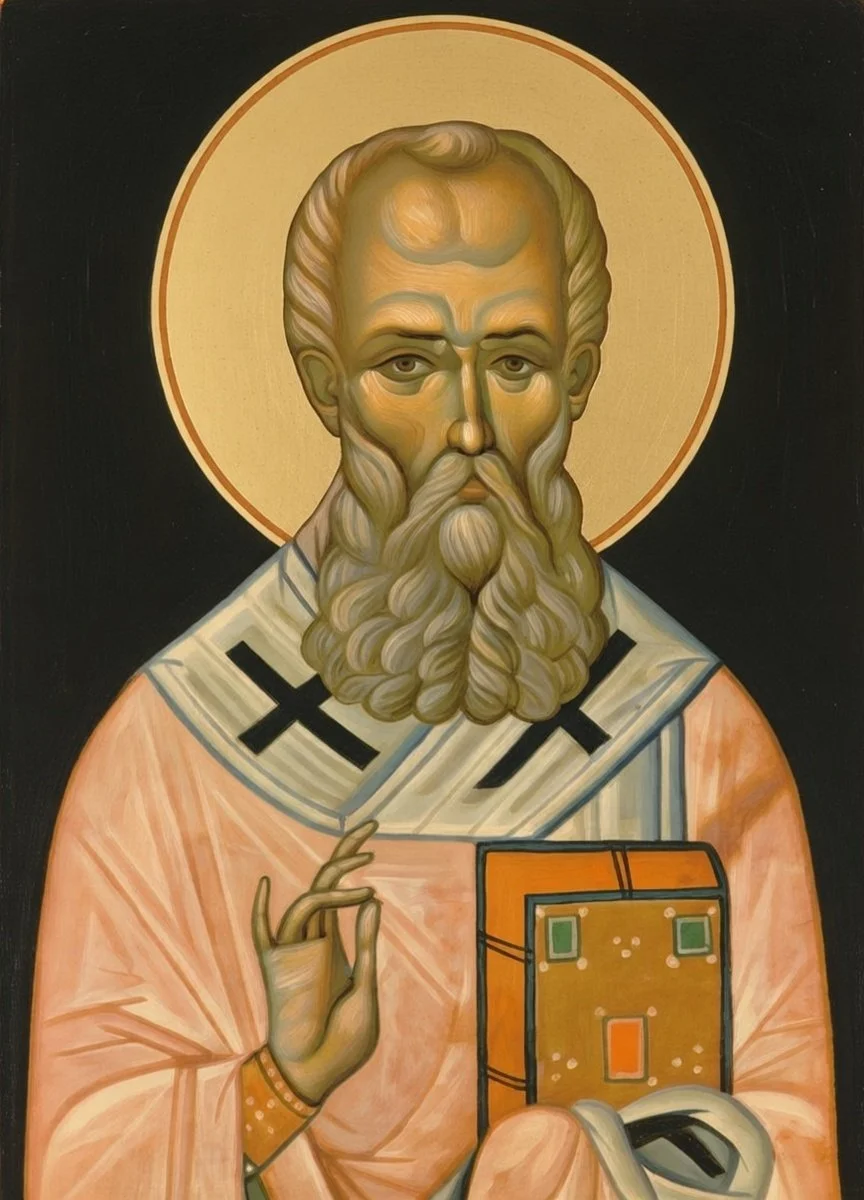
Saint Gregory of Narek
The 10th-century Armenian mystic and Doctor of the Universal Church — a product of the theological tradition established at the Second Council of Dvin, whose Book of Lamentations has been kept beside the Bible in Armenian homes for a thousand years. Patron for depression healing and deep interior prayer.
Get the Prayer Card →Frequently Asked Questions
Also From The Eastern Church
Free Christian Marriage Books That Bring You Closer to God and Each Other
Complete books — no email, no paywall, no missing chapters. Read every book free online right now. Rooted in the ancient Christian tradition, written for couples at every stage of marriage.
Read Free Marriage Books →Pray With the Saints Who Shaped This History
The saints who formed the theological and spiritual world that produced the Second Council of Dvin — Gregory the Illuminator, Vartan Mamikonian, Mesrop Mashtots, Nerses the Great, Gregory of Narek — are all available as handcrafted prayer cards made one at a time in Austin, Texas.
Browse Armenian Prayer Cards →Further Reading & Resources
Deepen Your Knowledge of Armenian Christianity