What Is the Armenian Apostolic Church
The Complete Guide
What Is the Armenian Apostolic Church?
The world's oldest national church, founded by apostles, shaped by martyrs, defined by councils — and still standing after 1,700 years
At a Glance
1st century AD (apostolic origins)
There is a church older than most nations, older than the Roman Catholic papacy as an institution, older than the Eastern Orthodox church as a distinct communion, older than Islam, older than the Talmud in its final written form. It is the Armenian Apostolic Church — and it has been the soul of the Armenian people for 1,700 unbroken years.
Most Western Christians have heard of it vaguely, usually in connection with the Armenian Genocide, or perhaps have encountered an Armenian church in a major city without knowing quite what they were looking at. Is it Orthodox? Is it Catholic? Neither, exactly — though it shares deep roots with both. Is it in communion with Rome? No. Does it celebrate the same liturgy as the Greek Orthodox? No — its liturgy is older, and in some ways more elaborate. Is it Monophysite, as it has sometimes been labeled? No — and understanding why requires paying close attention to a theological distinction that has major implications for Christian unity in the twenty-first century.
This article is the complete guide to what the Armenian Apostolic Church actually is: its founding, its theology, its liturgy, its saints, its structure, and its extraordinary survival through two millennia of persecution, war, diaspora, and now — rebirth.
What Does "Apostolic" Mean? The Name Explained
The full official name of the church is the Armenian Apostolic Holy Church (Armenian: Հայ Առաքելական Սուրբ Եկեղեցի). Each word carries weight. "Armenian" identifies the national and ethnic character of the church — it is the national church of the Armenian people, with a history inseparable from the history of Armenia as a nation. "Holy" signals its claim to participate in the holiness of God through the sacraments and the communion of saints. And "Apostolic" — the word that most often confuses outsiders — makes a specific historical claim: that this church was founded directly by apostles of Jesus Christ.
This is not merely a metaphorical claim about continuity of faith. The Armenian Apostolic Church teaches that the Apostle Thaddeus (also called Jude, or Addai in Syriac tradition) came to Armenia in approximately 43–66 AD, and that the Apostle Bartholomew followed, preaching, performing miracles, and establishing the first Christian communities on Armenian soil. Both were eventually martyred in Armenia. Their graves are venerated as the first holy sites of Armenian Christianity — Thaddeus in Artaz, Bartholomew in Albac. The word "Apostolic" in the church's name is a claim to this direct, unbroken descent from the apostles themselves.
The church is also sometimes called the Armenian Gregorian Church — a reference to Saint Gregory the Illuminator, who organized the church institutionally in 301 AD — or simply the Armenian Orthodox Church, though this last name can cause confusion with Eastern Orthodoxy. The church itself generally prefers "Apostolic" as its defining descriptor, emphasizing its founding origin over its doctrinal family (Oriental Orthodox) or its national identity.
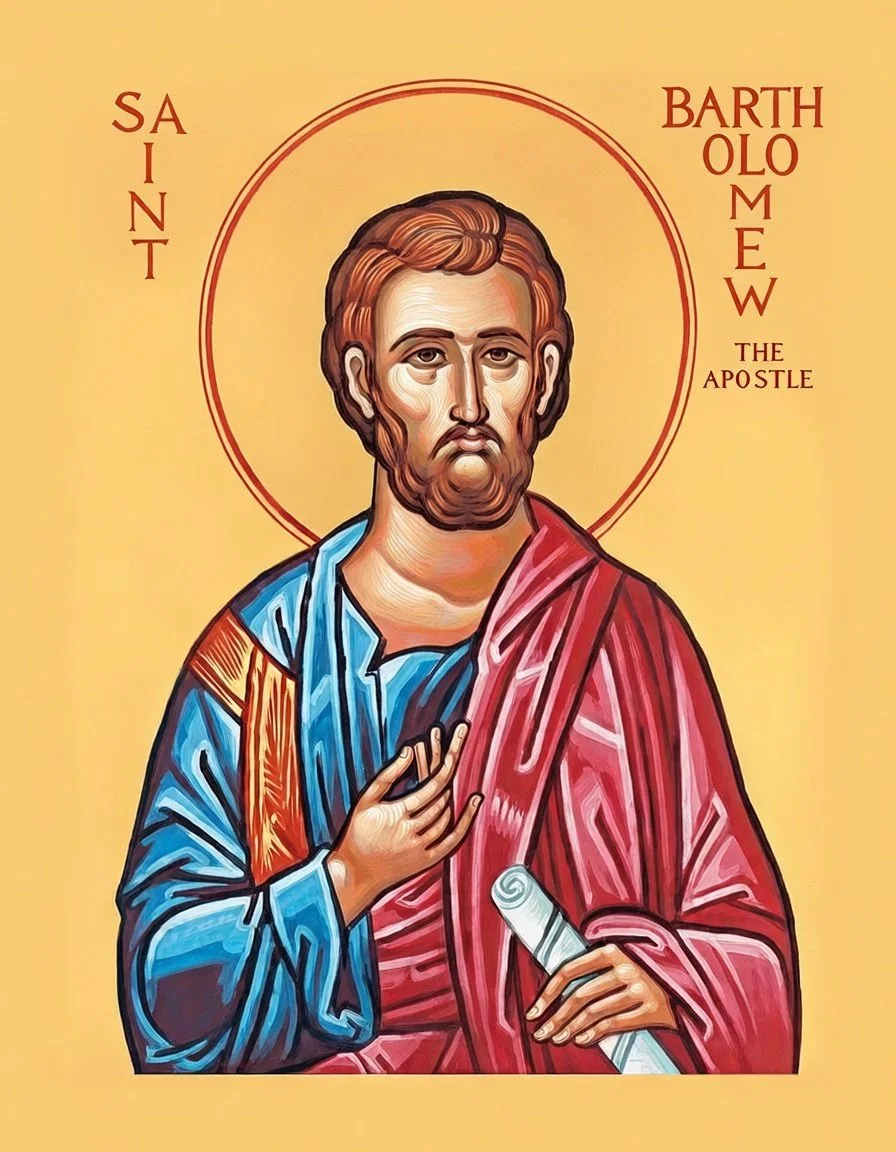
Saint Bartholomew the Apostle
One of Christ's twelve apostles and co-founder of the Armenian Church with Thaddeus. He was martyred in Armenia in the first century, making him the apostolic root of the church that still carries his legacy today. Venerated in the Eastern Orthodox Menaion on June 11 and August 25.
Get the Prayer Card →The Apostolic Founding: Thaddeus and Bartholomew
The Armenian Church's claim to apostolic foundation rests on a tradition that predates any written Armenian Christian records — because Armenia had no written language until the fifth century. The tradition is preserved through oral transmission, through early Armenian historians like Movses Khorenatsi and Agathangelos, and through the physical memory of pilgrimage sites, martyrs' graves, and the church buildings erected over them.
According to this tradition, the Apostle Thaddeus arrived in Armenia around 43 AD, during the reign of King Sanatrouk. He performed healings, preached the Gospel, and converted the king's daughter Sandukht — who is venerated as Armenia's first Christian martyr when she was executed by her own father for refusing to renounce her faith. Thaddeus himself was eventually martyred, his relics preserved at the Monastery of Saint Thaddeus (Qara Kelisa, the Black Church) in what is now northwestern Iran — one of the oldest surviving Christian churches in the world, built on the site of his burial.
The Apostle Bartholomew arrived shortly after, preaching in southern and central Armenia. He too was martyred — tradition says he was flayed alive and beheaded — and his relics were venerated in the Armenian city of Derbent. Together, Thaddeus and Bartholomew give the Armenian Church its apostolic charter: a direct founding lineage from the Twelve, traceable to the lifetime of Jesus Christ.
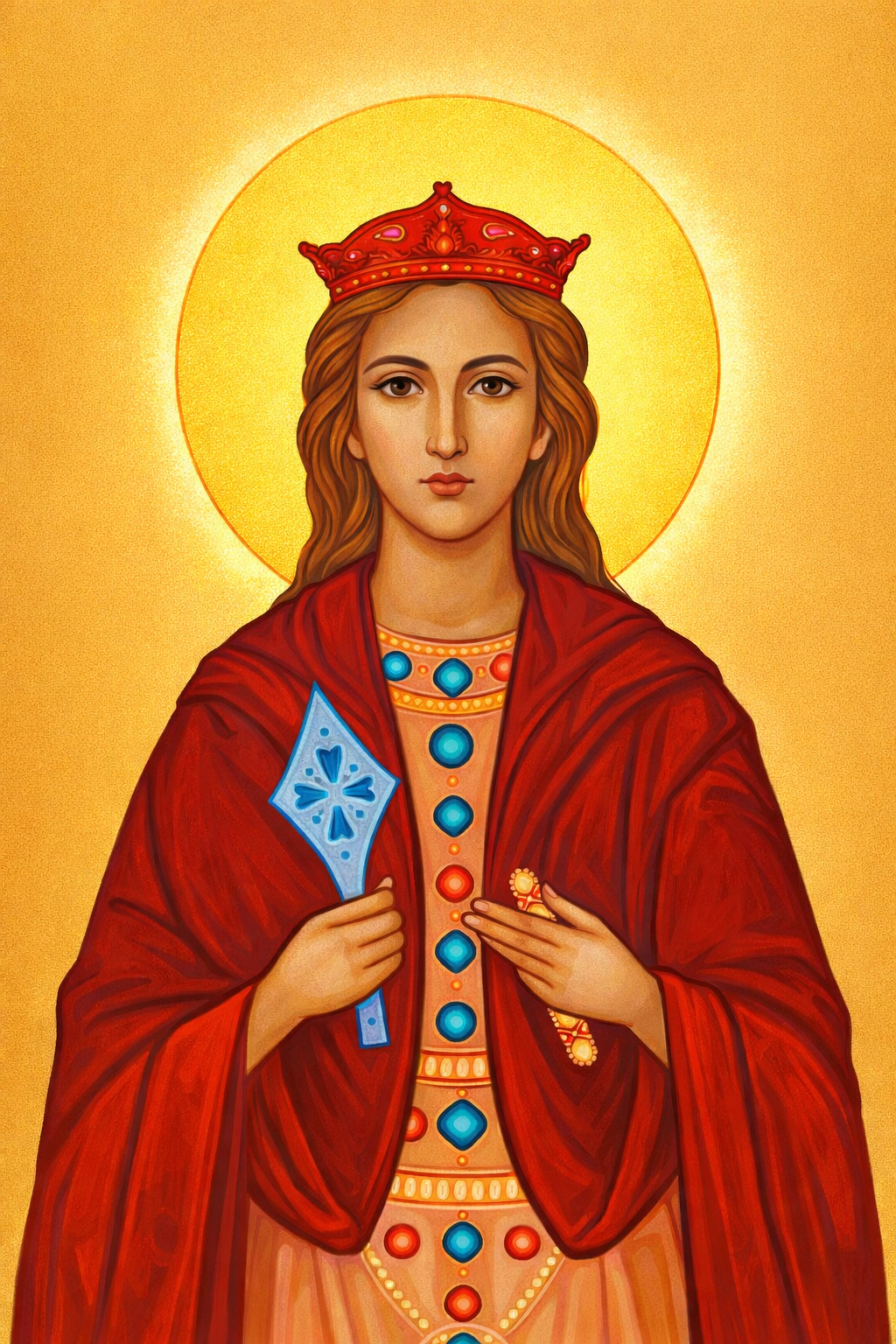
Saint Sandukht
Armenia's first martyr — the king's daughter who converted after hearing the Apostle Thaddeus preach and was executed by her own father for refusing to renounce her faith. The very first fruit of the apostolic mission to Armenia. Patron for young women under family pressure to abandon their faith.
Get the Prayer Card →The Illumination: Gregory and 301 AD
The story of how Armenia became the world's first Christian nation is one of the most dramatic conversion narratives in the history of religion. It begins with a pit, a king's madness, and a woman who fed a prisoner bread through thirteen years of darkness.
Gregory — later called the Illuminator — was born into an Armenian noble family of Parthian descent around 257 AD. His father had assassinated the Armenian king, and Gregory was taken as an infant to Cappadocia (in Asia Minor) to be raised in safety, where he received a Christian education. When he returned to Armenia as an adult and entered the service of King Tiridates III, he refused to perform a pagan religious rite — and the king, upon discovering Gregory was both Christian and the son of his father's murderer, had him thrown into the Khor Virap: a deep pit-prison near Artaxata. Gregory remained there for thirteen years, sustained by a Christian widow who secretly lowered food to him.
Meanwhile, a group of Roman Christian women — virgins fleeing persecution in Rome — arrived in Armenia seeking refuge. Their leader was Gayane; among them was a young woman named Hripsime. King Tiridates, captivated by Hripsime's beauty, tried to force her to be his bride. She refused. He had her and all her companions tortured and executed. Shortly afterward, the king was struck by a severe mental affliction — described in the sources as a kind of madness — that no one could heal. The king's sister had a vision: only Gregory, still alive in the pit, could heal him. Gregory was brought up from the pit after thirteen years. He prayed over the king. Tiridates was healed. And he converted — publicly, irrevocably, with the full weight of royal authority behind the decision.
In 301 AD, King Tiridates III declared Christianity the official religion of Armenia — making Armenia the first country in history to adopt Christianity as its state religion, twelve years before Constantine's Edict of Milan. Gregory was consecrated as the first Catholicos (patriarch) of the Armenian Church and spent the rest of his life building churches across Armenia, ordaining clergy, and organizing the institutional structure of the new national church. The place where Gregory had his vision of Christ descending to earth — in Vagharshapat — became the site of the Mother Cathedral: Etchmiadzin, meaning "the place where the Only-Begotten descended."
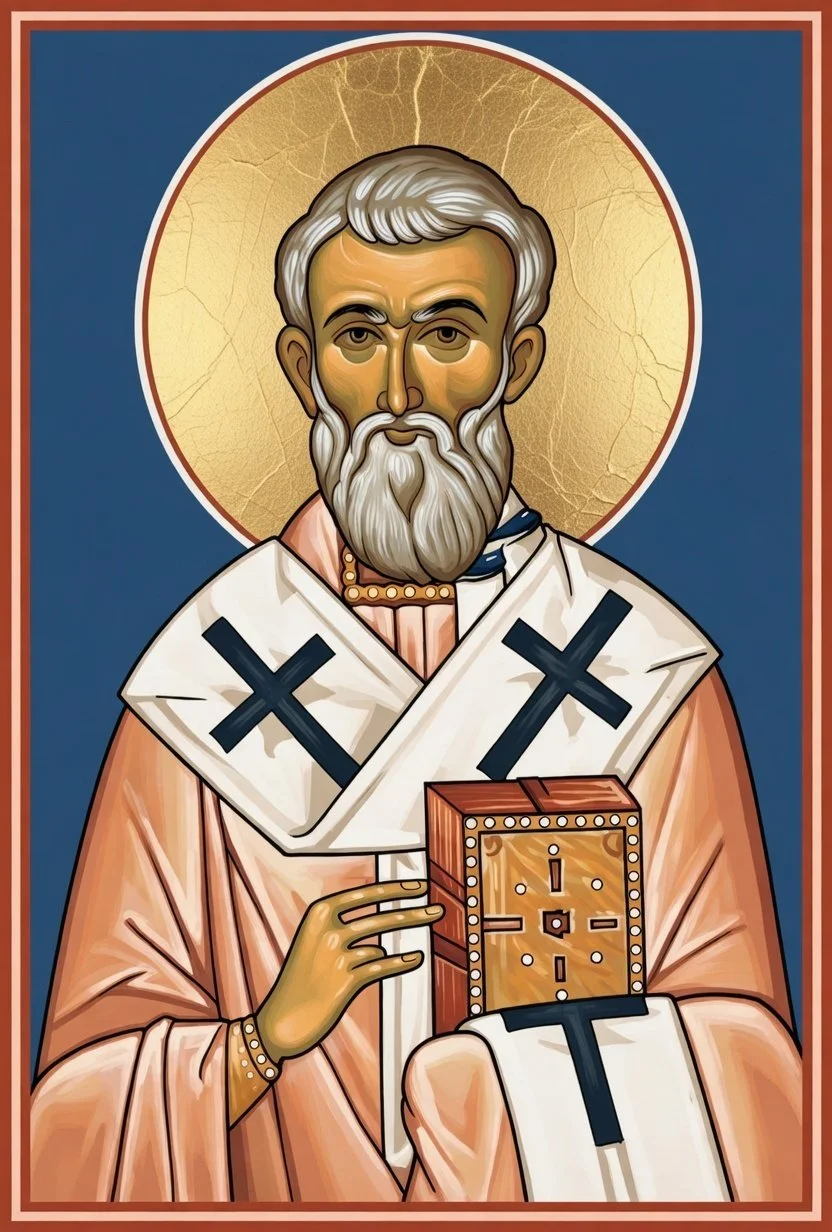
Saint Gregory the Illuminator
Patron of Armenia. First Catholicos. Thirteen years in a pit, then the conversion of a nation. Venerated in the Greek Orthodox Menaion on September 30.
Get the Prayer Card →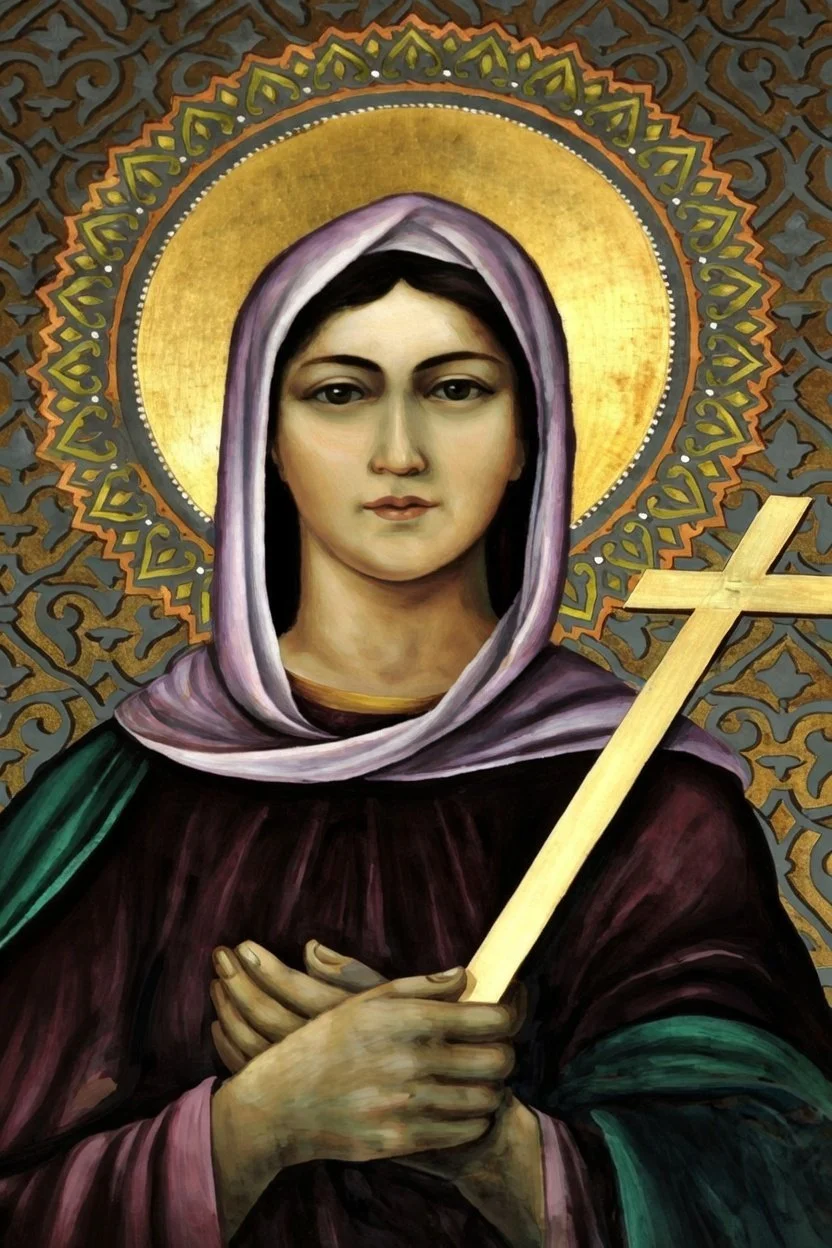
Saint Hripsime
Her death broke the king's heart and broke open Armenia's history. Her martyrdom directly triggered the conversion of the first Christian nation. Feast: Sept 30 in the Greek Orthodox calendar.
Get the Prayer Card →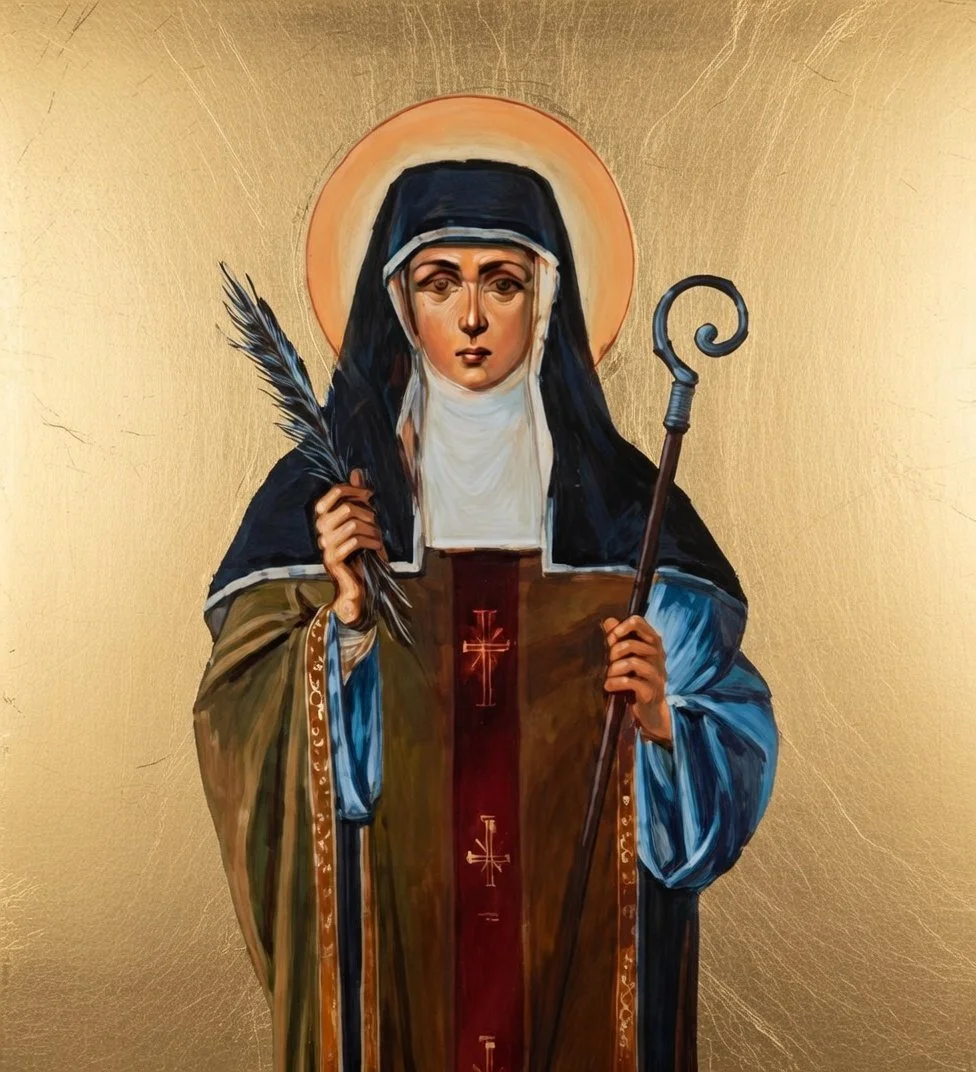
Saint Gayane
Leader of the Hripsimian virgins. The abbess who led the women to Armenia and was martyred alongside them. Her basilica still stands at Vagharshapat — a UNESCO World Heritage Site.
Get the Prayer Card →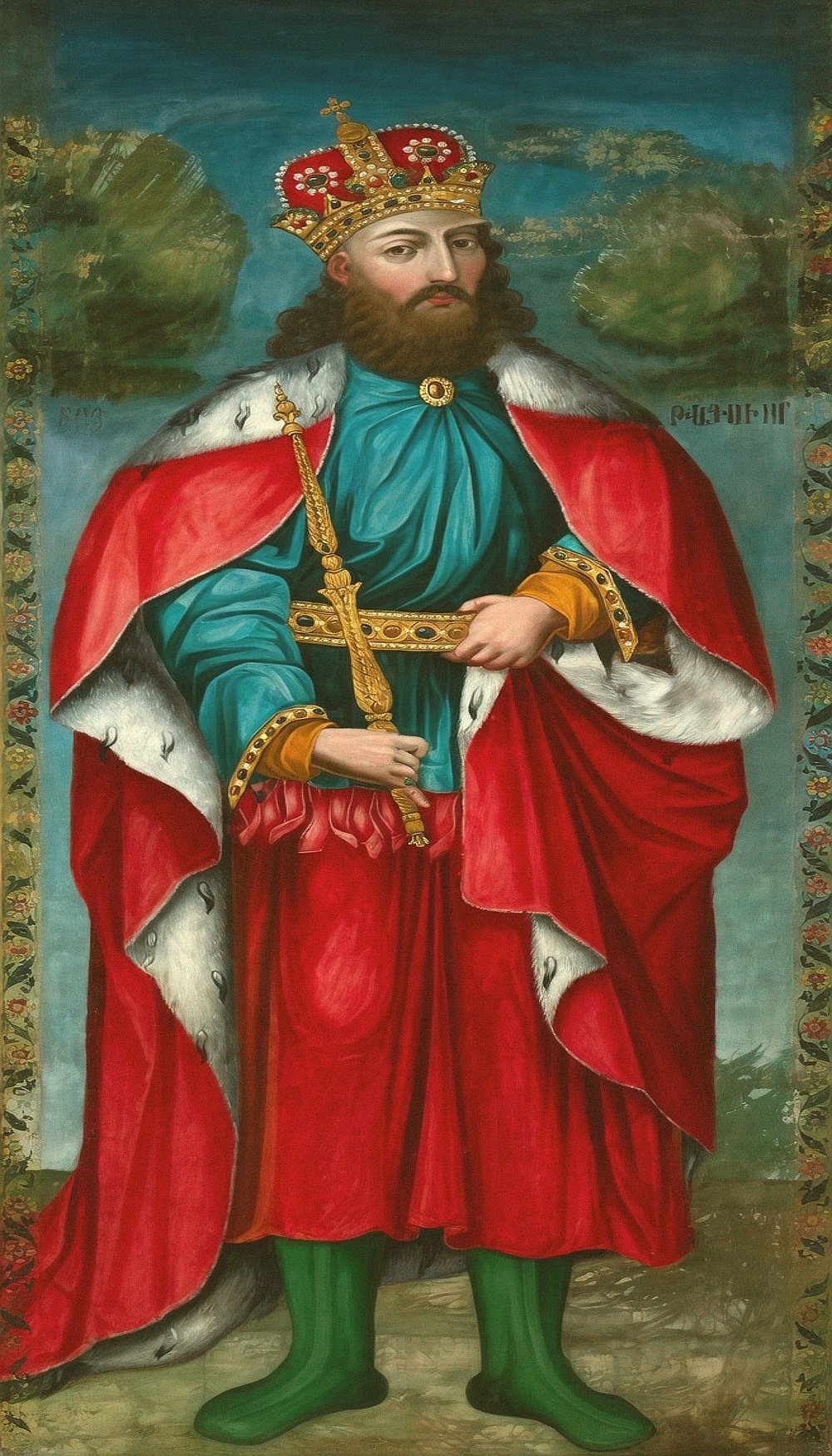
Saint King Tiridates III
The king who imprisoned Gregory, ordered the martyrdom of the virgins — and then converted, making Armenia the first Christian nation on earth. Venerated as a saint in the Armenian Church.
Get the Prayer Card →The Golden Age: Alphabet, Bible, and War
The fifth century was Armenia's golden age and its crucible simultaneously. Within a single generation, the Armenian people received their written language, their Scripture in their own tongue, and fought their most defining battle. These three events — the alphabet, the Bible, and the Battle of Avarayr — are inseparable from each other and inseparable from the identity of the Armenian Church.
The Invention of the Armenian Alphabet (405 AD)
Before 405 AD, Armenia had a spoken language but no written script. The Church's liturgy was celebrated in Greek and Syriac. Scripture was read in foreign tongues that most Armenians could not understand. This was not merely a cultural problem — it was an evangelistic one. A church that cannot speak to its people in their own language cannot fully form them in faith.
The monk and scholar Mesrop Mashtots, working with the encouragement and support of Catholicos Sahak Partiev (Isaac the Great), spent years seeking the right written form for the Armenian language. After a vision — described in the sources as a divine revelation — he devised the 36-letter Armenian alphabet around 405 AD. It was immediately put to work: within years, the Bible was translated into Armenian, along with the Divine Liturgy, patristic texts from Greek and Syriac, and Armenian hymns. The result — called the "Golden Age" of Armenian literature — produced a body of Christian writing that is among the most sophisticated of the fifth century anywhere in the world.
The Armenian alphabet, almost unchanged after sixteen centuries, is still in use today. Mesrop Mashtots is commemorated in the Eastern Orthodox Menaion on February 19, recognized by the whole Church as a gift to Christianity.
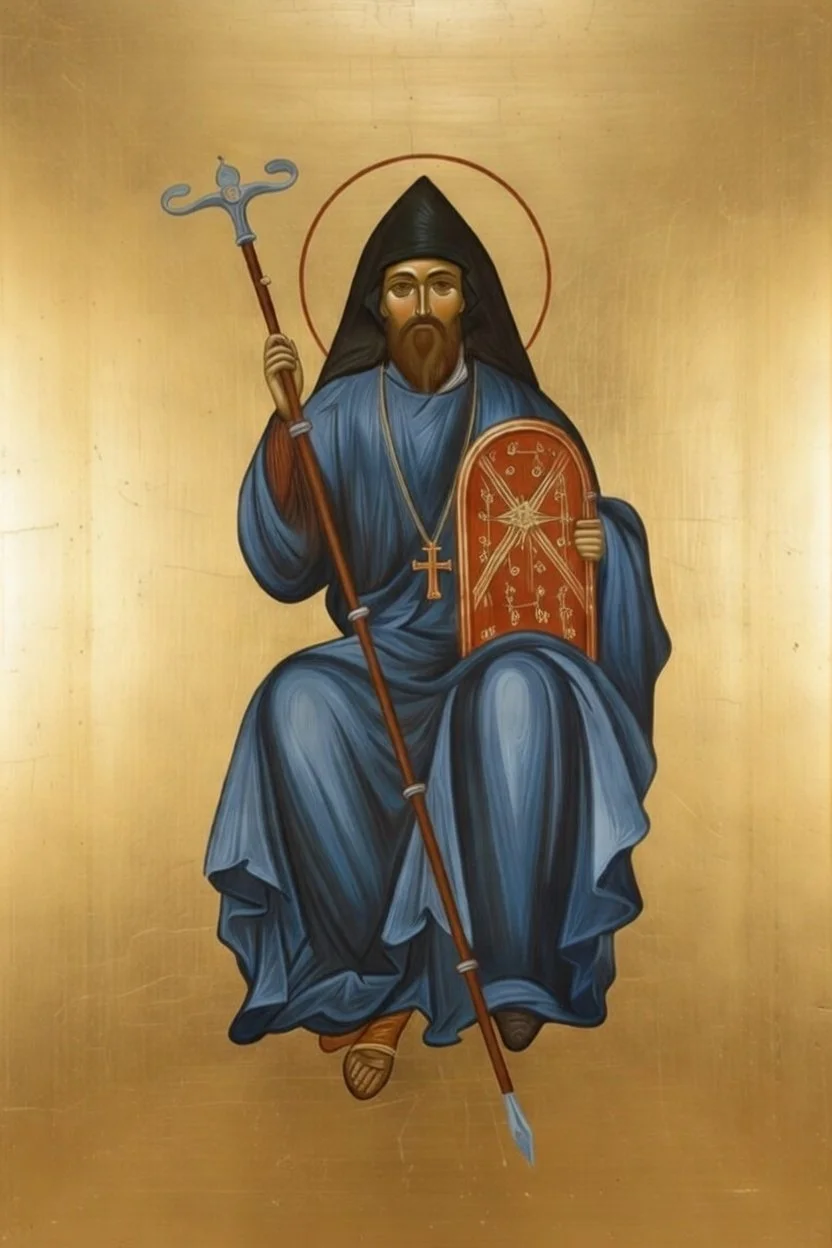
Saint Mesrop Mashtots
Inventor of the Armenian alphabet. Without him, there would be no Armenian Bible, no Armenian liturgy in the vernacular, no Armenian theological tradition — and arguably no Armenian Church as we know it. Feast: Feb 19 in the Orthodox Menaion.
Get the Prayer Card →
Saint Sahak Partiev (Isaac the Great)
Catholicos of Armenia and patron of Mesrop's alphabet work. He oversaw the first translation of the Bible into Armenian and preserved the Church's independence under relentless Persian and Byzantine political pressure.
Get the Prayer Card →The Battle of Avarayr (451 AD): Death Before Apostasy
On May 26, 451 AD — the same day the Council of Chalcedon opened in the Byzantine Empire — the Armenian army under General Vartan Mamikonian met the Sasanian Persian army at the field of Avarayr. The Persians had demanded that Armenia abandon Christianity and convert to Zoroastrianism. The Armenians refused. They were outnumbered by an enormous margin. They fought anyway. Vartan Mamikonian and many of his soldiers were killed. The Armenians lost the battle. But the Persians were so shaken by the ferocity of the Armenian resistance that they never enforced the conversion. Armenia remained Christian. The blood of Avarayr purchased the freedom of the Armenian Church.
Vartanants — the feast of Saint Vartan and the Avarayr martyrs — is one of the most important commemorations in the Armenian Church calendar, observed on the Thursday before Lent. It is the Armenian equivalent of what Thermopylae is for the Greeks: a defeat that was really a victory, a death that was really a life.
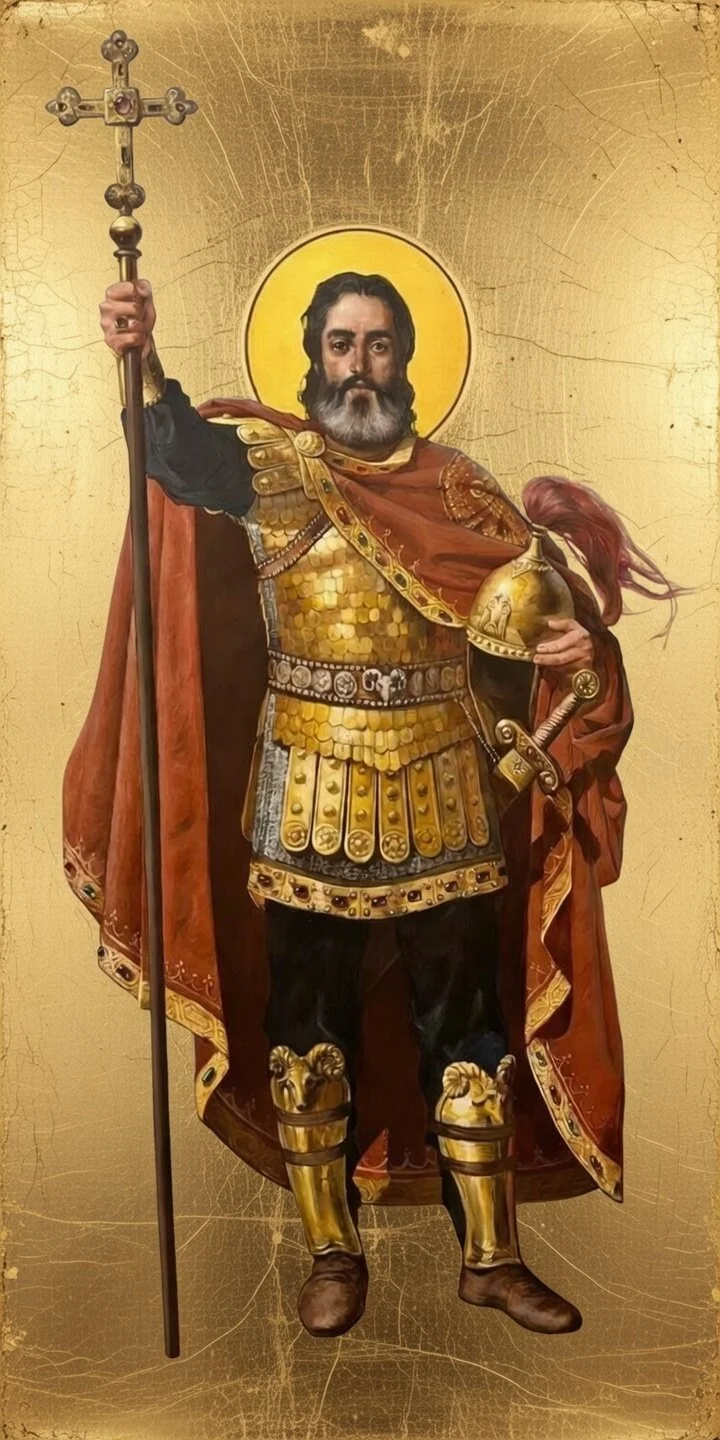
Saint Vartan Mamikonian
The Armenian general who died defending the faith on the day Chalcedon opened. His sacrifice purchased the Armenian Church's freedom to remain Christian under Persian rule. The feast of Vartanants is observed annually before Lent. Patron for defending the faith under impossible odds.
Get the Prayer Card →What the Armenian Church Believes
The Armenian Apostolic Church is a fully trinitarian, creedal, sacramental church rooted in the theology of the early Christian councils. Its beliefs on the Trinity, the authority of Scripture, the nature of salvation, the role of the saints and the Theotokos (the Virgin Mary as God-bearer), and the necessity of the sacraments are broadly shared with both Eastern Orthodoxy and Roman Catholicism. The single theological point on which it stands apart — and which caused its separation from the Chalcedonian world in the fifth and sixth centuries — is its Christology: its understanding of the nature of Jesus Christ.
Miaphysitism: One United Nature in Christ
The Armenian Church affirms the Nicene Creed in full. It affirms that Jesus Christ is fully divine and fully human. What it does not affirm is the Council of Chalcedon's formula (451 AD) that these two realities constitute two distinct natures in one person. The Armenian Church follows instead the formula of Cyril of Alexandria: after the Incarnation, Christ has one united, composite, inseparable nature — both divine and human — in a single reality. This position is called Miaphysitism (from the Greek mia physis, one nature), and it must be carefully distinguished from Monophysitism.
Miaphysitism ≠ Monophysitism. Monophysitism (Eutychianism) taught that Christ's human nature was absorbed into the divine after the Incarnation, leaving only one — divine — nature. The Armenian Church explicitly rejects and condemns this position. Miaphysitism teaches that Christ has one united nature that is both fully divine and fully human — inseparably, indivisibly, in one single reality. The Greek word mia (one, unified, composite) is not the same as monos (alone, single). Modern ecumenical dialogues between Catholic, Orthodox, and Oriental Orthodox theologians have broadly concluded that the separation between Chalcedonian and Miaphysite churches is more terminological than substantive.
Doctrine of the Holy Spirit
Like Eastern Orthodox Christians, the Armenian Church holds that the Holy Spirit proceeds from the Father alone — not from the Father and the Son (the Filioque addition that caused the Great Schism of 1054 between Rome and Constantinople). On this point, the Armenian Church is in agreement with Eastern Orthodoxy against Rome.
The Three Ecumenical Councils
The Armenian Apostolic Church recognizes the authority of the first three Ecumenical Councils: Nicaea (325), Constantinople I (381), and Ephesus (431). It does not recognize Chalcedon (451) or the subsequent councils recognized by either Rome or Eastern Orthodoxy. This is the formal theological marker that places it in the Oriental Orthodox family.
The Role of Tradition and the Fathers
Like all apostolic churches, the Armenian Church holds that Scripture and Tradition together constitute the authoritative source of Christian teaching. The writings of the Church Fathers — especially Cyril of Alexandria, Athanasius, and the Cappadocians — along with the decisions of the three accepted councils and the Armenian theological tradition (including the writings of Gregory of Narek and Nerses Shnorhali) form the interpretive framework through which Scripture is understood and the faith is lived.
How It Differs from Eastern Orthodox
This is the question most people are actually asking when they encounter the Armenian Church for the first time: Is this Orthodox? It looks Orthodox. The answer is: it is in the same broad family of ancient, apostolic, liturgical Christianity — but it is a distinct church, with distinct theology, distinct leadership, and distinct history.
| Feature | Armenian Apostolic | Eastern Orthodox |
|---|---|---|
| Council of Chalcedon (451) | Rejected — does not accept the two-nature formula | Accepted — Chalcedon is the Fourth Ecumenical Council |
| Christology | Miaphysitism — one united divine-human nature | Dyophysitism — two natures, one person |
| Ecumenical Councils Recognized | Three (Nicaea, Constantinople I, Ephesus) | Seven (through the Second Council of Nicaea, 787) |
| Liturgical Language | Classical Armenian (Krapar/Grabar) | Greek, Church Slavonic, Arabic, or local vernaculars depending on jurisdiction |
| The Divine Liturgy | The Badarak (Armenian Rite) | The Divine Liturgy of St. John Chrysostom or St. Basil (Byzantine Rite) |
| Eucharistic Elements | Unleavened bread; wine without water added | Leavened bread; wine mixed with water |
| Church Leadership | Catholicos of All Armenians (Etchmiadzin) | Patriarchates (Constantinople, Moscow, Alexandria, etc.) — no single head |
| Communion with Rome | No | No |
| Shared Saints | Pre-Chalcedonian saints shared across both traditions | Gregory the Illuminator, Hripsime, Mesrop Mashtots venerated in Orthodox Menaion |
How It Differs from the Armenian Catholic Church
The Armenian Catholic Church is perhaps the most common source of confusion for outsiders, because it uses the same rite, venerates the same saints, shares the same liturgical language, and draws on the same historical tradition. The essential difference is one of ecclesial communion: the Armenian Catholic Church is in full communion with Rome and recognizes the authority of the Pope. The Armenian Apostolic Church is not and does not.
| Feature | Armenian Apostolic | Armenian Catholic |
|---|---|---|
| Communion with Rome | No — fully independent | Yes — one of the Eastern Catholic Churches |
| Head of the Church | Catholicos of All Armenians (Etchmiadzin) | Armenian Catholic Patriarch-Catholicos (Beirut), subject to the Pope |
| Christology | Miaphysite — does not accept Chalcedon | Officially accepts Chalcedon as in communion with Rome |
| Rite | Armenian Rite (Badarak) | Armenian Rite (Badarak) — largely identical, with some Latin influences |
| Saints | All pre-Chalcedonian Armenian saints; their own canonizations | Same pre-Chalcedonian saints; additional beatifications by Rome (e.g. Blessed Ignatius Maloyan) |
| Clergy | Married priests permitted; celibate clergy for episcopate | Same — married priests permitted; bishops celibate |
| Calendar | Armenian Church calendar | Primarily Roman calendar with Armenian liturgical elements |
| Worldwide members | ~9 million | ~500,000 |
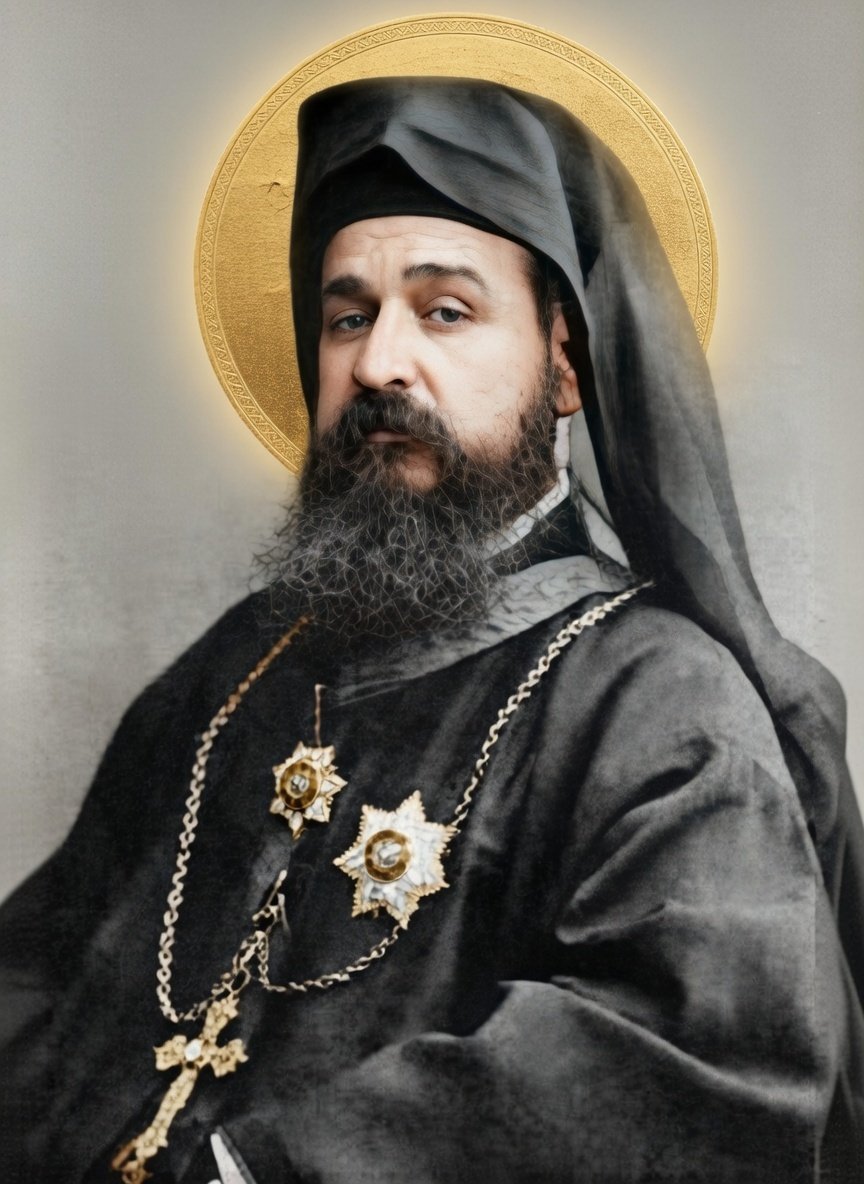
Blessed Ignatius Maloyan
Armenian Catholic Archbishop martyred in the 1915 Genocide. He refused to convert to Islam and was shot after forgiving his executioner. Beatified by Pope John Paul II in 2001. Patron for persecuted Christians.
Get the Prayer Card →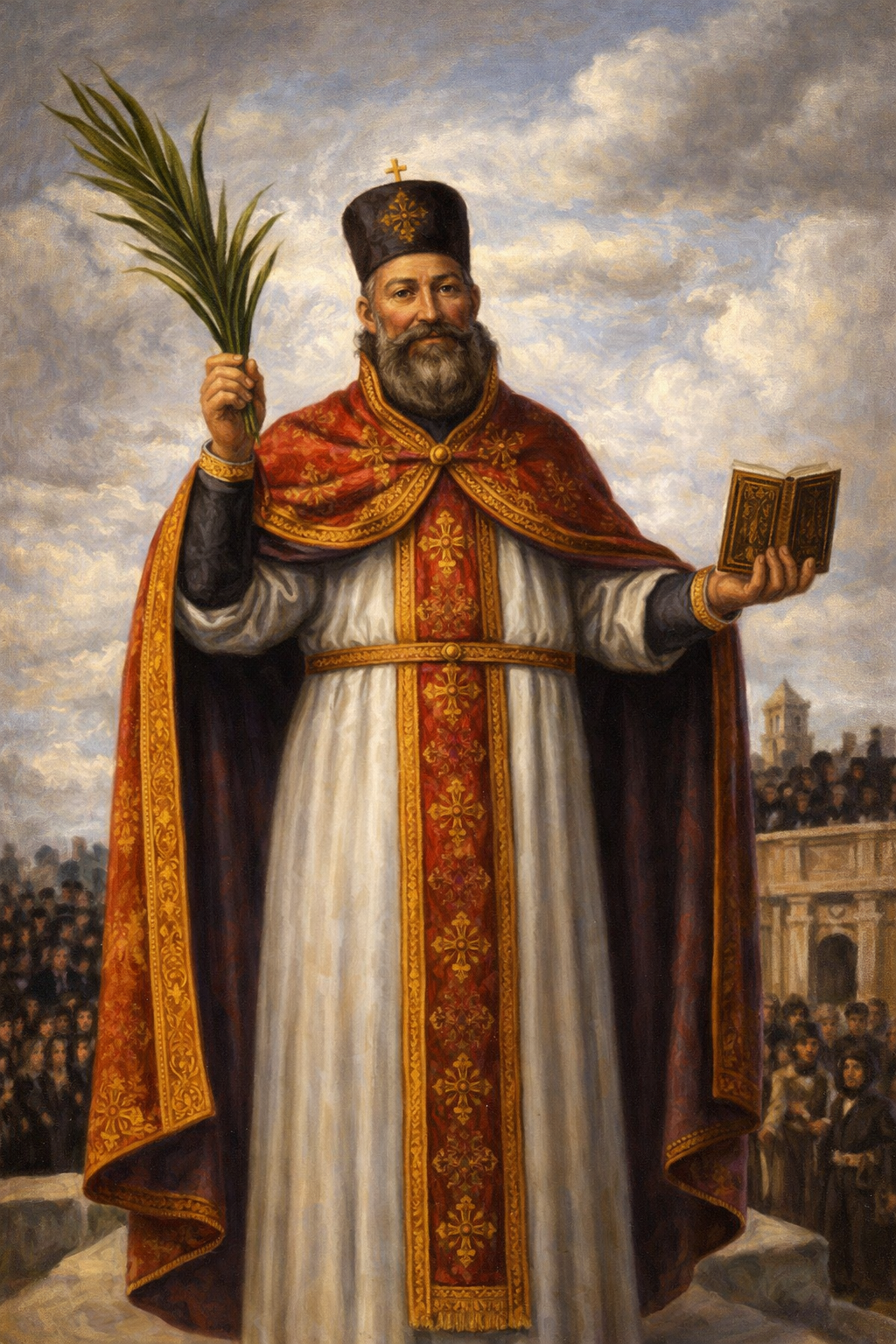
Blessed Gomidas Keumurjian
Armenian Catholic priest in Constantinople martyred in 1707 after years of psychological torture in an Ottoman prison. Refused Islam; refused to renounce his priesthood. Patron for trauma survivors and those suffering in silence.
Get the Prayer Card →The Badarak: The Divine Liturgy of the Armenian Church
If you want to understand the Armenian Apostolic Church at its deepest level, attend the Badarak. The word itself — Badarak (Պատարագ) — means "offering" or "sacrifice" in Classical Armenian, and it names the Divine Liturgy: the central act of Armenian Christian worship, in which bread and wine become the Body and Blood of Christ and the faithful receive him in Holy Communion.
The Badarak's liturgical roots draw from multiple ancient sources — initially from Syriac and Cappadocian Christian practice, then strongly from the Jerusalemite liturgical tradition (the lectionary system of Sunday readings has its roots in fourth-century Jerusalem), and later from Byzantine liturgical influence from around the tenth century onward. The base of the Eucharistic Prayer draws on the missals of Saint Basil of Caesarea and Saint Gregory the Theologian. Over the centuries, distinctly Armenian elements — original chants, prayers, and rites — were added, giving the Badarak its own unmistakable character.
The Four Parts of the Badarak
The Armenian Divine Liturgy is divided into four parts, each with a distinct spiritual movement:
1. Preparation (Matootits): The preparatory rites, in which the priest vests and prepares the altar, praying over the bread and wine before the liturgy proper begins. This section draws on ancient prayers of self-examination and purification.
2. The Synaxis (the Liturgy of the Word): The teaching portion of the liturgy, in which readings from the Old and New Testaments are proclaimed, the Gospel is chanted by an ordained deacon (not read — chanted, from the elevated bema), and the Nicene Creed is sung by the entire congregation. The response of the choir when the Gospel is announced — "Glory to you, O Lord our God… God is speaking" — captures the Armenian theological conviction that the Liturgy of the Word is not a lesson but a real encounter with Christ.
3. The Eucharist: The consecratory portion of the liturgy, in which the bread and wine are offered, the Eucharistic Prayer is proclaimed, and the elements are consecrated. The Armenian Church uses unleavened bread — one single consecrated loaf per liturgy — and wine without added water. This double distinctiveness (unleavened bread like the Latin West, wine without water unlike either East or West) is unique to the Armenian Rite and reflects the tradition's independent development. Holy Communion is received with the bread dipped in the wine, placed directly into the mouth of the communicant by the priest. The communicant says: Megha Asdoodzo — "I have sinned against God."
4. The Last Blessing: The concluding rites, including thanksgiving prayers, the final blessing of the people, and the dismissal.
The Kiss of Peace
Before the Eucharistic portion of the liturgy, the deacon urges the people to greet one another with a holy kiss — a liturgical gesture of unity and love that connects the reception of communion with the requirement of genuine reconciliation with one's neighbor. Those not receiving communion depart before this moment. The Armenian tradition holds that the Eucharist and the union of the Church in love are inseparable: one cannot receive Christ's body and be at war with Christ's members.
The Language: Classical Armenian (Krapar)
The Badarak is celebrated in Classical Armenian — the literary language of the fifth-century Golden Age, called Krapar or Grabar. This is a liturgical language, no longer spoken as a vernacular anywhere, but preserved specifically for liturgical use — much as Latin was used in the Roman Rite until the twentieth century. Many Armenian parishes now provide translations and transliterations in the pews so that worshippers can follow in modern Armenian or English. The use of Krapar connects every celebration of the Badarak to the Golden Age of Armenian Christianity and to the translators who gave Armenia the gift of its own sacred language.
The Seven Sacraments
Like the Roman Catholic and Eastern Orthodox churches, the Armenian Apostolic Church celebrates seven sacraments (called khorhootrooteon — mysteries). Each sacrament is an outward sign through which God's grace is communicated to the faithful. The Armenian theological tradition regards the sacraments as the central acts of the Church's life — not merely rituals but genuine encounters with Christ.
Baptism
MkoortootyoonAdministered by full immersion (or pouring) with water in the name of the Trinity. The Armenian Church practices infant baptism as the ordinary norm, followed immediately by Chrismation and First Communion — giving the newly baptized the full initiation into the Church in a single ceremony.
Chrismation (Confirmation)
KrismaçãoAnointing with the Holy Myron (chrism oil) immediately after Baptism. The Myron is a sacred oil blended from olive oil and more than 40 flowers, herbs, and spices; it is prepared once every seven years at Etchmiadzin by the Catholicos himself — a ceremony that draws pilgrims from around the world. When distributed to bishops, the Myron is a tangible sign of communion with the Catholicos.
Holy Eucharist
Badarak / Surp KhorhootrooteonThe central sacrament of the Church — the Badarak. Bread and wine become the Body and Blood of Christ. Infants receive communion immediately after Baptism and Chrismation, a practice that reflects the Armenian Church's strong emphasis on the unity of the three sacraments of initiation.
Confession (Penance)
KhosdovanooteonConfession of sins to a priest, followed by absolution. The priest acts as a witness and mediator, pronouncing forgiveness in the name of Christ. Regular confession before receiving Communion is part of the expected spiritual discipline of Armenian Christians.
Holy Orders
KahanadarooteonThe ordination of deacons, priests, and bishops through the laying on of hands by a bishop — continuing the apostolic succession from the apostles through Gregory the Illuminator to the present Catholicos. Married men may be ordained as priests (called derders); celibate priests (vardapets) are eligible for the episcopate. Bishops are consecrated by the Catholicos with at least two assisting bishops.
Matrimony
ParakootyoonThe blessing of marriage in the Church. The Armenian tradition holds that marriage is a sacred covenant and a sacramental reality — not merely a civil contract. The marriage service includes the crowning of the bride and groom, a practice shared with Eastern Orthodoxy that symbolizes the couple's calling to be king and queen of a domestic church.
Holy Unction
Soorp OoriooteonThe anointing of the sick with blessed oil, for healing of soul and body. In the Armenian tradition, this sacrament has a special connection to the prayers of Saint Gregory of Narek: portions of his Book of Lamentations are read over the sick, and the book itself is sometimes placed beneath the pillow of the ill as a sign of trust in Gregory's intercessory power.
What Makes the Armenian Rite Distinctive
Visitors to an Armenian Apostolic church will notice immediately that it is neither quite like a Catholic church nor quite like an Eastern Orthodox one — though it shares elements with both. This distinctiveness is not accidental. It reflects the Armenian Church's independent development across seventeen centuries, absorbing influences from multiple traditions while remaining irreducibly itself.
The Khachkar: The Blooming Cross
The most immediately recognizable symbol of Armenian Christianity is the Khachkar — the cross-stone. These intricately carved stone crosses, decorated with interlacing vines, flowers, and geometric patterns, appear on churches, in cemeteries, at roadside shrines, and in homes across the Armenian world. The Khachkar is not merely decorative; it is theological. The flowering patterns around the cross express the Armenian Christian conviction that the cross is not a place of death alone but the source of life — the tree of life from which all good things bloom. Each Khachkar is unique; no two are carved the same. They are one of the great achievements of Armenian sacred art and one of the most beautiful expressions of Christian theology in visual form.
Christmas on January 6
The Armenian Apostolic Church celebrates Christmas and the Feast of the Epiphany together on January 6 — preserving the ancient tradition of the undivided Church from before the fourth century, when the two feasts were separated in the Roman and Byzantine traditions. For Armenians, January 6 is the celebration of both the birth of Christ and his manifestation to the world — a unified feast that reflects a very old layer of Christian liturgical memory. The Armenian Church is the only ancient church that has maintained this original unified feast in unbroken continuity.
Wine Without Water — and Unleavened Bread
As noted above, the Armenian Church uses wine without water added — making it unique among all apostolic churches. Eastern Orthodox churches add water; Rome used to add water and now often does not in practice; the Armenian Church has never added water. It also uses unleavened bread — sharing this practice with the Roman Church, unlike the Eastern Orthodox who use leavened bread. This double distinctiveness places the Armenian Rite in a liturgical category entirely its own.
The Matagh: A Memorial Sacrifice
One of the more unusual and frequently misunderstood practices of Armenian Christianity is the matagh (madagh) — a form of commemorative animal sacrifice. On certain feast days or in thanksgiving for answered prayer, an animal (usually a lamb or a rooster) is blessed and sacrificed, and its meat is prepared and shared with the poor and with the community. This practice — which the Church officially discourages but has never fully eradicated — is a remarkable survival of pre-Christian Armenian religious custom, baptized into a Christian memorial context. It has echoes in the Levitical sacrificial system and in the agape meals of the early Church. Its persistence is a sign of how deeply the Armenian Church is embedded in the cultural memory of the Armenian people.
The Book of Lamentations as a Sacred Object
The tenth-century mystical work of Saint Gregory of Narek — the Book of Lamentations (Matean Voghbergutyan) — occupies a place in Armenian Christian life unlike any other text except the Bible itself. Armenian families have kept a copy beside the Bible in their homes for over a thousand years. The book is read over the sick; placed under the pillow of the dying; portions are sung during the blessing of the Holy Myron. Gregory of Narek was declared a Doctor of the Universal Church by Pope Francis in 2015, the first Armenian saint to receive this title — a recognition that his spiritual writing belongs to the whole Christian world, not only to Armenia.
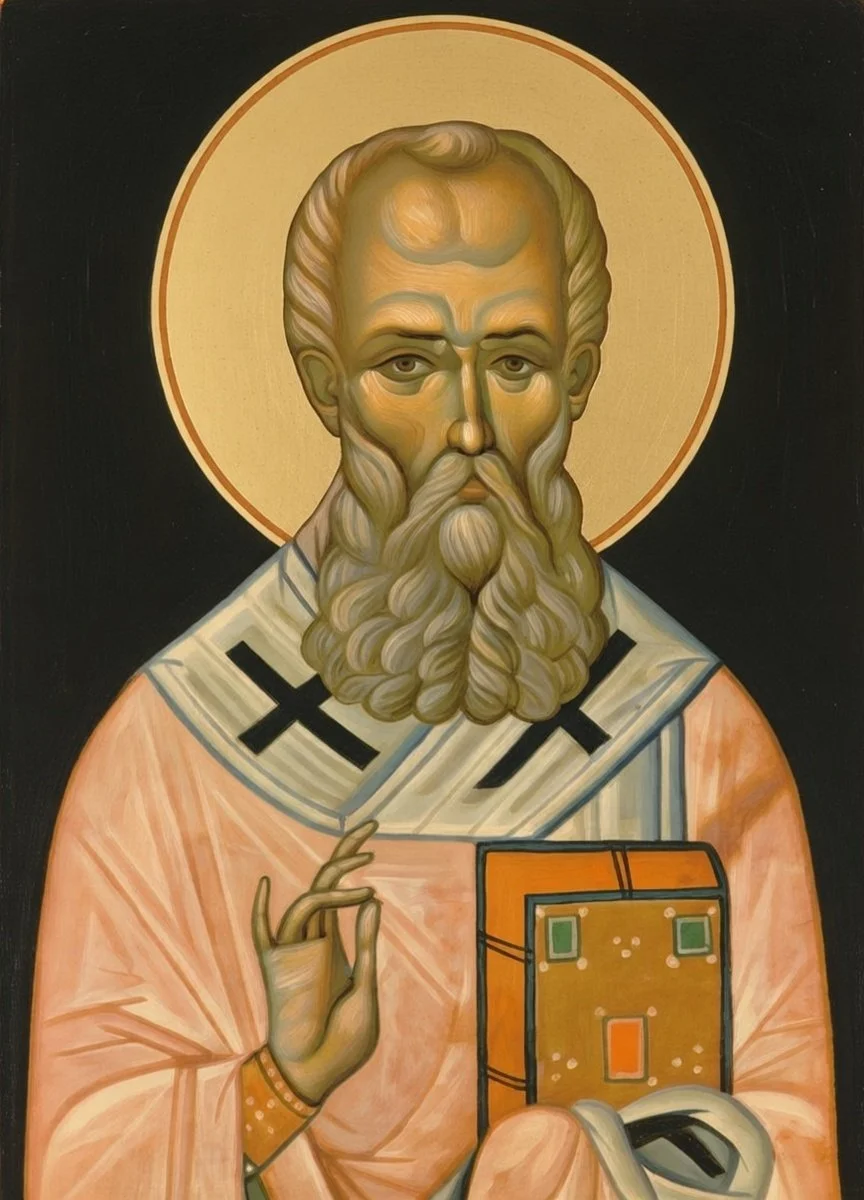
Saint Gregory of Narek
The 10th-century Armenian mystic and Doctor of the Universal Church whose Book of Lamentations has been read over the sick and kept beside the Bible in Armenian homes for a thousand years. Patron for depression, scrupulosity, and deep interior prayer. The 36th Doctor of the Church.
Get the Prayer Card →Church Structure: Catholicos, Sees, and Patriarchates
The Armenian Apostolic Church has a distinctive governance structure that reflects both its ancient apostolic origins and its complex history of political displacement and diaspora. It is neither a single centralized institution like the Roman Catholic Church nor a loose family of autocephalous churches like Eastern Orthodoxy, but something in between: a unified church with one primary head, two Catholicosal sees, and two patriarchates of high authority.
The Catholicos of All Armenians
At the top of the hierarchy is the Catholicos of All Armenians (Armenian: Ամենայն Հայոց Կաթողիկոս) — the Chief Bishop and Supreme Head of the Armenian Church, elected for life by a National Ecclesiastical Assembly consisting of both clergy and lay representatives from around the world. The Catholicos is consecrated by 12 bishops in the Mother Cathedral at Etchmiadzin. The incumbent is Karekin II, who has served since 1999. The Catholicos has exclusive authority to bless the Holy Myron, to consecrate bishops, and to govern the doctrinal, liturgical, and canonical life of the whole Church. His residence and the administrative headquarters of the worldwide Armenian Church is the Mother See of Holy Etchmiadzin in Vagharshapat, Armenia — the city Gregory the Illuminator built on the site of his vision of the descending Christ.
The Two Catholicosates
Since 1441, the Armenian Apostolic Church has had two Catholicosal sees — a historical accident born of political upheaval. The Mother See of Holy Etchmiadzin is the primary see, headed by the Catholicos of All Armenians. The Holy See of Cilicia, currently headquartered in Antelias, Lebanon (since 1930), is headed by the Catholicos of Cilicia — currently Aram I (since 1995). The Catholicos of Cilicia is equal in rank but recognizes the primacy of honor of the Catholicos of Etchmiadzin. The two Catholicosates are not separate churches; they are part of the one Armenian Apostolic Church, identical in doctrine, liturgy, and sacraments, with different geographic jurisdictions.
The split originated in the medieval period when the Catholicate relocated to Cilicia (in what is now southern Turkey) when the Armenian Kingdom of Cilicia was established there. When a new Catholicos was elected at Etchmiadzin in 1441 and the Cilician Catholicos chose to remain in place, two parallel sees came into existence. The Armenian Genocide of 1915 destroyed the Cilician see at Sis; the Catholicosate of Cilicia was reestablished in Antelias, Lebanon in 1930 with the help of the American Near East Relief, on the site of a former Armenian orphanage.
The Two Patriarchates
Below the two Catholicosates, the Armenian Church has two patriarchates: the Armenian Patriarchate of Jerusalem and the Armenian Patriarchate of Constantinople. Both are autonomous in their internal affairs and pledge canonical allegiance to the Catholicosate of All Armenians. The Armenian Patriarchate of Jerusalem — one of the four ancient Christian communities in the Holy City — maintains the Armenian Quarter in Jerusalem and the Cathedral of Saint James the Apostle, which has been in Armenian hands since the fourth century. The Armenian Patriarchate of Constantinople serves the Armenian community in Turkey.
Clerical Structure
The Armenian Church has two kinds of priests: married priests (called derders), who wear a blue cassock and blue turban and serve parish communities; and celibate priests (vardapets, archimandrites), who are members of monastic brotherhoods attached to the hierarchical sees and who alone are eligible for the episcopate. This system — married parish clergy, celibate hierarchical clergy — is shared broadly with Eastern Orthodoxy and distinguishes the Armenian Church from Rome, where all priests must be celibate in the Latin Rite. The National Ecclesiastical Assembly — the highest legislative body of the Armenian Church — is composed of two-thirds lay representatives and one-third clergy, reflecting the Armenian Church's historic conviction that the laity are genuine participants in the governance of the Church, not merely subjects of clerical authority.
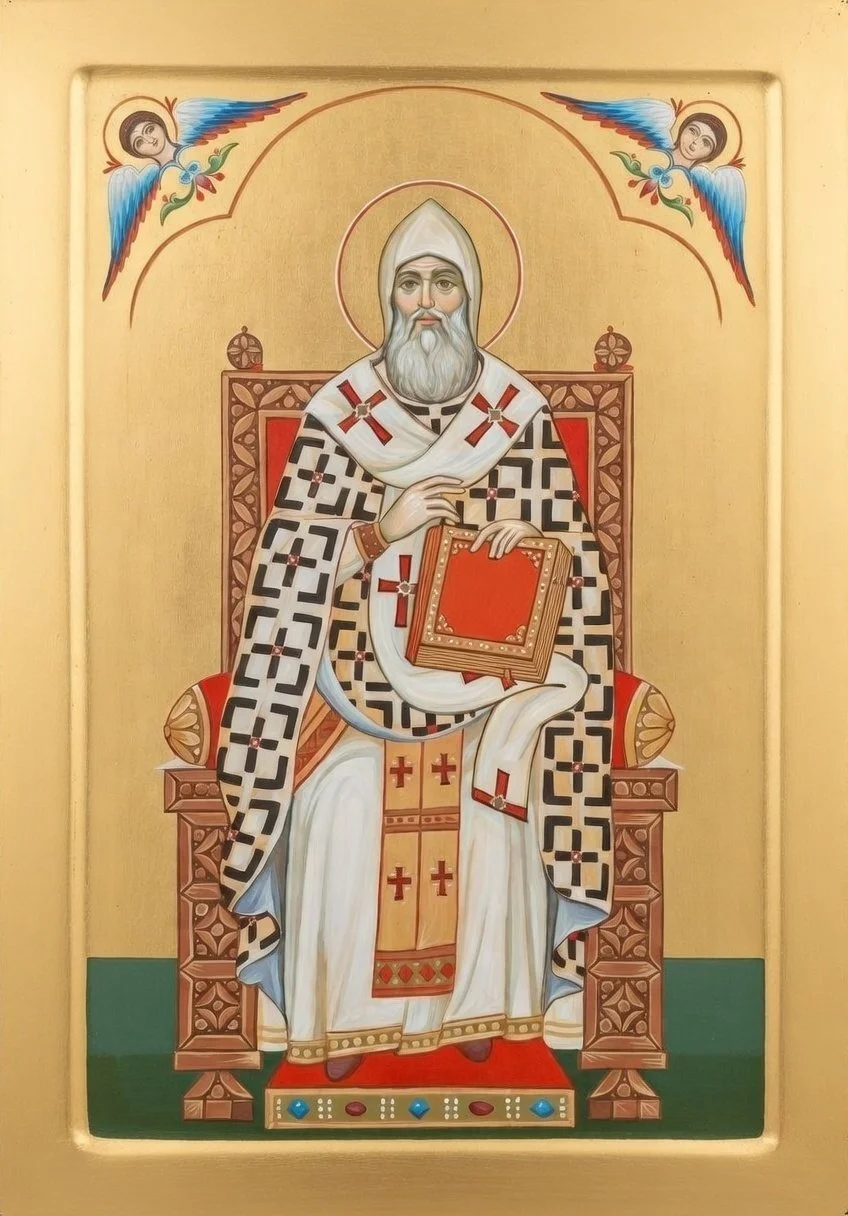
Saint Nerses IV the Gracious (Shnorhali)
12th-century Catholicos of Armenia and the Armenian Church's greatest ecumenist — who sought reunion with both Byzantine Orthodoxy and Rome through careful theological dialogue. His liturgical hymn Jesus, Son Only-Begotten is still sung in the Badarak today. Patron for Church unity and inner peace.
Get the Prayer Card →The Genocide and the Diaspora Church
No account of the Armenian Apostolic Church can avoid the Armenian Genocide of 1915. Between 1915 and 1923, the Ottoman government systematically killed an estimated 1 to 1.5 million Armenians — approximately half of the Armenian population of the Ottoman Empire. Among the dead were bishops, priests, deacons, monks, and countless lay Christians who died refusing to convert to Islam. The Armenian Church was specifically targeted: churches were destroyed, clergy were executed, communities were marched into the Syrian desert and left to die.
The genocide created the Armenian diaspora — Armenian communities in Lebanon, Syria, France, the United States, Argentina, Australia, and dozens of other countries. The diaspora church became both a spiritual home and a cultural anchor for communities that had lost their homeland and often their extended families. The Armenian language, the Badarak, the saints, the Khachkar — these became not only religious practices but survival strategies, ways of maintaining identity across generations in lands far from Armenia.
On April 23, 2015, the Armenian Apostolic Church took the extraordinary step of canonizing all the victims of the Armenian Genocide as martyrs — a mass canonization believed to be the largest in history. The service at Etchmiadzin was attended by hundreds of thousands. It was the first canonization by the Armenian Apostolic Church in four hundred years. In doing so, the Church declared officially what Armenian families had known in their hearts for a century: that those who died rather than apostatize, and those who died simply for being Armenian Christians, are saints.
Blessed Ignatius Maloyan
Armenian Catholic Archbishop martyred in 1915. Offered his life if he would convert to Islam. He refused, forgave his executioner, and was shot. Beatified by Pope John Paul II in 2001 alongside Blessed Gomidas Keumurjian — two men who represent the Armenian Church's unbroken martyrological tradition from Thaddeus to the twentieth century.
Get the Prayer Card →The Armenian Church Today
Today the Armenian Apostolic Church serves approximately 9 million Armenians worldwide — in Armenia itself, in the diaspora communities of North and South America, Western Europe, the Middle East, and Australia. In Armenia, the Church is intimately bound up with national identity in ways that have no real parallel in the Western world: being Armenian and being Christian are nearly synonymous in the national consciousness, even among Armenians who do not practice regularly.
The Church has been engaged in serious ecumenical dialogue with both the Catholic Church and the Eastern Orthodox churches since the 1970s. The Joint Commission between Eastern Orthodox and Oriental Orthodox churches declared in 1990 that both families "believe in the same Lord Jesus Christ" and that their different Christological formulas are "expressions of the same faith" — a statement that many theologians consider one of the most significant ecumenical breakthroughs in a century. The 2015 declaration of Saint Gregory of Narek as a Doctor of the Universal Church by Pope Francis was another major marker of that growing recognition.
The Armenian Church is also a living patron of arts and scholarship. The Matenadaran in Yerevan — the repository of ancient Armenian manuscripts — holds one of the world's greatest collections of medieval Christian manuscripts, most of them preserved by the Armenian Church through centuries of invasion, fire, and upheaval. The Armenian Church's tradition of sacred music, sacred art (particularly the Khachkar), illuminated manuscripts, and theological writing constitute one of the great bodies of Eastern Christian culture.
After seventeen centuries, the Armenian Apostolic Church is still standing. It has outlasted the Arsacid kingdom, the Sasanian Persian Empire, the Byzantine Empire, the Arab Caliphate, the Mongol invasions, five centuries of Ottoman rule, Soviet atheism, and genocide. Whatever the twenty-first century brings, it will not be the first hard thing this church has survived.
Free Christian Marriage Books That Bring You Closer to God and Each Other
Complete books — no email, no paywall, no missing chapters. Read every book free online right now. Rooted in the ancient Christian tradition, written for couples at every stage of marriage.
Read Free Marriage Books →Frequently Asked Questions
Pray With the Saints of Armenia
From Bartholomew the Apostle to Gregory of Narek the mystic — the saints who built this church are available as handcrafted prayer cards, made one at a time in Austin, Texas. Every card is prayed over throughout the entire creation process.
Browse Armenian Prayer Cards →Further Reading & Resources
Deepen Your Knowledge of Armenian Christianity