Saint Nektarios Prayers for Healing and Cancer: The Complete Guide
As an Amazon Associate, The Eastern Church earns from qualifying purchases.
Saint Nektarios: Prayers for Healing, Cancer, and Chronic Illness
The complete guide to seeking the intercession of the most venerated wonder-working healer of the modern Orthodox Church — his miracles, his prayers, and how to pray to him today
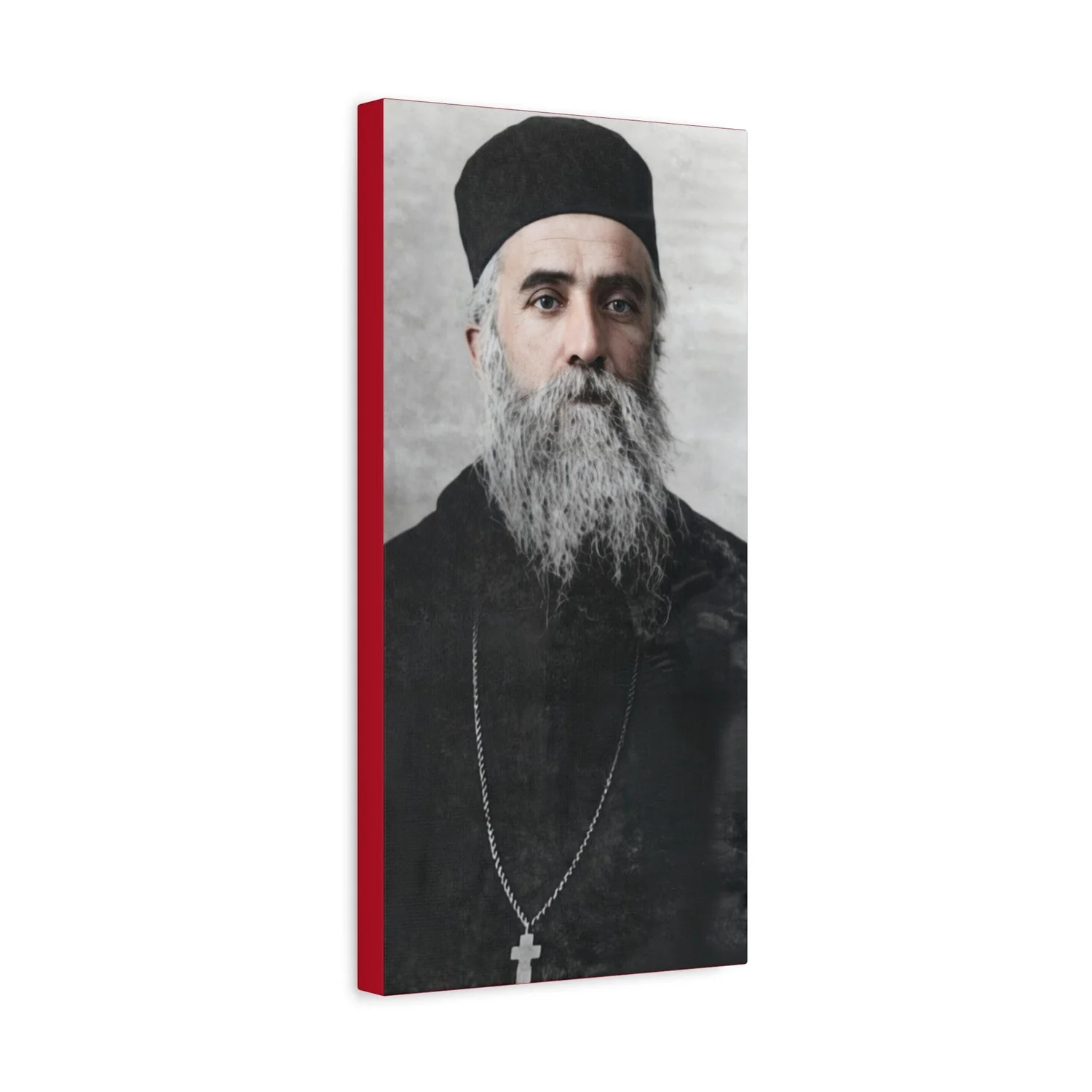
A Byzantine-style canvas icon of Saint Nektarios, the modern Orthodox wonder-worker and patron of those suffering with cancer and serious illness. Ideal for a home prayer corner, hospital room, or gift for someone facing illness.
View Icon Canvas →When doctors have given up hope, thousands of Orthodox Christians have turned to one saint above all others: Saint Nektarios of Aegina. In barely a century since his repose, he has become the most prayed-to Orthodox intercessor for cancer and serious illness — not because of ancient legend, but because of a vast, living, and continuously growing body of documented miracles.
If you or someone you love is facing cancer, a chronic illness, or any condition that medicine cannot seem to cure, this guide is written for you. Here you will find everything you need to seek Saint Nektarios's intercession: who he is, why he became the patron of cancer patients, the specific prayers used in the Orthodox tradition, how to pray to him from anywhere in the world, and what devotional items can help sustain your prayer through treatment and beyond.
This is not primarily a biographical article about his life — for that, see our complete account of Saint Nektarios: Full Life and Miracles. This guide is focused entirely on healing intercession: the prayers, the miracles, and the practical devotional path.
Who Is Saint Nektarios? A Brief Introduction for Those New to His Intercession
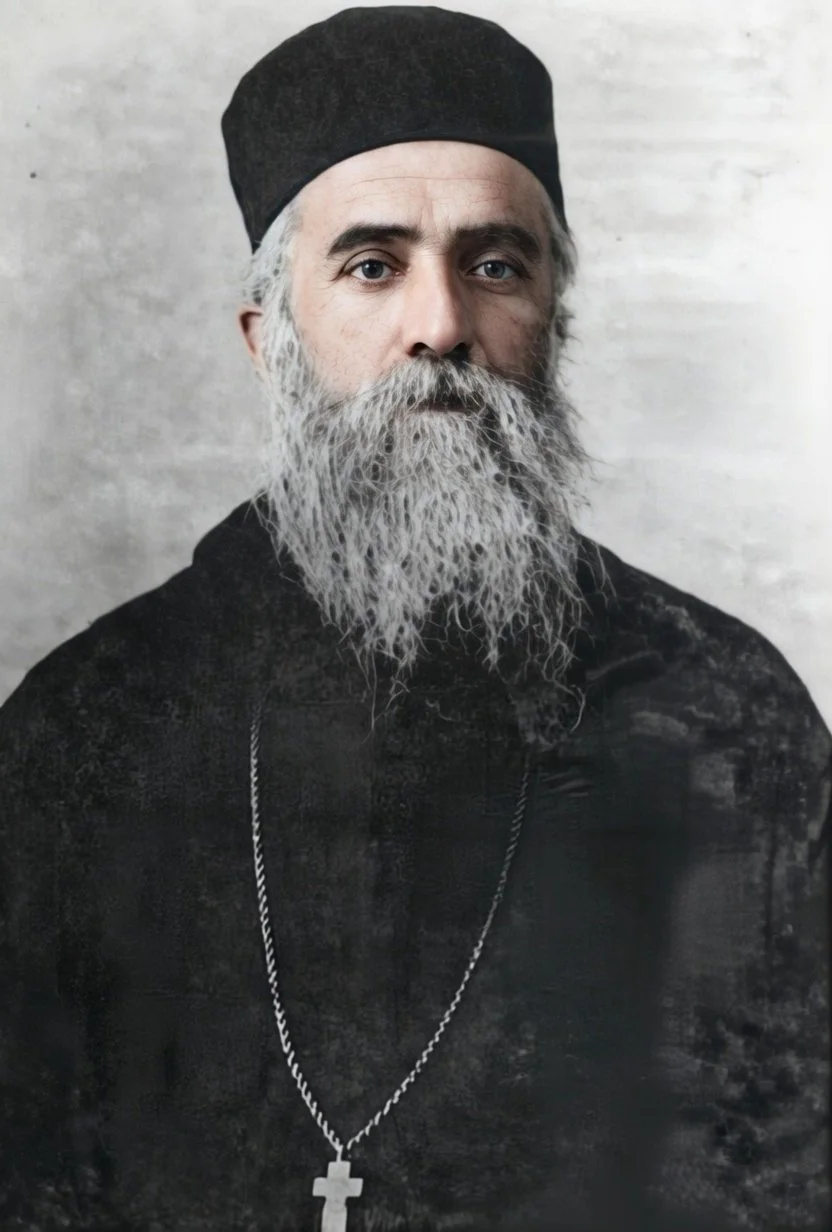
Saint Nektarios of Aegina (1846–1920) is one of the most beloved and widely venerated saints of the modern Orthodox world. He was born Anastasios Kefalas in Selymbria, Thrace — a poor Greek boy who eventually became a bishop, a theologian, a monastic founder, and above all, a man of extraordinary holiness. He endured years of unjust persecution from church officials who spread lies about him, and through it all he never ceased to love his accusers, pray for his enemies, and trust in God completely.
He died on November 8, 1920, in a modest hospital in Athens, suffering from prostate cancer. He was impoverished at the end of his life — in some accounts, he had no bed of his own and wore a cassock so worn it was nearly transparent. His humility was total.
What happened immediately after his death became the first in a long chain of miracles. The paralyzed man in the adjacent hospital bed was suddenly healed when attendants laid Nektarios's clothing upon him. This first miracle set the pattern for everything that followed. The holy bishop who had suffered from cancer in his own body became, in death, the foremost Orthodox intercessor for those suffering from cancer in theirs.
Saint Nektarios of Aegina (1846–1920)
Feast Day: November 9 · Canonized: April 20, 1961, by the Ecumenical Patriarchate of Constantinople · Title: Wonderworker of Aegina; Patron of Cancer Patients · Tomb: Holy Trinity Monastery, Aegina, Greece · Tradition: Greek Orthodox, venerated across all Orthodox churches and by many Eastern Catholics
Saint Nektarios was canonized in 1961 — within living memory. Unlike many saints whose relics were venerated centuries after their deaths, Nektarios's sanctity was experienced by people who had known him personally. The nuns he founded, the students he taught, the sick he healed during his lifetime — many were still alive to witness his glorification by the Church. In this sense he is, as the biography title describes him, "the saint of our century."
Today, his shrine on the island of Aegina receives hundreds of thousands of pilgrims annually, making it one of the most visited pilgrimage sites in the Orthodox world. And for those who cannot travel to Greece, his intercession is just as near through sincere prayer from wherever you are.
Why Saint Nektarios Became the Patron Saint of Cancer Patients
The connection between Saint Nektarios and cancer is not accidental, and it is not merely a matter of popular devotion assigning him this role. There are several interlocking reasons why he has become the foremost Orthodox patron for cancer sufferers specifically.
He Suffered from Cancer Himself
Saint Nektarios died of prostate cancer. In his final months, he was treated at the Aretaieion Hospital in Athens, where he lay in a ward for the terminally ill. He bore his illness with extraordinary patience and without complaint. Contemporary accounts describe him as continuously giving thanks to God even while burning with pain. The Orthodox understanding of suffering is that it is not merely to be endured but can be offered — united with Christ's own suffering — and Nektarios lived this theology completely.
This personal experience of cancer gave him a unique relationship with those who suffer from it. In Orthodox theology, the saints intercede in heaven with the same love and compassion they showed on earth — and Nektarios's compassion for the suffering, and his knowledge of what cancer feels like from the inside, make him a uniquely fitting intercessor for those facing the same disease.
The Immediate Post-Mortem Miracles
The very first miracle after his death involved his clothing healing a paralyzed man. Immediately after burial, his body emitted a sweet, inexplicable fragrance — a phenomenon the Orthodox tradition calls the euodia of sanctity, or the "odor of holiness." Pilgrims who came to his grave in the years that followed began reporting healings, particularly of cancers. The pattern was so consistent that word spread rapidly: go to Nektarios for cancer.
The Incorrupt Relics and Their Healings
When his relics were exhumed in September 1953 — the Church's preliminary step toward canonization — they were found to emit a beautiful fragrance. The relics were placed in the chapel at Aegina, and healings multiplied. By the time of his formal canonization in 1961, thousands of miraculous healings had been documented. Many involved cancer.
A note on theology: Orthodox Christians do not believe the saints heal by their own power. The saints intercede — they bring petitions before God, and God heals. When we ask Saint Nektarios to pray for us, we are asking him to add his powerful intercession to our own. The miracle comes from Christ; the saint is the beloved friend who stands with us before Him.
The Scope of His Patronage
While cancer is his most famous area of intercession, Saint Nektarios is patron for a wide range of serious illnesses. He is especially venerated for:
- Cancer of all types — prostate, breast, lung, blood cancers
- Heart disease and cardiac conditions
- Arthritis and joint disease
- Epilepsy and neurological conditions
- Paralysis
- Demonic oppression and mental afflictions
- Chronic and incurable conditions
The tradition holds that there is "hardly a malady that has not been cured through his prayers" — but cancer remains uniquely associated with him, because he bore it himself and has healed it in so many others.
Documented Healing Miracles: The Evidence of His Intercession
The miracles of Saint Nektarios are not vague or unverifiable pious rumors. Many are extensively documented in books, testimonies given before witnesses, and accounts published by monasteries and parishes. The following are among the most well-known and attested.
The Healing at the Moment of His Death
The first miracle associated with Saint Nektarios occurred on November 8–9, 1920, in the hospital ward where he died. A man who had been paralyzed was in the bed adjacent to Nektarios's. When the attendants changed Nektarios's clothes after his death, they laid the clothing on the paralyzed man's bed. He rose and walked — suddenly and completely healed. The hospital staff were witnesses. This miracle was reported contemporaneously and forms the foundation of his veneration as a wonder-worker.
The Healing of Father Nektarios Vitalis
Among the most thoroughly documented miracles is the healing of Fr. Nektarios Vitalis, a Greek Orthodox priest in Lavrio, Greece. The account has been told publicly many times, before witnesses, and was published in the 1997 book I Talked to Saint Nektarios by Greek writer Manolis Melinos.
I was suffering from a serious form of cancer. My chest was an open wound that was continuously running blood and pus. I would tear my undershirts from the pain. It was a tragic situation, and I was headed directly to death. So you understand, I had even prepared my grave clothes...— Fr. Nektarios Vitalis, Lavrio, Greece, March 26, 1980
On the morning of March 26, 1980, an elderly man entered the church where Fr. Vitalis served. The man bore a striking resemblance to known photographs of Saint Nektarios — the same white beard, slight build, and even, remarkably, the same distinctive one-armed glasses that were kept with Nektarios's relics at the Aegina monastery. The man told the sick priest: "Don't worry. It is a passing trial, and you will be well! The miracle which you are asking for will happen, and it will be told to the whole world." He then walked out through a closed door. The church care-taker and an icon painter were present as witnesses. Fr. Vitalis recovered from his cancer to the documented astonishment of his doctors and radiologists.
Healings at Aegina: Pilgrims from the Wheelchair
Contemporary accounts from the Holy Trinity Monastery on Aegina describe healings that continue to occur. One abbess of the monastery recounted that she "sees constantly" people receiving help at the tomb — not just after weeks of prayer, but sometimes immediately:
Whole buses are always coming from Serbia — pilgrims come with the blessing of Serbian bishops. Last time, there were three invalids among them — of them, two of them got up from their wheelchairs and walked to the saint's grave on their own two feet.— Abbess of the Holy Trinity Monastery, Aegina (reported by OrthoChristian.com, 2020)
The Testimony of Tatyana and Katya
Saint Nektarios Greek Orthodox Monastery in Roscoe, New York, maintains a collection of miracle testimonies. Among them is the testimony of Tatyana and Katya, who describe a healing of cancer attributed to the saint's intercession. The monastery's published collection includes testimonies from across the world, including North America, Serbia, Romania, and Greece.
Modern Romanian Testimony
A Romanian woman wrote publicly of how she was given a book of Saint Nektarios's miracles by a friend before knowing she herself was ill. She later discovered she had cancer. After prolonged prayer to Saint Nektarios, she experienced healing. Her account describes how she came to Orthodox faith through this encounter with the saint — the miracle of bodily healing leading to a deeper miracle of conversion and baptism.
The moment I opened that book with the saint's miracles, a transformation started in my soul. The day I found out I had cancer I prayed a lot to Saint Nektarios and then I went out in the city and had a long walk.— Anonymous testimony published at MyOrthodoxy.com
Thousands more testimonies exist, gathered by Orthodox communities in Greece, America, Serbia, Romania, Australia, and elsewhere. The healings span every demographic — children and the elderly, Orthodox Christians and those outside the Church, people who had never heard of Nektarios before their illness and lifelong devotees alike.
Prayers to Saint Nektarios for Healing
The Orthodox tradition provides several forms of prayer to Saint Nektarios. The most complete liturgical services are the Paraklesis (Supplicatory Canon) and the Akathist. But prayer to Saint Nektarios does not require a service book — sincere, personal petition is always acceptable and always heard.
A Simple Personal Prayer to Saint Nektarios
To Saint Nektarios of Aegina
O holy Father Nektarios, model of patience and lover of virtue, I come to you in my hour of need. You yourself bore the suffering of cancer and bore it with thanksgiving to God, trusting in His mercy. Now, standing before the throne of the Almighty, look down upon me — upon my body, which is afflicted and weary — and bring my petition before Christ our God.
Ask Him, who is the source of all healing, to grant me wholeness of body and soul. Ask that His will be done in my life, and that through this trial I may draw nearer to Him. Grant me courage to face each day of treatment, peace in the face of uncertainty, and faith that nothing is impossible with God.
O Father Nektarios, healer of the suffering, wonderworker of Aegina, intercede for me before the Lord, that I may be healed according to His holy will. Amen.
The Apolytikion (Troparion) of Saint Nektarios
The Apolytikion is the short hymn sung at the close of Orthros (Matins) and used throughout the liturgical services on his feast day. It is one of the most widely recited prayers in his honor:
Troparion of Saint Nektarios
O faithful, let us honor Nektarios, divine servant of Christ, offspring of Silivria and guardian of Aegina, who in these latter years was manifested as the true friend of virtue.
All manner of healing wells forth for those who in piety cry out:
Glory to Christ who glorified you;
Glory to Him who, through you, wrought wonders;
Glory to Him who, through you, works healing for all.
Orthodox liturgical text, First Tone
The Kontakion of Saint Nektarios
Kontakion of the Wonderworker
In joy of heart let us hymn with songs the newly revealed star of Orthodoxy, the newly erected bulwark of the Church;
For, glorified by the activity of the Spirit, he pours forth the abundant grace of healings upon those who cry:
Rejoice, O Father Nektarios, model of patience and lover of virtue.
Orthodox liturgical text, Plagal of the Fourth Tone
From the Akathist to Saint Nektarios
The Akathist is a longer, more elaborate hymn. Sections of it are particularly powerful as prayers for the sick. The following verses from the Akathist directly address healing:
Selected Verses for the Sick
Rejoice, speedy helper of those in need;
Rejoice, restoration of health to the sick.
Rejoice, healer of diseases by the Grace of God;
Rejoice, helper of those that suffer cruelly.
Rejoice, wellspring of wonders for those who thirst for healing;
Rejoice, constant stream of mercy flowing toward Heaven.
Since you are a partaker in the life of Heaven and a dweller with the angels, O Father Nektarios, having labored to please God, accept our present offering. Unceasingly intercede for your flock and for all the Orthodox who honor you. Let us be healed of all diseases of both body and soul, so that together with you in the Eternal Kingdom we may truly cry: Alleluia.
Akathist to Saint Nektarios, Wonderworker of Aegina
The complete Akathist to Saint Nektarios is available in Orthodox prayer books and from your local Greek Orthodox or Byzantine Catholic parish. The Orthodox prayer rule can incorporate akathists as a regular part of daily prayer.
The Official Prayer for Cancer — With Saint Nektarios as Intercessor
The Sacred Synod of the Church of Greece has approved a formal prayer regarding cancer, intended for use in personal and liturgical settings. Saint Nektarios is mentioned in this prayer alongside other healing saints. The full text, as translated by scholar John Sanidopoulos, includes the following petition:
Prayer Regarding Cancer
Through Your illuminating and sanctifying Spirit, Lord, guide through medical science those who are seeking through studies to exterminate its wickedness, reveal to them the medicine and the way of healing, and grant strength to those who are suffering and patience and respite in their pain, rewarding them all with the healing of their soul and body,
through the intercessions of our Most-blessed Lady the Theotokos and Ever-Virgin Mary, the Life-Giving Spring, and those of our Holy Father Nektarios, Bishop of Pentapolis, the holy, glorious and wonderworking Unmercenaries, the holy, glorious Great Martyr and Healer Panteleimon, and all Your Saints. Amen.
Approved by the Sacred Synod of the Church of Greece. Translation by John Sanidopoulos.
This prayer beautifully weaves together the medical and the spiritual: it asks God to guide doctors and researchers, while also asking for the intercession of healing saints — with Saint Nektarios named explicitly. It reflects the Orthodox understanding that faith and medicine are not opposed but complementary gifts from the same God.
Adding Personal Names to the Prayer
Orthodox practice allows and encourages inserting the name of the sick person into prayers. When praying for yourself or a loved one with cancer, simply add their name: "Grant healing to Thy servant [Name]..." The Church never meant for healing prayers to be abstract — they are addressed to a personal God on behalf of particular people in specific suffering.
How to Pray to Saint Nektarios: A Practical Guide
Orthodox devotional practice around a saint like Nektarios is rich and specific. Here is how the faithful approach his intercession, whether you are Orthodox, Eastern Catholic, or simply someone seeking healing and drawn to this saint.
-
1Obtain or Venerate an Icon
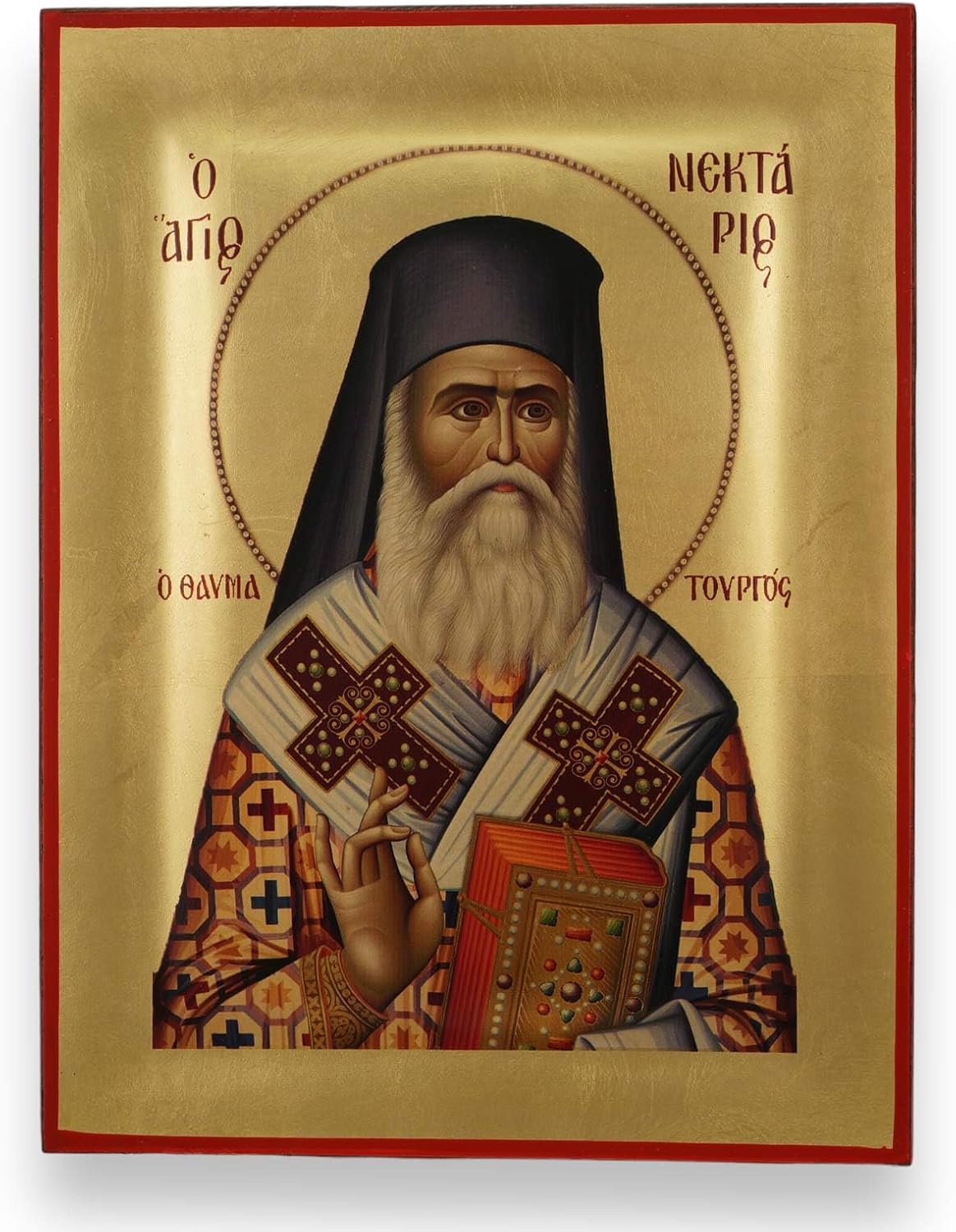
Icons are not merely decorations — in Orthodox theology, they are windows to heaven, sacred presences that make the saint spiritually near. Having an icon of Saint Nektarios in your home, or at the bedside of the sick person, is the foundational act of devotion. You may kiss the icon, light a candle before it, and address your prayers directly to it.
-
2Light a Candle
Lighting a beeswax candle before the icon is a traditional act of prayer in itself — the candle represents your prayer ascending like light and fragrance to heaven. It says, physically, that you are present before God and the saint.
-
3Pray the Troparion or Akathist
Begin with the Apolytikion (Troparion) of Saint Nektarios, which is short and easy to memorize. For a more sustained prayer, read or chant the full Akathist. Both can be found in Orthodox service books and online. The tradition of mystical prayer in the Orthodox Church always includes specific address to the saints as part of the full prayer of the Church.
-
4Offer Personal Petition
After liturgical prayers, speak to Saint Nektarios personally and directly — in your own words, in your own language. Describe the illness. Name the person for whom you are praying. Tell him what you are afraid of. Ask him specifically to intercede. The Orthodox saints are not distant figures; they are friends in heaven who love us and hear us.
-
5Use Holy Oil (Elaion)
Orthodox healing prayer is frequently accompanied by anointing with blessed oil — elaion. Oil blessed at Saint Nektarios's shrine on Aegina, or blessed by a priest at a Holy Unction service, is used to anoint the sick person on the forehead and sometimes the affected area. This practice is rooted in the Epistle of James (5:14–15) and is one of the seven sacraments of the Orthodox Church.
-
6Carry a Prayer Card
Many people facing illness carry a prayer card of Saint Nektarios with them to medical appointments, surgeries, and treatment sessions. The card serves as a physical reminder of the saint's presence and intercession, and a quiet prompt for prayer throughout the day — in waiting rooms, during infusions, in moments of fear. See our Saint Nektarios prayer card below.
-
7Submit a Prayer Request
Orthodox monasteries that venerate Saint Nektarios — including Holy Trinity Monastery on Aegina and Saint Nektarios Greek Orthodox Monastery in Roscoe, New York — accept written prayer requests. The name of the sick person is added to the liturgical diptychs and commemorated at services. This connects the individual's petition to the prayers of an entire monastic community.
-
8Surrender the Outcome to God
This is the hardest step and the most important. Orthodox theology teaches that we ask God for healing with all our heart — and then entrust the outcome to His wisdom. Saint Nektarios himself prayed with complete surrender: "Not my will but Thine be done." The miracle we ultimately ask for is not always the one we expect. Sometimes it is physical healing; sometimes it is peace, strength, or holy death. All are God's mercies.

Liturgical Prayers: The Paraklesis and the Akathist in Full Context
For Orthodox Christians seeking more than personal prayer, two major liturgical services are offered to Saint Nektarios for healing: the Paraklesis and the Akathist.
The Paraklesis (Supplicatory Canon)
The Paraklesis is a supplicatory service — a formal service of intercession that can be chanted at home or in a parish setting. It typically takes fifteen to thirty minutes. The Paraklesis to Saint Nektarios follows the standard Orthodox structure of a supplicatory canon: an opening blessing, psalms, odes, and a final prayer of petition. The entire service is directed toward asking Saint Nektarios to intercede with Christ for healing and mercy.
Many parishes offer a Paraklesis service to Saint Nektarios specifically during his October and November commemoration period, but it can be served at any time. Families facing serious illness often request it from their priest.
The Akathist to Saint Nektarios
The Akathist is a longer, more celebratory form of hymnography — twenty-four oikoi (stanzas), alternating between longer and shorter forms. The Akathist to Saint Nektarios praises his virtues, recalls his miracles, and ends with extended petitions for healing. For those who wish to make a sustained prayer commitment for a sick person — a novena-style period of consistent prayer — reading the Akathist daily for nine or forty days is a common practice.
Many hospitals and cancer centers have found Orthodox chaplains or local parishes willing to serve an Akathist bedside or in a hospital chapel. If this is not available to you, reading the Akathist privately, facing an icon of the saint, is entirely appropriate and equally powerful.
Final Kontakion of the Akathist
O most praiseworthy Father Nektarios, as you behold the affliction and suffering of those who have recourse to you, hasten to help those who call upon you with faith and love; free us from bodily and spiritual illnesses, that we who are healed by your intercession may unceasingly cry to God: Alleluia!
Akathist to Saint Nektarios, Kontakion 13 (read three times)
Pilgrimage to Aegina: Visiting the Tomb of Saint Nektarios
For those who are able, a pilgrimage to the Holy Trinity Monastery on the island of Aegina — the site of Saint Nektarios's tomb — is one of the most powerful experiences available to someone seeking his healing intercession.
Aegina is a small island in the Saronic Gulf, about 45 minutes by regular ferry from the port of Piraeus (Athens). The island is easily accessible by day trip from Athens, though many pilgrims spend one or more nights on the island to allow extended time for prayer and veneration.
What to Expect at the Monastery
The Holy Trinity Monastery is a women's monastic community, founded by Saint Nektarios himself. Today it continues as a working monastery. Visitors are welcome to venerate the saint's relics, which are enshrined in the chapel. The saint's bed — on which he lay in his final illness — is also preserved and venerated. Many pilgrims lay the sick person's clothing on the bed, as the paralyzed man was healed by contact with Nektarios's clothing at death.
The monastery's attendants press oil that has been blessed at the saint's lampada (the oil lamp that burns perpetually before his relics) — this oil is taken home and used for the anointing of the sick. Letters of petition may be left at the tomb, and the community includes the intentions of pilgrims in their daily liturgical prayer.
The Relics and Their Healing
The relics of Saint Nektarios remain at the monastery, housed in a special reliquary in the main chapel. His skull is particularly venerated and reported to have a distinctive fragrance. Pilgrims who have received healings through his intercession frequently return to Aegina to give thanks in person, leaving votive offerings — small metal images (tama) of the healed body part — around his icon and reliquary.
For Those Who Cannot Travel
Physical pilgrimage is wonderful but not required. Saint Nektarios's intercession is available everywhere. Many healings have been reported by people who prayed at home, in hospital rooms, or wherever they were. If you cannot travel to Aegina, you can write to the monastery and request that your prayer intention be added to their commemorations, or submit a request online through one of the North American Saint Nektarios shrines.
Praying for a Sick Loved One: How to Intercede for Someone with Cancer
The question that comes to family members, spouses, and friends is often: how do I pray for someone I love who has cancer? The Orthodox tradition gives clear and beautiful guidance.
Ask Saint Nektarios to Pray Alongside You
When you pray for a sick loved one, you are not praying alone. Orthodox theology understands the Church as the mystical Body of Christ, extending across time and the boundary of death — the living and the departed saints are all part of one Body at prayer. When you ask Saint Nektarios to pray for your mother, your husband, your child facing cancer, you are recruiting a powerful ally in heaven to add his prayer to yours.
Name the Person in Your Prayer
Always name the sick person: "O Father Nektarios, I ask your intercession for [Name], who is suffering with [illness]." Specific prayer is deeply Orthodox — the Church commemorates individuals by name in the liturgy. God knows every hair on every head; He hears prayers for specific people in specific suffering.
Bring an Icon to the Hospital Room
A small icon of Saint Nektarios placed at the bedside transforms a hospital room into a place of prayer. The icon says: the saint is present here. Alongside the icon, a prayer card tucked into the bedside table or worn on the person provides a constant point of contact with the saint's intercession. Many faithful also ask that a few drops of holy oil be applied to the sick person's forehead before each surgery or treatment.
Hold a Paraklesis for the Sick Person
Contact your local Orthodox or Eastern Catholic parish and ask the priest to serve a Paraklesis for your sick loved one. This is entirely normal and welcomed. The service can be served at the church, in the home, or — in some cases, with the cooperation of a hospital chaplain — at the bedside. The Archangel Raphael, the heavenly healer, and Saint Luke the Surgeon can also be invoked alongside Saint Nektarios in these prayer services.
Sustain Prayer Through the Long Road
Cancer treatment is often long — months or years of chemotherapy, radiation, surgery, and uncertainty. Sustained prayer through this period requires structure. Consider committing to a daily Akathist or Troparion, reading the life of Saint Nektarios, or enrolling the sick person's name in the prayer list of a monastery. The daily Orthodox prayer rule can incorporate petitions to Saint Nektarios alongside the regular morning and evening prayers. Even on the hardest days, the Jesus Prayer — Lord Jesus Christ, have mercy on me — is a powerful and unceasing form of intercession that anyone can maintain through the ancient practice of the heart.
Seeking Healing for Yourself or Someone You Love?
Our Saint Nektarios prayer card is designed for daily use — small enough to carry, powerful as a daily point of contact with the saint's intercession.
View Saint Nektarios Prayer Card →Devotional Resources for Those Seeking Nektarios's Intercession
The following resources are the most widely used and recommended for those entering deeper devotion to Saint Nektarios. Each serves a different stage of the spiritual journey with illness.

The definitive biography of Saint Nektarios by Sotos Chondropoulos — the book that introduced millions of readers to his life and miracles. Contains documented healings, testimony, and theological reflection. Many people report that simply reading this book was the beginning of their healing.
View on Amazon →
A Byzantine-style canvas icon of Saint Nektarios — the patron of cancer patients. Suitable for a home prayer corner, a hospital room, or as a meaningful gift for someone facing illness. A lasting sacred presence in any healing space.
View Icon Canvas →Other Orthodox Healing Saints to Know
While Saint Nektarios is the preeminent Orthodox patron for cancer, the Orthodox tradition venerates many saints specifically for healing. Among those who complement intercession to Nektarios:
Saint Luke the Surgeon of Crimea (1877–1961)
A brilliant surgeon who became an archbishop, Saint Luke was also canonized in the modern era. He is the patron of surgeons and an intercessor for those undergoing surgery. Read more: Saint Luke the Surgeon.
Archangel Raphael — The Healer of God
Raphael's name means "God heals." He is invoked in Orthodox healing services and is the heavenly companion of those facing illness. Read more: Archangel Raphael, Medicine of God.
For a complete list of Orthodox saints venerated for mental and emotional healing alongside physical illness, see our guide: Orthodox Saints for Mental Health. Illness rarely travels alone — cancer and serious illness bring depression, anxiety, and fear alongside physical suffering, and the Orthodox saints address the whole person.
Eastern Catholics and the Veneration of Saint Nektarios
Saint Nektarios was canonized by the Orthodox Church, but his intercession has never been confined to Orthodoxy. Across the Eastern Catholic world — Melkite, Byzantine, Ukrainian, Ruthenian, and others — he is widely venerated, particularly for healing.
Eastern Catholics share the same liturgical heritage as the Orthodox, and the same theology of saintly intercession. Many Eastern Catholic parishes in Greece, the Middle East, and North America include commemorations of Saint Nektarios, and his Akathist and Troparion are used without modification in Eastern Catholic prayer. The relationship between Orthodox and Eastern Catholic Christians around the veneration of modern saints like Nektarios is one area where there is remarkable convergence and mutual enrichment.
For context on the broader Eastern Catholic tradition and how it relates to the Orthodox Church's heritage of healing prayer, see our articles on the Melkite Greek Catholic Church, the Ukrainian Greek Catholic Church, and our overview of Eastern Catholic vs. Roman Catholic differences.
Roman Catholics and other Western Christians have also increasingly turned to Saint Nektarios as his fame has spread, especially following the 2021 film Man of God. The Catholic tradition's understanding of intercession — asking saints to pray on our behalf — is compatible with Orthodox practice, and the healings reported by non-Orthodox devotees of Saint Nektarios are consistent with the broader record.
Saint Nektarios: Healing, Prayer, and Intercession — FAQ
Why is Saint Nektarios the patron saint of cancer patients?
Saint Nektarios himself died of prostate cancer in 1920, bearing his own illness with extraordinary patience and faith. After his death, a paralyzed man in the adjacent hospital bed was suddenly healed when Nektarios's clothing was laid upon him — the first of countless miracles. Over the following decades, an extraordinary number of cancer patients reported healings through his intercession, establishing him as the foremost Orthodox patron for those facing this disease. His personal knowledge of cancer from the inside makes him a uniquely compassionate intercessor for others suffering the same illness.
How do you pray to Saint Nektarios for healing?
Orthodox Christians pray to Saint Nektarios by: (1) venerating his icon and lighting a candle, (2) reciting his Troparion (Apolytikion) or the full Akathist to him, (3) offering personal petition in their own words, naming the sick person and the illness, (4) using holy oil blessed at his shrine for anointing, (5) carrying a prayer card during medical appointments, and (6) if possible, submitting a name for prayer to a monastery dedicated to him. A priest can also be asked to serve the Paraklesis (supplicatory canon) to Saint Nektarios for the sick person.
What illnesses does Saint Nektarios intercede for?
Saint Nektarios is most renowned for healings of cancer of all types, but documented miracles include recovery from heart disease, arthritis, epilepsy, paralysis, demonic oppression, and a wide range of other conditions. The Orthodox tradition holds that there is "hardly a malady that has not been cured through his prayers." He is also invoked for mental and spiritual afflictions — anxiety, depression, and loss of faith that often accompany serious physical illness.
When is the feast day of Saint Nektarios?
Saint Nektarios's feast day is November 9 in the Orthodox Church, marking the anniversary of his blessed repose in 1920. The island of Aegina hosts major celebrations and a large influx of pilgrims around this date each year. Many parishes serve the Paraklesis and Akathist to him throughout October and November in honor of his feast.
Can Catholics pray to Saint Nektarios?
Yes. While Saint Nektarios was canonized by the Eastern Orthodox Church, Eastern Catholic Christians and many Roman Catholics have sought his intercession with great fruit. His intercession is not bounded by ecclesiastical affiliation — the healing miracles attributed to him span Christians of many traditions and countries. The theology of asking saints to intercede — central to Catholic and Orthodox tradition alike — is fully compatible with praying to Saint Nektarios regardless of one's particular church.
Where is Saint Nektarios buried?
Saint Nektarios is buried at the Holy Trinity Monastery on the island of Aegina, Greece — approximately 45 minutes by regular ferry from the port of Piraeus, Athens. His tomb has become one of the most visited pilgrimage sites in the Orthodox world, receiving hundreds of thousands of pilgrims annually. His relics are enshrined in the monastery chapel and continue to emit the reported fragrance of sanctity.
What is the prayer to Saint Nektarios for cancer?
The Sacred Synod of the Church of Greece has approved a formal Prayer Regarding Cancer that names Saint Nektarios among the intercessors. Beyond this official text, the Apolytikion (Troparion), Kontakion, and Akathist to Saint Nektarios are all widely used as healing prayers. Simple personal petition — speaking directly to the saint in your own words, asking him to intercede for a specific person with cancer — is equally valid and heard.
Is there a Saint Nektarios shrine in the United States?
Yes. Saint Nektarios Greek Orthodox Monastery in Roscoe, New York (100 Anawanda Lake Road, Roscoe, NY 12776) is a dedicated monastery in honor of the saint that accepts prayer requests and maintains a collection of miracle testimonies. Many Greek Orthodox and Antiochian Orthodox parishes in North America also have icons and devotion to Saint Nektarios, and his Akathist is served regularly at parishes across the country.
Does the Orthodox Church teach that healing is guaranteed through prayer?
No. Orthodox theology is careful to distinguish between asking for healing and expecting it as an entitlement. We pray with faith and with surrender: "Grant healing, O Lord, if it be Your will." God heals sometimes miraculously, sometimes through medicine, and sometimes through a holy death that is itself a form of healing. The primary miracle Saint Nektarios's intercession is sought for is always, at the deepest level, drawing closer to Christ — physical healing is a gift within that larger mercy, not the whole of it.
How is Saint Nektarios venerated differently from Saint Luke the Surgeon?
Both saints are beloved modern healers, but their intercessions have different emphases in popular devotion. Saint Nektarios is preeminently the patron for cancer and terminal illness — those who are facing the possibility of death. Saint Luke the Surgeon, a physician who became a bishop, is especially invoked for surgical procedures and medical treatments, and his intercession is often sought by doctors and medical professionals themselves. Many faithful pray to both, especially during cancer treatment that involves surgery.
"Where God Wills, the Laws of Nature Are Overcome"
— Fr. Nektarios Vitalis, healed of cancer through Saint Nektarios's intercession
The message of Saint Nektarios is not that cancer is easy, or that suffering is nothing, or that God will always give us what we ask. It is that no one facing illness is alone. There is a holy man in heaven who knows exactly what cancer feels like — who bore it himself, quietly, without complaint, as a gift to God — and who is now free to be present to every person who calls on him with faith.
This is the great mystery of the Orthodox theology of saintly intercession: the saints are not distant figures behind glass. They are present. Saint Nektarios appeared in human form to Fr. Vitalis in 1980 and told him not to be afraid. He appears to the dying and the desperate, to the newly diagnosed and the medically abandoned. He is, as his followers say, a saint who answers quickly.
Whatever you are facing — whether it is your own cancer or the illness of someone you love — bring it to Saint Nektarios. Light a candle before his icon. Say his name. Tell him your fear. Ask him to pray for you. And trust, in the words of the Akathist, that he is a "speedy helper of those in need" and a "restoration of health to the sick."
For the complete account of his life and legacy, visit our detailed biography: Saint Nektarios of Aegina: Full Life and Miracles.
For more saints who intercede for those in physical and emotional suffering, see our list of Orthodox saints for mental health and our article on Orthodox prayers for anxiety.