The Most Popular Orthodox Saints: Seven Beloved Intercessors
The Most Popular
Orthodox Saints
Seven beloved saints — ancient martyrs, desert elders, and modern wonderworkers still actively interceding today.
Some saints become beloved because their stories are unforgettable. Others because their intercession is visibly, repeatedly effective. Most because of both. These seven are among the most widely prayed-to Orthodox saints in the world right now — across Greece, Lebanon, Georgia, Russia, and the global Eastern Christian diaspora.
✦ Free Resource for Couples ✦
Access Free Eastern Christian Marriage ResourcesSeven Saints — Jump to Any
1877 – 1961
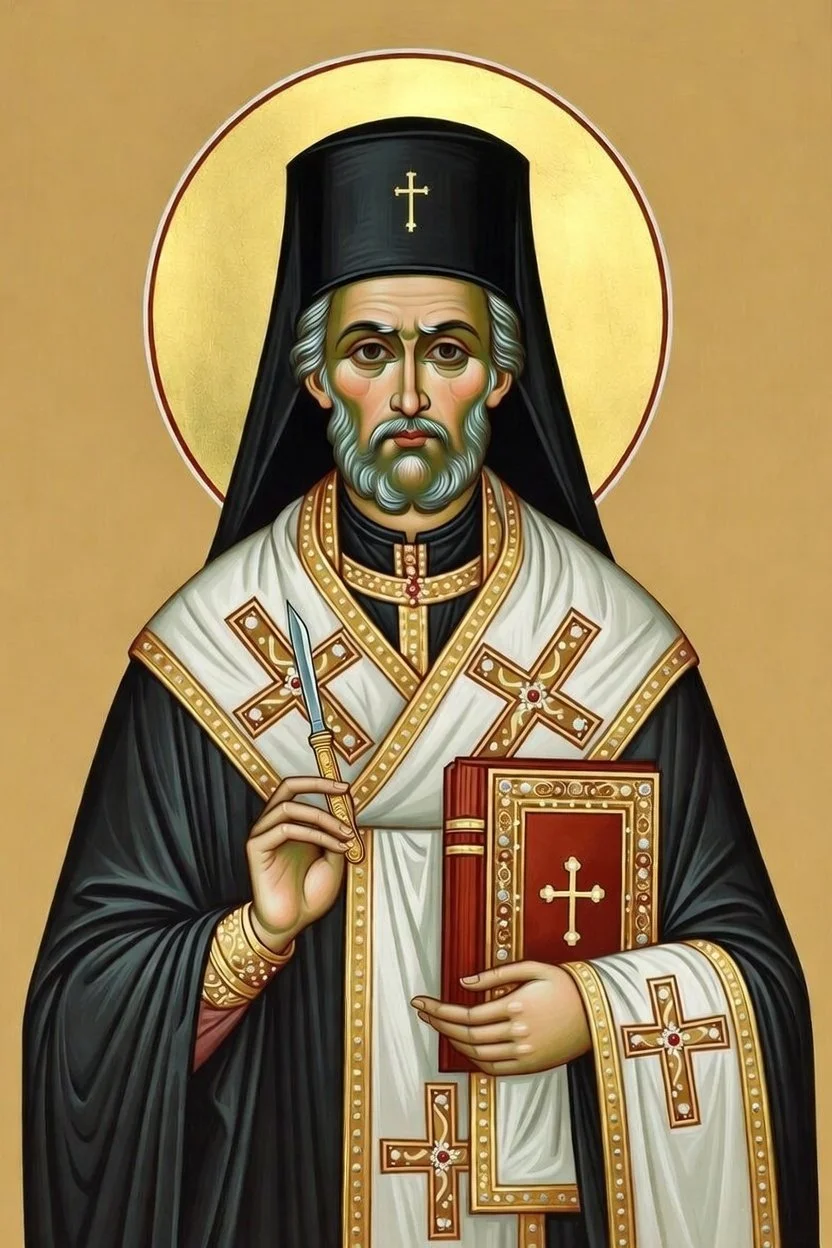
Saint Luke the Surgeon
"A world-class surgeon who became a bishop, survived Soviet prison camps, and won the Stalin Prize — all while operating in his episcopal vestments."
Valentin Feliksovich Voino-Yasenetsky was born in 1877 in Kerch, Ukraine. He trained as a surgeon of extraordinary skill — specializing in regional anesthesia and septic surgery at a time when such knowledge saved thousands of lives in wartime Russia. He won the Stalin Prize for Medicine in 1946 for his groundbreaking surgical textbook. He also, throughout this career, wore a large pectoral cross into surgery and operated in his bishop's klobuk when the hospital administration allowed it.
He was arrested three times by Soviet authorities — spending years in prison camps and exile across Siberia and Central Asia. During one exile he continued operating on patients in primitive conditions. He never renounced his faith. After each arrest he returned to both medicine and the episcopate. He became Archbishop of Simferopol and Crimea in 1946, running his diocese and his surgical practice simultaneously until his eyesight failed completely in his final years.
He is invoked today primarily for healing, surgery, and medical intervention — by patients facing serious illness, by surgeons before difficult procedures, and by families praying beside hospital beds. His relics rest in the Cathedral of the Holy Trinity in Simferopol and have been a source of documented miracles since his canonization in 1996.
c. 303 AD
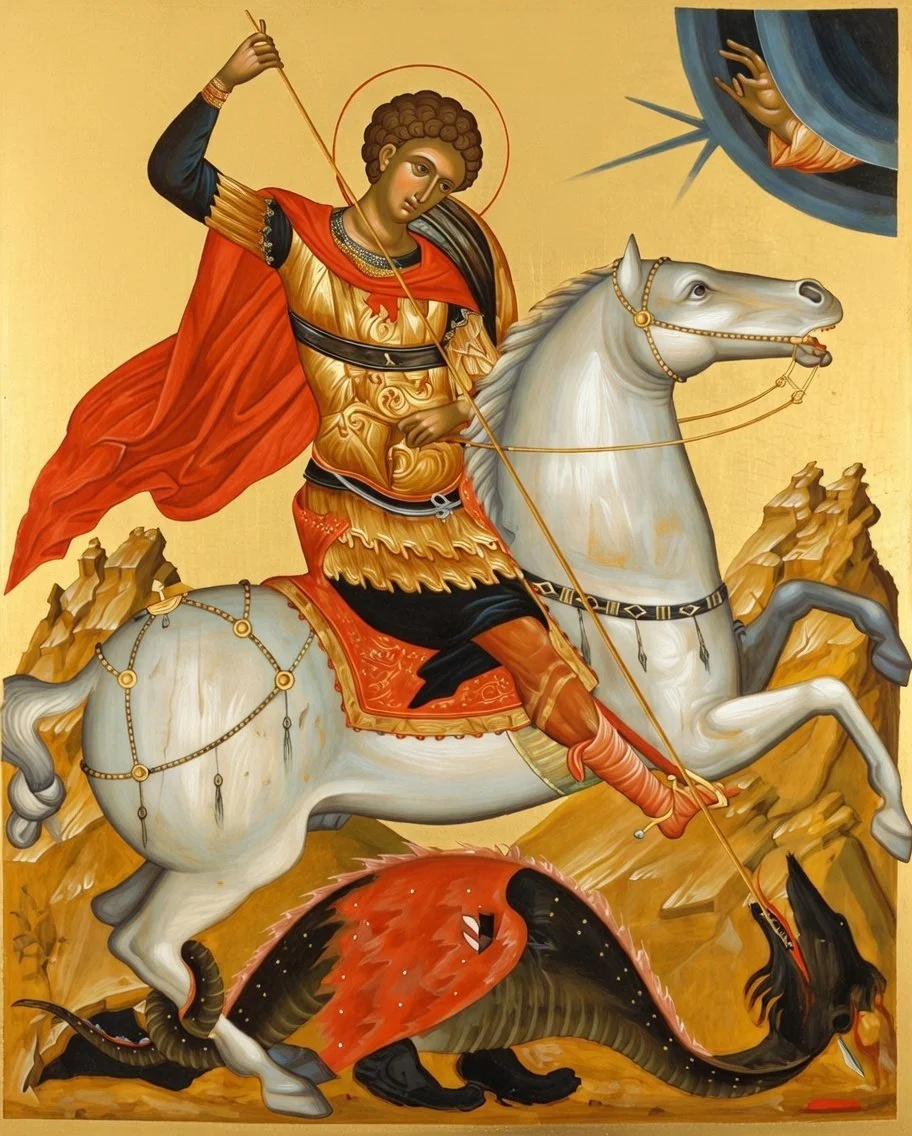
Saint George the Great Martyr
"One of the most universally venerated saints in history — his name appears on national flags, in city names, and in the prayers of millions daily."
George was a Roman military officer of Cappadocian and Palestinian heritage who publicly declared his Christianity before the Emperor Diocletian at the height of the Great Persecution. He was tortured and beheaded around 303 AD, refusing every offer of reprieve in exchange for apostasy. The Eastern Church titles him Megalomartyr — Great Martyr — and Tropaeophoros, the Trophy-Bearer, because his courage won the greatest trophy a Christian can win.
He is the patron saint of England, Georgia, Ethiopia, Portugal, Catalonia, and dozens of cities worldwide. In the Eastern tradition the dragon iconography reads as the triumph of Christ over the power of evil — each time George makes the sign of the cross, the serpent that has terrorized a city is subdued and led away. The theological point is not mythology; it is the consistent Orthodox witness that the power of the Name of Christ is real and active in the world.
In Lebanon he is venerated as Mar Jiryes and celebrated by both Christians and, historically, by some Muslim communities. In Georgia, he is second only to the Theotokos in popular devotion. He is one of the most prayed-to saints across the entire Orthodox world — ancient, universal, and still very much active.


18th Century
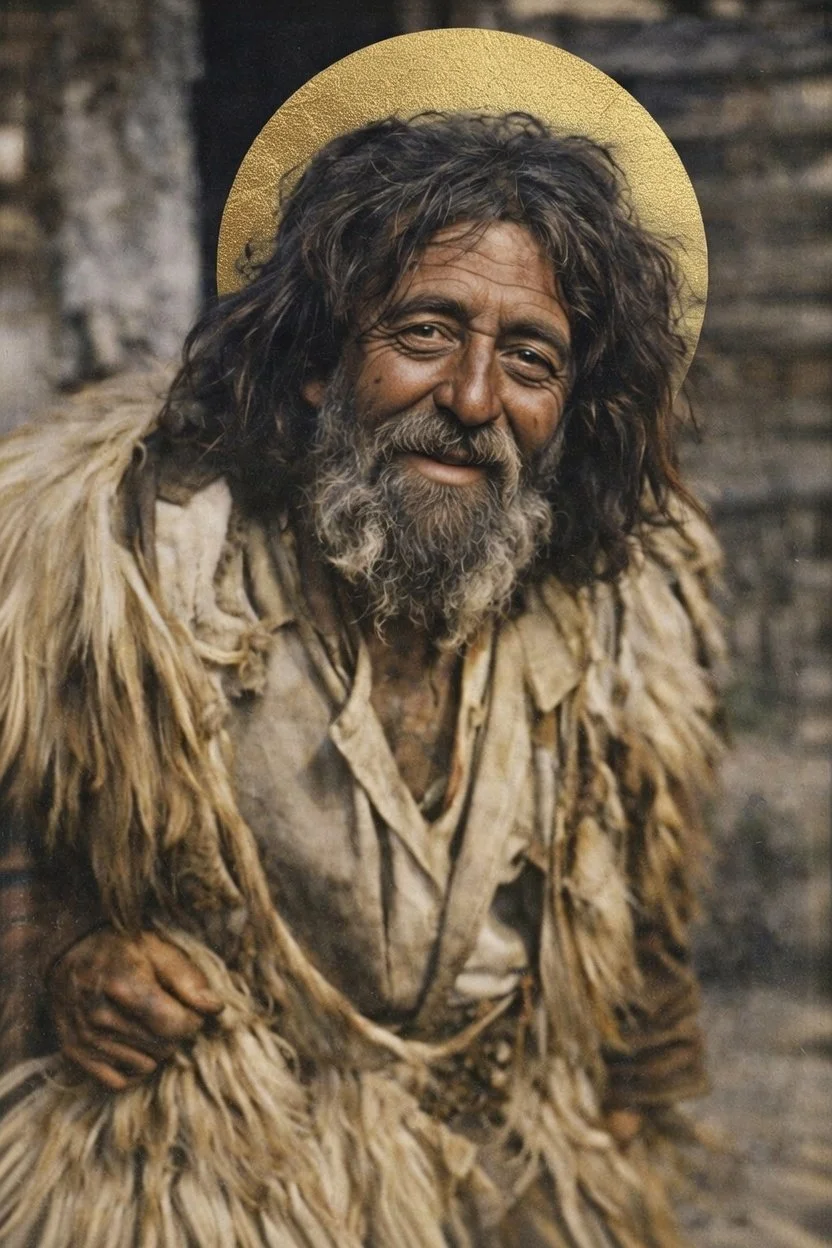
Saint Agathon of Kavsokalyvia
"A hidden Athonite hermit whose life of radical humility and unceasing prayer bore fruit in miracles that spread his name across the Orthodox world."
Saint Agathon lived in the skete of Kavsokalyvia on the southern tip of Mount Athos — one of the most remote and austere corners of what is already one of the most remote monastic landscapes in Christianity. Kavsokalyvia, whose name means "burning huts," takes its name from the habit of the hesychast Saint Maximos Kausokalyvites, who burned his hut periodically to prevent attachment to any fixed dwelling. The area has long been associated with the most intense forms of Athonite hesychasm — the tradition of inner stillness and unceasing prayer.
Agathon lived as a hesychast and was known during his lifetime for gifts of discernment, spiritual fatherhood, and healing. He taught those who came to him not with systems or arguments but with the living example of a soul transformed by prayer. His counsel was spare, direct, and oriented entirely toward the one thing necessary: the purification of the heart and the acquisition of the Holy Spirit.
His canonization and growing veneration in the 20th and 21st centuries reflects a wider renewal of interest in the Athonite hesychast tradition — the same current of prayer that shaped Paisios and Porphyrios of the same skete.
1924 – 1994
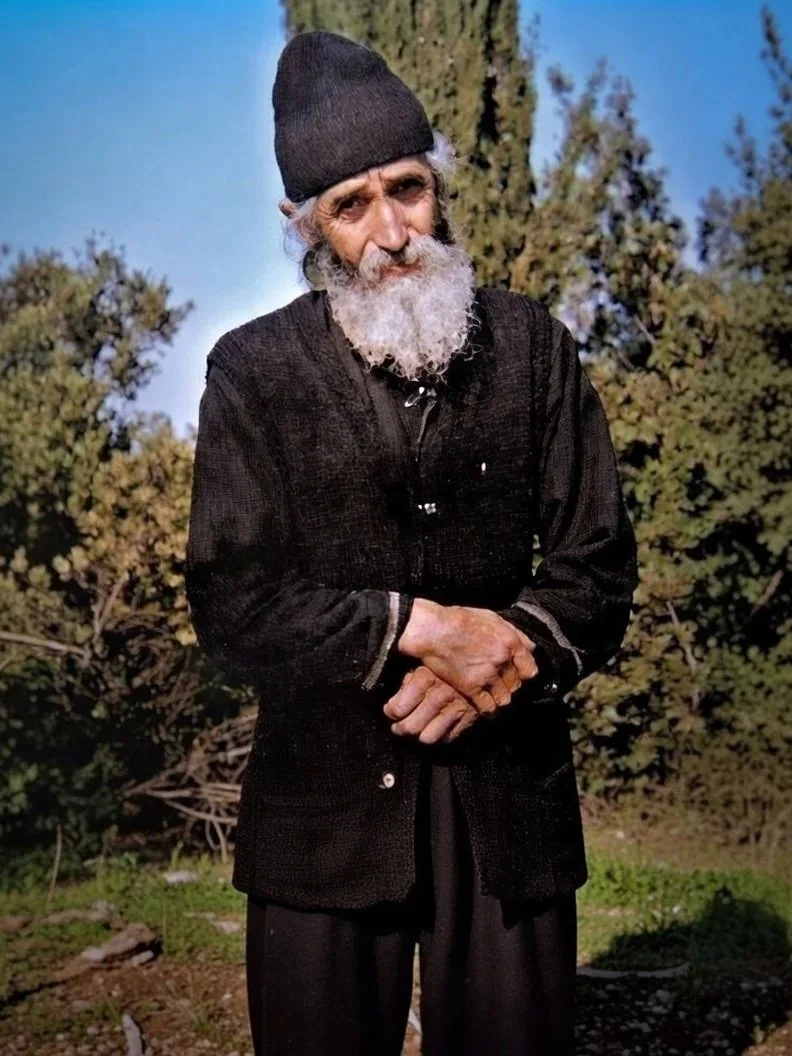
Saint Paisios the Athonite
"The most beloved Orthodox elder of the 20th century — thousands alive today met him personally and carry the memory of what happened when they did."
Arsenios Eznepidis was born in 1924 in Farasa, Cappadocia — the last generation of Greek Christians in a land their ancestors had inhabited for millennia — and baptized by Saint Arsenios of Cappadocia hours before his family was expelled in the population exchange. That baptism by a saint set a trajectory. He became a monk on Mount Athos and eventually a widely sought-out elder, receiving visitors at his cell near the Monastery of Koutloumous for decades.
Those who visited him describe an encounter that was more than counsel. He knew things about their lives he had no natural way of knowing. He healed the sick. He identified demons afflicting people by name. He wept for the suffering of people he had never met. He also had an irrepressible sense of humor — the kind that appears only in people completely free of self-consciousness, and which made the weight of his discernment bearable.
Canonized in 2015, his Spiritual Counsels in five volumes have become one of the most widely read collections of Orthodox spiritual guidance in the modern era. He is prayed to for anxiety, mental illness, family crises, spiritual direction, and discernment — by people of all ages across the entire Orthodox world and well beyond it.


1929 – 1995
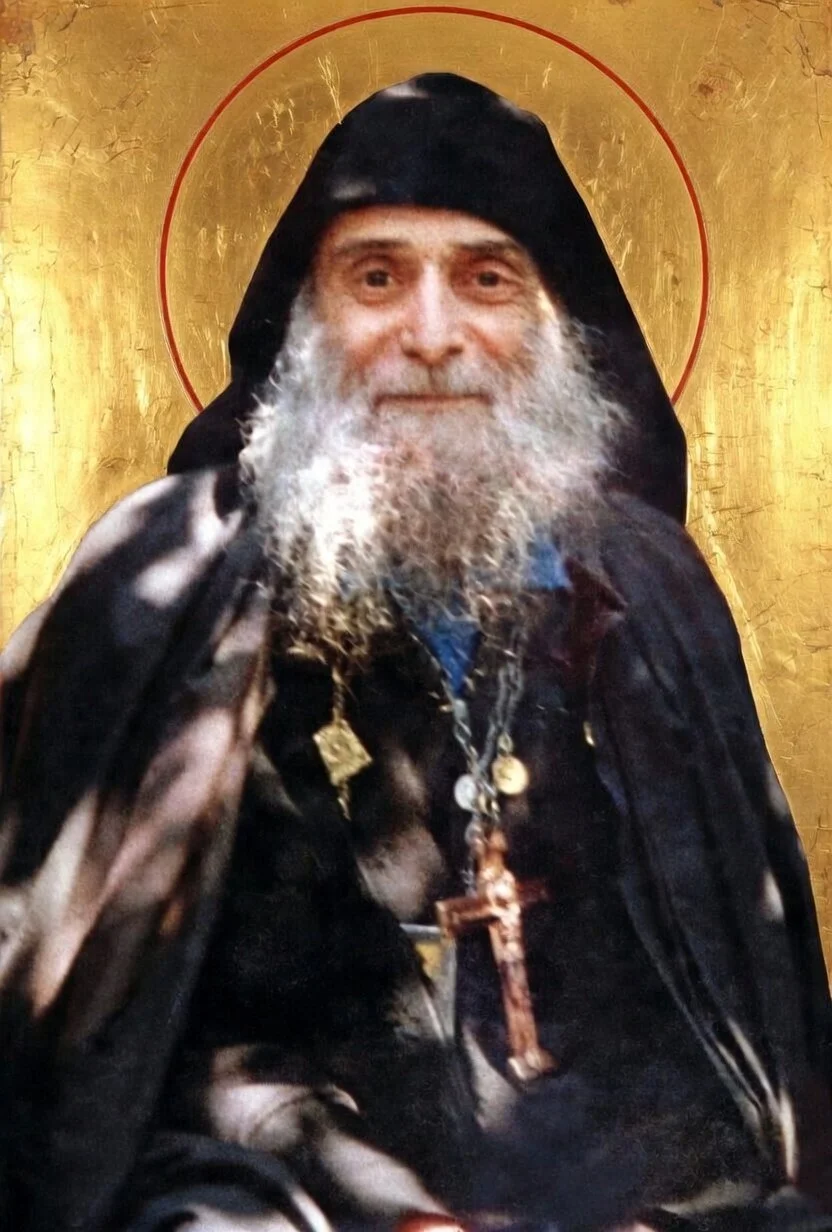
Saint Gabriel (Urgebadze) of Georgia
"A Soviet-era monk who burned a portrait of Lenin in public, survived psychiatric torture, and became Georgia's most beloved modern saint."
Goderdzi Urgebadze was born in Tbilisi in 1929 and grew into a monk of extraordinary interiority under the least hospitable conditions imaginable: Stalinist and post-Stalinist Soviet Georgia. He built a small church inside his own home. He decorated it with whatever sacred images he could find — including Christian-themed chocolate wrappers — because icons were not readily available. He was known from childhood as someone who prayed with unusual seriousness.
On May 1, 1965, he climbed to the roof of a building overlooking the major Communist parade in Tbilisi, set fire to a large portrait of Lenin, and began preaching Christ to the crowd. A mob beat him nearly to death. Soviet authorities committed him to a psychiatric hospital — the standard method of silencing religious dissenters — where he was tortured. He survived, was released, and continued in exactly the same way he had always lived.
His vocation was the ancient Orthodox one of yurodstvo — the Fool for Christ — someone who embraces public misunderstanding and ridicule to bear witness to a reality the world cannot see. He lived in radical poverty, received all who came to him, and was known for prophecy, healing, and a love so intense it was physically felt by those around him. Georgia canonized him in 2012. He is now prayed to throughout the Orthodox world.
1906 – 1991
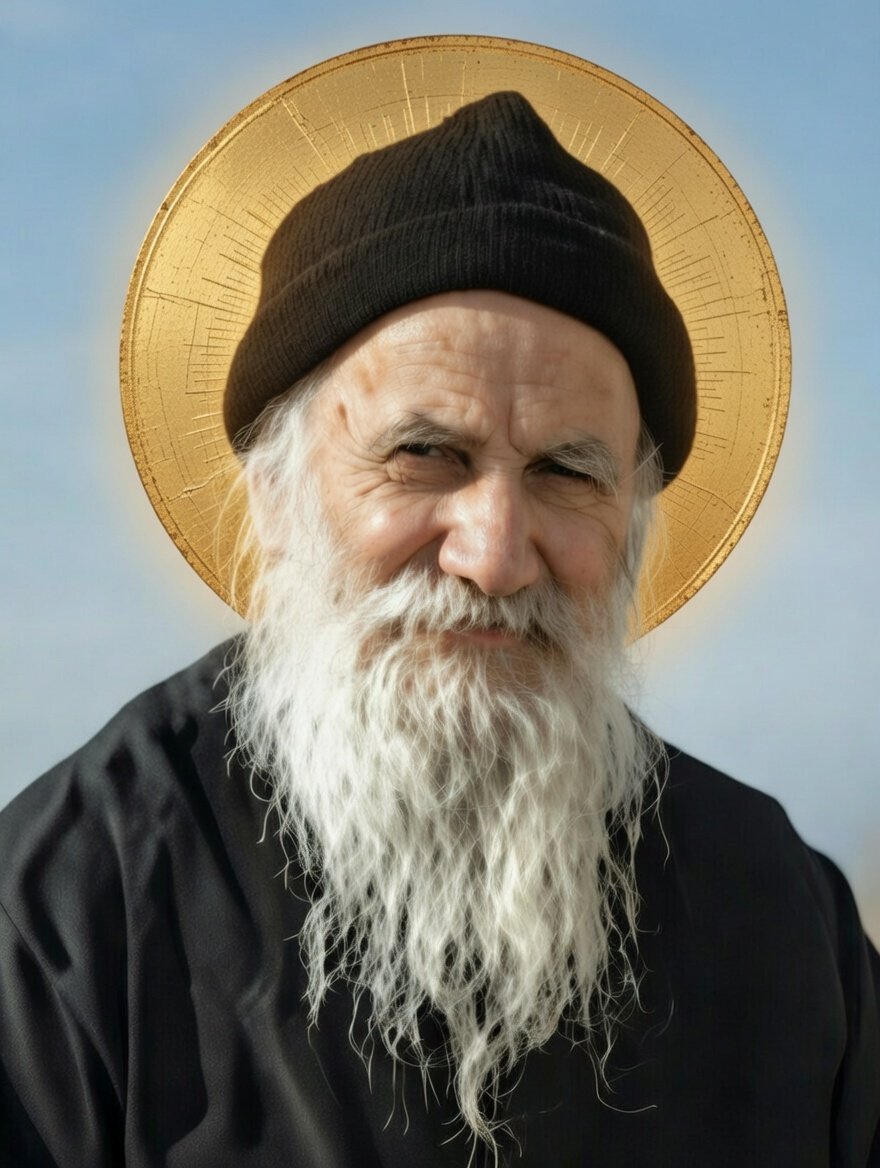
Saint Porphyrios of Kavsokalyvia
"The elder who described God as a lover rather than a judge — and whose counsel transformed the interior lives of thousands of people across the 20th century."
Evangelos Bairaktaris was born in 1906 in the village of Agios Ioannis in Evia, Greece. At age twelve he ran away to Mount Athos — stowing away on a boat and presenting himself to the elders of Kavsokalyvia, the same skete associated with Saint Agathon. He was received, tonsured, and formed there in the hesychast tradition. He received the spiritual gifts of clairvoyance and healing at a young age from his elder, Father Pantoleon, and carried them for the rest of his life.
Porphyrios left Athos for health reasons and served for many years as the chaplain of a polyclinic in Athens — an extraordinary appointment that put a clairvoyant elder in the middle of a modern urban hospital. Patients and doctors alike sought him out. He was known for diagnosing illnesses he had no natural means of knowing about, for identifying spiritual roots of physical suffering, and for a quality of love that people consistently described as overwhelming.
His teaching is distinctive in modern Orthodoxy for its emphasis on joy rather than fear, love rather than obligation, beauty rather than severity. "Don't struggle against passions directly," he taught. "Fill your heart with the love of God and the passions will leave on their own." His collected counsels, published as Wounded by Love, have become one of the most widely read spiritual books in contemporary Orthodox Christianity.


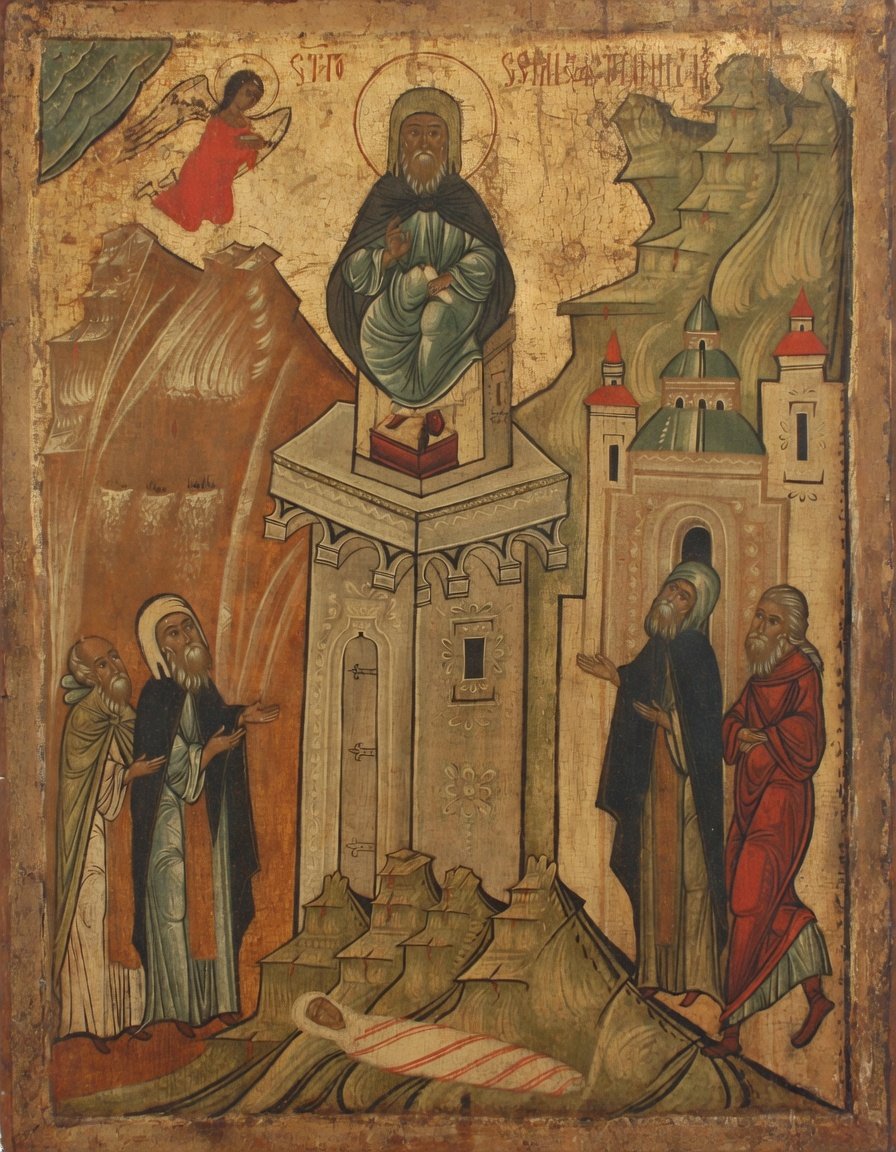
c. 390 – 459 AD
Saint Simeon Stylites the Elder
"The man who lived atop a 50-foot pillar for 37 years — and counseled emperors, settled theological disputes, and drew pilgrims from across the known world."
Simeon was born around 390 AD near the border of Syria and Cilicia and entered monastic life as a young man with such extreme asceticism that the community eventually asked him to leave — his fasting and mortifications exceeded what the community considered healthy or sane. He continued in solitude, and when crowds of pilgrims began arriving to seek his blessing, he built a small platform to give himself space to pray. The platform grew. He raised it. Over the years it became a pillar approximately 15 meters high, on which he stood, prayed, prostrated himself, and received visitors for thirty-seven years without ever descending.
His position above the crowd was not self-display. It was the only way he could pray without being touched by the thousands of people who came seeking healing, counsel, and blessing. He wrote letters to emperors — including Theodosius II and Leo I — on theological and political matters. He intervened in the Chalcedonian controversy. He settled disputes between villagers. He dictated from his pillar, bowing in prayer so continuously that observers reportedly lost count of his prostrations.
After his death in 459 AD, the Church of Saint Simeon was built around the base of his pillar at Qal'at Sim'an (Simeon's Castle) in what is now northern Syria — at the time one of the largest Christian churches in the world. The ruins of that church, including the stump of his pillar, are still visible today. He was the first of the Stylites and the model for every ascetic who followed him in that tradition.


Frequently Asked Questions
Why are saints like Paisios and Porphyrios so popular when they died so recently?
Because the people who met them are still alive. The testimony to their holiness — the documented healings, the clairvoyance, the quality of love that people describe as overwhelming — comes from eyewitnesses who are still living, still writing, still describing what happened when they sat in a cell in Kavsokalyvia or the skete of Saint Panteleimon and talked to an old monk. That proximity to the present makes them uniquely accessible. Their spiritual counsel is also extensively documented in published books, which gives modern readers direct access to their teaching in a way that simply does not exist for most ancient saints.
What does "Kavsokalyvia" mean and why do several saints come from there?
Kavsokalyvia means "burning huts" — named after the 14th-century hesychast Saint Maximos Kausokalyvites, who periodically burned his own dwelling to prevent attachment to any fixed place. It is a skete (small monastic community) on the southern tip of Mount Athos, associated with the most intense hesychast prayer tradition on the Holy Mountain. Agathon, Porphyrios, and their elders lived and were formed there. The tradition of unceasing inner prayer that defines their spirituality flows directly from that environment and its centuries of accumulated practice.
Who is Saint Luke the Surgeon patron saint of?
Saint Luke Voino-Yasenetsky is invoked especially as the patron of surgeons, physicians, and the seriously ill. He is prayed to by patients before surgery, by medical professionals before difficult procedures, and by families keeping vigil beside hospital beds. His relics in Simferopol and the numerous documented miracles attributed to his intercession have made him one of the most practically invoked saints in Russian and Ukrainian Orthodoxy since his canonization in 1996.
How do I start a home prayer corner with icons of these saints?
A traditional Eastern Christian prayer corner (called a "beautiful corner" in the Russian tradition) is placed in the eastern corner of a room and anchors daily prayer. Begin with an icon of Christ — the Pantocrator is the most traditional — and the Theotokos. Then add icons of saints whose intercession is specific to your life and needs. Prayer cards are a practical way to begin: they are designed for exactly this purpose and can be placed in a prayer corner, carried in a wallet, or kept near a hospital bed. Every prayer card on this page was made for daily use.
Seven Saints. One Witness.
These seven saints lived in different centuries, different countries, and different cultural worlds — from the Syrian desert in the 5th century to Soviet Georgia in the 20th. What connects them is not their circumstances but their response to them: total, unhesitating orientation toward God, regardless of what the world around them was doing.
They are not historical figures. They are intercessors — alive in God right now, praying for everyone who asks. Every prayer card on this page was made for exactly that purpose: to give you a tangible companion for the moments when you need someone who is closer to God than you are to put in a word.
Browse All Prayer Cards💍 Free Eastern Christian Marriage Resources
Prayers, reflections, and saint intercessions for couples — completely free, assembled for Eastern Christian families.
Access Free ResourcesAs an Amazon Associate, The Eastern Church earns from qualifying purchases.