10 Orthodox Saints You've Never Heard Of — But Should Know
10 Orthodox Saints
You've Never Heard Of
They are just as real. Just as present. Just as powerful. Nobody told you about them.
The Orthodox calendar holds thousands of saints. Most sermons cycle through the same dozen names. These ten have extraordinary stories — a Persian nobleman dismembered piece by piece while praying, a woman who spent years pretending to be mentally ill so she could serve others without being noticed, a Syrian monk who lived inside a tomb — that have waited fifteen centuries for someone to simply tell them.
✦ Free Resource for Couples ✦
Access Free Eastern Christian Marriage ResourcesTen Saints — Jump to Any
Died 421 AD
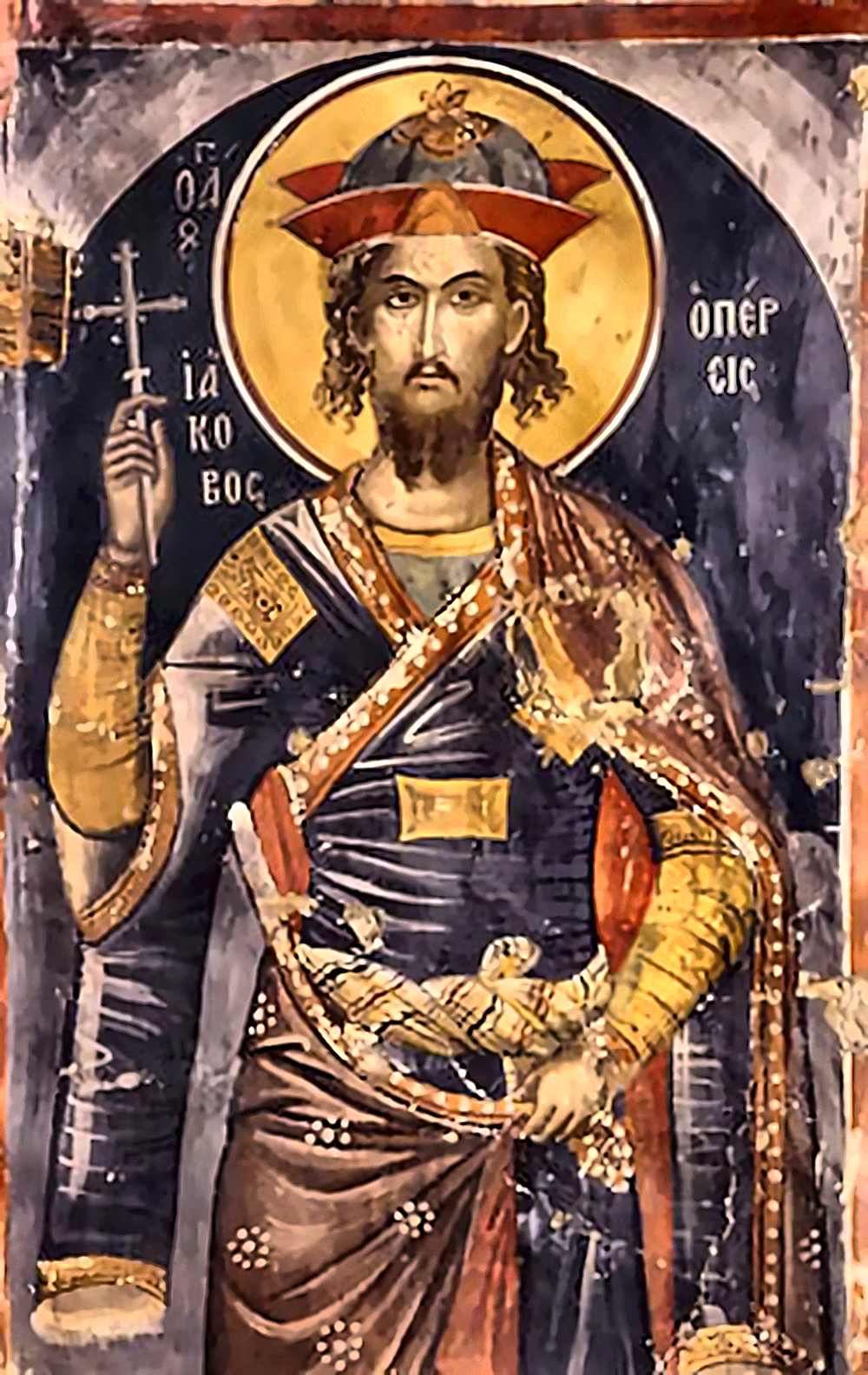
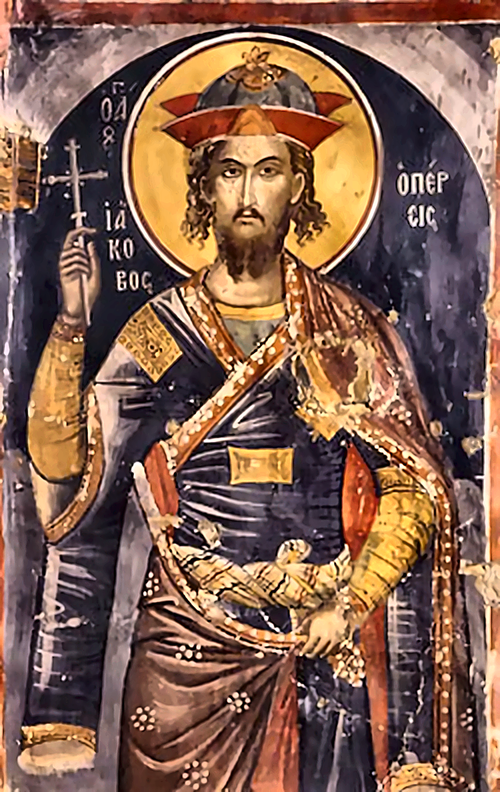
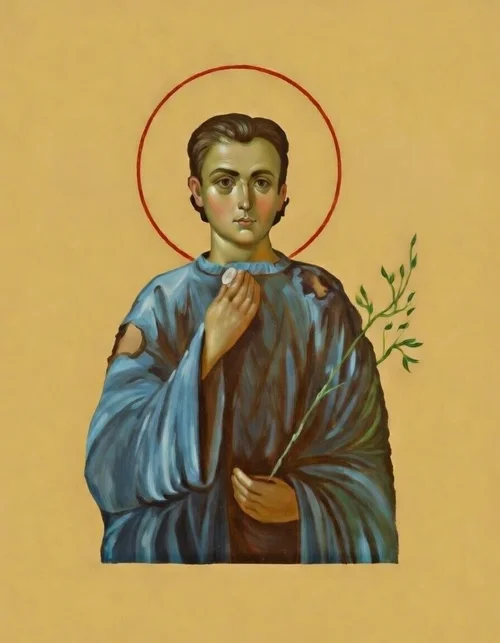
Saint James Intercisus
(James the Persian)
"He denied Christ to keep his job. His mother's tears changed him. What followed was one of the most brutal martyrdoms in Christian history — and he proclaimed his faith through every single cut."
James was a Christian nobleman serving in the Persian court of King Shapur II. When the king began persecuting Christians, James — unwilling to lose his status, his wealth, and his proximity to power — publicly denied his faith. The king rewarded him. James kept his position. And then the letters arrived from his mother and his wife: "You have exchanged the living God for a dead king. We will have nothing more to do with you until you repent."
The words struck him. James confessed his apostasy publicly, returned to his faith, and went before the same king he had once pleased by abandoning Christ. The sentence was intercisus — the Latin word for "cut apart." He was executed finger by finger, joint by joint, limb by limb over the course of an entire day. As each piece was severed, witnesses heard him praying and confessing Christ. He did not stop. He was cut into twenty-eight pieces. He died praying.
The name Intercisus means "cut apart" in Latin, and it is the name by which the Church chose to remember him permanently. Not his nobility. Not his compromise. His courage at the end, and the repentance that made it possible.
4th Century
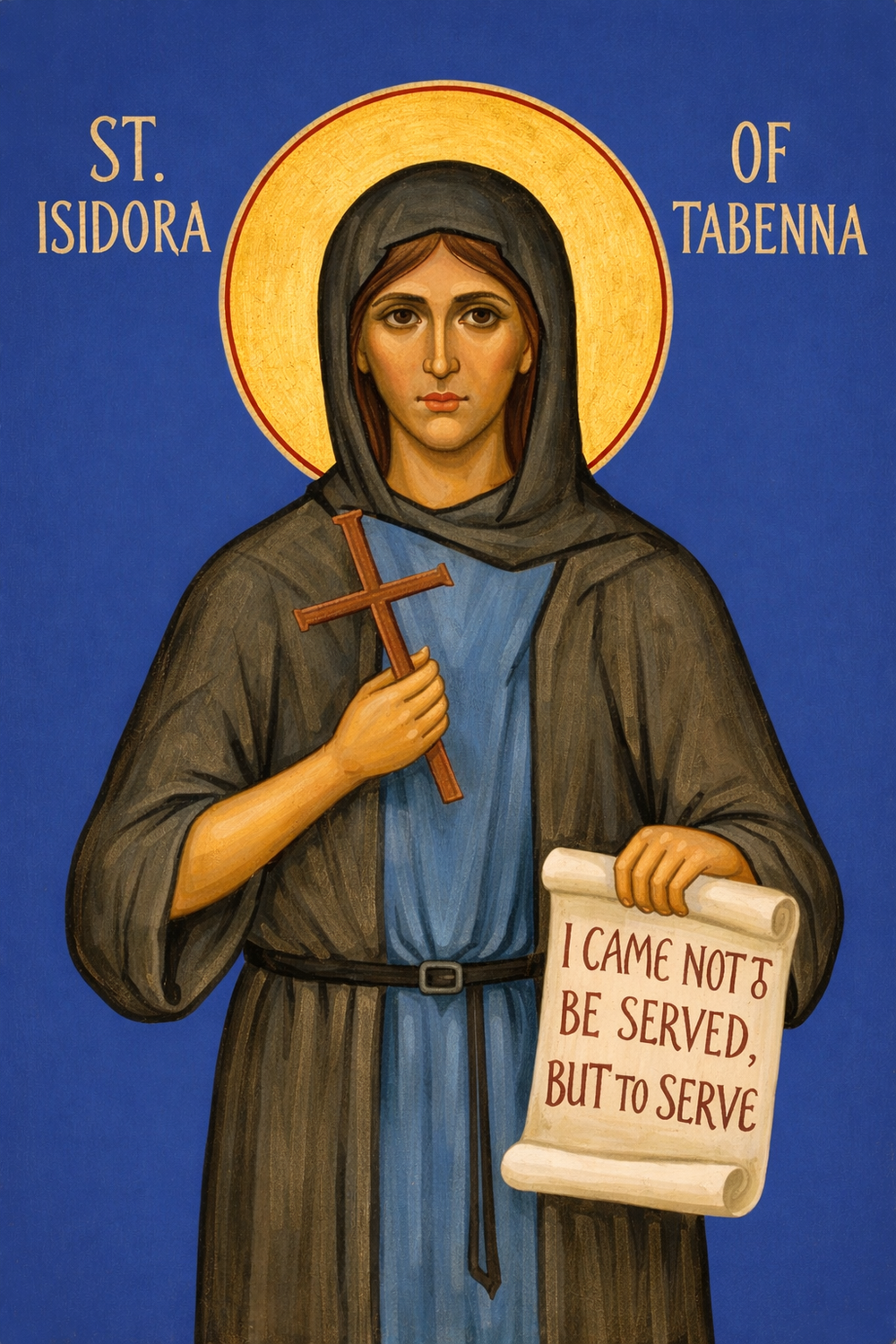
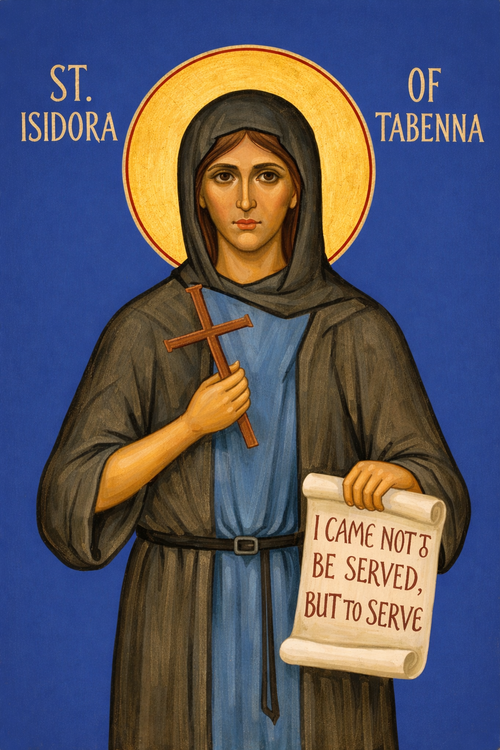
Isidora of Tabenna
"She spent years being treated as the monastery's idiot — eating scraps off the floor, enduring mockery — while secretly being one of the holiest people in the building. Nobody knew until a Desert Father came looking for her specifically."
Isidora lived in the women's monastic community of Tabenna in Egypt in the 4th century. From the outside, she appeared to be mentally unstable — she wore a rag on her head instead of the proper monastic headdress, was given the most degrading tasks, ate whatever food remained after everyone else had finished, and was mocked freely by the other sisters. She never complained. She never defended herself. She never indicated in any way that she was doing this deliberately.
The Desert Father Piteroum received a revelation: there is a woman at the monastery at Tabenna, he was told, holier than you. She is the one who wears the rag. Go find her. He traveled to Tabenna, gathered all the nuns, and when Isidora was not among them, asked why. They brought her out of the kitchen where she was working. When Piteroum saw her, he fell to the ground before her and asked for her blessing. The sisters were astonished. He rebuked them for the years of mockery they had directed at this woman. The community wept.
Isidora, overwhelmed by the exposure, fled the monastery that night and was never found again. The deliberate concealment of holiness — the choice to be seen as nothing rather than risk the corruption of pride — is the specific vocation of the yurodivyi, the Fool for Christ. Isidora may be the earliest female example of it in the written tradition.


c. 1494 – 1494 AD
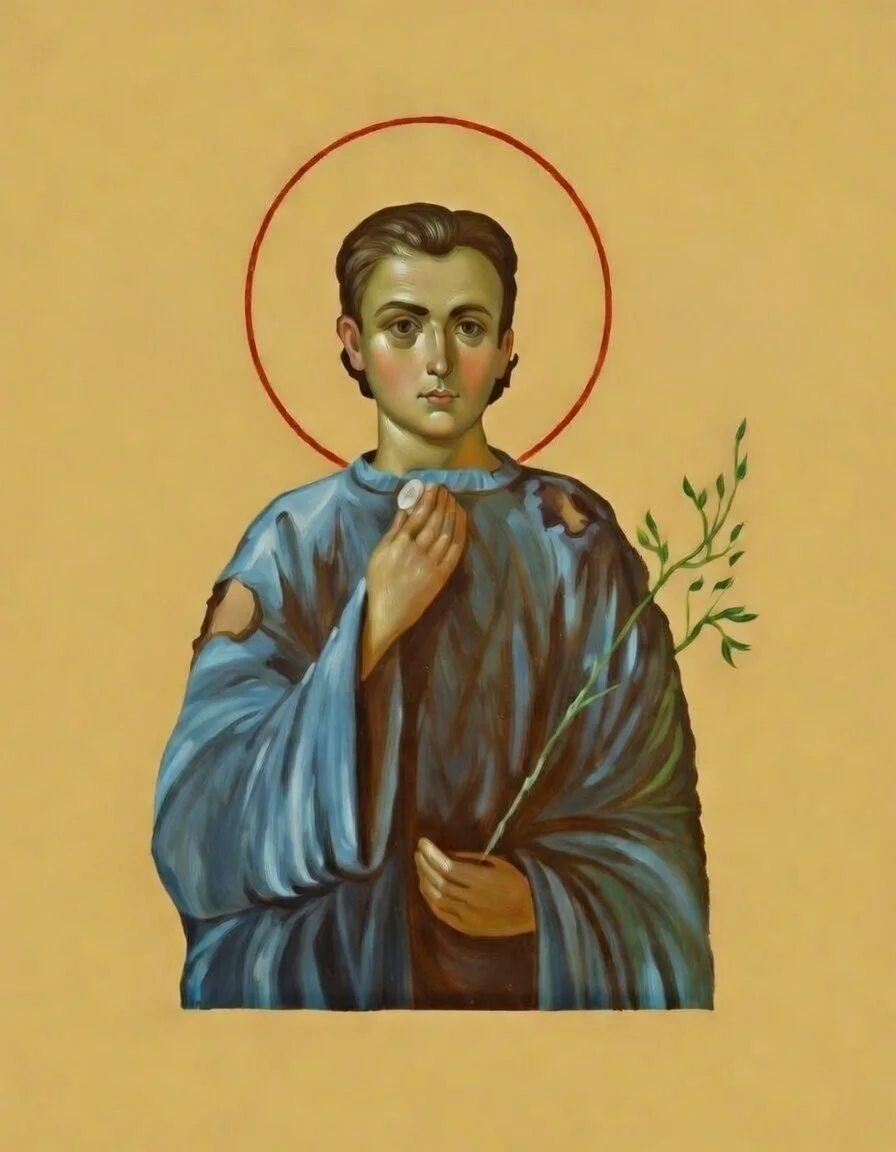
Saint John of Ustiug
"He walked barefoot through a Russian winter, slept outside year-round in the frozen north, and was dismissed by everyone as a madman — which was exactly the point."
John lived in the northern Russian city of Veliky Ustiug in the 15th century, embracing the calling of yurodstvo — Holy Foolishness — in one of the coldest inhabited places in the Christian world. He wore almost nothing regardless of season, slept in the open, ate almost nothing, and absorbed the mockery of townspeople who saw him as simply deranged.
The story that preserves his memory most vividly involves a merchant's wife who, embarrassed by John's disheveled appearance near her house, threw a bucket of hot water on him. He reportedly thanked her for the hot bath, since he rarely got warm water. The detail is funny — and the humor is exactly the point of Holy Foolishness: the refusal to be wounded by humiliation, the lightness that comes from being entirely free of the need for human approval.
He is venerated today primarily in the Russian north, in the Vologda region, and by those drawn to the yurodivyi tradition's radical inversion of social dignity. His life asks the quietly devastating question: what would you be willing to look like, in order to be fully free?
5th – 6th Century
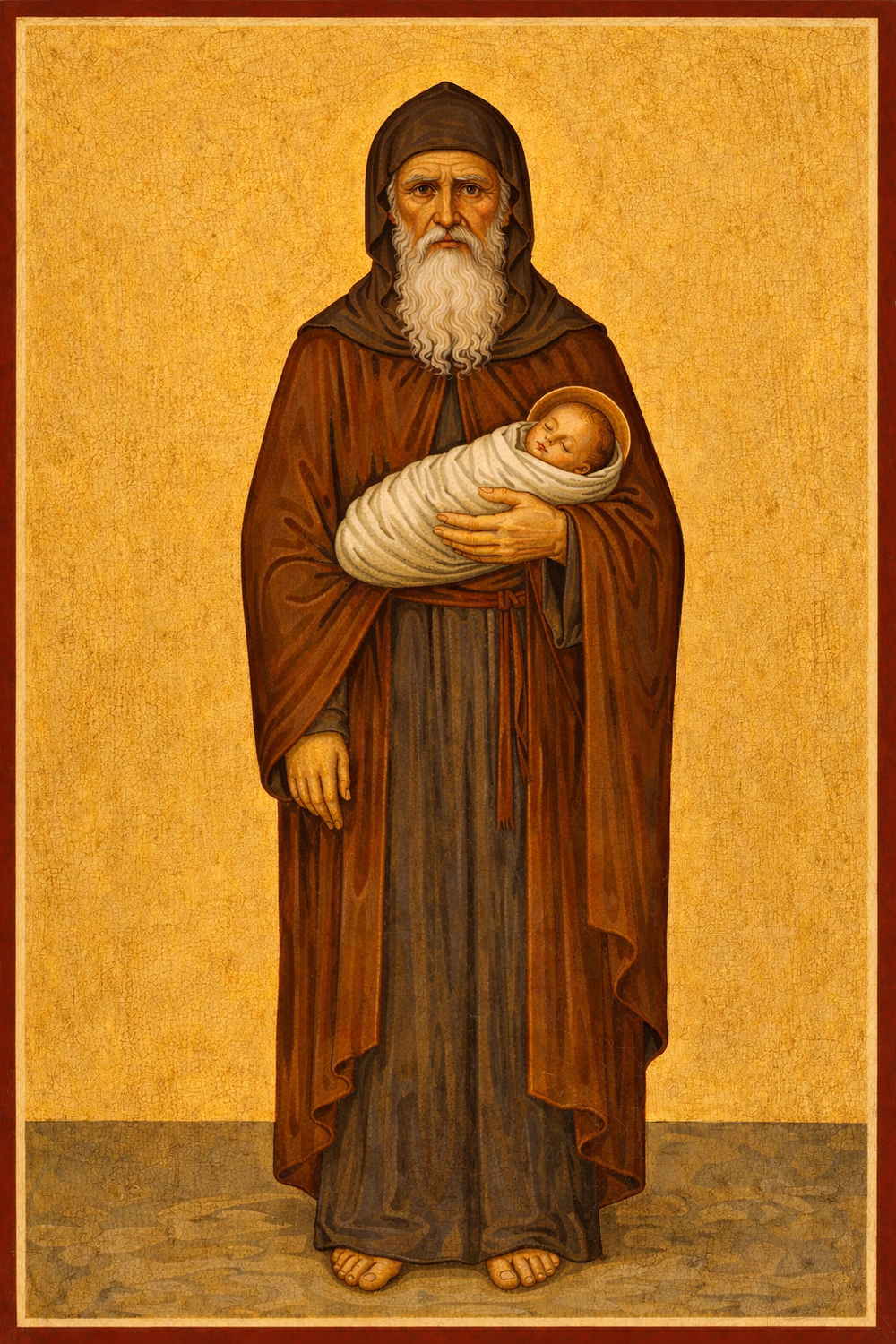
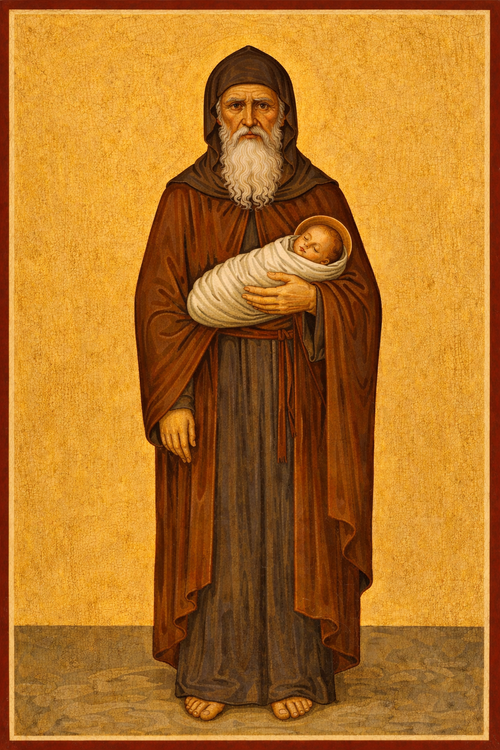
Saint Stylianos of Paphlagonia
"He gave away everything he owned, lived in a cave, and inexplicably became the patron saint of newborns — because people discovered that sick and dying infants recovered when placed in his arms."
Stylianos was born into a wealthy family in Paphlagonia (modern northern Turkey) and gave away his entire inheritance in early adulthood, retreating first to a monastery and then to a cave in the desert to live as a hermit. He ate almost nothing, slept almost not at all, and prayed with extraordinary constancy. This is a pattern familiar from dozens of Desert Fathers. What makes Stylianos unusual is what happened when local families began bringing him their sick newborns.
Children who were near death recovered when placed in his care. Infants who could not be kept alive by any medical means of the era were brought to his cave and returned to their families healthy. The tradition spread, his icon began to appear in homes where new babies slept, and within a few centuries he had become one of the most specifically invoked saints for newborns, premature infants, and children facing death.
He is venerated with particular intensity in Greece and Greek Orthodox communities worldwide, where his icon typically shows him holding a swaddled infant. In Greek homes it remains common to hang his icon in a nursery. There is something wonderfully unexpected about the patron of newborns being a cave-dwelling hermit who ate almost nothing and saw almost nobody.
1506 – 1579
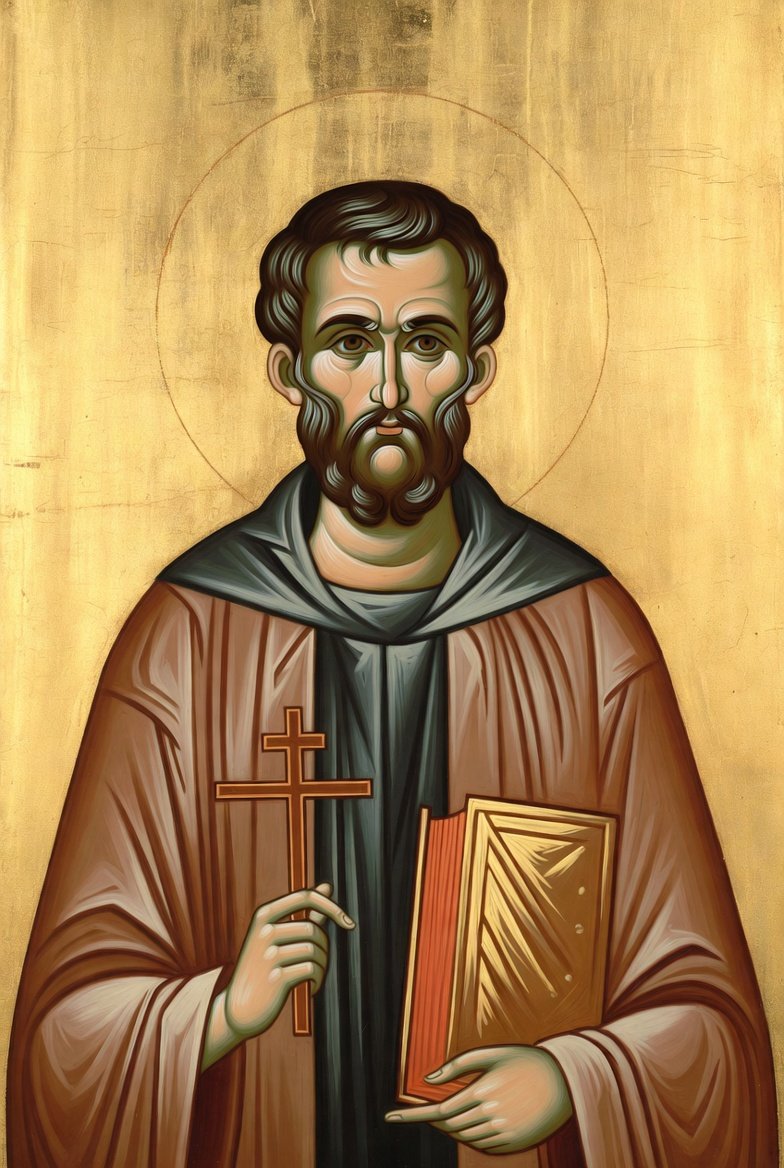
Saint Gerasimos of Cephalonia
"He spent five years living in a narrow cave, then built a convent, then asked to be buried under its threshold so that every nun would walk over his grave daily — to teach them humility."
Gerasimos was born on the Greek island of Cephalonia in 1506 and spent decades as a pilgrim — traveling to Jerusalem, Sinai, the Jordan River, Crete, and Zakynthos in extended pilgrimage before settling in a cave near the village of Omala on Cephalonia around 1560. The cave was approximately a meter wide. He lived in it for five years, praying with a constancy that the local population eventually noticed, first with curiosity and then with reverence.
He left the cave to found a convent for women on the island, personally overseeing its construction, organizing its community, and providing spiritual direction to its sisters until his death in 1579. His last request was characteristically extreme: he asked to be buried beneath the entrance of the convent's church, where every person who entered would walk over his grave. His reasoning was direct — the daily reminder of death would help the community maintain the humility that is the foundation of monastic life.
His relics, exhumed after his death, proved to be incorrupt and have remained so — they are displayed in a silver reliquary in the church he founded, which still stands on Cephalonia today. He is one of the patron saints of the island and one of the most beloved saints of the Ionian island tradition.
c. 830 – 910 AD
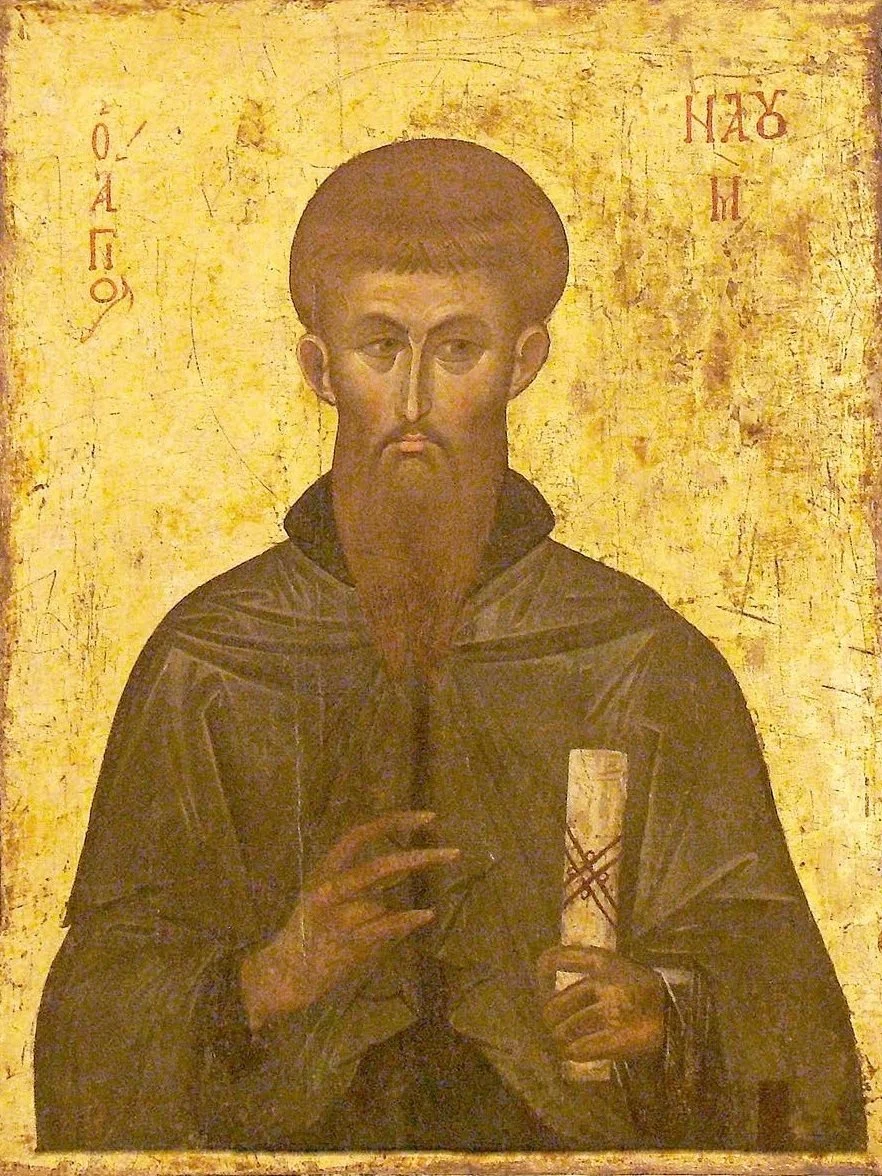
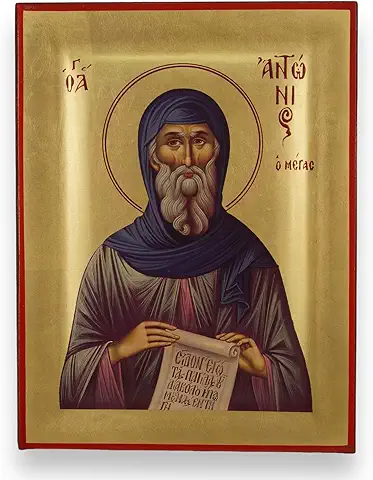
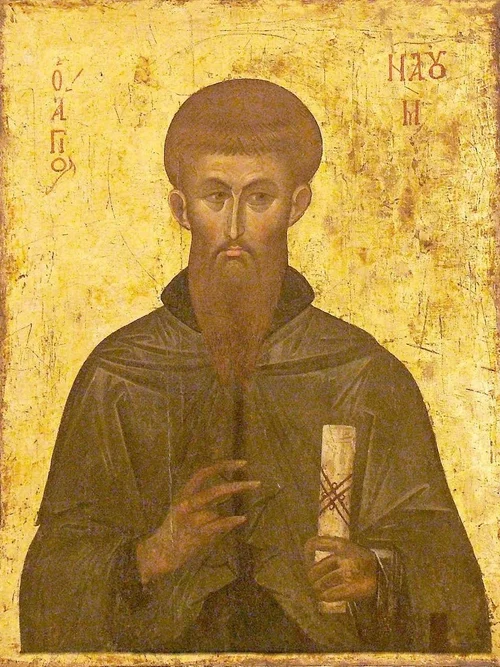
Saint Naum of Ohrid
"A disciple of Saints Cyril and Methodius who was expelled from Bulgaria for teaching Christianity in the local language — so he walked to Macedonia and built one of the oldest monasteries in Europe. It is still standing."
Naum was one of the Seven Apostles of the Bulgarian people — disciples of Saints Cyril and Methodius who continued their teachers' work of translating Christianity into the Slavic vernacular and creating the Glagolitic alphabet. When German clergy expelled Naum and his companions from Bulgaria around 885, Naum traveled south to the shores of Lake Ohrid in what is now North Macedonia, where he was received by Prince Boris I of Bulgaria and began an extraordinary second phase of ministry.
He established a school and scriptorium that became one of the most important centers of Slavic literary culture in the early medieval period. He founded the Monastery of Saint Naum on the southern shore of Lake Ohrid — a site of breathtaking beauty where the monastery still stands above springs that feed the lake, the same springs that pilgrims have been visiting for eleven centuries. He is invoked with particular intensity for mental illness and psychiatric distress — hundreds of documented cases of people experiencing symptoms of mental illness traveling to his monastery and recovering, a tradition that persisted through the Ottoman period and continues today.
His grave at the monastery is one of the most visited Orthodox pilgrimage sites in the Balkans. Visitors press their ear to the grave to hear — or imagine — his heartbeat. The tradition holds that his heart is still beating.


c. 1788 – 1853
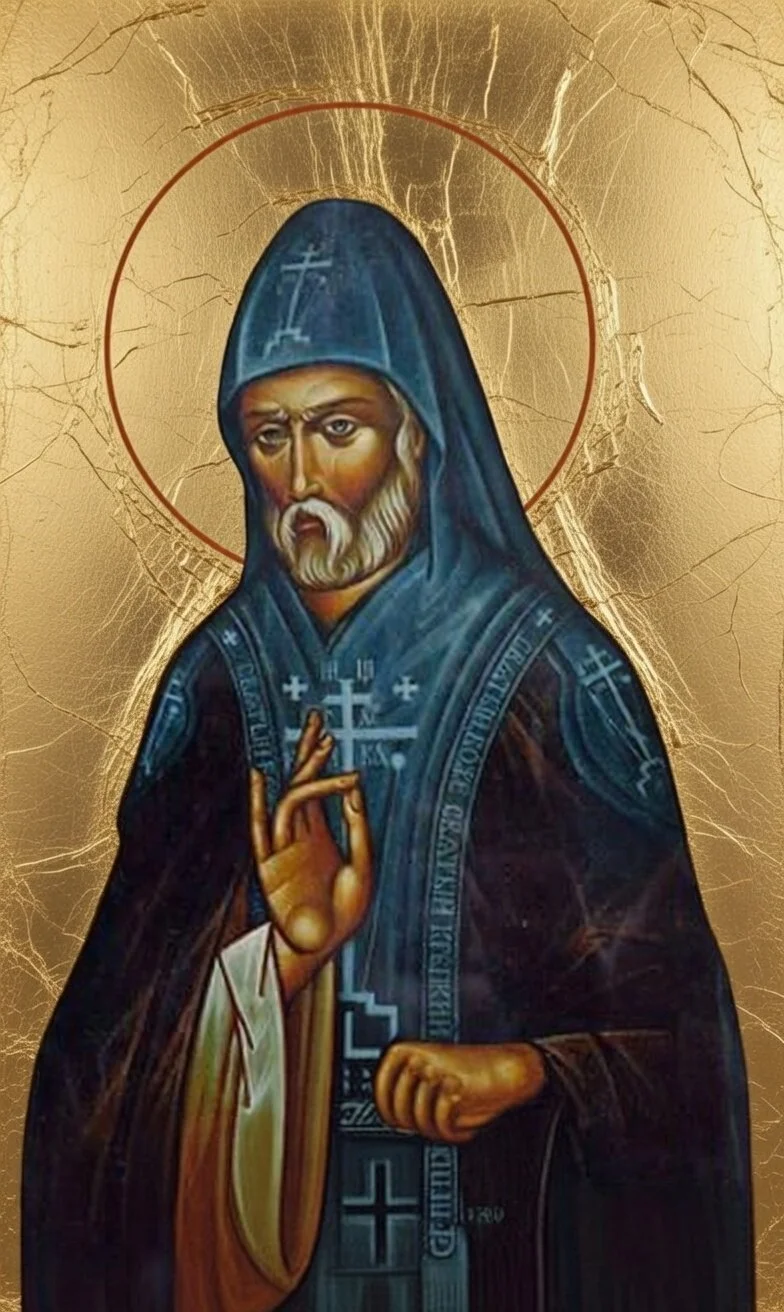
Saint Feofil of Kiev
"A monk who deliberately acted mentally ill to avoid being appointed abbot — and then spent decades as a beloved wanderer whose prophetic accuracy was documented by dozens of witnesses."
Feofil Gorenkovskiy was a monk at the Kyiv-Pechersk Lavra (the Kiev Caves Monastery) in Ukraine in the early 19th century. When the monastery authorities began moving toward appointing him hieromonk and eventually abbot — a position he considered spiritually dangerous for a soul inclined toward pride — he adopted the external appearance of mental instability to make himself unappointable. The authorities, believing him genuinely unwell, removed him from consideration. He spent the rest of his life as a wanderer on the monastery grounds and throughout Kiev.
What set Feofil apart from other Holy Fools was the specificity and accuracy of his prophecies. He predicted the Crimean War years before it began. He described the deaths of specific people with enough precision that witnesses documented it. He identified sins of visitors before they had spoken a word. He once demanded that a wealthy woman remove a ring she was wearing — it had been stolen, though she did not know it. The stories of his accuracy are extensive enough that his canonization process was able to draw on substantial documented testimony.
He was canonized by the Ukrainian Orthodox Church in 1993 and is one of the Kiev Caves saints — a community of ascetics whose relics are preserved in the caves beneath the monastery that pilgrims can still visit today.

1809 – 1884
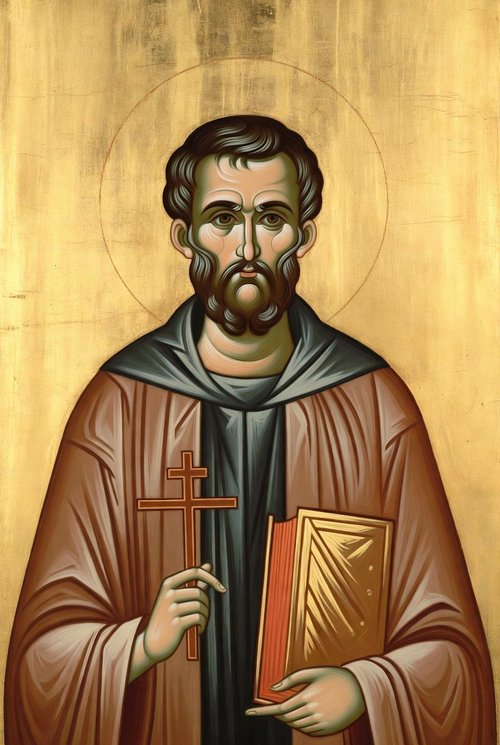
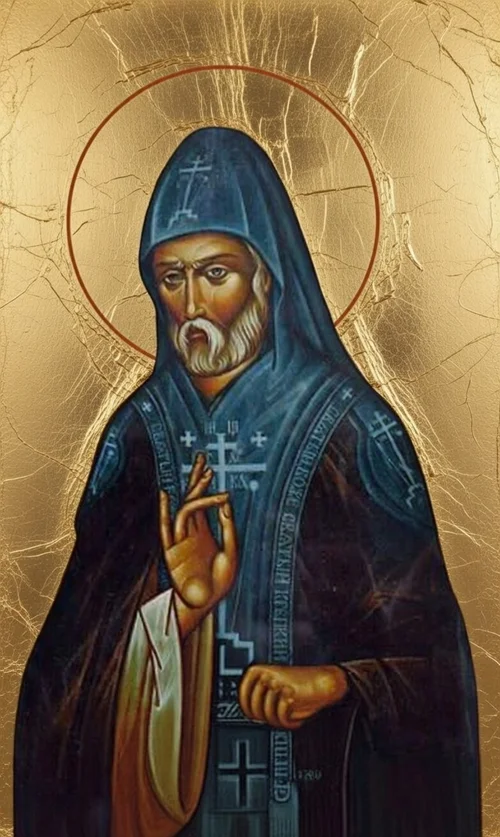
Pelagia Ivanovna of Diveyevo
"A forced marriage drove her into visible madness. The holy elder Seraphim of Sarov recognized her immediately as a great ascetic — and what looked like breakdown was in fact a total liberation."
Pelagia was born in 1809 in Arzamas and was forced into marriage as a young woman. The marriage was deeply unhappy, and Pelagia, who had been drawn to religious life from childhood, began exhibiting behavior that her community read as mental breakdown: she tore off her fine clothes, gave away her possessions, ran through the streets, and eventually appeared to lose her mind entirely. Her husband and family considered her lost. The community considered her pitiable.
When she was brought to the Diveyevo Convent — the community associated with Saint Seraphim of Sarov — the elder Seraphim himself came out to meet her. He bowed to the ground before her. He told the nuns: "This is our Pelagia, our treasure, our joy." He recognized in her apparent madness the voluntary, deliberate crucifixion of the false self — the Holy Fool's method of dying to the world's judgment in one dramatic act so that the interior life could continue undisturbed.
She lived at Diveyevo for decades, continuing in the external appearance of mental instability while being sought out by hundreds of people for counsel, healing, and prophecy. She predicted events in Russia's future with specificity that documented witnesses recorded. She died in 1884 and was canonized in 2004 alongside other Diveyevo saints.

12th – 13th Century
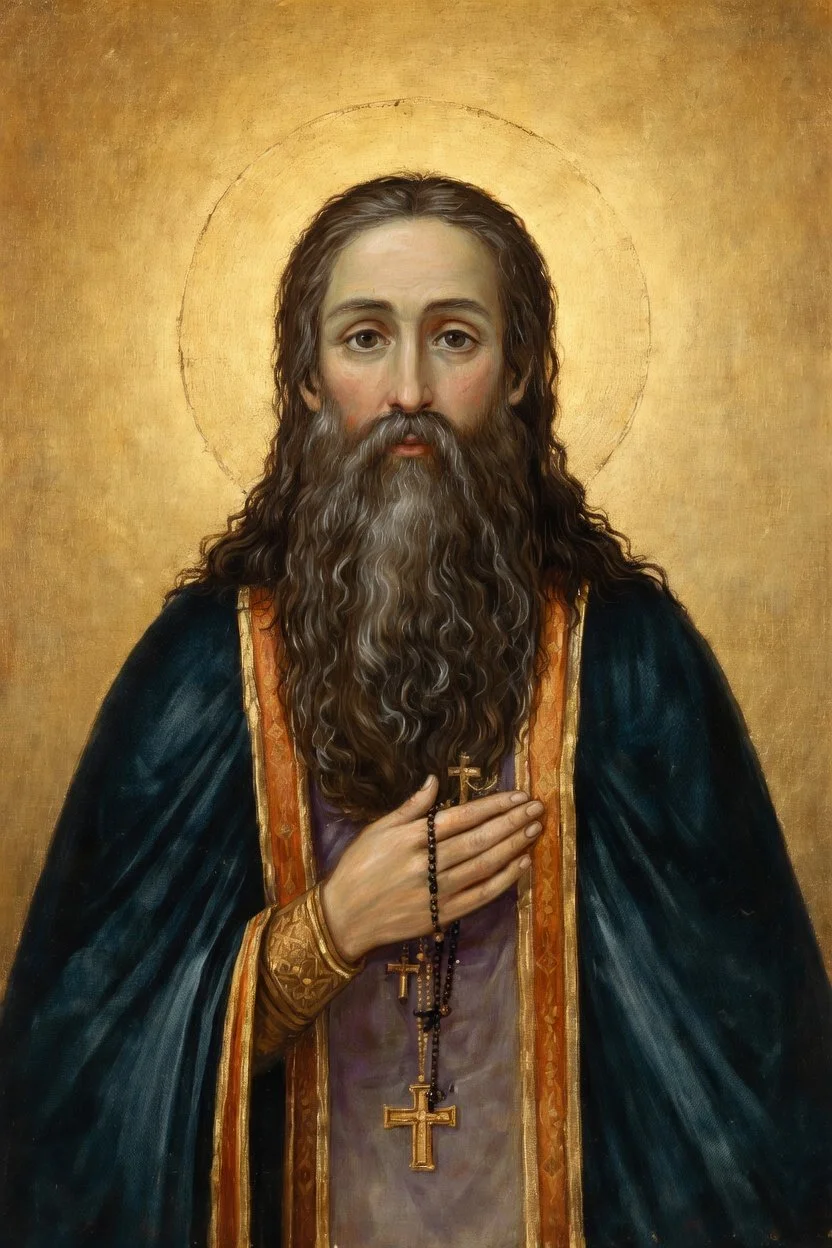
Saint Avraamy of Smolensk
"He was put on trial by his bishop for teaching too vividly about hell — found not guilty — and then the drought that had been destroying the city ended the day he was acquitted. The people connected the two events immediately."
Avraamy was a 12th-century monk in the Russian city of Smolensk whose preaching about the Last Judgment and divine justice was so vivid and emotionally intense that it disturbed the ecclesiastical establishment. He was accused by jealous clergy and brought before a council of bishops — the charges were vague and largely amounted to "he is too popular and his preaching makes people uncomfortable." He was found not guilty, but transferred to a different monastery as a compromise.
The coincidence that sealed his memory: at the time of his trial, Smolensk was suffering from an extended drought that was damaging the harvest and threatening the food supply. The drought ended on the same day the council acquitted him. The city's inhabitants, drawing the obvious conclusion, embraced him with a fervor that his persecutors had specifically sought to prevent. He spent his remaining years as the most beloved spiritual figure in the city.
He is one of those saints whose story functions as an institutional cautionary tale: the persecution of the genuinely holy by the institutionally threatened is as old as the Church itself, and God's vindication tends to arrive with pointed timing.
6th Century
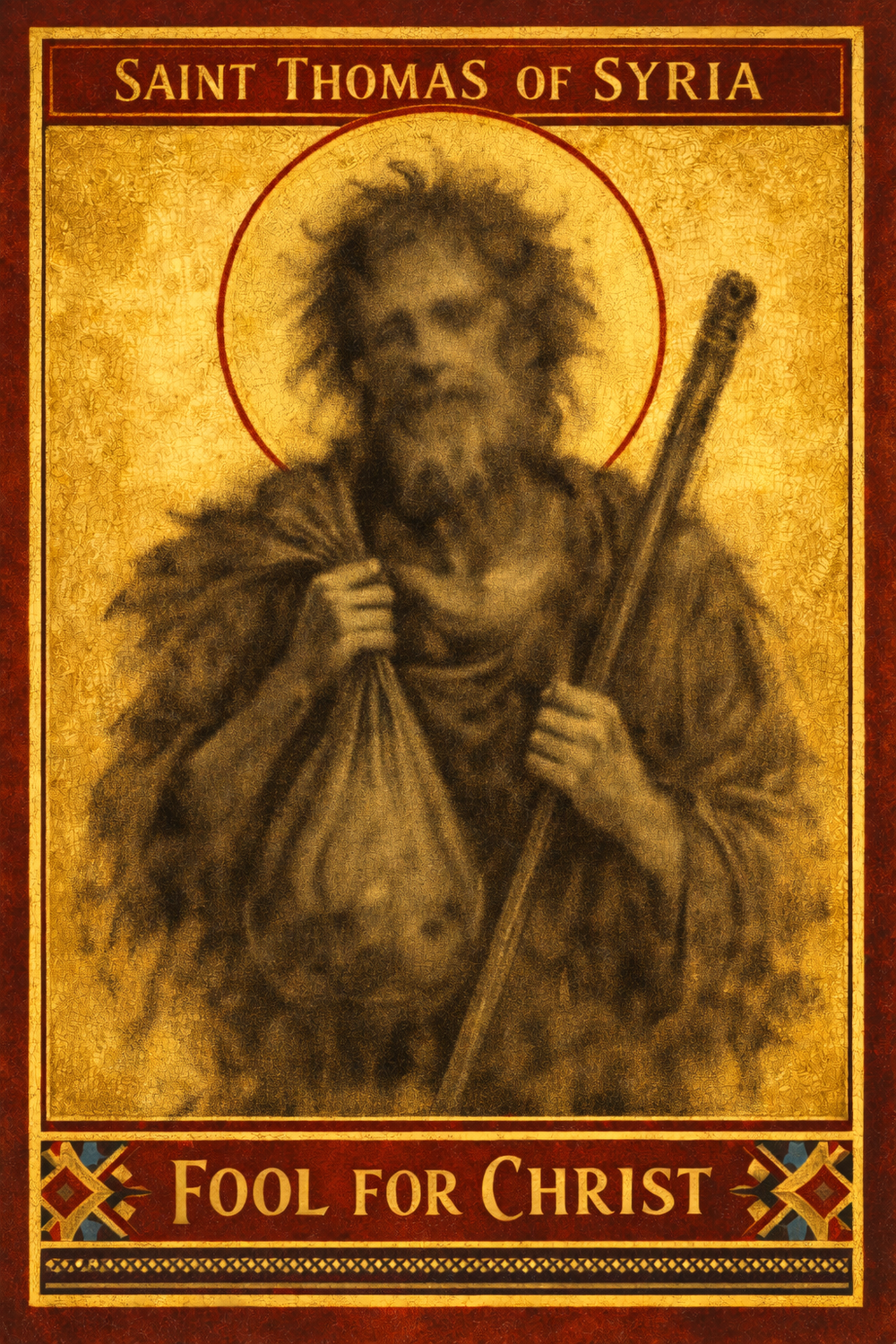
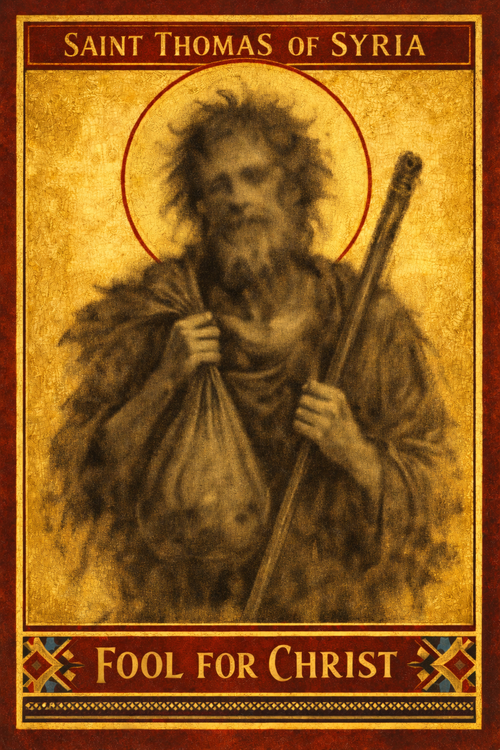
Saint Thomas the Fool of Syria
"He lived inside a tomb for ten years, pretended to be drunk and disorderly when people tried to venerate him, and was caught speaking with the angels only because a monk was watching through a crack in the door."
Thomas lived in 6th-century Syria and embraced an ascetic life of radical concealment. He is said to have chosen to live inside a tomb for a decade — sleeping among the dead, praying in darkness, avoiding the company of the living. When he eventually moved into the wider world, he adopted the exterior behavior of a drunk and a fool: stumbling, speaking incoherently, making himself appear either harmless or contemptible to anyone who looked.
The monk who eventually documented his story watched through a crack one night and saw Thomas standing in prayer, his cell filled with light, speaking with beings the witness could see but not hear. In the morning, Thomas resumed the stumbling and incoherence. He appears to have maintained this double life for years — visible fool, invisible contemplative — until his death.
His story is less well documented than some of the other Holy Fools and is preserved primarily in the Syrian hagiographic tradition. What makes it compelling is the specific detail of the tomb: the choice to live literally among the dead, in a culture where that would read as either profound grief or genuine madness, is the most extreme possible statement that the life of this world is not the life that matters.


Frequently Asked Questions
What is a "Fool for Christ" in Orthodox Christianity?
A Fool for Christ — yurodivyi in Russian, salós in Greek — is someone who deliberately adopts an exterior appearance of madness, social uselessness, or disrepute to pursue a hidden interior life of prayer and holiness. Half the saints on this list practiced this vocation in one form or another. The theological logic is precise: by making themselves contemptible in the world's eyes, they remove the greatest obstacle to holiness, which is the craving for human approval. Several of them — Isidora, Pelagia, Feofil — were initially mistaken for genuinely mentally ill. The difference is visible only in the fruits: a genuine Holy Fool becomes a conduit of healing, prophecy, and love. The apparent madness is a costume, not a diagnosis.
Why are these saints so unknown compared to figures like Nicholas or Anthony?
Several reasons. Some are saints of specific national or regional traditions — Naum of Ohrid is enormous in North Macedonia and Bulgaria but unknown in Greece; Feofil of Kiev is beloved in Ukrainian Orthodoxy but unfamiliar in Greek or Antiochian parishes. Some are deliberately obscure by vocation: the Holy Fools specifically sought to remain hidden. Some, like James Intercisus, are simply not preached about frequently despite extraordinary stories. The saints on this list are not minor saints — they are major saints of their own traditions who simply haven't crossed into the global awareness that figures like Nicholas or Paisios have achieved.
Why does Naum of Ohrid have a tradition of healing mental illness?
The tradition developed organically over centuries from accounts of people experiencing healing from what contemporaries described as demonic affliction or mental disturbance after pilgrimage to his monastery. His monastery at Lake Ohrid became a recognized destination for this specific intercession through medieval and Ottoman periods, when no other treatment was available for severe mental illness. The tradition continues today — his monastery is still a pilgrimage destination for people seeking his intercession for psychiatric conditions. The theological framework is not "insanity is demonic," but rather that suffering in any form is subject to God's mercy, and Naum became the saint associated with that mercy for people experiencing exactly this kind of suffering.
Can I pray to these lesser-known saints the same way I would pray to Nicholas or Mary?
Completely. Canonization does not create a saint's closeness to God; it recognizes it. All of these saints are fully in God's presence, fully aware of those who call on them, and fully capable of intercession. The practical difference between a well-known saint and an obscure one is not in their proximity to God, but in how many people are already asking them to pray. There is an argument that saints with fewer petitioners are easier to reach — not theologically, but in the sense that your particular need arrives in a quieter room. Pray to whoever your heart goes to. It matters.
They Were Always There
A Persian nobleman cut apart finger by finger while praying. An Egyptian woman hiding holiness under a kitchen rag. A Syrian monk living in a tomb. A Russian woman that Seraphim of Sarov bowed to on the ground.
The Orthodox calendar has thousands of saints. These ten were waiting for someone to simply tell their stories. Every prayer card on this page was made for exactly one purpose: to give you a tangible way to ask one of these people to pray for you right now.
Browse All Prayer Cards💍 Free Eastern Christian Marriage Resources
Prayers, reflections, and saint intercessions for couples — completely free, assembled for Eastern Christian families.
Access Free ResourcesAs an Amazon Associate, The Eastern Church earns from qualifying purchases.