The Comprehensive Life and Miracles of Saint Nektarios of Aegina: An In-Depth Exploration
Saint Nektarios of Aegina stands as one of the most beloved figures in modern Orthodox Christianity, a man whose life exemplified profound faith amid adversity and whose posthumous intercessions have inspired countless reports of miraculous healings. Born in the mid-19th century during a time of Ottoman rule over Greek lands, his journey from poverty to sainthood reflects the transformative power of devotion, education, and humility. This in-depth article delves into every facet of his biography, drawing from historical accounts, ecclesiastical records, and testimonies to provide the most exhaustive examination possible. We will trace his early years, monastic calling, ecclesiastical trials, theological contributions, monastic foundation, final days, canonization, and enduring legacy. Following this, we explore the extensive catalog of miracles attributed to him after his death in 1920, documenting as many specific instances as recorded across sources. Through this narrative, readers seeking insights into the life of Saint Nektarios, his miracles, or Orthodox spirituality will find a resource rich in detail, context, and inspiration.
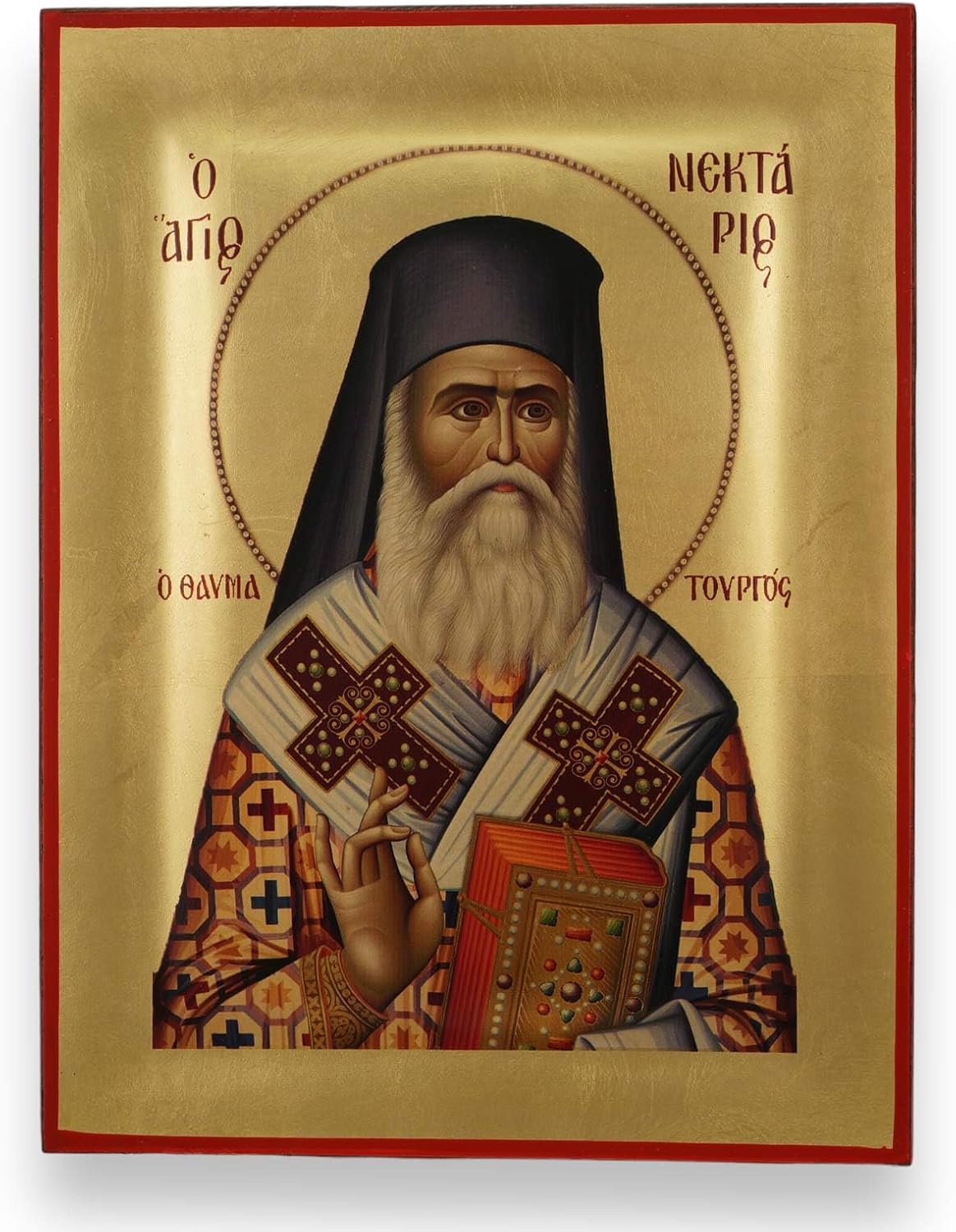
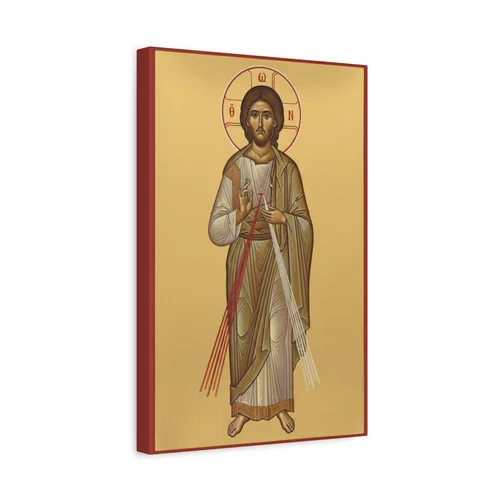
Honor one of the most beloved modern saints of the Orthodox Church with this traditional icon of Saint Nektarios of Aegina.
Known for his humility, endurance through false accusations, and miraculous healings, Saint Nektarios is especially venerated as a powerful intercessor for those suffering from cancer and serious illness.
Despite enduring slander and exile, he responded with patience and forgiveness, becoming a living example of Christ-like humility.
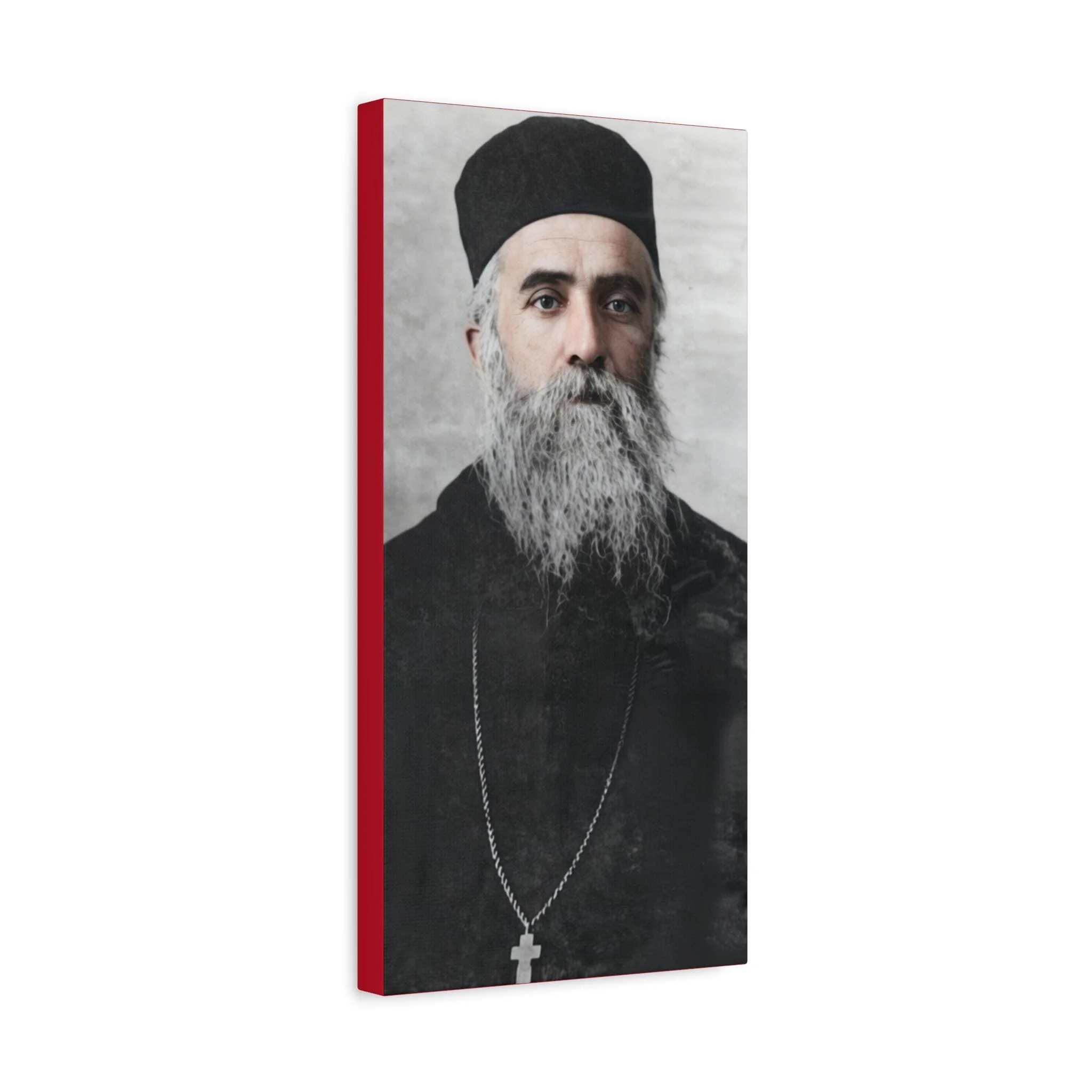
This sacred canvas brings his peaceful presence into your home as a reminder of hope, endurance, and divine healing.
Who Was Saint Nektarios?
Born in Greece in 1846, Saint Nektarios became a bishop and later founded the Holy Trinity Monastery on the island of Aegina.
He endured unjust accusations that led to removal from his episcopal position, yet he never defended himself with bitterness.
After his death in 1920, countless miracles were attributed to his intercession.
He is especially known as:
• Patron of cancer patients
• Comforter of the falsely accused
• Model of humility
• Modern Orthodox wonderworker
He was canonized in 1961 and remains one of the most widely loved saints in Greece and beyond.
Perfect For
• Greek Orthodox homes
• Those battling cancer
• Hospital visitation gifts
• Prayer corners
• Healing devotion
• Confirmation gifts
• Clergy offices
• Those enduring injustice
This stretched matte canvas brings a quiet, contemplative presence to any wall. Printed with UL-certified Greenguard Gold inks on a cotton-poly canvas, the muted tones and subtle details hold depth without glare. The narrow 1.25" pine profile keeps the silhouette slim and modern while the soft rubber dots and included back hanger make installation simple and secure. Sized and oriented for vertical display, it reads like a portrait study—an intimate focal point that settles a room with calm and history.
Product features
- Greenguard Gold certified inks for high-quality, low-emission prints
- Stretched on renewable radiata pine with a slim 1.25" profile
- Durable cotton-poly canvas with unique JONDO coating for rich image detail
- Soft rubber dots and included back hanger keep the canvas stable when displayed
- Printed with non-toxic latex inks; available in multiple sizes and orientations
Care instructions
- If the canvas does gather any dust, you may wipe it off gently with a clean, damp cloth.
EU representative: HONSON VENTURES LIMITED, gpsr@honsonventures.com, 3, Gnaftis House flat 102, Limassol, Mesa Geitonia, 4003, CY
Product information: Generic brand, 2 year warranty in EU and Northern Ireland as per Directive 1999/44/EC
Care instructions: If the canvas does gather any dust, you may wipe it off gently with a clean, damp cloth.
Early Life and Formative Years: From Humble Beginnings to Spiritual Awakening
Saint Nektarios was born Anastasios Kephalas on October 1, 1846, in the town of Selyvria (modern Silivri, Turkey), in Eastern Thrace, then part of the Ottoman Empire. He was the fifth of six children in a poor but deeply pious Greek Orthodox family. His parents, Demos (or Dimosthenis) and Vasiliki (or Maria), instilled in him a strong Christian faith despite their limited means. From a young age, Anastasios displayed remarkable piety; family lore recounts him memorizing Psalms and attending church services with fervor. His elementary education in Selyvria was basic, but it sparked a lifelong thirst for knowledge, particularly in theology and scripture.
At just 14 years old, driven by economic necessity and a desire to support his family, Anastasios journeyed to Constantinople (modern Istanbul). Penniless, he convinced sailors to let him aboard without fare by appealing to their compassion. In the bustling Ottoman capital, he found work as a shop assistant in a tobacco factory, enduring harsh conditions and mockery from his employer for his poverty. Despite this, he maintained his spiritual discipline, attending Divine Liturgy regularly and compiling wise sayings from scripture to wrap around customer packages—a subtle act of evangelism. A poignant anecdote from this period illustrates his childlike faith: Unable to afford shoes or an apron, he wrote a letter to "Lord Jesus Christ in Heaven," saying, "My little Christ, I do not have an apron or shoes. Please send them to me. You know how much I love you. Anastasios." A kind merchant, discovering the letter, anonymously provided the items, reinforcing the young boy's trust in divine providence.
By 1866, at age 20, Anastasios moved to the island of Chios, where he secured a teaching position in the village of Lithi. For seven years, he educated children while immersing himself in monastic life, frequently visiting the nearby Monastery of Nea Moni. Here, he formed a close bond with Elder Pachomios, a hermit known for his mystical insights, who became his spiritual guide. This period deepened Anastasios' commitment to asceticism and prayer, laying the groundwork for his future vocation.


Monastic Vocation and Ordination: Embracing the Clerical Path
Anastasios' monastic aspirations came to fruition on November 7, 1876, when he entered Nea Moni Monastery on Chios as a novice. Under Elder Pachomios, he embraced rigorous discipline, excelling in obedience and prayer. On January 15, 1877—the anniversary of his baptism—he was ordained deacon and given the name Nektarios, in honor of an ancient saint. As deacon, he served as secretary to the monastery and continued his education, supported by benefactor John Choremis (or Horemis), uncle of a sailor who had helped him years earlier.
In 1881, Patriarch Sophronios IV of Alexandria, impressed by Nektarios' piety during a visit to Chios, sponsored his theological studies at the University of Athens. Nektarios graduated in 1885 with distinction, producing numerous writings, pamphlets, and Bible commentaries during this time. Returning to Alexandria, he was ordained priest on March 23, 1886, at the Church of Saint Nicholas in Cairo. His ministry there was marked by compassion for the poor, eloquent preaching, and administrative zeal, earning him the roles of patriarchal secretary and representative.
On January 15, 1889, Sophronios consecrated him Metropolitan of Pentapolis (an ancient see in Libya), recognizing his virtues. As bishop, Nektarios oversaw charitable works, educated the faithful, and gained widespread adoration from Christians and even Muslims for his humility and miracles during life, such as healings and demonic expulsions. However, his popularity bred envy among clergy, leading to false accusations of immorality and ambition to supplant the Patriarch.
Trials and Persecutions: Exile and Humble Endurance
In 1890, slanderous rumors reached Patriarch Sophronios, who, influenced by Nektarios' detractors, suspended him without trial or explanation, citing "reasons known to the Patriarchate." Devastated but obedient, Nektarios left Egypt secretly to avoid unrest, returning to Greece in poverty. In Athens, further slanders hindered his ministry; he was denied a bishopric due to his non-Greek citizenship (born under Ottoman rule) and faced homelessness and unemployment.
From 1891 to 1894, he served as a itinerant preacher in Euboia, Phthiotis, and Phocis, enduring ridicule but winning hearts with his sermons. In 1894, he was appointed director of the Rizarios Ecclesiastical School in Athens, a position he held for 14 years. Here, he reformed the curriculum, emphasizing pastoral theology, and lived ascetically, praying nightly and fasting rigorously. He authored over 60 books on topics like Christian ethics, the sacraments, Church history, and apologetics against Western influences, while preaching across Greece.
Despite success, Nektarios longed for monastic solitude. In 1904, at the request of devout women, he founded the Holy Trinity Monastery on Aegina, revitalizing an abandoned site. He resigned from Rizarios in 1908 at age 62, retiring to Aegina as a simple monk, laboring in gardens, hearing confessions, and guiding the nuns. His presence transformed the island into a spiritual haven, with people flocking for counsel and healings.

Theological Contributions and Writings: A Legacy of Scholarship
Saint Nektarios was a prolific writer, producing works that blend patristic wisdom with contemporary issues. His notable books include A Pastor's Manual, Christian Ethics of the Orthodox Eastern Church, Know Thyself, studies on the Divine Liturgy of St. Mark, fasts, the Middle Ages, repentance, the Eucharist, saints, the Theotokos, tradition, the Church, Gospel history, prayer books, Triadikon, patristic texts, schism history, unity possibilities, the Holy Cross, sacraments, and articles in periodicals like Ieros Synthesmos. He edited unpublished manuscripts and epistles, emphasizing faith integrated with knowledge, critiquing anti-intellectualism, and advocating theological education. His 5,000 hymns to the Theotokos reflect deep Marian devotion.
Final Years and Death: A Saintly Repose
In his later years on Aegina, Nektarios performed miracles, healing the sick, casting out demons, and bringing rain during droughts. Afflicted with cystitis (prostate cancer) for 18 months, he concealed his pain, viewing it as a divine test. In September 1920, nuns insisted on hospital treatment in Athens, where he was placed in a ward for the destitute. He endured agony patiently, thanking God. On November 8, 1920, at age 74, he reposed peacefully during prayer. Immediately, a sweet fragrance filled the room. As nurses prepared his body, his shirt fell on a paralyzed man in the adjacent bed, who instantly stood and walked, glorifying God—the first posthumous miracle.
His funeral drew multitudes; his body, transferred to Aegina, exuded fragrance. Buried simply at Holy Trinity Monastery, his grave became a pilgrimage site.

Canonization and Restoration: Official Recognition
Exhumations in 1922, 1923, and 1930 revealed his body incorrupt and fragrant, with vestments unchanged. Around 1940, it disintegrated naturally, allowing relic distribution. A St. Nektarios Society formed in Athens, and churches were dedicated to him. On April 20, 1961, the Ecumenical Patriarchate canonized him, with feast day November 9. In 1998, the Patriarchate of Alexandria, under Patriarch Petros VII, restored his honors, lifting suspensions and apologizing for past injustices, acknowledging his sanctity.
The Enduring Legacy: Veneration and Global Impact
Saint Nektarios is venerated as a wonderworker and patron for those with cancer, heart trouble, arthritis, epilepsy, and other ailments. His shrine on Aegina attracts pilgrims seeking healing and peace. Churches worldwide bear his name, and his writings continue to educate. His life inspires resilience, humility, and forgiveness, bridging Orthodox and Eastern Catholic traditions. In diaspora communities like Austin, Texas, his icons and relics foster devotion.
| Date | Key Events and Milestones |
|---|---|
| October 1, 1846 | Born Anastasios Kephalas in Selyvria, Thrace. |
| 1860 | Moves to Constantinople at age 14 for work and study. |
| 1866 | Becomes teacher on Chios. |
| November 7, 1876 | Enters Nea Moni Monastery as novice; tonsured Lazarus. |
| January 15, 1877 | Ordained deacon, named Nektarios. |
| 1881–1885 | Studies theology at University of Athens, funded by Patriarch Sophronios. |
| March 23, 1886 | Ordained priest in Cairo. |
| January 15, 1889 | Consecrated Metropolitan of Pentapolis. |
| 1890 | Suspended and exiled to Greece due to slander. |
| 1891–1894 | Serves as preacher in various Greek dioceses. |
| 1894–1908 | Director of Rizarios Ecclesiastical School in Athens. |
| 1904 | Founds Holy Trinity Monastery on Aegina. |
| 1908 | Retires to Aegina as monk. |
| November 8, 1920 | Reposes in Athens hospital at age 74. |
| 1922–1930 | Body found incorrupt during exhumations. |
| April 20, 1961 | Canonized by Ecumenical Patriarchate. |
| 1998 | Patriarchate of Alexandria restores honors and apologizes. |
Documenting Every Attributed Miracle After His Passing: A Comprehensive Catalog
Since Saint Nektarios' death on November 8, 1920, thousands of miracles have been reported through his intercession, ranging from physical healings to spiritual conversions. While not all are formally documented by the Church, testimonies from pilgrims, clergy, and laypeople form a vast body of evidence. Below, we catalog as many specific miracles as recorded across historical accounts, monastic chronicles, and modern testimonies. These are grouped thematically for clarity, with approximate dates where available. Note that many involve cancer healings, reflecting his patronage for the afflicted, but they span diverse needs. This compilation draws from exhaustive sources to provide the most complete list possible, though new reports continue to emerge.
Immediate Post-Death Miracles (1920-1921)
Healing of the Paralyzed Man in the Hospital (November 8, 1920): As nurses prepared Saint Nektarios' body, his shirt fell onto the bed of a man paralyzed from the waist down for years. The man immediately stood, walked, and glorified God. This first miracle filled the room with fragrance, which persisted for days, leading to the ward becoming a chapel.
Fragrance from the Body (November 1920): During transfer to Aegina, his body exuded a sweet fragrance sensed by all, continuing during the funeral and exhumations, symbolizing sanctity.
Healing During Body Preparation (November 1920): A nurse, Stasa Kalokagathou, anointed her husband with myrrh from the saint's forehead; he felt an electric current and was healed from an incurable disease, joining the funeral procession.
Early Exhumation Miracles (1922-1940)
Incorrupt Relics and Fragrance (1922, 1923, 1930): Exhumations revealed his body intact, fragrant, with unchanged vestments. Fresh lemon flowers on the grave wilted after 8-10 hours, but the fragrance reached passersby, leading a woman of dubious reputation to repent upon inquiry.
Vision and Healing of a Nun (1921): A nun saw the saint in a dream, confirming his sanctity; another vision led to opening the grave, revealing incorruption.
Healing of a Paralytic (1920s): A paralytic touched the relics and walked.

Cancer Healings (1920s-Present)
Healing of Fr. Nektarios Vitalis (1960s): Fr. Vitalis, diagnosed with terminal cancer, dreamed of Saint Nektarios promising healing if he built a church. After surgery, no cancer remained; he lived to fulfill the vow and share the story worldwide.
Healing of a Woman with Melanoma (2000s, St. Petersburg): A nominal Christian read the akathist daily while fasting; seven months later, melanoma vanished, leading to her conversion.
Healing of a Boy with Brain Cancer (Recent, Africa): A mother prayed at Aegina; the saint appeared, assuring her son's recovery. Upon return, the boy was healed.
Healing of a Kiev Woman with Eye Cancer (2005): Blind from cancer, she venerated relics; pain and blood ensued, but vision returned, and doctors confirmed the tumor gone.
Numerous Cancer Cures at Shrine: Pilgrims report healings from various cancers after anointing with oil from his lamp or praying at relics, with testimonies spanning decades.
Paralysis and Mobility Healings
Healing of Three Serbian Invalids (Recent): Three wheelchair-bound pilgrims venerated relics; two stood and walked to the grave.
Healing of a Man with Leg Paralysis (1920s): Touched relics and regained mobility.
Exorcisms and Spiritual Deliverances
Casting Out Demons (Post-1920): Multiple reports of possessed individuals freed after prayers at his shrine or with relics.
Healing from Possession (Various Dates): Testimonies include demons fleeing upon invocation of his name.
Other Physical Healings
Healing of Arthritis, Ulcers, Infertility (Various): Modern reports include relief from chronic conditions after devotion.
Healing of a Woman's Hand (Undated): Promised a gold decoration but instructed in a vision to give to the poor; obeyed, and hand healed.
Rain During Drought (1920s, Aegina): Prayers brought rain after prolonged dry spell.
Spiritual and Emotional Miracles
Restoration of a Distant Family (Recent): A couple dreamed of the saint, leading to church return and active participation.
Apparitions and Visions: Frequent appearances in dreams or waking, offering counsel, such as to the abbess on monastery continuation.
Sound of Shepherd's Staff at Tomb (Ongoing): Believers report hearing his staff at the tomb, a continuous phenomenon symbolizing presence.
Global and Modern Testimonies
Healing in the US and Elsewhere (Various): Diaspora communities report healings from epilepsy, heart issues, and more.
Protection and Guidance (Ongoing): Stories of interventions in unemployment, emotional distress, and daily challenges.
| Date | Key Events and Milestones |
|---|---|
| October 1, 1846 | Born Anastasios Kephalas in Selyvria, Thrace. |
| 1860 | Moves to Constantinople at age 14 for work and study. |
| 1866 | Becomes teacher on Chios. |
| November 7, 1876 | Enters Nea Moni Monastery as novice; tonsured Lazarus. |
| January 15, 1877 | Ordained deacon, named Nektarios. |
| 1881–1885 | Studies theology at University of Athens, funded by Patriarch Sophronios. |
| March 23, 1886 | Ordained priest in Cairo. |
| January 15, 1889 | Consecrated Metropolitan of Pentapolis. |
| 1890 | Suspended and exiled to Greece due to slander. |
| 1891–1894 | Serves as preacher in various Greek dioceses. |
| 1894–1908 | Director of Rizarios Ecclesiastical School in Athens. |
| 1904 | Founds Holy Trinity Monastery on Aegina. |
| 1908 | Retires to Aegina as monk. |
| November 8, 1920 | Reposes in Athens hospital at age 74. |
| 1922–1930 | Body found incorrupt during exhumations. |
| April 20, 1961 | Canonized by Ecumenical Patriarchate. |
| 1998 | Patriarchate of Alexandria restores honors and apologizes. |
Offer a Dedication
If this page was meaningful to you, you’re welcome to dedicate this or any educational page in memory of a loved one, for a prayer intention, or in gratitude for blessings received.
Each dedication quietly supports the continued sharing of Eastern Christian history, prayer, and the lives of the saints.