Orthodox Prayer Rule for Beginners: Morning & Evening Prayers (5, 15 & 30-Minute Guide)
Orthodox Prayer • Daily Practice • Morning & Evening Rule • Beginners
Orthodox Prayer Rule for Beginners: How to Start Morning & Evening Prayers
The 5-minute, 15-minute, and 30-minute rule — what the Desert Fathers actually taught about starting, what to say, how to use a prayer rope, and why consistency matters more than length.
The Orthodox prayer rule is one of the most misunderstood practices in Eastern Christianity. People either imagine it as an intimidating wall of ancient Slavonic text, impossible for a beginner to enter, or as something vague and undisciplined — just talking to God whenever you feel like it. The real tradition sits precisely between those two extremes: structured enough to anchor the day, simple enough to begin today, and deep enough to sustain a lifetime.
This guide is for people who want to start. Not someday. Today. It covers what a prayer rule actually is, what the morning and evening prayers include, how to scale the practice to your actual life using the 5-, 15-, and 30-minute frameworks, how a prayer rope fits into the daily rule, and what every beginner most needs to hear about the one thing that matters more than anything else: consistency over length.
What Is an Orthodox Prayer Rule — And Why Does It Matter?
A prayer rule is a fixed, regular commitment to prayer — a specific set of prayers, said at set times, repeated day after day. The word "rule" comes from the same root as "regular" and carries the same meaning: not rigid or punishing, but rhythmic. The way a heartbeat is regular. The way the sun rises at a set time regardless of whether you feel ready for morning.
Orthodox theology holds that prayer is not primarily a feeling or a mood. It is an act — an act of turning toward God, of placing oneself before the divine presence, whether the heart is warm or cold, focused or distracted, consoled or dry. The prayer rule makes this act possible even on the days — especially on the days — when praying feels impossible. It gives the soul a structure to return to when everything else has fallen apart.
The prayer rule also works against one of the most common failures of personal spiritual life: the tendency to pray only when inspired, which means praying less and less as the initial enthusiasm of conversion or re-dedication fades. A rule removes the question of whether to pray. It only asks: will you stand in the place you have committed to stand?
The Orthodox tradition consistently teaches one thing above all others about the prayer rule: a small rule kept faithfully every day is worth incomparably more than a great rule abandoned after three days. St. John Climacus, the Desert Fathers, the Philokalia — they all say the same thing. Begin with what you can sustain. Not what inspires you on a good day. What you can actually do on a bad one.
The 5-, 15-, and 30-Minute Prayer Rules: Which One Is Right for You
The single most practical question a beginner asks is: how long should my prayer rule be? The honest answer is: as long as you will actually keep it. Here is a clear framework drawn from standard Orthodox pastoral guidance for laypeople.
| Level | Time | Morning Includes | Evening Includes | Best For |
|---|---|---|---|---|
| Starter Rule | 5 min | Opening Prayers, Lord's Prayer, Psalm 51, one morning prayer | Opening Prayers, Lord's Prayer, one evening prayer, brief examination of conscience | Complete beginners, people returning after a long lapse, those in crisis or illness |
| Standard Rule | 15 min | Opening Prayers, morning psalms (51, 63), full morning prayers from prayer book, 33 Jesus Prayers on prayer rope | Opening Prayers, evening psalms, full evening prayers, examination of conscience, 33 Jesus Prayers | Practicing Orthodox laypeople, those building a consistent habit, people in active parish life |
| Extended Rule | 30 min | Full morning prayers, morning psalter reading, Gospel/Epistle reading, 100 Jesus Prayers, Akathist or Canon on appointed days | Full evening prayers, psalm reading, 100–300 Jesus Prayers, compline prayers, preparation for Communion when applicable | Those in serious ascetic practice, people in fasting periods, preparation for Communion, those called to deeper contemplative life |
These are frameworks — not laws. The correct prayer rule for you is the one discerned with a priest or spiritual father who knows your circumstances. A new mother with a nursing infant, a person working night shifts, someone recovering from serious illness — all of these situations call for pastoral adjustment. The goal is never the rule itself. The goal is consistent, sincere turning toward God. The rule is the vehicle, not the destination.
The Morning Prayer Rule: Step by Step
The morning prayer rule follows a consistent structure across Orthodox traditions. The specific prayers may vary slightly by jurisdiction — Greek, Antiochian, Russian, and other traditions each have their own prayer books — but the shape is the same everywhere: opening, praise, petition, offering. Here is that structure, broken into its components.
Every Orthodox prayer session, morning or evening, begins with the same Opening Prayers. These prayers orient the soul before anything else is asked or offered:
- "Glory to You, our God, glory to You."
- The Heavenly King prayer — invoking the Holy Spirit
- The Trisagion — Holy God, Holy Mighty, Holy Immortal, have mercy on us (three times)
- Glory to the Father, and to the Son, and to the Holy Spirit...
- The Lord's Prayer (Our Father)
- "Come, let us worship and bow down before Christ..."
This sequence takes approximately two minutes and establishes the sacred character of the time set aside. It should be said slowly, not rushed.
Psalm 51 — "Have mercy on me, O God, according to your great mercy" — is the foundational morning psalm of the Orthodox tradition. It is the prayer of a person who has slept, who carries sins they are aware of and sins they are not, who comes before God in the morning not as someone who has earned the new day but as someone who has been given it.
In the Standard Rule, Psalms 63 and 143 are added. The full Extended Rule may include a section of the Psalter (the Psalms are divided into 20 kathismata, read across a week in monastic practice).
For a 5-minute rule: Psalm 51 alone is entirely sufficient and entirely traditional.
The morning prayers in any standard Orthodox prayer book — the Jordan Prayer Book, the Jordanville Prayer Book, the Antiochian prayer book — include a series of short prayers addressed to the Trinity, the Theotokos (Mary), your guardian angel, and for those who will come into your life that day. They are not long. In most editions, the complete morning prayers take between six and ten minutes to pray attentively.
Key morning prayers typically included:
- Prayer upon waking — offering the first moments to God
- Prayer to the Holy Trinity
- Prayer to the Theotokos
- Prayer to one's guardian angel
- The prayer of St. Basil — for protection through the day
- Commemoration of the living and departed (a brief list of names)
Many morning rules close with a set number of repetitions of the Jesus Prayer on a prayer rope. For beginners: 33 repetitions (one pass of a standard 33-knot rope). For those in the Standard Rule: 33 to 100. Pass each knot slowly. Say the prayer with attention to the words, not to the counting. If your mind wanders — and it will — return to the prayer without self-condemnation.

The Evening Prayer Rule: Step by Step
Where the morning rule consecrates the day to God, the evening rule brings it home. The theological movement is different: from petition and offering to gratitude, repentance, and surrender. The evening prayers are quieter in register. They are the prayers of a person who has lived through a day — who has done things well and poorly, who needs to lay both down before sleeping.
The evening rule begins with the identical Opening Prayers as the morning. This consistency is intentional. Every act of prayer in Orthodox practice is framed by the same invocation of the Trinity — creating a continuity between morning and evening, weekday and Sunday, ordinary days and feast days. The frame is always the same. What changes is what goes inside it.
Before the evening prayers proper, traditional Orthodox practice includes a brief, quiet examination of the day. This is not a prolonged exercise in guilt. It is a disciplined two-to-three-minute review:
- Where did I sin today — in word, thought, or deed?
- Who did I harm or neglect?
- Where did I receive mercy I did not deserve?
- What was I given today that I did not acknowledge?
The examination leads directly into the confessional prayers of the evening rule, which include asking forgiveness for the day's failures before sleep. The Orthodox tradition holds that one should not sleep while carrying unresolved anger or unrepented sin — the evening examination makes that resolution possible without requiring extraordinary effort.
The evening prayers in any standard Orthodox prayer book run to between six and ten minutes attentively prayed. They typically include:
- Evening thanksgiving — gratitude for the day and for mercy received
- Psalm 51 again — repentance is both a morning and evening posture
- Prayer to the Theotokos for protection through the night
- Prayer to your guardian angel
- The prayer of St. John Chrysostom — one prayer for each hour of the day
- The Trisagion prayers again as closing
As with the morning, many Orthodox Christians close their evening rule with a set of Jesus Prayers on the prayer rope. The number in the evening may be the same as the morning or fewer, depending on the rule agreed with your priest. The last thought before sleep, in the Orthodox tradition, is meant to be the name of Christ — carried from the prayer rope into the night.
"In peace I will lie down and sleep, for you alone, Lord, make me dwell in safety."

The Jesus Prayer and the Prayer Rope: The Heart of the Daily Rule
The Jesus Prayer — "Lord Jesus Christ, Son of God, have mercy on me, a sinner" — is the single most important prayer in the Orthodox hesychast tradition, and it is at the center of the prayer rule for many Orthodox Christians. Understanding it properly will change how you approach both morning and evening practice.
The Prayer Itself
The full form is: Lord Jesus Christ, Son of God, have mercy on me, a sinner. Shorter forms are used as well — "Lord Jesus Christ, have mercy on me" or simply "Lord, have mercy" — but the full form carries the complete theological weight: it confesses the Lordship of Christ, his identity as the Son of God, and the truth about the one praying (a sinner in need of mercy). Every word is doing theological work. Praying it attentively is a continuous act of faith.
How to Pray It With a Prayer Rope
Hold the prayer rope in one hand. At each knot, say the Jesus Prayer once. Move to the next knot. Do not rush. Do not try to suppress distracting thoughts by force — simply return the attention gently to the prayer when it wanders. The fathers of the Philokalia describe this return as itself an act of prayer: every time you bring a wandering mind back to the name of Christ, something is happening spiritually.
For beginners: 33 repetitions per prayer session. This takes approximately three to four minutes at a natural pace. Over months and years, as the prayer becomes more interior — as it begins to descend, in the traditional phrase, from the lips to the heart — the number matters less than the quality of attention.
What the Prayer Is Not
The Jesus Prayer is not a mantra in the meditative sense. It does not work by repetition alone. Its power lies in the Name it invokes and the intention of the person praying. The fathers consistently warn against treating it as a technique for producing spiritual states. It is an act of address — speaking to a person, not generating an effect. The disposition to cultivate is not concentration for its own sake but attentive humility: standing before Christ, saying what is true, and waiting.
The Mystical Tradition Behind Orthodox Prayer
The hesychast tradition that gave us the Jesus Prayer is rooted in the same Second Temple Jewish mystical heritage that produced the Book of Enoch — the tradition of seeking the divine presence through inner stillness and purified attention. These editions open that world.


What the Desert Fathers Taught About Daily Prayer
The Desert Fathers — the fourth and fifth century monks of Egypt and Syria who pioneered the Christian contemplative tradition — were the first systematic teachers of what would become the Orthodox prayer rule. Their advice, preserved in the Sayings of the Desert Fathers (the Apophthegmata Patrum) and in texts like the Philokalia and the Ladder of Divine Ascent, remains the best practical guide for anyone beginning.
On Beginning Small
The Fathers are unanimous: the enemy of the prayer rule is not laziness alone but ambition. A person who begins with an hour of prayer, sustained by initial fervor, will almost certainly collapse after two weeks — and then feel too ashamed to return to prayer at all. A person who begins with five minutes, kept without interruption for a month, has built something the enemy cannot easily undo. Abba Moses is recorded as saying: "Sit in your cell, and your cell will teach you everything." The cell, in this context, is wherever you stand to pray. Stay there.
On Distraction
Every beginner asks the same question: what do I do when my mind wanders constantly during prayer? The Fathers answer: this is normal. This is not evidence that your prayer is failing. It is evidence that you are human. The work of returning the mind to the prayer — gently, without violence, without self-condemnation — is itself the spiritual exercise. St. John Climacus writes that the person who has learned to pray amid constant distraction has learned something more valuable than the person whose prayer was always easy.
On Dryness
There will be periods — sometimes long ones — when prayer feels like talking to a wall. The words feel empty. God feels absent. The tradition is clear: keep the rule. The Fathers call this aridity or spiritual dryness, and they treat it not as evidence that prayer has stopped working but as the very testing ground in which genuine faith is formed. Warmth and consolation in prayer are gifts, not entitlements. Fidelity in dryness is the more demanding — and more important — virtue.
Setting Up Your Prayer Corner
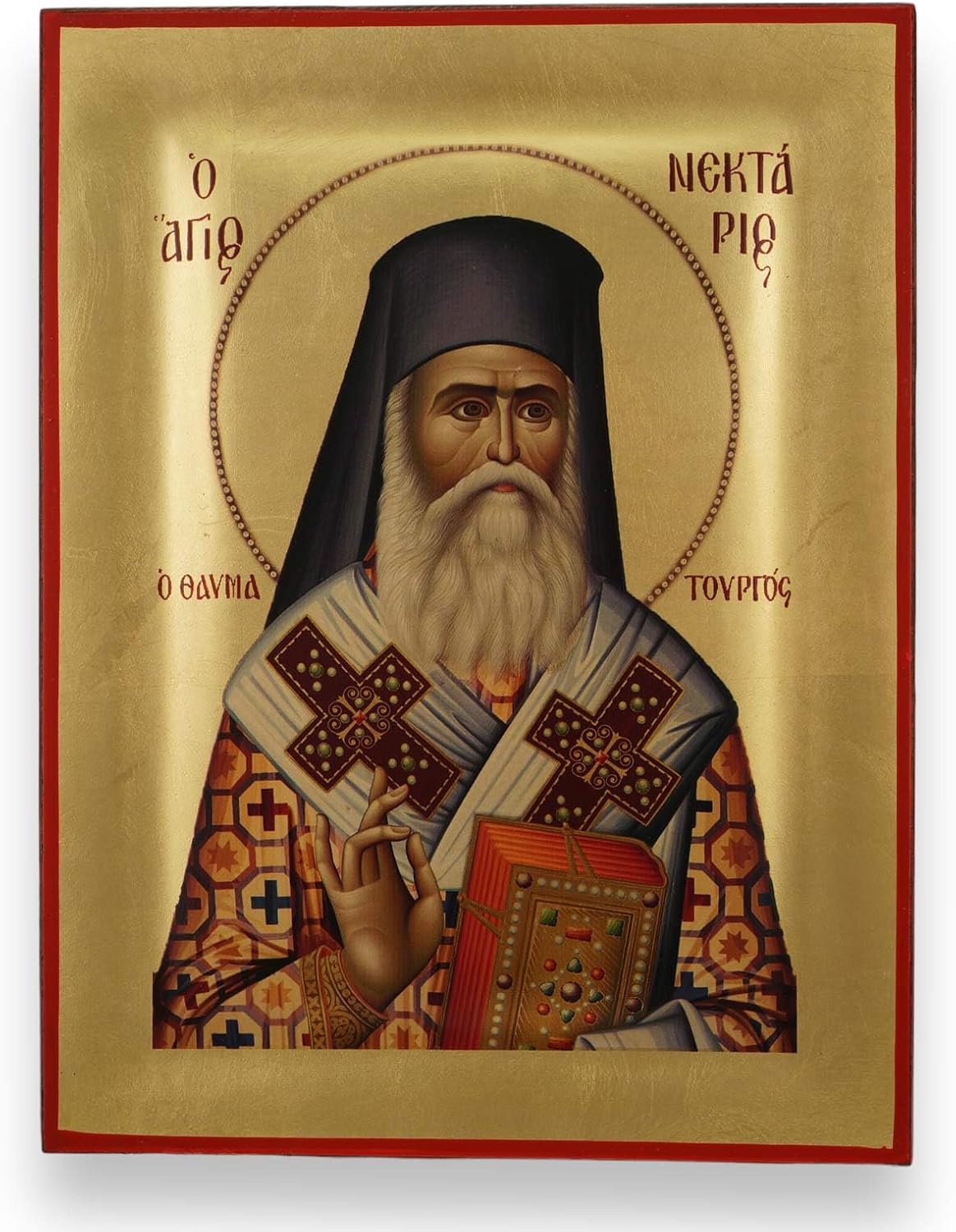
Orthodox Christians traditionally pray before icons — sacred images that function not as decoration but as windows: the icon is a way of making present before the praying person the saint or divine figure depicted. Having a dedicated prayer corner — even a small shelf with one or two icons, a prayer rope, and a candle — gives physical definition to the sacred space of daily prayer.
This matters practically: going to a specific place to pray trains the body and the attention. Over time, standing in that corner creates an association between the physical place and the interior act of turning toward God. Many Orthodox Christians find that simply approaching their prayer corner, before a word has been said, already begins the shift in attention the prayer rule requires.
What You Need to Begin
You do not need much. The minimum for a functional prayer corner: one icon of Christ (Christ Pantocrator is traditional), one icon of the Theotokos, a prayer rope, and a prayer book. A candle or oil lamp adds the ancient dimension of offering light — the physical symbol of prayer ascending.
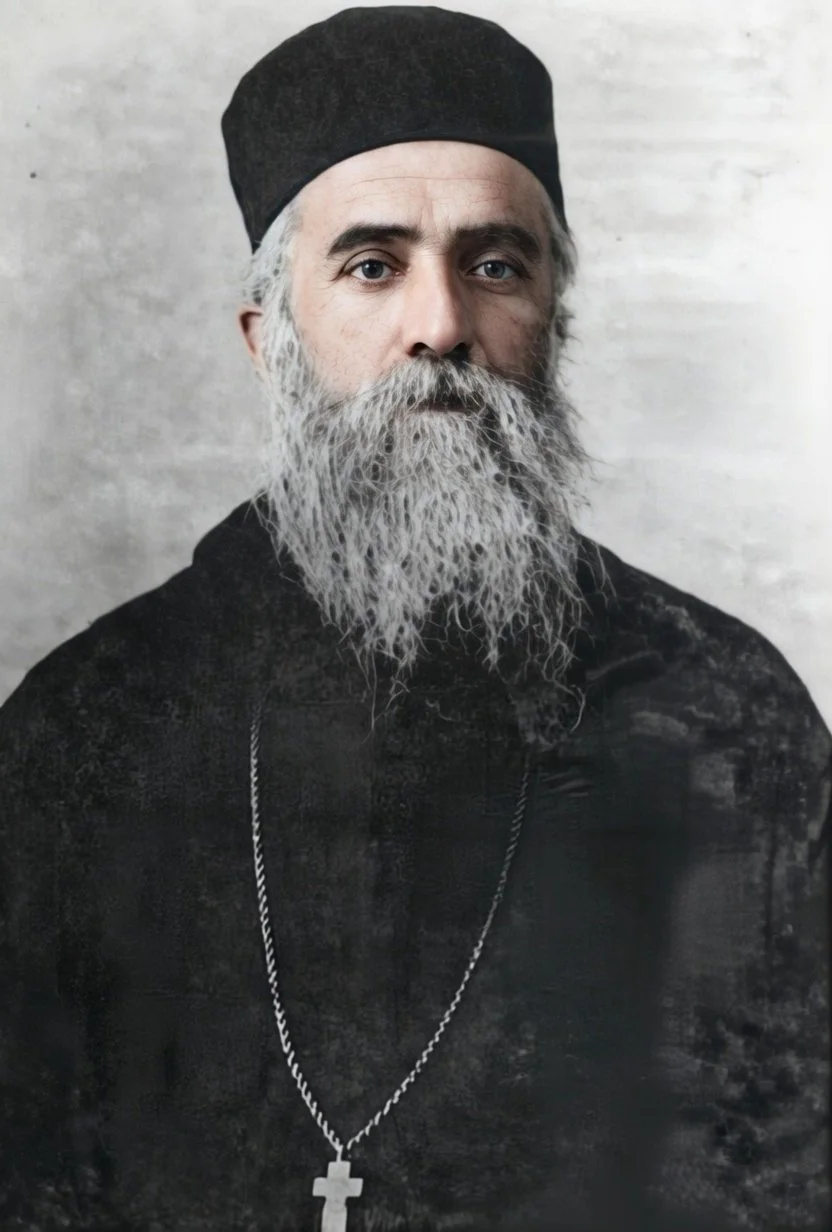
For prayer cards: a saint prayer card placed before you during the Jesus Prayer or morning petition can anchor the specific intercession you are making. Saint Nektarios, patron of the sick, is one of the most widely used saints in daily Orthodox prayer; his prayer card placed in the corner gives a face to the intercession for healing.

The Most Common Beginner Mistakes — and How to Avoid Them
The Orthodox tradition has fifteen centuries of pastoral experience watching people begin and abandon prayer rules. The mistakes are consistent enough that they can be named in advance — which means they can be avoided.
Starting Too Long
The most common mistake. Inspired by a retreat, a feast day, or a spiritual reading, a person commits to an hour of morning prayer. For three days, it is wonderful. By day ten, the hour feels like a burden. By day twenty, it has been abandoned — and guilt about abandoning it makes starting again feel impossible. The antidote is simple: begin with less than you think you need. A five-minute rule you keep every day for a year is a genuine spiritual achievement. Start there.
Praying Too Fast
Reading the morning prayers quickly to get through them is not prayer — it is recitation. Speed is the enemy of attention. Better to say three prayers slowly, with genuine attention to the words and to the One being addressed, than to sprint through twenty. If your rule is taking less time than it should, you are praying too fast. Slow down. Let each phrase land before moving to the next.
Treating Dryness as Failure
When morning prayer feels empty, mechanical, or distant, beginners often conclude that they are doing it wrong or that God is not listening. The Fathers say the opposite: dryness is the normal condition of prayer for most people most of the time. The consolations of early prayer — the warmth, the sense of presence, the easy tears — are gifts given to beginners. They are withdrawn as the person matures, not as punishment but as invitation: will you pray when there is no reward? Keep the rule through dryness. The tradition guarantees this is the right thing to do.
Skipping the Evening Rule
Most beginners maintain the morning rule more easily than the evening. The morning has a clear starting point (waking) and a clear motivation (beginning the day). The evening is more ragged: tired, distracted, sometimes late. But the evening rule is not optional — it is the other hinge. An unconsidered, unexamined sleep is a small spiritual failure repeated three hundred and sixty-five times a year. Even a three-minute evening rule — the Opening Prayers, a brief examination, the Lord's Prayer — is incomparably better than nothing.
Sacred Art for Your Daily Prayer Rule
The Eastern Church carries handcrafted Eastern Catholic and Orthodox prayer cards — designed for daily use at the prayer corner, during the Jesus Prayer, and as focused intercession for healing, peace, and the people you carry in your heart.
Browse the Prayer Card Collection →Questions About the Orthodox Prayer Rule
Begin Small. Begin Today. Keep It.
The Orthodox prayer rule is not a spiritual achievement for advanced practitioners. It is the ordinary daily practice of anyone who wants to give the day to God. Five minutes in the morning. Five minutes in the evening. The Opening Prayers, the Lord's Prayer, Psalm 51. A prayer rope in your hand. A saint's face before you.
Fifteen centuries of people who prayed this way — monks in desert cells, mothers in cramped apartments, soldiers before battle, children before school — confirm the same thing the Desert Fathers said: a small rule kept faithfully is the foundation of everything else. The extraordinary life of prayer grows from the ordinary act of showing up. Begin where you are. Begin with what you have. Begin today.
As an Amazon Associate, The Eastern Church earns from qualifying purchases.