Catholic Saints for Mental Health: Who to Pray To, What They Survived, and the Prayers That Heal
Catholic Saints • Mental Health • Anxiety • Depression • Trauma
Catholic Saints for Mental Health: Who to Pray To, What They Survived, and the Prayers That Heal
Four Catholic saints — from Roman, Armenian, Melkite, and Maronite traditions — who have walked through darkness and who the Church has invoked for mental health for centuries. Their stories, their prayers, and how to carry them with you.
The Church has always known that the mind can break. Long before psychiatry had a name, before anyone spoke of anxiety disorders or depressive episodes, the Christian tradition was already building shrines, writing prayers, and organizing entire communities around the reality that some people's suffering is not in the body but in the interior — in the place where thoughts turn on themselves, where peace refuses to come, where the darkness does not lift with morning.
These saints did not theorize about mental suffering from a distance. They were inside it. Saint Dymphna fled an abusive father and was murdered young, and the town where she died became medieval Europe's first psychiatric community. Saint Gregory of Narek wrote ninety-five prayers from the floor of his own spiritual anguish and gave them to the Church as instruments of healing that Armenian families have been laying on the bodies of the sick for a thousand years. Saint Mariam Baouardy had her throat cut, was left for dead in an alley, and went on to become a Carmelite mystic and a Doctor the Church pointed to as proof that God heals what the world destroys. Blessed Beshara Abu-Mrad kept his interior peace through a civil war and left a witness to stillness that the Church officially called heroic virtue.
These four saints are drawn from four different Catholic traditions — Roman, Armenian Catholic, Melkite Greek Catholic, and Maronite Catholic — but all are saints of the universal Church, available to every Catholic regardless of rite. This article covers who they are, why the Church has prayed to them for mental health specifically, what miracles are on record, and what prayers the tradition offers. It also explains why carrying one of their prayer cards — in your pocket, your purse, your wallet, or on the dashboard of your car — is not superstition but one of the oldest forms of embodied Christian devotion there is.
Why the Church Turns to Saints for Mental Health — and Why It Has Always Done So
Catholic teaching on intercessory prayer is grounded in the doctrine of the Communion of Saints — the belief that those who have died in God's grace are not gone but alive in Christ, closer to Him than we are, and able to intercede for those still on earth. When a Catholic prays to a saint for mental health, they are not praying to a dead person. They are asking a living friend, one who has already reached the finish line, to pray alongside them.
What makes certain saints specifically appropriate for mental health intercession is not arbitrary. The Church, through long experience, observed patterns: people in particular kinds of suffering who prayed to particular saints and reported healing, relief, or the grace to endure. These patterns solidified into the tradition of patronage — and the saints on this list are not here because of a committee decision, but because century after century, people in the kind of pain you may be in right now turned to them and found something.
The saints in this article come from four different Catholic rites: Roman Catholic (Saint Dymphna), Armenian Catholic (Saint Gregory of Narek), Melkite Greek Catholic and Roman Catholic (Saint Mariam Baouardy), and Maronite Catholic (Blessed Beshara Abu-Mrad). All four rites are fully Catholic and in communion with Rome. Their saints belong to the whole Church. A Roman Catholic praying to Blessed Beshara or Saint Gregory of Narek is praying to their own saints, not to "Eastern" saints belonging to someone else. The diversity of rite enriches rather than divides.
Saint Dymphna — Patron of Anxiety, Mental Illness, and Emotional Trauma
Dymphna was the daughter of a pagan Irish chieftain and a devout Christian mother who died when Dymphna was a child. Her father, whose name the tradition records as Damon, was so undone by grief that he became mentally unstable and eventually turned his obsession toward his own daughter. When Dymphna was approximately fourteen, she fled with her confessor, the priest Gerebernus, and a few companions, making her way across the sea to what is now Belgium. They settled in a forest near the town of Gheel, living in prayer and caring for the poor and sick.
Her father found her. When Dymphna refused to return with him, he had Gerebernus killed and then beheaded his own daughter. She was buried at Gheel, and almost immediately the sick — particularly those afflicted with madness — began to arrive at her tomb. Miraculous healings were reported. The town of Gheel did something extraordinary in response: rather than building a hospital, the townspeople began taking the mentally ill pilgrims into their own homes. This "Gheel phenomenon" endured for centuries and is recognized by medical historians as one of the earliest models of community-based psychiatric care in the world. The formal psychiatric hospital in Gheel, which still operates today, traces its institutional history directly to her shrine.
What makes Dymphna specifically the patron of mental illness — not just healing in general — is the circumstance of her story. She did not die of plague or in battle. She died because someone whose mind had collapsed made her the object of a dangerous obsession. She is the saint of those whose suffering comes from another person's broken mind, and she is the saint of those whose own interior life has become a source of fear. She was fourteen and terrified and she kept her faith. That is why the Church sends its most broken ones to her.
The Church's formal documentation of miracles at Gheel is extensive. A 13th-century hagiography compiled by Pierre de Cambrai records numerous individual healings at her tomb, describing pilgrims arriving in chains — bound by their families to prevent harm to themselves or others — and leaving free. The tradition of the "novena of nine days" at Gheel, in which pilgrims stayed in the church for nine days of prayer while staying with local families, produced documented recoveries that the Church examined through canonical processes.
The most remarkable miracle associated with Dymphna is not a single event but a collective one: the transformation of an entire town into a place of welcome for those the rest of medieval Europe locked away or drove out. That transformation — sustained for over 600 years before modern psychiatry existed to explain what was happening — is itself considered providential evidence of her intercession.
O Saint Dymphna, young martyr and patron of those whose minds are clouded by darkness — you who fled abuse, who prayed in hiding, who were not delivered from suffering in the way you asked but were delivered through it — intercede now for all who carry the weight of anxiety, depression, and mental illness.
You know what it is to be afraid, to feel trapped, to have nowhere left to run. You know what it is to live inside a storm that no one else can see. Pray that God would bring light into the places in me that have gone dark. Pray for healing in my mind, peace in my thoughts, and rest in my spirit.
I carry your image as a reminder that I am not alone in this — that the Church has always brought its broken ones to you, and that you have always brought them to Him. Pray for me, Saint Dymphna, that I may be healed or given the grace to endure until I am.
Amen.
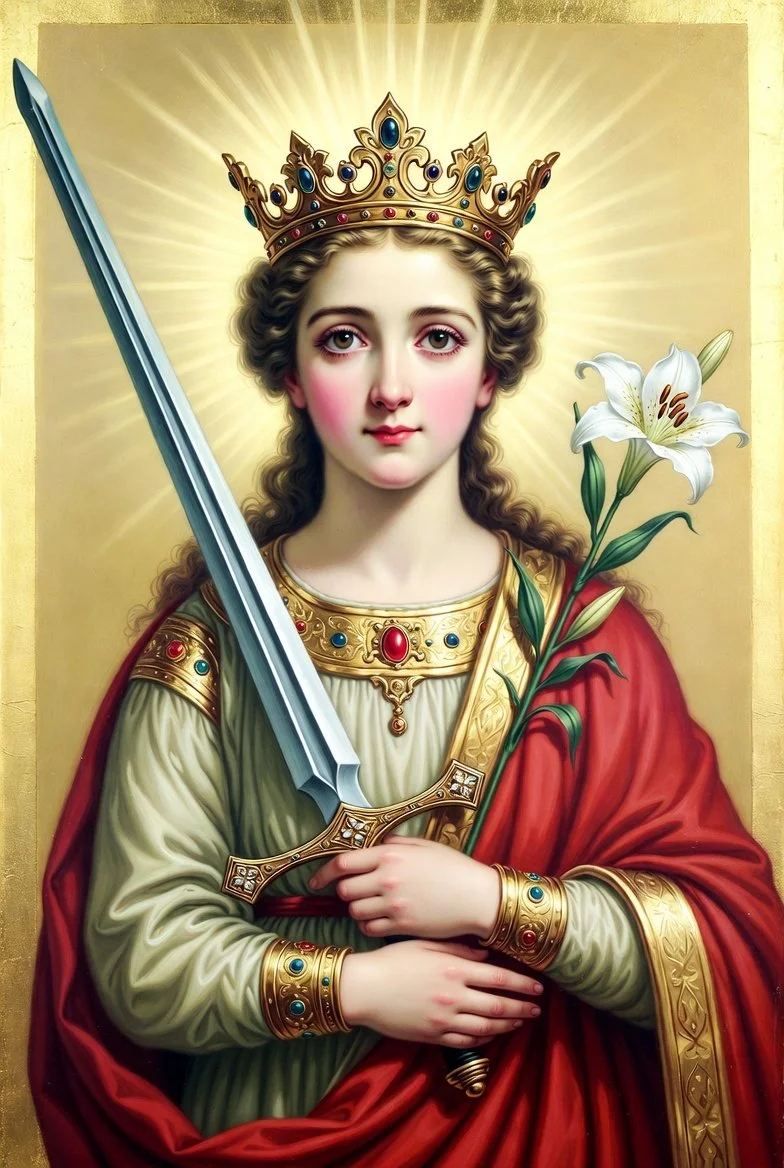
This prayer card is hand-finished and prayed over throughout its creation in Austin, Texas. Keep it in your wallet, your purse, or the pocket of your coat — so that when anxiety rises unexpectedly, in traffic, in a waiting room, in the middle of the night, you have something physical to hold. Saint Dymphna is with you wherever you carry her.
$3.00 — Free shipping on parish orders Get This Prayer Card →Saint Gregory of Narek — Doctor of the Church and Master of the Language of Interior Suffering
Gregory of Narek was a monk at the Armenian monastery of Narekavank on the shores of Lake Van, and he is one of the most extraordinary religious writers in the history of Christianity. His masterwork, written between approximately 977 and 1003 AD, is called the Matean Voghbergutyan — the Book of Lamentations. It is not a lament in the sense of Job's complaints or the Psalms of Asaph, though it belongs to that tradition. It is something more radical: ninety-five extended prayers written from inside Gregory's own spiritual darkness, in his own voice, with a candor about interior suffering that feels startlingly contemporary.
Gregory writes about what we would today recognize as depression and scrupulosity — the terror of being abandoned by God, the conviction of unworthiness, the bewilderment of a soul that longs for God and cannot find the way. He writes about spiritual dryness so severe it feels like death. He writes from a place the Church calls the dark night of the soul, and he does not dress it up. He brings his anguish to God exactly as it is, word after word, prayer after prayer, and in doing so he created a text that became not just his prayer but everyone's prayer — a language of interior suffering that the Armenian Church handed to those who had no other words.
In Armenian tradition, the Book of Lamentations has been placed on the chests of the sick and the dying for over a thousand years. Not read over them — placed on them. The physical book as an instrument of healing. This devotional practice was so widely documented and so long-sustained that when Pope Francis named Gregory of Narek the 36th Doctor of the Church in 2015 — the first Armenian Doctor — he specifically cited the book's power to speak to those in the deepest interior suffering. Gregory was declared a Doctor not only of theological precision but of the kind of theological experience that heals.
"Speaking with God from the depths of the heart, with groaning voice, cries of grief, breathing of soul, tears of lamentation, mourning of spirit, sighing breath — may this book of prayers, like incense, rise up before You."
The Armenian tradition's primary documented miracle related to Gregory of Narek is not a single cure but a sustained pattern across ten centuries: the use of the Book of Lamentations as a physical instrument of healing for the sick, the mentally afflicted, and those whose spirits had collapsed. Armenian priests would carry the book to bedsides and place it on the body of the suffering person. Recoveries that followed were attributed to Gregory's intercession through his words. This practice, which would strike many Western Christians as unusual, is consistent with the sacramental theology of physical objects as vehicles of grace — the same logic that underlies relics, holy water, and the anointing of the sick.
Formal miracle documentation for Gregory's canonization process included accounts of healing after prayer invoking his intercession. The Church accepted these as meeting the standard required for beatification and eventual recognition as a Doctor — the latter requiring not just holiness but a demonstrated capacity to illuminate and heal the Church's understanding of the faith.
O Saint Gregory of Narek, master of the language of interior suffering — you who wrote ninety-five prayers from the depths of your own darkness and gave them to the Church as instruments of healing — receive my prayer as you received your own: with honesty, with trembling, and with trust that God hears even the words we cannot say aloud.
I struggle. My thoughts turn against me. The light in my spirit has grown dim, and I do not know how to find my way back. I bring you my bewildered heart the way your people have brought their sick and their suffering to your Book of Lamentations for a thousand years.
Pray that Christ the Physician will meet me in this darkness as He met you in yours. Pray that I will find, as you found, that even anguish spoken honestly before God is a form of prayer — and that God receives it. Doctor of the Church, doctor of interior suffering, pray for me.
Amen.
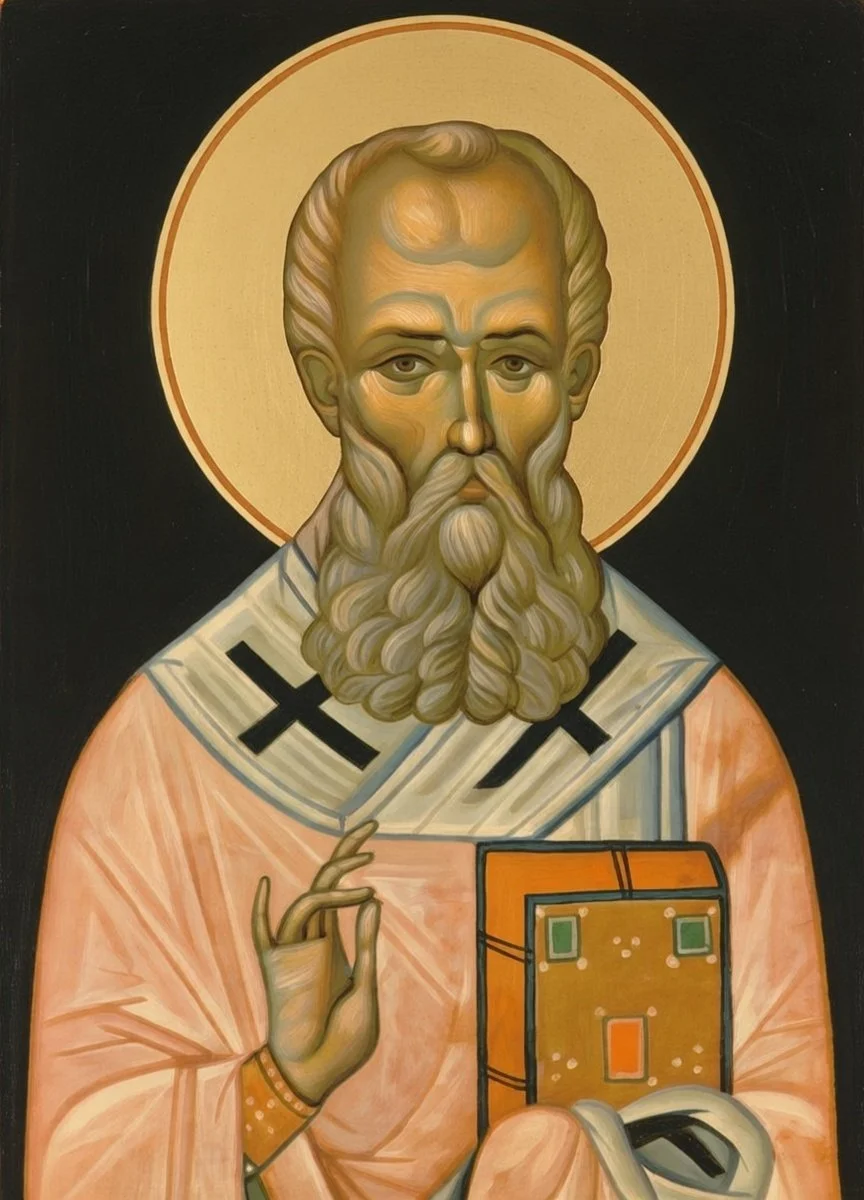
Gregory of Narek is the saint for those whose suffering is too interior, too complex, or too dark to put into simple words. His prayer card belongs in your car's glove box or tucked inside your journal — somewhere close for the moments when you open your mouth to pray and find you have no language for what you are feeling. He wrote that language for you. He knows the way.
$3.00 — Hand-finished and prayed over in Austin, Texas Get This Prayer Card →Saint Mariam Baouardy — For Survivors of Trauma, Abuse, and Spiritual Oppression
Mariam Baouardy was born on January 5, 1846, in Ibillin, a village in Galilee, into a Melkite Greek Catholic family. Her parents died before she was three. She was raised by an uncle, moved between relatives, and survived an upbringing of profound displacement. At approximately thirteen, she was proposed to by a man who wanted to convert her to Islam, and when she refused, he attacked her. By some accounts the wound to her throat should have been fatal. She was left in an alley to die. She did not die. She was found, and she healed, and she later described an experience during that near-death interval that the Church eventually examined carefully as part of her canonization cause.
Mariam went on to become a Carmelite lay sister, taking the name Mary of Jesus Crucified. She experienced the stigmata — the wounds of Christ — received multiple times over the course of her life. She had periods of intense mystical experience, including extended states of spiritual trial that those around her described as violent and frightening, alternating with periods of profound peace and illumination. She died at thirty-two from a wound received while trying to care for a horse, and she was canonized by Pope Francis on October 17, 2015.
She is invoked specifically for trauma survivors — people whose suffering began with something that was done to them, people who have been near death emotionally or physically and are trying to understand why they are still here, and people who experience the kind of spiritual oppression that comes with severe trauma. Her witness is not that trauma leaves no mark. It is that what is left after the mark — what survives, what grows in the place of what was destroyed — can be extraordinary.
Mariam's canonization required the documentation of two verified miracles occurring after her beatification in 1983. The Church examined these through the Dicastery for the Causes of Saints, with medical experts brought in to evaluate whether the cures documented had natural explanations. They were determined not to have natural explanations. The nature of these miracles — the Church does not always publish specifics in public-facing documents — was consistent with the pattern of her charism: physical and spiritual healing in circumstances where healing had been given up on.
Beyond the formal canonical miracles, Mariam's own survival of the throat wound in her youth was regarded by her contemporaries and by her eventual advocates in the canonization process as itself miraculous — the founding event of a life that bore witness from beginning to end to the reality that God heals what the world destroys.
O Saint Mariam Baouardy, Little Arab — you who had your throat cut and were left for dead in an alley, yet arose healed; you who carried the wounds of Christ in your own body; you who passed through fire and came out bearing peace rather than bitterness — intercede for all who have been broken by trauma, by violence, by wounds so deep they wonder if they can survive them.
You know what it is to feel the world collapse, to be abandoned by those who should have protected you, to carry inside your body the memory of what should not have happened. You know that survival is not the end of the story. Pray that God would do for me what He did for you — not erase what happened, but transform what it is allowed to mean. Pray that what has been taken from me — my peace, my sense of safety, my capacity to trust — would be restored.
I carry your image as a remembrance that some people survive what should have ended them, and that on the other side of that survival, God is still there. Pray for me, Saint Mariam.
Amen.
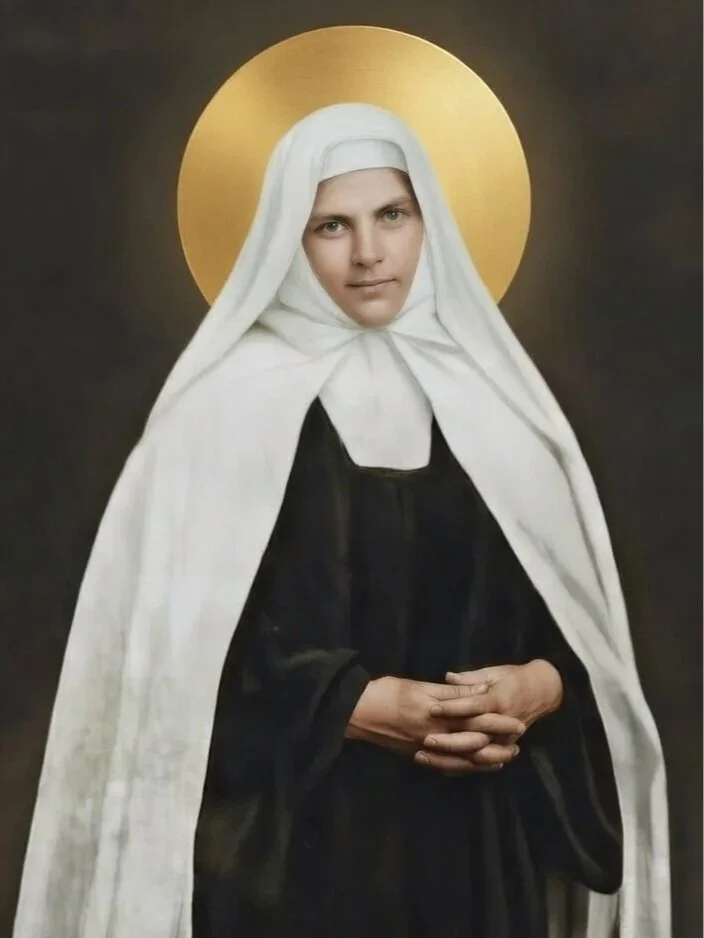
Keep Mariam's prayer card somewhere you can reach it when the weight of the past becomes unbearable. In your wallet or the pocket of your jacket, so she goes where you go — into the doctor's waiting room, into the therapy office, into the car when you sit in the parking lot before you can go inside. She survived what should have ended her. She walks beside survivors.
$3.00 — Hand-finished and prayed over Get This Prayer Card →Blessed Beshara Abu-Mrad — For Anxiety, Spiritual Burnout, and Peace in the Midst of Chaos
Beshara Abu-Mrad was born in 1922 in Kfarhay, a small village in the Byblos region of Lebanon, and entered the Order of Lebanese Maronite Missionaries as a young man. He was ordained a priest, served his community with deep devotion, and died in 1994 — which means he lived through virtually the entire Lebanese Civil War, one of the most devastating conflicts in modern Middle Eastern history: a war that ran from 1975 to 1990, killed an estimated 120,000 people, displaced hundreds of thousands more, and reduced entire neighborhoods of Beirut to rubble.
Beshara did not die in the war. He died four years after it ended, his body worn by decades of ministry in conditions of extreme stress. What the Church documented through his beatification cause — completed under Pope Francis and formally celebrated in 2021 — was something that is harder to measure than physical death but perhaps more difficult to maintain: heroic interior peace. The canonical examination of his life looked specifically at whether his spiritual virtues — his patience, his charity, his interior quiet — were sustained not in comfortable conditions but in conditions of extreme psychological and spiritual pressure. The finding was that they were. The Church calls this "heroic virtue," and it is the threshold required for beatification.
Beshara is the patron for people experiencing what our time calls anxiety, burnout, and the collapse of vocational energy. He lived in the chaos that produces these things, and he maintained something that chaos cannot produce on its own: an interior that was not defined by its exterior. He is the saint for those who are exhausted not by one crisis but by the relentlessness of crises — by the feeling that the pressure never stops, that there is always another emergency, that rest is never permitted. He lived that life for decades and bore witness to a peace that did not depend on the war stopping first.
The miracle recognized for Beshara Abu-Mrad's beatification was examined by the Dicastery for the Causes of Saints and involved a healing attributed to his intercession that medical experts determined fell outside the range of natural explanation. The miracle documentation, as is standard in the Church's process, was examined by both medical and theological commissions before being approved by the Pope. His beatification was celebrated in Lebanon in 2021.
Beyond the canonical miracle, witnesses to his life during the war years described a quality of peace in his presence that those around him experienced as itself healing. This kind of "second-hand peace" — where proximity to a person's interior stillness has a calming effect on others — is documented in the hagiography of many saints, and it is consistent with what the Church examines in the cause for canonization as evidence that sanctity has a social, communal, and healing character.
We live in a time of information overload, relentless demand, and a constant low-grade emergency that does not have the name "war" but produces many of the same interior effects. Beshara Abu-Mrad's witness is specifically relevant here. He did not find peace by escaping the circumstances that created anxiety. He found it inside those circumstances, by practicing, day after day, the disciplines of prayer and surrender that allowed an interior life to exist independently of the exterior chaos. His beatification is the Church officially saying: this is possible, this is real, and this is what holiness looks like in the conditions most of us actually live in.
O Blessed Beshara Abu-Mrad, priest of Lebanon and servant of peace in the midst of war — you who maintained interior stillness while the world outside burned, and who offered your anxiety, your spiritual weariness, your uncertainty about your own vocation into the hands of God rather than letting it consume you — pray for me in my own exhaustion.
The pressure I carry feels like more than I can hold. I am tired in a way that sleep does not fix. I am anxious about things I cannot control and uncertain about the path ahead. I have given so much that I do not know how to receive. Pray for me that God's peace — the peace that passes understanding, the peace you bore witness to even under bombardment — would take root in me and hold.
Blessed Beshara, you know what it is to live inside circumstances that never improve fast enough. Intercede for me that I would find, as you found, that peace is not the absence of trouble but the presence of God within it.
Amen.
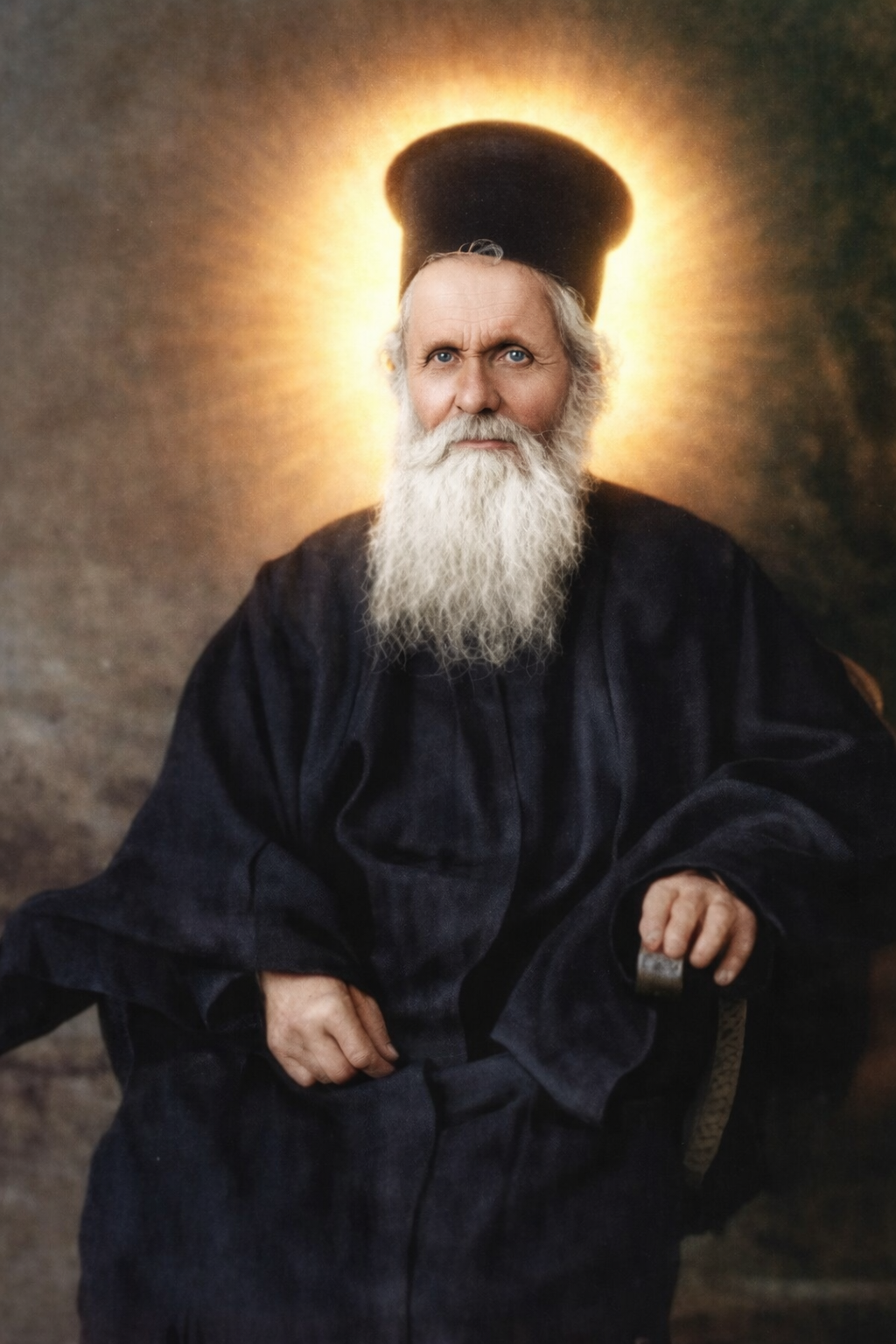
Keep Beshara's prayer card on your car's dashboard or tucked into your work bag — somewhere visible for the moments when the day's demands pile up before you have drawn a second breath. He lived the life you are living, under worse conditions than most of us will ever know, and he found a way through. His card is a reminder that peace is not something you achieve when things calm down. It is something you practice while they don't.
$3.00 — Maronite Catholic tradition Get This Prayer Card →Why Prayer Cards Matter — The Theology of Carrying a Saint With You
There is a long tradition in Christianity — going back to the early Church, and finding rich expression in both Eastern and Western Catholicism — of using physical objects as anchors for devotion. Relics, scapulars, holy medals, icons in the home. The logic is not superstitious, though it is easy to misread it that way. The logic is incarnational: God became flesh, which means the physical world is capable of bearing spiritual presence, and physical objects can be vehicles of grace, intention, and remembrance.
A prayer card is not a talisman. It does not have magical properties. What it is, is a physical prompt — and in the context of mental health, physical prompts matter enormously. When anxiety hits, when the spiral of depressive thinking begins, when the panic rises before you have time to think your way out of it, having something to hold is not a small thing. It is the difference between reaching for your phone and reaching for a saint.
Why Pocket, Purse, Wallet, and Dashboard
The Eastern Church's prayer cards are printed on durable card stock and sized to fit in a standard wallet. This is not accidental. The goal is for the card to be there in the moment of need — not in a drawer at home, not in a display case, but with you. In traffic, when the anxiety spikes. In the waiting room, when the diagnosis is coming. In the parking lot, before the hard conversation. In the bathroom of the party, when the social panic has locked up your chest.
Keeping a saint's card in your wallet is a form of prayer that requires no words and no stillness in the moment you need it most. You feel the card. You look at the face. You remember that someone who walked through darkness is walking with you. You say one sentence if you can manage it, or you say nothing, and the remembrance itself is the prayer.
Every prayer card from The Eastern Church is printed, cut, and finished by hand in Austin, Texas. Each card is prayed over throughout the entire creation process — which means the card that arrives in your hands has already been held in prayer before it reaches you. This is not marketing language. It is a description of the practice. The cards are made one at a time, by hand, with intention.
The saints represented include figures from the Roman, Maronite, Melkite, Armenian Catholic, Coptic, Ethiopian, Syriac, Byzantine, and Eastern Orthodox traditions — the most comprehensive collection of Eastern and Western Catholic prayer cards available anywhere. All four saints in this article have cards available. They are $3.00 each, and parish bulk orders are available at a discount.
Explore All Saints for Mental Health
The Eastern Church carries handcrafted prayer cards for saints from across the Catholic and Orthodox traditions specifically invoked for mental health, anxiety, depression, trauma, and spiritual suffering. Find the saint whose story matches your need.
Browse All Mental Health Prayer Cards →Questions About Catholic Saints and Mental Health
The Church Has Always Known That the Mind Can Break — and That Help Is Available
These four saints — a young Irish girl who fled a dangerous home, an Armenian monk who wrote ninety-five prayers from the floor of his own darkness, a Lebanese girl who survived having her throat cut and became a mystic, and a Maronite priest who kept his peace through a civil war — are not figures from an age of simpler problems. They lived through things that would break most of us. And the Church holds them out not as evidence that faith makes life easy, but as evidence that grace goes where suffering goes.
Carry one of them with you. In your pocket, your wallet, the console of your car. You do not have to have the right words when you reach for the card. You just have to reach.
Browse All Mental Health Prayer Cards →