Did the Church Fathers Quote the Book of Enoch as Scripture? (Augustine, Tertullian & More)
Church Fathers • Book of Enoch • Biblical Canon • Patristic Evidence
Did the Church Fathers Quote the Book of Enoch as Scripture?
What Augustine, Tertullian, Origen, St. Jude, and every major early Christian writer actually said — with their exact words, their reasons, and the surprising verdict the full record reveals.
The question sounds simple: did the Church Fathers treat the Book of Enoch as Scripture? The honest answer is that it depends entirely on which Father, and which century. The Apostle Jude quoted it directly in a passage that became part of the New Testament canon. Tertullian defended its authority with one of the most systematic arguments in early Christian literature. Origen cited it by name in multiple major theological works. But Athanasius excluded it from his landmark canon list. Jerome called it apocryphal. And Augustine — in perhaps the most intellectually careful patristic treatment of all — acknowledged it might contain some truth while firmly denying it canonical standing.
What you will find here is not a suppression narrative and not a flat dismissal. It is the actual, documented record: who said what, what their exact words were, why the early church's relationship with 1 Enoch shifted over three centuries, and what that history tells us about the book that one ancient church — the Ethiopian Orthodox Tewahedo Church — never stopped reading as Scripture.
St. Jude: The Apostolic Citation That Forced Every Later Debate
Every discussion of the Church Fathers and the Book of Enoch begins in the New Testament itself — because the Apostle Jude went there first. His brief canonical epistle, accepted as Scripture in every major Christian tradition, contains something that has fascinated and unsettled readers for two thousand years.
"Enoch, the seventh from Adam, prophesied about them: 'See, the Lord is coming with thousands upon thousands of his holy ones to judge everyone, and to convict all of them of all the ungodly acts they have committed in their ungodliness, and of all the defiant words ungodly sinners have spoken against him.'"
This is not a vague allusion. The wording matches 1 Enoch 1:9 so precisely that Catholic reference works and mainstream biblical scholars confirm it as a direct citation. And Jude's introduction — "prophesied" — is the same formula the New Testament uses when quoting Isaiah, Jeremiah, and the recognized prophets of the Hebrew canon. Jude is not footnoting an interesting historical document. He is citing a prophet.
The implications of this single passage drove three centuries of Christian debate. If an apostle called Enoch a prophet and quoted his words with prophetic authority, what does that mean for the book containing those words? Every Church Father who engaged 1 Enoch was, in some sense, answering that question. Jerome even noted that some early Christians doubted the Epistle of Jude itself because of this citation — arguing that an epistle depending on an apocryphal source should not itself be canonical. The Church ultimately received Jude. And with it, this quotation.
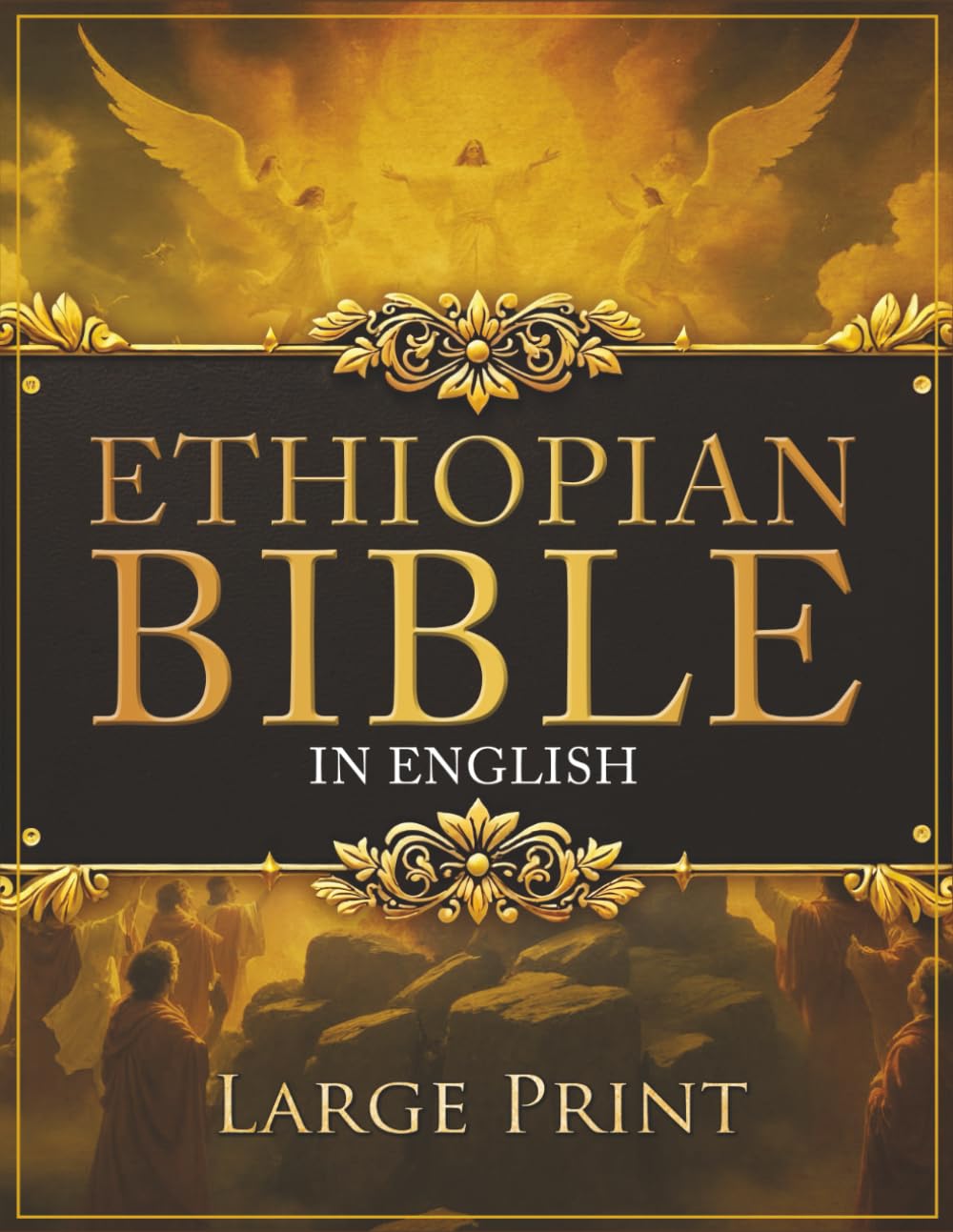
The Editions Worth Having
Before diving into what each Father said, it helps to have the text in hand. These are the three most useful editions for serious readers — from the complete Ethiopian canon that preserved Enoch unbroken to modern scholarly editions focused on the Watchers and Nephilim traditions the Fathers debated.
The Fathers Who Used the Book of Enoch — And What They Said
The second and third centuries show a remarkably consistent pattern: serious Christian thinkers across different regions, genres, and theological programs all drew on 1 Enoch as living theological material. This was not a fringe practice. These are some of the most important voices in the early church's intellectual tradition.
The Epistle of Barnabas — one of the earliest post-apostolic writings, preserved alongside New Testament books in the Codex Sinaiticus — cites 1 Enoch twice using the explicit scriptural citation formula: "as Enoch says" and "it is written." These are not casual references. "It is written" is the formula early Christians used to introduce passages carrying the weight of divine authority. In the sub-apostolic generation — the people who knew the apostles or their immediate students — the Book of Enoch sat within the zone of texts introduced as authoritative Scripture.
Justin Martyr, writing in his Second Apology addressed to the Roman Senate, explains the origin of pagan demonic religion using a framework drawn directly from 1 Enoch: angels entrusted with the care of humanity fell through desire for women, produced offspring who became the demonic powers behind pagan worship, and spread forbidden knowledge — magic, astrology, the corrupting arts — across the nations. This detailed narrative does not arise from reading Genesis 6 alone, which gives only four cryptic verses. Justin needed the Enochic elaboration — and he deployed it publicly, in a defense of Christianity addressed to Roman authorities, treating it as credible theological history.
Irenaeus — bishop, systematician, and one of the most important theological voices of the second century — describes Enoch in his landmark work Against Heresies as the one who "discharged the office of God's legate to the angels," serving as a divine messenger to the beings who transgressed. Standard scholarly editions note directly that this material is drawn from the apocryphal Book of Enoch. What makes this significant: Irenaeus was writing to combat Gnosticism, the most serious theological crisis of his era. He was not treating 1 Enoch as a curiosity — he was using it as usable orthodox theological history in the Church's most important anti-heretical text of the century.
Clement of Alexandria — head of the most important Christian intellectual institution of his era — took the strongest explicit position of any early Father who stopped short of Tertullian's full canonical argument. When commenting on Jude's citation, Clement states that the quotation "verifies the prophecy." To "verify a prophecy" is not hedging language. It is an affirmation that the cited text carries genuine prophetic authority. Clement's Alexandrian school shaped the intellectual tradition that connected directly to Ethiopia through its apostolic heritage — a connection that helps explain why Ethiopia kept Enoch in its canon when the West moved away.
Athenagoras, in his Plea for the Christians addressed to Emperor Marcus Aurelius, presents the Enochic fall of the angels as established theological history in a defense of Christian monotheism before a Roman emperor. He describes angels assigned to govern the lower world who were overcome by love of women, produced giant offspring, and whose fallen state explains the disorder of the present age. Athenagoras expected this framework to function as legitimate philosophical and historical argument before one of Rome's most intellectual rulers. The Enochic tradition was, for the Greek-speaking apologists, part of the credible Christian account of how the world came to be in its current damaged condition.
Tertullian: The Most Passionate Defender in Early Christianity
Tertullian is not just a Father who used Enochic tradition — he is the only early Christian writer to construct a systematic theological argument for why 1 Enoch should be received as authentic Scripture. His case, laid out in On the Apparel of Women, runs on three interconnected pillars.
First: an apostle accepted this book as prophetic authority. The Apostle Jude quoted it as prophecy, and that apostolic endorsement gives it a standing that no later council can override. Second: the flood objection — how could a pre-flood text survive? — is answered by the transmission of Noah, Enoch's great-grandson, who preserved the traditions in memory and reconstituted them after the waters receded. Third, and most theologically pointed: the book contains prophecy about Christ. And nothing that prophesies of the Lord should be rejected by his people.
He acknowledges the counterargument directly — Jews do not receive 1 Enoch — and answers it with characteristic bluntness: Jews also do not receive most of what Christians call Scripture, so Jewish non-reception has never been determinative for the Christian canon. Tertullian then deploys the Enochic account of fallen angels teaching women cosmetics and jewelry as the theological foundation for a practical ethics argument about Christian dress. This is the most revealing detail: he is not using Enoch as background color. He is using it the way any theologian uses canonical Scripture — as authoritative ground for a binding argument about Christian conduct.
"I am aware that the Scripture of Enoch, which has assigned this order to angels, is not received by some, because it is not admitted into the Jewish canon either... To these considerations is added the fact that Enoch possesses a testimony in the Apostle Jude."
Tertullian is the strongest pro-Enoch voice in early Christianity — and also the most complicated. He eventually separated from the mainstream Church to join the Montanist movement, which Catholic and Orthodox tradition considers heterodox. His trinitarian theology was enormously influential (the formula "one substance, three persons" is substantially his), and he is studied respectfully in Catholic and Orthodox education. But his advocacy for Enoch should be weighed with the awareness that he represents an increasingly independent strand of early Christianity. He is the most passionate defender of 1 Enoch — and the least straightforwardly orthodox witness to that position.
Origen: The Most Intellectually Honest Position
Origen — perhaps the most learned Christian theologian of antiquity — occupies the most intellectually honest position of any Father on the question. He cites 1 Enoch by name in multiple major works. In Contra Celsum, his great apologetic treatise against the pagan philosopher Celsus, he draws extensively on the Enochic angel-fall tradition to explain the origin of the spiritual forces behind pagan religion. In De Principiis, his systematic theology, he engages Enochic cosmology on the nature of spiritual powers and their relationship to the material world.
But Origen also states explicitly that 1 Enoch "does not at all circulate in the Churches as divine" — acknowledging openly what he knows to be true about its contested standing. He represents the transitional moment: a theologian who found the book substantively illuminating and drew on it seriously, while being transparent about the fact that its canonical status was unsettled. No other Father held both of those positions simultaneously with Origen's clarity.
The Fourth-Century Turn: Athanasius and Jerome
Athanasius of Alexandria — champion of Nicene orthodoxy, the man whose courageous defense of Christ's full divinity shaped Eastern and Western Christianity alike — wrote his landmark Festal Letter 39 in 367 AD. It contains the first extant list of exactly the 27 New Testament books recognized today, and it warns against "apocryphal writings" being used to mislead the faithful. The Book of Enoch does not appear in Athanasius's canon. For the mainstream Greek-speaking church, this is the moment the question was formally resolved — and 1 Enoch is on the outside.
The historical irony is striking. Athanasius is also the man who consecrated Frumentius as the first bishop of Ethiopia — establishing the Alexandrian apostolic connection through which the Ethiopian church was born. The very man who excluded Enoch from his canon created the church that would keep Enoch in its canon for the next fifteen centuries.
Jerome, whose Latin Vulgate translation became the Bible of Western Christianity for over a millennium, is direct: in De Viris Illustribus, discussing the Epistle of Jude, he explicitly notes that many in earlier generations had rejected Jude "because in it he quotes from the apocryphal Book of Enoch." This framing — explaining that some doubted Jude because of Enoch — shows Jerome's awareness of the historical depth of the debate. He is not pretending the question was always settled. He is making a deliberate canonical judgment on the side of exclusion, and he knows the tradition he is departing from.
St. Augustine: The Most Careful Patristic Position
Augustine's treatment of the Book of Enoch in City of God is the most philosophically rigorous of any Church Father — and the most honest about the complexity of the question. He does not wave Enoch away. He begins by acknowledging what St. Jude's citation requires: Enoch genuinely prophesied, and he presumably left writings. Augustine concedes both points. He then does something more interesting: he acknowledges that apocryphal writings may contain "some truth." He is not declaring 1 Enoch worthless, false, or forbidden.
His actual argument is narrower and more precise: canonical authority requires a verified chain of transmission. The Church can assign scriptural weight only to texts whose faithful preservation can be demonstrated. A text claiming to originate before the flood — with no traceable chain of custodianship between antediluvian Enoch and the manuscripts in circulation — cannot carry canonical authority on that basis alone, regardless of whatever genuine truths it may contain. It is the argument of a philosopher and a canonist, not a censor.
"It is not without reason that these writings have no place in that canon of Scripture... it was impossible to ascertain whether these were his genuine writings, and they were not brought forward as genuine by the persons who were found to have carefully preserved the canonical books by a successive transmission."
Augustine is often cited as a flat rejection of 1 Enoch. The actual text is more nuanced. He affirms that Enoch was a real prophet (because Jude says so). He allows that apocryphal writings may contain some truth. He denies canonical authority on the grounds of unverifiable transmission — a technical canonical argument, not a claim that the book is dangerous, suppressed, or false. Augustine never said Christians should avoid reading it. He said the Church cannot treat it as Scripture on the same level as texts with a verified chain of preservation.
Read 1 Enoch in the Tradition That Never Abandoned It
The Ethiopian Orthodox Tewahedo Church kept the Book of Enoch in its canon across fifteen centuries — reading it as Scripture while the Greek and Latin West moved away. The Dead Sea Scrolls, discovered in 1947, confirmed what Ethiopia had always known: this was a central text of Second Temple Judaism, faithfully preserved in Ge'ez when it disappeared everywhere else.
The Complete Verdict: Every Major Church Father at a Glance
Here is the full record — every significant early Christian voice who engaged the Book of Enoch, their approximate dates, and their documented position. This table does not flatten nuance; it summarizes it. The footnotes in each section above give the full context behind each verdict.
| Father / Writer | Dates | Verdict | What They Said or Did |
|---|---|---|---|
| St. Jude the Apostle New Testament Canon |
c. 60–80 AD | Quoted as Prophecy | Cited 1 Enoch 1:9 directly in canonical Scripture, introducing it with the prophetic formula "prophesied." |
| Epistle of Barnabas Sub-Apostolic |
c. 70–132 AD | Cited as Scripture | Quoted Enoch twice using "it is written" and "as Enoch says" — explicit scriptural citation formulas. |
| St. Justin Martyr | c. 100–165 AD | Used the Tradition | Deployed Enochic angel-fall narrative in his Second Apology, treating it as credible theological history before the Roman Senate. |
| Athenagoras of Athens | c. 133–190 AD | Used the Tradition | Presented the Enochic Watcher narrative as established theological history in a defense addressed to Emperor Marcus Aurelius. |
| St. Irenaeus of Lyons | c. 130–202 AD | Drew on It as Theology | Used Enochic tradition in Against Heresies — his anti-Gnostic polemic — treating it as reliable theological history. |
| Clement of Alexandria | c. 150–215 AD | Called It Verified Prophecy | Said Jude's Enoch citation "verifies the prophecy" — strong endorsement of prophetic authority. |
| Tertullian of Carthage | c. 155–220 AD | Defended Its Authority | Wrote the most systematic early Christian argument for receiving 1 Enoch as Scripture; used it as theological ground for ethical argument. |
| Origen of Alexandria | c. 184–253 AD | Used It / Acknowledged Contested | Cited by name in Contra Celsum and De Principiis; also stated honestly that it "does not at all circulate in the Churches as divine." |
| Julius Africanus | c. 160–240 AD | Engaged the Tradition | Wrestled with Enochic interpretation of Genesis 6 in his systematic world-chronology. |
| Anatolius of Laodicea | c. 230–280 AD | Named and Cited It | Referenced "the Book of Enoch" by name for astronomical data in his canonical Easter-dating scholarship. |
| Lactantius | c. 250–325 AD | Preserved Full Tradition | Transmitted the complete Enochic angel-fall narrative in the Divine Institutes — Latin Christianity's first systematic theology. |
| St. Athanasius of Alexandria | c. 296–373 AD | Excluded from Canon | Festal Letter 39 (367 AD) — first extant list of the 27 New Testament books — excludes 1 Enoch and warns against apocryphal writings. |
| St. Jerome | c. 347–420 AD | Called It Apocryphal | In De Viris Illustribus, noted that many doubted Jude because it "quotes from the apocryphal Book of Enoch." |
| St. Augustine of Hippo | c. 354–430 AD | Some Truth / Not Canonical | City of God: acknowledged Enoch was a real prophet, allowed apocryphal writings may contain truth, but denied canonical authority on transmission grounds. |
| St. John Cassian | c. 360–435 AD | Rejected Core Interpretation | In the Conferences, rejected the literal Watcher reading of Genesis 6, preferring the Sethite interpretation. Helped establish Western monastic theology without Enochic cosmology. |
You cannot accurately say "the Church Fathers unanimously accepted the Book of Enoch" — Athanasius, Jerome, Augustine, and Cassian cut directly against that. But you also cannot accurately say "the Church Fathers unanimously rejected it" — Jude, Barnabas, Justin, Athenagoras, Irenaeus, Clement, Tertullian, Origen, Anatolius, and Lactantius all treated it with various degrees of serious respect.
The accurate summary: the early church treated 1 Enoch as serious theological material for approximately three centuries. The mainstream Greek and Latin tradition then moved toward formal exclusion — for reasons that were historically understandable, theologically defensible, and not conspiratorial. Ethiopia, which had never lost access to the Ge'ez text, simply kept what it had always had.
Why Did the Canon Eventually Shift Against the Book of Enoch?
Understanding the shift away from 1 Enoch requires understanding what actually changed — and what did not. This was not a council decision to suppress a dangerous text. It was the convergence of three practical and theological pressures that accumulated over the fourth century.
1. The Text Had Disappeared from Scholarly Languages
By the fourth century, the complete Book of Enoch had effectively vanished from Greek circulation. Only fragments remained in the language of the major theological centers. It survived intact only in Ge'ez in Ethiopia. You cannot formally canonize a text you cannot reliably read and authenticate in your scholarly working language. The Fathers who moved against Enoch's canonical status were working with insufficient manuscript evidence — not because anyone had burned the manuscripts, but because the transmission had simply failed in the Greek and Latin West while succeeding in the Ge'ez East.
2. Its Elaborate Angelology Resonated Uncomfortably with Gnosticism
The second and third century church was fighting a serious theological battle against Gnostic systems — elaborate frameworks of spiritual hierarchies, divine intermediaries, and cosmological drama. The rich angelological material in 1 Enoch — Watchers, fallen angels, spiritual hierarchies, named archangels with specific cosmic roles — fit uncomfortably into that polemical context. Fathers like Cassian who were building Western monastic theology found it more theologically stable to read Genesis 6 through the Sethite lens than through the Watcher lens. The cosmological framework of 1 Enoch became less useful as the church moved to consolidate its theology against Gnostic speculation.
3. Augustine's Transmission Argument Was Sound
Augustine's case was philosophically serious and remains difficult to refute on its own terms. Canonical authority requires a demonstrated chain of faithful transmission. The Ethiopian canon had that chain — unbroken access to the Ge'ez text across centuries of continuous liturgical use. The Greek and Latin churches did not. Augustine was not wrong that his churches could not verify the text's faithful transmission from before the flood. He was working with what his tradition actually had — and what it had was not enough for the standard of canonical certainty he was rightly applying.
Why Ethiopia Kept the Book of Enoch — And What That Means
The Ethiopian Orthodox Tewahedo Church has read 1 Enoch as canonical Scripture for approximately fifteen centuries. The reasons are historically traceable and theologically meaningful — this is not an accident of geography, and it is not a deviation from orthodoxy in any sense Ethiopia would recognize.
The Ge'ez Bible was translated in roughly the fifth and sixth centuries, when the Enochic tradition was still alive in Alexandrian Christianity through the intellectual heritage of Clement and Origen. Ethiopia received a broader Alexandrian canon before the narrowing decisions of Athanasius, Jerome, and Augustine had fully consolidated in the Latin West. Once embedded in the liturgical tradition — chanted, studied, and prayed for century after century — the Book of Enoch was never going to be extracted. It had become part of how Ethiopian Christians understood Scripture, prayer, and the spiritual world.
In 1947, the Dead Sea Scrolls confirmed what Ethiopia had preserved. Fourteen manuscripts of 1 Enoch were found across multiple Qumran caves — representing portions of all five major sections of the book, in Aramaic, confirming that the text was genuinely ancient and central to Second Temple Judaism. Not peripheral. Not marginal. Not the product of later fabrication. The Ethiopian church had kept a text that was unambiguously part of the spiritual world from which Jesus, the apostles, and the New Testament writers came. The Fathers who took it seriously in the second and third centuries were not being credulous. They were engaging a text that genuinely mattered.
Should You Read the Book of Enoch? What the Fathers' Record Suggests
The patristic record answers this question more clearly than most people realize. Not one Church Father — not Augustine, not Jerome, not Athanasius — ever suggested that Christians should avoid reading the Book of Enoch. The debates were always about canonical authority: does this text carry the same binding scriptural weight as the books in the formal canon? They were never about whether ordinary Christians should be kept away from it.
Augustine's position — the most careful anti-canonical argument in the patristic tradition — explicitly allowed that the text might contain some truth and never characterized it as dangerous. Jerome's verdict was a canonist's judgment, not a censor's decree. Even Cassian's rejection of the Watcher interpretation was a theological argument about how to read Genesis 6, not a claim that the Book of Enoch should be destroyed or hidden.
And from the other side of the debate: 1 Enoch is an indispensable window into the Second Temple Judaism that produced Christianity. Its concept of the Son of Man as a preexistent heavenly judge who comes in glory to rule — developed in elaborate detail in the Book of Parables section — is the background vocabulary Jesus is drawing on when he uses that title in the Gospels. The throne-room visions, the angelic hierarchies, the eschatological judgment that fills the Book of Revelation — all of these run in close and detailed parallel with Enochic material. Reading 1 Enoch does not require deciding it is canonical Scripture. It requires only recognizing that understanding the New Testament without it means missing half of the background conversation.
If you are Catholic or Protestant: reading 1 Enoch with the awareness that it is not canonical Scripture in your tradition is exactly the kind of historically informed engagement the best Church Fathers modeled. Augustine read it. Origen used it. Even Jerome, who called it apocryphal, never said stay away.
If you are Eastern or Ethiopian Orthodox: 1 Enoch is part of your scriptural heritage. The Fathers who built the Alexandrian tradition that became your church found it theologically serious and worth engaging deeply.
For any Christian curious about where Christianity came from and what the New Testament writers assumed their audience already knew: the Book of Enoch belongs in your library. The Church Fathers — even those who moved against its canonical status — confirm by their own extensive engagement that it was never a book to be ignored.
Three Ways to Encounter the Book of Enoch
Whether you want the complete Ethiopian canonical tradition, a scholarly annotated edition, or the Watchers and Nephilim material the Church Fathers debated — these editions give you the text the way it was meant to be read.
Explore the Eastern Christian Traditions That Kept These Texts Alive
The Eastern Church carries handcrafted Eastern Catholic and Orthodox prayer cards rooted in the ancient apostolic churches — including the Ethiopian Orthodox tradition that preserved the Book of Enoch as Scripture for fifteen unbroken centuries.
Browse the Prayer Card Collection →Questions About the Church Fathers and the Book of Enoch
The Debate Was Never About Suppression — It Was About Authority
The Apostle Jude cited the Book of Enoch as prophecy in Scripture. Tertullian defended its authority. Clement verified its prophetic standing. Origen used it in his most important works. Irenaeus drew on it in the church's most significant anti-heretical text. Then Athanasius wrote a canon list. Jerome called it apocryphal. Augustine denied it canonical standing on grounds of unverifiable transmission.
That is the real story — three centuries of serious engagement, followed by a historically explainable shift, not a conspiracy of suppression. One ancient church in the highlands of Ethiopia simply kept what it had always had: a text the Dead Sea Scrolls confirmed was central to Second Temple Judaism, faithful in its transmission, and genuinely important for understanding the world that produced the Christian faith. The Church Fathers who debated it across five centuries confirm by the very depth of their engagement that it was never a book to be dismissed.
As an Amazon Associate, The Eastern Church earns from qualifying purchases.