Saint Mesrop Mashtots: The Armenian Saint Who Gave a Nation Its Alphabet
The Monk Who Made a Language Holy
There is a moment, recorded in the memory of the Armenian church with the reverence usually reserved for miracles of healing or resurrection, when the monk Mesrop Mashtots took a reed pen and wrote the first sentence ever committed to paper in the Armenian language. The sentence was from the Book of Proverbs: "To know wisdom and instruction, to perceive the words of understanding." It was approximately the year 405 AD. Armenia had been Christian for just over a century. And with the scratch of that pen on parchment, everything changed.
Not immediately, not dramatically, not with the thunder that accompanied the conversion of Tiridates or the earthquakes that some traditions associate with the martyrdom of the Hripsimian Virgins. This was quieter than all of that — a monk in a scriptorium, ink on a page, letters formed with extraordinary care because they had been given, in the tradition's understanding, not invented. And yet the consequences of that quiet moment have proven to be among the most enduring in the entire history of Christianity and among the most consequential in the entire history of human language.
Mesrop Mashtots gave the Armenian people their alphabet. He gave them, immediately and directly, their Bible in their own tongue. He gave them, through the extraordinary team of scholars he trained and dispatched, the entirety of the Greek patristic theological tradition in Armenian. He gave them a literary culture so rich and so productive that within a generation of the alphabet's creation, Armenian scholars were producing original theological works of a quality that would stand comparison with anything being written anywhere in the Christian world. He gave them, in short, the full intellectual and spiritual equipment of a self-sufficient Christian civilization — a civilization that would prove capable of surviving everything that subsequent history would throw at it precisely because it had been given, in those first decades of the fifth century, roots deep enough to hold through any storm.
But Mesrop Mashtots was not, in his own understanding or in the understanding of the tradition that venerates him, primarily a linguist, a scholar, or a cultural architect, however accurately those descriptions apply to what he accomplished. He was a monk, a missionary, and a servant of God who understood with unusual clarity that the work of the Gospel in a particular people requires the particularities of that people's own language, their own thought-forms, their own way of hearing and speaking and naming the world. His creation of the Armenian alphabet was, in its deepest intention, a pastoral and evangelical act — an act of love for a people whose full access to the Word of God was being blocked by the barrier of an unwritten language, and an act of faith in a God who speaks to every people in their own tongue.
This is his story: the life, the mission, the creation, the legacy, and the continuing presence of the man the Armenian tradition calls its greatest teacher, the man the Eastern Orthodox church venerates as a holy father of universal significance, and the man whom the modern Republic of Armenia honors on its currency and its public monuments as the single most important cultural figure in the nation's history. He is all of these things simultaneously, and the fact that all of these descriptions apply to the same person is perhaps the best single illustration of what Armenian Christianity, at its most characteristic, looks like.
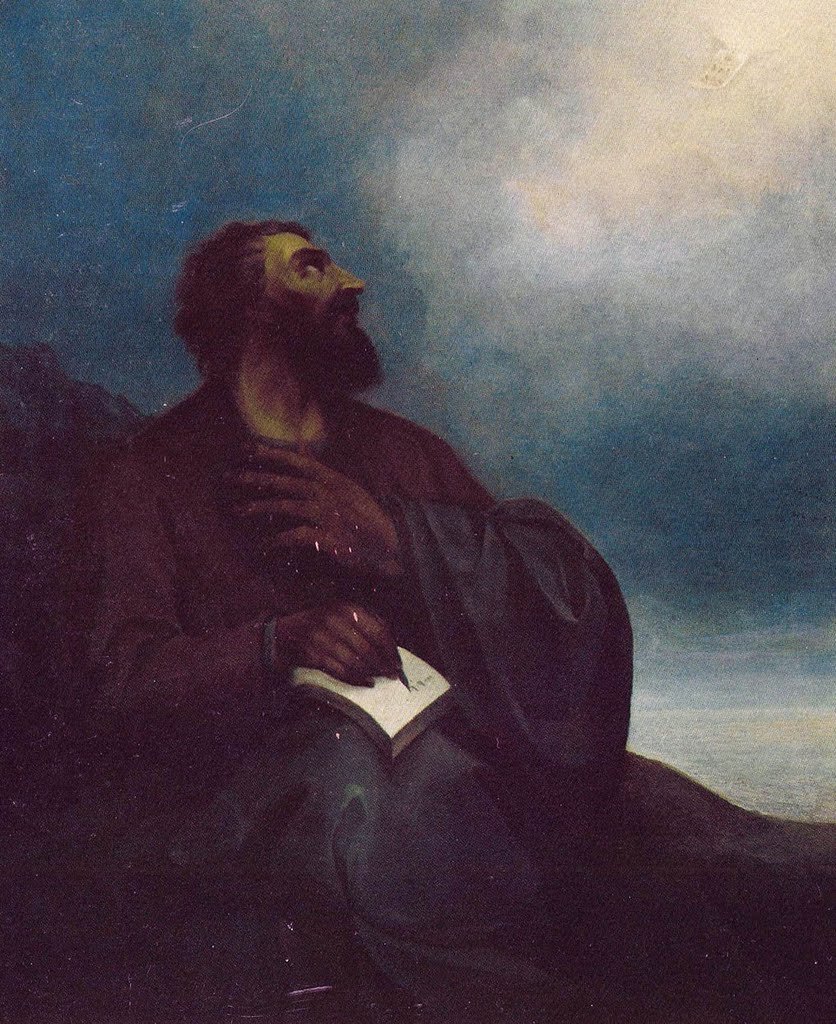
Saint Mesrob Mashtots stands at the crossroads of faith, language, and cultural survival. He lived in the late fourth and early fifth centuries, during a fragile moment in Armenian Christian history, when foreign empires pressed inward and spiritual identity risked being diluted or erased.
He is venerated primarily within the Armenian Apostolic Church (Oriental Orthodox), with historical reverence also preserved among Armenian Catholics.
His principal feast day is celebrated on February 17 in the Armenian calendar.
Mesrob was not born a monk.
He began his life as a royal secretary and scholar, fluent in Greek, Syriac, and Persian. He knew the machinery of empire. He understood politics, education, and power. But his heart was drawn elsewhere.
He left court life to become a monk and missionary, traveling through Armenia and neighboring regions preaching Christ. What he encountered broke him open.
People could not understand Scripture in their own tongue.
Prayers were recited in borrowed languages. The Gospel sounded foreign in Armenian ears. Faith existed, but intimacy with God was being filtered through translations that did not belong to the people.
Mesrob saw something devastating and sacred at once.
Without language, souls drift.
Without Scripture in the heart-language, faith weakens.
People pray to Saint Mesrob today for mental clarity when learning feels overwhelming, for perseverance when spiritual burnout sets in, and for strength when they feel intellectually or emotionally exhausted. He understands the fatigue that comes from carrying responsibility for others, the strain of building something that does not yet exist, and the quiet loneliness of visionaries who labor in obscurity.
If you are struggling to focus, feeling spiritually drained, or carrying the weight of teaching, parenting, leadership, or creative work, Saint Mesrob knows that terrain. His life reminds us that God meets us not only in silence, but in letters, in study, in perseverance, and in the slow labor of love.
This prayer card is created as a spiritual heirloom. It is meant to accompany desks, prayer corners, classrooms, and tired hearts, reminding you that God sanctifies learning, language, and effort offered with humility.
Each card is handmade in Austin, TX and created to order. We do not keep stock, because every prayer card is treated as a unique devotional offering. They are printed on museum-quality photo paper, not cardstock. Every card is made slowly, during prayer, with intentional reverence for the saint or holy image and for the person who will receive it. Names are lifted before Christ. Intentions are held carefully. Each piece is handled multiple times in prayerful silence, asking God for mercy and asking the saint or Theotokos to intercede for the soul it is being made for. This is not production work. It is devotional craftsmanship shaped with patience, care, and spiritual responsibility, because every soul and every prayer matters.
The World Into Which He Was Born
Armenia in the Late Fourth Century
Mesrop Mashtots was born around 362 AD into an Armenia that was, in terms of its Christian life, simultaneously thriving and deeply precarious. Armenia had been officially Christian since 301 AD — over sixty years before Mesrop's birth — and the institutional structures of the church were well established: a Catholicos presiding at Etchmiadzin, bishops in the major sees, churches in the cities and towns, the beginnings of a monastic movement, and a Christian culture embedded deeply enough in the lives of the Armenian nobility that faith and identity had already begun their long fusion into the single thing they would eventually become.
But beneath this institutional success lay a vulnerability that the most perceptive minds in the Armenian church were beginning to understand with increasing clarity. The Armenian church conducted its liturgy in Greek and Syriac — the two dominant languages of early Christian civilization in the Near East. Its scriptures existed in Greek and Syriac. Its theology was conducted in Greek and Syriac. And while educated Armenians — particularly those of the noble class — could read and speak Greek, the vast majority of the Armenian population was functionally excluded from direct access to the scriptural and theological tradition of their own church. They heard the scriptures read in languages they did not understand, received the sacraments administered in liturgical forms in languages they could not follow, and were dependent entirely on whatever translation and explanation their priests chose to offer them — translation and explanation that was itself limited by the priests' own varying degrees of linguistic competence.
This was not a situation unique to Armenia. Across the entire early Christian world, the tension between the languages of the original scriptural deposit — Hebrew, Greek, Aramaic — and the vernacular languages of the expanding Christian populations was a constant pastoral and theological challenge. In the West, Latin was gradually establishing itself as the single liturgical and theological language, creating its own version of the same problem for non-Latin-speaking populations. In the East, Greek and Syriac divided the Christian world between them, with those who spoke neither at a disadvantage that was simultaneously practical and spiritual.
For Armenia, the problem had a specifically political dimension as well. A church whose liturgical and theological life depends on Greek is, whether it acknowledges it or not, a church with a degree of dependence on the Greek-speaking world — on Constantinople, on Antioch, on the bishops of Cappadocia who had consecrated Armenia's first Catholicos. The language of your worship is never entirely neutral politically, and the long-term question of whether Armenian Christianity would develop an identity genuinely its own — or whether it would remain a provincial extension of the Greek-speaking church — was, in the late fourth century, genuinely open. The answer that Mesrop Mashtots provided was unambiguous: Armenian Christianity would be genuinely, completely, irreducibly its own, and the instrument of that self-determination would be thirty-six letters scratched on a page.
The Political Situation: Divided Armenia
The Armenia of Mesrop's birth was also politically divided in a way that would profoundly shape both his life and his work. The Partition of Armenia in 387 AD — the year when Mesrop was approximately twenty-five years old — divided Greater Armenia between the Roman Empire and the Sassanid Persian Empire, with the larger and more populous eastern portion falling under Persian suzerainty and the smaller western portion coming under Roman control. This partition had enormous consequences for the Armenian church, which found itself simultaneously subject to two different imperial powers with two different official religions: the Roman Empire, which had been Christian since Constantine's conversion, and the Sassanid Empire, which was officially Zoroastrian and periodically hostile to the Christian communities within its borders.
The eastern, Persian-controlled portion of Armenia — which contained Etchmiadzin, the seat of the Catholicos, and the majority of the Armenian population — was therefore in a theologically and politically exposed position. It was a Christian community within a Zoroastrian empire, protected by the millet-like arrangements that Persian imperial administration provided for religious minorities but subject to periodic pressure, and potentially vulnerable to any Persian decision to revoke those protections. The creation of an indigenous Armenian literary culture — a culture that could preserve the scriptures, the theology, and the identity of Armenian Christianity in texts written in a distinctly Armenian script — was therefore not merely a cultural achievement but a defensive strategy of the highest order: a way of making Armenian Christian identity portable, self-sustaining, and independent of any external power's goodwill.
Mesrop would have understood all of this, consciously or intuitively. He was a man of considerable political sophistication before he became a monk, and his work shows the awareness of a man who understood that culture and language are not separable from politics and power.
His Birth and Family
Mesrop Mashtots was born in the village of Hatsekats in the district of Taron, in what is now southeastern Turkey — a region that was part of the Armenian highlands and that had been Christian for several generations by the time of his birth. His father's name is given in the sources as Vardan, and the family was of middling social status — neither the great nobility nor the peasantry but the intermediate class of moderately prosperous freeholders that formed the backbone of Armenian provincial society.
The name Mashtots is distinctly Armenian and of debated etymology. Some scholars have suggested connections to the Armenian word for a liturgical book (mashtots is also the name of the book of blessings in the Armenian church, though whether the man gave his name to the book or the book was named after him is a question that Armenian linguists have debated for centuries). Others have suggested the name is a family name unrelated to any liturgical connotation. What is clear is that the name has become so thoroughly identified with the man who bore it that for Armenians the word Mashtots means, above all else, one person — the monk who made the alphabet.
His childhood and early education are described in his biography — the Vark Mashtotsi (Life of Mashtots) written by his student Koriun, which is itself one of the earliest works of original Armenian prose literature and one of the primary sources for everything we know about Mesrop — as having given him a thorough grounding in both Armenian and Greek. He was evidently a gifted student with an unusual facility for languages, and his bilingual education gave him the linguistic tools that would later prove essential.
Early Career at the Royal Court
As a young man, Mesrop did not enter the church directly. He served for a period at the Armenian royal court, in the administrative apparatus of the Arsacid kings who still ruled the eastern portion of Armenia under Persian suzerainty at this time. His specific role at court is described in Koriun's biography as that of a notary or secretary — a man skilled in languages and writing who served in the documentary and administrative functions of the royal bureaucracy.
This period of court service was not spiritually empty, but it was a period of formation rather than fulfillment — Mesrop was living in the world, doing competent and useful work, and gathering the experiences of a man who has seen power and administration from the inside and who understands the mechanisms by which institutions and societies actually function. This worldly formation would later prove invaluable when he needed to navigate the complex relationships between the church, the royal court, and the Catholicosate in order to advance his alphabet project.
He also served as a military officer for a period — the sources mention his service in the Armenian army, giving him experience of yet another dimension of the world he would later try to transform. The combination of scholarly formation, administrative experience, and military service made him, by the time he eventually committed himself entirely to the religious life, an unusually well-rounded man — not a cloistered academic but someone who had moved through the world in multiple roles and who brought all of that experience to his vocation.


The Turn to God — Monastic Vocation and Missionary Work
The Conversion of Life
Koriun's biography does not provide a single dramatic conversion narrative for Mesrop's turn to the monastic life — no road-to-Damascus moment, no single crisis that precipitated everything. Instead, it describes a gradual deepening of religious commitment that eventually led him to leave court service and commit himself entirely to the life of a monk and missionary. This gradual quality is itself instructive: the man who would eventually bring the most patient and methodical kind of scholarship to the service of the Gospel had a vocation that was itself characterized by patient and methodical development rather than sudden illumination.
He was ordained as a deacon at some point during this transitional period, establishing his formal connection to the church's ministry. He adopted the life of a monk — the specific form of monasticism available in Armenia in the late fourth century, which was closer to the Syrian model of solitary or semi-eremitic life than to the more organized cenobitic monasticism of the Egyptian tradition — and gathered around him a small group of disciples who shared his commitment to prayer, learning, and the work of the Gospel.
He was particularly drawn to missionary work in the regions of Armenia that remained either only superficially Christianized or still substantially pagan. The conversion of Armenia in 301 AD had been a top-down process: the king converted, commanded his people to convert, and Gregory the Illuminator traveled through the country baptizing populations in mass ceremonies. This process had Christianized Armenia in a formal and institutional sense but had not necessarily penetrated deeply into the religious consciousness and practice of the more remote and less educated portions of the population. The task of genuine evangelization — of helping people understand and internalize the faith they had been baptized into — was still largely incomplete a century after the official conversion, and it was exactly this task that Mesrop threw himself into.
The Linguistic Problem Encountered in the Mission Field
It was precisely in the course of his missionary work that Mesrop encountered, with full force, the linguistic problem that would eventually lead him to create the Armenian alphabet. He was preaching in the provinces, teaching in the villages, trying to explain the scriptures and the theological tradition of the church to people who had received the external forms of Christianity without the interior content — and he was doing it through translation, in a language that had no written form.
The problem was not simply that his audiences couldn't read, though many of them could not. The deeper problem was that without a written Armenian language, there was no stable transmission of the scriptural and theological tradition. Each preacher translated as best he could from Greek or Syriac, and no two translations were identical. Theological concepts with precise Greek meanings were rendered into Armenian in ways that varied from preacher to preacher, from region to region, from generation to generation. There was no fixed Armenian text of the Lord's Prayer, no stable Armenian form of the Nicene Creed, no authoritative Armenian rendering of the narratives of the Gospels. The faith that was being transmitted was necessarily approximate, necessarily dependent on the individual competence and understanding of each transmitter, necessarily vulnerable to loss and distortion.
Mesrop saw this with the clarity of a man who had been trained in languages, who understood the relationship between linguistic precision and theological accuracy, and who had enough pastoral experience to know that a community of faith built on unstable linguistic foundations is a community whose faith will eventually erode. The solution was, in principle, obvious: Armenia needed an alphabet. It needed a written form of its own language capable of accurately representing the sounds of Armenian and therefore capable of serving as the vehicle for a stable, authoritative, universally accessible Armenian translation of the scriptures.
The obvious solution was not, however, an easy one. Creating an alphabet from scratch — a fully functional phonological writing system for a language with no previous written form — is one of the most technically demanding intellectual achievements available to a human being. The history of alphabets is almost entirely a history of adaptation: most writing systems are derived from earlier ones, modified and adjusted to fit a new language but starting from an existing model. The creation of a genuinely original alphabet, one that accurately represents all the phonological features of a specific language, requires a combination of linguistic sophistication, phonological analysis, and creative invention that only very few individuals in all of human history have possessed in sufficient measure.
Mesrop Mashtots was one of those individuals. But he did not know this yet.

The Quest for the Alphabet — Years of Search and Study
The Partnership With Sahak the Great
Before Mesrop could begin the practical work of creating an alphabet, he needed the support and authority of the institutional church. The creation of an Armenian writing system was not a private scholarly project; it was a project of national and ecclesiastical importance that would require royal patronage, church endorsement, the training of scribes and scholars, and the organizational infrastructure to make the new system actually work in the life of the church and the school.
The key institutional figure was Sahak Partev — Isaac the Great, the Catholicos of the Armenian church from approximately 387 to 428 AD, one of the most significant figures in the entire history of Armenian Christianity and himself venerated as a saint of the highest order. Sahak was an extraordinary man in his own right: the great-great-grandson of Gregory the Illuminator through the hereditary line that had governed the early Armenian catholicate, educated in Constantinople and thoroughly at home in Greek theological culture, a theologian of genuine sophistication, and an administrator of remarkable ability.
Sahak immediately understood what Mesrop was proposing and why it mattered. The two men — the scholar-monk from Taron and the aristocratic Catholicos who carried the blood of the Illuminator — formed a partnership that would prove to be one of the most consequential collaborations in the history of Christianity. Sahak brought institutional authority, political connections, theological formation, and organizational capacity. Mesrop brought linguistic genius, pastoral urgency, missionary experience, and the focused determination of a man who understood exactly what needed to be done and was prepared to do whatever it took.
They also secured the support of the Armenian king, Vramshapuh, who ruled the eastern portion of Armenia under Persian suzerainty. Vramshapuh's support was essential for practical reasons — the project would require resources, protection, and the kind of political cover that only royal patronage could provide — and the king, who was sympathetic to the church's needs, gave his endorsement. The team of three — Sahak, Mesrop, Vramshapuh — represented the full institutional weight of Armenian Christian civilization behind a single scholarly project, a degree of concentrated support that is rare in any historical period and that gave the project the best possible chance of success.
The First Attempt — The Script of Daniel
The search for an alphabet did not proceed directly to Mesrop's final invention. Before arriving at the thirty-six letters of the Armenian script as we know it, Mesrop explored and tried to use an existing writing system that had been brought to his attention.
Koriun's biography records that a Syrian bishop named Daniel had previously attempted to create an Armenian writing system, producing a script that was reported to Vramshapuh and through him to Sahak and Mesrop. Daniel's script was obtained — possibly as a manuscript or a set of samples — and Mesrop and his colleagues attempted to use it as the basis for an Armenian writing system.
The attempt failed. Mesrop, with his profound understanding of the Armenian language's phonological system, quickly determined that Daniel's script was inadequate — that it could not accurately represent all the sounds of Armenian, that it was designed without sufficient understanding of the language's specific phonological features, and that using it as the basis for an Armenian writing system would mean accepting from the beginning a permanent and structurally embedded imprecision in the representation of the language. This was unacceptable to Mesrop. If the alphabet was going to be used to transmit the Word of God accurately, it had to be capable of representing the language accurately. Approximation was not good enough.
The rejection of Daniel's script was therefore not arbitrary perfectionism but theologically driven linguistic principle: the sanctity of the text that was going to be written in the new alphabet required an alphabet worthy of it.
The Years of Research and Prayer
Following the rejection of Daniel's script, Mesrop embarked on an extended period of research, prayer, and what we might today call fieldwork. He traveled to the major centers of Christian scholarship available to him — Edessa, the great Syriac-language Christian city in southeastern Turkey; Samosata on the Euphrates; possibly Antioch and other centers of Greek Christian learning — seeking linguistic expertise, studying existing alphabets, consulting with scholars and linguists who might have relevant knowledge, and praying continuously for the divine guidance that he understood as the only possible source of what he was seeking.
This combination of exhaustive human research and continuous prayer is one of the most characteristic features of Mesrop's approach and one of the most theologically significant aspects of his story. He did not approach the creation of the alphabet as a problem that God would solve for him while he waited passively. He brought to bear every human intellectual resource available to him, traveled extensively, consulted widely, studied deeply — and he prayed throughout all of it, understanding his research not as an alternative to divine guidance but as the human dimension of a collaboration in which God was the senior partner.
Koriun describes Mesrop during this period as working with extreme intensity — studying by day, praying by night, writing and erasing and writing again, trying out different forms of letters, testing them against the phonological requirements of the Armenian language, finding them inadequate, and beginning again. The picture is of a man engaged in a sustained intellectual and spiritual labor that consumed his entire being, and of a community of disciples and supporters gathered around him who shared both the work and the prayer.
He studied the Greek alphabet in detail, understanding its phonological principles. He studied the Syriac script, learning its conventions and its adaptations to the specific phonological features of Semitic languages. He may have studied other scripts as well — the various writing systems of the ancient Near East that had developed in response to the specific needs of specific languages. From all of this comparative study, he was developing an increasingly refined understanding of what an alphabet actually is and what it needs to do, and an increasingly clear sense of what the Armenian language specifically required.
The Divine Gift — The Vision of the Letters
At some point during this extended period of research and prayer — the tradition places this at Edessa or Samosata, though the exact location varies in different accounts — Mesrop received what the tradition describes as a divine revelation: a vision in which the letters of the Armenian alphabet appeared to him, fully formed, as a gift from God.
Koriun's account of this moment is one of the most celebrated passages in early Armenian literature, and it is worth attending to carefully: "And as if the right hand of God were writing, he saw in his mind the script of the entire Armenian language. And he arose and wrote it with his right hand."
The vision was not of a few letters but of the entire alphabet — all thirty-six characters — appearing simultaneously as a complete and coherent system. This detail is theologically crucial for the tradition's understanding of what the alphabet is: not a human invention assembled piece by piece through trial and error, but a divine gift received whole, the alphabet being understood as the form in which God's language for the Armenian people had always existed, waiting to be revealed to a man prepared by years of prayer and study to receive it.
The theological claim here is precise and deliberate: the Armenian alphabet was not created by Mesrop Mashtots in the ordinary human sense of creation. It was revealed to Mesrop Mashtots, who received it as he received everything else of importance in his life — on his knees, in prayer, with his hands open. The creative genius was God's; the receptive capacity was Mesrop's, developed through decades of linguistic study, missionary experience, and contemplative prayer.
Whether one understands this as literally miraculous or as the tradition's way of expressing the genuinely remarkable quality of what Mesrop achieved — the sudden synthetic insight that follows extended preparation and that integrates months or years of research into a single creative act of recognition — the result was the same: an alphabet of extraordinary phonological sophistication that has served the Armenian language with minimal modification for sixteen centuries.


The Alphabet Itself — What Mesrop Created
The Thirty-Six (Later Thirty-Eight) Letters
The Armenian alphabet as Mesrop created it consists of thirty-six letters, representing both consonants and vowels with equal and thorough attention — a phonemic completeness that was not universal in the writing systems of the ancient world. Syriac, for example, represents only consonants, requiring readers to supply vowels from their knowledge of the language. The Greek alphabet was more complete in its representation of vowels, and Mesrop's system followed and exceeded the Greek model in its phonological thoroughness.
The shapes of the Armenian letters are distinctive, unlike those of any other writing system in the world. They bear family resemblances to Greek and Syriac letter forms at certain points — which is unsurprising, given that Mesrop had studied both systems extensively — but they are not derived from either in any simple or direct way. The overall visual impression of the Armenian script is of something that has been designed as a system rather than assembled from borrowed parts: the letters have a visual coherence and a calligraphic elegance that suggests they were conceived together, as part of a single integrated design.
The two letters added to the original thirty-six in the twelfth century by the grammarian Nerses Lambronats'i (ев and և) brought the total to thirty-eight and addressed specific phonological developments in the language that Mesrop's original system had not needed to account for. But the core thirty-six letters have remained unchanged — a remarkable testament to the precision and completeness of Mesrop's original achievement.
The order of the letters is not arbitrary. The Armenian alphabet has an internal logic to its sequencing that reflects careful thought about the relationships between different letter forms and different phonological categories. The first letter — Ayb (Ա) — is visually and phonologically analogous to the Greek Alpha and the Hebrew Aleph, deliberately placing the Armenian writing system within the tradition of the great alphabets that preceded it while asserting its own complete identity. The first word that can be spelled in the Armenian alphabet is Astvats — God — a detail that the tradition has always understood as theologically significant, the alphabet beginning, as all things should begin, with the divine name.
The Phonological Achievement
For those with linguistic training, the specific achievement of the Armenian alphabet deserves more detailed attention. Armenian is a language with a phonological inventory that is in several respects unusually complex — it has a series of voiceless aspirated stops, voiced unaspirated stops, and voiceless unaspirated stops that needed to be represented distinctly; it has a rich system of vowels; it has certain sounds that had no equivalent in either Greek or Syriac and that therefore could not simply be borrowed from those systems.
Mesrop's alphabet represents all of these sounds with distinct letters, assigning each phoneme in the Armenian language its own unique graphic representation. This one-to-one correspondence between sound and letter — which is the ideal of any alphabetic system but is achieved by very few writing systems in practice — means that Armenian text, written in Mesrop's script, is in principle pronounceable without ambiguity by anyone who knows the system. There are no silent letters, no letters that represent different sounds in different contexts, and no sounds that are unrepresented. It is a phonologically complete system, and its completeness reflects either extraordinary linguistic genius or, as the tradition insists, a divine insight into the structure of the language that human genius alone could not have achieved.
The early twentieth-century linguist Ferdinand de Saussure, who is considered the founder of modern structural linguistics, allegedly admired the Armenian alphabet as one of the most phonologically precise writing systems ever created. Whether or not this specific attribution is accurate, the technical quality of Mesrop's achievement is consistently recognized by linguists who study it, and the consistency of this recognition across different scholarly traditions is itself a form of testimony to the extraordinary nature of what he accomplished.
The First Sentence
The first sentence written in the new alphabet — chosen with theological precision that reflects Mesrop's understanding of what the alphabet was for — was the opening verse of the Book of Proverbs: "To know wisdom and instruction, to perceive the words of understanding." (Proverbs 1:2)
The choice is a complete theological statement in itself. Not a dedication to a king, not a grammatical demonstration, not a religious formula — but the opening of the biblical book most concerned with the relationship between divine wisdom and human understanding, the book that in the Hebrew tradition is the primary text on the nature and value of learning. The Armenian alphabet began with a sentence about wisdom, spoken by a man who had sought wisdom in prayer and study for years, written in the service of the God who is wisdom's source.
The tradition preserves the moment with the reverence appropriate to a genuinely epochal event. When Mesrop wrote those letters, he was not merely writing a sentence. He was opening a door that had never been open before — the door through which the entire Armenian people could walk into direct, unmediated, personal encounter with the Word of God in their own language. Every Armenian who has ever read a Bible, prayed a prayer, written a letter, read a novel, composed a poem, or sent a text message in Armenian script owes the possibility of that act to the moment when Mesrop Mashtots wrote those first letters in the city of Edessa or Samosata, in the year 405 AD.


The Translation Project — Making the Alphabet a Living Instrument
The Team of Translators — The Targmanichner
The creation of the alphabet was the necessary foundation, but it was not in itself sufficient. An alphabet with nothing written in it is a tool without a task. Mesrop's immediate concern after completing the alphabet was to use it for the purpose for which it had been designed: the translation of the scriptures and the theological tradition of the church into Armenian.
For this, he needed scholars — people with the linguistic competence to work in Greek and Syriac and the theological competence to translate accurately, without distortion or oversimplification. Together with Sahak the Great, he organized what became known as the Targmanichner — the Translators — a team of the most gifted young Armenian scholars of the time, selected for their linguistic abilities and sent to the major centers of Christian learning to gather manuscripts and develop the expertise needed for the translation project.
The dispatch of these scholar-missionaries was itself a significant organizational and logistical achievement. Sahak and Mesrop identified candidates — some of them already formed members of Mesrop's monastic community, others young men of promise who needed further education — and sent them in small groups to Edessa, Constantinople, Alexandria, and other centers. There they spent years studying: perfecting their Greek and Syriac, reading the manuscripts of the scriptures and the patristic tradition in their original languages, and developing the theological vocabulary and the translation methodology that the project required.
This dispatch of scholars to foreign centers of learning for the specific purpose of bringing their knowledge back to serve the home church is one of the most remarkable features of the entire project. Mesrop and Sahak understood that adequate translation requires not merely linguistic skill but deep theological formation — a translator who understands only the surface meaning of a text will produce a translation that captures the surface and misses the depth. The translators were being sent not just to learn languages but to become theologians in the fullest sense, people who understood from the inside the tradition they were being asked to render into Armenian.
The Translation of the Bible
The translation of the Bible into Armenian — completed around 434 AD — is considered by scholars of biblical translation to be one of the greatest achievements in the entire history of the transmission of the scriptural text. The Armenian Bible earned its extraordinary honorific — Թագուհի թարգմանությանց, the "Queen of Translations" — not through self-promotion but through the considered judgment of subsequent scholars who found in it a combination of qualities that no other ancient translation possesses in quite the same degree.
The translators worked from both the Greek Septuagint (for the Old Testament) and the Greek New Testament texts, supplemented by comparison with the Syriac Peshitta. They were not simply rendering word for word but were attempting to find the Armenian expression that most precisely and most beautifully captured the meaning of the original — an approach that required the full range of their theological and literary formation.
The result is a translation of extraordinary quality. It is theologically precise, in the sense that the specific doctrinal content of the Greek text is faithfully rendered without the distortions that appear in some other ancient translations. It is linguistically elegant, in the sense that it reads not as translation but as original composition in classical Armenian — fluent, natural, rhythmically satisfying, and possessed of the kind of literary dignity appropriate to a text understood as the inspired Word of God. And it is textually valuable, in the sense that the manuscript tradition underlying it preserves readings of the Greek text that are, in some cases, more ancient and more accurate than those preserved in the later Byzantine manuscript tradition — making the Armenian Bible an important witness for modern biblical textual scholars working on the history of the scriptural text.
The Bible was followed by translations of the major works of the Greek patristic tradition: Basil of Caesarea's Hexaemeron and his letters, Gregory of Nyssa's theological writings, Gregory Nazianzus's orations and poems, John Chrysostom's homilies on Matthew and Paul, Cyril of Alexandria's theological works, Athanasius's writings on the Incarnation and the Trinity, and many others. The scope of this translation project was staggering — it represented the systematic transfer into Armenian of the entire intellectual and spiritual treasury of Greek Christian civilization, a project that required decades of sustained scholarly labor by a substantial team of trained translators.
Works of philosophy were also translated: Aristotle's logical works, Porphyry's Isagoge, and other texts of the Greek philosophical tradition that had been incorporated into Christian theological education. Some of these translations are, as noted earlier, the only surviving witnesses to their texts — the Greek originals having been lost, the Armenian translations being our sole access to what certain ancient thinkers wrote.
The Original Works
The translation project, for all its extraordinary importance, was understood by Mesrop and his collaborators as preparation for something beyond translation: the creation of an original Armenian theological and literary tradition. A church that can only translate is still dependent; a church that can create — that can think theologically in its own language, that can produce its own spiritual literature, its own liturgical poetry, its own theological argumentation — is truly self-sufficient.
The first generation of Armenian original literature appeared almost immediately in the wake of the translation project. Mesrop's own student Koriun wrote the Life of Mashtots, which is both the primary biographical source for Mesrop and one of the earliest examples of Armenian literary prose. Agathangelos wrote the foundational history of the conversion of Armenia. Eznik of Kolb, one of the most gifted of the Targmanichner, wrote Refutation of the Sects — a systematic theological work addressing Zoroastrianism, paganism, Marcionism, and Greek philosophy with an intellectual sophistication that placed it in the same category as the best Greek apologetical writing.
Movses Khorenatsi — Moses of Khorene — wrote his History of Armenia, which became the foundational text of Armenian historical consciousness and which demonstrates the full literary maturity of the new Armenian literary language: capable of historical narrative, of rhetorical grandeur, of theological reflection, and of the kind of sustained prose that characterizes a mature literary tradition. Yeghishe wrote his magnificent account of the Battle of Avarayr, which is simultaneously a historical chronicle, a theological meditation on martyrdom, and a work of genuine literary power.
All of this — the entire explosion of original Armenian literature in the fifth century — was made possible by the alphabet. Without the alphabet, there is no written Armenian language. Without the written language, there is no stable literary tradition. Without the literary tradition, there is no intellectual and theological self-sufficiency. And without that self-sufficiency, the Armenian church's survival through everything that was coming — the Arab conquests, the Byzantine pressure, the Seljuk invasions, the Mongol devastation, the Ottoman centuries, the Genocide — is, at the very least, far less certain.


The Georgian and Caucasian Albanian Alphabets
Mesrop Beyond Armenia — The Apostle of Literacy
One of the most remarkable and least widely known aspects of Mesrop's achievement is that he did not stop with the Armenian alphabet. Having developed the methodology for creating a writing system fully adequate to the phonological needs of a specific language, he applied that methodology to two other languages spoken by neighboring peoples: Georgian and Caucasian Albanian.
The creation of the Georgian alphabet by Mesrop Mashtots is recognized and celebrated in the Georgian Orthodox Church, which venerates Mesrop as a benefactor of the Georgian people alongside the Armenian tradition's veneration of him as the supreme cultural saint of their own civilization. The Georgian alphabet — Mkhedruli in its modern form, Asomtavruli in its oldest form — is one of the world's most distinctive and beautiful writing systems, and its origin in Mesrop's creative activity places it in a direct line of descent from the same genius that produced the Armenian letters.
The Georgian case is particularly interesting because the Georgian language, while a neighbor of Armenian, belongs to a completely different language family — the South Caucasian or Kartvelian family — with a phonological system quite different from Armenian. The fact that Mesrop was able to create a fully adequate writing system for a language this different from the one he had originally addressed is testimony to the generality and the depth of his linguistic methodology.
The Caucasian Albanian alphabet — created for the people of Caucasian Albania, a kingdom in what is now Azerbaijan and northern Iran whose Christian community was closely connected to both the Armenian and Georgian churches — represents a third application of Mesrop's methodology. This alphabet fell out of use after the Caucasian Albanian Christian community was gradually absorbed into the Armenian and Georgian churches following the Arab conquests, and it was essentially unknown to modern scholarship until the discovery of Caucasian Albanian manuscripts in a palimpsest at Saint Catherine's Monastery on Mount Sinai in the 1990s. The recognition that these manuscripts represented the previously unknown Caucasian Albanian alphabet — and that its creation was attributed to Mesrop in the medieval Armenian historical tradition — was one of the more dramatic discoveries in the recent history of Caucasian linguistics.
What these three alphabets together represent is a vision of the Gospel's relationship to human language that is genuinely remarkable in its breadth and its consistency: every people deserves to encounter God's Word in the full precision and beauty of their own language, and if that language has no written form adequate to that purpose, the language needs to be given one. Mesrop applied this principle not once but three times, to three different languages of three different families, producing three writing systems that between them made possible the full literary and theological development of three distinct Christian civilizations.
Offer a Dedication
If this page was meaningful to you, you are welcome to dedicate this or any educational page in memory of a loved one, for a prayer intention, or in gratitude for blessings received.
Each dedication is placed permanently at the bottom of the page and remains there indefinitely as a quiet light of remembrance. Everyone who visits this page will see the dedication and remember the person or intention it honors, much like a candle that continues to burn long after it is first lit.
Your dedication also helps support the continued sharing of Eastern Christian history, prayer, and the lives of the saints.
His Missionary Journeys and Pastoral Work
The Schools He Founded
Parallel to and intertwined with his work on the alphabet and the translation project, Mesrop was continuously engaged in missionary and educational work throughout the territories of Armenia and the neighboring regions. As soon as the alphabet existed, he began establishing schools in which it could be taught — understanding, with the clarity of a man who had thought deeply about the relationship between literacy and faith, that the alphabet was useful only if people could read it.
These schools were not institutions in the modern sense — they were more like what the monastic tradition would later call a scriptorium combined with a school of catechesis: places where students learned to read and write Armenian, were formed in the scriptures and the theological tradition, and were prepared for service in the church as readers, cantors, teachers, and eventually priests and monks. Mesrop himself was present at many of these schools at various points, teaching, supervising, and providing the kind of direct personal formation that he understood as inseparable from the transmission of literacy.
The schools served populations across the Armenian-speaking world: in the Persian-controlled territories of eastern Armenia, in the Roman-controlled western territories, and in the border regions where the two empires competed. This trans-imperial reach was itself significant — Mesrop's educational mission crossed the political boundary that divided Armenia, treating the Armenian people as a single community of faith whose need for literacy and theological formation was not defined by which empire their particular district happened to fall under.
Koriun records specific journeys Mesrop made to the regions of Goghtan, Aghvank (Caucasian Albania), and Iberia (Georgia) — journeys explicitly described as educational missions in which Mesrop both taught the new alphabet and conducted the full range of pastoral and missionary activities: preaching, baptizing, establishing communities, ordaining clergy, and leaving behind trained teachers who could continue the work after his departure.
The Mission to Goghtan
The mission to the region of Goghtan — a district in the southwestern part of Armenia, in what is now southeastern Turkey, along the Araxes river — is described by Koriun as particularly significant and particularly difficult. Goghtan was a region with a strong tradition of traditional Armenian religious practice, including the maintenance of ancient songs and ritual practices that predated Christianity. The clergy serving the area were apparently providing minimal theological formation to their communities, and the people were maintaining a kind of hybrid religiosity — nominally Christian but substantially shaped by pre-Christian traditions.
Mesrop arrived in Goghtan with the new alphabet, with the translated scriptures, with the teaching methodology he had been developing throughout his educational work, and with the full energy of a missionary who was also, by this point in his life, a man of deep personal holiness whose presence itself communicated something beyond what his words said. Koriun describes the mission as highly successful — communities that had been nominally Christian for generations were now encountering the scriptures in their own language for the first time and responding with the kind of vivid religious transformation that genuine first hearing of the Word can produce.
The mission to Goghtan also produced some of the earliest original Armenian literature outside the explicitly theological and historical genres: Mesrop apparently encouraged the composition of Armenian religious poetry and song in the region, recognizing that the new alphabet needed to be used not only for the translation of existing texts but for the creation of new forms of expression in which Armenian Christians could praise God in their own words and their own melodies. The seeds of the great tradition of Armenian liturgical poetry — the sharakan tradition that would flourish in subsequent centuries — were planted in part through these early missionary encouragements.
The Mission to Georgia
Mesrop's journey to Georgia — the kingdom of Iberia, occupying what is now the nation of Georgia — was both a follow-up to his creation of the Georgian alphabet and an extension of his broader pastoral and educational mission. The Georgian church, which had been Christian since the fourth century through the ministry of Saint Nino, needed the same kind of theological formation and literary culture that Mesrop had been providing to the Armenian church, and the creation of the Georgian alphabet had laid the same kind of foundation for Georgia that it had for Armenia.
The Georgian historical tradition preserves memory of Mesrop's presence in Georgia with great warmth. The Georgian church venerates him specifically as the man who gave Georgia the capacity for a literate Christian culture, and the feast of Mesrop in the Georgian Orthodox calendar is celebrated with the same recognition of his foundational importance that characterizes his feast in the Armenian calendar. Mesrop's work in Georgia created a connection between the Armenian and Georgian Christian traditions that has endured through seventeen centuries of shared Caucasian Christian history, and his person serves as a symbol of that connection — the man who is a saint of both traditions simultaneously, the man who stands at the origin of both literary cultures.


His Character and Spiritual Life
The Man Behind the Achievement
Koriun's biography of Mesrop is one of our richest sources not only for the facts of his life but for his character — the specific qualities of personality and spirit that the people who knew him best saw in him and that they considered worth preserving for subsequent generations.
The picture Koriun draws is of a man of extraordinary energy and absolutely undivided focus. Mesrop did not do many things at once; he did one thing with the whole of himself. When he was working on the alphabet, the alphabet consumed him entirely. When he was on a missionary journey, the pastoral needs of the people he was serving consumed him entirely. When he was in prayer, prayer consumed him entirely. This quality of complete presence — of giving whatever he was doing the complete attention of a completely recollected person — is one of the hallmarks of genuine sanctity in every Christian tradition, and Koriun notices it as one of the defining features of his master.
He was also a man of considerable personal warmth and of deep pastoral sensitivity. He was not a cold academic or a remote holy man but someone who genuinely loved the people he served — who grieved over their ignorance of the scriptures, who rejoiced over their growth in faith, who formed deep personal relationships with his disciples and maintained those relationships over decades. His relationship with Sahak the Great, which lasted over forty years of collaboration until Sahak's death in 438 AD, was not merely a professional partnership but a genuine friendship of the deepest kind — two men who shared a vision, worked toward it together through every obstacle, and sustained each other through the difficulties of a project that consumed the better part of their lives.
Koriun records that Mesrop was a man who prayed without ceasing — not in a metaphorical sense but in a literal one that his students observed directly. He prayed the canonical hours faithfully regardless of where he was or what else was demanding his attention. He prayed during his journeys, praying as he traveled. He prayed through the night in the periods of intensive work on the alphabet and the translation project. The continuous prayer was not an addition to his scholarly and missionary work but its foundation and its sustaining energy — the source from which everything else drew its life.
He was also, by all accounts, a man of profound physical austerity. He fasted regularly and extensively, slept little, and imposed on his body the kind of disciplined deprivation that the ascetic tradition of the early church understood as a form of mortification — a deliberate stripping away of the body's demands in order to free the spirit for greater responsiveness to God. This austerity was not self-punishment but a recognized spiritual strategy, and the tradition does not present it as morbid or excessive but as the appropriate physical expression of a spiritual commitment that was itself total.
His Relationship With His Students
One of the most consistently admirable features of Mesrop's character, as the tradition presents it, was his extraordinary investment in his students. He was not a man who jealously guarded his knowledge or his methods. He was a teacher in the deepest sense — a man who gave everything he knew to the people around him, who formed them with patience and personal attention, who celebrated their achievements as more important than his own, and who genuinely believed that the work of the Gospel required not a single brilliant individual but a community of formed and capable servants.
The Targmanichner — the team of translators he and Sahak assembled — were not simply his employees or even simply his students. They were, in the tradition's understanding, his spiritual children, formed by him in the full combination of linguistic expertise, theological understanding, and personal holiness that the translation project required. Koriun himself is the most prominent example: his Life of Mashtots is the act of a student who understood that the best tribute he could offer his master was the most honest and the most complete account of his master's life that his own considerable gifts could produce.
His Humility
The tradition is particularly emphatic about Mesrop's humility — the specific quality of not attributing to himself what God had done through him. When the alphabet was completed and celebrated, when the translations were received with amazement and joy, when the schools he founded were producing a new generation of literate Armenian Christians, Mesrop's consistent response — as Koriun records it — was to direct all the praise to God and to Sahak, insisting that he himself was simply the instrument of a divine work whose true author was not he but the Spirit who had given him the letters in the vision.
This was not false modesty. It was a genuine theological conviction about the nature of creative work in the service of God — a conviction that the Christian tradition, East and West, has always regarded as the most reliable sign of genuine holiness. The man who gives God the glory for his own achievements is the man who has understood, at the deepest level, where those achievements actually come from.


His Later Years and Death
The Deaths of Sahak and Vramshapuh — The Gathering Darkness
The last decade of Mesrop's life was shadowed by a series of losses and political crises that tested the resilience of everything he and Sahak had built. King Vramshapuh, their royal patron and protector, died in 417 AD. The political situation in Persian-controlled Armenia deteriorated significantly in the following years, as the Sassanid Persians — now committed to Zoroastrianism as a state-enforced ideology under Yazdegerd II — began applying increasing pressure on the Armenian Christian community. The crisis that would culminate in the Battle of Avarayr in 451 AD was already building in the 430s and 440s.
Sahak the Great — Mesrop's partner of four decades, the institutional anchor of the entire translation and literacy project — died in 438 AD. His death was a personal grief of the deepest kind for Mesrop, who had relied on Sahak's theological authority, his institutional position, and his personal steadiness throughout their shared work. The two had built something together that neither could have built alone, and Sahak's death removed from Mesrop's life the single most important human relationship of his adult years.
Mesrop outlived his partner and collaborator by two years, dying in 440 AD. He was approximately seventy-eight years old — an advanced age for any person of the ancient world, and a particularly remarkable achievement for a man who had spent decades in the physical austerities of the monastic life, the hardships of missionary travel, and the unrelenting intellectual labor of the translation project.
His Death
Mesrop died at Vagharshapat — the ecclesiastical capital of Armenia, the location of the mother church of Etchmiadzin — surrounded by his students and his community. Koriun describes his final days with the tenderness of a man writing about someone he loved deeply: the old teacher, enfeebled in body but completely clear in mind and spirit, continuing to pray, continuing to speak with the students who gathered around him, maintaining to the end the qualities of presence and holiness that had characterized his entire life.
The timing of his death, two years after Sahak's, gave his dying a quality of completion — as if the great work they had undertaken together was fully accomplished, and Mesrop could now follow his partner into the rest that the tradition promises to those who have given everything in God's service. There are no great final speeches recorded for him, no dramatic last words in the tradition — just the quiet dying of a very holy man who had done everything he was given to do and was ready.
He was buried with full honor at Vagharshapat. Immediately after his burial, the reports of miraculous healings at his tomb began — the standard early Christian sign that the community recognized in the newly dead a genuine intercessor in God's presence.
Miracles Attributed to Mesrop Mashtots
Miracles During His Lifetime
The miracle tradition associated with Mesrop during his lifetime is somewhat different in character from those associated with figures like Gregory the Illuminator, whose miracles are largely in the classical categories of healing and supernatural endurance. Mesrop's miracles tend to be more specifically connected to his scholarly and missionary work — they are, characteristically, miracles of illumination and of the providential ordering of events toward the accomplishment of the divine plan for Armenian Christian civilization.
The Vision of the Alphabet — Already discussed in detail, this is the foundational miracle of Mesrop's life and the one that the tradition regards as the most significant: the divine revelation of the complete Armenian alphabet in a vision, understood as the direct gift of God to a man prepared by years of prayer and study to receive it. The tradition does not present this as a merely intellectual experience but as a genuine theophany — an encounter with the divine creativity that produced, as its fruit, the thirty-six letters that would change the course of Armenian history.
The Healing at the Spring — The tradition preserves an account of a miraculous healing during one of Mesrop's missionary journeys: a man suffering from a serious illness was brought to Mesrop, who prayed over him and anointed him, and the man was healed. The tradition notes that this healing occurred near a spring of water that subsequently became a site of pilgrimage associated with Mesrop's name — a pattern familiar from the lives of many missionary saints, in which the physical geography of the missionary's journeys becomes sanctified through the holy man's presence.
The Conversion of the Stubborn Pagan — Koriun records an episode during the mission to Goghtan in which a local notable who had been resistant to Christian preaching was converted through an encounter with Mesrop that Koriun describes in terms that suggest something beyond ordinary persuasion — a transformation in the man that those who witnessed it regarded as miraculous, the kind of sudden interior change that the tradition understands as the direct action of the Holy Spirit working through the holy man's presence and prayer.
Provision During the Journey — Several traditions associate Mesrop's missionary journeys with miraculous provision of food and shelter at moments when the practical circumstances of the journey seemed to make such provision impossible — the same type of miracle associated in the gospels with the feeding of the multitudes and in the lives of later missionary saints like Patrick of Ireland and Columba of Iona. These miracles of provision are understood as divine confirmation of the missionary mandate and as practical sustenance of those whom God has sent.
Miracles After His Death
Healing at His Tomb at Oshakan — The primary site of Mesrop's burial — initially at Vagharshapat and subsequently translated to the village of Oshakan, where his relics were eventually permanently enshrined — became from the earliest period after his death a site of miraculous healing. The tradition preserves accounts of healings of the blind, the lame, the chronically ill, and the possessed that were attributed to the intercession of Mesrop at his tomb, and the pilgrim tradition at Oshakan has continued without interruption from the fifth century to the present.
The Protection of the Manuscripts — One tradition attributed to Mesrop's post-mortem intercession involves the miraculous preservation of manuscripts during periods of invasion and destruction. On several occasions when the physical repositories of Armenian Christian literature — the monastery libraries that preserved the manuscripts produced by the Targmanichner — were threatened by fire, flood, or military violence, the tradition holds that Mesrop's intercession obtained the providential preservation of specific manuscript collections that would otherwise have been lost. Whether or not specific historical instances can be verified, the tradition's attribution of manuscript preservation to Mesrop's intercession reflects the perfect theological logic of the connection: the man who made the manuscripts possible continues, in death, to protect what he made possible in life.
Cures of Blindness — A specific healing miracle particularly associated with Mesrop in the tradition involves the restoration of sight to the blind. This association is theologically resonant on several levels: Mesrop's entire life was devoted to making visible what had previously been invisible — giving visible form to the sounds of the Armenian language, making the invisible meaning of the scriptures visible to all who could now read them in their own tongue. The healing of physical blindness through his intercession is understood in the tradition as a sign of the spiritual illumination that his life's work accomplished.
The Miracle of the Script Preserved — A post-mortem miracle tradition specifically associated with the survival of the Armenian alphabet tells of a period of Persian persecution in which the Sassanid authorities attempted to suppress the use of the Armenian script as part of a broader campaign against Armenian Christian cultural identity. The tradition holds that Mesrop's intercession obtained the survival of the alphabet through this period of suppression — that attempts to confiscate and destroy manuscripts written in the new script were frustrated by a series of providential circumstances that the tradition attributes to the continuing protection of the alphabet's creator.
The Feast of the Holy Translators — Surb Targmanchats
The Most Uniquely Armenian Feast
The feast of Surb Targmanchats — the Holy Translators — is one of the most beloved and most distinctively Armenian celebrations in the entire liturgical calendar, and it deserves extended attention in any account of Mesrop Mashtots's significance, because it represents the Armenian church's formal theological interpretation of what Mesrop and Sahak and the Targmanichner actually accomplished.
The feast is celebrated on the Saturday nearest to October 11 in the Armenian calendar. It honors primarily Sahak the Great and Mesrop Mashtots, but it extends its commemoration to the entire team of scholars who participated in the translation project — the thirty-five or more young men who were dispatched to the centers of Greek and Syriac learning, who spent years in study, who produced the translations that made Armenian Christian civilization possible. All of them are honored together, named and unnamed, as a community of holy scholars whose scholarly work was simultaneously a work of faith and a work of apostolic mission.
What is theologically remarkable about this feast is what it says about the relationship between intellectual work and sanctity. In many Christian traditions, the path to sanctity runs through martyrdom, asceticism, miraculous healing, or ecclesiastical leadership. The feast of the Holy Translators says that translation — the patient, exacting, theologically demanding labor of rendering one language into another without loss of meaning or beauty — is also a path to sanctity. It says that scholarship in the service of the Gospel is not a lesser form of Christian devotion than prayer or fasting or missionary preaching but an equally valid, equally holy form of response to the call of God.
This is a profoundly Armenian theological insight, and it is not an accident that it was developed by a tradition that had direct experience of what happens when a people are given the full literary resources of their own language in the service of their faith. The Armenians knew, with a concreteness that no abstract theological argument could produce, that the work of the Targmanichner had saved their church and their identity. Venerating those who did that work as saints was therefore not a departure from the tradition of Christian sanctity but a deepening and an extension of it — a recognition that God calls people to holiness in the full range of human capacities, including the capacity to labor with extraordinary precision and dedication over the translation of ancient texts into a living language.
The Feast in the Diaspora
The feast of Surb Targmanchats has taken on particular significance in the Armenian diaspora, where it has evolved into something approaching a cultural-religious holiday that celebrates Armenian identity and the Armenian language together with the sanctity of those who made that language a fully Christian tongue. Diaspora communities in the United States, France, Lebanon, Argentina, Australia, and elsewhere celebrate the feast with liturgical services, educational events, cultural programs, and community gatherings that combine the devotional and the cultural in a way that reflects the tradition's understanding of the inseparability of faith and identity.
For young Armenians growing up in the diaspora, the feast of the Holy Translators often serves as an occasion for reflection on the relationship between their Armenian heritage and their Christian faith — a reflection prompted by the specific memory of a monk who understood, sixteen centuries ago, that these two things are not separate and that the greatest service he could render to both was to give the Armenian language the capacity to carry the full weight of divine revelation.


Mesrop in the Eastern Orthodox Tradition
His Feast in the Byzantine Calendar
Mesrop Mashtots is commemorated in the Eastern Orthodox calendar on February 17 (Old Calendar) / March 2 (New Calendar), typically in conjunction with Sahak the Great, reflecting the tradition's recognition of their inseparable collaboration. His feast in the Byzantine Menaion celebrates him as a Holy Father — a bishop and teacher of the universal church — and the service texts for his feast emphasize specifically his creation of the Armenian alphabet and his role in the translation of the scriptures as the primary grounds for his veneration.
The Orthodox veneration of Mesrop is uncomplicated by any of the canonical ambiguities that attach to post-Chalcedonian Armenian saints, since Mesrop lived and died well before the Council of Chalcedon (451 AD) and its aftermath. He belongs to the common pre-schism inheritance of the undivided church, and his commemoration in the Orthodox Menaion is a recognition of that inheritance without qualification.
The Georgian Orthodox Veneration
As discussed above, the Georgian Orthodox Church has its own strong tradition of venerating Mesrop Mashtots, rooted in the specific historical fact of his creation of the Georgian alphabet alongside the Armenian one. The Georgian commemoration of Mesrop is among the most sincere and most historically grounded expressions of shared sanctity between the Armenian and Orthodox traditions, and the Georgian church's veneration of him is not borrowed from the Armenian tradition but is independently rooted in the Georgian people's own experience of what he gave them.
First-Class Relics of Mesrop Mashtots — Where to Venerate Them
The Primary Shrine: The Church of Mesrop Mashtots at Oshakan
The primary reliquary church of Mesrop Mashtots — the most important site for the veneration of his first-class relics anywhere in the world — is the Church of Saint Mesrop Mashtots in the village of Oshakan, located in the Aragatsotn Province of Armenia, approximately thirty kilometers northwest of Yerevan on the road toward Gyumri.
Oshakan is a small and otherwise unremarkable village that has become, entirely because of its possession of Mesrop's relics, one of the most important pilgrimage sites in all of Armenia. The church that currently stands on the site was built in the fifth century following Mesrop's death and has been rebuilt and renovated several times in the subsequent centuries, with the most recent major restoration taking place in the twentieth century. It is a relatively modest building by the standards of Armenian ecclesiastical architecture — without the visual drama of Geghard or the imposing scale of Etchmiadzin — but its modesty is entirely appropriate to the man it honors: a monk who gave everything and sought nothing for himself, housed now in a church whose simplicity reflects his own simplicity.
Mesrop's relics — specifically his bones, preserved in a reliquary housed in the church — are the center of an active pilgrimage tradition. Pilgrims come to Oshakan throughout the year, with the largest gatherings on the feast of Surb Targmanchats and on other major Armenian liturgical occasions. The standard pilgrimage practice involves entering the church, venerating the reliquary containing Mesrop's remains, lighting candles, and praying at the site — the same pattern of veneration found at pilgrimage shrines throughout the Christian world.
The experience of praying at Mesrop's tomb in Oshakan is, for Armenian Christians, an experience of encounter with the specific holiness of the man who gave them their alphabet and therefore their Bible and therefore the literary foundation of their entire Christian civilization. To kneel at his relics and read from the Armenian scriptures in his presence — in the language he spent his life making available for exactly that purpose — is a form of devotion whose wholeness is difficult to describe and impossible to replicate at any other location.
Practical information for pilgrims: Oshakan is accessible from Yerevan by car in approximately thirty to forty minutes, and by public transport with a change at Aparan or Ashtarak. The church is open to visitors during daylight hours on most days and is staffed by priests who serve the local community and welcome pilgrims. The feast of Surb Targmanchats (the Saturday nearest October 11) sees the church particularly crowded, with pilgrims coming from throughout Armenia and from the diaspora. Special liturgical services are celebrated on the feast day with particular solemnity.
Relics at Holy Etchmiadzin
The treasury of Holy Etchmiadzin maintains relics of many of the great saints of the Armenian church, and relics associated with Mesrop Mashtots — portions of his remains separate from the primary deposit at Oshakan — are among the holdings that the cathedral treasury preserves. The Etchmiadzin treasury, which also contains the right hand of Gregory the Illuminator and portions of the Holy Lance, is accessible to pilgrims on certain occasions and by arrangement with the cathedral administration.
For pilgrims visiting Etchmiadzin — which is a natural destination for anyone visiting Armenia — it is worth specifically inquiring about the possibility of venerating Mesrop's relics in the treasury, as the exact availability of specific relics for veneration varies depending on the liturgical calendar and the administration's current arrangements.
Relics in the Armenian Patriarchate of Jerusalem
The Armenian Patriarchate of Jerusalem — custodian of the richest and most historically intact repository of Armenian Christian religious heritage outside Armenia itself — maintains in its treasury at the Cathedral of Saint James in the Old City of Jerusalem a substantial collection of relics and sacred objects of Armenian Christian saints. Relics associated with Mesrop Mashtots are among the holdings traditionally attributed to this treasury.
The Armenian Quarter of the Old City of Jerusalem is accessible to visitors and pilgrims, and the Cathedral of Saint James is open for visitors during specific hours (the cathedral is an active liturgical space and access is governed by the liturgical schedule). The Patriarchate of Jerusalem welcomes pilgrims seeking to venerate Armenian saints' relics and can provide guidance on what specific relics are available for veneration at any given time.
Practical information: The Armenian Quarter is entered through the Zion Gate of the Old City. The Cathedral of Saint James complex is open to visitors on weekday mornings (typically 6:00–7:30 AM during the morning office, and again for a midday period — hours vary and should be confirmed with the Patriarchate). The Patriarchate can be contacted in advance through its official website or through Armenian church contacts for information about specific relic veneration opportunities.
Relics in the Catholicosate of Cilicia at Antelias, Lebanon
The Catholicosate of Cilicia, headquartered in Antelias near Beirut, maintains relics and sacred objects from the extensive Armenian Christian heritage of Cilicia — the Armenian kingdom that flourished in what is now southern Turkey and that was destroyed in the early twentieth century. Relics associated with Mesrop Mashtots may be among the sacred holdings of the Cilician Catholicosate, which would be the appropriate contact for Armenians in Lebanon, Syria, and the diaspora communities served by the Cilician jurisdiction.
Relics in the Georgian Orthodox Church
Given the Georgian church's independent tradition of venerating Mesrop Mashtots as the creator of the Georgian alphabet, it is likely that the Georgian church maintains relics associated with him — either portions of his physical remains transmitted through the early centuries of Armenian-Georgian ecclesiastical contact, or relics of secondary type associated with his ministry in Georgia. The Patriarchate of Georgia, with its primary institutions at the Svetitskhoveli Cathedral in Mtskheta and the Sioni Cathedral in Tbilisi, would be the appropriate contact for information about Georgian relics of Mesrop.
Relics in Diaspora Communities
Armenian diaspora communities throughout the world maintain varying collections of sacred objects and relics brought from the destroyed communities of historic Armenia during the catastrophe of 1915 and its aftermath. Communities in Paris, Los Angeles, Beirut, São Paulo, and other major diaspora centers may maintain relics or objects associated with Mesrop Mashtots. The specific holdings of individual diaspora communities are not comprehensively documented in any single source, and pilgrims seeking such relics in a specific country are advised to contact the Armenian Apostolic Diocese or Armenian Catholic Diocese of that country for guidance.

Lord Jesus Christ, Son of God, have mercy on me, a sinner.
When you wake up in the morning, you'll grab your coffee cup, and before it is even made you'll be heart deep in the Jesus Prayer.
Product features
- Glossy ceramic with rich, vivid printing
- Microwave-safe for reheating beverages
- Dishwasher-safe for easy cleaning
- Lead- and BPA-free with comfortable C-handle
Care instructions
- Clean in dishwasher or wash by hand with warm water and dish soap
The Legacy — Thirty-Eight Letters That Changed the World
The Alphabet as Living Theology
Sixteen centuries after Mesrop Mashtots wrote the first sentence in the Armenian script, the thirty-eight letters he created or revealed — the tradition's ambiguity about the preposition is itself theologically charged — are still in daily use. Every Armenian newspaper, every Armenian novel, every Armenian text message, every Armenian liturgical text, every Armenian Bible read by every Armenian Christian in every corner of the world where Armenians have scattered — all of it flows through the system of letters that an elderly monk received in a vision in the first decade of the fifth century and wrote down with a reed pen on a sheet of parchment.
The continuity is extraordinary and, in a world where languages die and alphabets are abandoned and literary cultures collapse under the pressure of conquest and assimilation, it demands explanation. Why has the Armenian script survived when so many others have not? Why have Armenian Christians maintained the use of Classical Armenian as their liturgical language when so many other ancient liturgical languages have been replaced by vernaculars?
The answer that the Armenian tradition gives is theological and is inseparable from the memory of Mesrop Mashtots: the alphabet is not merely a practical tool. It is a gift. It was given by God to a people for the specific purpose of enabling them to receive God's Word in their own language, and the care with which the Armenian people have maintained that gift across seventeen centuries of catastrophe and displacement is a form of faithfulness — a recognition that you do not let go of what God has given you, regardless of the cost of holding on.
The Matenadaran — The House of Manuscripts
One of the most tangible expressions of Mesrop's continuing legacy in modern Armenia is the Matenadaran — the Mesrop Mashtots Institute of Ancient Manuscripts, named explicitly in his honor — housed in a distinctive neoclassical building at the top of Mesrop Mashtots Avenue in Yerevan, with a monumental statue of Mesrop himself standing before it. The Matenadaran holds approximately seventeen thousand Armenian manuscripts and fourteen thousand documents — one of the largest and most important collections of medieval manuscripts anywhere in the world, the majority of them written in the Armenian script that Mesrop created.
The manuscripts in the Matenadaran are the physical embodiment of everything Mesrop made possible: the Bibles, the theological treatises, the historical chronicles, the liturgical texts, the philosophical works, the scientific and medical texts, the illuminated Gospels of extraordinary artistic beauty, the collected writings of the Armenian church's greatest saints and theologians — all of it written in thirty-eight letters that did not exist until one monk prayed long enough and hard enough to receive them.
For pilgrims and visitors to Armenia, the Matenadaran is not merely a library or a museum. It is a shrine — a monument to the specific form of holiness that Mesrop embodied, the holiness of scholarship in the service of God and of a people. The statue outside its doors depicts him holding a tablet with the Armenian alphabet, and the Avenue that leads to it bears his name. No other scholar, no other monk, no other individual in Armenian history has been so thoroughly incorporated into the physical landscape of the capital as Mesrop Mashtots, and the reason is simple: the city itself, the nation itself, the church itself, and everything that sustains and transmits Armenian identity in the modern world could not exist in its current form without the gift he received and gave.
The Letters and the Word
There is a paradox at the center of Mesrop Mashtots's achievement that the tradition has always felt and never fully resolved: the man who gave the Armenian people their language was a man who, in the depths of his contemplative life, had moved beyond language altogether into the wordless prayer that the hesychast tradition calls pure prayer — the prayer beyond words, in which the soul rests in God in a silence deeper than any speech.
And yet this man of wordless prayer spent his life in passionate service to the word — the written word, the translated word, the taught and transmitted word, the word made available to a people who had been cut off from it by the accident of having no written language. The paradox resolves itself, in the tradition's understanding, when you realize that these are not two different things but one. The man who prays beyond words knows better than anyone else why words matter — knows that words, at their best, are always pointing beyond themselves toward the One who is the Word, and that making God's written Word available in the full precision and beauty of every human tongue is the most direct form of service to the One whom no words can ultimately contain.
Mesrop Mashtots served both the Word and the words. He prayed in the silence beyond language and he labored in the noise of translation, the scratch of a reed pen on parchment, the patient instruction of student after student in the shapes of thirty-eight Armenian letters. And the fruit of his labor is present tonight wherever an Armenian Christian opens a Bible, wherever an Armenian priest intones the ancient liturgy, wherever an Armenian child learns to write the first letter of the alphabet — Ayb, Ա, the alpha of the language that God spoke to one people through one monk in one vision at the beginning of the fifth century, and that that people have never let go of since.
"To know wisdom and instruction, to perceive the words of understanding."
It begins, as everything in the Armenian Christian tradition begins, with the Word — and with the extraordinary human being through whom the Word was given a new home, in a new tongue, for a people who would need it more than they yet knew.
This article draws on Koriun's Vark Mashtotsi (Life of Mashtots), the earliest biographical source for Mesrop, in the translation and commentary of Bedros Norehad; the scholarly works of Robert Thomson on Armenian literature and the translation movement; the studies of James Russell on Armenian religion and language; Nina Garsoïan's research on early Armenian Christianity; the publications of the Matenadaran Institute of Ancient Manuscripts; Vrej Nersessian's work on Armenian biblical manuscripts; and the liturgical texts of the Armenian Apostolic and Eastern Orthodox churches for the feast of the Holy Translators.