History of the Church of the East: The Oldest Christian Church You've Never Heard Of
Eastern Christian History • c. 33 AD – Present • Apostolic Church • Syriac Tradition
History of the Church of the East: The Oldest Christian Church You’ve Never Heard Of
When Western missionaries set out to bring Christianity to China and India, they found it was already there. A church founded by the Apostle Thomas had spent a thousand years quietly spreading the Gospel across Persia, along the Silk Road, into the courts of Mongol khans, and down to the shores of Kerala — all before Europe knew those places existed. This is the history of the Church almost no one taught you.
At a Glance
- Founded
- 1st century AD; apostolic tradition tracing to Thomas, Addai (Thaddaeus), and Mar Mari
- Historic Seat
- Seleucia-Ctesiphon, Persia (modern Iraq); now Chicago, Illinois
- Peak Reach
- Mediterranean to China; 8–10 million faithful at medieval height
- Today
- ~400,000 worldwide; ~20 parishes in the USA
- Official Name
- Holy Apostolic Catholic Assyrian Church of the East
- Related Church
- Chaldean Catholic Church (same tradition; in full communion with Rome)
- Liturgical Language
- Classical Syriac (East Aramaic — the language family of Jesus)
- Key Saints
- Isaac of Nineveh, Ephrem the Syrian, Aphrahat, James Intercisus, Mar Addai, Mar Mari
- Council Status
- Accepted Nicaea (325) & Constantinople (381); rejected Ephesus (431) & later councils
- Communion
- 2023 dialogue with Rome; 1994 Common Christological Declaration with Catholic Church
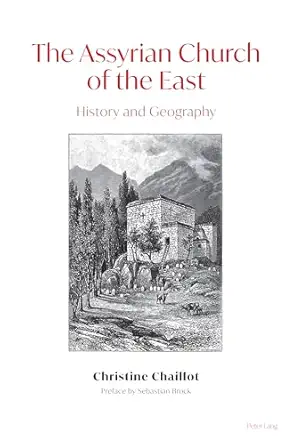
The Apostolic Origins: Thomas, Addai, and Mar Mari
Before there was a church in London, Paris, or Constantinople, there was a church in Edessa. Before Augustine arrived in Canterbury, the Gospel had been preached in Persia, India, and along the trade routes toward China. The Church of the East does not trace its origin to Rome or to any of the great sees of the Roman Empire. It traces its origin to the Apostle Thomas — called in the Gospel of John "the Twin" — and to the disciples he commissioned into the lands east of the empire that most Western Christians have never thought of as missionary territory.
The tradition recorded in the Syriac document known as the Doctrine of Addai describes the earliest founding event: King Abgar V of Edessa (in modern southern Turkey, near the Syrian border) wrote to Jesus during his ministry, pleading for healing. Jesus promised to send a disciple after his Resurrection. That disciple — Thaddaeus, called Addai in Syriac — arrived in Edessa after Pentecost, healed the king, and began the first organized Christian community east of Antioch. The tradition holds that Addai's disciple Mari then carried the faith further east, establishing Christian communities throughout Persia.
Thomas himself, according to ancient tradition preserved by the Acts of Thomas (a 3rd-century Syriac text) and by the living memory of the Thomas Christian communities of South India, traveled even further east — through Persia, Parthia, and ultimately to India, where he was martyred near Madras (modern Chennai) around 72 AD. The communities he founded in Kerala on India's southwest coast still bear his name: the Saint Thomas Christians, also called Syrian Christians, who represent an unbroken tradition from the apostolic era.
None of this should be surprising to anyone who knows the geography of the ancient world. The great city of Edessa sat on the trade routes between the Mediterranean and Mesopotamia. Thomas was a Galilean Jew, and Jewish communities with Greek-speaking connections existed throughout the Parthian and later Sasanian Persian Empire. The movement of the Gospel eastward happened along the same routes as every other movement of goods, ideas, and people — because in the first century, those routes ran east, not west, and east was where civilization was. Rome was the western frontier. Persia and India were the centers of the ancient world's trade and culture.
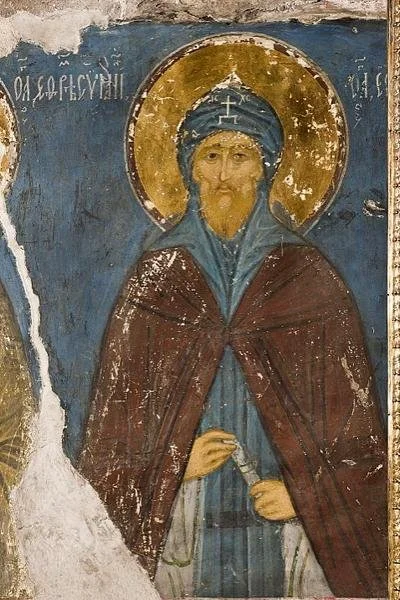
Part II
The Church Beyond Rome: Christianity in Persia
The Church of the East grew up in a world entirely different from the Roman Christianity most Western Christians know. Where the church in Rome existed under the protection — eventually — of a Christian emperor, the church in Persia existed under Zoroastrian rulers who were generally tolerant but never Christian. Where the bishops of the Roman Empire spent the 4th century attending imperial councils and debating theology with the backing of imperial power, the bishops of Persia were building communities in a state that regarded Christianity as a foreign religion with suspicious ties to Persia's great enemy: Rome.
This produced a church of remarkable resilience and a spirituality forged in political vulnerability. It also produced the distinctive Syriac theological tradition — rooted not in Greek philosophical categories, but in Semitic poetic and biblical thinking. Where the great councils of Rome and Constantinople debated the nature of Christ using technical Greek terms like hypostasis and ousia, the theologians of Edessa and Nisibis wrote in Syriac — a richer, more poetic language that sometimes expressed the same truths in ways that sounded, to Greek ears, like heresy when they were not.
The great schools of Nisibis and Edessa were the universities of this tradition — centers of biblical interpretation, philosophy, and medicine that attracted students from across the known world. It was here that the first systematic commentaries on the entire Bible were written in Syriac, here that the Christian intellectual tradition was transmitted to the medieval Islamic world (Persian-Christian translators preserved and transmitted Greek philosophy and medicine to Arabic civilization), and here that the distinctive theology and spirituality of the Church of the East was formed.
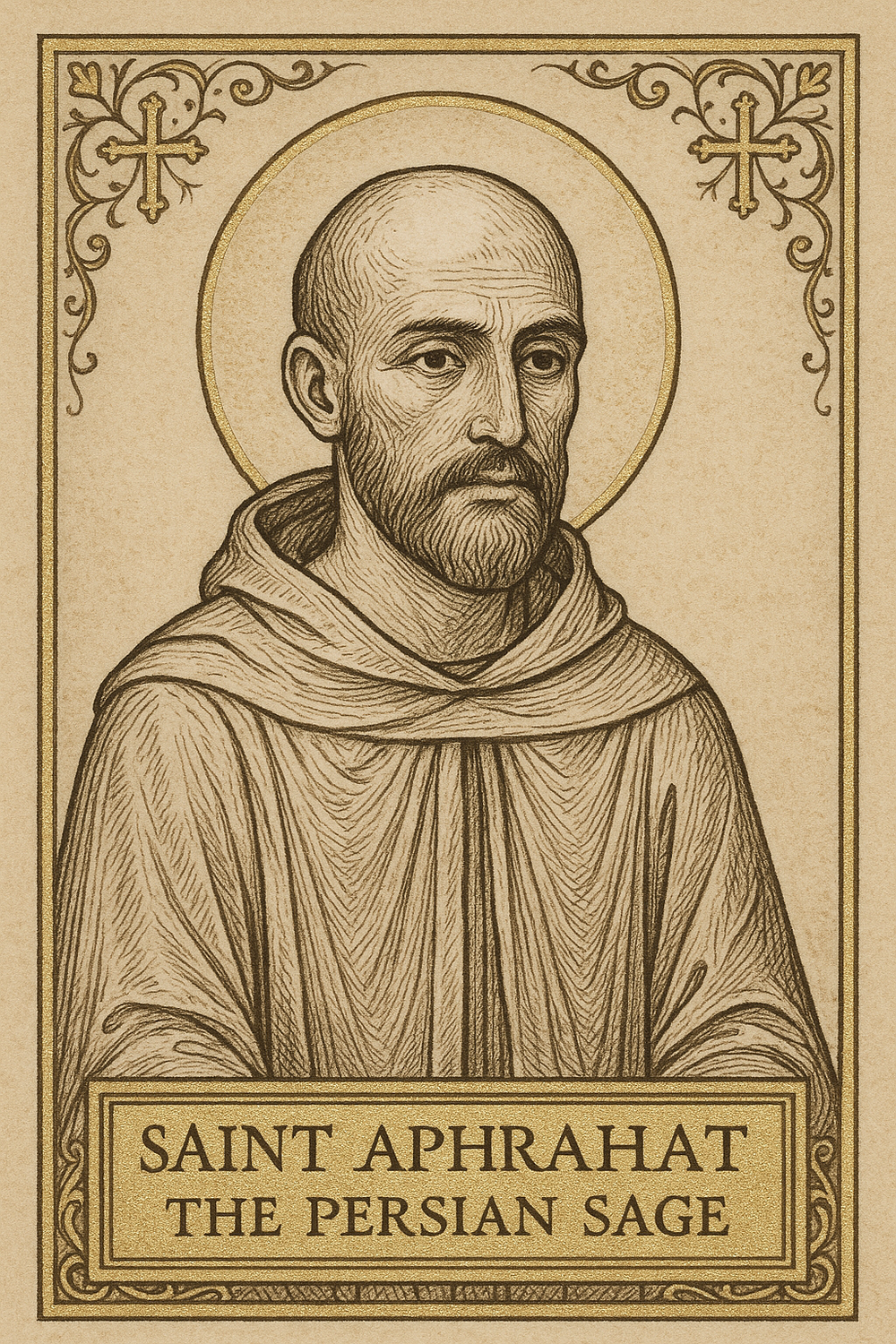
Known as the "Persian Sage," Aphrahat was the first major theologian to write from within Persia — a monk and bishop who composed twenty-three Demonstrations (theological treatises) in Syriac in the years 336–345 AD, while the great Nicene controversy was convulsing the Roman church. He wrote without knowledge of the Greek debates, rooting his theology entirely in Scripture and the Syriac tradition. His writings are one of the earliest and most important windows into what Christianity looked like outside the Roman world: communal, monastic, deeply scriptural, and remarkably unaffected by Hellenistic philosophy. He is patron for perseverance under persecution, faithfulness under pressure, and clarity in confused times — qualities he himself embodied during the first great Persian persecution of Christians under Shapur II.
Part III
The Great Divide: Ephesus and the Christological Split
In 431 AD, the Roman Emperor convened the Council of Ephesus to settle a fierce controversy about how to speak of the Virgin Mary's relationship to Christ. Could she be called Theotokos — God-bearer, Mother of God? Or only Christotokos — Christ-bearer? The question was theological shorthand for a much deeper debate: was the union of divinity and humanity in Christ so complete that Mary bore God himself, or was the divine Word united to a human person in a looser, more distinct way?
The council condemned Nestorius, patriarch of Constantinople, and declared Mary Theotokos. The Church of the East refused to accept this condemnation. It was not that they denied Christ's divinity — they did not. Their Christological tradition, rooted in the theological school of Antioch and above all in the writings of Theodore of Mopsuestia, emphasized the distinctness of the two natures in Christ. They believed the Greek term used by Nestorius's opponents was philosophically imprecise and risked collapsing the two natures together in a way that compromised Christ's real humanity.
Modern scholarship has significantly revised the "Nestorian heresy" narrative. Many historians now conclude that the break at Ephesus was as much political and linguistic as theological — that the Syriac church's way of expressing the same truths that Cyril of Alexandria expressed in Greek sounded heretical in translation but was not, at its core, a denial of orthodox Christology. The 1994 Common Christological Declaration between the Assyrian Church of the East and the Catholic Church acknowledged their shared faith in Jesus Christ as "true God and true man," with the theological differences recognized as matters of emphasis and vocabulary rather than substance.
What the split at Ephesus did, practically, was to cut the Church of the East loose from the conciliar structures of the Roman Empire. From 431 onward, it developed entirely on its own trajectory — free from imperial oversight, free from the cultural dominance of Greek theology, and free to take the Gospel east without waiting for Roman permission or Roman patterns.
The Church of the East itself never used the term "Nestorian" for its theology — the label was applied from outside, by opponents. Its own theologians describe their tradition as following Theodore of Mopsuestia, whom they call "the Interpreter," and the theological tradition of the School of Antioch. The term "Nestorian" carries the implication of condemned heresy; the Church of the East considers its Christology orthodox, and an increasing number of mainstream ecumenical scholars agree. Most respected academic writing now uses "Church of the East" or "East Syriac" rather than "Nestorian."
Part IV
The Golden Age: China, India, and the Silk Road
Between the 5th and 13th centuries, the Church of the East achieved something no other Christian tradition has matched before or since: it became the most geographically extensive church in the world. While Rome's Christianity was largely confined to Europe and North Africa, the Church of the East was sending missionaries along the Silk Road into Central Asia, the Indian subcontinent, and the Tang Dynasty courts of China — carrying the Gospel across the full breadth of the Eurasian continent.
The most astonishing physical evidence of this reach is the Nestorian Stele, a stone monument standing over nine feet tall, discovered in Xi'an (ancient Chang'an), China, in 1625. Erected in 781 AD, it records in both Chinese and Syriac the arrival of the missionary Alopen from the West in 635 AD, his reception by the Tang Emperor Taizong, and the establishment of Christian monasteries and communities throughout China. The stele's text presents Christian theology in language accessible to Chinese readers — referencing "the Luminous Religion" and describing Christian doctrine in terms that echo both Syriac theology and Chinese philosophical concepts. It is one of the most remarkable documents of interfaith encounter in all of human history.
By the year 1000 AD, the Church of the East had more bishops and more faithful than any other Christian tradition on earth. Its patriarch in Seleucia-Ctesiphon oversaw a network of metropolitan sees stretching from Cyprus to China. The Mongol Empire of the 13th century, far from destroying this church, briefly offered it new opportunities: the mothers of several Mongol khans were Christians of the Church of the East, and for a time it seemed possible that the Mongols might become a Christian power that would ally with the Crusader states against Muslim rulers.
In South India, the ancient Thomas Christians of Kerala trace an unbroken tradition from apostolic times. These communities, which the Portuguese encountered with astonishment in the 15th century ("Christians who know nothing of the Pope"), had maintained their Syriac liturgy, their apostolic orders, and their faith for more than a millennium — connected to the wider Church of the East through the Patriarchate of Seleucia-Ctesiphon and through occasional contacts along the sea trade routes of the Indian Ocean.

Part V
The Mystic Voice: Isaac of Nineveh
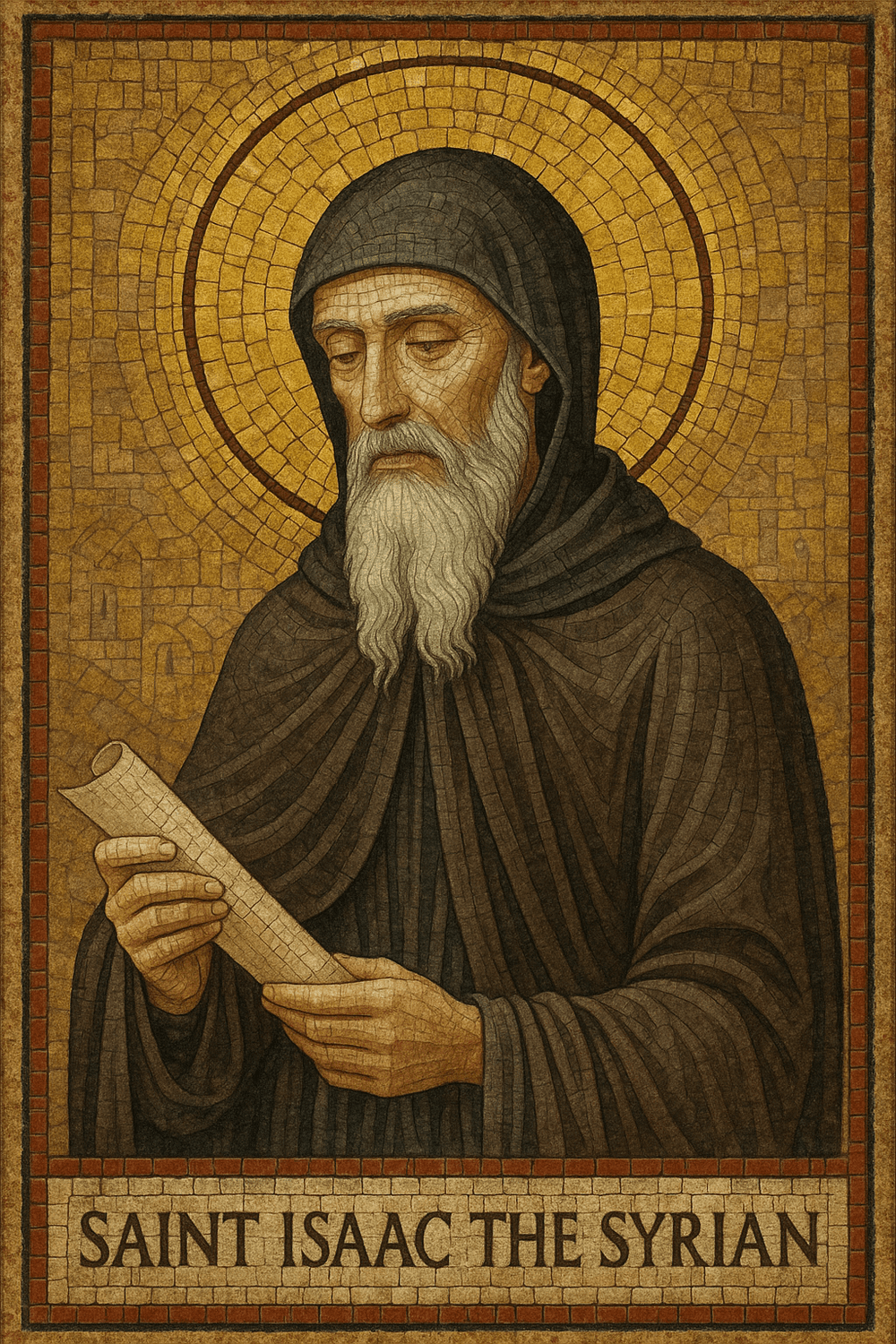
If the Church of the East produced one figure whose influence escaped its own tradition and entered the spiritual treasury of all Christianity, it is Isaac of Nineveh — known in the broader Eastern Christian world as Isaac the Syrian. He is the Church of the East's greatest gift to Christian mystical theology, and the fact that most people who read him have no idea he was a Church of the East bishop is itself a testimony to the universality of what he wrote.
Isaac was born in the region of Beth Qatraye (the Qatar peninsula) on the Persian Gulf in the early 7th century, entered monastic life young, and was briefly consecrated bishop of Nineveh — a position he resigned after only five months because he felt unsuited for the administrative burdens of episcopal life. He spent the rest of his life as a hermit in the mountains of Khuzistan, writing the homilies on silence, prayer, interior stillness, and the infinite mercy of God that would eventually be translated from Syriac into Greek, Arabic, Ethiopic, Georgian, and every major language of Christianity.
What makes Isaac extraordinary, and what makes him a saint read with equal reverence in Orthodox, Catholic, and even Protestant circles, is the quality of his spiritual insight. He writes about the interior life with a precision and tenderness that has never been surpassed. On the mercy of God, he is among the boldest voices in all of Christian history — insisting that divine love is so boundless that it cannot be comprehended by human concepts of justice or punishment, and that the soul that truly encounters God encounters not a judge but a fire of mercy that transforms everything it touches.
"Do not hate the sinner. We are all laden with guilt. If for the sake of God you are moved to oppose him, weep over him."
— Isaac of Nineveh, Homilies"A soft drop falling persistently hollows out hard rock. Not by violence but by constancy the soul receives divine grace."
— Isaac of Nineveh"When you fast, do not fast in order to be seen by others. Fast so that your heart may be lightened and your prayer may rise unencumbered."
— Isaac of Nineveh"It is better to be one who sins and knows he sins and repents, than to be one who does not sin and considers himself righteous."
— Isaac of Nineveh, Second PartThe story of Isaac's reception in the wider Christian world is itself a remarkable chapter in the history of the Church of the East. In the 9th century, two monks at the Monastery of Saint Sabbas in Palestine — one of them a direct descendant of the Persian intellectual tradition — translated his Syriac homilies into Greek, attributing them to "Abba Isaac, bishop of Nineveh." The Greek version traveled throughout the Byzantine world, was quoted by hesychast masters, was read by Russian monks on Athos, and entered the Philokalia — the great anthology of Eastern Christian spiritual writing — where it sits alongside Evagrius Ponticus and Maximus the Confessor without any indication that its author belonged to a church in schism with Orthodoxy. Isaac transcended the theological boundaries that divided his church from the others. The Holy Spirit, apparently, did not wait for the ecclesial disputes to be resolved before using his words to transform souls.
Among all the Church Fathers, Isaac of Nineveh may be the most startling on the subject of divine mercy. He writes in his Second Part of Discourses that even after death, in the age to come, the love of God is so encompassing that those who suffer do so not from a vengeful God but from their own inability to receive the warmth of divine love — like eyes that cannot look at the sun, not because the sun hates them, but because they are not yet able to bear its light.
This theology of mercy — which has more recently been brought into Catholic discussion through figures like Hans Urs von Balthasar — was present in the Church of the East in the 7th century, written in Syriac in a Persian desert, by a monk who resigned his bishopric to sit alone with God. It is the most quietly revolutionary spiritual legacy of the oldest church you have never heard of.
Part VI
Blood and Faith: The Persian Martyrs
The Church of the East has been a church of martyrs for most of its history. The 4th century brought one of the most severe persecutions of Christians in the ancient world — not from Rome, but from Persia. When Emperor Constantine legalized Christianity in the Roman Empire in 313 AD, the effect on Persian Christians was catastrophic. The Sasanian emperor Shapur II saw the Christian communities in his empire not as a protected minority but as a potential fifth column for his great enemy Rome — and he acted accordingly.
The Great Persecution of Shapur II (340–379 AD) killed tens of thousands of Christians across Persia — bishops, priests, monks, nuns, and laypeople who refused to apostatize. This was one of the bloodiest persecutions in Christian history, largely unknown in Western Christianity because it happened outside the Roman Empire and left no Latin or Greek records. The martyrs of Persia are commemorated in the Church of the East's calendar and in the martyrologies of all Eastern Christian traditions. Their deaths were the soil in which the medieval church's remarkable expansion took root.
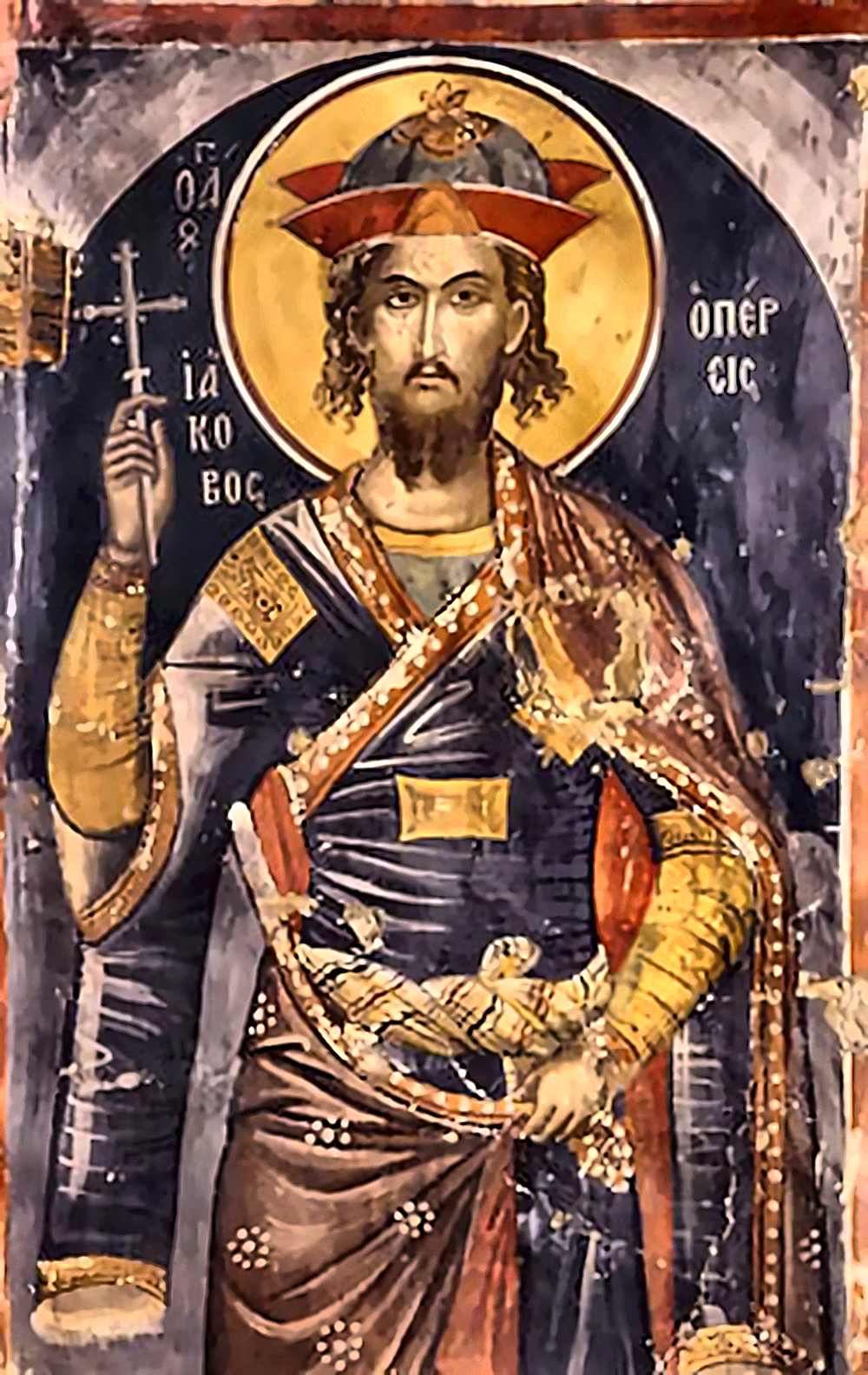
Among the martyrs of this era, one story stands out for its dramatic force and for what it reveals about the particular spiritual character of the Church of the East: the story of James Intercisus — James the Persian — who died in 421 AD during a later wave of persecution under Bahram V.
James was a high-ranking Christian officer at the Persian court of Yazdegerd I. Under pressure from the emperor and to protect his career and family, he apostatized — publicly renounced his faith. His mother and wife wrote to him in reproach, reminding him of what he had abandoned. James repented. He returned to the court and publicly declared himself a Christian again. For this he was condemned to die by intercisio — death by dismemberment, finger by finger, joint by joint — a torture designed to last hours. Historical accounts record that he gave his assent to each cut, praying aloud, until death. His story is not the story of someone who never wavered. It is the story of someone who fell, recognized what he had done, and chose to die rather than remain fallen. The Church of the East considers him one of its greatest martyrs — a patron for courage under persecution, repentance after compromise, and the strength to return to God after walking away.
Part VII
Preservation and Monasticism: Jacob Baradaeus and the Desert Fathers East of Eden
What kept the Church of the East alive through centuries of persecution, theological isolation, and political danger was not primarily its institutions — those were destroyed repeatedly. What kept it alive was its monasticism. The great monastic tradition of the Church of the East, rooted in the desert spirituality that ran from Egypt through Syria and into Persia, produced the communities of prayer, scholarship, and formation that could survive when bishops were killed and churches were burned.
The monasteries of the Church of the East were the universities, hospitals, and scriptoria of their world. It was in these communities that the Syriac literary tradition was preserved, that Greek philosophy and medicine were translated and transmitted to the Arabic-speaking world (a contribution without which the Islamic Golden Age and, through it, the European Renaissance would have been impoverished), and that the spiritual tradition from Aphrahat to Isaac of Nineveh was written, copied, and carried east along the Silk Road.
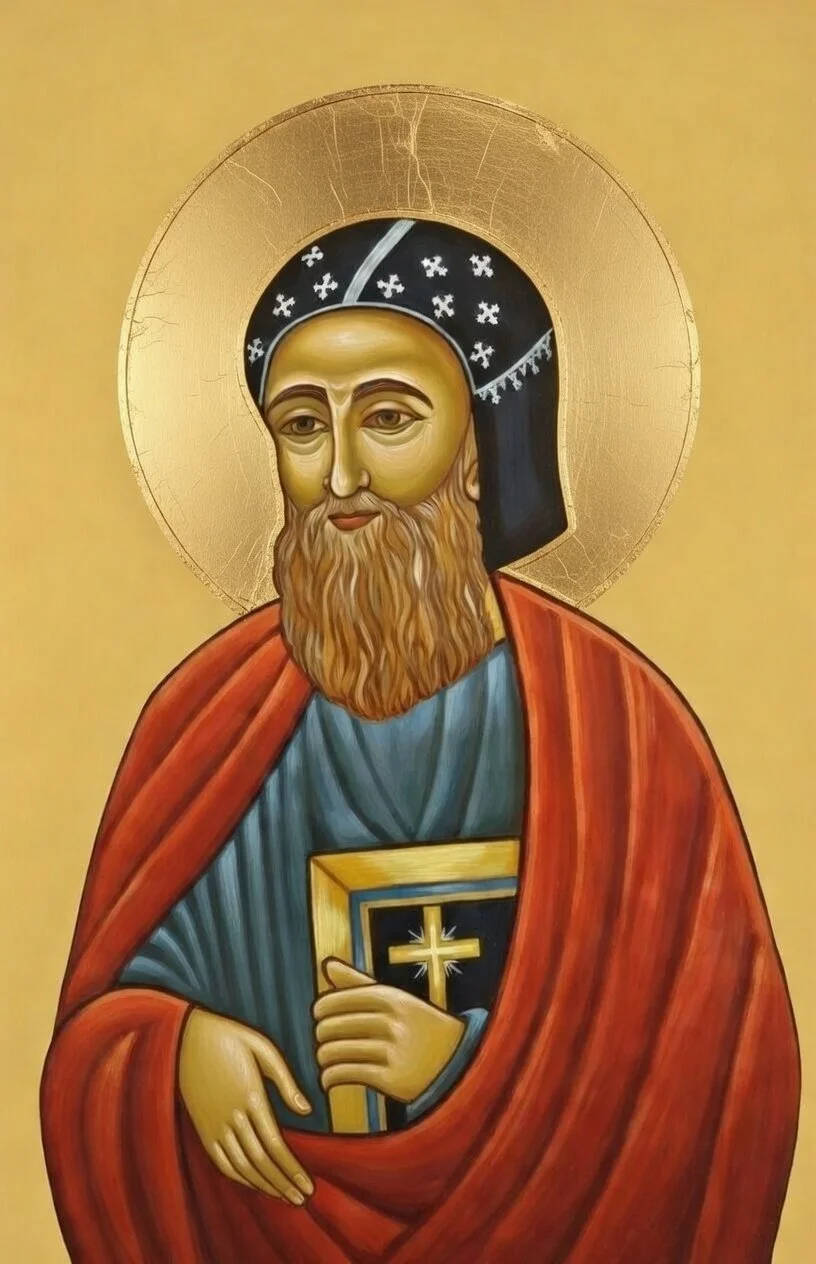
Among the great reformers and preservers of this tradition, Jacob Baradaeus (also known as Mor Yaqub) stands out not only for his theological significance but for the sheer physical heroism of his episcopal ministry. Jacob was consecrated bishop of Edessa around 542 AD in defiance of the dominant Chalcedonian imperial church and spent the following thirty-seven years traveling in disguise across Syria, Persia, and the wider East — ordaining clergy, consecrating bishops, and sustaining communities that would otherwise have died for lack of pastoral leadership. He is said to have traveled disguised as a beggar, wearing ragged clothing that gave him his nickname (Baradaeus means "ragged" in Syriac). The entire Syriac Orthodox Church, sometimes called Jacobite in his honor, owes its institutional survival to his extraordinary ministry.
Part VIII
The Church Today: Where They Are and How to Find Them
The centuries between the Mongol invasions of the 13th century and the present day are the story of a church's slow diminishment, punctuated by catastrophes that make the earlier Persian persecutions look manageable. Tamerlane's campaigns in the 14th century destroyed the Church of the East's presence across Central Asia, China, and much of Persia. The 20th century brought the Assyrian Genocide (1914–1920), in which Ottoman and Kurdish forces killed an estimated 150,000–300,000 Assyrian Christians — a catastrophe still largely unrecognized in Western awareness. The Iraq War and its aftermath (2003–present) drove the majority of Christians out of the historic heartland of the Church of the East — the Nineveh plains of northern Iraq — in the largest Christian exodus from the Middle East since the Assyrian Genocide.
What remains is a church of extraordinary resilience, scattered across the globe. The Patriarch of the Assyrian Church of the East has been based in Chicago since 1940. Significant communities exist in Iraq (reduced dramatically since 2003), Iran, Syria, Australia, Sweden, Germany, the United Kingdom, and throughout the United States. Approximately 20 Assyrian Church of the East parishes are active in the USA, concentrated in Chicago, Los Angeles, Detroit, San Jose, and other cities with large Assyrian-American populations.
The Chaldean Catholic Church — the branch of this tradition in full communion with Rome — has a somewhat larger membership, concentrated among diaspora communities in the United States (Detroit has the largest Chaldean community outside Iraq), Europe, and Australia. Both churches use the same East Syriac liturgical tradition, venerate the same saints, and share the same apostolic heritage. Their primary difference is ecclesiological: one is in full communion with the Pope, the other is not.
Ecumenically, the last decades have seen significant progress. The 1994 Common Christological Declaration between the Assyrian Church and the Catholic Church marked a landmark acknowledgment that the theological division of 431 AD was based on misunderstanding rather than genuine heresy. In 2001, the Vatican's Pontifical Council for Promoting Christian Unity issued guidelines allowing Catholic faithful in situations where Chaldean Catholic churches are unavailable to receive Communion from Assyrian Church of the East priests — a remarkable gesture given the 1,600-year division.
How They Compare
The Church of the East vs. Other Eastern Christian Traditions
| Tradition | Councils Accepted | Liturgical Rite | Rome Communion | Geographic Heart |
|---|---|---|---|---|
| Church of the East (Assyrian) | Nicaea (325), Constantinople (381) only | East Syriac (Anaphora of Addai & Mari) | No | Iraq, Iran; diaspora in USA, Europe, Australia |
| Chaldean Catholic Church | All Catholic councils | East Syriac (same liturgical family) | Yes (since 1553) | Iraq, USA (Detroit), Europe |
| Eastern Orthodox | Seven Ecumenical Councils | Byzantine Rite (Greek/Slavic) | No (since 1054) | Greece, Russia, Eastern Europe, Middle East |
| Maronite Catholic | All Catholic councils | West Syriac (Antiochene) | Yes (never broken) | Lebanon, USA, diaspora worldwide |
| Syriac Orthodox | First three councils; rejected Chalcedon (451) | West Syriac | No | Syria, India (Malankara), diaspora |

Frequently Asked Questions
Questions About the Church of the East
The Church That Went East
The Church of the East built the most geographically extensive Christian presence in history — not with armies, not with imperial backing, not with the power of Rome — but with merchants, monks, and missionaries who carried the Gospel along trade routes into civilizations the Western world would not encounter for centuries. It gave the world Isaac of Nineveh’s theology of divine mercy, Ephrem the Syrian’s hymns, and the stone evidence in Xi’an that Christ was known in China before most of Europe had a Bible.
It is diminished now. The communities that once stretched from the Mediterranean to the Pacific are today scattered across diaspora cities — Chicago, Detroit, Los Angeles, Sydney, Stockholm. But they are alive. The liturgy of Addai and Mari is still chanted in Syriac, the language Jesus would have recognized. The saints of the Persian desert are still venerated. The tradition that survived Shapur II, Tamerlane, and the Assyrian Genocide is still here.
You may never have heard of it. But it has been praying for the whole world for two thousand years.
Browse All Eastern Christian Prayer Cards →