Saint John Chrysostom on Marriage: His Complete Teaching
Antioch & Constantinople • 349–407 AD • Doctor of the Church
St. John Chrysostom on Marriage: His Complete Teaching
The Golden-Mouthed preached the most comprehensive Eastern theology of Christian marriage in the entire patristic tradition — not in one homily, but across four: on Ephesians, on 1 Corinthians, on Colossians, and on the Gospel of Matthew, with the doctrine's roots laid earlier still in his homilies on Genesis. This is the complete picture, drawn from every major text in which he addressed the married state.
At a Glance
- Full Name
- John Chrysostom — "Chrysostom" (Golden-Mouthed) is a nickname given by his congregation for the quality of his preaching
- Born / Died
- c. 349 AD, Antioch • September 14, 407 AD, Comana, in exile
- Key Role
- Archbishop of Constantinople (398–404 AD); previously priest in Antioch where most of his marriage homilies were preached
- Primary Marriage Texts
- Homily 20 on Ephesians • Homily 19 on 1 Corinthians • Homily 10 on Colossians • Homily 21 on Ephesians • Homilies on Genesis • Homily 62 on Matthew
- Central Verse
- Ephesians 5:25 — "Husbands, love your wives as Christ loved the Church and gave Himself up for her"
- On the Marriage Bed
- 1 Corinthians 7:4 — mutual and equal authority: "the wife hath not power over her own body, but the husband; likewise also the husband"
- On Divorce
- Matthew 19 — marriage intended as permanent from creation; the sole exception he recognizes is fornication
- Most Famous Marriage Quote
- "When husband and wife are united in marriage, they no longer seem like something earthly, but rather like the image of God Himself."
- Feast Day
- November 13 (Eastern); September 13 (Western) • One of the Three Holy Hierarchs venerated January 30
In the entire history of Christian thought, no one has written more beautifully — or more extensively — about Christian marriage than St. John Chrysostom. The Archbishop of Constantinople whose nickname means "Golden-Mouthed" did not address marriage in a single sermon. He returned to it again and again, across years of preaching in Antioch and Constantinople, every time Scripture put the subject in front of him: in his Homilies on Ephesians, in his Homilies on First Corinthians, in his Homilies on Colossians, in his Homilies on Genesis, and in his Homilies on Matthew, when the Pharisees asked Christ about divorce. Taken together, these texts form the most comprehensive Eastern patristic theology of marriage ever produced. Sixteen centuries later, it has never been surpassed.
What makes Chrysostom's teaching on marriage so enduring is not that he offers a system or a method. It is that he begins from a theological conviction so large that it reorients everything: marriage is not a human relationship that God blesses. It is a divine mystery in which God participates. The couple who lives their marriage faithfully is not merely building a good life together — they are, in Chrysostom's remarkable phrase, imaging God Himself. Making the invisible God visible through their love.
This article is the complete guide to that teaching — drawn from every major text in which Chrysostom addressed marriage, not from Ephesians 5 alone. It covers his biography, his theology of marriage as an icon of divine love, his specific instructions to husbands and wives, his teaching on the marriage bed and mutual authority in 1 Corinthians, his shorter but distinct treatment in Colossians, his instruction on raising children, his account of marriage's origin in Genesis, his teaching on divorce in Matthew 19, his concept of the domestic church, and his understanding of the Cross as the ultimate standard of marital love. For those who want to take this ancient teaching into their daily life, One Flesh, One Spirit: A Contemplative Theology of Marriage is the most accessible modern book written entirely in the tradition Chrysostom established.

Who Was St. John Chrysostom?
John was born around 349 AD in Antioch — one of the great cities of the ancient world, the third city of the Roman Empire, and the place where followers of Christ were first called "Christians." He was born into a moderately wealthy family; his father, a military officer, died young, and John was raised by his mother Anthusa, a woman whose piety and devotion left a permanent mark on his character. He received the finest classical education available in Antioch, studying under the famous pagan rhetorician Libanius — who is said to have remarked, upon learning that John had converted to Christianity, that he would have wished him for his successor had the Christians not stolen him.
After his education, John was baptized and spent several years living as an ascetic — first as a monk under the bishop Meletius of Antioch, then alone in a cave in the mountains outside the city for two years of intense solitary prayer and fasting. The severity of these years permanently damaged his health, but they formed his interior life. He returned to Antioch, was ordained a deacon and then a priest, and began the preaching ministry that would make him famous throughout the Christian world.
Nearly all of the homilies on which his theology of marriage is based were preached in Antioch between roughly 386 and 398 AD — before he was made Archbishop of Constantinople. They were preached not to monks or scholars but to the ordinary congregation of Antioch's cathedral: merchants, craftspeople, soldiers, married couples, and families. This context matters enormously for understanding what Chrysostom's teaching on marriage is and is not. It is not a theological treatise designed for experts. It is pastoral instruction designed for people living ordinary lives, trying to love each other and God in the middle of real difficulties — and it is scattered, by the accident of the lectionary and the order in which he preached through the New Testament, across several different series of sermons rather than gathered into one place.

Part II
Marriage as the Image of God
Everything Chrysostom teaches about marriage flows from a single extraordinary claim, stated with characteristic directness in his homilies: when husband and wife are united in marriage and live in genuine harmony, "they no longer seem like something earthly, but rather like the image of God Himself."
This is not rhetoric. In the Eastern Christian theological framework Chrysostom inhabits, an "image of God" is not a decorative metaphor for being morally admirable. It is a specific theological category: to image God is to make the invisible God visible — to be a window through which the divine nature is genuinely disclosed to the world. The Eastern tradition calls this an icon: a created form that makes present what it depicts.
Chrysostom is claiming that a Christian marriage lived in genuine mutual love is one of the primary icons of God available in creation. The couple's unity — their fidelity, their forgiveness, their patient service of each other — is not merely inspired by divine love or analogous to it. It is a participation in it. Through their love, the nature of God — His communion, His faithfulness, His self-giving — becomes tangible and visible to everyone who encounters them.
The implications of this claim are both liberating and demanding. Liberating, because it means the ordinary daily life of a faithful marriage — the small kindnesses, the sustained patience, the forgiveness offered after conflict — is not a small thing. It is a form of theology. A living argument for the reality of God. Demanding, because it means the standard against which Christian marriage measures itself is not cultural convention or reasonable expectation but the love of the God who made everything — a love that is total, unconditional, and ultimately self-sacrificial.
This is the foundation on which everything else Chrysostom teaches about marriage rests — not just in Ephesians, but across every text he preached on the subject. Husbands are instructed the way they are because they are called to image the love of Christ. Wives are described the way they are because their response images the Church's love for her Redeemer. The mutual authority he insists on in 1 Corinthians reflects the same equal dignity. The permanence he insists on in Matthew reflects the same unbreakable covenant. The domestic church is important because a household ordered toward God becomes a place where God is genuinely visible. Every part of his teaching, wherever it is preached, is a development of this single, enormous conviction: your marriage is one of the places in creation where God is meant to be seen.
Part III
Homily 20 on Ephesians: The Complete Teaching
Chrysostom preached his way through Paul's letter to the Ephesians over the course of several years in Antioch. When he reached Ephesians 5:22–33 — the passage on marriage and the relationship between husband and wife — he gave it a treatment so extensive and so theologically rich that it became, and remains, the definitive Eastern patristic theology of Christian marriage. Homily 20 alone is longer than most entire modern books on marriage.
The passage Chrysostom is preaching includes the most famous and most debated instructions in the New Testament about the marital relationship: the instruction to wives to submit to their husbands, the instruction to husbands to love their wives as Christ loved the Church, Paul's identification of the husband as "head" of the wife as Christ is head of the Church, and his climactic declaration that the mystery of marriage is "great" — referring to the union of Christ and the Church.
The "As" Is the Whole Point
In Ephesians 5:25 — "Husbands, love your wives as Christ loved the Church" — Chrysostom focuses relentlessly on the Greek word kathos: "as." This is not a word of comparison but of participation. Paul is not saying that the husband should love his wife in a manner resembling how Christ loves the Church. He is saying that the husband's love for his wife is, at its fullest, a genuine sharing in the love Christ brings to the Church. The couple does not imitate divine love from the outside. They are invited into it from the inside.
The Body as One Flesh
Chrysostom spends significant time in Homily 20 on Paul's observation that a husband who loves his wife loves himself, because they are "one flesh." He takes this with complete theological seriousness: the union of husband and wife in marriage is not a metaphor for closeness. It is a genuine reality — they have become one thing, one new entity, in the sight of God. The husband who neglects his wife's wellbeing, mistreats her, or fails to honor her is not merely behaving poorly toward another person. He is injuring himself.
On the standard of love: "Love her as Christ loves the Church. Even if it becomes necessary for thee to give thy life for her, yea, and to be cut to pieces ten thousand times — refuse not."
On imaging God: "When husband and wife are united in marriage, they no longer seem like something earthly, but rather like the image of God Himself."
On one flesh: "The wife is a second authority; let not her husband dishonor her, for she is the body; and it is not meet that the head should insult the body."
On the mystery: "The two are made one flesh. See the mystery of love! If the two become one, where are the two? Love is a creative power — it changes the very substance of things."
On the domestic church: "Make of your home a church; for where husband and wife pray together, where they fast together, where they are united in all the things of God — there God dwells, and the holy angels minister."
What Chrysostom Taught Husbands
Chrysostom's instructions to husbands in Homily 20 are among the most challenging pastoral instructions in all of Christian literature. He is not gentle about the standard. He sets it explicitly and then refuses to let his congregation negotiate it downward. The standard is the Cross.
The Authority of Service, Not Command
Chrysostom begins his treatment of the husband's role by addressing what "headship" does and does not mean. He is unambiguous: the husband's authority in marriage is not the authority of a master over a slave or a commander over a soldier. It is the authority of a head over a body — which means an authority expressed entirely in care, protection, and self-giving on behalf of the body's wellbeing. The head does not exploit the body. It serves it. More specifically, he grounds the husband's headship in Christ's headship, and Christ's headship is expressed in one way above all others: He gave Himself up. Chrysostom is blunt with his male congregation: you cannot claim the dignity of headship while refusing the sacrifice it requires.
Love Her Even When She Is Difficult
One of Chrysostom's most practically important teachings to husbands is his insistence that marital love is not conditional. He addresses directly the situation where a husband feels that his wife's behavior or failings justify a reduction of his love and care. Chrysostom will not allow this logic. He argues from Christ's example: Christ did not love the Church because she was deserving. "Even if she is disobedient," Chrysostom writes, "even if she speaks roughly to you — endure it all for Christ's sake, as He endured all for us."
Specific Practical Instructions
Beyond his theological framework, Chrysostom gives husbands remarkably concrete guidance. Several of his specific instructions stand out for their continued relevance:
Part V
What Chrysostom Taught Wives
Chrysostom's instructions to wives are consistently misread when they are extracted from their theological context, which is the only context that gives them their meaning. In isolation, the language of "submission" and "respect" toward the husband sounds like a hierarchy of worth in which the wife is lesser. In Chrysostom's actual theology, it is nothing of the kind.
The wife's role in Ephesians 5, as Chrysostom reads it, is the role of the Church in relation to Christ — and the Church is not lesser than Christ. The Church is Christ's Bride, the object of His love and sacrifice, the one for whom He gave everything. When Chrysostom describes the wife's loving response to her husband's sacrificial leadership, he is describing the sacred reciprocity of a covenant, not the subordination of a lesser to a greater.
The Wife as the Soul of the Household
In one of his most memorable images, Chrysostom describes the husband as the head of the household and the wife as its soul — and then immediately clarifies that the soul is more important than the head. The head without the soul is dead. This image captures Chrysostom's actual view of the wife's dignity: she is its animating principle, the source of its warmth and life.
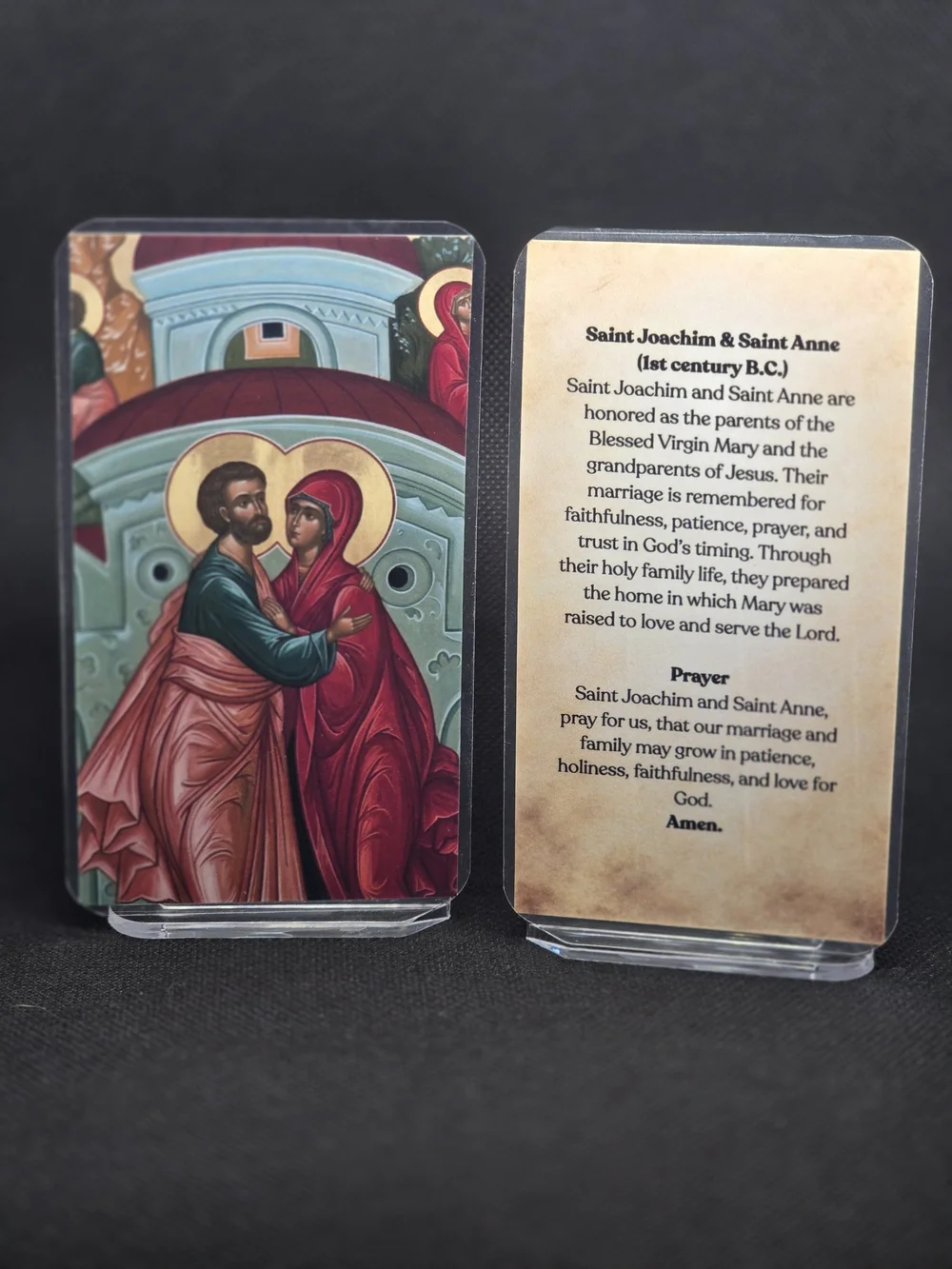
Most contemporary discomfort with Ephesians 5 comes from reading it without its Christological frame — taking the language of headship and submission and placing it in a modern power-dynamics context where it was never meant to live. Chrysostom's reading restores the frame: the husband's authority is the authority of the one who dies for his wife; the wife's honor of that authority is the Church's joyful response to her Redeemer. As the next section shows, Chrysostom is even more direct about this equality when he turns from Ephesians to 1 Corinthians — where he describes the marriage bed itself in terms of total and mutual authority, with no headship language at all.
Part VI
Marriage, the Body, and the Gift of Continence
Before he ever preached on Ephesians, Chrysostom preached on 1 Corinthians — and in Homily 19 he addressed a question the Corinthians had actually written to Paul about: whether it was better for a married couple to abstain from intimacy altogether. Paul's answer, and Chrysostom's exposition of it, is some of the most striking and least-quoted marriage teaching in the patristic tradition, because it does something Ephesians 5 does not: it sets aside the language of headship entirely and describes the marriage bed in terms of complete, mutual, and equal authority.
Equal Authority Over the Body
Commenting on 1 Corinthians 7:3–4, Chrysostom is explicit that in this one specific sphere — the marital bed — there is no greater or lesser between husband and wife. He observes that Paul, who elsewhere gives the husband "abundant precedence," here speaks of "one and the same right." Chrysostom explains why: "in all other things," the husband has the greater voice, "but not so where the question is about chastity." Neither spouse may withhold intimacy from the other unilaterally; neither may seek it outside the marriage; both are debtors to the other in exactly the same way.
Do Not Defraud One Another
Chrysostom follows Paul in warning against withholding intimacy from a spouse without their consent, which Paul calls "defrauding" the other. He is unsentimental about the reason: this kind of unilateral abstinence, however well-intentioned, has historically led to adultery and the ruin of families, because it leaves the other spouse exposed to temptation. The only exception he allows is a season of abstinence entered by mutual agreement, for the sake of prayer — and even then, he insists the couple should "come together again," lest the enemy exploit their self-denial. Chrysostom's logic here is entirely practical and pastoral: the good of chastity is real, but it belongs to the couple together, decided together, never imposed by one spouse on the other.
Marriage Is Not a Lesser Path
Chrysostom is honest that Paul regarded celibacy as the higher calling for those able to sustain it — "it is good for a man not to touch a woman." But he is equally clear that marriage is not sin, not a compromise to be ashamed of, and not merely a concession to weakness. For those who do not have the gift of continence, marriage is Paul's own prescribed and blessed path, and Chrysostom's language throughout the homily treats it as a genuine gift, given by God to different people according to their different callings — "each man has his own gift from God, one after this manner, and another after that."
Marrying an Unbeliever
The same homily addresses a delicate pastoral case: a Christian married to an unbeliever. Chrysostom follows Paul in teaching that the believing spouse does not become unclean through the marriage; rather, the marriage is "sanctified" through the believer, and the couple should remain together as long as the unbelieving spouse is willing. He frames this not as a technicality but as an opportunity: "how do you know, O wife, whether you shall save your husband?" No teacher, he says, has more power to draw a soul toward God than a faithful spouse living the faith daily in the same household.
Part VII
The Reciprocity of Love and Submission
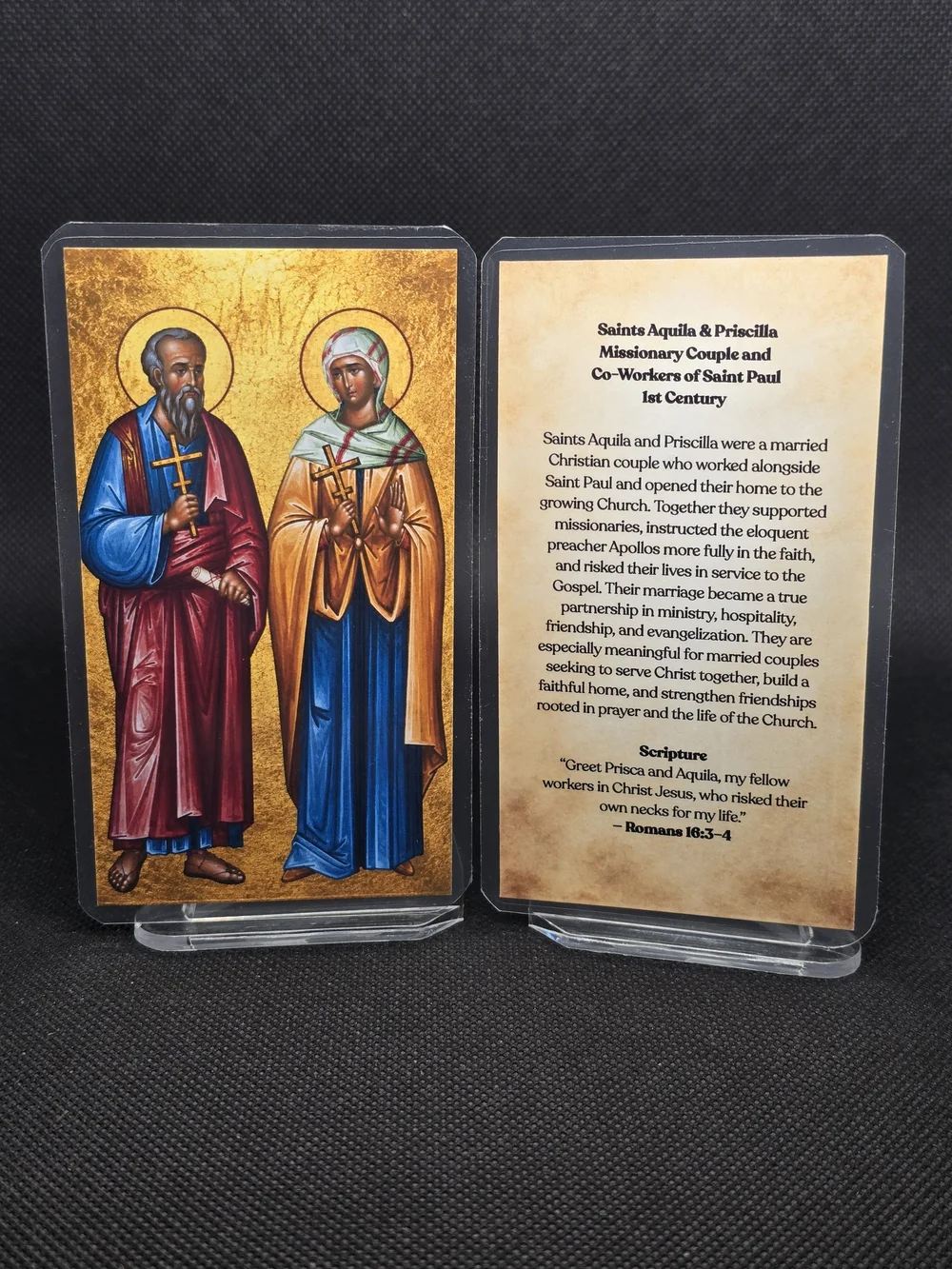
Chrysostom's Homily 10 on Colossians treats the same territory as Ephesians 5 — "wives, be in subjection to your husbands," "husbands, love your wives" — but in a much shorter compass, and with a few distinct emphases that are easy to miss if you only ever read the Ephesians homily.
Submission Is Not Owed to Nature
Chrysostom is careful to specify why a wife's submission "adorns" her, in his reading of Colossians 3:18. It is not owed because a wife is naturally inferior to a husband, and it is not a favor done for the husband's sake. It is done, he says, "for God's sake" — an act of voluntary ordering undertaken as worship, which brings honor to the one who offers it. This is a small but important distinction: the submission Paul describes is not a statement about worth. It is a form of self-gift, freely made, the same in kind as any other Christian act of humility offered to God.
Neither Puffed Up
On the husband's side, Chrysostom's gloss on "be not bitter against them" is unusually sharp. He observes that the fights which happen between people who love each other are the bitterest fights of all, and that bitterness toward a wife is a sign of a deeper failure: variance with one's own member. His formula for the marriage is simple and reciprocal — to love is the husband's part, to yield is the wife's — and if each contributes their own part, the whole stands firm. Crucially, he insists that neither side may use the other's part as leverage: the husband's love must not inflate the wife's sense of privilege, and the wife's submission must not inflate the husband's ego. Both postures exist for the sake of the union, not for the advantage of either party within it.
What makes this homily distinct is where Chrysostom takes it next. He does not close the subject of marriage and move to something unrelated — he moves immediately, in the same breath, to the instruction to children and to fathers. For Chrysostom, marriage and parenting are not two separate topics. They are one continuous fabric: a rightly ordered marriage is the foundation on which a rightly ordered household, children included, is built.
Part VIII
Raising Children in a Christian Home
Chrysostom's teaching on marriage does not stop at the couple. In both Homily 21 on Ephesians and the continuation of Homily 10 on Colossians, he moves directly from husband and wife to children, treating the family as a single structure that Paul builds "as a man in forming a body" — head, then neck, then the rest.
A Foundation, Not a Separate Project
Chrysostom's first observation about children is really an observation about marriage. He notes that Paul addresses children briefly and simply — "in an infant voice," as he puts it — because he is confident that if husband and wife are rightly disposed toward each other, "there will be but little trouble" in securing the children's cooperation. A well-ordered marriage, in other words, is not merely good for the couple. It is the actual mechanism by which children are formed well. Chrysostom is explicit that obedience is owed "in the Lord" — bounded by godliness, not unconditional — so that if a parent commands something contrary to God, the child's obligation does not extend that far.
Character Over Wealth
On the father's side, Chrysostom makes a notable choice: Scripture does not command "love your children," he observes, because nature has already implanted that instinct so firmly that the command would be superfluous. His concern is the opposite excess. He warns fathers against provoking their children to wrath — specifically through unjust deprivation of what is owed them, through piling on burdens, and through treating children "not as though they were free, but as slaves." His repeated theme, echoed across his other writings on the household, is that parents who pour their energy into securing a child's fortune while neglecting the formation of the child's soul have their priorities exactly backward. The inheritance that matters most, in his view, is character.
It would be a mistake to read Chrysostom's instructions on children as a separate topic tacked onto his marriage theology. In both Colossians and Ephesians, he moves from spouse to child without a pause, because in his vision the household is one integrated reality: a domestic church with the husband and wife as its priests, and the children as the congregation formed by what they see modeled in that home every day.

Part IX
Marriage From the Beginning: Chrysostom on Genesis
Everything Chrysostom says about marriage in Ephesians, Corinthians, and Colossians rests on a foundation he laid earlier still, in his Homilies on Genesis: marriage is not an institution invented after the Fall to manage a weakened humanity. It belongs to creation itself, ordained by God before sin entered the world, as a genuine good rather than a concession.
"It Is Not Good for Man to Be Alone"
Chrysostom reads God's declaration in Genesis 2:18 — that it is not good for the man to be alone — as the origin point of marriage's dignity. Companionship, in his account, was part of the original design for human flourishing, not a patch applied later. When Eve is formed and brought to Adam, his recognition of her in Genesis 2:23–24 — "this is now bone of my bones, and flesh of my flesh… they shall be one flesh" — is the verse Chrysostom returns to again and again in his later homilies on Ephesians, where he calls it "the mystery of love." The "one flesh" language he builds his entire Ephesians 5 theology on has its root here, in the creation account itself, not only in Paul's letter.
Equality Before the Fall, Dependence After It
One of the more striking and less-discussed elements of Chrysostom's Genesis homilies is his careful distinction between what marriage was like before sin and what it became afterward. He reads the particular language of Genesis 3:16 — the wife's "turning" toward her husband and his "rule" over her — as belonging to the consequences of the Fall, not to the original pattern of Genesis 2, where husband and wife were formed with equal standing. In his account, this post-Fall arrangement is not a punishment but an act of divine providence: God's mercy toward a woman whose judgment had been weakened by disobedience, ordering the relationship in a way meant to protect rather than degrade her. Read this way, the headship-as-loving-service that Chrysostom will later insist on so forcefully in Ephesians 5 is not the imposition of a new hierarchy invented at creation. It is Christian marriage's restoration, through Christ, of something closer to the original equal communion of Genesis 2 — headship transformed from rule into self-sacrifice, precisely so that it stops being a consequence of the Fall and becomes, instead, an image of the Cross.
Part X
Can a Marriage Be Broken? Chrysostom on Divorce
The Pharisees came to Christ testing Him: "Is it lawful for a man to put away his wife for every cause?" Christ's answer, and Chrysostom's exposition of it in Homily 62 on Matthew, is the clearest statement in the entire Chrysostomian corpus of what marriage's permanence actually means — and it follows directly from everything already covered in this article. If marriage genuinely images the covenant between Christ and His Church, as Chrysostom insists throughout his Ephesians homilies, then its intended permanence is not a separate legal rule bolted on top of that theology. It is a direct consequence of it. Christ does not abandon the Church.
Marriage Restored to Its Original Permanence
Chrysostom reads Christ's answer to the Pharisees as a recovery of the original creation standard rather than a new and stricter law. Moses had permitted divorce as a concession to hardness of heart; Christ, in Chrysostom's reading, points back past Moses to Genesis itself — "what God has joined together, let no man put asunder" — restoring marriage to the standard it held before that concession was ever granted. The single exception Christ names, "except it be for fornication," is not treated by Chrysostom as a convenient loophole. He reasons that fornication is the one act capable of actually breaking the one-flesh union from within, since it joins the offending spouse's body to another — everything else falls short of that particular kind of rupture.
Severe on Both Sides
Chrysostom does not use this teaching to excuse either party. He is blunt that a husband who divorces a faithful wife for a trivial cause is "cruel and unjust." But he is equally blunt that a husband who knowingly retains an unfaithful wife without addressing the matter is "a fool and unjust" for a different reason: in hiding her fault, he becomes, in Chrysostom's words, "an encourager of foulness." Neither harshness toward the innocent nor complicit silence toward wrongdoing is acceptable to him. And remarriage after an unlawful divorce, in his reading of Christ's words, constitutes adultery on the part of whoever marries the one who was wrongly put away.
This is a demanding teaching, preached to a congregation that lived with the same real marital difficulties any congregation does. Chrysostom does not soften it for pastoral comfort, and this article presents it as he preached it — as his own doctrinal teaching on the subject, not as counsel for any particular situation. Anyone facing an actual question of separation, divorce, or annulment should bring it to a priest, not to a website article.
Part XI
The Domestic Church: Make Your Home a Church
One of Chrysostom's most lasting contributions to Eastern Christian theology is his development of the concept of the domestic church — the understanding that the Christian household is not merely a place where Christians happen to live but a small ecclesial community with the structure, the rhythm, and the orientation of the Church itself.
The term comes from St. Paul, who greets "the church that is in your house" in Romans 16:5, Colossians 4:15, and Philemon 1:2. But it is Chrysostom who develops it into a full theological program. His instruction to married couples — "make your home a church" — is not metaphorical. He means it as a description of what the Christian household is called to be.
What the Domestic Church Looks Like
Chrysostom's vision of the domestic church is specific. A home that is genuinely a church will have prayer at set times — morning and evening — with husband and wife praying together. It will have Scripture read aloud, present in the daily rhythm of the home. It will be a place of hospitality, where the poor are welcomed and served. And it will be a place where the love of God is expressed in the daily conduct of the people who live there: their speech to each other, their patience with each other, their forgiveness of each other.
The Husband and Wife as Household Priests
In the framework of the domestic church, Chrysostom describes the husband and wife as functioning like priests in a temple — responsible for offering the life of the household to God. Every decision they make about how to structure their home is a priestly act in this sense. It is either oriented toward God or it is not.
Part XII
Love as Sacrifice: The Cross as the Standard
The most challenging and most important element of Chrysostom's teaching on marriage is his insistence that the standard of marital love is not romantic feeling, sustained kindness, or even heroic devotion. It is the Cross.
He states this without softening. "Love her as Christ loves the Church," he preaches to the husbands of Antioch. "Even if it becomes necessary for thee to give thy life for her, yea, and to be cut to pieces ten thousand times — refuse not." And then, in case anyone has understood this as hyperbole: "Even if you see her despising you, insulting you, treating you with contempt — still draw her to you and care for her. For Christ loved the Church when she was not worthy of love."
Why This Standard Is Not Impossible
Chrysostom is not naive about the difficulty of what he is asking. His answer to this is not to lower the standard but to point to its source. The sacramental grace of Holy Matrimony — the divine gift that is given in the crowning or the wedding — is given precisely for this purpose: to enable a love that transcends what the couple can generate by their own effort.
His Practical Instructions for Daily Marriage
What separates Chrysostom from most patristic writers on marriage is that he never lets theology remain abstract. Every theological claim is immediately translated into concrete daily practice.
Begin Every Day by Giving Thanks for Your Spouse
Chrysostom instructs husbands and wives to begin each morning with an act of gratitude for the person sleeping beside them — gratitude not for what they provide, but for who they are.
Establish Prayer Together — Every Day
Chrysostom returns to this point repeatedly because he considered it the single most important practical mark of a genuinely Christian marriage. The couple that prays together regularly is enacting the domestic church.
Speak Well of Your Spouse to Others
Chrysostom has sharp words for spouses who complain about their partner in public. He identifies this practice as a form of betrayal: the spouse is your own flesh, and to dishonor her in public is to dishonor yourself.
Do Not Let Anger Govern Conflict
Chrysostom's practical advice on marital conflict is consistent: never address a difficulty when anger is governing you. The words spoken in anger are almost never the words that need to be said.
What a Husband Should Actually Say to His Wife
Chrysostom does not leave "love your wife" as an abstraction. At one point in Homily 20 he gives husbands an actual script — words a young husband might say to his bride, putting her above every worldly thing and asking only for a shared eternity:
The instruction underneath the words is the real point: a husband should be able to say something like this and mean it, out loud, to his wife — not just carry the sentiment silently.
Love What Doesn't Fade
Chrysostom is unsentimental about physical attraction. He points out that outward beauty "has pleasure... for the first or second month, perhaps, or at most for the year: but then no longer" — and that a love built on it alone curdles into "pride, the folly, the contemptuousness" once familiarity wears the admiration away. His instruction is practical, not merely poetic: deliberately notice and praise your spouse's character, patience, and faithfulness, because that is the part of them that a marriage can actually keep loving for fifty years.
One Household, One Purse
Consistent with his "one flesh" theology, Chrysostom presses couples to treat their finances as genuinely shared rather than divided into his and hers. A household that still thinks in terms of "my money" and "your money," in his view, hasn't yet absorbed what it means to be one body — the same logic he applies to the couple's bed and their speech, applied to their bank box.
A Well-Ordered Marriage Blesses Everyone Around It
Chrysostom closes part of Homily 20 by pointing out that the good of a harmonious household doesn't stay contained inside it. He asks his congregation to picture what kind of children, and even what kind of household staff, come out of a home ordered rightly around God — and answers that they, too, end up "loaded with blessings out of number." The instruction to love well is never, for Chrysostom, a private matter between two people. It is the seed of everything good that grows around a family.
Make Your Home Beautiful for Each Other
Chrysostom tells husbands to make their homes beautiful — not for guests or social display, but for their wives. The domestic details are not beneath the dignity of marital love.
If you had to identify the single practice Chrysostom most consistently returns to as the foundation of a genuinely Christian marriage, it is this: pray together. Not the feeling of closeness. Not compatibility. The couple that prays together is placing God at the center of their shared life. Start there. Start tonight.
Part XIV
His Legacy in Eastern Christianity
Chrysostom's theology of marriage did not remain in 4th-century Antioch. It became the foundational teaching on marriage for the entire Eastern Christian tradition — Orthodox, Byzantine Catholic, Maronite, Coptic, and Armenian. The concept of the domestic church, the theology of the couple as an icon of divine love, the mutual authority of 1 Corinthians 7, the permanence of Matthew 19, the equal dignity rooted in Genesis, the understanding of the husband's headship as the headship of sacrificial service — all of these Chrysostomian themes became permanent fixtures of Eastern Christian marriage theology.
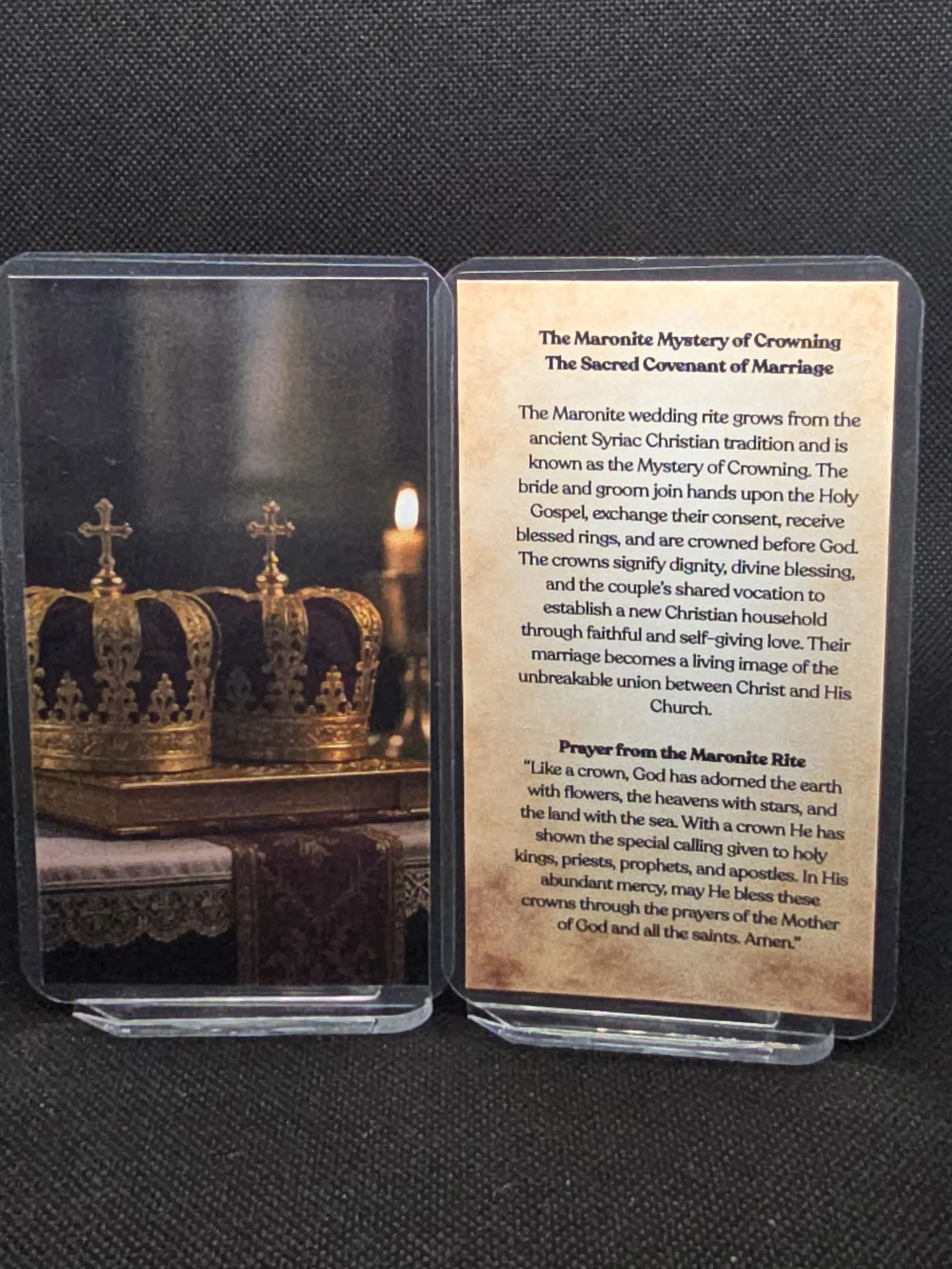
His influence is visible in the Eastern wedding services, which are saturated with the theology he articulated. The crowning ceremony — placing crowns on the heads of the bride and groom — enacts his teaching that the married couple are king and queen of a domestic kingdom ordered to God. The Dance of Isaiah, in which the couple processes three times around the altar, enacts his teaching that the marriage orbits around God rather than around the couple themselves. The shared cup evokes his theology of one flesh: from this point forward, what one drinks, both drink.
And his legacy is visible in the best modern writing on Eastern Christian marriage — including One Flesh, One Spirit: A Contemplative Theology of Marriage, which explicitly draws on the Chrysostomian tradition throughout. For Eastern Christian couples today who want to understand what their tradition actually teaches about marriage — and to live it — Chrysostom remains the essential voice.
Eastern Christian Prayer Cards for Couples & Parishes
Handcrafted prayer cards featuring the saints and mysteries of the Eastern Christian tradition — for icon corners, wedding gifts, anniversary blessings, and bulk parish orders.
Browse Prayer Cards →Questions About St. John Chrysostom on Marriage
The Golden-Mouthed Is Still Speaking
Chrysostom died in exile in 407 AD, worn out by a lifetime of preaching a Gospel that powerful people found inconvenient. His last words were thanks. His teaching on marriage — scattered across Ephesians, Corinthians, Colossians, Genesis, and Matthew, and gathered here in one place — has outlasted every empire and every cultural revolution that has come since, because it is not rooted in culture. It is rooted in the nature of God and the nature of the love He designed marriage to embody.
The couples of Antioch who heard him preach were not so different from couples today. Chrysostom told them: your marriage is not ordinary. It is one of the places where God has chosen to be visible in the world. Love each other as Christ loves. Make your home a church. Let the Cross be your measure. And trust that the grace given for exactly this purpose will be sufficient for exactly this call.
One Flesh, One Spirit: A Contemplative Theology of Marriage brings this ancient teaching to life for couples today.
Get One Flesh, One Spirit on Amazon →As an Amazon Associate, The Eastern Church earns from qualifying purchases.