 Image 1 of 1
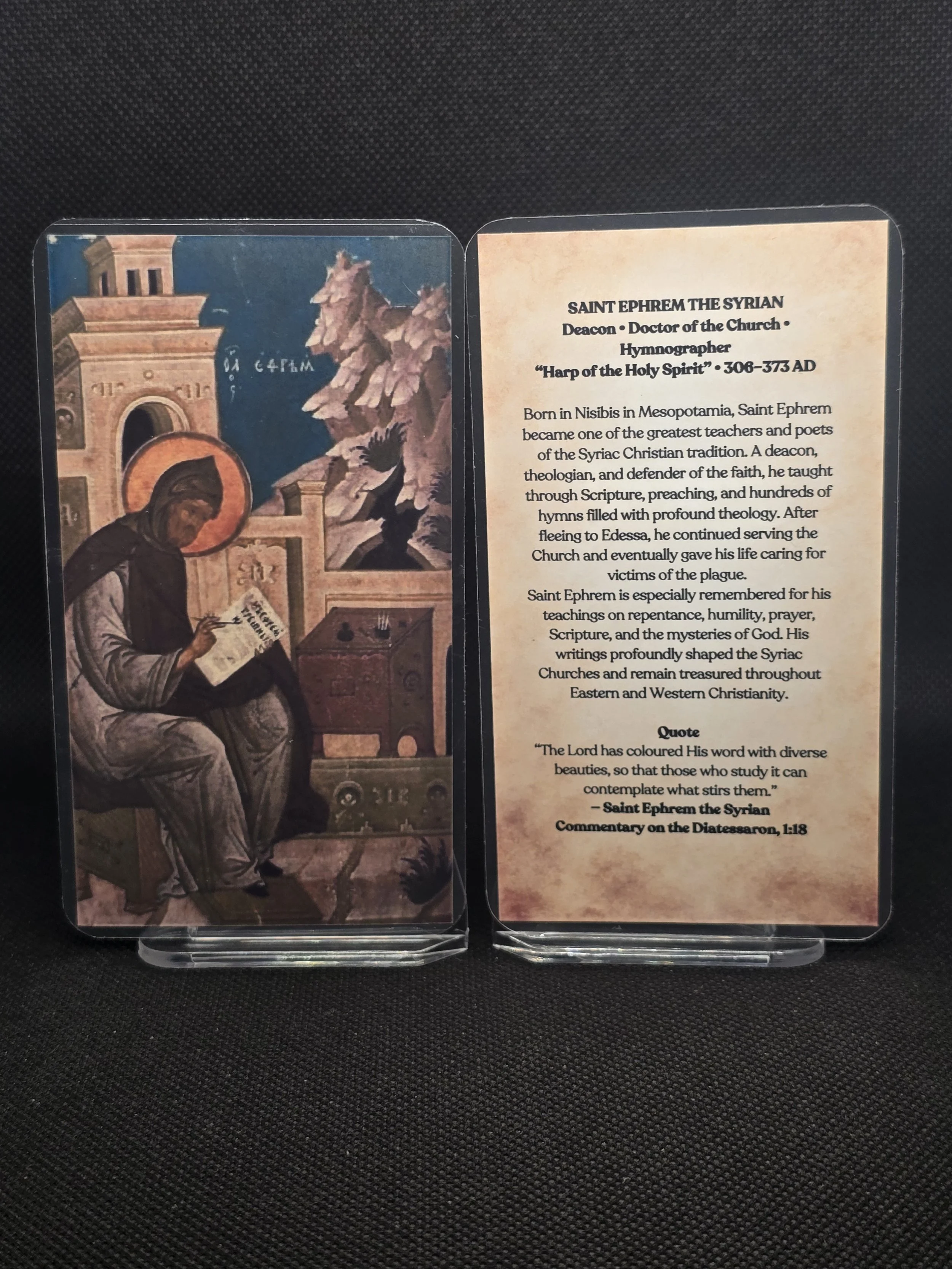
Saint Ephrem the Syrian Prayer Card – Patron for Repentance, Spiritual Dryness & Healing the Wounded Heart
-
Saint Ephrem was born around the year 306 in Nisibis, in what is now modern Turkey, within the Syriac Christian world. His early life was marked by rebellion and instability. According to tradition, he was falsely accused of theft and imprisoned, an experience that shattered his pride and awakened his conscience.
In that darkness, Ephrem turned to God.
He repented deeply.
He changed completely.
After his release, Ephrem placed himself under the spiritual guidance of Saint Jacob of Nisibis and devoted his life to prayer, fasting, and service. He was ordained a deacon and refused priesthood or episcopal rank, choosing instead a hidden life of teaching and writing.
Ephrem possessed extraordinary poetic gifts. He composed hundreds of hymns that explained Scripture, defended orthodox belief, and stirred repentance in the hearts of listeners. In a world where most people could not read, Ephrem taught theology through song.
His words carried tears.
His prayers carried fire.
When persecution and war forced Christians to flee Nisibis, Ephrem followed the refugees to Edessa, where he spent his remaining years caring for the poor, instructing converts, and composing spiritual poetry.
During a devastating famine, Ephrem organized relief for the suffering, personally tending the sick and distributing food. He lived simply, owning almost nothing, pouring his energy into mercy.
He reposed in peace in 373.
He left behind no wealth.
Only light.
-
Saint Ephrem is remembered as a healer of inner wounds and a guide for returning hearts.
He is especially beloved by those carrying quiet spiritual pain.
Patron Saint Of:
Repentance and returning to God
Spiritual dryness and prayer burnout
Healing grief and emotional heaviness
Tears of contrition
Freedom from habitual sin
Renewing faith after collapse
Poets, theologians, and sacred writers
Miracles and Ongoing Intercession
During his life, Ephrem was known for casting out despair, reconciling sinners to the Church, and bringing peace to troubled souls through prayer. After his repose, countless believers have testified to renewed repentance, softened hearts, and restored prayer after invoking him.
Some speak of sudden clarity about sin.
Others describe unexpected tears that bring healing.
Many experience a quiet return of God’s presence after long spiritual drought.
His miracles arrive gently.
They come as humility replacing pride.
They come as tears washing the heart.
They come as hope rising where shame once lived.Saint Ephrem teaches that repentance is not punishment.
It is medicine.
-
Traditional Prayer (from Saint Ephrem)
O Lord and Master of my life, take from me the spirit of sloth, despair, lust of power, and idle talk.
But give rather the spirit of chastity, humility, patience, and love to Your servant.
Yes, Lord and King, grant me to see my own sins and not to judge my brother, for You are blessed forever. Amen.Personal Prayer
Holy Saint Ephrem, gentle teacher of repentance, pray for me.
You knew the darkness of the heart.
You learned humility through suffering.
You discovered Christ through tears.I bring you my broken places.
If my prayer feels dry, restore living water.
If guilt weighs on me, lead me to mercy.
If grief clouds my spirit, bring healing light.Teach me how to repent without despair.
Teach me how to weep without losing hope.
Teach me how to return to God even when I feel unworthy.Stand beside me in quiet confession.
Stand beside me when shame whispers lies.
Stand beside me while Christ rebuilds my heart.Holy Ephrem, harp of the Holy Spirit, sing God’s mercy into my soul.
By your intercession, may Christ soften what is hardened, heal what is wounded, and renew my love for Him.
Amen.
-
Q: What is Saint Ephrem the Syrian known for?
He is known as the great hymnographer of the Syriac Church, a teacher of repentance, and a spiritual physician who guided countless souls back to God through prayer and poetry.Q: When is Saint Ephrem’s feast day?
He is commemorated on January 28 in Eastern tradition and June 9 in Western calendars.Q: Which Christian traditions venerate Saint Ephrem the Syrian?
He is honored in Eastern Orthodoxy, Eastern Catholic Churches, and Roman Catholic devotion.Q: Why do people pray to Saint Ephrem for repentance or spiritual dryness?
Because he personally experienced deep conversion and devoted his life to healing wounded hearts. Many seek his intercession when prayer feels empty, guilt feels heavy, or they long to return to God after spiritual distance.