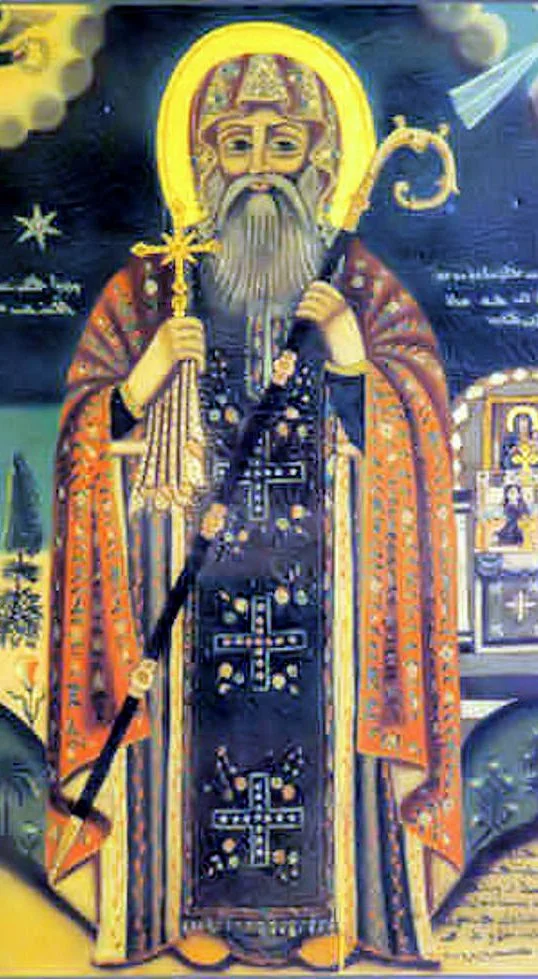
 Image 1 of 1
Saint Jacob of Serugh Prayer Card – Patron for Spiritual Imagination, Courage in Preaching & Faith Under Persecution
-
The Life & Story
Saint Jacob was born around the year 451 near Serugh in the region of Edessa, within the Syriac-speaking Christian world. From early childhood he was immersed in Scripture, language, and liturgical rhythm. His intellect and devotion matured together, forming a man whose mind was disciplined and whose heart was aflame.
He was ordained a priest and later became Bishop of Batnan of Serugh. His episcopacy unfolded during turbulent times. The Christian world was fractured over Christological controversies following the Council of Chalcedon. Political pressures complicated theological debates, and communities often found themselves divided not only spiritually but socially.
Jacob refused to inflame division.
Instead, he preached through poetry.
He composed metrical homilies known as memre, often structured in elaborate rhythmic patterns. These sermons retold biblical narratives with emotional depth and theological precision. He did not merely explain Scripture. He entered it, expanding scenes with reverence and imagination so that listeners felt present within the sacred story.
Under the looming shadow of persecution from Persian and Byzantine tensions, Jacob continued encouraging believers to remain steadfast. He emphasized humility, repentance, and trust in Christ rather than political victory. His tone was pastoral rather than combative.
He suffered with his people.
He wrote for their endurance.
He died around 521, leaving behind hundreds of poetic homilies that earned him the title “Harp of the Spirit.” His legacy shaped Syriac liturgical life for centuries, influencing theology not through decrees, but through beauty.
-
Miracles & Patronage
Saint Jacob of Serugh is remembered as an intercessor for those entrusted with words and for believers navigating faith during unstable times.
He is especially beloved by clergy and creatives who feel spiritually depleted.
Patron Saint Of:
Preachers facing discouragement
Writers and spiritual poets
Teachers of Scripture
Faith during persecution or division
Creative renewal after burnout
Spiritual imagination
Maintaining hope in polarized environments
Ongoing Intercession
Those who pray through Saint Jacob often describe renewed clarity in sermon preparation, restored inspiration for writing, and emotional steadiness when teaching under criticism. Some experience peace amid theological conflict. Others find fresh awe while reading Scripture.
His intercession does not arrive loudly.
It comes as beauty returning to dry words.
It comes as courage when preaching feels heavy.
It comes as hope that quiet faithfulness matters.Saint Jacob teaches that words shaped by prayer can carry light into darkness.
-
Prayers & Traditional Devotion
Traditional Prayer
Holy Saint Jacob of Serugh, harp of the Holy Spirit and faithful shepherd of souls, pray for us. Intercede for those who preach, teach, and write in Christ’s name, and strengthen us in times of division and trial. Amen.
Personal Prayer
Saint Jacob, poet of divine mysteries and patient shepherd of troubled hearts, pray for me.
You spoke truth without cruelty. You sang Scripture into wounded communities. You strengthened believers when fear threatened their faith.
I bring you my fatigue.
If my words feel empty, restore depth.
If my preaching feels discouraged, grant courage.
If division surrounds me, grant peace.Teach me how to speak Christ with tenderness. Teach me how to write with humility. Teach me how to trust that beauty still has power in dark seasons.
Stand beside teachers carrying invisible burdens.
Stand beside writers wrestling with doubt.
Stand beside believers trying to remain hopeful in divided times.Saint Jacob, you let poetry become prayer.
By your intercession, may Christ renew my voice, steady my heart, and help me proclaim hope even when circumstances feel fragile.
Amen.
-
Q: What is Saint Jacob of Serugh known for?
He is known for his poetic homilies, his pastoral leadership during theological conflict, and his ability to communicate Scripture with beauty and depth.Q: When is Saint Jacob of Serugh’s feast day?
He is commemorated on November 29 in Syriac Christian calendars, with variations in other Eastern traditions.Q: Which Christian traditions venerate Saint Jacob of Serugh?
He is especially honored in the Syriac Orthodox Church and respected across Eastern Christian traditions for his theological and poetic contributions.Q: Why do people pray to Saint Jacob for preaching or creative renewal?
Because he sustained faith through poetic proclamation during times of persecution and division. Many seek his intercession when preaching feels discouraging, writing feels dry, or hope feels difficult to express.