Who Was Saint Gregory the Illuminator: The Complete Biography
The Man Who Lit a Nation
There are figures in Christian history whose importance is acknowledged by virtually every tradition — Augustine for the West, Athanasius for the Greek East, Anthony for the monastic world. For the Armenian people and for the Eastern Christian world more broadly, there is Gregory the Illuminator, a man whose life is simultaneously one of the most dramatic in early Christian history and one of the most theologically consequential. He was a man born into murder, raised in exile, imprisoned for thirteen years in a pit beneath the earth, brought forth to heal a mad king, and ultimately responsible for the conversion of an entire nation to Christianity — the first nation in the world to make that conversion officially and permanently.
His biography is part history, part hagiography, part national epic, part theological treatise. The primary source for his life — the Agathangelos, written in the fifth century — is itself a complex document whose historicity scholars debate and whose theological program is unmistakable. But the core events of Gregory's life are corroborated by multiple independent sources, by archaeological evidence, by the living institutions he created, and by the devotion of seventeen unbroken centuries of Armenian Christian memory. This biography attempts to present every layer of that evidence — the history, the tradition, the miracles, the sayings, the relics, and the enduring spiritual presence — as completely and as honestly as possible.
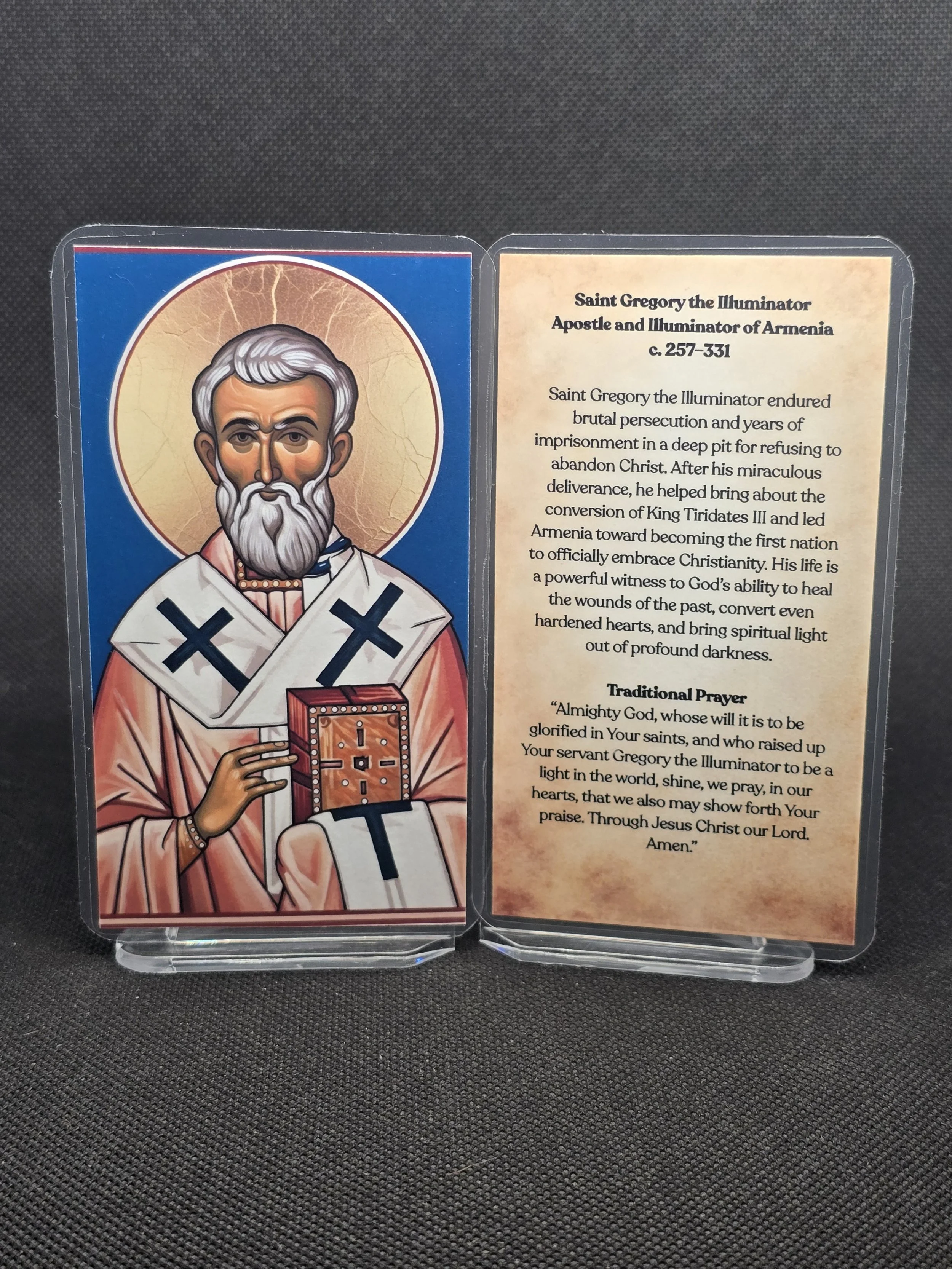
Saint Gregory the Illuminator is the father of Armenian Christianity and one of the most powerful conversion saints in all of Church history. He is venerated in the Armenian Apostolic Church, honored by Eastern Catholics, and revered throughout the Orthodox world as the apostle who brought an entire nation to Christ.
His principal feast is celebrated on September 30 in the Armenian tradition, with additional commemorations tied to his imprisonment and miracles.
Saint Gregory did not grow up in holiness.
He grew up in exile.
His father assassinated the Armenian king. Gregory was taken away as a child, raised far from his homeland, and formed in Christian faith while carrying a legacy of violence he did not choose. When he returned to Armenia as an adult, he entered royal service under the very king whose father his own father had murdered.
That king would later torture him.
Gregory was imprisoned in a deep underground pit for thirteen years.
No sunlight.
No comfort.
No certainty of survival.
People pray to Saint Gregory the Illuminator today for generational healing, impossible conversions, and deliverance from spiritual darkness. He understands what it means to carry family trauma. He understands what it feels like to suffer unjustly. He understands how hopeless situations can suddenly become holy turning points.
He also understands resurrection.
This prayer card is for those praying over hardened hearts, broken family lines, and situations that feel spiritually sealed shut. Saint Gregory does not specialize in small victories. He specializes in transformations that seem humanly impossible.
Each card is handmade in Austin and created to order. We do not keep stock, because every prayer card is treated as a unique devotional offering. They are printed on museum-quality photo paper, not cardstock, and each one is made during prayer. The saints are venerated throughout the entire process, and prayers are intentionally offered for the person who will receive the card. These are not mass-produced items. They are created slowly, reverently, and with spiritual intention, because every soul and every prayer matters.
Origins, Family, and the Crime That Shaped a Life
The Arsacid World He Was Born Into
To understand Gregory the Illuminator, one must first understand the world into which he was born — a world of dynastic politics, religious complexity, and imperial competition that would have been unrecognizable to most inhabitants of the modern West but was simply the ordinary reality of the ancient Near East in the third century AD.
Armenia in the mid-third century was governed by the Arsacid dynasty — a branch of the great Parthian royal house that had ruled Persia and much of the Near East before being displaced by the Sassanid dynasty in 224 AD. The Armenian Arsacids maintained their rule in Greater Armenia, occupying a deeply precarious position between the two great empires of their age: the Roman Empire to the west and the Sassanid Persian Empire to the east. Armenia was simultaneously a buffer state, a prize, and a battlefield in the ongoing contest between these two superpowers, and its kings navigated this position with varying degrees of skill and varying degrees of independence.
The religious landscape of this world was dominated by Iranian polytheism — specifically by the Zoroastrian traditions that the Sassanid Persians were systematizing into a state religion, and by the older Parthian and Armenian forms of Iranian religious practice that included the worship of Aramazd (the Armenian form of Ahura Mazda), Anahit (the great mother goddess), Vahagn (a fire and dragon-slaying deity), Mihr (Mithra), and numerous other divine figures. The temples of these deities were powerful institutions, the magi (Zoroastrian priests) held significant political influence, and the Armenian noble houses maintained hereditary priestly connections to specific sacred sites.
Into this world, the Armenian royal house was also dealing with the political turbulence created by Sassanid ambitions. The Sassanid king Shapur I (r. 240–270 AD) was actively working to extend Persian influence over Armenia, and he found willing instruments among ambitious Armenian nobles who were prepared to betray their king for Persian patronage.
Anak the Parthian — Gregory's Father
Gregory was born around 257 AD, the son of a Parthian nobleman named Anak — a man of the Sureni clan, a noble Parthian family that had been displaced from its power base by the Sassanid conquest of Parthia and had sought refuge and position in the Armenian kingdom. Anak's precise relationship to the Armenian royal court is described somewhat differently in different sources, but the essential narrative is consistent: Anak was a nobleman of Parthian blood living in the Armenian kingdom who was recruited by the Sassanid king Ardashir I (or, in some versions of the tradition, Shapur I) to assassinate the Armenian king Khosrov I.
The Sassanids had strong political motives for wanting Khosrov eliminated. Khosrov was a capable king who maintained Armenian independence from Persia and who cooperated with Rome against Sassanid interests. His assassination would destabilize Armenia and open the door to Persian domination. Anak, whether motivated by Persian promises of reward, by personal ambition, or by pressures we cannot fully reconstruct, agreed to carry out the assassination.
The killing was accomplished by treachery. Anak presented himself to King Khosrov under the guise of friendship and loyalty, gained access to the king's presence, and murdered him. The immediate political consequences unfolded exactly as the Sassanids had intended: Armenia was thrown into chaos, and Sassanid forces were positioned to take advantage.
But the consequences for Anak personally were swift and catastrophic. The Armenian nobility, outraged by the treacherous murder of their king, turned on Anak and executed him and most of his family almost immediately. The assassination of a king by treachery was not simply a political act in the ancient world; it was a profound violation of the sacred bonds of hospitality and loyalty that governed noble society, and the punishment was correspondingly total. Anak's family was largely wiped out.
The Infant Rescued From Slaughter
Gregory survived the massacre of his family only because of the specific intervention of a pious Christian woman — whose name the sources do not consistently preserve — who recognized the infant as the son of Anak and took pity on him. Some traditions identify this woman as a nurse within the household, others as a Christian noblewoman from Caesarea in Cappadocia who happened to be present, and still others as a servant of the family who remained loyal even after the political catastrophe.
What all traditions agree upon is this: the infant Gregory was taken out of Armenia in secret, carried to Caesarea in Cappadocia (the capital of the Roman province of Cappadocia, in modern central Turkey), and raised there in the Christian faith. The choice of Caesarea was significant. By the mid-third century, Caesarea was one of the most important Christian cities in the eastern Roman Empire, home to a sophisticated Christian intellectual community and to a succession of distinguished bishops. Gregory would grow up in a city where Christianity was not a persecuted minority but a well-established and intellectually vigorous community, and where the theological tradition of figures like Firmilianus (Bishop of Caesarea during Gregory's childhood) provided a robust formation.
The woman who rescued Gregory is venerated in some Armenian traditions as a saint in her own right for this act of rescue, which — given what Gregory would later accomplish — takes on a providential significance that subsequent generations have found impossible to ignore. Without her intervention, the child who would convert Armenia would have died in infancy, and the entire subsequent history of Armenian Christianity would have been different.
Childhood and Education in Caesarea
Gregory grew up in Caesarea as a Christian from infancy, baptized as a child, educated in the scriptures and in the Greek philosophical and theological culture of the city. The Cappadocian church of his childhood was one of the liveliest and most intellectually engaged in the eastern Roman Empire. Greek was his primary language of learning and liturgical formation, and the theological tradition he absorbed was the tradition of the Greek-speaking church at its pre-Nicene peak — a Christianity that had survived Roman persecution, that was producing remarkable martyrs and apologists and theologians, and that was about to emerge into the period of its greatest institutional and theological flourishing.
Gregory received what we would call a comprehensive Christian education: fluency in the scriptures, knowledge of the theological controversies of the day, formation in the liturgical and ascetic practices of the church, and an intellectual formation that included the Greek philosophical tradition insofar as it had been Christianized and incorporated into Christian teaching. He was not educated in isolation from the surrounding culture but was formed in the full breadth of what a serious Christian education in a major Cappadocian city of the mid-third century provided.
He also married. This detail is sometimes overlooked in hagiographic accounts that emphasize Gregory's later ascetic and episcopal life, but it is historically well-attested and theologically important: Gregory was a married man, and he had at least two sons — Aristakes and Vrtanes — who would later play important roles in the Armenian church. His marriage situates him within the tradition of the married clergy that was entirely normal in the early church and that has remained normal in the Eastern Christian traditions. There is no suggestion in any source that his marriage was anything other than a faithful Christian marriage, and the eventual sanctity of his son Aristakes (also venerated as a saint in the Armenian calendar) suggests a family formed in genuine piety.


Return to Armenia — The Decision That Changed History
Why Gregory Returned
When Gregory reached adulthood, he made the decision to return to Armenia and enter the service of the young Armenian king Tiridates III (also known as Trdat). The sources give somewhat different accounts of his motivations and of exactly how this came about. Some traditions suggest he returned out of a genuine desire to do penance for his father's crime — that he understood his presence in the court of the son of the man his father had murdered as a form of atonement and service. Others suggest that he returned because he saw an opportunity for mission — that a man formed in the Christian tradition of Caesarea, returning to a still-pagan Armenia, carried in his heart the seeds of the evangelization that he would eventually accomplish.
What is clear is that Gregory knew, when he entered Tiridates's service, that he was taking an extraordinary risk. Tiridates was the son of the king whom Gregory's father had murdered — a fact that Gregory chose to conceal, at least initially. The Armenian code of honor demanded blood vengeance, and if Tiridates had known Gregory's identity from the beginning, Gregory's life would have been in immediate danger. Gregory's decision to enter this service despite this knowledge speaks to a quality of courage — and perhaps of faith-driven fatalism — that runs consistently through his entire life.
He served Tiridates as a secretary or administrative official, performing his duties faithfully and competently. The sources describe him as diligent, honest, and effective in his service. He was not a man who used his administrative position as a cover for covert missionary activity; he served his employer honestly. But he was a Christian in a pagan court, and this eventually became impossible to conceal.
The Exposure — Two Secrets Revealed at Once
Gregory's concealment of his identity was ultimately undone not by his own actions but by circumstances outside his control. The specific trigger varied in different versions of the tradition, but the most common account links it to a public religious ceremony at which Gregory, as a servant of the court, was expected to participate in the pagan rituals — to offer garlands or sacrifices at the altar of a deity. Gregory refused, as a Christian, to participate in idol worship.
This refusal, in the context of the ancient world, was both a religious act and a political one. Participation in the public religious rituals of the court was not optional — it was a demonstration of loyalty and of membership in the community. A man who refused to participate was, by definition, an outsider, and his refusal demanded explanation. Under the questioning that followed Gregory's refusal, two things were revealed simultaneously: that he was a Christian, and that he was the son of Anak — the man who had murdered Tiridates's father.
The revelation of Gregory's identity as Anak's son transformed what might have been simply the punishment of a Christian servant into a matter of deep personal outrage for Tiridates. Gregory had been serving the son of the man his father had killed — and doing so under a false identity. The sense of betrayal and violation this produced in Tiridates was absolute. The king had Gregory seized and subjected to interrogation and torture.
The Tortures Before Imprisonment
What happened to Gregory before he was cast into the pit of Khor Virap is described in the Agathangelos with a detail and a specificity that is characteristic of early Christian martyrology — the literary tradition of recording the sufferings of martyrs with careful attention to the nature and sequence of their torments, partly as historical record and partly as theological witness to the endurance of God's servants under suffering.
According to the Agathangelos, Gregory was subjected to a series of tortures that were meant to extract a recantation of his faith and a submission to the king's authority. These included being hung upside down and having salt and bitter herbs forced down his throat; having burning torches applied to his sides; having hot coals placed on his back while he was bent over; having spiked boots forced onto his feet; being beaten with rods; being hung by his feet while smoke was blown into his face; having heavy weights hung from his feet while he was suspended. The account is detailed and specific in ways that suggest either eyewitness testimony or a tradition preserved with unusual precision.
Throughout all of these torments, Gregory refused to recant. He prayed aloud during his sufferings, speaking words that the Agathangelos preserves in what purports to be direct quotation — prayers addressed to God that express not despair but absolute confidence in divine support and an understanding of his suffering as participation in the sufferings of Christ. One of the most famous of these prayers, spoken during his torments, reads in Armenian tradition: "Grant me, O Lord, to endure these torments. Strengthen me, the weak one. For it is on account of Thy Name and for the glorification of Thy Holy Name that I am tortured."
Tiridates, finding that torture could not move Gregory, ordered the most extreme punishment at his disposal: Gregory was to be cast into the pit of Khor Virap — a deep underground prison near the base of Mount Ararat, in the district of Artashat — and left there to die in the darkness, presumably starved to death or slowly expiring from exposure and the conditions of the pit.


Khor Virap — Thirteen Years in the Pit
The Prison Pit
Khor Virap — khor meaning "deep" and virap meaning "pit" or "dungeon" in Armenian — was not simply a prison in the ordinary sense. It was a vertical shaft, probably originally a storage pit or cistern, repurposed as a place of confinement so extreme that it functioned as a form of slow execution. The person cast into Khor Virap could not climb out; the walls were smooth stone and the opening was high above. There was no light, no ventilation in the normal sense, no sanitation, and no provision for food or water beyond whatever was occasionally dropped in from above — if anything at all.
The physical conditions of such a confinement are almost unimaginable to the modern mind: total darkness, extreme cold in the winters (the Ararat plain is subject to harsh winters), intense heat in the summers, the absence of any human contact, the loss of any sense of time, the slow deterioration of the body from malnutrition and inactivity, and the psychological assault of complete isolation. People cast into such pits were expected to die — indeed, they usually did die, within weeks or months at most. That Gregory survived for thirteen years is what the tradition regards as the foundational miracle of his entire life — the miracle that precedes and enables everything else.
The Widow and the Bread
How did Gregory survive? The Agathangelos provides the answer in a narrative detail of remarkable poignancy: a pious Christian widow who lived near the site of the prison, having learned that a holy man of God had been cast into the pit, took it upon herself to bake a small loaf of bread each day and secretly lower it into the pit for Gregory's sustenance. This woman — whose name is given in some traditions as Dorvrats, though she is most often referred to simply as the pious widow — maintained this practice year after year for the entire duration of Gregory's imprisonment, at considerable personal risk, since providing aid to a prisoner condemned by the king was itself a potentially capital offense.
This widow is venerated as a saint in some Armenian liturgical traditions. Her act of compassion, maintained not for weeks or months but for years, is understood not merely as a humanitarian gesture but as a participation in the divine providence that was preserving Gregory for his future mission. Just as the ravens fed the Prophet Elijah in the desert, this unknown woman fed the future Illuminator of Armenia in his pit — the Old Testament parallel is explicit in the Armenian theological tradition and is drawn out in homiletic literature on Gregory's life.
The bread alone, however, does not fully account for thirteen years of survival in the conditions of Khor Virap. The Armenian tradition is entirely explicit that Gregory's survival was miraculous — that God preserved him not only through the widow's bread but through direct divine sustenance, the same spiritual nourishment that the tradition of the Desert Fathers would later associate with the practice of hesychast prayer and the reception of divine grace in the most extreme conditions of bodily deprivation.
Life in the Pit: Prayer and Contemplation
What did Gregory do during those thirteen years in the darkness? The tradition, drawing on Gregory's own later testimony as preserved in the hagiographic sources, describes a life of continuous prayer, interior contemplation, and what we might today call mystical experience. Deprived of all external stimulation, without books, without the liturgy, without human companionship, Gregory turned his entire attention inward and upward.
The tradition preserves several characteristics of his prayer life during this period. He prayed the psalms from memory, having memorized them during his education in Caesarea. He prayed for Tiridates — not merely for his own release, but for the conversion of the king who had imprisoned him, demonstrating the kind of intercessory charity toward enemies that the Armenian tradition regards as one of the defining marks of his holiness. He received visions. He was reportedly sustained not only by the widow's bread but by angelic visitation — the tradition holds that angels visited him in the pit, providing spiritual companionship and nourishment that sustained him when physical nourishment was insufficient.
One account in the hagiographic tradition describes Gregory as receiving, during his years in Khor Virap, a series of prophetic visions of Armenia's future: the destruction of pagan temples, the building of churches, the martyrdom of Christian virgins, the conversion of the king, the great baptism of the nation. These visions, understood as divine preparation for the mission he would be called to undertake, gave shape and purpose to what might otherwise have been simply an experience of prolonged agony.
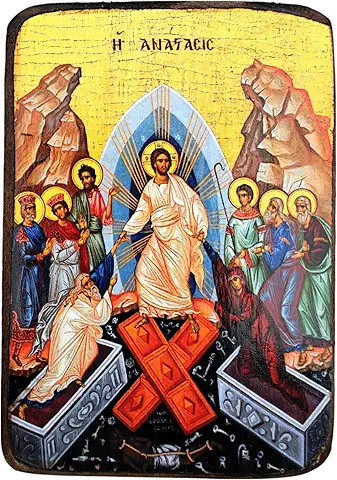
The theological significance of these thirteen years in the tradition is enormous. They are understood as a participation in the mystery of Christ's descent into hell — a real experience of the uttermost depths of darkness and suffering, from which Gregory emerged to bring the light of the Gospel to a people still in spiritual darkness. The parallel is made explicit in Armenian homiletic literature and in the liturgical services for Gregory, which describe his emergence from Khor Virap in explicitly paschal terms: a resurrection from the pit, a rising from death to become the instrument of national illumination.


The Vision of Khosrovidukht and the Release
Tiridates's Madness
While Gregory was in the pit, events at the Armenian royal court were unfolding that the tradition interprets as divine preparation for the national conversion. Tiridates III, having established himself as king, proceeded to persecute the Christian communities within his territory. The most significant event in this persecution, from the hagiographic standpoint, was his encounter with the holy virgins led by Hripsime and Gaiane.
These women — thirty-seven in number according to tradition (some sources say thirty-three or thirty-eight) — were Christians who had fled Rome in the early fourth century, possibly during the Diocletianic persecution. Their leader or foundress is identified as Gaiane, an older woman who had trained and guided the community of virgins under her care, one of whom was the exceptionally beautiful Hripsime. Hripsime's beauty reportedly caught the attention of the Emperor Diocletian himself (or in some versions, of another powerful official), who desired her as a concubine. Rather than comply, the community fled east, eventually arriving in Armenia and establishing themselves near Artashat (Artaxata), the Armenian capital.
Tiridates, hearing reports of a beautiful Christian woman named Hripsime, also desired her. He sent for her, intending to take her as his concubine. Hripsime, understanding that compliance would mean the betrayal of her virginity consecrated to Christ, refused with a fortitude that the sources describe in terms of superhuman strength — the sources say that when Tiridates's men attempted to force her to comply, she repelled them physically, and that Tiridates himself, who attempted to take her by force, found himself unable to overpower her, as if her resistance were not merely physical but divinely empowered.
The king, humiliated and outraged, ordered all thirty-seven virgins executed. The manner of their deaths varied according to the sources: some were tortured before being killed, others were killed relatively quickly, but all died without recanting their faith or surrendering their virginity. Their bodies were left unburied as a final act of dishonor.
The tradition holds that almost immediately after ordering this atrocity, Tiridates was struck with a supernatural affliction that manifested as a kind of madness or lycanthropy — a transformation in which he lost his human reason and took on the characteristics of a wild animal, wandering the countryside in torment, unable to govern, unable to think clearly, no longer recognizable as the king he had been. His companions and courtiers could not reach him or restore him; the most learned physicians of the court were helpless. The tradition's interpretation of this affliction is theological: it was divine punishment for the murder of innocent holy women, a manifestation of the just judgment of God upon a king who had shed innocent blood.
The Dream of Khosrovidukht
Tiridates's sister, Khosrovidukht, was a woman of deep sensitivity and piety. During her brother's affliction, she received a dream — not once, but repeatedly, the same dream returning night after night with increasing urgency. In the dream, an angelic figure told her that the only person who could heal her brother was the man who had been imprisoned in the pit of Khor Virap: Gregory, son of Anak, who was still alive after all these years.
Khosrovidukht's response to these dreams was initially one of disbelief bordering on horror. Gregory had been in the pit for thirteen years. No one could survive thirteen years in Khor Virap. To suggest that he was still alive was, from any ordinary human perspective, absurd. Furthermore, Gregory was the son of the man who had murdered their father — the very thought of releasing him, of bringing him to the court, would be deeply offensive to any member of the royal family who heard it.
Yet the dream persisted. Khosrovidukht eventually told her brother's courtiers about the vision, and the courtiers, desperate to find any remedy for the king's affliction, decided that the only course was to go to Khor Virap and find out whether Gregory was indeed alive. This was itself an act of significant faith — or desperate pragmatism — given how unlikely survival seemed.
When the courtiers went to Khor Virap and called down into the pit, they received an answer. Gregory, after thirteen years of imprisonment, was alive, coherent, and at prayer. His response to being called came with the serenity of a man who had long since made his peace with his circumstances and found in them not despair but the fullness of contemplative union with God. He was drawn up from the pit.
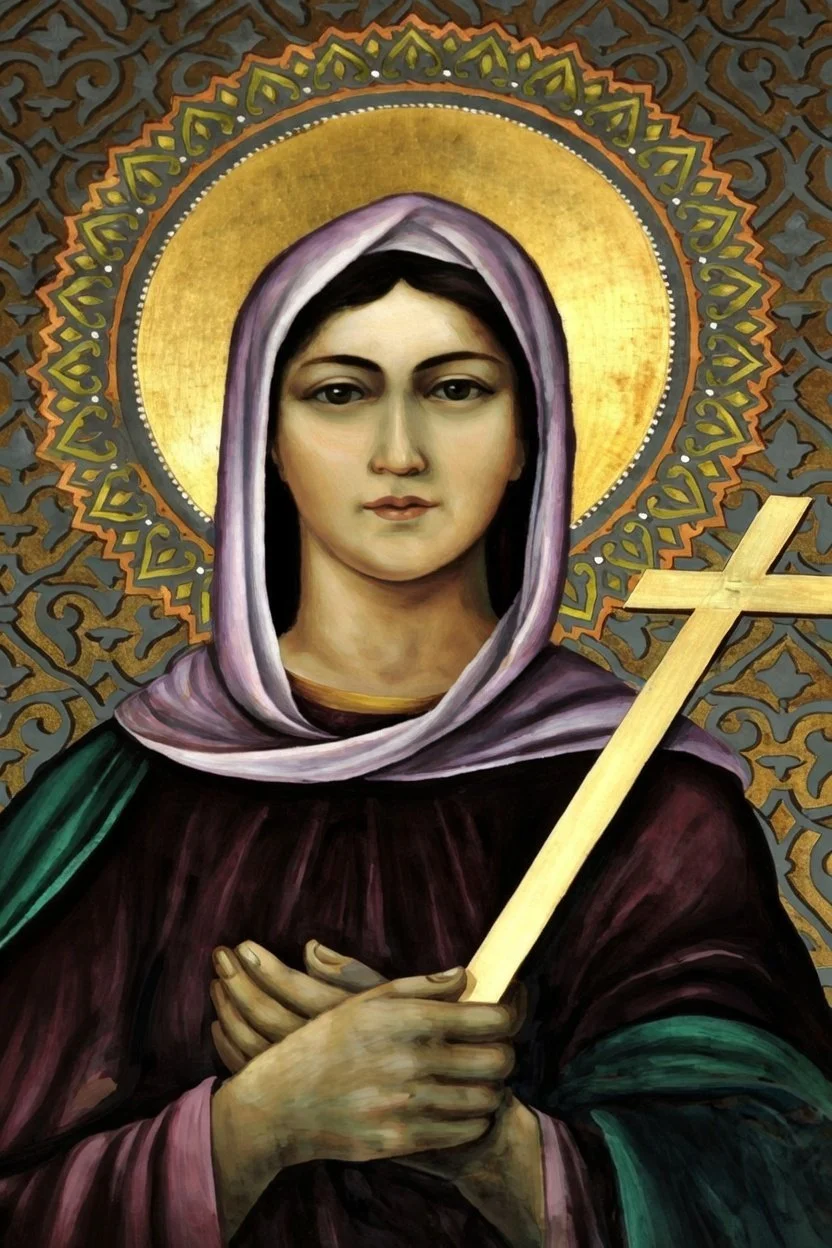
Saint Hripsime was an Armenian Christian virgin and martyr whose body was broken for refusing sexual coercion, and whose death became the spark that converted an entire nation to Christ. She is venerated in the Armenian Apostolic Church and honored by Eastern Catholics and Orthodox Christians as one of the most powerful female witnesses in early Christianity.
Her principal feast is celebrated on September 30 in the Armenian tradition, with related commemorations tied to the conversion of Armenia.
Saint Hripsime did not seek martyrdom.
She fled danger.
She escaped persecution in Rome with a small community of consecrated women, seeking refuge in Armenia. She wanted nothing more than a hidden life of prayer and purity. But when King Tiridates III saw her, he demanded her submission.
She refused.
She was tortured.
She was beaten.
She was violated and killed for protecting her vow to Christ.
People pray to Saint Hripsime today for healing from sexual trauma, for courage under coercion, and for strength to refuse compromise when bodily or spiritual boundaries are threatened. She understands what it means to be pursued by power. She understands the terror of being trapped. She understands the cost of saying no when authority demands possession.
She also understands resurrection.
This prayer card is for survivors of abuse, for women reclaiming dignity after violation, and for anyone facing pressure to surrender conscience or body. Saint Hripsime does not offer sentimental comfort. She offers fierce holiness born from suffering.
Each card is handmade in Austin and created to order. We do not keep stock, because every prayer card is treated as a unique devotional offering. They are printed on museum-quality photo paper, not cardstock, and each one is made during prayer. The saints are venerated throughout the entire process, and prayers are intentionally offered for the person who will receive the card. These are not mass-produced items. They are created slowly, reverently, and with spiritual intention, because every soul and every prayer matters.
The Healing of Tiridates and the Conversion of Armenia
Gregory Emerges From the Pit
The account of Gregory's emergence from Khor Virap is one of the most vivid scenes in all of early Christian hagiography. He had been in the pit for thirteen years. He was physically depleted — the sources acknowledge this without attempting to disguise it — thin, pallid, weakened by years of minimal nourishment and no exercise. Yet he was described as mentally clear, spiritually radiant, and utterly composed. The contrast between his physical state and his spiritual bearing was, according to the tradition, itself a form of witness — those who saw him emerging from the pit saw a man whose physical condition testified to the reality of his suffering, but whose face and bearing testified to the reality of something else entirely.
Gregory was not simply released and compensated. He was brought to the king's presence, to the afflicted Tiridates who was wandering in his madness. And what Gregory did there was what Gregory had been doing in the pit for thirteen years: he prayed. The tradition does not describe Gregory performing any dramatic ritual gesture, any elaborate ceremony. He prayed over Tiridates, he preached to him, he spoke to him about Christ and about the meaning of the affliction the king was enduring. The Agathangelos preserves extended discourses that Gregory is reported to have delivered before the king and his court — discourses that amount to a comprehensive proclamation of the Christian Gospel, systematically addressing the falsity of paganism, the reality of the one God, the Incarnation of Christ, the meaning of Christ's death and resurrection, and the offer of salvation to all who turn to God in repentance.
The Healing
Tiridates was healed. The madness lifted. The king, restored to his right mind, found himself in the presence of the man he had imprisoned — the man who, rather than responding to thirteen years of wrongful imprisonment with bitterness or demands for justice, had prayed for his captor and offered him the healing of Christ. The contrast between what Tiridates had done to Gregory and what Gregory was now doing for Tiridates was not lost on the king, and the tradition presents his conversion not as the result of merely pragmatic gratitude but as genuine recognition of the reality of the God whom Gregory served.
Tiridates asked to be baptized. He confessed his faith in Christ. He publicly abandoned the worship of the Armenian pagan deities. And he commanded that Armenia was a Christian kingdom — that the religion of his own conversion was now the religion of his nation.
This moment — the healing and conversion of Tiridates, traditionally dated to 301 AD — is the pivotal event in Armenian history. Every subsequent development in the Armenian Christian tradition flows from this moment: the building of the cathedral at Etchmiadzin, the development of the Armenian liturgy, the creation of the Armenian alphabet, the Golden Age of theology, the martyrdom of the Vardanantz, the survival through successive conquests and persecutions, the diaspora communities of the modern world — all of it has its root in the moment when a king who had tried to destroy a man by casting him into a pit found himself healed by the man he had tried to destroy.
The First Acts of the Christian Kingdom
The immediate practical consequences of the conversion unfolded rapidly. Gregory, now recognized as the spiritual leader of the new Christian Armenia, undertook a series of actions that would shape the church he was founding.
First, he arranged for the proper burial of the Hripsimian Virgins whose martyrdom had preceded the conversion. Their bodies, left unburied in contempt, were now gathered and given Christian burial with all honor and ceremony. Gregory himself is said to have prayed at their grave sites for an extended period. Churches were subsequently built over their tombs, and these churches became among the first purpose-built Christian sanctuaries in Armenia. The Church of Saint Hripsime in the town of Vagharshapat (modern Etchmiadzin) is traditionally identified as the successor to the chapel first built over Hripsime's tomb by Gregory himself, and the current seventh-century church on that site is one of the oldest surviving Armenian Christian structures in the world.
Second, Gregory began the systematic destruction of the major pagan temples and sacred sites of Armenia. This was not a casual process — it was a carefully organized, royally sanctioned campaign of dechristianization (to use an anachronistic term) that involved dismantling physical structures, confiscating the wealth of temple treasuries for the building of churches, and dealing with the resistance of the magi and the established priestly families who had their livelihoods and identities bound up with the old religion. The resistance was significant, and Gregory's campaign was not completed quickly, but it was systematic and ultimately thorough.
Third, Gregory began the process of mass baptism. With the king's conversion and command, Armenia's population was, in the manner of late antique state religion, expected to follow their king into the new faith. Gregory traveled throughout the country, baptizing populations in rivers and lakes in ceremonies of mass immersion that the sources describe in dramatic terms. One account describes a single baptismal ceremony in the Euphrates river in which fifteen thousand people were baptized. Whether this specific number is literal or symbolic (multiples of five and fifteen thousand are used symbolically in early Christian literature), the scale of the mass baptisms Gregory conducted was genuinely extraordinary.


Consecration as Catholicos — His Ecclesiastical Role
The Journey to Caesarea
Before Gregory could function as the head of a properly organized Armenian church, he needed to be consecrated as a bishop. The apostolic tradition of the church required that episcopal consecration be performed by existing bishops, and Armenia at this point had no bishops. Gregory therefore made the journey from Armenia back to Caesarea in Cappadocia — the city of his childhood formation — to be consecrated by the Archbishop of Caesarea.
The Archbishop of Caesarea at this time was Leontius. The Agathangelos and subsequent Armenian tradition describe the journey to Caesarea in terms that emphasize the stature that Gregory had already acquired: he is said to have been received with great honor and celebration by the Christian communities along his route, and his arrival in Caesarea is described as an occasion of rejoicing for the church there, which recognized in him the man through whom God had opened an entire nation to the Gospel.
His consecration by Leontius established two things simultaneously. First, it established the episcopal validity of the Armenian church: Gregory was consecrated by a bishop of unimpeachable apostolic succession, and all subsequent Armenian bishops would derive their episcopal lineage from Gregory's consecration. Second, it established a historical link between the Armenian church and the Cappadocian church that would have important consequences: the later Cappadocian theologians — Basil the Great, Gregory of Nyssa, Gregory Nazianzus — all came from the same ecclesiastical tradition that had formed Gregory the Illuminator, and their theology would be among the most important influences on the Armenian church's subsequent theological development.
Gregory returned to Armenia as its first Catholicos — the title that the head of the Armenian church would bear from that day to the present.
The Founding Vision of Etchmiadzin
Before building the cathedral that would become the mother church of all Armenian Christianity, Gregory received the vision that gives that church its name. According to the Agathangelos, Gregory prayed and fasted for an extended period, and during this period of intense prayer he received a vision of extraordinary power and detail: he saw the heavens open, a column of blazing light descending from above, and within the light the figure of the Son of God, radiant with divine glory, surrounded by an angelic host. The Son of God descended to the earth and struck the ground with a golden hammer at a specific location — a location that Gregory, coming out of his vision, was able to identify precisely. The vision commanded that a church be built at that spot.
The spot, when investigated, was found to be the site of a pagan temple dedicated to the goddess Anahit. The temple was demolished — its demolition being itself a symbolic act of the new faith's triumph over the old — and on its ruins, Gregory began the construction of the cathedral that would be called Etchmiadzin, meaning "the Descent of the Only-Begotten." The name encapsulates the entire theological program of the vision: God, in the person of the Son, had descended to this specific place, had consecrated it by divine action, and had chosen it as the site from which the light of the Gospel would radiate throughout Armenia.
The original cathedral built by Gregory was a relatively modest structure by later standards — the magnificent cathedral complex that stands at Etchmiadzin today reflects centuries of subsequent construction and renovation. But even in its original form, the cathedral at Etchmiadzin was the center of the new Armenian church: the place where the Catholicos presided, where the bishops gathered, where the major liturgical celebrations of the year took place, and where the most sacred relics of Armenian Christianity were eventually gathered and preserved.
His Administrative and Pastoral Work
Gregory's role as the first Catholicos of Armenia was not simply ceremonial. He functioned as the full episcopal head of a church that was being built from almost nothing in a country that had been pagan only a short time before. The scope of his administrative and pastoral work was immense.
He organized the church's hierarchy, appointing the first generation of Armenian bishops and priests — many of them drawn from the families of the Armenian nobility, since the hereditary principle was deeply embedded in Armenian social structure and Gregory pragmatically worked with it rather than against it. He established the boundaries of episcopal sees, dividing the country into administrative units that could be served by the bishops he was consecrating. He oversaw the construction of churches throughout Armenia, working with the resources provided by the royal house and the nobility. He organized the liturgical life of the new church, establishing the calendar of fasts and feasts, ordering the celebrations of Sunday and the major Christian holy days.
He also served as the primary preacher and catechist of the new church. The Agathangelos and subsequent sources preserve extended discourses attributed to Gregory that are essentially catechetical sermons — systematic explanations of Christian theology addressed to a population that had been pagan and that needed instruction in every aspect of the faith they had newly embraced. These discourses cover the nature of God, the meaning of creation, the reality of sin and its consequences, the Incarnation of Christ, the meaning of the sacraments, the purpose of prayer, and the shape of the Christian moral life.
He functioned simultaneously as a bishop, a preacher, an administrator, a diplomat, and a spiritual father. He was the confidant and advisor of the king — his relationship with Tiridates, transformed from one of captor and prisoner to one of something approaching equals and collaborators in the project of building a Christian Armenia, was one of the most remarkable personal transformations in early Christian history.
His Son Aristakes and the Succession
Gregory appointed his own son Aristakes as his eventual successor — a decision that established the hereditary principle in the early Armenian catholicate that would characterize the first several generations of the church's leadership. This is sometimes criticized from a modern ecclesiastical standpoint, but it is important to understand it in its historical context: the hereditary transmission of priestly and religious authority was deeply embedded in both the Iranian and the Armenian cultural traditions that Gregory was working within, and the alternative — attempting to impose a purely elective system on a society with no tradition of it — would have been practically impossible.
Aristakes attended the Council of Nicaea in 325 AD as the representative of the Armenian church — one of the most important facts about the early Armenian church's relationship to the developing ecumenical structure of Christendom. The Council of Nicaea, called by the Emperor Constantine, was the first Ecumenical Council of the universal church, and the Armenian church's representation at it places Armenia squarely within the mainstream of early fourth-century Christian life. Aristakes's presence at Nicaea and his subscription to the Nicene Creed established the Nicene faith as the standard of Armenian orthodoxy from the very beginning.
Aristakes was later martyred — stabbed to death by a pagan noble — and is venerated as a saint in both the Armenian and Eastern Orthodox calendars.


His Sayings and Teachings
The Theological Voice of Gregory
Gregory the Illuminator was not a systematic theologian in the mold of Origen or the Cappadocian Fathers. He was, above all, a preacher and a pastor — a man whose theological expression was shaped by the homiletical and catechetical contexts in which he operated. The discourses preserved in the Agathangelos and in subsequent Armenian liturgical tradition represent his theological voice as the tradition has preserved it, and while the scholarly question of how much of this material represents Gregory's own words and how much is the theological elaboration of later redactors is complex, the tradition claims it as Gregorian and treats it as such.
On God and Creation
Gregory's teaching on God, as preserved in the Agathangelos, is thoroughly Trinitarian and thoroughly grounded in the biblical narrative. He describes God as the eternal, uncreated, all-powerful Creator who brings everything into being from nothing, who sustains everything in existence by his will and power, and who is not one god among many but the sole and sovereign Lord of all reality. His critique of paganism is not simply philosophical (though it includes philosophical arguments about the absurdity of worshipping human-made objects) but also deeply personal: the pagan gods are not merely unreal, they are spiritually dangerous, because devotion to them turns the human heart away from the only reality that can satisfy it.
The following is attributed to Gregory in the Agathangelos (paraphrased from the Armenian): "You who have been deceived by the darkness of idolatry — come and see that the stone and wood which you worship cannot hear you, cannot help you, cannot sustain you. But there is One who made the stone and the wood, who made the hand that shaped them, who made the breath with which you cry out to them. Turn to that One. He is not far from any of us, for in Him we live and move and have our being."
On the Incarnation
Gregory's Christological teaching, as preserved in his discourses, is emphatically incarnational — he dwells at length on the reality and the meaning of God becoming human in Jesus Christ. He describes the Incarnation as the supreme act of divine mercy: God, seeing the human race destroyed by sin and incapable of rescuing itself, descends into humanity in the person of the Son, takes on human flesh with all its vulnerability and suffering, and undergoes death in order to defeat death from within. The language Gregory uses is the language of descent and ascent, of condescension and exaltation, that is characteristic of the early Alexandrian theological tradition.
He is particularly emphatic on the reality of Christ's humanity — perhaps because, in a culture just emerging from paganism, the temptation to think of Christ as simply a powerful divine being temporarily appearing in human form was real. Gregory insists: "He was not merely present in a body as a ghost might be present in a house. He truly became flesh. He truly suffered. He truly died. And it is precisely because He truly died that His resurrection is truly victory over death."
On Martyrdom and Suffering
Given the circumstances of his own life, it is unsurprising that Gregory's teaching on suffering and martyrdom is among the most developed and most personally authenticated aspects of his theology. His homiletic reflections on the suffering of the Hripsimian Virgins, on his own years in the pit of Khor Virap, and on the meaning of the cross in the Christian life reflect a theology of redemptive suffering that is not theoretical but lived.
He teaches that suffering, when accepted in faith and offered to God, participates in the redemptive suffering of Christ and becomes a means of spiritual purification and growth. He distinguishes, however, between suffering that is merely endured and suffering that is actively offered — the martyrs who died for Christ did not simply suffer; they transformed their suffering into an act of praise and witness. This active, voluntary dimension of martyrdom is, for Gregory, what gives it its redemptive quality.
He says in one of the discourses preserved in the tradition: "Do not think that the martyrs suffer despite God, as if God abandoned them to their tormentors. Rather, God is present in their suffering, strengthening them, receiving their pain as a fragrant offering, and preparing through their blood the conversion of those who shed it." This last phrase — the conversion of those who shed it — is deeply personal for Gregory, whose own suffering at the hands of Tiridates preceded and in some theological sense enabled Tiridates's own conversion.
On Prayer
Gregory's teaching on prayer, developed through years of enforced contemplation in the pit of Khor Virap, reflects the depth of a man for whom prayer was not a practice among others but the single most fundamental activity of the human soul. He describes prayer as the soul's natural orientation toward God, its turning from the false objects of desire toward the only object that can satisfy it. He teaches that prayer should be continuous — not meaning that every moment is spent in formal vocal prayer, but that the disposition of the heart should be one of constant openness and attention to God.
He is remembered for a teaching on the relationship between words and silence in prayer: "Prayer begins with words, because the soul must learn to direct itself. But perfect prayer is beyond words, because in the deepest encounter with God, the soul knows a presence that words cannot contain. The words are the ladder; but the ladder is not the roof." This teaching, remarkably close to the hesychast tradition of later Byzantine mystical theology, reflects Gregory's formation in Cappadocian Christian spirituality and his own extended experience of wordless communion with God in the darkness of Khor Virap.
On the Eucharist
Gregory's teaching on the Eucharist, as preserved in his catechetical discourses, is sacramentally realist — he teaches that in the Eucharist, the bread and wine truly become the Body and Blood of Christ, not as a metaphor or as a commemorative symbol but as a genuine participation in the reality of Christ's sacrifice. He describes the Eucharist as the center of the church's life, the act through which the community of believers is continuously formed and sustained as the Body of Christ.
He also connects the Eucharist to the theology of martyrdom: just as the martyrs offer their bodies and blood as a sacrifice in union with Christ's sacrifice, so the Christian in the Eucharist receives the Body and Blood of the One whose sacrifice made all life possible. The sacrificial language runs through his Eucharistic teaching with the directness of a man who had himself undergone something approaching martyrdom.
On Forgiveness of Enemies
Perhaps the most striking dimension of Gregory's moral teaching, given the circumstances of his life, is his sustained emphasis on the forgiveness of enemies. His years in the pit, during which he prayed not for release or vengeance but for the conversion of the king who had imprisoned him; his emergence from the pit to heal rather than to accuse; his subsequent ministry alongside the repentant Tiridates — all of these are understood in the tradition as enacted teachings about forgiveness.
He says in the tradition: "You cannot receive the forgiveness of God while you withhold forgiveness from your brother. This is not a law that constrains you from outside; it is the nature of forgiveness itself. A river that accepts water from the spring but refuses to flow onward will become a stagnant pool. The soul that receives mercy but refuses to show it closes itself to the very source from which mercy flows."


Later Life, Retirement, and Death
The Twilight Years
After his great work of evangelization and church-building, Gregory, now aged and physically worn from decades of extraordinary labor, sought to withdraw from the active administration of the church. His exact age at this point is uncertain, but he was probably in his mid-to-late sixties at the time of his retirement — old by the standards of the ancient world, and physically depleted by the combined effects of his years of imprisonment, his subsequent decades of intensive pastoral and administrative work, and the austerities of his personal spiritual practice.
He appointed his son Aristakes as his successor to the Catholicosate, formally transferring the leadership of the Armenian church into Aristakes's hands, and withdrew to a life of solitary prayer and contemplation. The location of his retreat is identified in the Armenian tradition as the region of Daranali, in the mountains of western Armenia — a remote and austere landscape appropriate for the contemplative withdrawal of an old man who had spent his active life in the midst of the world and now sought the stillness he had known, involuntarily, in the pit of Khor Virap.
He lived in a cave or a simple hermitage, without servants or companions, supported only by whatever the local people could bring him. He prayed. He had, by the standards of any reckoning, earned this contemplative retirement — the man who had converted a nation now spent his last years in the simplest possible relationship with the God in whose service he had done it.
His Death
Gregory the Illuminator died around 331 AD. The exact date is uncertain in the historical sources, and the Armenian liturgical tradition has established feast days that serve commemorative rather than strictly historical functions. The circumstances of his death are described simply in the tradition: he died in his hermitage in the mountains, alone or with a few shepherds who had come to know him and who reverenced him as a holy man. There was nothing dramatic about the physical circumstances of his dying — no final public speeches, no deathbed crowds. He died as he had lived in his last years: in quiet, in prayer, in the intimacy with God that had sustained him through everything.
When the news of his death reached the Armenian court and the church, there was immediate and universal recognition that a figure of extraordinary holiness had passed from the world. The shepherds who had known him in his retirement pointed to the place where he had died and where his body lay, and the Armenian church gathered his remains for proper burial with full episcopal honors.
He was buried first in the region of Tordan (in some sources, identified as the area near his hermitage in Daranali). Subsequently his relics — or significant portions of them — were translated to more prominent and accessible locations, a process that itself reflects the immediate popular recognition of his sanctity and the desire of the wider church to have access to his physical remains as a locus of prayer and miraculous healing.
Saint Hripsime was an Armenian Christian virgin and martyr whose body was broken for refusing sexual coercion, and whose death became the spark that converted an entire nation to Christ. She is venerated in the Armenian Apostolic Church and honored by Eastern Catholics and Orthodox Christians as one of the most powerful female witnesses in early Christianity.
Her principal feast is celebrated on September 30 in the Armenian tradition, with related commemorations tied to the conversion of Armenia.
Saint Hripsime did not seek martyrdom.
She fled danger.
She escaped persecution in Rome with a small community of consecrated women, seeking refuge in Armenia. She wanted nothing more than a hidden life of prayer and purity. But when King Tiridates III saw her, he demanded her submission.
She refused.
She was tortured.
She was beaten.
She was violated and killed for protecting her vow to Christ.
People pray to Saint Hripsime today for healing from sexual trauma, for courage under coercion, and for strength to refuse compromise when bodily or spiritual boundaries are threatened. She understands what it means to be pursued by power. She understands the terror of being trapped. She understands the cost of saying no when authority demands possession.
She also understands resurrection.
This prayer card is for survivors of abuse, for women reclaiming dignity after violation, and for anyone facing pressure to surrender conscience or body. Saint Hripsime does not offer sentimental comfort. She offers fierce holiness born from suffering.
Each card is handmade in Austin and created to order. We do not keep stock, because every prayer card is treated as a unique devotional offering. They are printed on museum-quality photo paper, not cardstock, and each one is made during prayer. The saints are venerated throughout the entire process, and prayers are intentionally offered for the person who will receive the card. These are not mass-produced items. They are created slowly, reverently, and with spiritual intention, because every soul and every prayer matters.
Miracles Attributed to Gregory the Illuminator
Miracles During His Lifetime
The hagiographic tradition attributes a substantial number of miracles to Gregory during his lifetime — miracles that are distributed across the various phases of his life and that cover the characteristic types of miraculous action found in early Christian hagiography.
The Miracle of Survival in Khor Virap — The foundational and most universally cited miracle of Gregory's life: his survival for thirteen years in the subterranean prison pit where he was left to die. By every natural expectation, a human being confined in those conditions without adequate food, water, light, or human contact would die within weeks, or at most months. Gregory's survival for thirteen years is understood in the tradition not merely as a physical anomaly but as a sustained divine act, the daily renewal of God's preservation of one marked for a special mission.
The Healing of Tiridates — The most publicly significant miracle of Gregory's career and the one with the greatest historical consequences: the healing of King Tiridates III from the madness and animalistic transformation that had afflicted him following the murder of the Hripsimian Virgins. Gregory's prayer over the king restored his sanity and his human faculties, and this healing — witnessed by the entire royal court — was the direct occasion of Armenia's national conversion. The tradition is explicit that this healing was not accomplished by any natural means or any medical treatment but by divine power operating through Gregory's prayer and preaching.
The Vision of Etchmiadzin — The founding vision in which Gregory, during prayer, received the revelation of Christ descending to strike the earth with a golden hammer at the location where the cathedral of Etchmiadzin should be built. This vision, involving extended and detailed supernatural perception, is itself counted among the miracles of his life — the divine illumination that gave him the name Lusavorich (the Illuminator) in a double sense: he illuminated Armenia with the Gospel, and he himself was illuminated by divine visions.
Miracles of Healing During His Ministry — The Agathangelos and subsequent hagiographic tradition attribute a number of miraculous healings to Gregory's ministry during the period of his active evangelization. These include the healing of the sick who were brought to him during his pastoral journeys, the driving out of evil spirits from those possessed, and the miraculous preservation of those who accompanied him in dangerous situations. While the individual accounts vary in their specificity, the overall picture is of a man through whom the power of God manifested in healings and deliverances that corroborated his preaching and strengthened the faith of the newly converted Armenian communities.
The Miracle of the Springs — One specific miracle tradition associated with Gregory's evangelization journeys involves the miraculous provision of water: at a specific location where he and his companions were suffering from thirst, Gregory prayed, struck the ground, and water sprang up. This type of miracle — the provision of water through a holy man's prayer — has deep Old Testament resonance (Moses striking the rock in the desert) and appears in the hagiographic traditions of many early Christian saints. The specific location associated with this miracle in the Armenian tradition became a sacred site visited by pilgrims.
Miraculous Endurance of Torture — The tradition attributes to Gregory a supernatural endurance during the tortures he underwent before being cast into Khor Virap — an endurance understood not as superhuman physical toughness but as divine grace sustaining him through sufferings that would have been lethal to an ordinary person. The implication is that Gregory's survival of the torture sessions was itself miraculous, and that the torturers' inability to break his faith, despite the extremity of their methods, reflected divine protection as much as human courage.
Miracles After His Death
The tradition of post-mortem miracles attributed to Gregory the Illuminator is extensive and has continued to develop over seventeen centuries of veneration. The miracles attributed to his intercession after death are of the types characteristic of the veneration of Christian saints: healings, protection from danger, conversions, revelations, and deliverances.
The Healing Miracles at His Tomb — From the earliest period after his death, the location of his burial was a site at which miraculous healings were reported. The blind recovering sight, the lame walking, the chronically ill being cured — these are the standard categories of healing miracle in Christian hagiographic literature, and they are attributed to Gregory with the same specificity and frequency that characterize the miracle traditions of other major Christian saints. The tradition of healing miracles at his tomb drew pilgrims to the site of his burial from throughout Armenia and from neighboring Christian communities.
The Preservation of His Relics — The discovery of Gregory's relics in a state of physical incorruption (or at least partial incorruption) is cited in the tradition as itself a miraculous sign of his sanctity — the standard understanding in early Christian tradition being that the bodies of great saints are preserved from the normal processes of corruption as a divine sign and as a material testimony to the resurrection of the body.
Protection of Armenia in Times of Danger — The broader tradition attributes to Gregory's continuing intercession a number of historical deliverances of the Armenian people in times of national crisis. When Armenian communities were threatened by invasion, by persecution, or by natural disaster, prayers directed to Gregory the Illuminator as the patron of the nation are understood to have obtained divine protection. These providential deliverances are not always tied to specific miraculous events in the way that individual healing miracles are, but they are part of the larger understanding of Gregory as the continuing intercessor and protector of the Armenian people before God.
Miracles Associated With the Holy Muron — The preparation of the Holy Muron — the sacred chrism used in the sacrament of confirmation and in other liturgical rites — is understood in Armenian tradition to descend in an unbroken sacramental line from the chrism first prepared by Gregory the Illuminator. The miracles associated with the Muron — healing of the sick anointed with it, protection from evil, spiritual transformation — are by extension attributed to Gregory's foundational role in establishing this sacramental tradition.
Appearances and Revelations After Death — The tradition includes accounts of Gregory appearing to individual Christians and to church leaders after his death in moments of spiritual crisis or need — appearing in dreams and visions to offer guidance, comfort, or warning. These post-mortem appearances follow the pattern well established in early Christian hagiography and are understood theologically as evidence of the ongoing life of the saint in God's presence and of his continuing concern for the people he served during his earthly life.
The Miracle of the Relics at Khor Virap — A specific post-mortem miracle tradition involves the continuing sanctification of the site of Gregory's imprisonment. The pit at Khor Virap, where Gregory spent thirteen years in prayer, is understood to have become a site of spiritual power in its own right — a place where prayers are heard with particular attentiveness and where miraculous healings and spiritual transformations occur in connection with the intercession of Gregory. Pilgrims who descend into the pit (which is accessible today as a pilgrimage site) regularly report experiences of intense spiritual intensity, and the tradition attributes specific miraculous healings and conversions to prayers offered at this site.
His Physical Appearance — The Iconographic Tradition
How Gregory Is Depicted
Because no portraits or physical descriptions from his own lifetime survive, our understanding of Gregory's physical appearance is entirely mediated through the iconographic tradition — the conventions of sacred portraiture that developed in the centuries after his death and that have been continuously refined and elaborated through sixteen centuries of Armenian and Byzantine Christian art.
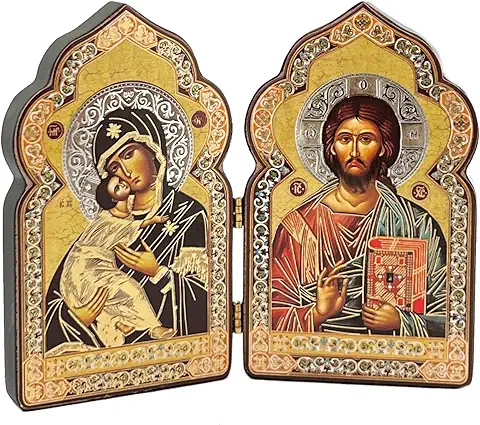
In the Armenian iconographic tradition, Gregory is typically depicted as a bishop of mature age — not as a young man, but as the elder statesman of the church he founded. He is shown wearing the full episcopal vestments of the Armenian church: the shurhajib (episcopal vestment), the varkas (a vestment worn over the shoulders), and the omophorion (the large episcopal stole that signifies the bishop's authority and his role as shepherd). His face is depicted with a long beard — typically dark with streaks of gray or fully white in depictions of his later years — and with the characteristic composed, luminous expression of holiness that Byzantine and post-Byzantine iconography developed to indicate the inner transformation of the saint.
He typically holds one of two objects or both simultaneously: a Gospel book (indicating his role as the preacher who brought the Gospel to Armenia) and a hand cross (indicating his episcopal authority and his witness to the faith). In some icons he is depicted with the architectural model of the cathedral of Etchmiadzin in his hands — a common iconographic convention for saints who founded major churches — indicating his role as the founder of Armenian Christianity's mother church.
His eyes, in the best examples of Armenian iconography, are depicted with a particular quality of inwardness — the eyes of a man who has spent years in contemplative prayer, who has seen visions, and who looks at the world from a great depth of interior stillness. This quality is one of the hardest things to achieve in sacred portraiture and one of the surest marks of a skilled iconographer's understanding of the particular saint being depicted.
In Eastern Orthodox iconography (where Gregory appears as an Equal-to-the-Apostles), he is depicted in a similar manner but with slight variations in vestment style and in compositional convention that reflect the differences between the Armenian and Byzantine iconographic traditions. Orthodox icons of Gregory often place him in the company of other missionary saints — Constantine and Helena, Cyril and Methodius, Nina of Georgia — as part of larger compositional programs celebrating the evangelization of nations.
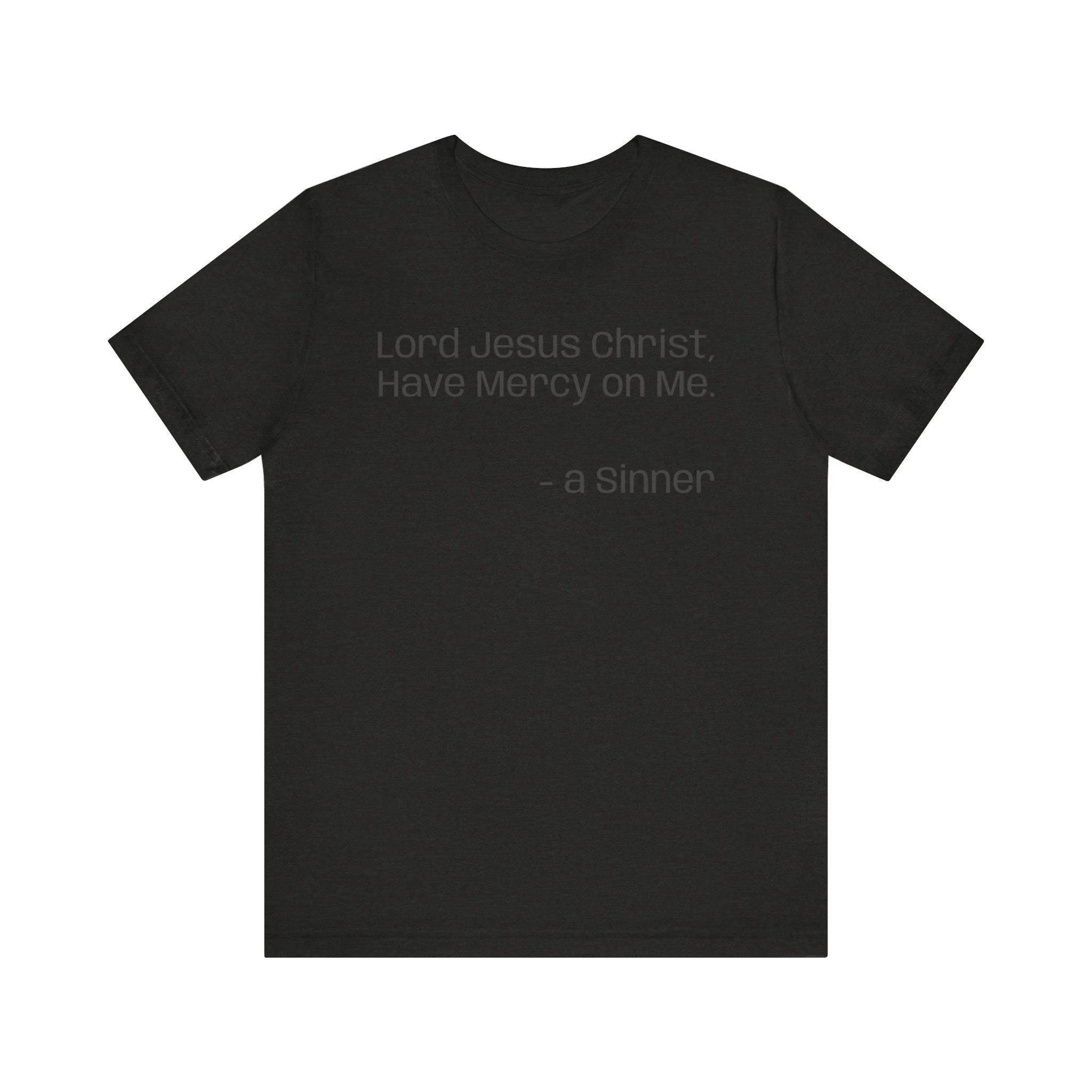
"Lord Jesus Christ, Son of God, have mercy on me, a sinner."
The Jesus Prayer is central to Orthodox Christianity and a profound expression of faith, humility, and devotion. This shirt is designed to be bold yet simple, making it a meaningful way to carry your faith into daily life.
✔ Features the full Jesus Prayer in a clean, powerful design
✔ Comfortable, high-quality fabric for all-day wear
✔ Perfect for church, prayer groups, retreats, or everyday style
✔ Makes a thoughtful gift for Orthodox Christians and people of faith
✔ Minimalist, masculine, and reverent design
Pray without ceasing. Wear the prayer. Live the devotion.
Product features
- Breathable 100% Airlume combed and ring-spun cotton for comfort
- Retains shape longer with side seams for structural support
- Ribbed knit collar that stays elastic and stylish
- High-quality printing techniques for vibrant designs
- Tear-away label for minimal skin irritation
Care instructions
- Machine wash: cold (max 30C or 90F)
- Non-chlorine: bleach as needed
- Tumble dry: low heat
- Iron, steam or dry: medium heat
- Do not dryclean
First-Class Relics — Where They Are and How to Venerate Them
What First-Class Relics Are
In the terminology of Catholic and Orthodox Christianity, first-class relics are the physical remains of a saint — bones, hair, or other bodily tissue — as distinguished from second-class relics (objects that belonged to or were used by the saint) and third-class relics (objects that have been touched to first-class relics). For a saint of Gregory's antiquity and universal veneration, the distribution of relics across multiple locations is not surprising: the practice of dividing the relics of important saints and distributing them to multiple churches began in the early Christian period and reflects both the desire of multiple communities to have physical contact with the saint's remains and the various historical vicissitudes — translations, gift-giving between rulers and churches, wartime dispersal — that affected the physical remains of all major early Christian saints.
The Right Hand at Etchmiadzin
The most important and most widely known first-class relic of Gregory the Illuminator is his right hand, preserved at the Mother Cathedral of Holy Etchmiadzin in Vagharshapat, Armenia. The right hand is the most significant relic of any bishop-saint because it is the hand that blessed, the hand that baptized, the hand that presided at the Eucharist — in short, the hand through which the saint's episcopal ministry was most directly and visibly exercised. The right hand of Gregory is therefore the most theologically charged and most liturgically active of all his relics.
The hand is kept in a magnificent reliquary — a hand-shaped reliquary vessel of precious metal, encrusted with gems and richly decorated — that is itself a masterpiece of Armenian religious goldsmithing. This reliquary is brought out for veneration on major liturgical occasions, particularly at the time of the preparation of the Holy Muron, which takes place at Etchmiadzin every seven years. The Catholicos uses Gregory's right hand (or rather, the reliquary containing it) in the ceremonies surrounding the preparation of the Muron, which is understood as a direct sacramental continuation of the chrism first consecrated by Gregory himself.
For pilgrims wishing to venerate this relic: Etchmiadzin — officially Holy Etchmiadzin (Surb Etchmiadzin) — is located in Vagharshapat, approximately twenty kilometers west of Yerevan, the capital of Armenia. The cathedral complex is open to visitors and pilgrims and is one of the most visited religious sites in Armenia. During major feast days — particularly the feast of Gregory the Illuminator itself, and during the preparation of the Muron — the right hand reliquary may be carried in procession or displayed for public veneration in the cathedral. At other times, access to the reliquary itself may require specific permission from the cathedral's administration, though the cathedral and its treasury are generally accessible to pilgrims. The site is a UNESCO World Heritage Site as part of the Cathedral and Churches of Echmiatsin complex.
The Relics in Naples, Italy — San Gregorio Armeno
One of the most significant concentrations of relics of Gregory the Illuminator outside Armenia is found in the church of San Gregorio Armeno (Saint Gregory the Armenian) in Naples, Italy — one of the most historically interesting and least-known repositories of Armenian Christian heritage in the Western world.
The church of San Gregorio Armeno occupies a site in the heart of the old city of Naples, in the Via San Gregorio Armeno — a street famous today for its workshops producing the elaborate Neapolitan presepe (nativity scenes) but historically renowned as the location of an Armenian monastic and ecclesiastical presence of considerable antiquity. The church is dedicated to Gregory the Illuminator specifically, and it contains a significant relic of the saint — a portion of his remains that was brought to Naples in the early medieval period, according to tradition by Armenian monks or by Byzantine intermediaries who had received portions of Gregory's relics.
The church of San Gregorio Armeno is today a functioning church of the Roman Catholic Diocese of Naples, staffed by Benedictine nuns. It is open to visitors and is one of the most beautiful Baroque interiors in Naples — a city not short of beautiful Baroque interiors. The church was substantially rebuilt and redecorated in the sixteenth and seventeenth centuries, and the current interior is an extraordinary example of Neapolitan Baroque ecclesiastical decoration: frescoed ceilings, richly carved woodwork, gilded altars, and a nave that creates an overwhelming impression of devotional and artistic richness.
The relic of Gregory the Illuminator kept at San Gregorio Armeno is venerated on the saint's feast day (November 17 in the Roman Catholic calendar, which follows a different date from the Armenian calendar) and at other liturgical occasions. Pilgrims visiting Naples can reach the church on foot from the main tourist areas of the old city center; it is located on Via San Gregorio Armeno between Via dei Tribunali and Via San Biagio dei Librai. The church is typically open to visitors during morning hours, and the Benedictine nuns who maintain it are accustomed to welcoming pilgrims who wish to venerate the relic.
For Armenian Christians and Eastern Orthodox Christians visiting Naples, this church represents an extraordinary opportunity: to venerate a first-class relic of one of Christianity's greatest saints in a setting that, while Italian Baroque in its current form, was established specifically as a site of Armenian Christian devotion and continues to bear the name of the Illuminator of Armenia.
The Relics in Rome
Rome contains relics of Gregory the Illuminator at several locations, reflecting the general tendency of Rome to serve as a repository for relics from throughout the Christian world.
The most significant Roman location associated with Gregory is the church of Sant'Gregorio al Celio (Saint Gregory at the Caelian Hill) — though this church is primarily associated with Pope Gregory the Great (Gregory I), not with Gregory the Illuminator, and visitors should be careful not to confuse the two Gregorys. However, portions of relics of Gregory the Illuminator have been documented in Rome at various periods, and the Roman Martyrology includes Gregory the Illuminator in its commemorations.
The church of Santa Maria in Campo Marzio in Rome has historically had connections to Armenian Christian communities in Rome and has at times maintained relics connected to Armenian saints. Armenian presence in Rome dates to the early medieval period, and the presence of Armenian relics in Roman churches reflects centuries of contact between the Armenian church and the papacy.
Pilgrims wishing to venerate relics of Gregory the Illuminator in Rome are advised to contact the Pontifical Armenian College in Rome (the Collegio Armeno), which serves as the primary institutional center of Armenian Catholic presence in the Eternal City and maintains detailed knowledge of the whereabouts of Armenian Christian relics and sacred objects within the city.
The Skull at Etchmiadzin and Other Portions
Beyond the right hand — the most famous relic — Etchmiadzin also maintains other portions of Gregory the Illuminator's remains in its treasury, including portions identified as parts of his skull. These relics are kept in separate reliquaries and are maintained together with the other major relics of the Armenian church's treasury, including the Holy Lance (traditionally brought to Armenia by the Apostle Thaddaeus) and wood identified as from Noah's Ark.
The treasury of Etchmiadzin — Matenadaran tun or the cathedral treasury — also contains reliquaries associated with other Armenian saints, and the experience of visiting it is one of the most intensive concentrations of Armenian Christian sacred heritage available anywhere in the world. The treasury is accessible to visitors on certain occasions and by arrangement with the cathedral administration.
Relics in Constantinople/Istanbul
For much of the medieval period, Constantinople — the capital of the Byzantine Empire and the center of the Eastern Christian world — maintained significant relics of Gregory the Illuminator, reflecting the Byzantine church's veneration of Gregory as an Equal-to-the-Apostles saint in its own calendar. The Byzantine tradition of collecting relics of major saints from throughout the Christian world meant that relics of Gregory were present in Constantinople from at least the fifth or sixth century.
The current status of these relics, following the catastrophic disruptions to the Christian communities of Constantinople in 1453 (the Ottoman conquest) and in the twentieth century, is uncertain. The Armenian Patriarchate of Constantinople — headquartered at the Patriarchal Church of the Holy Mother of God of Kumkapı (Surp Asdvadzadzin) in Istanbul — maintains the Armenian Christian heritage of the city to the extent possible, and inquiries about relics associated with Gregory the Illuminator may be directed to the Patriarchate.
Relics in Georgia
The Georgian Orthodox Church, given its ancient and intimate connection to the Armenian Christian tradition (and specifically to Mesrop Mashtots, who created the Georgian alphabet), maintains significant veneration of Gregory the Illuminator and has historically maintained relics associated with him. The Patriarchate of Georgia, headquartered at Mtskheta and Tbilisi, would be the appropriate contact for specific information about Georgian relics of Gregory the Illuminator.
The Sioni Cathedral in Tbilisi and the Svetitskhoveli Cathedral in Mtskheta — the two most important Georgian Orthodox churches — both contain extensive collections of relics of early Caucasian Christian saints, and either may contain portions of Gregory's remains given the historical relationships between the Armenian and Georgian churches in the apostolic period.
Relics in the Armenian Diaspora
The Armenian Genocide of 1915 and the subsequent dispersal of the Armenian population created significant diaspora communities throughout the world, and some of these communities brought with them relics and sacred objects from their destroyed or abandoned communities in Anatolia. The current locations of all relics of Gregory the Illuminator in diaspora communities are not comprehensively documented, but the following are known to be significant centers of Armenian Christian heritage in the diaspora and may maintain relics associated with Gregory:
The Armenian Cathedral of Saint James in Jerusalem — The Armenian Patriarchate of Jerusalem maintains the richest and most historically intact repository of Armenian Christian religious heritage outside Armenia itself. The treasury of the St. James Cathedral contains manuscripts, reliquaries, vestments, and sacred objects of extraordinary antiquity and importance. Relics associated with Gregory the Illuminator may be among the holdings of this treasury. The Patriarchate of Jerusalem welcomes pilgrims and visitors to the Armenian Quarter of the Old City.
The Armenian Cathedral of Saint Gregory the Illuminator in New York — The Armenian Diocese of America (Eastern), headquartered in New York City, maintains as its cathedral a church dedicated specifically to Gregory the Illuminator. While not guaranteed to contain first-class relics, this cathedral is the administrative center of the largest Armenian Apostolic community in North America and maintains a comprehensive awareness of the sacred heritage of the Armenian church in the Americas. Contact with the Diocese would be the appropriate first step for Armenian Christians in North America seeking information about relics of Gregory.
The Catholicosate of Cilicia in Antelias, Lebanon — The second great catholicate of the Armenian Apostolic Church, headquartered in Antelias near Beirut, maintains significant religious treasures and relics in its own right. The Catholicosate of Cilicia would have information about any relics of Gregory the Illuminator in its custody or in the custody of its subordinate dioceses.
How to Venerate the Relics
For Christians of any tradition who wish to venerate the relics of Gregory the Illuminator, the following practical and devotional guidance reflects the common practices of both the Armenian Apostolic and Eastern Orthodox traditions:
Veneration of relics is not worship of the saint's physical remains as an object of ultimate religious attention. It is, rather, an act of honor directed to God through the person of the saint — a recognition that the saint's body, having been the temple of the Holy Spirit and the vehicle through which God acted in the world, participates in the sanctity of the person and is therefore a privileged locus for prayer. The kiss of veneration — touching one's lips to the reliquary or to the relic vessel — is the most traditional physical expression of this honor, followed by a moment of prayer addressed to God through the saint's intercession.
The prayer at Gregory's relics may be made in any language, though Armenian Christians typically use one of the traditional Armenian prayers addressed to him. Eastern Orthodox Christians who venerate Gregory as an Equal-to-the-Apostles saint in their own calendar may use any of the standard formulas of prayer to saints: "Holy Father Gregory, pray to God for us," or the fuller forms of supplication found in the Orthodox service books.
Gregory's Legacy — What He Left Behind
The Living Institution
The most enduring legacy of Gregory the Illuminator is, of course, the institution he founded: the Armenian Apostolic Church, which has continued uninterrupted from his time to the present day and which remains the primary institutional carrier of Armenian identity worldwide. That an institution he founded in the year 301 AD should still be alive, active, and influential in the year 2026 AD — seventeen hundred and twenty-five years later — is itself a form of ongoing miracle, one that no army of persecutors, no succession of conquerors, no repeated catastrophes of exile and genocide have been able to extinguish.
The Feast Days
Gregory the Illuminator is commemorated in the Armenian Apostolic calendar with multiple feast days reflecting different aspects of his life and ministry:
The Feast of the Finding of the Holy Cross and Gregory's Release — Celebrated in late September or early October (the date varies slightly in the Armenian calendar), this feast commemorates Gregory's release from Khor Virap and connects his emergence from the pit to the broader celebration of the Holy Cross.
The Feast of the Translation of Gregory's Relics — Commemorates the movement of Gregory's remains from their original burial place to more permanent locations of veneration.
The Feast of Gregory the Illuminator — The primary annual commemoration of the saint, celebrated on the Saturday nearest to October 5 (New Calendar) or thereabouts.
In the Eastern Orthodox calendar, Gregory is commemorated on September 30 (Old Calendar) / October 13 (New Calendar) with the full title Equal-to-the-Apostles.
In the Roman Catholic calendar (in which he appears through the inclusion of Armenian saints in the Roman Martyrology), Gregory is commemorated on September 30.
The Title "Lusavorich"
The name by which all Armenians know Gregory — Lusavorich, the Illuminator — is more than an honorific. It is a theological description of what he was and what he did. Light imagery permeates the Armenian theological and liturgical tradition as it permeates the entire Christian tradition, from the prologue of John's Gospel ("The light shines in the darkness, and the darkness has not overcome it") through the Nicene Creed ("Light from Light, true God from true God") and into the mystical traditions of both East and West. To call Gregory the Illuminator is to place him within this tradition of light — to say that through him, the light that is God's own life, the light that is Christ, the light that the Holy Spirit kindles in human hearts, came to Armenia.
That light, in the Armenian understanding, has never gone out. Khor Virap, where it was preserved in the deepest darkness; Etchmiadzin, where it was formally established; the churches and monasteries scattered across the mountains of the ancient homeland; the diaspora communities of Los Angeles and Paris and Beirut and São Paulo — in all of these places, the light that Gregory first brought is still burning.
The Pit and the Light
There is something almost mathematically perfect about the life of Gregory the Illuminator as a theological symbol. He was imprisoned in the deepest darkness the ancient world could devise — a pit beneath the earth, without light, without human contact, without any of the ordinary supports of human life. And from that darkness, after thirteen years, he emerged to bring light to a nation.
The pattern is unmistakably paschal. The descent into the pit, the long darkness, the emergence into light — this is the pattern of Christ's own descent into death and resurrection into life, and the Armenian tradition has never been in any doubt that this is exactly what Gregory's experience means. He descended so that he might rise. He suffered darkness so that he might bring light. He endured the loss of everything — freedom, comfort, companionship, the normal texture of human life — so that he might give everything to a people who did not yet know they needed it.
The people who needed it became, through his ministry, the first Christian nation in the world. Their descendants, dispersed by genocide across every continent, still gather on Sundays in the language he helped to form, still sing the liturgy in the tradition he established, still light candles before the icons of the Illuminator and ask for his prayers. The pit at Khor Virap is still there, accessible to pilgrims who descend into its darkness and pray in the place where Gregory prayed — where the first light of Armenian Christianity was preserved, against all probability and all expectation, through thirteen years of unbroken faith.
That survival — of the man, of his faith, of the church he founded, of the people whose identity is woven inextricably with his — is the great argument that the Armenian Christian tradition makes about the nature of God and the indestructibility of what God preserves. It is an argument made not in words but in history: in seventeen centuries of continuous existence, in relics that pilgrims still come to kiss, in prayers still being said tonight in every corner of the world where Armenians have planted themselves and built their churches and kept the light alive.
"He who was thrust into the pit of death, from the depths of that pit illumined the land of Armenia." — From the Armenian liturgical service for Gregory the Illuminator'.
Offer a Dedication
If this page was meaningful to you, you are welcome to dedicate this or any educational page in memory of a loved one, for a prayer intention, or in gratitude for blessings received.
Each dedication is placed permanently at the bottom of the page and remains there indefinitely as a quiet light of remembrance. Everyone who visits this page will see the dedication and remember the person or intention it honors, much like a candle that continues to burn long after it is first lit.
Your dedication also helps support the continued sharing of Eastern Christian history, prayer, and the lives of the saints.
This biography draws on the Agathangelos (fifth-century Armenian source), the Armenian Synaxarion, the Byzantine Menaion, the works of Robert Thomson (translation and commentary on the Agathangelos), Nina Garsoïan's studies of early Armenian Christianity, Vrej Nersessian's work on Armenian religious heritage, the published proceedings of Holy Etchmiadzin, and the liturgical texts of both the Armenian Apostolic Church and the Eastern Orthodox Church.