Are Armenian Saints Catholic or Orthodox?
A Question Worth Asking Precisely
When people search for "Armenian saints in Eastern Orthodoxy," they are usually asking one of several distinct questions, and it is worth being precise about which question is actually being answered — because the answers differ meaningfully depending on what you want to know.
Some are asking: which saints of Armenian origin appear in the Eastern Orthodox liturgical calendar? Others are asking: does the Eastern Orthodox Church formally recognize the saints of the Armenian Apostolic Church, given that the two traditions are not in full communion? Still others — particularly converts to Orthodoxy from Armenian backgrounds, or Orthodox Christians married into Armenian families — are asking a more personal question: can I venerate Saint Gregory the Illuminator? Can I pray to Gregory of Narek? Does my Orthodox priest recognize these figures as saints?
These are not the same question, and conflating them produces the confusion that fills so many online discussions of this topic. This article addresses all of them, carefully and in sequence, with full historical and theological context for each saint whose status is genuinely interesting or genuinely contested.
The short answer — which this article will spend considerable time unpacking — is this: Eastern Orthodoxy venerates several saints of Armenian origin as fully recognized, universally honored members of its own sanctoral tradition; it recognizes others with a degree of theological ambiguity rooted in the Chalcedonian/non-Chalcedonian divide; and it regards still others as saints of a separated church whose holiness it neither formally denies nor liturgically incorporates. Understanding exactly where each figure falls in this complex landscape requires understanding both the history of the Armenian-Byzantine-Orthodox relationship and the specific theological mechanism by which saints are recognized and venerated in the Eastern Orthodox tradition.

The Theological Framework — How Orthodox Sainthood Works
Why Communion Matters for Veneration
The Eastern Orthodox Church does not have a formal canonization process in the Western Catholic sense — there is no equivalent of the Roman Congregation for the Causes of Saints, no required miracles, no formal beatification stage. Orthodox sainthood is understood to emerge organically from the life of the church: a holy person dies, miracles are attributed to their intercession, their relics are found incorrupt or fragrant, the local Christian community begins to venerate them, and eventually a council or patriarch formally confirms and extends that veneration — not as an act of creation but as an act of recognition.
This organic process has historically been relatively flexible about geographical and jurisdictional boundaries, particularly for saints who lived and died before the great schisms of Christian history created the hard ecclesiastical dividing lines that govern the modern church. For saints of the first millennium — and particularly for saints who lived before the Council of Chalcedon in 451 AD and the subsequent separation of the non-Chalcedonian Oriental Orthodox churches — the Eastern Orthodox tradition has generally been willing to include them in its sanctoral calendar regardless of what later ecclesiastical jurisdiction their communities came to inhabit.
For saints who lived after the Armenian church's definitive rejection of Chalcedon (formalized at the Council of Dvin in 506 AD), the situation is more complicated. Orthodox ecclesiology holds that the fullness of the church exists within the communion of Chalcedonian Orthodox churches, and that separated churches — however ancient, however admirable in many respects — do not share in that fullness. The logical implication of this position, applied strictly, would be that a saint canonized exclusively by the Armenian Apostolic Church after its definitive separation from Chalcedonian communion cannot be formally venerated by Orthodox Christians without some form of reception or acknowledgment by an Orthodox church authority.
In practice, however, the application of this principle has been extremely uneven, and the Orthodox world contains a significant range of opinion on the matter — from rigorist positions that would exclude all post-schism Armenian saints to more irenic positions that recognize genuine holiness wherever it is manifest, regardless of jurisdictional status. This range of opinion is not a sign of theological confusion but of a genuine and unresolved tension within Orthodox ecclesiology itself.
The Pre-Schism Saints: No Controversy
For saints who lived before the definitive Chalcedonian/non-Chalcedonian separation, there is essentially no controversy within Orthodox Christianity about their veneration. Gregory the Illuminator, Thaddaeus the Apostle, Bartholomew the Apostle, the Holy Hripsimian Virgins — all of these figures lived and died well before the Council of Chalcedon and its aftermath created the institutional separation between the Armenian church and the Byzantine church. They belong, in the Orthodox understanding, to the common heritage of the undivided church, and their veneration by Orthodox Christians requires no special justification.
Part Two: The Apostles — Thaddaeus and Bartholomew
The Apostle Thaddaeus (Jude)
The Apostle Thaddaeus — identified in various traditions as Jude the brother of James, one of the twelve apostles, also known as Lebbaeus or Jude Thaddaeus — is venerated in the Eastern Orthodox Church as one of the Holy Apostles. His feast day in the Byzantine Orthodox calendar is celebrated on June 19 (June according to the Old Calendar, for those churches that follow the Julian calendar), and he is also commemorated on the Sunday of the Holy Apostles (the Sunday following the feast of Peter and Paul) and in the general commemoration of the Seventy Apostles.
The Armenian tradition specifically honors Thaddaeus as the first apostolic preacher to Armenia and as a proto-martyr of the Armenian church, claiming that he died in Armenia by martyrdom sometime around 66 AD. The Eastern Orthodox tradition, while venerating him as one of the twelve apostles, does not necessarily specify Armenia as the location of his ministry with the same emphasis that the Armenian church does — different Orthodox traditions associate him with different missions in Mesopotamia, Persia, and Armenia interchangeably.
What is not in question anywhere is his status as a universally venerated saint. Every Eastern Orthodox church venerates the Apostle Thaddaeus without qualification, and his presence in the Armenian apostolic narrative is a point of genuine common ground between the Armenian and Orthodox traditions. The monastery of Qara Kelisa in northwestern Iran — the traditional site of his martyrdom and the earliest surviving Armenian church building — is venerated by both Armenian Christians and by Orthodox Christians of various jurisdictions who honor it as an apostolic site.
The Apostle Bartholomew
Similarly, the Apostle Bartholomew (identified in the Gospel of John as Nathanael) is venerated as one of the twelve apostles throughout the entire Eastern Orthodox world. His feast in the Byzantine calendar falls on June 11, and he is also commemorated on the general feast of the apostles. The Orthodox tradition, like the Armenian tradition, associates him with missionary work in Armenia and credits him with martyrdom in the region.
The overlap here is total: there is no Orthodox church, no Orthodox theologian, and no Orthodox layperson who would question whether Bartholomew is a genuine saint of the Orthodox Church. He is one of the twelve, and his apostolic mission to Armenia — acknowledged in the Orthodox tradition's own hagiographic literature — creates a direct historical and spiritual link between Orthodox veneration and Armenian Christian origins.
This matters theologically because it means that the Eastern Orthodox tradition's own understanding of the origins of Armenian Christianity includes apostolic figures whom it venerates in its own right. The Armenian church is not, in the Orthodox sanctoral imagination, simply a foreign or alien institution; it is a community that traces its origins to apostles whom Orthodoxy also honors.


Saint Gregory the Illuminator — The Most Important Case
Gregory in the Orthodox Calendar
The single most important Armenian saint in terms of Eastern Orthodox veneration is, without question, Gregory the Illuminator — Grigor Lusavorich in Armenian, Gregory the Enlightener in many English-language Orthodox texts. He appears in the Eastern Orthodox liturgical calendar with the feast day of September 30 (Old Calendar) / October 13 (New Calendar), and he is given the extraordinary title Equal-to-the-Apostles — Isapostolos in Greek — a designation reserved in Orthodox hagiography for those who, without being apostles themselves, performed an apostolic-scale work of evangelization: figures like Constantine and Helena, Cyril and Methodius, and the other great evangelizers of entire nations.
The Orthodox commemoration of Gregory the Illuminator is not a peripheral or grudging acknowledgment. He appears in the Menaion — the twelve-volume collection of fixed-calendar saints' services in the Orthodox tradition — with a full service including Vespers, Matins (with a canon), and references throughout to his specific identity as the apostle of Armenia and the converter of King Tiridates. The service explicitly identifies him as the one who "illuminated Armenia with the rays of divine knowledge" and celebrates his thirteen years of imprisonment in the pit of Khor Virap as a form of martyric witness that parallels the sufferings of the ancient martyrs.
Why is Gregory commemorated in the Eastern Orthodox calendar without qualification, even though he is the founding patron of a church that is not in communion with Eastern Orthodoxy? The answer is straightforward: Gregory lived and died before the Council of Chalcedon and before the Armenian church's definitive separation from the Byzantine ecclesiastical tradition. He is a pre-schism saint by any reasonable calculation. His consecration as the first Catholicos of Armenia was performed by the Archbishop of Caesarea in Cappadocia — a thoroughly Chalcedonian see — and his theological identity was formed entirely within the common Christian tradition of the pre-Chalcedonian era. There is nothing in his life, his teaching, or his practice that the Eastern Orthodox tradition regards as heterodox, and everything about him — his apostolic work, his suffering, his miracles, his role in bringing an entire nation to Christ — fits perfectly within the Orthodox theology of sanctity.
The Significance of "Equal-to-the-Apostles"
The title Equal-to-the-Apostles given to Gregory in the Orthodox tradition is worth dwelling on because it reveals the depth of the Orthodox church's regard for him. This is not a minor honorific. In the Orthodox sanctoral hierarchy, the Isapostoloi occupy an extremely elevated position — above the ranks of hierarchs, confessors, unmercenaries, and fools-for-Christ, and second only to the apostles themselves and the martyrs of the very highest order. The others who bear this title in the Orthodox calendar — Saints Constantine and Helena, Saint Mary Magdalene, Saint Nina of Georgia, Saints Cyril and Methodius — are among the most universally beloved and most liturgically celebrated figures in the entire Orthodox world.
To place Gregory the Illuminator in this company is a statement of extraordinary respect. It means the Eastern Orthodox Church regards him not merely as a holy person of regional importance but as a figure of universal Christian significance, whose work of evangelizing Armenia stands in the tradition of the apostolic mission itself.
The Hripsimian Virgins in the Orthodox Calendar
The Holy Virgins martyred under Tiridates III — Hripsime, Gaiane, and their companions — are also commemorated in the Eastern Orthodox calendar. Hripsime (Ripsime) and Gaiane have feast days in the Byzantine Menaion, and the narrative of their martyrdom and of Gregory's miraculous deliverance and the subsequent conversion of Tiridates is well known in Orthodox hagiographic literature.
The Hripsimian Virgins are particularly interesting because they died in Armenia before Armenia's official Christianization — they are martyrs in the most direct and unambiguous sense, women who refused apostasy and died for their faith. Their martyrdom, in the Orthodox telling, is understood as the seed from which the tree of Armenian Christianity grew, and Gregory's subsequent mission is understood as the harvest of their blood. This narrative arc — martyrdom leading to conversion leading to evangelization — is a classic pattern in early Christian hagiography, and the Orthodox tradition reads it in the Armenian case with the same theological eyes it brings to similar narratives from other early Christian communities.
Offer a Dedication
If this page was meaningful to you, you are welcome to dedicate this or any educational page in memory of a loved one, for a prayer intention, or in gratitude for blessings received.
Each dedication is placed permanently at the bottom of the page and remains there indefinitely as a quiet light of remembrance. Everyone who visits this page will see the dedication and remember the person or intention it honors, much like a candle that continues to burn long after it is first lit.
Your dedication also helps support the continued sharing of Eastern Christian history, prayer, and the lives of the saints.
King Tiridates III — The Penitent King
One of the less widely discussed but genuinely fascinating aspects of Armenian sanctity in the Orthodox calendar is the question of King Tiridates III himself — the persecutor turned convert. In the Armenian Apostolic tradition, Tiridates (Trdat III) is venerated as a saint, specifically as a confessor and as the first Christian king of Armenia. His conversion from pagan persecutor to Christian monarch follows a hagiographic pattern — the persecutor struck down, healed through divine intercession, and raised to holiness — that has parallels in the conversion of Saint Paul, and the Armenian tradition takes the parallelism seriously.
The Eastern Orthodox tradition also recognizes Tiridates, though his commemoration is less prominent than Gregory's. The more important point is that the narrative of Gregory and Tiridates is so thoroughly integrated into the Orthodox account of Gregory that the penitent king inevitably participates in the sanctity of the narrative itself. Orthodox services for Gregory the Illuminator reference Tiridates as the recipient of Gregory's healing ministry and as the instrument through which Armenia received the faith — which is to say, however informally, that Tiridates is understood in the Orthodox imagination as a genuine figure of Christian conversion and holiness.
Mesrop Mashtots — The Saint of the Alphabet
Mesrop in the Orthodox Calendar
Mesrop Mashtots — the inventor of the Armenian alphabet and one of the two great figures of the Golden Age of Armenian literature — appears in the Eastern Orthodox calendar with a feast day of February 17 (Old Calendar) / March 2 (New Calendar). His commemoration in the Byzantine Menaion is that of a Hieromartyr in some traditions, more commonly as a Holy Father — a bishop, monk, or theologian of great holiness — and the services for him celebrate his creation of the Armenian alphabet explicitly as a form of apostolic and missionary service.
This is striking. The Eastern Orthodox Church is here venerating, in its own liturgical calendar, a man whose most distinctive achievement was creating the means by which the Armenian church could function independently of Greek and Syriac — the very languages of the Byzantine world. The Armenian alphabet, which Mesrop created specifically to enable Armenian Christians to read and transmit the scriptures and liturgy in their own tongue, is, from one perspective, an instrument of Armenian ecclesiastical self-sufficiency. Yet the Orthodox tradition celebrates it as a work of the Holy Spirit, recognizing that God's mission to humanity transcends the boundaries of any particular liturgical language.
Mesrop is typically commemorated together with Sahak the Great (Isaac the Parthian) in the Orthodox calendar, on the same feast day, just as they are commemorated together in the Armenian calendar. This joint commemoration reflects the Orthodox recognition that their work was collaborative and inseparable: the alphabet was Mesrop's creation, but the project of translation and literary expansion that made it spiritually productive was Sahak's organizational achievement.
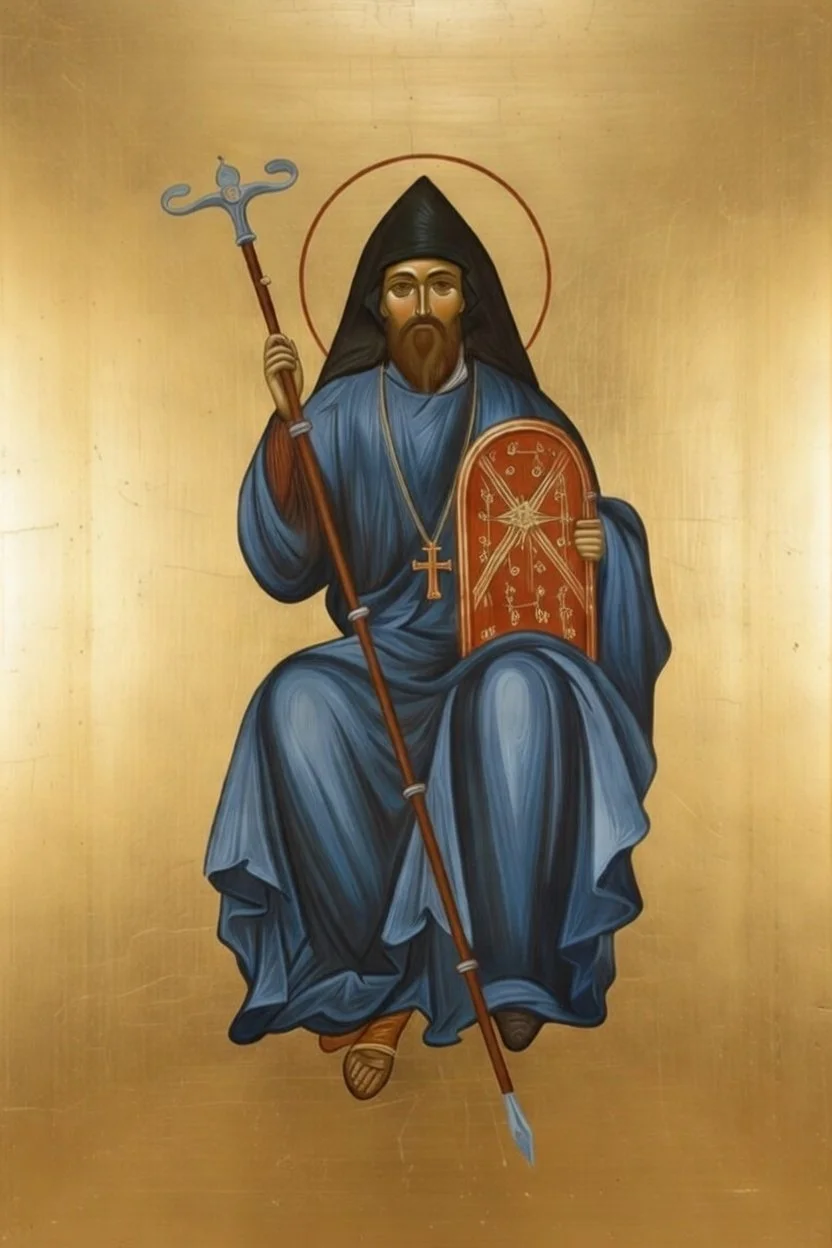
Saint Mesrop Mashtots was an Armenian monk, missionary, and sacred teacher whose life changed an entire civilization. He is venerated in the Armenian Apostolic Church and honored by Armenian Catholics and Eastern Christians worldwide as the holy architect of the Armenian alphabet and the spiritual guardian of Armenian literacy.
His principal feast is celebrated on February 19 in the Armenian tradition.
Saint Mesrop did not conquer lands.
He opened minds.
He did not build armies.
He built language.
At a time when Armenian Christians could not read Scripture in their own tongue and children were growing up disconnected from both faith and identity, Mesrop saw something devastating: a people slowly losing their spiritual inheritance simply because they lacked words.
People pray to Saint Mesrop Mashtots today for learning difficulties, for restoring cultural and spiritual identity, and for wisdom in teaching children the faith. He understands what it feels like to watch young minds struggle. He understands how education shapes souls. He understands how fragile belief becomes when it cannot be spoken or understood.
He also understands how knowledge becomes prayer.
This prayer card is for parents guiding children through school struggles, for teachers forming hearts as well as minds, and for anyone longing to reconnect with faith through learning. Saint Mesrop does not separate education from holiness. He unites them.
Each card is handmade in Austin and created to order. We do not keep stock, because every prayer card is treated as a unique devotional offering. They are printed on museum-quality photo paper, not cardstock, and each one is made during prayer. The saints are venerated throughout the entire process, and prayers are intentionally offered for the person who will receive the card. These are not mass-produced items. They are created slowly, reverently, and with spiritual intention, because every soul and every prayer matters.
Sahak the Great (Isaac the Parthian)
Sahak Partev — Catholicos of Armenia from approximately 387 to 428 AD — is commemorated in the Eastern Orthodox calendar alongside Mesrop. He is honored as one of the Holy Fathers who served the church through teaching, administration, and the organization of Christian intellectual life. His feast in the Byzantine calendar falls on the same date as Mesrop's.
The Orthodox veneration of Sahak is straightforward: he was a Catholicos of Armenia who lived and died before the Council of Chalcedon and the subsequent division of the Armenian church from the Byzantine communion. His work — organizing the translation of the scriptures and patristic literature into Armenian, supporting Mesrop's creation of the alphabet, overseeing the development of Armenian theological education — is the work of a bishop serving the universal church's mission of scriptural transmission and doctrinal formation. There is nothing in Sahak's life or teaching that the Orthodox tradition regards as heterodox, and his memory is honored accordingly.
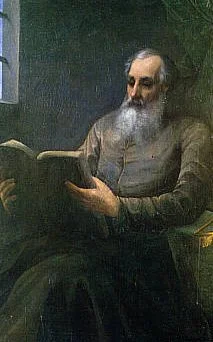
Saint Sahak Partiev, also known as Isaac the Great, was Catholicos of Armenia, spiritual father of a nation, and one of the quiet architects who ensured Christianity survived when political powers tried to erase it. He is venerated in the Armenian Apostolic Church and honored by Eastern Catholics and Orthodox Christians as a shepherd who carried Armenia through cultural collapse and spiritual siege.
His principal feast is celebrated on September 9 in the Armenian tradition.
Saint Sahak did not inherit an easy Church. He inherited a wounded one.
Armenia stood between empires. Persian authorities sought to dismantle Christian identity. Clergy were pressured. Scripture was inaccessible to ordinary people. Children were growing up without spiritual language. Faith itself was becoming fragile.
People pray to Saint Sahak Partiev today for strength in spiritual leadership, for help preserving faith during cultural upheaval, and for wisdom when teaching children in uncertain times. He understands what it feels like to lead while everything is shaking. He understands the exhaustion of carrying responsibility for souls. He understands how devastating it feels to watch a generation drifting away from God.
He also understands how quiet perseverance reshapes history.
This prayer card is for parents guiding children through spiritual confusion, for leaders bearing invisible burdens, and for believers trying to protect faith inside unstable systems. Saint Sahak does not offer dramatic rescue. He offers steady shepherding.
Each card is handmade in Austin and created to order. We do not keep stock, because every prayer card is treated as a unique devotional offering. They are printed on museum-quality photo paper, not cardstock, and each one is made during prayer. The saints are venerated throughout the entire process, and prayers are intentionally offered for the person who will receive the card. These are not mass-produced items. They are created slowly, reverently, and with spiritual intention, because every soul and every prayer matters.
Saints of the Chalcedonian Division — Where Things Get Complex
The Problem of Post-Dvin Saints
With the definitive rejection of Chalcedon at the Council of Dvin in 506 AD, the theological landscape shifts significantly for the question of Armenian saints in the Orthodox world. Saints who lived, flourished, and were canonized after this date were formed within a church that had formally anathematized a council that Eastern Orthodoxy regards as the Fourth Ecumenical Council — one of the seven pillars of Orthodox conciliar theology. This creates a genuine ecclesiological question: can the Eastern Orthodox Church venerate saints canonized by a church whose formal doctrinal position includes the rejection of a council that Orthodoxy considers binding?
The honest answer is that the Eastern Orthodox world has not resolved this question uniformly, and the approach taken in practice varies significantly by jurisdiction, by theological school, and by historical circumstance.
Nerses Shnorhali — The Gracious Catholicos
Nerses Shnorhali (Nerses IV, 1102–1173 AD) presents perhaps the most interesting single case study in this question. As described in the companion article on the Armenian Christian tradition, Nerses was the Catholicos of All Armenians from 1166 to 1173 AD and was one of the most gifted poet-theologians, liturgical composers, and ecumenical figures the Armenian church has ever produced. His correspondence with the Byzantine Emperor Manuel I Komnenos on the subject of theological reunion between the Armenian and Byzantine churches was one of the most sophisticated and irenic pieces of ecumenical theology in medieval Christianity.
Here is what makes his status in the Orthodox world genuinely interesting: Nerses was not simply a non-Chalcedonian saint of limited relevance to the Orthodox world. He was a man who actively sought reunion with the Byzantine church, who engaged deeply and respectfully with Byzantine theology, who produced liturgical and theological works of a quality that Byzantine-trained theologians recognized as outstanding, and who died before his ecumenical conversations could reach any formal conclusion. In a very real sense, Nerses stood at the threshold between the Armenian non-Chalcedonian tradition and the Chalcedonian Byzantine tradition, reaching across the divide with extraordinary theological grace.
Some Orthodox Christians, particularly those in the Armenian diaspora context or those engaged in ecumenical work, do venerate Nerses Shnorhali informally, and his theological and liturgical writings have been read and appreciated by Orthodox scholars. However, he does not have a formal feast day in any Eastern Orthodox Menaion, and his veneration in Orthodox contexts remains informal and unconfirmed by any conciliar or patriarchal authority. His status is, in other words, one of informal recognition among the theologically informed, without the formal liturgical incorporation that would constitute canonical Orthodox sainthood.


Gregory of Narek — The Most Significant Modern Question
The Doctor of the Universal Church and the Orthodox World
The canonization of Gregory of Narek as a Doctor of the Universal Church by Pope Francis in 2015 created a fascinating and somewhat unprecedented situation in the Orthodox world. Here was a non-Chalcedonian Armenian monk of the tenth and eleventh centuries — a man whose Book of Lamentations is one of the greatest works of Christian mystical literature in any language — being formally declared a teacher of the universal church by the Bishop of Rome. The Eastern Orthodox reaction to this declaration was complex and revealing.
On one hand, Orthodox scholars who have read the Narek carefully have generally found in it no doctrinal content that they can identify as heterodox. The prayer-poems of Gregory of Narek are saturated with Trinitarian theology, Christological meditation, and a spirituality of repentance and divine mercy that resonates deeply with the Orthodox hesychast tradition and with the patristic theology of figures like Isaac the Syrian (who, incidentally, is himself a figure of theological complexity in terms of his ecclesiastical identity — originally a bishop of the Church of the East — yet universally venerated in the Orthodox world). The Narek is not a polemical work; it does not argue for or against Chalcedon, does not engage with the technical vocabulary of the two-natures controversy, and does not contain anything that could be identified as distinctively non-Chalcedonian in its theological content. It is, in the most direct sense, a book of prayer — and prayer, it turns out, has a way of transcending the ecclesiastical boundaries that dogmatic controversy creates.
On the other hand, the formal canonization of Gregory by Rome put the Orthodox churches in a slightly awkward position. If Rome declares a non-Chalcedonian Armenian saint a Doctor of the Universal Church, what does Orthodoxy say? The options range from welcoming the declaration as recognition of a genuinely universal spiritual treasure, to treating it as Rome's unilateral act that doesn't bind the Orthodox churches, to arguing that the declaration reveals something important about the limits of the Chalcedonian/non-Chalcedonian divide itself.
In practice, various Orthodox voices have reacted in all three of these ways. Some Orthodox theologians — particularly those engaged in Oriental-Orthodox dialogue — have pointed to the Pope's declaration as evidence that the Narek belongs to the whole church and have suggested that the Orthodox churches might consider formally incorporating Gregory of Narek into their own calendar. Others have been more cautious, noting that while the content of the Narek is admirable, formal incorporation into the Orthodox calendar of a saint canonized by a church not in communion with Orthodoxy raises canonical questions that cannot be resolved by simply admiring someone's writing.
As of this writing, Gregory of Narek does not have a formal feast day in the Eastern Orthodox calendar of any jurisdiction. But his works are read and treasured by Orthodox Christians who have encountered them, and the informal veneration of him among Orthodox believers — particularly Armenian Orthodox, particularly those involved in ecumenical work — is real and growing.
The Isaac the Syrian Parallel
The case of Gregory of Narek invites comparison with a very instructive parallel: Saint Isaac the Syrian (Isaac of Nineveh), the seventh-century ascetic and mystical writer whose Ascetical Homilies are among the most widely read texts in Eastern Orthodox spiritual literature. Isaac was a bishop of the Church of the East — a church that rejected not only Chalcedon but also the Council of Ephesus, holding a Christological position (associated with Nestorius) that is even further from Orthodox teaching than the Armenian miaphysite position. Yet Isaac is universally venerated in the Eastern Orthodox Church, with a feast day on January 28, his works are read in Orthodox monasteries, and no Orthodox theologian of any standing would suggest removing him from the calendar.
Why? Because Isaac's actual theological and spiritual content — his writings on prayer, stillness, repentance, and divine mercy — is so thoroughly consonant with the Orthodox spiritual tradition, and so evidently the product of genuine holiness, that his formal ecclesiastical affiliation is treated as essentially irrelevant to his status as a spiritual father. The great Orthodox scholar Bishop Hilarion Alfeyev has written extensively on Isaac of Nineveh, and his work demonstrates that the Orthodox reception of Isaac represents a de facto principle: genuine spiritual holiness of the highest order can transcend the canonical boundaries of communion, and the Orthodox church is capable of recognizing and honoring it when it encounters it.
This principle, if applied consistently, would argue strongly for the formal Orthodox veneration of Gregory of Narek. His content is at least as compatible with Orthodox theology as Isaac's, and his ecclesiastical separation is arguably less extreme. The cases are not identical, but the parallel is instructive and has not been lost on those engaged in Armenian-Orthodox theological dialogue.
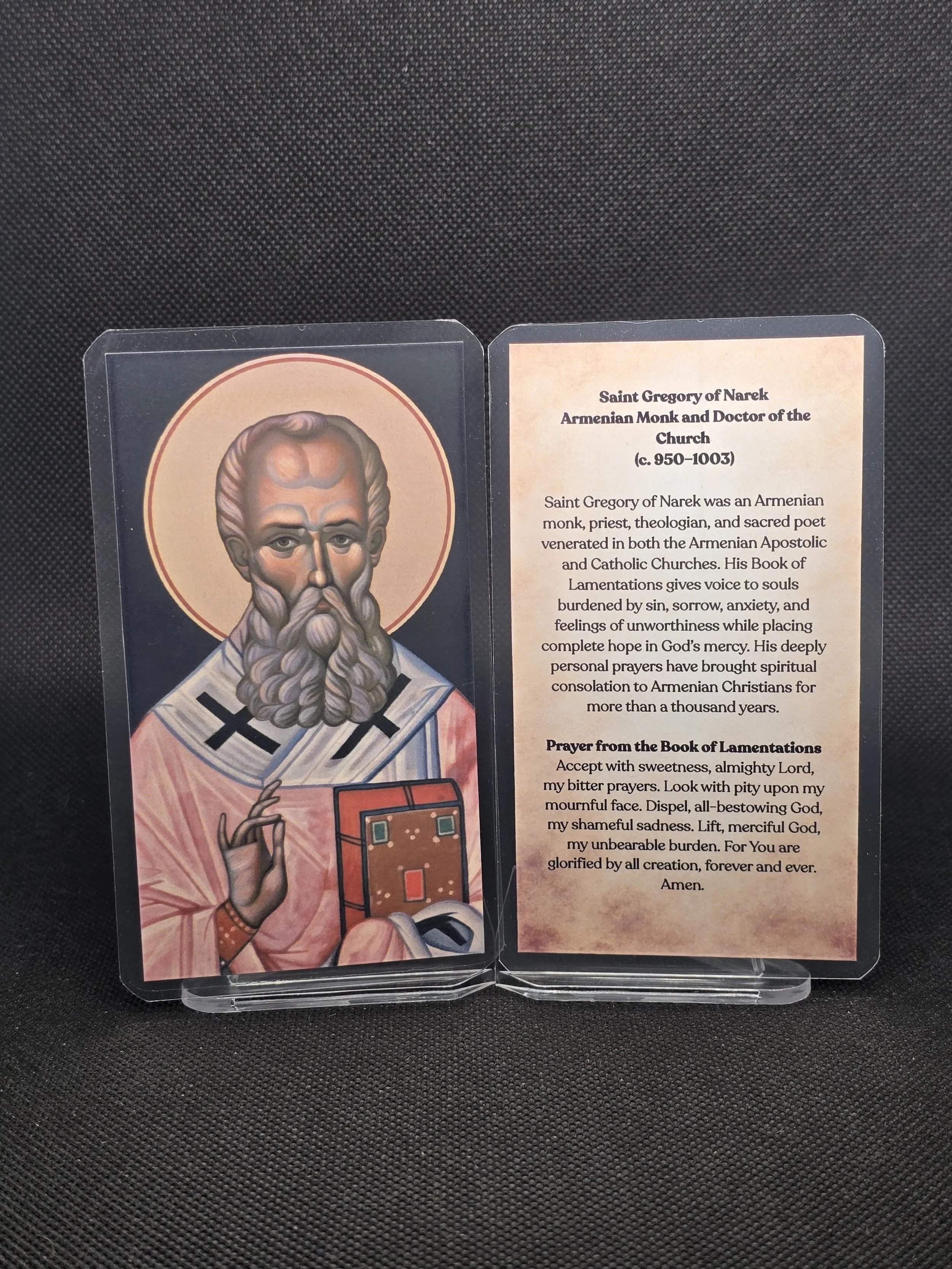
Saint Gregory of Narek was an Armenian monk, mystic, poet, and Doctor of the Church whose tears became theology and whose prayers have comforted broken souls for over a thousand years. He is venerated in the Armenian Apostolic Church and honored by Armenian Catholics and the wider Catholic Church, which proclaimed him a Doctor of the Church in 2015. His principal feast is celebrated on February 27 in the Armenian tradition, with commemorations also observed in the Catholic calendar.
Saint Gregory did not live a dramatic public life.
He lived interiorly.
He was born around 950 near Lake Van and entered monastic life at the monastery of Narek, where he spent his years in study, repentance, and relentless prayer. His most famous work, the Book of Lamentations, is not a treatise. It is a cry. It is the voice of a soul wrestling with anxiety, guilt, fear of judgment, and longing for mercy.
People pray to Saint Gregory of Narek today for depression healing, scrupulosity, and freedom from crushing spiritual despair. He understands what it means to feel unworthy. He understands the ache of overexamining every fault. He understands how heavy the human heart can feel when burdened by shame and intrusive thoughts.
He also understands mercy.
This prayer card is for those battling interior darkness, for believers tormented by spiritual anxiety, and for anyone longing to learn how to pray from the depths rather than from performance. Saint Gregory does not dismiss suffering of the mind. He walks into it and prays from within it.
Each card is handmade in Austin and created to order. We do not keep stock, because every prayer card is treated as a unique devotional offering. They are printed on museum-quality photo paper, not cardstock, and each one is made during prayer. The saints are venerated throughout the entire process, and prayers are intentionally offered for the person who will receive the card. These are not mass-produced items. They are created slowly, reverently, and with spiritual intention, because every soul and every prayer matters.
The Georgian Connection — A Special Case
Saints Shared Between Armenian and Georgian Orthodox Traditions
The relationship between Armenian Christianity and Georgian Orthodoxy deserves special treatment in this discussion, because it involves a dimension of shared sanctity that is both ancient and intimate in ways that the broader Armenian-Byzantine Orthodox relationship is not.
Georgia received Christianity from a remarkably close source: Saint Nino, the apostle of Georgia, was according to tradition a woman of Cappadocian origin who traveled to Georgia in the early fourth century and converted Queen Nana and King Mirian III. The Georgian church is fully Chalcedonian and in communion with the Eastern Orthodox family, but its historical origins are entangled with the Armenian church in the shared geography of the Caucasus region and the shared experience of early Christian mission.
Mesrop Mashtots, as noted in the companion article, created not only the Armenian alphabet but also the Georgian alphabet — a fact of enormous significance for the Georgian church, which regards Mesrop as a benefactor of their own tradition. The Georgian Orthodox Church venerates Mesrop Mashtots and honors the connection between Armenian and Georgian Christianity in the Golden Age period as one of the foundational moments of Caucasian Christian civilization. The shared feast of Mesrop and Sahak in the Orthodox calendar is observed in Georgian Orthodox communities with particular warmth, given this direct connection.
Furthermore, the history of Armenian and Georgian Christianity is intertwined in the figure of Saint Nino herself, who according to some traditions was connected to the Armenian apostolic community and whose mission to Georgia was partly enabled by the prior existence of Armenian Christian networks in the Caucasus. The cross-cultural sainthood of the Caucasian Christian world is a rich and underexplored dimension of the broader question of Armenian saints in the Orthodox world.


The Holy Forty Martyrs of Sebaste — An Armenian Connection
The Forty Soldiers and Their Armenian Setting
The Holy Forty Martyrs of Sebaste — one of the most universally beloved groups of martyrs in the entire Eastern Orthodox calendar, commemorated on March 9 (Old Calendar) / March 22 (New Calendar) — have a direct and significant connection to the Armenian world that is often overlooked in discussions of Armenian-Orthodox shared sanctity.
The forty Roman soldiers who were stripped naked and left to freeze to death on a frozen pond in Sebaste (modern Sivas, in central Turkey) around 320 AD were martyred in territory that was part of the Roman province of Armenia Minor — the western, Roman-administered portion of the Greater Armenian cultural region. Sebaste was a major city in a region with a significant Armenian population and a growing Christian community, and while the forty martyrs are not ethnically identified as Armenian in the earliest sources, they died in a city that the Armenian church regards as part of the broader Armenian homeland.
The Armenian Apostolic Church venerates the Forty Martyrs of Sebaste alongside the Eastern Orthodox Church — they appear in both calendars with feast day commemorations that, while on different dates due to calendar differences, honor the same persons. This is a case of genuinely shared martyrs, simultaneously claimed by both traditions, and the site of their martyrdom — in territory that was historically and culturally Armenian — makes the connection natural and theologically significant.

Saint Nina of Georgia and the Armenian Dimension
The Apostle of Georgia and Her Armenian Connections
Saint Nina, the apostle of Georgia (commemorated in the Orthodox calendar on January 14 Old Calendar / January 27 New Calendar), is one of the most beloved women saints in the entire Orthodox world and is given the title Equal-to-the-Apostles — the same exalted title as Gregory the Illuminator. The traditions surrounding Nina's origin and mission are complex and contain a specifically Armenian dimension that is important for understanding the interconnected sanctity of the Caucasian Christian world.
Various traditions identify Nina as the niece of the Patriarch of Jerusalem, as a Cappadocian Greek, or as a woman with connections to the Armenian Christian community. The most detailed Georgian accounts of her life suggest that she traveled through the Armenian territories on her way to Georgia and that she was present in the Armenian capital Artashat (Artaxata) during the period of the martyrdom of the Hripsimian Virgins — some versions of the tradition even suggest that Nina was a companion of Hripsime and her group who survived by fleeing further north into Georgian territory. If this tradition is accepted, Nina's apostolic mission to Georgia is itself a direct consequence of the Armenian martyrdom narrative, making the Armenian and Georgian apostolic traditions inseparably linked at their very roots.
Whether or not this specific narrative detail is historically accurate, it illustrates the extent to which the early Christian traditions of Armenia and Georgia are not parallel and independent stories but are deeply interwoven — the same people, the same geography, the same period of apostolic mission, the same experience of pagan persecution, producing saints who are claimed and honored by both traditions simultaneously.
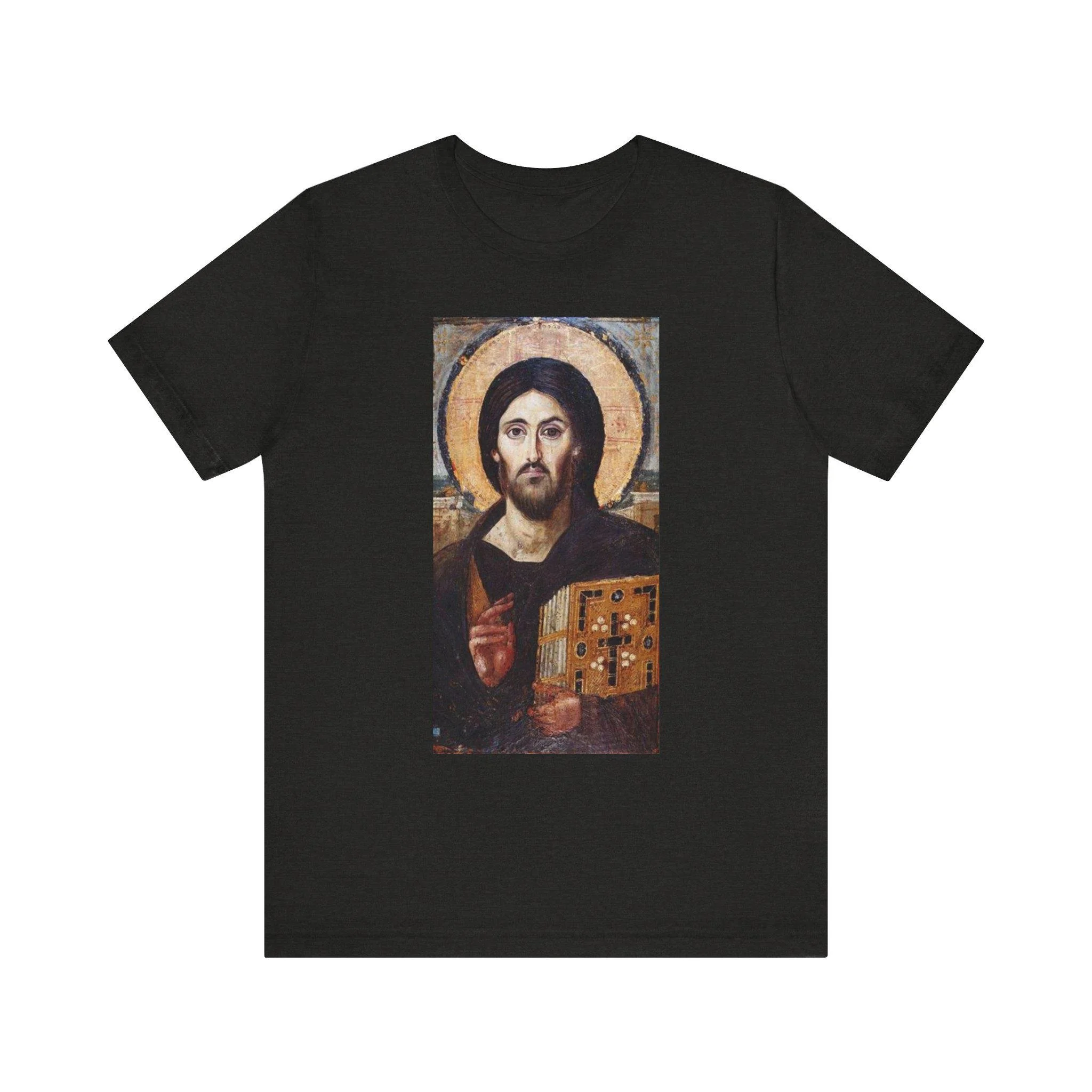
Product features
- Unisex fit tee made with 100% Airlume combed and ring-spun cotton
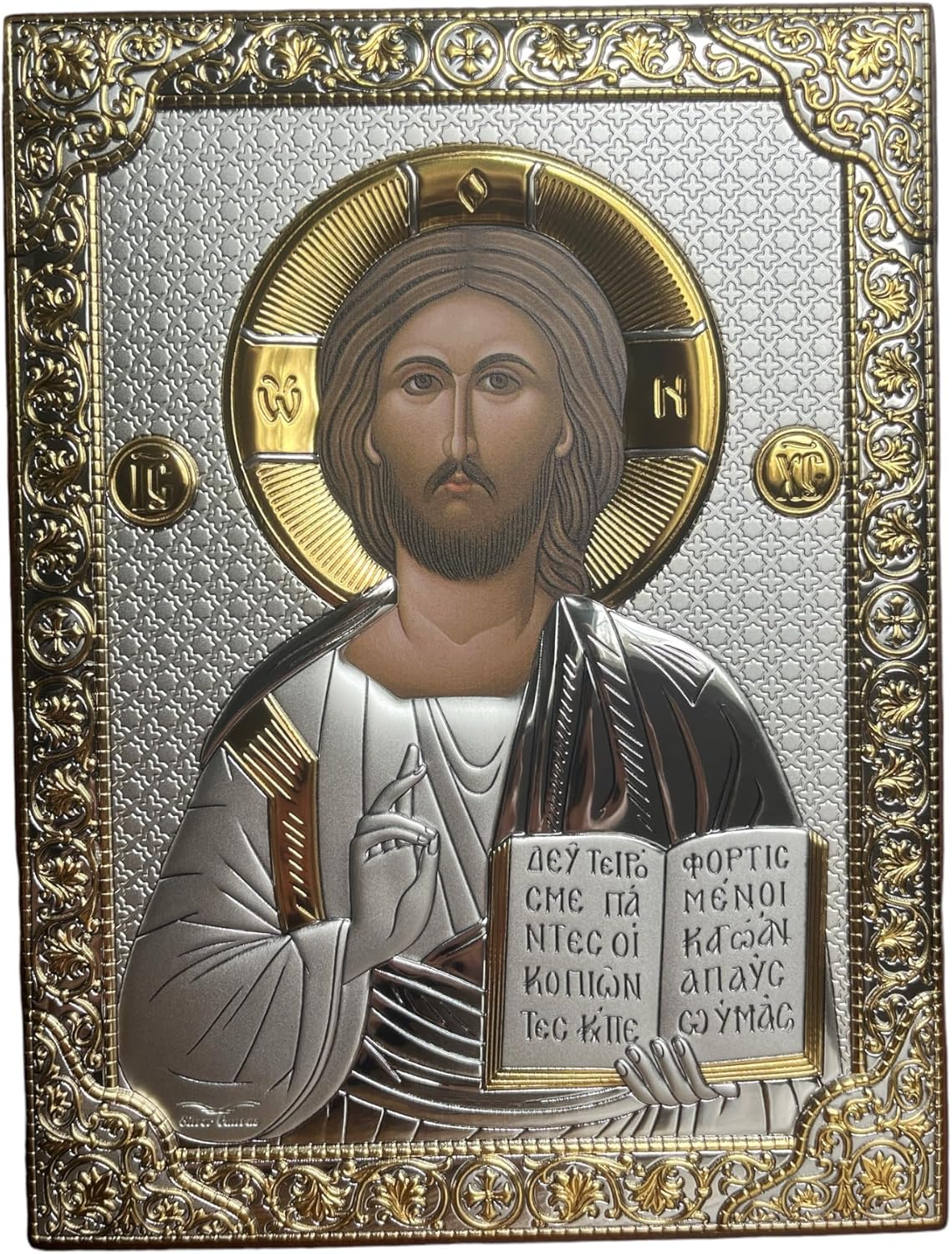
- Vintage design featuring the Jesus of Sinai (Christ Pantocrator) icon
- Ideal for casual and semi-formal settings
- Printed with Direct-to-Garment (DTG) sleeve printing techniques for vibrant colors
- Complies with REACH regulations and comes with tear-away label
Care instructions
- Machine wash: cold (max 30C or 90F)
- Non-chlorine: bleach as needed
- Tumble dry: low heat
- Iron, steam or dry: medium heat
- Do not dryclean
Specific Liturgical Commemorations — A Practical Guide
Which Armenian Saints Have Formal Orthodox Feast Days
For Orthodox Christians who want a clear, practical answer to the question of which Armenian saints they can venerate without any canonical ambiguity, here is a definitive enumeration of those who appear in the Eastern Orthodox Menaion with formal feast days:
The Apostle Thaddaeus (Jude) — Feast: June 19 Old Calendar / July 2 New Calendar; also commemorated on the Sunday of the Holy Apostles. Universal veneration across all Orthodox jurisdictions without qualification.
The Apostle Bartholomew (Nathanael) — Feast: June 11 Old Calendar / June 24 New Calendar. Universal veneration across all Orthodox jurisdictions.
Gregory the Illuminator (Equal-to-the-Apostles) — Feast: September 30 Old Calendar / October 13 New Calendar. Full service in the Byzantine Menaion; venerated across all Orthodox jurisdictions.
The Holy Hripsime (Ripsime) and Companions — Feast: September 30 Old Calendar (same day as Gregory, as their martyrdom and Gregory's release are theologically linked); also commemorated individually. Hripsime has a separate feast on September 29 Old Calendar in some traditions. Venerated across Orthodox jurisdictions.
Saint Mesrop (Mesrob) the Translator — Feast: February 17 Old Calendar / March 2 New Calendar (typically commemorated jointly with Sahak). Present in the Menaion; venerated particularly in the Georgian Orthodox Church due to Mesrop's creation of the Georgian alphabet.
Saint Sahak (Isaac the Parthian) — Feast: September 9 Old Calendar in some traditions; also jointly with Mesrop. Present in the Menaion of various Orthodox traditions.
Saint Gaiane — Feast: September 29 Old Calendar / October 12 New Calendar. Commemorated in the Byzantine Menaion as one of the Hripsimian martyrs.
These are the saints who appear in the formal liturgical calendar of Eastern Orthodoxy with full services and canonical feast days. An Orthodox Christian venerating any of these figures is acting entirely within the formal tradition of their church.
Saints Without Formal Orthodox Feast Days But with Significant Orthodox Recognition
Beyond the formal calendar, there are Armenian saints who are widely known and respected in Orthodox theological and scholarly circles, whose veneration by Orthodox Christians is not canonically prohibited, and whose holiness is not contested by any mainstream Orthodox theological voice, but who have not been formally incorporated into the Orthodox Menaion:
Nerses Shnorhali (Nerses the Gracious) — Catholicos of Armenia 1166–1173 AD; widely admired in Orthodox theological circles for his ecumenical correspondence with the Byzantine Emperor and for the quality of his theological and liturgical writings. No formal Orthodox feast day. Informal veneration among Orthodox Christians engaged in Armenian-Orthodox dialogue.
Gregory of Narek (Grigor Narekatsi) — 951–1003 AD; declared Doctor of the Universal Church by Pope Francis in 2015; his Book of Lamentations is read and treasured by Orthodox monastics and scholars who have encountered it. No formal Orthodox feast day. Informal veneration growing, particularly in the diaspora context where Armenian and Orthodox communities intersect.
Grigor Tatevatsi (Gregory of Tatev) — 1346–1409 AD; the great medieval theologian of Tatev University. Not formally commemorated in any Orthodox calendar but known to Orthodox scholars of medieval Armenian Christianity.
The Russian Orthodox Church and Armenian Saints
A Special Relationship
Within the Eastern Orthodox family, the Russian Orthodox Church has historically had a particularly significant engagement with the Armenian tradition, partly due to the geographic and political relationships between the Russian Empire and the Armenian population of the Caucasus. The Russian Empire's expansion into the Caucasus in the nineteenth century brought millions of Armenians under Russian rule and created extended contact between the Russian Orthodox Church and the Armenian Apostolic Church.
The Russian church's relationship with the Armenian church during the imperial period was complex: there was genuine theological and pastoral respect in some quarters, considerable missionary pressure in others, and a political dimension shaped by the Russian state's interests in the region. But the encounters also produced significant Russian Orthodox scholarship on Armenian Christianity, and Russian Orthodox theologians of the nineteenth and twentieth centuries were among the first in the Orthodox world to engage seriously with Armenian theological and spiritual literature.
Saint Gregory the Illuminator is commemorated in the Russian Orthodox calendar under his Russian name, Grigory Prosvetitel (Григорий Просветитель), with the same feast day as in the Byzantine calendar. The full service for Gregory is celebrated in Russian Orthodox churches, and icons of Gregory are found in Russian Orthodox iconostases, particularly in churches with historically close connections to the Caucasus or to Armenian communities.
Icons of Armenian Saints in Orthodox Churches
The iconographic representation of Armenian saints in Eastern Orthodox churches is itself an interesting dimension of this shared sanctity. Icons of Gregory the Illuminator, Bartholomew, and Thaddaeus appear regularly in Orthodox churches, particularly in iconostases where the saints depicted are organized according to the feast cycle of the Menaion. Gregory is typically depicted in the iconographic style of a bishop-saint: wearing episcopal vestments, holding a Gospel book or a scroll, with his right hand raised in blessing.
The icons of Gregory produced by Orthodox iconographers are essentially identical in their theological program to the icons produced by Armenian artists for the Armenian church — both traditions depict the same person, vested in the same episcopal dignity, bearing the same attributes of holiness. The visual convergence of these icons across the communal divide is itself a kind of ecumenical statement: the two traditions, looking at the same holy man, paint him in recognizably the same way.


The Oriental-Orthodox Dialogue and Its Implications for Shared Sanctity
Agreed Christology and the Question of Shared Saints
As discussed in the companion article on the Armenian Christian tradition, the theological dialogues between the Eastern Orthodox churches and the Oriental Orthodox churches (which include the Armenian Apostolic Church) in the twentieth century produced agreed statements acknowledging that the Chalcedonian and non-Chalcedonian traditions share the same fundamental Christological faith. The 1989–1990 Agreed Statements of the Joint Commission for Theological Dialogue represent a consensus that the division of the fifth century was as much terminological as substantive.
The implications of this consensus for the question of shared saints are significant. If the theological basis for the separation between the Armenian and Orthodox churches is acknowledged to be less severe than it appeared to earlier generations, then the rationale for treating post-schism Armenian saints as belonging exclusively to a separated tradition is correspondingly weakened. If the Armenian church has, throughout the centuries since 506 AD, maintained the same fundamental Christological faith as the Eastern Orthodox churches — expressing it in different theological vocabulary but confessing the same Lord — then its saints have been living within a genuinely Orthodox Christian environment, and the holiness they manifested was nurtured by genuinely Orthodox Christian doctrine, liturgy, prayer, and community life.
This argument, advanced by theologians engaged in the Oriental-Orthodox dialogue, suggests that the formal incorporation of additional post-schism Armenian saints into the Eastern Orthodox calendar is not merely possible but theologically appropriate — that it would be, in fact, an act of recognition rather than an act of innovation. The Orthodox church would not be creating new saints by incorporating, say, Gregory of Narek into its calendar; it would be acknowledging a holiness that already existed and that the Armenian church had already recognized.
This argument has not been universally accepted within Orthodoxy, and the canonical and practical obstacles to formal incorporation remain significant. But it has moved the conversation forward, and the trajectory of the dialogue — particularly given the remarkable theological convergence achieved in recent decades — suggests that the boundaries of shared sanctity between the Armenian and Orthodox traditions may continue to expand in the years ahead.
Offer a Dedication
If this page was meaningful to you, you are welcome to dedicate this or any educational page in memory of a loved one, for a prayer intention, or in gratitude for blessings received.
Each dedication is placed permanently at the bottom of the page and remains there indefinitely as a quiet light of remembrance. Everyone who visits this page will see the dedication and remember the person or intention it honors, much like a candle that continues to burn long after it is first lit.
Your dedication also helps support the continued sharing of Eastern Christian history, prayer, and the lives of the saints.
For the Orthodox Christian With Armenian Heritage — A Pastoral Word
Veneration, Prayer, and Canonical Integrity
For Orthodox Christians with Armenian family backgrounds — and there are millions of them, particularly in communities where Armenian Apostolic and Eastern Orthodox populations have lived in proximity for generations — the question of venerating Armenian saints is often not merely theological but intensely personal. When your grandmother prayed to Gregory of Narek her whole life, and you have converted to Eastern Orthodoxy or were raised in it by a mixed-tradition family, the question of whether you can still turn to Gregory in prayer is not a theoretical one.
The canonical answer — to the extent that there is a clean canonical answer — distinguishes between formal liturgical commemoration (which requires a feast day in the Menaion and the celebration of a full service) and private devotion or personal prayer (which is governed by more flexible principles). An Orthodox Christian who privately reads the Narek of Gregory of Narek, who keeps an icon of Gregory the Illuminator (formally in the calendar) alongside an icon of Gregory of Narek (not formally in the calendar), and who asks both for their intercessions, is not doing something that any mainstream Orthodox theologian or pastor would characterize as formally prohibited. The question of whether an uncanonized person is actually a saint — in the sense of being in God's presence and capable of interceding — is one that Orthodox theology generally answers by reference to the person's evident holiness and the fruit of their life, and Gregory of Narek's holiness and the fruit of his work are not seriously disputed by any Orthodox voice.
What an Orthodox Christian should not do, in the strict canonical sense, is celebrate a formal liturgical service — a Molieben (service of supplication), a Paraklesis, a full saint's service — to an Armenian saint not in the Orthodox calendar, because such a service would imply a formal ecclesiastical recognition that has not been granted. This is a distinction between personal piety and public liturgy that is well understood in Orthodox canonical tradition and that preserves the integrity of the church's formal worship while allowing considerable latitude in personal devotion.
Why This Question Matters Beyond the Calendar
The question of which Armenian saints are venerated in Eastern Orthodoxy is not finally a question about a list of names and dates. It is a question about the nature of Christian holiness, the limits of ecclesiastical division, and the possibility that the Holy Spirit has been at work on both sides of a theological boundary that both sides now increasingly acknowledge may be less absolute than it once seemed.
The saints discussed in this article — from the Apostles Thaddaeus and Bartholomew, who preached in Armenia before any institutional church existed, to Gregory the Illuminator, who turned a nation to Christ, to Mesrop Mashtots, who gave that nation the words to pray to their new God in their own tongue, to Gregory of Narek, whose prayers reach across every boundary into the deepest places of the human heart before God — these figures do not fit neatly into the categories that later ecclesiastical controversy created. They were formed by, and in turn formed, a Christian tradition of extraordinary depth and beauty, and the Eastern Orthodox Church's recognition of the greatest of them as its own saints is an implicit acknowledgment of that depth and that beauty.
The trajectory of Orthodox-Oriental Orthodox dialogue, the growing informal veneration of Gregory of Narek in Orthodox communities, the canonical feast days of Gregory the Illuminator and Mesrop Mashtots in the Byzantine Menaion — all of these point toward an understanding of the Armenian-Orthodox relationship that is neither one of simple identity nor of simple opposition, but of something more interesting and ultimately more hopeful: two traditions that share deep roots, that have expressed the same faith in different theological vocabularies, and that are slowly, carefully, prayerfully finding their way back toward one another across fifteen centuries of separation.
The Armenian saints in the Eastern Orthodox calendar are not a curiosity or a footnote. They are a sign of that possible future — a reminder that holiness, when it is genuine, has a way of outlasting the divisions that human history creates.
This article draws on the Byzantine Menaion (both Greek and Slavonic versions), the Armenian Synaxarion, the agreed statements of the Joint Commission for Theological Dialogue between the Eastern Orthodox and Oriental Orthodox Churches (1989–1990), the works of Bishop Hilarion Alfeyev on Isaac the Syrian, the scholarship of Robert Thomson and Vrej Nersessian on Armenian Christianity, and the theological writings of Catholicos Karekin II on Orthodox-Armenian relations.