Armenian Catholic vs Armenian Apostolic: What's the Difference?
The Complete Guide
Armenian Catholic vs. Armenian Apostolic: What's the Difference?
Two churches. One ancient heritage. Same liturgy, same saints, same language — and one profound divide that took fifteen centuries to form
The Short Answer
The Armenian Apostolic Church is an independent Oriental Orthodox church. It is not in communion with Rome, not in communion with Eastern Orthodoxy, and is governed by its own Catholicos. It was founded by the Apostles Thaddeus and Bartholomew and has existed continuously since 301 AD. It holds a Miaphysite Christology and rejects the Council of Chalcedon (451 AD).
The Armenian Catholic Church is one of the 23 Eastern Catholic churches in full communion with Rome. It uses the same ancient Armenian liturgical rite (the Badarak), the same Classical Armenian language, and venerates the same pre-Chalcedonian saints — but is subject to the authority of the Pope and formally accepts Chalcedon. It was formally established as a distinct institution in 1740/1742.
What they share: apostolic origins, the same ancient saints, the same Badarak liturgy, the same alphabet and language, the same theological tradition up to the fifth century, and a vast common spiritual heritage that makes their day-to-day worship look nearly identical to an outside observer.
What divides them: papal authority, Christological formula, and 280 years of institutional separation — sitting on top of a much older 1,000-year story of attempted and failed reunions.
Walk into an Armenian Apostolic church on a Sunday. Now walk into an Armenian Catholic church. The priest will be wearing almost identical vestments. The same ancient Armenian hymns will fill the air. The Badarak — the Divine Liturgy — will unfold in the same Classical Armenian language that Mesrop Mashtots gave Armenia sixteen centuries ago. The same icons and crosses will be present. The priest may be married. Communion will be administered as intincted bread placed directly into the mouth of the communicant.
An uninformed visitor could not tell the difference. And in the most important sense — the sense that includes fifteen hundred years of shared martyrdom, shared saints, shared alphabet, and shared identity — there may not be as much difference as the formal institutional separation suggests.
And yet the separation is real, historically significant, and theologically meaningful. The Armenian Apostolic Church and the Armenian Catholic Church are not the same institution. They have different leaders, different formal relationships with the papacy, different positions on the Council of Chalcedon, and different canonical structures. The confusion between them is almost universal among non-Armenians — and even many Armenians are uncertain about what exactly separates the two churches they may have grown up hearing about.
This article is the complete guide to that question. It covers the shared root, the historical separation, the 1,000-year story of attempted reunions, the founding of the Armenian Catholic Church in 1740, the five key theological and institutional differences, and — because this is what most readers actually want to know — which prayer cards from our collection belong to both traditions and why.
The Shared Root: What Both Churches Have in Common
Before comparing what divides the two churches, it is essential to understand — and genuinely feel the weight of — what they share. Because the shared heritage is not just historical background. It is the living substance of both churches' identity, and it means that the prayer cards in our Armenian collection are authentically relevant to members of both traditions.
The Same Apostolic Foundation
Both churches trace their origins to the same apostolic foundation: the Apostles Thaddeus and Bartholomew who brought Christianity to Armenia in the first century, and Saint Gregory the Illuminator who organized the national church after King Tiridates III's conversion in 301 AD. Both claim the same unbroken line of apostolic succession from those origins. The Armenian Catholic Church does not claim a different founding than the Armenian Apostolic Church — it claims to be in continuity with the same ancient church, simply now in formal communion with Rome.
The Same Ancient Saints
Every pre-Chalcedonian Armenian saint — Gregory the Illuminator, Hripsime, Gayane, Sahak Partiev, Mesrop Mashtots, Vartan Mamikonian, Nerses the Great, Aristakes, Sandukht, King Tiridates III — is venerated by both churches. These saints lived and died before the theological divisions that eventually separated Armenians from Rome and Constantinople. They belong to the whole Armenian Christian tradition, not to one branch of it. The Armenian Catholic Church additionally recognizes saints formally beatified or canonized by Rome — such as Blessed Gomidas Keumurjian and Blessed Ignatius Maloyan — but these are additions to, not replacements for, the shared ancient saints.
The Same Liturgy
Both churches celebrate the Badarak — the Armenian Divine Liturgy — in Classical Armenian (Krapar/Grabar). The liturgy's structure, its prayers, its music, its vestments, and its ceremonial actions are essentially identical in both traditions. The Armenian Rite liturgy developed before the post-Chalcedonian separation of communions and is therefore the common inheritance of all Armenian Christians. The Armenian Catholic Church has introduced some modest Latin-influenced elements over the centuries (such as the Stations of the Cross and benediction), but the Badarak itself — the Eucharistic liturgy — remains recognizably the same in both churches.
The Same Language
Both churches use Classical Armenian (Grabar) as their liturgical language — the language created by Mesrop Mashtots in 405 AD and used for the first Armenian Bible translation. This shared sacred language is a powerful bond. When Armenian Catholics and Armenian Apostolics encounter each other in ecumenical settings, they can pray together in Grabar without any theological negotiation required.
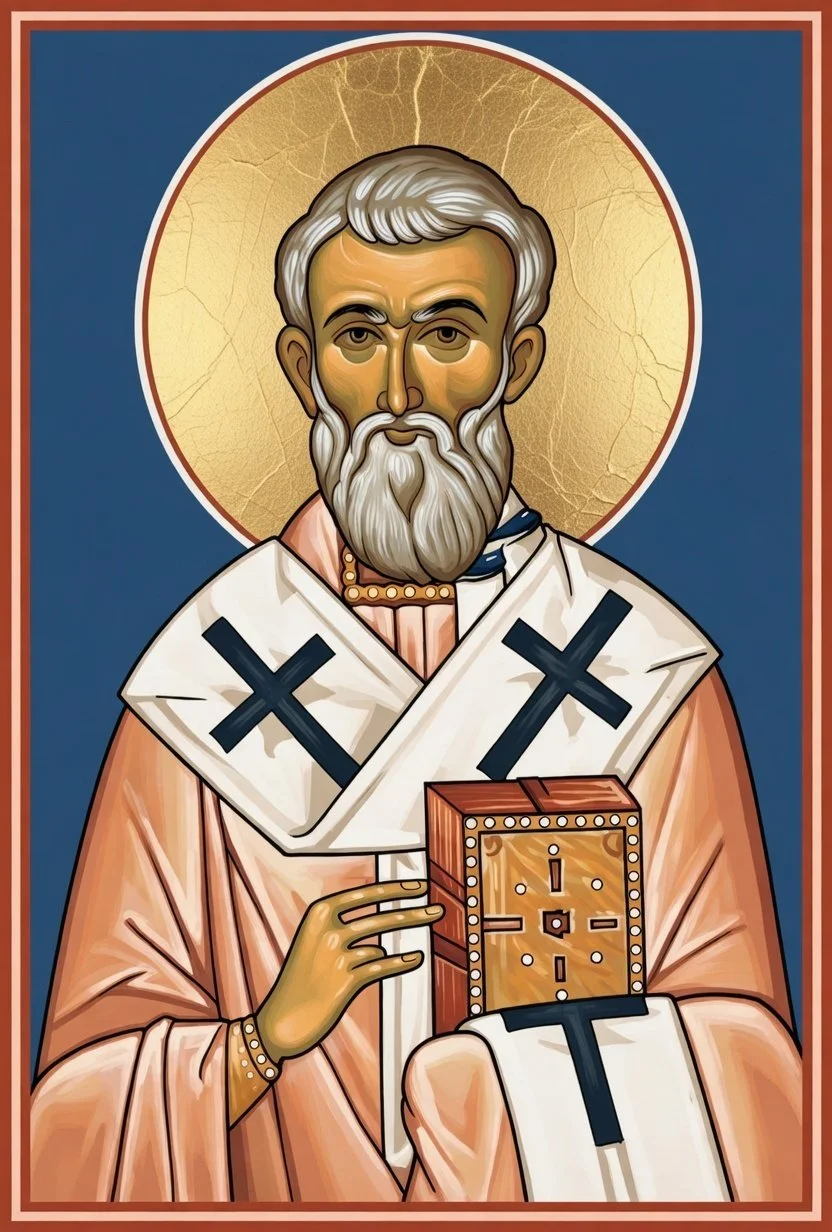
Saint Gregory the Illuminator
Patron saint of Armenia and founder of the Armenian Church — venerated equally by both Armenian Catholic and Armenian Apostolic Christians as their common father in faith. Venerated also in the Eastern Orthodox Menaion on September 30.
Get the Prayer Card →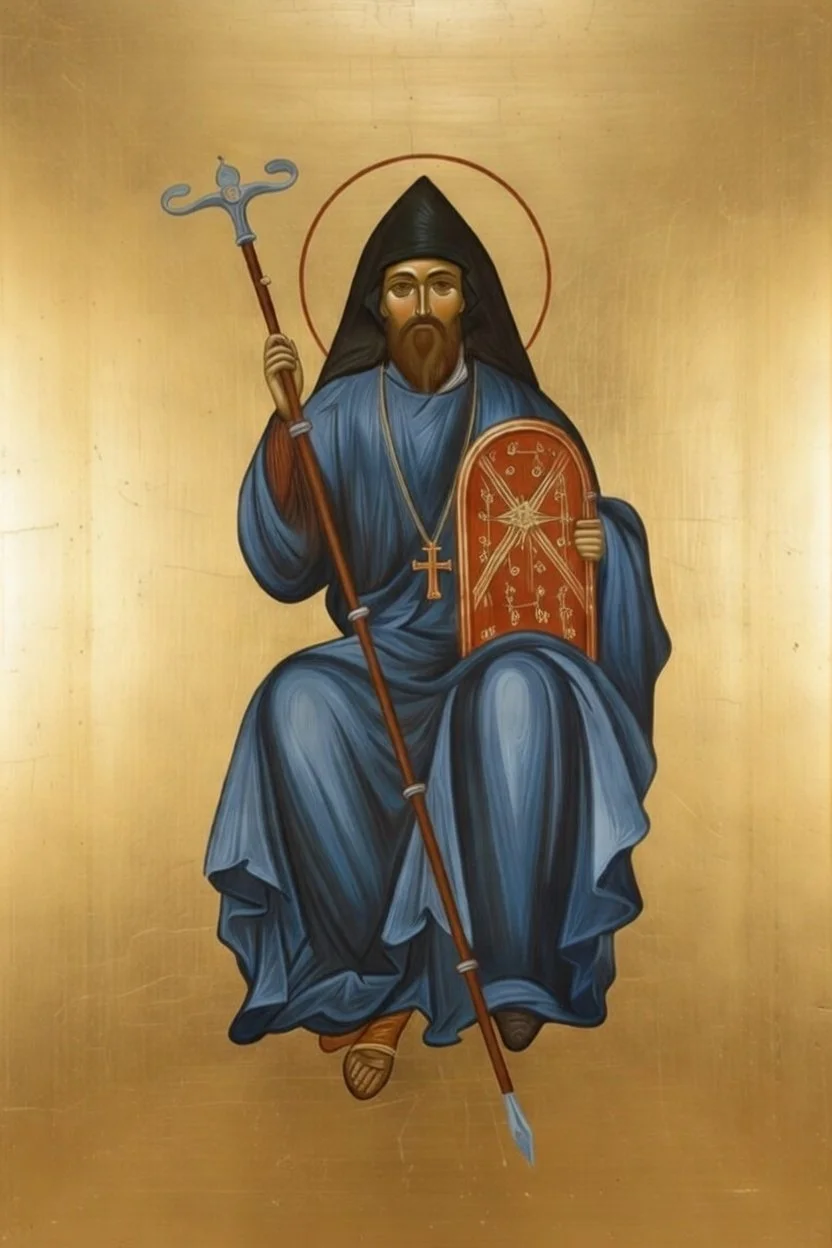
Saint Mesrop Mashtots
Creator of the Armenian alphabet and translator of the first Armenian Bible — the same alphabet and the same Bible used in both the Armenian Catholic and Armenian Apostolic Badarak to this day. Feast: Feb 19 in the Eastern Orthodox Menaion.
Get the Prayer Card →Why They Separated: The Chalcedonian Divide (451–610 AD)
The original separation between Armenian Christianity and the Chalcedonian world — both Rome and Constantinople — was not a separation between "Armenian Catholic" and "Armenian Apostolic." It was a separation between all of Armenian Christianity and the Chalcedonian churches. Both of today's Armenian churches are downstream of that original parting of ways.
Chalcedon (451 AD): The Council Armenia Missed
The Council of Chalcedon opened on May 26, 451 AD — the same day as the Battle of Avarayr, when Armenian bishops were fighting for their lives against the Persian empire rather than attending ecumenical councils. When Chalcedon's decrees arrived in Armenia, they came without Armenian theological input, translated into a new written language that was less than fifty years old. The Armenians read the Chalcedonian two-nature formula — defining Christ as having both a divine and a human nature in one person — as dangerously close to the Nestorian heresy that the Council of Ephesus (431 AD) had already condemned. They refused to accept it.
This was not a snap decision. The formal rejection of Chalcedon developed over a century: the First Council of Dvin (506 AD) made the first official rejection; the Second Council of Dvin (554 AD) permanently codified it in 87 canons; the Third Council of Dvin (610 AD) completed the formal severance of communion with Constantinople. From 610 AD onward, the Armenian Church — all of it, as a single body — was in neither Roman nor Byzantine communion.
The theological position the Armenians took — and still hold — is called Miaphysitism. It teaches that after the Incarnation, Christ has one united, composite nature that is both fully divine and fully human, inseparably united. This is emphatically not the same as Monophysitism (Eutychianism), which taught that Christ's humanity was absorbed into his divinity. The Armenian Church explicitly condemns Eutyches. Modern ecumenical dialogues have widely concluded that the difference between Miaphysitism and Chalcedonian Dyophysitism is more a matter of theological language than of substantive disagreement about who Christ actually is.
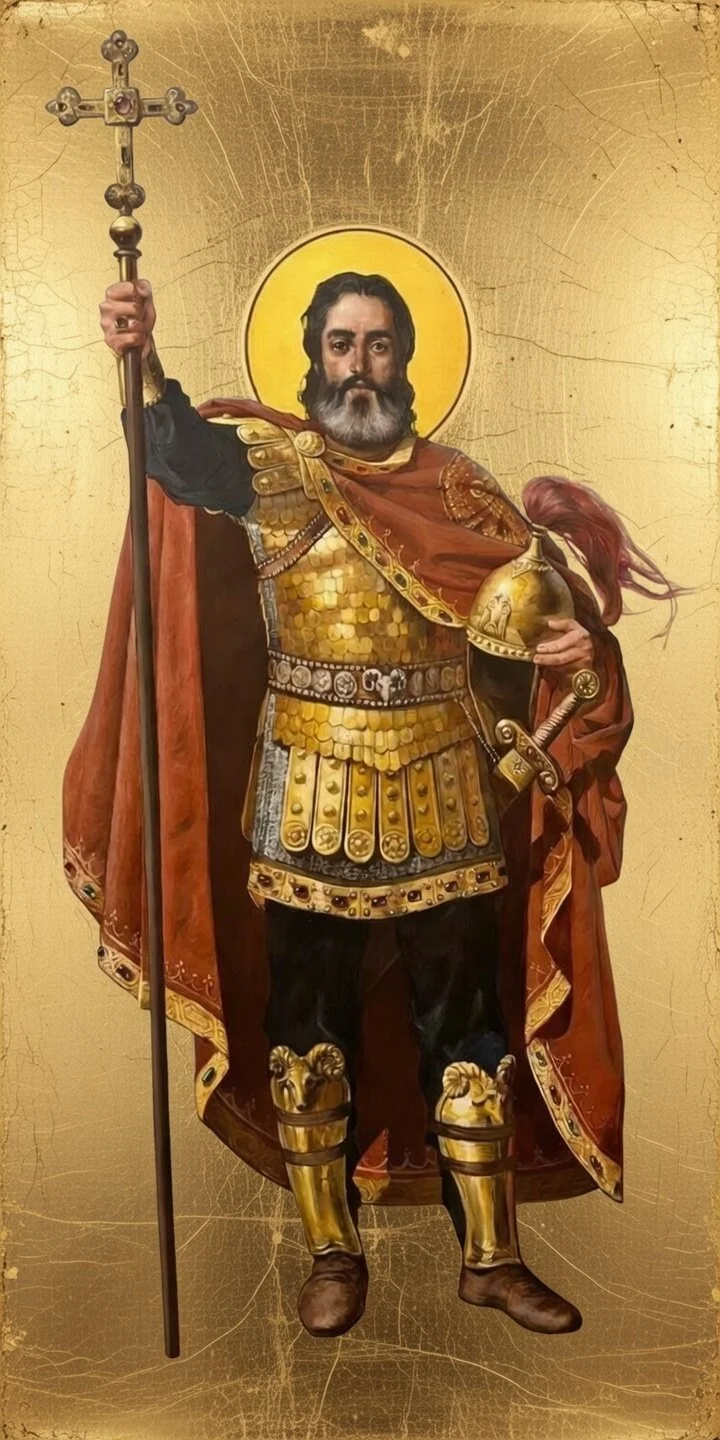
Saint Vartan Mamikonian
The general who died at Avarayr on the day Chalcedon opened — keeping Armenia's bishops from the council and setting in motion the theological independence that defines both Armenian churches to this day. Venerated by both Armenian Catholic and Armenian Apostolic Christians equally.
Get the Prayer Card →The Long Road to Rome: Reunion Attempts from the Crusades to 1739
The story of Armenian Catholicism is not a sudden break — it is the culmination of nearly a thousand years of periodic, ultimately unsuccessful attempts by parts of the Armenian church to restore communion with Rome. Understanding this history explains why the Armenian Catholic Church exists at all, and why it is genuinely continuous with the ancient Armenian Christian tradition rather than a foreign imposition.
How the Armenian Catholic Church Was Founded: Abraham Ardzivian (1740)
The founding of the Armenian Catholic Church as a permanent institutional reality is inseparable from one man: Abraham Petros I Ardzivian (1679–1749) — the priest, bishop, prisoner, and patriarch who suffered for the union he believed in and eventually built it into a lasting structure.
From Apostolic Bishop to Catholic Prisoner
Ardzivian was born in 1679 in Aintab in the Ottoman Empire. He began his religious life as a priest in the Armenian Apostolic Church and was ordained as the Armenian Apostolic Bishop of Aleppo in 1710 by the Catholicos of the Holy See of Cilicia. His conversion to Catholicism in the years that followed was not a political calculation — it was a spiritual conviction that union with Rome was the right path for Armenian Christianity. For this conviction, he paid dearly: he was imprisoned multiple times in Ottoman prisons, exiled, and persecuted by both Ottoman authorities (who suspected foreign religious influence) and Armenian Apostolic opponents (who saw his Catholicism as a betrayal of Armenian independence). He spent years of his life in chains, including a period of imprisonment on the island of Rouad.
The Election of 1740 and the Ratification of 1742
After decades of struggle, Ardzivian's moment came. On November 26, 1740, a gathering of Armenian Catholic bishops elected him Catholicos-Patriarch — the first formal leader of what would become the Armenian Catholic Church. He traveled to Rome with his vicar and clergy to have the election ratified by the Pope. On December 8, 1742, Pope Benedict XIV formally recognized his election, granted him the pallium, and established the Armenian Catholic Patriarchate of Cilicia. The church's de facto headquarters were initially in Kreim, Lebanon, before moving to Bzoummar in 1749 — where the Patriarchate complex has been located ever since (though the Patriarch now resides and administers from Beirut).
A Church Born in Suffering
What is remarkable about the Armenian Catholic Church's founding is that it was not imposed from outside by Rome. It was built from within by Armenians who believed in it, many of whom suffered for that belief before they could institutionalize it. Ardzivian's biography — imprisonment, exile, loss, eventual vindication — mirrors the martyrological tradition of the Armenian church he came from. He was, in the deepest sense, a son of the same tradition as Vartan Mamikonian: a man who refused to deny what he believed even when it cost him everything.
The current Armenian Catholic Patriarch is Raphaël Bedros XXI Minassian, elected on September 23, 2021. His headquarters are the Cathedral of Saint Elias and Saint Gregory the Illuminator in Beirut, Lebanon. The Armenian Catholic Church today has approximately 150,000–500,000 members worldwide, with significant communities in Lebanon, Syria, France, the United States, Argentina, and Armenia itself.
The Mekhitarists: Monks Who Preserved Armenian Culture for the Whole World
No account of the Armenian Catholic Church is complete without the Mekhitarists — the Armenian Catholic monastic order founded by the priest Mekhitar of Sebaste (1676–1749), whose two main abbeys at San Lazzaro in Venice and Vienna became two of the most important centers of Armenian scholarship and publishing in the history of the world.
Mekhitar founded his congregation in Constantinople in 1701, was driven out by persecution, and in 1717 established the monastery of San Lazzaro degli Armeni on a small island in the Venetian lagoon — a monastery that has operated continuously ever since. His monks took a specific vow not only to observe the Rule of Saint Benedict but to devote themselves to Armenian scholarship, publication, and the evangelization of their fellow Armenians. The result was extraordinary: the Mekhitarists published critical editions of Armenian manuscripts, grammars, dictionaries, biblical commentaries, patristic texts, and historical works that preserved irreplaceable elements of Armenian culture.
The famous poet Lord Byron visited San Lazzaro in 1816 and was so captivated that he studied Armenian with the monks — producing translations of Armenian texts and famously saying that Armenian was a language well-suited to the use of angels. The Mekhitarist press at Venice published the first modern Armenian dictionary. The Vienna house, established in 1810, became equally important for Central European Armenian scholarship.
The Mekhitarists are a Catholic religious order — but their work of preserving Armenian manuscripts, literature, and identity has benefited every Armenian, regardless of confession. Armenian Apostolic scholars have used Mekhitarist editions of classical texts. The Armenian alphabet, the Armenian Bible, and medieval Armenian literature survive in more complete form because of what the Mekhitarists did. They are one of the most powerful arguments that the Armenian Catholic and Armenian Apostolic traditions serve a common cultural and spiritual good, even from different ecclesiastical positions.
The Five Key Differences Explained
1. Communion with Rome
Armenian Apostolic
Fully independent. Not in communion with Rome. Does not recognize the authority of the Pope. The Catholicos of All Armenians at Etchmiadzin is the supreme head, elected for life by a National Ecclesiastical Assembly of clergy and laity. Governance is entirely self-contained.
Armenian Catholic
In full communion with Rome. Recognizes the Pope as the supreme head of the universal Church. The Armenian Catholic Patriarch is elected by the synod of Armenian Catholic bishops but must receive communion from and extend it to the Pope before taking office. Canonical law is governed by the Code of Canons of the Eastern Churches (CCEO).
2. Christology: Chalcedon vs. Miaphysitism
Armenian Apostolic
Miaphysite — follows Cyril of Alexandria's formula of one united, composite, divine-human nature in Christ. Formally rejects the Council of Chalcedon (451 AD) and its two-nature formula. Recognizes only the first three Ecumenical Councils: Nicaea (325), Constantinople I (381), and Ephesus (431).
Armenian Catholic
Formally accepts the Council of Chalcedon and its two-nature Christological formula as a condition of communion with Rome. In practice, the 1996 Joint Declaration between Pope John Paul II and Catholicos Karekin I acknowledged that the Chalcedonian and Armenian Apostolic formulas express the same faith in different language — making the practical Christological difference minimal.
3. Church Leadership and Structure
Armenian Apostolic
Led by the Catholicos of All Armenians (currently Karekin II, since 1999), headquartered at the Mother See of Holy Etchmiadzin, Armenia. Also has a second Catholicos at the See of Cilicia (Antelias, Lebanon), plus Patriarchs in Jerusalem and Constantinople. Governance is by a National Ecclesiastical Assembly of both clergy and laity — two-thirds lay.
Armenian Catholic
Led by the Armenian Catholic Patriarch of Cilicia (currently Raphaël Bedros XXI Minassian, elected 2021), whose Cathedral is in Beirut, Lebanon, with the historic Patriarchate complex in Bzoummar. Subject to the authority of the Pope. Has Archdioceses in Aleppo, Baghdad, and Istanbul; Eparchies in multiple countries; and an Apostolic Exarchate for the United States and Canada.
4. Canonizations and Saints
Armenian Apostolic
Recognizes all pre-Chalcedonian Armenian saints and has its own canonization process. The most dramatic recent use of this was the 2015 mass canonization of all Armenian Genocide victims — approximately 1.5 million people — believed to be the largest single canonization in Christian history.
Armenian Catholic
Shares all pre-Chalcedonian saints with the Armenian Apostolic Church. Also recognizes saints beatified or canonized by Rome — most prominently Blessed Gomidas Keumurjian (d. 1707, beatified 2001) and Blessed Ignatius Maloyan (d. 1915, beatified 2001), both martyred for refusing to deny the Catholic faith. These beatifications are specific to the Armenian Catholic tradition.
5. Liturgical Practices: Shared Core, Modest Differences
Armenian Apostolic
The Badarak in its most ancient form, with minimal Western influence. Christmas celebrated on January 6 (the ancient unified feast of Nativity and Epiphany). No Stations of the Cross, rosary, or benediction in traditional practice, though some diaspora communities have adopted them informally. The Armenian Church calendar is the primary liturgical calendar.
Armenian Catholic
The same Badarak, with modest Latin-influenced additions: the Stations of the Cross, benediction, the rosary, and holy water are commonly used. Christmas is generally celebrated on December 25, following the Roman calendar. Some Armenian Catholic communities use both calendars simultaneously, observing both December 25 and January 6 as significant days. Minor adaptations required by full communion with Rome have been introduced into the liturgy, though the core Badarak is essentially identical.
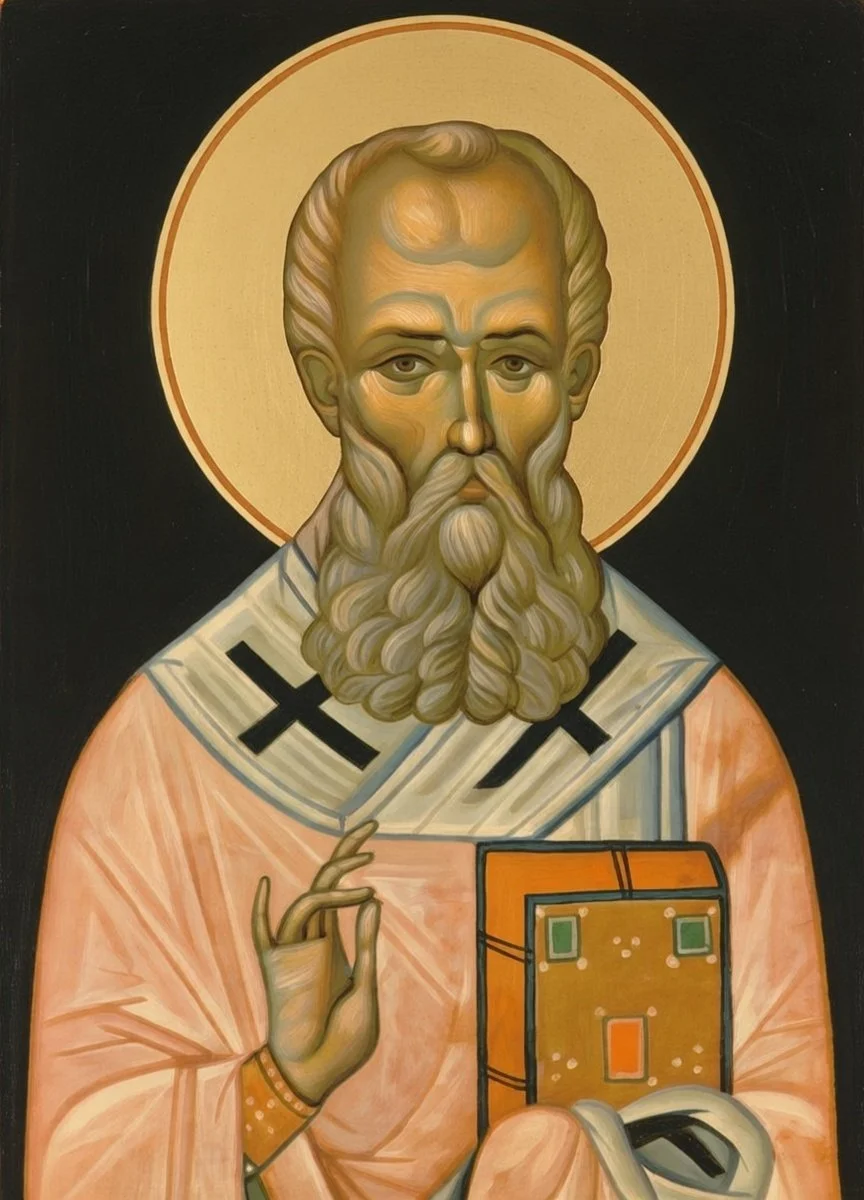
Saint Gregory of Narek
The 10th-century Armenian mystic is venerated in both the Armenian Apostolic and Armenian Catholic churches. In 2015, Pope Francis declared him the 36th Doctor of the Universal Church — the only Armenian saint with this title — making him the most formally recognized Armenian saint in the Catholic world. His Book of Lamentations has sat beside the Bible in Armenian homes for a thousand years, regardless of whether the household was Apostolic or Catholic.
Get the Prayer Card →The Master Comparison Table
For those who want the full picture at a glance, this table covers every significant point of comparison:
| Feature | Armenian Apostolic | Armenian Catholic |
|---|---|---|
| Communion with Rome | No — fully independent | Yes — full communion with the Pope |
| Founded as distinct institution | 301 AD (national conversion); fully defined post-610 AD | 1740/1742 AD (Abraham Ardzivian's election, Benedict XIV's ratification) |
| Current leader | Catholicos Karekin II (Etchmiadzin, Armenia) since 1999 | Patriarch Raphaël Bedros XXI Minassian (Beirut, Lebanon) since 2021 |
| Christology | Miaphysite — one united divine-human nature (Cyril of Alexandria) | Formally Chalcedonian — two natures in one person; in practice nearly identical |
| Ecumenical Councils recognized | Three: Nicaea, Constantinople I, Ephesus | All seven, including Chalcedon |
| The Liturgy | The Badarak (Armenian Rite) — ancient form | The Badarak (Armenian Rite) — with modest Latin additions |
| Liturgical language | Classical Armenian (Grabar/Krapar) | Classical Armenian (Grabar/Krapar) |
| Christmas | January 6 (ancient unified Nativity-Epiphany feast) | Generally December 25 (Roman calendar) |
| Clergy | Married priests (derders); celibate priests (vardapets) eligible for episcopate | Same — married parish priests permitted; bishops celibate |
| Canonical law | Armenian Book of Canon Law (Kanonagirk Hayots) | Code of Canons of the Eastern Churches (CCEO, Rome) |
| Pre-Chalcedonian saints | All recognized | All recognized — these are shared saints |
| Post-union saints (Catholic) | Not formally recognized | Includes Blessed Gomidas Keumurjian, Blessed Ignatius Maloyan, etc. |
| The Filioque | Rejected — Holy Spirit proceeds from the Father only | Formally accepted as part of communion with Rome (though rarely emphasized in practice) |
| Papal infallibility | Not recognized | Accepted as defined dogma |
| Immaculate Conception | Not formally defined; Armenia has strong devotion to the Theotokos | Accepted as defined Catholic dogma (1854) |
| Worldwide membership | ~9 million | ~150,000–500,000 |
| Primary geographic base | Armenia, plus diaspora worldwide | Lebanon, Syria, France, USA, Argentina, Armenia |
| Notable monastic order | Brotherhood of the Holy See of Etchmiadzin; Jerusalem Brotherhood | Mekhitarists (Venice & Vienna) |
| Patriarch's name tradition | Catholicos takes their own name | Patriarch traditionally takes the name "Peter" (Petros) in honor of the Apostle |
One of the most practical questions readers of this site ask is: if I'm Armenian Catholic, can I use the Armenian prayer cards from The Eastern Church? And if I'm Armenian Apostolic, do the Armenian Catholic-labeled cards apply to me? The answer is yes to both — with one important clarification about labeling.
The "Armenian Catholic" label in our prayer card directory refers to the rite and tradition from which the saints come, not to an exclusive Catholic-only designation. Every pre-Chalcedonian Armenian saint in our collection — Gregory the Illuminator, Hripsime, Gayane, Sahak Partiev, Mesrop Mashtots, Vartan Mamikonian, Nerses the Great, Nerses the Gracious, Gregory of Narek, and all the rest — is venerated in both the Armenian Catholic and Armenian Apostolic traditions. They are shared inheritance. The only cards that carry specifically Armenian Catholic significance (not Apostolic) are Blessed Gomidas Keumurjian and Blessed Ignatius Maloyan — the two twentieth-century martyrs beatified by Rome whose formal canonization status exists within the Catholic structure only.
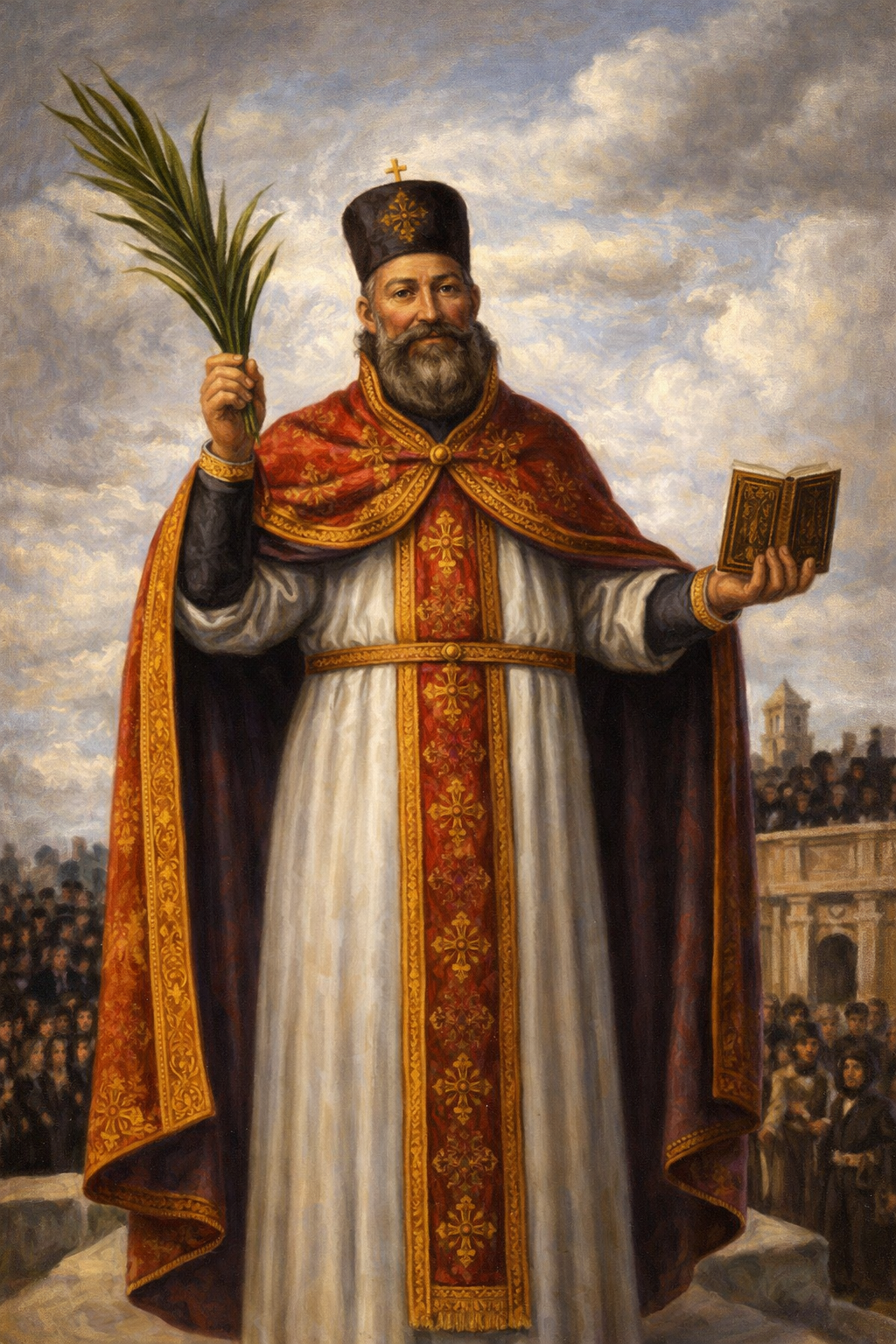
Blessed Gomidas Keumurjian
Armenian Catholic priest in Constantinople, martyred 1707. Imprisoned for years under psychological torture for refusing to renounce his priesthood or convert to Islam. Beatified by Pope John Paul II in 2001. Armenian Catholic.
Get the Prayer Card →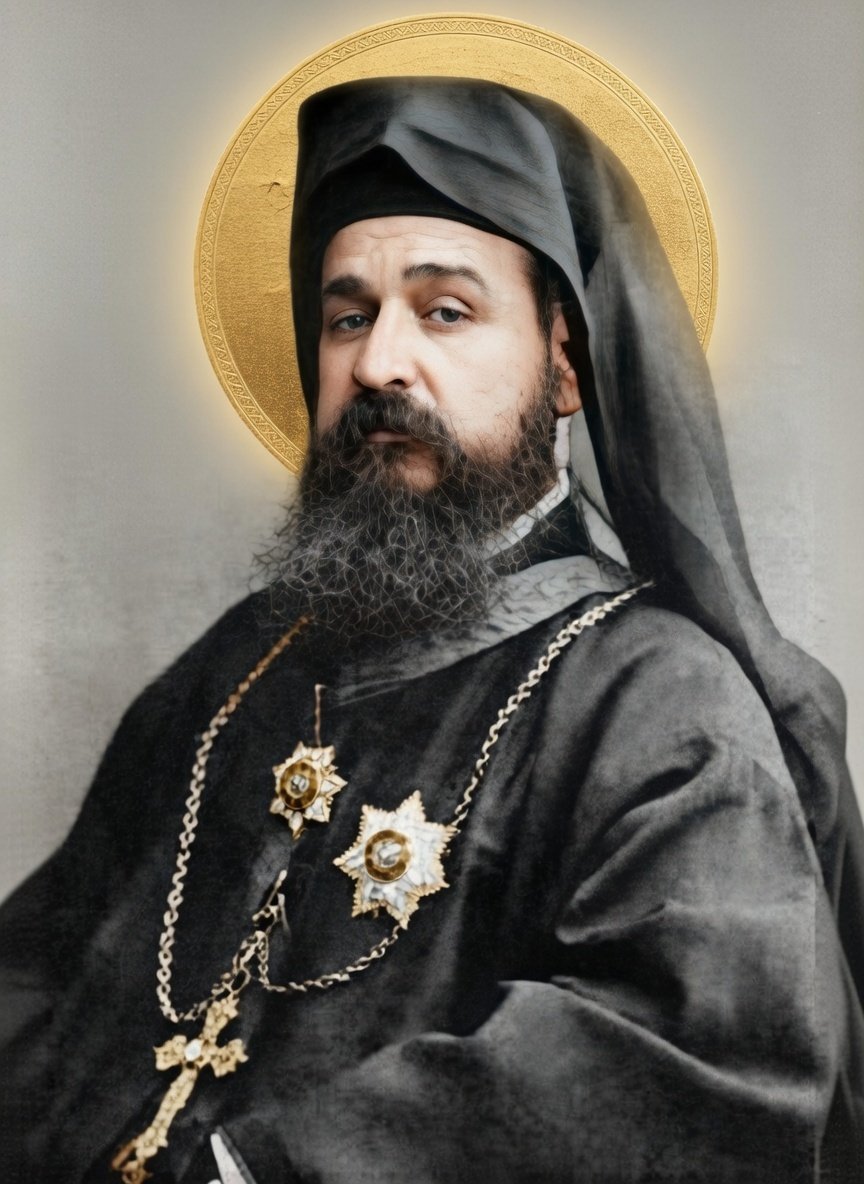
Blessed Ignatius Maloyan
Armenian Catholic Archbishop martyred in 1915, offered his life if he converted to Islam and refused. Forgave his executioner before being shot. Beatified by Pope John Paul II in 2001. Armenian Catholic. Patron for persecuted Christians.
Get the Prayer Card →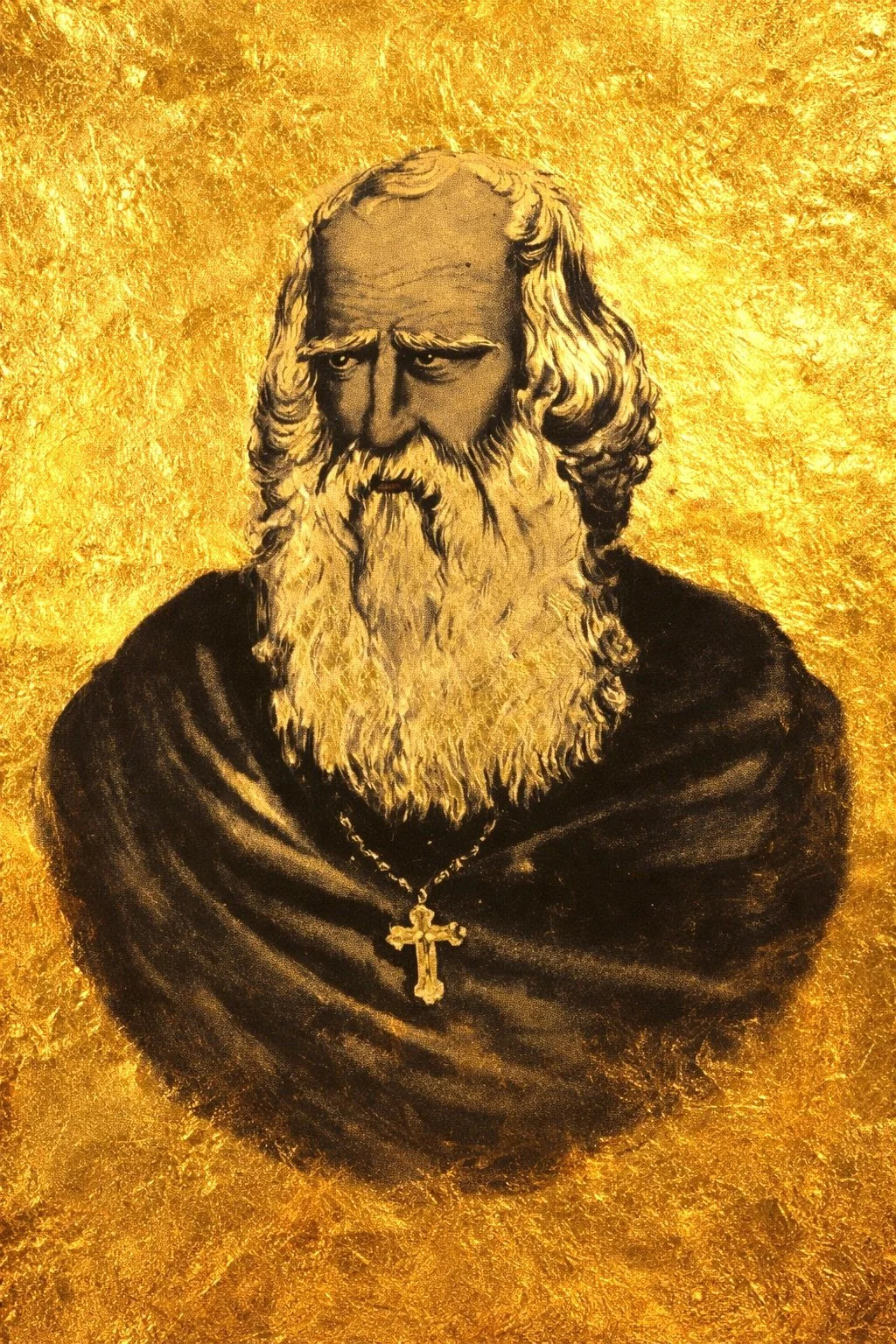
Saint Nerses the Great
Fourth-century Catholicos of Armenia — venerated in both traditions. Great-grandson of Gregory the Illuminator. Reforming patriarch who excommunicated a king for corruption and was eventually poisoned for it. Patron for pastoral courage.
Get the Prayer Card →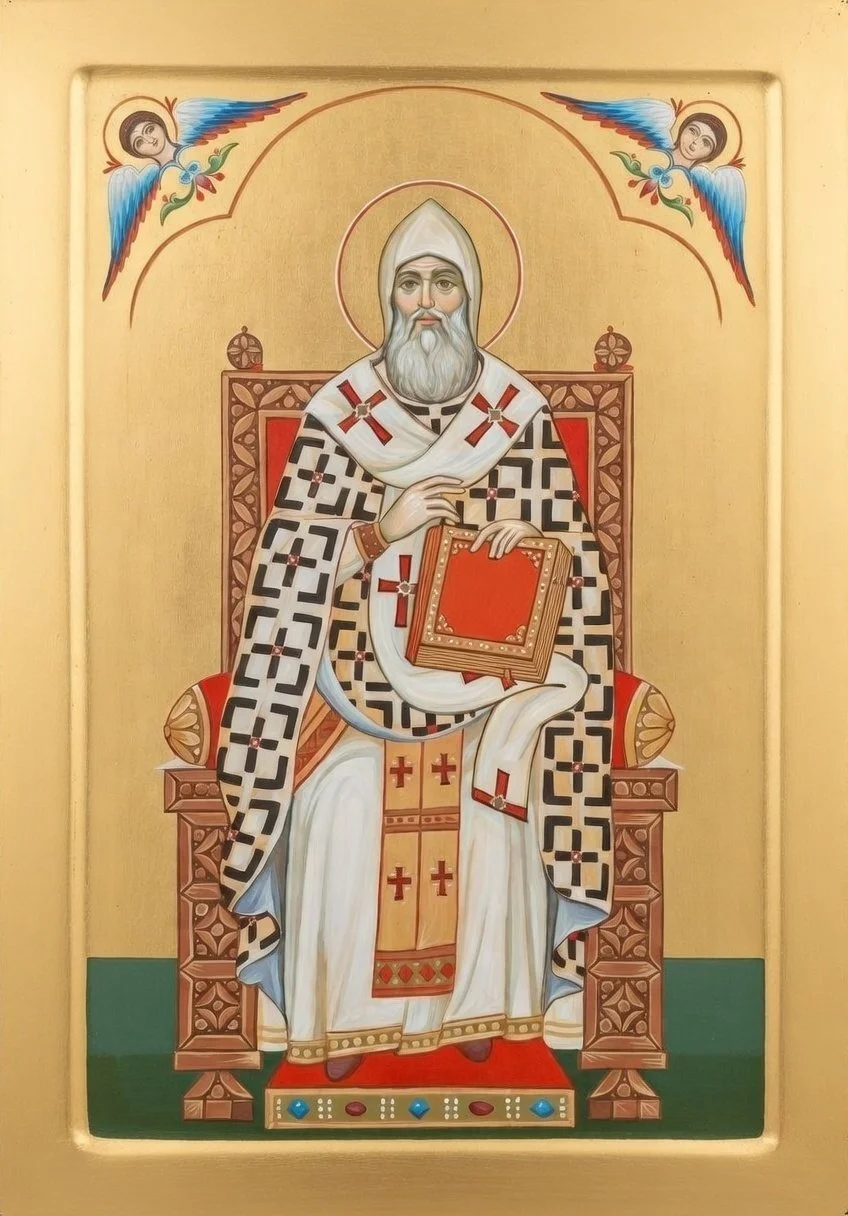
Saint Nerses IV the Gracious (Shnorhali)
12th-century Catholicos who sought reunion with both Eastern Orthodoxy and Rome through serious theological dialogue — the great Armenian ecumenist whose work is cited by both Catholic and Apostolic Armenians as a model. His hymns are still sung in both traditions.
Get the Prayer Card →The Genocide: Martyrs from Both Traditions
The Armenian Genocide of 1915–1923 did not distinguish between Armenian Apostolic and Armenian Catholic. Ottoman death squads killed Armenians of every Christian confession. Bishops, priests, monks, and laypeople from both traditions were murdered, deported, and martyred.
The Armenian Catholic Church lost a significant portion of its hierarchy and faithful in 1915. Blessed Ignatius Maloyan — the Archbishop of Mardin, one of the most senior figures in the Armenian Catholic hierarchy — was among those executed. His martyrdom is the most prominent single instance of an Armenian Catholic clergy member dying in the Genocide, but he was not alone. Nineteen of the Armenian Catholic Church's twenty-one dioceses that existed before 1915 were destroyed or severely depleted by the Genocide.
The Armenian Apostolic Church responded to the Genocide with the mass canonization of all its victims on April 23, 2015 — the 100th anniversary of the start of the killing. The Armenian Catholic Church, for its part, had already seen its own martyrs from 1915 formally beatified by Pope John Paul II in 2001. The two churches approach the theological status of the Genocide's victims differently — one through a mass Apostolic canonization, one through individual Catholic beatifications — but they share the grief, the memory, and the conviction that those who died were faithful to Christ.
The Genocide is also the event that created the modern diaspora structure of both churches. Both the Armenian Apostolic Catholicosate of Cilicia (now in Antelias, Lebanon) and the Armenian Catholic Patriarchate (now in Beirut) exist in Lebanon because the Genocide destroyed their original homes in what is now Turkey. In this most painful way, the two churches share not only saints but wounds.
Modern Ecumenism: Closer Than Any Time Since 451
The theological distance between the Armenian Apostolic Church and the Roman Catholic Church — which is the primary distinction between the two Armenian churches — has narrowed dramatically in the last thirty years. Several milestones are particularly significant.
The 1996 Joint Declaration
In 1996, Pope John Paul II and Catholicos Karekin I of the Armenian Apostolic Church signed a Joint Declaration in which they agreed that the Christological differences between their churches had been rooted in misunderstandings related to poor translations and Armenia's absence from Chalcedon, and that both sides confessed the same Lord Jesus Christ. The declaration was a historic acknowledgment that the primary theological barrier to communion between Rome and the Armenian Apostolic Church — the Chalcedonian formula — may be less a genuine doctrinal disagreement than a difference of theological vocabulary. The Catholicos's preparation of meditations for John Paul II's 1999 Good Friday Stations of the Cross at the Colosseum in Rome was a powerful symbolic expression of this renewed closeness.
Gregory of Narek as Doctor of the Church (2015)
Pope Francis's 2015 declaration of Saint Gregory of Narek as the 36th Doctor of the Universal Church was a watershed ecumenical moment. It formally recognized a saint formed entirely within the Armenian Apostolic tradition — shaped by its Miaphysite theology and its independent canonical life — as a doctor whose teaching belongs to the whole Catholic Church. For Armenian Catholics, it was an affirmation of their shared heritage. For Armenian Apostolics, it was Rome's acknowledgment that Armenian Christian spirituality has universal value and genuine orthodoxy.
Pope Francis's Visit to Armenia (2016)
Pope Francis visited Armenia in June 2016, making him the first pope to visit the country. He prayed at the Genocide Memorial in Yerevan, attended a Divine Liturgy at Etchmiadzin celebrated by Catholicos Karekin II, and participated in a joint prayer service. He described the Genocide as a "genocide" — using the word Rome had historically avoided — in a gesture of solidarity with Armenian grief. The visit was a powerful symbol of the closeness between Rome and the Armenian Apostolic Church and further reduced the practical distance between the Armenian Catholic and Armenian Apostolic communities.
How to Know Which Church You or Your Family Belongs To
For many people of Armenian heritage — particularly in the diaspora — the question is a practical one: which church does my family come from, and does it matter? Here are the clearest practical distinctions.
If Your Family Is Armenian Apostolic:
Your church is independent of Rome. Your parish probably belongs to one of two jurisdictions in the United States: the Eastern Diocese (headquartered in New York, under Etchmiadzin) or the Western Prelacy (under the Catholicosate of Cilicia). Your Catholicos is Karekin II in Armenia or Aram I in Lebanon. Your church celebrates Christmas on January 6. Your priest may be married. You do not have Stations of the Cross or the rosary as traditional practices. Your church canonized all Genocide victims in 2015.
If Your Family Is Armenian Catholic:
Your church is in full communion with Rome. Your parish belongs to the Armenian Catholic Church under Patriarch Raphaël Bedros XXI Minassian in Beirut. In the United States, you are under the Eparchy of Our Lady of Nareg (since 2005, covering the US and Canada). Your church celebrates Christmas on December 25. Your priest may be married. You do observe Stations of the Cross and the rosary. Your church formally recognizes Blessed Gomidas Keumurjian and Blessed Ignatius Maloyan in its calendar.
If You're Not Sure:
Many Armenian Americans — especially those whose families came from Lebanon or Syria — are uncertain which tradition they come from, because both communities existed in close proximity in those countries and the practical differences at the parish level were often small. The simplest question to ask is: does your parish name itself "Armenian Apostolic" or "Armenian Catholic"? And: does your parish acknowledge the Pope's authority? If yes to the Pope, you are Armenian Catholic. If no, you are Armenian Apostolic.
A note on our prayer cards: Every Armenian saint in our collection is appropriate for use by members of either tradition. The "Armenian Catholic" label in our directory is a heritage and rite designation, not a restriction. Saint Gregory the Illuminator, Saint Vartan Mamikonian, Saint Gregory of Narek, Saint Mesrop Mashtots — these saints belong to all Armenian Christians, and to all Eastern Christians who venerate them in the Orthodox Menaion as well. The only cards specific to the Armenian Catholic tradition exclusively are Blessed Gomidas Keumurjian and Blessed Ignatius Maloyan, whose formal beatification exists within the Catholic canonization process. All other Armenian cards are shared saints of the whole tradition.
Free Christian Marriage Books That Bring You Closer to God and Each Other
Complete books — no email, no paywall, no missing chapters. Read every book free online right now. Rooted in the ancient Christian tradition, written for couples at every stage of marriage.
Read Free Marriage Books →Frequently Asked Questions
Pray With the Saints of the Whole Armenian Tradition
Whether your family is Armenian Catholic, Armenian Apostolic, or somewhere in between — the saints who shaped this heritage belong to you. Every card in our collection is handcrafted and prayed over in Austin, Texas, one at a time.
Browse Armenian Prayer Cards →Further Reading & Resources
Go Deeper Into Armenian Christianity