What Is an Orthodox Prayer Corner?
In virtually every traditionally observant Orthodox Christian home — whether Russian, Greek, Serbian, Romanian, Antiochian, Coptic, Ethiopian, or any of the dozens of other ancient expressions of Eastern Christianity — there is a corner. It may be modest: a single icon of Christ, a small lamp burning with oil, a prayer rope draped over a nail. It may be elaborate: a full wall of icons arranged in hierarchical tiers, gilded frames catching candlelight, the fragrance of incense rising toward an embroidered hanging. But in some form, it is there. It has always been there. It is the krasny ugol — the Russian phrase meaning the beautiful corner, the holy corner, the good corner — and its presence in the home is not decoration but theology, not sentiment but practice.
The Orthodox prayer corner is the domestic equivalent of the church altar. It is the place in the home where heaven and earth most visibly meet, where the household orients itself toward God, where the family gathers for morning and evening prayer, where newborns are brought to be blessed before their baptism and where the dying are anointed and prayed over in their final hours. It is the place before which significant meals are blessed and significant decisions are made. It is not a piece of furniture. It is the spiritual architecture of the home.
Understanding what a prayer corner is — truly is, in its theological fullness — requires understanding something that is counterintuitive to the modern Western mind: that for Eastern Christianity, place is not religiously neutral. The universe is not a featureless container in which spiritual activity can occur anywhere equally. The material world is the arena of divine action, and certain places, certain directions, certain objects become, through prayer and consecration and the accumulated weight of devotion, windows into a reality that the ordinary eye cannot see. The prayer corner is such a window. It is a piece of the home that has been given to God — permanently, totally, irrevocably — and that repays this gift by becoming a channel of grace to all who stand before it.
This guide will take you through everything: the theology, the history, the traditional arrangement, the sacred objects and their meaning, and the daily practice that turns a corner with some icons into a living place of prayer. Whether you are building your first prayer corner with a single icon and a candle, or whether you are deepening a practice you have maintained for years, what follows is intended to be the most thorough and practically useful guide to this subject that exists anywhere.
Section IIThe Theology Behind It: Why Physical Space Matters in the Eastern Church
The Eastern Christian theological tradition has always refused the dualism that tends to separate the spiritual from the material in Western religious thought. In the theology of the Church Fathers — Irenaeus of Lyon, Athanasius of Alexandria, Gregory of Nyssa, Maximos the Confessor — the Incarnation of the Son of God is not merely an event in history but a cosmic transformation. When God became flesh in the womb of the Theotokos, matter itself was dignified and sanctified in an entirely new way. The body is not a prison for the soul; it is the soul's companion and instrument, destined for resurrection and glorification. The material world is not an obstacle to the spiritual life but its medium.
This theology has radical practical consequences. If matter can carry grace — if bread and wine can become the Body and Blood of Christ, if water can become the vehicle of baptismal regeneration, if oil can convey the healing and strengthening gifts of the Holy Spirit — then it follows that places can also carry grace. The altar of a church is not merely a table. The holy water font is not merely a basin. The icon is not merely a painting. These material objects have been set apart, prayed over, and made into channels of divine energy. And by the same logic, the corner of a home that has been devoted to prayer, filled with icons, illuminated by a lamp, and saturated over years with the petitions and praises of a household — this corner also becomes something more than a corner. It becomes holy ground.
The prayer corner is not a place where we go to remember God. It is a place where God already is — a place we have set aside for Him in our home, as we would prepare a room for a beloved and honored guest. The difference is that He does not merely visit. He dwells. — On the theology of the Orthodox prayer corner
The theology of sanctified space runs throughout the Old Testament as well. God commanded Moses to remove his sandals before the burning bush, because the ground was holy. He gave detailed specifications for the Tabernacle — not because He could not be worshipped elsewhere, but because a consecrated, ordered, beautiful space for worship is itself a form of theology, a proclamation in wood and gold and fabric that the One being worshipped is worthy of the finest attention and preparation. Solomon's Temple followed this pattern in even greater magnificence. In the Eastern Christian understanding, the home altar participates in this same ancient tradition: the setting apart of a particular place for the particular presence of God.
There is also a profound practical dimension to the theology of sacred space. Human beings are embodied creatures who live in time and place, and who need external anchors for their interior life. The person who intends to pray "at any time and in any place" often ends up praying nowhere and at no time, because the very formlessness of that intention dissolves the discipline before it can take root. The prayer corner is the material counterpart of the prayer rule: it gives the practice of prayer a body, a location, an environment that cues the mind and heart toward the act of worship before a word has been spoken. To walk toward the prayer corner is already to begin to pray. The eye falls on the icon of Christ, and the heart responds before the lips move.
The saints of the Eastern Church were unanimous on this point. Saint Theophan the Recluse — the great nineteenth-century Russian spiritual writer — insisted that the proper arrangement of one's external life, including the ordering of one's home around a devoted prayer corner, was not optional for the serious Christian but a necessary support for interior prayer. Saint Paisios the Athonite, the beloved twentieth-century Greek elder, taught that the home ought to be a "small church," with the prayer corner as its altar and the daily prayer rule as its liturgy. The monastic pattern of dedicated sacred space and fixed times of prayer was, in their understanding, not only for monks but the proper form of Christian life for all the faithful.
Section IIIA History of the Domestic Prayer Space: From the Early Church to Today
The practice of maintaining a dedicated prayer space within the home is older than Christianity itself. The Jewish home had its mezuzah on the doorpost and its direction of prayer toward Jerusalem. The early Christians inherited this tradition of ordered, directional, domestic prayer and adapted it to the new faith with remarkable speed. The earliest Christian communities met not in purpose-built churches but in homes — the house-church (domus ecclesiae) was the primary form of Christian assembly for the first three centuries, and the memory of this domestic ecclesiology persisted long after the basilica became the standard form of Christian worship.
By the second and third centuries, there is clear evidence that Christian homes maintained dedicated spaces for prayer — corners or niches set apart for the images of Christ, the cross, and the saints. Clement of Alexandria, writing in the late second century, presupposes that Christian households will have specific times and places of prayer. Tertullian of Carthage, writing around the same period, speaks of the Christian home as a "little church" and assumes the existence of a domestic prayer practice structured around fixed hours, specific postures, and dedicated space. These early references suggest that the prayer corner is not a medieval development or a cultural accretion but belongs to the most ancient stratum of Christian domestic life.
With the Peace of the Church in the fourth century and the explosive growth of Christian art and iconography that followed, the domestic prayer space became increasingly elaborate and visually rich. The veneration of icons in the home — a practice that the Seventh Ecumenical Council (Nicaea II, 787 AD) would eventually confirm as theologically sound and spiritually necessary — spread throughout the Christian East, and the home icon corner became as characteristic of Eastern Christian households as the church itself. The Byzantine world of the fifth through fifteenth centuries was permeated by this practice: from the imperial palace in Constantinople to the most modest village household in the Anatolian countryside, the icon corner marked the home as belonging to Christ.
The Orthodox Prayer Corner Across Traditions
| Tradition | Name for Prayer Corner | Distinctive Features |
|---|---|---|
| Russian Orthodox | Krasny ugol (красный угол) — "beautiful / holy corner" | Icons arranged in tiers; lampada (oil lamp); typically in the east corner of the main room |
| Greek Orthodox | Ikonostasi (εικονοστάσι) — "icon stand" | Shelf or small cabinet with icons; kandili (oil lamp); incense burner |
| Serbian Orthodox | Ikonopis or Bozhji ugao — "God's corner" | Often includes the family's patron saint (slava icon); komboskini; candles |
| Romanian Orthodox | Colțul cu icoane — "corner of icons" | Icons on a dedicated shelf; emphasis on the Theotokos alongside Christ |
| Antiochian Orthodox | Zawiya — "corner" (Arabic) | Similar structure; often includes a Syrian cross alongside Byzantine icons |
| Coptic Orthodox | Haikal al-bayt — "the home sanctuary" | Coptic-style icons of Christ, the Theotokos, and Coptic saints; incense |
The tradition survived the Turkish conquest of Constantinople, the persecutions of Ottoman rule, and — most remarkably — the systematic atheistic campaign of the Soviet period, during which millions of Russian Orthodox Christians maintained their icon corners in secret, hiding them behind false walls or in concealed spaces, at enormous personal risk. The survival of the prayer corner under Soviet persecution is itself a testimony to its theological seriousness: it was clearly not merely a cultural custom but a spiritual necessity for which people were willing to suffer. The icon was the last thing taken from the home and the first thing restored when restoration became possible.
Today, the Orthodox prayer corner is experiencing a genuine revival — not only in traditionally Orthodox countries and communities, but across the world as Orthodoxy spreads and as converts to Eastern Christianity seek to root their new faith in the ancient practices of the Church. The prayer corner is one of the most tangible and daily expressions of that ancient practice, and learning to establish and maintain one faithfully is one of the most important practical steps any Orthodox Christian household can take.
Section IVChoosing Your Location: The "Beautiful Corner" and the Orientation Toward the East
In the traditional Russian practice — and this tradition is found with variations in virtually every Orthodox culture — the prayer corner is placed in the eastern corner of the main room of the home. This is not arbitrary. The entire Christian tradition, in both East and West, has maintained that the proper direction of prayer is toward the east — toward the rising sun, toward the place from which, according to the ancient Christian theological vision, the Second Coming of Christ will appear. "As the lightning comes from the east and flashes as far as the west, so will be the coming of the Son of Man" (Matthew 24:27). The church building itself is traditionally oriented with its altar toward the east, and the faithful within it pray facing east. The home prayer corner participates in this same cosmic orientation.
In practice, the requirement for strict eastern orientation is a guideline rather than an absolute rule that overrides all practical considerations. If the architecture of your home makes an eastern corner genuinely impractical — if the eastern corner of your main room is a bathroom or a door or a load-bearing element — then the northeastern or southeastern corner is perfectly acceptable. What matters is the intention of orientation and the dedication of a specific, visible, permanent place to prayer. The corner should be in the room where the household spends the most time and where daily prayer will actually happen. For most families, this is the living room or the bedroom.
Practical Guidance: Choosing Your Space
- Prefer a corner over a flat wall. The traditional "corner" arrangement — two walls meeting — creates a natural enclosed space that feels intimate, dedicated, and set apart. It also allows icons to be arranged on both walls, creating a sense of surrounding the person at prayer.
- Avoid locations that feel disrespectful. Traditional guidance consistently advises against placing icons in bathrooms, over televisions, facing directly into areas where immodest activity would commonly occur, or in spaces where the icons would be perpetually cluttered with unrelated objects.
- Make it visible. The prayer corner should be visible from the room's main living area — not tucked into a closet or obscured by furniture. Its visibility is part of its function: it orients the household toward God not just during formal prayer times but throughout the day.
- Plan for a shelf or surface. You will need at minimum a flat surface for candles, oil lamp, and incense. This can be a dedicated shelf, a small table, or a purpose-built icon cabinet.
- Consider ceiling height. Icons hung too high or too low lose something of their relational quality. The central icon — typically Christ — should ideally be at approximately eye level or slightly above for a person standing in prayer.
In modern apartments and homes where a dedicated corner may not be spatially available, the prayer corner frequently takes the form of a single wall section or a devoted shelf. This is entirely in keeping with tradition; what matters is the dedication, not the geometry. A floating shelf mounted on an eastern wall, with an icon of Christ above, a lamp below, and a few additional icons arranged symmetrically — this is a genuine, traditional, and beautiful prayer corner that fully participates in the theological meaning of the practice.
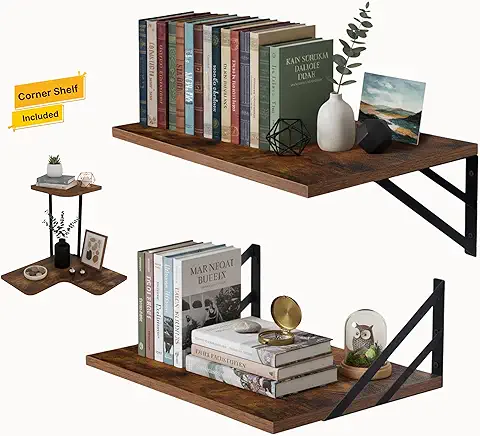
This particular set of floating shelves is one I highly recommend for anyone starting or growing their prayer corner. The set comes with two shelves plus a corner piece — giving you substantial, organized surface area for icons, a vigil lamp, incense, and holy water, all at a price that makes beginning immediately both easy and affordable. The quality is significantly better than the price would suggest, and the rustic wood finish has a warm, natural tone that sits beautifully beneath traditional icons. For a small but growing icon corner, this is exactly what you need.
View on AmazonThe Foundation: Your First Icons — Where to Begin
Every prayer corner begins with an icon of Christ. This is not optional, not a tradition among others, but the irreducible theological minimum of the Orthodox prayer corner. The icon of Christ is its center and its foundation. Everything else — the Theotokos, the patron saints, the guardian angel, the saints of one's household — is arranged in relation to and in veneration of Christ. Without the icon of Christ, you do not have a prayer corner; you have a collection of religious art.
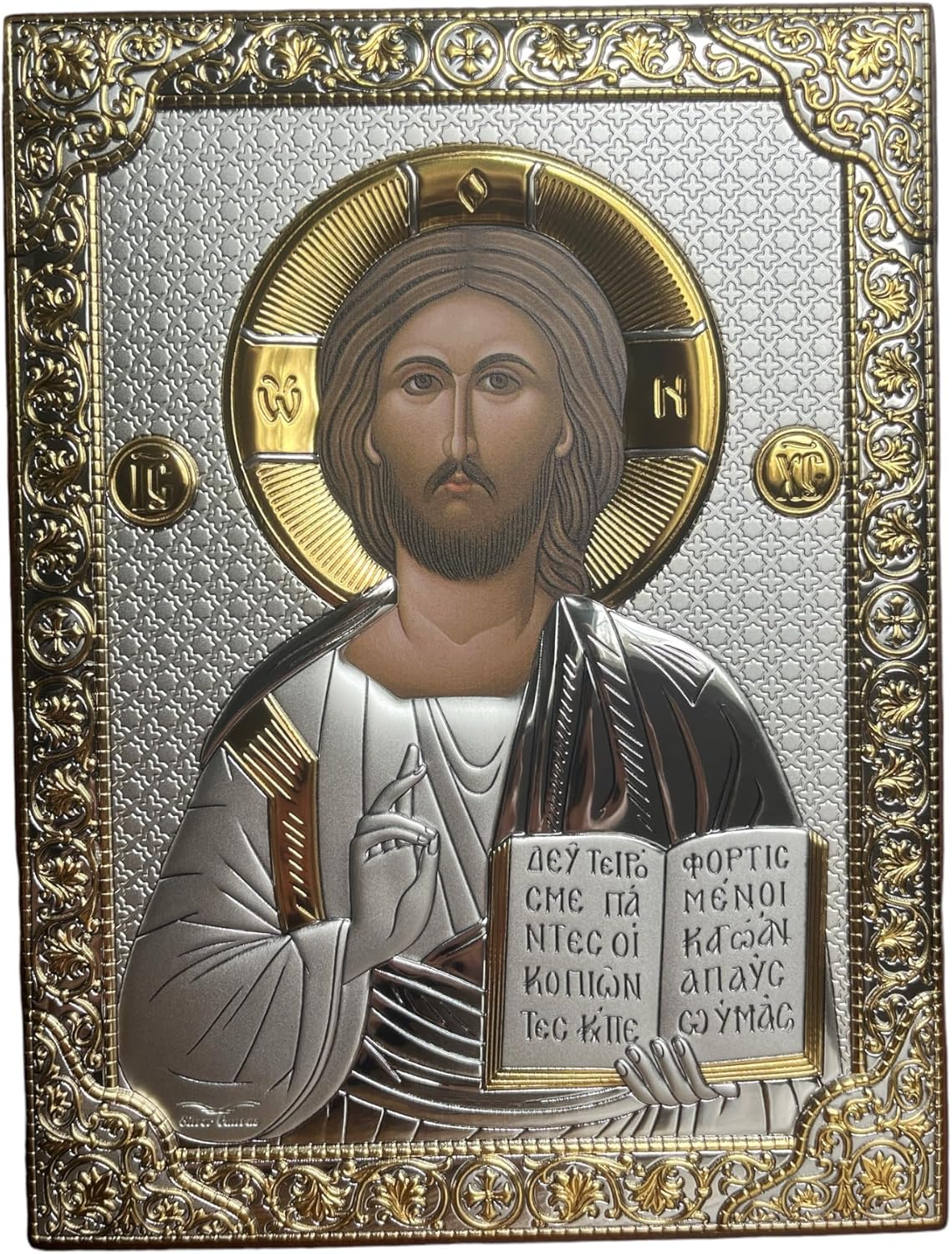
The icon most traditionally used as the central icon of the prayer corner is the Christ Pantocrator — "Pantocrator" from the Greek meaning "Ruler of All" or "Almighty." This image shows Christ in a frontal position, his right hand raised in blessing with two fingers extended and two bent (the traditional Byzantine gesture combining the letters IC-XC, an abbreviation of "Jesus Christ" in Greek), his left hand holding the Gospels. His gaze is direct and searching — simultaneously judging and merciful, simultaneously transcendent and present. It is the most ancient and authoritative image of Christ in the Eastern Christian tradition, preserved in its most famous version in the apse of the Church of the Holy Wisdom (Hagia Sophia) in Constantinople and in a remarkable sixth-century encaustic panel at the Monastery of Saint Catherine in the Sinai — one of the oldest surviving painted icons in the world.
The Pantocrator image is not merely beautiful — though it is extraordinarily beautiful in its finest examples. It is theologically dense. The blessing gesture of the right hand addresses the person at prayer directly: Christ is not shown in a past action but in a present relationship. He is blessing you, now, in this moment, as you stand before his icon. The Gospels in his left hand proclaim that the One who blesses is the same One who speaks the Word of God — that the face before you is not merely a human face but the face of the Divine Logos, the Second Person of the Trinity, the One through whom all things were made and in whom all things hold together. To stand before the Pantocrator is to stand before a mystery that exceeds every category the human mind possesses, and the icon conveys this mystery in the language of form, color, and sacred geometry that the Eastern Christian tradition has refined over fifteen centuries.


Alongside the icon of Christ, the traditional prayer corner always includes an icon of the Theotokos — the Mother of God. The Theotokos (literally "God-bearer") is venerated in the Eastern Christian tradition not merely as a pious example or a historical figure but as the preeminent saint, the Queen of All Saints, the one who stands closest to Christ in the heavenly court and whose intercessions are accordingly the most powerful available to the faithful on earth. The classic icon for the prayer corner is the Hodigitria ("She Who Shows the Way") — in which the Theotokos holds the Christ Child in her left arm and points to him with her right hand, directing the viewer's gaze toward her Son — or the Eleousa ("Tenderness"), in which the Christ Child presses his cheek tenderly against his mother's, conveying the infinite intimacy between God and the humanity he assumed. Both types are theologically rich and devotionally beautiful; either is appropriate for the prayer corner.
Once you have established Christ and the Theotokos as the anchors of your prayer corner, you can add icons of your patron saint, your family's patron saints, the guardian angel, and saints for whom your household has particular devotion. We will discuss the arrangement of these in Section VII.

Icon Theology: What You Are Actually Looking At
Before discussing how to arrange icons, it is essential to understand what icons are in the Eastern Christian theological tradition — because the answer is far more profound and far more theologically specific than anything the word "religious art" conveys. The icon is not a painting. It is not a visual aid to piety. It is not a symbol in the ordinary sense of the word. In the theology of the Eastern Church, confirmed by the Seventh Ecumenical Council in 787 AD, the icon is a genuine presence — a participation in the prototype it depicts, through which the faithful enter into a real relationship with the one shown.
The Council Fathers at Nicaea II drew the critical distinction: the veneration offered to an icon is not worship (latreia), which belongs to God alone, but veneration (proskynesis or timitike) — the same reverence one might show to a king's portrait or to the Gospel book, the reverence that passes through the image to the person depicted. Saint Theodore the Studite articulated this with characteristic precision: the honor given to the image passes to its prototype. To venerate the icon of Christ is not to worship wood and paint; it is to direct one's love and reverence toward the living Christ, who receives it. The icon is a window, not a wall.
"The icon is a visible sign of an invisible reality. When you stand before the icon of Christ, you are not standing before a picture of an absent person. You are standing in the presence of the living Christ, who looks at you from within time through the window of sacred art. The icon does not represent; it presents." — On the theology of the sacred image in Eastern Christianity
This has several important practical consequences for how one treats icons and relates to them in the prayer corner. First: icons are venerated, not merely displayed. The traditional acts of veneration include making the sign of the cross before the icon, bowing (a metanoia or prostration), and kissing the icon — specifically, the hand or the feet of the person depicted, or the rim of the icon, not the face, following ancient and specifically theological guidance that kissing the face is inappropriate. When venerating an icon of Christ, the traditional point of veneration is the hand; when venerating an icon of the Theotokos, the foot of the Child she carries or her hand; when venerating an icon of a saint, the hand.
Second: icons are written, not painted. The Eastern tradition speaks of writing an icon — the icon-writer (ikonopis in Greek) is not an artist creating an original composition but a theologian in visual form, working within the boundaries established by the tradition, transmitting a received theological content in a received visual language. The iconographer prays, fasts, and confesses before undertaking an icon. The making of an icon is itself a spiritual act. This is why genuinely hand-written icons — produced by trained iconographers working in the traditional manner — carry a spiritual weight that mass-produced printed icons, however beautiful, do not quite replicate. Both have their place in the prayer corner; both participate in the theology of the sacred image; but understanding the difference helps one appreciate what one is receiving.
Third: icons are not realistic portraits. The stylized, flat, anti-naturalistic character of Byzantine iconography is not the product of artistic limitation — Byzantine artists could paint with full naturalistic skill when they chose to — but of theological intention. The gold background of the icon is not a decorative convention; it is a theological statement about the divine light that permeates the heavenly realm where the saints now dwell. The stylized bodies and enlarged eyes are not naive art; they are a visual language that says: this is a transfigured body, a glorified person, a being who now exists in the mode of eternity rather than in the mode of ordinary biological life. The icon shows you what the person is, not what they merely look like.
Section VIIArranging Your Icons: The Traditional Hierarchy and Order
The traditional arrangement of icons in the prayer corner follows a clear theological hierarchy that mirrors, in miniature, the arrangement of the iconostasis in the church — the great icon screen that separates the nave from the altar in an Orthodox church building. Understanding this hierarchy not only helps you arrange your corner correctly; it teaches you, every time you stand before it, something fundamental about the order of the heavenly court and your own place within it.
The Traditional Icon Arrangement: Hierarchy and Placement
| Position | Icon | Theological Significance |
|---|---|---|
| Center (highest position) | Christ Pantocrator or Lord of Hosts | Christ is the center of all creation and the center of the prayer corner. Everything is oriented toward him. |
| Immediately to the right of Christ (viewer's left) | Theotokos (Mother of God) | The Theotokos stands at the right hand of Christ in the heavenly court, as Queen and chief intercessor. Her position is always to the viewer's left of Christ. |
| Immediately to the left of Christ (viewer's right) | Saint John the Baptist or Saint John the Theologian | John the Baptist as the last and greatest of the Old Testament prophets; or John the Theologian as the beloved disciple. The pair of Christ-Theotokos-Baptist constitutes the traditional Deesis (supplication) grouping. |
| Second tier (if present) | Archangels Michael and Gabriel; major feasts of the Lord | The angelic powers stand in the second rank of the heavenly court, as servants of the divine throne. |
| Additional icons | Patron saints of household members; saints of particular devotion | Your patron saints are your personal intercessors — your names in the heavenly court. |
| Lower level or side | Local saints; newly glorified saints; saints of specific intercessory roles | The communion of saints radiates outward from Christ through the Theotokos and the major saints. |
The central principle of the arrangement is clear: Christ is always central and highest; all other icons are arranged in relation to him. The Theotokos is always at his right, which in the language of biblical imagery means the position of honor and intercession. The rest of the saints radiate outward from this center, arranged roughly in order of their rank in the Church's calendar and tradition — apostles and martyrs before confessors, early Church saints before later ones, universal saints before local ones.
In the Russian tradition, there is an additional element: the icon of the family's patron saint or of the saint whose feast coincides with an important family event (a wedding day, a child's baptism day) is typically given a prominent position in the corner, sometimes immediately below the central Deesis group. This personalizes the prayer corner in a theologically meaningful way — it connects the universal Church and its saints to the particular history of this particular family.
If space is limited — as it often is in modern apartments and smaller homes — the traditional guidance is to choose fewer icons and arrange them well rather than crowding many icons into an inadequate space. Three icons — Christ, the Theotokos, and your patron saint — arranged cleanly and reverently on a dedicated shelf constitute a genuine and traditional prayer corner. Quality and devotion matter more than quantity.
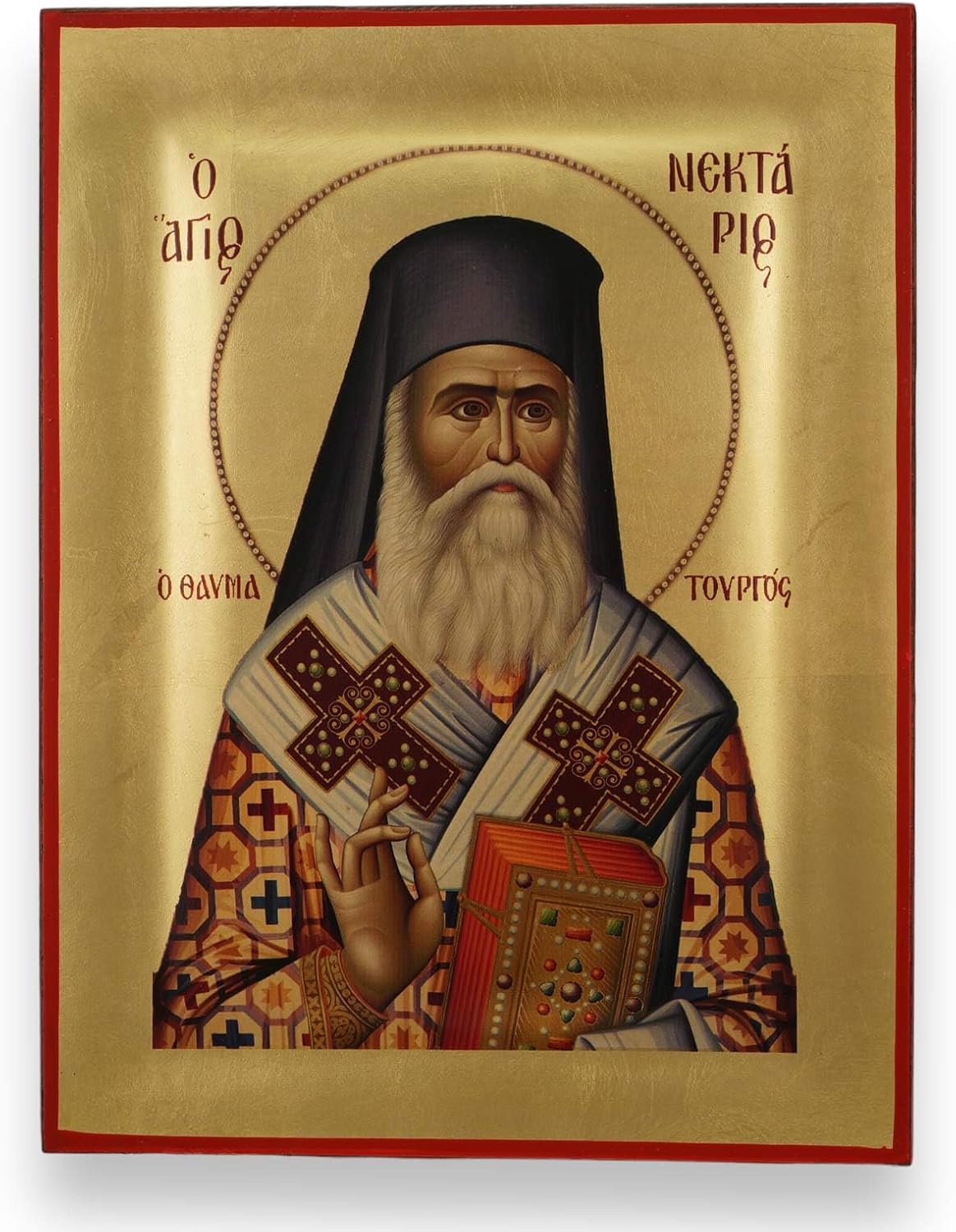
Adding Icons of the Saints: Saint Nektarios of Aegina
As your prayer corner grows, you will be guided both by your own devotional life and by the needs of your household. One saint who appears in the prayer corners of Orthodox Christians worldwide with particular frequency — and for deeply personal reasons — is Saint Nektarios of Aegina (1846–1920), the great Greek wonder-worker and one of the most beloved saints of the modern Orthodox Church. Saint Nektarios is invoked above all for healing — particularly for cancer and serious illness — and his presence in the prayer corner of a household facing illness, or simply seeking his powerful intercession for the health and protection of the family, is a deeply rooted and widely practiced devotion.
Nektarios was a bishop, theologian, and monastic founder who was unjustly persecuted during his lifetime by envious church officials, stripped of his position, and sent to a minor posting in Alexandria — only to be recognized after his death in 1920 as one of the greatest saints of the Greek Orthodox Church. His humility in the face of injustice, his constant prayer, his extraordinary miracles of healing, and his gentle, fatherly presence in spiritual direction have made him one of the most prayed-to saints in the Eastern Church. His feast day is November 9.


The Vigil Lamp and Candles: Light in the Holy Corner
The vigil lamp — known in Russian as the lampada, in Greek as the kandili — is the living flame that burns before the icons in the prayer corner. It is, after the icons themselves, the most essential element of the corner, and its presence or absence makes an enormous difference to the spiritual character of the space. An icon corner with a burning lamp is an active, living space of prayer. An icon corner without a lamp is a display of art. The difference is not merely aesthetic but theological.
The symbolism of the vigil lamp is rich and multilayered. In the most immediate sense, it represents the presence of God — the divine light that illumines every person who comes into the world, as Saint John expresses it in the prologue to his Gospel. It is the domestic equivalent of the eternal lamp that burns before the reserved Eucharist in a Catholic or Orthodox church — a sign that the One to whom this place is dedicated is not absent but present, not sleeping but watching. The flame also represents the prayer of the household itself, ascending like incense before God. When the household is asleep and the lamp still burns, it is as though the home itself continues to pray through the night.
The traditional fuel for the vigil lamp is olive oil — pure, unscented olive oil, following a biblical tradition that connects the olive lamp to the sanctuary of the Tabernacle and Temple, where lamps of olive oil burned perpetually before the Ark of the Covenant. In practice, modern vigil lamps often use specially made floating wicks placed in olive oil, or purpose-made vigil lamp inserts with a floating wick already included. The important thing is that it burns cleanly and safely.
Beeswax candles have accompanied Christian prayer since the earliest centuries of the Church. The bee, in patristic theology, is a symbol of the Virgin Mary — virginal, productive of sweetness, working without ceasing — and the beeswax candle is understood as a symbol of the humanity of Christ: pure, wax formed by labor, burning in sacrifice to give light. Pure beeswax candles produce a warm, honey-scented light that is qualitatively different from paraffin candles and that fills the prayer space with a subtly sacred fragrance as they burn. The traditional Orthodox practice is to light a candle before beginning prayer and to allow it to burn for the duration of the prayer time.
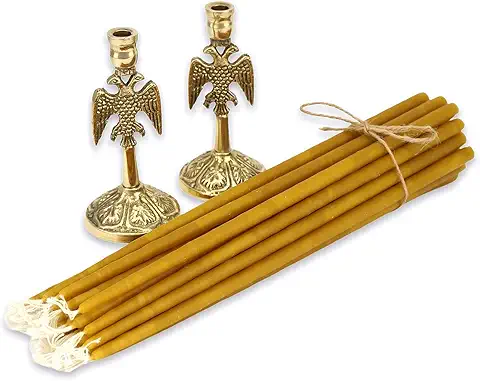
The traditional practice of the vigil lamp is to keep it burning continuously — day and night — as a sign of the household's permanent and unceasing dedication to God. In practice, many modern households keep the lamp burning during daylight hours and during prayer times, extinguishing it safely at night. Both practices are within the tradition; the important thing is intentionality. When you light the lamp before prayer, you are doing something that Orthodox Christians have done in every century since the earliest days of the Church: you are announcing to yourself, to your family, and to the unseen world that this place belongs to God and that prayer is happening here.
Section IXHoly Incense: Transforming the Home Into a Temple
The use of incense in Christian prayer is among the most ancient of all liturgical practices, rooted in the Old Testament regulations for the worship of the Tabernacle and Temple (Exodus 30:34–38), carried forward by the early Christians as a natural expression of their continuity with the worship of Israel, and confirmed in the Book of Revelation's vision of heavenly worship, in which the prayers of the saints are shown as clouds of incense rising before the divine throne (Revelation 8:3–4). In the Eastern Church, incense has never been an optional element of liturgical worship but an essential one — the deacon swings the censer (thymiato) throughout the Divine Liturgy, the incense rising as a tangible, visible, olfactory sign of the prayers of the faithful ascending to God.
In the home prayer corner, incense serves this same function, and it does something more: it transforms the sensory character of the space in a way that immediately and powerfully evokes the atmosphere of the church. The smell of frankincense — or of the particular resin-and-flower blends characteristic of Athonite and Greek monastic incense — is one of the most powerful olfactory anchors in existence. Once you have prayed with incense for any sustained period, the smell alone will orient you toward prayer, calling up the memory of accumulated devotion in a way that engages the whole person — body and soul together, not just the intellect and will. This is not incidental but theologically intentional: the Eastern Church has always insisted that worship must engage the whole human person, the body no less than the soul.
"Let my prayer arise before you as incense, and the lifting up of my hands as an evening sacrifice." — Psalm 140:2, sung at Vespers in every Orthodox church in the world
For home use, incense is typically burned on a small charcoal disk placed in a fireproof incense burner (a simple ceramic or metal bowl will serve), or on a dedicated home censer. A small amount of resin incense — a piece roughly the size of a pea — placed on the lit charcoal produces ample fragrant smoke for a prayer time. The practice is to cense the icons before beginning prayer, moving the censer gently before each icon in a gesture of veneration, and then to allow the incense to burn throughout the prayer time.
The finest incense for Orthodox home prayer comes from the monastic workshops of Mount Athos — the great monastic peninsula of northern Greece that is the center of Eastern Orthodox monastic life and the source of some of the most ancient and pure forms of Christian devotional practice. Athonite incense is made from natural resins (primarily frankincense and myrrh), dried flowers, and traditional ingredients in proportions that have been refined over centuries by the monks of the Holy Mountain. It is qualitatively different from commercial incense — fuller, deeper, more complex in its fragrance, and carrying the accumulated prayer of the monastic tradition in which it was made.


The Orthodox Prayer Rope: The Heart of Orthodox Home Prayer
The komboskini (Greek) or chotki (Russian) — the knotted prayer rope — is the most intimate and personal object in the Orthodox prayer corner. Unlike the icons, which are venerated communally and publicly, or the incense, which fills a shared space, the prayer rope is a tool of individual, silent, continuous prayer. It is held in the hand, the fingers moving from knot to knot with each repetition of the Jesus Prayer, and it is therefore simultaneously a physical and a spiritual instrument — engaging the body in the act of prayer in a way that anchors the wandering mind and trains the whole person in the practice of interior prayer.
The Jesus Prayer — Lord Jesus Christ, Son of God, have mercy on me, a sinner — is the foundational prayer of the Eastern Christian hesychast tradition, the ancient prayer of the heart that the Desert Fathers of Egypt and Syria developed in the fourth and fifth centuries and that the Athonite tradition refined and systematized in the fourteenth century through the theology of Saint Gregory Palamas. The prayer is not merely a formula to be repeated mechanically but a vehicle for bringing the mind into the heart — for achieving the state of inner stillness and divine awareness that the Eastern Christian tradition calls nepsis (sobriety or watchfulness) or hesychia (stillness). The prayer rope is the physical tool that supports this practice.
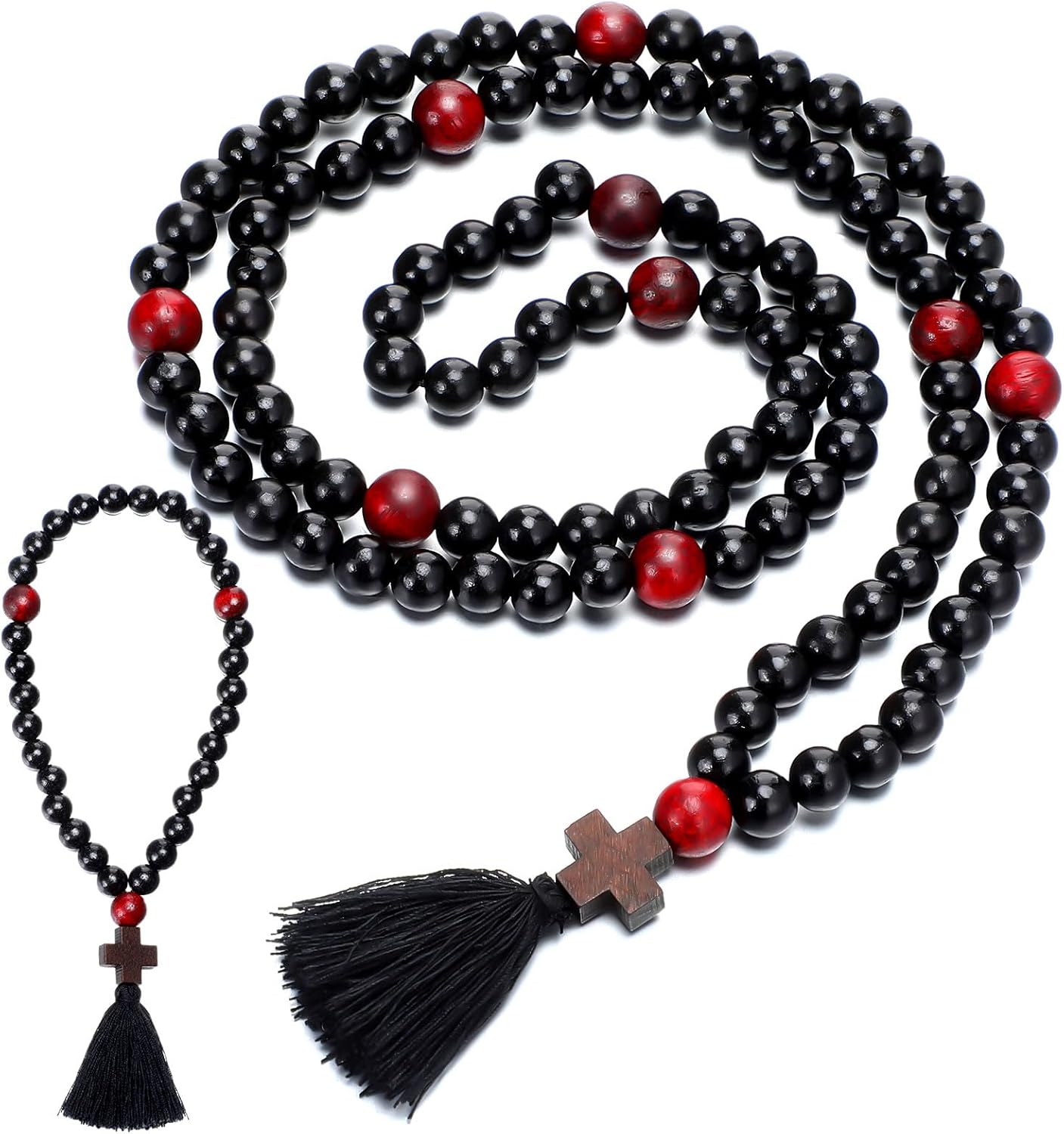
The traditional prayer rope is made from wool, knotted by hand — traditionally by a monastic who prays a specific prayer over each knot as it is tied. The wool, the handcraft, and the prayer embedded in the making all contribute to the spiritual character of the object. The knot itself is traditionally made with a specific number of crossings that forms a small cross within each knot — a feature that is not immediately visible to the eye but that is present in every bead of a genuinely traditional prayer rope. Prayer ropes come in different lengths: 33 knots (representing the years of Christ's earthly life), 50, 100, and 300 knots, with larger ropes used by monastics and those with an advanced prayer rule.
The finest prayer ropes continue to be made in the Athonite tradition — by monks on Mount Athos who have themselves been formed in the hesychast prayer of the Holy Mountain and who tie each knot as an act of prayer. A prayer rope made in this tradition carries something of the prayer of its maker into the hands of whoever uses it — a form of spiritual communion across geography and vocation.


How to Use the Prayer Rope
The practice is simple but deserves some guidance. Hold the rope in your left hand (traditionally), with your thumb and index finger resting on a knot. With each repetition of the Jesus Prayer, move to the next knot. This is not counting in order to achieve a quota; it is a support for attention, a way of giving the fingers something to do so that the mind is freed to remain with the prayer. The body's engagement with the rope is an anchor against the wandering of the mind — the chief obstacle to prayer in every tradition, and the one that the komboskini was specifically designed to address.
Begin with a manageable number: 33 or 50 repetitions, once a day, as part of your morning or evening prayer rule. As the practice becomes established, it naturally deepens and extends. The goal, as Saint Paul expresses it in his letter to the Thessalonians, is to "pray without ceasing" — to arrive at a state where the Jesus Prayer is present in the background of consciousness throughout the day, not only during formal prayer times. This is not achieved immediately or through effort alone; it is a gift of grace that comes through faithful, humble, long-term practice. The prayer rope is the tool that supports that practice.
Section XIHoly Oil: Anointing and Intercession in the Home
The anointing of the sick and the use of holy oil for blessing are among the most ancient practices of the Christian Church. The Apostle James, in his letter, makes explicit reference to the anointing of the sick by the elders of the community (James 5:14–15), and the practice of blessing and anointing with oil extends through the entire history of the Church — in the sacrament of Holy Unction (Efchélaio in Greek), administered by a priest, and in the more personal and domestic use of oil that has been blessed or that comes from sacred places, applied with prayer in the home.
Holy oil from the sacred sites of the Christian Holy Land carries a particular weight and spiritual significance in the Eastern tradition. Jerusalem is the city where Christ suffered, died, rose from the dead, and ascended into heaven — the geographical center of the Christian mystery. Oil from the lamps burning before the Tomb of Christ in the Church of the Holy Sepulchre, or oil blessed at the great shrines of the Holy Land, carries the accumulated prayer of twenty centuries of Christian pilgrimage and worship. It is not magical oil — the Eastern Church is careful to insist that sacred objects are channels of grace and not talismans — but it is a genuine vehicle of blessing, sanctified by its association with the most holy places on earth and by the prayers of the Christian community that has tended those places across the centuries.
In traditional Orthodox practice, a small bottle of holy oil is kept in the prayer corner, used to anoint family members during illness, to make the sign of the cross with oil on the forehead before important events, and to apply to the icon corner itself as a form of blessing. The anointing is done with the sign of the cross, accompanied by prayer — typically the Jesus Prayer or a simple petition to Christ or to the interceding saint whose oil it is.


The Prayer Mat: Prostrations and Kneeling in the Orthodox Tradition
Prostrations — full bows in which the forehead touches the floor — are one of the most ancient and physically demanding elements of Orthodox prayer. They are made throughout the Divine Liturgy on weekdays (though not on Sundays, when prostrations are traditionally prohibited in memory of the Resurrection), during the Great Lenten services, and as part of the personal prayer rule at the prayer corner. A full prostration in the Orthodox tradition involves a deep bow from the waist, the knees coming to the floor, and the forehead touching the ground in an act of total bodily humility before God — the same gesture that the great saints of the tradition have made before the divine presence throughout history.
Prostrations are not merely external gestures. In the integrated anthropology of the Eastern Church, the body and soul are inseparable, and what the body does affects the soul. To prostrate oneself before God — to physically assume the posture of total submission, of creatureliness before the Creator — is not merely to express an interior attitude but to form one. The person who prostrates regularly learns humility in the body before they fully possess it in the soul; the body's habit shapes the soul's inclination over time.
A dedicated prayer mat or rug for the prayer corner serves several practical functions: it defines the space before the icons as a sacred zone, it cushions the knees during prostrations and extended kneeling, and it provides a clean and dedicated surface for the most physically humble acts of worship. In the Orthodox tradition, the traditional form of the prayer rug incorporates Orthodox Christian imagery — the three-bar cross, the IC XC monogram of Christ, Byzantine geometric patterns — making it both practically useful and visually consistent with the sacred character of the prayer corner.

The Number and Types of Prostrations in the Orthodox Tradition
The Orthodox tradition distinguishes between the metanoia (a deep bow from the waist, the hand touching the floor) and the full prostration (veliky poklon in Russian, literally "great bow") in which the forehead touches the floor. Both have their place in the prayer rule. Beginners typically begin with metanoiai and add full prostrations as their physical practice develops. The traditional number of prostrations in the daily prayer rule varies by source and by tradition; the Morning and Evening Prayers from the standard Orthodox Prayer Book include specific numbers of prostrations assigned to particular prayers. During Great Lent, the Prayer of Saint Ephrem the Syrian — "O Lord and Master of my life..." — is accompanied by prostrations and metanoiai in a structured sequence that is one of the most physically and spiritually powerful prayer forms in the entire Orthodox tradition.
Section XIIIAdditional Sacred Objects: Holy Water, Prayer Books, and Relics
The fully appointed Orthodox prayer corner typically includes several additional sacred objects beyond those already discussed. None of these are obligatory in the way that the icon of Christ is obligatory; all of them deepen and enrich the prayer space in ways that a serious Orthodox household will want to consider over time.
Holy Water (Agiasmos)
Holy water — water that has been blessed through the Blessing of the Waters ceremony — is one of the most widely used sacramentals in the Orthodox tradition. It is blessed on the feast of Theophany (January 6, the feast of the Baptism of Christ) in a ceremony that is among the most majestic and ancient in the Orthodox liturgical calendar, and this Theophany water (Great Agiasmos) is considered particularly potent and is preserved throughout the year. A small bottle of holy water should be kept in the prayer corner and used for: sprinkling the home (especially after conflict, illness, or any disturbance), drinking with prayer (traditionally, a small amount is taken in the morning before eating, accompanied by a prayer), blessing family members before travel or significant events, and blessing newly acquired items.
The Orthodox Prayer Book
The prayer corner needs a prayer book. The standard Orthodox prayer books contain the Morning and Evening Prayer rules — the daily prayers that constitute the minimum prayer rule for Orthodox Christians — as well as the Akathist Hymns to Christ, the Theotokos, and the major saints, the Canon of Repentance, the Canon to the Guardian Angel, prayers before and after Communion, and numerous other prayers for specific occasions and needs. The prayer book should live in the prayer corner, not in a drawer or on a general bookshelf. Its presence at the corner is a reminder of the seriousness of the prayer rule and a support for maintaining it.
The Candle of the Forty Martyrs and Blessed Palms
In many Orthodox households, candles received at Pascha (Easter) — the light brought home from the midnight service — are kept at the prayer corner as a tangible connection to the most important liturgical event of the year. Similarly, palms or pussy willows received on Palm Sunday are traditionally kept tucked behind the icons. These objects carry the blessing of the liturgy into the home and connect the domestic prayer life to the life of the parish church in a concrete, visible way.
Relics
The veneration of the relics of the saints is one of the oldest and most theologically grounded practices of the Eastern Church. The relics of the saints — the physical remains of those bodies that were temples of the Holy Spirit and that will be raised on the Last Day — are holy objects, channels of grace, and the presence of the saints in the material world. The presence of a relic, even a small third-class relic (an object that has touched the saint's first-class relics), in the prayer corner brings the intercessory presence of a specific saint into the sacred space in a direct and tangible way. Relics are available through Orthodox monasteries and some parishes; they should be received with veneration and kept in a suitable reliquary or container within the corner.
Section XIVYour Daily Prayer Rule: Actually Using the Corner
The prayer corner is not an end in itself. It is the setting for a daily practice, and without that practice it is an expensive decoration. The most important question about any prayer corner is not "How is it arranged?" but "Is anyone praying before it, and with what seriousness, consistency, and devotion?" The corner calls; the prayer rule responds. Together they constitute the domestic church.
The traditional Orthodox prayer rule consists of Morning Prayers and Evening Prayers — specific sequences of prayers drawn from the tradition of the Church, composed largely by the great spiritual masters of the hesychast tradition (Saint John Chrysostom, Saint Basil the Great, Saint John of Damascus), and contained in the Orthodox prayer book. These prayers are not optional extras for the particularly devout; they are the minimum expected of every Orthodox Christian. The morning prayers orient the day toward God; the evening prayers bring the day to a close in thanksgiving and repentance, commending the night to God's protection. Together they impose the shape of the liturgical day — the prayer of the Church — onto the domestic life of the household.
A Simple Daily Prayer Rule for the Orthodox Prayer Corner
Morning (before eating): Light the vigil lamp and a candle. Stand before the icons. Make three metanoiai. Recite the Morning Prayers from the Orthodox Prayer Book (approximately 10–15 minutes for the full rule). Include the Jesus Prayer on the komboskini if your rule includes it. Make three final metanoiai. Cense the icons if desired.
Throughout the day: The Jesus Prayer is prayed continuously on the prayer rope as circumstances permit — during commuting, housework, physical labor, or any quiet moment. Brief pauses before the prayer corner when passing are traditional — a sign of the cross, a short prayer, a moment of recollection.
Evening (before retiring): Light the candle. Stand before the icons. Make three metanoiai. Recite the Evening Prayers (approximately 10–15 minutes). Include specific petitions for the household and for those in need. Make three final metanoiai. Leave the vigil lamp burning if safe to do so, or extinguish it with a prayer of entrustment.
On Sundays and Feast Days: The prayer rule may expand to include the appropriate Akathist Hymn (to the Theotokos on Thursday, to Christ on Friday, to relevant saints on their feast days), the Typika, or other supplementary prayers from the prayer book.
The critical discipline is consistency above intensity. A modest prayer rule maintained faithfully every day without exception is immeasurably more beneficial to the spiritual life than an elaborate rule kept for a week and then abandoned. Begin with what is genuinely sustainable — even if that is only the Morning Prayer and three prostrations — and build from that foundation as the practice takes root. The great spiritual fathers of the tradition are unanimous on this point: beginners should pray less than they feel they can, not more, in order to establish a sustainable rhythm rather than burning out in an initial burst of enthusiasm.
An important practical note: the prayer corner is for prayer, not for looking at or thinking about prayer. Stand before your icons. Open your prayer book. Move your lips. Make your prostrations. The formality of the external practice — the words, the postures, the physical elements of the corner — is not a substitute for interior prayer but its vehicle and support. Begin with the external and trust that the internal will follow, gradually, by grace, if you are faithful.
Section XVGrowing Your Corner: From Simple to Fully Traditional
The prayer corner is not built in a day. It grows — as the household grows in faith, as icons are received as gifts or are purchased with specific spiritual intention, as objects accumulate that carry the history of the family's prayer life: the candle from a loved one's funeral, the icon received at a baptism, the prayer rope from a pilgrimage to a monastery. This organic growth is not only acceptable but is precisely how a prayer corner is meant to develop. The fully appointed, richly iconographed prayer corner of a family that has maintained their faith for decades tells a story — of the saints they have been devoted to, the crises they have brought to God in prayer, the people they have prayed for, the grace they have received.
Stages of a Growing Prayer Corner
| Stage | What to Have | Notes |
|---|---|---|
| Beginning | One icon of Christ; a vigil lamp or candle; a prayer book | This is a complete, theologically valid prayer corner. Do not wait until you can do "the whole thing" before you begin. |
| Established | Christ and Theotokos; vigil lamp; beeswax candles; prayer rope; incense; a shelf or dedicated surface | The core elements of the tradition are in place. A regular prayer rule should now be established and maintained. |
| Developed | Deesis grouping; patron saint icons; holy water; holy oil; prayer book; prayer rope; prayer mat | The corner now has the full range of elements to support a serious daily prayer rule and the major sacramental needs of the household. |
| Mature | Multiple icons in hierarchical arrangement; relics; Feast icons; lampada and candelabra; full censer; dedicated prayer cabinet or icon stand | The corner has become a genuine domestic sanctuary, expressing the theological richness of the Orthodox tradition in its fullness. |
One important caution in the growth of the prayer corner: more is not automatically better. The quality of the prayer that happens before the corner matters infinitely more than the number of icons or the magnificence of the appointments. A corner with a single icon of Christ, before which a family prays faithfully every morning and evening, is more pleasing to God than an elaborate, museum-quality arrangement that serves primarily as a mark of cultural identity and receives no serious prayer. Build your corner as your prayer life calls for it, not faster. Let each addition be the fruit of a genuine spiritual need — a new icon of a saint you have come to love, a prayer rope that replaces one worn out by use — rather than an accumulation for its own sake.
Section XVIFor Those New to Orthodoxy: Where to Begin Without Being Overwhelmed
If you are new to Orthodoxy — whether as a catechumen preparing for reception into the Church, a recent convert finding your footing in the tradition, or simply someone drawn to the Eastern Christian spiritual world and seeking to understand it — the prayer corner can feel both deeply attractive and somewhat intimidating. The tradition is rich, the requirements seem numerous, and it is easy to feel that you need to understand everything before you can do anything. This is a temptation to be resisted firmly.
The Orthodox tradition has always insisted that the spiritual life is learned by practice, not by theory. You will not understand the vigil lamp by reading about it; you will understand it by lighting one and praying before it for six months. You will not grasp the theology of the icon by studying iconography; you will grasp it by standing before an icon and allowing it to address you. The tradition is designed to be lived into, not mastered at a distance and then implemented once mastered.
Begin with one icon and one candle. Light the candle. Stand before the icon. Say the Jesus Prayer three times: Lord Jesus Christ, Son of God, have mercy on me, a sinner. Make the sign of the cross. Bow. That is your beginning. It is not impressive, and no one will be watching. But you will have done something that every Orthodox Christian from the Desert Fathers to the present has done — you will have stood before the face of Christ in his icon and offered him your attention and your need. Build from that foundation, slowly, honestly, and without comparison to the corners of others or the ideals of manuals. Your corner belongs to your life with God, and that life is uniquely yours.
Talk to your priest about the prayer rule. Ask him what he recommends for someone at your stage of the spiritual life. The prayer rule given by a spiritual father who knows you is worth infinitely more than the most elaborate self-constructed program. The humility of asking for guidance is itself a spiritual practice, and the obedience of following that guidance is the beginning of the transformation that the prayer corner is designed to support.
"Do not be troubled if your prayer corner is small and simple. God is not impressed by elaborateness. He is present wherever two or three are gathered in His name — and He is supremely present wherever one soul honestly seeks Him. Begin small. Begin now. He will meet you there." — On beginning the practice of the prayer corner
The Orthodox prayer corner is one of the most tangible, beautiful, and theologically rich practices in the entire Christian tradition. It takes the ancient conviction that God dwells with His people — Emmanuel, God-with-us — and embeds that conviction in the architecture of the home, making it impossible to forget even in the busyness and distraction of daily life. Every time you walk through the room where your corner stands, you are reminded: this home belongs to God, this life is oriented toward God, and God is here.
May your corner be a place of genuine encounter, genuine peace, and genuine transformation — for you, for your household, and for all who enter your home and find themselves standing, perhaps for the first time in a long time, in a place that feels unmistakably holy.
Lord Jesus Christ, Son of God, have mercy on me, a sinner.