Saint James Intercisus (James the Persian) – Life, Martyrdom & Prayer
Saint James Intercisus James the Persian · Mor Yaqoub M'Pasqo Sahada · James the Mutilated
The nobleman who denied Christ, repented openly before his king, and was cut into twenty-eight pieces — praying at every one.
Saint James Intercisus Prayer Card
Printed on museum-quality photo paper and prayed over during every step of creation. Each card is made individually, with your name and intention lifted before Christ. This is not production work — it is devotional craftsmanship for the soul who will carry it.
- Also Known As
- James the Persian · James the Mutilated · Mor Yaqoub M'Pasqo Sahada · Jacob the Persian · Akouphos (Cyprus)
- Feast Day
- November 27 — observed in both Eastern and Western calendars
- Born
- Beth Huzaye, Sassanid Persian Empire (modern southwestern Iran) · Date unknown
- Died
- c. November 27, 420–421 AD · Beth Lapat, Persia (near modern Dezful, Iran)
- Faith Tradition
- Ancient Church of Persia (pre-schism). Venerated by: Eastern Orthodox · Oriental Orthodox (esp. Syriac Orthodox) · Roman Catholic · Syriac Catholic · Chaldean Catholic · Maronite Catholic
- Patron Saint Of
- Repentance after apostasy · Courage under persecution · Torture victims · Lost vocations · Restoration after spiritual failure · Those facing public trial for faith
- Historical Note
- His martyrdom, among wider Sassanid persecutions, helped precipitate the Roman-Sassanid War of 421–422 AD
- Canonized / Recognized
- Pre-Congregation — martyr of the undivided Church, recognized universally across Eastern and Western traditions
A Nobleman of Persia Who Failed, Repented, and Then Refused to Stop
Saint James Intercisus was born in Beth Huzaye, a city within the Sassanid Persian Empire, in what is today southwestern Iran. He came from a noble Christian family and rose to become a military officer and courtier in the service of King Yazdegerd I — one of the most powerful rulers in the Persian world. He was a man of standing, of influence, and of genuine faith. He was also a man who, when the moment of testing arrived, chose safety over confession.
His story begins not with heroism but with failure — and that is precisely what has made him one of the most beloved martyrs in the Christian East for over sixteen centuries.
King Yazdegerd I had initially tolerated Christians within his empire. Persia sat uneasily between two worlds: Rome to the west was Christian, and Persian rulers frequently viewed Christianity as a foreign religion with dangerous political loyalties. Under Yazdegerd, however, some breathing room existed. James could hold his faith and his position at once. But the toleration did not last. As Yazdegerd's persecution of Christians intensified, James faced a choice no courtier ever wants to face: the king's approval or Christ's.
He chose the king.
The Apostasy, the Letter, and the Repentance
The apostasy of James was not a quiet act. He publicly denied his Christian faith in order to preserve his royal standing. Word of this reached his family — his mother and his wife — who had not renounced their own faith regardless of the danger. They were shattered.
According to accounts preserved from the early Church, they sent him a letter so piercing it could not be ignored. The letter declared, in essence, that if he had abandoned his Heavenly King for a worldly one, they could no longer recognize him as their own. His mother and wife refused to soften the truth or offer him comfort until he had returned to Christ.
"He denied Jesus to preserve his position. His family's grief did not condemn him — it called him home."
— From the hagiographic tradition of the Syriac and Byzantine Churches
The grief of his family broke through the armor of his cowardice. James was plunged into a deep crisis of conscience — a genuine, searching crisis that led not to despair but to conversion. He began distancing himself from the royal court. He blamed himself openly. And then Yazdegerd I died.
The new king of Persia was Bahram V — and Bahram was no friend of Christians. When James was summoned before the new king, he did not calculate. He had already paid the price of calculation once. This time, standing before the throne, he spoke plainly: "I am a Christian."
Bahram V accused him of ingratitude — of betraying the honors his father Yazdegerd had heaped upon him. James did not deny it. He simply would not deny Christ again. He replied with calm that no earthly king could compare to the King he now served, and that the same courage that had failed him once would not fail him twice.
He was condemned to death.
Cut Into Twenty-Eight Pieces — Praying at Every One
The execution of Saint James was one of the most methodical and prolonged martyrdoms recorded in the hagiographic tradition of the early Church. The king ordered a dismemberment meant not only to kill but to terrorize — to send a message to every Christian who might dare follow his example.
James was suspended from a beam. Executioners began with the smallest cuts: the fingers, then the toes, then the hands, then the feet, then the arms, then the legs — each severed piece by piece, limb by limb, until he was finally beheaded. In total, his body was divided into twenty-eight or twenty-nine pieces. This is the origin of his name: Intercisus, Latin for "cut into pieces." In Syriac he is called Mor Yaqoub M'Pasqo Sahada — "the Severed Martyr."
A large portion of the population and much of the army gathered to witness the execution. Some in the crowd — including many Christians — begged James to simply renounce his faith and end the suffering. He refused.
After one of the first cuts, James cried out involuntarily, and the executioners taunted him. His response was recorded by scribes present at the scene:
"God permitted that cry so that you would not think I only appeared to have a human body. I am ready to endure even greater torments for the love of God. The thought of my Savior embraced my heart — through Him I overcame every emotion. Continue."
— Words of Saint James Intercisus during his martyrdom, recorded by eyewitness scribes
After each severance, witnesses recorded James turning his prayers toward God. One prayer, offered as fellow Christians wept in the crowd, has been preserved across centuries: "Receive, O Lord, the prayers of your humble servant. Give strength and courage to the son of your maidservant. Make of me a sign of consolation for those who love you, those who suffer, and for those who will suffer persecution for your name's sake."
He affirmed, with each cut, that the body being taken apart piece by piece would one day rise in glory. He was not enduring the torture in silence. He was worshipping through it. He died around the year 420–421 AD in Beth Lapat, whose ruins lie near modern Dezful in southwestern Iran.
The early Church preserved his memory with particular intensity in the Syriac-speaking world. He was venerated precisely because he had failed and returned — his courage was born out of repentance, not untested innocence. Saint James stands as incontrovertible proof that God restores the broken, and that repentance can lead not only to forgiveness but to glory.
Byzantine Icons for Your Prayer Corner
Saints like James remind us that prayer requires a place of focus. These handcrafted Byzantine icons bring the beauty of the Eastern tradition into your home.


Who Prays to Saint James Intercisus, and Why
Saint James holds patronage over an unusually wide and deeply human range of spiritual needs. He is not the patron of the untested. He is the patron of the fallen who are trying to stand again.
He is invoked as patron saint of those who need courage restored after a moment of cowardice, of those who have made the wrong choice under pressure and carry the shame of it, and of those enduring severe physical suffering. The Catholic News Agency lists him specifically as the patron saint of lost vocations and torture victims. Eastern Christian tradition expands this further: he is seen as a protector of those facing public trials and an intercessor for communities living under persecution.
People have prayed to Saint James in times of public disgrace — when they have publicly denied their faith, their marriage vows, their priestly commitments, or their deepest convictions — and then, like James himself, found the strength to return. His story offers something rare among the saints: he is not a model of someone who never fell. He is a model of someone who fell and then refused to stay fallen.
Patronage
- Courage under persecution and religious pressure
- Repentance after compromise or apostasy
- Strength during severe suffering and extreme trials
- Victims of torture and violent persecution
- Those with lost or abandoned vocations
- Restoration after spiritual failure
- Those facing public accusation for their faith
- Christians living under hostile governments
Who Venerates Him
- Eastern Orthodox Church (all jurisdictions)
- Oriental Orthodox — esp. Syriac Orthodox Church of Antioch
- Roman Catholic Church (Universal Calendar)
- Syriac Catholic Church
- Chaldean Catholic Church
- Maronite Catholic Church
- Coptic Orthodox (commemorated)
- Armenian Apostolic Church (commemorated)
The Miracle of His Life and What Was Recorded After His Death
The primary miracle associated with Saint James during his lifetime is the martyrdom itself. The endurance of twenty-eight separate amputations while continuing to pray aloud, to offer praise, and to intercede for the very Christians weeping in the crowd was recorded by scribes present at the execution. His words and prayers were documented as each cut was made. The fact that he neither fell silent nor renounced his faith — even as fellow believers begged him to — was regarded from the earliest time as a miraculous gift of divine strength.
After his death, the veneration of Saint James spread with remarkable speed through both Eastern and Western churches. Churches were dedicated to him within decades of his martyrdom. His story was preserved not only in the Syriac-speaking church but in the Roman West, where it was included in the Legenda Aurea (The Golden Legend) — the most widely read collection of saints' lives in medieval Christendom.
Accounts of his intercession after death center especially on the strengthening of those tempted to apostasy. Christians living under persecution — in Persia, and later under various hostile powers — invoked his name specifically when facing pressure to deny their faith. His cult extended as far as Cyprus, where he was known locally as Akouphos, and into Gaul, where a bishop gifted his relics to an abbey in the 12th century.
Free Marriage Resources from The Eastern Church
Saint James's story is also the story of a wife who loved him enough to tell him the truth. The marriages of the saints were often marked by sacrifice and honest, courageous love. We've gathered free resources on marriage through the wisdom of the Eastern Christian tradition — for every season of a relationship.
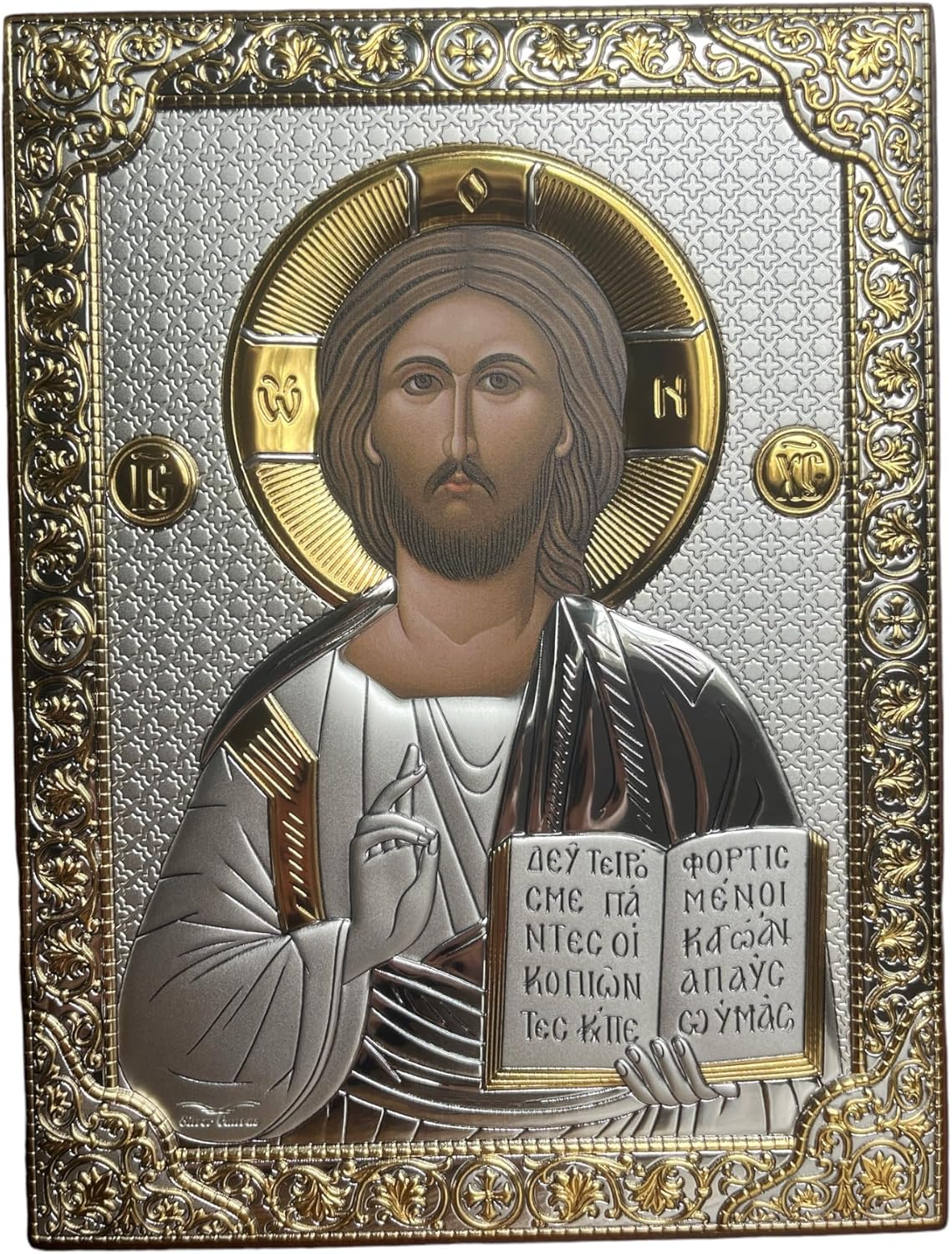
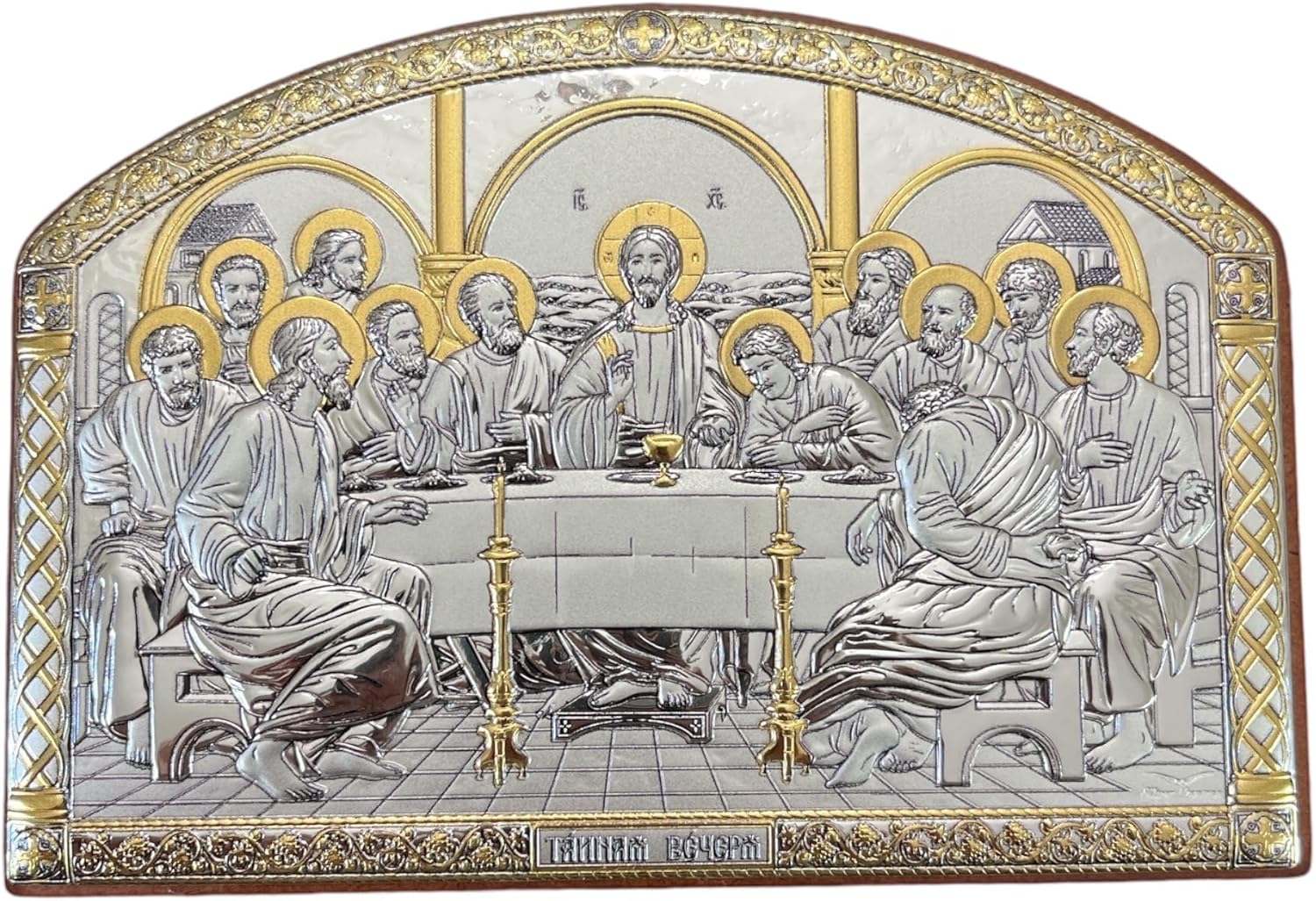
Access Free Marriage Resources →Handmade Sterling Silver Icons from Greece
Premium Byzantine icons handcrafted in Greece using 925° sterling silver — heirloom pieces for prayer corners, gifts, and lasting devotion.

Where the Remains of Saint James Are Venerated Today
After the execution, his followers sought immediately to collect his remains. The guards refused. Undeterred, the faithful hid nearby and waited through the night, gathering his scattered remains after the guards departed. His body was found in twenty-nine pieces — ten fingers, ten toes, two feet, two hands, two arms, two legs, and his head. These relics were preserved in the Syriac church and eventually dispersed across the Christian world.
Sé de Braga (Cathedral of Braga)
A significant portion of the bodily remains of Saint James Intercisus rests in the Relics Chapel of this ancient Portuguese cathedral — one of the oldest in the Iberian Peninsula, dating to the 11th century. The Cathedral of Braga is the primatial church of Portugal, seat of the Archdiocese of Braga.
Visit Cathedral of Braga →St. Peter & Paul Jacobite Syrian Orthodox Church, Pengamuck
A finger bone of Saint James is kept in a golden casket in the holy cross chapel dedicated to the saint. The relic was received from Patriarch Ignatius Yakoob II of Antioch and has been venerated for generations within the Syriac Orthodox tradition in India.
Syriac Orthodox Church of Antioch →Monastery of Mar Yakub (St. James the Mutilated)
One of the oldest Christian monasteries in the region, the Monastery of Mar Yakub held relics of Saint James for many centuries. Active since at least the 6th century, it was restored to monastic life in 1994 after sixty years in ruin.
Visit Monastery of Mar Yakub →Abbey of Saint Paul, Cormery
In 1103 AD, Bishop Guillermus Ludovicus of Salpi gifted relics — including the head of Saint James — to the Abbey of Cormery in France. This westward journey of his relics cemented his veneration across the Latin Church centuries after his death.
Churches & Monasteries Dedicated to Saint James Intercisus
- Church of St. James Intercisus — Armenian Quarter, Jerusalem
- Church of Saint Jacob Intercisus (ܥܕܬܐ ܕܡܪܝ ܝܥܩܘܒ ܡܦܣܩܐ) — Tesqopa, Iraq
- Monastery of St. James the Persian — Sireți, Strășeni, Moldova
- Monastery of St. Jacob Persian — Deddeh, Lebanon
- Monastery of St. James the Mutilated (Mar Yakub) — Qara, Syria
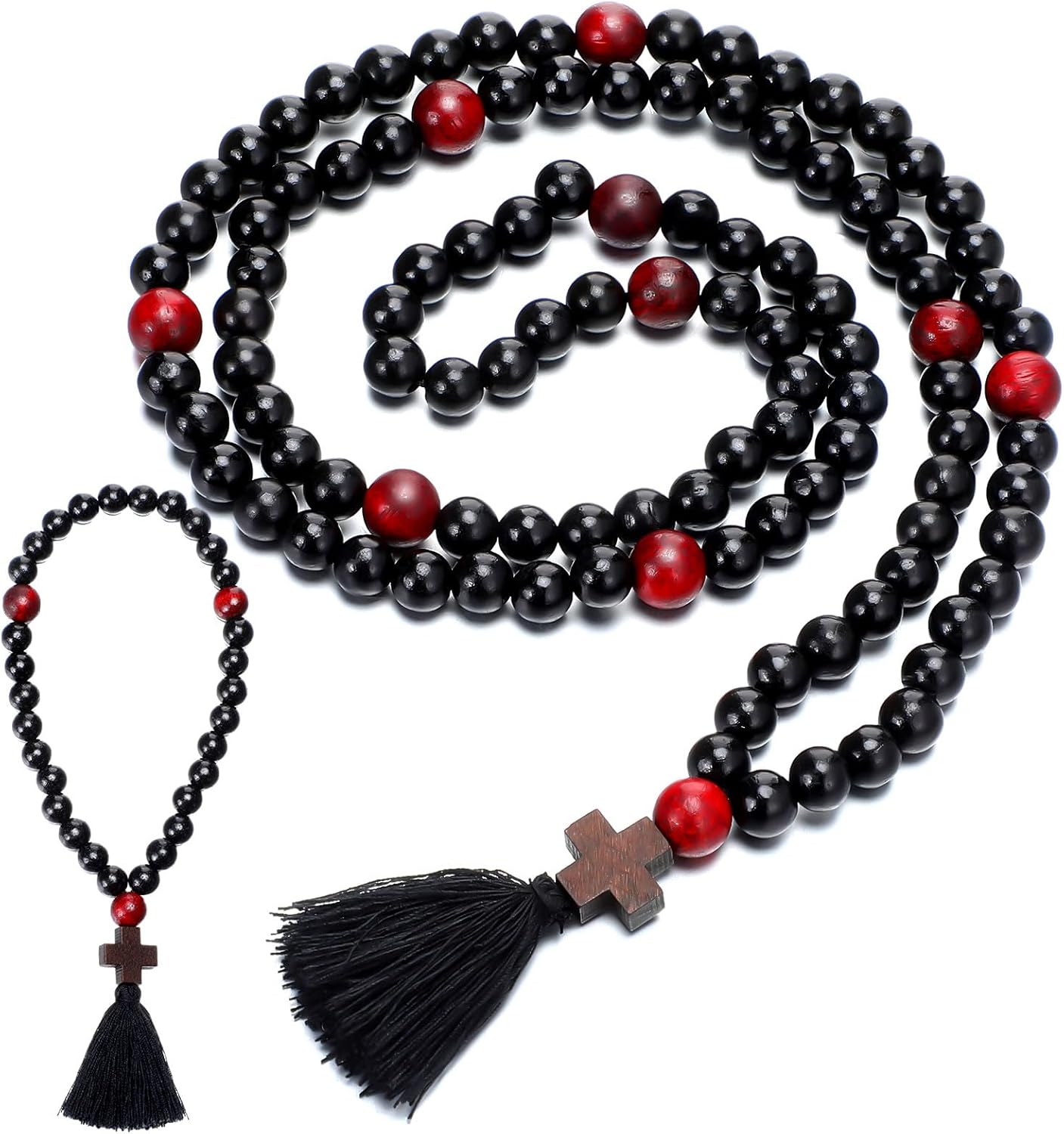
Prayer Ropes in the Mount Athos Tradition
Saint James prayed through every cut of his martyrdom. The prayer rope has supported unceasing prayer in Eastern Christianity for centuries — a physical anchor to the Jesus Prayer.


Traditional Prayers to Saint James Intercisus
O holy Martyr James,
who repented of fear and confessed Christ unto death,
intercede for us before the Lord.
Strengthen us when we are tempted to deny our faith.
Restore us when we fall.
Grant us courage to stand firm in truth.
Teach us repentance that leads to life.
Deliver us from shame.
Make us bold in witness and faithful in suffering.
Through your prayers,
may we remain steadfast in Christ until the end.
Amen.
Questions About Saint James Intercisus
Carry Saint James With You
His prayer card is handmade in Austin, TX — prayed over during every step of creation, printed on museum-quality photo paper, and made to order as a unique devotional offering. A spiritual heirloom for seasons of repentance, courage, and renewed resolve.
Get the Saint James Intercisus Prayer Card — $3.00 →