Complete Guide to Healing Saints
The Complete Guide to Healing Saints:
Catholic & Orthodox
A comprehensive theological and devotional resource on the saints most powerfully invoked for physical healing — their lives, their miracles, and how to pray through them with confidence.
- The Tradition of Healing in the Catholic & Orthodox Church
- Saint Nektarios of Aegina — The Miracle-Worker of the Modern Age
- Saint Charbel Makhlouf — The Lebanese Hermit of Miracles
- Saint Rafqa of Lebanon — The Bride of Christ's Passion
- Orthodox Saints for Healing: The Full Tradition
- How to Choose the Right Saint for Your Situation
- Strengthening Your Marriage Through Prayer in Difficult Seasons
- Frequently Asked Questions
Throughout the two-thousand-year history of Christianity, the faithful have never faced illness, chronic disease, or physical suffering alone. The Church — both Catholic and Orthodox — has always maintained a deep and living theology of intercession: that those who have died in Christ are not absent from us, but more alive than we are, standing before the Throne of God and able to carry our prayers with them into that divine presence.
This is not superstition. It is the ancient and unbroken faith of the apostolic Church, expressed in the writings of Saint John Chrysostom, Saint Basil the Great, Saint Gregory of Nyssa, and every major Church Father. The theology is simple but profound: just as we might ask a holy priest or a righteous friend to pray for us, we can ask a saint in glory to intercede — and because they stand before God without the veil of mortality, their intercession carries a power and immediacy that is beyond ordinary prayer.
— Saint John of Kronstadt
Within the Eastern Christian traditions — Greek Orthodox, Russian Orthodox, Antiochian Orthodox, Coptic, and the various Eastern Catholic churches including Maronite, Byzantine, and Melkite — the veneration of healing saints is especially rich and concrete. Icons of healing saints are placed at bedsides. Prayer cards are tucked inside hospital gowns. Relics are visited by the sick from around the world. This is not a medieval relic of the past — it is a living, active, and documented spiritual practice producing miracles in our own century.
This guide brings together three of the most powerfully attested healing saints in the entire Catholic and Orthodox canon: Saint Nektarios of Aegina, Saint Charbel Makhlouf, and Saint Rafqa of Lebanon. For each one, we offer their full biography, the theological basis of their healing intercession, the specific conditions they are most invoked for, verified accounts of miracles, and prayers you can begin using today.
Whether you are facing cancer, chronic pain, paralysis, neurological disease, or supporting a loved one through prolonged suffering — this guide is written for you. The saints are not distant. They are waiting to be asked.
Feast Day: November 9
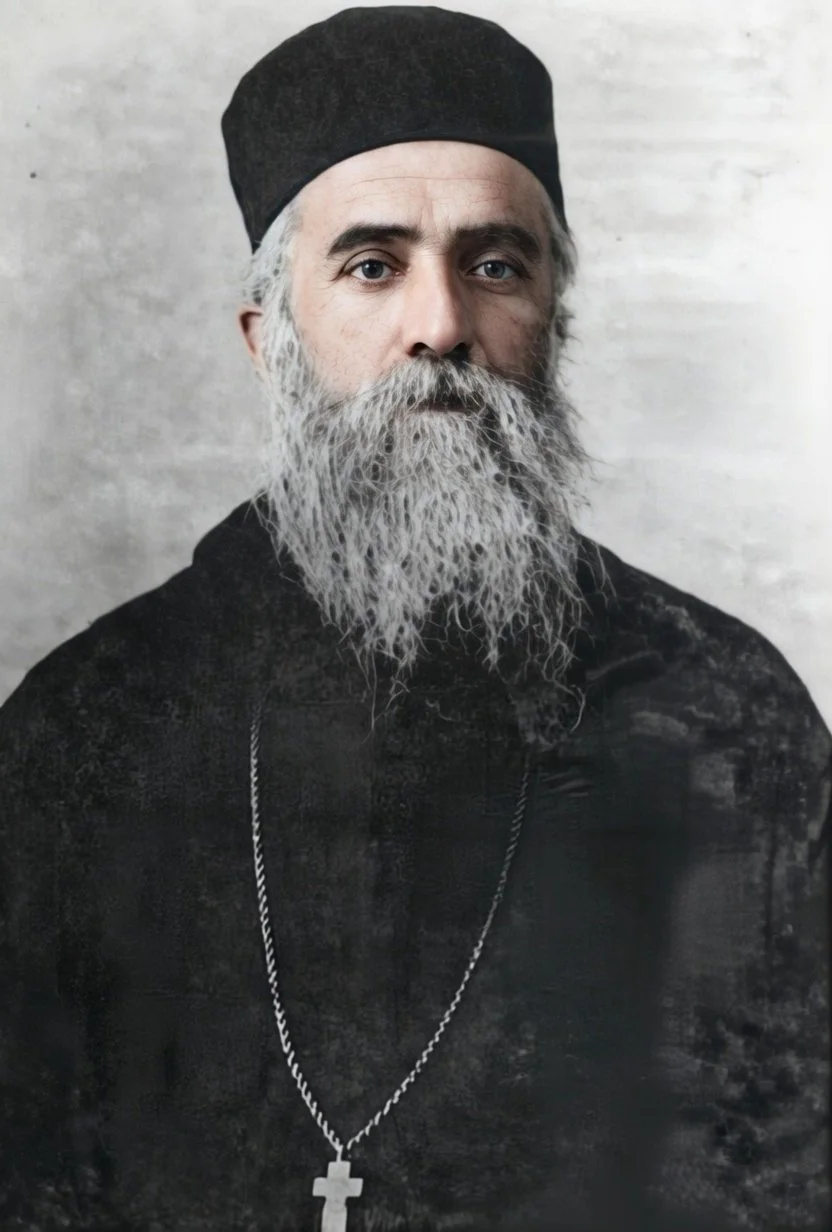
Who Was Saint Nektarios?
Anastasios Kefalas was born on October 1, 1846, in the small town of Silivri in eastern Thrace — a region then part of the Ottoman Empire — the fifth child of a humble and deeply devout family. From his earliest years, the child who would become Saint Nektarios displayed an unusual love for prayer, for the Church, and for the poor. As a young man working in Constantinople, he famously wrote a letter to God himself — a childlike act of pure faith that left those who discovered it moved to tears.
After years of working to support himself while pursuing education, Anastasios took monastic vows on the island of Chios, receiving the name Nektarios. His exceptional intelligence, profound piety, and gifts of preaching brought him to the attention of the Ecumenical Patriarch Sophronios IV, who ordained him rapidly through the ranks of the clergy. By 1889, he had been consecrated Metropolitan of Pentapolis in Egypt. It was the high point of a remarkable ascent — and the beginning of his most important spiritual education: suffering unjustly in silence.
Envious clerics fabricated accusations against Nektarios and presented them to the Patriarch of Alexandria. Without being given any formal opportunity to defend himself, Nektarios was abruptly stripped of his diocese and ordered to return to Greece. He spent years in obscurity in Athens, working as a church preacher, then as director of the Rizarios Ecclesiastical School. Through all of it, he never defended himself publicly, never sought revenge, and never stopped loving those who had wronged him. He was eventually appointed director of the school, which he transformed through his holiness and intellectual rigor. His humility in the face of persecution is considered one of the most important theological testimonies of his life — and Orthodox faithful believe it is precisely this suffering and forbearance that became the spiritual foundation of his later healing gifts.
His Life on Aegina and the Gift of Miracles
In his later years, Nektarios founded a convent for women on the island of Aegina, living in the most severe simplicity — his living quarters barely more than a cell with a few books. He served the sisters as a father and confessor, continued writing prolific theological works, and cared tirelessly for the poor. His theological writings, which range across dogmatic theology, ethics, and mystical theology, are still studied in Orthodox seminaries today. He wrote over sixty books and treatises, making him one of the most prolific Orthodox theologians of the modern period.
The miracles began before his death and multiplied dramatically afterward. His body, noted by medical staff at the Athens hospital where he died, exuded an otherworldly fragrance — a phenomenon known in Orthodox tradition as euodia, or the "odor of sanctity." The hospital worker who had stripped the dying bishop's garment to dress him in clean clothing later reported that as soon as the garment touched his own paralyzed body, feeling was instantly restored to his limbs. It was one of the first recorded miracles attributed to Nektarios after his repose.
His tomb on Aegina became almost immediately a site of pilgrimage. Thousands of healing accounts have been documented there over the past century — including the complete remission of terminal cancers, the restoration of sight and hearing, the healing of psychiatric illness, and the miraculous recovery of those given no hope by their physicians. When his relics were exhumed in 1953, three years before his glorification, his body was found partly incorrupt, and the monastery was reported to be filled with fragrance. The Ecumenical Patriarchate formally canonized him in 1961, though for the faithful on Aegina and throughout the Orthodox world, he had been considered a saint from the moment of his death.
Why People Pray to Saint Nektarios
Saint Nektarios is, without question, the most widely invoked Orthodox saint for cancer and serious illness in the modern world. His name is spoken in oncology wards across Greece, Cyprus, Serbia, Russia, Romania, and wherever Eastern Christianity has taken root — and increasingly among Catholics and even non-Christians who have heard his story. His particular charism for cancer intercession is attested by hundreds of documented cases in which physicians have confirmed unexpected remissions following prayer and pilgrimage to his relics.
But Nektarios is not only a patron of those with cancer. His intercession is sought for all serious physical illness, for mental illness and psychological distress, for those who have been unjustly treated, for priests under attack, for educators, and for all who suffer in silence. His entire life was a study in how suffering endured with love and without bitterness becomes a source of grace for others — a truth that makes him not merely a miraculous patron but a profound spiritual guide.
In Greek Orthodox practice, it is common to anoint icons of Saint Nektarios with holy oil and place them near the sick, to pray his akathist hymn on the ninth of the month, and to make pilgrimage to the Holy Trinity Monastery on Aegina where his full relics are enshrined. His feast day on November 9 draws thousands of pilgrims each year, many of them sick or accompanying the sick, in one of the most moving scenes of living faith anywhere in the contemporary world.
Patronages of Saint Nektarios
A Prayer to Saint Nektarios for Healing

Feast Day: July 24
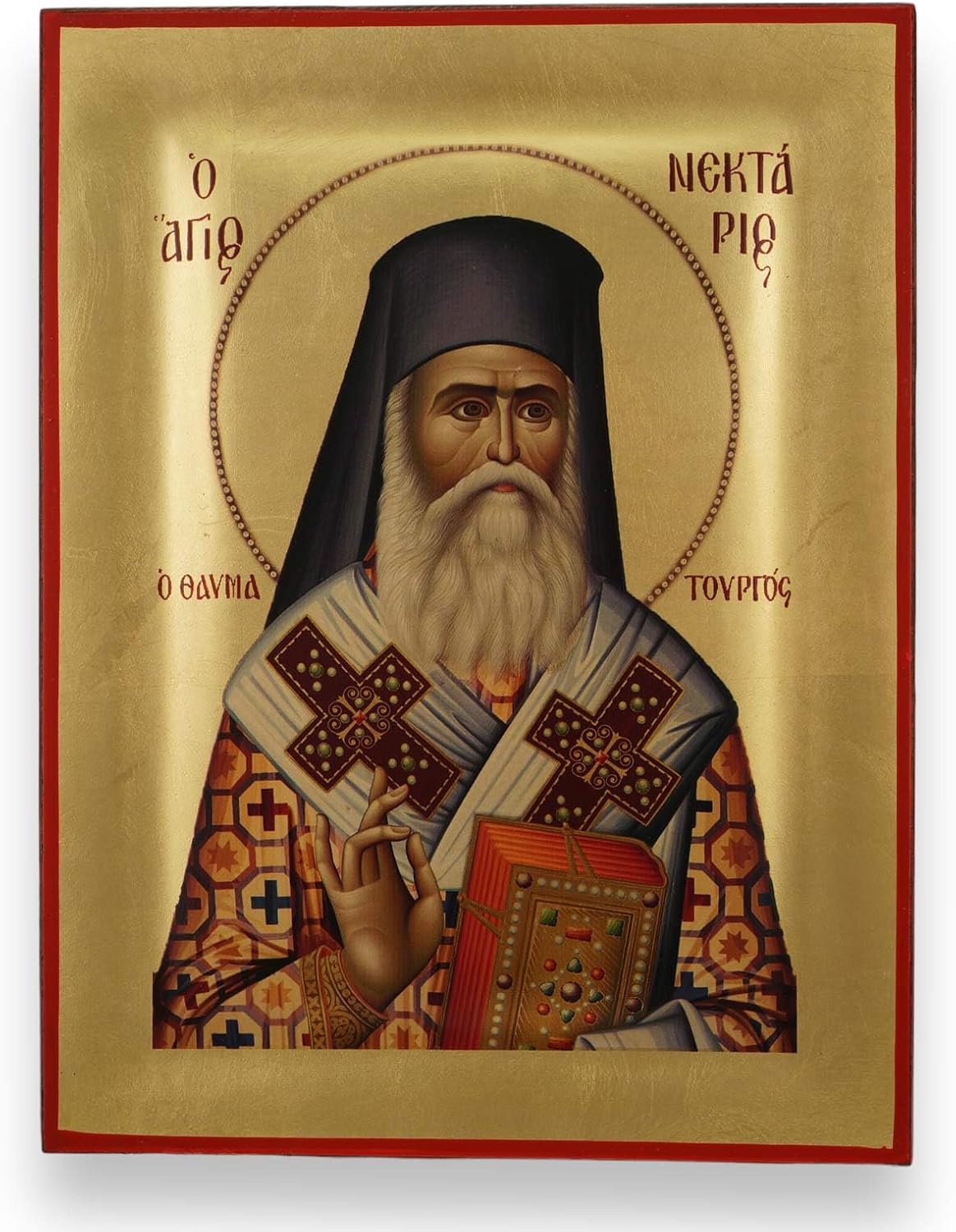
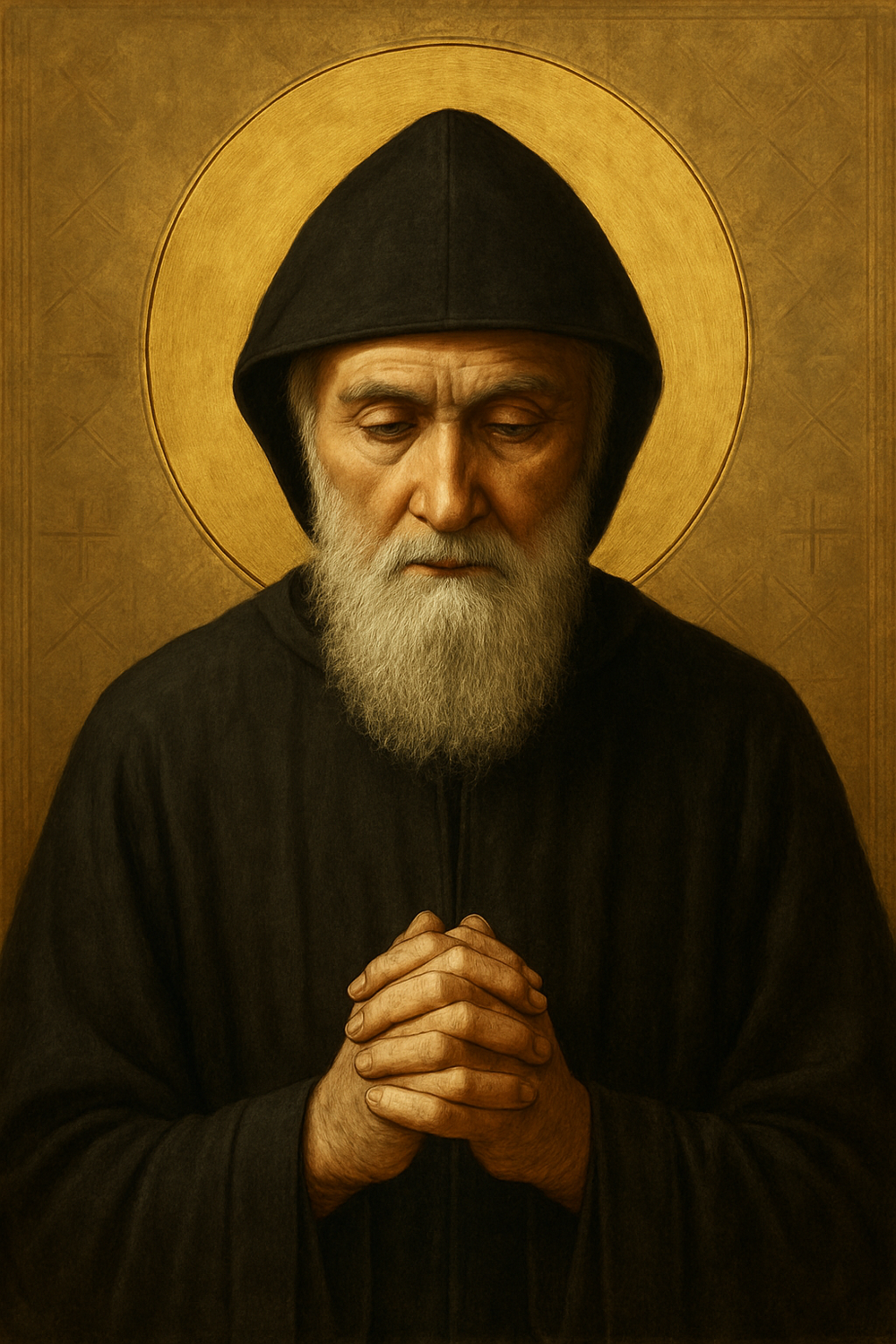
Who Was Saint Charbel?
Youssef Antoun Makhlouf was born on May 8, 1828, in the small mountain village of Bqaa Kafra in the highlands of northern Lebanon — one of the most remote and austere landscapes in the Middle East, its winters harsh, its silence absolute. He was the youngest of five children born to Antoun Makhlouf and Brigitta Elias Gemayel, a deeply pious Maronite family. His father died when Youssef was just three years old, returning from forced labor under the Ottoman authorities, and his mother later remarried a man who became a priest. Two of Youssef's uncles were hermits, and from childhood the boy displayed an unusual attraction to solitude, prayer, and mortification of the body that was evident to everyone around him.
At the age of twenty-three, Youssef left home secretly at night — tradition holds that he left a note telling his mother he was going to seek the "things of God" — and journeyed to the monastery of Our Lady of Mayfouq, where he asked to become a monk. He was sent to the nearby monastery of Saint Maron at Annaya, where he made his first monastic profession, taking the religious name Charbel in honor of a second-century Antiochene martyr. He completed his theological studies in Kfifan and was ordained to the priesthood on July 23, 1859. He returned to Annaya, where he lived the full Maronite monastic rule with extraordinary fidelity for the next sixteen years.
In 1875, after obtaining special permission from his superior — permission granted reluctantly, so obvious was his holiness — Charbel withdrew permanently to the hermitage of Saints Peter and Paul, located a short distance from the monastery. For the remaining twenty-three years of his life, he inhabited this hermitage, living a life of almost unimaginable austerity. He slept on a board, fasted constantly, spent hours each day in prostrations, and celebrated the Divine Liturgy with such intense concentration that witnesses reported he appeared transfigured during the Eucharist. He wore coarse woolen clothing in all seasons, owned almost nothing, and was known never to turn away a poor person who came to his door.
His Death, Incorruption, and the Beginning of Miracles
On the evening of Christmas Eve, December 24, 1898, Charbel suffered a stroke during the Divine Liturgy at the moment of the Epiclesis — the prayer invoking the Holy Spirit upon the Eucharistic gifts. He died eight days later, on the feast of the Theophany, January 1, 1899. His burial was surrounded by unusual phenomena: a brilliant light was seen surrounding his grave for forty-five consecutive nights, visible to the monks and to villagers from miles away. When church authorities ordered his tomb opened in 1899, his body was found immersed in a substance of blood and sweat, yet completely incorrupt — preserved despite burial in a damp underground vault without any embalming.
His body has been exhumed and medically examined multiple times by official church commissions. On every occasion, the doctors present have confirmed the same extraordinary facts: the body exudes a liquid mixture of blood and sweat through its pores; the flesh has remained soft and supple in defiance of all biological expectation; and no natural explanation has been advanced. The body is now enshrined in a glass reliquary in the monastery church at Annaya, and the phenomenon of the exuding liquid is still observable to pilgrims today, more than 125 years after his death.
The miracles associated with Saint Charbel are among the most thoroughly documented in the modern Catholic Church. For his beatification in 1965 and canonization in 1977, Pope Paul VI reviewed and formally approved hundreds of miracle cases. Since canonization, the number of documented healing miracles continues to grow, with the most famous being the complete cure of Marguerite Noun, a Lebanese woman completely paralyzed from the waist down from Addison's disease, who recovered instantly after praying at Charbel's relics. Her case was examined by fourteen physicians for the Vatican's beatification commission and declared medically inexplicable.
Why People Pray to Saint Charbel
Saint Charbel's reputation as a healer spans the Catholic world — and reaches far beyond it. His miracles are invoked not only by Maronite Catholics but by Latin-rite Catholics, Eastern Orthodox Christians, and even by people of other faiths in Lebanon and the Middle East who recognize the power of his intercession. He is perhaps the most miraculous figure to emerge from the Maronite tradition in its entire history, and his popularity as a healing saint has made him one of the most invoked saints in the contemporary Catholic world, rivaling even Saint Padre Pio in terms of documented healings.
People pray to Saint Charbel for a vast range of physical conditions, with particular emphasis on paralysis and mobility disorders, cancers of all kinds, neurological disorders, tumors, blindness, deafness, and conditions that conventional medicine has declared hopeless. His combination of total bodily asceticism, radical eucharistic devotion, and humble hiddenness is seen as conferring a particular authority to intercede for bodily afflictions — as though his complete mastery of his own body through grace has given him a corresponding power to restore broken bodies through prayer.
The Maronite practice of invoking Saint Charbel includes praying a nine-day novena using the traditional prayers preserved at Annaya, burning oil in a lamp before his image, and placing his medal or image on the body of the sick. The novena to Saint Charbel is one of the most widely distributed Catholic devotional texts in the Arabic-speaking world. It is also common to make pilgrimage to Annaya, particularly on his feast days, where the faithful often spend the night in vigil before his relics.
Patronages of Saint Charbel
A Prayer to Saint Charbel for Healing


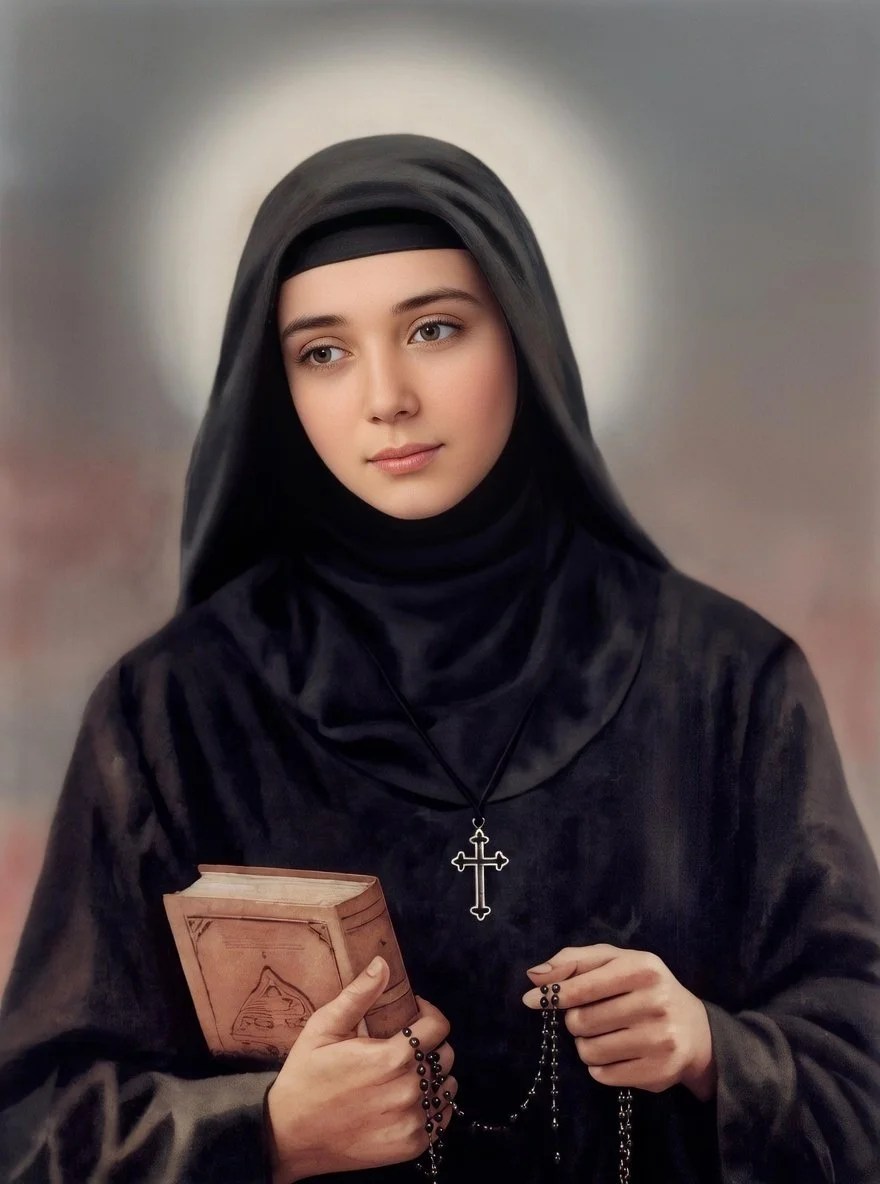
Feast Day: March 23
Who Was Saint Rafqa?
Boutrossieh Petrosya Ar-Rayes was born on June 29, 1832, in the mountain village of Himlaya in Lebanon, to a family marked by both faith and loss. Her mother died when she was only seven years old, and her father, unable to care for her alone, remarried. From childhood, Boutrossieh displayed a profound seriousness about spiritual things — she was known to spend long hours in prayer before icons, and she made a private vow of virginity at a very young age, against considerable family pressure to marry.
At the age of eleven, she was sent to work as a domestic servant in the home of a wealthy family in Damascus. The family treated her well and even paid for her education, but when the head of household died, she was returned to Lebanon. There she encountered a crisis: her father and stepmother were pressing her to marry, a prospect she rejected with great firmness. In one of the most dramatic moments of her youth, tradition holds that she prayed for a way out of marriage — and received an unexpected answer when she encountered a group of missionary sisters traveling through her village. In 1853, at the age of twenty-one, she joined a religious congregation, taking the name Sister Anissa (Agnes).
She served for fourteen years with the Daughters of Mary religious society, based in Damascus. But in 1860, she was caught up in the catastrophic anti-Christian massacres in Lebanon and Syria that destroyed hundreds of villages — she witnessed the massacre of many fellow Christians, including priests and nuns, and barely escaped with her life. This trauma deepened her already serious prayer life and her identification with the suffering Christ. In 1871, feeling called to a more strictly contemplative life, she transferred to the Lebanese Maronite Order, taking the name Rafqa (Rebecca). She spent the rest of her life at the convent of Saint Simon in Aito and later at the monastery of Our Lady of Delieh in Jrabta.
Her Mystical Suffering and the Gift of Sharing Christ's Passion
What makes Saint Rafqa's story uniquely powerful in the entire hagiography of the Catholic Church is the extraordinary nature of her suffering and the way she embraced it. On a Sunday evening in 1885, while meditating on the Passion of Christ during the office of Vespers, she was moved to make a formal, deliberate, and prolonged prayer — asking God to permit her to share in the sufferings of Jesus. It was the prayer of a mature mystic who understood exactly what she was asking for.
The answer was immediate and total. Within days, she began experiencing severe pain in her eyes and head. The pain escalated rapidly and became permanent. By 1886, she had lost the sight in her right eye entirely. By 1907, she was completely blind. In that same year, her right arm was dislocated at the shoulder during a medical examination — incompetently performed — and was never properly reset. For the remainder of her life she endured chronic, unrelieved pain in her shoulder that doctors could do nothing for. And yet those who knew her and visited her during this period of suffering — which lasted nearly thirty years — universally described the same thing: she was serene, joyful, even luminously happy.
When visitors expressed sympathy for her blindness and constant pain, Rafqa is reported to have replied that she was grateful — that suffering joined to the Passion of Christ had been the greatest gift of her life. She died on March 23, 1914, surrounded by her sisters, at the age of eighty-one. When her body was exhumed in 1927 for a canonical investigation, it was found incorrupt. It was exhumed again in 1950, and again found in an exceptional state of preservation. Pope John Paul II canonized her on June 10, 2001, in a ceremony in Rome attended by Lebanese pilgrims by the thousands.
Why People Pray to Saint Rafqa
Saint Rafqa occupies a unique and irreplaceable place in the devotional life of the sick. While most healing saints are invoked primarily for the miracle of recovery — for the restoration of health — Rafqa is invoked for something different but equally necessary: the grace to endure suffering with joy, meaning, and peace. She is the patron of those whose illness will not be instantly resolved; of those living with chronic pain, permanent disability, degenerative conditions, and long-term suffering that demands day after day of perseverance rather than a single dramatic healing.
This does not mean she is not associated with miraculous healings — dozens of documented healing miracles have been attributed to her intercession, and they were formally examined for her beatification and canonization. But what makes Rafqa distinctive is that she speaks to the reality that most sick people actually live: the suffering does not always end immediately, and the question becomes not only "will I be healed?" but "how do I remain faithful, joyful, and human while I wait?" Rafqa is the answer to that second question.
People with rheumatoid arthritis, fibromyalgia, chronic migraine, spinal conditions, blindness, deafness, muscular dystrophy, multiple sclerosis, and other long-term disabling conditions have found in Rafqa a companion and intercessor who understands their situation not abstractly but from lived experience. She asked for her suffering. She received it. She bore it with a joy that astonished everyone around her. And now she prays for those who did not ask for theirs — and who need the same grace to bear what she bore.
Patronages of Saint Rafqa
A Prayer to Saint Rafqa for Endurance and Healing

The Orthodox saint of healing is not simply a religious celebrity who is said to have worked miracles. Within Orthodox theology, the healing saint occupies a precise and deeply considered theological role. The Orthodox Church teaches that every glorified saint has become, by grace, a true partaker of the divine nature (2 Peter 1:4) — not in the sense of becoming divine, but in the sense of being so transformed by the Holy Spirit that they now radiate the uncreated energies of God. When an Orthodox Christian prays before an icon of a healing saint, they are not praying to an icon — they are praying through it to a person who is alive in God, who is present in Christ, and who hears.
Orthodox theology of healing is rooted in the Church's understanding of the human body itself. Because God took on human flesh in the Incarnation, the body is not a prison or a burden to be escaped — it is a temple of the Holy Spirit, destined for resurrection and transfiguration. Physical healing is therefore not merely a practical benefit but a sacramental sign of the coming Kingdom, a foretaste of the resurrection of the body that every baptized Christian awaits. This is why the Orthodox Church has always maintained both the sacrament of Holy Unction (the anointing of the sick) and the veneration of healing saints: both are expressions of the same theological conviction that God wills the wholeness of human beings, body and soul.
The Most Venerated Orthodox Saints for Healing
Beyond Saint Nektarios, the Orthodox tradition is extraordinarily rich in saints who are specifically associated with healing intercession. Here are the most significant, organized by their particular area of intercession:
Saints Kosmas & Damian (the Unmercenary Healers)
Twin physician-brothers of the 3rd century who practiced medicine without payment. Feast: November 1 (Roman), July 1 (Orthodox). The original and most ancient Christian healing saints, still invoked in the Byzantine Divine Liturgy.
Saint Luke of Crimea (Archbishop & Surgeon)
20th-century Russian bishop who was also a celebrated surgeon, Nobel-nominated physician, and confessor under Soviet persecution. Canonized 1996. One of the most beloved modern Orthodox healing saints, invoked especially before surgery.
Saint Panteleimon the Great Martyr
A physician of the early Church, martyred under Diocletian. Patron of physicians and all medical workers, widely invoked for healing throughout the Orthodox world. Feast: July 27. His name means "all-merciful."
Saint Spyridon of Trimythous
4th-century bishop of Cyprus, shepherd and wonder-worker who attended the Council of Nicaea. Invoked for a wide range of needs including illness. His incorrupt relics rest in Corfu and are processed through the city four times each year.
Saint John of Kronstadt
Russian priest (1829–1908) who became the most famous healer of pre-Revolutionary Russia. Documented miraculous cures number in the thousands. Canonized 1990. Particularly associated with healing of alcoholism and depression.
Saint Feofil (Theophilus) of Kiev
Blessed Feofil of the Kiev Caves (1788–1853) — a holy fool for Christ from Ukraine with a rich tradition of healing miracles, intercession, and prophecy. Glorified by the Ukrainian Orthodox Church. Still deeply venerated across Slavic Orthodoxy.
Saint Paraskeva (Petka) of Serbia
11th-century ascetic and mystic, one of the most beloved female saints in the Orthodox world. Her relics have been translated multiple times and are associated with healing miracles. Patron saint of Serbia, Moldova, and Romania.
Righteous Job of Pochaev
16th–17th century monastic leader of Pochaiv Lavra in Ukraine, defender of Orthodoxy against the Unia. His relics are enshrined at Pochaiv and associated with many miracles. Invoked especially by those facing long-term suffering.
How Orthodox Christians Use Icons in Healing Prayer
The icon is not merely a picture. In Orthodox theology, the icon is a window — a meeting place between the worshiper and the saint depicted. When an Orthodox Christian places an icon of a healing saint near a sickbed, anoints it with holy oil, lights a candle or lamp before it, and prostrates in prayer, they are performing acts of theology as much as devotion. Each element carries meaning: the oil connects to the sacrament of unction; the light represents the uncreated Light in which the saint dwells; the prostration expresses the total surrender of the worshiper's will to God.
Orthodox healing prayer is almost never performed in isolation. It is embedded in the life of the parish — in the celebration of Holy Unction (ideally with the full seven-priest rite on Holy Wednesday), in regular reception of Holy Communion, in the reading of the Psalter, and in the intercessions of the Divine Liturgy where the sick are specifically commemorated by name. The veneration of a healing saint's icon sits within this broader sacramental context as one expression of the Church's total ministry to those who suffer.
Many Orthodox families maintain a "sick corner" — a specific place in the home where icons of healing saints are gathered, where a lamp burns continually, and where the family prays as a unit for its sick members. This practice of bringing the church into the home is one of the most beautiful expressions of Eastern Christian family spirituality.
The saints are not interchangeable. Each one carries a particular charism — a specific gift given by the Holy Spirit — and each one is especially associated with certain kinds of suffering and certain types of need. Choosing the right saint is not magic or superstition; it is the same discernment you would use when deciding which trusted friend is best suited to help you in a particular situation.
Begin with the honest naming of your situation. What is the illness? What is the burden? Is it the illness itself — the diagnosis, the prognosis, the fear? Is it the chronic nature of the suffering — the weariness, the sense that this will never end? Is it the effect of illness on your relationships, your marriage, your family? Is it the feeling of being unjustly afflicted, of having done nothing to deserve what is happening? Each of these different spiritual situations calls for a different companion among the saints.
Cancer & Terminal Illness
Saint Nektarios is without equal as a patron for cancer. His documented miracle record for oncological healing spans more than a century. He is also ideal for those suffering unjustly, those in mental anguish alongside physical illness, and those preparing for death.
Paralysis, Surgery & Hopeless Cases
Saint Charbel's healings have consistently involved cases that medicine had declared impossible — complete paralysis restored, tumors vanished, neurological damage reversed. He is the saint to invoke when the doctors have run out of answers.
Chronic Pain & Long-Term Disability
Saint Rafqa is the companion for those whose suffering is measured not in days but in years or decades. Fibromyalgia, rheumatoid arthritis, MS, degenerative disc disease, blindness — she bore all these and remained joyful. She prays for the same grace for us.
Medical Procedures & Physicians
The Unmercenary Healers are the ancient patron saints of medicine itself. Invoke them before surgery, before receiving a diagnosis, for the wisdom and skill of your doctors and surgeons, and for protection against medical error.
Surgery & Precision Medicine
As both a great surgeon and a confessor bishop, Saint Luke of Crimea bridges the medical and the spiritual in a unique way. His intercession is particularly sought before complex surgeries, for correct medical decisions, and by medical professionals themselves.
Mental Illness, Addiction & Depression
Saint John of Kronstadt ministered powerfully to the poor, the addicted, and the mentally ill throughout his priestly life. His intercession is especially sought for alcoholism, substance dependency, depression, and psychiatric illness alongside physical sickness.
You do not need to choose only one saint. The Orthodox and Catholic traditions have always encouraged invoking multiple saints — asking for the combined intercession of those whose particular gifts address the different dimensions of your suffering. A person with cancer might pray to both Nektarios for healing and Rafqa for the grace of endurance, recognizing that healing may come immediately or may take time — and both possibilities require spiritual resources.
Find Your Saint — Prayer Cards for Daily Use
Our prayer cards are designed to be carried, kept at bedsides, held during treatment, and given to loved ones in the hospital. Each card features the saint's icon, their feast day, key patronages, and a traditional prayer.
Browse All Prayer Cards →There is a dimension of serious illness that almost no medical professional will address with you, and that very few prayer resources speak to directly: what happens to your marriage when one or both of you is sick? The crisis of illness is not only a personal crisis — it is a marital and family crisis. It reshapes roles, strains intimacy, tests the vows taken at the altar, and forces a depth of love that no healthy season can teach.
The Eastern Christian tradition has something remarkable to say about this. Marriage, in Orthodox and Eastern Catholic theology, is not simply a legal contract or even a romantic partnership — it is a path to theosis, to deification. Husband and wife are, in the language of Saint John Chrysostom, "a small church," called to sanctify one another. Illness becomes, within this theology, not a disruption of the marriage covenant but one of its most profound expressions: the place where "in sickness and in health" ceases to be ceremonial language and becomes the daily truth of the household.
What the Saints Teach Married Couples About Suffering Together
The lives of the healing saints speak powerfully to married couples navigating illness. Saint Nektarios endured decades of separation from those who loved him — and his suffering purified his love. Blessed Takashi and Midori Nagai, the Japanese Catholic couple who both faced cancer in the aftermath of Nagasaki, demonstrated in their marriage that love persists and even deepens in the extremity of shared suffering. The Venerable Louis and Zélie Martin — parents of Saint Thérèse of Lisieux — navigated Zélie's terminal breast cancer together in a marriage characterized by intense shared prayer, practical care, and the deliberate integration of their suffering into their spiritual life as a couple.
These models from the saints point to a concrete truth: the couple that prays together when things are easy will have resources to draw on when things are hard — but even more, the couple that learns to pray through illness together often finds their marriage transformed into something more real, more intimate, and more holy than it was before the trial began.
Pray Together Daily
Simple shared prayer — even five minutes before a saint's icon — creates a spiritual bond that physical illness cannot sever. It places the marriage under the direct intercession of the healing saints.
Anchor in the Tradition
The Eastern Christian marital tradition is theologically rich. Resources grounded in this tradition help couples understand illness not as an interruption to their spiritual life but as its deepest chapter.
Intercede for Each Other
Praying for your spouse — asking the healing saints to intercede for them — is one of the most powerful acts of love available to a married person. It is love translated into the language of heaven.
Free Christian Marriage Resources
Books, guides, and devotional resources for couples navigating marriage through difficulty — grounded in Eastern Christian theology and practical wisdom from the saints.
Honest theological questions answered from within the Catholic and Orthodox tradition.
The Saints Are Waiting to Be Asked
Whether you are facing a diagnosis, supporting a loved one through chronic illness, or simply learning this ancient tradition for the first time — the healing saints of the Catholic and Orthodox Church are as alive and as close as they have ever been. Begin today.