Saint Avraamy of Smolensk: Orthodox Monk, Preacher of Repentance and Teacher of Rus
A learned monk of Smolensk who preached repentance and endured unjust accusation
At a Glance
- Born
- About the middle of the twelfth century, traditionally in Smolensk (UNCERTAIN)
- Died
- Early thirteenth century. Sources give about 1221 or after 1224 (UNCERTAIN)
- Titles
- Venerable, monk, hieromonk, archimandrite and wonderworker
- Feast
- August 21 (Julian calendar, September 3 on the civil calendar)
- Veneration
- Orthodox saint, general commemoration set in Russia in 1549. No Catholic canonization documented
- Patronage
- No official patronage. Devotion links him to repentance and patience under accusation
- Who Was Saint Avraamy of Smolensk?
- Early Life and Family
- Vocation and Monastic Life
- Preacher, Scholar and Abbot
- Accusations and Historical Context
- Death and Relics
- Traditions and Devotion
- Writings and Scholarship
- The Abrahamiev Monastery and Smolensk
- Avraamy and the Eastern Churches
- Frequently Asked Questions
Who Was Saint Avraamy of Smolensk?
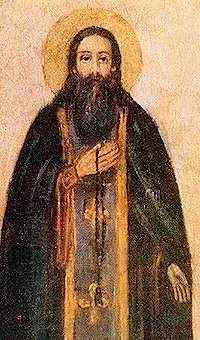
Saint Avraamy of Smolensk, also called Abraham or Abramius, was an Orthodox monk, priest and preacher in the city of Smolensk in medieval Rus. He lived in the late twelfth and early thirteenth centuries. He is remembered for teaching repentance and the Last Judgment, for his love of books and for the long trial he endured when jealous people accused him.
Our main source is the Life written by his disciple Ephraim. It is a rich and moving text, but it is also a work of devotion that follows the patterns of earlier saints' lives. Scholars therefore read it with care. They accept that Avraamy was a real preacher and abbot, and they ask what parts of the story are history and what parts are the conventions of holy biography.
In this article we keep three levels apart. Well supported facts are stated plainly. Things that are UNCERTAIN, such as his birth, his death year, the truth of each accusation and the books attributed to him, are marked. Stories like his miraculous rain and his parents' prayers for a son belong to TRADITION. Where we do not know, we say so.
Early Life and Family
Tradition says he was born in Smolensk, an important city of Rus, into a well off Christian family around the middle of the twelfth century. His birth date and the names of his parents are not known. The Life says his parents had twelve daughters and prayed for a son, and that he was the answer. This is TRADITION, a way of showing that God's hand was on him from the beginning.
His family hoped he would marry and carry on the name, but he loved the church and sacred books. Books were costly in his day, and to read them he needed a place in the educated church world of Smolensk. The Orthodox Church in America links his schooling with the book collection of Prince Roman Rostislavich, who died in 1170, but how much access Avraamy had is UNCERTAIN.
The picture is believable. A boy from a comfortable family, taught to read in a city that valued manuscripts, turned toward prayer and study instead of the usual life. But it is not a family record. No source gives his mother's or father's name or the names of his sisters, and we should treat the childhood story as the way the community remembered him.
Vocation and Monastic Life
His story is a vocation and not a conversion. He was raised a Christian and had no earlier religion. The Life says that after his parents died he gave away his inheritance to churches, monasteries and the poor, and lived in deliberate poverty while he asked God what to do. This follows the old monastic ideal of giving up possessions for Christ.
He then entered the monastery of the Mother of God at Selishche, a short distance outside Smolensk, and was tonsured a monk. His monastic years combined prayer, obedience, fasting and the study and copying of sacred books. The Orthodox Church in America says he was ordained a priest in 1198 after more than thirty years as a monk, but that exact year is UNCERTAIN.
As a hieromonk, a monk who is also a priest, he celebrated the Liturgy and began to serve people beyond the monastery walls. His growing reputation was the turning point that led both to his fame and to his troubles. The same gifts that drew crowds to his preaching also drew the envy of some in the monastery and in the local church.
Preacher, Scholar and Abbot
His chief work was preaching. He spoke of repentance, the coming judgment, the state of the soul and the need for a disciplined Christian life. Rich and poor came to hear him in Smolensk, and many sought his counsel. According to Ephraim he copied books and drew on the Fathers, especially John Chrysostom, Ephrem the Syrian and Theodosius of the Caves.
The Life also says he painted religious pictures, including the Last Judgment and the soul's journey past the aerial tollhouses, but none have survived. The tollhouse image belongs to a particular Eastern Christian ascetical tradition and is not a universal Catholic doctrine. His surviving writings are doubtful. A discourse on the heavenly powers and the departure of the soul has been linked to him, but a scholar's attempt to prove it was his lacked strong support.
After he was reconciled with his bishop, he led a monastery dedicated to the Robe of the Mother of God, later called the Abrahamiev Monastery of Smolensk. The Orthodox Church in America says he accepted candidates carefully and that the community had seventeen monks, a number that comes from tradition. His life shows how preaching, reading and personal counsel worked together in pre Mongol Rus.
Accusations and Historical Context
The best known episode is his conflict with other monks, the clergy and the bishop of Smolensk. His popularity stirred hostility. His abbot limited his teaching, and he moved to the Monastery of the Holy Cross in Smolensk. The opposition followed him there, and he was accused of heresy, of reading forbidden books and of immoral conduct with women.
According to the Orthodox Church in America, a public hearing was held before Bishop Ignatius and the prince, and some accusers wanted severe punishment. These charges should be called allegations and not facts. The prince reportedly found them unconvincing, yet Avraamy was forbidden to serve as a priest and was sent back to his first monastery.
Scholars offer a fuller reading than simple jealousy. His strict preaching and the great excitement around him, with some followers calling him a prophet, may have alarmed church authorities. A 2020 study notes that his Life resembles Western visionary writing, which might have come through the Catholic church of Saint Mary in Smolensk. Another shows that Ephraim used earlier saints' lives as models. These findings do not make the story false, but they remind us that sanctity was written in conventional forms.
Death and Relics
His year of death is UNCERTAIN. The Orthodox Church in America says he died after 1224, while other sources give about 1221, and the Orthodox Encyclopedia says it is unknown and notes that his Life speaks of some fifty years of struggle. The safest statement is that he died in the early thirteenth century, probably in the 1220s.
He was buried at the monastery that later bore his name. The monastery says it was badly damaged when the Poles took Smolensk in 1611, and the fate of his relics is unknown. One account says the monks hid them. Another says they were taken and lost. These are TRADITION, and the monastery itself says their present location is not known.
His cult is old. He was honored locally long before the sixteenth century, and a service in his honor and that of his disciple Ephraim existed by the end of the thirteenth. The Orthodox Encyclopedia says the Moscow council of 1549 established his commemoration throughout the Russian Church. That date marks general recognition, and not the beginning of local devotion.
Traditions and Devotion
His best known miracle is TRADITION. During his suspension, the Life says, a severe drought struck the region and public prayers did not help. The bishop reconsidered, restored Avraamy's priestly duties, and when he prayed, rain fell on the city. The story treats the drought as a sign of God's displeasure at the unjust sentence and the rain as His mercy.
A drought around 1218 to 1220 is historically plausible, but a real drought does not prove the cause of the rain. Other traditions speak of his struggles against temptation, and the Church honors him as a wonderworker. We found no verified modern healing or investigated miracle through him, and we do not claim any.
His devotion rests on repentance, awareness of the judgment, patience under accusation and the union of learning with prayer. Our prayer card links him with perseverance under unjust charges, which is a fitting theme from his life, but it is a devotional association and not an official patronage. Hymns praise his tears and his longing for God.
Writings and Scholarship
The main source is the Life of Avraamy by Ephraim, preserved in several manuscripts, with a service to the saint. A critical edition of the Life and services was published in 1912. The Orthodox Encyclopedia, a scholarly dictionary of old Rus writers and modern studies provide the framework for reading it.
Recent research treats the Life as a literary work as well as a record. One scholar compares its visionary elements with Western medieval writing, and suggests possible influence through Smolensk's Catholic community without proving a direct link. Another traces its borrowings from the lives of Anthony the Great, Sabbas and John Chrysostom.
The responsible summary is this: Avraamy was a real Orthodox preacher, monk and abbot of Smolensk, with a long Orthodox cult. His conflict with church authorities, his suspension and reconciliation are central to the early tradition. His exact dates, the truth of each accusation, his authorship of any text and the place of his relics are UNCERTAIN, and the miracle stories are TRADITION.
The Abrahamiev Monastery and Smolensk
Smolensk, in western Russia, is the city of his life, and the Abrahamiev Monastery is the place most tied to his memory. It began as a community around him and has been damaged and rebuilt more than once, notably after the Polish capture of the city in 1611. The monastery keeps his memory and publishes its history.
It would be wrong to say that visitors can venerate his authenticated body today. The monastery itself states that the relics are lost, and older accounts of their place under a church floor record conflicting traditions. Pilgrims remember him through prayer, the Liturgy and the history of the place, and not at a known shrine.
August 21 on the Julian calendar is his day, and he is also remembered in the joint commemoration of the saints of Smolensk. Anyone wishing to visit should ask the local Orthodox church about current access, since conditions for travel to Russia can change and we could not verify present arrangements.
Holy Avraamy, preacher of repentance and servant of Christ, you endured unjust charges with patience and you did not turn away from God. Pray for all who are falsely accused, for all who seek to repent, and for all who teach the faith. Ask the Lord to give us honest hearts, gentle spirits and a longing for Him that grows with each day. Pray for us, that we may be ready to meet Him. Amen.
This is a short original prayer for private use. It is not an official liturgical text.
Avraamy and the Eastern Churches
For Orthodox Christians he belongs to the great company of preachers and monks of medieval Rus. His life shows that learning and holiness can go together, and that a teacher may suffer from his own bishop yet remain loyal and be reconciled. His preaching on repentance and judgment echoes the Fathers he loved to read.
For Eastern Catholics he is part of the shared Christian heritage of Rus before the later divisions among Orthodox and Greek Catholic communities. The scholarly notice of possible Western influence on his Life reminds us that Eastern and Western Christians were in contact even then, though it does not show that Avraamy took part in any organized union of Churches.
We should be plain. A Catholic devotional website lists him with an August 21 feast, but we found no Vatican canonization and no official Catholic liturgical observance for him. He is an Orthodox saint. We honor his repentance and patience, and we do not claim a formal Catholic recognition that the sources do not show.
Frequently Asked Questions
Ask His Prayers
Saint Avraamy gave away what he had, loved God's word and bore false charges with patience. We can ask his prayers for the unjustly accused, for those who need to repent and for all who teach the faith. May he help us to speak the truth gently and to trust God when we are misunderstood.
View Prayer Card