Orthodox Saints • Petrograd and Moscow • December 1916 • A Hard Question
Saint Elizabeth Feodorovna and the Murder of Rasputin: What the Telegrams Do and Do Not Show
Grand Duchess Elizabeth forgave her husband's assassin and gave her life to the poor of Moscow. One historian argues that, in December 1916, she also welcomed the killing of Rasputin. Here is what that claim rests on.
Elizabeth and the Rasputin Murder at a Glance
- The Saint
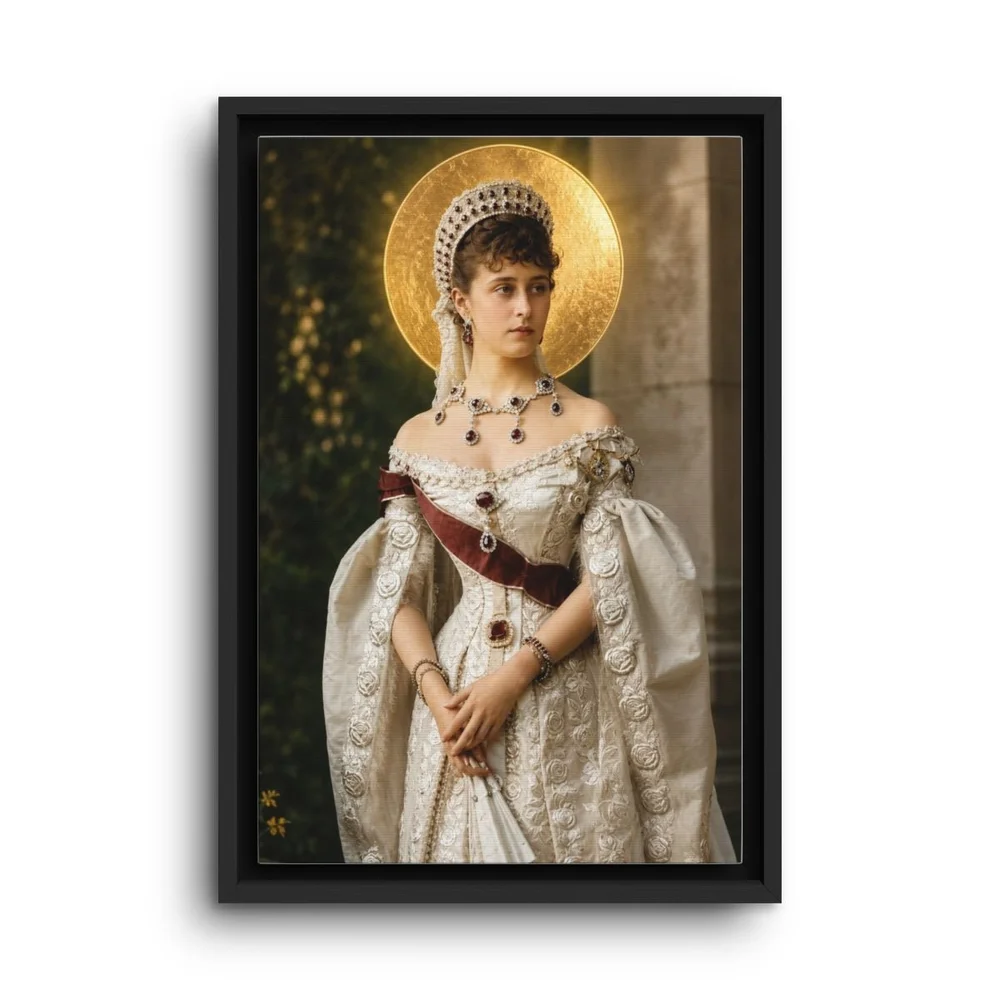
- Elizabeth the New Martyr (1864 to 1918), nun and founder of the Martha and Mary Convent in Moscow
- The Event
- The murder of Grigori Rasputin in Petrograd, in the night of December 16 to 17, 1916 (Old Style)
- The Claim
- A 2010 study by M. Nelipa argues that Elizabeth may have known of the plot, citing a letter to the Tsar and two telegrams
- Her Words
- She is reported to have called the killing a patriotic act
- The Evidence
- Secondary summaries only; this article has not read the telegrams themselves
- What Is Not Claimed
- That she planned or took part in the killing
- Her Feast Day
- July 5 (Old Style), July 18 in the modern calendar
Two Sisters and a Starets
Elizabeth was the elder sister of Empress Alexandra. Both were princesses of Hesse and granddaughters of Queen Victoria, and both had become Orthodox in Russia. By 1916 Alexandra was deeply attached to Rasputin, a peasant starets who had her trust because of his reputed power to ease the suffering of her son, the heir Alexei.
Elizabeth, by then a nun and abbess of the Martha and Mary Convent in Moscow, belonged to the circle of relatives and courtiers who thought Rasputin was a danger to the throne. This article is not about whether they were right. It is about one question: what do the sources say about her reaction to his death?
Part II
The Murder
Rasputin was killed in the night of December 16 to 17, 1916, in the Old Style calendar, at the Petrograd palace of Prince Felix Yusupov. The best known participants were Yusupov, Grand Duke Dmitri Pavlovich, and the politician Vladimir Purishkevich. Yusupov was sent into internal exile on his family estate afterward, and Dmitri was posted to the Persian front.
Felix Yusupov's mother, Princess Zinaida Yusupova, was a close friend of Elizabeth. A reference article on Zinaida describes their friendship as based on mutual charity and faith, and says that Zinaida supported her son's role in the murder because she thought it vital for Russia. The same article lists Elizabeth among the aristocrats who shared that opinion.

Part III
The Claim About the Telegrams
In 2010 the historian M. Nelipa argued in a book on the murder that Elizabeth may have known of the plot in advance, and who would carry it out. The claim rests on three documents: a letter Elizabeth wrote to the Tsar, and two telegrams, one to Grand Duke Dmitri Pavlovich and one to Zinaida Yusupova. According to a summary of the book, the telegrams were written on the night of the murder and show that Elizabeth knew the killers' names before the public did.
The phrase attached to her is that the killing was a patriotic act. One account of the interview with Nelipa says she applied the phrase to Dmitri Pavlovich's part in it, and that this may be read in her letter to the Tsar. The summaries I could reach do not give the full text or archival reference for these documents, so this article does not quote them.
Part IV
A Tension, Not a Verdict
For many Orthodox readers, this sits uneasily beside the other story about her. In 1905, after Ivan Kalyayev killed her husband, she visited him in prison, said she had forgiven him, and urged him to repent. He refused. She is remembered for that forgiveness.
These two accounts are not the same kind of thing. The 1905 visit is recorded in several biographies. The 1916 claim rests on one historian's reading of documents that most readers have not seen. Even if the telegrams say what has been reported, the claim is of approval or of foreknowledge. It is not a claim that she planned or joined the plot, and nothing in the sources supports that.
Part V
Two Years Later
Elizabeth was killed by local Bolsheviks at Alapaevsk on July 18, 1918, and her body was thrown into a mine shaft. The Russian Orthodox Church Outside Russia glorified her in 1981 and the Russian Orthodox Church in 1992.
Her glorification rests on how she lived and died.
Part VI
What the Sources Do and Do Not Say
The account of the telegrams here is secondhand. It comes from a reference article that summarizes Nelipa's book and from a short interview page, and the two disagree on one detail: one speaks of telegrams, the other mainly of a letter. Treat the claim as a historian's argument, not as a settled fact.
If you read Russian archives or the book itself, the primary documents are the right place to settle it.
Part VII
Timeline
- February 24, 1864Elisabeth of Hesse is born.
- 1891She is received into the Orthodox Church.
- February 17, 1905Her husband Sergei is killed; she later visits his assassin in prison.
- April 1909She is dedicated as a Sister of Love and Mercy.
- December 16 to 17, 1916Rasputin is killed in Petrograd (Old Style dates).
- July 18, 1918Elizabeth is killed at Alapaevsk.
- 1981Glorified by the Russian Church Outside Russia.
- 1992Glorified by the Russian Orthodox Church.
- 2010M. Nelipa publishes the claim about her telegrams.

Keeping the Record Honest
Saints are remembered with their hard questions attached. Elizabeth forgave an assassin, built a convent, and died in a mine shaft, and a historian asks what she thought of a murder in 1916. If you pray with her, the prayer card is a small place to begin.
Get the Saint Elizabeth Prayer Card →Frequently Asked Questions
