Orthodox Saints • Imperial Russia • Livadia • October 1894
Saint John of Kronstadt and Tsar Alexander III: The Priest Called to Livadia in 1894
The most powerful man in Russia was dying of kidney disease in a Crimean palace. Among those summoned to his bedside was a parish priest from the naval port of Kronstadt, a man the whole empire wrote to for prayers.
John of Kronstadt and Alexander III at a Glance
- The Saint
- Saint John of Kronstadt (1829 to 1909), parish priest of Kronstadt, glorified in 1964 by the Russian Church Outside Russia and in 1990 by the Moscow Patriarchate
- The Tsar
- Alexander III (1845 to 1894), Emperor of Russia from 1881, died of kidney disease at 49
- The Place
- Livadia Palace, in Crimea
- The Date
- October 20, 1894 in the Old Style calendar, which is November 1 in the modern one
- What Is Documented
- John was summoned to Livadia, and a contemporary account says he prayed with the Emperor on his deathbed
- What Is Uncertain
- Details of the final hours, including the hands-on-the-head story, rest on later recollection
- His Feast Day
- December 20 (Old Style), January 2 in the modern calendar
The Priest of Kronstadt
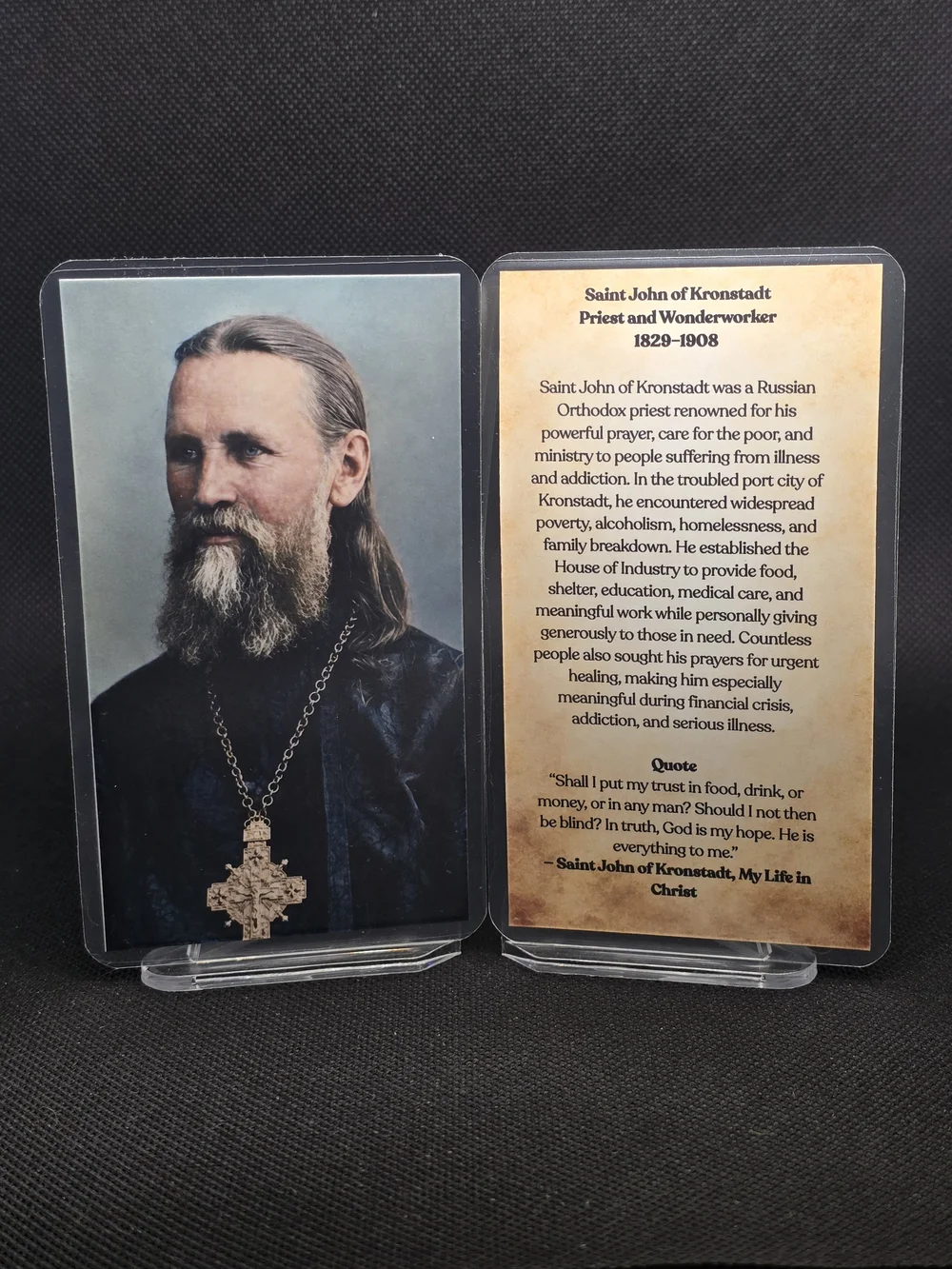
He was born Ivan Ilyich Sergiev on October 31, 1829 (October 19, Old Style), in the village of Sura in the far north of Russia. He became a priest and was assigned to Saint Andrew's Cathedral in Kronstadt, the naval port on an island off Saint Petersburg, where he would serve for decades.
In 1882 he opened the House of Industry in Kronstadt, which grew to include a church, schools, an orphanage, a hospital, a shelter for the homeless, workshops, a canteen, and a free library. He was also known for his diary, published in English as My Life in Christ. Ordinary people wrote to him by the thousands, and he served the Liturgy so often, and with such intensity, that crowds followed him through the streets.
He was also controversial in his own day, and he remains so. The sections below stay with the Livadia story, and the closing section says plainly where the record is thin.
Part II
The Emperor
Alexander III ruled Russia from 1881, after his father Alexander II was assassinated, until his death in 1894. He was a large, strong man, and his health failed quickly. By the autumn of 1894 he was seriously ill with kidney disease at the Livadia Palace in Crimea, where the court had gone in the hope that the climate would help.
A newspaper dispatch from Saint Petersburg dated October 21, 1894, and reprinted in a New Zealand paper two days later, reported that the Emperor's condition was grave and that Father John of Cronstadt, called a priest and miracle worker, was among those summoned to Livadia. This is a useful contemporary check: the summons was public knowledge while it was happening.
Part III
The Deathbed
Alexander III died at Livadia on October 20, 1894 in the Old Style calendar, which is November 1 in the modern one. He was forty-nine. His son Nicholas, then twenty-six, became Emperor Nicholas II that day.
An account of John of Kronstadt published in 1895 says that John prayed with the late Emperor on his deathbed and comforted his sorrowing family. That is the firmest early statement in the sources I could reach, and it matches the report that he had been called to Livadia.
The story told today is often more detailed. It says that John was physically present as the Emperor died, and that Grand Duchess Olga Alexandrovna, the Emperor's twelve-year-old daughter, later recalled him placing his hands on her father's head. I could not confirm the wording of that recollection in a primary text, so it is reported here as an account attributed to her, not as established fact.
Part IV
Did He Heal the Tsar?
The Emperor did not recover. A standard reference summary says plainly that John was summoned to Livadia and was unable to heal him. That is an honest way to state it. John was known to many people as a healer, and the family summoned him, but the death came anyway.
What the sources support is narrower and, for many readers, more moving than a miracle story: a priest of the people was asked to come and pray with a dying Emperor and his grieving family, and he did.
Part V
After Livadia
John's standing at court continued under Nicholas II. In 1907 the Emperor appointed him to the Holy Synod, though illness meant he never attended a meeting. John died on January 2, 1909 (December 20, 1908, Old Style) in Kronstadt, and Nicholas II ordered that he be commemorated in the Church after his death.
The Russian Orthodox Church Outside Russia glorified him on November 1, 1964, and the Moscow Patriarchate did so in 1990.
Part VI
What the Sources Do and Do Not Say
The three solid points are these: John was summoned to Livadia, a contemporary report said so, and an 1895 account says he prayed with the Emperor on his deathbed. The more vivid details of the last hour are later recollection.
John was also a figure who has drawn criticism. Historians note that he attacked Leo Tolstoy sharply, and that late in life he supported right-wing groups and made statements about the Kishinev pogrom that have been widely condemned. His reported miracles are claims from believers, not verified facts. A fair article on a saint says these things alongside the praise.
Part VII
Timeline
- October 31, 1829Ivan Sergiev, the future John of Kronstadt, is born in Sura.
- March 10, 1845Alexander III is born.
- 1881Alexander III becomes Emperor.
- 1882John opens the House of Industry in Kronstadt.
- October 21, 1894A dispatch reports that John has been summoned to Livadia.
- November 1, 1894Alexander III dies at Livadia (October 20, Old Style).
- 1907Nicholas II appoints John to the Holy Synod.
- January 2, 1909John dies in Kronstadt.
- November 1, 1964The Russian Church Outside Russia glorifies him.
- 1990The Moscow Patriarchate glorifies him.
A Priest at the Bedside
Whatever else is said about Saint John of Kronstadt, the early record agrees that when an Emperor was dying, a parish priest was sent for to pray. If you want his face near you in prayer, a holy card or a candle is a simple place to begin.
Get the Holy Card →Frequently Asked Questions
