Saint Jacob Baradaeus: Syriac Monk, Traveling Bishop of Edessa and Restorer of the Syriac Orthodox Church
The bishop in a patched cloak who kept a persecuted Church alive by ordaining clergy across the Near East
At a Glance
- Born
- About 500 in Tella, near modern Viransehir in Turkey; year UNCERTAIN
- Died
- July 30, 578, at a monastery near the Egyptian frontier
- Titles
- Bishop of Edessa, missionary and restorer of the Syriac Orthodox hierarchy
- Feast
- July 31 in the Syriac Orthodox calendar; November 28 in a Malankara Orthodox diocesan calendar
- Veneration
- Ancient veneration in the Syriac Orthodox Church; no formal canonization date
- Patronage
- No formal patronage verified
- Who Was Saint Jacob Baradaeus?
- A Monk's Childhood Near Edessa
- Constantinople and Consecration
- A Bishop on the Road
- Chalcedon, Emperor Justinian and Church Quarrels
- Death and the Journey of His Bones
- Miracles Told of the Bishop
- What the Sources Say
- Feast Days and Devotion
- Why He Matters to East and West
- Frequently Asked Questions
Who Was Saint Jacob Baradaeus?
Saint Jacob Baradaeus, or Mor Yaqub Burdono in Syriac, was a monk who became a missionary bishop in the sixth century. He is remembered for restoring church leadership among Christians who rejected the Council of Chalcedon of 451 and who were pressed by the Byzantine emperor. The Syriac Orthodox Church honors him as a saint and calls its tradition by his memory.
It helps to say what he was not. He did not bring Christianity to Syria, and he did not found the Syriac Christian tradition, which is much older. He helped to preserve and reorganize an existing community whose bishops had been removed. Modern scholars also warn that the huge numbers of ordinations reported in later biographies should not be taken literally.
This article uses Sebastian Brock's entry in the Gorgias Encyclopedic Dictionary of the Syriac Heritage, the writings of John of Ephesus and other sources. Points that are disputed are marked UNCERTAIN, and stories added by later devotion are marked TRADITION. The Syriac Orthodox Church belongs to the Oriental Orthodox communion and not to the Eastern Orthodox or Catholic Churches.
A Monk's Childhood Near Edessa
Jacob was born around the year 500 in Tella, also called Constantina, in the region of Osrhoene, near modern Viransehir in southeastern Turkey. The exact year is UNCERTAIN. His father, Theophilus bar Manu, was a priest. He grew up in a devout Syriac family.
According to John of Ephesus and later biographies, his parents placed him as a small child, traditionally at the age of two, in the care of Abbot Eustathius at the monastery of Phesilta. The age comes from hagiography and cannot be verified. He was trained in Syriac and Greek, in Scripture and in the discipline of monastic life, which fitted a region where both languages were used.
TRADITION: His mother visited the monastery and tried to bring him home, but he refused and said he belonged to Christ. TRADITION: After his parents died he is said to have freed their servants and given away the family property. These stories show the ideal of the ascetic, and they are not verbatim records. There is no reliable evidence that he married.
Constantinople and Consecration
There is no conversion story. Jacob was raised a Christian and became a monk young. His calling grew through monastic life, priesthood and finally the episcopate, and it was shaped by the religious policy of the empire after Chalcedon.
Around 527 or 528 he traveled to Constantinople, where non Chalcedonian bishops and monks found refuge. The Empress Theodora protected some of them, and the Palace of Hormisdas became an important shelter. His time in the capital brought him into contact with leading churchmen and patrons.
Around 542 or 543, the Ghassanid ruler al Harith asked for bishops for the non Chalcedonian Christians in his lands. With Theodora's support, the exiled patriarch Theodosius of Alexandria consecrated Jacob as bishop of Edessa and Theodore as bishop for the Ghassanids. Older books give 541, 542 or 543, and modern writers favor 542 or 543. Jacob never settled in Edessa as a resident bishop.
A Bishop on the Road
Jacob's chief work was to rebuild a chain of bishops and priests. After the empire replaced non Chalcedonian bishops, many communities had no clergy of their own tradition. Jacob traveled, ordained priests, consecrated bishops and encouraged believers. Scholars place his journeys in Syria, Mesopotamia, Armenia, Arabia, Sinai and parts of Asia Minor.
His mission was mostly to preserve existing churches, not to convert pagans. He kept contact among separated bishops, monasteries and parishes. Later biographies say he ordained tens of thousands, but Brock notes that the long anonymous biography exaggerates, and the numbers cannot be proven. The safe statement is that he ordained many and restored the succession.
The Gorgias dictionary lists nine surviving letters by him or sent jointly, on the controversies of his day. Works credited to him include an Anaphora, a profession of faith and a homily on the Annunciation, though the last two are doubtful. The Anaphora survives in manuscript, but this does not prove that Jacob wrote the whole text as we have it.
Chalcedon, Emperor Justinian and Church Quarrels
Jacob worked in the shadow of the division after Chalcedon in 451. The Council taught that Christ is one Person in two natures. Many Christians in Syria and Egypt held to the teaching of Cyril of Alexandria, which speaks of one united nature of the incarnate Word. Syriac Orthodox Christians are properly called Miaphysite. They confess that Christ is fully divine and fully human, so the old label Monophysite can mislead.
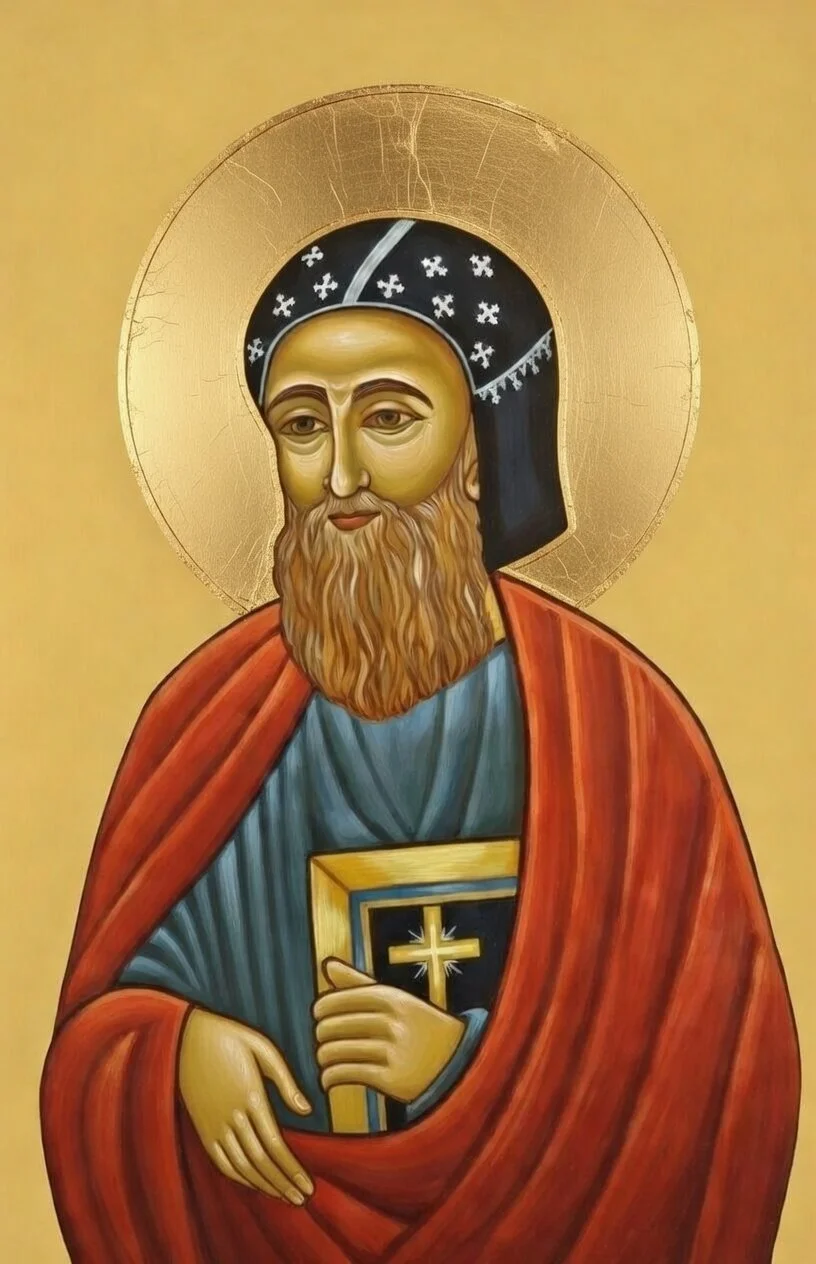
Under Justinian, who reigned from 527 to 565, imperial policy sought unity around Chalcedon. Non Chalcedonian bishops were deposed or exiled. Jacob traveled in rough patched clothing, and his Syriac nickname Burdono refers to coarse saddle cloth. He used this disguise to avoid being recognized. The conflict was not one sided, since political alliances and rival bishops also played a part.
Jacob was also drawn into quarrels among the non Chalcedonian bishops. Paul of Antioch, patriarch from 564 to 577, sought a reconciliation with Chalcedonian authorities, and Jacob opposed him. Jacob also took part in the Tritheist controversy about how to speak of the Trinity. These disputes show that the movement was not a single body under his control.
Death and the Journey of His Bones
Jacob died on July 30, 578, away from his see. Syriaca.org places his death at the monastery of Mor Romanos, linked in other accounts with Cassianus near the Egyptian frontier. A life of travel between monasteries and communities fits that setting.
A narrative attributed to Kyriakos of Amid describes how monks of Phesilta took his remains from the monastery of Casion. It was edited by M.A. Kugener in 1902. The Malankara Orthodox account says the bones were moved to Phesilta around 621 or 622. The exact year varies between sources, and the present location and condition of his relics are UNCERTAIN.
He was honored as a saint through the worship of the Syriac Orthodox Church, and no formal canonization decree can be shown. The Malankara Orthodox Syrian Church also keeps his memory as a saint. We found no verified feast in the Armenian Apostolic calendar, so we make no claim about Armenian veneration.
Miracles Told of the Bishop
TRADITION: Hagiographical accounts credit Jacob with healing the sick and the blind. The Malankara Orthodox biography passes on these stories from earlier Syriac sources. We have no medical records or names that can be checked, so they are traditions of devotion.
TRADITION: Some accounts say he raised the dead, brought rain in need and made the sun stand still, a story that echoes the book of Joshua. They are claims of the hagiographers and not documented events.
TRADITION: A diocesan account says that his intercession helped save Edessa from a Persian attack by King Khosrow I, who withdrew after a frightening vision. The supernatural part cannot be confirmed. The best known image of Jacob is not a wonder worker but a bishop in patched clothes, always on the road.
What the Sources Say
The strongest early witness is John of Ephesus, who wrote about Jacob in his Lives of the Eastern Saints, chapters 49 and 50, edited by E.W. Brooks in the Patrologia Orientalis. A longer anonymous life exists but exaggerates. The letters collected by J.B. Chabot give contemporary documents of the movement.
Modern reference works include Sebastian Brock's article in the Gorgias dictionary, J.W. Childers in the Encyclopedia of Christian Civilization, Philip Forness at Syri.ac and Volker Menze's book Justinian and the Making of the Syrian Orthodox Church. David Bundy's 1978 article surveys earlier research. The 1907 Catholic Encyclopedia entry is older and should be compared with newer work.
Open questions include his exact birth year, how many men he ordained, which writings are really his and where his relics lie. A careful account puts John of Ephesus and the letters before the later miracles, and describes him as a restorer and organizer, not the founder of Syriac Christianity.
Feast Days and Devotion
The Syriac Orthodox Church keeps July 31. The Northeast American Diocese of the Malankara Orthodox Syrian Church lists November 28. These are separate calendar traditions and should not be merged into one universal feast. His death is dated July 30, 578.
Devotion is strongest among Syriac Orthodox and Malankara Orthodox Christians, who often call themselves Jacobites after him, though some prefer another name. Pilgrims visit sites of the old Syriac heartland, but we found no verified tomb. Parishes remember him in the liturgy and in the history of their Church.
People ask his prayers for the bishops and clergy of their Church and for believers who live under pressure. This is popular devotion, and we found no formal patronage declared for him. The Anaphora that bears his name is still part of Syriac liturgical memory.
Lord Jesus Christ, You sustained Your Church through a bishop who traveled in poverty to bring Your sacraments to the faithful. Through the prayers of Mor Yaqub, strengthen shepherds and clergy, comfort Christians who suffer pressure for their faith, and lead all who confess You toward unity in love. Amen.
This is a short original prayer written for this article. It is not an official liturgical text. We could not verify an authenticated troparion for him. An Anaphora attributed to him survives in Syriac manuscripts, but it is not a prayer addressed to him.
Why He Matters to East and West
Jacob belongs to the Oriental Orthodox communion, which is separate from the Eastern Orthodox communion of the Byzantine tradition. He is not an Eastern Orthodox saint, and we found no verified feast in the Byzantine calendar. We found none in the General Roman Calendar and no Catholic canonization either.
His story matters to Syriac Catholics, who share the West Syriac heritage, and to anyone who studies how the Churches divided. Jacob lived when disagreements over how to express the faith in Christ hardened into separate hierarchies. The Common Declaration of Pope John Paul II and Patriarch Ignatius Zakka I Iwas of June 23, 1984 said that much of the division came from differences in wording, although it did not restore full communion.
He also reminds us that Church life depends on bishops, priests and the sacraments being available to ordinary Christians. His work was practical. He brought ordination and the Eucharist to people whose leaders had been taken away. Readers of every tradition can respect a monk who spent his life on the road for that purpose.
Frequently Asked Questions
Ask His Prayers
Many Syriac Orthodox and Malankara Orthodox Christians ask Saint Jacob Baradaeus to pray for their bishops and clergy. If you would like a prayer card of Saint Jacob Baradaeus, Mor Yaqub, you can find one below. His story reminds us that the Church is carried forward by quiet faithful travelers who bring the sacraments to others.
View Prayer Card