Catholic Saints • Rome • Florence • 1597 to 1648
Saint Joseph Calasanz and Galileo: The Schoolmaster Who Stood Near the Condemned Astronomer
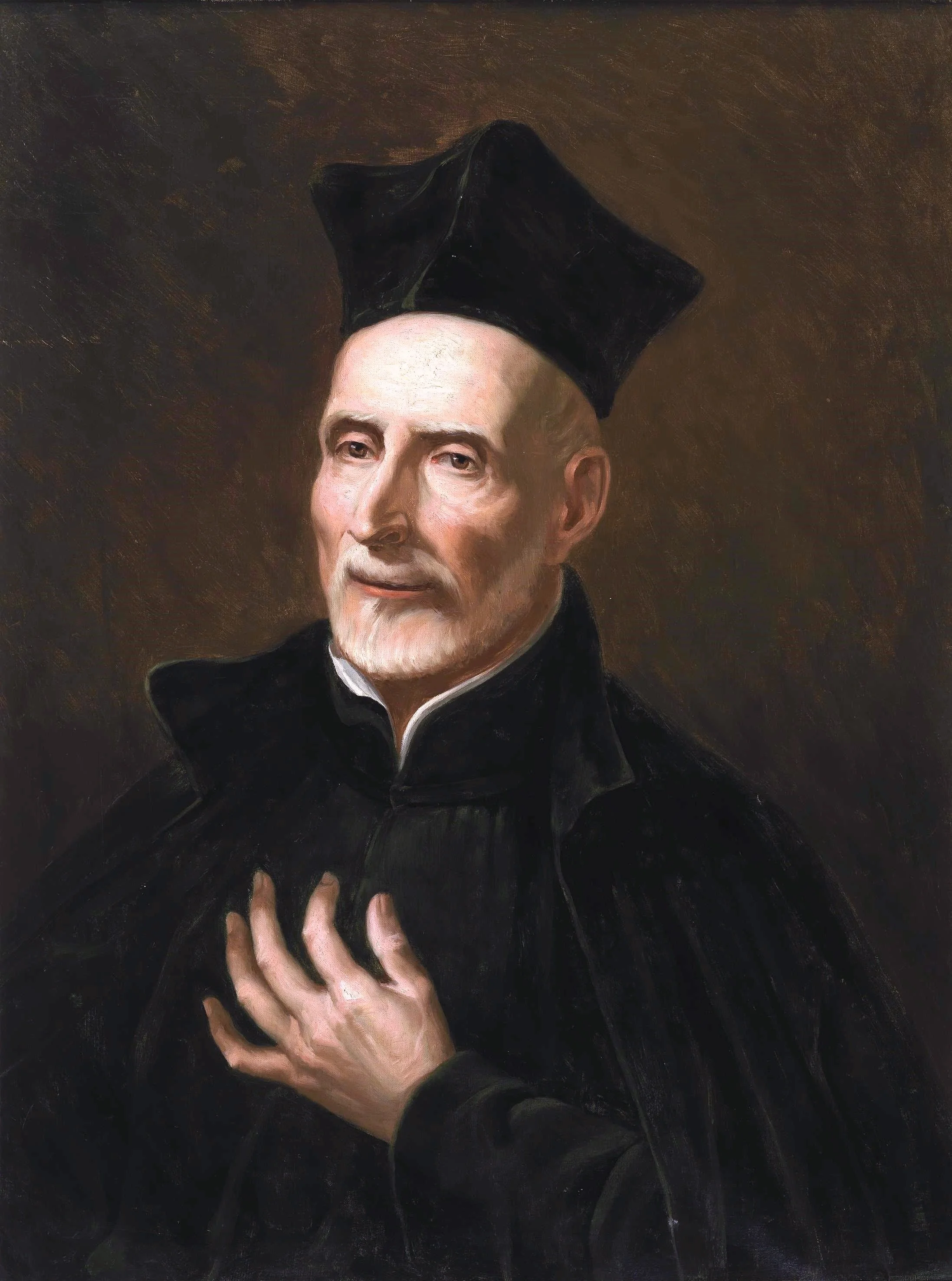
Joseph Calasanz started a free school for poor boys in Rome in 1597. Years later his teaching order was drawn into the world of Galileo, and the last years of the saint’s life were spent under pressure from the same Roman system that judged the astronomer.
Calasanz and Galileo at a Glance
- Who
- Saint Joseph Calasanz (1557 to 1648)
- Known for
- Founding the Order of Pious Schools, the Piarists
- First free school
- Rome, 1597
- Galileo link
- Piarist priests studied with Galileo, and Clemente Settimi served as his secretary in 1637
- Trial years
- Interrogated by the Holy Office in 1642; the order lost its privileges in 1646
- Died
- August 25, 1648, in Rome
- Canonized
- 1767
A Spanish Priest Opens a Free School in Rome
Joseph Calasanz was born in Aragon, Spain, in 1557 and trained as a priest before moving to Rome in the 1590s. In Rome he met many poor children with no schooling and no future, and he began to teach them himself.
In 1597 he opened a school for poor boys that is widely described as the first free public school in Europe. It taught reading, writing, arithmetic and the catechism, and it did not charge fees.
The idea was simple and radical for its time. Calasanz believed that education belonged to the poor as much as to the rich, and he made it his life’s work.
Part II
The Piarists
As the school grew, Calasanz gathered helpers into a community. The group was approved as a congregation in 1617 and as a religious order in 1621, the Order of the Poor of the Mother of God of the Pious Schools, usually called the Piarists.
The Piarists took a special fourth vow to dedicate themselves to the education of children. Schools opened in Italy and then beyond, and the order grew quickly.
Calasanz also pushed for science to be taught in the schools, not only Latin and religion. That openness is part of why the Piarists became interested in the new astronomy.
Part III
Galileo and the Piarist Scientists
Sources on Calasanz describe him as a friend and supporter of Galileo Galilei. Piarist teachers took an active interest in mathematics and astronomy, and some of them went to Tuscany to learn from the great scientist.
Clemente Settimi, a Piarist, served as Galileo’s secretary at Arcetri in 1637, when Galileo was living under house arrest after his 1633 condemnation. By then Galileo was losing his sight, and he needed trusted help to keep working.
The link between the two men is best described as support and shared interests rather than a long personal partnership. The record is clearer about the Piarist students and helpers than about the details of their talks.
Part IV
Galileo Dies, and the Pressure Turns on the Order
Galileo died on January 8, 1642, at Arcetri. That same year the Holy Office questioned Calasanz.
The order had come under internal and outside strain, and the ties between Piarist teachers and Galileo were one of the pressures on it. Historians describe a mix of causes, including internal quarrels in the order and the way the Roman authorities viewed Galilean science.
Calasanz was an old man by this time. He was in his eighties, and he answered what he was asked and kept teaching.
Part V
1646: The Order Is Cut Down
In 1646 the order’s privileges were removed and the Piarists were reduced to a lesser status. For a man who had spent half a century building schools, it was a hard end.
Calasanz accepted the decision and urged his priests to be patient. He died in Rome on August 25, 1648.
The order survived. It was restored in stages in the century that followed, and Piarist schools are still open on several continents.
Part VI
Canonization and Patronage
Joseph Calasanz was canonized in 1767. In 1948 Pope Pius XII named him patron of all Christian popular schools.
The Galileo story sits at the edge of his life, not at its center. The center is a classroom of poor Roman boys in 1597.
Teachers and students still pray to him, and his story suits anyone whose good work is misunderstood by people with more power.
Part VII
Timeline
- 1557: Joseph Calasanz is born in Aragon, Spain.
- 1597: He opens a free school for poor boys in Rome.
- 1617: The Piarists are approved as a congregation.
- 1621: They are approved as a religious order.
- 1633: Galileo is condemned by the Roman Inquisition.
- 1637: Piarist Clemente Settimi serves as Galileo’s secretary at Arcetri.
- 1642: Galileo dies on January 8. The Holy Office questions Calasanz.
- 1646: The order’s privileges are removed.
- 1648: Calasanz dies on August 25.
- 1767: He is canonized.
- 1948: Pius XII names him patron of Christian popular schools.
The Teacher Who Kept Teaching
Calasanz opened a school for children no one else would teach, and he kept teaching when Rome turned against his order. If you teach, or study, or work at something that is not appreciated, the Saint Joseph Calasanz prayer card is a good companion for the day.
View the Prayer Card →Frequently Asked Questions
