Catholic Saints • Hawaii • Molokai • 1838 to 1918
Saint Marianne Cope and Robert Louis Stevenson: The Poet Who Visited Kalaupapa
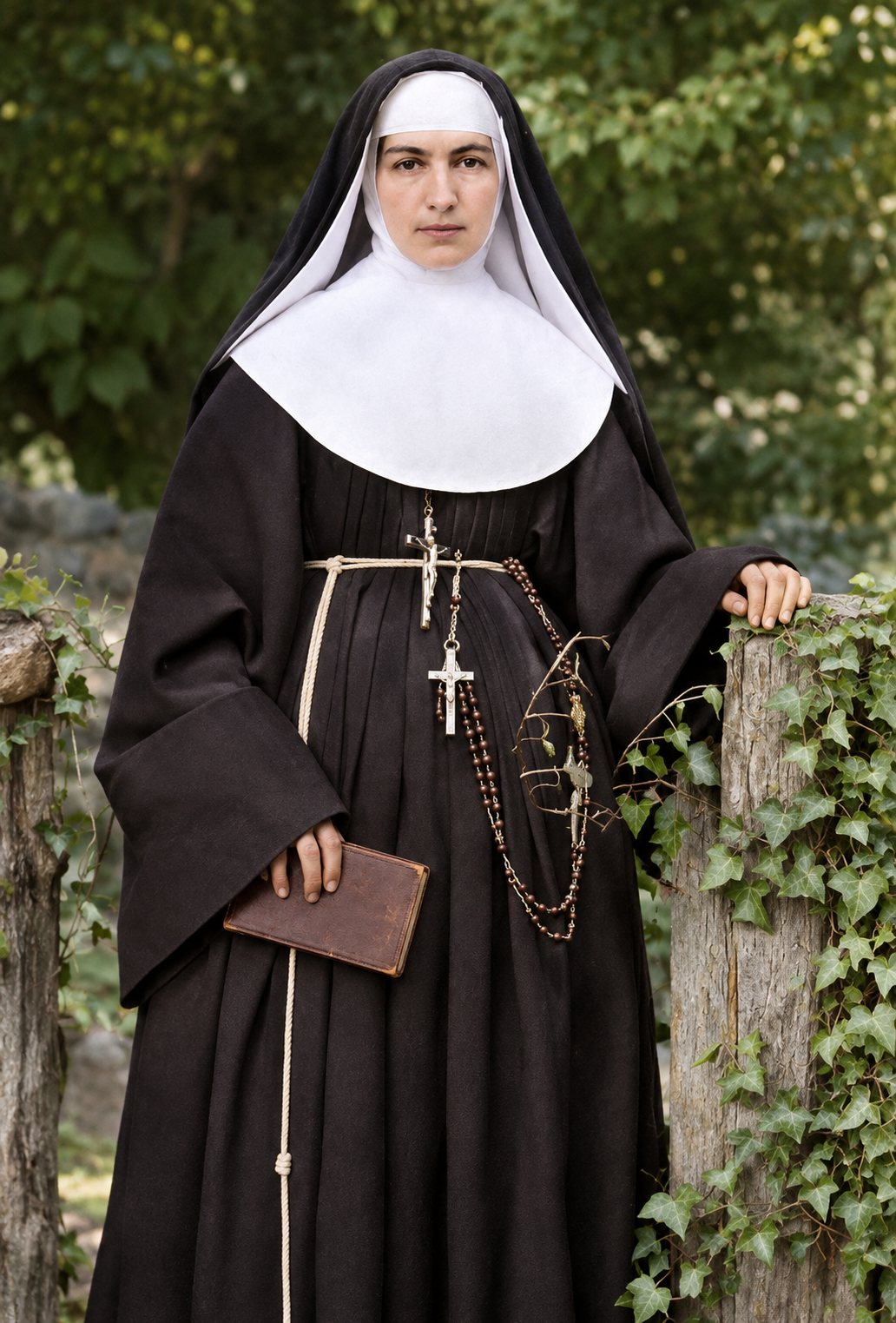
Marianne Cope led the Franciscan Sisters who cared for people with leprosy in Hawaii. In May 1889 the Scottish writer Robert Louis Stevenson came to her settlement at Kalaupapa and left behind a poem in her honor.
Marianne Cope at a Glance
- Born
- January 23, 1838, Heppenheim, Hesse (now Germany), as Barbara Koob
- Raised
- Utica, New York, after the family emigrated in 1839
- Order
- Sisters of the Third Order Regular of St. Francis, Syracuse
- Arrived in Hawaii
- November 8, 1883, with six other sisters
- Kalaupapa
- Moved to the Bishop Home in November 1888
- Died
- August 9, 1918, Kalaupapa, aged 80
- Canonized
- October 21, 2012, by Pope Benedict XVI
A Mill Girl From Hesse
Marianne Cope was born Barbara Koob on January 23, 1838, in Heppenheim, in the Grand Duchy of Hesse, in what is now Germany. Her parents were Peter Koob and Barbara Witzenbacher. When she was an infant, in 1839, the family emigrated to the United States and settled in Utica, New York, where the family name was eventually Americanized as Cope.
She was the eldest of the children, and the family was poor. She attended the parish school at St. Joseph’s Parish but left school by the eighth grade to work in a textile factory so that her family would have enough to live on. The family became naturalized citizens in the 1850s. Barbara wanted to enter religious life, but she waited, because her father was ill and the family needed her wages.
When her father died in 1862, she was free to go. She entered the novitiate of the Sisters of the Third Order Regular of St. Francis in Syracuse, New York, and took the name Marianne. It was a modest start for a woman who would one day be known on two continents.
Part II
A Teacher and Hospital Administrator
In her first years as a sister, Mother Marianne worked as a teacher and then as a principal in schools for German-speaking immigrant children in upstate New York. By 1870 she was a member of the congregation’s governing council, and she was entrusted with a very different job: to open and govern a hospital.
From 1870 to 1877 she governed St. Joseph’s Hospital in Syracuse, one of the first general hospitals in the area. At the time, many hospitals refused to treat the poor, people with alcohol problems or immigrants. She insisted that the sisters admit patients others turned away. According to the Wikipedia account, she also helped bring the Geneva Medical College to Syracuse, where it became the College of Medicine at Syracuse University, though the source does not give a date.
By the early 1880s she was the head of her congregation. She had run schools and a hospital, handled money and personnel, and learned how to get things done. All of this was preparation she did not know she was receiving.
Part III
The Call to Hawaii
In the early 1880s the Kingdom of Hawaii was struggling with leprosy, now called Hansen’s disease, which had spread among the Native Hawaiian population. The government had a policy of isolating the sick on the peninsula of Kalaupapa on the island of Molokai. A request for sisters to help care for patients went out to many religious communities. By the traditional account, many declined. Mother Marianne said yes. A line from a letter attributed to her is widely quoted in the congregation’s history: she said she was “hungry for the work.”
She left Syracuse in 1883 with six other sisters and arrived in Honolulu on November 8, 1883, aboard the steamer Mariposa. The sisters took over the management of the Kakaako Branch Hospital on Oahu, a receiving station where patients were examined before being sent to Molokai. In 1884 she opened Malulani Hospital on Maui, the first general hospital on the island. In November 1885 she opened the Kapiolani Home in Honolulu for the healthy children of leprosy patients. King Kalakaua awarded her the Cross of a Companion of the Royal Order of Kapiolani, though the source I used does not give the year.
The sisters did what nurses do. They cleaned wounds, changed dressings, taught the children, laid out the dead and refused to treat the patients as outcasts. Contemporary accounts say the sisters were not afraid of touching the sick. Observers noticed. Mother Marianne also took care of the sisters’ own health, which in that setting meant caution, order and plenty of work.
Part IV
Kalaupapa and Father Damien
In 1888 the government asked the sisters to open a home for women and girls at Kalaupapa. Mother Marianne agreed. In November 1888 she moved to the Charles R. Bishop Home for Unprotected Leper Girls and Women, and she lived there for the rest of her life. She had met Father Damien, the Belgian priest who had given his life to the people of Kalaupapa, shortly after arriving in Hawaii in 1883.
Damien was already ill with leprosy himself. He died on April 15, 1889, a few months after she arrived at the Bishop Home. Accounts say that she and her sisters helped to care for him in the last stage of his illness, though I would describe the details of his final weeks as the community’s tradition rather than a document I can cite. After his death, the government gave her charge of the care of the boys he had looked after.
In 1892 the businessman Henry Perrine Baldwin donated money for a new home for the boys, named Baldwin House. In 1895 four Brothers of the Sacred Heart arrived to care for them, and the sisters withdrew to the Bishop Home. By then Mother Marianne had been at Kalaupapa for years and had built a home that was known for order and cheerfulness. There were flowers, games, a piano and music. Her rule was that the patients, who had been told by their society they were dying, be treated as people who were living.
Part V
Stevenson at Kalaupapa, May 1889
In May 1889 the Scottish writer Robert Louis Stevenson, who was traveling in the South Seas for his health aboard the yacht Casco, made a side trip to Molokai. According to the National Catholic Register account, he stayed for eight days in the settlement’s guest cottage. He never met Father Damien, who had died about a month before. He did meet Mother Marianne, who welcomed him and showed him the community where she and her sisters cared for the sick.
He wrote a poem in her honor, addressed to Reverend Sister Marianne, matron of the Bishop Home, which is dated Kalawao, May 22, 1889. It praises the sisters’ care amid suffering. After he left Molokai and rejoined his family in Honolulu, he had a piano shipped to her at Kalaupapa, because, as he wrote, there ought always to be music. I give that last point as paraphrase of what is reported.
Stevenson later wrote a famous open letter defending Damien. After a Presbyterian minister in Honolulu, the Reverend C. M. Hyde, criticized Damien in a letter that appeared in the Sydney Presbyterian in October 1889, and the paper declined to print Stevenson’s response, he published it separately as an open letter, which was dated 1890. A tradition says that the name of the villain in his novella Dr. Jekyll and Mr. Hyde was chosen in some reference to the minister, though the novella had been written years earlier and the claim is not confirmed.
The two visitors reflect different kinds of greatness. Stevenson was a writer who could describe what he saw and then travel on. Mother Marianne was a nurse who had made her life there. Stevenson understood that difference. His poem to her is, in effect, a tribute from one kind of vocation to another.
Part VI
Death and Sainthood
Mother Marianne died on August 9, 1918, of natural causes, at the age of eighty, and was buried on the grounds of the Bishop Home. She had been in Hawaii for thirty-five years. Saint Francis School was founded in her honor in 1924, and Saint Francis Hospital in Honolulu in 1927.
Her cause for sainthood advanced in the early twenty-first century. On October 24, 2003, she was declared heroically virtuous, and on April 19, 2004, she was named Venerable. Her remains were moved to the Syracuse motherhouse in January 2005. She was beatified in Vatican City by Pope Benedict XVI on May 14, 2005. In December 2011 a second miracle was approved, and on October 21, 2012, Pope Benedict XVI canonized her. In 2014 her remains, except for a first-class relic, were returned to Honolulu and enshrined in the Cathedral Basilica of Our Lady of Peace.
Her feast day is January 23, her birthday. She is invoked by those who care for the sick, those who live with illness and exclusion, and by anyone who must serve in places that others avoid.
Stevenson’s visit lasted eight days, and his poem reached readers around the world. Mother Marianne stayed for decades, and her work was recorded in ledgers and in the memories of the women who lived at the Bishop Home. The difference between those two kinds of record is part of why her story has taken so long to be told.
Part VII
Timeline
- 1838: Born Barbara Koob on January 23 in Heppenheim, Hesse
- 1839: The family emigrates to Utica, New York
- 1862: Her father dies; she enters the novitiate in Syracuse
- 1870: Begins governing St. Joseph’s Hospital in Syracuse
- 1883: Arrives in Honolulu on November 8 with six sisters
- 1888: Moves to the Bishop Home at Kalaupapa in November
- 1889: Damien dies April 15; Stevenson visits for eight days in May
- 1918: Dies August 9 at Kalaupapa
- 2005: Beatified May 14
- 2012: Canonized October 21
Eight Days and Thirty Years
Stevenson visited for eight days and wrote a poem. Mother Marianne stayed for decades. If you care for the sick, the Saint Marianne Cope prayer card is a good companion.
View the Marianne Cope Prayer Card →Frequently Asked Questions
