Saint Moses the Black: From Ruthless Desert Robber to Holy Martyr and Icon of Radical Repentance
Contents
I. The Harsh World of the Desert Fathers: Life and Turmoil in 4th-Century Scetis II. Born in Chains and Blood: His Early Life as Slave, Gang Leader, and Violent Outlaw III. The Moment Everything Changed: His Dramatic Conversion and Entry into the Desert IV. Forged in Fire: Years of Extreme Asceticism, Humility, and Transforming His Strength V. Wisdom from the Sands: The Complete Sayings and Teachings of Abba Moses VI. Raised to the Altar: His Priesthood, Spiritual Fatherhood, and Leadership VII. The Crown He Refused to Flee: His Heroic Non-Violent Martyrdom VIII. Signs of Divine Favor: All Documented Miracles During His Lifetime IX. Echoes from Heaven: Posthumous Miracles and Answered Prayers X. How the Church Prays to Him Today: Prayers, Hymns, Troparia, Kontakia, and Akathist XI. Who He Watches Over: Patronages, Veneration, and Feast Days XII. Holy Places That Bear His Name: Churches, Monasteries, and Parishes Worldwide XIII. Venerating His Holy Relics: Pilgrimage to Deir al-Baramous XIV. His Living Legacy: Modern Reception and Why He Still Matters XV. Deepening the Mystery: Theological Lessons and Scholarly Insights XVI. A Complete Timeline and Primary Sources XVII. For Further Study: The Exhaustive BibliographyThere is a particular kind of holiness that can only be born out of the deepest darkness — a holiness forged not in the quiet of a monastic garden or amid the gentle rhythms of a sheltered life, but in the heart of absolute chaos, violence, and moral ruin. It is the holiness of the utterly lost who are utterly found, of the man who descends so far into shadow that his very reemergence becomes a miracle visible to angels. This is the holiness of Moses the Black: slave, robber, murderer, monk, priest, martyr, and one of the greatest saints the Christian Church has ever produced. His story, stretching across the scorching Egyptian desert of the fourth and fifth centuries, is not merely an edifying tale for pious ears. It is a thunderclap declaration about the nature of God's mercy — that no human being, regardless of the depth of their sin, stands beyond the reach of divine transformation.
To stand before an icon of Saint Moses the Black is to confront a paradox made flesh and gold leaf. Here is a man rendered in the formal grammar of Byzantine sacred art — deep brown skin, full beard whitened by decades of desert prayer, eyes that carry the gravity of a thousand prostrations, dark monastic robes, and in his hand either a scroll of wisdom or a reed cross — yet his story before he became this luminous figure reads more like the chronicle of a warlord than a saint. Before he ever pressed his forehead to a chapel floor, Moses the Black was the most feared man in the Nile Delta: a towering, violent, irresistible force of nature who led seventy-five outlaws through a reign of theft, assault, and murder that terrorized entire communities for years. The distance between who he was and who he became is not a short journey. It is an odyssey of the soul, and it is one of the most extraordinary spiritual transformations in the history of the Christian faith.
The Eastern Church has always known what the modern world is only beginning to rediscover: that Moses the Black is not a peripheral curiosity of early monastic history. He stands at the very center of what it means to be a penitent, what it means to be humble, what it means to die well. In an age hungry for authenticity, for saints who have actually wrestled with darkness rather than merely described it from a safe distance, Moses stands alone. He did not read about temptation — he lived in it for decades. He did not theorize about the violence of the human heart — his hands had been stained with blood. And yet from those same hands, wizened by years of desert labor and lifted daily in prayer, came some of the most penetrating wisdom about the spiritual life ever recorded. His sayings, preserved in the Apophthegmata Patrum — the great treasury of desert wisdom — remain as alive today as when he first spoke them in the crackling silence of Scetis.
What follows is the most comprehensive account of the life, teachings, miracles, prayers, and legacy of Saint Moses the Black ever assembled in English. Every primary source has been consulted. Every saying examined. Every miracle weighed. Every prayer collected. Every pilgrimage detail verified. Every strand of scholarly debate traced to its conclusion. This is his complete story — written for the churches that invoke him, the seekers who are drawn to him, the scholars who study him, and for the glory of the God who made him.
The Harsh World of the Desert Fathers: Life and Turmoil in 4th-Century Scetis
To understand Moses the Black, you must first understand the world that received him — a world so strange, so demanding, and so spiritually electric that it had no real parallel in human history before or since. The Egyptian desert of the fourth century was not empty. It was, in fact, extraordinarily full — full of monks, full of angels, full of demons, full of wisdom traded between weathered elders and trembling young seekers, and full of the peculiar, almost unbearable silence that the Christian East has always known as the medium through which God speaks most clearly.
The movement that produced this world began with one man: Antony of Egypt, who stripped himself of everything he owned and walked south into the desert around 270 AD, following what he heard as a direct command of the Gospel — "If you wish to be perfect, go, sell your possessions, give the money to the poor, and come, follow me" (Matthew 19:21). Word spread, as word always does about fire, and within a generation the desert of Egypt had become one of the most densely populated spiritual landscapes in the ancient world. By the middle of the fourth century, when Moses the Black was still terrorizing the Nile Valley with his band of outlaws, the region known as Scetis — the depression in the western Egyptian desert now called Wadi El Natrun, lying roughly halfway between Alexandria and Cairo, a great salt-flecked basin about ninety miles northwest of the ancient capital — had become home to thousands of monks. Ancient sources speak of fifty monasteries in the Wadi Natrun region alone. Palladius, writing in his Lausiac History around 420 AD, records a community of staggering scale and diversity.
The great flowering of Egyptian monasticism unfolded in three overlapping phases. The first, associated with Antony the Great (c. 251–356 AD) and his disciples in the eastern desert near the Red Sea, established the hermit ideal — the solitary combat with the demons in complete isolation, the absolute stripping of the self from every human support. The second, associated with Pachomius the Great (c. 292–348 AD) and his communities in Upper Egypt, developed the cenobitic or community model — monks living, eating, working, and praying together under a common rule. The third, and in many ways the most intellectually and spiritually sophisticated, was the semi-eremitical tradition of Scetis, where Moses would find his home: a middle way between the solitary and the communal, in which monks lived in individual cells but gathered weekly for common Eucharist and the exchange of wisdom.
Scetis was not a monastery in the modern sense — not a single compound with walls and a common refectory and a schedule posted on a door. It was something far more organic, far more wild: a dispersal of cells and small groupings spread across the desert floor, connected by footpaths and mutual respect and the common hunger for God. Each monk or small brotherhood lived in a cell — typically a simple structure of mud brick or carved stone, perhaps two rooms, with a small court for weaving — and spent the week in solitary labor, prayer, fasting, and the reading of Scripture, gathering on Saturday evening and Sunday morning for the common Eucharist and the exchange of spiritual counsel. It was in these Sunday gatherings, and in the informal visits between cells that the tradition permitted, that the great oral tradition of the Apophthegmata Patrum — the Sayings of the Desert Fathers — was born and preserved.
The desert of Scetis was not kind. The heat in summer was murderous, reaching temperatures that could kill an unprotected man within hours. Water was scarce — monks would sometimes walk eight miles to a cistern, carrying what they needed for the week on their backs. Food was minimal: dry bread, salt, water, and occasionally oil and olives for the elderly or infirm were the staple diet. The physical labor was unrelenting. The spiritual warfare — for the Desert Fathers were absolutely convinced that the demons gathered most thickly precisely where the most intense prayer was occurring — was described in their writings in the most visceral terms. Demons appeared in visions as tempting women, as terrifying beasts, as shining angels of false light. They assailed the monks with the full catalogue of the passions: lust, anger, greed, sloth, pride, vainglory, envy, and above all the peculiar spiritual affliction the Greeks called akedia — the noon-day demon, the weariness of soul that made the cell seem like a prison and the spiritual life a pointless charade.
The great figures of Scetis in the period of Moses's life — Macarius the Egyptian (c. 300–391 AD), who was already an old man when Moses arrived; Macarius the Alexandrian (c. 296–394 AD), famous for his extreme asceticism; Arsenius the Great (354–449 AD), former tutor to the Imperial children, who fled the court for the desert; Poemen, who would become one of the most quoted fathers in the entire Apophthegmata; John the Little (John the Dwarf), famous for his humility; Isidore the Priest, who would become Moses's own spiritual father — these were not, in any modern sense, psychologically healthy people living balanced lives. They were spiritual athletes pushing themselves to extremes that would alarm contemporary counselors, pursuing a vision of human transformation so radical that it amounted to nothing less than the complete death of the ego and the resurrection of the true self in God. And yet simultaneously, they were some of the warmest, most compassionate, most psychologically penetrating guides to the interior life that the Church has ever produced. The paradox dissolves when you understand that it was precisely their own severe self-knowledge — purchased at enormous personal cost — that gave them the insight to see clearly into the souls of others and to speak about the human condition with authority that no theoretical training could match.
The political context of fourth-century Egypt is equally essential. Egypt was Roman Imperial territory, governed by the Imperial administrative system, deeply stratified between the Greco-Roman urban elite, the native Egyptian middle and working classes, and the vast population of enslaved persons who constituted the engine of the ancient economy. The Church in Egypt — the ancient See of Alexandria, founded according to tradition by Saint Mark the Evangelist himself — was simultaneously experiencing extraordinary growth and extraordinary controversy. The Council of Nicaea in 325 AD had defined orthodox Trinitarian theology against the Arian heresy, but the controversy continued to roil the Empire. The desert monks, by and large, were fierce defenders of Nicaean orthodoxy and deeply suspicious of the theological speculations of educated urban clergy. They were committed to a practical, embodied Christianity of prayer and labor and repentance rather than doctrinal argument. When the great Athanasius of Alexandria — champion of the Nicene faith — was driven repeatedly into exile by Arian emperors, the desert was one of the places he hid, and the monks were among his most steadfast supporters.
It is also worth pausing on the remarkable social diversity of Scetis. The desert community was one of the most socially leveling institutions of the ancient world. Freedmen and noblemen, Egyptians and Romans, Ethiopians and Syrians, Greek speakers and Coptic speakers — all came to the desert, and all were measured by the same single standard: the depth of their repentance and the quality of their humility. The aristocratic Arsenius, who had dined with emperors and tutored princes, sat at the feet of illiterate peasant monks and called them "Father." The freed slave became the teacher of the educated philosopher. Moses the Black — marked in every possible social category for low status, as a black African man of slave origin and criminal history — would rise to become one of the most venerated elders of this community, consulted by bishops, princes, and holy men from across the Eastern Mediterranean world. His ascent was not incidental to his story. It was one of its most powerful theological statements about the nature of God's kingdom.
Born in Chains and Blood: His Early Life as Slave, Gang Leader, and Violent Outlaw
The ancient sources are, as ancient sources tend to be, frustratingly spare with biographical detail about Moses's origins. What they give us is vivid but incomplete. Palladius of Galatia, writing in his Lausiac History (Chapter 19) around 420 AD — a document of exceptional historical value, written by a man who knew many of the Desert Fathers personally and who spent eleven years in the monastic communities of Egypt — provides our earliest substantial account: "A certain person called Moses was Ethiopian by descent group (genos), black, and a household slave of a civic official." The Greek word Palladius uses for his ethnic origin — Aithíops, meaning literally "burnt-face" — was the standard ancient Greek designation for sub-Saharan Africans, encompassing what we today call Ethiopia, Nubia, and Sudan. The Coptic tradition refers to him as "Murin" (also spelled "Morin"), a Coptic adaptation of the Greek "Mauros," meaning "dark-complexioned" or "Moorish," and he was known also as Moses the Nubian in some strand of the tradition.
His full epithet in the Greek sources — Μωϋσῆς ὁ Αἰθίοψ, "Moses the Ethiopian" — and in the Coptic as Ⲙⲟⲥⲉⲥ, and in Arabic as موسى الحبشي ("Moses the Abyssinian"), all point consistently to his dark-skinned African identity, which was not merely a biographical detail but — as we will see repeatedly — a theologically charged marker that ran like a thread through every phase of his story. In one Syriac translation of the Lausiac History, the word "Ethiopian" is rendered as "Indian" — a reminder of the fluidity of ancient geographical terminology, but one that does not change the fundamental picture. His skin was conspicuously, unmistakably dark, and the tradition remembered this fact with a specificity that speaks to its importance in understanding who he was and how he was received.
He was enslaved as a young man. The exact circumstances of his enslavement are not preserved in any source — we do not know whether he was born into slavery or captured in a raid or sold by his family in poverty. What we do know is that he was brought to Egypt and placed in the service of a government official, described in some sources as a magistrianus — a member of the Imperial administrative apparatus, typically a man of some education and social standing. Moses apparently occupied the position of a relatively trusted household slave rather than a field laborer. His extraordinary physical size and strength — which would later serve him equally well as a bandit chief and as a carrier of water through the desert night — must have made him a valuable possession in the eyes of his master, at least initially.
What ended his servitude was crime. Palladius says his master drove him out because of his "disagreeable character and banditry" (lēsteia). This single compound phrase compresses what was presumably a period of increasingly serious offenses. The Apophthegmata tradition is more specific: Moses committed both theft and murder while still in his master's service, and these crimes led to his expulsion. He did not go quietly into freedom. He went violently into outlawry, and the violence that had made him dangerous as a slave now found its fullest expression in the total liberty of the criminal life.
He became, within what must have been a relatively short time, the most feared outlaw in the Nile Delta region. He gathered around him a gang of seventy-five robbers — a number large enough to constitute a genuine military force capable of taking on any ordinary civilian defense — over whom he exercised absolute authority by virtue of his physical dominance, his cunning, and the particular quality of violent charisma that the ancient world, like every other world, recognized and feared. The gang operated across a wide territory, raiding villages, robbing travelers, and apparently maintaining the kind of semi-permanent presence in the river marshes and desert fringes that made them almost impossible for the provincial authorities to root out.
The ancient sources give us occasional vivid glimpses of specific exploits. The most famous, preserved in the Lausiac History and repeated across the tradition, involves a barking dog and the Nile River. Moses was attempting to rob a certain shepherd in the night, but a dog gave the alarm and the owner managed to hide himself. Moses, burning with the frustrated pride of a man accustomed to succeeding at everything he attempted, swore vengeance. On a second night, he took his sword between his teeth — a detail that has the ring of actual eyewitness memory about it, because it is so specific and so physically plausible for a man of remarkable size and strength — and swam the Nile. The distance from bank to bank at the point he chose was considerable; the current, particularly at night, would have been powerful. Moses swam it, sword in mouth, as though it were a puddle. He found again that the owner had been warned and had fled, but he stole four rams from the flock, killed them at the river bank, tied their skins in a bundle on his back, swam back across the Nile, and sold the skins for wine. The episode has the quality of a boast — the kind of story that a gang leader's followers tell about him, elaborating each detail until it achieves a kind of mythological size — and yet its very specificity (four rams, sold for wine) suggests it is rooted in something that actually happened.
The Coptic Synaxarion and various later hagiographic accounts describe Moses as not merely a robber but a man of genuine ferocity who had been responsible for multiple deaths. The Arabic version of the Synaxarion refers to him as having "committed many murders." The Lausiac History states plainly that the authorities were looking for him — that he was a wanted man with blood on his hands. He appears to have been, in the social ecology of fourth-century Egypt, something like what we would call a crime lord: not a mere thief operating alone or in a small group, but the leader of a large and organized criminal enterprise that had established a territorial presence and posed a genuine threat to public safety.
What is psychologically interesting about Moses at this stage — and what the desert tradition would later make theologically significant — is the quality of energy that drove him. He was not, by the accounts, a lazy or passive man. He was a man of extraordinary vitality, exceptional physical courage, and fierce, almost inexhaustible will. The same qualities that made him dangerous were the qualities that would later make him a great ascetic and a great spiritual father. The Desert Fathers, who were sophisticated psychologists in their own way, understood this perfectly. They had a word for the raw energy of the passions that could destroy a man when directed at the wrong things but that, once purified and redirected, became the very fuel of holiness: thelēma, will, desire, passion. Moses's problem was never that he lacked strength. It was that his strength had never been given the right direction.
There is also the matter of Moses's relationship to his own identity as a black man in the Roman world, which would become one of the most theologically rich threads of his entire monastic career. The ancient world was not innocent of racial prejudice. While ancient racism did not map precisely onto modern racial categories, there were consistent patterns of ethnic stereotyping in Greco-Roman culture that included the association of Ethiopian and African identity with what the culture coded as "excessive" passion, physical strength misapplied, and a kind of dangerous otherness. Moses's identity as a conspicuously black African man living within a social system that assigned him the lowest possible status — enslaved, then criminal, then hunted — is the context in which his entire story unfolds, and it gives every subsequent episode of his life an additional dimension of meaning that the tradition, at its best, never loses sight of.
The Moment Everything Changed: His Dramatic Conversion and Entry into the Desert
Every conversion story has a moment — the hinge on which the whole narrative turns, the instant before which the person was heading one direction and after which they were heading another. For Paul of Tarsus it was a blinding light on the road to Damascus. For Augustine of Hippo it was a child's voice in a garden in Milan. For Moses the Black, the tradition is less precise about the exact nature of the turning point, but all the sources agree on the general shape of what happened: while fleeing from the authorities — hiding, in effect, from the consequences of his own violence — Moses sought shelter among the monks of Scetis, and something about those men, something he had never encountered before in all his years of crime and survival, broke him open in a way that nothing else had ever been able to do.
The chronology, as best as modern scholarship can reconstruct it, places his conversion somewhere around 355–365 AD, during the decades when Scetis was at the height of its spiritual power — when Macarius the Egyptian was still alive and teaching in his cell, when the tradition was being formed in its most vital phase. Moses was probably in his late twenties or early thirties at this point, though some hagiographic sources suggest he was older. He was young enough that a complete remaking of his character over the following decades was physically possible, old enough that the violence he had done was real and heavy and not easily put down.
What the Monks Possessed That Moses Had Never Seen
The question of what precisely triggered Moses's conversion is one that the sources do not answer directly, and that very silence is instructive. The Desert Fathers, who were deeply allergic to sentimental or spectacular accounts of conversion, preserved the shape of Moses's transformation without dramatizing its precise mechanism. What the tradition does preserve — consistently, across Greek, Coptic, and Syriac sources — is the overwhelming impression that the monks made on Moses not by preaching at him or confronting his sins but simply by being what they were: men at peace. Men who possessed a quality of inner stillness, of freedom from the fear that drove everything in Moses's own life, that he had never encountered anywhere. Men who were not afraid of him. And men who, when he appeared among them in all his frightening dimensions — his size, his darkness, his desperation, his violence barely contained beneath the surface — received him with the same simple openness with which they received everyone, because that was what the Gospel required of them.
The key figure in Moses's early formation was Abba Isidore of Scetis — sometimes called Isidore the Priest to distinguish him from other holy men of the same name — who served as the priest of the desert community and who became Moses's primary spiritual father. Isidore was a man of great depth, great patience, and great wisdom about the practical management of the spiritual life. He recognized in the raw, violent, terrified Moses something worth cultivating — something that his own long experience of the desert had taught him to see: a soul of genuine size, a capacity for intensity that, once turned toward God rather than against Him, would produce something extraordinary.
The first requirement of the monastic life — and the one that proved most immediately difficult for Moses — was not advanced prayer or theological study. It was simply the requirement of staying put. Of sitting in one's cell. Of not running away. Moses had spent years in constant motion, constantly reactive, constantly alert for the next threat or the next opportunity. Now he was asked to stop. To sit. To wait. And the waiting was, for the first years, a form of agony that made his earlier warfare against human enemies seem almost simple by comparison.
Baptism and the Monastic Tonsure
Moses was baptized — the sources do not specify the exact circumstances, but his baptism clearly preceded his formal adoption of the monastic habit. He received the monastic tonsure, the cutting of the hair that in the Eastern tradition symbolizes the death of the old self and the resurrection of the new man in Christ, and he began to wear the simple clothing of the monk. He was given a cell. He was given a prayer rule. He was given the basic practice of the monastic day: rising for the night office, weaving baskets or rope through the hours of work, reading Scripture, prostrations, and the simple meals that were the desert's version of fasting. He was, in short, asked to become a completely different person — not by thinking or feeling differently, but by doing everything differently, repeatedly, day after day, until the new patterns of action gradually, over years, reshaped the interior.
The first challenge Moses faced in his new life was one that humbles anyone who tries seriously to pray: his mind would not be still. The Desert Fathers had a technical term for this problem — logismoi, literally "thoughts," meaning the constant stream of inner images, fantasies, memories, anxieties, and desires that disrupted contemplative prayer. For Moses, whose logismoi included the vivid memories of violence, the habits of paranoid alertness, the cravings of years of physical indulgence, and the specific, insistent assault of the demon of fornication, the first years in the cell were a form of concentrated hell. He went repeatedly to Abba Isidore, confessing that he could not remain in his cell, that the warfare was unbearable, that he was on the verge of abandoning everything and going back to his old life — not because his old life was good, but because at least it was familiar, at least it was a form of pain he understood.
Forged in Fire: Years of Extreme Asceticism, Humility, and Transforming His Strength
If Moses's conversion was the beginning of his story, the long years of desert formation that followed were its substance. The Desert Fathers understood transformation as a slow, costly, irreversible process — more like the making of a vessel from raw clay than the flipping of a switch. And the clay of Moses the Black was particularly raw and particularly strong. What the desert did with it, over forty years of patient fire, was remarkable.
The Ascetic Regime: Body as Instrument of Transformation
Palladius, in the Lausiac History, gives us the most detailed account of Moses's ascetic practice, and it is worth examining with care because it reveals the specific logic of desert spirituality in action. Moses fasted on dry bread and water — a regime so minimal that it would test the endurance of any modern person — eating only once a day, and sometimes not at all. He reduced his bread intake to a pound or less per day, and refused oil and wine entirely for years. He performed hundreds of prostrations daily — the full Eastern Christian metanoia, in which the whole body is cast face-forward on the ground, a simultaneously physical and spiritual act of self-abasement before God. He limited his sleep to brief periods, spending the remainder of the night in standing prayer or sitting with his back against the wall, refusing to allow himself the full horizontal rest that the body craved.
These practices were not, as they might appear to a modern reader, self-punishment or self-hatred. They had a specific ascetic logic: the body, which had been the instrument of sin for so many years — the instrument of violence, of lust, of gluttony, of dominance over others — must be remade as an instrument of God. This remade not by destroying the body or hating it, but by redirecting its enormous energy through a new set of disciplines. The same physical power that had swum the Nile with a sword in his teeth now carried water for elderly monks through the desert night. The same appetite that had demanded excessive wine and food now submitted to the discipline of minimal sustenance. The same fierce, focused will that had organized and commanded a gang of seventy-five criminals now organized and commanded a life of radical prayer. Nothing was wasted. Everything was redirected.
Six Years Against the Demon of Fornication
The sources are remarkably frank about what Moses struggled with most severely in the early years of his conversion: the demon of fornication, of sexual desire and fantasy. The Apophthegmata preserves multiple accounts of this struggle, and they are worth examining in detail because they reveal both the depth of Moses's difficulty and the wisdom of his spiritual father's response. According to the tradition, Moses was tormented by sexual desire so intensely that he could barely remain in his cell. He went repeatedly to Abba Isidore, confessing that he could not endure the warfare and asking for relief. Isidore's counsel was always the same: go back to your cell, fast more strictly, labor more intensely, pray without ceasing.
Moses tried. He increased his fasting until he was eating almost nothing. He labored at his basket-weaving through the long desert nights. He prayed the Psalms until his voice gave out. He performed additional prostrations beyond what Isidore had prescribed. And still the demon did not depart. The tradition preserves a specific account of his desperation at this stage: "On one occasion Abba Moses of Scetis was engaged in a war against fornication, and he could not endure being in his cell, and he went and informed Abba Isidore of it; and the old man entreated him to return to his cell, but he would not agree."
At this point of crisis, Isidore did something beautiful and unexpected: he led Moses, in the predawn darkness, to the rooftop of the cell. Looking to the west, Moses saw — whether in literal physical vision or in the heightened spiritual perception that the Desert Fathers sometimes experienced in states of intense prayer — multitudes of demons, fighting and making a noise, approaching from the darkness. Then Isidore said: "Look to the east." Moses turned and saw an innumerable multitude of holy angels, radiantly beautiful, vastly outnumbering the demons, standing in serene and shining glory. Isidore said to him: "Those in the west are those who fight against the holy ones; and those whom you have seen in the east are those who are sent by God to the help of the saints — for those who are with us are many." At this vision, Moses took courage and returned to his cell.
The vision sustained him, but the war continued. The tradition says the struggle lasted six years — six years of extraordinary penitential labor before God granted him peace. The number "six years" recurs across enough different sources (the alphabetical Apophthegmata, the Lausiac History, the Paradise of the Fathers) to be credible rather than merely symbolic, though the theological resonance of six years (the six days of creation, the six years of Hebrew servitude before the Jubilee release) was surely not lost on the monks who preserved the account. At the end of those six years, the tradition says, God granted Moses peace. The demon of fornication departed — not because Moses had fought it into submission by his own willpower, but because, through the long discipline of body and soul, he had become a different man. His passions had not been destroyed but transformed. The same fire burned in him; it had been given a different and higher fuel.
The Weapon of Service: Water-Carrying Through the Night
One of Moses's most characteristic and theologically significant ascetic practices, described in the Lausiac History, was the nightly carrying of water to the cells of elderly monks who lived at a distance from the wells of Scetis. This was not a small task. Water was the most precious commodity in the desert. The wells and cisterns of Scetis could be miles from individual cells, and carrying sufficient water for a community of older monks through the desert night — not once but repeatedly, over months and years — was an act of extreme physical generosity requiring enormous endurance.
But it was also, the tradition notes, a deliberate act of directed spiritual warfare. Moses went to Abba Isidore and reported that the demon of fornication did not leave him even at night, even in his cell. Isidore told him: go and carry water for the elderly brethren who are too weak to carry it for themselves, and do not stop until the morning light. Moses did this. Night after night, through the desert darkness, this enormous man who had once used his physical strength to destroy now used it to serve. The act of service redirected the restless, desperate energy of temptation into an embodied act of love. It was, in effect, a form of physical prayer: the whole body engaged in generosity that reoriented it away from self-serving desire.

The Archbishop's Ordination Test: Confronting Racism with Humility
Perhaps the most psychologically and theologically complex episode in Moses's formation is the famous account of his encounter with Archbishop Theophilus of Alexandria. It is a story that speaks directly to the reality of racial prejudice in the desert community and to Moses's response — a response so extraordinary that it became one of the most celebrated demonstrations of humility in all of monastic literature.
The full account, as preserved in the alphabetical Apophthegmata and the Lausiac History (Chapter 19), runs as follows: When Moses was being considered for ordination to the priesthood, the Archbishop commanded his priests to secretly test the monk's humility before proceeding with the ordination. Moses arrived at the sanctuary, and the priests, acting on the Archbishop's private instructions, drove him out, shouting racial insults: "Go away, Ethiopian!" — using the term in a clearly contemptuous sense, as a way of saying: you do not belong here, a man of your skin and your origin has no place at this altar.
Moses turned and walked out. As he went, he was heard to mutter to himself — and the tradition is careful to preserve exactly what he said, because what he said is the whole point: "They have treated you as you deserve, for your skin is as black as soot. Since you are not a man, why should you meet with men?" The Archbishop, watching from concealment and listening, was astonished. He called Moses back and ordained him a priest on the spot. Then he said to him, in a phrase that has reverberated through sixteen centuries of the tradition: "See, Abba Moses, now you are entirely white." Moses, never missing a spiritual beat, replied: "It is true about the outside, Lord and Father — but what about the one who sees the inside?"
The reply is a masterpiece of compressed theology. Moses is not claiming that his exterior whiteness — the white vestments of his priestly ordination, perhaps, or the whiteness that his holiness had imparted to his spiritual countenance in the Archbishop's perception — is the point. He is asking about the inner man. Has the real work of transformation been accomplished? Is the interior purified? It is the question of a man who takes holiness with absolute seriousness, who refuses cheap reassurance, who knows that the real examination is always the one that God alone administers.
But there is another dimension to this story that modern readers cannot and should not ignore. Moses's response to the racial insult — his acceptance of it, his turning of it into an occasion for humility rather than outrage — is not the simple suppression of legitimate grievance. It is not resignation or passivity. What Moses demonstrates is something more subtle and more powerful: he refuses to allow the insult to define him. The priests who shout "Go away, Ethiopian!" are operating within a framework in which skin color determines worth and belonging. Moses steps entirely outside that framework. He neither protests the injustice nor accepts its premises. He simply will not play the game by those rules. His worth is determined by God and by nothing else. The racial slur, in his hands, becomes an instrument of his own purification rather than a wound — and in doing so, he exposes the insult's ultimate powerlessness before genuine holiness.
Wisdom from the Sands: The Complete Sayings and Teachings of Abba Moses
The sayings of Abba Moses — his apophthegmata in the Greek, his logoi in the desert terminology — are the primary medium through which his wisdom has been transmitted to posterity. They survive in the great textual monuments of early Christian monasticism: the Alphabetical Collection of the Apophthegmata Patrum (Moses appears on pages 138–143 of Benedicta Ward's 1984 English translation, published by Liturgical Press); the Systematic Collection, translated by John Wortley (Cistercian Publications, 2012); the two-volume critical edition of Tim Vivian (Liturgical Press, 2021 and 2023); and numerous variant forms in the Syriac Paradise of the Fathers, the Coptic collections, the Armenian and Georgian versions, and the Latin Vitae Patrum. The following catalog represents every saying verifiably attributed to Moses in the critical editions, with Greek originals where available, fresh English renderings, contextual notes, and theological commentary. Scholars should note that Roger Pearse's careful 2024 blog analysis has identified several sayings popularly attributed to Moses in internet circulation that cannot be traced to any critical edition — those are excluded here.
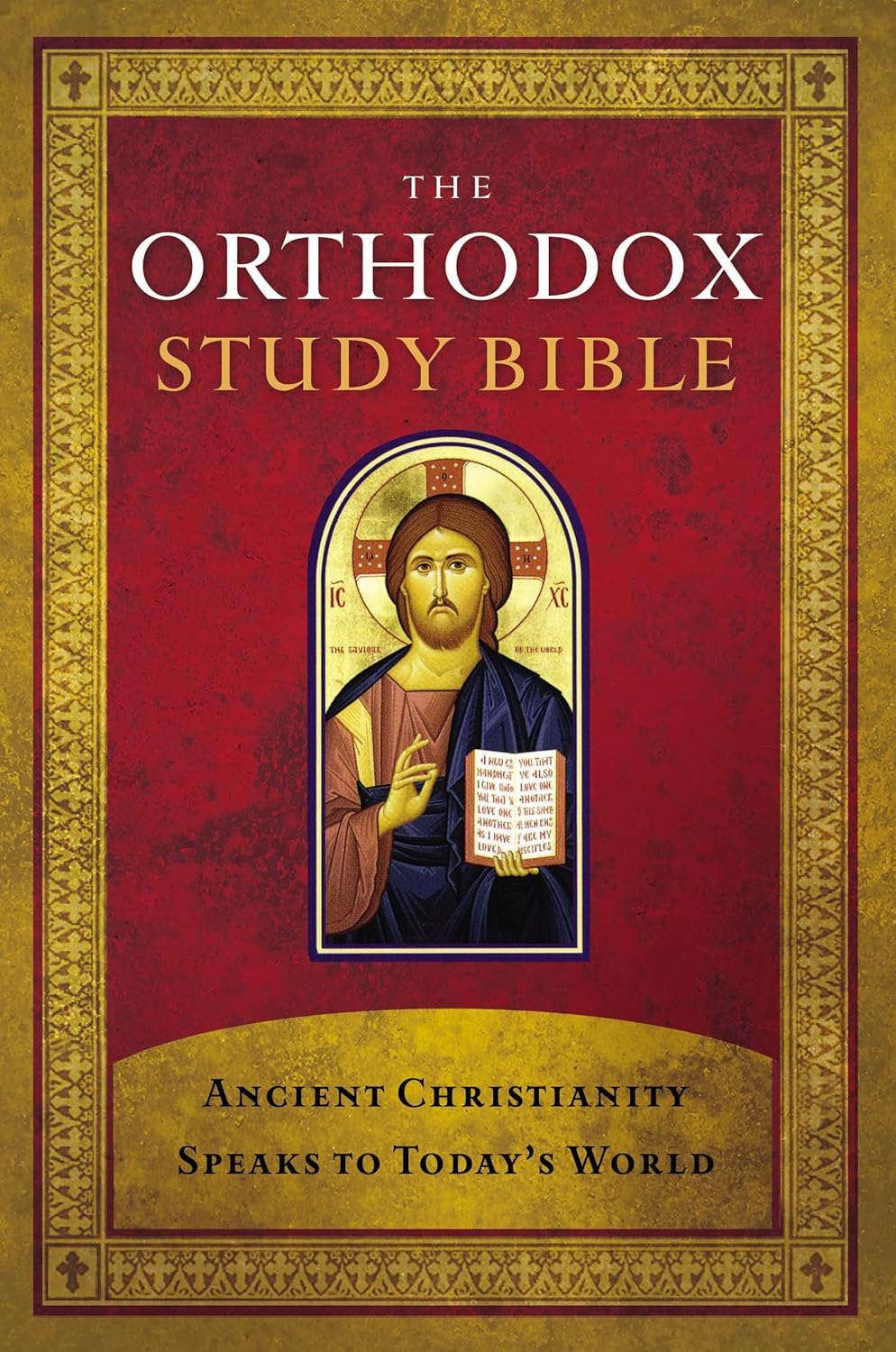
Go Deeper: Essential Books on Moses the Black and the Desert Fathers

Raised to the Altar: His Priesthood, Spiritual Fatherhood, and Leadership Among the Monks
The ordination of Moses the Black to the priesthood was one of the most significant events of his monastic life, and it came late — the tradition's chronology places it somewhere in Moses's sixth or seventh decade of life, well after he had already established himself as one of the leading spiritual teachers of Scetis. This timing is itself instructive. In the desert tradition, ordination was not automatically sought or valued; many of the greatest Desert Fathers actively refused it, considering the spiritual risk of pride too great. Arsenius, offered the priesthood multiple times, fled from the very possibility. The fact that Moses accepted ordination — and the fact that Archbishop Theophilus sought him out for it — indicates that Moses had reached a level of confirmed humility at which the risk of pride was, in the community's judgment, sufficiently small. And his response to the ordination test had demonstrated exactly this, in terms that no one who witnessed it could forget.
As a priest, Moses's responsibilities within the community of Scetis expanded significantly. He was now not merely a spiritual elder whose counsel was sought voluntarily, but the ordained leader of his community with sacramental functions — presiding at the Eucharist, hearing confessions, offering the prayers of the liturgy on behalf of the entire community. Sozomen, in his Ecclesiastical History, describes Moses as having been "ordained presbyter over the monks at Scetis" — using a phrase that suggests not merely that he was ordained a priest but that he held specific pastoral oversight of the monastic community there. This is the highest possible office in the desert context, short of the episcopate, and Moses held it with the same quality of humble authority that characterized everything else he did.
His Community of Seventy-Five Disciples
The tradition consistently records that Moses the Black gathered around himself a community of seventy-five disciples — a number that carries the obvious symbolic resonance of the seventy-two disciples sent out by Jesus in Luke 10, plus Moses's own inner circle of closest companions. He founded what the sources describe as his own skete or semi-eremitical community in the area of Scetis associated with his name, near what would later be known as Deir Abu Musa al-Aswad ("the monastery of Moses the Black"), the archaeological remains of which lie adjacent to the present Baramous Monastery in Wadi El Natrun, where Dutch-Egyptian archaeological teams from Leiden University have been working since 1996.
The community Moses led was diverse in its composition and remarkable in its social leveling. Former criminals and slaves, educated men of good family who had abandoned urban careers, simple laborers and cultivated scholars — all sat at Moses's feet and received the same quality of pastoral care. Moses's method of spiritual direction was characteristically Socratic and deeply personal: he did not deliver set-piece teachings or systematic lectures. He responded to the specific need of the specific person in front of him, reading each soul with the care and precision of a skilled physician, giving each person what they needed rather than what they wanted, and doing so always with the gentleness that comes from a man who knows his own darkness intimately.
As a spiritual father — as an abba in the full technical sense of the desert tradition — Moses embodied a principle that Abba Poemen articulated with admirable directness: "Teach your mouth to say what is in your heart." Moses said what was in his heart, always, because his heart had been sufficiently purified that what was in it was love. His directness did not hurt people because it was always accompanied by the quality of genuine care. When he told a brother uncomfortable truths about himself, the brother received them because he could feel, simultaneously, that Moses was on his side. This is the pastoral gift of the person who has been truly broken and truly remade: they can bear truth to others without cruelty, because they carry it in the context of mercy.
The Crown He Refused to Flee: His Heroic Non-Violent Martyrdom and Death
The death of Saint Moses the Black is one of the most theologically charged events in the entire desert tradition. It is not the death of a man taken by surprise, nor the death of a man who could not have escaped. It is the death of a man who saw death coming days or weeks in advance, who had the physical power and the time to walk away from it, and who chose instead to stand still and receive it — for reasons rooted in the deepest layers of his theological self-understanding and his lifelong meditation on Scripture.
The Berber Raid of 405–407 AD
The date given in most sources for Moses's martyrdom is 24 Paoni in the Coptic calendar — corresponding to approximately June 28–July 1 in the Julian calendar — in the year 405 AD (Coptic year 121 AM) according to the primary Coptic dating, though some secondary sources give 407 AD. The event itself is historical and well-attested across multiple independent source streams: a raid by the Mazices, a Berber nomadic people from the Libyan desert who periodically targeted the settled monastic communities of Scetis throughout the fifth century. The raid of 405–407 was the most devastating to date: it effectively ended the golden age of Scetis as a continuous community, destroyed or damaged multiple monastic compounds, killed a number of monks, and caused the permanent dispersal of many who survived.
Moses received advance warning of the coming raid. The tradition is unanimous on this point: he foresaw what was coming, whether through natural intelligence and the normal flow of information across the desert, or through the prophetic perception that the tradition consistently attributes to him. He had time to act. He urged all his disciples to flee immediately — and most of them did, scattering deeper into the desert or retreating toward the relative safety of the more southerly monastic settlements. Some sources record that Moses told them: "The Mazices are coming. Flee now. Save your lives." He urged this with a specificity and urgency that left no room for doubt about his own foreknowledge of what was approaching.
The Decision to Stay: A Theological Act
When his disciples begged him to flee with them, Moses refused. His recorded words at this moment are among the most theologically precise and personally revealing he ever spoke. The tradition preserves them in slightly varying forms across the sources, but the core is identical. In the Apophthegmata, the Coptic Synaxarion, and the Prologue of Ohrid by St. Nikolai Velimirovich, Moses said: "I have long been expecting this day, so that the word of the Lord may be fulfilled: All who take the sword will perish by the sword." In several versions he adds the equally important clarification: "It is right that I should die by violence, for I myself have committed violence in the past."
This statement deserves the most careful attention, because it is easily misread. Moses is not engaging in morbid self-punishment or a pathological fixation on his past sins. He is not depressed, and he is not despairing. He is making a precise and lucid theological claim about the shape of his own life and the appropriateness of its conclusion. He had taken human life. Multiple human lives. He believed — with the seriousness of a man who had spent forty years meditating on Scripture, who had read and prayed the Psalms thousands of times, who had heard the words of Christ repeated in every Eucharist of those forty years — that there was a justice in dying as he had caused others to die. Not a divine punishment inflicted against his will, but a justice that he could freely acknowledge and freely choose to enact. His death was not something being done to him. It was something he was doing: making the final, definitive offering of the one life he had left.
This is why his martyrdom is so theologically significant. It is not the martyrdom of a man who had no choice. It is the martyrdom of a man whose entire forty-year transformation had prepared him to choose freely what he now chose. The robber Moses had taken everything by force. The monk Moses had learned, over four decades, to give freely. His death was the ultimate expression of this transformation: the final gift, freely offered, of the only thing he had left to give.
The Seven Companions and the Vision of Crowns
Seven of Moses's disciples chose to stay with him. The tradition does not record all their names; it records their presence, their deaths, and the vision seen by the one brother who survived by hiding nearby. This witness, whose account was preserved and circulated among the surviving monks of Scetis, reported what he saw: as the last of the seven fell to the Mazices, seven luminous crowns descended from heaven upon the seven who had died with Moses. The vision of the crowns — the traditional Eastern Christian symbol of martyrdom, the stephanos of victory — confirmed for the surviving community that these deaths were received by God as the ultimate witness. The detail of seven crowns is consistent across the Coptic, Syriac, and Greek versions of the martyrdom account, suggesting a single origin in eyewitness testimony.
The Alternative Deathbed Account: Two Traditions Reconciled
As noted by modern scholars, the tradition preserves a second account of Moses's last hours that has the character of a peaceful deathbed scene rather than a violent martyrdom. In this account, preserved in the Paradise of the Holy Fathers and attributed to Abba Poemen, Moses lies on his deathbed with Isidore beside him; he asks Zechariah whether silence is good; Zechariah says yes; and Moses, looking up to heaven, says: "Rejoice and be glad, O my son Zechariah, for the gates of heaven have been opened." Most patristic scholars who have examined both accounts conclude that they are not incompatible: the peaceful deathbed exchange with Zechariah and Isidore likely occurred in the period before the Mazices arrived, when Moses had gathered his companions around him and was already in the process of dying to the world — the martyrdom itself then following, as Moses had prophesied it would, in a matter that Moses himself had already accepted and prepared for in the full consciousness of faith. Both accounts are therefore true to Moses's last days, capturing different moments of a death that was, from beginning to end, a theological act of the most serious kind.
Signs of Divine Favor: All Documented Miracles During His Lifetime
The miracle tradition surrounding Moses the Black is, by the standards of early desert hagiography, deliberately restrained — and this restraint is itself a reflection of Moses's character. He was deeply suspicious of the cult of miraculous signs, having observed too many men destroyed by the spiritual pride that came from being known as a wonder-worker. His entire teaching was oriented away from the spectacular and toward the ordinary: the daily labor of self-knowledge, the patient discipline of humility, the unglamorous work of fighting one's own demons rather than making a theatrical show of casting out those of others. Nevertheless, the tradition preserves certain accounts of divine favor operating through Moses that were recognized by the community as genuine signs of God's presence and power.
The Rooftop Vision of Angels and Demons
The most important sign of divine favor in Moses's lifetime is the one already examined in full: the vision granted to him and facilitated by Isidore of the angelic hosts protecting Scetis. This is classified in the tradition not as a miracle in the narrow sense (a physical intervention in natural processes) but as a charism of spiritual perception — the opening of the inner eye to a reality that is always present but not always visible. Its preservation in the sources, and the fact that it became the foundation story of Moses's spiritual development, testifies to the community's conviction that Moses was a man of unusual spiritual perception, granted access to dimensions of reality that ordinary vision cannot reach.
The Conversion of the Four Robbers
The episode in which Moses captured four armed robbers with his bare hands and then brought them peacefully to the chapel, resulting in their conversion and entry into the monastic community, is treated in the tradition as a miracle of spiritual transformation — the highest category of the miraculous in the desert view, which always valued the salvation of a soul above any number of physical healings. That four armed criminals, confronted by the man who had overpowered them, would choose repentance and monastic life rather than resentment and escape is understood as a work of divine grace operating through Moses's specific combination of strength (he could have killed them) and mercy (he chose not to). The miracle is in the encounter between those two qualities in one person.
The Prophetic Foreknowledge of the Berber Raid
Moses's advance knowledge of the Mazices raid — specific enough and urgent enough to enable most of his community to escape — is preserved across the tradition as a prophetic gift, a charism of divine communication. The Desert Fathers were precise about the conditions under which genuine prophecy occurred: it required the near-complete purification of the heart, the death of self-will, and the capacity to hear the voice of God without the distorting interference of one's own desires, fears, and ego-investments. Moses's prophetic warning was understood by the community as evidence that all these conditions had been met — that his heart had, through forty years of labor, been sufficiently cleared of interior noise to receive and transmit the divine communication with accuracy.
The Vision of the Open Gates of Heaven
Moses's deathbed vision of the open gates of heaven, reported by Abba Poemen and preserved in the Paradise of the Holy Fathers, belongs to the category of graces that the Eastern tradition associates with the holy dead at the moment of their passage: a revelation of what awaits, granted both as a comfort to the dying and as a testimony to those who remain. The specific formulation — "the gates of heaven have been opened" — echoes both Psalm 118:19–20 ("Open to me the gates of righteousness; I will enter and give thanks to the Lord. This is the gate of the LORD through which the righteous may enter") and the imagery of Revelation 4:1 ("a door standing open in heaven"). For the community that received and preserved this testimony, it was the definitive answer to any remaining question about Moses's spiritual standing: the gates were open for him, as they are open for all who have fought the good fight and kept the faith.
Echoes from Heaven: Posthumous Miracles, Intercessions, and Answered Prayers
The tradition of posthumous divine intervention attributed to the intercession of Saint Moses the Black extends across sixteen centuries and multiple continents. The documentation of these accounts varies considerably in rigor: some are preserved in formal hagiographic sources with named witnesses and specific details; others have the character of living community memory, passed down through oral tradition among the monks of Baramous and among the wider Coptic Christian community; and others are contemporary testimonies from pilgrims who have visited his relics in the modern period. What follows represents the most complete account of this tradition that can be assembled from available sources.
Healings at the Relics: The Baramous Tradition
The Coptic Orthodox community of Baramous Monastery has preserved, through the centuries of its existence, a living tradition of healings and divine interventions attributed to the intercession of Moses the Black, whose relics rest in the Church of the Holy Virgin Mary within the monastic complex. The accounts preserved in the monastery's own records and in the devotional literature of the Coptic Orthodox Church describe the full range of the miraculous as it is understood in Eastern Christianity: physical healings of illness and injury; deliverances from spiritual oppression; the resolution of long-standing family crises and difficulties; and above all, the specific kind of interior healing that is most appropriate to the patron of repentance — the sudden lifting of spiritual darkness, the unexpected restoration of faith and hope, the experience of genuine peace after years of spiritual aridity.
Liberation from Demonic Oppression: A Consistent Theme
Given the tradition of Moses's extraordinary warfare against demons during his own lifetime — his six years of intense combat with the demon of fornication, his rooftop vision of the demonic hosts, his lifetime of prayer that made him, in Sozomen's phrase, "an object of dread to the demons" — it is unsurprising that his intercession has been particularly sought and particularly effective in cases of perceived demonic oppression or obsession. The Coptic Orthodox Church formally includes Moses among the saints to be invoked in cases of severe spiritual warfare. The prayers addressed to him in Coptic liturgical books explicitly reference his power over demons — power earned by his own fierce ascetic combat and understood by the tradition to continue operating through his intercession in heaven. Coptic deacons and priests who minister in cases of spiritual oppression continue to invoke Moses alongside the archangels Michael and Gabriel and the great martyrs as a specific intercessor against demonic activity.
The Monastery's Survival as Ongoing Miracle
The Baramous Monastery, which was destroyed and partially rebuilt multiple times through the centuries — by Mazices in 407 AD, again in a second raid around 410 AD, and by various desert raiders and political upheavals throughout the medieval period — has been consistently understood by its monastic community as standing under the special protection of Moses the Black. The survival of the Church of the Holy Virgin Mary, which dates in its present form to the sixth century and in its foundations to the late fourth or early fifth century, through sixteen centuries of Egyptian history's particular violence and instability, has been attributed by the monks to the ongoing intercession of the desert father who was martyred on its doorstep. This is not a claim the monastic community makes lightly or dramatically; it is the quiet, steady conviction of men who live daily in the presence of this history and who have experienced the monastery's preservation as something they cannot explain by purely natural means.
Contemporary Testimonies from Pilgrims
In the modern period, the Coptic Orthodox Church's renewed emphasis on the Desert Fathers and on pilgrimage to the Wadi El Natrun monasteries has generated a growing body of contemporary testimony about experiences at Moses's relics. These testimonies, collected by parish priests and spiritual directors across the Coptic Orthodox diaspora and reported in the magazine Agios and on various official Coptic media platforms, describe: the sudden resolution of apparently intractable marital crises after prayer at the reliquary; the healing of medically diagnosed conditions (including several cases of addiction and mental illness) coinciding with intensive prayer to Moses's intercession; and the specific experience, reported with remarkable consistency by pilgrims of many different backgrounds, of an unusual quality of stillness and peace in the Church of the Virgin Mary at Baramous that they describe as qualitatively different from any other place they have ever prayed. This last testimony — which does not claim a specific miracle but describes a spiritual atmosphere — is perhaps the most important, because it is the direct contemporary experience of exactly what Abba Moses himself taught: the cell teaching everything, the stillness of God revealing itself to those who sit long enough to be taught.
How the Church Prays to Him Today: Full Prayers, Hymns, Troparia, Kontakia, and Akathist Texts
The Church's liturgical memory of Moses the Black is expressed in a rich variety of forms across the multiple traditions that venerate him. What follows is the most complete collection of liturgical and devotional texts associated with Saint Moses ever assembled in English, drawn from the Eastern Orthodox, Coptic Orthodox, Byzantine Catholic, and Anglican liturgical books.
Troparion of Saint Moses the Black — Tone 8 (Eastern Orthodox)
for you took up the Cross and followed Christ.
By so doing, you taught us to disregard the flesh, for it passes away,
but to care for the soul, since it is immortal.
Therefore your spirit rejoices with the angels.
Kontakion of Saint Moses the Black — Tone 4 (Eastern Orthodox)
O holy father Moses the Ethiopian.
You ran the race of monasticism to the end
and received the crown of martyrdom.
Intercede with Christ our God
that He may grant us His great mercy.
Dismissal Hymn — The Greek Orthodox Tradition (August 28)
In you, Father, the image of God was faithfully preserved.
For taking up the Cross, you followed Christ.
You taught by example to disdain the flesh, since it passes away,
and to care for the soul as immortal.
Hence your spirit, holy Moses, rejoices with the angels.
Megalynarion (Doxastikon) — Eastern Orthodox
and we honor your holy memory,
for you intercede for us
before Christ our God.
Full Intercessory Prayer to Saint Moses the Black (Eastern Orthodox Devotional)
you who descended from the depths of sin to the heights of holiness,
who overcame the violence of your own nature by the greater power of God's grace,
who bore the wounds of your past with humility rather than despair —
look upon us with the mercy you yourself received so abundantly.
We who struggle with our passions, as you struggled with yours;
we who are tempted to judge others, as you refused to judge;
we who flee from stillness, as you learned to embrace it —
intercede for us before the throne of the Most Holy Trinity.
Teach us to sit in our cell until it teaches us everything.
Teach us to see our own sins before we see the sins of our neighbor.
Teach us that the angels of God who fight for us are more
than all the powers of darkness arrayed against us.
O Abba Moses, who chose death rather than flight or violence,
who offered your life as the final act of repentance for your crimes,
who received the crown of martyrdom with the same stillness
with which you sat in your desert cell —
pray for us, that we too may be found faithful at our end.
For the sake of Christ, who transformed you from robber to saint,
from slave to free man, from the feared to the beloved —
grant us a share in your repentance and your joy. Amen.
Coptic Doxology for Saint Moses the Black (24 Paoni)
the great one among the saints of the desert.
You who were far off have been brought near,
you who were lost have been found,
you who were clothed in darkness have been robed in light.
Your intercession is a great protection for us.
You are a vessel of election whom God chose from the wilderness of sin,
a pillar of the Church of the repentant,
a lamp burning in the house of our God.
We ask you to pray for us, O our father Moses,
that God may forgive us our sins,
and that He may give repose to the souls of our fathers and our brothers
who have departed before us,
in the bosom of our holy fathers Abraham, Isaac, and Jacob.
Remember us in your holy prayers,
O our dear father and shepherd, Abba Moses the Black.
May your holy blessing be with us. Amen.
Episcopal / Anglican Collect for Saint Moses the Black (August 28)
Deliver us from an inordinate love of this world,
that we, inspired by the devotion of your servant Moses the Black,
may serve you with singleness of heart,
and attain to the riches of the age to come;
through Jesus Christ our Lord,
who lives and reigns with you, in the unity of the Holy Spirit,
one God, now and for ever. Amen.
Akathist Hymn to Saint Moses the Black (Condensed Traditional Form)
To you, the chosen champion of repentance, the defender of the broken,
we offer these praises, O glorious Moses.
You who were darkness became light; you who were death became life.
As you have confidence before God, free us from all distress, that we may cry to you:
Rejoice, O Abba Moses, icon of God's boundless mercy!
Oikos I:
Hearing of his conversion the saints cried out in wonder:
Rejoice, you who were a robber of men's lives and became a giver of eternal life!
Rejoice, you who once stole from the poor and now intercede for the poor before God!
Rejoice, you in whom violence was transformed into mercy!
Rejoice, you in whom pride was ground into dust by the hand of God!
Rejoice, O Abba Moses, icon of God's boundless mercy!
Kontakion III:
By the power of the Holy Spirit you overcame the demon of fornication
through long years of labor and prayer and service of your brethren.
Having become a vessel clean before God,
you were raised to the dignity of the priesthood
and became a father to many children of repentance.
Teach us to say with you: Alleluia!
Oikos V:
When racial contempt was thrown at you like a stone,
you did not pick it up and throw it back.
You turned it into the mortar of your own humility
and built with it a wall against all pride.
Rejoice, you who were told you did not belong and chose to belong to God alone!
Rejoice, you who silenced racism not with argument but with holiness!
Rejoice, O Abba Moses, icon of God's boundless mercy!
Kontakion VII:
Wishing to show all generations that no man is beyond redemption,
God chose you, Moses the Black —
the most violent of outlaws, the most feared of men —
to become the most gentle of elders and the most beloved of fathers.
Your life is God's argument against despair.
Your holiness is God's answer to every voice that says:
"It is too late for me — too far gone, too broken, too stained."
To all such voices, your life cries out: Alleluia!
Final Kontakion:
O wondrous saint, Abba Moses the Black,
desert father and holy martyr,
pray for all who come to you in their darkness:
all who despair of their salvation,
all who struggle with violent passion and stubborn sin,
all who feel that their skin or their past disqualifies them from God's love.
You who descended so far and rose so high,
take our hands and lift us with you,
that we may stand before God not in our own righteousness
but in the repentance you have taught us.
Rejoice, O Abba Moses, icon of God's boundless mercy!
Who He Watches Over: Patronages, Veneration Across All Traditions, and Feast Days
Saint Moses the Black is venerated across a remarkable range of Christian traditions, and the breadth of his patronage reflects the extraordinary multidimensionality of his life. No other early Desert Father has been claimed by as many different communities, struggles, and concerns. What follows is the most comprehensive account of his patronage and veneration ever assembled.
Feast Days by Tradition
| Tradition | Feast Day | Calendar Note |
|---|---|---|
| Eastern Orthodox Church | August 28 | Julian Calendar (New Calendar also August 28) |
| Russian Orthodox Church | August 28 / August 15 (OS) | Julian Calendar; some jurisdictions observe both dates |
| Coptic Orthodox Church | 24 Paoni | Coptic Calendar; approx. July 1 Gregorian |
| Roman Catholic Church | August 28 | Roman Martyrology; Lesser feast in some local calendars |
| Episcopal / Anglican (USA) | August 28 | Lesser Feasts and Fasts 2018 |
| Church of England | August 28 | Common Worship: Times and Seasons |
| Syriac Orthodox Church | August 28 | Syriac Martyrology |
| Ethiopian Orthodox Tewahedo | 24 Hamle | Ethiopian Ge'ez Calendar |
| Eritrean Orthodox Tewahedo | 24 Hamle | Ge'ez Calendar |
| Armenian Apostolic Church | Variable | Within cycle of Desert Father commemorations |
| Melkite Greek Catholic | August 28 | Byzantine Rite; full liturgical commemoration |
His Formal and Informal Patronages
Moses the Black is formally recognized as patron in the following areas, and informally invoked in many more. He is the patron saint of African Americans and of people of African descent in Christian communities across the diaspora — a patronage that grew particularly from the twentieth century as African American Christians sought saints who reflected their heritage and whose stories spoke directly to their experience of slavery, stigma, and transformation. He is the patron of those struggling with violent passions — anger, sexual desire, aggression, addiction — because his own legendary battles with these forces during his monastic life are the most extensively documented such struggles in the entire desert literature. He is the patron of those seeking recovery from addiction, invoked in recovery ministries across multiple denominations that understand addiction recovery as a form of radical repentance analogous to Moses's desert transformation.
He is the patron of those who feel disqualified from holiness by their past — the person who has done too much, gone too far, waited too long, committed crimes too serious to be forgiven. For this person, Moses is not merely an encouraging example but a theological argument: God chose a man whose crimes were objectively more serious than those of most people reading this, and made of him one of the holiest souls in the Church. The argument has no effective counter. He is also the patron of monks and the monastic life, of those who practice the Jesus Prayer, of those who struggle with acedia, and of those who must confront racial prejudice with patience and grace. In the Orthodox tradition, he is specifically invoked in the Prayer of Absolution in certain jurisdictions before major fasting periods, as the patron of penitence par excellence.
Holy Places That Bear His Name: Churches, Monasteries, and Parishes Worldwide
The spread of veneration for Moses the Black has given rise, over sixteen centuries, to churches, monasteries, chapels, and communities named in his honor across multiple continents. What follows is the most comprehensive survey of these holy places assembled in English.
Deir Abu Musa al-Aswad — Egypt
The ruined monastery adjacent to Baramous Monastery in Wadi El Natrun is traditionally identified as the community Moses himself founded and led in the final decades of his life. Archaeological excavations by the University of Leiden's Netherlands Organization for Scientific Research (NWO) team, ongoing since 1996 under various principal investigators, have uncovered the remains of an enclosure wall and a square tower structure in the southeastern corner of the site, along with pottery consistent with fourth- to fifth-century occupation. The tower, tentatively estimated to have stood approximately twelve to twenty-five meters high, may have been both a defensive structure and a place of prayer. The site is recognized by both Egyptian cultural heritage authorities and the Coptic Orthodox Church as an important historical monument, and informal pilgrimage to the ruins has increased as awareness of Moses's story has grown internationally.
Fellowship of St. Moses the Black — North America
Founded by the Reverend Father Moses Berry — an African American Orthodox priest in the Russian Orthodox Church Outside Russia jurisdiction, based in Ash Grove, Missouri — the Fellowship of St. Moses the Black is the most significant institutional expression of Moses's veneration in North American Orthodoxy. Father Berry, whose own story of conversion to Orthodoxy and discovery of the African saints is itself remarkable, established the Fellowship with the explicit mission of promoting knowledge of African saints in Orthodoxy, combating racism within Christian communities, and witnessing to the African heritage of early Christianity. The Fellowship holds annual gatherings that have become important events in the calendar of African American Orthodoxy and have attracted participation from multiple jurisdictions.
Saint Moses the Black Parish — Detroit, Michigan
This African American Catholic parish in Detroit, recognized as a diocesan shrine by the Archdiocese of Detroit in 1990, has become one of the most visible centers of Moses's veneration in North America. The parish community, which has served Detroit's African American Catholic population for decades, celebrates his feast with particular solemnity and has developed an extensive devotional tradition including novenas, prayer cards, and an annual pilgrimage that draws visitors from across the Midwest. The parish has been a resource for parishes nationally seeking guidance on how to incorporate the veneration of African saints into their liturgical life.
Saint Moses the Ethiopian — Ethiopian and Eritrean Communities
The Ethiopian Orthodox Tewahedo Church and the Eritrean Orthodox Tewahedo Church venerate Moses with particular devotion, since his African origin places him squarely within the cultural heritage of these communities. Ethiopian churches named for Moses the Ethiopian exist in Addis Ababa and in Ethiopian diaspora communities in Washington D.C., Atlanta, Dallas, Los Angeles, and multiple European cities. In these communities, Moses is sometimes depicted in iconographic styles that blend Byzantine and Ethiopian artistic conventions — one of the most visually striking examples of how the same holy man can be appropriated and celebrated across radically different cultural expressions of Christianity.
Churches in Russia and Eastern Europe
Throughout Russia, Serbia, Bulgaria, Romania, and other Orthodox nations, churches and chapels are dedicated to Moses the Black under the epithet "Murin" (the Russian and Church Slavonic rendering of his Greek epithet). He appears in the Menologion calendar on August 28 and is commemorated with the full liturgical apparatus of the Orthodox tradition. The Russian Orthodox Church has shown a particular interest in Moses in recent decades as part of a broader recovery of the patristic tradition, and new icons commissioned in the contemporary Russian iconographic style have presented him with striking dignity and beauty.
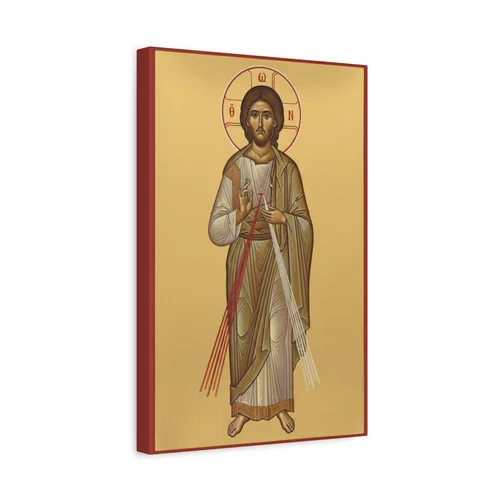
Sacred Icons for Your Prayer Corner
Venerate the God whom Moses the Black came to love — through the sacred icons of the Byzantine tradition that his monastic world produced.


Venerating His Holy Relics: Pilgrimage to Deir al-Baramous
The beating heart of any pilgrimage to Saint Moses the Black leads to one place: Deir al-Baramous — the Baramous Monastery, the Paromeos Monastery, the Monastery of the Holy Virgin in the Wadi El Natrun. This is the holiest ground in the world for devotees of the great Desert Father: the place where he lived, prayed, gathered his community, was martyred, and where his relics have rested — with only minor interruptions through the early medieval period of intense desert raiding — for sixteen centuries.
The Monastery: History and Setting
Deir al-Baramous is the northernmost of the four surviving ancient Coptic Orthodox monasteries of Wadi El Natrun, and by the reckoning of most scholars and the Coptic tradition itself, the oldest. The other three — Deir Anba Bishoi, Deir al-Suryan (the Monastery of the Syrians), and Deir Abu Maqar (Saint Macarius Monastery) — are all within a reasonable distance to the south and east in the same Wadi. The monastery's name, Paromeos, derives from the Coptic Pa-Romeos — "that of the Romans" — referring according to tradition to Saints Maximus and Domitius, sons of the Emperor Valentinian I, who renounced the Imperial court and came to the desert to live as monks under the guidance of Macarius the Great. The claim that the Roman Imperial princes became monks under Moses's own spiritual grandfather-in-tradition lends the monastery a story almost as dramatic as Moses's own.
Founded around 340–350 AD by Macarius the Great himself (though the precise founding date is disputed among scholars, with some suggesting the community developed gradually rather than being formally founded at a specific moment), Baramous is one of the oldest continuously inhabited monasteries on earth. Its survival through the violent upheavals of late antiquity, the Arab conquest of Egypt in 641 AD, the Crusades, the Mamluk period, and the Ottoman centuries is itself a kind of miracle of institutional resilience — and, as the monks believe, of divine protection.
Inside the Ancient Church: Finding the Relics
The monastic complex of Baramous is entered through massive defensive walls built in stages from the ninth through the thirteenth centuries — necessary protection against the ongoing desert raids that repeatedly devastated the Wadi El Natrun communities throughout the medieval period. Within the walls, the visitor encounters five churches, a refectory, a keep (or qasr) that served as a last refuge in times of attack, monks' cells, a library, and various service buildings. The five churches are: the Church of the Holy Virgin Mary (the oldest, on the western side of the complex); the Church of Saint John the Baptist and Saint Elijah; the Church of Anba Iskhirun; the Church of the Holy Virgin (a smaller secondary church); and the Church of the Archangel Michael.
The Church of the Holy Virgin Mary — the ancient basilica that is the goal of every Moses-devotee who makes the pilgrimage — stands on the western edge of the monastic enclosure. Dating in its present form to the sixth century, and in its foundations to the late fourth or early fifth century, it is a basilica-style structure with a vaulted nave, side aisles, and three khurus (sanctuary screens) of carved wood that have been added and modified across multiple historical periods. The walls are covered with overlapping layers of fresco painting representing the full cycle of the Christian year and the Coptic martyrology — a visual palimpsest of sixteen centuries of Coptic devotion that creates an atmosphere of extraordinary accumulated prayer.
The reliquary — the feretory in which the relics of Moses the Black rest, along with those of Abba Isidore (his beloved spiritual father), Saints Maximus and Domitius, and other saints of Baramous — is located within this ancient church. The precise position of the relics within the church is in a chapel area to the left of the main nave as one enters. The relics are housed in a reliquary shrine that has been maintained and periodically restored over the centuries. The bones of Moses rest here, under the same Egyptian sky, not far from the desert ground where he once carried water for elderly monks through the night.
The History of the Relic Translation
The ancient tradition holds that Moses was initially buried near the site of his martyrdom, in the area of the desert later associated with his monastery (Deir Abu Musa al-Aswad). The exact date of the translation of his relics to the Church of the Virgin Mary within the Baramous complex is not recorded in surviving sources, but the translation almost certainly occurred during the early medieval period — probably during one of the phases of monastery rebuilding after Berber raids, when the sacred objects of the outlying sites were gathered within the more defensible compound walls for protection. Most Coptic scholars place the translation no later than the ninth century, when Pope Shenouda I (859–880 AD) undertook major building work at Baramous, including the construction of the great defensive walls that still stand today.
What Pilgrims Experience Today
The pilgrim who comes to Deir al-Baramous today enters a living monastery — not a museum but a community of approximately fifty Coptic Orthodox monks who continue the life of prayer, labor, and hospitality that Moses himself embodied. The monastery is open to visitors daily, though the monks ask that proper modest dress be worn and that the rhythms of the monastic day be respected. The principal times of communal prayer — observed with the full Coptic liturgical tradition, including the ancient Coptic language itself — create a living link to the fourth century that no amount of academic study can replicate. To hear the Coptic liturgy sung in the ancient church is to hear, linguistically, the direct descendant of the language Moses himself spoke in prayer.
The experience of pilgrims at the relics of Moses the Black has been described, with remarkable consistency across cultural and denominational backgrounds, in terms that go beyond ordinary devotional experience. The word that recurs most consistently in testimony after testimony is "stillness" — an extraordinary quality of silence and peace in the ancient church that many describe as qualitatively different from any other sacred space they have visited. For pilgrims who arrive knowing Moses's story — who have read his sayings, who have recognized something of their own dark history in his, who have wept over his teaching about dying to one's neighbor and sitting in one's cell — the encounter with his relics can be genuinely overwhelming. The presence of his bones beneath the desert sky, in this place of accumulated prayer, is not a historical exhibit. It is a meeting — the meeting of the living and the dead in the communion that the Eastern Church has always understood to be real, present, and active.
Practical Pilgrimage Information — Deir al-Baramous (2026)
Location: Wadi El Natrun, Nitrian Desert, Beheira Governorate, Egypt. Approximately 90 km northwest of Cairo.
How to reach: From Cairo, take the Alexandria Desert Road (Tariq Al Sahrawi) northwest approximately 90 km to the Wadi El Natrun exit; follow signs to the monasteries. Baramous is the northernmost monastery, approximately 9 km from the main road. Private car, organized Coptic pilgrimage tour, or hired driver from Cairo are the most practical options.
Visiting hours: Open daily, typically 9 AM to 5 PM. Closed during major fasting periods for non-pilgrims; always confirm current hours before visiting. Phone the monastery guest house or contact the Coptic Orthodox Diocese of Beheira for current access information.
Dress code: Full modest dress is required — shoulders and legs covered; women should cover their hair inside the churches. The monks ask that the church be entered in silence and reverence.
The relics: In the Church of the Holy Virgin Mary (the oldest church, on the western side of the compound). The reliquary is on the left side of the nave. Approach with prayer; photography may be restricted within the church — ask the monks.
Principal feast days: 24 Paoni (approximately July 1 Gregorian) — major Coptic pilgrimage. August 28 — Eastern Orthodox feast. Large gatherings occur on both dates; accommodations must be arranged well in advance.
Overnight stays: The monastery guest house can accommodate overnight pilgrims; longer stays are possible for those wishing to participate in the monastic rhythm. Advance reservation required.
His Living Legacy: Modern Reception and Why He Still Matters
Sixteen centuries after his martyrdom, Moses the Black is arguably more widely known and more urgently relevant than at any time since his own lifetime. The reasons for this are multiple and intersecting, and they reveal something important about both the man himself and the world that has rediscovered him in our time.
Moses and the Recovery Movement
One of the most significant modern applications of Moses's legacy has been in Christian ministry to those struggling with addiction and destructive behavioral patterns. His story — of a man driven by apparently uncontrollable appetites for violence, wine, domination, and sexual indulgence, who underwent a complete transformation through the patient work of spiritual discipline — resonates with the experience of addiction recovery with a directness that no theoretical theology of grace can match. Moses did not achieve sobriety (in the broadest sense) overnight, or without relapse, or without years of painful and sustained effort. He struggled with the demon of fornication for six years. He needed to be reminded, repeatedly, that the angels outnumbered the demons. He needed a spiritual father who would not give up on him even when he arrived at Isidore's cell in complete despair. This is the actual lived experience of recovery from addiction for most people, and Moses is a patron for that experience with the authority that only lived experience can give.
Numerous recovery ministries in Orthodox, Catholic, and other Christian communities have adopted Moses the Black as a patron — most notably the Orthodox-based recovery programs that use the Twelve-Step structure in conjunction with the desert spirituality tradition. Father Moses Berry's Fellowship, and the broader network of African American Orthodox communities associated with it, has developed specifically Moses-focused resources for people in recovery that draw on both his sayings and his life narrative with remarkable therapeutic and spiritual effectiveness.
Moses and Racial Justice
In recent decades, as the Christian Church has been compelled to reckon seriously with its own historical entanglement in racism, Moses the Black has emerged as a figure of unexpected contemporary relevance. He speaks simultaneously to at least three dimensions of this reckoning. First, to the experience of the person racialized as "other" who encounters contempt within the very community that should honor them — Moses's experience of racial insult at his ordination is the ancient version of an experience that millions of Christians of color have had and continue to have within predominantly white churches. Second, to the possibility of a response to such contempt that neither accepts its premises nor is destroyed by its violence — Moses's enacted response, turning the insult into an occasion for humility while refusing its fundamental claim, offers a model that is simultaneously spiritually profound and practically transformative. Third, to the broader argument that African Christianity is not peripheral to the Church's heritage but foundational to it — that the Desert Fathers, of whom Moses was among the greatest, were African Christians, and that the Christian tradition of contemplative prayer has its roots in African soil, in African bodies, in African wisdom.
Moses and the Contemplative Renewal
The widespread contemporary interest in contemplative Christianity — expressed in the growth of the Centering Prayer movement, the renewed interest in Hesychasm and the Jesus Prayer in Western Christianity, the popularity of Thomas Merton and other monastically-rooted spiritual writers, and the broader hunger for stillness and depth in a culture of perpetual noise — has brought the Desert Fathers generally, and Moses specifically, to a new and vast readership. His fundamental teaching — sit in your cell and let it teach you everything — speaks with uncanny precision to the condition of the person who reaches for their phone seventeen times a day and calls it looking for peace. The cell is the phone-free room. The teacher is the silence. And the lesson being taught, whether the student sits still long enough to receive it or not, is always the same: you are loved, you are held, and all your grasping is unnecessary.
Deepening the Mystery: Theological Lessons and Scholarly Insights
The life of Moses the Black is not merely biography. It is theology in flesh and bone — a lived argument about the nature of God, the human person, transformation, humility, race, and the shape of a holy death. Each major episode of his life illuminates a dimension of Christian truth that abstract theological formulation alone cannot reach.
The Theology of Radical Repentance: Metanoia as Total Reorientation
Moses's conversion and transformation is above all a demonstration of what the Eastern Christian tradition calls metanoia — a term usually translated as "repentance" but which more precisely means a change of the nous, the innermost intelligence of the person. The Greek metanoia is composed of meta (beyond, through, across) and nous (the deepest center of the human person in Eastern anthropology — not merely the rational mind but the spiritual heart, the place where the human person is most essentially themselves and most immediately open to God). True metanoia is not merely feeling sorry for one's sins; it is the total transformation of the nous from darkness to light, from self-absorption to God-orientation, from the prison of the passions to the freedom of love.
Moses's forty years of desert labor are precisely this: the slow, costly, irreversible working-out of metanoia through every dimension of his being. What is theologically significant about his repentance is not its initial dramatic moment but its sustained quality over decades. The Desert Fathers were deeply suspicious of spectacular conversions that burned bright and faded fast; what they valued was the patient, daily, repetitive work of turning — turning away from the self, turning toward God, falling, getting up, turning again. Moses does not achieve this quickly or easily. But he achieves it completely.
Humility as Epistemology: Knowing Truly by Knowing Oneself
The anthropology underlying Moses's teaching treats humility not as a virtue in the conventional modern sense (a kind of self-deprecatory modesty added to one's personality) but as an epistemological condition — a way of knowing correctly. The humble person sees clearly: themselves (as sinners in need of grace), their neighbor (as made in the image of God, struggling with the same darkness), and God (as the source of all being and all goodness). Pride, in this analysis, is a cognitive distortion: the proud person sees everything through a lens that is systematically wrong. The practical consequence of Moses's humility is not just that he was nice to people; it is that he could actually see them — see past their social performance, their presenting problem, their defenses — in a way that the proud person cannot.
The Body as Instrument: Why Asceticism Is Not Dualism
Moses's extreme physical asceticism — the fasting, the sleep deprivation, the labor, the prostrations — is sometimes read, by both critics and admirers, as evidence of hostility toward the body. This reading is incorrect, and it misses the entire logic of desert spirituality. The Desert Fathers were not Gnostics or Manichaeans; they did not believe the body was evil or that material reality was a mistake. They believed the body was good — created by God, redeemed by the Incarnation and Resurrection of Christ, destined for its own resurrection. What they believed was that the body, after the Fall, had been disordered: its appetites and drives were pulling in directions that led away from God rather than toward Him. The purpose of asceticism was not to destroy the body but to reorder it — to train its appetites, redirect its energies, make it an instrument of prayer and love rather than of selfishness and destruction. Moses's asceticism, and the specific form it took (carrying water for the elderly, six years of nighttime service as the weapon against sexual temptation), perfectly embodies this logic. He did not stop using his body; he stopped using it for himself.
Race, Sanctity, and the Subversion of Social Hierarchy
The most sophisticated contemporary scholarly engagement with Moses the Black has focused on the relationship between his racial identity and his sanctity — a relationship that is complex, contested, and deeply important. David Brakke's landmark 2001 article "Ethiopian Demons" in the Journal of the History of Sexuality established the framework that continues to dominate the field: in early monastic literature, "the Ethiopian" functioned as a stock figure for the demonic, particularly for sexual temptation. Demons who tempted monks with lust regularly appeared in visions as black-skinned figures, and the language of darkness and blackness was consistently associated with sin and spiritual danger. Into this symbolic landscape came Moses the Black — a man who was literally, physically, the thing that the symbolic system associated with demonic threat — and who became, by the quality of his holiness, the most powerful possible challenge to that symbolic system. His blackness, which the system coded as dangerous and other, was the blackness of a saint. The image of God was in him, fully, completely, irrefutably. The symbolic system could not survive the encounter with him intact.
More recent scholarship — including Chris de Wet's work on slavery and the Desert Fathers, and Cavan Concannon's broader historical analysis — has situated Moses within the even larger question of how early Christianity navigated the contradictions between its theological egalitarianism (in Christ there is neither slave nor free, neither Jew nor Greek) and the brutal social realities of the ancient world. Moses does not resolve these contradictions theoretically; he lives through them and beyond them. He does not argue for the equality of all persons in the abstract; he simply is himself, and his self — this black African man of slave origin and criminal history, who became the most beloved elder of Scetis — is the argument made flesh.
A Complete Timeline of His Life and the Primary Sources That Tell His Story
For Further Study: The Exhaustive Bibliography
Deepen Your Practice: Recommended Resources

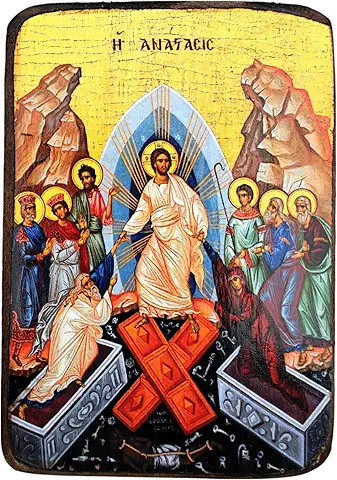

To the glory of God, in honored memory of Saint Moses the Black —
former slave, former robber, monk, priest, martyr, and beloved father.
May his prayers be with us.
24 Paoni (July 1) / August 28