Contents
- I. Lebanon and the Maronite Church
- II. The Holy Qadisha Valley
- III. Born in Hardin
- IV. Called to the Monastery
- V. Formation at Qozhaya
- VI. Ordained to the Priesthood
- VII. The Professor of Kfifan
- VIII. Life of Prayer and Asceticism
- IX. His Writings and Theology
- X. Spiritual Father and Guide of Souls
- XI. Vice-Superior of the Order
- XII. Spiritual Trials and Darkness
- XIII. The Final Years and Holy Death
- XIV. Miracles During Life and After Death
- XV. From Death to Altar
- XVI. The Spiritual Teachings
- XVII. Liturgical Texts and Prayers
- XVIII. First-Class Relics: Where to Venerate
- XIX. Complete Chronological Timeline
- XX. Exhaustive Bibliography
Lebanon and the Maronite Church: The World That Formed a Saint
To understand Saint Nimatullah Al Hardini, one must first understand Lebanon — not the geopolitical Lebanon of the modern world with its fractures and its wars, but the Lebanon of mountains and monasteries, of ancient cedar forests and cliff-face sanctuaries, of a people whose Christianity is as old as any on earth and whose fidelity to that Christianity has been maintained through centuries of persecution, siege, and political pressure with a tenacity that has no easy parallel in the history of the Church. The Lebanon that produced Nimatullah Al Hardini was a land where the Church was not one social institution among many but the very architecture of existence — the framework within which time was measured, children were named, marriages were celebrated, the dead were buried, and the deepest aspirations of the human heart were given form and language.
The Maronite Church, to which Nimatullah belonged and within which he lived and died, is one of the Eastern Catholic Churches — a church that has maintained its own liturgical tradition, its own canon law, its own theological and spiritual heritage, while remaining in full and unbroken communion with the Bishop of Rome. Unlike those Eastern churches that reunited with Rome after a period of separation — the Greek Catholics, the Romanian Catholics, the Ukrainian Catholics — the Maronite Church has never been in schism from Rome. Its tradition of fidelity to the See of Peter stretches back to the earliest centuries of its existence, making it unique among the Eastern churches in its claim to continuous communion with the universal Church.
The Maronite Church takes its name from Saint Maron — Mor Marun in the Syriac language that remains the Church's liturgical tongue — a fourth-century Syrian monk who lived in the region of the Orontes River near Apamea, in what is now northern Syria, and whose disciples spread his form of ascetic and mystical Christianity through the mountains of Lebanon. Maron himself was formed in the great tradition of Syrian monasticism — that tradition of extreme bodily asceticism, of living outdoors exposed to the elements, of unceasing prayer, of complete detachment from worldly comfort — which had produced Anthony the Great in Egypt and Symeon Stylites in Syria, and which represented one of the most radical expressions of Christian commitment the ancient world had known.
The Maronite Church: An Eastern Church in Full Communion with Rome
Origin: Founded in the tradition of Saint Maron (d. c. 410), a Syrian ascetic monk of the Orontes Valley. His disciples brought his tradition to the mountains of Lebanon, where the Maronite community took shape in the fifth and sixth centuries.
Communion with Rome: The Maronite Church has maintained unbroken communion with the See of Rome throughout its history. This continuity is unique among the Eastern Catholic churches.
Liturgical tradition: The Maronite liturgy belongs to the West Syriac or Antiochene family of Eastern rites. Its liturgical language is Syriac-Aramaic — the language closest to the Aramaic spoken by Jesus — with significant portions of the liturgy now celebrated in Arabic and other vernacular languages.
Patriarchate: The Maronite Patriarch bears the title Patriarch of Antioch and All the East. The Patriarchate is headquartered at Bkerke in the Mount Lebanon region of Lebanon.
Today: The Maronite Church numbers approximately 3.5 million faithful worldwide, concentrated in Lebanon, the Lebanese diaspora in the Americas, Australia, and West Africa, and in small communities in Syria and Cyprus.
The mountains of Lebanon had provided the Maronite community with both a refuge and a crucible. The steep valleys and high ridges of the Lebanon range were difficult to control by outside powers and offered natural protection to a minority religious community in a region dominated from the seventh century onward by Islamic political power. The Maronites were not crushed by the Arab conquest of the Levant as many Christian communities were; they retreated into the mountains and continued to exist as a distinct community, maintaining their liturgy, their monasteries, their patriarchate, and their social cohesion. They were subjects of Islamic political authority, but they were not absorbed into the Islamic cultural world. They remained, through the centuries of Arab, Crusader, Mamluk, and Ottoman dominance, distinctly and stubbornly themselves.
By the early nineteenth century, when Nimatullah Al Hardini was born, the Maronite community of Lebanon was experiencing a period of religious and cultural renewal. The founding of the Lebanese Maronite Order in the early eighteenth century had revitalized monastic life; the monasteries of the north — in the Qadisha Valley, along the ridge above Batroun, in the hills above Byblos — were centers of learning, prayer, and spiritual formation that drew young men from across the Maronite community. The educational institutions associated with these monasteries were producing a literate, theologically informed clergy. A Maronite saint of the caliber of Nimatullah was not an accident; he was the fruit of this centuries-long tradition of fidelity, asceticism, and love of God that had been tended in the Lebanese mountains through every storm that history had sent against it.
The Lebanese Maronite Order itself requires special attention. It is not the same as the Maronite Church, though it exists within it. Founded formally in 1700 (with roots going back to 1695), the Lebanese Maronite Order — al-Rahbāniyya al-Lubnāniyya al-Māruniyya — is a monastic religious order that follows a rule combining elements of the Rule of Saint Basil the Great and the ascetic tradition of Eastern Christian monasticism. Its spirituality is distinctly Lebanese: rooted in manual labor, extreme austerity, intense devotion to the Eucharist and to the Virgin Mary, and a particular emphasis on the transformative power of suffering borne in love. The order would produce three canonized saints — Charbel Makhlouf (1977), Nimatullah Al Hardini (2004), and Estephan Nehme (beatified 1998, awaiting full canonization) — a remarkable concentration of recognized sanctity from a single religious family in a single small country.
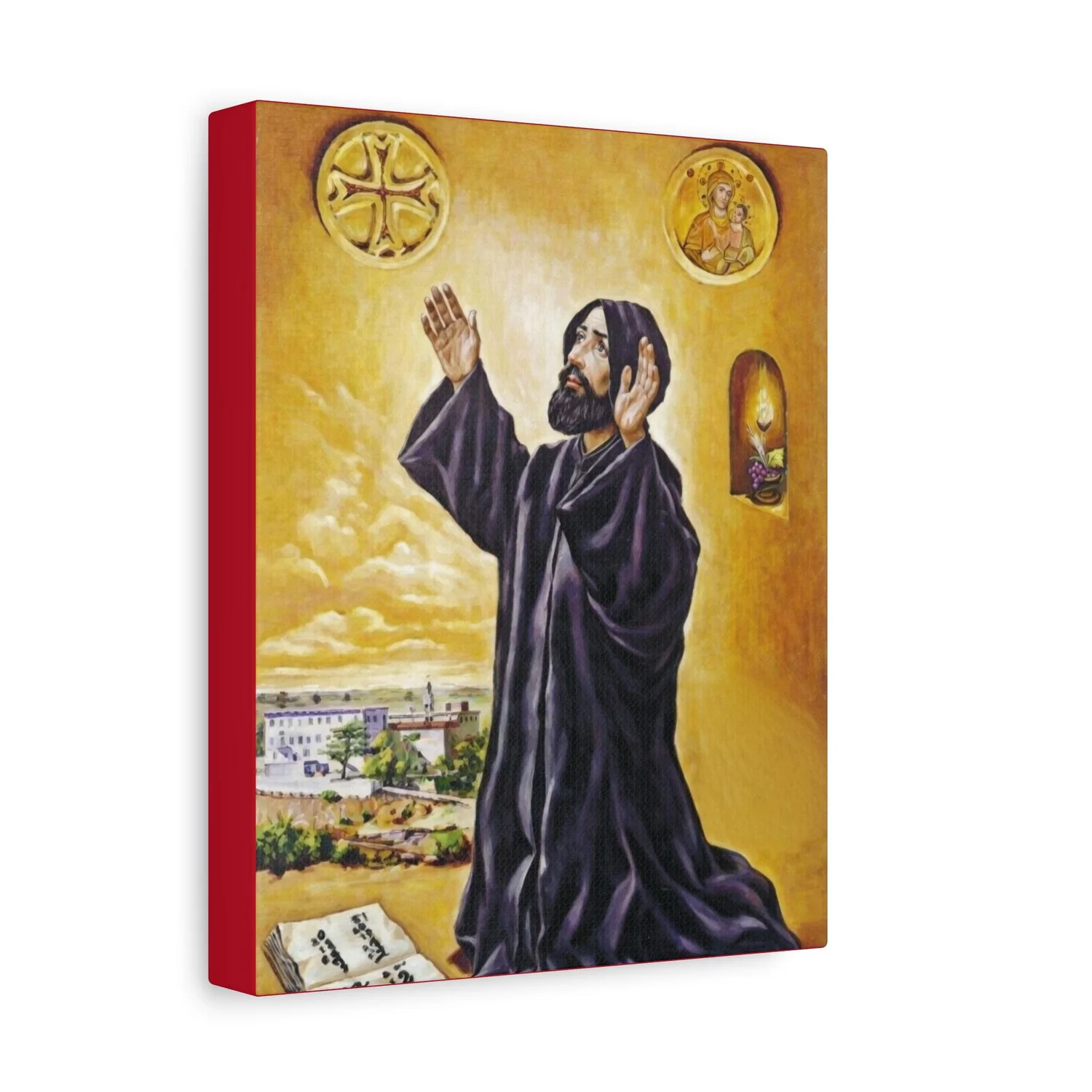
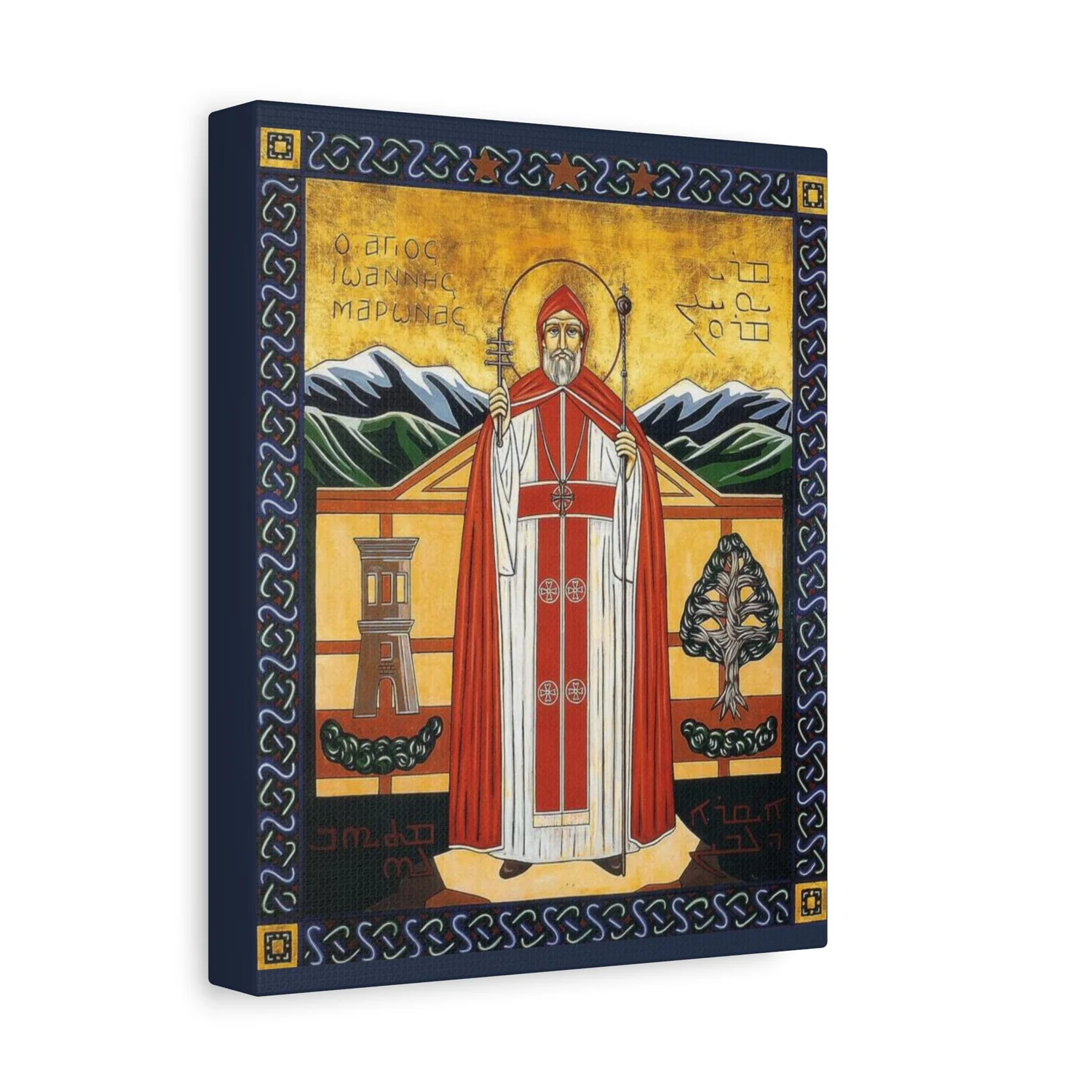
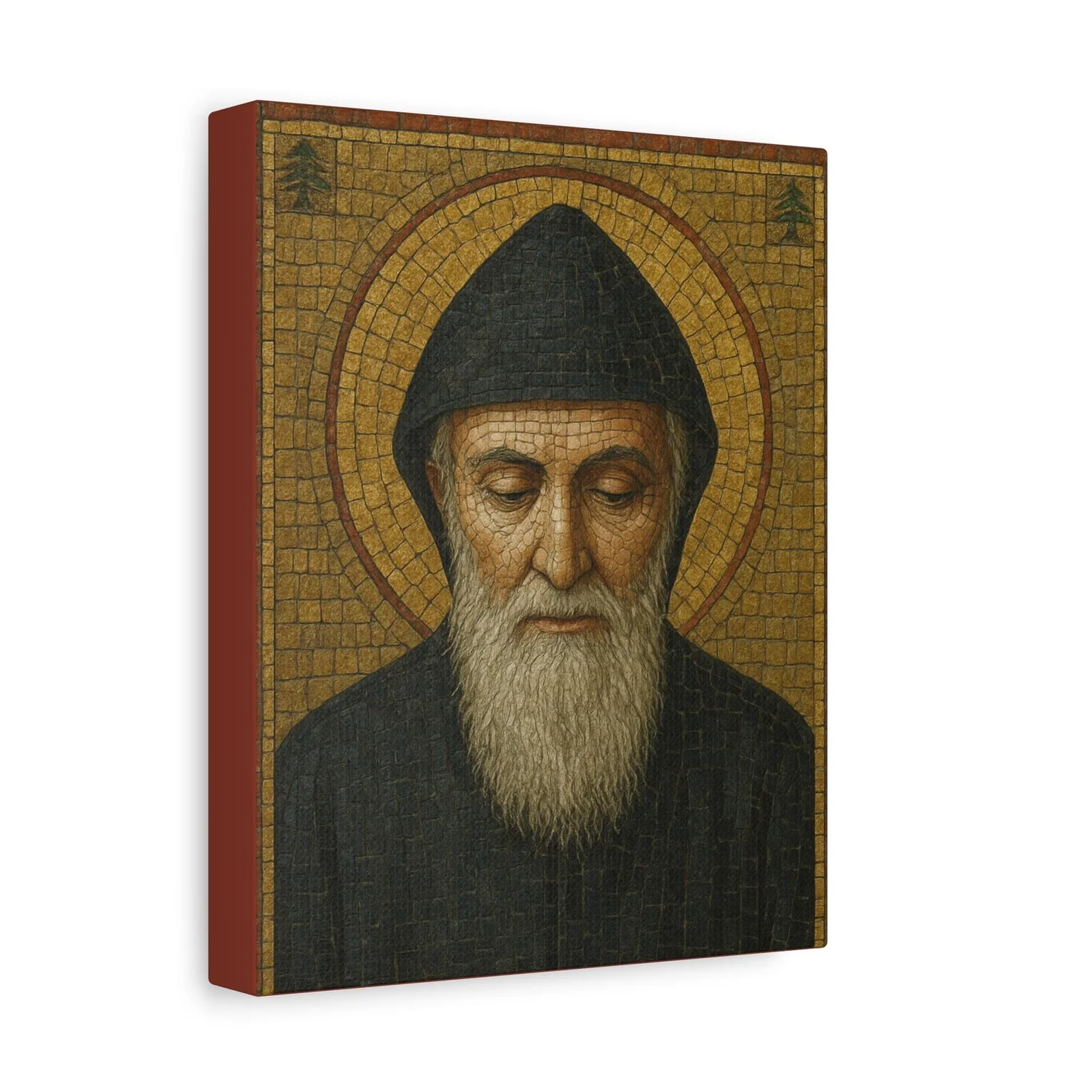
The Holy Qadisha Valley: Geography of Holiness
The Qadisha Valley — Wadi Qadisha in Arabic, from the Syriac qadisho, meaning holy — is one of the most extraordinary natural environments in the entire Middle East, and one of the most spiritually charged landscapes in the world of Eastern Christianity. Declared a UNESCO World Heritage Site in 1998, the valley cuts deep into the northern Lebanon range like a wound opened in ancient rock, its walls rising hundreds of meters from the valley floor in sheer limestone cliffs streaked with iron oxide and draped in places with dense Mediterranean vegetation. The river at its bottom, the Qadisha River (also called the Abreh or the Nahr Ibrahim in different sections), runs cold and clear through a landscape of extraordinary beauty — a beauty that is not soft or pastoral but fierce and vertical, a beauty that demands something of the person who encounters it.
The valley has been a place of Christian monasticism since at least the fourth century. The early Maronite monks, following the tradition of the Syrian desert fathers who had sought God in extreme landscapes of heat and stone, found in the cold and precipitous Qadisha Valley an equivalent of the desert — a place of radical removal from the comfortable world, a landscape that forced the soul back upon its own resources and, having stripped away all distractions, left it face to face with the God who made the mountains. The earliest monastic communities in the valley were hermitages cut directly into the cliff faces — small cells carved from the living rock, accessible only by ropes or by treacherous paths, in which monks lived in conditions of extreme privation, praying, fasting, and laboring toward the transformation of the self that the Christian tradition calls theosis or sanctification.
Among the most ancient and significant of the valley's monastic foundations is the Monastery of Saint Anthony of Qozhaya — Deir Mar Antonios Qozhaya — where Nimatullah Al Hardini would receive his monastic formation. The monastery's origins are contested in the sources — some traditions place its founding as early as the fourth century, others in the twelfth century during the Crusader period — but its continuous existence as a functioning monastic community can be documented from at least the thirteenth century. It was here that the first Arabic printing press in the Middle East was established in 1610, producing liturgical books in Syriac and Arabic that served the Maronite community across Lebanon and beyond. The monastery is built partly into the cliff face, with rooms and chapels cut directly from the rock, giving it the quality of a habitation that has grown from the mountain rather than been placed upon it.
Above the Qadisha Valley, on the ridge that separates it from the Bsharri plateau, stands the famous forest of the Cedars of Lebanon — Arz al-Rabb, the Cedars of the Lord — the remnant of the vast cedar forests that once covered the Lebanon range and that are mentioned repeatedly in the Hebrew Bible as symbols of strength, majesty, and divine favor. These ancient trees, some of them more than a thousand years old at the time of Nimatullah's birth, loomed over the landscape of his childhood, their massive trunks and spreading branches a living emblem of the antiquity and resilience of the Christian tradition he was inheriting. The cedar of Lebanon — al-arz in Arabic — appears in the center of the Lebanese national flag, and its association with the Maronite Christian identity of Lebanon is deep and persistent.
The town of Hardin, where Nimatullah was born, lies approximately twenty kilometers south and west of the Qadisha Valley, in the Bsharri district — a high mountain district that has historically been one of the most concentrated centers of Maronite culture and identity in Lebanon. Bsharri is also the birthplace of Kahlil Gibran, the poet and artist whose meditations on spirituality reached a worldwide audience in the twentieth century, and it shares with the entire northern Lebanese highlands a quality of austere, mountain-formed character that has marked its inhabitants across the centuries. To be from Bsharri is, in Lebanese cultural consciousness, to be from the heartland — from the mountains that kept the faith when all around the faith was being pressed and threatened.
The Qadisha Valley — UNESCO World Heritage Site
Inscribed as a UNESCO World Heritage Site in 1998 as "Ouadi Qadisha (the Holy Valley) and the Forest of the Cedars of God (Horsh Arz el-Rab)," the Qadisha Valley is recognized as an outstanding site of universal value for its combination of natural landscape and Christian cultural heritage.
The UNESCO designation notes that the valley contains some of the earliest Christian monastic settlements in the world, and that its monasteries, hermitages, and churches represent an unbroken tradition of Christian life stretching from antiquity to the present day. Among the valley's surviving monastic foundations are Deir Mar Antonios Qozhaya, Deir Mar Elisha (Saint Elisha's Monastery), Deir Qannubin (the ancient Patriarchal see of the Maronite Church), and numerous hermit cells cut into the cliff faces.
The Forest of the Cedars of God — Arz el-Rab — adjacent to the valley, contains approximately 375 cedar trees, of which twelve are estimated to be more than 1,000 years old. These trees are among the most ancient living organisms in the Middle East and carry deep significance in both biblical and Lebanese cultural tradition.


Born in Hardin: The Child Youssef
Youssef Antoun Kassab — the man who would become Saint Nimatullah Al Hardini — was born in November 1808 in the village of Hardin, in the Bsharri district of northern Lebanon. The precise date within November is not certain; the hagiographic sources give November as the month without specifying the day, and some traditions celebrate his birthday on November 1, the feast of All Saints, though this may be a liturgical convention rather than a historical precision. What is clear is that he was born into a year that was, by the ordinary standards of Lebanese Christian life, entirely unremarkable — no great event in the Church or in the political life of the region marks 1808 as a year of significance, and yet from this ordinary beginning there would emerge a life that the Catholic Church would eventually proclaim to be extraordinary in the fullest theological sense of that word.
His father was Mousa Kassab — Mousa being the Arabic form of Moses — and his mother was Mariam, born of the Shalita family. Both were devout Maronite Christians of the kind that the northern Lebanese highlands reliably produced: people whose faith was not cultivated in books or discussion but lived in the daily rhythm of prayer, fasting, liturgical observance, and practical charity. The Kassab household kept the Maronite liturgical calendar with the full rigor that was customary in devout northern Lebanese families — fasting on the prescribed days, celebrating the great feasts with genuine solemnity, gathering for family prayer, maintaining a home altar where the icons of Christ and the Virgin Mary and the Maronite saints presided over the domestic space.
The family was large and the faith was generative. Youssef had several siblings, and the extraordinary fact — which would later be cited in his canonization process as evidence of the family's holiness — is that three of his brothers also became priests. A family that gives four sons to the service of the altar is a family in which faith is not merely observed but breathed, in which the call to religious life is not an unusual exception to ordinary life but the expected and honored flowering of what has been planted in childhood. The Kassab family of Hardin was such a family.
Youssef's childhood unfolded in the mountain village in the ordinary way of Lebanese Christian children of his era. He attended the local school associated with the village church, receiving an education in Arabic, in the basics of the Maronite liturgical tradition, in the lives of the saints, and in the rudiments of Syriac — the ancient liturgical language of the Maronite Church, the language in which the prayers his family had prayed for generations were composed, the language that linked the Lebanese Christian community to the Aramaic-speaking communities of the ancient Near East from which Christianity itself had emerged. He worked alongside his family in the terraced gardens and olive groves that characterized the mountain agriculture of northern Lebanon.
Those who knew Youssef as a boy recalled, in later testimonies gathered during the beatification and canonization processes, a child of unusual spiritual seriousness. He was drawn to the church, spending time there beyond what the liturgical obligations of the community required. He was known for a gentleness of manner and a quality of attentiveness in his dealings with others that set him apart from ordinary children — a quality that the witnesses who described it struggled to give a precise name to, settling on terms like "recollection," "quietness," or simply "goodness" in a way that suggested they were trying to describe something that exceeded the vocabulary of ordinary childhood observation.
He was also marked from an early age by a particular devotion to the Virgin Mary — a devotion that was characteristic of the broader Maronite tradition but that in his case took on a depth and a constancy that those around him noticed as exceptional. The Theotokos — the God-bearer, the Mother of God — is venerated in the Maronite tradition with an intensity comparable to that found in the Eastern Orthodox churches; the Maronite liturgy is saturated with Marian prayer, and the great Marian feasts of the liturgical year are observed with solemnity and love in every Maronite community. In Youssef Kassab, this Marian devotion was not merely traditional observance but something personal and living — a relationship with the Mother of God that would deepen throughout his life and that would be one of the defining characteristics of his sanctity.
Called to the Monastery: Entering the Lebanese Maronite Order
The call to monastic life came early to Youssef Kassab — not as a sudden dramatic event but as the gradual clarification of something that had been present from the beginning, a deepening certainty that the life of prayer and service within the monastery was where God was directing him. By the time he was approaching his teenage years, the direction of his life was clear to him, and the question was not whether to enter religious life but where and under what rule.
The Lebanese Maronite Order was the natural home for a young man of Youssef's background and formation. It was the most vital monastic tradition within the Maronite Church of his era, its monasteries scattered across the mountains of northern Lebanon in communities that combined the rigors of Eastern monastic asceticism with the specific pastoral and liturgical needs of the Lebanese Christian community. The order's spirituality was shaped by manual labor — the monks of the Lebanese Maronite Order worked their own lands, cultivated their own gardens, and maintained their monasteries by their own physical effort, following in this the tradition of the Desert Fathers and of Saint Basil's monastic communities in Asia Minor, which had always insisted that work and prayer are not opposites but complementary forms of the offering of the self to God.
In 1828, at approximately the age of twenty, Youssef Kassab presented himself at the Monastery of Saint Anthony of Qozhaya in the Qadisha Valley to request admission to the novitiate of the Lebanese Maronite Order. The monastery's superior received him, assessed him in the manner customary for the reception of novices — examining his intentions, his understanding of what the monastic life demanded, his freedom from obligations that might impede his commitment — and accepted him as a novice.
The novitiate is the period of testing and formation that precedes full admission to a religious order. In the Lebanese Maronite Order of Youssef's era, it was a rigorous and demanding period of approximately one to two years during which the novice learned the rule and customs of the order, was formed in its prayer life and ascetic practices, and was observed by the senior monks to assess his suitability for permanent commitment. It was a time of testing — not of cruelty but of honest discernment, in which the initial enthusiasm of the young aspirant was subjected to the discipline of regularity, obedience, and the daily confrontation with one's own weakness that the monastic life inevitably produces.
The Lebanese Maronite Order
Founded: 1695 (by tradition); formally approved by the Holy See in 1700. Sometimes dated to the formal approval of its constitutions in 1732.
Founders: The order traces its origins to the ascetic and monastic renewal led by Abdullah Qaraali, Jibrail Hawwa, and Youssef al-Btin — three Maronite monks who sought to revive the authentic Eastern monastic tradition in Lebanon.
Rule: A hybrid rule combining elements of the Rule of Saint Basil the Great (the primary monastic rule of Eastern Christianity) with elements specifically adapted to the Lebanese monastic context. The rule emphasizes manual labor, common prayer, radical poverty, and complete obedience to the superior.
Spirituality: Distinctly Lebanese: intense Eucharistic devotion, deep Marian piety, a theology of redemptive suffering, manual labor as prayer, extreme bodily austerity.
Saints produced: Saint Charbel Makhlouf (canonized 1977), Blessed Estephan Nehme (beatified 1998), and Saint Nimatullah Al Hardini (canonized 2004).
Today: The order continues to operate multiple monasteries across Lebanon and in the Lebanese diaspora, maintaining both the contemplative and the active dimensions of its tradition.
Youssef Kassab completed his novitiate and made his first profession — his initial vows of poverty, chastity, and obedience — at Qozhaya. At this point, following the custom of the Lebanese Maronite Order, he received a new name: Nimatullah. The name is Arabic, composed of two elements: ni'ma (نعمة), meaning grace, gift, or blessing, and Allah (الله), the Arabic word for God used by Arab Christians and Muslims alike. Nimatullah thus means "the grace of God," or "God's gift" — a name that, like the name Nektarios given to the Greek saint, proved prophetically fitting for the man who bore it. He would indeed become a grace and a gift to all who encountered him, in life and after death.
The surname Al Hardini was not a second religious name but a geographical designation: it simply means "from Hardin," the village of his birth. In the Lebanese monastic tradition, monks were often designated by reference to their place of origin in addition to their given religious name, as a way of preserving some connection between the monk and the community from which he came. Nimatullah Al Hardini — the Grace of God from Hardin — was thus both a person of specific local origin and a universal figure of divine generosity.
Formation at Qozhaya: Theology, Syriac, and the Monastic Life
After his initial profession, the young monk Nimatullah was sent by his superiors for formal studies in philosophy and theology at the Monastery of Saint Anthony of Qozhaya and subsequently at the Monastery of Saints Cyprian and Justina at Kfifan — also known as the Monastery of Saint Joseph at Kfifan — in the village of Kfifan near Batroun in northern Lebanon. This period of theological formation was crucial for the development of the man who would eventually become not only a holy monk but a teacher of theology who shaped the formation of an entire generation of Lebanese Maronite clergy.
The curriculum of theological formation in the Lebanese Maronite Order of the early nineteenth century was comprehensive by the standards of its time and place. It encompassed philosophy — logic, metaphysics, and natural philosophy in the scholastic tradition — together with dogmatic theology, moral theology, Sacred Scripture, church history, and liturgical theology. The instruction was conducted in Arabic and in Latin, with the liturgical texts studied in Syriac. The young monk Nimatullah excelled across all of these disciplines, demonstrating the intellectual gifts that had been apparent in his childhood and that would make him one of the most effective theology teachers the order had known.
Syriac — the language of the Maronite liturgy, a dialect of Aramaic that links the Lebanese Christian tradition directly to the Semitic linguistic world of the ancient Near East — was a subject of particular importance and particular devotion for Nimatullah. To master Syriac was not merely a technical accomplishment; it was a form of entry into the tradition's deepest identity, a way of reading the liturgical and patristic texts of the Syriac tradition in the voice in which they had originally been spoken. The great Syriac Fathers — Ephrem the Syrian, Jacob of Serugh, Isaac of Antioch, Narsai — had written in a tradition of mystical, poetic theology that was quite different in its character from the Greek patristic tradition, more imagistic and typological, more given to paradox and to the language of wonder, and Nimatullah's formation in this tradition would shape the quality of his own spiritual writing and teaching in ways that marked it as distinctly and recognizably Eastern.
His years of formation at Qozhaya were also years of deepening personal asceticism. The life of the monastery provided a structured framework of prayer, labor, and fasting, but Nimatullah was not content with the common observance alone. Those who lived alongside him in these years recalled a monk who fulfilled his obligations with exact regularity and then exceeded them — who remained in the chapel after the common office was concluded, who reduced his already modest portion at table, who added to the common prayers a private rule of prayer that extended deep into the night. This additional ascesis was not performed for the observation of others; those who noticed it did so inadvertently, coming upon him in prayer at unexpected hours or finding him already in the chapel when they arrived for the early morning office.
The monastery at Qozhaya was in those years a community of genuine spiritual vitality. The Lebanese Maronite Order had, by the early nineteenth century, established itself as a credible monastic presence in Lebanon, with multiple functioning communities, a clear rule, and a tradition of spiritual formation that produced men of genuine holiness alongside those of merely ordinary religious observance. The young Nimatullah found himself in a tradition that demanded much and gave much in return — a tradition that expected the monk to take seriously both the intellectual and the spiritual dimensions of his vocation, and that provided him with the tools he needed to do both.
Ordained to the Priesthood
Following the completion of his theological studies, Nimatullah Al Hardini was ordained to the priesthood around 1833, at approximately the age of twenty-five. The ordination took place within the Lebanese Maronite Order's sacramental framework — he was ordained by a bishop of the Maronite Church, receiving the fullness of the threefold ministerial priesthood that, in Catholic theology, enables the ordained minister to celebrate the Eucharist, to forgive sins in the sacrament of penance, and to perform the other sacramental acts of the Church's ministry.
For Nimatullah, ordination was not a career advancement but a spiritual transformation — a deepening of his identification with Christ the Priest, an entrance into the mystery of the Eucharistic sacrifice that would become the center and summit of his daily life. His celebration of the Divine Liturgy — the Maronite Qurbono, the Eucharistic offering — was from the time of his ordination onward the most important act of each day, the axis around which everything else revolved. Those who assisted at his Masses described celebrations of unusual solemnity and length, in which the priest's absorption in the prayer of the liturgy was palpable and in which the thanksgiving after Communion could last for an hour or more as Nimatullah remained kneeling before the altar, unable or unwilling to end the conversation that had been opened in the reception of the Body and Blood of Christ.
His Eucharistic devotion was inseparable from his theology. For Nimatullah, the Eucharist was not a ritual action but a living encounter — the real and substantial presence of the Risen Christ, given to be received, digested, and assimilated into the body and soul of the recipient in a process of spiritual transformation that was the sacramental expression of the theosis toward which the entire Christian life was directed. To receive Holy Communion was, for him, to receive the Source of all holiness into the temple of the body — a privilege so extraordinary that it demanded, in return, the most rigorous preparation and the most extended thanksgiving. His confessional was sought by the monks before their communion precisely because they understood that the spiritual preparation he offered in the confessional was continuous with the Eucharistic piety he modeled at the altar.
The ordination also formally incorporated Nimatullah into the pastoral ministry of the Church, though in his case — as a monk of a cloistered community — this ministry was exercised primarily within the monastery rather than in the broader parish structure. He began to celebrate the Divine Liturgy daily, to hear the confessions of his brothers in the monastery, and to offer spiritual direction to those who sought it. The combination of priestly ministry and monastic life that he now lived was exactly the vocation of the Lebanese Maronite Order — a vocation in which the contemplative and the active were not separated but integrated, in which the Mass was simultaneously the summit of the monk's personal prayer and his most significant act of pastoral service to the community.
The Professor of Kfifan: Teaching, Formation, and Intellectual Ministry
After his ordination, Nimatullah was assigned by his superiors to the Monastery of Saints Cyprian and Justina at Kfifan — known in the sources as Deir Kifan or the Kfifan Monastery — where he would spend the remainder of his life and where he is buried. Kfifan is located in the village of the same name in the Koura district of northern Lebanon, near the town of Batroun, in the lower foothills of the Lebanon range — a setting somewhat different from the dramatic cliffs of the Qadisha Valley, more agricultural and accessible, but no less deeply shaped by the Maronite monastic tradition.
At Kfifan, Nimatullah was appointed to teach philosophy and theology to the young monks and clerics of the Lebanese Maronite Order who came to the monastery for their formation. He would hold this teaching position for the rest of his life, interrupted only by periods when his administrative duties — as Vice-Superior and later as Acting Superior of the order — demanded his attention. For approximately twenty-five years, from the mid-1830s until his death in 1858, Father Nimatullah Al Hardini stood before classes of young Maronite monks and taught them to think clearly about God, humanity, and the created order — to reason within the tradition of Catholic theology while remaining deeply rooted in the specifically Eastern, specifically Syriac, specifically Lebanese inheritance of the Maronite Church.
His reputation as a teacher spread rapidly through the Lebanese Maronite Order and beyond. Students who had studied under him remembered his teaching decades later as something qualitatively different from what they had encountered in other theological instructors. What made it different was not primarily a superior command of the material — though his command of philosophy and theology was genuine and comprehensive — but a quality of integration between what he taught and how he lived. When Father Nimatullah taught on the mystery of the Trinity, his students were aware that he was not merely transmitting information about a doctrinal topic but speaking from within a personal relationship with the triune God that gave his words a weight and a warmth that purely academic instruction cannot achieve. When he taught on the theology of the Eucharist, those who had seen him celebrate Mass understood that the doctrine he was expounding and the prayer they had witnessed him at prayer were the same reality approached from two different angles.
His courses in philosophy covered the standard scholastic curriculum — logic, metaphysics, cosmology, the philosophy of the human person — but he taught this material not as an end in itself but as a preparation for theology. He was insistent that philosophy, rightly pursued, led the mind toward the threshold of the mystery of God, and that theology began precisely where philosophy ended, at the point where human reason reached its limits and found itself confronted with a reality that exceeded its categories. This was not anti-intellectualism; it was the intellectualism of a person who had gone further into the life of the mind than most, and who had thereby discovered that the life of the mind, at its deepest and most honest, opens onto prayer.
His courses in dogmatic theology covered the full range of Catholic doctrinal teaching — the nature of God, the Trinity, Christology, soteriology, the theology of grace, the sacraments, eschatology — and he approached each topic with the same combination of systematic precision and spiritual urgency. The students who came to him for their theological education were, most of them, preparing for the priesthood — they would go from his classroom to the altar, from the study of theology to its practice in the pastoral ministry. He was keenly aware of this and structured his teaching accordingly, never losing sight of the pastoral and spiritual telos of theological education.
Beyond his formal classroom instruction, Nimatullah also took a personal interest in the individual formation of the young monks in his care. He was available to them outside class hours for conversation, counsel, and spiritual direction. He remembered them by name and kept their particular struggles and gifts in mind as he prayed. Several monks who were formed at Kfifan under his influence later testified that what they remembered most was not any particular lesson or lecture but the experience of being known and accompanied by a person who seemed to see them more clearly and more charitably than they saw themselves.
A Life of Prayer and Asceticism: The Interior Architecture of a Saint
The outer life of Nimatullah Al Hardini — teacher, spiritual director, monastic administrator — was impressive by any standard. But it was the inner life, the invisible architecture of prayer, fasting, and bodily austerity that sustained and generated the outer life, that constitutes the real substance of his holiness. The testimonies gathered in preparation for his beatification and canonization are remarkably consistent on this point: those who lived alongside him at Kfifan were not primarily struck by his intellectual gifts or his administrative competence but by the quality of his prayer and by the physical austerities through which he disciplined his body in the service of his soul.
His prayer life centered on the Divine Liturgy — the Maronite Qurbono — which he celebrated daily with a depth of absorption that struck all who were present. The Maronite Qurbono is one of the most ancient Eucharistic liturgies in Christendom, its structure and much of its text deriving from the early Syriac Christian tradition of Antioch, and its celebration in Syriac — the Aramaic language of the ancient church — gave it, for those formed in that tradition, a quality of directness and antiquity that the later Latin and Byzantine rites do not quite replicate. For Nimatullah, the daily celebration of this liturgy was not a routine obligation but the central event of his existence, the moment in which heaven and earth most transparently interpenetrated, in which the sacrifice of the Cross was made sacramentally present and the Risen Christ given to be received.
His thanksgiving after Mass was famous among the monks of Kfifan. He would kneel before the altar after the liturgy had concluded and remain there, immovable in prayer, for periods that could extend to an hour and longer. During this time he was inaccessible — not in any rude or dismissive sense, but in the sense that he was genuinely elsewhere, absorbed in a prayer so deep that interrupting it would have been an act of violence against something sacred. The altar servers learned to wait. The monks who needed to speak with him learned to wait. And those who observed him in these extended periods of post-communion prayer were not resentful of the wait but awed by what they were seeing — a human person so thoroughly given over to the presence of God that ordinary time seemed to have no purchase on him.
His fasting was extreme by any standard. The Lebanese Maronite Order observed the fasting regulations of the Maronite Church, which were themselves considerably more rigorous than the fasting practices of the Western Church — extended periods of abstinence from meat, fish, dairy, and oil, concentrated particularly in the penitential seasons of the liturgical year but spread throughout the year in various forms. Nimatullah observed all of these common fasts with exact precision, and beyond them added private fasts of his own that reduced his food consumption to the bare minimum necessary to maintain life and function. He ate very little. Those who observed him at table in the refectory of Kfifan recalled a monk who received his portion and left most of it untouched — not ostentatiously, not in a way designed to be noticed, but quietly, attending to the Scripture reading during the meal (the Maronite monastic tradition, following the Rule of Saint Basil, maintained silence during meals with a reader proclaiming Scripture or patristic texts), consuming almost nothing.
His sleep was similarly reduced. He followed the monastic schedule of the order, which required rising before dawn for the Night Office and Matins, but beyond the schedule's minimum he reduced his own sleep hours considerably, rising earlier than required to spend time in private prayer before the common office began. He slept on a plank — a piece of bare wood rather than a mattress — following the tradition of extreme asceticism that had characterized the Desert Fathers and the earliest Syriac monks. He wore a hair shirt — a rough garment worn against the skin as a penitential discipline — for extended periods of the year. He subjected his body to the cold of the Lebanese mountain winter without additional warmth beyond what was strictly necessary, treating physical discomfort as a training ground for the soul's disengagement from comfort as a value.
These bodily austerities were not, in the Eastern and Maronite theological tradition, ends in themselves or expressions of contempt for the body. They were a means — a rigorous and demanding means — toward a specific spiritual end: the quieting of the passions, the disentanglement of the will from its habitual enslavement to comfort, pleasure, and self-preservation, and the reorientation of the entire person — body, soul, and spirit — toward God as the sole sufficient good. The tradition called this the purification of the heart (katharsis in Greek, dakkyuta d-lebba in Syriac), and it understood bodily asceticism as the physical correlate of interior spiritual work, the two being inseparably connected in the integrated anthropology of the Eastern Christian tradition which refuses any sharp division between the bodily and the spiritual dimensions of human existence.
His devotion to the Virgin Mary was interwoven throughout his ascetic and prayer life. He recited the Rosary daily — a Western Marian devotion that had been adopted into the Maronite tradition and that Nimatullah embraced with the same wholehearted simplicity with which he embraced every form of prayer. He composed Marian prayers in Arabic and in Syriac. He maintained before the icon of the Theotokos in his cell a lamp that burned continuously. He taught his students that love for the Mother of God was not a devotional extra but a theological necessity — that the one who truly understood what the Incarnation meant could not fail to love the woman who had made the Incarnation possible by her fiat, her yes to God at the Annunciation.


His Writings and Theological Vision
Nimatullah Al Hardini was a theological writer of genuine substance, though the circumstances of his life — a life lived entirely within the monastery, without access to major research libraries, without the leisure that academic production requires, in the midst of heavy teaching and administrative responsibilities — meant that his written output was more modest in volume than his intellectual gifts might otherwise have produced. What he wrote is distinguished not by its quantity but by its quality — by the integration of precise theological reasoning with a spirituality of genuine depth, and by the way in which his specifically Eastern, Syriac, and Maronite heritage shapes and enriches every page.
His most significant written works include a substantial philosophical and theological textbook — compiled from his lectures at Kfifan — which was used in the formation of Lebanese Maronite monks for decades after his death and which provides the most systematic account we possess of his theological vision. This work covers the standard scholastic philosophical curriculum but inflected throughout by the Eastern patristic tradition — by the Cappadocian Fathers, by the Syriac tradition of Ephrem and Jacob of Serugh, by the mystical theology of Isaac of Nineveh and Dionysios the Areopagite — in a way that makes it distinctly different from the purely Western scholastic textbooks that were circulating in Catholic theological education of the same period.
He also compiled a significant Syriac Grammar for the use of the young monks of the Lebanese Maronite Order — a practical pedagogical tool designed to facilitate their entry into the liturgical language of their tradition. This work, while not theological in the narrow sense, reflects Nimatullah's deep conviction that liturgical prayer is the primary locus of theological formation, and that the monk who cannot pray in Syriac is cut off from the deepest wellsprings of the Maronite tradition. The grammar was used in the order's educational institutions for many years and represents a practical contribution to the preservation of the Syriac heritage of Lebanese Christianity.
His letters of spiritual direction constitute another important element of his written legacy. Though many of these letters were not systematically preserved — the culture of the Lebanese Maronite Order of the mid-nineteenth century was not oriented toward archival preservation of correspondence in the way that, for example, the major European religious orders were — enough survive to give a clear picture of his approach to the direction of souls. The letters that remain are addressed primarily to monks and to women religious, and they reveal a spiritual director of extraordinary discernment — one who could identify with precision the particular movement of grace or of resistance in each soul he was attending to, and who could speak to that movement with a directness that was never harsh and a gentleness that was never vague.
His theological vision is perhaps most clearly expressed not in his formal written works but in his life as a whole — in the integration of the theological categories he taught with the ascetic practices he maintained and the pastoral ministry he exercised. He was that relatively rare figure in the history of Christian theology: a person for whom theology was genuinely existential — not a discipline practiced at a distance from the subject matter but a mode of being in which the thinker is fully implicated in the object of thought. He could teach on the theology of suffering with the authority of a person who suffered. He could teach on the love of God with the authority of a person who loved. He could teach on the transformative power of the Eucharist with the authority of a person who was visibly being transformed.
Spiritual Father and Guide of Souls
The role of spiritual father — ab ruhani in Arabic, abo rukhono in Syriac — is as central to the Maronite monastic tradition as it is to the Eastern Orthodox monastic tradition from which it derives. The spiritual father is not merely a confessor who absolves sins; he is a guide, a midwife to the soul's growth, a person who accompanies the one under his care through the full complexity of the interior life, offering wisdom drawn from his own experience of God, his knowledge of the tradition, and his gift of discernment — the charism, recognized and tested by the community, of being able to see clearly into the movements of the human spirit and to speak to those movements with truth and love.
Nimatullah Al Hardini was recognized from early in his priestly ministry as a spiritual father of unusual gifts. Those who came to him — monks at Kfifan, laypeople from the surrounding villages and towns, clergy from across the northern Lebanese highlands — testified to an experience in his presence that was difficult to put into ordinary words. He seemed to know things about them that they had not told him and sometimes had not consciously admitted to themselves. He spoke to the deep movements of their interior life with a directness that was startling and yet never aggressive — startling because he saw clearly, never aggressive because what he saw he received with complete compassion.
His approach to spiritual direction was shaped by three convictions that appear consistently in his writings and in the testimonies of those he directed. First, that each soul is unique — that God deals with each person according to a particular providence shaped by that person's nature, history, and vocation — and that the spiritual director's task is to discern this particular providence and accompany the person within it rather than imposing a generic program of spirituality derived from some other life and some other soul. Second, that the foundation of all spiritual growth is humility — that the person who has truly acknowledged their own poverty and limitation before God has already made the most essential movement of the spiritual life, while the person who retains a fundamental confidence in their own resources remains, whatever their apparent virtues, essentially stuck. Third, that the love of God is not a reward for successful spiritual effort but the always-prior reality within which the spiritual life takes place — that we do not begin from emptiness and fill ourselves with God through our practices, but rather begin within God's love and are called to become conscious of what has always already been true.
He was particularly sought as a spiritual director by women religious — the nuns of the various Maronite religious congregations who were active in northern Lebanon in his era — and his letters and counsel to these communities show a spiritual director who understood the specific challenges and graces of the feminine religious vocation with unusual sensitivity. He was neither patronizing nor abstract in his direction of women religious; he spoke to them as adults in the full possession of their faculties who were pursuing the same path of transformation in Christ that he himself was pursuing, with the same seriousness and the same basic means.
Vice-Superior of the Lebanese Maronite Order: Service Without Self-Seeking
The institutional recognition of Nimatullah Al Hardini's qualities came in the form of his election as Vice-Superior — Wakil al-'Amm, or Assistant-General — of the Lebanese Maronite Order. The election, made by the chapter of the order in accordance with its constitutions, placed him in a position of significant administrative authority within the organization: he was responsible for overseeing the order's affairs, supporting the Superior-General, and standing in for the Superior when needed. It was a recognition by his brothers in religion of qualities they had observed in him over many years of shared monastic life — qualities of wisdom, fairness, and spiritual discernment that equipped a person for the guidance of a community.
Nimatullah accepted this responsibility with the same non-self-seeking spirit that characterized his entire approach to life. He had not campaigned for the position, had not cultivated the relationships that would advance his standing within the order's leadership structures, and had made no effort to be seen as a candidate for responsibility. The election came to him because those who knew him best — the monks who had lived alongside him for years, who had seen him at prayer and at table and at work, who had been taught by him in the classroom and guided by him in the confessional — were unanimously of the view that he was the man most genuinely suited to leadership. His election was the recognition of holiness by those best positioned to know it.
In his role as Vice-Superior, Nimatullah brought to the administration of the order the same integration of intellectual clarity and spiritual depth that characterized everything he did. He was a fair and clear-headed administrator who dealt with the practical challenges of running a network of monastic communities — financial management, the assignment and movement of personnel, the resolution of disputes within communities, the maintenance of the order's rule and customs — with competence and without drama. He was not a man who relished administrative power; he exercised it as a form of service, as an extension of the same pastoral care that he had always given to individuals, now directed toward communities and institutions.
A particularly revealing episode in his administrative ministry concerns his attitude toward the position of Superior-General itself. When the Superior-General's position became vacant, Nimatullah was the obvious choice of many within the order to assume it. He was widely respected, deeply holy, intellectually capable, and administratively experienced. But he persistently declined any suggestion that he should be put forward for the highest position in the order's governance. His reasoning, preserved in accounts given by those who discussed the matter with him, was characteristically humble: he considered himself unworthy of the office, preferred the lesser position as more consistent with his vocation of service and self-effacement, and expressed genuine conviction that someone else would serve the order better as Superior-General than he would.
At various points during his tenure as Vice-Superior, Nimatullah was obliged to serve as acting Superior-General during the Superior's absence or illness. In these periods he demonstrated a quality of leadership that those under his care found both demanding and liberating: demanding because he expected genuine observance of the rule and genuine seriousness in the common life, liberating because the authority he exercised was so transparently not in his own interest that obedience to it felt like a freedom rather than a constraint. To obey Nimatullah was experienced not as submission to another person's will but as cooperation in a discernment of God's will — because Nimatullah himself was so clearly not seeking anything for himself that his direction of others could not be mistaken for self-interest.


Spiritual Trials and Interior Darkness
The hagiographic tradition of the Eastern churches, no less than of the Western church, preserves accounts of the spiritual trials — the periods of interior darkness, aridity, and apparent divine abandonment — that the great saints have undergone as part of their purification and sanctification. These trials are not aberrations in the life of holiness but, in the theological understanding of the Christian tradition, necessary dimensions of it: the dark nights of the soul that Saint John of the Cross described in the Western mystical tradition have their Eastern equivalents in what the Syriac and Greek Fathers called the withdrawal of divine consolation, the experience of spiritual desolation, the testing of the soul by the removal of the felt sense of God's presence.
Nimatullah Al Hardini was not spared these trials. The testimonies gathered during his canonization process include accounts from those who knew him well of periods in which his prayer seemed to have lost its usual sweetness, in which the peace and joy that normally characterized his presence became less visible, in which he seemed to be carrying an interior burden that he did not speak about directly but whose weight was perceptible to those who knew him most intimately. These periods were not prolonged — Nimatullah's fundamental stability of character and depth of prayer seem to have carried him through them relatively quickly — but they were real, and his experience of them shaped both his theology and his pastoral practice.
He was also subject to the more directly spiritual attacks that the monastic tradition describes as the warfare of the spiritual enemy — the temptations, disturbances, and deceptions that the tradition identifies as the work of the adversary against those who are advancing seriously in the life of prayer. These attacks took various forms: temptations to pride as his reputation for holiness grew, temptations to discouragement when his efforts in teaching or spiritual direction seemed fruitless, temptations to spiritual acedia — the mysterious heaviness and indifference that can descend on even the most fervent monk after years of monotonous effort. His response to all of these was consistent: increased prayer, more rigorous fasting, absolute transparency with his own spiritual director, and an unwillingness to be deflected from the basic rhythm of monastic life by any interior weather, however severe.
The theological significance of these trials, in the Eastern Christian understanding that Nimatullah both inherited and taught, is that they are not divine punishment or signs of spiritual failure but rather the mechanism by which the soul is purified of its remaining attachment to consolation as distinct from God Himself. The soul that prays only when prayer feels good has not yet learned to pray; it has only learned to enjoy the feeling of praying. The soul that continues to pray when prayer is dry, painful, and apparently fruitless — that persists at the appointed place of encounter even when the encounter does not come in the form it desires — is learning something deeper than spiritual pleasure: it is learning fidelity, which is the form that love takes when feeling runs low.
The Final Years and Holy Death
By the mid-1850s, Nimatullah Al Hardini was approaching fifty years of age — not old by modern standards, but considerably worn by the cumulative effects of decades of extreme fasting, reduced sleep, intense physical labor, and the additional burdens of heavy teaching and administrative responsibilities. His health had been declining gradually, and those who lived with him at Kfifan in his final years were aware that the body which had been subjected to such sustained discipline was showing the effects. He was thinner than ever, subject to increasing physical weakness, and visibly in pain at times — though he never complained and never reduced the intensity of his prayer or the generosity of his pastoral availability to others.
The final illness that would claim his life began in late 1858. The exact nature of the illness is not specified in the historical sources with the precision that modern medicine would require for diagnosis; the accounts describe weakness, pain, and progressive physical deterioration of the kind consistent with multiple possible conditions. What the accounts are consistent and specific about is the manner in which he bore the illness: with complete equanimity, with gratitude for what he experienced as a final participation in the suffering of Christ, and with an increasing transparency of spirit that those who attended him found deeply moving and, in some respects, unnerving — the transparency of a person who was becoming progressively less of this world and more of the next.
In his final days, he continued to celebrate the Divine Liturgy when his physical condition permitted, raising himself from his sickbed to stand at the altar in a gesture that those who witnessed it described as simultaneously heroic and deeply peaceful — heroic because of the obvious physical effort it required, peaceful because the effort was made without strain or drama, with the same recollected attention he had always brought to the Mass. He received the sacraments of the Church — the Eucharist as Viaticum, the anointing of the sick, the final absolution — with profound devotion. He spoke to the monks gathered around him with words of encouragement, urging them to fidelity in the monastic life, to love for God and for one another, to perseverance in prayer.
Nimatullah Al Hardini died on December 14, 1858, at the Monastery of Saints Cyprian and Justina at Kfifan, surrounded by the monks of his community. He was approximately fifty years of age. His death was quiet, peaceful, and — by the testimony of all who were present — marked by a quality that defied ordinary description: the death of a person who had spent a lifetime preparing for this moment and who arrived at it in complete readiness, complete trust, and complete love.
His body was laid out for veneration by the community and by the local faithful who came to pay their respects. Those who came to view his body reported a face of unusual serenity — the serenity not of an empty shell but of a form still somehow inhabited by a presence, still somehow speaking of the life that had departed from it. The fragrance of flowers was reported in the room where his body lay, though no flowers had been placed there. His body was subsequently examined and found to bear the signs of remarkable preservation — a fact that, in the Maronite and Catholic tradition, would later be cited as one of the signs of his sanctity.
He was buried in the church of the monastery at Kfifan, in the earth of the place where he had taught, prayed, celebrated Mass, and guided souls for a quarter century. The monastery would become, in the years and decades following his death, a place of pilgrimage — initially for the local community, then for the broader Maronite world, and eventually, after his beatification and canonization, for Catholics and Christians from around the world.
Miracles During Life and After Death
The miracles attributed to Nimatullah Al Hardini — both during his lifetime and in the century and a half following his death — span the full range of miraculous categories that the Catholic Church examines in the process of beatification and canonization: physical healings, conversions, extraordinary provisions in situations of material need, and the various phenomena associated in hagiographic tradition with genuine holiness — the fragrance of sanctity, prophetic knowledge, the ability to see into the interior of souls. The Church's examination of these miracles, conducted through the formal processes of beatification and canonization, accepted specific cases as inexplicable by natural means and attributable to divine intervention through the intercession of the servant of God.
Among the miracles reported during his lifetime, the most frequently cited category involves his apparent knowledge of the interior state of those who came to him for confession and spiritual direction — a knowledge that exceeded what those individuals had told him, that reached into areas of their lives they had concealed or had not consciously acknowledged, and that was experienced by those who received it not as an intrusion but as an act of compassionate illumination. This gift of what the tradition calls the reading of hearts — kardiognosia in Greek — is reported consistently enough in the testimony of those who encountered him to suggest that it was a characteristic feature of his pastoral ministry rather than an occasional anomaly.
Physical healings during his lifetime were also reported. Several accounts preserve the memory of sick people — monks in the monastery, laypeople from the surrounding community — who were healed following his prayer over them, or following his blessing, or through remedies he prescribed that exceeded the ordinary knowledge of a nineteenth-century Maronite monk. These healings were not systematically documented in the way that post-mortem miracles would later be documented for the formal canonization process, but their presence in the consistent testimony of multiple independent witnesses gives them a credibility that is difficult to dismiss.
After his death, the reports of miracles multiplied. The incorruption of his body — the discovery, when his remains were examined in preparation for the beatification process, that they had been remarkably preserved — was the first and most theologically significant of these posthumous signs. In the Maronite and broader Catholic tradition, the incorruption of a holy person's body is understood not as a natural phenomenon but as a supernatural sign — a testimony by the God who made the body and will raise it to the dignity of that body, and a confirmation of the holiness of the one who inhabited it. Nimatullah's incorrupt remains became themselves a source of miraculous intervention, with healings reported by those who venerated them or who were touched with relics taken from them.
The healings documented for the formal processes of beatification and canonization were subjected to rigorous medical and theological examination by the Congregation for the Causes of Saints in Rome. The cases selected as miraculous for the purpose of beatification and canonization involved conditions certified by medical professionals as incurable or terminal — conditions for which conventional medicine could offer no effective treatment and whose spontaneous resolution, without any natural explanation, was confirmed by the same physicians who had originally diagnosed them. The Church's acceptance of these cases as miraculous was not made hastily or uncritically but through a process that took seriously both the scientific testimony and the theological evaluation of what had occurred.
The miracle accepted for his beatification in 1998 involved a healing of significant physical illness — the details of which are preserved in the Vatican's records of the canonization process — that occurred following prayer to Nimatullah and that was confirmed as medically inexplicable. The miracle accepted for his canonization in 2004 similarly involved a physical healing certified by medical testimony as without natural explanation. Both miracles were examined, contested, and ultimately accepted through the full rigor of the Church's formal process — a process designed precisely to exclude wishful thinking, misidentification, and the natural remissions that sometimes occur spontaneously in cases of serious illness, and to identify only those resolutions that genuinely cannot be accounted for by natural means.
Contemporary miracles continue to be attributed to Nimatullah's intercession. The Monastery of Kfifan maintains a record of reported healings and interventions, and the flow of these reports — from Lebanon, from the Lebanese diaspora around the world, from non-Lebanese Catholics and Christians who have come to know the saint — has continued steadily in the years since his canonization. The range of conditions for which his intercession is sought is broad: cancer and serious physical illness (parallel to the healing ministry associated with Saint Nektarios of Aegina), difficult pregnancies, marital difficulties, vocational crises, spiritual desolation, and the particular sufferings of the Lebanese Christian community in the decades of war and political instability that have characterized Lebanon's recent history.
From Death to Altar: Beatification and Canonization
The path from Nimatullah Al Hardini's death in 1858 to his canonization in 2004 spans nearly one hundred and fifty years — a period during which the Lebanese Maronite community maintained the memory of his holiness through the informal but persistent channels of popular veneration, while the formal processes of the Church moved forward with the deliberateness that characterizes the Catholic canonization procedure. The process was not continuous; it was interrupted and delayed by the political upheavals that marked Lebanon's history in the late nineteenth and twentieth centuries — the collapse of the Ottoman Empire, the French Mandate period, independence, civil war. But the memory of Nimatullah never died among the faithful, and the cause for his canonization, once formally opened, moved forward with the energy that genuine popular veneration always gives to such processes.
The cause for beatification was formally introduced in Rome in the twentieth century, following the collection and initial examination of evidence regarding his life, virtues, and reputation for holiness. The Congregation for the Causes of Saints — the Vatican dicastery responsible for examining the causes of potential saints — conducted a thorough investigation of his life and writings, interviewed witnesses and examined documentary evidence, and assessed the miraculous cases proposed for the formal process. The process followed the standard two-stage procedure of the contemporary Catholic canonization discipline: beatification (which requires one confirmed miracle beyond the confirmation of heroic virtue) and canonization (which requires a second confirmed miracle after beatification).
| Event | Date | Details |
|---|---|---|
| Death | December 14, 1858 | Died at Kfifan Monastery, Lebanon. Body found incorrupt on examination. |
| Initial veneration | 1858 onward | Immediate local veneration at Kfifan. Miracles reported at his tomb. Pilgrimage from the broader Maronite community begins. |
| Formal cause introduced | 20th century | Cause for beatification formally opened in Rome. Evidence collected and examined by the Congregation for the Causes of Saints. |
| Beatification | June 10, 1998 | Beatified by Pope John Paul II at a Mass celebrated in Beirut, Lebanon — the only beatification ceremony John Paul II conducted on Lebanese soil. The ceremony also beatified Estephan Nehme and Rebecca Ar-Rayès (Saint Rafqa). |
| Canonization | May 16, 2004 | Canonized by Pope John Paul II at Saint Peter's Square, Rome, along with five other new saints. Feast day confirmed as December 14. |
The beatification ceremony of June 10, 1998 deserves particular attention because of its historical and pastoral significance. Pope John Paul II traveled to Lebanon to celebrate it — making a pastoral visit to a country that had endured fifteen years of devastating civil war (1975–1990) and that was still in the process of painful reconstruction. The decision to beatify Nimatullah Al Hardini in Beirut rather than in Rome was a deliberate pastoral gesture: it said to the Lebanese Christian community, and to all Lebanese, that the Church was present to their suffering, that the holiness produced by this small mountain people was recognized and honored by the universal Church, and that the saints of Lebanon were not peripheral figures in the communion of saints but central and celebrated ones.
The Mass of beatification, celebrated in the open air at Beirut's sports stadium, drew enormous crowds — estimates range from several hundred thousand to over a million participants — and was experienced by the Lebanese Christian community as a moment of profound consolation after the devastation of the civil war years. The beatification of Nimatullah alongside Estephan Nehme and Rebecca Ar-Rayès (who had already been beatified in 1985 by John Paul II in Rome) created a group of new Blesseds who embodied the Lebanese Maronite tradition's finest qualities — austerity, fidelity, love, endurance. That Nimatullah would be canonized six years later, in 2004, completing the journey from the obscurity of a Lebanese mountain monastery to the fullness of the Church's recognition, seemed to those who had attended the 1998 beatification both inevitable and deeply right.
The Spiritual Teachings: A Complete Catalog
The spiritual teachings of Saint Nimatullah Al Hardini form a coherent body of Christian wisdom rooted in the Maronite and Eastern Catholic tradition, shaped by the Syriac patristic heritage, and alive with the personal authority of a man who lived what he taught. The following catalog draws from his written works, his preserved letters, and the consistent testimony of those who were formed under his guidance.
Liturgical Texts and Prayers of the Maronite Tradition
The liturgical texts composed in honor of Saint Nimatullah Al Hardini draw from the Maronite liturgical tradition — the West Syriac family of Eastern Christian worship — and employ the theological vocabulary and imagery characteristic of that tradition: the imagery of light and darkness, the typological reading of the Old Testament fulfilled in the New, the deep reverence for the Theotokos, and the celebration of the saint as an icon of the holiness to which every baptized person is called.
a vessel of Your grace and a sign of Your love
for the Church of Lebanon and for all Your people:
grant us, through his intercession,
the grace to love You with the same completeness
with which he loved You,
to serve You in our brothers and sisters
without counting the cost,
and to find in suffering borne with patience
the same path to holiness
that You opened for him
in the mountains of Lebanon.
Through Christ our Lord. Amen.
you who spent your life in the service of God
and in the care of all who came to you for guidance:
look now upon those who call upon you in their need,
especially those who are ill in body or in soul.
Intercede for us before the throne of God
whose grace your very name proclaims —
Nimatullah, Gift of God, Grace of God —
and ask Him to pour out upon us
the healing and the mercy
that He desires to give
far more than we have learned to desire to receive.
We ask this through Christ our Lord,
to whom be glory with the Father and the Holy Spirit,
now and for ever. Amen.
(Thanks be to God who is glorified in His saints!)
You glorified Yourself, O Lord, in Your servant Nimatullah:
You made him a lamp for the Church of Lebanon,
a father to the monks of the holy order,
a healer for those who suffer,
and an intercessor for all who call upon him.
May his prayers guard us and his example inspire us,
that we too may glorify You
in the way we live and the way we love.
Qadisho Nimatullah, shlema lokh!
(Holy Nimatullah, peace be to you!)
following the teaching and example of Your servant Nimatullah,
I wish to offer You everything —
my mind and my will, my body and my desires,
my past failures and my present struggles,
my hopes for the future and my fears about it,
those I love and those who have hurt me,
the days that remain to me, however many or few.
I give You all of this not because I have earned the right
but because You have given me the desire to give,
and the desire itself is already Your gift.
Be completely devoted to me, Lord,
as I try, with Your grace, to be completely devoted to You.
Amen.

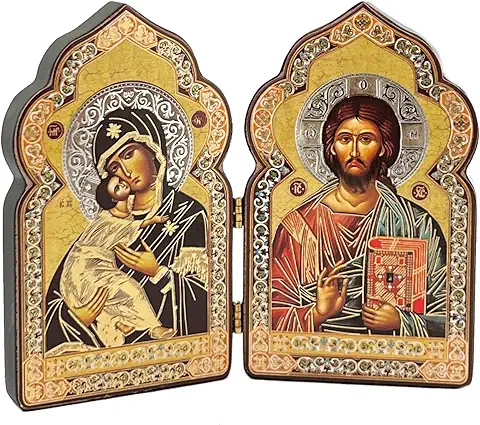

First-Class Relics: Where They Can Be Venerated
The relics of Saint Nimatullah Al Hardini are among the most venerated sacred objects in the Maronite Catholic world. First-class relics — that is, portions of the saint's actual body (bone, tissue, or other physical material from the saint himself), as distinguished from second-class relics (items he owned or touched) and third-class relics (items that have touched his first-class relics) — have been distributed with care and purpose to churches and monasteries around the world since the processes of beatification and canonization brought Nimatullah to the attention of the global Catholic Church. What follows is the most comprehensive listing available of confirmed locations where first-class relics of Saint Nimatullah Al Hardini can be venerated by pilgrims and the faithful.
First-Class Relics of Saint Nimatullah Al Hardini: Verified Veneration Sites
Kfifan, Lebanon
(Primary Shrine — Principal Site)
Qadisha Valley, Lebanon
(Secondary Lebanese Site)
São Paulo, Brazil
(South America)
Brooklyn, New York, USA
(North America)
Los Angeles, California, USA
(North America — West Coast)
Sydney, Australia
(Australia and Oceania)
Bkerke, Lebanon
(Patriarchal See)
Ottawa, Ontario, Canada
(Canada)
Paris, France
(Western Europe)
Lebanon, Cyprus, and World
(Distributed Relics)
Pilgrim's Guide: Monastery of Saints Cyprian and Justina, Kfifan
Location: Deir Kifan (Monastery of Kfifan), village of Kfifan, Koura district, north Lebanon. Approximately 80 km north of Beirut, near the town of Batroun.
Reaching Kfifan: By road from Beirut via the coastal highway north to Batroun, then inland to Kfifan. The journey from Beirut takes approximately 1–1.5 hours by car, depending on traffic. Service taxis and buses operate between Beirut and Batroun; from Batroun, local transportation to Kfifan is available.
The shrine: Saint Nimatullah's relics are enshrined in the monastery church. The saint's cell — the simple room where he lived, prayed, and died — is preserved as part of the pilgrimage complex and may also be visited. Holy oil blessed at his relics is distributed to pilgrims and may be sent by post.
Feast day pilgrimage: December 14 is the principal feast of Saint Nimatullah. Special Masses and vigil services are celebrated, and pilgrimage attendance is highest around this date. A second significant date is June 10, the anniversary of his beatification.
The Lebanese Maronite Order: The monastery is maintained by the Lebanese Maronite Order, whose monks offer hospitality to pilgrims and can provide spiritual guidance and information about the saint and his tradition.
Note on travel to Lebanon: Pilgrims are advised to check current travel advisories for Lebanon before planning a visit, as the country's political situation can affect travel conditions. The monastery and its immediate area are generally safe for pilgrims; local contact with the monastery before travel is recommended.