Saint Porphyrios of Kavsokalyvia
Saint Porphyrios of KavsokalyviaElder Porphyrios · Porphyrios Bairaktaris · The Wonderworker of Kavsokalyvia
The shepherd boy who snuck onto Mount Athos at twelve, received the gift of clairvoyance, spent thirty-three years healing the brokenhearted in Athens, and died whispering the last word of Revelation.
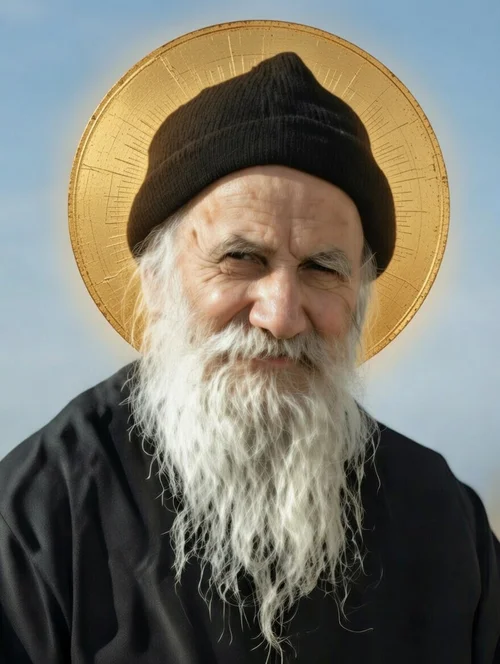
Saint Porphyrios of Kavsokalyvia Prayer Card
Printed on museum-quality photo paper and prayed over during every step of creation. Each card is made individually, with your name and intention lifted before Christ. A spiritual heirloom for seasons of anxiety, mental strain, and the slow return to joy.
- Birth Name
- Evangelos Bairaktaris · Monastic name: Nikitas · Priestly name: Porphyrios
- Feast Day
- December 2 — anniversary of his repose in 1991
- Born
- February 7, 1906 · Agios Ioannis, Evia (Euboea), Greece
- Died
- December 2, 1991 · 4:31 AM · Kavsokalyvia, Mount Athos, Greece
- Canonized
- November 27, 2013 · Ecumenical Patriarchate of Constantinople
- Faith Tradition
- Eastern Orthodox Church (Ecumenical Patriarchate of Constantinople)
- Patron Saint Of
- Anxiety relief · Healing from depression · Spiritual clarity · Students & young adults · Freedom from intrusive thoughts · Those who care for the mentally ill
- Known For
- Clairvoyance · Healing prayer · 33 years at Athens Polyclinic · Founding Holy Convent of the Transfiguration in Milesi, Attica
A Poor Boy From Evia Who Read One Book and Changed His Life
Evangelos Bairaktaris was born on February 7, 1906, in the small village of Agios Ioannis on the island of Evia (Euboea) in Greece — the fourth of five children born to Leonidas and Eleni Bairaktaris. His family was genuinely poor. His father eventually left for America to work on the construction of the Panama Canal because there was no other way to feed his family. His maternal grandfather had been the village cantor and had once received Saint Nektarios as a guest during his travels through the region — a thread of grace passing quietly through the household.
Evangelos attended school for only two years before poverty forced him to stop. By the age of eight he was tending animals on the family farm. He later found work in a coal mine, then at a shop, and eventually at a grocer's store in Chalkida and Piraeus — a child laborer moving through adult work in cities far from his village, with very little of anything.
What he did have was a small pamphlet. Someone gave the young shepherd a booklet about the life of Saint John the Hut-Dweller of Kavsokalyvia — a hermit who had lived on Mount Athos and whose radical simplicity and love of God burned off the page. Evangelos read it slowly, sounding out words he barely knew. But what he absorbed transformed him completely. He decided he was going to Mount Athos. He was twelve years old. He told no one.
He stowed away on a boat to Thessaloniki and made his way to the harbor where the ferry departed for the Holy Mountain. That evening, in the crowd gathering to board, he encountered a hieromonk named Panteleimon. The monk saw through the boy immediately — saw both his youth and his intention. Since children were not permitted on Mount Athos, Fr. Panteleimon did something quietly extraordinary: he told Evangelos to say he was the monk's nephew and that his mother had died. The boy was brought aboard under this cover. His real life had begun.
The Hut of Saint George, Obedience, and the Gift of Clairvoyance
Fr. Panteleimon brought Evangelos to Kavsokalyvia — the skete whose name means "burnt huts," named for a hermit who burned his possessions to avoid attachment — and to the Cell of Saint George, where Panteleimon lived with his brother Fr. Ioannikios. Evangelos embraced the monastic life with the fervor of someone who had been waiting for it his whole short life. He practiced absolute obedience to both elders simultaneously, a demanding discipline even for adult monks.
He was tonsured a monk at fourteen, receiving the name Nikitas. Within two years he was tonsured into the Great Schema — the deepest level of monastic commitment in Eastern Orthodoxy. It was around this time, the accounts agree, that God granted him the gift of clairvoyance. He did not speak of it. He did not perform. But he began to know things — the hidden states of souls, the burdens people carried that they had not yet spoken aloud. This gift would define the next seven decades of his ministry.
"Whoever wants to become a Christian must first become a poet."
— Saint Porphyrios of Kavsokalyvia
The end of his time on Athos came through obedience. One of his elders sent him out on a rainy day to collect snails. Hours into the task, burdened with a heavy sack in the cold wind, Evangelos was caught in a rockslide and buried to his knees. He cried out to the Theotokos and was miraculously delivered — but the damage was real and lasting. He developed pleurisy and was forced to leave the Holy Mountain at the age of nineteen.
The elder who had sent him on the errand wept and kissed him on the forehead as he departed. The young monk returned to Evia and recovered at the Monastery of Saint Haralambos. There, through the intervention of Archbishop Porphyrios III of Sinai — who recognized the depth of his spiritual gifts and his already apparent clairvoyance — the young monk was ordained a deacon and then a priest at the age of twenty, receiving the name Porphyrios from the Archbishop himself.
Thirty-Three Years at the Heart of a Broken City
On the eve of Greece's entry into World War II in 1940, Fr. Porphyrios was sent to Athens to serve as a hospital chaplain at the Polyclinic — the major public hospital of the Greek capital. He would remain for thirty-three years. He later said he lived those years as though they were a single day.
He ministered from a small chapel dedicated to Saint Gerasimos, inside a busy urban hospital surrounded by suffering and noise. He heard confessions. He prayed over the sick. He counseled the anxious, the despairing, the theologically confused, and the quietly breaking — everyone from doctors and professors to factory workers and desperate parents. He visited patients of every background without discrimination, and he was known to walk through the red-light district during house blessings, inviting the women there to venerate the Holy Cross. He went where the brokenness was.
Crowds found him. People traveled across Greece to speak with him. He possessed the gift of knowing the hidden struggles of a person before they had said a word — and rather than creating a spectacle of this, he used it entirely in the service of confession and spiritual counsel. He did not want followers. He wanted souls pointed toward Christ.
After retiring from the hospital in 1973, he continued his ministry and eventually founded the Holy Convent of the Transfiguration of the Saviour in Milesi, Attica — a monastery he had dreamed of building for decades. He bought the land himself, lived first in a trailer under difficult conditions, and endured years of physical suffering to see it built. The Presidential decree recognizing the monastery came in 1981.
"Christ Is Joy." The Spiritual Vision of Elder Porphyrios
What made Saint Porphyrios unusual — and to many, deeply necessary — was not only his miraculous gifts but his theology of joy. In a religious culture that could tilt toward guilt and the obsessive examination of sin, he taught something different: that the path to holiness is through love of Christ, not warfare with yourself. He explicitly discouraged harshness toward oneself. He told those burdened by sin not to obsess over the darkness but to turn their faces toward the light.
"He is our friend, our brother. He is whatever is good and beautiful. He is everything."
He consistently taught that fear of God leads to paralysis, while love of God transforms. His vision of Christ was warm, personal, and relational — not a judge but a brother.
"The life of the parents is the only thing that makes good children. If you want to help your children, become saints yourselves."
He counseled countless parents and consistently redirected them from worry about their children to work on their own transformation first.
"Whoever wants to become a Christian must first become a poet."
He meant that Christianity requires sensitivity to beauty, the capacity to wonder, and openness to grace — and that this kind of attention is itself a spiritual practice.
Returning to Kavsokalyvia — and the Last Word
In 1984, Elder Porphyrios learned that the Cell of Saint George at Kavsokalyvia — the very hut where he had been tonsured sixty years earlier — had become vacant. He immediately asked the Holy Great Lavra of Saint Athanasios to return it to him. He had made a vow at his tonsure to remain in his monastery until his last breath. Now he was ready to keep it.
His body was failing: a persistent hernia, a heart attack, and in 1987 blindness from a failed eye operation. Yet his spiritual perception only seemed to sharpen. Those who visited him in those final years reported that he could see spiritually what he could no longer see physically — knowing what lay in the distance, perceiving the interior state of a person with the same unclouded clarity he had always shown.
He prepared his death with meticulous care, leaving written instructions for a quiet burial with no announcement until it was done. He did not want crowds. He did not want honors. On the eve of the Feast of the Holy Trinity in 1991, he traveled to Athens to make his final confession to his own aged spiritual father, received absolution, and returned to his hut on Mount Athos.
On the night of December 1st, those with him heard him repeating quietly a single word from the last verse of the Book of Revelation: Erchou — "Come." The prayer of the early Church addressed to the returning Christ: Come, Lord Jesus.
At 4:31 in the morning on December 2, 1991, his soul left his body. His body was dressed in the monastic manner, the Gospel was read over him all day, and he was buried at dawn on December 3rd in a quiet ceremony attended only by the few monks of the skete. Only then was his death announced — exactly as he had wished.
Byzantine Icons for Your Prayer Corner
Elder Porphyrios taught that prayer requires a focused heart. These handcrafted Byzantine icons bring the beauty of the Eastern tradition into your home prayer space.


Who Prays to Saint Porphyrios — and What They Find
Saint Porphyrios is sought by people who are drowning quietly. Not people facing dramatic external crises, but people experiencing the particularly modern form of suffering: anxiety that has no single cause, depression that resists explanation, thoughts that spiral without stopping, faith that has become intellectually tangled, and the exhaustion of trying to hold it all together under the surface of a normal life.
He understood this form of suffering because he spent thirty-three years sitting with it — in a busy Athens hospital, listening to patients, hearing confessions, and counseling everyone from doctors and professors to factory workers and despairing parents. He approached mental and spiritual anguish with gentleness, never harshness. His consistent message was joy, love, and the redirecting of attention from the darkness to the Light.
Students pray to him before exams and major decisions. Parents pray to him for children who have drifted. Those struggling with panic disorders or the sense that faith has become a burden rather than a gift find in him a saint who speaks directly into that experience — because he did exactly that work, with exactly that kind of suffering, for decades.
Patronage
- Anxiety and panic disorders
- Healing from depression and spiritual despair
- Spiritual clarity amid confusion and doubt
- Students and young adults
- Freedom from intrusive and obsessive thoughts
- Those who care for the mentally ill
- Discernment of vocation
- Restoration of joy after long spiritual dryness
Who Venerates Him
- Eastern Orthodox Church — all jurisdictions
- Greek Orthodox Archdiocese of America
- Orthodox Church in America (OCA)
- Russian Orthodox Church (commemorated)
- Antiochian Orthodox Church
- Serbian, Romanian, Bulgarian Orthodox Churches
- All Eastern Orthodox faithful worldwide
The Recorded Miracles of Saint Porphyrios — During Life and After
The miracles of Saint Porphyrios are among the most extensively documented of any modern Orthodox saint, in part because so many happened in front of witnesses in the middle of ordinary life — in a hospital chapel, on a telephone, in the presence of monks and spiritual children who recorded what they saw.
The Rockslide Miracle (c. 1924). The earliest recorded miracle is the one that ended his first time on Mount Athos. Buried to the knees in a rockslide while collecting snails in a rainstorm, the young monk cried out to the Theotokos and was immediately delivered from the stones. The physical damage was real and lasting — pleurisy forced him to leave the Holy Mountain — but the deliverance from death was witnessed by his elders.
The Gift of Clairvoyance. Throughout his ministry, dozens of witnesses recorded that Elder Porphyrios knew the hidden contents of a person's heart before they had spoken. He would identify the exact struggle, sin, or fear a person had come to confess before they opened their mouth. Archimandrite Christodoulos, former abbot of the Holy Monastery of St. Symeon the New Theologian in Kalamos, recorded personal testimony of the Elder knowing specific details about locations, future events, and the interior state of people he had never met — including a detailed prophetic vision of a monastery that did not yet exist.
The Cancer Healing. Monks present at the Elder's cell witnessed the following: a woman from Lebanon called to report that her advanced cancer — for which surgery had been scheduled — had completely vanished after he prayed for her. The Elder wept on receiving this news and said simply to the monks present: "Everything will be alright." The doctors could find no trace of the cancer.
The Wounded Bird. Archimandrite Christodoulos recorded that he and companions brought a wounded bird to the Elder in the forest. The Elder made the sign of the Cross over the bird and it flew immediately into the air — healed. The Archimandrite described this as consistent with many other healings he witnessed the Elder perform over the years.
Spiritual Sight While Physically Blind. After losing his sight in 1987, those who visited Elder Porphyrios reported that his perception of unseen realities had only intensified. He described places and people with precision from which he was physically separated. He told one visitor: "I cannot see more than ten meters ahead. But since I love you so much, I climbed high and saw everything — what surrounds this place and what will happen here in the future."
After Repose. Since his canonization in 2013, accounts of posthumous intercession have continued. Orthodox sources record his appearance alongside Saint Iakovos of Evia in a hospital in the United States. Healings from depression, anxiety, and physical illness continue to be attributed to his prayers, and his monastery in Milesi receives a steady stream of pilgrims.
Free Marriage Resources from The Eastern Church
Saint Porphyrios taught that "the life of the parents is the only thing that makes good children" — and that the most powerful thing you can do for your family is work on your own holiness. He counseled couples and families throughout his ministry. We have gathered free resources on marriage through the wisdom of the Eastern Christian tradition, for every season of a relationship.
Access Free Marriage Resources →Handmade Sterling Silver Icons from Greece
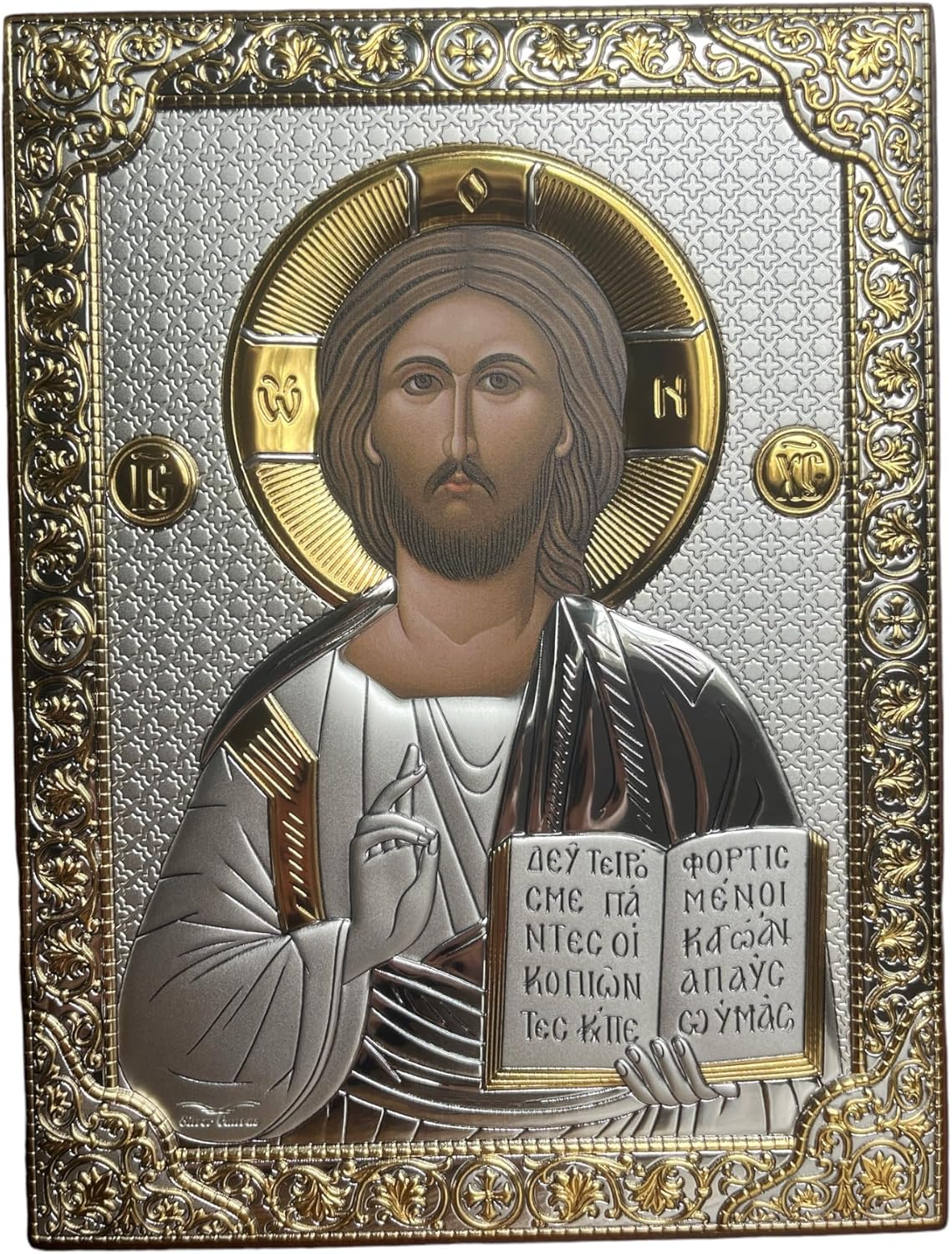
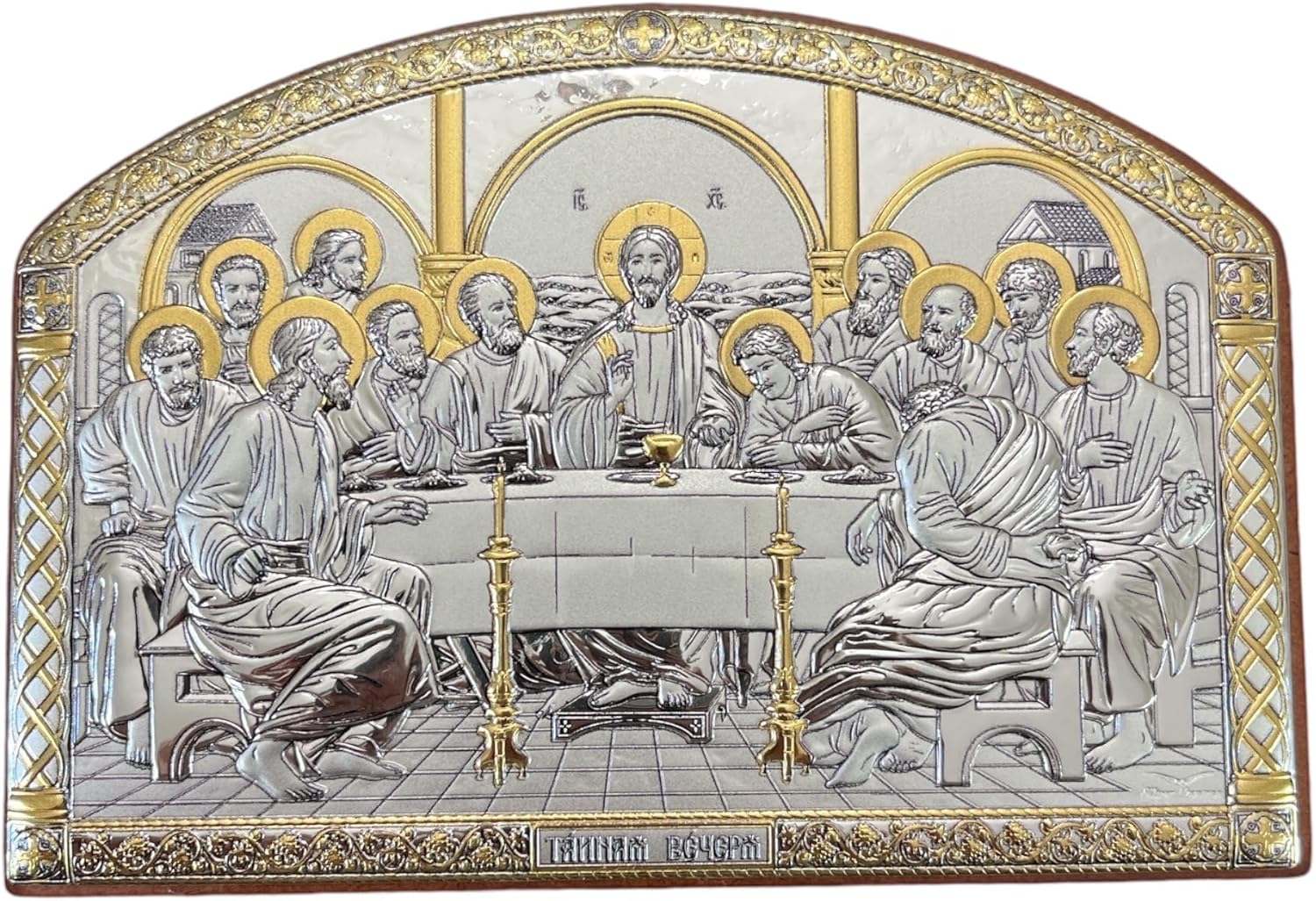
Premium Byzantine icons handcrafted in Greece using 925° sterling silver — heirloom pieces for prayer corners, gifts, and lasting devotion.

Where to Venerate Saint Porphyrios — and Why His Relics Are Hidden
The Hidden Relics — A Deliberate Act of Humility
Saint Porphyrios spent his entire life avoiding honors. He redirected praise. He withdrew from crowds. He asked to die quietly, with no announcement until after burial. It is entirely consistent with everything he lived that his relics are intentionally hidden.
By his own specific instruction, his body was buried secretly at Kavsokalyvia, Mount Athos. Approximately three years after his repose, in accordance with Athonite custom, his relics were exhumed and reburied in an undisclosed location in the forest by two of his monastic disciples. His disciple Elder Damaskinos has confirmed the relics were not scattered or lost — they were deliberately hidden, exactly as the Elder had wished. This is not absence. It is humility made permanent.
His monastery in Milesi receives pilgrims, preserves his memory, and is the primary living center of his veneration. Churches dedicated to him exist on multiple continents. The faithful visit, pray, and seek his intercession — and accounts of his response continue to multiply, relics or no relics.
Holy Convent of the Transfiguration of the Saviour
The monastery that Elder Porphyrios founded himself — built on land he purchased after years of searching, constructed while he lived in a trailer on the hill under difficult conditions. Recognized by Presidential decree in 1981 and completed before his death, it is the primary center of his veneration on the Greek mainland and receives pilgrims seeking his intercession.
Visit the Holy Convent of the Transfiguration →Churches & Chapels Dedicated to Saint Porphyrios Worldwide
- Cell of Saint George, Kavsokalyvia — Mount Athos, Greece (where he was tonsured and where he died)
- Holy Convent of the Transfiguration of the Saviour — Milesi, Attica, Greece (founded by the saint)
- Chapel of Saint Porphyrios — Komotini, Greece (inaugurated April 17, 2019)
- Chapel of Saint Porphyrios — Rebra-Parva Monastery, Bistrița-Năsăud, Romania (dedicated December 2019)
- Saint Porphyrios of Kavsokalyvia Orthodox Parish — Lanark County, Ontario, Canada (founded January 2021, Patriarchate of Constantinople)
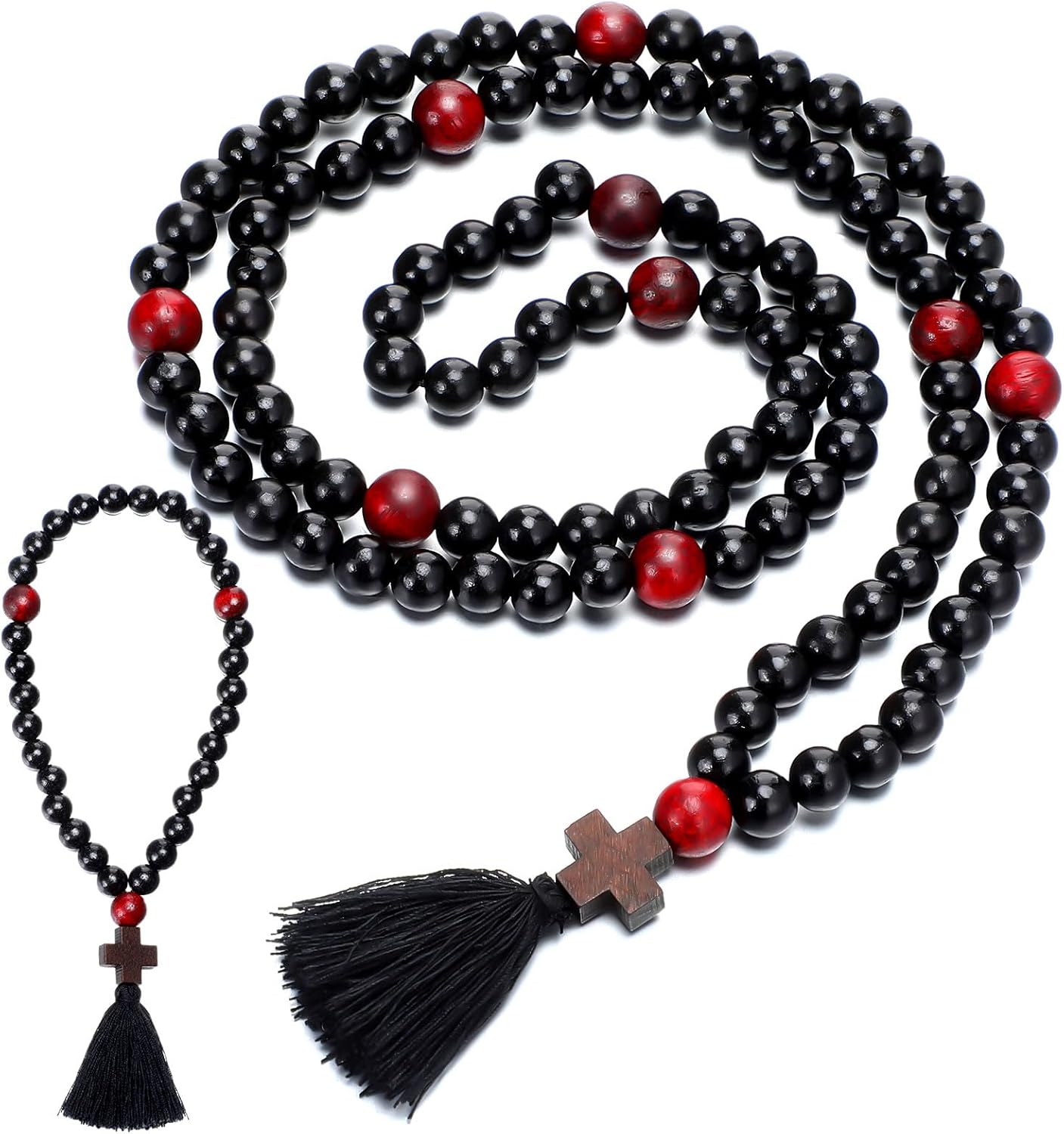
Prayer Ropes in the Mount Athos Tradition
Saint Porphyrios was formed by Mount Athos and its tradition of unceasing prayer. The prayer rope — the komboskini — is the physical tool of that tradition, designed to anchor the soul to the Jesus Prayer through every hour of the day.


Traditional Orthodox Prayer to Saint Porphyrios
O holy Father Porphyrios,
faithful servant of Christ and healer of troubled hearts,
intercede for us before the Lord.
You who taught us to seek Christ in joy,
deliver us from fear and despair.
Calm our anxious thoughts.
Heal our wounded minds.
Guide us through confusion into light.
Grant us love for Christ above all things,
and teach us to trust in His mercy.
Through your prayers,
may we find peace, clarity, and salvation.
Amen.
Questions About Saint Porphyrios of Kavsokalyvia
Carry Saint Porphyrios With You
His prayer card is handmade in Austin, TX — prayed over during every step of creation, printed on museum-quality photo paper, and made to order as a unique devotional offering. A spiritual heirloom for seasons of anxiety, mental strain, and the slow return to joy.
Get the Saint Porphyrios Prayer Card — $3.00 →