Saint Aphrahat the Persian Sage – Life, 23 Demonstrations & Prayer
Saint Aphrahat the Persian Sage Ḥakkimā Pārsāyā · Hermit of Antioch · Farhād · Jacob (Baptismal Name)
The Persian convert who became the first theologian east of Rome — writing 23 treatises during a massacre, confronting an emperor face-to-face, and preserving a form of Christianity that sounds like the voice of Jesus's own world.

Saint Aphrahat the Persian Sage Prayer Card
Printed on museum-quality photo paper and prayed over during every step of creation. A spiritual heirloom for seasons of cultural pressure, subtle persecution, and the need to hold your convictions when the world demands you let them go.
- Known As
- Aphrahat the Persian Sage · Aphraates Hermit of Antioch · Farhād · Ḥakkimā Pārsāyā (Syriac: "The Persian Sage") · Jacob (baptismal name)
- Feast Day
- January 29 (Eastern Orthodox) · February 11 (Old Calendar) · Local Syriac commemorations vary
- Born
- c. 270–280 AD · Adiabene region, Sassanid Persian Empire (modern northern Iraq/Iran) · From a prominent pagan — possibly Zoroastrian — family
- Died
- c. 345 AD (as the Sage) or c. 407–413 AD (as the Hermit of Antioch) · See "Two Aphrahats" section below
- Faith Tradition
- Church of Persia (pre-schism) · Venerated by Eastern Orthodox, Syriac Orthodox, Syriac Catholic, Chaldean Catholic · Recognized as Church Father by Rome
- Patron Saint Of
- Perseverance under persecution · Faithfulness under cultural pressure · Spiritual clarity in confused times · Teachers of Scripture · Cities of Mosul and Erbil, Iraq
- Major Work
- The Demonstrations (ܬܚܘܝ̈ܬܐ) — 23 pastoral-theological treatises written in Syriac, 337–345 AD
- Historical Significance
- First known theologian of the Church of Persia · Oldest surviving Christian theology from outside the Roman Empire · Wrote in Syriac — the same Aramaic dialect spoken by Jesus
One Name, Two Lives — and Why It Matters
Before entering the life of Saint Aphrahat, it is worth pausing to acknowledge something that scholars have debated for centuries: history has preserved under the name "Aphrahat" what may be two distinct figures, or perhaps one remarkable man whose life stretched across an unusually long span of history. Understanding the distinction — and why many traditions have merged these figures — is itself part of the story.
Aphrahat the Hermit of Antioch (active c. 361–c. 407–413 AD) is the Persian-born convert who became a hermit first at Edessa, then outside Antioch. He publicly opposed the Arian emperor Valens, performed miracles of healing and exorcism, and was known personally to the Church historian Theodoret of Cyrrhus. He died in Antioch, probably between 407 and 413.
The Eastern Orthodox commemoration of January 29 — "Venerable Aphrahates the Persian, Hermit of Antioch" — refers primarily to this second figure. Many Syriac sources, and most popular hagiography, treat them as the same person. The Akathist hymn and iconographic tradition largely merge them. This biography honors both traditions: the full theological legacy of the writer and the full hagiographic life of the confessor are presented together, as Christian memory has largely received them.
A Noble Persian Family, A Foreign God, and an Extraordinary Choice
The man who would become the Persian Sage was born into a world that had never heard of him and would remember him for seventeen centuries. He came from a distinguished and illustrious family in the Adiabene region of the Sassanid Persian Empire — the territory straddling what is now northern Iraq and northwestern Iran. His family's religion was the ancient faith of Persia; some ancient sources suggest Zoroastrian roots, though this is disputed. Whatever his family's precise beliefs, Aphrahat himself was not born into the Christian faith. He came to it as a convert, as an adult, by his own decision.
The ancient account preserved by Theodoret of Cyrrhus — who knew Aphrahat personally as a boy and later wrote about him in his Religious History — describes a man who "thinking nothing of his family, although it was distinguished and illustrious, hastened to worship the Master, in imitation of his forebears the Magi." Theodoret is drawing a deliberate parallel: just as the Magi of the nativity story came from the Persian east to seek the Christ child, so Aphrahat came from that same east, renounced his family's distinction, and followed the same Lord.
After his conversion, he took the baptismal name Jacob. He would be confused for centuries with the more famous Jacob of Nisibis — a different saint entirely — largely because of this shared name. Careful scholarship has since established the distinction. Jacob of Nisibis attended the Council of Nicaea in 325 and died in 338. Aphrahat's own writings show that he was still alive and writing during the persecution of Shapur II in 344, which makes the identification impossible.
His name, Aphrahat, is itself the Syriac transliteration of the old Persian name Frahāt — the same name that survives in modern Persian as Farhād (فرهاد). He belonged, by name and birth, to the Persian world. He chose, by conviction, to belong to Christ. These two facts together define everything that followed.
The Sons of the Covenant — The Ancient Form of Syriac Monasticism
After his conversion, Aphrahat entered what the Syriac church called the bnay qyamâ — the "Sons of the Covenant" (and bnat qyamâ for women — "Daughters of the Covenant"). This was not the desert solitary monasticism of Egypt, nor the cenobitic communal monasticism of Pachomius. It was something distinctly Syriac: a class of dedicated celibates who continued to live within ordinary Christian communities, bound by a covenant of consecrated prayer, fasting, and service, who formed the spiritual backbone of the Syriac church before formal monastic institutions existed.
The Sons of the Covenant were celibate, single-minded in their devotion to Christ, and committed to a life of radical simplicity. They were not separated from the world but were embedded in it, serving the community while maintaining the interior life of an ascetic. Aphrahat writes about them extensively and with obvious personal familiarity — almost certainly because he was one of them. His sixth Demonstration, On the Sons of the Covenant, is the single most important surviving document on this ancient form of Syriac communal asceticism.
He eventually settled for a period in Edessa — the great center of Syriac Christianity, the first city in history to have adopted Christianity as its official religion — before moving to a cell outside the walls of Antioch. At some point in his life, later Syriac tradition associates him with the Monastery of Mar Mattai near Mosul, one of the oldest continuously inhabited Christian monasteries in the world, and credits him with having served there as bishop. The historical certainty of this is limited, but it is ancient and persistent tradition.
The 23 Demonstrations — The Oldest Christian Theology East of Rome
The Demonstrations are the defining achievement of Aphrahat's literary life and one of the most important documents in the history of early Christianity. They are 23 pastoral-theological treatises written between 337 and 345 AD, entirely in Syriac — a dialect of Aramaic, the same language family in which Jesus himself spoke and taught. This last fact is not incidental. Aphrahat wrote in the language of Jesus. His theological world is Semitic, not Hellenistic. He does not reason in Greek categories. He does not cite Greek philosophers. He draws entirely from Scripture, from Syriac tradition, and from the living pastoral needs of a community under siege.
The first 22 Demonstrations are composed as an elaborate acrostic: each begins with a successive letter of the 22-letter Syriac alphabet, from Alap to Tau. It is a formal structure, but it is not a cold one. The tone throughout is warm, urgent, and pastoral — the voice of a pastor writing to frightened people who need to be steadied, not lectured.
The 23rd Demonstration stands outside the alphabetic structure, was written slightly later than the others (around 345 AD), and deals with the fulfilment of Messianic promise from Adam to Christ, using the symbolism of the grape and vine drawn from Isaiah. It is considered the capstone of the collection.
Christian Life & Church Order
Demonstrations 1–10. Written before Shapur's persecution began. Topics: Faith, Love, Fasting, Prayer, Wars, Monks, the Penitent, the Resurrection, Humility, and Spiritual Shepherds.
At the Height of the Persecution
Demonstrations 11–22. Written as Christians were being killed around him. Topics include persecution, prayer, virginity, circumcision, Passover, the Sabbath, distinguishing Christianity from Judaism, and a circular letter to the whole Persian Church.
The Messianic Fulfilment
Demonstration 23. The final and capstone piece. Uses the symbolism of the grape and vine from Isaiah 65 to trace the fulfillment of all Messianic promise from Adam through to Christ. Outside the acrostic structure.
No Greek Philosophy
Scholars note that Aphrahat shows no awareness of the great Arian controversy raging in the Roman Empire — writing after Nicaea as though it had not happened. He represents a form of Christianity untouched by Hellenistic theological debate.
Four Demonstrations on Judaism
Four Demonstrations address a community movement toward Judaism or Jewish practices. Aphrahat explains the Christian meaning of circumcision, Passover, and Sabbath — a remarkable and irenic early engagement.
Translation History
The Demonstrations survive in Syriac (four manuscripts, oldest from 474 AD), Armenian (19 of 23, published 1756), Georgian, Ethiopic, and partial Arabic — misattributed in each language for centuries before the Syriac originals were identified.
Writing While Christians Were Being Killed — The Shapur II Persecution
To read the Demonstrations without understanding the historical context is to miss half of what they are. Aphrahat wrote his first ten treatises in 337 AD — the same year Constantine the Great died in the Roman Empire. Constantine had declared Rome a Christian empire. This seemingly triumphant moment for Christianity was, for Persian Christians, a sentence. Shapur II, the Sassanid king, looked westward at a now-Christian Rome and saw a threat. Christians in his empire — largely Syriac-speaking communities stretching across what is now Iraq, Iran, and the surrounding regions — might be secret sympathizers with Persia's enemy. That suspicion was enough.
By 339–340 AD, Shapur had launched a systematic persecution. He doubled the tax on Christians — a crushing burden that was, in effect, a financial death sentence for poor communities. When Church leaders appealed, he began arresting and executing bishops, priests, and deacons. By 344 AD, when Aphrahat wrote his second group of Demonstrations, the persecution was at its height. Thousands of Persian Christians were martyred. The most famous victims include Saint Simeon bar Sabbae, the Bishop of Ctesiphon-Seleucia, who was beheaded along with five bishops and one hundred priests on Good Friday, 344 AD — the single largest martyrdom of the Persian Church.
Into this moment, Aphrahat wrote. Not screaming sermons. Not calls to arms. Steady, loving, scripturally dense pastoral teaching — letters to a community that was frightened, confused, and in some cases tempted to simply leave Christianity behind for the relative safety of Judaism, which Shapur did not persecute.
His response to the suffering around him was not silence, and it was not rage. It was teaching. He wrote to steady souls who had every reason to break.
"First a man believes, and when he believes, he loves. When he loves, he hopes. When he hopes, he is justified. When he is justified, he is perfected. And when his whole structure is raised up, consummated, and perfected, then he becomes a house and a temple for a dwelling-place of Christ."
— Aphrahat, Demonstration I: On Faith
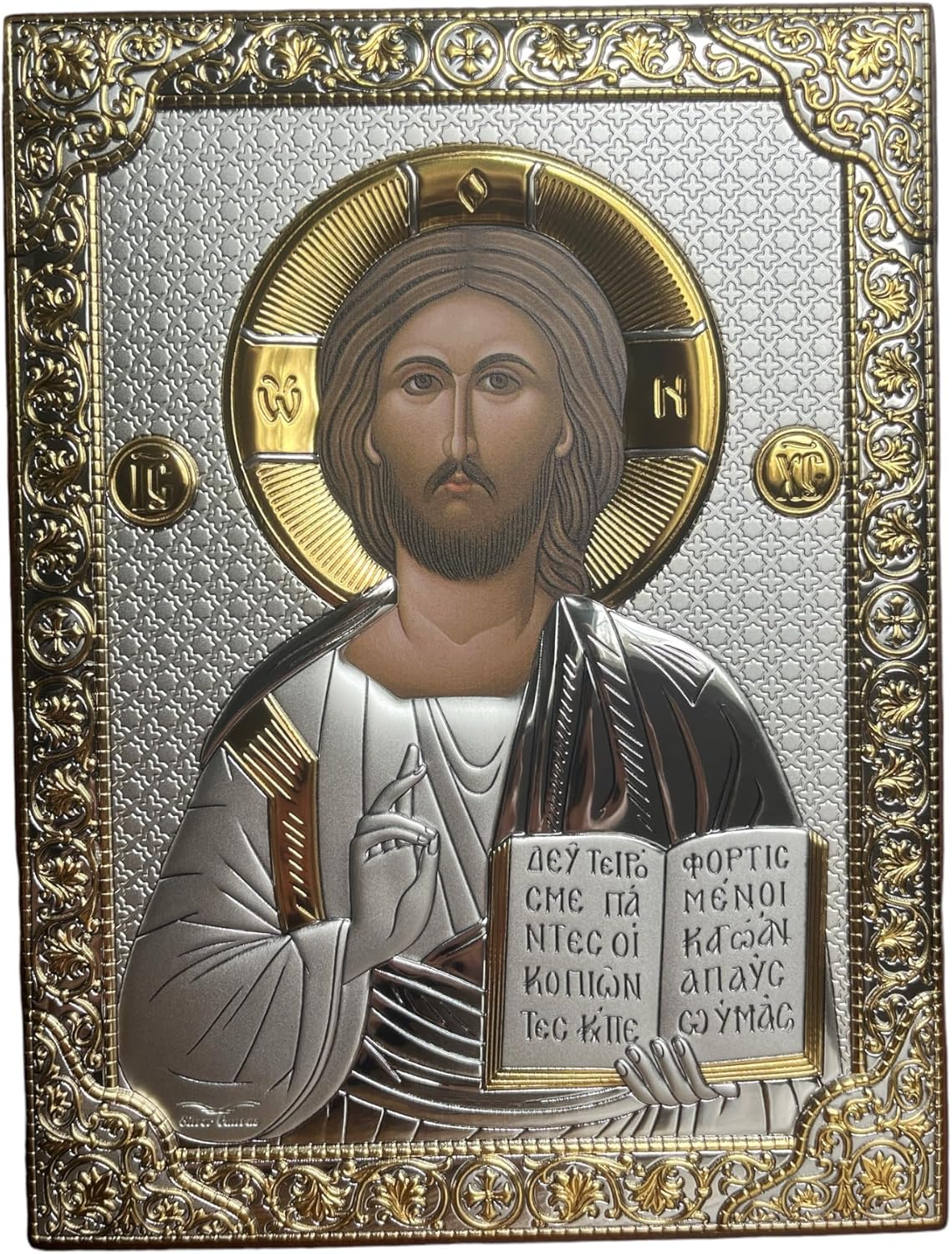
Byzantine Icons for Your Prayer Corner
Aphrahat wrote about the human person as a temple — a dwelling place of Christ. These handcrafted icons create a visible focus for the interior life he taught.


A Cell Outside the City Walls — Edessa to Antioch
The hagiographic tradition preserved by Theodoret of Cyrrhus — the Church historian who knew Aphrahat personally as a boy and whose account is our primary source for the hermit's life — describes a man of extraordinary physical austerity and inner radiance. After his conversion, Aphrahat settled in Edessa, the ancient city of northern Mesopotamia that was the heart of Syriac Christianity. There, he chose a cell outside the city walls, where he lived on bread (and vegetables when he was old), ate only after sunset, and slept on a mat on the floor.
His reputation spread. His hermitage attracted a steady stream of visitors seeking counsel, blessing, and healing prayer. Theodoret writes that God "endowed him with great spiritual gifts, giving him the power to cast out demons, to heal through prayer, and to wisely guide the faithful on the path to salvation."
Around 361 AD, Aphrahat moved from Edessa to a hermitage outside Antioch — arriving precisely as the theological storm of Arianism was breaking over the Eastern Roman Church. The timing was not coincidental. The Orthodox Bishop of Antioch, Meletius, had already been exiled. The Arian party controlled the city's churches, and Orthodox Christians were forced to worship outside the city gates, beside the Orontes River, in open air. Flavian and Diodorus — who would become giants of Orthodox theology — were attempting to hold the faithful together with no official support. Into this situation came Aphrahat, speaking bad Greek, wearing a monk's rough garments, carrying nothing but his reputation for holiness and his gift for healing. He became a pillar of the Orthodox resistance.
Face to Face With Emperor Valens — The Burning House
Emperor Valens was an Arian. During his reign (365–378 AD), he carried out a systematic persecution of Orthodox — Nicene — Christianity in the Eastern Roman Empire. Orthodox bishops were exiled. Their churches were handed to Arian clergy. The common people were pressured to accept Arian theology or lose their places of worship. At Antioch, where Valens's army was based during his Persian campaigns, the pressure was intense. The patriarch Meletius had been banished for the third time. Aphrahat, who had been quietly serving the faithful from his cell outside the walls, decided he could no longer remain silent.
He came into the city. He appeared in the marketplace. Valens saw him and asked why a monk had left his desert retreat. Aphrahat's answer has been preserved across many centuries of Syriac and Greek tradition:
"If I were a daughter withdrawn from my father's house, and I saw it on fire, would you advise me to sit back and let it burn? It is not I who should be blamed, but you who lit the flames that I am struggling to extinguish."
— Aphrahat to Emperor Valens, as preserved by Theodoret of Cyrrhus, Religious History
Valens did not respond. But one of his servants, reportedly infuriated by the hermit's boldness, reviled Aphrahat openly and threatened his life. The Arian party pressed Valens to exile this troublesome monk.
Shortly afterward, that same servant died in a sudden accident — he was scalded to death. The accounts preserved in Theodoret's Religious History report that this event struck terror into Valens. He interpreted it as a divine sign — judgment on the man who had threatened a holy person — and flatly refused all Arian requests to exile Aphrahat. The hermit was left in peace. He remained in Antioch throughout the rest of Valens's reign, continuing to support the Orthodox community until the emperor's death at the Battle of Adrianople in 378.
Theodoret, who was brought as a young boy to receive Aphrahat's blessing in Antioch, writes about him with a reverence that is unmistakably personal. He had met this man. He had been touched by this man. His account carries the weight of lived memory.
The Life of Aphrahat — A Timeline
Birth in the Persian Empire
Born into a prominent pagan family in the Adiabene region of the Sassanid Empire (modern northern Iraq/Iran). His Persian name is Frahāt — Syriac: Aphrahat. His family background may have been Zoroastrian.
Baptism — Takes the Name Jacob
Converts to Christianity and is baptized under the name Jacob. Renounces his family's distinguished standing and chooses the consecrated life. Enters the community of the Sons of the Covenant (bnay qyamâ).
Edessa — Life as a Hermit-in-Community
Settles in Edessa, the center of Syriac Christianity. Lives in a cell outside the city walls. Austerity, prayer, and a growing reputation for wisdom and healing begin to attract visitors.
First Group of Demonstrations Written
Writes the first ten Demonstrations at the request of a friend — a fellow monk. The topics cover the foundations of Christian life. Constantine the Great dies the same year; Shapur II's persecution begins to intensify.
Shapur II's Great Persecution
Systematic persecution of Persian Christians under Shapur II. Double taxation, arrests of clergy, mass martyrdoms. Good Friday 344 AD: Bishop Simeon bar Sabbae and over 100 clergy are beheaded at Ctesiphon.
Second Group of Demonstrations Written
Writes Demonstrations 11–22 at the height of the massacre. Addresses persecution, martyrdom, and the temptation to convert to Judaism. Demonstration 14 is a circular letter from his council to the whole Persian Church — evidence of his episcopal authority.
Demonstration 23 — Final Writing
The 23rd and final Demonstration, on the Messianic fulfilment. Considered the capstone of the Demonstrations. This is approximately when Aphrahat the Sage is believed to have died.
Arrives in Antioch
Moves from Edessa to a hermitage outside Antioch. The Arian crisis is at its height. Orthodox Bishop Meletius is in exile. Aphrahat begins supporting Flavian and Diodorus in maintaining the Orthodox faithful.
Confronts Emperor Valens
Leaves his cell to oppose the Arian emperor in the marketplace of Antioch. Valens's servant who threatened him dies suddenly. Valens refuses to exile Aphrahat. He remains in Antioch throughout the Arian persecution.
Ministry in Antioch Continues
Continues his ministry in Antioch after Valens's death. Theodoret is brought as a young boy to receive his blessing. The exact end of his life is unclear — likely between 407 and 413 AD.
Who Prays to Saint Aphrahat — and What He Offers
Saint Aphrahat is sought by people whose faith is under pressure — not the dramatic pressure of visible martyrdom, but the grinding, quiet pressure of living in a world that is subtly or overtly hostile to Christian conviction. He is the saint of the workplace where voicing your faith costs you. He is the saint of the culture that mocks what you hold sacred. He is the saint of the family dinner table where you are the only person in the room who still believes.
He is also uniquely suited as an intercessor for teachers of Scripture, catechists, and anyone who tries to explain the faith in plain terms to ordinary people who are struggling. His Demonstrations are not academic theology. They are pastoral medicine — written for frightened, bewildered believers and addressed to them with tenderness. He is patron of those who believe that teaching the faith clearly is itself a form of service to the persecuted.
He is the patron saint of the cities of Mosul and Erbil in Iraq — the cities nearest to the ancient Adiabene region where he was born and to the Monastery of Mar Mattai where tradition places him as bishop. Both cities have witnessed severe persecution of Christians in recent decades. The patronage is historically and spiritually exact.
Patronage
- Perseverance under persecution — visible and subtle
- Faithfulness in hostile cultural environments
- Spiritual and theological clarity in confused times
- Teachers of Scripture and catechists
- Endurance in quiet, unrecognized suffering
- Those tempted to compromise faith for safety or social acceptance
- Christian communities living as minorities under pressure
- Cities of Mosul and Erbil, Iraq
Who Venerates Him
- Eastern Orthodox Church (feast January 29 / February 11 Old Calendar)
- Syriac Orthodox Church of Antioch
- Syriac Catholic Church
- Chaldean Catholic Church
- Assyrian Church of the East (as a foundational Church Father)
- Roman Catholic Church (recognized as a Church Father)
- Maronite Catholic Church (as a Syriac Father)
The Miracles of Aphrahat — Exorcism, Healing, and the Death of a Persecutor
The miracles of Saint Aphrahat are documented primarily through the account of Theodoret of Cyrrhus, whose Religious History (written c. 444 AD) preserves the testimony of someone who had personally met him. Theodoret names himself as a witness — taken as a child to receive the hermit's blessing — and writes as someone describing a man he had known, not a legend he had received.
The Gift of Healing. Theodoret records that Aphrahat received from God "the power to heal through prayer." He describes an ongoing ministry of healing prayer conducted from his hermitage outside Antioch, where the sick and suffering came to him and many were restored. He does not specify individual cases in the way later hagiographers would, but the statement is emphatic and personal: this was a known and documented feature of his life in Antioch.
The Gift of Exorcism. Theodoret explicitly states that Aphrahat received "the power to cast out demons." This was not uncommon among the ascetics of his era, but Theodoret records it with the same directness as the physical healings — as something he was reporting, not embellishing.
The Death of Valens's Servant. The most dramatically recorded miracle associated with Aphrahat during his lifetime is the fate of the imperial servant who reviled and threatened him before Emperor Valens. Shortly after the encounter, this man was scalded to death in a sudden accident. Valens, interpreting the death as a divine sign, refused all pressure from the Arian faction to exile Aphrahat. The incident is recorded by Theodoret and is the most widely cited miracle in the hagiographic tradition. Whether one reads it as direct divine retribution or as an interpreted coincidence, its effect was real: Aphrahat was protected and the Orthodox community in Antioch was shielded from further imperial pressure.
The Miracle of the Demonstrations. A different kind of miracle — less dramatic but perhaps more enduring — is the simple survival of Aphrahat's writings across seventeen centuries. His 23 Demonstrations were composed during one of the worst persecutions of the early Church, in a language (Syriac) that the dominant civilizations on both sides of him would eventually marginalize, and transmitted through only four manuscripts before being recognized and published in the modern era. That they survived at all — that this window into pre-Roman, purely Semitic Christianity exists — is remarkable. Pope Benedict XVI, writing about Aphrahat in his series on the Church Fathers, called the Demonstrations an irreplaceable witness to what Christianity looked like before it was shaped by Greek thought.
Posthumous Legacy. The Demonstrations have continued to shape Syriac monasticism, theology, and spirituality from the 4th century to the present. They were translated into Armenian within decades of being written, then into Georgian and Ethiopic, and partially into Arabic. Communities across the Christian East drew on them for centuries without always knowing who had written them. His influence on the theology of the Sons of the Covenant shaped the ascetic life of the Syriac Church for generations after his death.
Free Marriage Resources from The Eastern Church
Aphrahat wrote extensively about the "Sons and Daughters of the Covenant" — those who consecrated themselves in celibacy — but also wrote with deep pastoral care for married Christians navigating persecution. His sixth Demonstration addresses the vows of the covenant with the same urgency he brought to all committed relationships with God. If you are looking to strengthen your marriage through the wisdom of the Eastern Christian tradition, we have gathered those resources here — free, for every season.
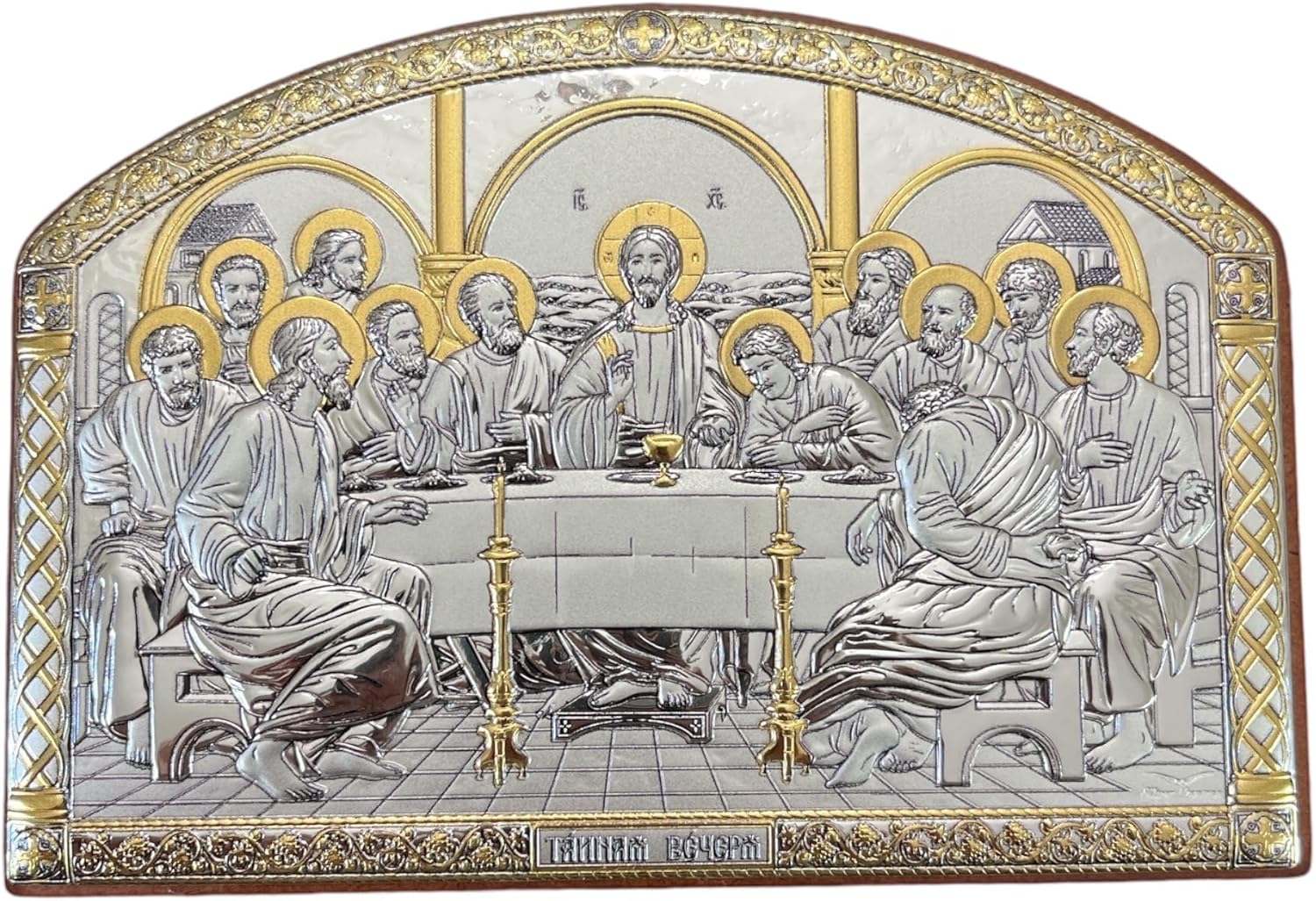
Access Free Marriage Resources →Handmade Sterling Silver Icons from Greece
Premium Byzantine icons handcrafted in Greece using 925° sterling silver — heirloom pieces for prayer corners, gifts, and lasting devotion.

Where Saint Aphrahat Is Venerated Today
On the Question of First-Class Relics
No verified first-class relics of Saint Aphrahat are in known public veneration. His burial site — whether in the Adiabene region of the Persian Empire or at Antioch — was not formally recorded by his contemporaries, and the centuries of war and displacement that swept through the regions of his ministry have made retrieval unlikely. This is not uncommon for 4th-century Syrian and Persian saints, particularly those who, like Aphrahat, lived as hermits outside institutional structures.
Later tradition, preserved in a 14th-century marginal note in a British Museum manuscript (Orient. 1017), places him as bishop of the Monastery of Mar Mattai near Mosul — one of the oldest continuously inhabited Christian monasteries in the world. While the historical claim is uncertain, Mar Mattai has preserved his memory for centuries and is the closest living institutional heir to the community with which he was associated. He is recognized as the patron saint of both Mosul and Erbil — the two great cities of the ancient Adiabene region where he was born.
Monastery of Mar Mattai (Saint Matthew's Monastery)
One of the oldest continuously inhabited Christian monasteries in the world, dating to the 4th century AD. Located on Mount Alfaf above the Nineveh plain near Mosul, Mar Mattai belongs to the Syriac Orthodox Church of Antioch. Later Syriac tradition places Aphrahat as its founding bishop, though this is historically contested. The monastery survived centuries of Islamic rule, Ottoman conquest, and in the modern era, the ISIS occupation of the Nineveh plain. It remains a center of Syriac Christian heritage and memory.
Syriac Orthodox Church of Antioch →Sites of Veneration for Saint Aphrahat
- Monastery of Mar Mattai — Near Mosul, Nineveh Province, Iraq (the monastery tradition associates with his episcopate)
- City of Mosul (ancient Nineveh) — Iraq (patron saint of this ancient Christian city)
- City of Erbil (ancient Arbela) — Kurdistan Region, Iraq (patron saint)
- Edessa (modern Şanlıurfa) — Turkey (site of his early hermitage)
- Antioch (modern Antakya) — Turkey (site of his later hermitage and his confrontation with Valens; the Church of the Hagia Apostles area traditionally connected to his memory)
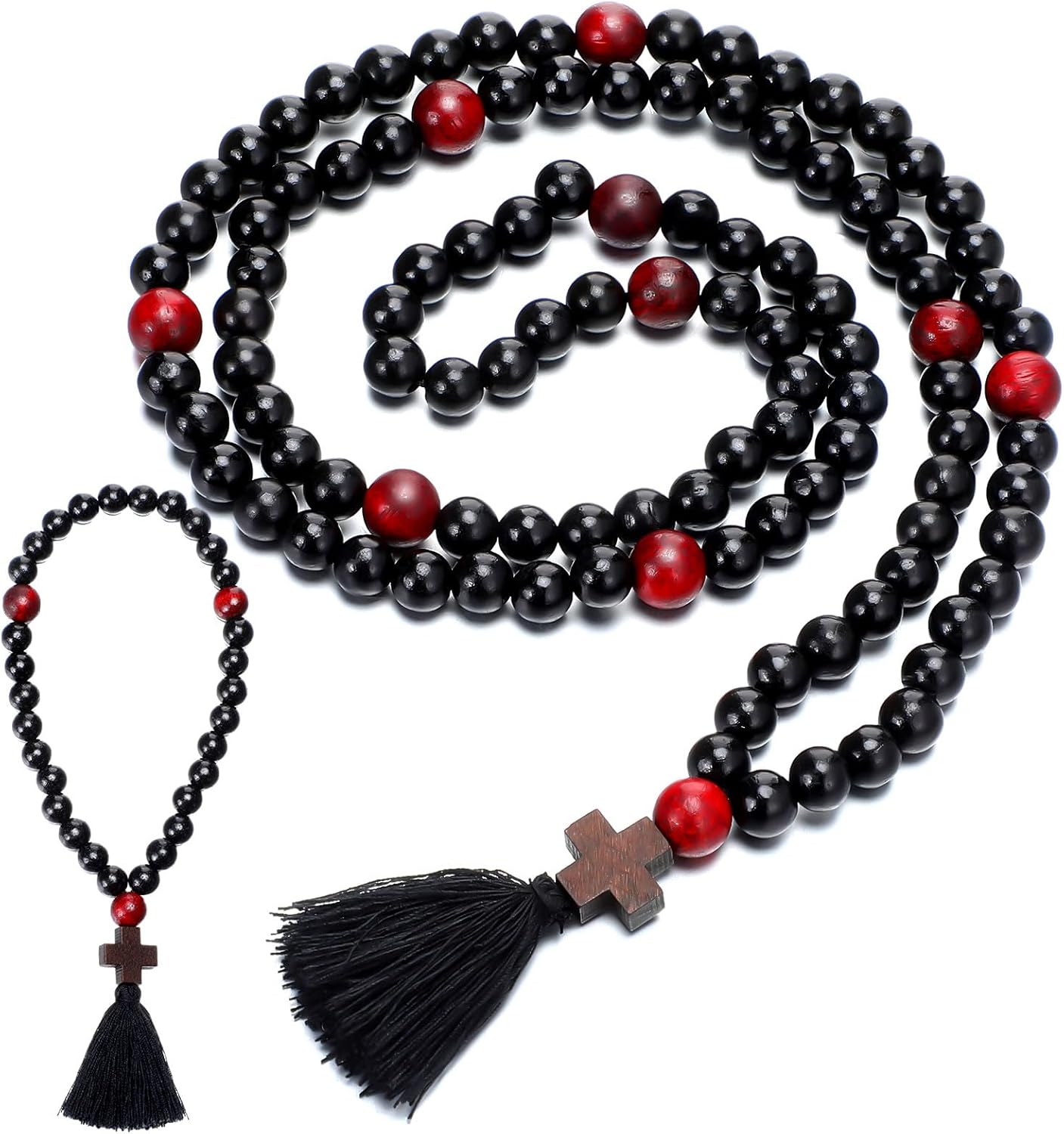
Prayer Ropes in the Mount Athos Tradition
Aphrahat was a Son of the Covenant — a man of consecrated, continuous prayer. The prayer rope is the physical tool of that same ancient tradition, anchoring the soul to the Jesus Prayer through every hour of the day.


Traditional Prayers to Saint Aphrahat the Persian Sage
O holy Aphrahat,
faithful servant of Christ in times of trial,
intercede for us before the Lord.
You who strengthened the persecuted,
strengthen us in our weakness.
Guard our hearts from fear.
Protect our faith from compromise.
Teach us patience under pressure.
Grant us courage without anger,
steadfastness without pride,
and clarity amid confusion.
Through your prayers,
may we remain faithful to Christ
in every season.
Amen.
Questions About Saint Aphrahat the Persian Sage
Carry Saint Aphrahat With You
His prayer card is handmade in Austin, TX — prayed over during every step of creation, printed on museum-quality photo paper, and made to order as a unique devotional offering. A spiritual heirloom for seasons of cultural pressure, quiet persecution, and the need to remain faithful when the world demands compromise.
Get the Saint Aphrahat Prayer Card — $3.00 →