Saint Mariam Baouardy (Mary of Jesus Crucified) – Complete Biography, Miracles & Prayer
Saint Mariam Baouardy Sister Mary of Jesus Crucified · The Little Arab · Lily of Palestine · Al Qiddisa
The orphan of Galilee who had her throat cut for refusing to leave Christ, was healed by a mysterious figure in blue, bore the wounds of the stigmata, and died at thirty-two building a monastery over the birthplace of King David.
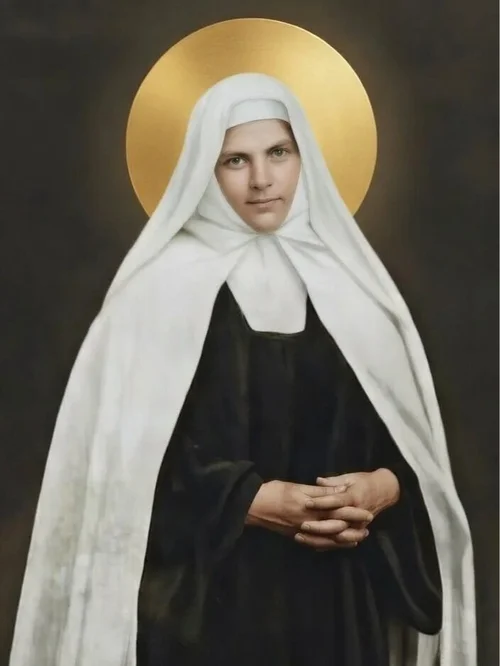
Saint Mariam Baouardy Prayer Card
Printed on museum-quality photo paper and prayed over during every step of creation. A spiritual heirloom for seasons of spiritual oppression, lingering trauma, and the need for the deep peace that only God can give.
- Also Known As
- Sister Mary of Jesus Crucified · The Little Arab · Lily of Palestine · Al Qiddisa (Arabic: "The Holy One") · Mary of Bethlehem · Maryam Baouardy
- Feast Day
- August 26 (Roman Martyrology, Melkite Greek Catholic Church) · August 25 (Discalced Carmelite Order)
- Born
- January 5, 1846 (Eve of Epiphany) · Ibillin (I'billin), Galilee, Ottoman Palestine (modern northern Israel)
- Died
- August 26, 1878 · 5:10 AM · Carmel of Bethlehem, Bethlehem, Ottoman Palestine · Age 32
- Faith Tradition
- Melkite Greek Catholic Church (her rite of origin) · Roman Catholic Church · Venerated across all Eastern Catholic Churches
- Religious Order
- Discalced Carmelites (O.C.D.) · Religious name: Sister Mary of Jesus Crucified · Professed: November 21, 1871, Mangalore, India
- Beatified
- November 13, 1983 · Pope John Paul II · Vatican City
- Canonized
- May 17, 2015 · Pope Francis · St. Peter's Square · Second Melkite Greek Catholic ever canonized
- Patron Saint Of
- Deliverance from spiritual oppression · Healing from trauma and violence · Anxiety and emotional anguish · Survivors of violence · Persecuted Christians · Holy Land Christians
- Mystical Gifts
- Stigmata · Levitation (witnessed) · Ecstasies · Clairvoyance · Prophecy · Transverberation of the heart · 40-day demonic possession and exorcism
Born on the Eve of Epiphany — The Answer to a Barefoot Pilgrimage
Giries Baouardy and his wife Mariam Chahine had buried twelve sons. Every child they brought into the world had died in infancy, and by the time the twelfth was gone, they were not merely grieving parents — they were people whose hope had been tested to its structural limits. They were Melkite Greek Catholics, descendants of the ancient Christian community of Antioch, living in the hill country of upper Galilee among Druze, Sunni Muslims, and Arab Christians in villages of modest means. They had no wealth to fall back on and no reason to expect that the thirteenth child would survive where the first twelve had not.
So they walked to Bethlehem. Barefoot, on foot, seventy miles each way through the hills of Palestine. They went to the Grotto of the Nativity and they poured out a simple prayer: give us a daughter. They made a vow: if God grants us a girl, we will name her Mariam — after the Virgin — and offer a quantity of wax equal to her weight when she is three years old.
On January 5, 1846 — the eve of the Feast of the Epiphany, the feast of the Magi who had come from the East to find the Christ child — the daughter was born. They named her Mariam. She was their thirteenth child and their first to live. One year later, a son named Paul was born. Both children survived. The parents wept with gratitude.
Mariam was not yet three years old when her father died. Her mother followed within days, the death so close the two burials were nearly simultaneous. The father's last recorded words were spoken while looking at an image of Saint Joseph: "Great Saint, here is my child; the Blessed Virgin is her mother; deign to look after her also, be her Father."
Mariam and her brother Paul were immediately separated — she taken by a wealthy paternal uncle, he by a maternal aunt. They would never see each other again.
Alexandria, Arranged Marriage, and a Thirteen-Year-Old's No
Mariam was treated kindly by her uncle's family in Galilee but was already, even as a small child, unusually devout. She fasted every Saturday from the age of five in honor of the Virgin Mary. She gathered flowers to lay before icons. When she received her First Communion at the age of eight — the priest was hesitant, but she pressed forward with the other children and he accepted her — she described later that Jesus had come to her "as a child." The sacrament was not a formality for her. It was a meeting.
When she was eight, the family moved to Alexandria. There, with relatives in a city far from the village where she had been born, she continued her quiet interior life. And then her uncle told her, when she was thirteen, that he had arranged her marriage to a relative. This was entirely normal. It was how things were done. The uncle did not anticipate what came next.
Mariam refused. She had, she told him, already decided that Jesus would be her only bridegroom. She was not dramatic about it. She simply would not change her mind.
The refusal infuriated the household. The arrangements were made. The pressure built. And then someone — a former Muslim servant connected to the family — took the situation into his own hands. He found the young girl and told her that if she would convert to Islam, all the trouble would end and she would be welcomed and cared for.
She refused that too.
The Slash of a Scimitar — and the Nurse in Blue
The man who had tried to convince her to convert — enraged by her refusal — drew a scimitar and cut her throat. He left her bleeding in the street, certain she was dead. By any medical measure, she should have been. The wound was later measured by a French physician at 10 centimeters wide and 1 centimeter deep. The doctor's report noted that several cartilaginous rings of the tracheal artery were missing — the kind of damage that does not survive. Mariam's voice was permanently affected for the rest of her life. She spoke with a hoarseness that everyone who met her noticed.
But she did not die.
Mariam later described what happened after the attack. She was carried by a figure she could not identify — "a nun dressed in blue" — to a cave or grotto she could never afterward locate. There the mysterious figure stitched her wounds and nursed her back to health over the course of a month, giving her soup and care in silence. When Mariam finally recovered enough to speak and ask who this woman was, the figure did not identify herself. But she said something that Mariam would spend the rest of her short life watching be fulfilled, word by word:
"You will never see your family again. You will go to France. You will be a child of Saint Joseph before becoming a daughter of Saint Teresa. You will receive the habit of Carmel in one house, make your profession in a second, and you will die in a third — at Bethlehem."
She never saw her uncle or her brother Paul again after leaving Alexandria.
She entered the Sisters of Saint Joseph of the Apparition before transferring to the Discalced Carmelites (Order of Saint Teresa).
Habit at Pau (France) · Profession in Mangalore (India) · Death in Bethlehem (Palestine). Exactly as prophesied.
Mariam did not know at the time who the nurse in blue was. She later became convinced it was the Virgin Mary. Every detail of the prophecy was fulfilled exactly — in a sequence that no human planning could have engineered across three continents over the course of a decade.
After recovering, she found work as a domestic servant with an Arab Christian family in Alexandria. Then she traveled by caravan to Jerusalem, where — still a teenager — she made a vow of perpetual virginity at the Church of the Holy Sepulchre. Then to Beirut, where a storm stopped her boat. Then, following the signs she believed God was giving her, she eventually made her way to Marseilles in France, where her life's next chapter would begin.
Byzantine Icons for Your Prayer Corner
Saint Mariam kept icons in her childhood room from her earliest years. These handcrafted Byzantine icons bring the same focused beauty of the Eastern tradition into your home.


Repeatedly Rejected — and Finally Received by Carmel
Mariam arrived in Marseilles, France, in 1865, a nineteen-year-old Arab woman who looked twelve, spoke broken French, had no formal education and no letters of introduction. Her confessor directed her to the Sisters of Saint Joseph of the Apparition — a congregation with communities in the Holy Land who already had several Palestinian candidates. They accepted her as a postulant.
Almost immediately, the mystical phenomena began. From Wednesday evening through Friday morning each week, she received the stigmata — the wounds of Christ. She underwent ecstasies during which she became rigid and seemingly stopped breathing. She relived the Passion of Jesus in ways that other sisters witnessed and could not explain. Mariam herself did not understand what was happening to her; with characteristic simplicity, she thought the wounds were an illness and prayed to be relieved of them.
After two years, the community voted on whether to admit her. The vote failed. Most of the sisters were disturbed by the supernatural phenomena; some believed them genuine, others doubted. But Mariam was asked to leave. Her novice mistress, Mother Veronica of the Passion — an English convert from Anglicanism — had just received permission to transfer to the Carmelite monastery at Pau. She invited Mariam to come with her.
They entered the Carmel of Pau together on June 15, 1867. Mariam took the name Sister Mary of Jesus Crucified. The Carmelites at Pau had a better understanding of mystical experience. They knew their tradition — the writings of Teresa of Avila and John of the Cross — and they were willing to observe and discern rather than immediately reject. They saw her obedience. They saw her humility. They also saw, with their own eyes, things they had never seen before.
What Witnesses Recorded — The Documented Phenomena of Her Life
The documented mystical phenomena in Mariam Baouardy's life are among the most extensively witnessed in modern Catholic mystical history. Unlike medieval accounts, hers were observed by educated 19th-century religious, physicians, and clergy who wrote down what they saw.
The Stigmata
The wounds of Christ appeared on her hands, feet, head (crown of thorns), and side. They appeared weekly on Wednesdays and Fridays and during Lent. Her confessor Don Belloni testified that when he held her hand against the light, the flesh at the stigmata wounds appeared transparent. The wounds caused intense suffering and bleeding witnessed by multiple sisters and priests.
Levitation
Multiple Carmelite sisters witnessed Mariam elevated off the ground during prayer — not slightly lifted but suspended mid-air. The levitations were associated with deep ecstatic states and were consistent enough that the community came to accept them as genuine, however inexplicable.
Weekly Passion Ecstasies
From Wednesday evening to Friday morning, she relived Christ's Passion in her body. Her arms extended in the form of a cross, supported by sisters; her legs were stiff, her feet crossed. Her confessor recorded: "We then had the impression that the crucified one was descending from the cross."
40 Days of Demonic Possession
Prior to her religious profession, Mariam underwent 40 days of documented demonic possession — an external possession, distinct from her own interior life, in which her body was used against her will. Multiple exorcisms were performed. She emerged with her faith intact, saying simply: "All that has taken place was willed by Jesus. May His name be praised."
Clairvoyance & Prophecy
She prophesied the precise details of her own religious life (fulfilled exactly), the site of the Bethlehem monastery (confirmed by a flight of pigeons), the location of Biblical Emmaus (confirmed in 1878), and events in China — which she described experiencing in spirit during an ecstasy while physically present in Mangalore.
Transverberation of the Heart
Mariam experienced the transverberation — the mystical "wounding of the heart by divine love" — a phenomenon associated with Teresa of Avila and described in her own dictated accounts. After her death, her heart was removed and examined; it was preserved and is kept to this day at the Carmel of Pau, France.
The First Carmelite Monastery in India — and a Dangerous Journey to Get There
In August 1870, Mariam set out with a founding group to establish the first Carmelite monastery in India, at Mangalore on the southwestern coast. The sea voyage alone was an ordeal — three of the nuns who sailed with them died before arriving. Mariam continued.
In India, the mystical phenomena continued at full intensity. During ecstasies, other sisters sometimes found her in the kitchen or chapel with a radiant face, apparently unaware of her physical surroundings. She seemed to participate in spirit in events happening far away — persecutions of Christians in China, she told them, describing scenes she could not possibly have known from physical sources. Some of the Indian sisters became convinced she was demonically possessed; others were moved to tears by her holiness. The community was divided. Eventually Mariam was ordered to return to France, and the community recognized later that this judgment had been mistaken.
She returned to Pau in November 1872. She was professed as a Carmelite on November 21, 1871, in Mangalore — her vows made on the far side of the world from where she had been born. The monastery she helped found in Mangalore thrives today; from it dozens of Carmelite houses have grown across India.
Building the House She Was Told She Would Die In
Three years after returning from India, Mariam was sent to the Holy Land as part of the founding group for a new Carmelite monastery in Bethlehem. A young French aristocrat named Berthe Dartigaux had invested her entire fortune in making the foundation possible. The site was chosen according to Mariam's mystical guidance — she had described in vision a monastery on a low mountain facing Bethlehem, on land where David had been born. The confirmation came through a sign: a flight of pigeons settled on a particular hill, and when the land was investigated, it proved to be the hill of David.
Mariam knew this was where she would die. The nurse in blue had told her: "You will die in a third house, at Bethlehem." She had arrived at her third house. She had also received specific visions of the monastery's design — Jesus had revealed His project to her on five occasions — and she drew the plans with the help of Mother Veronica and showed them to the architect. The monastery was to be built over the ancient site of the palace of King David, overlooking the grotto of the Nativity.
She also made the confession she knew would be her last in this life. She traveled to Jerusalem in July 1878 to buy land for a Carmel in Nazareth — the final foundation she hoped to make before her death. On her return, in the heat of August, she was carrying water for the construction workers at the Bethlehem Carmel when she fell and badly injured her arm. The wound quickly became gangrenous. The infection spread to her lungs and her respiratory tract. She would not recover.
On the morning of August 26, 1878, she told her sisters she felt as though she were suffocating. At ten minutes past five, she murmured her last words — "My Jesus, mercy" — and died. She was thirty-two years old. She had lived exactly the life the nurse in blue had described to her on the roadside in Alexandria, nineteen years earlier.
Her tomb inscription reads: "Here in the peace of the Lord reposes Sister Mary of Jesus Crucified, professed religious of the white veil. A soul of singular graces, she was conspicuous for her humility, her obedience and her charity. Jesus, the sole love of her heart, called her to Himself in the 33rd year of her age and the 12th year of her religious life at Bethlehem, 26 August 1878."
Free Marriage Resources from The Eastern Church
Saint Mariam's parents walked barefoot from Galilee to Bethlehem — seventy miles — to pray together for the child they longed for. Their marriage was built on shared faith, shared sacrifice, and shared devotion to the Theotokos. If you are looking to strengthen your own marriage through the wisdom of the Eastern Christian tradition, we have gathered those resources here — free, for every season of a relationship.
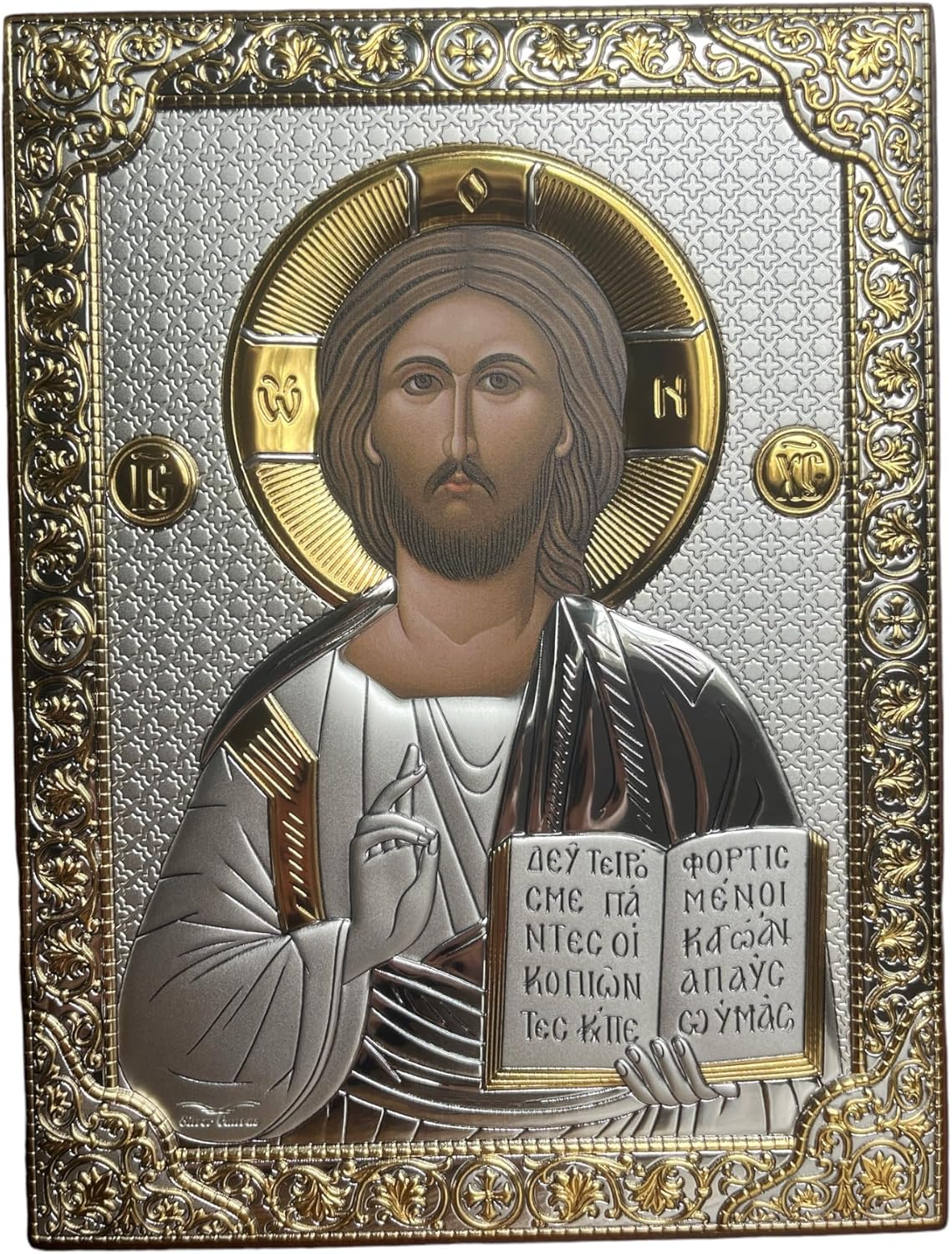
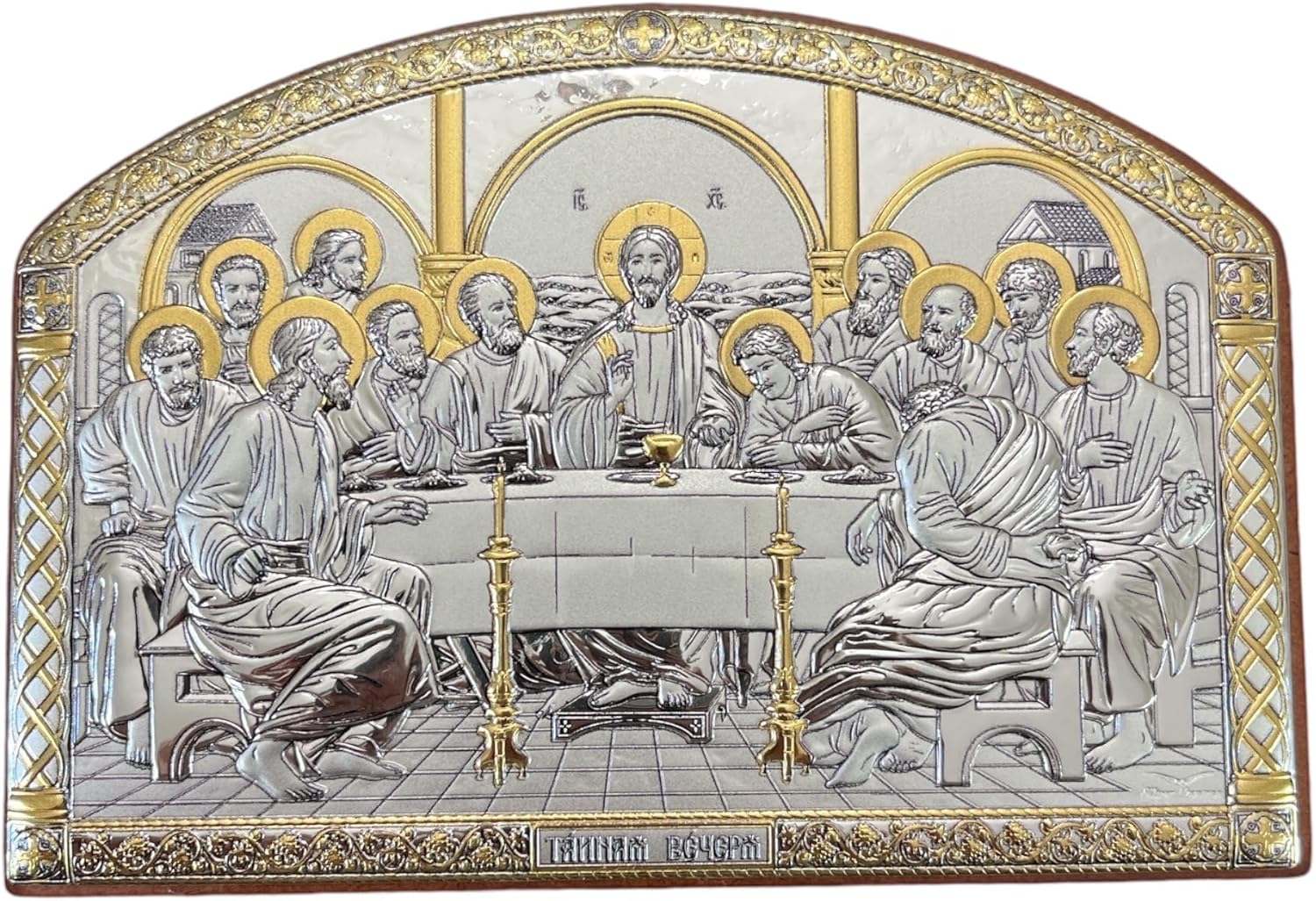
Access Free Marriage Resources →Handmade Sterling Silver Icons from Greece
Premium Byzantine icons handcrafted in Greece using 925° sterling silver — heirloom pieces for prayer corners, gifts, and lasting devotion.

Who Prays to Saint Mariam Baouardy — and What She Carries
People pray to Saint Mariam Baouardy when they are carrying something that will not lift. She is not a saint of easy problems. She is the saint of the person who has been through something severe — violence, loss, spiritual attack, the kind of interior darkness that doesn't yield to ordinary comfort — and who needs an intercessor who has been through it too.
She survived a literal throat-slashing at thirteen. She endured forty days of documented demonic possession. She bore the wounds of Christ in her body weekly. She was rejected from the first religious community that tried to form her. She died from a fall at thirty-two while supervising construction workers in the heat of a Palestinian August. She was never powerful, never educated, never influential by the world's measures. She was hidden in the way that people who endure deep suffering are hidden — known only to those close enough to see.
Pope Francis, in his canonization homily, said she demonstrated "docility to the Spirit" and described her as "poor and uneducated" yet able to provide theological explanations "with extreme clarity, the fruit of her constant converse with the Holy Spirit." He specifically named her as "a means of encounter and fellowship with the Muslim world" — a remarkable designation for an Arab Christian woman who refused to deny Christ before a Muslim attacker and survived it.
Her patronage of survivors of violence, of those experiencing spiritual oppression, and of those struggling with anxiety and emotional anguish is not metaphorical. It is biographical. She knows these roads from the inside.
Patronage
- Deliverance from spiritual oppression and demonic harassment
- Healing from trauma, abuse, and violence
- Anxiety and emotional anguish
- Survivors of violent attack and near-death experiences
- Persecuted Christians in the Middle East
- Holy Land Christians and the Church of the Holy Land
- Humility amid extraordinary spiritual experience
- Those who have been unjustly rejected or dismissed
Who Venerates Her
- Melkite Greek Catholic Church (her rite of origin)
- Roman Catholic Church (canonized 2015)
- Discalced Carmelite Order (her religious family)
- All Eastern Catholic Churches in communion with Rome
- Syro-Malabar Catholic Church (through the Indian Carmelite foundations she co-founded)
- Catholic communities of Palestine, Israel, and the Holy Land
- Carmelite communities in India (Mangalore and beyond)
The Miracles That Led to Her Canonization — and What Was Witnessed in Life
The Miraculous Healing at the Throat (1859). The foundation of all subsequent veneration of Mariam Baouardy is the miracle of her survival after her throat was cut in Alexandria. A French physician examined her neck years later and documented the wound: 10 cm wide, 1 cm deep, with several cartilaginous rings of the tracheal artery missing. The doctor's formal conclusion was that she should not have survived. She did survive. Her voice was permanently damaged, but she lived. She attributed her rescue to the Virgin Mary, identifying the mysterious nurse in blue as the Theotokos.
Documented Mystical Phenomena During Life. The evidence for Mariam's mystical gifts during her lifetime is unusually strong because she lived in the 19th century, within religious communities that kept records. The stigmata were witnessed by multiple priests and sisters. Her levitations were seen by the community at Pau. Her demonic possession and exorcisms were documented in writing. Her clairvoyant knowledge of distant events — persecutions in China described from India — was recorded by those present. Her confessor Don Belloni at Bethlehem produced written testimony of the transparency of the flesh at the stigmata wounds.
Canonization Miracles — Two High-Risk Pregnancies. The two miraculous healings recognized by the Vatican for her canonization both involved women in high-risk pregnancies. The first was a nun in India with life-threatening pregnancy complications; both mother and child were fully healed after prayers to Mariam. The second was a woman in Bethlehem suffering from severe postpartum hemorrhage; she recovered completely. Both cases were medically documented and reviewed by the Vatican's Congregation for the Causes of Saints.
The Aleppo Miracle (2014). A third miracle — the healing of a woman from Aleppo, Syria, from a life-threatening condition — was recognized by Pope Francis in December 2014 and served as the final confirmation leading to her canonization on May 17, 2015.
The Legacy of the Indian Carmel. The Carmelite monastery Mariam co-founded in Mangalore in 1871 became a seed that grew into dozens of Carmelite houses across India. Countless women and men in South Asia trace their Carmelite vocation to the foundation she helped establish — a legacy that multiplied far beyond her short life. Her relics at the Mangalore Carmel are venerated by Indian Catholics to this day.
The Life of Mariam Baouardy — Year by Year
Born in Ibillin, Galilee
Born on the Eve of the Epiphany to parents who had walked barefoot to Bethlehem to pray for a daughter. Their 13th child and first to survive infancy. Dedicated to the Virgin Mary at birth.
Orphaned
Father dies; mother dies within days. Mariam is taken by a wealthy uncle; her brother Paul goes to a maternal aunt. They are separated forever. The uncle's last words entrust her to Saint Joseph's care.
Alexandria
Moves to Alexandria with her uncle's family. Continues childhood piety. Receives First Communion at age eight despite the priest's hesitation.
Refuses Marriage and Conversion — Throat Slashed
Refuses arranged marriage at 13. Refuses to convert to Islam. Has her throat cut and is left for dead. Healed by a mysterious figure in blue who prophecies her entire religious life in precise detail.
Wandering — Alexandria, Beirut, Jerusalem, France
Works as a servant in several cities. Makes a vow of perpetual chastity at the Holy Sepulchre in Jerusalem. Eventually reaches Marseilles, France.
Sisters of Saint Joseph, Marseilles
Accepted as a postulant. Receives stigmata and undergoes ecstasies. Rejected by community vote after two years due to supernatural phenomena. Novice mistress Mother Veronica invites her to Carmel.
Enters Carmel of Pau, France
Takes the name Sister Mary of Jesus Crucified. Mystical phenomena intensify. Levitations witnessed. 40-day demonic possession and exorcism. Community grows in appreciation of her genuineness.
Carmel of Mangalore, India
Co-founds the first Carmelite monastery in India. Makes her religious profession November 21, 1871. Experiences ecstasies and clairvoyant knowledge of distant events. Ordered to return to France amid community confusion about her gifts.
Arrives in Bethlehem
Joins the founding group for the Carmel of Bethlehem. Identifies the site through mystical guidance (flight of pigeons on the hill of David). Oversees construction as the only Arabic speaker among the sisters.
Identifies the Biblical Emmaus
Through a private revelation, plays an important role in the identification of the site of Emmaus — confirmed by subsequent archaeological research.
Fall, Gangrene, and Death
Falls while carrying water for construction workers in the heat of August. The wound becomes gangrenous; the infection spreads to her lungs. She dies at 5:10 AM on August 26, 1878, whispering "My Jesus, mercy." Age 32.
Beatified by Pope John Paul II
Solemn beatification ceremony at Vatican City.
Canonized by Pope Francis
Canonized in St. Peter's Square alongside three others. Becomes the second Melkite Greek Catholic saint canonized in the history of the Church. Pope Francis praises her "docility to the Spirit" and her role as a bridge with the Muslim world.
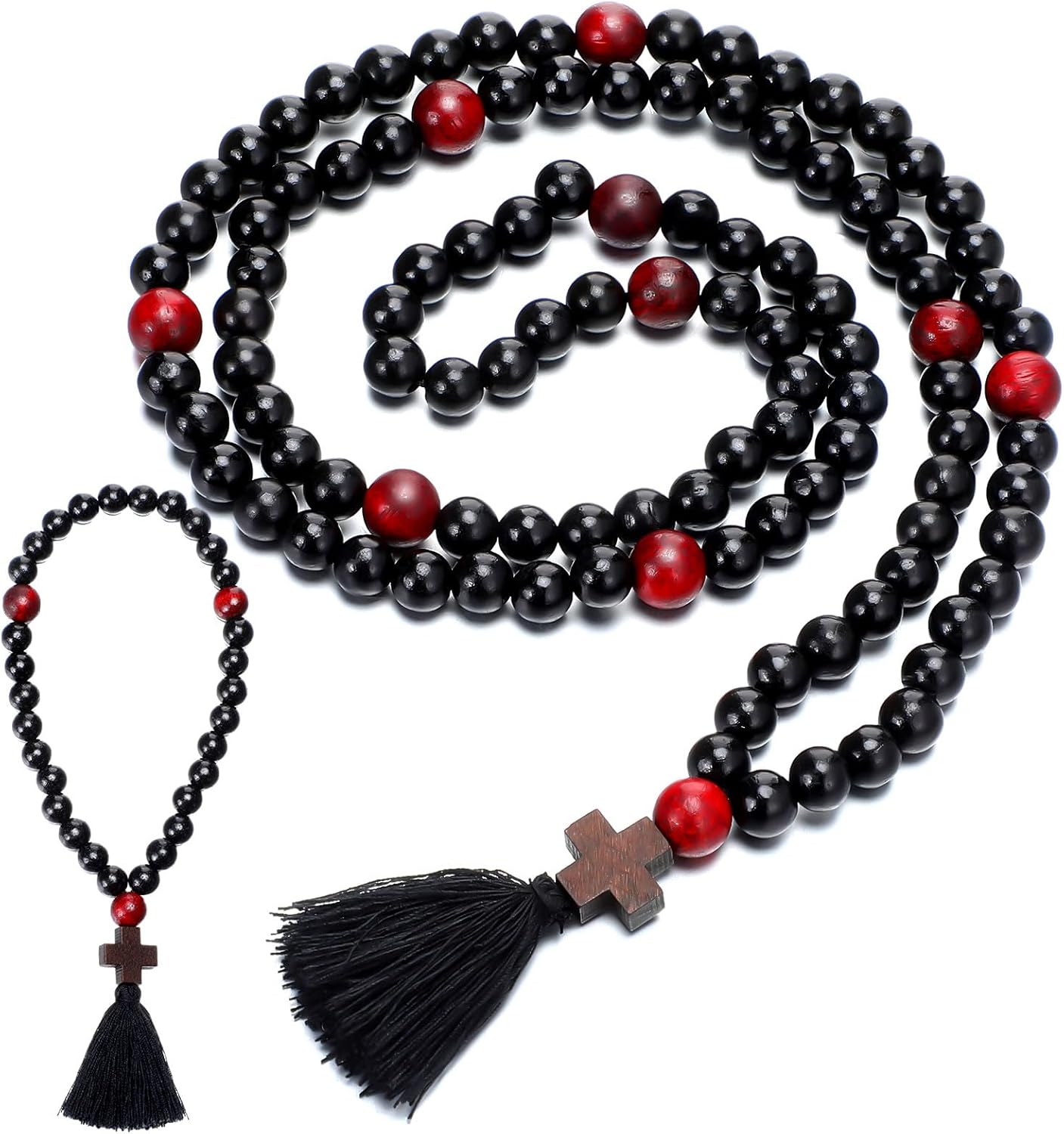
Prayer Ropes in the Mount Athos Tradition
Saint Mariam was a Carmelite — a daughter of the tradition of unceasing prayer. The prayer rope, like the Rosary she carried, anchors the soul to Christ through every hour of darkness and light.


Where to Venerate Saint Mariam Baouardy Today
Unlike some saints whose relics were scattered or hidden, the primary resting place of Saint Mariam Baouardy is known, accessible, and actively welcoming pilgrims. She is buried where she died, in the monastery she helped build, on the hill she identified through mystical vision as the birthplace of King David — and as the place God had chosen for her end.
Carmelite Convent of the Holy Child Jesus (Carmel of Bethlehem)
The primary site of veneration. Saint Mariam is buried in the convent chapel, which is open to pilgrims. The cloistered Carmelite sisters welcome visitors to see her recreated cell, her few personal possessions, and to pray at her tomb. Her relics — bone fragments — are preserved in the chapel. The monastery was built on the site she identified as the Hill of David, overlooking the Grotto of the Nativity.
Carmel of Bethlehem — Official Site →Carmel of Pau — Her Heart
After Saint Mariam's death, her heart was removed and examined. It was then preserved at the Carmel of Pau in France — the monastery where she first entered Carmelite life and where Mother Veronica, in whose arms she died, had also begun her journey. The heart is considered a first-class relic and remains in the custody of the Carmelites of Pau.
Carmelite Convent of St. Ann, Mangalore
Bone-fragment relics of Saint Mariam are venerated at the Carmelite convent she co-founded in 1871 — the first Carmelite monastery in India. The convent in Mangalore has been a center of her veneration in South Asia for over a century, and the community she helped found has grown into dozens of Carmelite houses across India.
Her Birthplace Village
The village of Ibillin in upper Galilee, between Nazareth and Haifa, is where Mariam was born and where she spent her earliest years. She is still known there as "Al Qiddisa" — The Holy One. The village's Christian community maintains her memory as a point of local pride and spiritual identity. The church of Ibillin marks her birth and early life.
Traditional Prayers to Saint Mariam Baouardy
O Saint Mariam,
who trusted Christ through suffering and darkness,
intercede for us before the Lord.
You who endured violence yet chose forgiveness,
bring healing to wounded hearts.
You who faced spiritual trial with humility,
protect us from oppression and fear.
Obtain for us peace in anxiety,
strength in weakness,
and hope in despair.
Through your prayers,
may Christ restore our souls
and grant us His mercy.
Amen.
Mariam Baouardy's Own Prayer — Written in 1869
-
Holy Spirit, inspire me.
Love of God, consume me.
To the right path lead me.
Mary my mother, look down upon me.
With Jesus, bless me.
From all evil, all illusion, all danger, preserve me.
Questions About Saint Mariam Baouardy
Carry Saint Mariam With You
Her prayer card is handmade in Austin, TX — prayed over during every step of creation, printed on museum-quality photo paper, and made to order as a unique devotional offering. A spiritual heirloom for seasons of spiritual oppression, trauma, and the slow return to peace.
Get the Saint Mariam Baouardy Prayer Card — $3.00 →