Saint Josaphat Kuntsevych – Biography, Incorrupt Body & Prayer
Saint Josaphat Kuntsevych Archbishop of Polotsk · Josafat Kuntsevych · Ivan Kuntsevych (Baptismal Name)
He was not martyred by pagans. He was killed by Christians — struck with an axe, shot, and thrown into a river for the crime of pursuing the unity Christ prayed for. His motto: Ut unum sint. That all may be one.
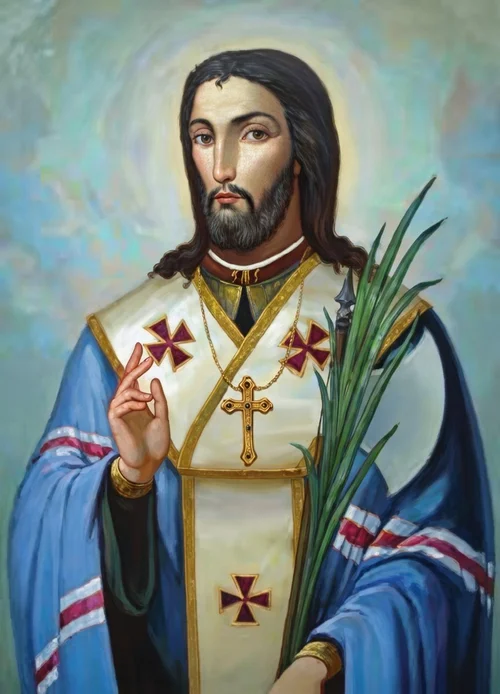
Saint Josaphat Kuntsevych Prayer Card
Printed on museum-quality photo paper and prayed over during every step of creation. Made to order, with your name lifted before Christ. A spiritual heirloom for seasons of church conflict and the costly pursuit of unity.
View the Prayer Card →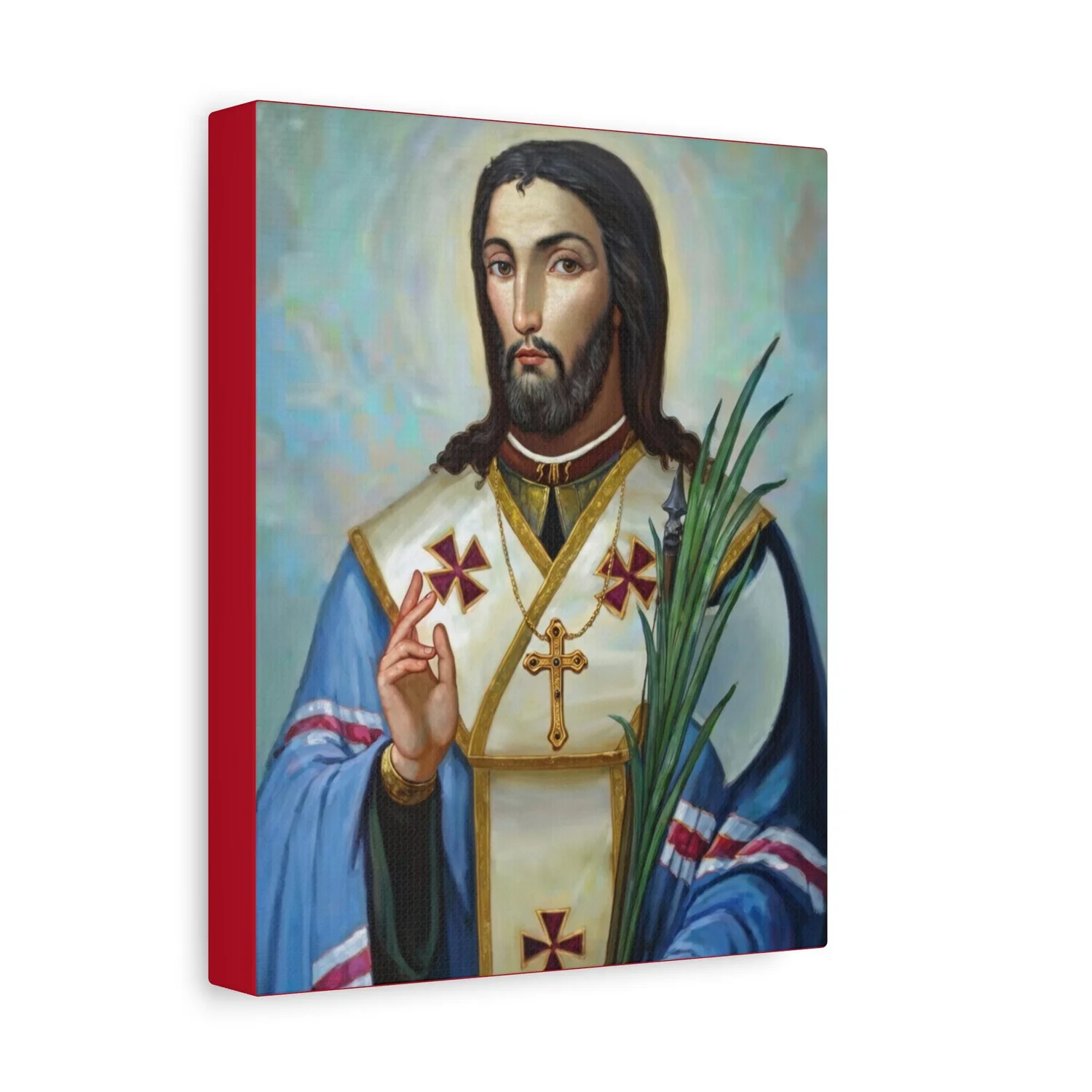
Saint Josaphat Kuntsevych Byzantine Canvas Icon
A traditional Byzantine-style canvas icon of Saint Josaphat — gallery-stretched on pine, printed with non-toxic Greenguard Gold inks. Available in 14 sizes from 8×10 to 32×48. A reverent presence for a home chapel, parish office, or prayer corner.
View the Canvas Icon →- Birth Name
- Ivan Kuntsevych · Monastic name: Josaphat · Coat of arms: Rose (Ruthenian nobility)
- Feast Day
- November 12 — Ukrainian Greek Catholic, Roman Catholic, Ruthenian Catholic, and General Roman Calendar
- Born
- c. 1580 · Volodymyr, Volhynia, Polish-Lithuanian Commonwealth (modern Volodymyr, Volyn Oblast, Ukraine)
- Died
- November 12, 1623 · Vitebsk, Polish-Lithuanian Commonwealth (modern Vitebsk, Belarus) · Age c. 43
- Faith Tradition
- Ukrainian Greek Catholic Church · Ruthenian Byzantine Catholic Church · Roman Catholic Church (recognized universally)
- Religious Order
- Order of Saint Basil the Great (Basilian Fathers — O.S.B.M.) · Co-founder with Metropolitan Joseph Rutsky
- Episcopal Motto
- "Ut unum sint" — "That all may be one" (John 17:21)
- Canonized
- June 29, 1867 · Pope Pius IX · First Eastern Catholic saint formally canonized by Rome
- Patron Saint Of
- Church unity and Christian reconciliation · Ukraine · Edmonton, Alberta eparchy · Toronto, Ontario eparchy · Reunion of Catholic and Orthodox churches (Pope Pius XI, 1923)
- Body
- Incorrupt · Glass reliquary under the Altar of Saint Basil the Great, Saint Peter's Basilica, Vatican City · Open to pilgrims daily
Born into Division — and the Spark That Changed Everything
Ivan Kuntsevych was born around 1580 in the town of Volodymyr in Volhynia — the territory of what is now western Ukraine — to Havrylo and Maryna Kuntsevych, members of the Ruthenian nobility. His family had not been wealthy for some time; his father worked hard to provide. From his earliest years the boy who would be sent to Vilnius to learn the merchant's trade showed an intensity of religious devotion that those around him found unusual.
The account of his conversion is preserved in his own confession to his spiritual director. One day, when he was still a small boy, his mother brought him to the parish church of Saint Parasceve in Volodymyr and showed him the icon of the crucifixion on the wall. She explained what the cross meant — that Jesus had become man, had suffered and died, and had done it out of love. Josaphat later told his confessor:
"At that very moment, I saw a spark of fire leave the side of Jesus and enter my heart. Suddenly I was filled with an indescribable sweetness and love, so that I became motionless, unable to see or hear anything. Such an intense love for our Savior enkindled my heart that for thirty years I have never missed Church services."
— Saint Josaphat Kuntsevych, confession to his spiritual director
His father sent Ivan to Vilnius — the capital of the Lithuanian Grand Duchy — to apprentice under a successful merchant named Papovych. Ivan tried to be a good apprentice. But his heart was elsewhere. He spent every free hour in prayer and study. Papovych eventually became so fond of him that he offered his entire fortune and his daughter's hand in marriage. Ivan refused both. He entered the Basilian Monastery of the Holy Trinity in Vilnius around the age of twenty, was immediately received with a solemn profession, and was given the name Josaphat.
Historical Context: The Union of Brest (1596)
In 1596, bishops of the Ruthenian Orthodox Church signed the Union of Brest — entering communion with Rome while retaining the Byzantine liturgy, calendar, married clergy, and all Eastern customs. This created the Ruthenian Greek Catholic Church (predecessor of today's Ukrainian Greek Catholic Church) and immediately divided the Ruthenian Christian world into two fiercely opposed communities: Uniates (accepting Rome) and Disunitiates (remaining with Constantinople). When Ivan Kuntsevych arrived in Vilnius, this wound was still fresh and being kept open by powerful political forces on both sides.A Decayed Community, a Transforming Friendship, and a Renewed Order
The Basilian Monastery of the Holy Trinity in Vilnius was, by all accounts of the time, in a severe state of spiritual decay. Josaphat entered it and began reforming it from within — restoring regular prayer, obedience, and authentic monastic life. At the same time he encountered the man who would become his closest collaborator: John Velamin Rutsky, a highly educated scholar recently returned from Rome. Rutsky entered the Basilian Order in 1607, taking the name Joseph. Together they transformed the Vilnius community.
Josaphat was ordained a priest in 1609. In 1617, he and Rutsky formed the first confederation of Eastern Catholic monasteries, which became the Order of Saint Basil the Great — the institution that carries the Eastern Catholic monastic tradition to this day. Rutsky became the Metropolitan of Kiev. Josaphat became a bishop. He was consecrated Bishop of Vitebsk on November 12, 1617 — the exact date of his future martyrdom, six years later.
Rebuilding a Church Nobody Wanted — By Personal Example
Josaphat succeeded as Archbishop of Polotsk in 1618. What he found was a disaster. Church buildings were falling apart. Clergy lived in ways that would have disgraced a layman. Monks had abandoned their monasteries. And all of this unfolded in the middle of an open religious civil war between Greek Catholics and Orthodox communities fighting over the same buildings and the same flocks.
His response was total. He held synods throughout the diocese. He published a catechism and required the clergy to teach it. He visited every parish he could reach on horseback. He oversaw the complete rebuilding of the great Saint Sophia Cathedral in Polotsk between 1618 and 1620. His most compelling argument — the one nobody could answer — was his own life. He fasted. He slept on a hard surface. He wore a hairshirt against his skin every day until his death; the mob would discover this when they stripped his body and briefly hesitate, thinking they had killed the wrong man. He was generous to the poor to the point of personal deprivation. Within three years, he had won a large portion of the Orthodox population of the region to the Union.
Byzantine Icons for Your Prayer Corner
Josaphat gave his life defending the Eastern liturgical tradition in communion with Rome. These handcrafted Byzantine icons carry that same living tradition into your home.


A Rival Archbishop, False Accusations, and a City Armed for Violence
The opposition to Josaphat was both principled and inflamed. In 1621, a rival Orthodox hierarchy was established by force, and Meletius Smotritsky — a formidable scholar — was named rival Orthodox Archbishop of Polotsk. He immediately circulated pamphlets accusing Josaphat of having "gone Latin" and threatening the Byzantine rite. These accusations were false. Josaphat had explicitly and repeatedly guaranteed the preservation of the Eastern liturgy. But fear was more powerful than documentation, and the fear spread through parishes like fire.
By 1623, friends warned Josaphat repeatedly to leave Vitebsk. He replied with the words that define his memory:
"If I am counted worthy of martyrdom, then I am not afraid to die. You wait in ambush everywhere. Here I am. I am ready to die for the union of the Church under Saint Peter."
— Saint Josaphat Kuntsevych, preaching at Vitebsk, October 1623
He had been preaching from John 16:2 — "An hour is coming when those who kill you will think that by doing so they are offering worship to God." He knew what was coming. He chose to stay.
The Bells Ring, the Mob Assembles, and the Archbishop Refuses to Flee
Reconstructed from eyewitness testimony to the 1628 canonization commission
A Disuniate priest begins shouting insults at Josaphat from the courtyard of the archbishop's residence — a deliberate provocation. He is removed and confined.
The bells of multiple churches ring — the pre-arranged signal for insurrection. Witnesses report crowds gathering from all sides of town with stones. The residence is stormed.
The mob breaks in. Josaphat stands alone. One strikes him with a stick. Another splits his skull with an axe. A pistol shot is fired into his body. They drag him into the street, strip his vestments — and briefly hesitate, having found the hairshirt beneath.
His body is thrown into the Dvina River, weighted with stones. His servants are beaten; the Jewish residents of Vitebsk are the only ones who publicly try to stop the violence and mourn for Josaphat afterward.
The Jewish Defenders, the Converted Enemy, and 93 Death Sentences
The aftermath of Josaphat's martyrdom was not the triumph his killers had anticipated. The shock of what the mob had done swung public opinion sharply toward the Catholics and the Union — the opposite of what the violence had intended.
The unsung figures in the immediate aftermath are the Jewish residents of Vitebsk. It was the Jewish community who rushed into the archbishop's courtyard during the attack to pull out his servants before they could be killed. While the Catholic community hid in fear, the Jewish people of the city stood up and publicly named the killers. Their courage saved lives — a detail documented in the historical record that deserves far more attention than it receives.
Josaphat's body was recovered from the Dvina River after three days — intact. It was brought to the cathedral at Polotsk, where it lay in state and was immediately venerated. Pilgrimages began. Miracles were reported within weeks. In January 1624, a royal commission sentenced 93 people to death. The city of Vitebsk lost its Magdeburg rights — its charter of civic self-governance — as collective punishment.
Meletius Smotritsky — Josaphat's most formidable intellectual opponent, whose pamphlets had inflamed the mob — eventually converted to Rome. He attributed his conversion to Josaphat. The Roman Breviary records that "the first beneficiaries of his martyrdom were his own assassins, who were all reconciled to Rome."
Bring Saint Josaphat Into Your Home, Parish, or Chapel
This traditional Byzantine-style canvas icon of Saint Josaphat Kuntsevych is gallery-stretched on renewable radiata pine and printed with non-toxic Greenguard Gold latex inks. The matte, non-reflective finish preserves every detail of the iconographic image — designed to bring a quiet, reverent presence to any prayer space.
Free Marriage Resources from The Eastern Church
Josaphat gave everything for the unity of the Church — because Christ prayed "that all may be one." Unity in the Church and unity in marriage share the same root: self-giving love that costs something. If you are looking for resources to strengthen your marriage through the wisdom of the Eastern Christian tradition, we have gathered them here — free.
Access Free Marriage Resources →Handmade Sterling Silver Icons from Greece
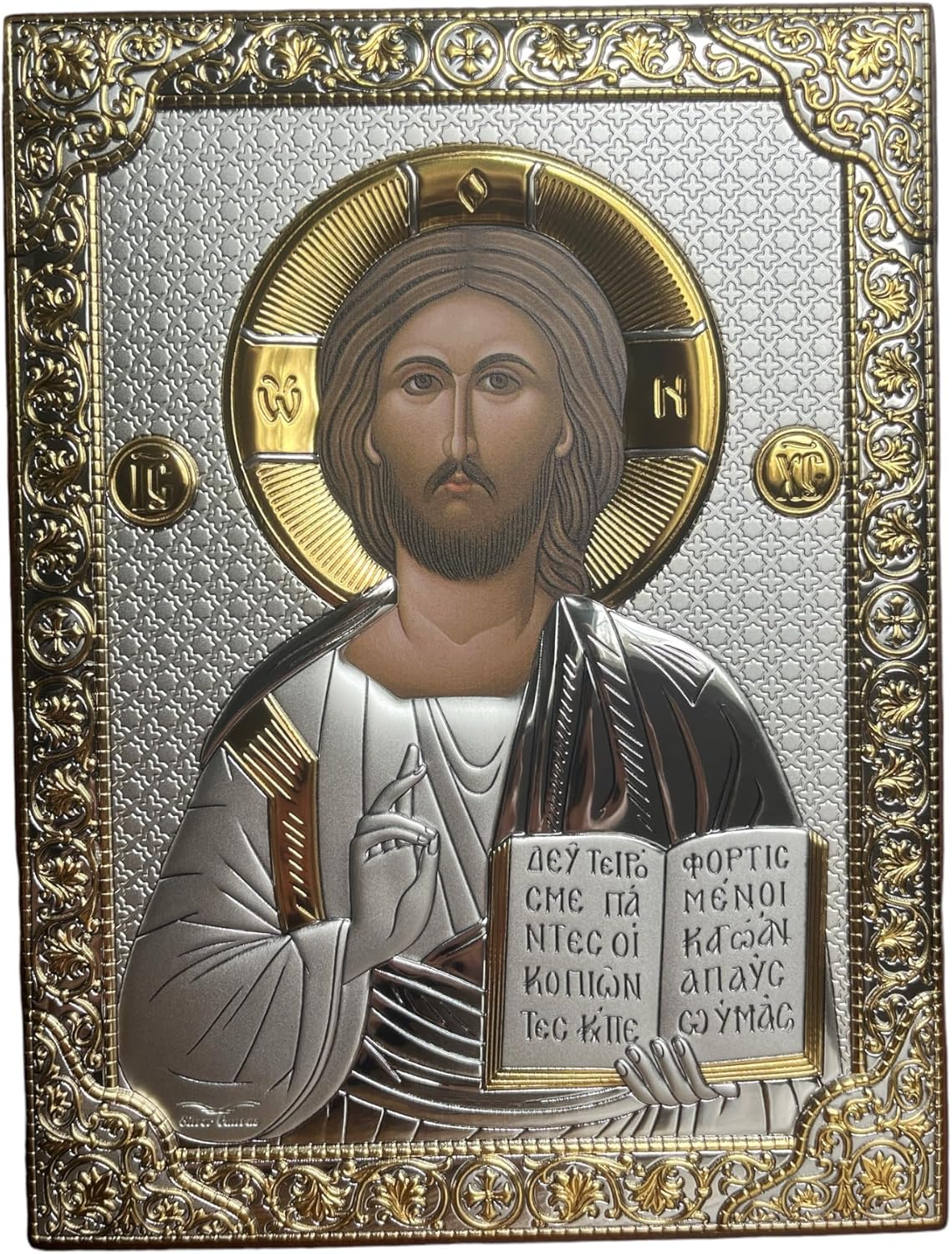
Premium Byzantine icons handcrafted in Greece using 925° sterling silver — heirloom pieces for prayer corners, gifts, and lasting devotion.

Who Prays to Saint Josaphat — and What He Carries for Them
People pray to Saint Josaphat when they are in the middle of church conflict and it is costing them. The priest caught between factions in his parish. The convert who loves their new community but grieves what they left. The believer whose family is split between traditions and for whom Sunday is a wound. The bishop trying to hold a diocese together across fracture lines. He knows all of these landscapes from the inside.
His patronage of Church unity was formally defined by Pope Pius XI in 1923, on the three hundredth anniversary of his martyrdom, when the Pope issued the encyclical Ecclesiam Dei — specifically designating Josaphat the patron of reunion between the Catholic and Orthodox churches. This is a precisely defined, magisterially established patronage, not a popular devotion. Pope Francis, speaking to Ukrainian Greek Catholics in 2013, said: "The best way to celebrate Saint Josaphat is to love one another, and to love and serve the unity of the Church."
Patronage
- Church unity and Christian reconciliation
- Courage during religious conflict and ecclesial division
- Perseverance under persecution from within the Church
- Bishops, clergy, and church leaders in difficult situations
- Healing from wounds caused by denominational conflict
- Reunion of Catholic and Orthodox churches (formal papal designation)
- Ukraine (patron saint)
- Edmonton, Alberta & Toronto, Ontario eparchies
Who Venerates Him
- Ukrainian Greek Catholic Church (his own tradition)
- Ruthenian Byzantine Catholic Church
- Roman Catholic Church — General Roman Calendar
- All Eastern Catholic Churches in communion with Rome
- Basilian Fathers (O.S.B.M.) worldwide — he co-founded their order
- Sisters Servants of Mary Immaculate
- Ukrainian diaspora communities globally
The Incorruptible Body, 116 Sworn Witnesses, and the Conversion of His Enemy
The Incorrupt Body. Three days after Josaphat's body was thrown into the Dvina River — weighted with stones — it was recovered intact. Brought to the cathedral at Polotsk, popular veneration began immediately. Five years later, when examined during the beatification investigation, the body was still incorrupt. In 1982, when the reliquary in Saint Peter's was opened to revest the body in new vestments, Father Raphael Melnyk, Provincial of the Basilians in Canada, testified that the body was still intact and "the limbs could still be lifted."
The Commission of 116 Witnesses (1628). Just five years after his death, Pope Urban VIII appointed a formal commission to investigate Josaphat's beatification. That commission examined 116 witnesses under oath, addressing his life, virtues, manner of death, and posthumous miracles. A second commission investigated in 1637. Beatification followed in 1643 — only twenty years after the martyrdom, a remarkably swift process.
The Greatest Miracle: The Conversion of His Enemy. The Roman Breviary states that "the first beneficiaries of his martyrdom were his own assassins, who were all reconciled to Rome." Chief among them was Archbishop Meletius Smotritsky — the man whose pamphlets had done the most to inflame the mob. He converted to Rome and attributed his conversion to the intercession of Josaphat. The man he had most bitterly opposed in life became the instrument of his return.
Ongoing Intercession. Testimonies gathered at the Church of the Nativity of the Blessed Virgin Mary in Biała Podlaska, Poland — which holds his relics — describe healings and reconciliations between estranged family members, siblings, and neighbors attributed to his prayers across the centuries.
The Life and Afterlife of Saint Josaphat
Birth in Volodymyr, Volhynia
Born Ivan Kuntsevych to Ruthenian nobility. As a boy experiences the "spark of fire" vision at the Church of Saint Parasceve — the encounter that defines his entire life.
Apprenticed in Vilnius
Sent to learn the merchant trade. Devotes every free hour to prayer and study. Refuses his master's offer of fortune and marriage. Becomes one of the few in Vilnius to accept the Union of Brest (1596).
Enters the Basilian Monastery, Vilnius
Takes the name Josaphat. Meets John Velamin Rutsky. Together they reform the monastery and begin the renewal of Eastern Catholic monastic life.
Ordained Priest · Prior of Multiple Monasteries
His reforming energy and reputation for holiness spread across the Polish-Lithuanian Commonwealth. With Rutsky founds the confederation that becomes the Order of Saint Basil the Great.
Consecrated Bishop of Vitebsk
The exact date of his future martyrdom — six years later. Succeeds as Archbishop of Polotsk in 1618. Finds the archdiocese in ruins.
Rebuilds Saint Sophia Cathedral, Polotsk
Holds synods, publishes catechism, visits every parish on horseback. Rebuilds the great cathedral. Within three years wins a large portion of the Orthodox population in the region to the Union.
Rival Hierarchy Established — Conflict Escalates
Meletius Smotritsky named rival Orthodox Archbishop of Polotsk. His pamphlets accuse Josaphat of "going Latin." The accusations are false but effective. Sectarian violence begins to build.
Martyrdom at Vitebsk
The church bells ring as a prearranged signal. The mob storms the residence. Josaphat is struck with an axe, shot, and thrown into the Dvina River. He dies on the sixth anniversary of his episcopal consecration.
Body Recovered Incorrupt
Three days after death. Immediate popular veneration. Jewish residents of Vitebsk publicly name the killers while the Catholic community hides in fear.
93 Sentenced — Vitebsk Loses Its Charter
Royal commission sentences 93 people to death. Vitebsk loses its Magdeburg rights. Meletius Smotritsky begins his journey toward conversion.
Beatified by Pope Urban VIII
Twenty years after his death. Based on the testimony of 116 sworn witnesses. Feast assigned to November 12.
Canonized — First Eastern Catholic Saint
Pope Pius IX canonizes Josaphat Kuntsevych, making him the first Eastern Catholic saint formally canonized by the Holy See.
Pope Pius XI — Encyclical Ecclesiam Dei
On the 300th anniversary of the martyrdom, Pius XI designates Saint Josaphat the patron of reunion between the Catholic and Orthodox churches.
Body Transferred to Saint Peter's Basilica
Ordered by Pope John XXIII, carried out under Pope Paul VI. Placed under the Altar of Saint Basil the Great. Paul VI states Josaphat "should not be separated from blessed Peter."
Reliquary Opened and Examined
Body revested. Face and hands covered with bronze masks donated by the Basilian Fathers of Canada. Father Melnyk testifies the body is still intact and limbs still movable.
Prayer Ropes in the Mount Athos Tradition
Josaphat was a Basilian monk before he was a bishop — formed by the tradition of unceasing prayer the Eastern Church has preserved for seventeen centuries. The prayer rope is the physical anchor of that tradition.


Where to Venerate Saint Josaphat Today
Saint Josaphat is one of the most accessible major saints for pilgrims — his incorrupt body lies in a glass reliquary in Saint Peter's Basilica, open every day the Basilica is open. Millions of people walk past him each year without knowing he is there. The directions below will help you find him.
Altar of Saint Basil the Great — Saint Peter's Basilica
The incorrupt body of Saint Josaphat lies in a glass reliquary in the Chapel of Saint Basil in the right nave of Saint Peter's Basilica. Enter the main doors, walk along the right nave past the tomb of Pope John Paul II to the pillar holding the tomb of Pope John XXIII, then turn toward the Chapel of Saint Basil. His face and hands are covered by bronze masks donated by the Basilian Fathers of Canada. Open daily during Basilica hours — no special appointment needed.
Saint Peter's Basilica — Official Site →Basilica of Saint Josaphat
Two first-class relics of Saint Josaphat — one inside the High Altar, one in the lower Chapel with Vatican documentation of authenticity displayed. A Pontifical Minor Basilica modeled on Saint Peter's in Rome, it is one of the most architecturally significant Catholic churches in the United States and the primary North American center of his veneration.
Basilica of Saint Josaphat, Milwaukee →Church of the Nativity of the Blessed Virgin Mary
A growing pilgrimage site holding relics of Saint Josaphat, with written testimonies of healings and reconciliations. Particularly active since the 400th anniversary of his martyrdom in 2023, this church is in the process of becoming a formal sanctuary.
Saint Sophia Cathedral (Historical Site)
The great cathedral that Josaphat completely rebuilt between 1618 and 1620 — the center of his archdiocese and the church where his body was first venerated after being recovered from the Dvina River. The cathedral still stands in Polotsk, now in Belarus, though it passed through many subsequent hands and uses across the centuries.
Traditional Prayers to Saint Josaphat Kuntsevych
O Saint Josaphat,
who gave your life for the unity of the Church,
obtain for us from Christ the grace to love unity
with courage and humility.
Intercede for divided Christians.
Strengthen those who suffer for reconciliation.
Grant us patience in conflict
and fidelity in truth.
May your martyrdom bear fruit in our time,
and may Christ bring His Church
into visible and lasting unity.
Amen.
Saint Josaphat's Own Prayer — His Lifelong Petition
-
Grant, O Lord, that I may be found worthy to shed my blood for the Holy Union,
and for obedience to the Apostolic See.
Questions About Saint Josaphat Kuntsevych
Honor Saint Josaphat in Your Home
A prayer card for your pocket and a canvas icon for your wall — two ways to keep this witness for unity close. Both made or sourced with care, by a small team in Austin, TX that treats every order as a devotional offering.