Saint Barbara the Great Martyr
Saint Barbara the Great Martyr Ἁγία Βαρβάρα · Velikomuchenitsa Varvara · Burbara of Heliopolis
She was locked in a tower to keep her from Christ. She found Him anyway — through the stars, through contemplation, through a window cut in the shape of the Trinity. Her own father executed her. He was struck by lightning before he reached home.
Choose the Saint Barbara Prayer Card That Speaks to You
Each card is handmade in Austin, TX — prayed over during every step of creation, printed on museum-quality photo paper, and made to order. Three iconographic styles, one saint.
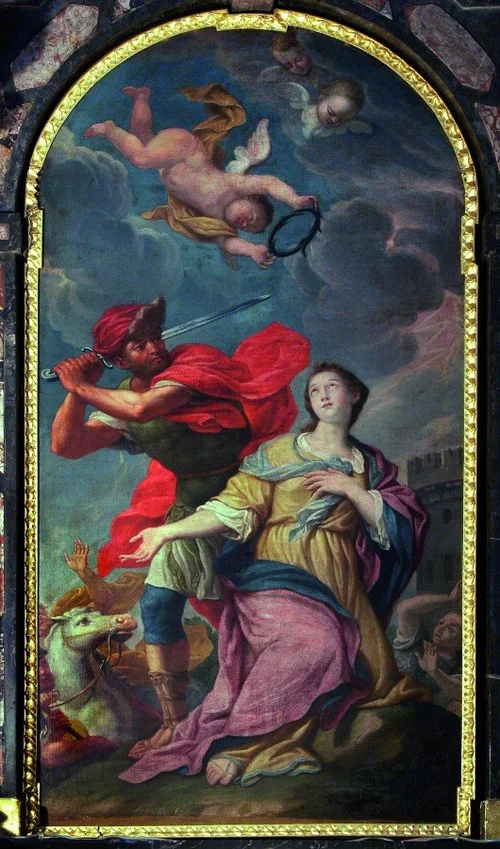
Saint Barbara — Great Martyr (Byzantine)
Traditional Eastern iconographic rendering of Saint Barbara, patron of courage, sudden death protection, and family rejection. A devotional heirloom for daily prayer.
View This Card →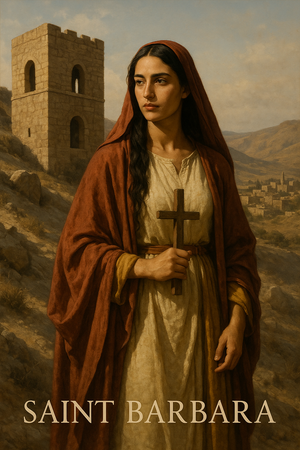
Saint Barbara — Patroness of Courage & Protection
A second iconographic rendering of Saint Barbara — a different visual expression of the same powerful intercessor. Ideal for those seeking a more classic devotional aesthetic.
View This Card →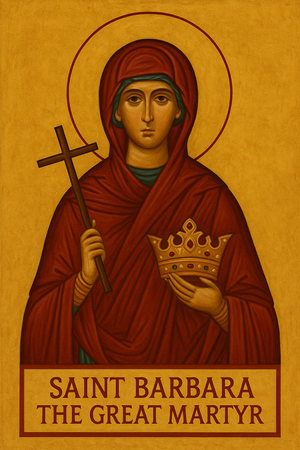
Saint Barbara — Great Martyr (Alternate Icon)
A third rendering of Saint Barbara in her role as Great Martyr of the Eastern Church — distinct iconography for those drawn to a specific visual tradition of the saint.
View This Card →- Also Known As
- Great Martyr Barbara · Burbara of Heliopolis · Velikomuchenitsa Varvara (Russian) · Hagia Varvara (Greek) · Eid il-Burbara (Arabic feast name)
- Feast Day
- December 4 — Eastern Orthodox, Oriental Orthodox, Roman Catholic, and all Eastern Catholic Churches. December 17 (new style) in the Russian Orthodox tradition.
- Lived
- c. late 3rd century–c. 306 AD · Heliopolis, Phoenicia (modern Baalbek, Lebanon) or Nicomedia (modern Izmit, Turkey)
- Died
- c. December 4, 306 AD · Beheaded by her father Dioscorus · Place: Heliopolis or Nicomedia
- Faith Tradition
- Pre-Schism undivided Church · Venerated across Eastern Orthodox, Oriental Orthodox, Roman Catholic, and all Eastern Catholic Churches
- Status in Rome
- Removed from the General Roman Calendar in 1969 due to historical uncertainty — but remains in the Roman Martyrology and is fully venerated by Catholics worldwide
- Patron Saint Of
- Protection from sudden and unprepared death · Artillerymen and armourers · Miners and those working with explosives · Mathematicians · Firefighters · Those facing family rejection for faith
- One of the Fourteen Holy Helpers
- Barbara is one of the 14 Auxiliary Saints invoked collectively for specific needs. Her specific role: protection against sudden death without sacraments.
- Relics (Primary)
- Saint Vladimir's Cathedral, Kyiv, Ukraine — transferred from Constantinople in the 12th century by Princess Barbara, daughter of Emperor Alexius Comnenos
- Companion Martyr
- Saint Juliana of Heliopolis — martyred alongside Barbara on the same day. Feast: February 21.
The Question of Saint Barbara's Historicity — and Why It Does Not Diminish Her
What this does not mean: She was NOT removed from the list of saints, only from the revised calendar. She remains in the Roman Martyrology. The Eastern Orthodox Church and Oriental Orthodox Churches have never wavered in their full veneration of her as Great Martyr Barbara. The removal was a liturgical calendar reform, not a declaration of non-existence. The tradition of her intercession — especially for protection from sudden death without sacraments — has been part of the living prayer of Christians for over twelve hundred years, and continues vigorously today in the Eastern churches, in the military, and in the Middle East where her feast is one of the most widely celebrated days of the Christian year.
A Tower, a View of the Hills, and a Question That Could Not Be Answered
Barbara was the daughter of Dioscorus, a wealthy and illustrious pagan in the Syrian city of Heliopolis in Phoenicia — the same Heliopolis of the sun-god that stands today as Baalbek in Lebanon, or in some accounts the city of Nicomedia in what is now Turkey. After the death of his wife, Dioscorus devoted himself entirely to his only daughter. She was remarkable — extraordinarily beautiful, he believed, and intelligent in ways that unnerved him. Fearing that the world would take her from him, or that she might encounter Christian teaching, he built a tower specifically to contain her. Only her pagan tutors were permitted to enter.
The tower was meant to seal her off from everything that could disturb his peace of mind. Instead, it gave her something her father had not anticipated: time. And a view.
From her tower, Barbara could see for long distances across the hills of Syria — the wooded slopes, the rivers, the meadows, the arching sky at night with its vault of stars. The pagan teachers told her that the sun and the stars and the idols her father worshipped were the proper objects of devotion. Barbara looked at the hills, looked at the stars, looked at the idols, and found the logic deficient. Something — or Someone — had made all of this. The idols were man-made stone. Whatever made the hills and the stars was not made by anyone's hands.
She began to pray to this unknown Creator. Without instruction, without a community, without a teacher who could help her — alone in her tower — Barbara came to what the Eastern Orthodox Church calls a natural theology: the recognition of God through the beauty and order of creation. She longed to know His name.
According to the tradition preserved by Symeon Metaphrastes and included in the Golden Legend, this process of seeking eventually led her to connect with Christian teaching — the accounts differ on whether through a book, through a traveler, or through divine illumination. What is consistent across all versions is that she came to faith largely through her own interior seeking before anyone taught her the content of the faith. The conversion was prepared in solitude, and then sealed by instruction.
She was baptized. She became a Christian. And she decided that the time had come to make it known.
The Third Window — the Smallest Confession, the Costliest Consequence
Before Dioscorus departed on a long journey, he commissioned a bathhouse to be built near Barbara's tower — a personal bathing facility that would serve her during his absence. He specified two windows. When he was gone, Barbara approached the workers and gave them an additional instruction: cut a third window. Three windows. One for each Person of the Holy Trinity.
The workers did as they were told. When Dioscorus returned, he found a bathhouse with three windows where he had specified two. He questioned his daughter about the change. She did not deflect. She explained it to him plainly: the Trinity. Father, Son, and Holy Spirit. Three windows. The light that came through them was one light.
He was not interested in the theology. He was enraged. She was a Christian. His plan had failed. He had given his entire life to shielding her and the thing he had most feared had happened inside the very tower he built to prevent it.
He pursued her. She fled. The tradition relates that the mountain opened before her and hid her in a cleft of rock, while her father searched frantically. She was eventually discovered — betrayed, some versions say, by a shepherd who revealed her hiding place. Her father dragged her before Marcianus (or Martinianus), the governor of the province, and presented his own daughter as a criminal.
"Light comes through a window and yet remains one light. So is the Father, the Son, and the Holy Spirit: three Persons, one God."
— Saint Barbara, traditional account of her explanation to her father, as preserved in the Golden Legend
Torture, a Miraculous Healing, and the Father Who Became the Executioner
Before the governor Martianus, Barbara was examined and commanded to renounce Christ. She refused. She was scourged. She was tortured — with hooks, according to the accounts. She was paraded naked through the city in an act of public humiliation intended to break her will. The tradition records that through her prayers, the Lord sent an angel who covered the nakedness of the martyrs with a radiant robe. She continued to praise God through every wound.
That night, in her prison cell, Jesus Christ appeared to her and healed her wounds. This vision is the theological center of her feast in the Eastern Church: the promise that those who suffer for Christ will be comforted by Christ in the suffering itself. Her tortured body was healed enough to stand trial again the next morning, to the astonishment of her guards. She took this miracle not as a sign to flee or bargain, but as a sign to continue.
She was condemned to death by beheading. Dioscorus asked — was permitted — was granted the right to carry out the sentence himself.
He beheaded his own daughter.
She died on December 4, approximately 306 AD. On the same day, her companion Saint Juliana was also martyred. A pious man named Valentinus buried both bodies, and the tradition says that at their grave, miracles of healing began immediately for the pilgrims who came to pray.
Dioscorus did not reach home. Both he and Martianus — the governor — were struck down by lightning on the road. Every version of the tradition agrees on this detail. It is the single point of the story that never changes between Eastern and Western accounts, between the Syriac and Latin and Greek texts. The lightning found them both.
That lightning is the origin of fourteen centuries of sailors, soldiers, miners, and ordinary people carrying the image of Saint Barbara into every place where sudden death was near.
Saint Juliana of Heliopolis — The Woman Who Saw and Could Not Be Silent
Saint Barbara did not die alone. The Eastern Orthodox hagiographic tradition preserves the memory of a second martyr who died alongside her: Juliana, a Christian woman of Heliopolis. When Juliana witnessed the public torture of Barbara — when she saw her being paraded bleeding through the city — she could not remain silent. She stepped out of the crowd and openly declared herself a Christian in protest.
She was immediately seized, tortured alongside Barbara, and executed on the same day. She had not been arrested. She had not been sought out. She walked into the sentence herself, because she could not watch the suffering of her fellow Christian in silence.
Saint Juliana of Heliopolis is commemorated together with Saint Barbara on December 4 in the Eastern churches. Her feast in the Western calendar falls separately on February 21. She is not often named in popular accounts of Saint Barbara's story, but the Eastern tradition has always kept her memory alive alongside Barbara's — two women who died together, one by design and one by choice.
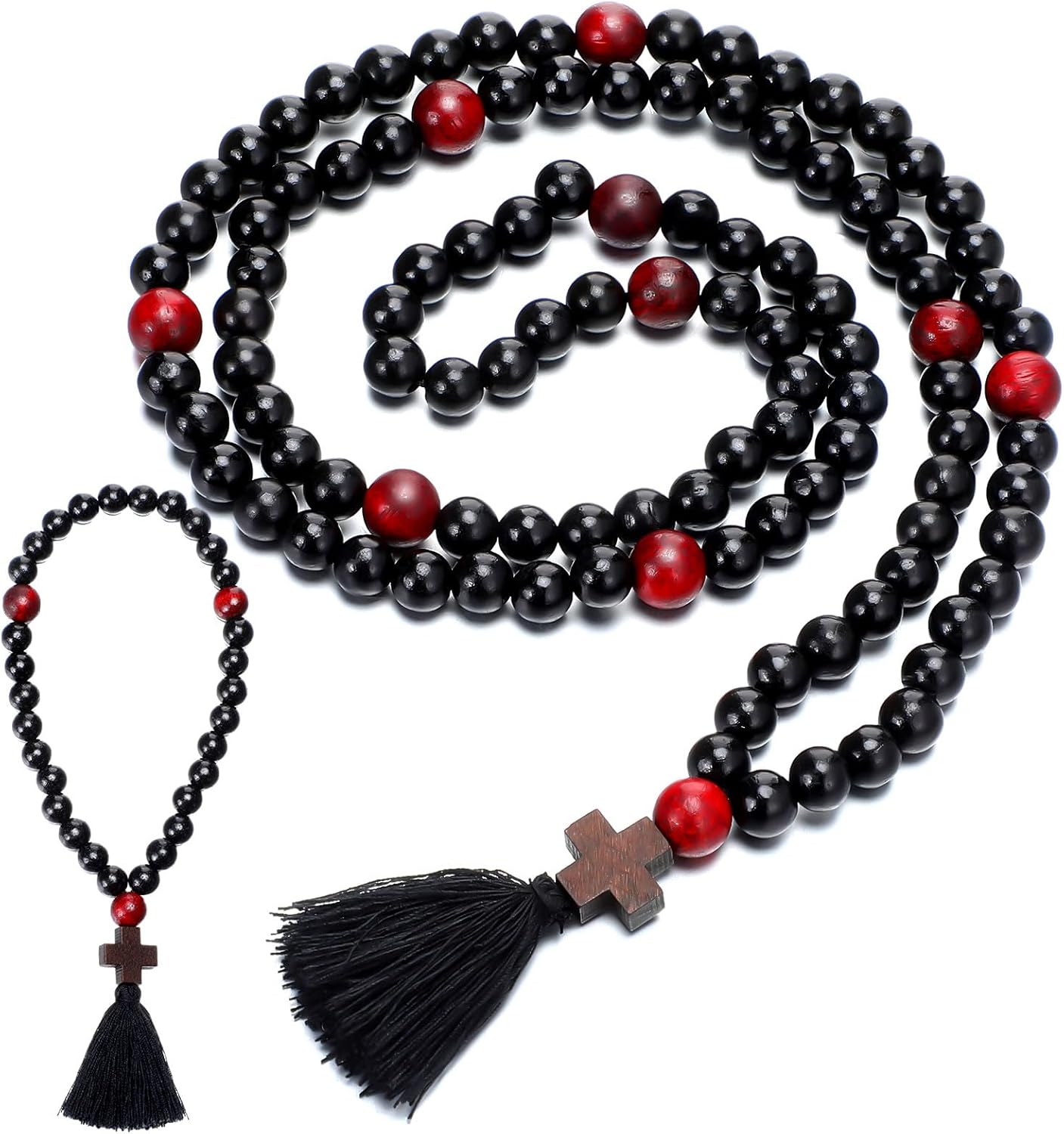
Prayer Ropes for Those Who Live with Danger
Saint Barbara has been the patron of those who face sudden death for fourteen centuries. The prayer rope is a tool for the same purpose she embodied — staying in unceasing prayer, so that no moment finds the soul unprepared.


Who Has Called on Saint Barbara — for Fourteen Centuries
The patronage of Saint Barbara is among the most remarkable in all of Christian history, because it spans every social class, every continent, and every era from the medieval period to the present day. She is not a saint for a particular group of people. She is a saint for everyone who lives with the knowledge that death could come suddenly and without warning — which is to say, everyone.
Her primary patronage — protection from sudden death without the opportunity to receive the sacraments — comes directly from the tradition around her martyrdom. Her father was killed by lightning without warning, without time to repent, without preparation. His death represented the worst possible end in the Christian imagination: not just physical death, but death without God. And Barbara, who had suffered at his hands, was understood by the faithful to have prayed for those in exactly that danger. A 15th-century French account credits her with thirteen specific miracles, nearly all of which involve preserving a person's life long enough to receive the Eucharist and Confession before dying.
Protection from Sudden Death
Her primary and most ancient patronage — sought by anyone fearing death before receiving the Eucharist or making a final confession. Her intercession is specifically for a "prepared death" — time to receive the sacraments before the end.
Artillerymen & Military Engineers
By analogy with the lightning that struck her father, Barbara became the patron of those who work with gunpowder, cannon, and explosives. Artillery units across the world — from the US Army to the Greek Army to Ukraine's 19th Missile Brigade — carry her name.
Miners & Those Underground
Anyone whose work brings them close to sudden, unpredictable death invokes Saint Barbara. Miners have prayed to her since the medieval era, carrying her image into tunnels and shafts where collapse or gas could kill without warning.
Family Rejection for Faith
She was not persecuted by a Roman emperor. She was persecuted by her father. Her patronage of those who face rejection, hostility, or estrangement from family because of their Christian faith is one of the most personally resonant of all the pre-schism martyrs.
Firefighters & Against Fire
Her association with lightning extended naturally to all forms of sudden fire. Communities in Europe named fire companies and fire watchtowers after her. She was invoked in storms long before the artillery connection developed.
Mathematicians
Her association with mathematicians is less well known but historically genuine — arising from medieval traditions connecting her theological geometry (the Trinity of three windows, one light) with mathematical thinking about unity and multiplicity.
The Miracles of Saint Barbara — Ancient Accounts and the Living Tradition
The Healing in Prison. The most prominently recorded miracle of Barbara's martyrdom is the appearance of Jesus Christ in her prison cell during the night between her tortures. Her wounds, which had been severe, were healed sufficiently that she could stand before the court again the next morning. The guards recorded their bewilderment. She attributed the healing not to her own strength but to the presence of Christ, who she said came to her in the cell and gave her communion — a detail that became central to her patronage as an intercessor for those seeking the Eucharist before death.
The Angel and the Robe. When Barbara and Juliana were led naked through the city as public humiliation, the tradition records that through Barbara's prayer, an angel appeared and covered them both with a radiant garment. This miracle was witnessed by the crowd and is part of why her cult spread so rapidly in the first centuries of veneration.
The Lightning Strike. Both Dioscorus and Martianus were struck by lightning on the day of the execution. This is the miracle recorded most consistently across all versions of the tradition — Eastern and Western, Greek and Latin and Syriac. It is the founding miracle of her patronage of those in danger from sudden and violent death.
The Healings at Her Tomb. The Catholic Encyclopedia records that a pious man named Valentinus buried the bodies of Barbara and Juliana after their execution, and that the sick who came to pray at their graves "received aid and consolation." These are the earliest recorded posthumous miracles, dating in the tradition to the time of her martyrdom itself.
The Fifteen Miracles (1448). The Catholic Encyclopedia notes that "an occurrence of the year 1448 did much to further the spread of the veneration of the saint" — a cluster of specific miracles attributed to her intercession that year which circulated widely. A 15th-century French account lists thirteen miracles, nearly all involving people preserved long enough to receive the Last Rites before dying.
The Living Tradition — Apparitions with the Theotokos. The Orthodox Times account of Saint Barbara notes that she "has appeared many times even in our own day, sometimes alone and sometimes in the company of the Most-holy Theotokos." The Eastern tradition has continued to receive accounts of her intercession and appearance across centuries, particularly among soldiers and workers in dangerous professions.
The Miracle at Mount Etna (1780). The Paternò tradition in Sicily commemorates May 27 as the feast of the patronage of Santa Barbara, celebrating the day her intercession is credited with stopping the eruption of Mount Etna in 1780 — a specific, historically documented event in the life of that city.
Free Marriage Resources from The Eastern Church
Saint Barbara's story begins with a father whose love for his daughter became a prison. The deepest wounds in human life often come from within families. If you are looking for resources to strengthen your marriage and family life through the wisdom of the Eastern Christian tradition, we have gathered them here — freely available, for every season of a relationship.
Access Free Marriage Resources →Where the Relics of Saint Barbara Are Venerated Today
The relics of Saint Barbara have one of the most carefully documented transmission histories of any early Christian martyr. Their movement from the Syrian East to Constantinople to Kyiv is recorded in Byzantine and Slavic chronicles, tied to a specific historical person and a specific date — making the Kyiv relics among the most historically traceable first-class relics of a pre-schism saint in the Eastern world.
Saint Volodymyr's Cathedral (Saint Vladimir's Cathedral)
The primary relics of Saint Barbara have rested here since the 12th century. They were brought from Constantinople by Princess Barbara — daughter of Byzantine Emperor Alexius Comnenos (1081–1118) — when she married the Russian Prince Michael Izyaslavich. She carried them as a personal devotional treasure and they have remained in Kyiv ever since. Originally kept at Saint Michael's Golden-Domed Monastery, they were transferred to Saint Volodymyr's Cathedral in the 1930s. An Akathist to Saint Barbara is sung there every Tuesday.
Saint Volodymyr's Cathedral, Kyiv →Sanctuary of Santa Barbara, Paternò
The relics brought to Paternò in 1576 have made it one of the most significant centers of her veneration in Western Europe. The city celebrates four separate feast days connected to Saint Barbara: December 4 (her martyrdom), May 27 (the stopping of the Etna eruption in 1780), and two others. The annual festival includes soldiers, fireworks, and the traditional sweet loukoumades. The sanctuary is active and open to pilgrims.
Church of Sant'Ambrogio, Milan
The ancient Church of Sant'Ambrogio in Milan holds relics of Saint Barbara that arrived from the East in the medieval period. This was one of the channels through which her veneration entered Western Europe, transmitted through the northern Italian cities that maintained close commercial and ecclesiastical contact with Constantinople.
Collegiate Church of Saints Waudru, Mons
A finger relic of Saint Barbara is preserved at this medieval collegiate church — one of the most important repositories of relic veneration in Belgium. Mons was a center of her veneration in the medieval Low Countries, particularly among the mining communities of the region.
How December 4 Is Celebrated Around the World
Saint Barbara's Day Traditions by Region
- Lebanon, Syria, Jordan, Palestine — Eid il-Burbara: Celebrated as a major folk feast, similar in spirit to Halloween. Children dress in disguises; the traditional dish is Burbara — a bowl of boiled wheat with pomegranate seeds, raisins, anise, and sugar. One of the most widely celebrated Christian feast days in the Arab world.
- Georgia — Barbaroba: Celebrated December 17 (new style, December 4 old style). The traditional food is lobiani — bread baked with a bean stuffing. A major national celebration with deep cultural roots.
- Greece and Cyprus: Celebrated by the Artillery Corps of the Greek Army and the Cypriot National Guard. Artillery camps throughout both countries host celebrations, with loukoumades (fried dough balls) distributed to soldiers and visitors — said to resemble cannonballs.
- Ukraine: Major veneration at Saint Volodymyr's Cathedral in Kyiv. Weekly Akathist hymns in her honor. In 2019, the 19th Missile Brigade of the Ukrainian Ground Forces officially received the honorary title "Saint Barbara."
- Military worldwide: The Order of Saint Barbara is an honorary military society of the United States Army Field Artillery and Air Defense Artillery. Members are inducted for distinguished service. The order is among the most recognized honors in the American artillery community.
- Paternò, Sicily: Four-day festival December 3–5 and 11, plus separate feasts May 27 and July 27. Fireworks, processions, military honors. One of the longest-running continuous civic-religious festivals in Italy dedicated to a single saint.
- Santa Barbara, California: The city is named for her — the Spanish mission ship anchored in the harbor on her feast day in 1602. The city's founding patron is Saint Barbara the Great Martyr.
The Life and Long Afterlife of Saint Barbara
Birth in Heliopolis or Nicomedia
Born to Dioscorus, a wealthy pagan. Her mother dies while she is young. Dioscorus devotes himself entirely to his daughter and, fearing the outside world, constructs a tower to confine her.
The Contemplation that Led to Faith
Looking out from her tower at the hills, rivers, and stars of Syria, Barbara concludes through natural reasoning that the idols cannot have made the world. She seeks the Creator, connects with Christian teaching, and is secretly baptized.
The Confession in Architecture
During her father's absence, Barbara instructs builders to add a third window to his bathhouse — to represent the Holy Trinity. When he returns and confronts her, she explains the Trinity and openly confesses her faith.
Flight, Rock Cleft, and Betrayal
Barbara flees. The mountain opens to shelter her. A shepherd — some versions say — reveals her hiding place to her father. Dioscorus drags her before the provincial governor Martianus (or Marcianus).
Scourging, Hooks, and Christ in the Cell
Barbara is scourged and tortured with hooks. Led naked through the city. That night in her cell, Jesus Christ appears and heals her wounds. She stands before the court the next morning, astonishing her captors.
Martyrdom — and the Lightning
Condemned to death. Her father Dioscorus is granted the right to carry out the execution. He beheads his own daughter. On the same day, Juliana is martyred. On the road home, Dioscorus and Martianus are both struck by lightning and killed.
The First Miracles
Valentinus buries both bodies. Healings are recorded at their grave. Her veneration begins immediately in the local Christian community of Syria.
Relics Transferred to Constantinople
The relics of Saint Barbara are brought from Syria to Constantinople, entering the great relic repositories of the Byzantine imperial capital.
First Written Accounts
The earliest documentary evidence of her cult appears in writings of this century. Her name is included in the Roman martyrology around 700 AD as "In Tuscia Barbarae virginis et martyris."
Cult Spreads East and West
Accounts by Symeon Metaphrastes in the East and in the growing Western martyrologies spread her veneration throughout both halves of Christendom. Her feast day of December 4 becomes established.
Relics Come to Kyiv
Princess Barbara, daughter of Emperor Alexius Comnenos, brings the relics to Kyiv upon marrying Prince Michael Izyaslavich. They are received at Saint Michael's Golden-Domed Monastery. Their arrival on July 11 is still commemorated.
Added to the Fourteen Holy Helpers
Saint Barbara is included in the group of Fourteen Auxiliary Saints (Holy Helpers) whose intercession is sought collectively for specific human needs. Her specific role: protection from sudden death without the sacraments.
Included in the Golden Legend
Jacobus de Voragine includes Saint Barbara's life in the Legenda Aurea — the most widely read book of saints' lives in medieval Christendom. Her story reaches the widest possible Western audience.
Relics Arrive in Paternò, Sicily
Relics are brought to Paternò, beginning one of Italy's most enduring saint-centered civic festivals. The miracle of Etna (1780) will later deepen this connection.
Santa Barbara, California — Named in Her Honor
A Spanish mission ship anchors in a California harbor on December 4 — her feast day. The bay, the mission, and eventually the city take her name. Today Santa Barbara, California honors her as its founding patron.
Removed from the General Roman Calendar
Pope Paul VI's liturgical reform removes her from the calendar due to historical uncertainty about her life. She remains in the Roman Martyrology. The Eastern churches and military communities continue full veneration.
Relics Moved to Saint Volodymyr's Cathedral, Kyiv
During Soviet-era closures of Saint Michael's Golden-Domed Monastery, her relics are transferred to Saint Volodymyr's Cathedral, where they remain today and where an Akathist is sung in her honor each Tuesday.
Traditional Prayers to Saint Barbara the Great Martyr
O glorious Saint Barbara,
virgin and martyr of Christ,
who chose fidelity over fear,
intercede for us before the Lord.
Protect us from sudden death.
Guard us in times of danger.
Strengthen us when faith is tested.
Grant courage to stand firm in truth.
Bring peace where families are divided.
Prepare our souls for eternity.
Through your prayers,
may we remain steadfast in Christ
and receive His mercy
in this life and the next.
Amen.
Questions About Saint Barbara the Great Martyr
Carry Saint Barbara With You
Three iconographic styles, one great intercessor. Each card is handmade in Austin, TX — prayed over during creation, printed on museum-quality paper, made to order. Your name and intention are lifted before Christ with every card.