Catholic Books Worth Reading: A Curated Collection of Essential Titles
Catholic Books Worth Reading
This list is not ranked. The numbers below exist only so you can find your place again — not to say one book outranks another. Look for the green tag: it marks writings actually authored by someone the Church has formally declared a saint, as distinct from important Catholic writers, like Dante, C.S. Lewis, or G.K. Chesterton, who were never canonized. From Augustine's garden conversion to a Polish nun's diary of Divine Mercy, this is a growing shelf of Catholic wisdom — starting with the Church's own official reference.
As an Amazon Associate, The Eastern Church earns from qualifying purchases made through links on this page.
One is the Church's own reference. Two are written directly by canonized saints.


Foundational Reference
Before 1992, the last catechism intended for the universal Church had been the Roman Catechism, produced after the Council of Trent in 1566 — meaning this project, ordered by John Paul II following the Second Vatican Council, closed a gap of over four hundred years since Catholicism last attempted a single comprehensive statement of its faith for the whole Church.
It is organized around four pillars: the Creed, the sacraments, moral life structured through the Ten Commandments, and prayer, particularly the Our Father, weaving together Scripture, the Church Fathers, and later magisterial teaching into a single reference.
Augustine did not write a tidy conversion story. He wrote about stealing pears as a teenager purely for the thrill of doing wrong, about years spent chasing status and pleasure, about a decade following the Manichaean sect, and about a mistress and an illegitimate son, all addressed directly to God as a kind of extended prayer rather than a memoir aimed at readers.
The climax happens in a garden in Milan, where Augustine, in spiritual agony, hears a child's voice chanting tolle lege, take up and read, opens a copy of Saint Paul's letters at random, and reads the verse that finally breaks his resistance. This is widely considered the first true autobiography in Western literature.
Augustine wrote this massive work in response to the sack of Rome in 410, when pagans blamed Christians for Rome's fall. Written across 22 books over thirteen years, it argues that all human civilization is divided into two cities — the City of God, oriented toward love of God, and the City of Man, oriented toward self-love.
It is simultaneously a refutation of paganism, a defense of Christianity, a political philosophy, and a complete reimagining of history itself.

Aquinas never finished this book. On December 6, 1273, while celebrating Mass, he had some kind of overwhelming mystical experience that he refused to describe in detail, and when his secretary pressed him to keep dictating the Summa afterward, Aquinas reportedly said that everything he had written now seemed like straw compared to what he had seen.
What he left behind is still staggering: a systematic treatment of God, creation, human nature, morality, Christ, and the sacraments. It became, and remains, the backbone of Catholic theological education.

Thomas à Kempis was a quiet German canon regular who spent most of his life copying manuscripts and teaching novices, and he wrote this book with such deliberate humility that authorship was disputed for centuries. Despite writing what is often called the most translated and most reprinted Christian book after the Bible itself, he was never canonized — a genuine oddity worth knowing rather than glossing over.
The book itself is unsparing about self-love and worldly ambition, urging the reader toward interior silence, detachment from praise, and a direct, unmediated relationship with Christ.

C.S. Lewis called this "a masterpiece" and wrote that "only a master mind could have written so deeply on such a subject with such classical simplicity." Athanasius, the defender of Nicene orthodoxy against the Arian heresy, composed this work as a sustained meditation on why God the eternal Word became flesh.
The central claim is radical in its simplicity: "God became fully human so that we might become god" — the doctrine of deification, or theosis, that shaped all subsequent Eastern Christian theology and profoundly influenced the West.

Part II
Mystics & Contemplatives
Teresa wrote this entire book in about ten weeks in 1577, under obedience to her confessor, after receiving a vision of the soul as a crystal castle containing seven concentric dwelling places, each one drawing closer to a final chamber where God himself dwells.
She maps the soul's journey through those seven mansions with the precision of someone who had actually made the trip herself, ending in what she calls spiritual marriage.

John of the Cross wrote much of his mystical poetry and theology after being kidnapped and imprisoned for nine months by his own Carmelite brothers, who locked him in a cramped monastery cell in Toledo before he finally escaped.
Out of that experience came his theology of the dark night: God deliberately withdraws felt consolations from advancing souls as a necessary purification, so that faith can mature into something no longer dependent on emotional reward.

Ignatius was a vain, ambitious Spanish soldier before a cannonball shattered his leg at the siege of Pamplona in 1521. During a long recovery, with nothing to read but a life of Christ and a book of saints' lives, something in him shifted.
The Exercises are built around guided meditations on Christ's life and a rigorous method for discerning God's will, meant to be led by a director rather than read alone.

Brother Lawrence was a lay Carmelite in Paris who spent most of his religious life working in the monastery kitchen, before discovering that the same constant awareness of God he wanted during formal prayer was fully available to him while scrubbing dishes.
This book isn't something he wrote himself; it's compiled from his letters and recorded conversations, teaching that ordinary work, done with love and attention to God, is every bit as much prayer as time spent kneeling in a chapel.

Thérèse wrote this account of her life under obedience, at the direct request of her own sister and prioress, and she did not live to see it published: tuberculosis killed her at twenty-four inside the enclosed Carmelite convent where she had lived since she was fifteen.
The book describes her little way, a path to holiness built on small, hidden acts of love done consistently and without recognition. In 1997 Pope John Paul II named her a Doctor of the Church, only the third woman ever to receive that title.
Part III
Modern Apologetics & Conversion
This book was not originally written to be read. It was broadcast, in a series of radio talks Lewis delivered on the BBC between 1941 and 1944, aimed at a British public living through the Blitz.
Lewis, an Oxford literature don who remained an Anglican his entire life, deliberately avoided denominational specifics, aiming at what he called mere Christianity, the common core shared across traditions.

Lewis dedicated this book to J.R.R. Tolkien, his friend and fellow Inkling, and later admitted that writing it was genuinely unpleasant — inhabiting the voice of a senior demon coaching his nephew on how to corrupt a human soul required a kind of imaginative descent Lewis found spiritually draining.
The letters work through temptation from the inside out: not through grand evils, but through mild distraction, spiritual pride, and the slow erosion of prayer through sheer boredom.

Lewis wrote this book in 1940, years before his own wife's death from cancer would force him to confront grief far more personally. This earlier work is, by his own later admission, more philosophical distance than lived wound.
His argument works through the classic theodicy problem — how can a good, all-powerful God permit suffering — using free will, the nature of love, and the purpose of pain.

Chesterton wrote this in 1908, fourteen years before he formally entered the Catholic Church in 1922. His method is paradox rather than syllogism: he delights in showing how the wildest-sounding Christian doctrines fit the actual shape of human experience.
The book directly influenced C.S. Lewis's own path from atheism to faith. A diocesan investigation into Chesterton's own possible sainthood was opened and then formally declined by the Bishop of Northampton in 2019, citing a lack of local devotion and a documented pattern of anti-Semitic remarks in his writing.

Published in 1925, this book was Chesterton's direct response to H.G. Wells's popular Outline of History, which had presented human civilization as a story of gradual evolutionary progress with no real need for the supernatural.
His argument moves through cave paintings and prehistoric religion, arguing that Christ's arrival is a genuine rupture rather than one more step in that gradual story. C.S. Lewis later named this book, alongside Chesterton's Orthodoxy, as one of the specific works that helped dismantle his own atheism.

Part IV
Modern Theology & History
Ratzinger wrote this in 1968 as a young theology professor at the University of Tübingen, delivering the underlying lectures during a period of intense campus unrest. Working through the Apostles' Creed article by article, he addresses head-on the modern objections a skeptical student might actually raise.
Decades before he became Pope Benedict XVI in 2005, this book had already established him as one of the most rigorous Catholic theological minds of his generation.

Sheen was, before almost anything else, a broadcaster: his television program Life Is Worth Living drew millions of viewers in the 1950s, an astonishing feat for a Catholic bishop competing for ratings against comedy programs. He brought that same clear, dramatic style directly into this book, weaving together the four Gospels into a single continuous story.
The book has stayed in print continuously since its original 1958 publication. Sheen currently holds the title Venerable and is scheduled to be beatified, receiving the title Blessed, on September 24, 2026, in St. Louis, Missouri.

Newman was one of the towering figures of the Anglican Church, a leading intellectual of Victorian England, who shocked and outraged when he announced his conversion to Catholicism in 1845. Nearly twenty years later, in response to a public attack from Anglican clergyman Charles Kingsley, Newman wrote this Apologia — a defense of his life, and a sustained meditation on intellectual integrity and the conscience that can only follow what it perceives to be true.
Newman was canonized by Pope Francis on October 13, 2019, and on November 1, 2025, Pope Leo XIV declared him a Doctor of the Church, one of only 38 people in two thousand years of Christian history to hold that title.

Part V
The Divine Comedy: Theology in Verse
Dante's Divine Comedy has been called by a Pope "the most eloquent herald of Christian doctrine," and some have called it the Summa Theologiae in verse. Written over twenty years and completed just before his death, it is the epic account of Dante's own journey through Hell, Purgatory, and Paradise.
It is theology expressed through allegory and poetry, a complete map of Catholic doctrine concerning the Last Things, drawn from Scripture, the Fathers, medieval theology, and classical literature.
Part VI
The Spiritual Battle Within the Church
This book takes on one of the most contested claims in post-Vatican II Catholic discourse: Did Communist intelligence services actually place agents inside the top levels of the Church? The question matters because Bella Dodd's 1950s claim that over a thousand Communist sympathizers were pushed into Catholic seminaries has been debated for seventy years, largely without documentary evidence.
Drawing on newly declassified KGB, Stasi, and Eastern Bloc secret police archives, this is a rigorously sourced account of Communist infiltration of the Catholic Church, with every claim graded and backed by 425 endnotes.

Part VII
Holiness in Everyday Life
This book began as personal letters de Sales wrote to his cousin, offering practical spiritual guidance for a laywoman with a household, not a nun with a rule to follow. A friend who saw the letters convinced him to publish them.
Its central, at-the-time-radical claim is that devotion is not incompatible with ordinary life. He is now the patron saint of writers and journalists, in part because of exactly this book.

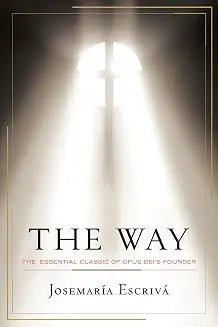
Escrivá founded Opus Dei in 1928 with a claim that struck many contemporaries as strange: that ordinary professional work could itself become a path to sanctity.
This book, first published in 1934 and later expanded, distills that vision into 999 short maxims and reflections, meant to be read a few at a time rather than straight through.
Part VIII
Mystical Voices of Faith
Mother Eugenia was an Italian Catholic nun and mystic who, on July 1, 1932, claimed that God the Father appeared to her and spoke directly to her. These messages were examined by the Church with rigorous scrutiny and eventually approved as authentic private revelation, a rare distinction, and the only approved private revelations claimed to be directly from God the Father rather than from Jesus or Mary.
The messages emphasize God's fatherly love, His desire to be known and loved by all His children, and His heart opened like a fountain of living water.

Part IX
Marriage & Marian Devotion
Most modern marriage books borrow their vocabulary from psychology or generic self-help. This one is written entirely inside the language the Church itself uses for marriage, a covenant Saint Paul calls a great mystery in Ephesians 5.
It draws directly on Saint John Chrysostom's insistence that this theology is meant to be incarnated in the daily, unglamorous choices of an actual married couple.

With his characteristic eloquence, Fulton Sheen presents a moving portrayal of the Blessed Virgin Mary that combines deep spirituality with history, philosophy, and theology, from the Annunciation through the Cross to the Assumption.
Sheen gives profound insights into Marian beliefs ranging from the Immaculate Conception to Our Lady of Fatima. As with Life of Christ above, Sheen currently holds the title Venerable, ahead of his scheduled beatification on September 24, 2026.

Part X
More Writings by the Saints
Every entry below is a canonized saint's own writing, added to fill an obvious gap: no Doctor of the Church writing directly from mystical experience (Catherine), no entry from the 20th century's most-read private revelation (Faustina), no dedicated Marian consecration text, and no entry at all from a canonized Pope or from Francis of Assisi himself.
Catherine was illiterate or nearly so for most of her life and dictated this entire work, by her own account received in a state of ecstasy, to secretaries over several months in 1378. It records a sustained dialogue between a soul and God the Father, covering divine providence, obedience, and discernment.
She was declared a Doctor of the Church in 1970 by Pope Paul VI, one of the first two women to hold that title, alongside Teresa of Ávila.
Faustina, a Polish nun who worked mainly as a cook, gardener, and porter, recorded her reported visions and conversations with Jesus concerning Divine Mercy in this diary. The Vatican banned the diary and its devotions in 1959 over concerns about excessive focus on Faustina herself; the ban was lifted in 1978 after the future Pope John Paul II examined her life and writings.
She was canonized on April 30, 2000, the first canonization of the new millennium, at a Mass where Pope John Paul II declared the Sunday after Easter would thereafter be celebrated throughout the Church as Divine Mercy Sunday.
De Montfort was a French missionary priest whose manuscript on total consecration to Jesus through Mary sat undiscovered for over a century after his death, found only in 1842 inside a chest, before being published and becoming the standard Catholic text on Marian consecration.
Canonized in 1947, his 33-day consecration method has since been used by, among others, Pope John Paul II, who took the motto Totus Tuus, entirely yours, directly from de Montfort's writing.
Published in 1994, this was the first book-length interview ever given by a sitting pope, built from written answers John Paul II gave to questions submitted by Italian journalist Vittorio Messori on subjects ranging from the existence of God to other world religions to why suffering happens.
It became an immediate global bestseller, translated into dozens of languages within months. John Paul II was canonized on April 27, 2014, alongside Pope John XXIII, in a ceremony attended by an estimated one million pilgrims.
Padre Pio bore the stigmata, the wounds of Christ's Passion, on his own body for roughly fifty years, and spent most of his priesthood hearing confessions for up to twelve hours a day at the friary of San Giovanni Rotondo in southern Italy. His extensive letters to spiritual directees, collected in multiple volumes as the Epistolario, offer direct pastoral guidance on prayer, suffering, and spiritual direction.
He was canonized by Pope John Paul II on June 16, 2002, in a ceremony that drew one of the largest crowds in the history of papal canonizations.
Bernard founded and led the abbey of Clairvaux, helped drive the rapid expansion of the Cistercian order across Europe, and was so celebrated for the sweetness of his preaching that he earned the title Doctor Mellifluus, the Mellifluous Doctor. This short treatise, written for a fellow monk, works through four degrees of love, from loving God for one's own sake to finally loving oneself only for God's sake.
It remains one of the foundational texts of medieval mystical theology, cited by Dante, Aquinas, and nearly every major spiritual writer who came after him.
Francis, the son of a wealthy cloth merchant who gave away his inheritance and stripped off his clothes in the town square to renounce his father's wealth entirely, left behind surprisingly little in his own hand compared to the enormous body of legend written about him by others: his Rule for the friars, his Testament dictated near death, and the Canticle of the Creatures, composed in his native Umbrian dialect while he was nearly blind and in physical agony.
The Canticle, praising God through Brother Sun, Sister Moon, and even Sister Death, is considered one of the earliest surviving works of Italian literature. Francis was canonized just two years after his death, in 1228, one of the fastest canonizations in Church history.
Alphonsus Liguori founded the Redemptorist order, spent decades as a missionary preacher to the rural poor of southern Italy, and wrote prolifically on moral theology, later becoming the patron saint of confessors and moral theologians. The Glories of Mary, first published in 1750, gathers his reflections on the Hail Mary and the Salve Regina into an extended meditation on Marian devotion.
It became one of the most widely published Marian devotional works in Catholic history, translated into dozens of languages. Alphonsus was declared a Doctor of the Church in 1871 by Pope Pius IX.

Bonaventure served as Minister General of the Franciscan order and was a close contemporary of Thomas Aquinas at the University of Paris, though his theology took a more mystical and less strictly systematic path than his fellow friar's. He wrote The Soul's Journey into God after a retreat to Mount La Verna, the same mountain where Francis of Assisi had received the stigmata, mapping the mind's ascent to God through the created world, through the soul's own faculties, and finally beyond both into ecstatic union.
This volume also includes his Life of St. Francis, the official biography commissioned by the Franciscan order itself. Bonaventure was declared a Doctor of the Church in 1588, earning the title the Seraphic Doctor.

Margaret Mary was a French Visitation nun who, beginning in 1673, reported a series of visions of Christ revealing His Sacred Heart, burning with love for humanity yet largely unloved in return, and asking for a devotion of reparation centered on that image. Under obedience to her spiritual director, she wrote this account of the visions herself.
Those visions became the foundation of the modern devotion to the Sacred Heart of Jesus, one of the most widespread devotions in the Catholic Church today. Margaret Mary was canonized in 1920 by Pope Benedict XV.

Gemma Galgani was an Italian laywoman whose poor health kept her from ever formally entering the religious order she longed to join. She reported visions, ecstasies, and the stigmata during her short life, and at her confessor's instruction kept this diary recording her mystical experiences and her ongoing spiritual struggles.
She died at twenty-five in 1903, and was canonized in 1940 by Pope Pius XII, remembered for her intense devotion to Christ's Passion.

Edith Stein was a German Jewish philosopher, a doctoral student of Edmund Husserl, who converted to Catholicism in 1922 after reading Teresa of Ávila's autobiography in a single sitting. She entered the Discalced Carmelites, taking the name Teresa Benedicta of the Cross, and was writing this study of St. John of the Cross's mystical theology when the Gestapo arrested her in 1942.
She was murdered at Auschwitz later that year, and the manuscript remained unfinished. Canonized by Pope John Paul II in 1998 as a martyr, she is now one of the patron saints of Europe.

Catherine of Genoa spent years in an unhappy arranged marriage before a profound conversion at age twenty-six redirected her life toward God and toward running a hospital in Genoa, where she cared for the sick, including plague victims, for decades while experiencing intense mystical states.
Her teaching on purgatory, recorded by her disciples from her own words and later published as these two treatises, reshaped Catholic understanding of purgatory as a process of loving purification rather than mere punishment. She was canonized in 1737.

John Vianney was a French parish priest of famously modest academic ability, assigned to the obscure village of Ars, who became so renowned as a confessor that pilgrims traveled from across France to see him, and he spent up to sixteen hours a day hearing confessions in his final years.
This collection gathers his sermons and recorded sayings on sin, grace, and the priesthood. He was canonized in 1925 by Pope Pius XI and named patron saint of parish priests.

John Bosco devoted his priesthood to the poor and at-risk boys flooding into industrializing Turin, founding the Salesian order to educate and shelter them. Throughout his life he reported vivid, often symbolic dreams, which he recounted to his followers and which he credited with guiding his educational and pastoral decisions.
This collection gathers forty of those recorded dreams from his own biographical memoirs. Bosco was canonized in 1934 by Pope Pius XI.

Mother Teresa founded the Missionaries of Charity and won the Nobel Peace Prize in 1979 for her work among Calcutta's poorest and dying. This posthumously published 2007 collection gathers her private letters to spiritual directors and confessors, released against her own wishes that they be destroyed.
The letters revealed something almost nobody around her had known: a decades-long interior darkness, an inability to feel God's presence, endured privately while she radiated joy and certainty in public. It remains one of the most startling spiritual memoirs of the twentieth century. She was canonized in 2016 by Pope Francis.

Thomas More served as Lord Chancellor of England under Henry VIII before refusing to accept the king as head of the Church of England, a refusal that cost him his position, his freedom, and eventually his life. He wrote this dialogue on suffering and consolation while imprisoned in the Tower of London awaiting execution.
He was beheaded in 1535 for treason rather than betray his conscience. Canonized in 1935 by Pope Pius XI, More is now the patron saint of lawyers and statesmen.

Biographies of the Saints
The two books below are about these saints, written by other authors — not primary-source writings by the saints themselves, so they don't carry the "Canonized Saint" tag used elsewhere in this section. Their own letters and journals exist in print, but for these two figures we haven't yet located and verified an edition worth linking here.
Maximilian Kolbe was a Polish Franciscan friar who founded the Militia Immaculatae, a movement for Marian consecration, and used his publishing work to warn against Nazism before his arrest by the Gestapo in 1941 for sheltering refugees, including Jews, at his friary.
At Auschwitz, when the guards selected ten prisoners to be starved to death in reprisal for an escape, Kolbe volunteered to take the place of a stranger, a married man with children, and died in the starvation bunker weeks later. He was canonized as a martyr by Pope John Paul II on October 10, 1982.

Elizabeth Ann Seton was a New York-born Episcopalian widow with five children who converted to Catholicism in 1805, then founded the Sisters of Charity of St. Joseph's in Emmitsburg, Maryland, effectively launching the American Catholic parochial school system.
She built a religious community and an educational network from almost nothing while raising her own children as a widow, a combination of domestic and institutional founding rarely seen together in the same life. She was canonized on September 14, 1975, by Pope Paul VI, the first person born in the United States to receive that title.

Which Book Should You Read Next?
If you already know where you're headed, jump back up to any of the ten parts above. If you don't, the fastest way in is still the same three books — two of them written directly by canonized saints.
This collection will grow. More books will be added as they are discovered, read, and confirmed accurate, always with a real, named author or compiler behind them.