The Sacred Mirror: Living the Sacrament of Marriage - Free Marriage Book
The Sacred Mirror
The Sacred Mirror
A Theology of Marriage as a Sacrament
A Gift to All Who Seek to Understand Marriage as a Sacrament
This book was written not to explain marriage away, but to stand in awe of it. It exists for every Christian couple who has sensed that marriage is more than a contract or a feeling — and wants to understand why the Church has always spoken of it with such gravity, such reverence, and such uncompromising clarity. It is offered here, completely free.
If you would like a physical copy — to read slowly, annotate in the margins, share with a study group, or work through in your own time — it is available on Amazon. The physical edition is ideal for personal theological study, parish reading groups, or anyone who wants to sit with these reflections away from a screen.
📖 Get the Physical Copy on AmazonTwo free resources for couples seeking a Christ-centered marriage: Intentional Love (a Catholic 8-week workbook) and The Marriage Habit (a 30-day guide to building daily habits of love) — both available to read free at The Eastern Church.
A Divine Mystery Hidden in Plain Sight
“Whether you eat or drink, or whatever you do, do all to the glory of God.” — 1 Corinthians 10:31
Holiness is not found only in grand gestures or extraordinary devotion. It lives quietly within the ordinary — in prayer whispered over breakfast, in a soft word spoken during weariness, in the steady hands that serve without applause. In this sense, marriage is not one sacred event remembered on a wedding day, but an ongoing sacrament renewed in every moment shared in love.
Each act of tenderness, forgiveness, and endurance becomes part of a divine rhythm — the steady heartbeat of grace flowing through two souls joined by God. When a husband comforts his wife in sorrow, when a wife prays for her husband’s strength, when they choose to see the image of Christ in each other, their love becomes liturgy. Their home becomes a sanctuary. Every gesture — a prayer.
The daily sacrament is how heaven touches the earth. Folding laundry, preparing meals, holding hands in silence — these moments, humble and unseen, are the altar upon which love is offered to God. It is not perfection that sanctifies them, but intention — the quiet choice to give, to serve, to honor. For in marriage, holiness is not achieved in great leaps but in small, faithful steps.
In this daily offering, love matures into worship. The ordinary becomes sacred because God dwells there. Each day is another chance to echo the eternal covenant — to say again with both heart and action, “I am yours, and I give myself to you.”
The saints remind us that sanctity is perseverance — the steadfast “yes” that does not waver with the seasons of life. So too in marriage, holiness grows not through constant ease but through constant faithfulness. To love amid difficulty, to forgive without condition, to serve without expectation — this is the quiet heroism of divine love lived out in flesh.
Through such daily grace, the home becomes holy ground. It is there that laughter becomes praise, patience becomes prayer, and unity becomes a living reflection of the love between Christ and His Church. The couple that abides in this truth begins to see that each shared moment — every meal, every prayer, every act of care — carries eternal weight.
And so, the story of marriage continues beyond the ceremony and into every day that follows. It is a lifelong liturgy, a continual renewal of covenant, a mirror of Heaven that grows clearer as love deepens. The sacred mirror never stops reflecting; it only shines brighter with grace.
This is the great mystery — that divine love does not simply visit the home but dwells within it. Every sigh, every smile, every prayer becomes part of Heaven’s own song. The daily sacrament is this: to live love so fully that God Himself is revealed through it.
And when the final day comes — when time gives way to eternity — the love born in the quiet holiness of daily life will rise with the soul to join the great marriage feast of the Lamb. For all true love, when sanctified, leads home to God.
“So they are no longer two, but one flesh. What therefore God has joined together, let no man put asunder.” — Matthew 19:6
From the very beginning of creation, God revealed His divine plan for human love. Marriage was not an invention of culture or custom, but a sacred institution woven into the fabric of creation itself. Before there were governments, temples, or nations, there was a man and a woman standing before their Creator. In that first covenantal union between Adam and Eve, God displayed something far greater than companionship — He revealed His own nature.
Marriage is the only covenant from Eden that still stands in its original form. When God formed the man from the dust of the earth and breathed life into his nostrils, He saw that it was not good for man to be alone. Out of that divine observation came a truth that echoes through all time: humanity was made for communion. When the woman was brought to the man, it was not a mere meeting of equals, but the meeting of two reflections of God — distinct, yet designed to unite. Their union was the first visible sign of God’s invisible reality.
When Scripture declares that the two become “one flesh,” it is not describing a simple bond of affection. It is proclaiming a mystery. That mystery — a word St. Paul later calls a great one — is that human love is meant to mirror divine love. The very body of man and woman, capable of union and fruitfulness, becomes a living icon of the inner life of the Trinity — the eternal exchange of love between Father, Son, and Holy Spirit.
In this way, the love of husband and wife becomes a reflection of God’s creative power and His covenantal faithfulness. Their vows are not private promises but public acts of worship, spoken in the presence of the Author of love. Marriage, then, is not simply a partnership; it is a Sacrament — an outward sign instituted by Christ to confer grace. It is the visible form of God’s invisible generosity.
When Christ entered history, He did not invent marriage; He redeemed it. By His presence at the wedding feast of Cana, He sanctified human love. When the water was transformed into wine, it was not only a miracle of celebration but a sign of transformation. What was natural became supernatural. In every Christian marriage, God continues this miracle: He takes the ordinary water of human affection and turns it into the wine of divine grace.
The Church teaches that in the Sacrament of Matrimony, the spouses are the ministers of the sacrament to each other. The priest is a witness, but the covenantal grace is conferred in their mutual consent — in the sacred moment when two voices say yes. That yes is more than a vow; it is a calling. It is a lifelong entrance into a divine mystery.
In that moment, the couple does more than unite their lives — they enter a participation in Christ’s own love for His Bride, the Church. Every Christian marriage, therefore, stands as a visible proclamation of the Gospel. When the world sees a husband who sacrifices for his wife, it sees a reflection of Christ crucified for His people. When it sees a wife who honors and uplifts her husband, it sees the loving devotion of the Church responding to her Redeemer.
This is why marriage is called a covenant and not a contract. A contract is an exchange of goods or services — it says, “I will give if you will give.” But a covenant is an exchange of persons — it says, “I am yours.” It mirrors the very nature of God’s promises to His people. In the Old Testament, covenants were sealed with sacrifice; in the New Covenant, they are sealed in the Blood of Christ. Likewise, the covenant of marriage is sealed through the self-giving love of two who pledge their lives to one another in faith.
When a husband and wife live this mystery with awareness, their home becomes holy ground. The kitchen table becomes an altar; the living room becomes a chapel. Every moment — from the simple to the sublime — becomes an opportunity to mirror Heaven. This is the true meaning of marriage as a sacrament: it is not a symbol of something holy; it is something holy.
The grace that flows from this sacrament sustains the couple through every trial. It strengthens them to forgive, to serve, to endure, and to rejoice. It transforms the ordinary rhythm of life into the sacred rhythm of grace. For marriage is not merely about finding happiness — it is about becoming holy. And holiness is the fruit of a love that mirrors God Himself.
The early Church Fathers understood this with awe. St. John Chrysostom wrote that when a husband and wife live in harmony, “they image God Himself.” In their love, the invisible God becomes visible to the world. Through their unity, the mystery of divine communion is made tangible.
And so, the design of God for marriage is not only that two would live together, but that they would live as one — a living testimony to the union of Heaven and earth. Every couple who embraces this calling participates in something eternal. Their life together becomes a small echo of the greater marriage that awaits: the union of Christ and His Church.
When this truth is understood, marriage can no longer be viewed as a human endeavor but as a divine vocation. It is the first sanctuary, the living altar, and the sacred mirror through which the love of God shines into the world.
“Whether you eat or drink, or whatever you do, do all for the glory of God.” — 1 Corinthians 10:31
In every sacrament, God invites human cooperation. Grace is freely given, but participation requires the will to receive it. Intention is the door through which grace enters. Without it, the holiest actions become hollow forms. With it, even the smallest acts become holy.
This is the quiet power of intention — the unseen orientation of the heart that determines whether an action is merely done or divinely offered. It is the inward “yes” that sanctifies outward motion. When a husband or wife performs a task in love, that simple act becomes worship. When it is done grudgingly or thoughtlessly, it remains only a duty. What transforms ordinary life into sacred offering is not the act itself, but the intention behind it.
Every sacrament in the Church begins with this principle. The priest who celebrates the Eucharist must intend what the Church intends — not simply to break bread, but to make present the Body of Christ. The penitent who confesses must intend repentance. The believer who receives baptism must intend to be cleansed and reborn. In the same way, those who live within the sacrament of marriage must intend to love as Christ loves the Church.
Intention is not emotion. It is not driven by mood, nor measured by enthusiasm. It is an act of the will that says, “I choose to love.” A husband who rises each morning and determines to serve his wife is participating in divine intention. A wife who prays for her husband’s peace and strength joins her heart to God’s. In this hidden decision of the soul, the marriage becomes more than a relationship — it becomes a living sacrifice.
In marriage, the purpose of intention is transformation. It is the daily reorientation of the heart toward holiness. When both spouses unite their wills in pursuit of God, their shared life becomes a sanctified rhythm. Every act of patience, forgiveness, or tenderness becomes a deliberate reflection of Heaven’s love. The covenant thrives not because of perfection, but because of continual intention.
Christ Himself modeled this truth. In Gethsemane, He prayed, “Not my will, but Yours be done.” That was the purest act of intention — the surrender of human will to divine love. It was not emotion that held Him there, but devotion. Every Christian marriage is called into that same posture of surrender: to love when it is costly, to forgive when it wounds, to serve when it feels unnoticed.
When spouses unite their intentions, grace multiplies. Their prayers converge, their acts of love echo into eternity. Even the most ordinary habits — preparing a meal, working long hours, or caring for a home — can become channels of divine grace. When those acts are directed toward God, they cease to be mundane and become sacramental.
The purpose of intention, then, is not merely to give meaning to daily life but to align the human heart with divine purpose. It is to take each moment — the joyful and the painful alike — and turn it into an offering. Intention transforms existence into worship.
For some, this shift may begin quietly. A husband who begins to thank God each morning for his wife may soon find his gratitude shaping his actions. A wife who chooses to see her husband through the eyes of grace may find her heart expanding with compassion. In time, the couple begins to live not for themselves, but for God dwelling between them.
The Catechism teaches that the sacraments work ex opere operato — by the very act of being performed — but their fruit depends on the disposition of those who receive them. The same is true of marriage. Grace is always present, but its fruitfulness depends on how it is received. Intention is what opens the soil of the heart for grace to take root.
To live with holy intention is to remember that every moment has eternal weight. The tone of voice, the patience in conflict, the choice to listen rather than react — all of it becomes participation in the divine life when offered consciously to God. Every “I love you,” when spoken with genuine intent, echoes the voice of Christ calling His Bride.
When intention is forgotten, marriage drifts into routine. It may still function, but it loses its sacramental radiance. Like a lamp left unlit, it exists without illumination. Yet even the smallest spark of renewed purpose can restore its glow. Each new decision to love, to serve, to glorify God together, relights the flame of grace.
The power of intention lies not in grandeur but in consistency. It is the quiet, daily choice to love with eternity in view. The spouse who lives with intention is not striving for perfection but for presence — to live before God with a heart turned toward Heaven. And when both hearts are aligned in that direction, marriage becomes what it was meant to be: a living reflection of divine love.
Marriage, as a sacrament, thrives on this continual renewal of purpose. It calls the couple to remember that their covenant is not simply for their joy but for God’s glory. Each day offers the chance to begin again — to look into the sacred mirror of their love and see not only each other, but the image of Christ gazing back.
“Present your bodies as a living sacrifice, holy and acceptable to God, which is your spiritual worship.” — Romans 12:1
Worship is the natural language of love. It is the act of turning the heart toward the One who is worthy of all affection, all praise, all devotion. For the Christian, every breath can become a hymn when it is directed toward God. And in marriage, this worship takes on flesh.
Marriage is not only a partnership of hearts but an altar of grace. It is a sacred space where two people are invited to live their ordinary lives as a continual act of offering. When husband and wife love one another with the intention of glorifying God, their daily life becomes a liturgy — not in form or ceremony, but in spirit and purpose. Every shared glance, every act of patience, every moment of tenderness becomes a silent prayer rising toward Heaven.
The world often treats worship as something confined to church walls — something done on Sunday mornings with songs and prayers. But worship, at its core, is not performance; it is posture. It is the orientation of the soul toward God in gratitude and surrender. When this posture is brought into marriage, the home becomes a living sanctuary.
This was God’s design from the beginning. The covenant of marriage was not meant to be a private arrangement but a public witness of divine love. When two lives become one, their union becomes a visible act of worship before Heaven and earth. Their love is a song composed by God Himself — one that resounds with every act of kindness, every word of forgiveness, every shared joy and sorrow.
In this way, marriage is one of the most profound forms of worship possible in human life. It is not worship through ritual but through relationship. When a husband serves his wife with humility, he reflects the service of Christ to His Church. When a wife nurtures and encourages her husband in grace, she mirrors the devotion of the Church to her Redeemer. Together, they live the Gospel without words — through the offering of themselves.
True worship is costly. It demands the surrender of self — of pride, comfort, and control. Marriage makes this surrender tangible. To love another person as God commands is to die to the smaller self daily. Each act of sacrifice — the choice to listen, to forgive, to serve first — becomes a fragrant offering to God. Just as Christ offered Himself on the cross, so too does love in marriage require continual self-giving. This is the essence of worship: not words alone, but the gift of one’s entire being.
When love becomes worship, even the most ordinary moments take on eternal significance. The dinner table can become an altar of thanksgiving. The laughter shared in the living room can become a hymn of praise. The quiet prayers whispered together before sleep become incense before God. In these moments, the sacred and the ordinary intertwine — Heaven touches earth through the faithfulness of two hearts.
The Church Fathers often described the Christian home as the “domestic church.” Within it, the spouses are both priests, offering their lives to God and interceding for one another. Their love, expressed in daily service, becomes their liturgy. Their faithfulness in hardship becomes their homily. Their forgiveness becomes their Eucharist — a continual renewal of covenantal grace.
To live marriage as worship is to live with the awareness that every interaction can either glorify or grieve the heart of God. Every word spoken, every decision made, is an opportunity to reflect divine love or obscure it. When the couple remembers this sacred responsibility, their life together becomes one long act of adoration.
This worship is not abstract; it is incarnational. It is expressed through hands that work, voices that speak kindness, and hearts that remain open to grace. It is the shared life that says, without pretense or performance, “Lord, You are worthy of all that we are.”
In the Eucharist, Christ gives His Body and Blood as the ultimate act of love — an offering of Himself for His Bride, the Church. In marriage, that same pattern repeats: the giving and receiving of life, the offering of one’s self to the other, the renewal of covenant through love. When approached with reverence, marriage becomes a continual participation in the divine liturgy of Heaven.
To see marriage as worship is to recognize that holiness is not limited to sacred spaces. Holiness begins where love is offered. Every home can become a chapel when its love is directed toward God. Every marriage can become an altar when its purpose is His glory. And every act of affection can become a prayer when it reflects His love.
The measure of worship is not how passionately we sing, but how faithfully we love. Worship begins when the heart bends low in humility and lifts high in gratitude. In marriage, that heart takes on two forms — two voices, two lives — united in one continual offering.
To live this way is to understand that God is not a distant observer of your marriage. He is its center. He is present in its laughter and its tears, its joy and its labor. And when husband and wife join their lives in love that points back to Him, their home becomes a holy echo of Heaven’s worship.
“Husbands, love your wives, as Christ loved the Church and gave Himself up for her.” — Ephesians 5:25
The command to love as Christ loves the Church is not poetic suggestion — it is divine instruction. It is the standard by which every Christian marriage is measured, the pattern by which every husband and wife are called to live. In this one verse, the entire mystery of the sacrament is revealed.
When St. Paul wrote those words to the Ephesians, he was not describing a philosophy of marriage but revealing a divine reality. The love of Christ for His Church is the model and measure for human love. It is not a comparison; it is participation. In marriage, husband and wife are invited to share in that same pattern of self-giving love — love that redeems, sanctifies, and transforms.
To love as Christ loves is to love without condition. It is to love when it is not deserved, to serve when it is not returned, to forgive when the wound still aches. Christ’s love was not based on merit; it flowed from mercy. He loved His Bride when she was faithless, lifted her when she was fallen, and clothed her with grace when she had nothing to offer. This is the divine standard: love that gives without calculation, that seeks the other’s holiness before its own comfort.
In that same spirit, the husband is called to love with sacrificial devotion — not as a master or ruler, but as a servant and protector. His authority in marriage is not domination, but stewardship. He is to lead not by command, but by example, laying down his life daily in imitation of Christ. His love should make holiness easier for his wife. His presence should bring peace, his words should bring healing, and his faith should strengthen hers.
The wife, in turn, mirrors the devotion of the Church. Her role is not one of passivity but of sacred reciprocity. She receives love and returns it multiplied. Her respect, her faith, her tenderness, and her strength all reflect the Church’s faithful response to her Bridegroom. When she honors her husband’s sacrifice and joins her heart to his mission, she reveals the beauty of divine order — not hierarchy of worth, but harmony of purpose.
This sacred exchange between husband and wife mirrors the eternal rhythm of Christ and His Bride. It is not an imitation from afar; it is a living participation in divine life. Each act of mutual love is an echo of Calvary — not in suffering alone, but in its redemptive meaning. When a husband forgives his wife, he imitates Christ who forgave His persecutors. When a wife supports her husband’s weakness with patience, she reflects the Church who remains steadfast in hope. Together, they proclaim a Gospel far louder than words.
Love in this sense is not an emotion but a vocation. Feelings may fade and change, but vocation remains. Christ did not go to the Cross because He felt affection; He went because He willed salvation. So too must Christian love be an act of the will — a deliberate, daily choosing of the other’s good above self. That choice, repeated through years and seasons, becomes sanctifying. It makes the heart resemble the heart of Christ.
The beauty of this sacrificial love is that it transforms both giver and receiver. When love is freely offered, it sanctifies the one who gives it. When it is humbly received, it sanctifies the one who accepts it. This is the rhythm of grace — each spouse pouring themselves out and being filled again through the other’s love. In that continual exchange, the image of Christ and His Church becomes visible in their home.
It is important to understand that this command — to love as Christ loved — is not beyond reach. It is only impossible without grace. The Sacrament of Matrimony supplies that grace in abundance. Every time a couple prays together, confesses faults, receives the Eucharist, or renews their fidelity, the Holy Spirit strengthens their bond. The love they share becomes not only their own but God’s love flowing through them.
This divine love is not fragile. It endures through trial and suffering. It does not withdraw when misunderstood or rejected. It perseveres through silence, illness, and loss. Christ’s love endured the Cross — the deepest pain, the greatest rejection — and still it triumphed in resurrection. The love within marriage must carry that same hope. It must see beyond present struggle to eternal promise.
Marriage rooted in this love becomes unshakable. Its foundation is not mutual benefit but mutual sacrifice. It does not crumble under hardship because it was built on the Cross. It becomes a witness to the world of what divine love looks like when lived in human form.
When a husband and wife love as Christ loves, they participate in the very mystery of redemption. Their fidelity becomes a sermon. Their unity becomes a prophecy. Their perseverance becomes a revelation of divine truth. Through them, God preaches to the world that love is not temporary, nor transactional, but eternal.
This is what it means to love as Christ loved the Church. It is to see marriage not as a contract of affection, but as a covenant of redemption. It is to understand that every embrace, every act of service, every quiet moment of faithfulness is not only human love — it is participation in the very heart of God.
And when that truth takes root, marriage ceases to be merely a part of life. It becomes the very means through which life is sanctified.
“For where two or three are gathered in My name, there am I in the midst of them.” — Matthew 18:20
Every Christian marriage is more than a partnership of hearts; it is a pilgrimage of two souls walking toward the same horizon — God Himself. From the moment vows are spoken, a sacred journey begins: two lives joined not only for companionship, but for communion — with each other and with Christ.
When Jesus promised His presence wherever two or three gather in His name, He revealed the spiritual mystery that lies at the heart of every marriage. When husband and wife pray, serve, and love in His name, they invite the living God into the center of their union. The invisible becomes visible; grace becomes incarnate within the home.
Marriage is therefore not a private devotion but a public witness of divine presence. The Christian home is the smallest expression of the Church, the place where faith takes root in daily life. The table where meals are shared can become an altar of thanksgiving; the living room can become a chapel of forgiveness. Every word spoken with love, every act done in patience, is a confession of faith that Christ truly dwells among them.
This shared pursuit of God requires intention and humility. Each spouse must learn to see the other not only as companion, but as fellow pilgrim — a soul entrusted to their care. To seek God together is to desire holiness for one another above comfort or convenience. It is to say, “I will walk with you until we see His face.”
Prayer binds this journey. When a husband and wife kneel together before God, something eternal occurs. Their individual prayers merge into a single voice, and their hearts align with Heaven’s will. Such prayer need not be elaborate; its power lies in its sincerity. A brief blessing before meals, a shared reading of Scripture, or a silent moment of gratitude at day’s end can draw grace into the household. The goal is not performance but presence — to remember God often enough that His peace becomes familiar.
Beyond prayer, seeking God together means helping one another become saints. It is encouraging virtue, gently correcting sin, and bearing burdens in love. It means interceding for one another, especially in weakness, trusting that the Spirit is at work in both hearts. When one grows weary, the other becomes strength; when one falters in faith, the other becomes hope. Thus marriage becomes a sacramental exchange of grace — not only through vows once spoken, but through mercy continually lived.
The saints often spoke of “mutual sanctification.” St. Francis de Sales taught that holiness in marriage is achieved not by grand gestures, but by small fidelities repeated every day. A kind word, a shared prayer, a patient silence — these are the stepping-stones of sanctity. In this way, the couple does not merely share a life; they share a destiny. Their covenant is both map and compass pointing to Heaven.
This pursuit transforms how they view success and suffering. When challenges come, they are no longer seen as interruptions but as invitations — opportunities to trust God more deeply and to love more purely. In joy they give thanks; in sorrow they cling to grace. Each trial, met together, polishes the mirror of their marriage until it more clearly reflects the love of Christ.
Over time, the couple that seeks God together begins to resemble Him. Their patience deepens, their compassion widens, their peace becomes contagious. Visitors to their home sense something sacred — not perfection, but Presence. The fragrance of prayer lingers even in their ordinary moments. This is the quiet holiness that God intended when He made marriage a sacrament: two souls becoming one, so that through them, the world might glimpse Heaven.
To seek God together is to discover that holiness is not a distant ideal but a daily possibility. Every conversation, every decision, every act of tenderness can become an encounter with divine grace. As husband and wife turn their gaze toward the same Light, they find themselves drawn closer — not only to God, but to each other. And in that closeness, their marriage fulfills its highest purpose: to become a living reflection of the eternal communion for which every human heart was made.
“Let us rejoice and exult and give Him the glory, for the marriage of the Lamb has come, and His Bride has made herself ready.” — Revelation 19:7
Every Christian marriage holds within it a mystery older than time and brighter than eternity. It is the mirror through which Heaven is reflected on earth. The covenant between husband and wife is not merely symbolic of divine love — it is a living participation in it. When the Church calls marriage a sacrament, she is not speaking in metaphor. She is declaring that in this bond, the invisible reality of God’s eternal union with His people is made visible in human form.
From the beginning, God revealed His plan through love that unites. Creation itself is born from the overflowing love of the Trinity — Father, Son, and Holy Spirit — an eternal communion of giving and receiving. Out of that divine communion came humanity, created in the image of love. And when God formed man and woman, He did so not merely to populate the world, but to manifest His own nature: to show, in their unity, a glimpse of His glory.
The unity of marriage is therefore not simply biological or emotional. It is sacramental — a visible participation in divine life. Each act of love, each decision to forgive, each shared sorrow or joy, becomes a reflection of God’s eternal love for His creation. In this way, marriage becomes a mirror held up to Heaven, revealing to the world what divine love looks like when lived among men.
This mirror, however, is not flawless. The light it reflects is pure, but the glass is imperfect. Human love, though capable of astonishing beauty, is still fragile. The mirror can grow dim through selfishness or fear. Yet, even in its imperfection, it still catches the light. Every act of repentance, every renewed promise, every moment of grace polishes that mirror a little more. With each humble act of love, the image of Heaven grows clearer.
The ultimate marriage toward which every earthly union points is the marriage of the Lamb — the eternal covenant between Christ and His Bride, the Church. This is the fulfillment of all history: the unbreakable union of divine and human love. When a husband and wife live their marriage faithfully, they become icons of this heavenly reality. Their fidelity whispers of eternity; their tenderness speaks of God’s mercy. Through their lives, others can glimpse the joy that awaits at the eternal wedding feast.
The prophet Isaiah foretold this mystery: “As the bridegroom rejoices over the bride, so shall your God rejoice over you.” (Isaiah 62:5) God’s joy is not distant or abstract; it is deeply personal. He delights in His people as a bridegroom delights in his beloved. That same divine delight fills the home of every couple who chooses to love with Heaven in view. Their laughter becomes praise. Their endurance becomes testimony. Their love becomes prophecy.
The marriage covenant, when lived with awareness of this divine reflection, becomes a constant act of worship. Each spouse, in loving the other, offers worship to God. To serve one another is to serve Christ. To forgive one another is to share in His mercy. To comfort one another is to join in His compassion. In this sense, the home becomes an extension of the altar, and every moment shared in love becomes a form of liturgy.
The mirror of marriage also reveals the future glory that awaits all who are united to Christ. Just as the couple becomes one flesh in this life, so too will every faithful soul be united to God in the next. Earthly marriage is not the end; it is the foretaste. In Heaven, there will be no need for sacraments, because the fullness of what they signify will have come. Yet the love cultivated in marriage — purified, sanctified, and eternalized — will not be lost. It will be fulfilled.
This truth gives purpose to the struggle and meaning to the sacrifice. Each challenge within marriage is not a sign of failure, but an invitation to deeper reflection. The mirror is not polished without friction. The gleam of divine love emerges through perseverance, humility, and grace. A husband who learns patience, a wife who learns forgiveness, both polish the reflection of Heaven in their home.
To understand marriage as the sacred mirror is to see that no act of love is wasted. Every moment of faithfulness echoes in eternity. The gentle kindness of a spouse may outlast the stars; the hidden prayers of love may become jewels in the crown of Heaven. Through the mirror of marriage, God allows humanity to see — however dimly — the kind of love that will one day fill eternity.
This vision transforms the way we live. The home becomes a sanctuary, not because it is free from flaws, but because it is full of grace. The couple becomes a living icon, not because they are perfect, but because they continually reflect the Perfect One. The mirror may crack, but the light of God still shines through.
When Christ looks upon the faithful marriage, He sees a reflection of His own love — a covenant sealed with sacrifice, purified by grace, and destined for glory. In that love, Heaven and earth meet. And in that meeting, the eternal mystery of God’s love for His people becomes visible once more.
“That they may all be one; as You, Father, are in Me, and I in You, that they also may be in Us.” — John 17:21
Intimacy in marriage is far more than the meeting of two bodies — it is the communion of two souls. The mystery of holy intimacy flows from the very heart of the Trinity, where perfect love and perfect unity exist eternally. When Christ prayed that His followers would be one as He and the Father are one, He revealed the divine pattern for all human relationships. In marriage, that pattern takes flesh.
True intimacy is not found in passion alone, but in the self-giving love that mirrors the eternal exchange within God Himself. The Father gives all to the Son; the Son gives all back to the Father; the Spirit proceeds as the bond of that love. Likewise, when husband and wife love each other completely — in tenderness, in trust, in sacrifice — they participate in that same divine exchange. Their love becomes a living icon of divine unity.
The world often mistakes intimacy for indulgence, reducing what is sacred to what is sensual. But holy intimacy restores the divine order. It is love purified by grace, affection consecrated by faith. Within the sacrament of marriage, physical union is not a mere expression of desire — it is a renewal of covenant. Every embrace speaks the language of promise: I am yours, and I give myself to you as Christ gave Himself for His Church.
In that moment, the body becomes a vessel of grace. The physical act, sanctified by love, becomes an act of worship — not because it is grand or public, but because it is honest and total. In that holy exchange, the couple does not only express love but receives it anew from God. Their unity, when rooted in prayer and purity of heart, becomes a conduit of divine presence.
Yet, holy intimacy extends beyond the physical. It is found in the quiet of shared prayer, the safety of mutual understanding, the peace of silent companionship. It is present when forgiveness replaces resentment, when patience conquers pride, when gentleness disarms fear. Every moment of vulnerability met with compassion becomes an act of sacred union.
This communion of souls is what transforms marriage from companionship into sanctity. It allows each spouse to see the other not merely as beloved, but as the very presence of Christ in their midst. In moments of closeness — whether spiritual, emotional, or physical — they encounter something of Heaven itself. The mystery of God dwelling among His people becomes visible in the love they share.
Holy intimacy also bears fruit beyond itself. It deepens joy, heals wounds, and strengthens resolve. It draws the couple closer to God by drawing them closer to each other. The unity they share in love becomes the soil where faith flourishes. In their embrace, they rediscover the harmony that existed in Eden — a unity without shame, a love without fear.
The Church Fathers often described marriage as a “school of love.” In this school, holy intimacy is the lesson that teaches the language of Heaven — complete giving, complete receiving, complete trust. To grow in such intimacy is to learn what it means to love as God loves: with totality and tenderness.
This sacred communion also sanctifies suffering. When one spouse endures illness or loss, and the other remains faithfully present, that endurance becomes a holy act of union. To stand beside one another in trial is to share in the Cross; to comfort one another in weakness is to share in the Resurrection. This is intimacy at its holiest — love that endures beyond emotion, that clings to faith when all else fades.
In the mystery of holy intimacy, God’s presence is not abstract — it is incarnate. He dwells in the love exchanged, in the patience learned, in the silence kept together. The couple that lives this truth begins to see their love not as their own creation, but as God’s ongoing gift. Every heartbeat shared in trust becomes a small echo of eternity.
When the heart of one beats for the good of the other, and both beat in rhythm with Heaven, the union becomes complete. It is a love both human and divine — a communion that reflects the unity of the saints and the joy of the Trinity. This is holy intimacy: the joining of souls that makes visible the invisible love of God.
And in that oneness, marriage reaches its deepest meaning — not simply to love, but to reveal Love Himself.
“The love of God has been poured into our hearts through the Holy Spirit who has been given to us.” — Romans 5:5
The Holy Spirit is the unseen bond of every true marriage — the quiet strength, the sanctifying fire, the breath of God that holds love together when human strength falters. Without Him, marriage remains only human; with Him, it becomes divine. He is the life within the covenant, the grace that transforms affection into worship and endurance into holiness.
From the very beginning, the Spirit has been present wherever love gives life. In creation, He hovered over the waters, bringing order from chaos. At the Incarnation, He overshadowed the Virgin, bringing divine life into the world. At Pentecost, He descended as tongues of fire, filling hearts with courage and faith. And in marriage, He continues this same mission — breathing divine love into human hearts, igniting grace where there was once only effort.
When a man and woman speak their vows, the Spirit is present — not as a symbol, but as power. He seals their words in grace, making their covenant indestructible by time or circumstance. He becomes the invisible third within their union, the constant witness and sustainer of their love. Where two are joined in the name of Christ, the Spirit dwells — uniting them in peace, strengthening them in trial, and sanctifying them in truth.
The Spirit’s work in marriage is subtle yet profound. He does not erase individuality but perfects it in harmony. He tempers pride with humility, softens anger with gentleness, and turns forgiveness into healing. When a husband learns to love with patience, it is the Spirit at work. When a wife chooses mercy over resentment, it is the Spirit speaking within her heart. In every moment where love triumphs over self, the breath of God is moving.
It is the Spirit who renews love when it grows weary. The same power that raised Christ from the dead can also resurrect affection thought to be lost. Where communication has broken, He restores understanding. Where hope has faded, He rekindles faith. The couple who invites the Holy Spirit into their marriage finds that no wound is too deep, no silence too long, no distance too far. His grace bridges what human effort cannot.
The presence of the Spirit also sanctifies the ordinary. The laughter of children, the patience learned in chores, the comfort given in sorrow — all of it becomes sacred when animated by His love. The Spirit turns the small acts of daily life into instruments of sanctification. Through His grace, the ordinary rhythm of marriage becomes the rhythm of holiness.
This sanctification is not a one-time event but a lifelong process. The Spirit remains with the couple through every season, maturing their love from passion to peace, from zeal to wisdom, from promise to perseverance. What begins as affection becomes communion; what begins as emotion becomes sacrament. The Spirit’s work is not always visible, but it is always fruitful.
The fruits of the Spirit — love, joy, peace, patience, kindness, goodness, faithfulness, gentleness, and self-control — are the very virtues that sustain a holy marriage. They are not achievements but gifts, cultivated through surrender. The couple who prays for these fruits and practices them daily becomes a living testimony of divine grace. Their home radiates serenity; their words carry healing. In them, the world sees what God’s love looks like when lived with humility.
In the life of the Church, the Holy Spirit is the soul of unity. He binds believers together in one faith and one body. In marriage, He performs this same work on a smaller but no less sacred scale. He unites two distinct lives into one heart, one will, one purpose. He makes their unity enduring not by removing difference but by perfecting it in love.
When the Spirit is welcomed into marriage, holiness becomes possible even in weakness. The couple learns to see every imperfection as an invitation to grace, every difficulty as a chance to depend more fully on God. They begin to understand that holiness is not the absence of struggle but the presence of the Spirit within it.
The same Spirit that sanctifies the Church sanctifies the home. He fills the family with peace that the world cannot give. He reminds the couple that they are not alone — that their love is sustained by a power far beyond themselves. And as they learn to listen to His voice, their marriage becomes a living cathedral of grace — a dwelling place of God.
To live in the presence of the Holy Spirit is to live with open hands and open hearts. It is to recognize that every joy, every challenge, and every breath is sustained by His love. In that awareness, the couple discovers a truth that transforms everything: the Spirit who binds them together is the same Spirit who will one day bring them home to the eternal wedding feast of the Lamb.
Every covenant God establishes carries an eternal echo. None were meant to fade, for each one reveals something of His own nature — unchanging, faithful, and everlasting. Marriage is no exception. It is not simply a vow exchanged between two people, but a divine covenant that draws its meaning from the eternal relationship between Christ and His Church.
When a husband and wife stand before God and speak their vows, they are not forming something new; they are entering something eternal. The covenant they make is rooted in God’s own faithfulness. It stretches back to Eden, where the first man and woman were united in innocence, and forward to Heaven, where humanity will be united to Christ in glory. Marriage lives within that sacred continuum — born in time, fulfilled in eternity.
God Himself is the author of this covenant. It is He who joins, He who seals, and He who sustains. Human promises alone could not bear its weight; only divine grace can uphold it. That is why Christ raised marriage to the dignity of a sacrament — so that what begins in flesh might endure in spirit. In His words, “What God has joined together, let no man put asunder,” He revealed that the bond of love sanctified in His name carries Heaven’s permanence.
This permanence is not a burden but a promise. It declares that true love does not end where time ends. Death may separate bodies, but it cannot undo grace. The covenant written by God’s own hand endures beyond the grave. In Heaven, marriage as we know it will give way to its fulfillment — the eternal union of all who are in Christ with the Bridegroom Himself. Yet what was begun in faith on earth will not be lost; it will be transfigured.
Jesus said that in the resurrection, “they neither marry nor are given in marriage, but are like the angels in heaven.” (Matthew 22:30) This does not mean that love ceases, but that it is perfected. Earthly marriage, with its joys and labors, its laughter and its tears, is a shadow of the greater reality to come. When the shadow passes, the light remains. The love cultivated here becomes part of the eternal communion of saints — the ceaseless praise and perfect unity that define Heaven itself.
The covenant of marriage, therefore, is both a preparation and a promise. It prepares the soul for the divine union it was created to experience and promises that every act of faithful love participates in something everlasting. Each “yes” spoken in forgiveness, each sacrifice made in secret, each prayer whispered together contributes to the eternal story of redemption.
In this way, marriage reveals the mystery of salvation. The same love that binds Christ to His Church binds husband and wife in the Spirit. Their covenant is not a closed circle but an open doorway through which the love of God enters the world. In remaining faithful to one another, they proclaim to all creation that God, too, is faithful.
The saints understood this well. St. Augustine called marriage a sacramentum, a sign that points beyond itself to divine reality. St. John Paul II described it as a “communion of persons” that reflects the inner life of the Trinity. These teachings remind us that marriage is not an end, but a reflection — a mirror held up to Heaven, revealing in human form the infinite fidelity of God.
Because of this, the vows spoken on earth carry a weight beyond time. They are not only for a lifetime but for eternity’s sake. The holiness cultivated within marriage — the patience, mercy, humility, and trust — is eternal currency. Every act of love offered in this covenant becomes part of the everlasting exchange of grace.
The eternal covenant also transforms how suffering is understood. In moments of difficulty, when love feels tested, the couple participates in the redemptive love of Christ. Their endurance becomes prayer; their faithfulness becomes intercession. Just as Christ’s suffering brought salvation, so the faithful endurance of marriage brings sanctification. Pain becomes purification, not punishment. Through every trial, the eternal covenant deepens, rooting the couple’s love ever more firmly in God’s own.
This perspective gives peace to the faithful. For those who live their marriage as worship, the grave is not the end of love but the threshold of fulfillment. What God has joined together, He preserves forever in Himself. When the veil of time is lifted, every holy marriage will find its completion in the eternal embrace of the Bridegroom.
Marriage, then, is the first chapter of an unending story. It begins in a vow spoken on earth and concludes in a song sung in Heaven — the song of the redeemed rejoicing before the throne of God. And though earthly spouses will no longer be bound by sacrament in the resurrection, they will know each other more deeply, love each other more purely, and together adore the One who made their union possible.
The eternal covenant is not a promise that there will be no sorrow; it is the assurance that love will outlast it. It is the pledge that the God who began this work of grace will bring it to completion in glory. Marriage, when lived in the light of eternity, becomes more than a companionship — it becomes a prophecy of the world to come.
In that world, there will be no need for vows, for the promise will be fulfilled. There will be no reflection, for we will see face to face. The sacred mirror of marriage will finally reveal what it has always pointed to — the radiant love of the Lamb and His Bride, shining forever in unbroken joy.
“Whether you eat or drink, or whatever you do, do all to the glory of God.” — 1 Corinthians 10:31
Holiness is not reserved for the rare or the remarkable. It is hidden in the ordinary — in morning prayers, shared meals, gentle words, and the quiet fidelity of hearts that continue to choose love. In this way, marriage is not a single sacramental event but a lifelong participation in grace — a daily sacrament lived moment by moment.
Every act of love between husband and wife becomes part of a divine liturgy. To rise together each morning, to speak forgiveness before sleep, to bear one another’s burdens in silence — these are not mere gestures of affection, but offerings placed upon the altar of life. When done with love and intention, even the smallest act becomes a hymn of worship to God.
Marriage sanctifies the mundane because it transforms what is human into what is holy. Folding laundry, preparing meals, working long hours, or comforting in sorrow — each task, when done with love, becomes an act of divine service. The home becomes a living sanctuary, the table an altar of thanksgiving, the union of two souls a mirror of Heaven’s communion.
This is the mystery of grace: that what seems small in the world’s eyes is great in the Kingdom of God. The daily rhythm of love, though ordinary and often unnoticed, is the rhythm of salvation itself. As Christ washed the feet of His disciples, so spouses sanctify their love through humility and service. In this quiet repetition of care, the eternal covenant is renewed again and again.
The saints teach that holiness is not perfection but perseverance — a steadfast “yes” spoken anew each day. Marriage, too, is sanctified not by flawless performance but by faithfulness. Each time husband and wife turn toward one another in patience instead of pride, in compassion instead of anger, grace flows anew. The sacrament continues, unseen but powerful, shaping them ever more into the image of divine love.
In this way, marriage becomes both vocation and prayer. It is a calling to reflect Christ’s love in the smallest of things, to reveal Heaven through kindness and mercy. The daily sacrament is not about grand gestures but quiet constancy — a love that endures, forgives, and rejoices in the presence of God.
Through the daily sacrament, the home becomes a holy ground where divine grace is poured out. It is where laughter becomes praise, where forgiveness becomes redemption, where shared suffering becomes sanctification. It is where the Spirit continues His work of renewal, shaping hearts until they shine with the likeness of Christ.
And so the story of marriage — begun in Eden, renewed at Cana, perfected in Heaven — continues each day in every couple who lives their love as worship. The sacred mirror remains before them, reflecting Heaven’s light into the ordinary world. As they love each other, they draw nearer to God; as they draw nearer to God, they learn how to love more deeply.
The sacrament endures not only in vows, but in the thousand quiet moments that follow — in every prayer whispered together, in every kindness offered, in every choice to love again. These are the daily acts that build eternity.
Marriage, then, is not simply a path to holiness; it is holiness itself, lived in flesh and spirit. It is the place where divine love takes form and breath, where Heaven meets earth. And in this sacred mystery — this daily sacrament — God is glorified.




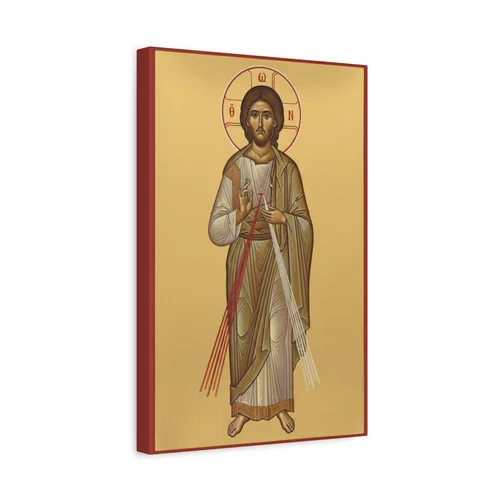


Get the Physical Copy
The physical edition of The Sacred Mirror is ideal for personal theological study, parish reading groups, or anyone who wants to sit with these reflections slowly — making notes, returning to passages, and sharing with others.
📖 Order on AmazonPerfect for individual study, small groups, and parish reading circles.
The Daily Sacrament
"Whether you eat or drink, or whatever you do, do all to the glory of God."
— 1 Corinthians 10:31
Marriage is not a single event — it is a daily sacrament. Every act of love, every moment of faithfulness, every quiet choice to serve becomes part of the eternal liturgy of grace. The sacred mirror never stops reflecting Heaven; it only grows brighter with each faithful step.
Walk it intentionally. Walk it faithfully. Stand before it honestly. And let it remain what it is: terrifying, beautiful, and real.
Ideal for personal study, small groups, and parish reading circles.