The Priest Who Predicted Communist Persecution of the Church Five Years Before It Happened
Church History • Slovakia • Catholic Resistance • A Documented Deep Dive
The Priest Who Predicted Communist Persecution Five Years Before It Happened
In 1943, a Croatian Jesuit refugee began quietly training young Slovak Catholics to survive a Communist takeover that had not happened yet, and would not happen for another five years. The men he trained went on to build and run an underground Church that outlasted four decades of state persecution — and helped organize the demonstration that started bringing that persecution down.
At a Glance
- Founder
- Tomislav Kolaković (b. Stjepan Poglajen) • Croatian Jesuit • arrived Slovakia 1943
- His Network
- Rodina ("The Family") • ~500 members by 1945
- Communist Coup
- February 1948 • five years after Rodina began
- Kolaković Expelled
- 1946, before the coup even happened
- Vladimír Jukl
- 25-year sentence, 1951 • served 13+ years • secret priest, 1971 • d. 2012
- Silvester Krčméry
- 14-year sentence, 1954 • served 13+ years • physician after release • d. 2013
- Bishop Ján Korec
- Secretly consecrated 1951, age 27 • Cardinal, 1991 • d. 2015
- Legacy Event
- Candle Demonstration, Bratislava, March 25, 1988
Preparing for a War That Hadn't Started Yet
Most stories of Catholic resistance to Communism begin after the persecution has already started: a bishop arrested, a seminary closed, a priest sentenced. The story of Tomislav Kolaković begins before any of that happened at all. In 1943, five years before the Communist Party seized full control of Czechoslovakia in February 1948, a Croatian Jesuit refugee arrived in Slovakia and began quietly telling young Catholic students something almost no one else was prepared to hear: the institutional Church they had always known might soon be destroyed, and they needed to learn how to survive without it before that day arrived.
He was right. And the network he built in anticipation of a catastrophe most people around him could not yet imagine went on to produce the men who ran Slovakia's underground Secret Church for the next four decades — through torture, decades-long prison sentences, and constant state surveillance — until they helped organize the demonstration that started the final unraveling of Communist rule itself. The War Within the Church: Communism, Infiltration, Persecution, Resistance, and the Spiritual Battle for Catholicism devotes an early chapter to this story specifically because it inverts the usual order of the whole narrative: here, resistance came before repression, not after it.

Part II
Who Was Tomislav Kolaković?
The man most Slovak Catholics later knew as Tomislav Kolaković was born Stjepan Tomislav Poglajen, a Croatian Jesuit priest and academic trained as a professor of sociology and moral theology. He fled Croatia in 1941 to escape the fascist Ustaše regime that had seized power there during the Second World War, and after a period of travel he reached Slovakia in 1943, initially hoping to make his way toward the Soviet Union to study the religious situation of Catholics living under Communist rule directly. That plan never materialized. What happened instead in Slovakia would prove far more consequential than anything he might have accomplished further east.
Kolaković was an unusually perceptive observer of European totalitarian movements, having already watched fascism destroy his own country's civil society from the inside. Encountering young Slovak Catholics who were living through wartime hardship but had not yet experienced the specific machinery of a Communist dictatorship, he reached a conclusion that set him apart from almost everyone else in the room: the conventional, visible, institutional life of the Catholic Church — its parish buildings, associations, schools, religious orders, seminaries, and public organizations — might soon become impossible to sustain at all. If that happened, Catholics would need an entirely different kind of Christian community, one built to survive even after every visible structure had been seized by the state.
Part III
Rodina: Building the Cell Structure Before the Enemy Arrived
Kolaković's answer was a network he called Rodina, meaning simply "The Family": small Catholic circles composed primarily of university students and young professionals, spread through towns and villages across Slovakia. By 1945, scholarly research estimates the network had grown to roughly five hundred members — a substantial underground movement built entirely before the political system it was designed to survive had even taken power.
The structural discipline Kolaković imposed on Rodina is what makes this story so remarkable in hindsight. Individual circles were not given full knowledge of the larger network; only people at higher levels needed to understand how the whole structure fit together, which meant that discovering one cell could not automatically expose every other cell. He instructed members to memorize the names associated with the organization rather than rely on written membership lists, and told them plainly to destroy any remaining records the moment the Soviet army arrived in Slovakia — recognizing, correctly, that a piece of paper with names on it could become an arrest list in the hands of a political police service. All of this predates the Communist coup of February 1948 by years. Kolaković was not reacting to persecution that had already become visible. He was anticipating the specific mechanisms a future regime would use to attack Christian organization, and training people to survive those mechanisms in advance.
His deeper strategic insight went beyond secrecy alone. He wanted to form Catholics who understood their own faith well enough — prayer, Scripture, doctrine, moral responsibility, the Church's apostolic mission — that they would not collapse spiritually if priests disappeared or parish life became impossible. A Christian formed this way could help preserve the faith of others even when ordinary ecclesiastical institutions had been crippled entirely. That emphasis on reproducing capable disciples, rather than simply commanding a loyal following, is exactly what allowed Rodina to outlive its own founder.
Part IV
The State Notices Early — and Expels Him Anyway
Czechoslovak authorities did not wait until the 1948 Communist takeover to become suspicious of Kolaković's work. The police, already increasingly penetrated and influenced by Communist sympathizers even before the formal coup, arrested him briefly in 1946 and ultimately forced him out of the country entirely. From the state's perspective, his lay apostolate represented a real danger even though it was not an armed or overtly political organization: it created disciplined communities of young Catholics with independent loyalties, international religious connections, and a demonstrated capacity for coordinated action entirely outside state control.
Kolaković left. The people he had formed did not. That distinction turned out to be decisive, because Rodina had been deliberately designed so that removing its founder would not mean the disappearance of its members. Among the young Catholics most deeply shaped by him were two names that would come to define Slovak Catholic resistance for the next forty years: Vladimír Jukl and Silvester Krčméry.
Part V
Vladimír Jukl: Twenty-Five Years, Then a Secret Priesthood
Vladimír Jukl encountered Kolaković through Rodina in 1943 and later credited the priest with teaching him not abstract theology but a way of applying Christianity directly to lived experience — an approach that would matter enormously once ordinary Catholic activity began carrying serious political risk. Jukl and his close friend Silvester Krčméry became active organizing Catholic formation among university students in Prague and among laborers in the Czech border regions, continuing the apostolate Kolaković had begun even after their mentor's position had already become politically dangerous.
The state moved early. Jukl and Krčméry were arrested and interrogated for roughly four weeks in 1946 — years before the worst phase of Communist religious repression began. Five years later, State Security returned with far greater force. Jukl was arrested in August 1951, subjected to torture, and held in solitary confinement for ten months before being sentenced, at twenty-seven years old, to twenty-five years in prison for high treason. He served thirteen years, six months, and nine days before his conditional release in 1965.
Jukl emerged from prison around forty years old, his political record making ordinary employment nearly impossible, and remained under continued surveillance. Yet within a year he and Krčméry had established the first university circle of what would become the organized Secret Church in Slovakia — consciously applying the small-community model Kolaković had taught them two decades earlier. When clandestinely consecrated Bishop Ján Korec was released during the brief liberalization of 1968, he approved their plan, and the two men began systematically building a national network of small communities under the underground hierarchy's spiritual authority, working patiently through Bratislava's university faculties so that graduates could return home and start similar circles elsewhere. In 1971, Jukl went a step further still: he was secretly ordained a Catholic priest, allowing a man the state had already imprisoned for more than thirteen years to exercise sacramental ministry from entirely outside the clerical system the government thought it controlled. He continued leading prayer communities in free Slovakia after Communism's collapse until his death in 2012.
Part VI
Silvester Krčméry: "You Have Power. We Have Truth."
Silvester Krčméry followed a closely parallel path, though he remained a layman rather than becoming a priest. He met Kolaković in 1943 and absorbed the same emphasis on lay apostolate, small communities, and deliberate preparation for suffering. He studied medicine while working alongside Jukl in Catholic formation among students and workers, which brought him the same 1946 arrest and interrogation, and made him an obvious target once the Communist regime consolidated power. He was arrested again in July 1951 while completing his mandatory military service, spent three years in investigative detention, and was sentenced by a military court in 1954 to fourteen years for high treason. His total imprisonment lasted more than thirteen years across major prisons and forced-labor camps.
At his trial, Krčméry summarized the entire conflict in a sentence simpler than any ideological treatise, telling the court in substance that the authorities possessed power while the believers possessed truth — a line that became permanently attached to his memory and, in a real sense, to the whole underground Church's understanding of its own strategy. He was released in 1964 and returned to civilian life as a physician in Bratislava, but rather than withdrawing from religious responsibility after more than a decade in prison, he resumed his collaboration with Jukl almost immediately and eventually widened it far beyond university students, working with young laborers, prisoners, and people struggling with addiction who had been largely abandoned by official structures. In 1974, he and Jukl co-founded the Fatima secular institute, which became an important coordinating hub for underground Catholic activity, samizdat publishing, and the organization of small evangelizing communities across the entire Secret Church network. He died in 2013.
Part VII
Bishop Ján Korec: Youngest Bishop, Then Oldest, Then Cardinal
The spiritual authority behind the entire network was Ján Chryzostom Korec, a Slovak Jesuit who witnessed the Communist takeover of his homeland firsthand in 1948, having been born in 1924 into a still-democratic Czechoslovakia. He joined the Society of Jesus and was ordained a priest, and in 1951 — at just twenty-seven years old — he was secretly consecrated a bishop, making him, for a time, the youngest Catholic bishop anywhere in the world. He would later become, by the end of his long life, the oldest serving bishop in the world as well.
Korec served as spiritual father to the Secret Church, approving Jukl and Krčméry's plan to build prayer communities across every university faculty in Bratislava and eventually throughout the country. Despite severe restrictions on his movement and access to information, he became the most prolific Slovak author of underground literature during the entire Communist period, writing extensively on theology, philosophy, and society under conditions designed to make exactly that kind of work impossible. He continued writing after 1989, eventually publishing roughly seventy books across his lifetime, some translated into other languages — reportedly visiting Christian bookstores after Communism's fall simply to count how many of his own books were in stock.
In 1990, Pope John Paul II appointed Korec Bishop of Nitra, the oldest diocese in the Slavic world, and made him a cardinal in 1991. He died on October 24, 2015, at the age of 91, remembered by historians and admirers alike as "a bishop in overalls" — a man ordained in secret who spent decades doing manual labor to survive while quietly governing a Church the state insisted did not exist.
Part VIII
The Candle Demonstration That Helped End It All
By the end of the 1970s, the network Kolaković had begun with a few hundred students in 1945 had grown into an organized underground spread throughout Slovakia, decades after its founder's expulsion. That patient, decentralized structure produced one of the most visible acts of Catholic resistance in the entire Communist bloc: the Candle Demonstration in Bratislava on March 25, 1988, when thousands of Slovak Catholics gathered peacefully, holding lit candles, to demand religious freedom and the appointment of bishops without state interference — organized substantially through the same prayer-community networks Jukl and Krčméry had spent decades building.
Security forces responded with water cannons and beatings, dispersing the crowd by force in full view of an international audience already watching Gorbachev's reforms unfold elsewhere in the Soviet bloc. The demonstration did not immediately topple the regime. But it is widely regarded by historians as one of the key milestones on the road to the Velvet Revolution that ended Communist rule in Czechoslovakia the following year — a direct, traceable line running from a Croatian Jesuit's 1943 warning, through two young men's quarter-century of imprisonment and underground organizing, to thousands of ordinary Slovak believers standing in a public square holding candles the state could not legislate out of their hands.
Part IX
Why a 2020 Bestseller Retold This Story for Americans
This story did not stay confined to Slovak historical memory. In 2020, journalist and author Rod Dreher published Live Not by Lies: A Manual for Christian Dissidents, drawing directly on interviews and accounts connected to Jukl and Krčméry to argue that Western Christians facing what he called "soft totalitarianism" — social and institutional pressure rather than armed state repression — could learn practical, concrete lessons from how these Slovak Catholics built resilient, decentralized communities capable of surviving decades of suppression without collapsing either spiritually or organizationally. Citing accounts from fellow dissidents, Dreher described the pair as functioning like a magnet, drawing people toward a shared, disciplined commitment to truth-telling under conditions where truth-telling carried genuine cost.
The book became a bestseller and introduced Kolaković, Jukl, and Krčméry to an entirely new generation of readers who had never heard their names, decades after the events themselves. It is a rare thing for a mid-century Slovak Catholic resistance network to become a touchstone in twenty-first-century American religious commentary — and it happened because the underlying strategy Kolaković devised in 1943 turned out to be genuinely transferable: form people capable of reproducing faith and community under pressure, rather than simply commanding a following that collapses the moment its leader is removed.
Part X
You Have Power, We Have Truth: The Theology Behind the Strategy
Krčméry's courtroom statement deserves to be read as more than a memorable one-liner. It expresses, in the simplest possible terms, the entire strategic logic of the underground Church that Kolaković had set in motion decades earlier. Catholics like Krčméry never imagined they could out-muscle a state that controlled the police, courts, prisons, army, and press. Their claim was categorically different: political power cannot make a falsehood true. If the state declared Catholic life in Slovakia to be disappearing while Catholics continued believing, worshiping, forming new communities, and passing the faith to their children, then the government's power to enforce its own preferred description of reality had already reached its limit, no matter how many prison sentences it handed down.
That is the same claim The War Within the Church makes explicitly through its larger theological framework, drawn from Saint Paul's declaration that the Christian struggle is not ultimately against flesh and blood (Ephesians 6:12). Governments, police, and prison sentences were entirely real, and the men in this story paid for that reality with decades of their lives. But the book's deeper argument is that truth, once genuinely held and transmitted person to person, is a form of power a totalitarian state cannot fully confiscate — which is precisely what a Croatian refugee priest seemed to understand, intuitively, five years before anyone else around him could see it coming.
Part XI
What's Inside The War Within the Church
Kolaković's story is chapter 7 of thirty-nine in The War Within the Church, positioned deliberately near the beginning of the book's account because it establishes the pattern every later chapter builds on: Catholic resistance to Communism was not simply a reactive scramble once persecution arrived, but in at least this case, a deliberately anticipatory strategy built years in advance by people who understood exactly what was coming. The book follows this thread directly into its next chapter on the Czechoslovak "underground university" built by theologians Oto Mádr and Josef Zvěřina, and continues through the secret bishops, infiltrated seminaries, and Vatican II evidence covered in the chapters that follow, closing with eight full evidence appendices and a complete chronology of the entire conflict.
Frequently Asked Questions
Tomislav Kolaković & the Slovak Secret Church — Q&A
He Saw It Coming Five Years Early. They Spent Forty Years Proving Him Right.
A Croatian refugee priest, two young men who each gave over a decade of their lives in prison, and a secretly consecrated bishop who became a cardinal: together they built something the Communist state spent four decades trying and failing to destroy, and it ended in a public square full of candles the police could beat back but never quite put out. Their story is one of thirty-nine chapters in The War Within the Church.
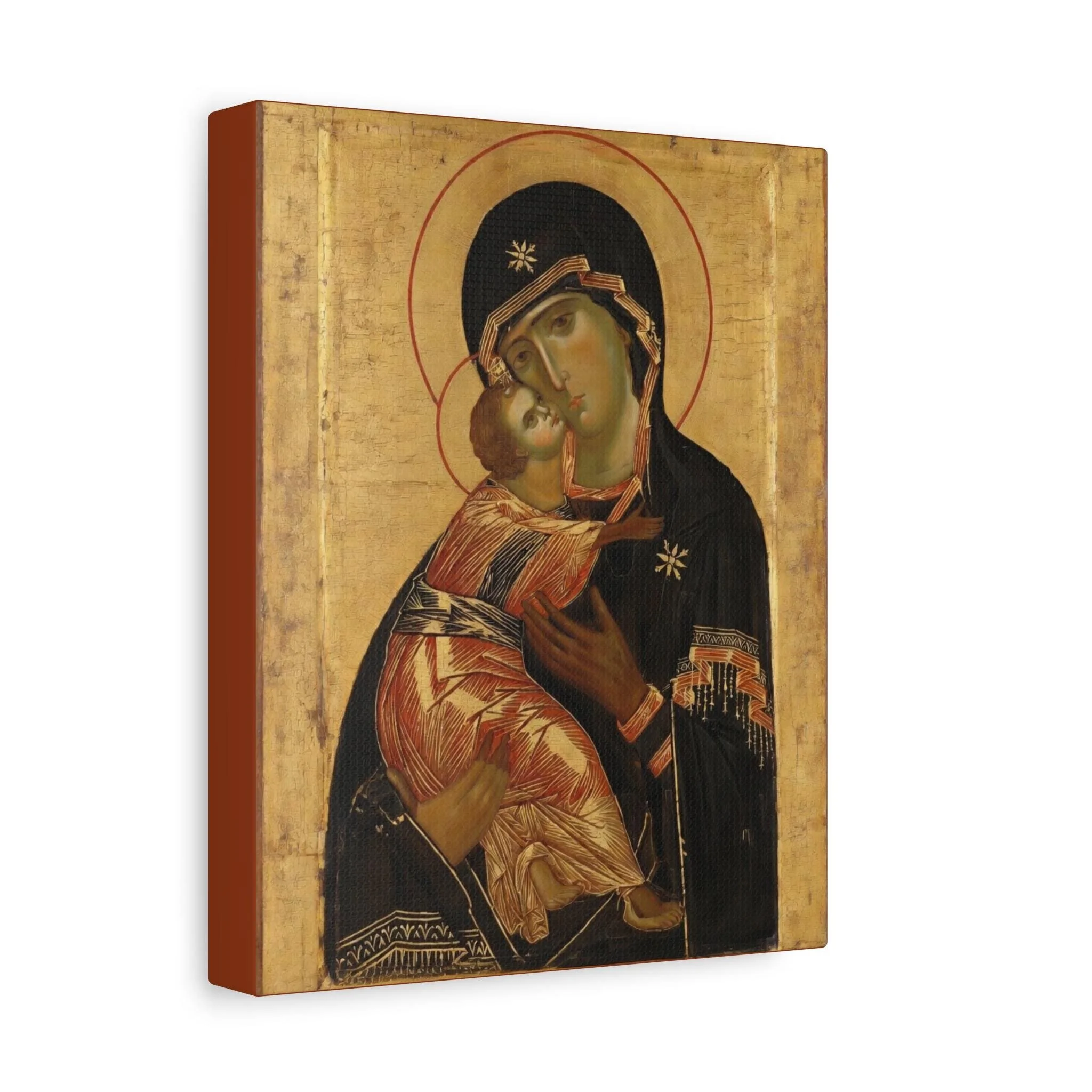
Read the full documented case. Then carry the icon that reminds us small, hidden faith can outlast an empire, and wear the cross that says truth is still worth the cost.
Get The War Within the Church on Amazon →