What Communism Actually Destroyed in the Catholic Church, and What It Never Managed To
Church History • Post-Communist Reckoning • An Honest Accounting • A Documented Deep Dive
What Communism Actually Destroyed in the Catholic Church, and What It Never Managed To
Bishops walked back into their cathedrals in 1989 and 1990. Photographs of that moment suggested the story was over. It wasn't. Some of the deepest wounds Communism left behind were never photographable at all — and some are still sitting in European courtrooms today.
At a Glance
- The Visible Recovery
- Bishops restored, undergrounds legalized, seminaries reopened, 1989–1990
- The Missing Generation
- Decades of blocked seminary admissions and removed professors that could not be undone retroactively
- The Poisoning of Trust
- Documented informers made suspicion of the innocent psychologically unavoidable
- Romanian Greek Catholic Losses
- 2,600+ churches confiscated in 1948 • most never returned
- Still in Court
- Sâmbăta Bihor v. Romania (2010) • Lupeni Greek Catholic Parish v. Romania
- As Recent As
- U.S. State Dept. reporting on unresolved restitution, 2022 & 2023
- What Survived
- Apostolic succession, sacramental life, underground theological formation
- The Book
- The War Within the Church by A Servant of God • 415 pages
The Photograph That Suggested the Story Was Over
When Communist governments fell across Eastern Europe between 1989 and 1991, the most visible sign of Catholic survival was the return of public institutions. Bishops who had spent decades in prison, exile, or clandestine ministry walked back into their cathedrals. Underground churches gained legal recognition almost overnight. Religious communities reappeared in public, and seminaries that had been closed or tightly restricted for a generation reopened their doors. Those images were entirely real, and they were rightly celebrated as proof that the persecution had failed.
They also concealed a harder truth that The War Within the Church: Communism, Infiltration, Persecution, Resistance, and the Spiritual Battle for Catholicism insists on naming directly: a Church can regain full legal freedom in a single calendar year and still spend decades living with the consequences of everything that freedom could not instantly repair. This article walks through three of the deepest and least photographed wounds the book documents — and, just as importantly, what survived them anyway.

Part II
The Missing Generation: A Wound With No Photograph
The missing generation was not created by any single dramatic act of persecution. It was created by a thousand ordinary administrative decisions, repeated for decades: seminary admissions restricted, promising candidates rejected, professors quietly removed from teaching positions, religious houses closed, foreign study denied, passports withheld, and bishops prevented from governing their own dioceses. None of these measures needed to destroy the priesthood outright. They only had to narrow the pipeline through which future clergy, theologians, religious, and lay leaders would eventually emerge.
This distinction matters enormously for understanding why post-Communist recovery could look so complete on the surface and still feel so difficult underneath. When a confiscated church building is finally returned, it can be repaired, repainted, and reopened. Human formation does not work the same way. The years between twenty and forty cannot be handed back to a man who spent them in prison, forced labor, or restricted ministry. The mentorship a bishop might have provided to promising seminarians during a decade of confinement cannot be recreated retroactively once he is finally free. A theological school that never existed leaves no alumni network waiting to be reassembled once the political weather changes.
Part III
What the Seminary Numbers Actually Reveal
Lithuanian state security records show precisely how seriously the regime took the project of narrowing that pipeline. At one point, officials considered the presence of only three agents among seventy-seven seminarians to be "absolutely unsatisfactory." That single phrase reveals an expectation, not an accidental byproduct of persecution: the state wanted deeper, more systematic control over the exact institution responsible for producing the next generation of priests, and treated anything less as a problem requiring correction.
The consequences of that control did not disappear the day the regimes collapsed. Freedom placed enormous, sudden demands on the small number of priests and religious who remained. Parishes, schools, catechesis, youth formation, charitable work, and property disputes all needed attention simultaneously, handled by people who had spent years simply fighting to preserve sacramental life at all, not building the administrative and pastoral infrastructure a free society expects a fully functioning Church to have. This is why post-Communist Catholic recovery could be uneven even in countries where the underlying faith of the people remained strong. The problem was never only about money or buildings. It was about the absence of people with real experience in administration, theology, publishing, and public leadership — precisely the kinds of people the previous system had spent decades deliberately preventing from developing.
Part IV
The Poisoning of Trust: Damage Beyond the Agents Themselves
Perhaps the least visible wound of all is also, according to The War Within the Church, one of the deepest: the corrosion of ordinary trust among clergy who had done absolutely nothing wrong. Once documented collaborators under codenames such as "Daktaras," "Kékes," and others were confirmed to exist in the opened archives, suspicion toward completely unrelated priests became psychologically unavoidable, whether or not any actual evidence supported it. A single proven betrayal could weaken confidence in ten innocent colleagues simply because the faithful had no way of knowing in advance which one, if any, had been compromised.
This meant Communist infiltration could damage a diocese far beyond the actual headcount of agents ever recruited into it. A bishop's secretary, a seminary lecturer, a trusted friend among the clergy — any of these could theoretically have been reporting to state security, and simply knowing that clerical recruitment occurred at all created a powerful incentive to withhold honest opinions, personal judgments, and pastoral concerns from colleagues who deserved that honesty. The security services benefited from that resulting silence whether or not the suspected colleague was actually an informer, because authoritarian systems do not need every person to become an agent if enough people begin behaving as though everyone else might be one.
The book is equally insistent, though, that this history cannot be flattened into blanket suspicion. It documents cases such as Sándor Kovács, whose archival designation reflected surveillance rather than proven agency, and Adalbert Boros, who appears in the record as a target who actively tried to expose government-connected clergy rather than as one of the collaborators he opposed. Misreading cases like these would produce a genuinely grotesque outcome: the security service persecuted these men during Communism, and careless researchers would complete the same injustice decades later by mistakenly calling them agents.
Part V
Two Languages: What Children Learned to Live With
The atmosphere of caution the book describes did not stop at the rectory door. Parents routinely warned children not to repeat religious conversations at school, aware that a teacher might report the family, while adults learned that a single imprudent statement at work could affect employment, education, or professional advancement for an entire household. Children growing up under these conditions effectively learned two languages: one belonging to home, prayer, and family memory, and another belonging to school, public institutions, and the state's ideological expectations.
Learning to live inside both worlds at once could preserve a family's faith. It could also teach a child, at a formative age, that important truths are safest when kept hidden — a lesson that does not simply evaporate the day open religious practice becomes legal again. The book is careful to frame this inherited caution charitably rather than as a character flaw: it is the behavioral memory of families who once knew, from direct experience, that a child's innocent sentence repeated in the wrong room could create real consequences for everyone at home. A generation formed this way may remain quietly reserved about public religious identity long after that reserve stops being strictly necessary, and understanding why is essential to judging the post-Communist Church fairly rather than through the assumptions of societies that never had to learn any of these lessons themselves.
Part VI
The Churches That Never Came Back: Romania's Unfinished Restitution
Nowhere is the gap between legal freedom and actual restoration more visible than in the property history of the Romanian Greek Catholic Church. When the Communist regime suppressed the Church in 1948, it did not simply outlaw the institution; it physically transferred its places of worship and parish houses to the Romanian Orthodox Church, while most other buildings and land passed directly to the state. According to U.S. religious-freedom reporting, the Romanian Greek Catholic Church possessed more than 2,600 churches at the moment of that forced liquidation.
When the Church regained full legal recognition after 1989, its hierarchy, priests, and faithful returned immediately. Its buildings, in most cases, did not. Four decades of intervening history had transformed a straightforward act of theft into a genuinely difficult social problem: many communities that had once been Greek Catholic had spent two full generations living inside Orthodox parish structures, and individual buildings had often been maintained, repaired, or rebuilt by congregations who did not think of themselves as merely temporary occupants waiting for a political reversal. Communism had manufactured a dispute fully capable of outliving Communism itself.
Part VII
When the Regime Is Gone but the Lawsuit Isn't
The scale of the unresolved dispute pushed it beyond Romania's own courts entirely. In Sâmbăta Bihor Greek Catholic Parish v. Romania, the European Court of Human Rights examined a church building transferred to Orthodox possession after the 1948 dissolution of the Greek Catholic Church. In 2010, the Court unanimously found violations connected to the right to a fair hearing, ruling that the parish had not enjoyed effective access to a court on equal terms with the opposing party. A later, larger case, Lupeni Greek Catholic Parish and Others v. Romania, again concerned a place of worship transferred after the same 1948 suppression; the Grand Chamber did not find discrimination in that instance, but it unanimously found violations connected to legal uncertainty and the excessive length of the proceedings themselves.
The persecuting regime that originally seized these properties had been gone for decades by the time these judgments were issued. Its administrative decisions were still generating active litigation. And the wound remains visible even now: United States government reporting on international religious freedom, published in both 2022 and 2023, continued to document the slow pace of Greek Catholic restitution in Romania specifically, noting that Romania's National Authority for Property Restitution reviewed 399 separate Greek Catholic claims in 2022 alone and approved only three requests for full restitution. A regime that fell in 1989 was, as of the most recent reporting cited in the book, still shaping the property rights of a Church it tried to erase more than seventy years earlier.
Part VIII
What Communism Never Managed to Destroy
None of this is meant to overshadow what actually survived, and The War Within the Church is explicit that it should not. Everywhere this history was tested, apostolic succession continued through secretly consecrated bishops. Underground seminaries kept forming priests in apartments and forests when public institutions were closed. Clandestine theological circles preserved serious Catholic intellectual life across entire decades when official structures could not be trusted to do so. The archives of persecution, read in full context, are not principally a record of how deeply Communism penetrated the Church. They are just as much a record of how difficult the Church proved to penetrate completely — because for every collaborator whose report survived in a file, there was someone the state considered dangerous enough to be worth reporting on in the first place.
That, the book argues, should be the real center of gravity for this entire history. Infiltration and betrayal matter, and this article has not minimized either one. But they matter specifically because fidelity existed alongside them, in the same parishes, often in the very same families, at the very same time.
Part IX
What's Inside The War Within the Church
"The Missing Generation," "The Poisoning of Trust," and "The Churches That Never Came Back" form three consecutive chapters within Part V of the book, titled "After 1989: The Files, the Wounds, and the Inheritance" — a section that deliberately refuses the temptation to end the story at the moment the regimes fell. The book pairs this honest post-Communist reckoning with eight full evidence appendices, including a Personnel Evidence Register and a complete chronology, so every claim summarized here can be traced back to its original archival or legal source.
Frequently Asked Questions
What Communism Destroyed — and What It Didn't — Q&A
The Regimes Fell in 1989. Some of Their Paperwork Is Still Being Litigated Today.
A missing generation that can't be retroactively formed. A trust that took one betrayal to poison and a generation to rebuild. Church buildings still working through European courts more than thirty years after the government that seized them disappeared. None of this erases what survived — but an honest history has to hold both truths at once, and that honesty is exactly what makes The War Within the Church worth reading in full.
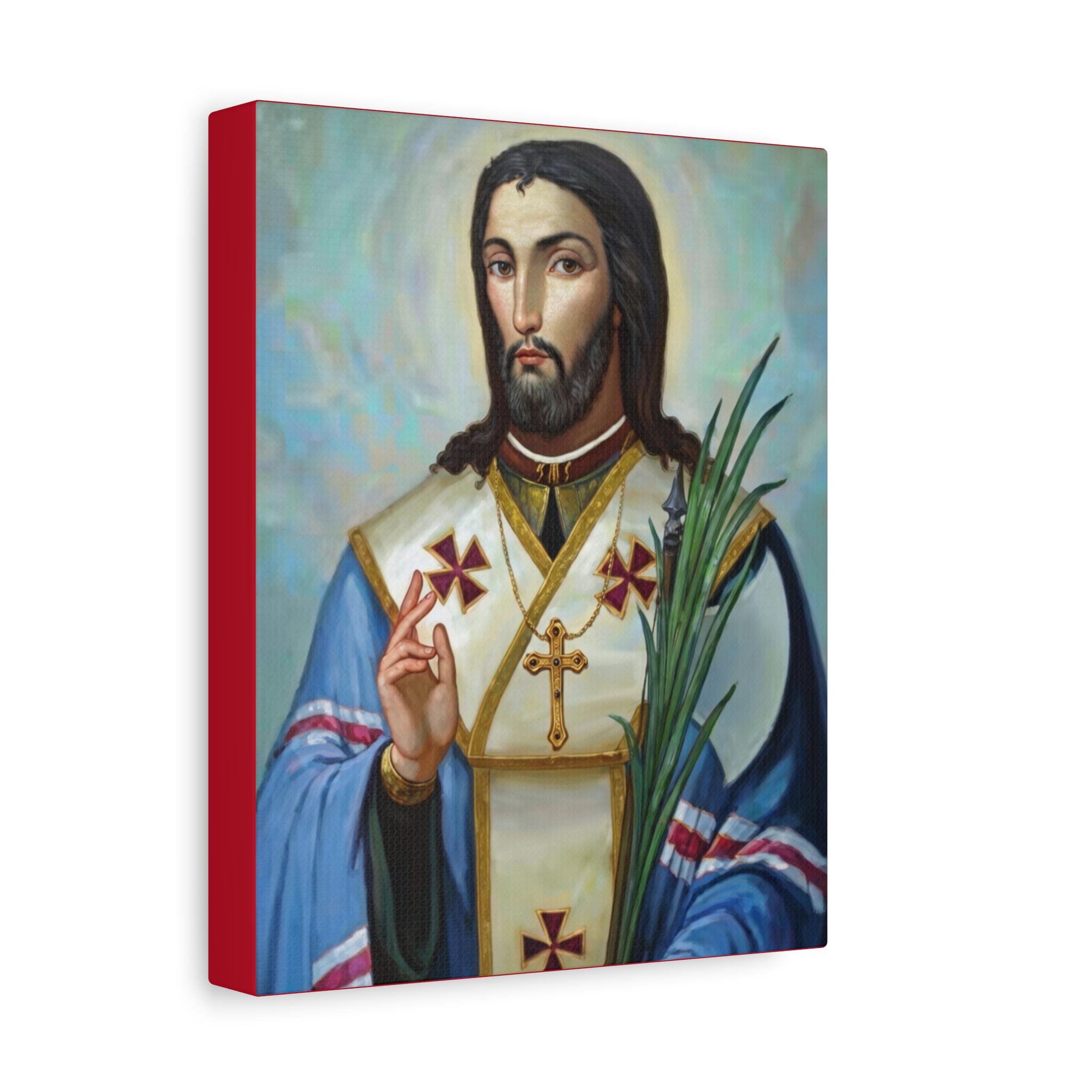
Read the full documented case. Then carry the icon of a martyr who died for the unity infiltration tried to poison, and wear the cross of the archangel who patrons the long fights that outlast the regimes that started them.
Get The War Within the Church on Amazon →