What Is the Philokalia? A Complete Beginner's Guide to the Heart of Eastern Christian Mysticism
Beginner’s Guide
What Is the Philokalia? A Complete Beginner’s Guide to the Heart of Eastern Christian Mysticism
The book that sparked a spiritual revolution across Russia, Romania, and the Orthodox world — a 1,200-year anthology of Christian wisdom on prayer, watchfulness, and the journey toward union with God
In 1782, two monks on Mount Athos — Saint Nicodemos the Hagiorite and Saint Makarios of Corinth — published a book in Venice that would quietly transform Orthodox Christianity across the entire Slavic world. They called it the Philokalia, and it was not a new book but an anthology: a carefully curated collection of writings by 36 Christian spiritual masters spanning twelve centuries, from the 4th-century Egyptian Desert Fathers to the 14th-century Byzantine hesychasts. The texts they gathered had one subject in common: the interior life of prayer, the practice of keeping the mind in God, and the path toward what the Eastern Christian tradition calls theosis — union with the divine.
Within a decade, a Church Slavonic translation was circulating through Russian monasteries. Within a generation, it had reached lay Christians across the Russian Empire. Within a century, it had inspired one of the most beloved spiritual classics in Christian literature — The Way of a Pilgrim, the anonymous account of a wandering Russian peasant who learns to pray the Jesus Prayer ceaselessly. And in the 20th century, as English translations began to appear, the Philokalia found a new readership: Western Christians — Catholic, Protestant, and Orthodox alike — who were looking for the deep waters of contemplative prayer and finding them, to their surprise, in a book compiled on a Greek mountain two centuries ago.
If you have arrived at this page asking what the Philokalia is, you are in good company. The query “Philokalia meaning” is one of the most rapidly growing spiritual search terms in English. Something is drawing people to this ancient collection, and that something is probably the same thing that drew the Russian pilgrims who read it by candlelight in the 19th century: the sense that prayer can be more than words, that the interior life can be cultivated like a craft, and that the Christian tradition has spent fifteen centuries developing techniques for doing exactly that. This guide is the place to start.
What Does “Philokalia” Mean?
The word Philokalia (Φιλοκαλία) is a compound Greek word formed from philos (“love of” or “lover of”) and kalos (“beauty” or “the good”). It means, literally, “love of the beautiful” or “love of the good.” In the context of the book, the “beauty” being loved is not aesthetic beauty but divine beauty — the ultimate goodness and radiance of God that the Eastern Christian tradition believes can be directly experienced by the purified heart through prayer.
The title contains the entire theological program of the collection. The Philokalia is not a catechism, not a systematic theology, not a devotional collection of stories and encouragements. It is a practical manual for learning to love God — specifically, for learning to direct the mind and heart toward God in such a sustained and purified way that the boundary between prayer and ordinary life begins to dissolve, and the Christian approaches the condition of “praying without ceasing” that Saint Paul describes in his letter to the Thessalonians (1 Thess. 5:17).
The word Philokalia was not invented by the 1782 compilers. The 4th-century theologian Saint Gregory of Nazianzus had used it to title an anthology of excerpts from Origen, understanding it to mean a selection of the most beautiful or most valuable passages from a writer. Saint Nicodemos and Saint Makarios adopted the same usage: they were selecting the most beautiful, most spiritually nutritious texts from fifteen centuries of Eastern Christian ascetic writing and presenting them together as a single guide to interior prayer.
The History: How the Philokalia Was Compiled (1782)
To understand the Philokalia, you need to understand Mount Athos — the “Holy Mountain,” the peninsula in northern Greece that has been an uninterrupted center of Orthodox Christian monasticism since the 10th century. Mount Athos is a unique religious community: approximately 2,000 monks in twenty monasteries (and numerous smaller sketes and hermitages), living under a monastic republic that has been continuously self-governing for over a thousand years. It is the place where the hesychast tradition of interior prayer has been most carefully preserved and transmitted, generation by generation, from the Byzantine period to the present day.
In the 18th century, two remarkable monks converged on Mount Athos. Saint Nicodemos the Hagiorite (1749–1809) was a prodigiously learned Athonite monk from the island of Naxos who would go on to write or compile dozens of works on theology, spirituality, and the canons of the Church — including the Pedalion (Rudder), the definitive collection of Orthodox canon law. Saint Makarios of Corinth (1731–1805) was a bishop who had retired to monastic life on Athos after his diocese was lost to political upheaval, bringing with him both episcopal authority and a deep formation in the contemplative tradition.
Together they undertook the project of surveying the manuscript libraries of Mount Athos and assembling the most important ascetical and hesychast texts into a single volume. They were not creating new content; they were curating a tradition that had been developing in monastic manuscripts for twelve centuries and making it available in a form accessible to educated readers outside the monastery walls. Their selection was opinionated: they chose texts that focused specifically on interior prayer — what the tradition calls “prayer of the heart” or “noetic prayer” — and on the ascetic practices that prepare the soul for it.
The result was published in Venice in 1782 in a single large Greek volume of approximately 1,200 pages. The choice of Venice (rather than an Orthodox printer) was pragmatic: Venice had the best printing infrastructure accessible to Greek scholars at the time, and it had a significant Greek community. The book was expensive and large — not a popular paperback but a serious scholarly and spiritual reference for educated monastics and clergy.
The transformation of the Philokalia from an Athonite monastic reference into a popular spiritual classic happened through a single remarkable figure: Saint Paisius Velichkovsky (1722–1794). A Ukrainian monk who had studied on Mount Athos and then established a major monastery at Neamts in Romania, Paisius translated selections from the Philokalia into Church Slavonic and published them as the Dobrotolyublye (“Love of the Beautiful”) in Saint Petersburg in 1793. Paisius’s translation circulated through Russian monasteries with the speed of wildfire, reaching both the startsy (spiritual elders) of the major monasteries and eventually, through them, the lay Christian public.
1782 — Published in Venice by Saints Nicodemos and Makarios; a monastic scholarly text in Greek
1793 — Paisius Velichkovsky’s Church Slavonic Dobrotolyublye ignites a Russian spiritual revival
1877 — Saint Theophan the Recluse produces a complete five-volume Russian edition, adding texts not in the original Greek
1946–1976 — Dumitru Staniloae translates and extensively annotates the Philokalia into Romanian
1979–2023 — Palmer, Ware, and Sherrard complete the definitive English five-volume translation from the original Greek
Today — Read in dozens of languages, by Orthodox, Catholic, Protestant, and secular readers worldwide; rising rapidly in English-language spiritual searches

The Major Authors: Who Wrote the Texts?
The Philokalia gathers writings from approximately 36 authors spanning the 4th through 15th centuries. They wrote in Greek, they came from Egypt, Palestine, Constantinople, Sinai, and the Athonite peninsula, and they represent twelve centuries of development in the Eastern Christian tradition of interior prayer. What unites them is not a single theological system but a shared practice: the cultivation of continuous prayer, the guarding of the mind from distraction, and the progressive purification of the soul that the tradition believes leads to direct experience of God’s presence.
The Complete Author Table
| Author | Approximate Dates | Region | Key Contribution | Philokalia Volume |
|---|---|---|---|---|
| Isaiah the Solitary | 4th–5th c. | Egypt | On guarding the intellect; foundational desert wisdom | I |
| Evagrius Ponticus | 345–399 | Egyptian Desert | Eight passions; systematic account of watchfulness and prayer | I |
| John Cassian | 360–435 | Egypt / Gaul | Bridge between desert spirituality and Western monasticism; ceaseless prayer | I |
| Mark the Ascetic | 4th–5th c. | Egyptian Desert | Repentance; the spiritual law; 226 texts on ascetic virtue | I |
| Hesychius the Priest | c. 350–450 | Sinai | Hundred Chapters on Watchfulness; practical heart-guarding | I |
| Neilos the Ascetic | d. c. 430 | Sinai | Ascetic discourse; cautions on the passions | I |
| Diadochos of Photiki | c. 5th c. | Asia Minor | Discernment; 100 texts on spiritual knowledge | I |
| John of Karpathos | 7th c. | Aegean | Encouragement to monks; consolation in spiritual struggle | I |
| Theodore of Edessa | 9th c. | Syria | Ascetical disciplines for the intellect | II |
| Maximus the Confessor | 580–662 | Constantinople | Theosis; 400 texts on love; Christological mysticism | II |
| Thalassios the Libyan | 7th c. | Libya | On love; self-control; the passions | II |
| John of Damascus | 676–749 | Syria | Virtues and vices; theological synthesis | II |
| Theognostos | 13th–14th c. | Constantinople | On the practice of virtue and the priesthood | II |
| Philotheos of Sinai | c. 9th c. | Sinai | Forty texts on watchfulness; guarding the heart | III |
| Ilias the Presbyter | 11th–12th c. | Unknown | Gnomic anthology; collected wisdom on the spiritual life | III |
| Peter of Damascus | 12th c. | Damascus | Eight stages of contemplation; comprehensive Treasury of Divine Knowledge | III |
| Symeon the New Theologian | 949–1022 | Constantinople | Direct experience of God; 153 practical and theological texts | IV |
| Nikitas Stithatos | 1005–1090 | Constantinople | Disciple of Symeon; inner purification and spiritual knowledge | IV |
| Theoliptos of Philadelphia | 1250–1322 | Philadelphia | Inner prayer; the monastic life as model for all | IV |
| Nikiphoros the Monk | 13th c. | Mount Sinai | Practical instruction on the hesychast sitting posture and breathing | IV |
| Gregory of Sinai | 1260–1346 | Mount Athos | Method of the Jesus Prayer; directions for hesychasts | IV |
| Gregory Palamas | 1296–1359 | Mount Athos | Uncreated light; essence-energies distinction; defense of hesychasm | IV |
| Six Athonite Elders (Kallistos Xanthopoulos et al.) | 13th–15th c. | Mount Athos | Technical instructions for hesychast practice; 100 chapters each | V |
What Is in the Five Volumes?
The modern English Philokalia (Palmer, Ware, Sherrard) is organized in five volumes. Here is a practical guide to each:
Volume I is the place to begin. It contains the earliest and most accessible texts: the Egyptian Desert Fathers (Isaiah the Solitary, Evagrius, Cassian, Mark the Ascetic, Hesychius, Neilos, Diadochos) who established the foundational vocabulary of Eastern Christian asceticism — the eight passions, the practice of watchfulness, the discipline of guarding the mind against idle thoughts. These texts are short, practical, and written for ordinary monks rather than advanced contemplatives. They are the closest thing in the Philokalia to entry-level reading.
Volume II moves into the early Byzantine synthesis. Maximus the Confessor’s Four Hundred Texts on Love are the most theologically dense texts in the collection — profound reflections on the relationship between love of neighbor and love of God, the nature of theosis, and the Christological foundation of the interior life. John of Damascus provides a more accessible guide to virtues and vices. This volume requires more theological preparation than Volume I but rewards slow, careful reading.
Volume III covers the Sinai Fathers and the systematization of interior prayer. Philotheos of Sinai’s Forty Texts on Watchfulness and Peter of Damascus’s vast Treasury of Divine Knowledge (with its detailed account of eight stages of contemplation) are the highlights. Peter of Damascus is especially practical and detailed — if you want to understand what “stages of prayer” actually mean in lived Christian experience, his lengthy text is the place to go.
Volume IV is where the prayer of the heart reaches its fullest development. Symeon the New Theologian’s first-person accounts of mystical experience are unlike anything else in Christian literature. Gregory of Sinai’s practical instructions for the Jesus Prayer provide the most detailed technical guidance in the collection. And Gregory Palamas’s theological writings defend the entire hesychast project against its critics and provide its intellectual framework. If you can only own two volumes, they should be I and IV.
Volume V (English translation completed in 2023) contains texts by six Athonite monastic elders primarily named Kallistos. These texts are the most technically demanding in the collection — they assume a reader who is already seriously engaged in hesychast practice under a spiritual guide and wants detailed instruction on specific aspects of the method. For most beginners, this volume should come last.


What Is Hesychasm? The Prayer Method at the Heart of the Philokalia
Hesychasm (from the Greek hesychia, “stillness” or “quiet”) is the Eastern Christian tradition of interior prayer in which the practitioner seeks to achieve a state of deep inner stillness that allows the mind to descend into the heart and rest in God. The word and practice are central to the entire Philokalia — they are what the anthology is, in a sense, about. To understand hesychasm is to understand why the Philokalia was compiled, what it teaches, and why people keep reading it.
The basic hesychast conviction is this: the human mind (“nous” in Greek — the deepest faculty of the soul, the eye that can perceive spiritual reality) is, in its natural fallen state, scattered, distracted, and enslaved to the passions. It moves ceaselessly from thought to thought, emotion to emotion, desire to desire, and this constant movement prevents it from resting in God. The goal of hesychast practice is to quiet this movement — to gather the scattered mind, cleanse it of the passions, and bring it into the heart, where it can be still before God and begin to experience, directly and consciously, the presence of the divine.
The method is not primarily about technique, though techniques are involved. It is primarily about attention: learning to be present to God in the same simple, undistracted way that God is present to us. The techniques — the posture, the breathing, the repetition of the Jesus Prayer — are tools for helping scattered modern people achieve the prerequisite of all real prayer: the ability to stop, be quiet, and simply attend.
Hesychasm and the Body
One of the most distinctive features of the hesychast tradition, compared to many Western forms of contemplative prayer, is its attention to the body. The Philokalia does not treat the body as an obstacle to prayer but as a participant in it. Saint Nikiphoros the Monk in Volume IV describes a specific posture for hesychast prayer: sitting, with the head inclined toward the chest, directing the attention toward the region of the heart. The breathing is to be calm and controlled. This is not yoga or bodily manipulation for its own sake but a recognition that the human being is an embodied soul — that the body’s orientation in space affects the orientation of the mind, and that a certain physical disposition helps the mind achieve the stillness that prayer requires.
This embodied character of hesychast prayer is directly connected to the Orthodox theology of the Resurrection: the body will be glorified alongside the soul, and therefore the body is already a participant in the spiritual life rather than merely its vehicle or obstacle.
The Jesus Prayer: “Lord Jesus Christ, Son of God, Have Mercy on Me”
No single element of the Philokalia’s teaching has had wider cultural impact than the Jesus Prayer — the brief invocation that forms the practical core of hesychast practice: “Lord Jesus Christ, Son of God, have mercy on me, a sinner.” In Church Slavonic: “Gospodi Iisuse Khriste, Syne Bozhiy, pomiluy mya greshnago.”
The prayer is short enough to be repeated continuously — with the breath, during work, in the middle of conversation, in the moments between sleeping and waking. The Philokalia’s teachers insist that this brevity is not a limitation but a design: a prayer short enough to be prayed ceaselessly is a prayer that can eventually become as natural as breathing itself. The goal, articulated across dozens of the Philokalia texts, is for the Jesus Prayer to become spontaneous — to pray itself in the person’s heart without effort or conscious initiation, fulfilling Paul’s command to “pray without ceasing.”
The prayer contains an entire theology in six words. “Lord” asserts Christ’s divine authority. “Jesus Christ” names the historical person in whom God became man. “Son of God” confesses the Trinitarian faith. “Have mercy on me” is the fundamental posture of the Christian before God — not grasping, not negotiating, not demanding, but asking for what cannot be earned. “A sinner” (often added in the full form) is the practitioner’s honest self-assessment, the ground of genuine humility without which the prayer degenerates into spiritual performance.
The Jesus Prayer is not exclusively monastic. The Philokalia’s compilers, particularly Saint Nicodemos, explicitly argued that the prayer is available and appropriate for all Christians, lay and monastic alike. The Way of a Pilgrim — the anonymous 19th-century account of a Russian peasant who learns to pray the Jesus Prayer continuously — became the most powerful imaginative demonstration of this claim: that ordinary Christian life, however humble and wandering, can be organized around ceaseless prayer.
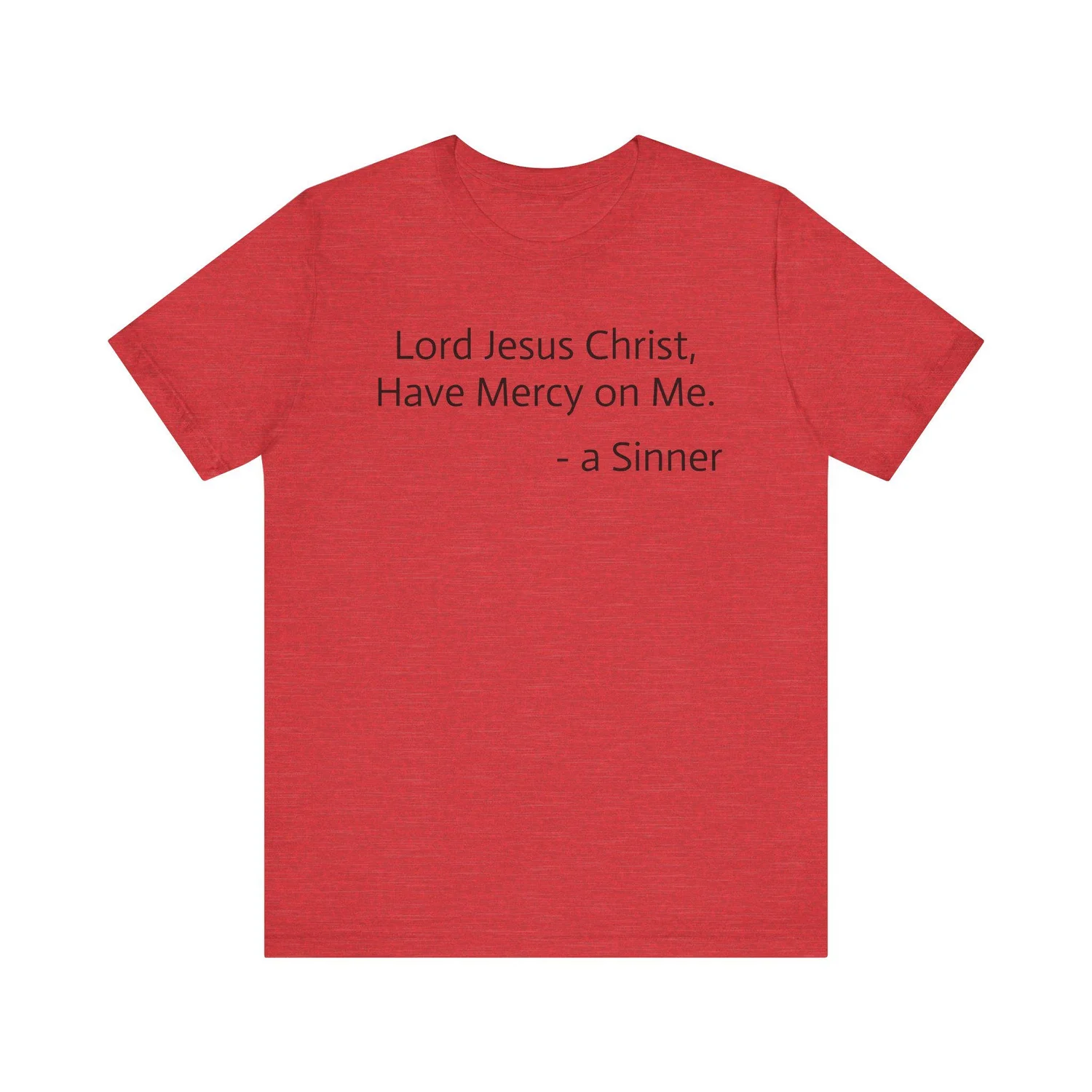
The Jesus Prayer Shirt
The heart of the Philokalia in six words — worn as a daily witness. “Lord Jesus Christ, have mercy on me” is the prayer that the hesychast masters taught ordinary Christians to carry through every waking hour. Carry it on your chest.
View Jesus Prayer Shirt →Prayer Ropes: The Traditional Tool for the Jesus Prayer
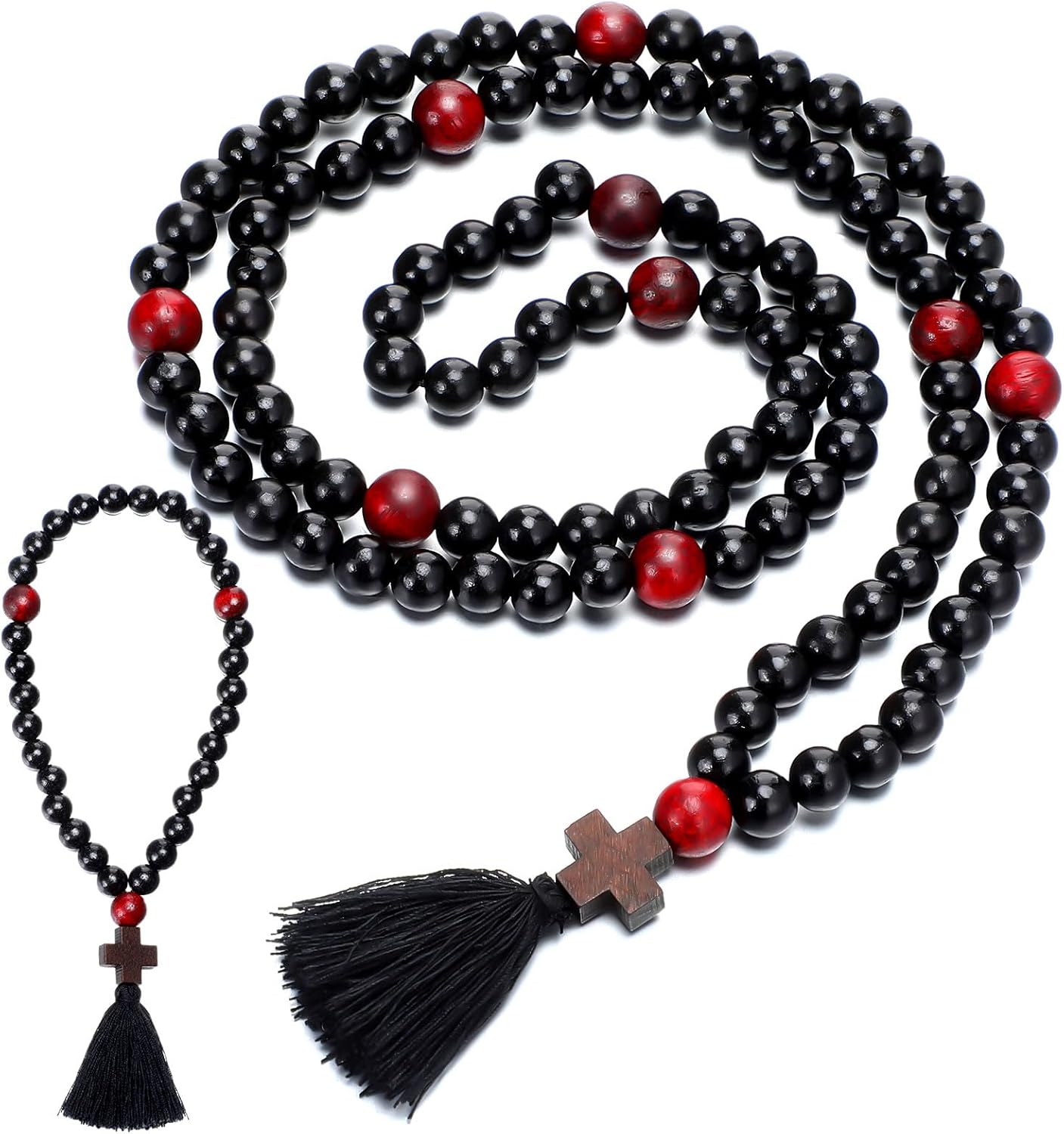
The prayer rope (komboskini in Greek, chotki in Russian) is the traditional physical tool for counting repetitions of the Jesus Prayer. Made from wool knotted in the monastic tradition, each knot is a prayer. Orthodox Christians carry them in pockets, wrap them around wrists, and keep them in their hands during idle moments — converting ordinary time into prayer.


Nepsis: The Eastern Christian Art of Watchfulness
Nepsis (Νήψις) is the Greek word for “sobriety” or “watchfulness,” and it is probably the most important single concept in the Philokalia. The original 1782 Philokalia bore the subtitle “of the Holy Neptic Fathers” — the fathers of watchfulness. Understanding nepsis means understanding what the entire collection is actually teaching.
In the Philokalia’s vocabulary, nepsis is the practice of vigilant, moment-by-moment attention to what is happening in one’s own mind. The hesychast masters observed, with an acuity that anticipates modern cognitive psychology, that human beings are constantly generating an interior stream of thoughts, images, desires, judgments, and fantasies — most of which they are barely aware of, and almost none of which they have deliberately chosen. This interior noise keeps the mind occupied with everything except God, and it is from this unconscious mental activity that sins — both the obvious actions and the subtler habits of the heart — ultimately arise.
The neptic tradition teaches a practice of watching this interior stream without being captured by it. The practitioner learns to notice thoughts — especially what the tradition calls logismoi, the intrusive mental suggestions that propose passion-driven courses of action — before they have taken hold, and to deflect them by returning attention to prayer. Evagrius’s description of the “eight thoughts” (gluttony, lust, greed, sadness, anger, acedia, vainglory, and pride) is the most systematic ancient account of this interior watchfulness: these are the categories of temptation that the watchful mind needs to learn to recognize and redirect.
The modern reader encounters nepsis with a peculiar sense of recognition. Mindfulness-based stress reduction, cognitive behavioral therapy, the practice of observing thoughts without attachment in Buddhist meditation — these contemporary practices share a structural similarity with nepsis that has not gone unnoticed by psychologists. But the Philokalia’s teachers are always careful to distinguish their practice: nepsis is not self-observation for its own sake, not the detached awareness of a secular mindfulness practice, but the attentive service of a creature before its Creator. The goal is not a calm, observing ego but a heart emptied of its own preoccupations and filled with the presence of God.
Theosis: What the Philokalia Is Really About
The ultimate goal of all the Philokalia’s teaching — the prayer, the watchfulness, the practice of the passions, the hesychast method, the Jesus Prayer — is what Eastern Christian theology calls theosis (Greek: “divinization”). This is the most characteristically Eastern of all the Philokalia’s theological categories, and it is the one most likely to surprise a Western reader. It is also the key to understanding why these ancient texts continue to speak with urgency to modern people.
Theosis means, literally, “becoming God” — but this requires immediate clarification. It does not mean that the human person becomes identical with God, loses their individual existence, or achieves some kind of mystical dissolution into the divine. Orthodox theology is very clear on this point. Rather, theosis means that through grace — through the free gift of God, received in the sacramental life of the Church, cultivated through prayer and ascetic practice — the human person can be so thoroughly permeated by the divine presence that they come to participate in the very life of God while remaining fully themselves.
The basis of this extraordinary claim is the Incarnation: God became human, according to the Eastern Christian tradition, precisely so that human beings might become divine. Saint Athanasius of Alexandria stated this paradox with characteristic boldness: “God became man so that man might become God.” This is not metaphorical. It is the literal theological claim that underlies the entire hesychast program of the Philokalia: that the human person, purified through prayer and ascetic discipline, can genuinely participate in the uncreated life of the Trinitarian God.
This is why the Philokalia matters to people who are not specialists in Byzantine theology. The claim it is making is not that you can become a better meditator, or a calmer person, or even a more virtuous Christian (though all of these may happen). The claim is that through the practice of prayer as described in these texts, you can be brought into genuine union with the God who made you and who loves you — a union that begins in this life and is completed in the next. That is the most ambitious claim any spiritual tradition can make, and the Philokalia makes it on every page.
Saint Gregory Palamas and the Uncreated Light
No figure is more important to the later Philokalia’s theological framework than Saint Gregory Palamas (1296–1359), the Archbishop of Thessaloniki who became the definitive defender of hesychasm in the 14th-century controversy that shook the Byzantine Church. His theological innovation — the distinction between God’s unknowable essence and God’s accessible energies — gave the entire hesychast tradition its intellectual foundation and remains the standard Orthodox account of how direct mystical experience of God is possible without the human being becoming God.
The controversy began when the Calabrian philosopher Barlaam challenged the Athonite monks’ claim that they could see the “uncreated light” of God during hesychast prayer — the same light seen by the disciples at the Transfiguration of Christ on Mount Tabor. Barlaam argued that any light seen by a human being during prayer must be a created phenomenon, since God in his essence is entirely beyond human perception. The monks’ claim to see “uncreated light” was, in Barlaam’s view, either superstition or heresy.
Palamas’s response, developed in his major work the Triads in Defense of the Holy Hesychasts (selections from which appear in Volume IV of the Philokalia), argued for a distinction within the being of God between the divine essence (which is indeed entirely beyond human knowledge and participation) and the divine energies (which are the genuine self-communication of God to creatures, truly divine and uncreated, genuinely participable by human beings). The light seen by the hesychasts is not created light and not a hallucination; it is the uncreated energy of God, the same light that shone from Christ’s body on Tabor, genuinely experienced by purified human beings through the grace of the Holy Spirit.
The Orthodox councils of 1341, 1347, and 1351 validated Palamas’s theology. His doctrine was formally proclaimed as the teaching of the Orthodox Church, and he is commemorated on the Second Sunday of Great Lent in the Orthodox calendar — immediately after the Sunday of Orthodoxy, as if the Church were saying: the Incarnation is the truth, and the direct experience of God that the Incarnation makes possible is also the truth.
Translations: From Venice 1782 to English 2023
The Philokalia has been translated into most major European languages, each translation carrying the spiritual tradition further from its Athonite monastic origins into the broader Christian world.
Church Slavonic (1793). Paisius Velichkovsky’s Dobrotolyublye was the first translation and the most historically consequential. Published in Saint Petersburg, it sparked the Russian revival of the Jesus Prayer and the hesychast tradition that produced the startsy (spiritual elders) of Optina Hermitage, who in turn influenced figures including Dostoyevsky (Father Zosima in The Brothers Karamazov is a portrait of an Optina starets), Nikolai Gogol, and eventually the entire tradition of Russian spiritual literature.
Russian (1877). Saint Theophan the Recluse produced the most complete Russian Philokalia, expanding Paisius’s translation into five volumes and adding texts not in the original Greek. Theophan’s edition shaped Russian Orthodox piety for the next century and remains in print today.
Romanian (1946–1976). Father Dumitru Staniloae translated the Philokalia into Romanian in twelve volumes, with extensive theological commentary that is itself considered a major contribution to 20th-century Orthodox theology. Staniloae’s translation made the Philokalia available during the Communist period in Romania, when its circulation required considerable personal courage.
English (1979–2023). The definitive English translation by G.E.H. Palmer, Philip Sherrard, and Bishop Kallistos Ware (four volumes, 1979–1995; fifth volume completed 2023) is a scholarly masterpiece that translates directly from the original Greek with careful attention to the theological precision of the technical vocabulary. Bishop Kallistos Ware (1934–2022), one of the most important Orthodox theologians of the 20th century, contributed both the translations and extensive introductory essays to each author that make this edition the best entry point for English-speaking readers.
The Way of a Pilgrim: The Philokalia’s Most Famous Child
For many readers, the first encounter with the Philokalia does not come from the Philokalia itself but from The Way of a Pilgrim — the anonymous 19th-century Russian narrative of a wandering peasant who, having heard the verse “pray without ceasing” in a church service, sets out to discover what ceaseless prayer actually means and how it can be practiced by an ordinary person.
The pilgrim’s journey takes him to a starets (spiritual elder) who teaches him the Jesus Prayer using the Philokalia as his guide. The pilgrim practices the prayer under the elder’s direction, eventually achieving what the tradition calls “prayer of the heart” — the experience of the prayer praying itself in his chest, continuing even during sleep, pervading his waking life with a constant sense of divine presence. The rest of the book recounts his wanderings through Russia, sharing the Jesus Prayer and the Philokalia with everyone he meets.
The book was first published in Kazan in 1884 and became one of the most widely read spiritual books in Russian history. It has been translated into every major European language, introduced countless Western Christians to the Jesus Prayer and the hesychast tradition, and remains in print in dozens of editions. J.D. Salinger referenced it in Franny and Zooey; Thomas Merton praised it as one of the great Christian spiritual books. For a first encounter with the Philokalia’s teaching in lived human form, it is simply the best place to begin.
How to Read the Philokalia: A Practical Guide for Beginners
The Philokalia is not a book to be read like a novel, a theology textbook, or a self-help guide. It is a reference library and a practical manual for a lifelong project — the project of bringing the mind into the heart and keeping it there before God. How you approach it matters.
Start With The Way of a Pilgrim
Before opening the Philokalia itself, read The Way of a Pilgrim. The anonymous pilgrim does exactly what you are about to do: he encounters the Philokalia, is taught how to use it by an elder, and begins to practice what it teaches. Reading his account first gives you both the motivation and the basic orientation that the Philokalia’s instruction assumes.
Begin With Volume I
When you are ready for the Philokalia itself, begin with Volume I. The texts of Evagrius, Cassian, Hesychius, and Diadochos are the most accessible and provide the foundational vocabulary (nepsis, logismoi, the eight passions, watchfulness) that all the later texts presuppose. Read slowly. The Philokalia is not a book to be consumed at reading speed; it is a text to be read at meditation speed, a few pages at a time, with pauses to reflect and pray.
Seek Guidance
The Philokalia consistently warns that the deeper practices of hesychasm — particularly advanced forms of the Jesus Prayer involving specific posture and breathing — should not be attempted without spiritual guidance. This is not paternalism; it is the accumulated wisdom of twelve centuries of experience with what goes wrong when people attempt advanced contemplative practice without grounding in basic Christian life (humility, repentance, sacramental participation, obedience). Start with basic practice (see the next section); seek a spiritual director if you want to go deeper.
Use the Introductory Essays
The Palmer/Ware/Sherrard English translation includes substantial introductory essays by Bishop Kallistos Ware on each author. These essays are invaluable orientation for the reader who lacks background in Byzantine theology. Read them before each author’s texts.
Recommended Reading Order for Beginners
Step 2: Selected texts from Volume I: Hesychius (“On Watchfulness”), Evagrius (“Texts on Prayer”), Diadochos (“One Hundred Texts”)
Step 3: Peter of Damascus in Volume III — the most comprehensive account of the stages of the interior life
Step 4: Symeon the New Theologian and Gregory of Sinai in Volume IV — the prayer of the heart in its fullest development
Step 5: Gregory Palamas in Volume IV — the theological framework for everything you have been reading
Daily Practice: The Jesus Prayer in Your Life
The Philokalia is not an academic text. Its entire purpose is practical: it exists to help Christians pray. Here is a basic guide to beginning the practice it describes, drawn from the tradition’s own instruction for beginners.
The Basic Practice
Find a quiet space. Sit upright with your back straight and your head slightly inclined, directing your attention gently toward the center of your chest (the region the tradition calls “the heart” in its spiritual sense — the seat of the person’s deepest identity before God). Begin to breathe calmly and naturally. On the inhale, silently pray: “Lord Jesus Christ, Son of God”. On the exhale, silently pray: “have mercy on me, a sinner.” Begin with ten to fifteen minutes. Do not strain. Do not try to force a mystical experience.
Dealing with Distracting Thoughts
Thoughts will come. This is not failure; it is the condition the Philokalia’s entire nepsis teaching is addressing. The practice is simple: when you notice that you have been captured by a thought, gently and without self-condemnation return to the prayer. Do not fight the thought, do not analyze it, do not reproach yourself. Simply return. The returning is the practice. Every time you notice distraction and return to the prayer, you are doing exactly what Hesychius and Evagrius and Gregory of Sinai describe.
The Prayer Rope
The traditional tool for counting Jesus Prayer repetitions is the prayer rope (komboskini or chotki) — a knotted wool rope used to count repetitions without breaking the attention devoted to prayer. Many practitioners begin with a specific number of repetitions (100 or 300 per session) and increase gradually. The prayer rope can be used during daily activities — walking, waiting, commuting — to extend the practice beyond formal prayer periods.
The Goal: Unceasing Prayer
The Philokalia does not set the bar at “a good morning prayer practice.” Its stated goal is the transformation of the entire person so that prayer becomes the continuous background of life rather than a compartment within it. This is the meaning of “praying without ceasing.” It does not mean that one spends 24 hours a day in formal prayer; it means that attention to God becomes the fundamental orientation of consciousness, so that even ordinary activities are performed in the awareness of divine presence. This is a long-term goal, achieved gradually over years of practice. The saints of the hesychast tradition describe its stages with great precision. Patience and humility are the prerequisites.
Why the West Is Discovering the Philokalia Now
The rapid growth of Western interest in the Philokalia — the rising search volume for “Philokalia meaning,” “hesychasm,” “Jesus Prayer” — is not a random phenomenon. It reflects a genuine spiritual crisis in Western Christianity and a genuine searching for something the Philokalia has: a concrete, practical, time-tested method for the interior life that goes beyond both the rationalism of mainstream Western theology and the emotional temperature of contemporary Christian populism.
Western Christianity — both Catholic and Protestant — produced its own contemplative traditions, and these are valuable. The Rhineland mystics, The Cloud of Unknowing, John of the Cross, Teresa of Avila, Thomas Merton — these are serious contributions to Christian contemplative practice. But something about the Eastern tradition speaks differently to the current moment. Perhaps it is the Eastern tradition’s insistence on the body’s participation in prayer, at a time when the body has been both over-sexualized and over-medicalized by contemporary culture. Perhaps it is the Philokalia’s precise account of how the mind works and how its distractions can be addressed, which resonates with a generation formed by cognitive psychology and mindfulness practice. Perhaps it is simply the antiquity and continuity of the tradition — a teaching that has been transmitted, in the same form, from the Egyptian desert to Mount Athos to a monastery in Neamts to a railway carriage in 19th-century Russia to a study in 21st-century America, without breaking.
Thomas Merton, the Trappist monk whose conversion to Catholic monasticism was influenced by Eastern Christian sources, described the Philokalia as one of the most important spiritual books he had encountered. Thomas Keating’s “centering prayer” movement draws explicitly on hesychast principles. Psychologists writing on the relationship between meditation, emotional regulation, and flourishing have noted the Philokalia’s remarkable account of interior dynamics. The book is finding its readers, and its readers are finding it at the right time.
The Philokalia and Marriage: The Domestic Church
The Philokalia is primarily a monastic text, and it is honest about this: many of its instructions assume a person with significant time for formal prayer, under the direction of a spiritual father, in a community of monks. But the tradition the Philokalia represents has always insisted that its fruits — interior peace, freedom from the passions, love of God and neighbor, the transformation of the person toward Christlikeness — are available to every Christian, lay or monastic, married or celibate.
This is especially clear in the tradition’s understanding of marriage. The Eastern Christian tradition holds that the married couple forms a “domestic church” — a small ecclesial unit in which the sacramental life of the Church is lived out in the specific vocation of spouses. Marriage is not a concession to weakness but a vocation with its own spiritual depth, its own path toward theosis. The passions that the Philokalia describes — anger, pride, the compulsive seeking of comfort and validation — are precisely the ones that marriage, with its demand for sustained self-giving to another specific person, most regularly confronts and can most concretely transform.
The Jesus Prayer practiced by a married person is not less real than the Jesus Prayer practiced by a monk. The nepsis cultivated in the midst of parenting children, managing household stress, and sustaining a marriage through the ordinary difficulties of decades is not less genuine than the nepsis cultivated in a monastic cell. The Philokalia’s ultimate claim — that through prayer and grace the human person can come to participate in the divine life — is made for every human person, not only those in monasteries.
Frequently Asked Questions About the Philokalia
Key Moments in the Philokalia’s History
Love of the Beautiful
The monks who compiled it understood something that every generation rediscovers: that the deepest human longing is not for health or happiness or success but for God — for the “beauty” that the word Philokalia names. The texts they gathered have been helping Christians find their way toward that beauty for twelve centuries. They are still at it.
Get the Philokalia on Amazon →Free Eastern Christian Marriage Books →