 Image 1 of 5
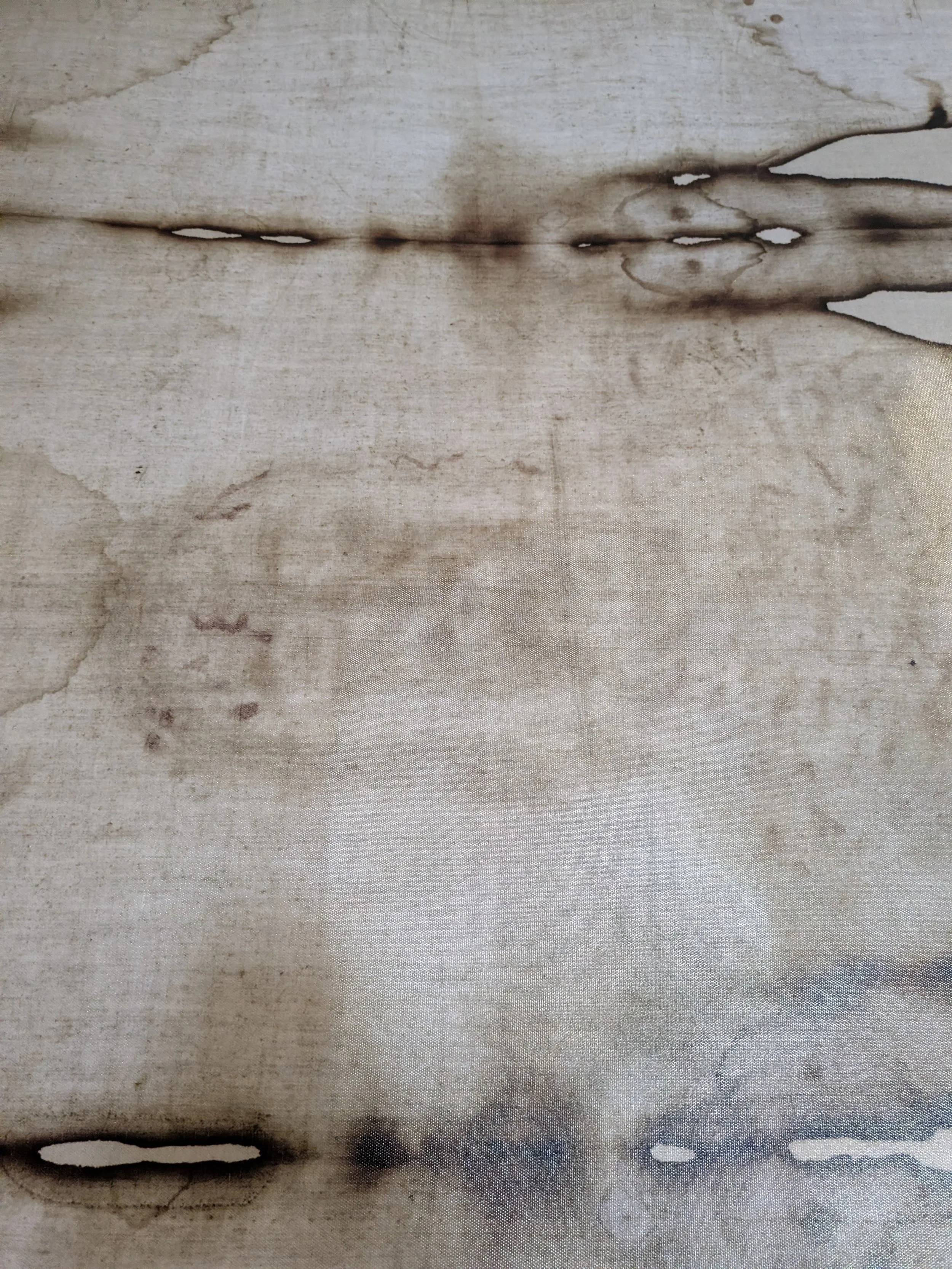 Image 2 of 5
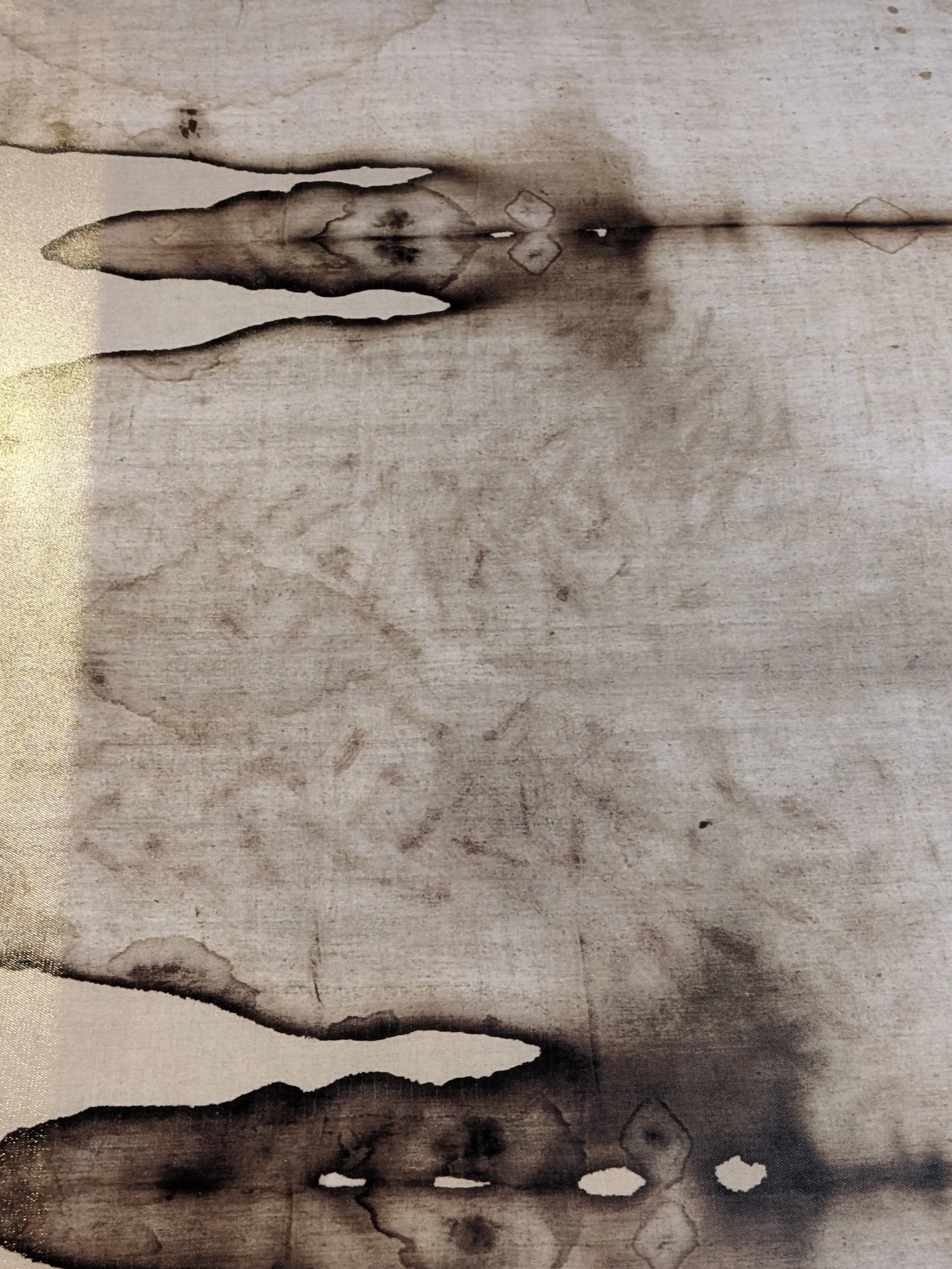 Image 3 of 5
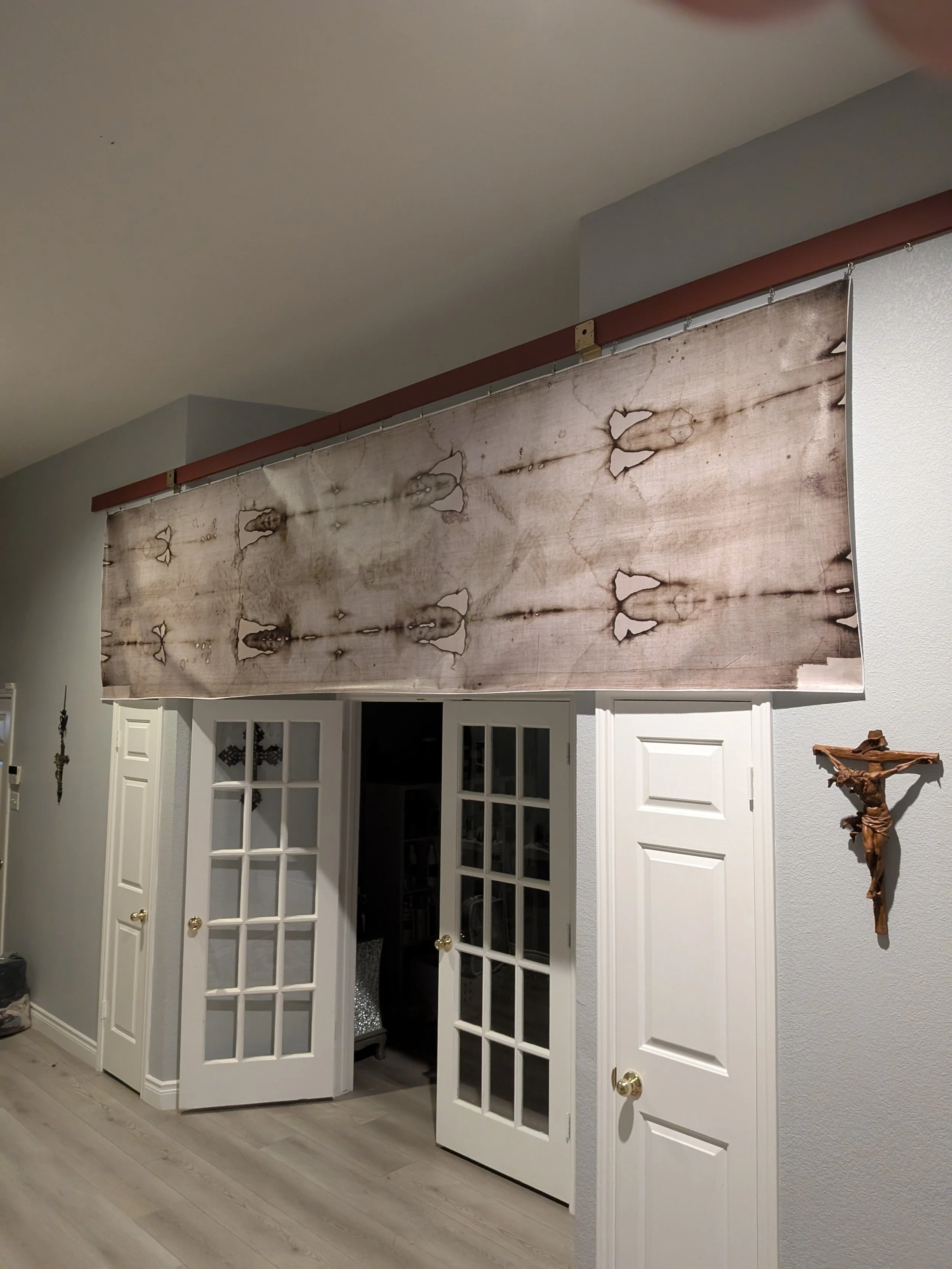 Image 4 of 5
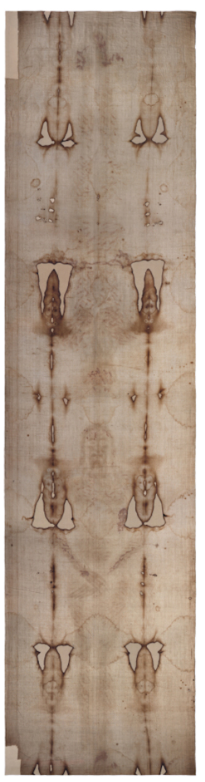 Image 5 of 5
For nearly two thousand years, the burial cloth believed to have wrapped the body of Christ has drawn the devotion, scholarship, and wonder of believers and scholars alike. Today, this profound artifact—printed at museum quality on archival canvas—is available as a full-size replica that honors the mystery of the Passion and invites you into deeper contemplation of Christ's sacrifice.
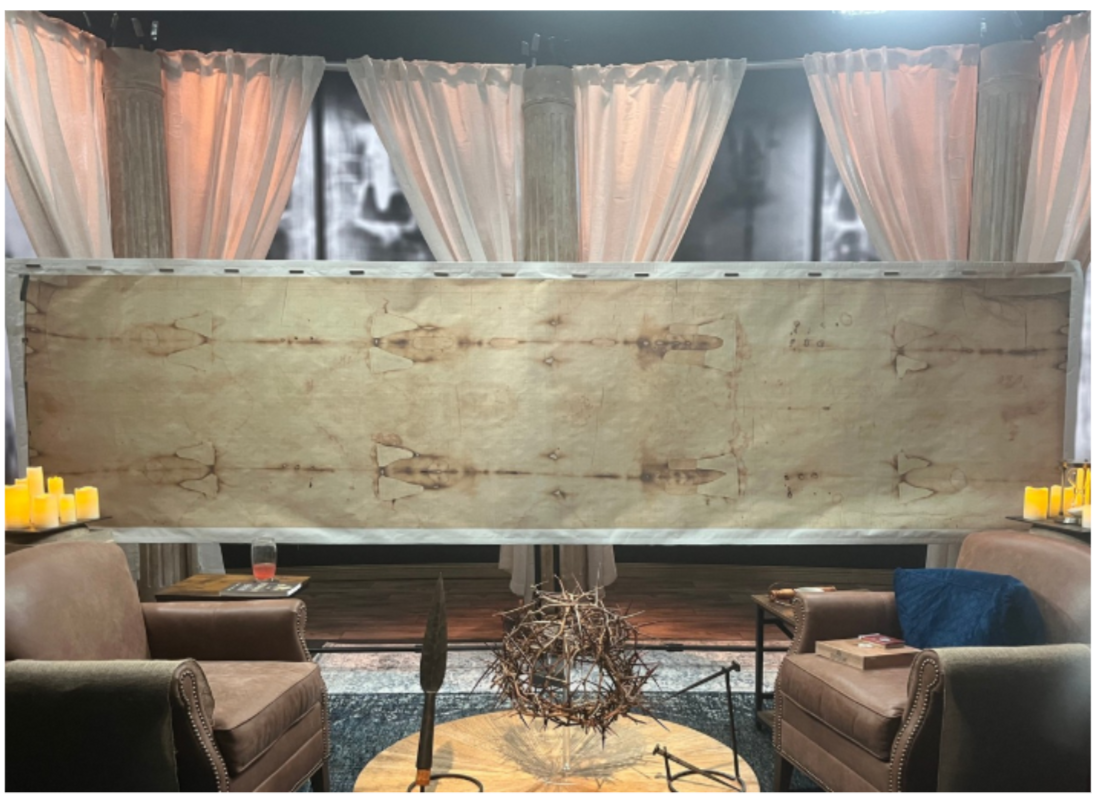
This is a high-resolution professional print of the Shroud of Turin, rendered on heavy-duty canvas using the post-2002 restoration image (the Durant scan). It measures a full 14.4 feet long by 3.6 feet wide—the exact dimensions of the original linen in the Cathedral of Turin—making it both a striking visual presence and a faithful reproduction of the cloth's proportions. The canvas material is considerably more durable than competitor alternatives made from linen or silk, resisting fading and wear while preserving the intricate detail of the image across decades of use.
In June and July 2002, the Shroud underwent its first major restoration in nearly 500 years. Textile expert Mechthild Flury-Lemberg (former curator of the Abegg Museum in Berne) led a team that removed the Holland Cloth backing attached in 1534, took off 30 repair patches from the Chambéry fire, and conducted a complete digital scanning of both the front and back of the cloth. This was the first time the reverse side had been photographed in modern history. The restoration uncovered accumulated dirt and organic residues that had darkened the cloth over centuries—once removed, the image emerged with unprecedented clarity.
After restoration, photographer Giancarlo Durante created a complete professional documentation. These Durante 2002 photographs achieve the highest resolution ever taken of the Shroud: 0.17 mm per pixel. Professor Paolo Soardo from the Institute "G. Ferraris" of Turin conducted the digital scanning—creating a full digital mapping that made possible the non-invasive scientific studies that follow. This is the image Magnoli Props uses. It's not a reproduction of a faded medieval photo; it's based on the definitive modern documentation, created under the supervision of the Papal Custodian.
New Testament scholar and resurrection expert Dr. Jeremiah J. Johnston spent four years as a skeptic before the forensic evidence convinced him. The bloodstains follow the exact trajectory of Roman crucifixion. The pollen and mineral traces point to Jerusalem and Constantinople. The wounds match the Gospel accounts precisely. Yet the image itself—appearing only as a photographic negative, with a depth of less than 200 nanometers into the fiber—resists explanation. Scientists at ENEA (Italy's National Agency for New Technologies) calculated that replicating the Shroud image would require 34 trillion watts of ultraviolet radiation in 12 billionths of a second. No medieval forger—no modern technology, even—could achieve that. Watch the episode Johnston uses this exact replica in his presentations: his 96-minute deep-dive with Michael Knowles, The Face of God: Michael & The Shroud of Turin.
For Personal Devotion: Hang this in a prayer space, bedroom, or home chapel where you can spend time in meditation. Many find the Shroud's silent witness to Christ's suffering and resurrection to be a powerful aid to prayer. The full-size scale makes the human reality of the Passion visceral in a way that small icons cannot.
For Liturgical or Parish Display: Churches, retreat centers, and prayer communities use full-size Shroud replicas during Lenten seasons, Good Friday vigils, and Passion-centered liturgies. The canvas is robust enough for repeated handling and transport. (Note: display stand not included; collapsible stands are available separately on online retailers.)
For Scholarly and Collector Display: If you study the Shroud's history, science, and theology, this museum-quality print serves as both reference and meditation object. Pair it with related scholarship—Johnston's books, sindonological research, or historical accounts of the Shroud's journey through Constantinople, Lirey, and Turin.
The print is made on heavy canvas using a professional high-resolution scan, ensuring that fine details—the wounds, facial features, and bloodstains—remain sharp and visible from both near and far. The canvas has a natural weave that evokes the texture of linen without sacrificing durability. Shipping is secure and arrival condition is guaranteed.
This is a faithful reproduction, not a relic. It does not carry the veneration due to the original cloth in Turin. Yet it remains a powerful tool for encounter with the reality of the Passion. Whether you approach it as a believer seeking to deepen your prayer, a student of history and science, or a witness to the enduring mystery of Christ's resurrection, this canvas invites you to look closely and ask the questions that have animated scholarship for generations: What is this image? How was it made? And what does it tell us about the man it once wrapped?
This is the only one we have. It will take months for us to get another.
For nearly two thousand years, the burial cloth believed to have wrapped the body of Christ has drawn the devotion, scholarship, and wonder of believers and scholars alike. Today, this profound artifact—printed at museum quality on archival canvas—is available as a full-size replica that honors the mystery of the Passion and invites you into deeper contemplation of Christ's sacrifice.
This is a high-resolution professional print of the Shroud of Turin, rendered on heavy-duty canvas using the post-2002 restoration image (the Durant scan). It measures a full 14.4 feet long by 3.6 feet wide—the exact dimensions of the original linen in the Cathedral of Turin—making it both a striking visual presence and a faithful reproduction of the cloth's proportions. The canvas material is considerably more durable than competitor alternatives made from linen or silk, resisting fading and wear while preserving the intricate detail of the image across decades of use.
In June and July 2002, the Shroud underwent its first major restoration in nearly 500 years. Textile expert Mechthild Flury-Lemberg (former curator of the Abegg Museum in Berne) led a team that removed the Holland Cloth backing attached in 1534, took off 30 repair patches from the Chambéry fire, and conducted a complete digital scanning of both the front and back of the cloth. This was the first time the reverse side had been photographed in modern history. The restoration uncovered accumulated dirt and organic residues that had darkened the cloth over centuries—once removed, the image emerged with unprecedented clarity.
After restoration, photographer Giancarlo Durante created a complete professional documentation. These Durante 2002 photographs achieve the highest resolution ever taken of the Shroud: 0.17 mm per pixel. Professor Paolo Soardo from the Institute "G. Ferraris" of Turin conducted the digital scanning—creating a full digital mapping that made possible the non-invasive scientific studies that follow. This is the image Magnoli Props uses. It's not a reproduction of a faded medieval photo; it's based on the definitive modern documentation, created under the supervision of the Papal Custodian.
New Testament scholar and resurrection expert Dr. Jeremiah J. Johnston spent four years as a skeptic before the forensic evidence convinced him. The bloodstains follow the exact trajectory of Roman crucifixion. The pollen and mineral traces point to Jerusalem and Constantinople. The wounds match the Gospel accounts precisely. Yet the image itself—appearing only as a photographic negative, with a depth of less than 200 nanometers into the fiber—resists explanation. Scientists at ENEA (Italy's National Agency for New Technologies) calculated that replicating the Shroud image would require 34 trillion watts of ultraviolet radiation in 12 billionths of a second. No medieval forger—no modern technology, even—could achieve that. Watch the episode Johnston uses this exact replica in his presentations: his 96-minute deep-dive with Michael Knowles, The Face of God: Michael & The Shroud of Turin.
For Personal Devotion: Hang this in a prayer space, bedroom, or home chapel where you can spend time in meditation. Many find the Shroud's silent witness to Christ's suffering and resurrection to be a powerful aid to prayer. The full-size scale makes the human reality of the Passion visceral in a way that small icons cannot.
For Liturgical or Parish Display: Churches, retreat centers, and prayer communities use full-size Shroud replicas during Lenten seasons, Good Friday vigils, and Passion-centered liturgies. The canvas is robust enough for repeated handling and transport. (Note: display stand not included; collapsible stands are available separately on online retailers.)
For Scholarly and Collector Display: If you study the Shroud's history, science, and theology, this museum-quality print serves as both reference and meditation object. Pair it with related scholarship—Johnston's books, sindonological research, or historical accounts of the Shroud's journey through Constantinople, Lirey, and Turin.
The print is made on heavy canvas using a professional high-resolution scan, ensuring that fine details—the wounds, facial features, and bloodstains—remain sharp and visible from both near and far. The canvas has a natural weave that evokes the texture of linen without sacrificing durability. Shipping is secure and arrival condition is guaranteed.
This is a faithful reproduction, not a relic. It does not carry the veneration due to the original cloth in Turin. Yet it remains a powerful tool for encounter with the reality of the Passion. Whether you approach it as a believer seeking to deepen your prayer, a student of history and science, or a witness to the enduring mystery of Christ's resurrection, this canvas invites you to look closely and ask the questions that have animated scholarship for generations: What is this image? How was it made? And what does it tell us about the man it once wrapped?
This is the only one we have. It will take months for us to get another.