 Image 1 of 1
-
A Shepherd Formed in Silence
Abba Poemen was born in Egypt around the mid-4th century. As a young man, he entered monastic life with his brothers, eventually settling in the desert community of Scetis, one of the great centers of early Christian asceticism.
He did not seek leadership.
Leadership found him.
Poemen became spiritual father to hundreds of monks and lay visitors alike. His cell became a place of confession, tears, and healing conversation.
He practiced rigorous fasting and prayer, but his greatest discipline was interior:
watchfulness over thoughts
gentleness in speech
refusal to judge
radical forgivenessHe taught that a single harsh word could undo years of spiritual labor.
The Art of Not Judging
Poemen is remembered above all for his teaching on mercy.
When a monk fell into serious sin, others wanted him expelled. Poemen quietly filled a leaking basket with sand and carried it behind him. When asked what he was doing, he replied:
“My sins run out behind me, and I do not see them. Yet today I come to judge my brother.”
The monks wept.
And the brother was restored.
This story defines Poemen’s spirituality: look at yourself first, and healing follows.
Exile and Endurance
Later in life, barbarian invasions forced Poemen and his community to flee the desert. Even in exile, he continued guiding souls. He endured displacement, loss of homeland, and poverty without bitterness.
His teachings became sharper, simpler:
Do not repay evil with evil.
Do not defend yourself.
Forgive before you are asked.
Choose silence over victory.He died peacefully after decades of spiritual fatherhood, leaving behind hundreds of sayings preserved in the Desert tradition.
-
Abba Poemen’s miracles are primarily relational and interior, transforming hearts rather than bodies.
Patron Saint Of:
Anger control and emotional regulation
Inner peace during conflict
Healing broken relationships
Those struggling with resentment
Families divided by harsh words
People battling judgmental thoughts
Anyone seeking humility and mercy
Miracles and Ongoing Intercession
Devotees often credit Abba Poemen with:
sudden softening of anger
reconciliation between estranged family members
ability to forgive long-held grievances
peace during heated situations
clarity when tempted to judge
Many describe his help as quiet but powerful:
arguments dissolving
hearts reopening
shame lifting
patience returningPoemen teaches that peace is learned.
And learned peace changes everything.
-
Traditional Invocation
O holy Abba Poemen, gentle shepherd of souls, pray for us, that we may gain mastery over anger, forgive readily, and walk in humility before God.
Personal Prayer
Holy Abba Poemen, teacher of mercy and guardian of peace, pray for me.
Intercede for freedom from anger and harsh speech. Heal wounds I have caused and wounds I still carry. Teach me to forgive quickly and judge myself before judging others.
Calm my heart when emotions rise. Guard my tongue when words want to wound. Restore broken relationships where bitterness has taken root.
You who shepherded wounded souls with gentleness, guide me into humility and lasting peace.
By your prayers, may my heart become soft and my life reflect Christ. Amen.
-
Q: What is Abba Poemen the Great known for?
Abba Poemen is known for teaching forgiveness, anger control, and inner peace. He is one of the Desert Fathers most associated with healing relationships and overcoming judgment.Q: When is Abba Poemen the Great’s feast day?
Abba Poemen is commemorated on August 27.Q: Which Christian traditions venerate Abba Poemen the Great?
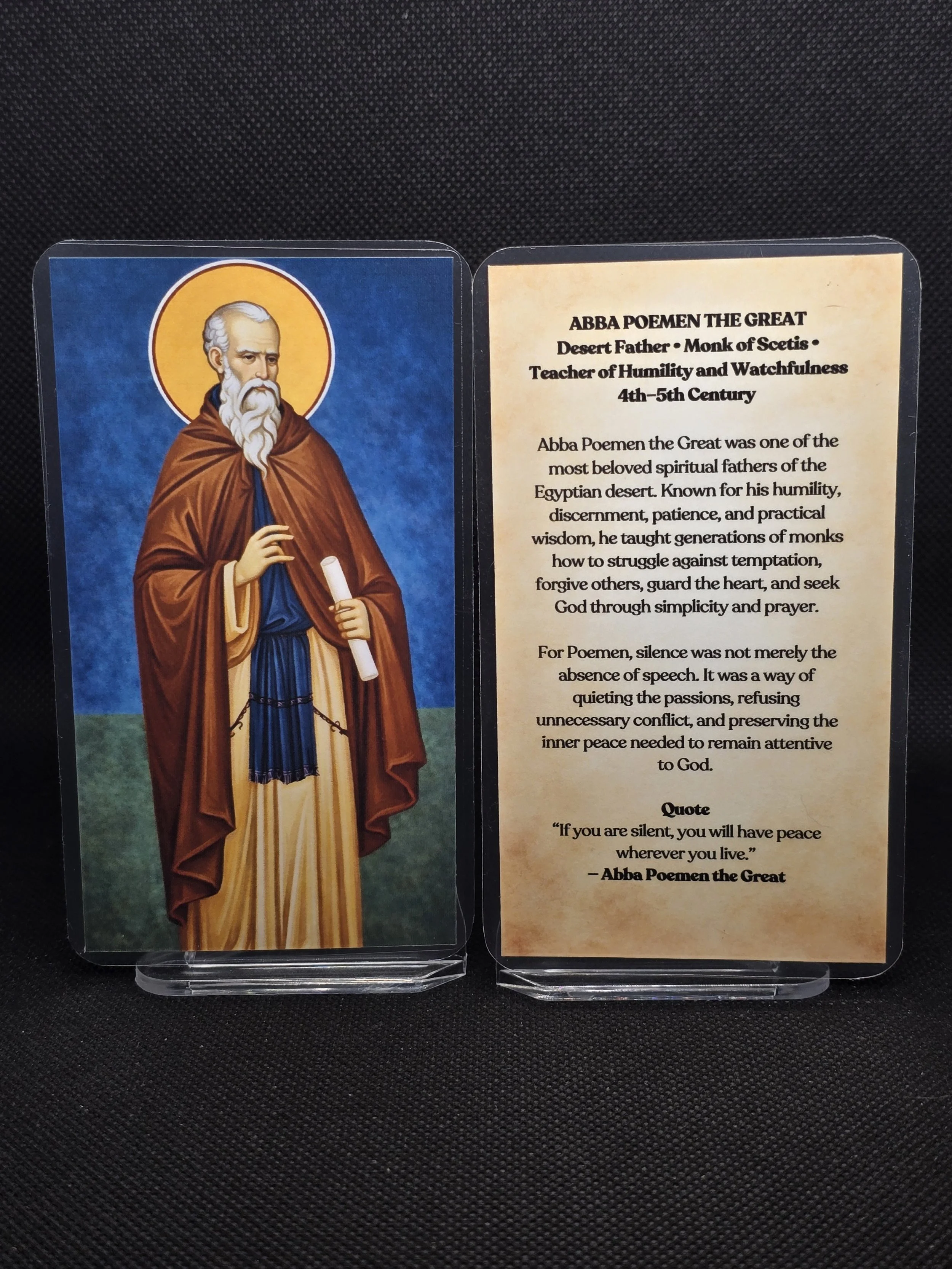
Abba Poemen is venerated in the Eastern Orthodox Church as one of the great Desert Fathers.Q: Why is Abba Poemen often depicted holding a scroll?
The scroll represents his spiritual sayings, which continue to guide Christians in humility, forgiveness, and peace.