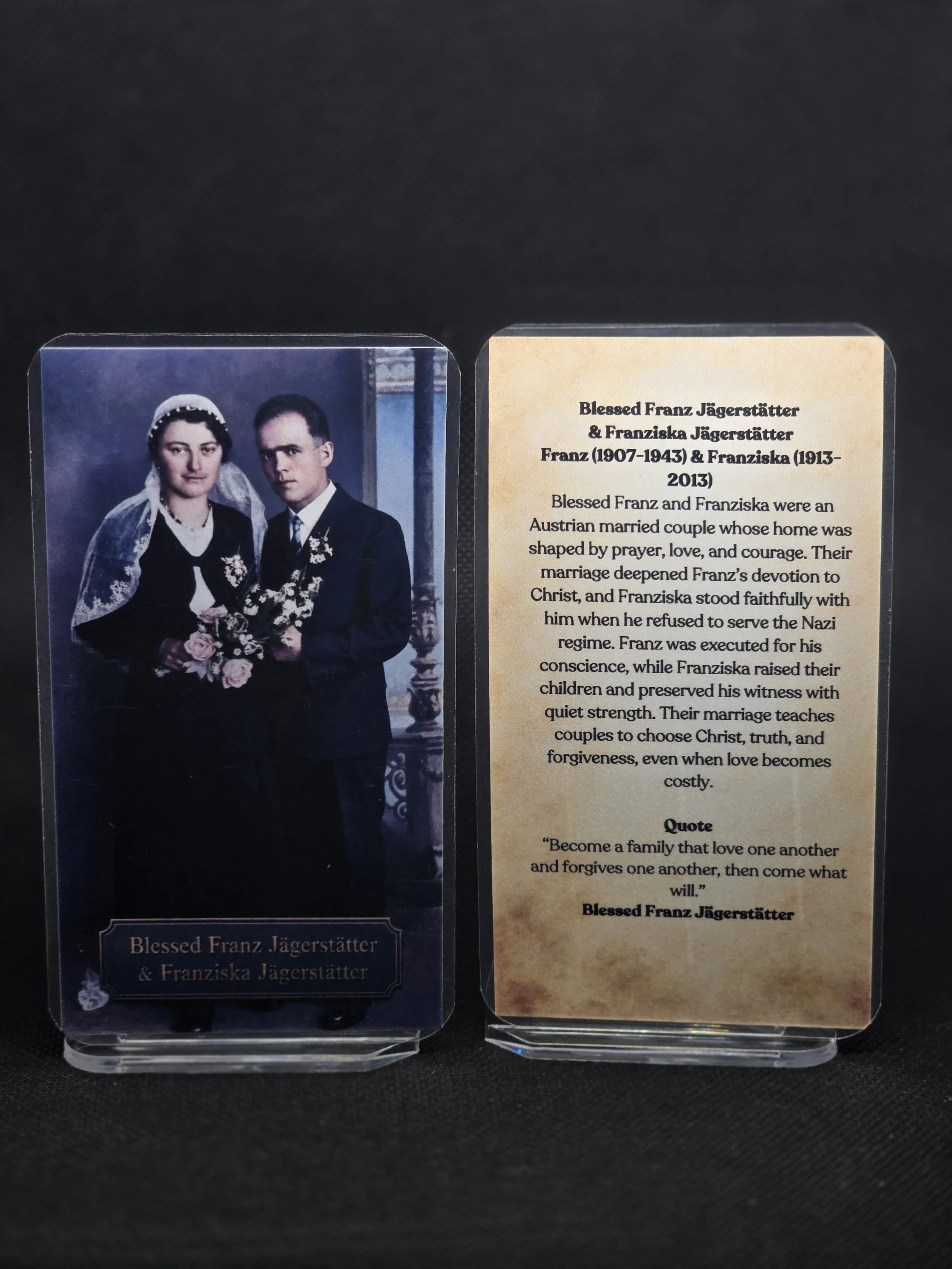
Blessed Franz & Franziska Prayer Card

$3.00

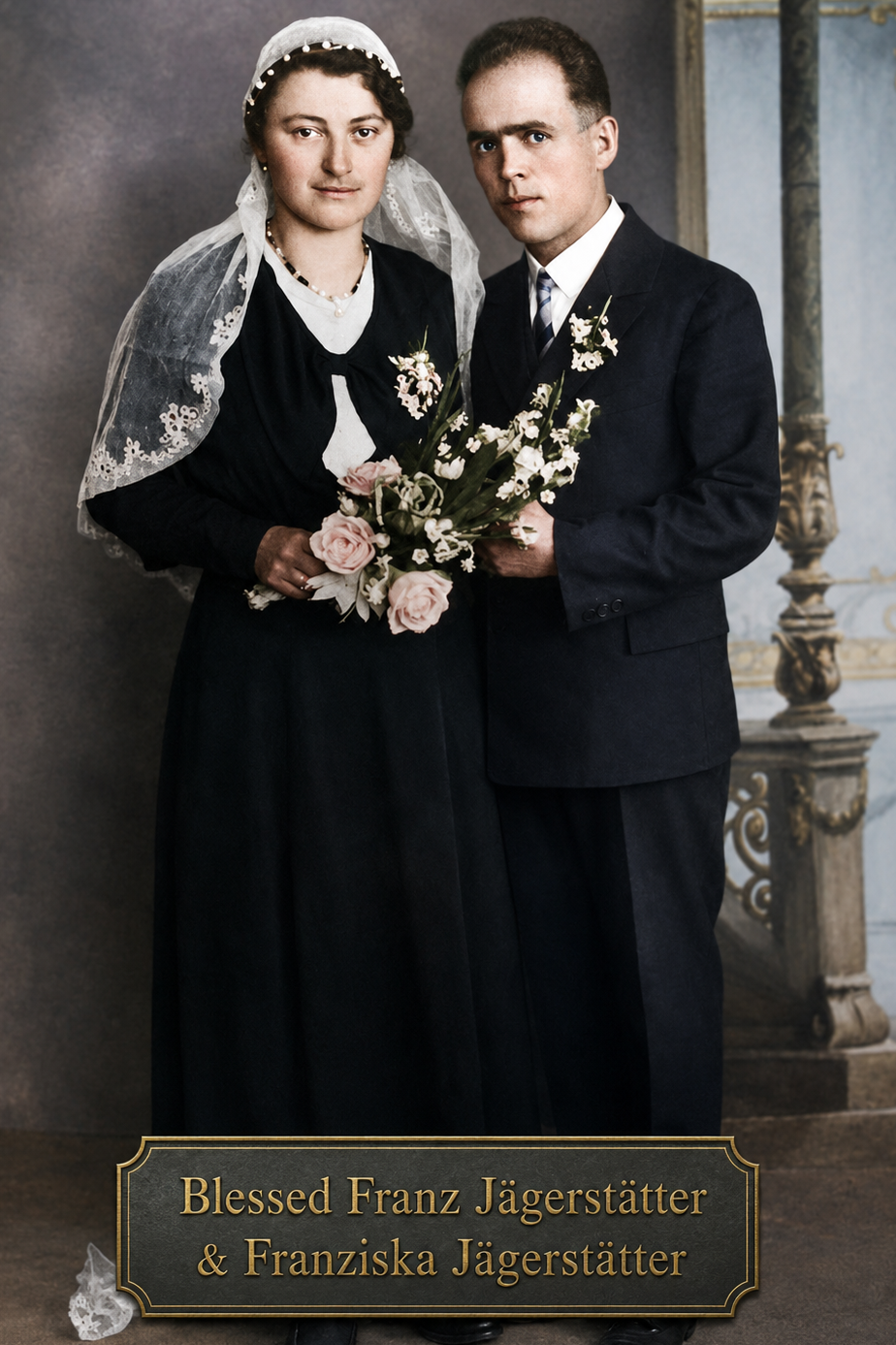
Blessed Franz and Franziska Jägerstätter were not public activists, theologians, or political leaders. They were a young married couple living in the small farming village of St. Radegund in Austria, raising children, tending their land, and practicing a quiet Catholic faith rooted in daily prayer and Sunday Mass.

Franz worked as a farmer and laborer, while Franziska cared for their home and daughters. Their life was ordinary and physically demanding, shaped by rural rhythms and sacramental devotion. They prayed together, attended Mass faithfully, and centered their marriage on Christ long before history forced them into a moment of moral reckoning.

That reckoning arrived with the rise of Nazi Germany.

At first, Franz, like many others, complied with mandatory service requirements. But as Hitler’s ideology became unmistakably violent and racist, Franz began to study Scripture more deeply and reflect seriously on Church teaching. Through prayer and spiritual discernment, he became convinced that swearing loyalty to Hitler and participating in Nazi warfare would make him complicit in grave evil.

This realization isolated him from nearly everyone around him.

Local officials pressured him. Friends dismissed him as naive. Clergy encouraged compromise. Even his own community viewed him as reckless. The overwhelming message was that resistance was pointless and that obedience was expected.

Franziska stood beside him through all of it.

She did not minimize the danger. She did not deny the consequences. She knew that Franz’s refusal would almost certainly leave her a widow with young children, yet she supported his conscience without hesitation. Their marriage became a shared act of witness, one rooted not in emotion but in obedience to God.

Franz was arrested for refusing military service and imprisoned in Berlin. While incarcerated, he was offered multiple opportunities to recant and save his life. Each time, he refused. He was executed by guillotine on August 9, 1943.

Franziska returned home alone.

She raised their three daughters in poverty and social isolation. Neighbors avoided her. Some blamed her for Franz’s death. She endured decades of quiet hardship, remaining faithful to Christ and loyal to her husband’s memory. She never remarried. She lived simply, prayed daily, and carried her grief with dignity for more than sixty years.

Franz is commemorated on August 9, and Franziska is honored alongside him as his wife and spiritual companion.

Today, Blessed Franz and Franziska are sought by couples facing marriage under pressure, Christians struggling to stand for truth in hostile environments, and families navigating political or social persecution. They are especially prayed to by spouses divided over moral decisions, believers facing retaliation at work, and parents trying to raise children with integrity in a culture that rewards compromise.

This handmade prayer card honors their shared witness. It is created for marriages tested by external pressure, for those wrestling with conscience, and for anyone trying to remain faithful when the cost feels unbearable.

Franz and Franziska teach that holiness in marriage is not about comfort. It is about fidelity when everything is at stake.

Blessed Franz and Franziska Jägerstätter were not public activists, theologians, or political leaders. They were a young married couple living in the small farming village of St. Radegund in Austria, raising children, tending their land, and practicing a quiet Catholic faith rooted in daily prayer and Sunday Mass.

Franz worked as a farmer and laborer, while Franziska cared for their home and daughters. Their life was ordinary and physically demanding, shaped by rural rhythms and sacramental devotion. They prayed together, attended Mass faithfully, and centered their marriage on Christ long before history forced them into a moment of moral reckoning.

That reckoning arrived with the rise of Nazi Germany.

At first, Franz, like many others, complied with mandatory service requirements. But as Hitler’s ideology became unmistakably violent and racist, Franz began to study Scripture more deeply and reflect seriously on Church teaching. Through prayer and spiritual discernment, he became convinced that swearing loyalty to Hitler and participating in Nazi warfare would make him complicit in grave evil.

This realization isolated him from nearly everyone around him.

Local officials pressured him. Friends dismissed him as naive. Clergy encouraged compromise. Even his own community viewed him as reckless. The overwhelming message was that resistance was pointless and that obedience was expected.

Franziska stood beside him through all of it.

She did not minimize the danger. She did not deny the consequences. She knew that Franz’s refusal would almost certainly leave her a widow with young children, yet she supported his conscience without hesitation. Their marriage became a shared act of witness, one rooted not in emotion but in obedience to God.

Franz was arrested for refusing military service and imprisoned in Berlin. While incarcerated, he was offered multiple opportunities to recant and save his life. Each time, he refused. He was executed by guillotine on August 9, 1943.

Franziska returned home alone.

She raised their three daughters in poverty and social isolation. Neighbors avoided her. Some blamed her for Franz’s death. She endured decades of quiet hardship, remaining faithful to Christ and loyal to her husband’s memory. She never remarried. She lived simply, prayed daily, and carried her grief with dignity for more than sixty years.

Franz is commemorated on August 9, and Franziska is honored alongside him as his wife and spiritual companion.

Today, Blessed Franz and Franziska are sought by couples facing marriage under pressure, Christians struggling to stand for truth in hostile environments, and families navigating political or social persecution. They are especially prayed to by spouses divided over moral decisions, believers facing retaliation at work, and parents trying to raise children with integrity in a culture that rewards compromise.

This handmade prayer card honors their shared witness. It is created for marriages tested by external pressure, for those wrestling with conscience, and for anyone trying to remain faithful when the cost feels unbearable.

Franz and Franziska teach that holiness in marriage is not about comfort. It is about fidelity when everything is at stake.

  • Franz Jägerstätter was born in 1907 and raised in rural Austria. His early life was unremarkable, and by his own admission he was not particularly devout in his youth. That changed after meeting Franziska Schwaninger, whose deep faith influenced him profoundly. They married in 1936 and made prayer and the sacraments central to their home.

    They welcomed three daughters and built a life shaped by work, worship, and mutual devotion. Franz served as a church sacristan, studied Scripture regularly, and increasingly viewed his responsibilities as husband and father through the lens of Christian conscience.

    As Nazi control tightened over Austria, Franz grew spiritually restless. He reflected on Christ’s teachings about love, truth, and obedience to God rather than earthly powers. Over time, he concluded that he could not swear loyalty to Hitler or fight in a war driven by racial ideology and mass violence.

    His decision placed enormous strain on his family.

    Authorities warned him. Friends pleaded with him. Clergy suggested alternative service roles. Franz listened respectfully but remained firm. Franziska carried the emotional burden quietly, enduring gossip, threats, and isolation while supporting her husband’s resolve.

    During Franz’s imprisonment, they exchanged letters filled with Scripture, encouragement, and trust in God’s providence. Franz went to his execution peacefully, confident that obedience to Christ mattered more than survival.

    Franziska lived until 2013, spending seventy years as a widow. She raised their daughters, maintained the family farm, and offered gentle hospitality to pilgrims who later came seeking Franz’s story. She lived to see Franz beatified in 2007, witnessing the Church publicly recognize what she had always known: her husband had died for conscience, and their marriage had been a shared offering.

  • Blessed Franz and Franziska are sought by those facing moral pressure and relational strain.

    Patron Saints Of:

    Marriage under pressure
    Standing for truth
    Political or social persecution
    Christian conscience in the workplace
    Spouses divided over moral choices
    Courage during public opposition
    Widows raising children alone
    Teaching children integrity

    Miracles and Ongoing Intercession

    Following Franz’s beatification, testimonies began emerging from individuals and families who sought his intercession. Many describe receiving clarity during difficult moral decisions, unexpected strength to refuse unethical demands at work, and peace while facing legal or political harassment.

    Couples praying through Franz and Franziska often report reconciliation after conscience-based conflict, renewed unity during ideological division, and courage to speak truth without bitterness. Some widows and single parents testify to receiving emotional endurance and stability after entrusting their families to these spouses.

    Their miracles rarely appear dramatic. Instead, they arrive as interior strength, steady resolve, and quiet perseverance.

    They help souls stand when compromise feels easier.

  • Traditional Prayer

    Blessed Franz and Franziska, faithful witnesses to Christ in marriage, pray for us. Strengthen our consciences, protect our families, and help us remain faithful when truth is costly. Amen.

    Personal Prayer

    Blessed Franz and Franziska, guardians of faithful marriage, pray for us.

    You know what it means to stand alone, and you understand the pressure to compromise when fear surrounds you. You lived obedience to God when it cost everything, and you carried suffering together without resentment.

    We bring you our marriage, our families, and the decisions that feel too heavy.

    Intercede for us.

    If our home is under pressure, protect it. If our conscience is being tested, strengthen it. If we are afraid to speak truth, give us courage and clarity.

    Franz, help us choose integrity over safety. Franziska, help us remain faithful when support disappears.

    Teach us how to love one another when the world turns against us. Teach us how to raise children who recognize truth. Teach us how to trust God when outcomes feel terrifying.

    Stand beside us in hostile workplaces. Stand beside us in divided communities. Stand beside us when silence feels safer than honesty.

    By your intercession, may Christ guard our marriage, steady our conscience, and fill our hearts with holy courage.

    Amen.

  • Q: What are Blessed Franz and Franziska Jägerstätter known for?
    They are known for refusing allegiance to Nazi ideology, enduring imprisonment and execution, and remaining united in marriage despite extreme pressure. Their witness centers on conscience, courage, and fidelity within family life.

    Q: When is Blessed Franz Jägerstätter’s feast day?
    Blessed Franz is commemorated on August 9. Franziska is honored alongside him as his wife and spiritual companion.

    Q: Which Christian traditions venerate Franz and Franziska Jägerstätter?
    They are venerated primarily in the Roman Catholic Church, with growing devotion among Christians seeking models of conscience and marital fidelity.

    Q: Why do people pray to Franz and Franziska during moral or political pressure?
    Because their lives show how spouses can support one another in truth while facing persecution, job threats, or social rejection. Many seek their intercession for courage, clarity, and unity when conscience is tested.