 Image 1 of 2
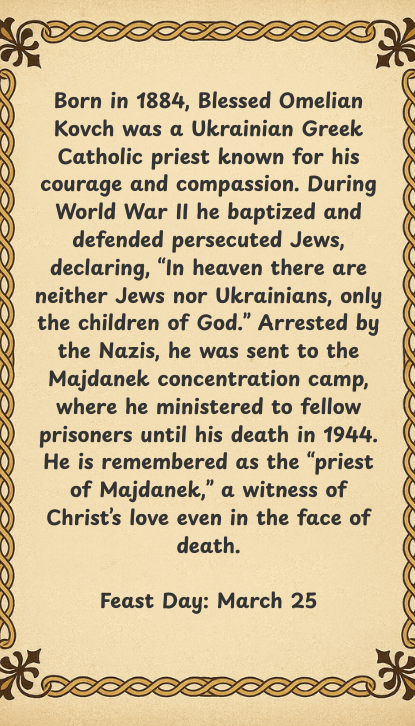 Image 2 of 2
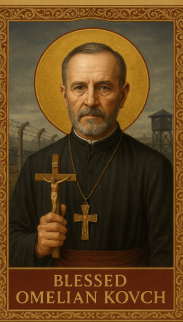
Blessed Omelian Kovch Prayer Card – Patron for Courage to Help Others, Faith in Concentration Camps & Love That Refuses to Abandon
-
Blessed Omelian Kovch was born in 1884 in western Ukraine into a family of priests. Faith was not abstract in his home. It was lived daily through service, prayer, and sacrifice. He became a Greek Catholic priest, married, and raised children while serving parishes marked by poverty and political instability.
He was known as gentle, approachable, and deeply pastoral.
During World War II, Omelian served in Peremyshliany, where Nazi occupation brought terror to Jewish communities and fear to everyone else. While many clergy retreated into silence, Omelian moved toward suffering.
He baptized hundreds of Jews who asked for Christ.
He intervened with authorities.
He sheltered families.
He refused to turn people away.Eventually, the Gestapo arrested him.
He was interrogated and sent to Majdanek, then transferred to Auschwitz.
Even there, his priesthood did not stop.
He heard confessions in whispers.
He comforted the dying.
He shared food he did not have.
He prayed with prisoners of every faith.When his family petitioned for his release, the Nazis were willing to consider it.
Omelian refused.
He wrote that Auschwitz needed priests more than anywhere else.
He died in the camp in 1944, exhausted by illness and starvation, having transformed a place of death into a hidden parish.
He did not leave behind buildings.
He left behind souls strengthened by love.
-
Blessed Omelian Kovch is remembered as a priest of radical compassion and moral courage.
He is especially beloved by those called to serve in impossible circumstances.
Patron Of:
Courage to help others despite danger
Standing with persecuted people
Compassion fatigue and burnout
Moral clarity in hostile environments
Priests and caregivers under extreme pressure
Faith during imprisonment or injustice
Loving when fear says retreat
Miracles and Ongoing Intercession
Many who pray through Blessed Omelian speak of renewed courage to defend the vulnerable, sudden clarity when facing ethical decisions, and strength to continue serving when emotionally depleted.
Some describe peace after years of survivor’s guilt.
Others experience release from fear when standing up for others.
Caregivers report renewed tenderness after exhaustion.His miracles arrive quietly.
They come as resolve to act.
They come as love returning after numbness.
They come as courage replacing paralysis.Blessed Omelian teaches that mercy does not wait for safe conditions.
-
Traditional Prayer
Blessed Omelian Kovch, faithful priest and martyr of Christ, pray for us. Intercede for our courage to love, strengthen us in compassion, and help us remain faithful in every trial. Amen.
Personal Prayer
Blessed Omelian, priest of the abandoned, pray for me.
You walked into suffering when escape was possible.
You loved when hatred ruled.
You stayed when leaving was easier.I bring you my fear.
If I hesitate to help, give courage.
If exhaustion weighs on me, renew strength.
If compassion feels costly, soften my heart.Teach me how to love when it hurts.
Teach me how to stand beside the vulnerable.
Teach me how to follow Christ when obedience leads into discomfort.Stand beside caregivers who are burned out.
Stand beside those persecuted for doing good.
Stand beside anyone afraid to act.Blessed Omelian, you turned Auschwitz into a sanctuary.
By your intercession, may Christ strengthen my resolve, enlarge my heart, and teach me how to love without counting the cost.
Amen.
-
Q: What is Blessed Omelian Kovch known for?
He is known as a Ukrainian Greek Catholic priest who helped Jews during Nazi occupation and chose to remain in Auschwitz to minister to prisoners, dying there as a martyr.Q: When is Blessed Omelian Kovch’s feast day?
He is commemorated on March 25.Q: Which Christian traditions venerate Blessed Omelian Kovch?
He is honored primarily in the Ukrainian Greek Catholic Church and respected throughout Eastern Catholic communities.Q: Why do people pray to Blessed Omelian for courage or compassion?
Because he willingly entered suffering to serve others and refused freedom in order to remain with prisoners. Many seek his intercession when facing moral decisions, compassion fatigue, or fear of standing up for the vulnerable.