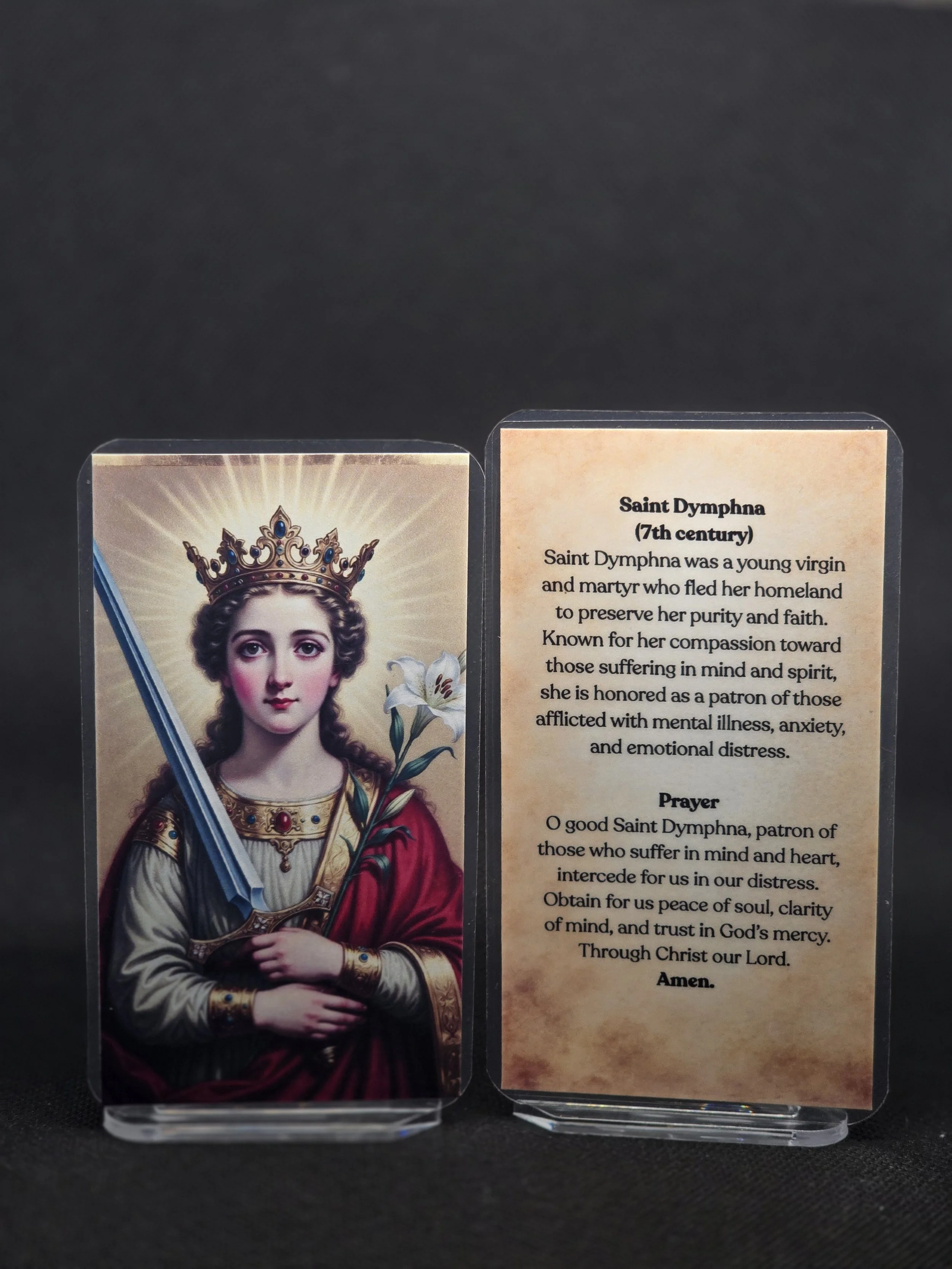
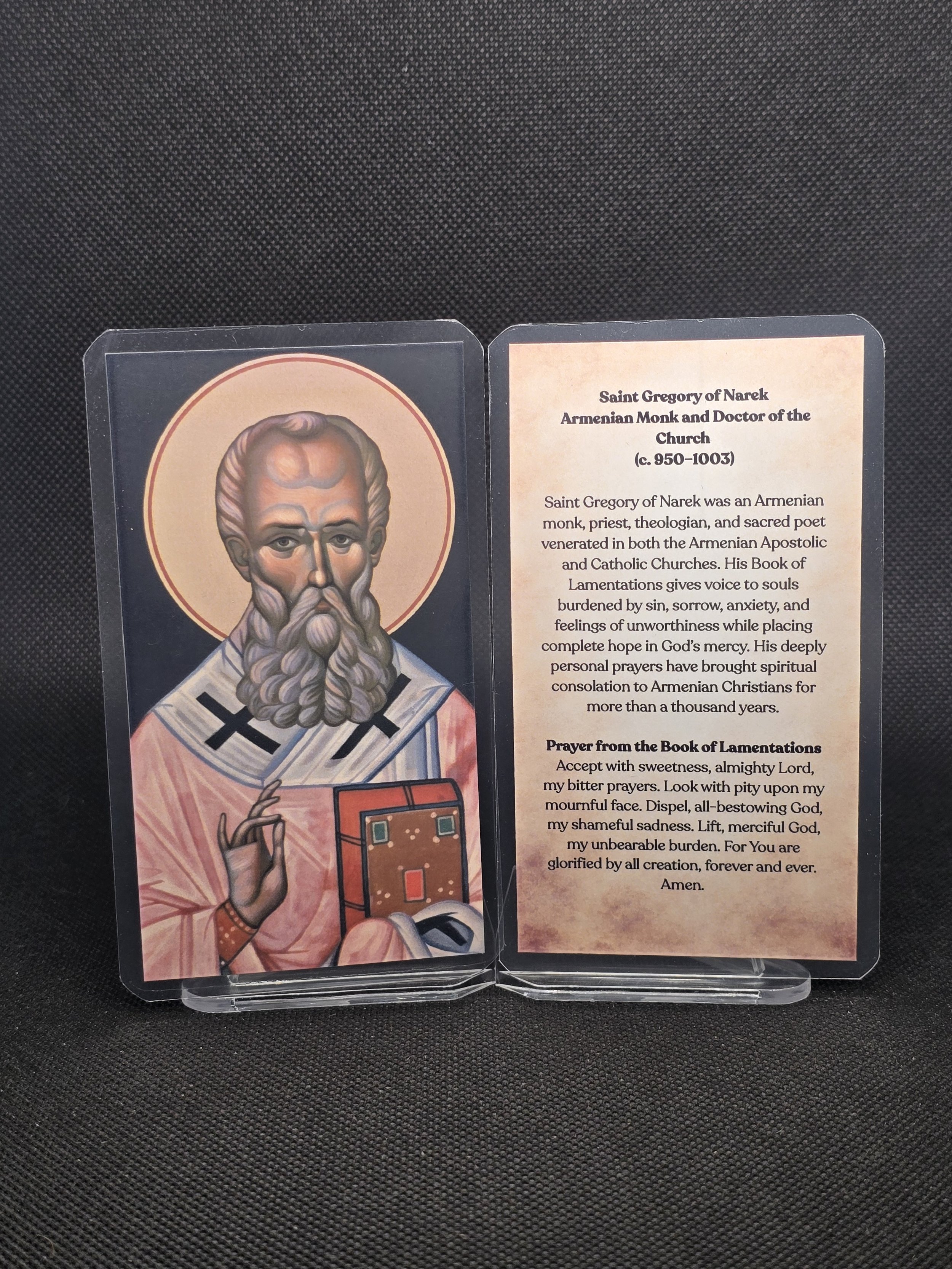
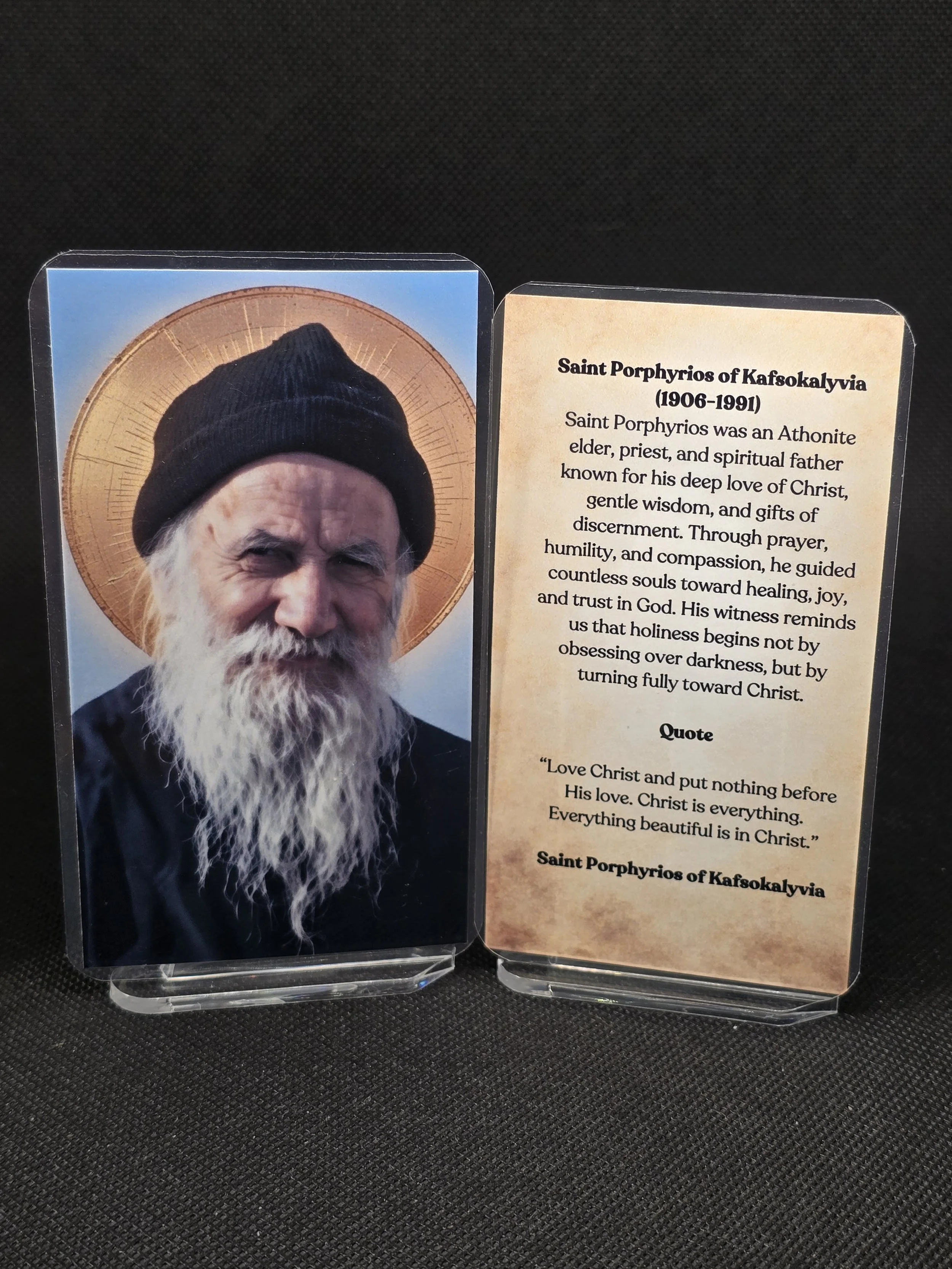
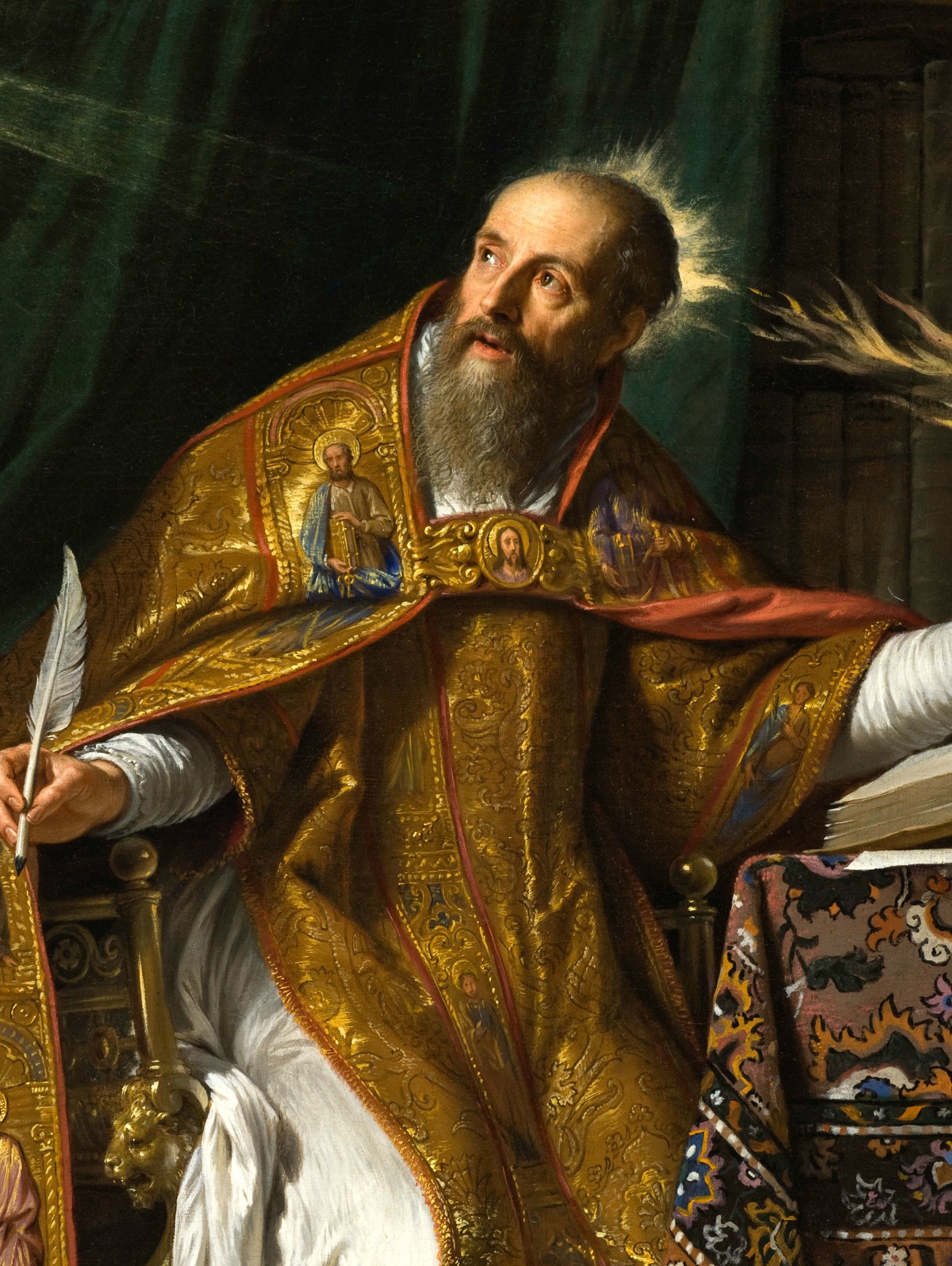
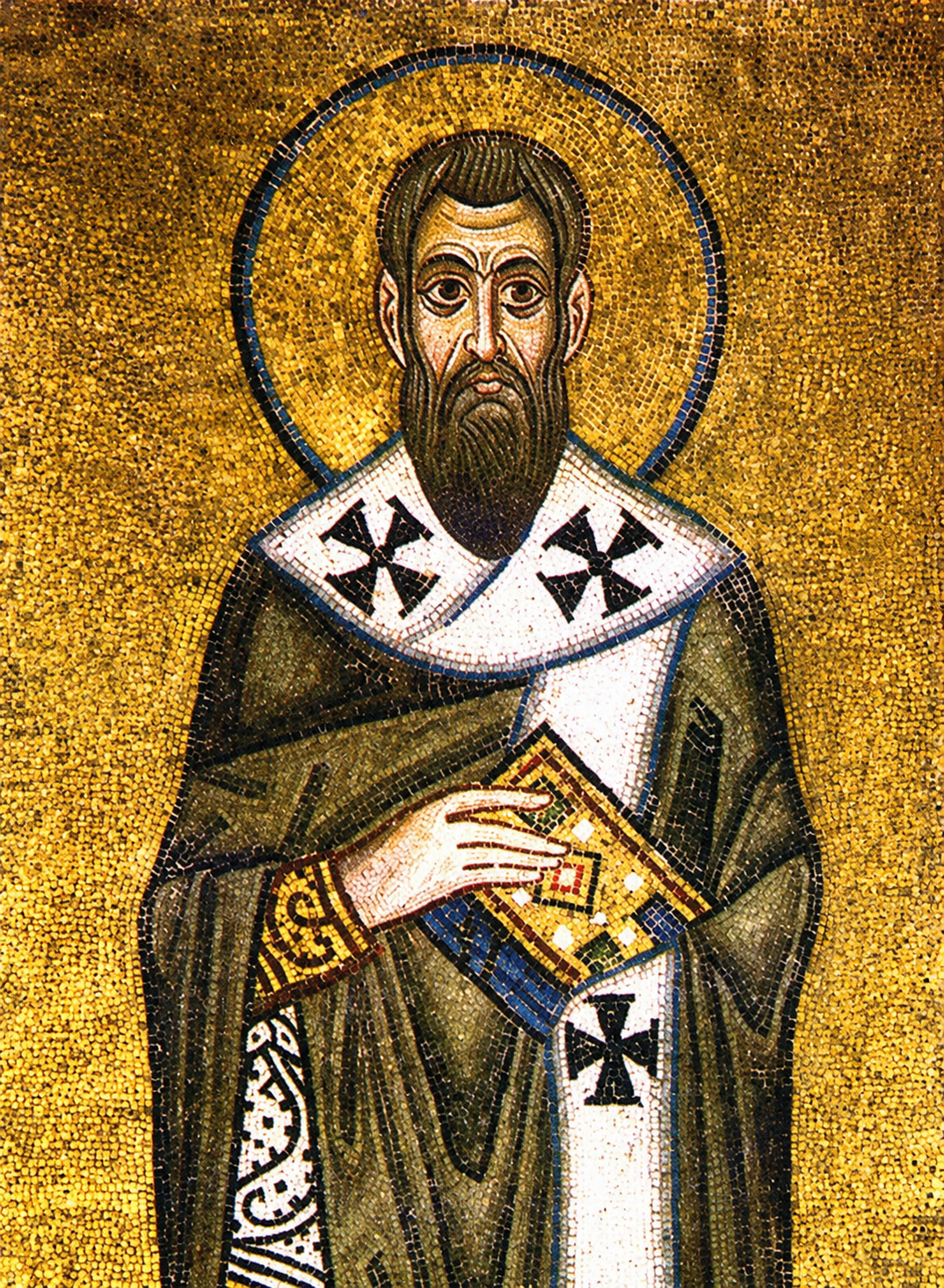
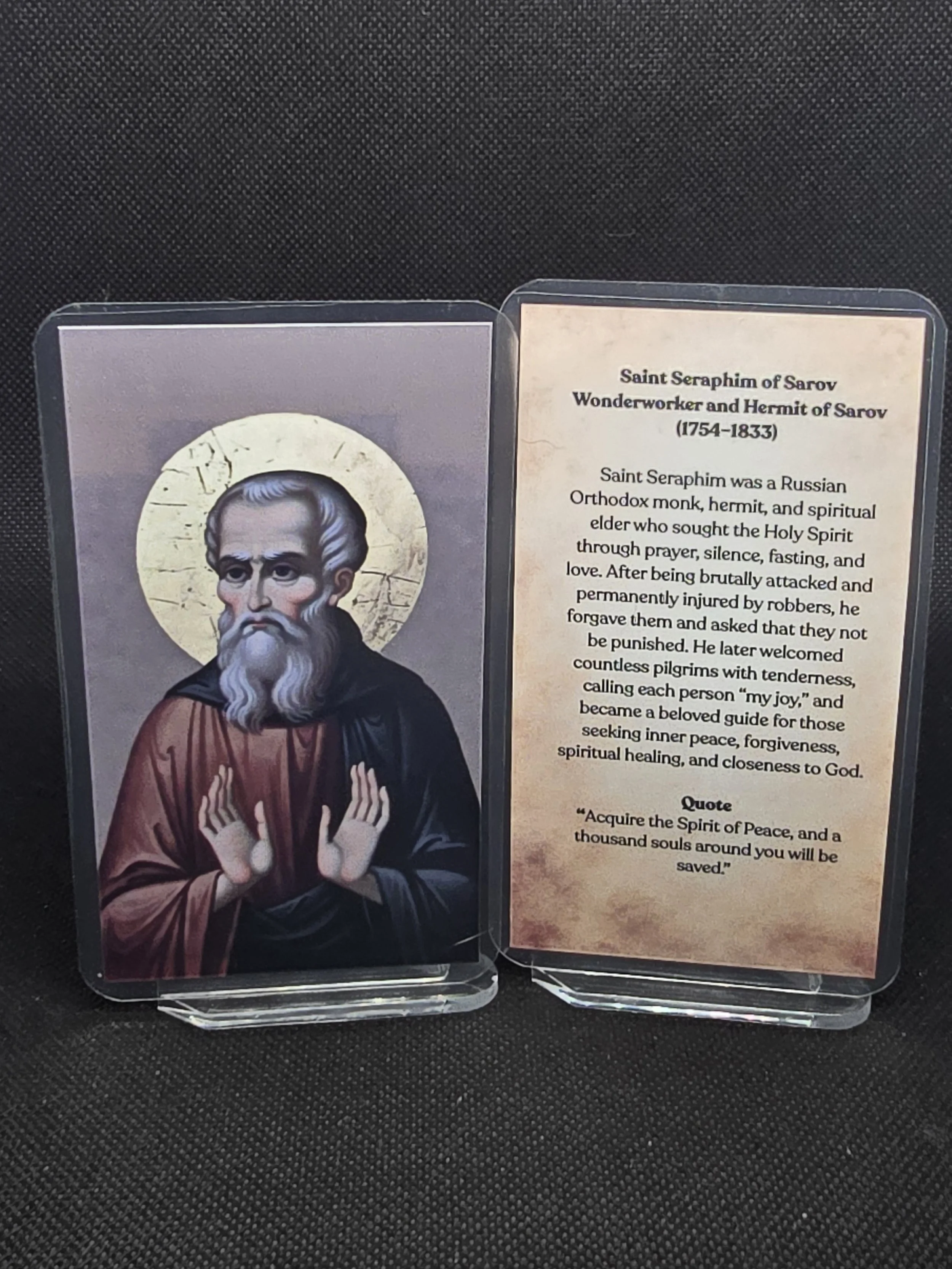
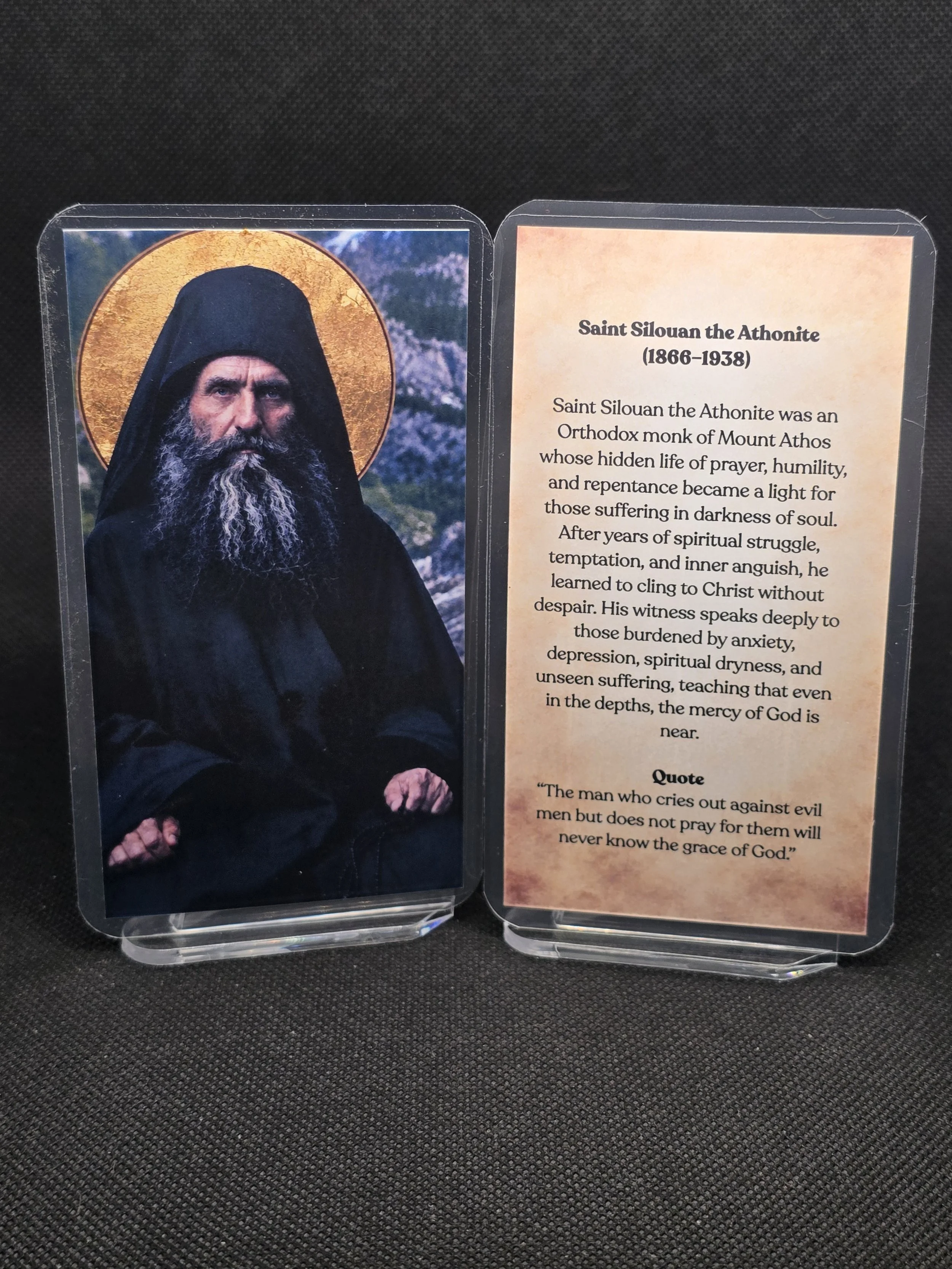
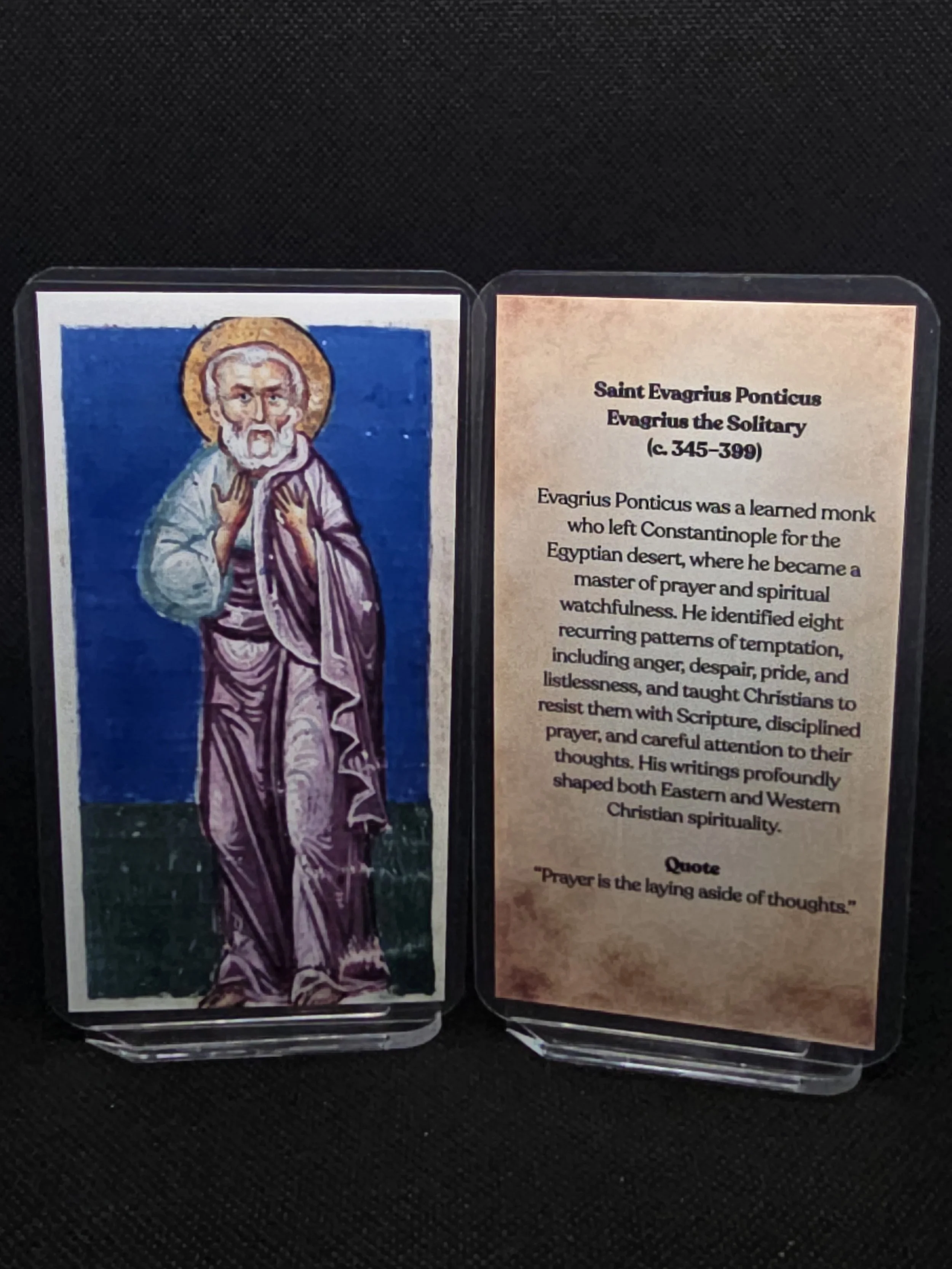
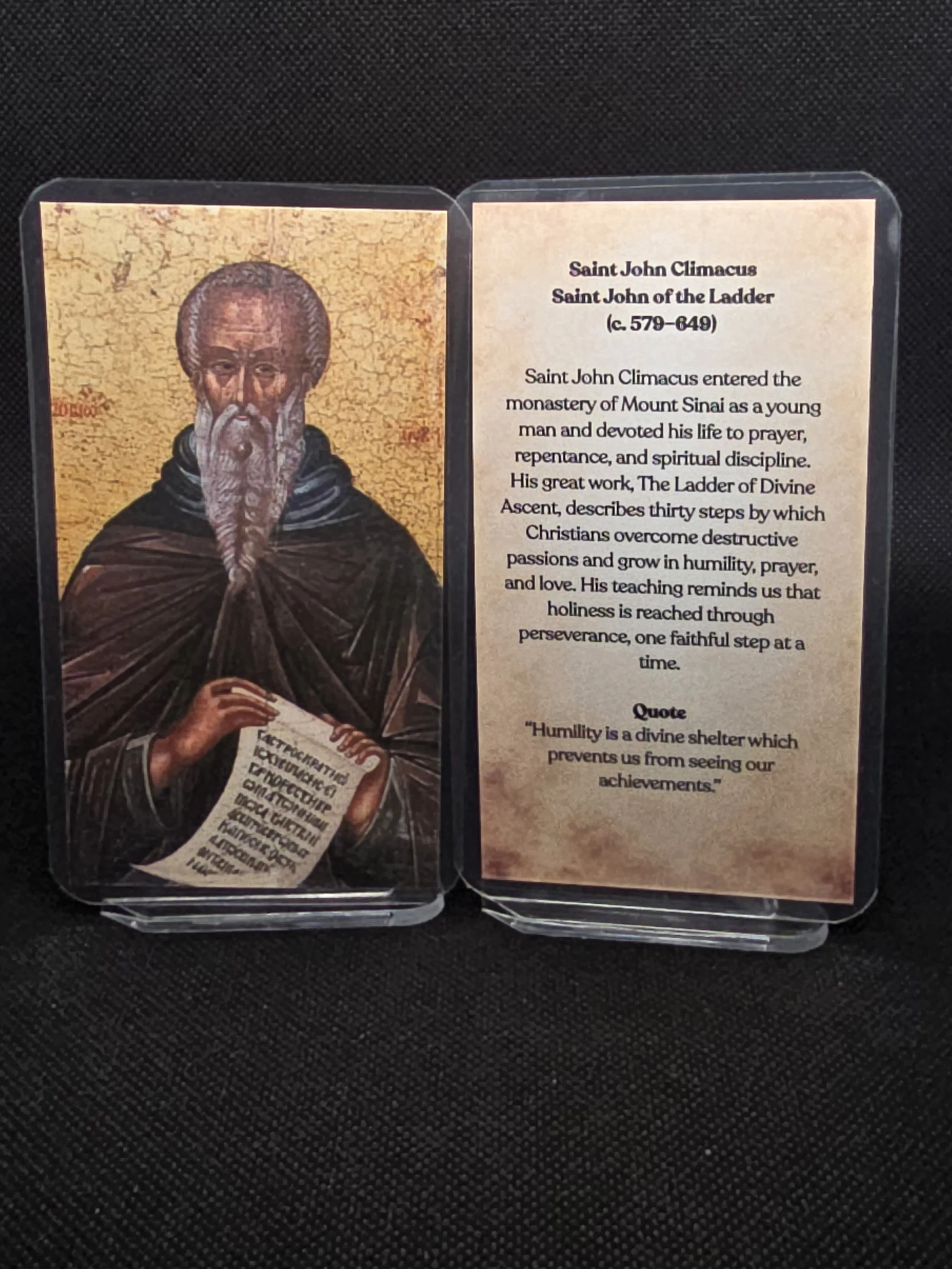
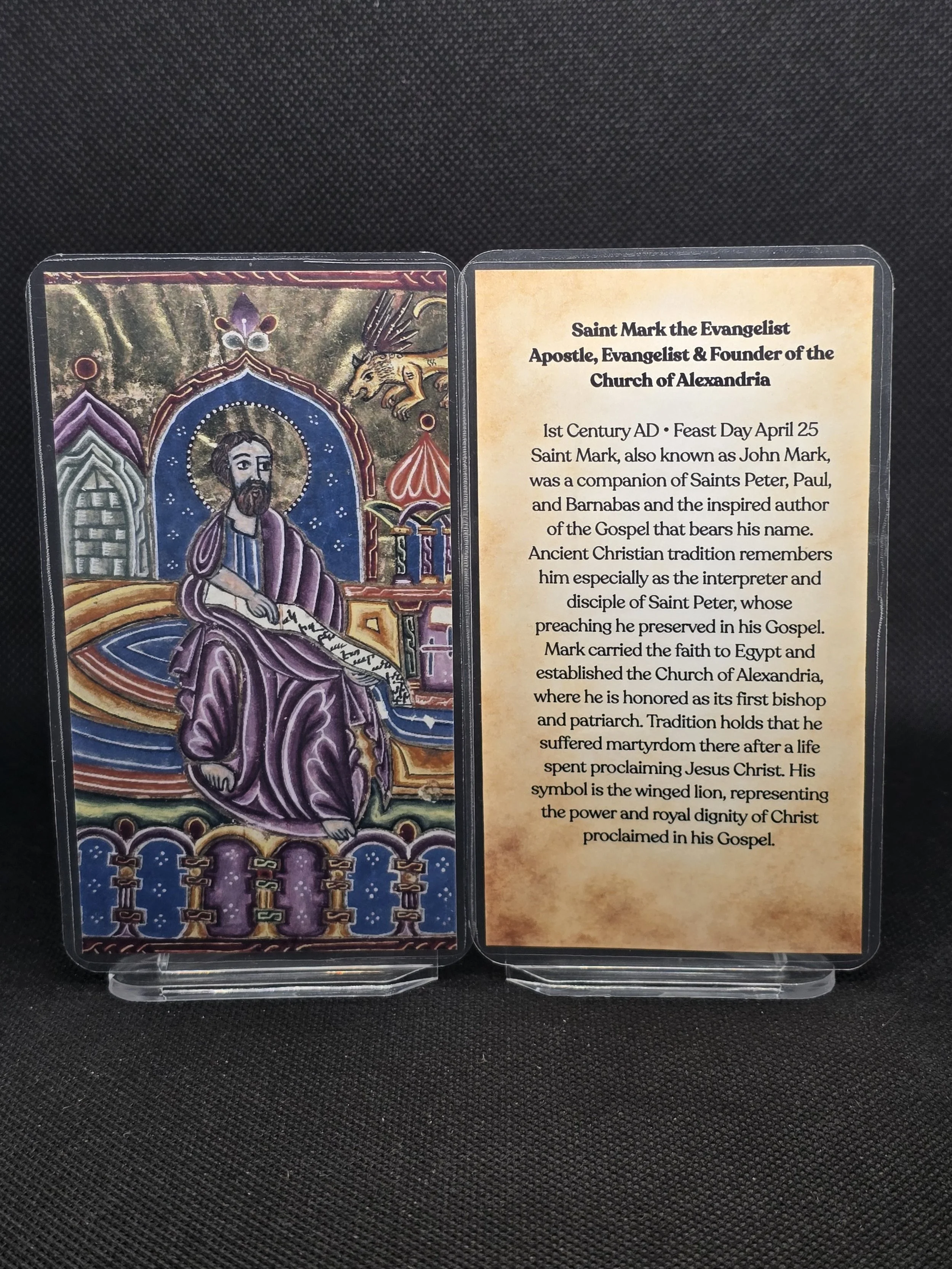
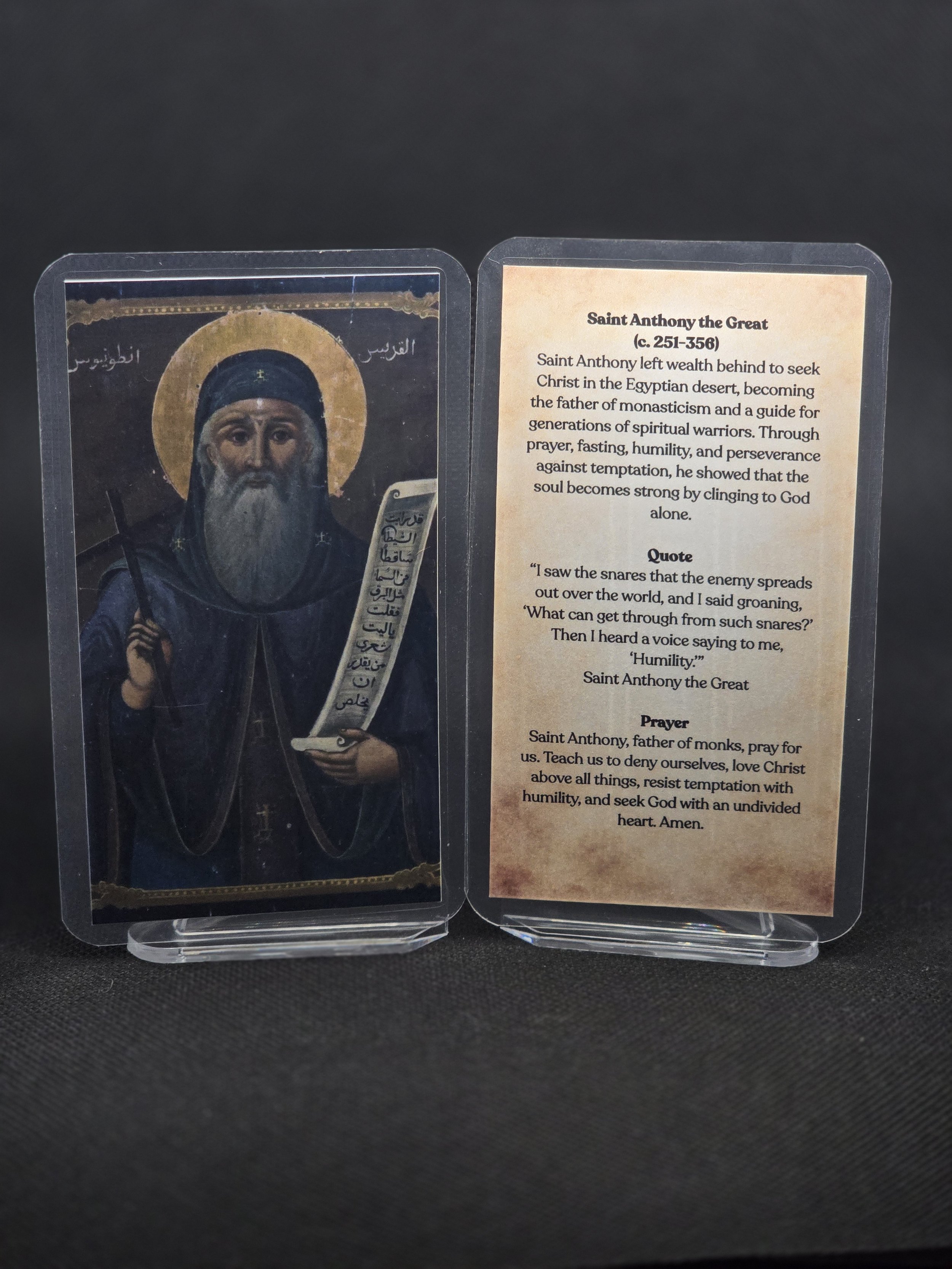
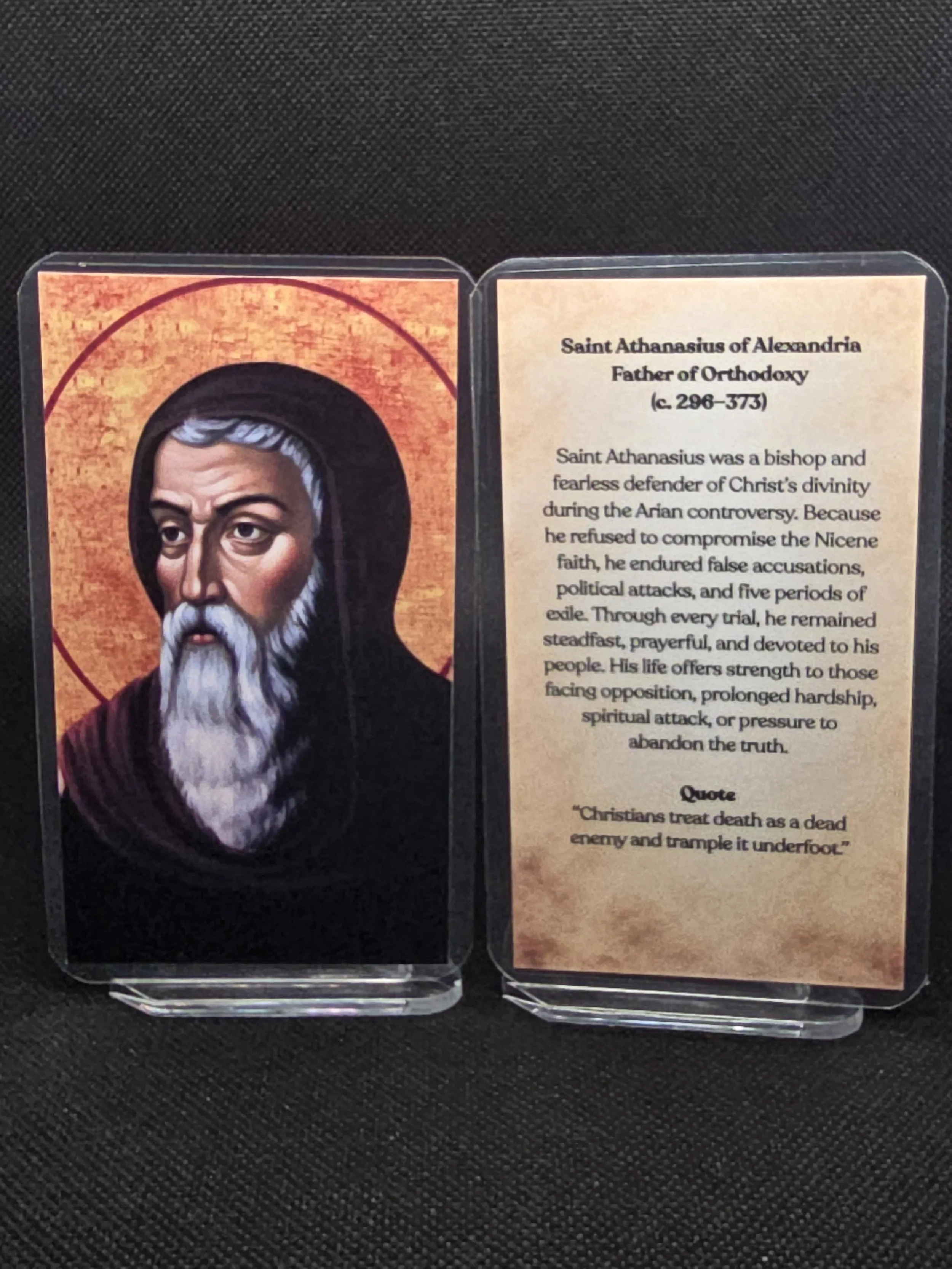
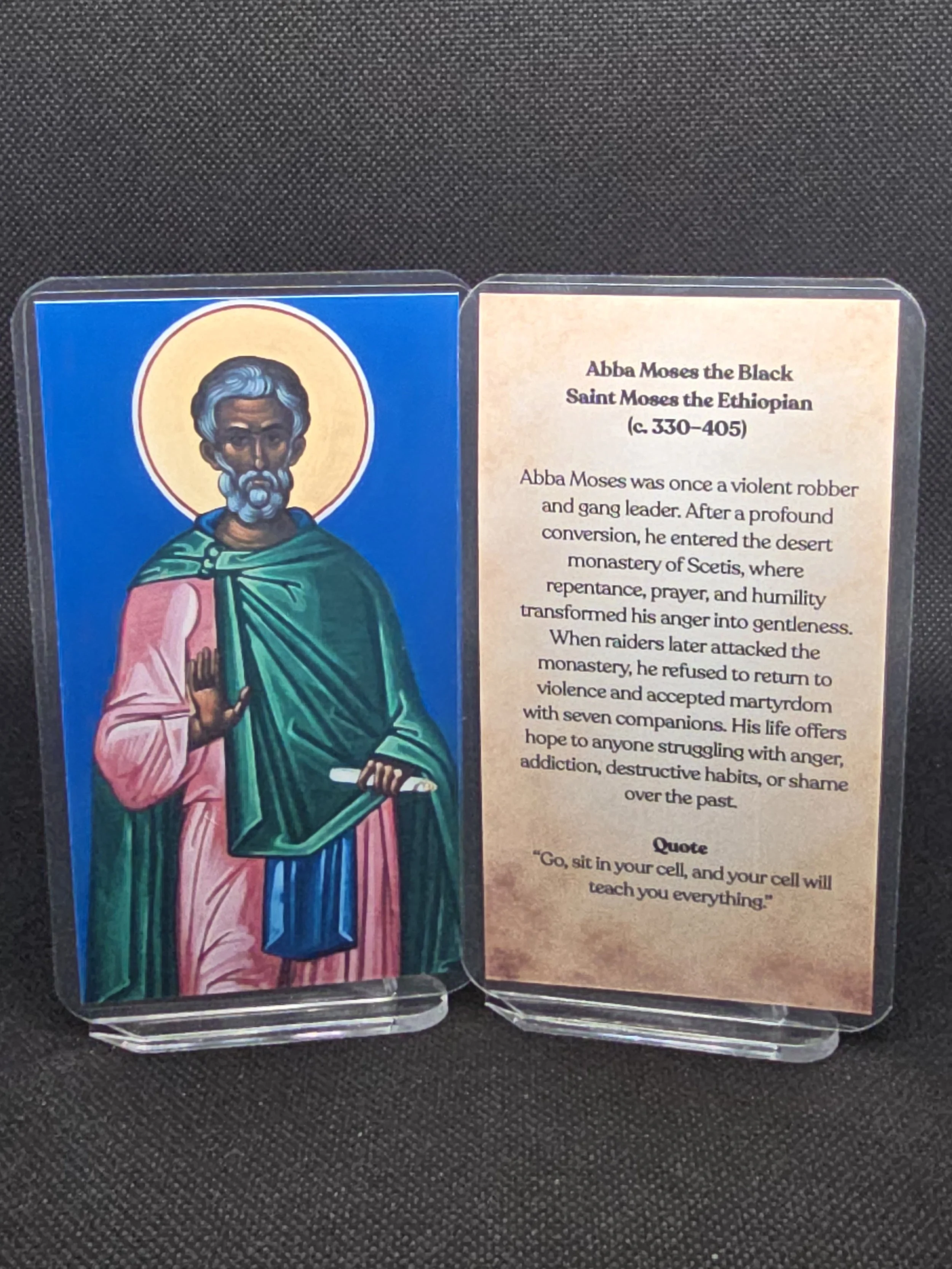
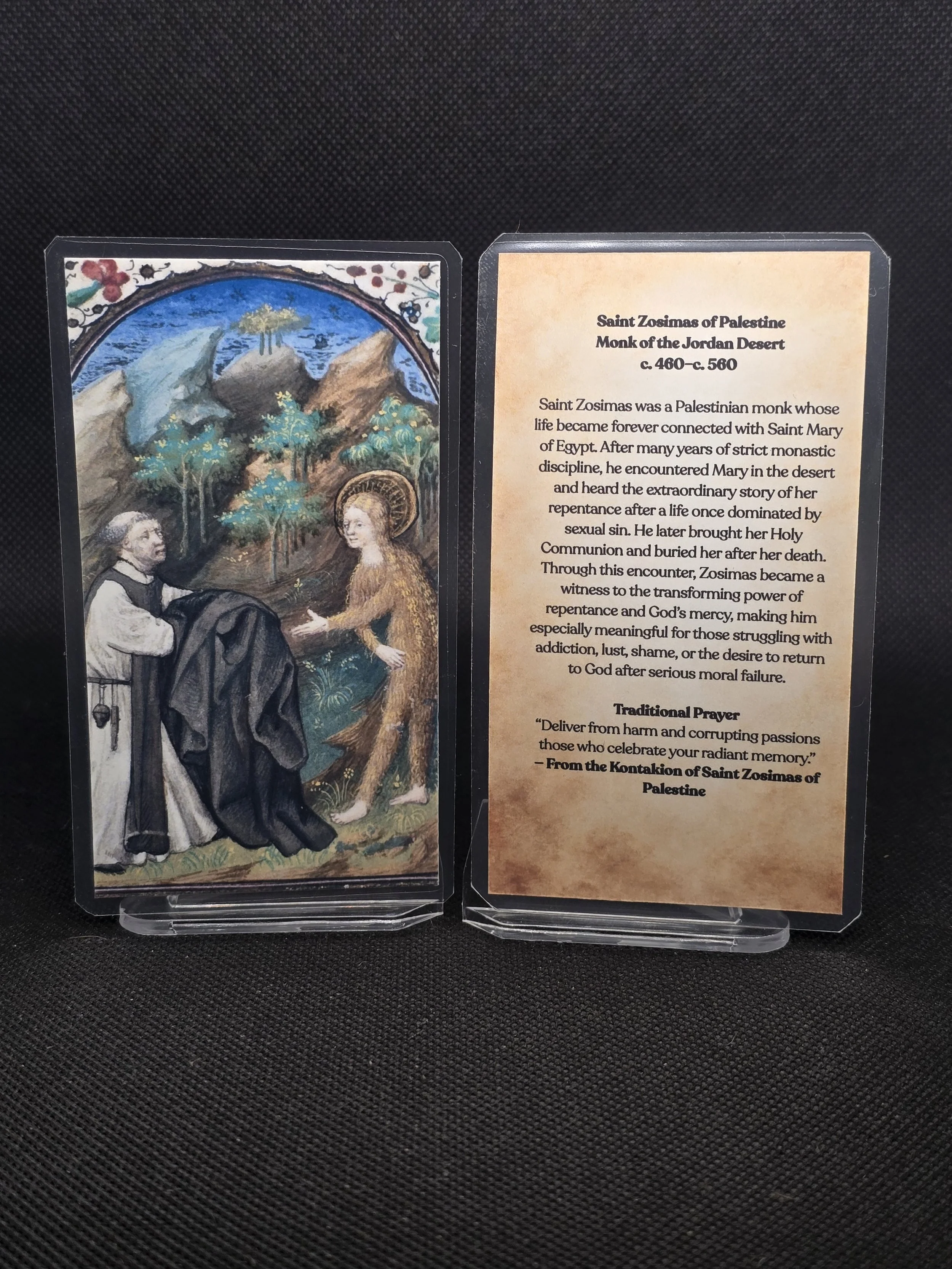
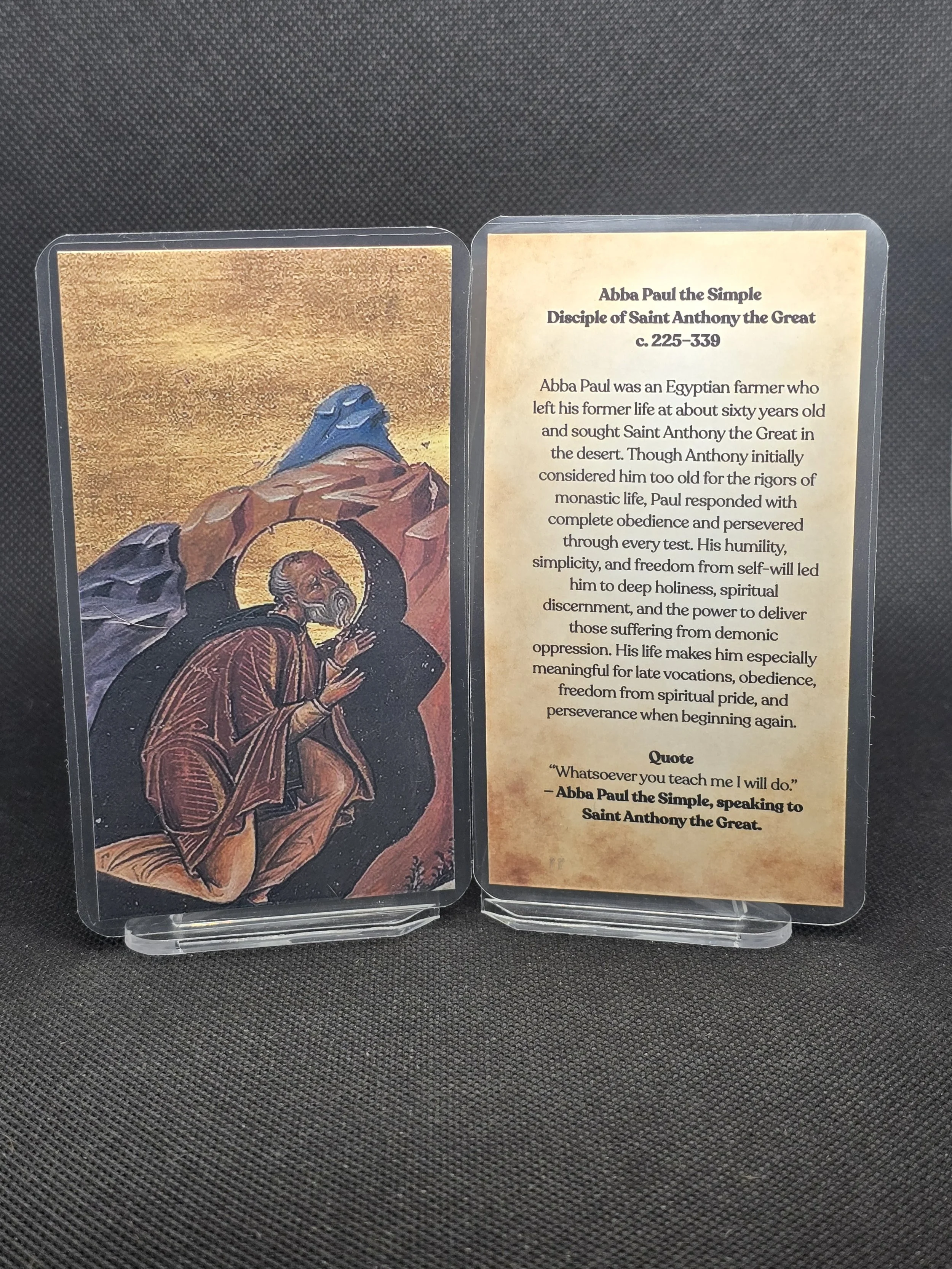
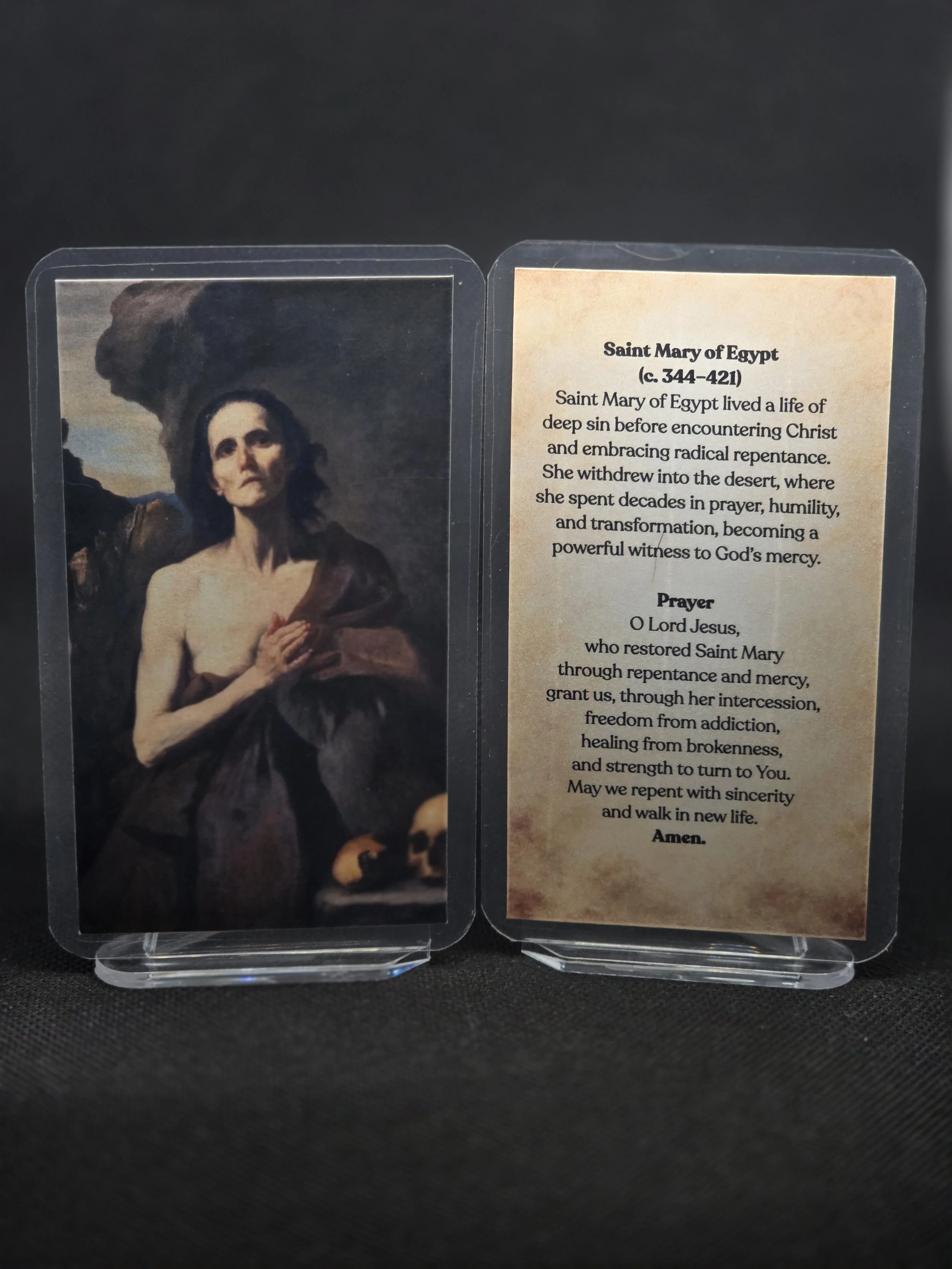
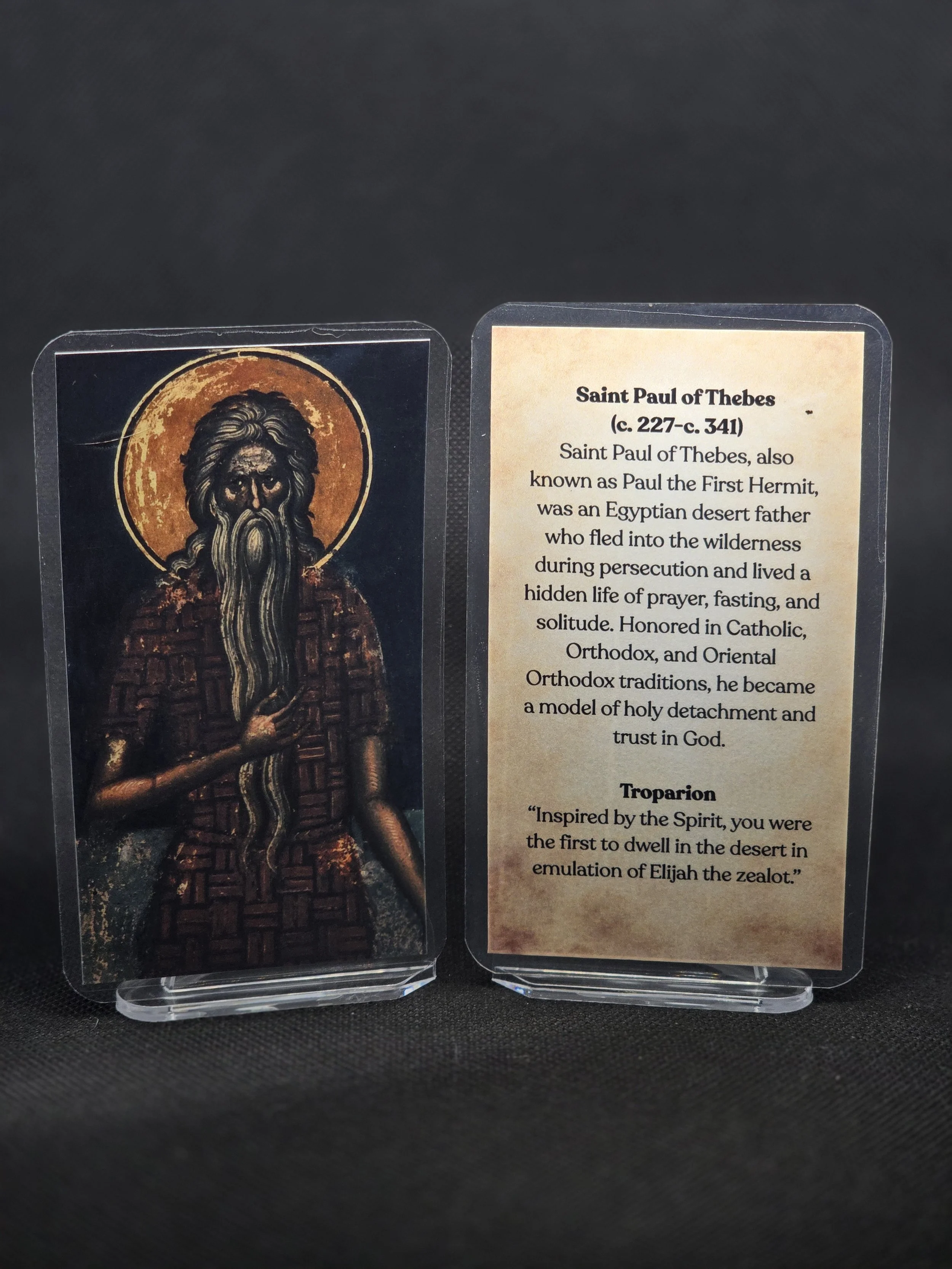
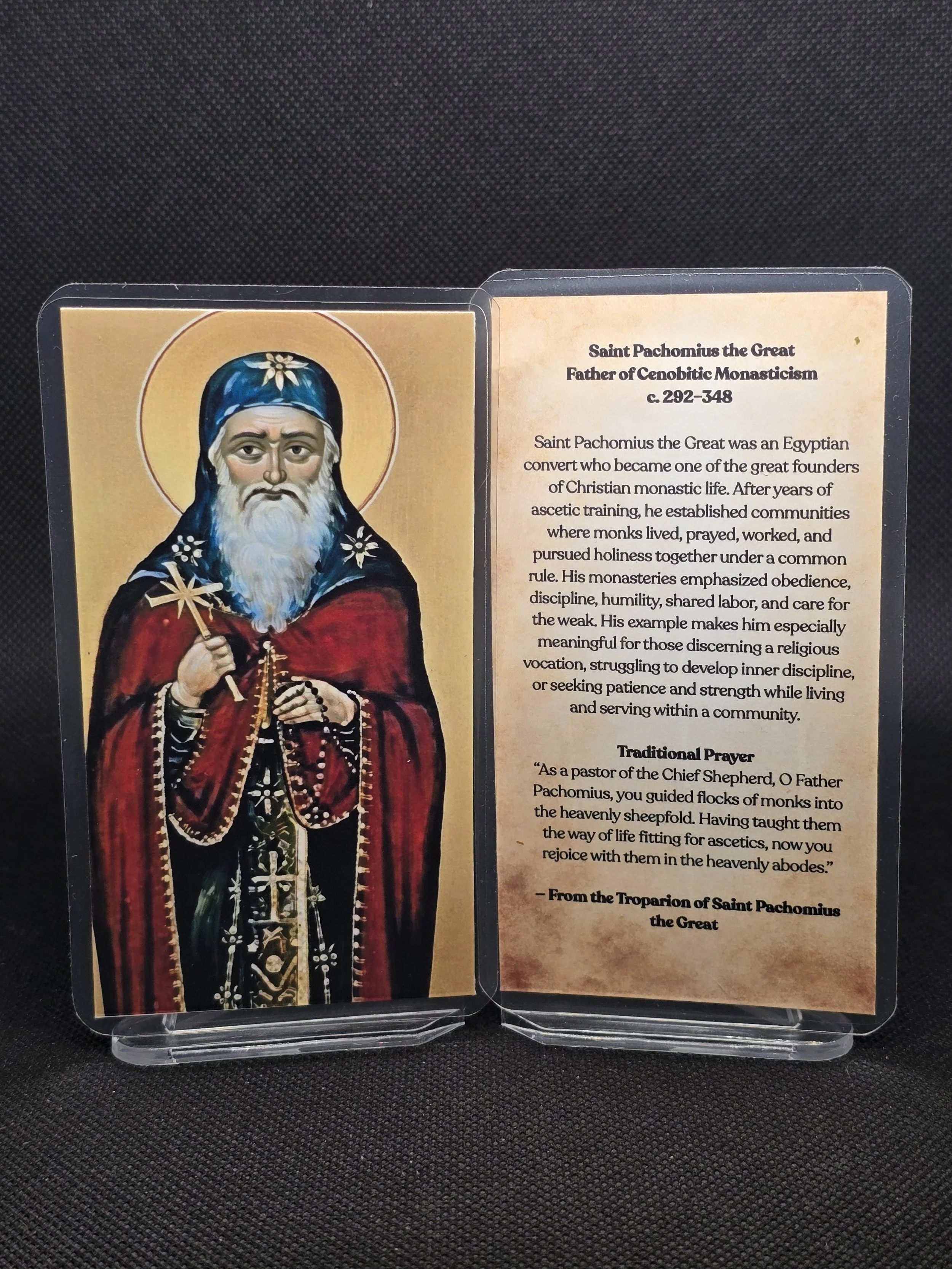
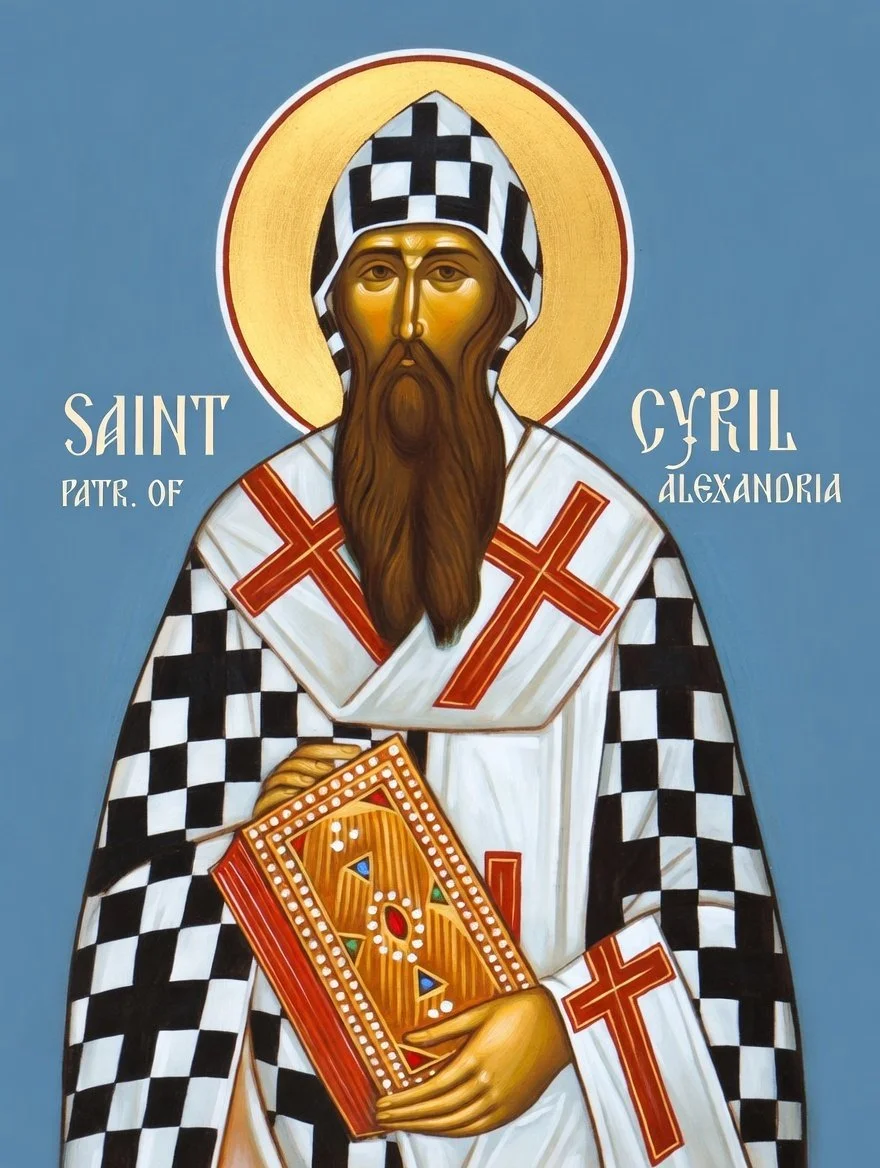
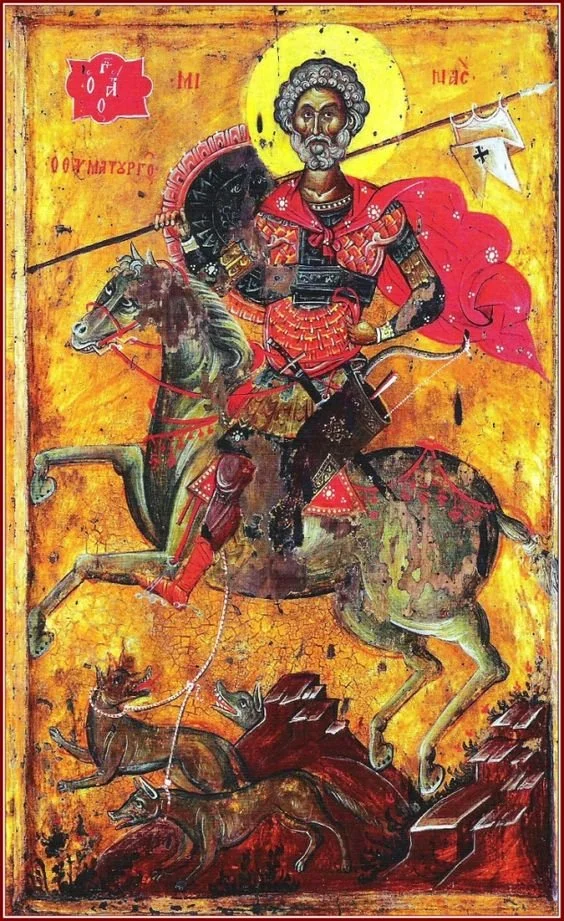
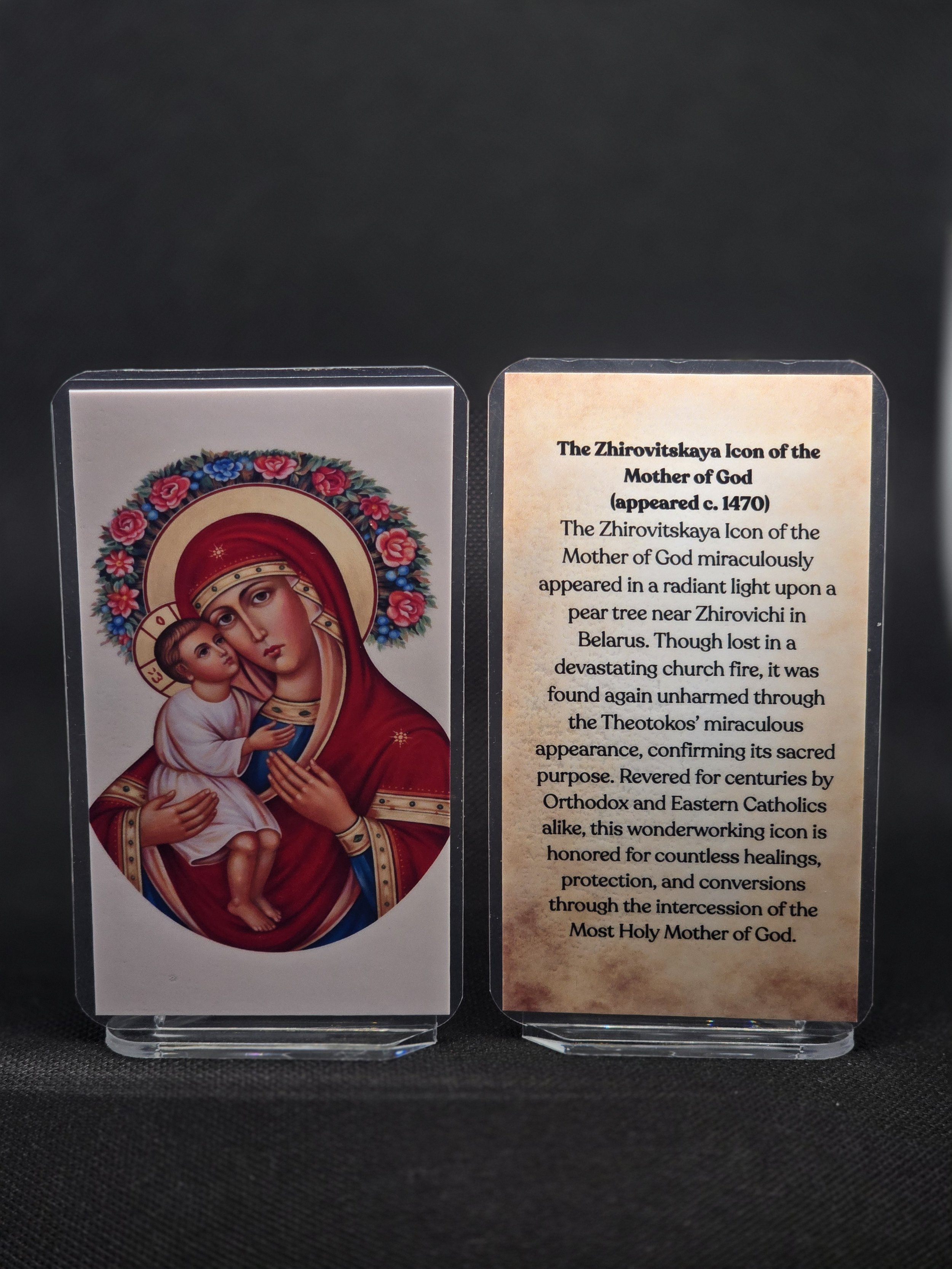
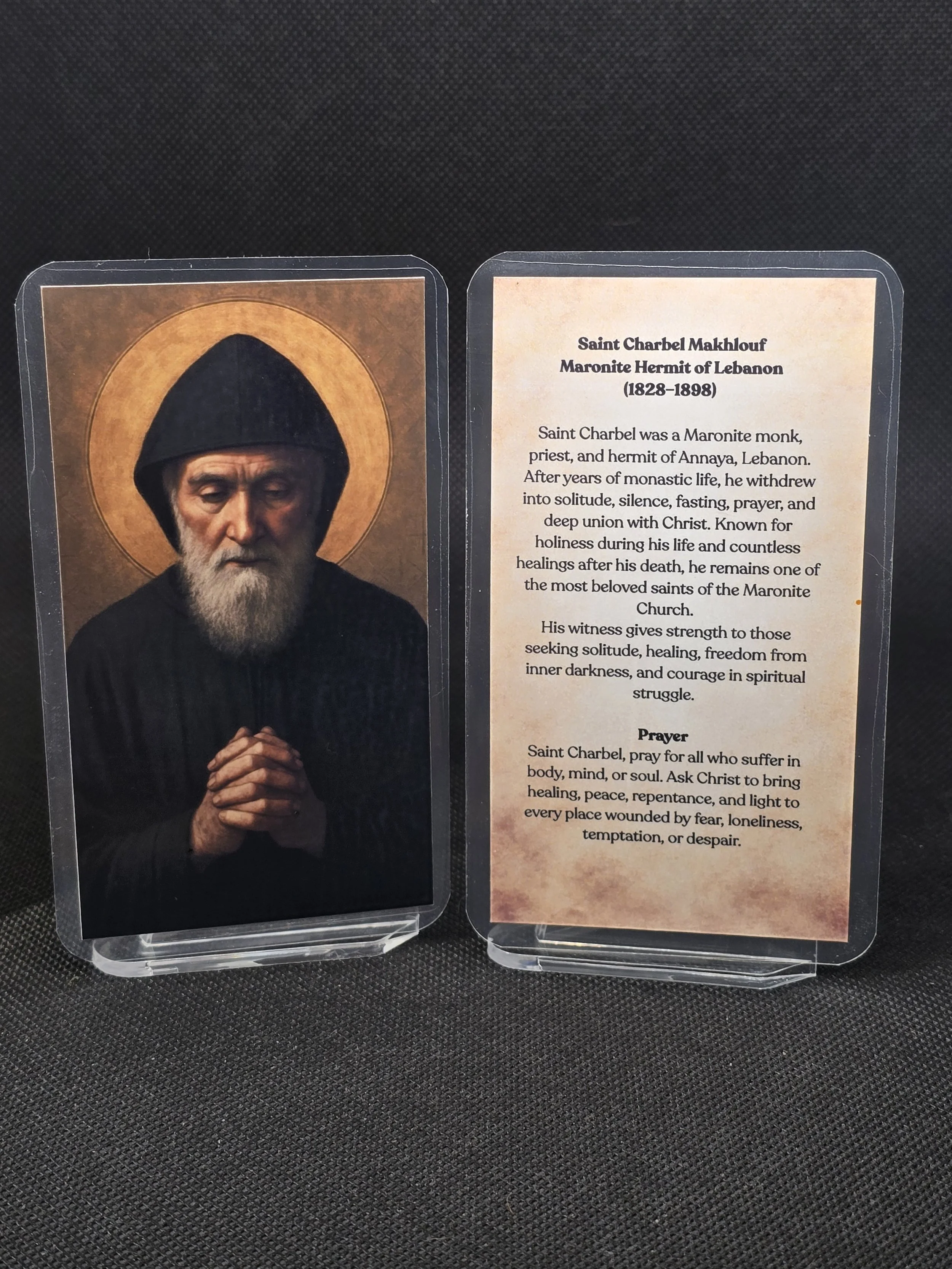
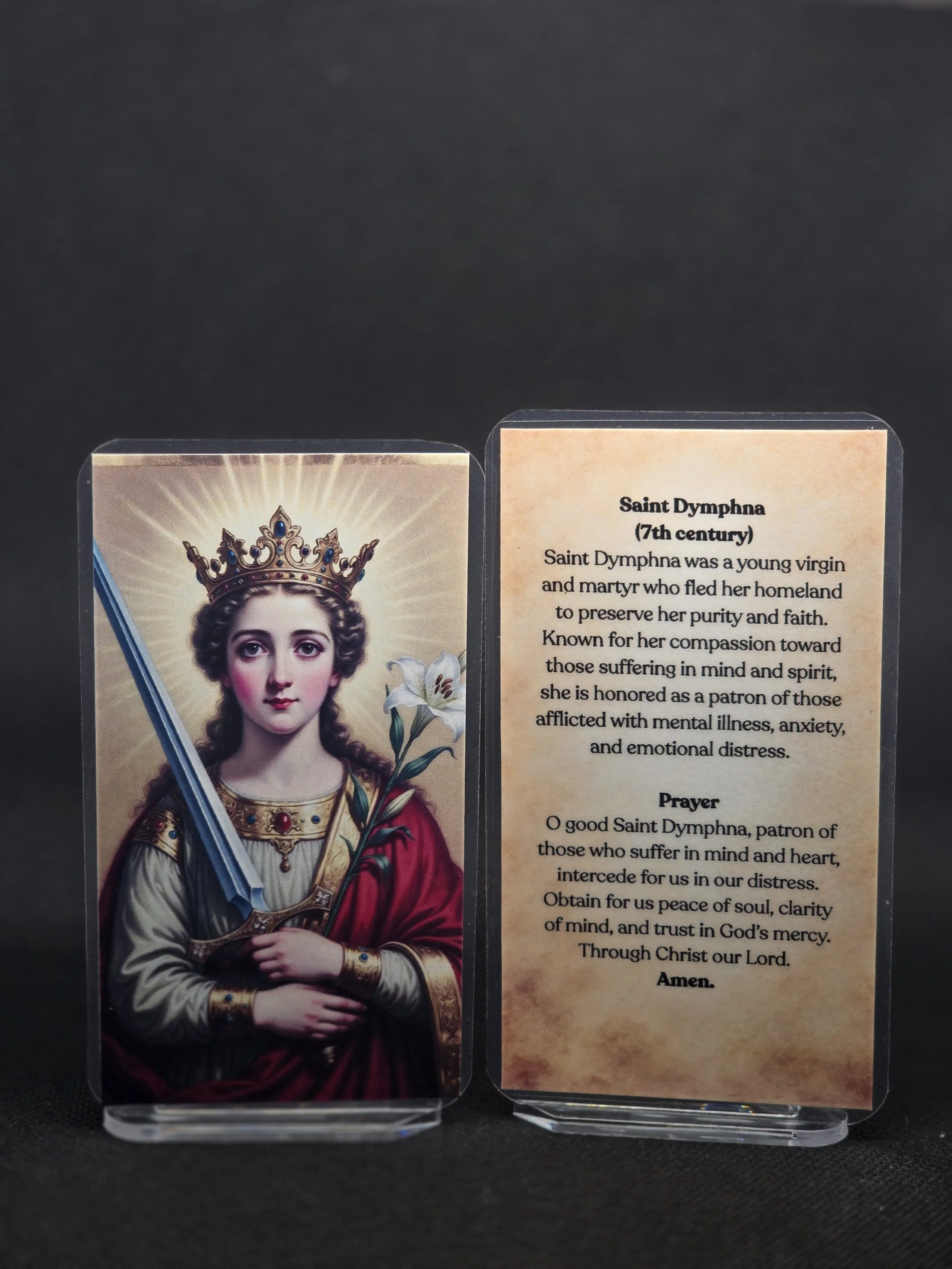
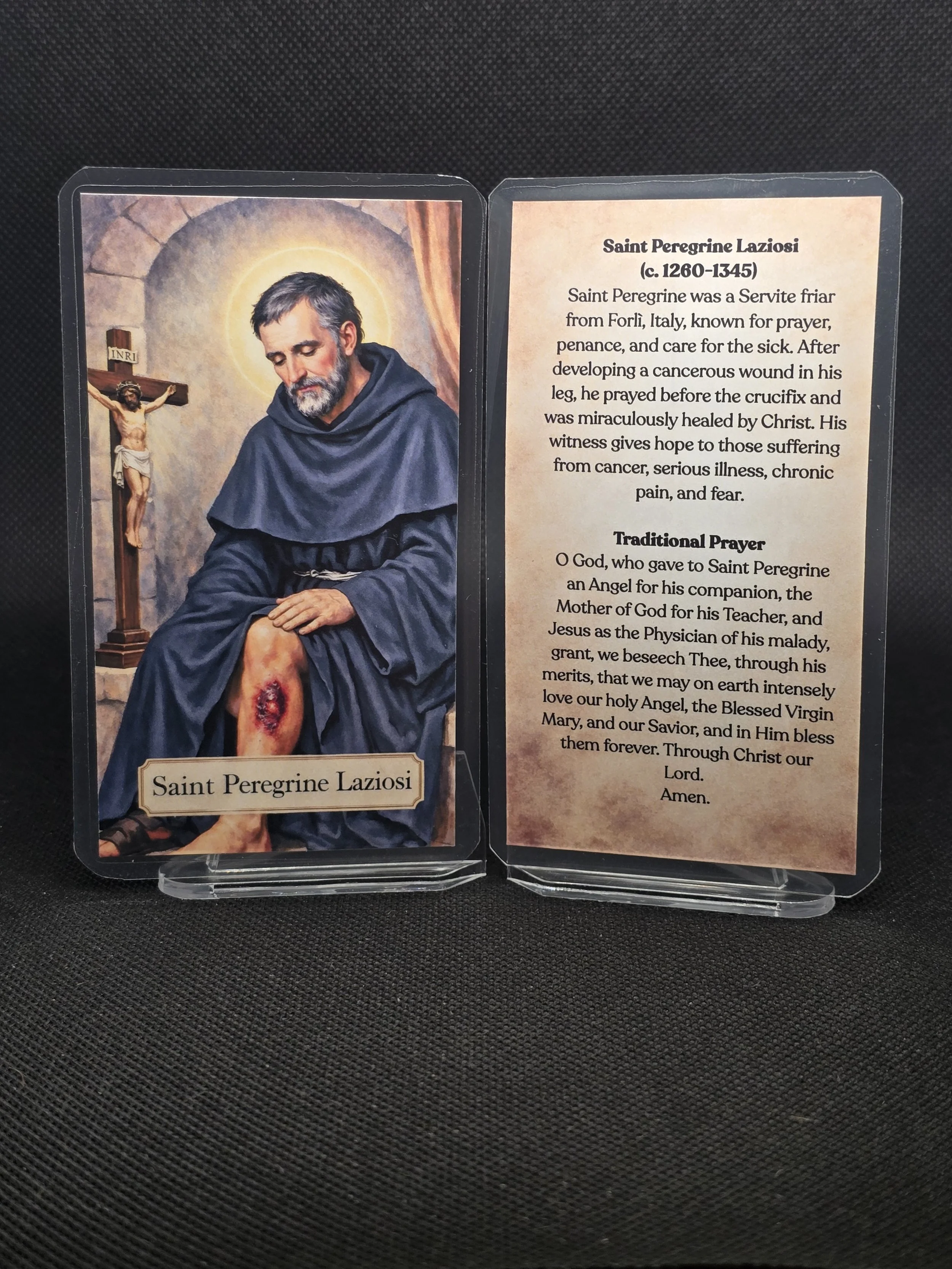
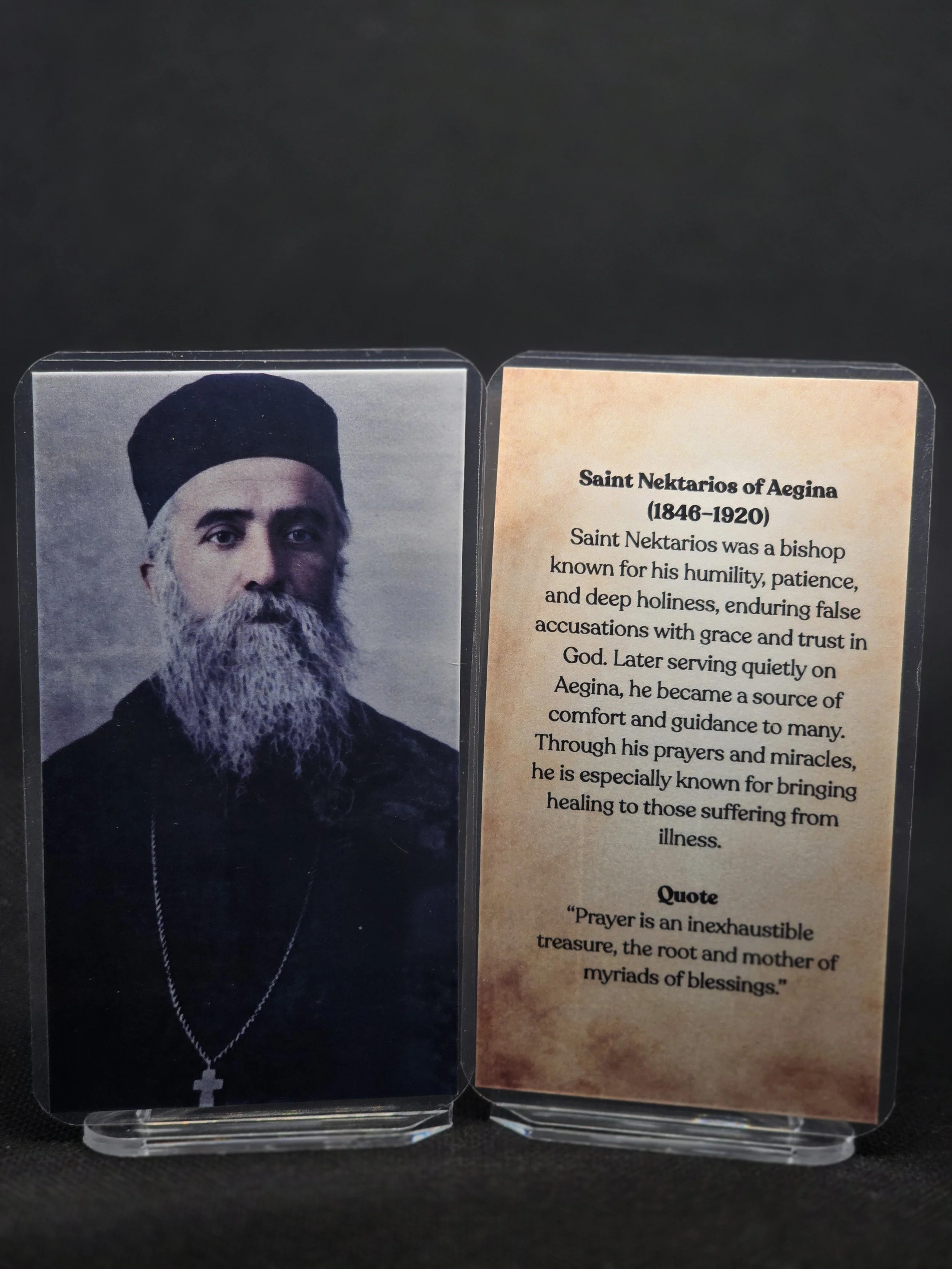
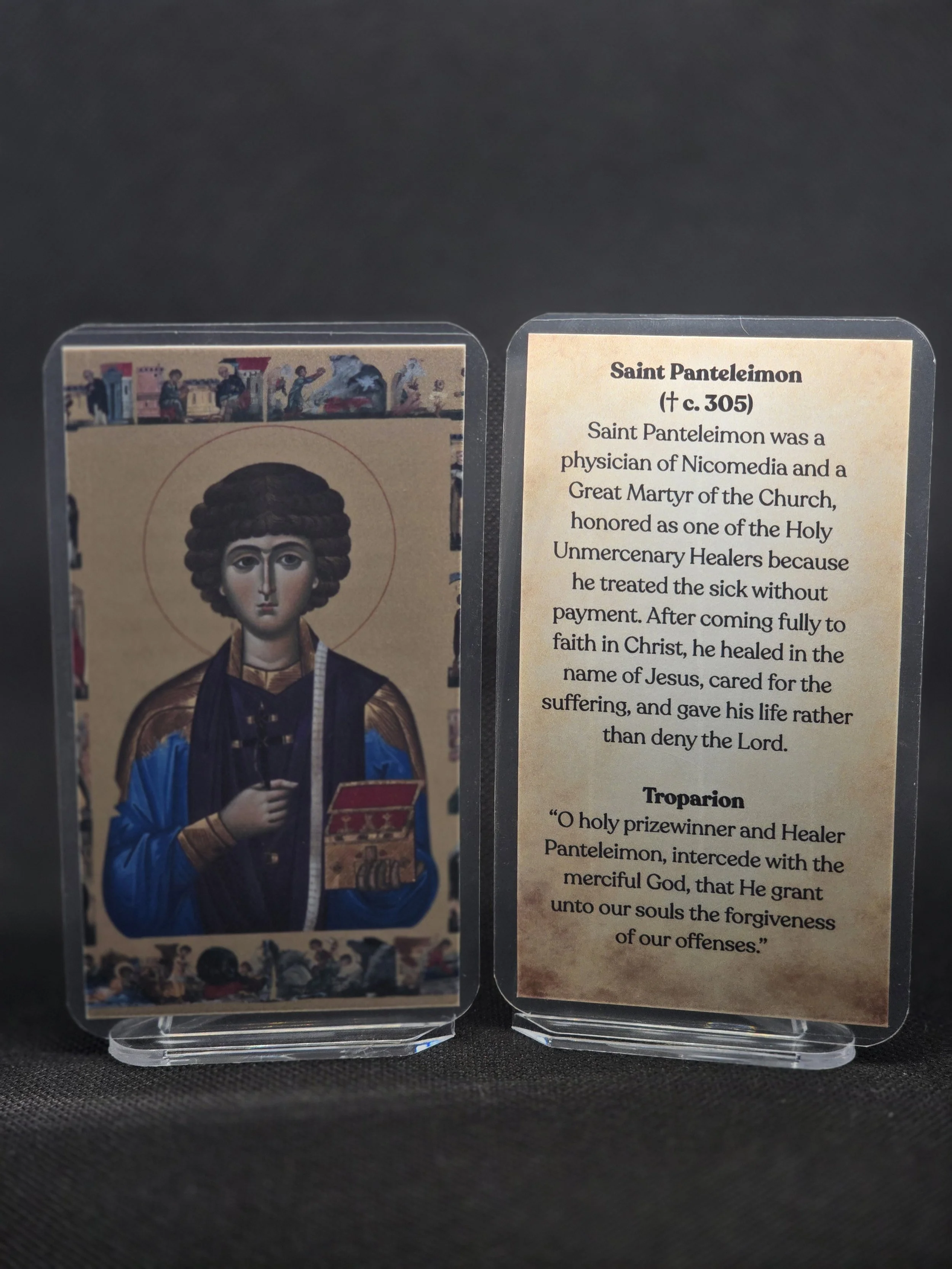
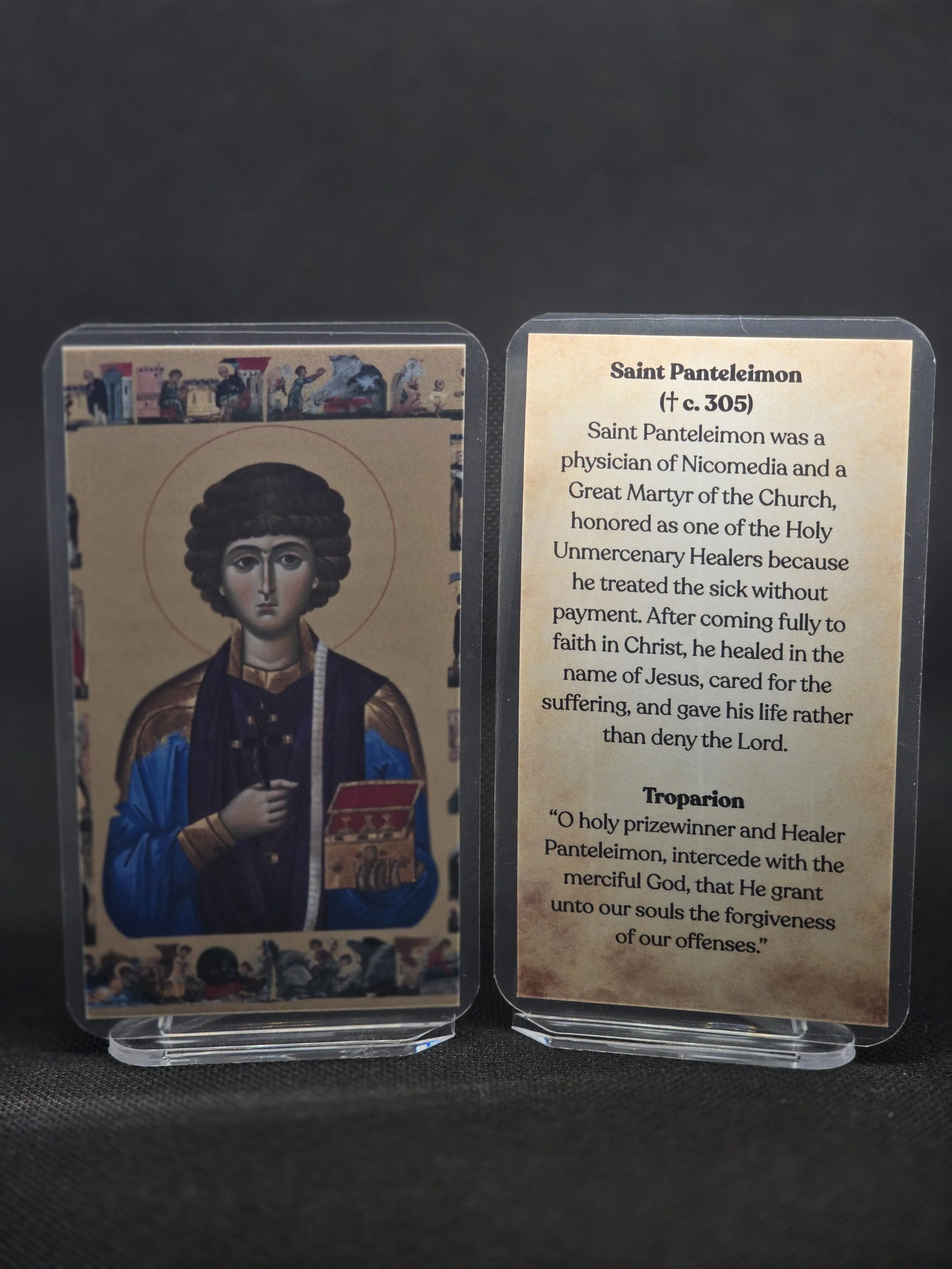
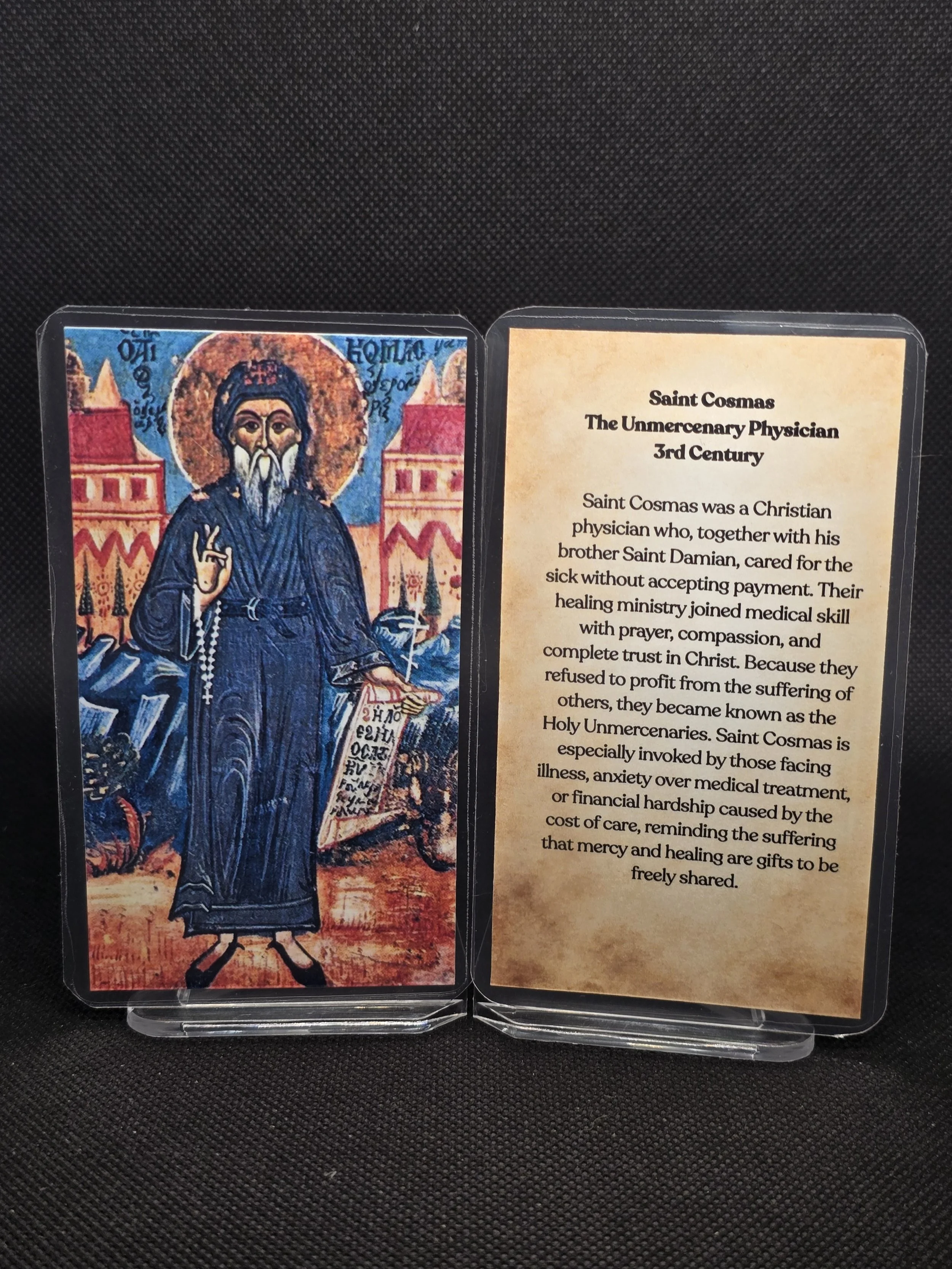
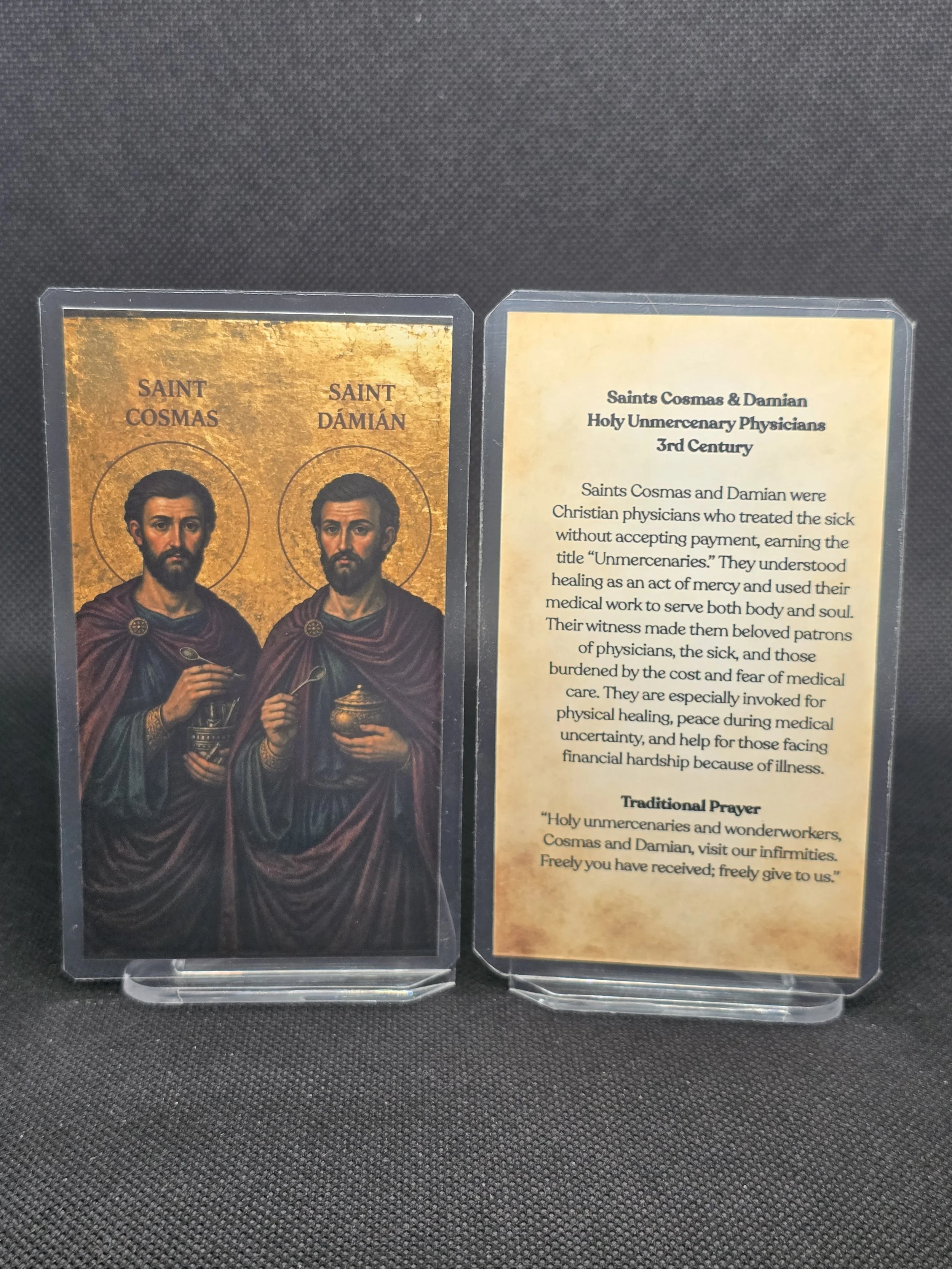
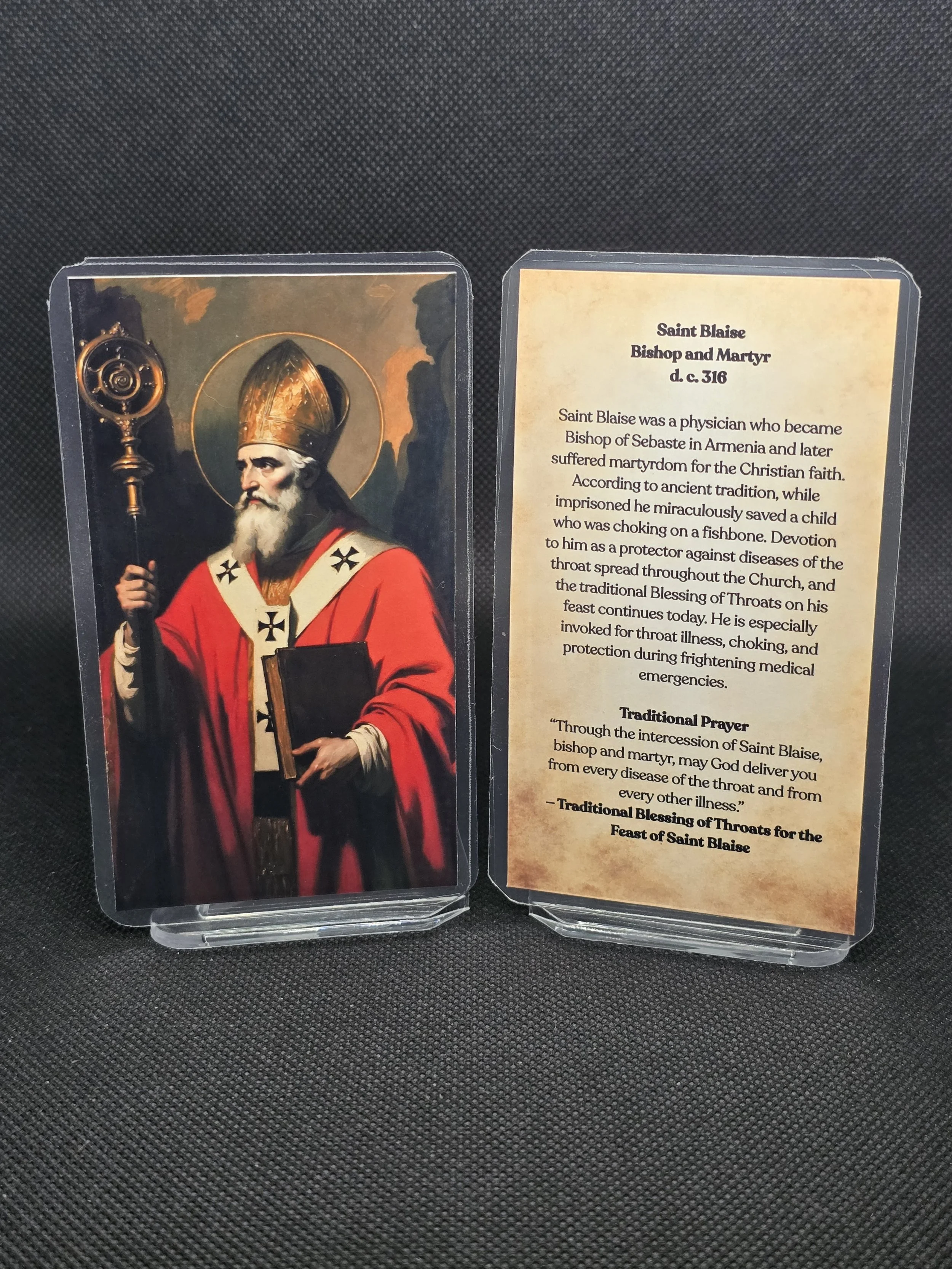
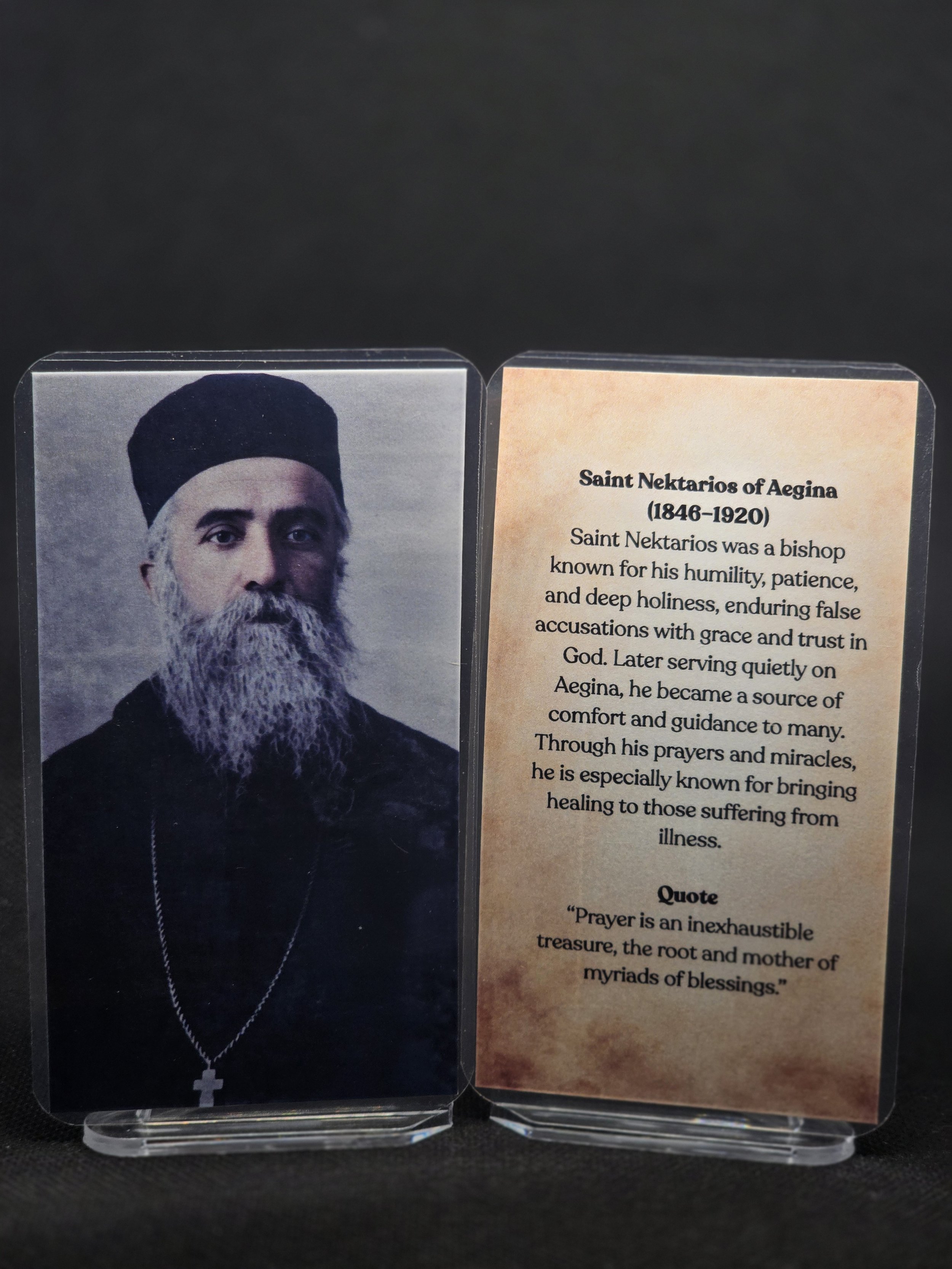
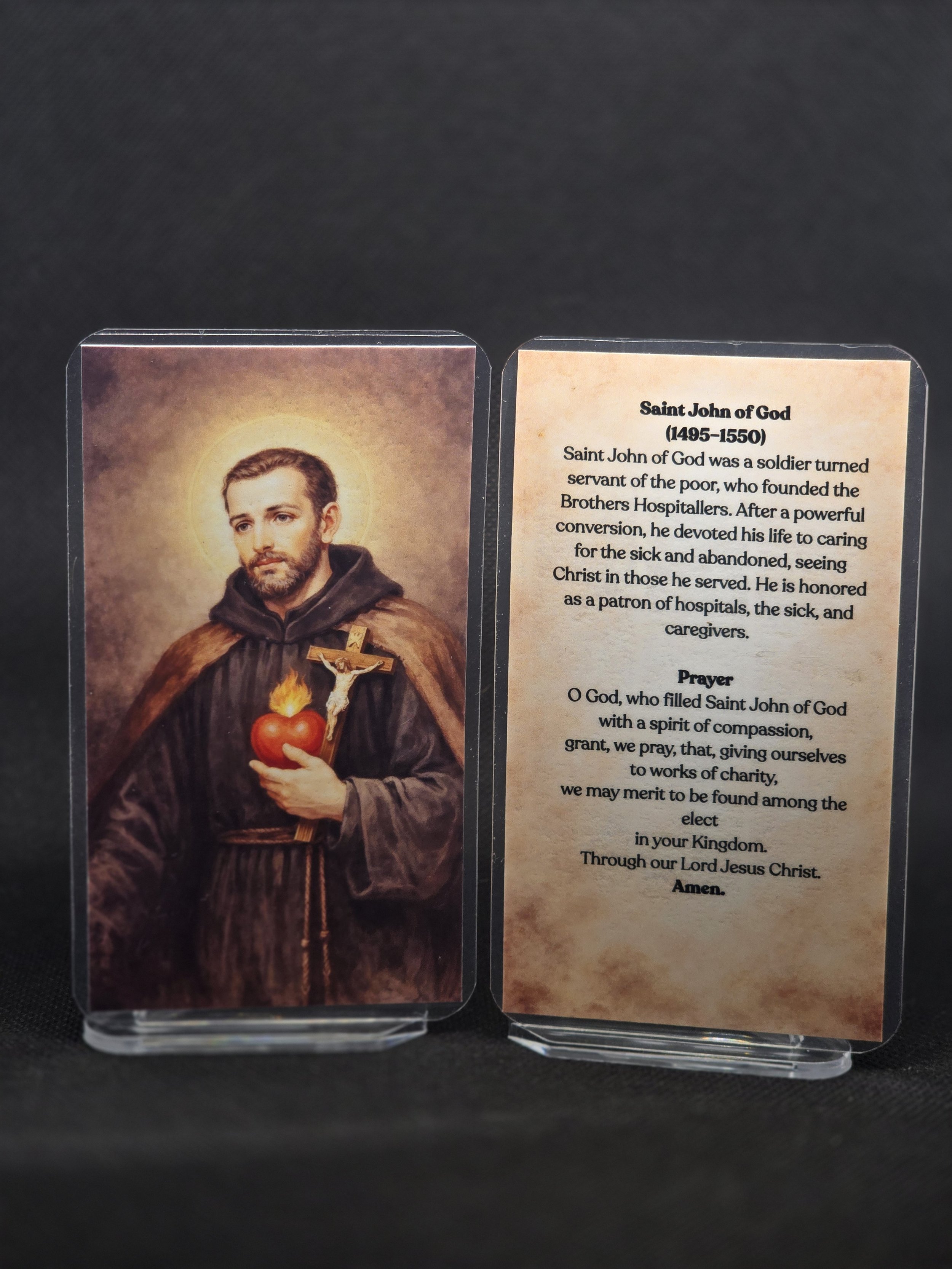
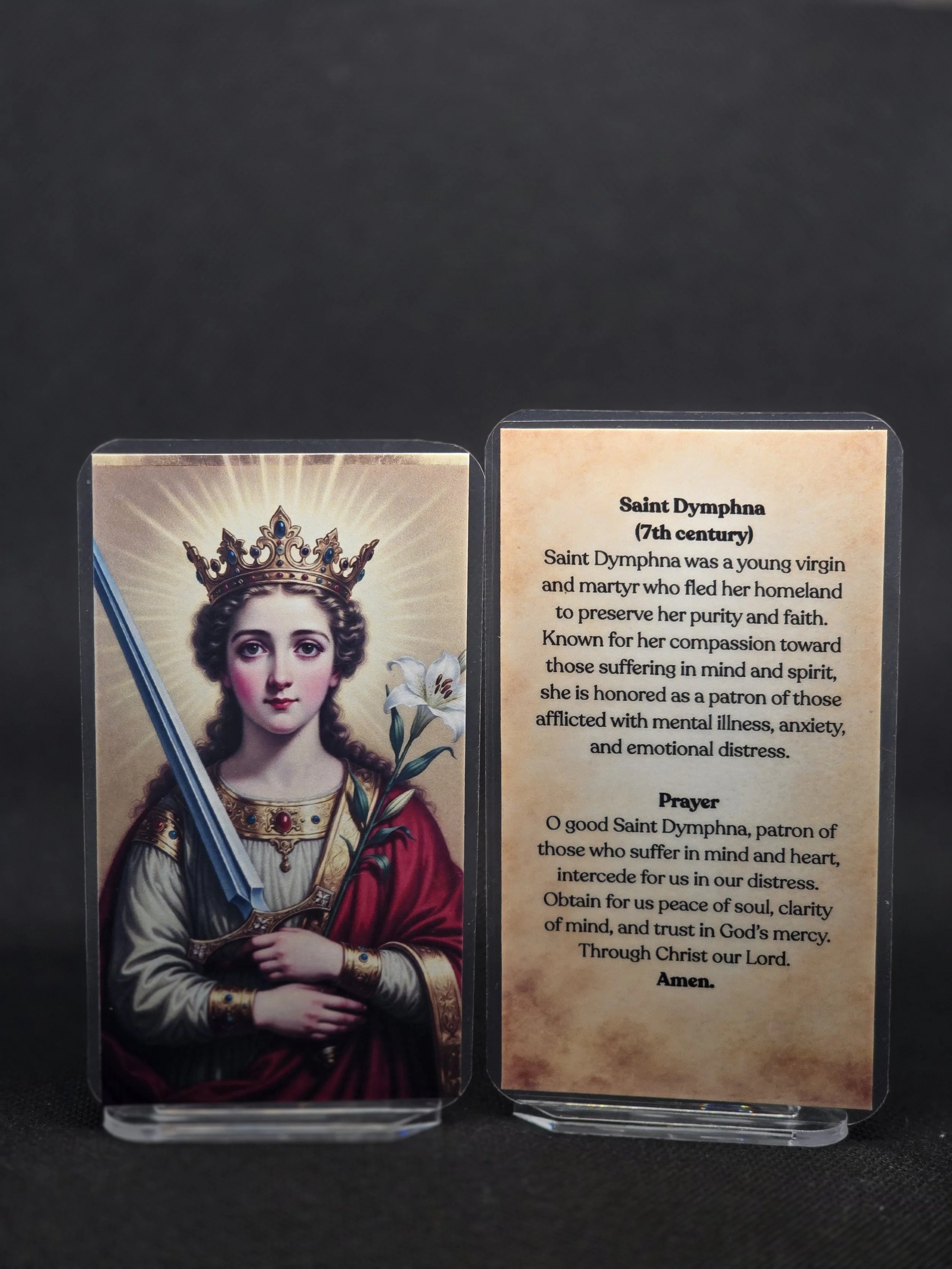
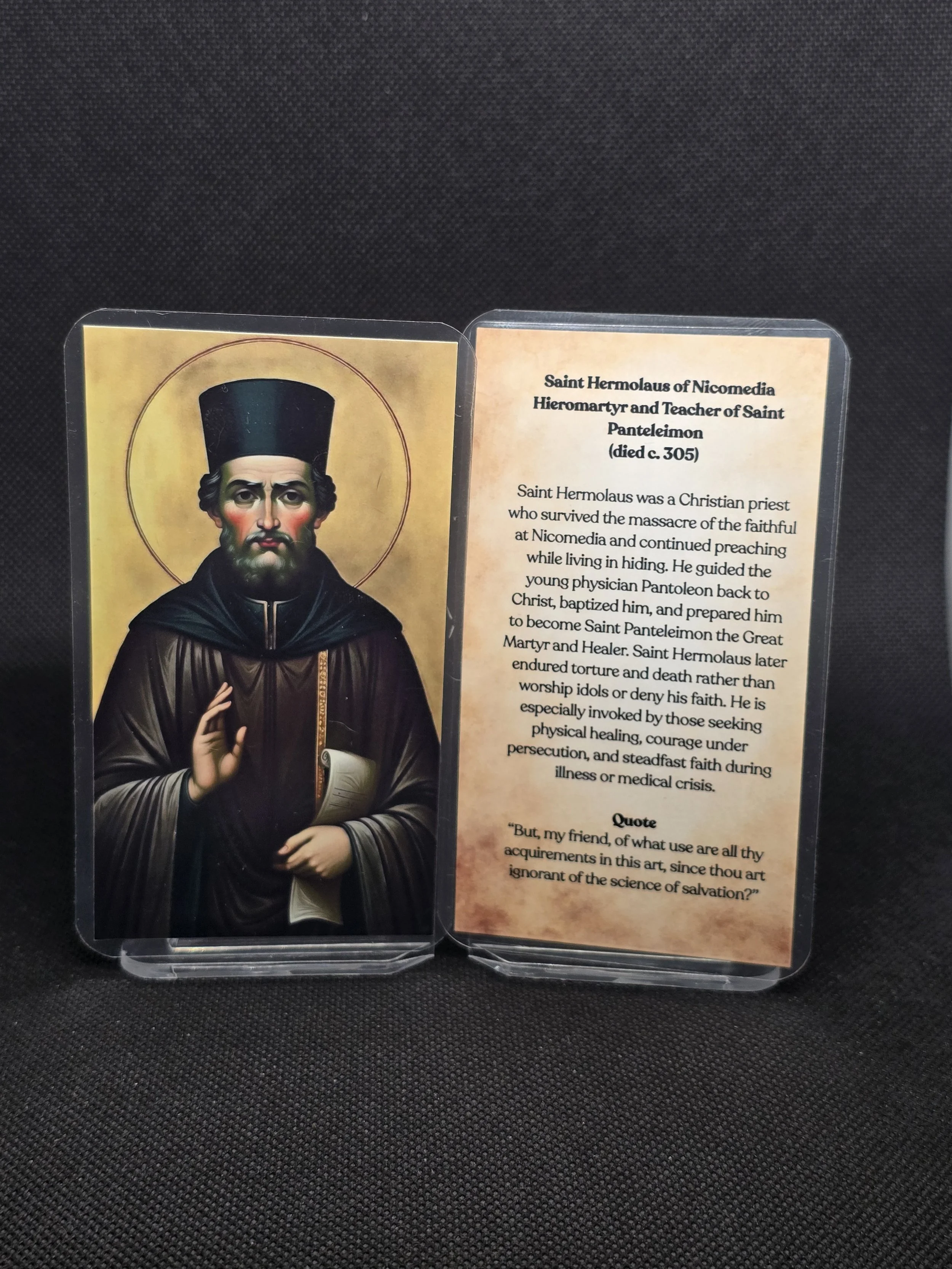
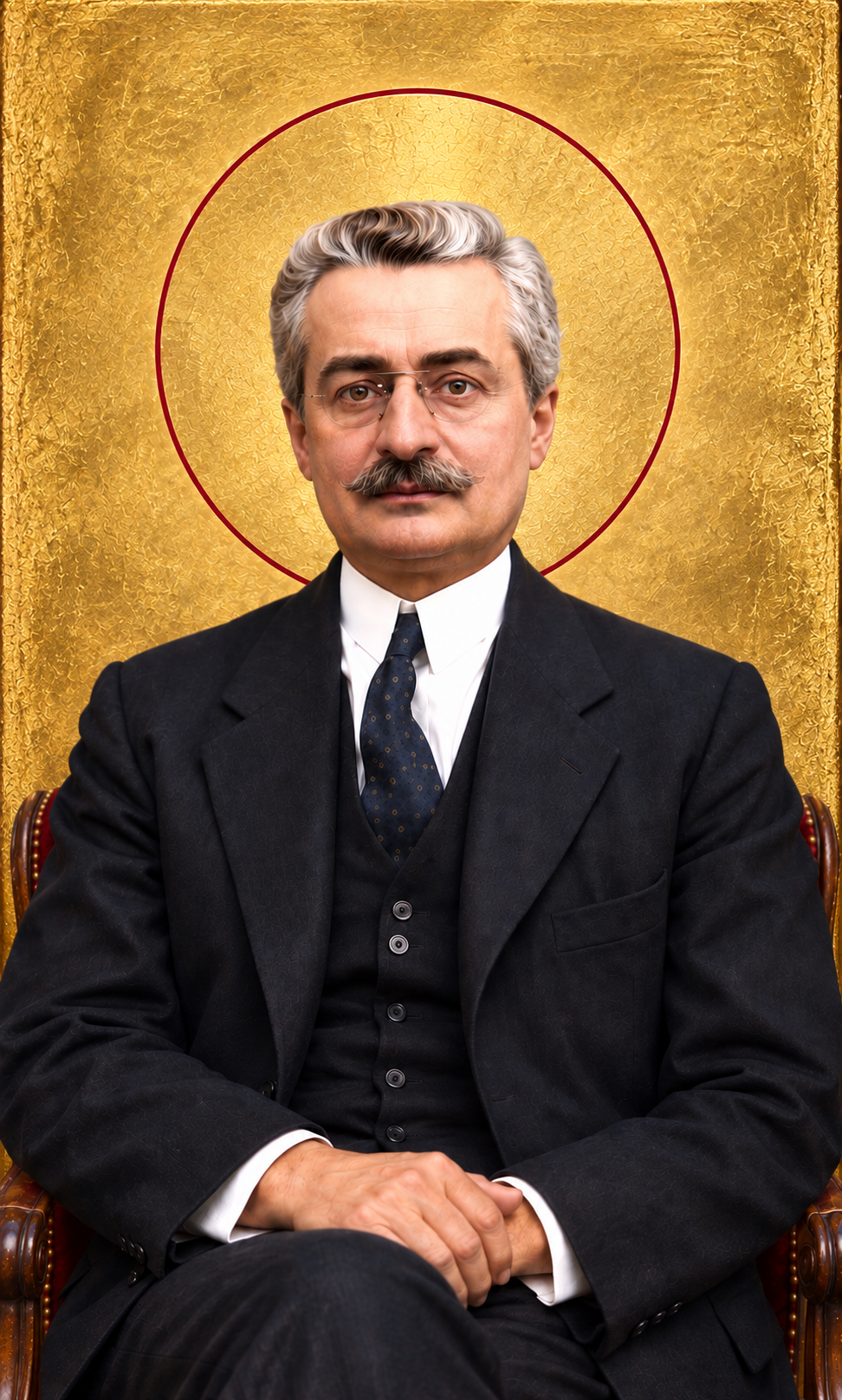
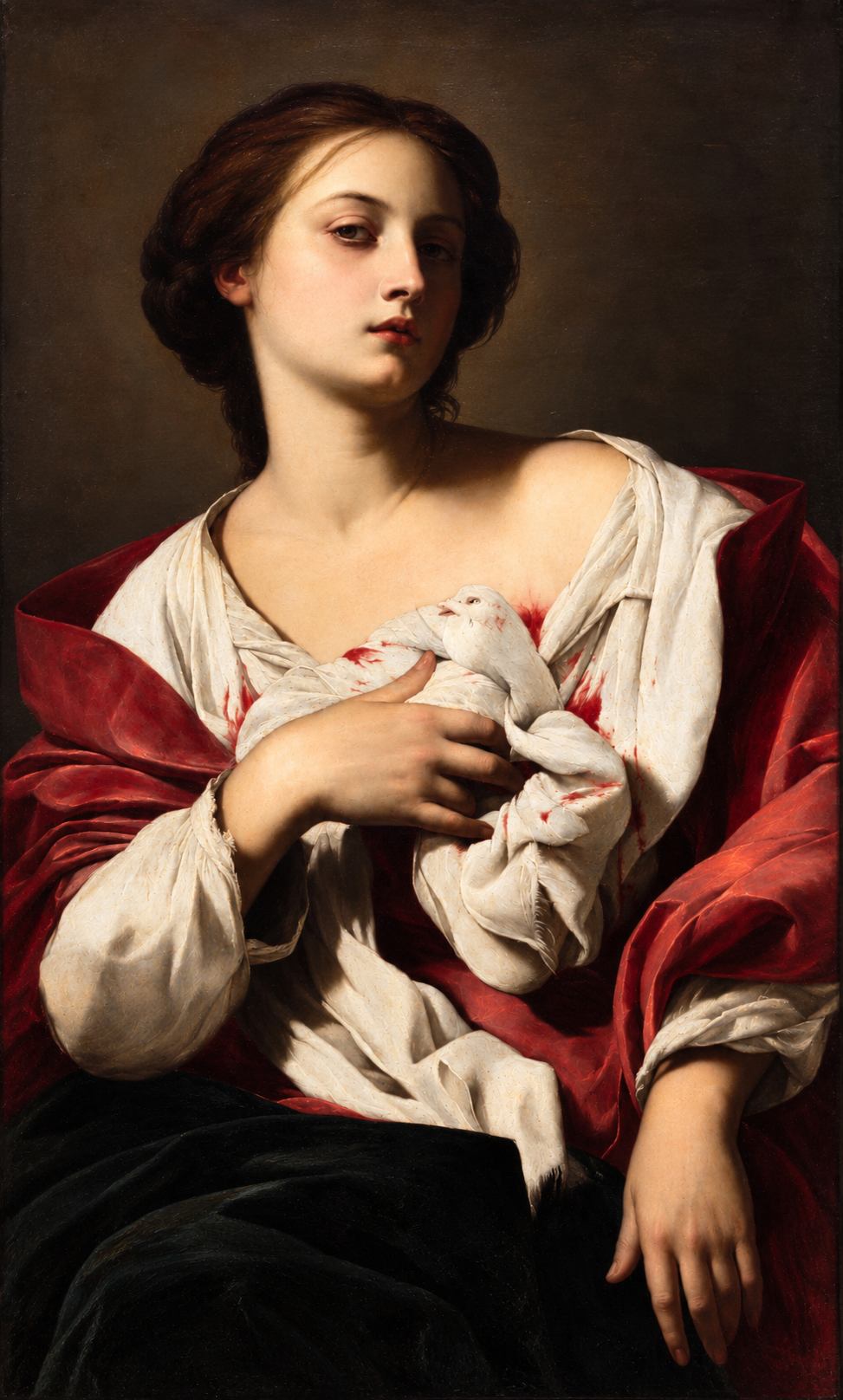
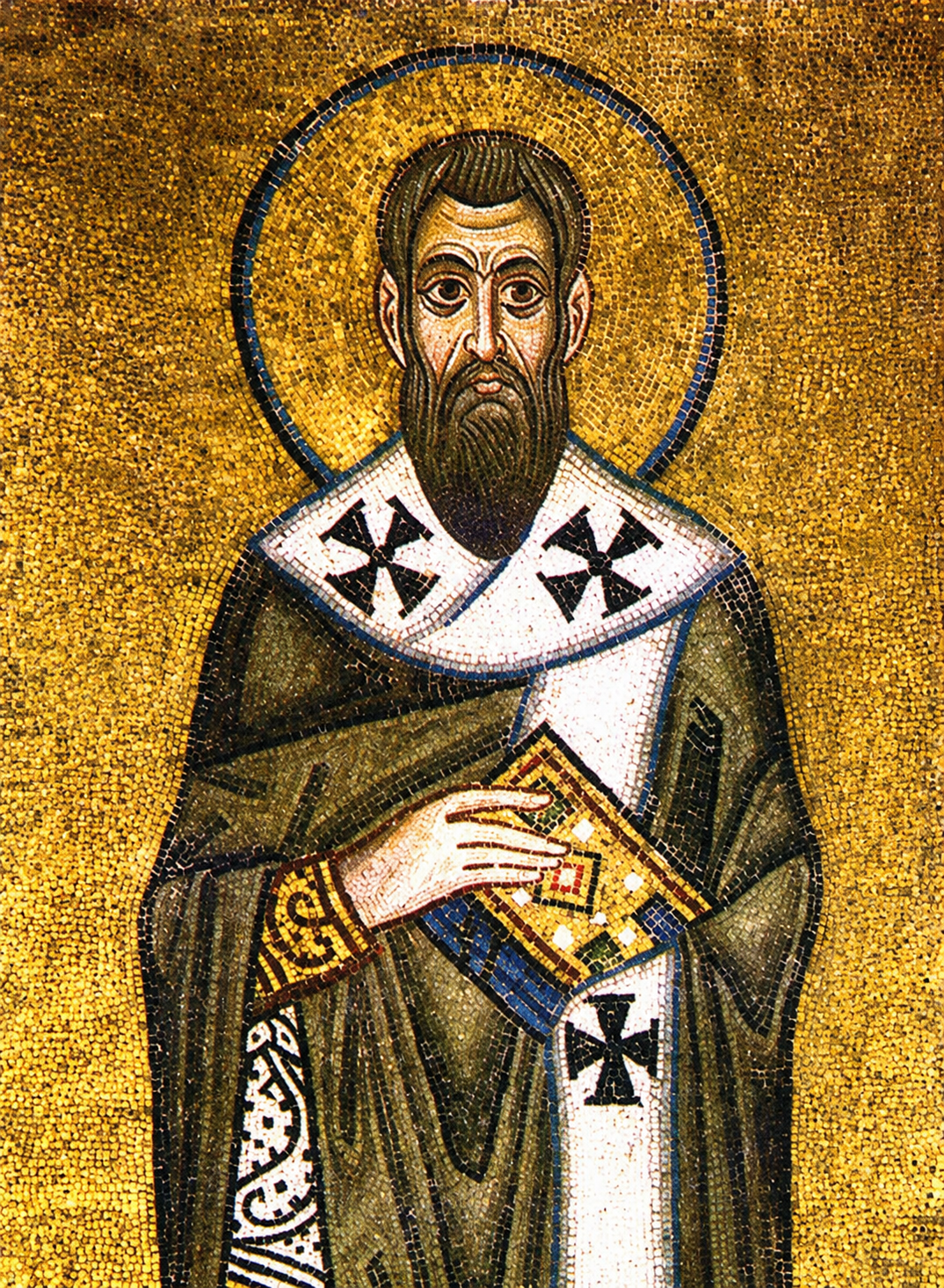
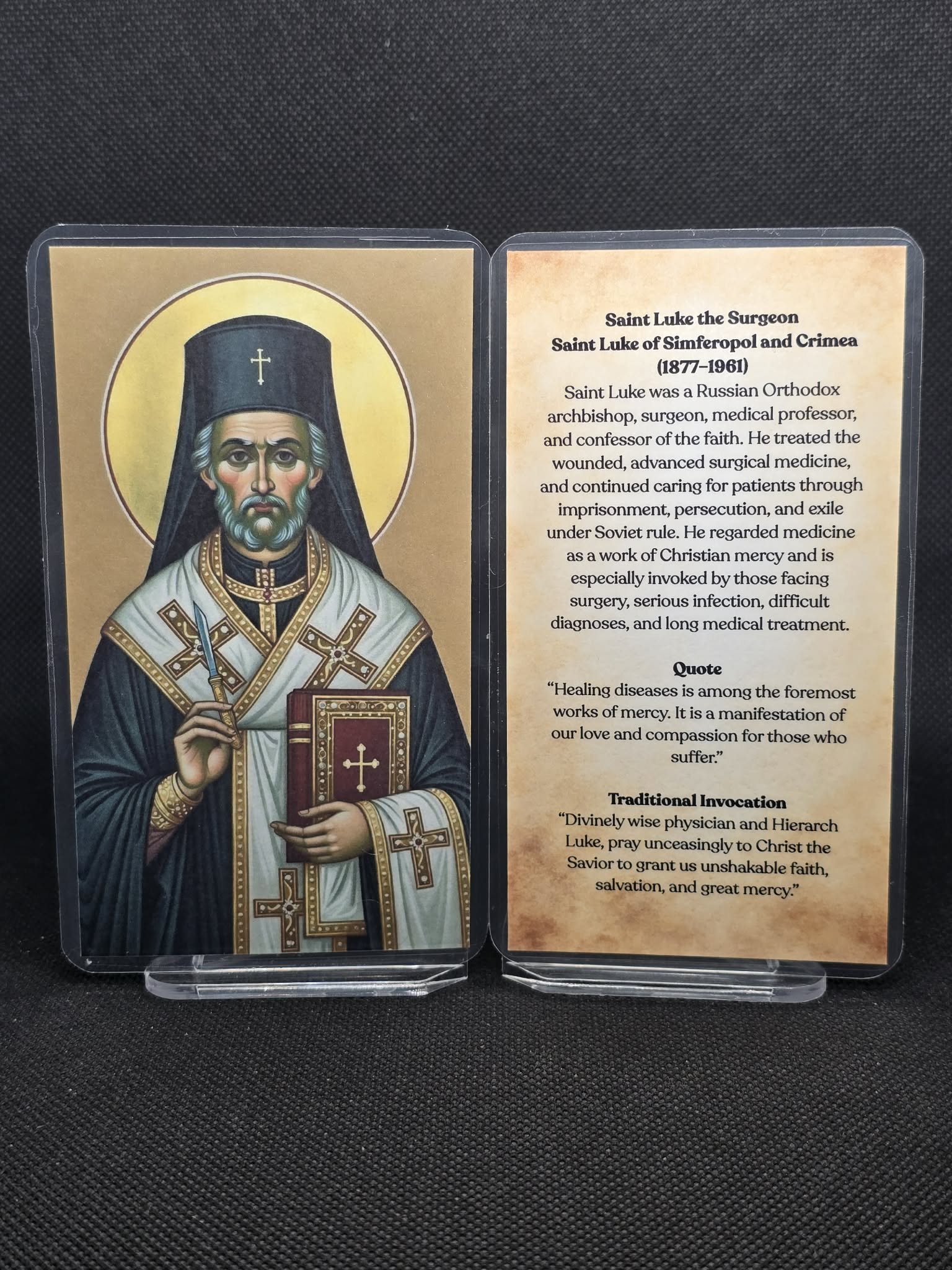
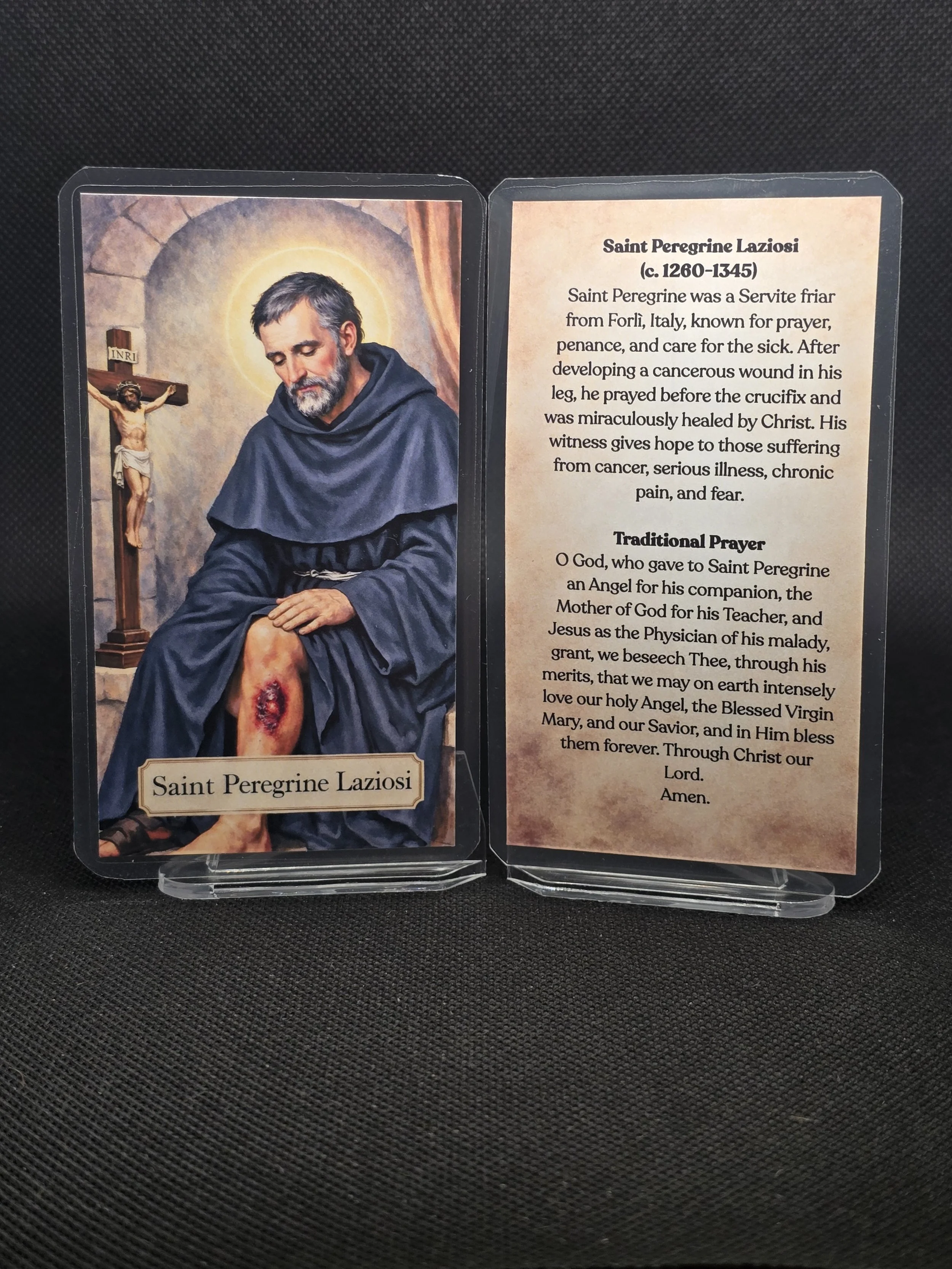
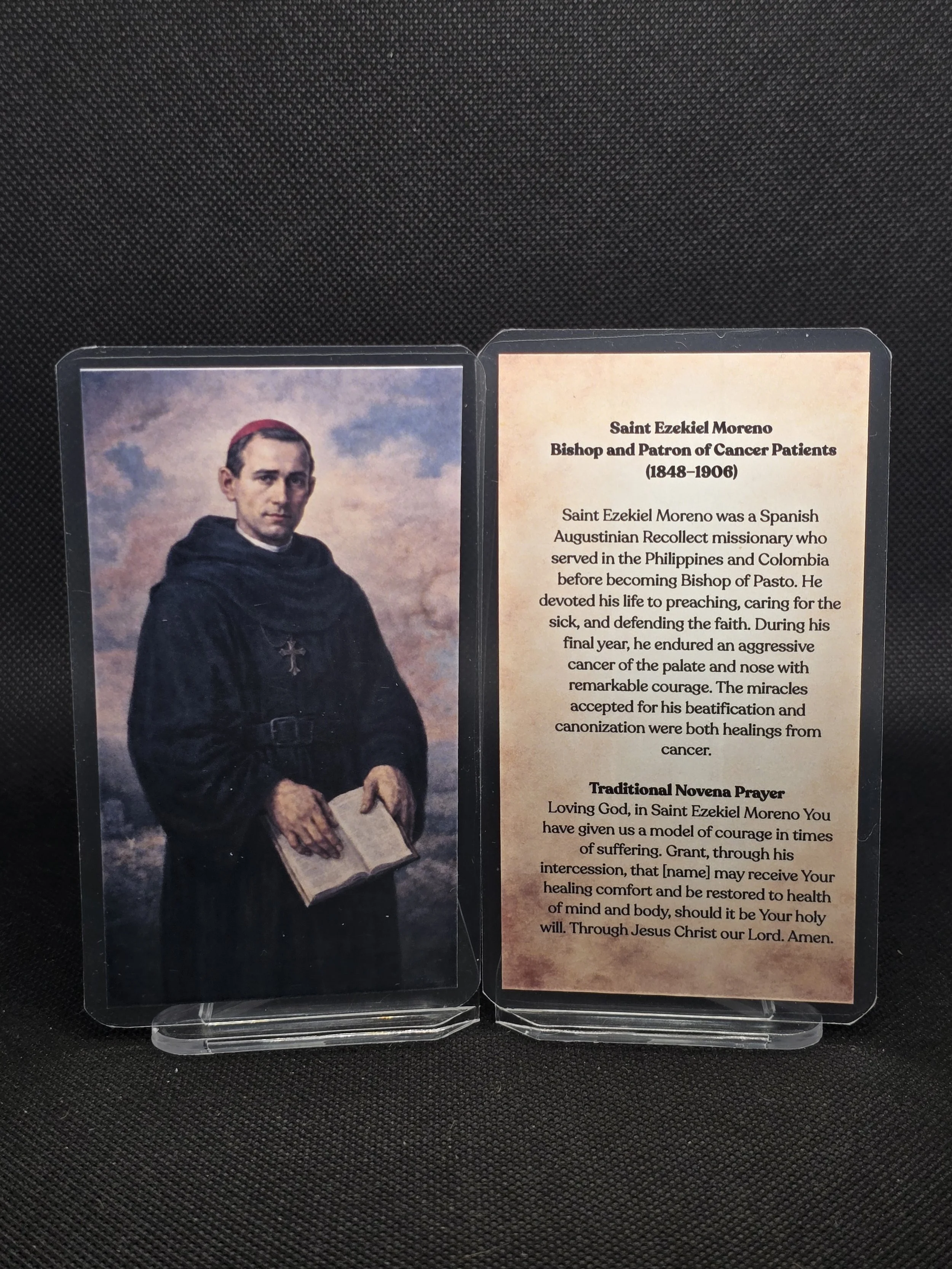
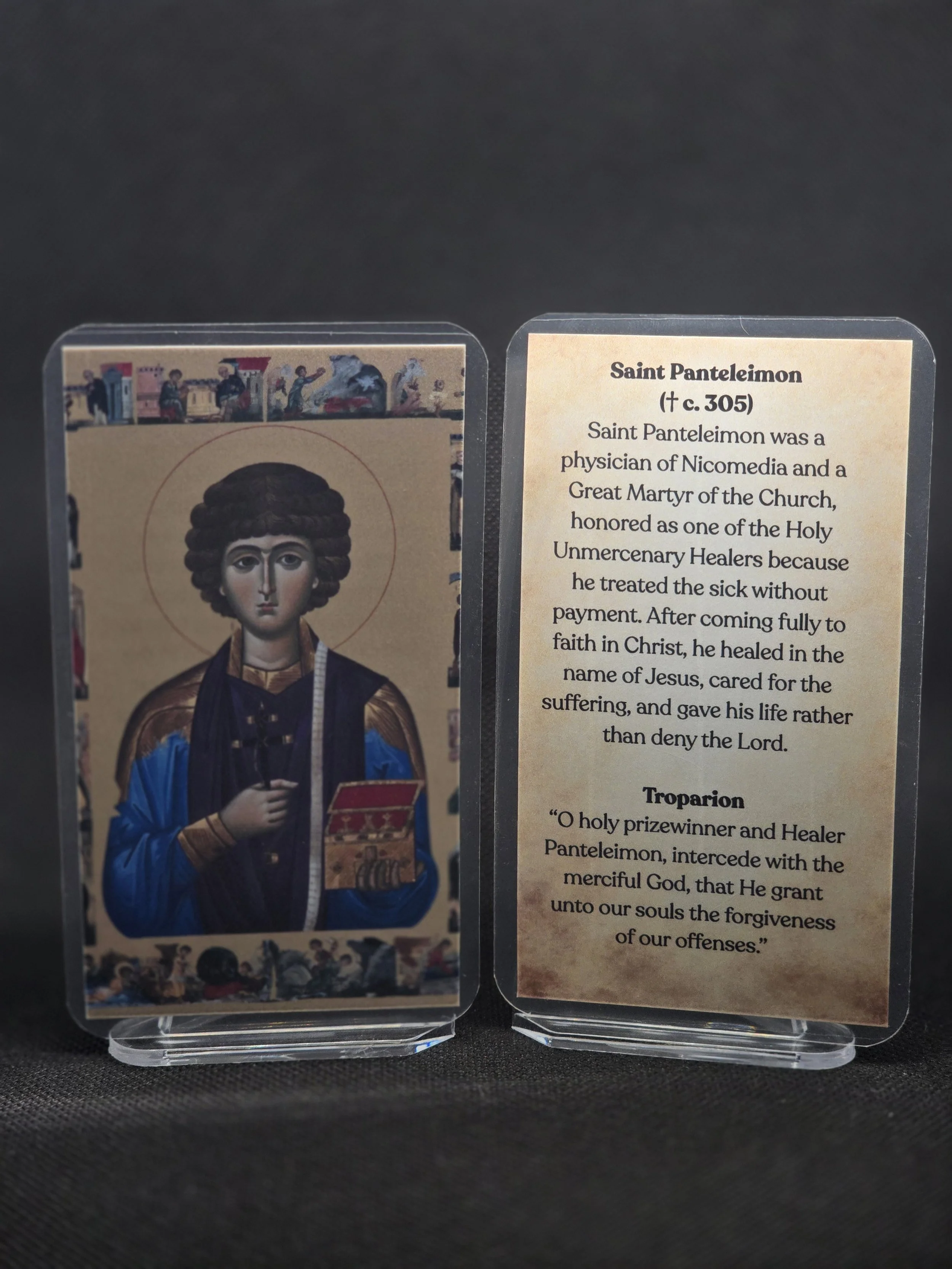
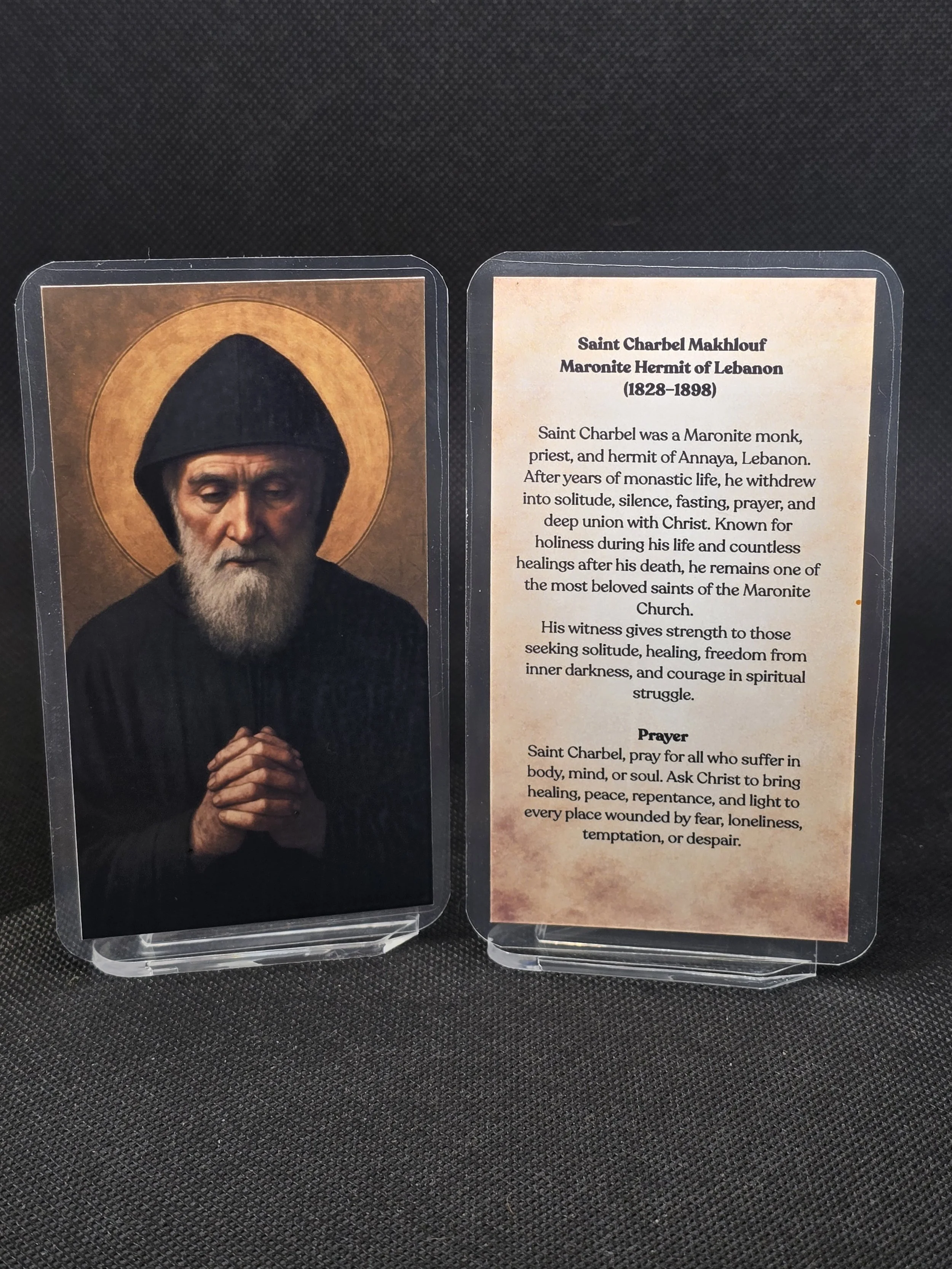
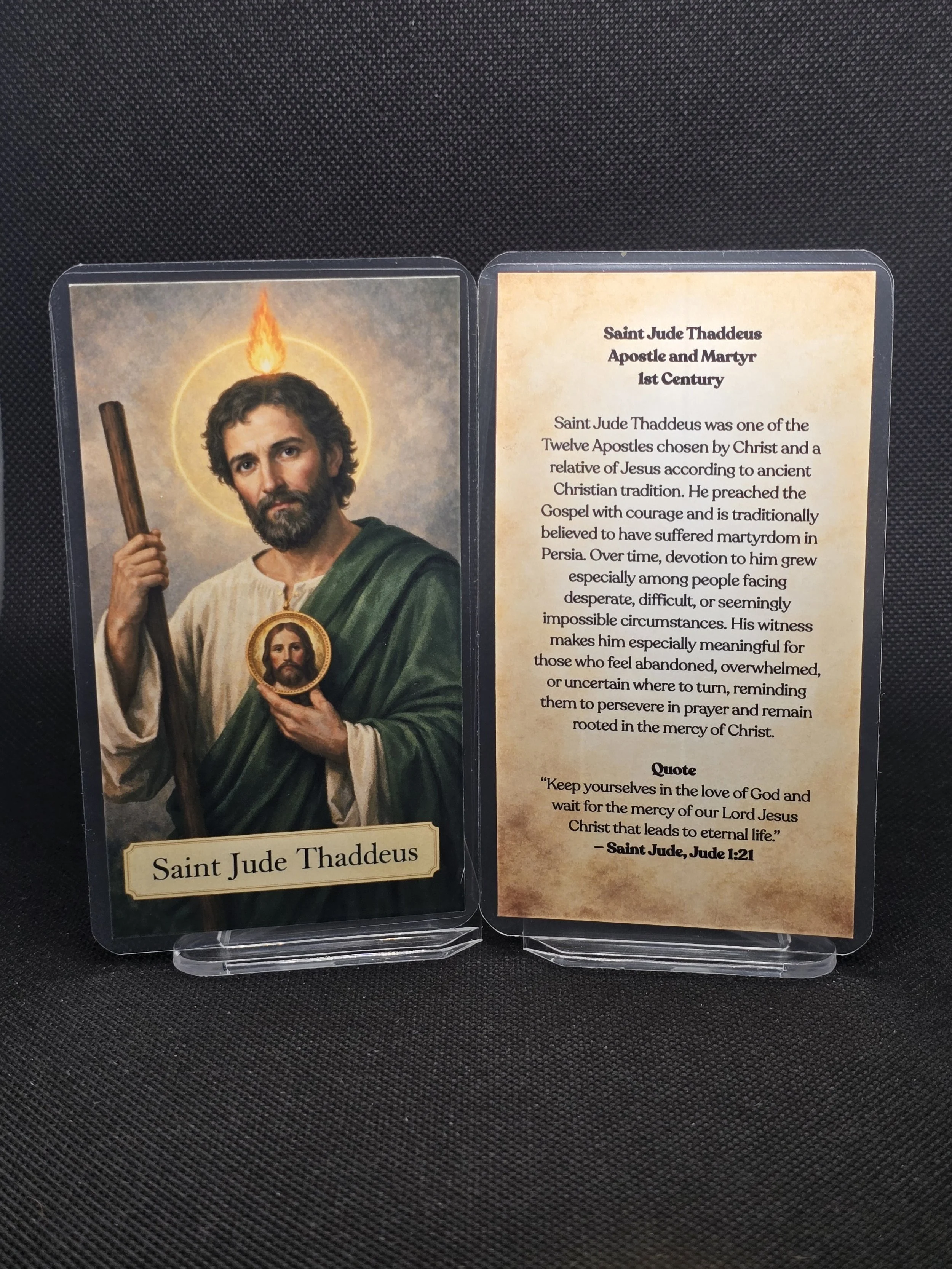
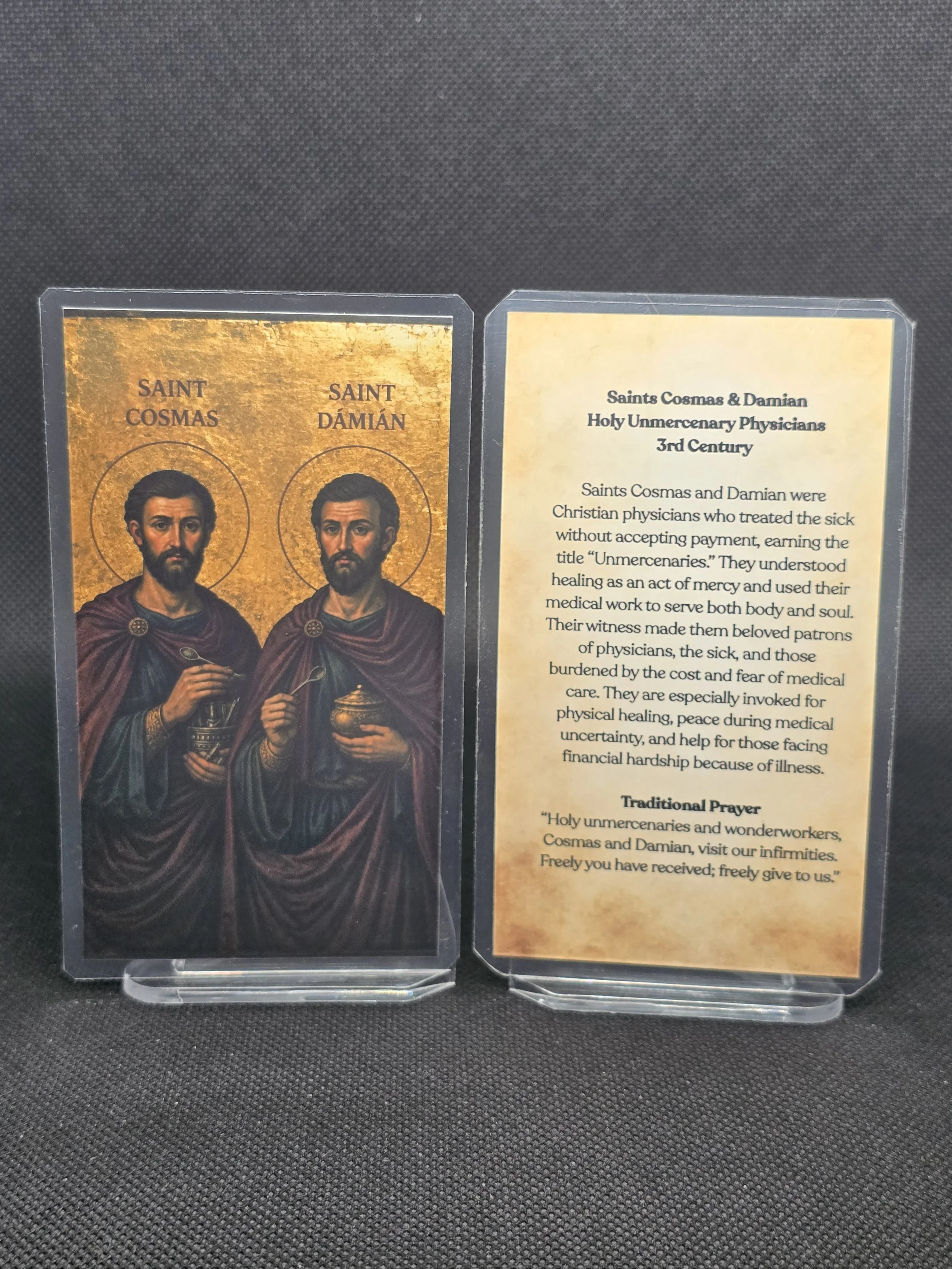
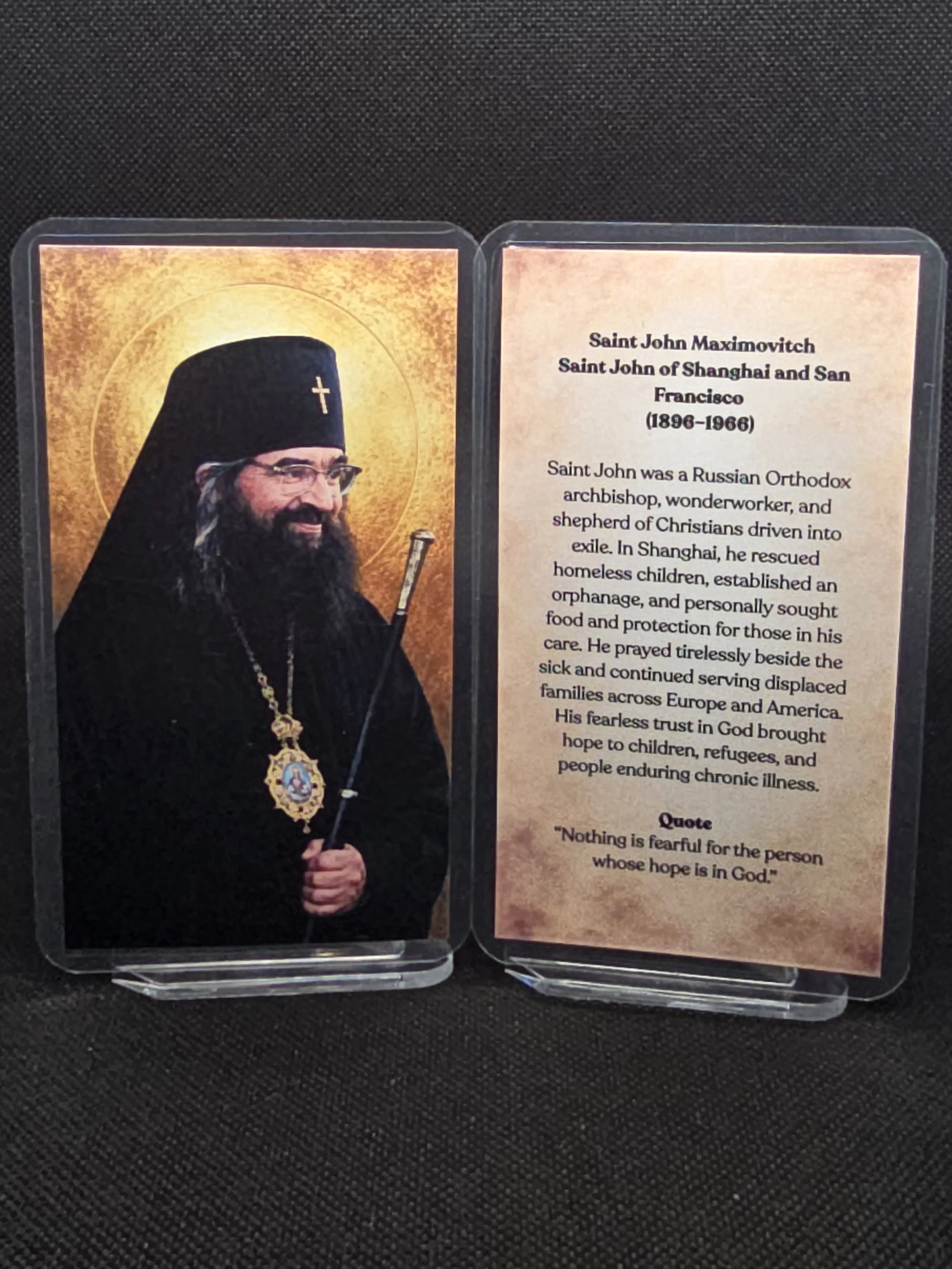
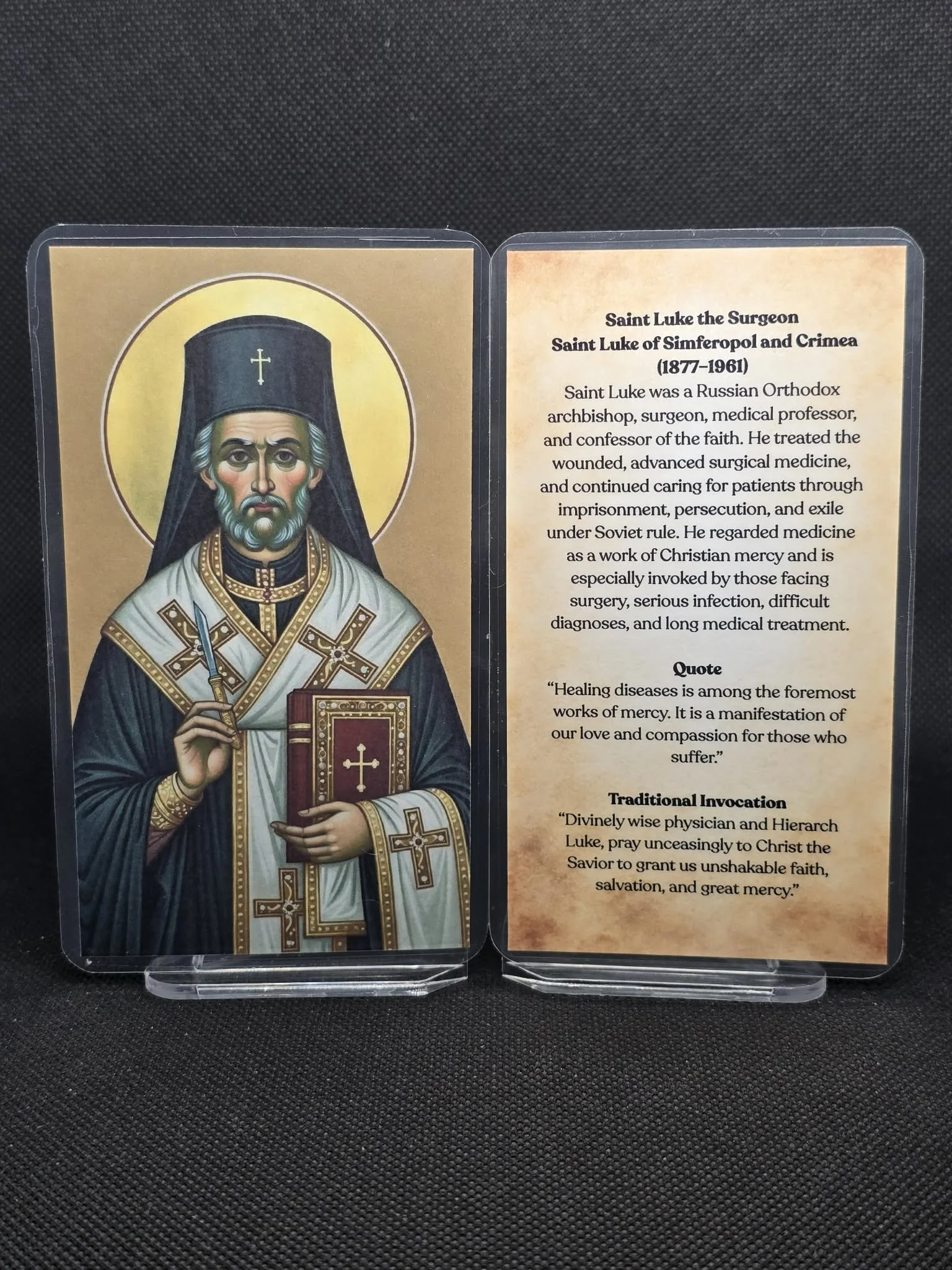
Seven handmade Eastern Catholic and Orthodox prayer cards for those living with chronic pain, invisible illness, and the particular suffering of conditions that do not resolve.
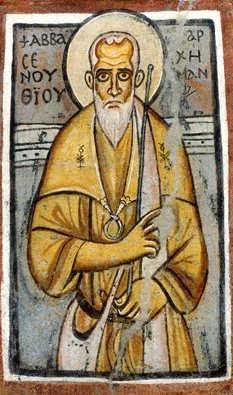
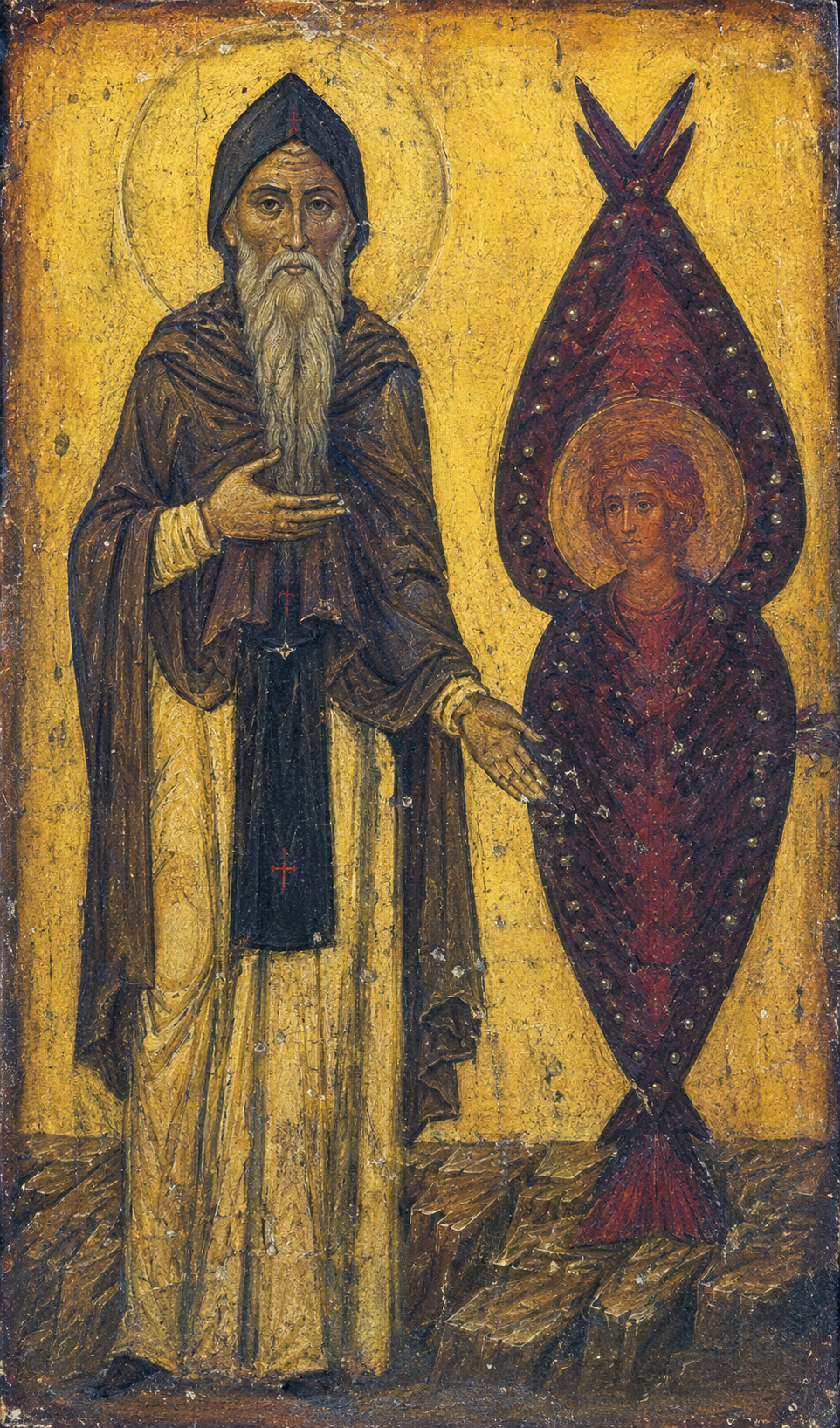
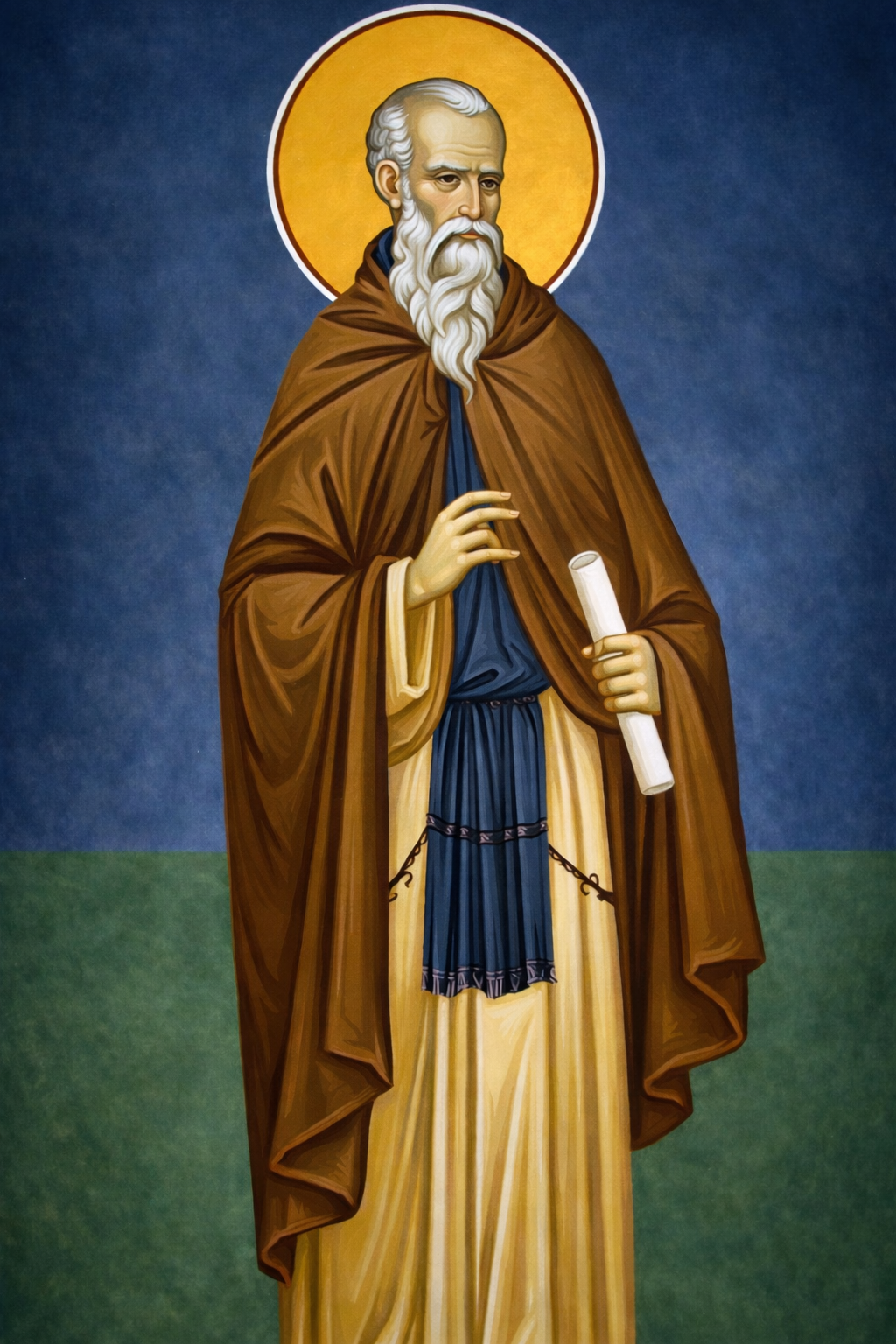
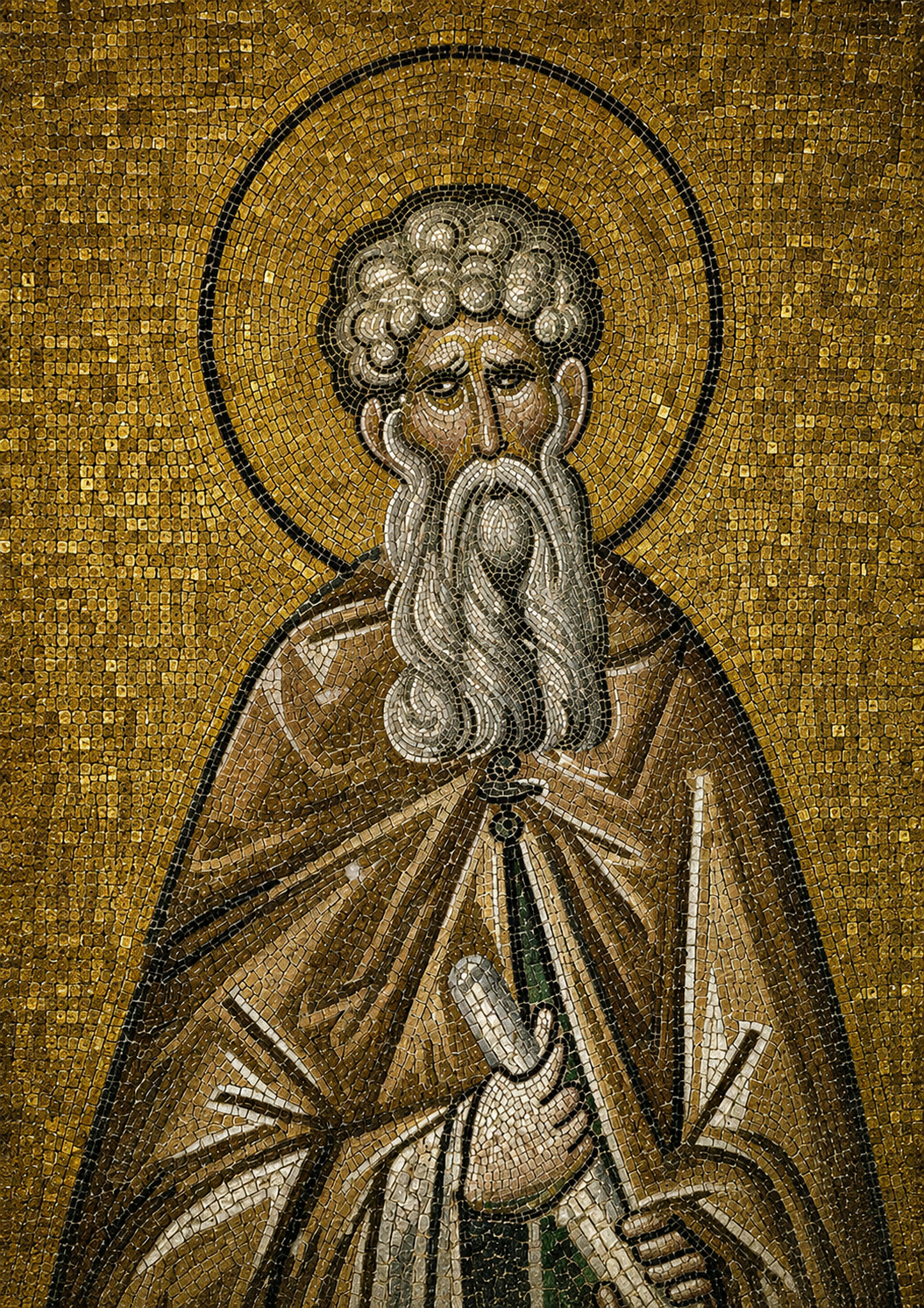
Each card features a full-color icon on the front. On the back: a short historical biography of the saint — who they were, what they suffered, and why the faithful pray to them for chronic pain and long illness — followed by a prayer addressed directly to that saint for endurance, healing, and peace. Cards are standard holy card size (2.5" × 4.25"), handmade in Austin, Texas.
The seven saints in this bundle:
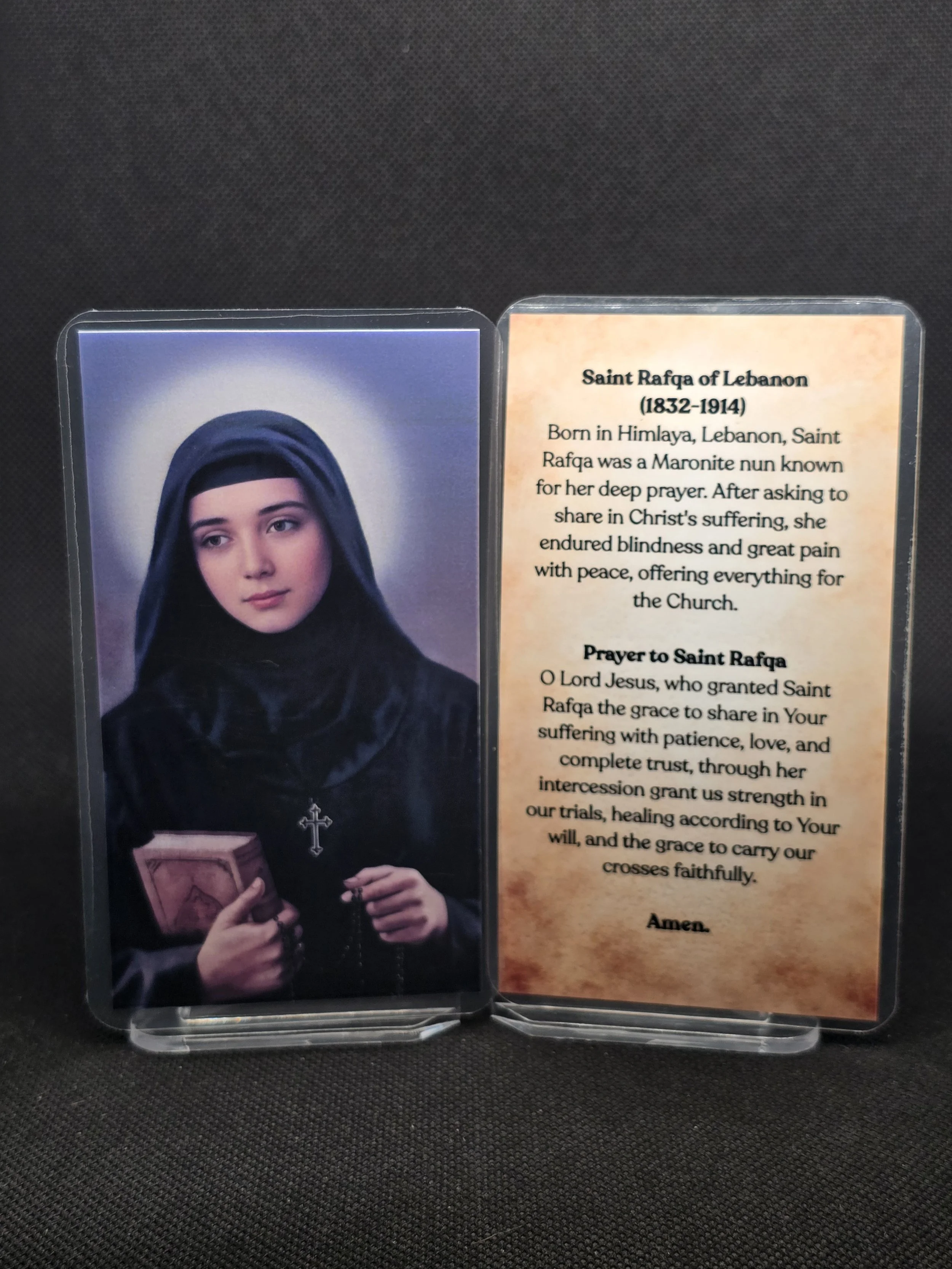
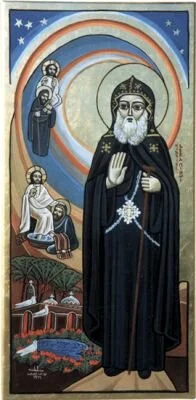
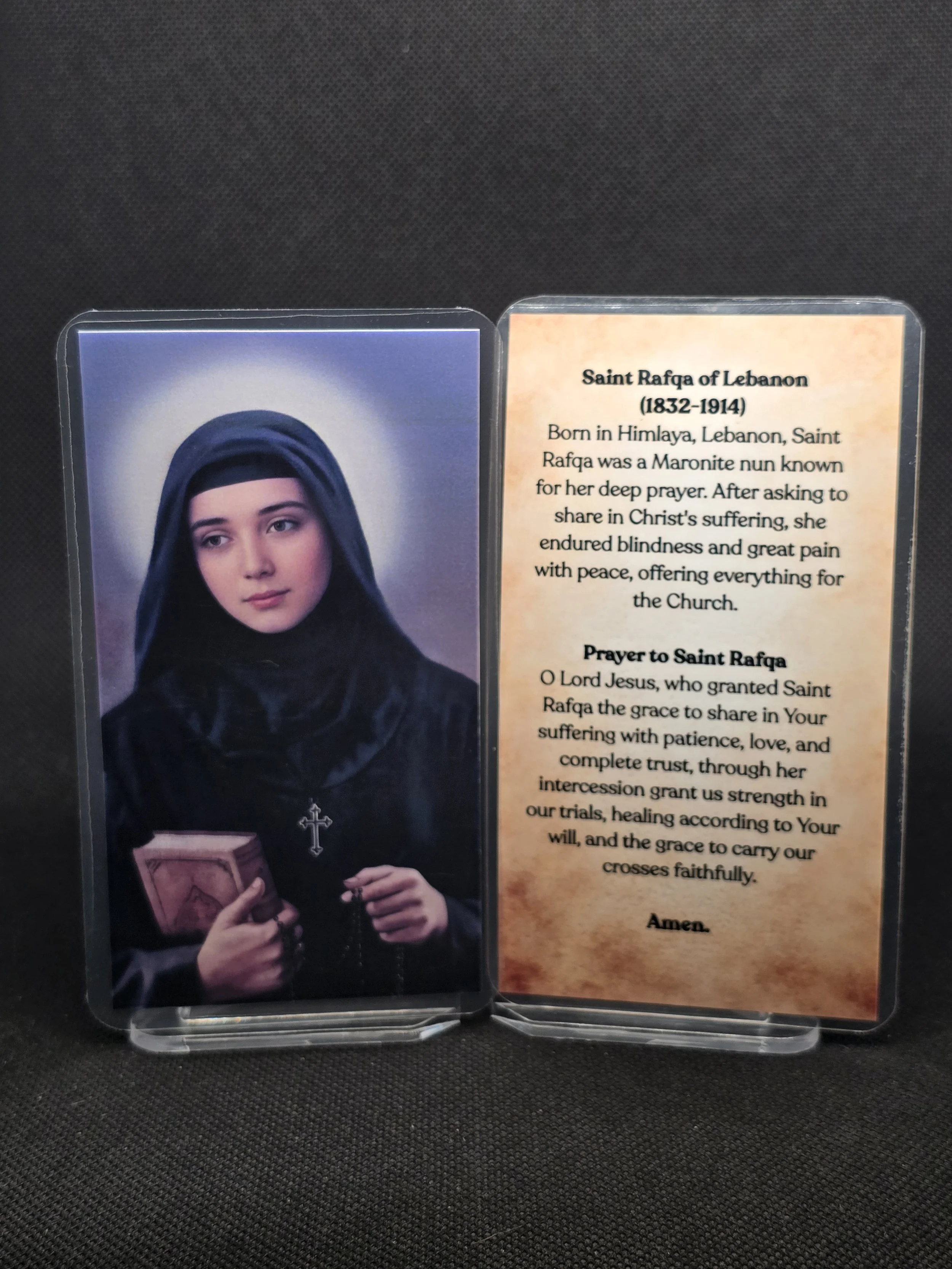
Saint Rafqa of Lebanon — Maronite Catholic. At 53, she prayed explicitly to share in the sufferings of Christ. Within days she began losing her sight; within months, the use of her limbs. She bore 29 years of progressive physical incapacity — voluntarily, joyfully, without complaint. She is the primary Maronite patron of chronic pain and the model for those who have stopped waiting for relief and are asking instead for the grace to carry what they have been given.
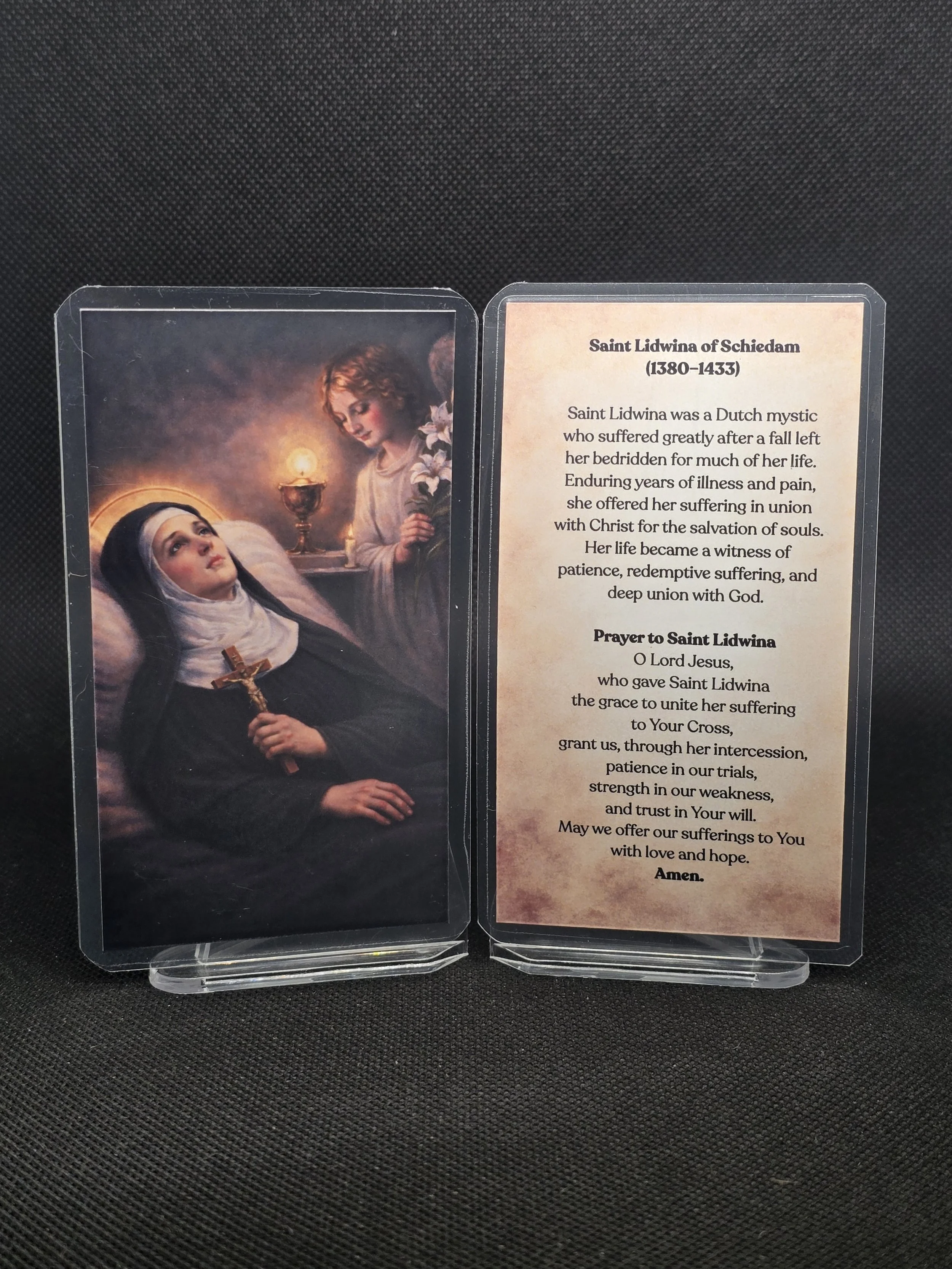
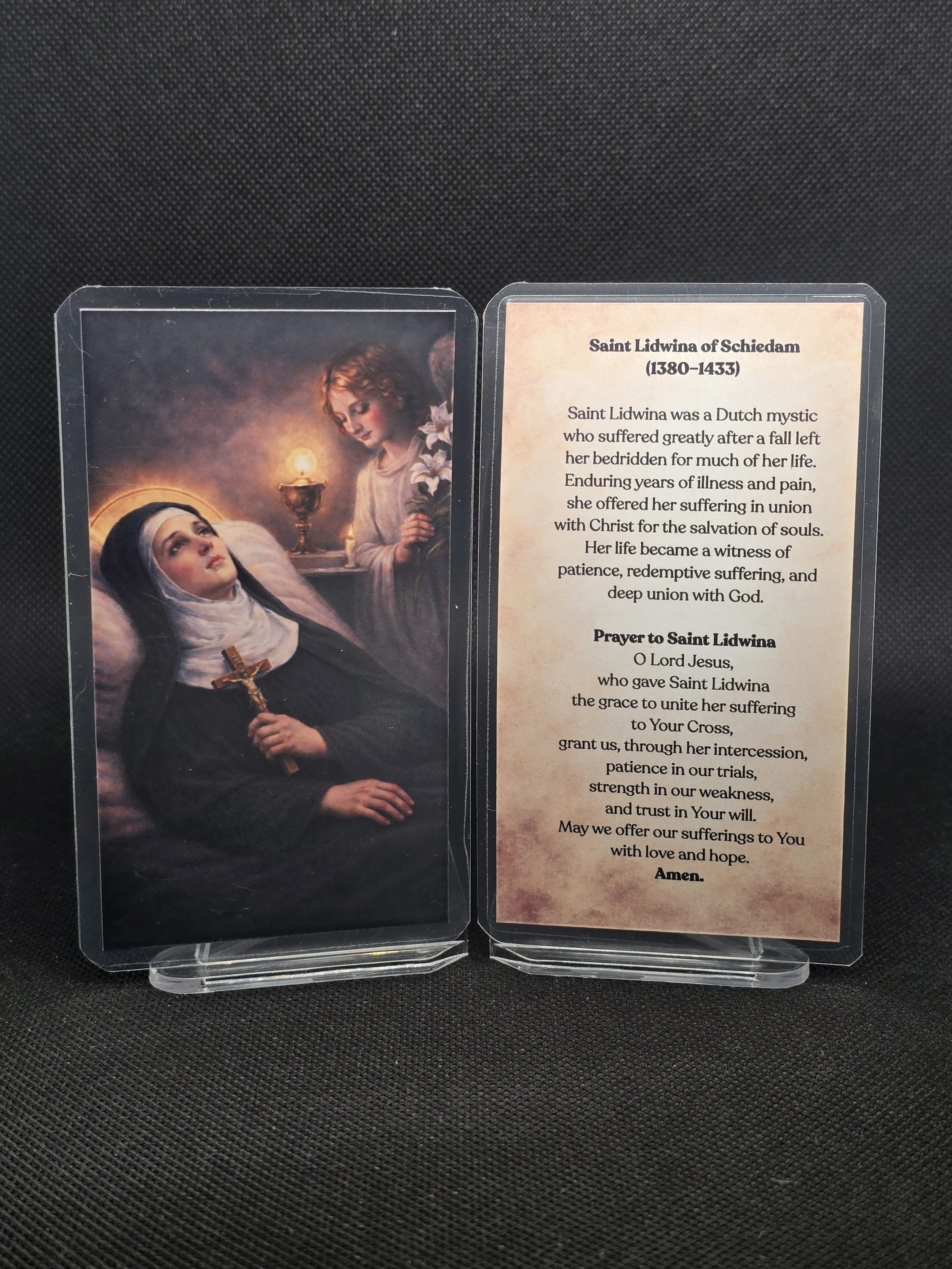
Saint Lidwina of Schiedam — Roman Catholic. A skating accident at 15 led to 38 years of progressive physical deterioration — gangrene, paralysis, blindness, open wounds that would not close. She was doubted and investigated throughout, her suffering questioned by neighbors and officials who could not believe it was as severe as she described. She is the specifically designated patron of chronic pain, disability, and invisible illness — the patron for those whose pain is real but disbelieved.
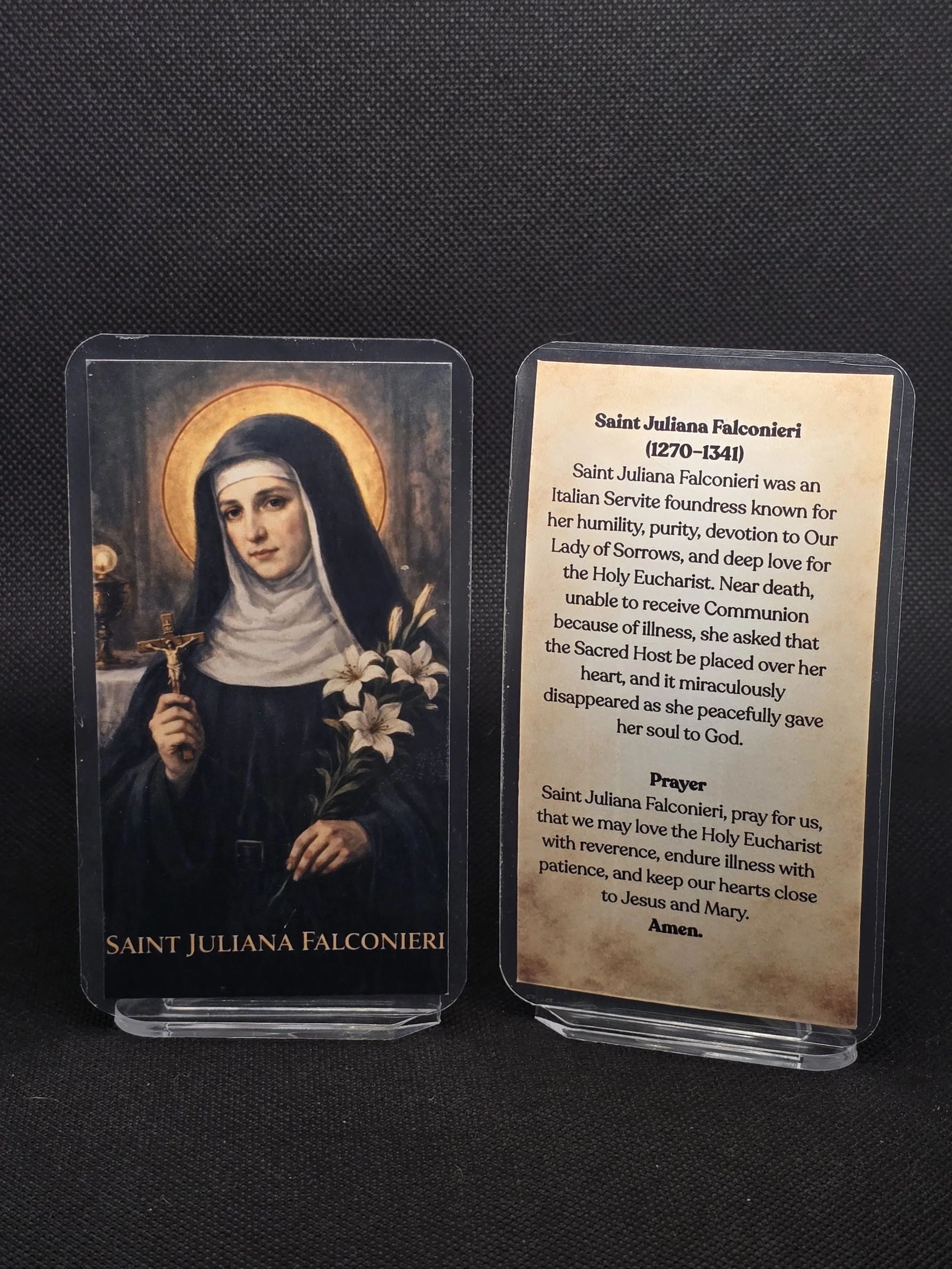
Saint Juliana Falconieri — Roman Catholic. Foundress of the Servite Mantellate, who bore severe digestive illness for most of her adult life — a condition that eventually prevented her from receiving the Eucharist in the normal way. She is the patron for those whose chronic illness has taken something from them that cannot be given back, and for those with chronic digestive conditions specifically.
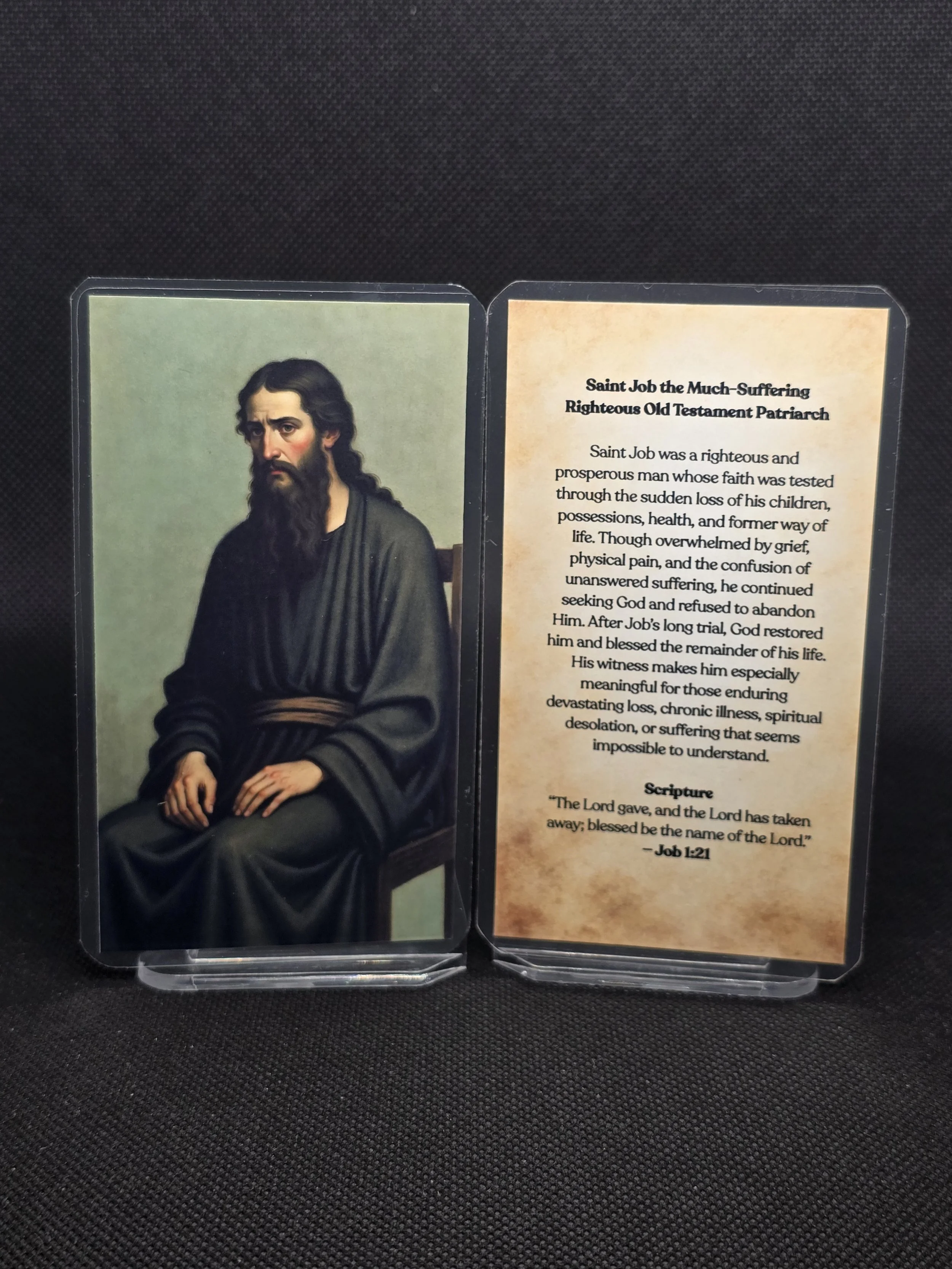
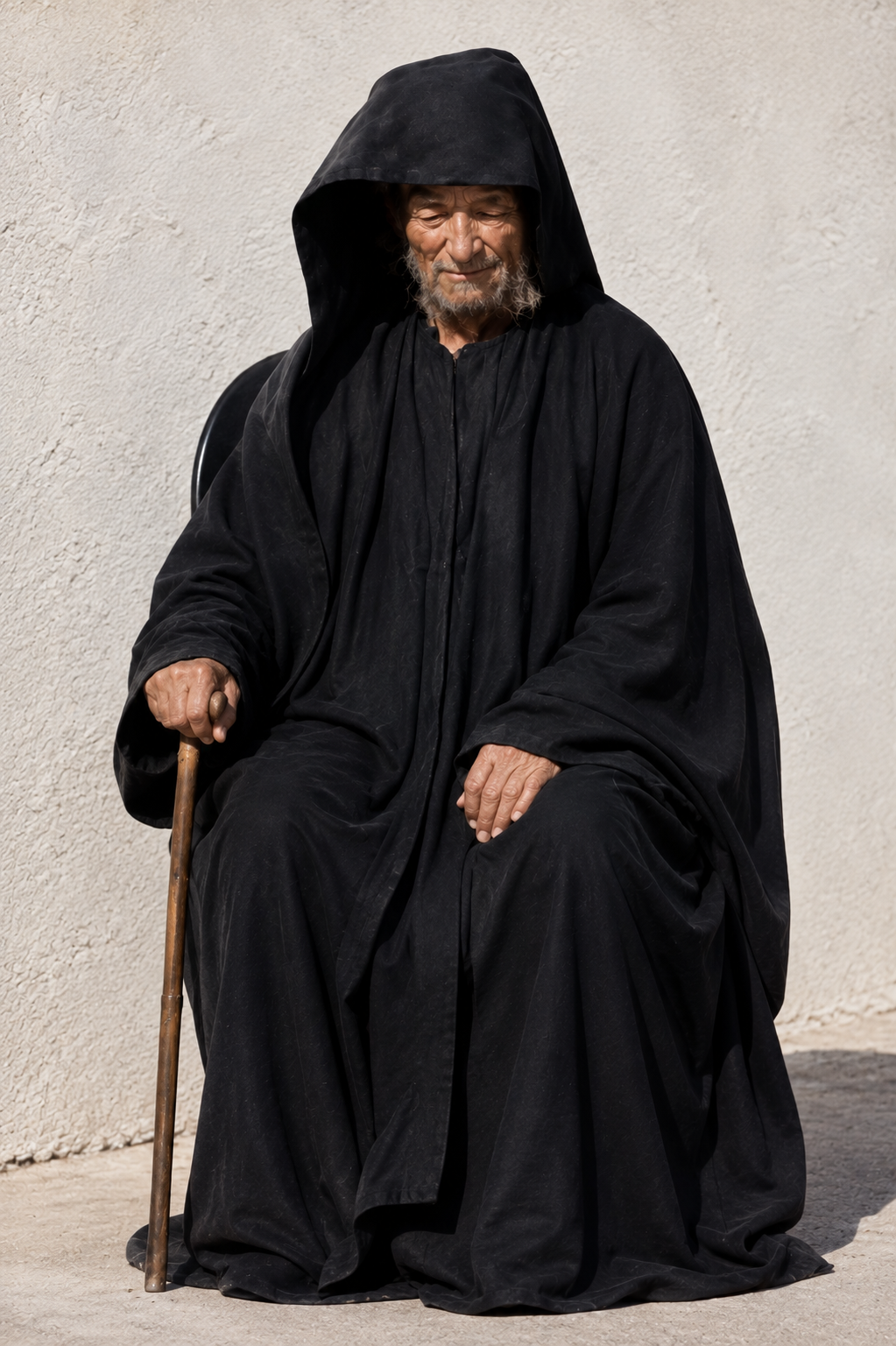
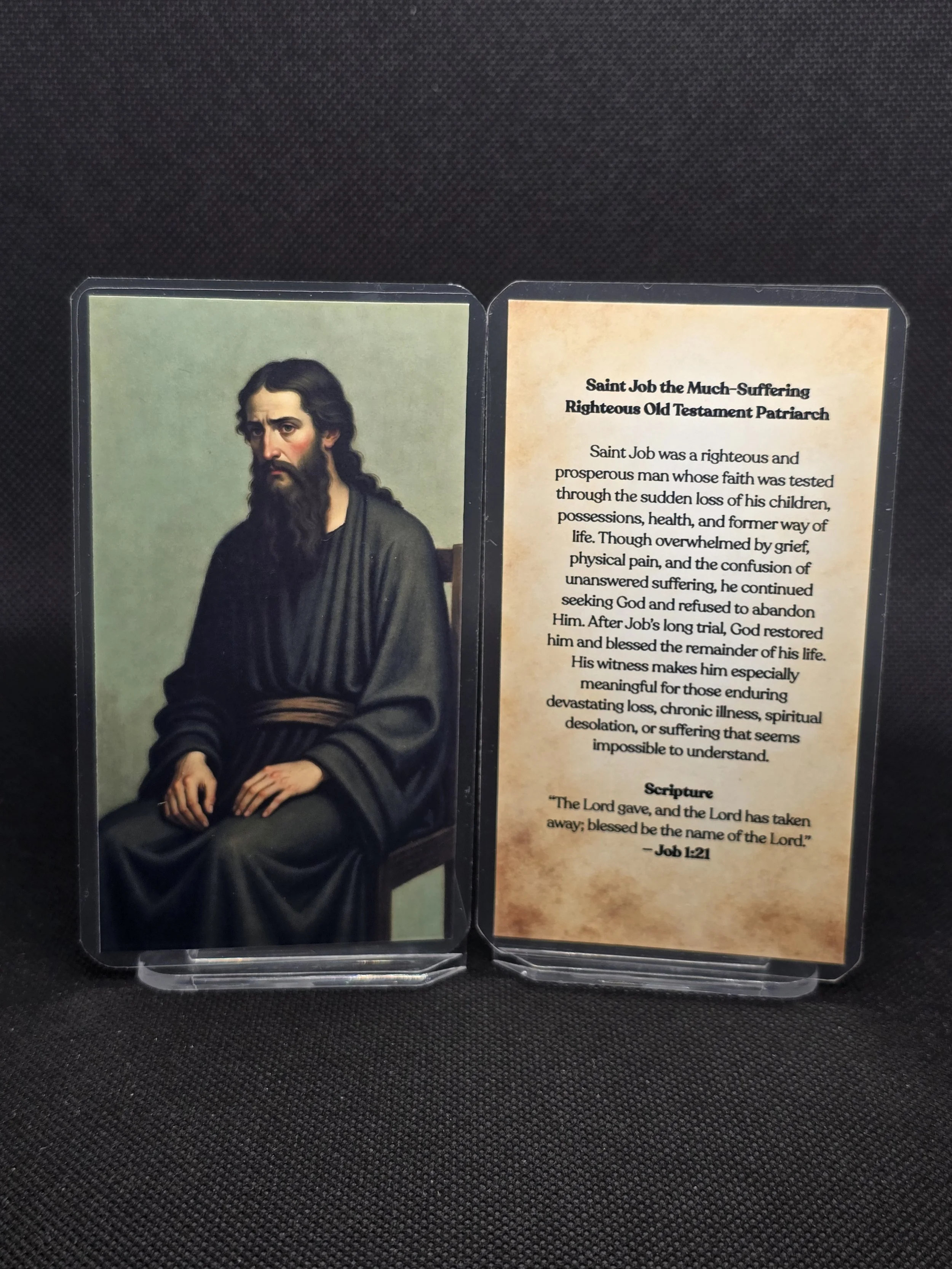
Saint Job the Much-Suffering — Eastern Orthodox. The Old Testament patriarch venerated in the Orthodox tradition — who lost his health, his children, and his comfort without explanation, asked God why with complete honesty, and held on to faith without receiving an answer he could understand. He is the patron for those whose chronic pain makes no theological sense, who have prayed and seen no change, and who are holding on anyway.
Saint Nikephoros the Leper — Eastern Orthodox. Orphaned at a young age, he contracted leprosy as a teenager and spent decades confined to leper colonies, his body slowly disfigured by the disease, isolated by fear and stigma most people never have to face. He bore it with such patience that the Church's hymns compare him directly to Job. Canonized in 2012, he is the patron for those whose illness has changed how others see and treat them — for the isolation that so often accompanies chronic and disfiguring disease.
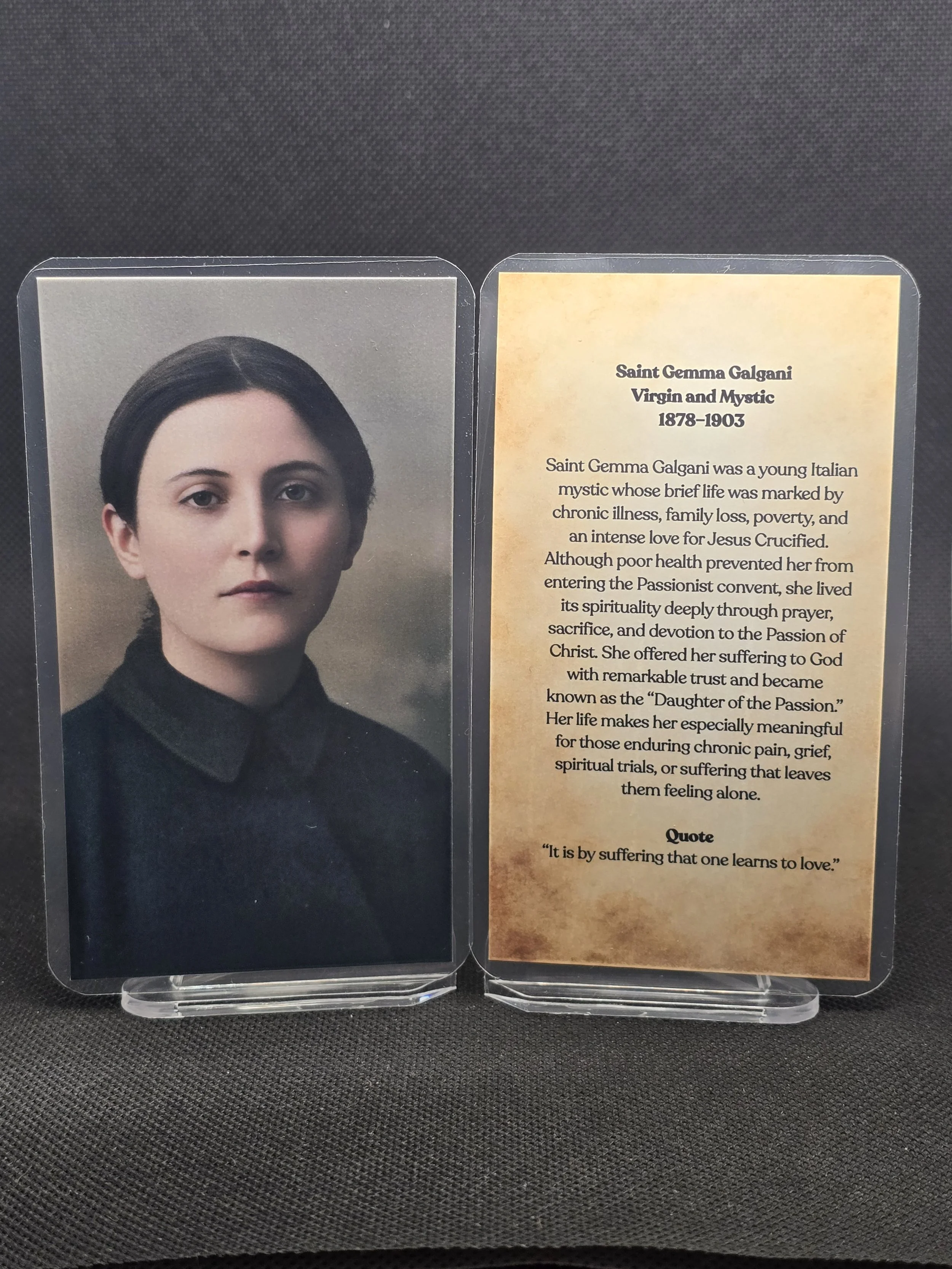
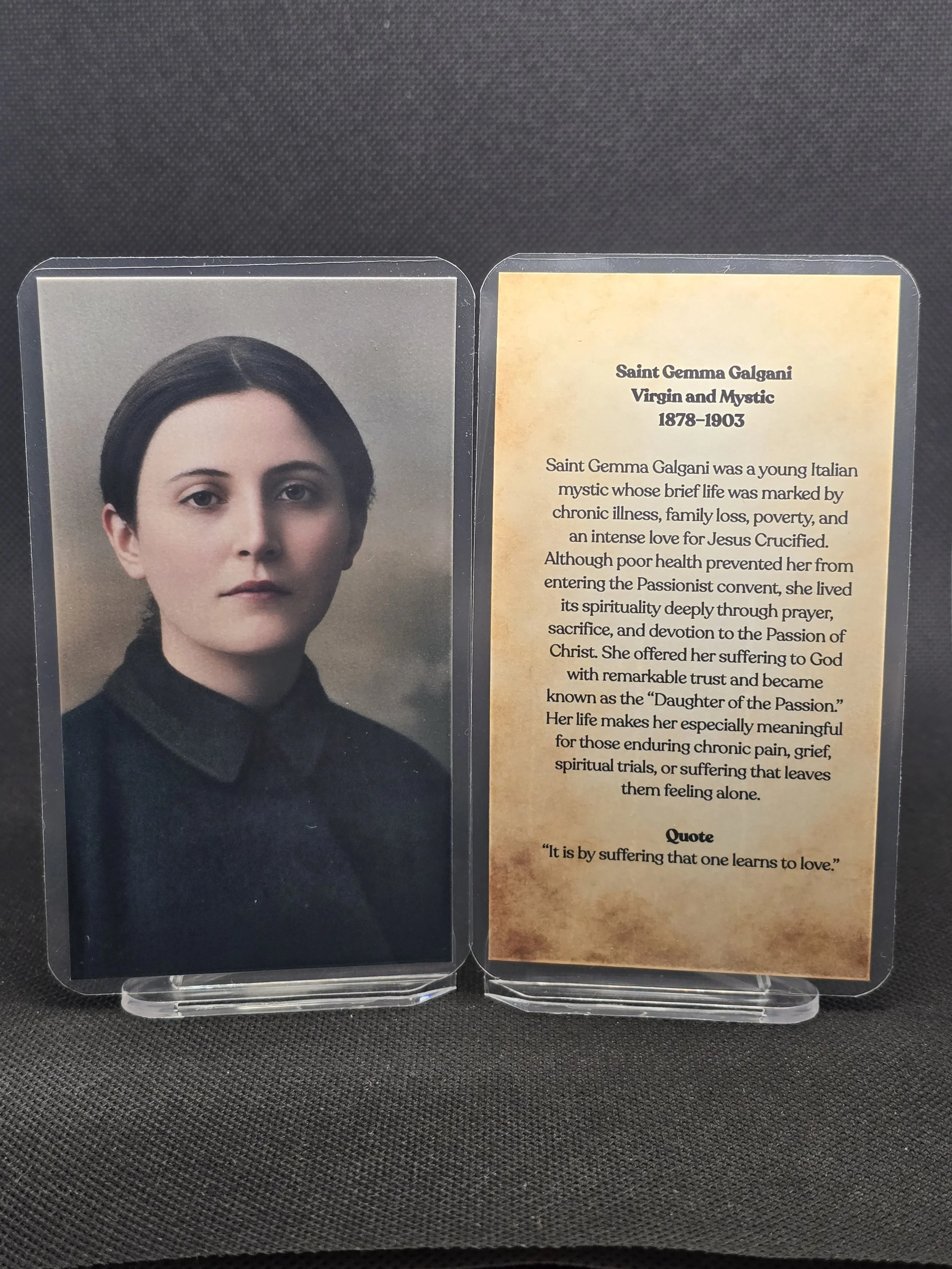
Saint Gemma Galgani — Roman Catholic. A Tuscan mystic who bore tuberculosis of the spine and constant, severe physical pain throughout her short life, dying at twenty-five in 1903. She is invoked by those whose chronic pain is unrelenting and whose bodies have been marked early and permanently by illness — for the young as much as the old, and for those who feel their best years are being taken by pain.
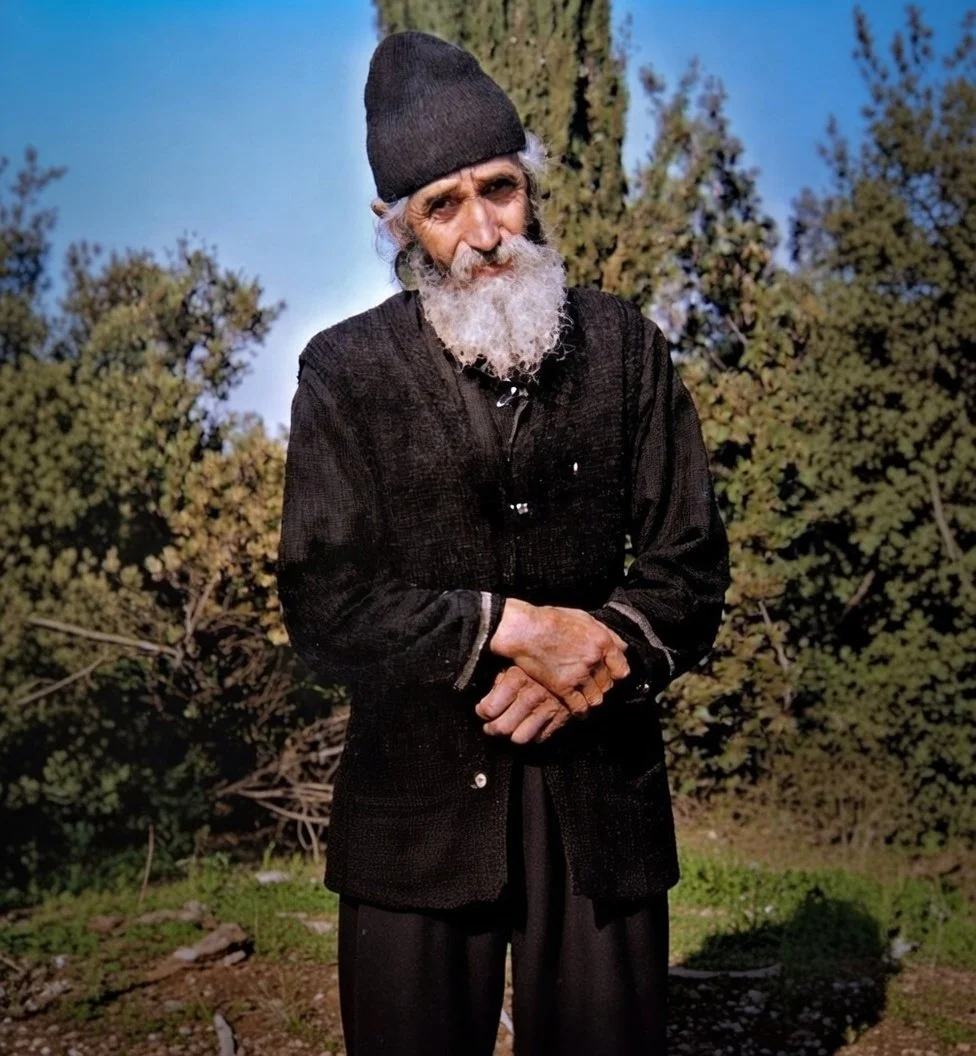
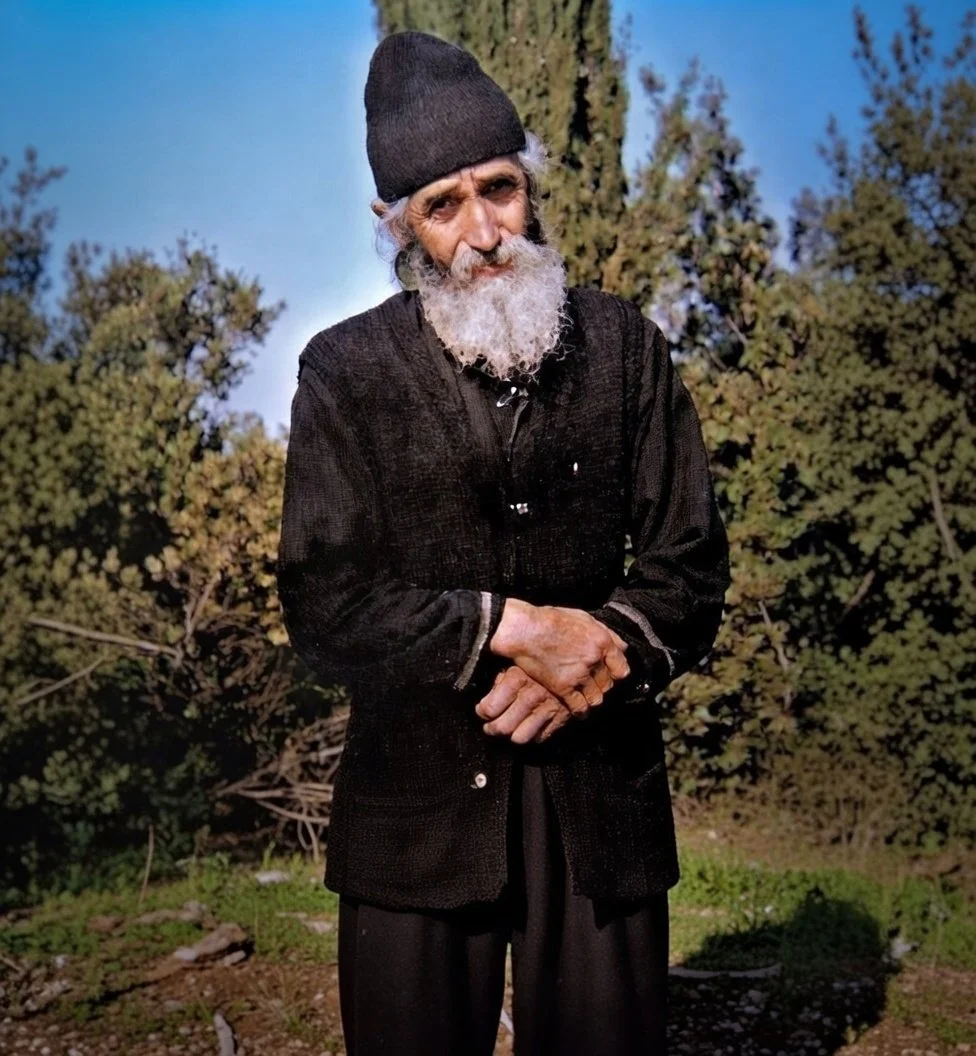
Saint Paisios the Athonite — Eastern Orthodox. The beloved modern elder of Mount Athos, who endured chronic health complications for decades — including a serious hernia condition he refused to have treated for years so he could continue serving pilgrims, and later, stomach cancer, which he bore with the same peace he had counseled in others. Canonized in 2015, he is the patron for those managing long-term illness while still trying to show up for the people who depend on them.
These cards are for the person who has been in pain for years. For the one who has stopped telling people how bad it is. For the caregiver who watches someone they love suffer without being able to fix it. For anyone who needs something to hold when the pain is bad and the night is long.
Seven handmade Eastern Catholic and Orthodox prayer cards for those living with chronic pain, invisible illness, and the particular suffering of conditions that do not resolve.
Each card features a full-color icon on the front. On the back: a short historical biography of the saint — who they were, what they suffered, and why the faithful pray to them for chronic pain and long illness — followed by a prayer addressed directly to that saint for endurance, healing, and peace. Cards are standard holy card size (2.5" × 4.25"), handmade in Austin, Texas.
The seven saints in this bundle:
Saint Rafqa of Lebanon — Maronite Catholic. At 53, she prayed explicitly to share in the sufferings of Christ. Within days she began losing her sight; within months, the use of her limbs. She bore 29 years of progressive physical incapacity — voluntarily, joyfully, without complaint. She is the primary Maronite patron of chronic pain and the model for those who have stopped waiting for relief and are asking instead for the grace to carry what they have been given.
Saint Lidwina of Schiedam — Roman Catholic. A skating accident at 15 led to 38 years of progressive physical deterioration — gangrene, paralysis, blindness, open wounds that would not close. She was doubted and investigated throughout, her suffering questioned by neighbors and officials who could not believe it was as severe as she described. She is the specifically designated patron of chronic pain, disability, and invisible illness — the patron for those whose pain is real but disbelieved.
Saint Juliana Falconieri — Roman Catholic. Foundress of the Servite Mantellate, who bore severe digestive illness for most of her adult life — a condition that eventually prevented her from receiving the Eucharist in the normal way. She is the patron for those whose chronic illness has taken something from them that cannot be given back, and for those with chronic digestive conditions specifically.
Saint Job the Much-Suffering — Eastern Orthodox. The Old Testament patriarch venerated in the Orthodox tradition — who lost his health, his children, and his comfort without explanation, asked God why with complete honesty, and held on to faith without receiving an answer he could understand. He is the patron for those whose chronic pain makes no theological sense, who have prayed and seen no change, and who are holding on anyway.
Saint Nikephoros the Leper — Eastern Orthodox. Orphaned at a young age, he contracted leprosy as a teenager and spent decades confined to leper colonies, his body slowly disfigured by the disease, isolated by fear and stigma most people never have to face. He bore it with such patience that the Church's hymns compare him directly to Job. Canonized in 2012, he is the patron for those whose illness has changed how others see and treat them — for the isolation that so often accompanies chronic and disfiguring disease.
Saint Gemma Galgani — Roman Catholic. A Tuscan mystic who bore tuberculosis of the spine and constant, severe physical pain throughout her short life, dying at twenty-five in 1903. She is invoked by those whose chronic pain is unrelenting and whose bodies have been marked early and permanently by illness — for the young as much as the old, and for those who feel their best years are being taken by pain.
Saint Paisios the Athonite — Eastern Orthodox. The beloved modern elder of Mount Athos, who endured chronic health complications for decades — including a serious hernia condition he refused to have treated for years so he could continue serving pilgrims, and later, stomach cancer, which he bore with the same peace he had counseled in others. Canonized in 2015, he is the patron for those managing long-term illness while still trying to show up for the people who depend on them.
These cards are for the person who has been in pain for years. For the one who has stopped telling people how bad it is. For the caregiver who watches someone they love suffer without being able to fix it. For anyone who needs something to hold when the pain is bad and the night is long.