 Image 1 of 1
-
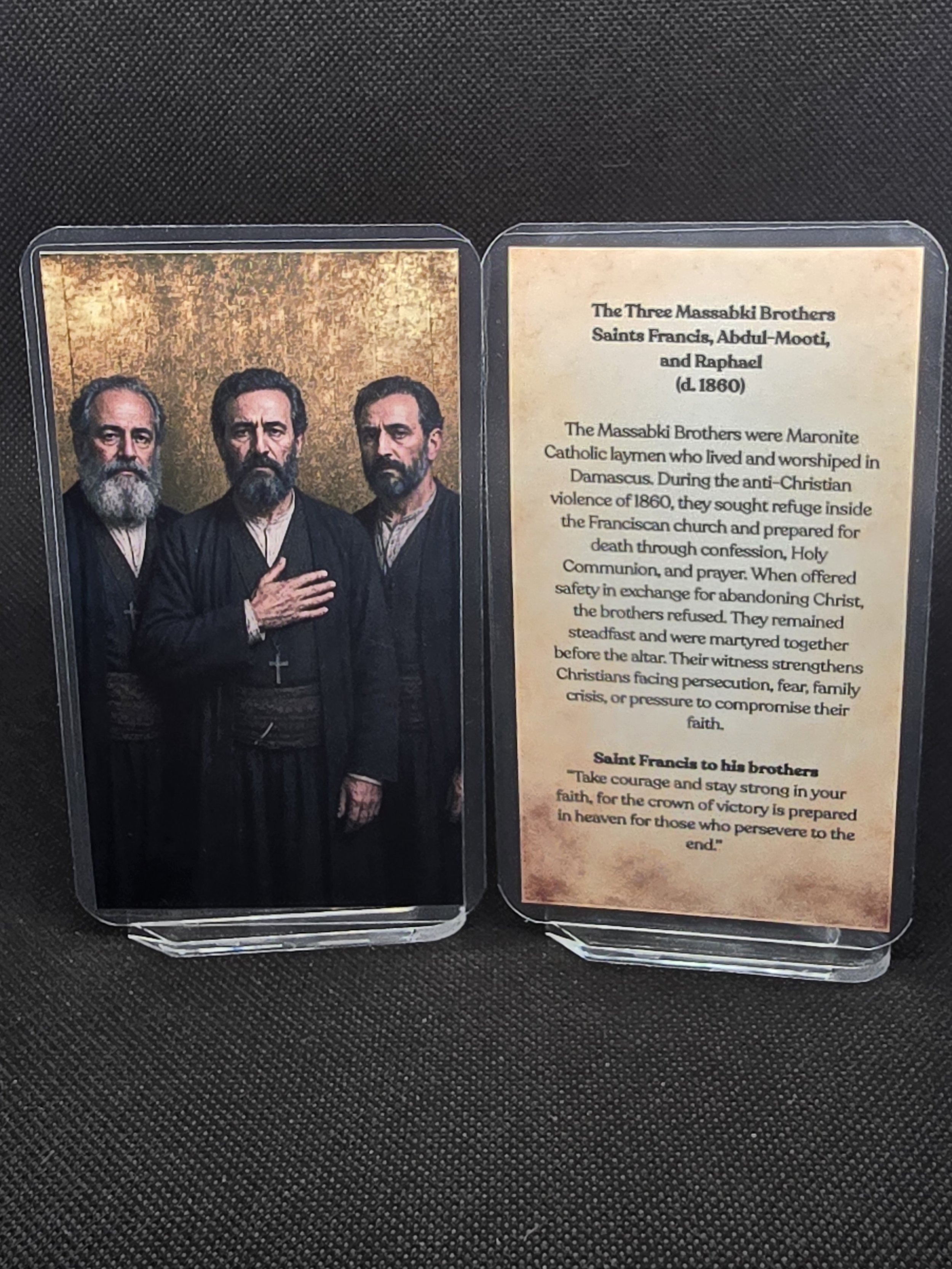
Francis, Abdel Mohti, and Raphael Massabki were born into a devout Maronite Catholic family in Damascus, Syria. They were raised in prayer, shaped by the Divine Liturgy, and taught that faith was not something private. It was something lived.
They worked honest trades, cared for relatives, and remained deeply involved in parish life. Their home was known as a place of hospitality. They assisted priests, helped the poor, and quietly supported fellow Christians.
Their holiness was not dramatic.
It was consistent.
In July of 1860, violent riots erupted against Christians in Damascus. What began as unrest quickly became organized slaughter. Churches were torched. Homes were invaded. Thousands were killed.
The Massabki Brothers were at the Franciscan monastery when attackers arrived.
They were given a choice.
Renounce Christ and live.
Remain Christian and die.
They did not hesitate.
They refused to deny Jesus.
One by one, they were murdered inside the monastery, along with other Christians who had taken refuge there. Witnesses later testified that the brothers faced death with prayer on their lips and peace in their eyes.
They died as they lived.
Faithful.
Their martyrdom became a beacon for Middle Eastern Christians and for Maronite families worldwide, reminding believers that fidelity to Christ sometimes demands everything.
-
The Massabki Brothers are remembered as powerful intercessors for persecuted Christians and families living under spiritual or physical threat.
They are especially beloved by those whose faith is publicly challenged.
Patrons Of:
Courage under religious persecution
Christians living in hostile environments
Families threatened for their faith
Standing firm when pressured to renounce Christ
Middle Eastern Christians
Public witness to Jesus
Remaining faithful during violence or discrimination
Miracles and Ongoing Intercession
While their greatest miracle was their unwavering witness, many believers today testify to peace during persecution, courage in moments of fear, and renewed strength to remain Christian openly after praying through the Massabki Brothers.
Families describe unexpected protection.
Believers speak of boldness returning.
Others experience calm when facing hostility.Their miracles arrive quietly.
They come as steady courage.
They come as resolve not to hide faith.
They come as Christ strengthening hearts in dangerous places.The Massabki Brothers teach that martyrdom does not belong only to history.
It belongs to anyone who chooses Christ when it costs.
-
Traditional Prayer
Holy Martyrs Francis, Abdel Mohti, and Raphael Massabki, faithful witnesses of Christ, pray for us. Intercede for persecuted Christians, strengthen our courage, and help us remain faithful in every trial. Amen.
Personal Prayer
Holy Massabki Brothers, courageous sons of the Church, pray for me.
You lived ordinary lives.
You served quietly.
You stood firm when death arrived.I bring you my fear.
If I feel pressured to hide my faith, give courage.
If hostility surrounds me, grant peace.
If my family feels threatened, protect us.Teach me how to confess Christ without shame.
Teach me how to remain faithful when it is uncomfortable.
Teach me how to trust God when safety feels fragile.Stand beside Christians who live under threat.
Stand beside families afraid to worship openly.
Stand beside anyone struggling to choose Jesus in hostile places.Holy Martyrs, you refused to deny Christ.
By your intercession, may Christ strengthen my faith, guard my family, and help me stand firm no matter the cost.
Amen.
-
Q: What are the Massabki Brothers known for?
They are known as Maronite Catholic laymen who were martyred in Damascus in 1860 after refusing to renounce their Christian faith.Q: When is the Massabki Brothers’ feast day?
They are commemorated on July 10.Q: Which Christian traditions venerate the Massabki Brothers?
They are honored primarily in the Maronite Catholic Church and Eastern Catholic communities.Q: Why do people pray to the Massabki Brothers for persecution or courage?
Because they personally chose Christ over life itself. Many seek their intercession when facing religious hostility, family pressure, or fear of openly living their faith.