 Image 1 of 1
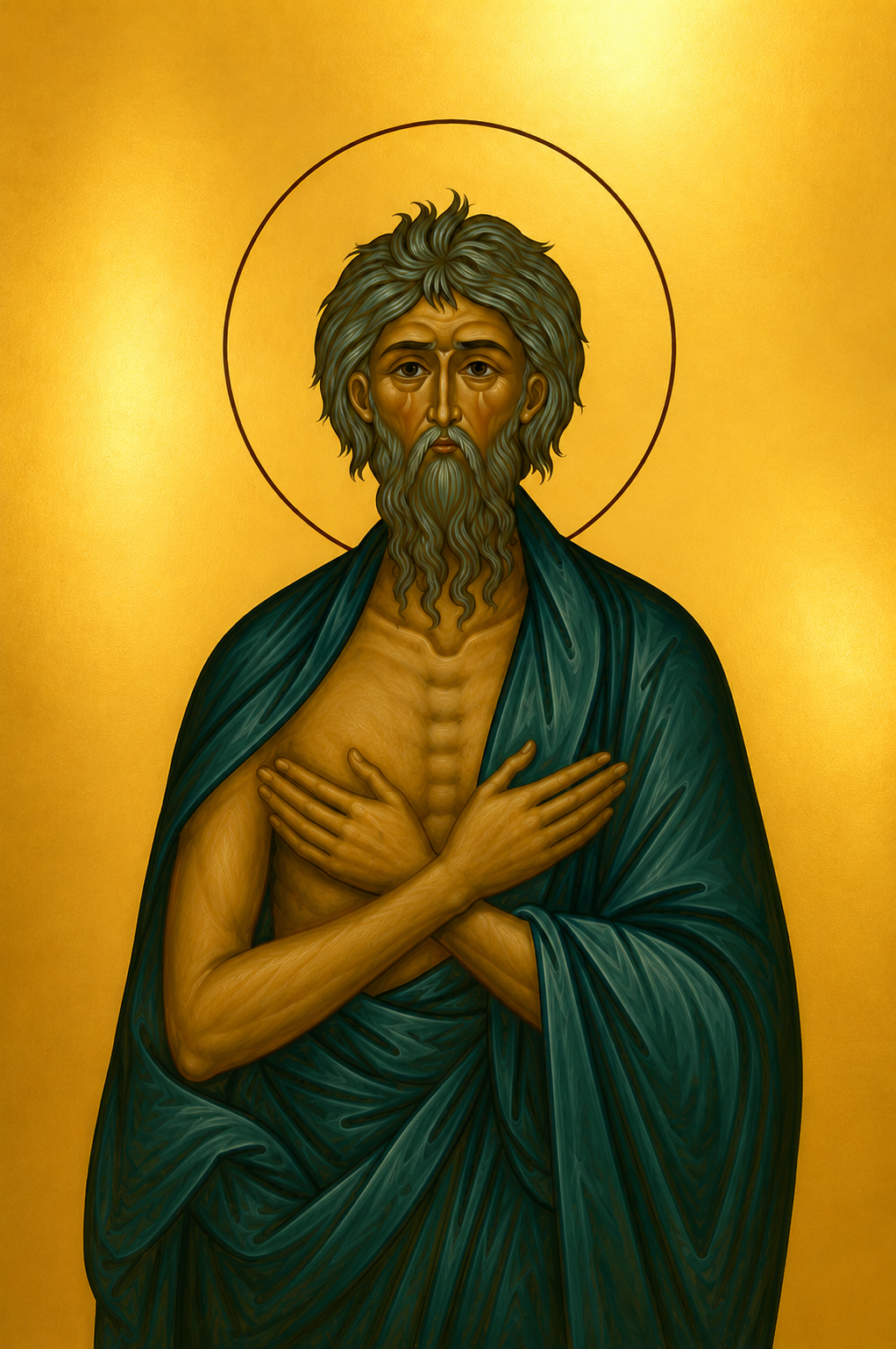
Saint Andrew the Fool-for-Christ of Constantinople Prayer Card – Patron for Mental Distress, Social Rejection & Courage to Live Faithfully in a Broken World
-
From Captivity to Consecration
Saint Andrew was born in the region of Scythia and taken captive as a youth. Eventually he entered the household of a nobleman in Constantinople, where he received Christian instruction and was baptized.
Though intelligent and capable, Andrew chose a far stranger path.
He deliberately embraced holy foolishness.
He abandoned comfort, wore rags, and wandered the streets pretending madness. He slept outdoors, begged for scraps, and allowed himself to be mocked and beaten. People laughed at him. Some treated him cruelly.
Andrew accepted everything in silence.
He had chosen to die to the world.
Holy Foolishness and Ceaseless Prayer
By day, Andrew appeared incoherent and unpredictable. By night, he withdrew to deserted places to pray for hours, offering tears for the city and its people.
He fasted constantly.
He gave away food meant for himself.
He endured freezing winters barefoot.
Behind the mask of foolishness lived a man of deep spiritual perception.
Andrew could discern hidden sins, comfort the grieving with a single word, and warn people of dangers before they arrived. Those who approached him sincerely discovered peace returning to their hearts.
Though outwardly homeless, he became a hidden pillar of Constantinople.
The Vision That Changed Christian History
Saint Andrew is forever associated with the miracle of the Protecting Veil of the Mother of God.
During an all-night vigil at the Blachernae Church, Andrew and his disciple Saint Epiphanius of Constantinople witnessed the Theotokos entering the church surrounded by angels and saints. She knelt in prayer, then spread her veil over the faithful as a sign of divine protection.
Andrew turned to Epiphanius and asked if he saw her.
He did.
This vision became the foundation of the Feast of the Protection (Pokrov), proclaiming that heaven actively shelters God’s people in times of danger.
The homeless fool had been granted sight into eternity.
Comforter of the Poor and Broken
Saint Andrew had special compassion for beggars, widows, and those crushed by poverty. He prayed over homes in crisis. He carried emotional suffering silently. Many testified that after encountering him, help arrived unexpectedly: food appeared, shelter opened, or despair lifted.
He lived without possessions.
He sought no recognition.
He poured himself out for strangers.
Saint Andrew eventually reposed peacefully, leaving behind no writings, only living testimony that God works powerfully through those who vanish from attention.
-
Saint Andrew the Fool-for-Christ is especially sought by those facing housing insecurity, financial collapse, and spiritual confusion.
Patron Saint Of:
Protection of the home and family
Extreme poverty and homelessness
Spiritual clarity during confusion or despair
The poor and forgotten
Families in crisis
Souls battling fear
Those seeking repentance and mercy
Recorded Miracles and Intercessions
Saint Andrew’s greatest miracle is witnessing the Protecting Veil of the Mother of God, revealing divine shelter over the faithful.
Local tradition also preserves accounts of families receiving unexpected provision after invoking his intercession.
Some testify that homelessness or imminent eviction was suddenly averted through help arriving from unlikely sources.
Others speak of emotional peace returning after seasons of anxiety or hopelessness.
There are stories of people gaining clarity in major life decisions after praying to Saint Andrew during times of spiritual darkness.
His miracles are gentle rescues: doors opening, fear dissolving, hearts steadied when everything feels lost.
Saint Andrew does not announce himself.
He brings mercy.
-
Personal Prayer
Holy Saint Andrew the Fool-for-Christ, hidden intercessor and witness of heaven’s protection, pray for me. Intercede for my financial struggles, my need for shelter, and the confusion within my heart. Cover my home and family with God’s mercy. Bring peace where there is fear and clarity where there is darkness. By thy prayers, may despair give way to hope through Christ our Lord. Amen.
-
Q: What is Saint Andrew the Fool-for-Christ known for?
Saint Andrew is known for holy foolishness, protecting the poor through prayer, and witnessing the miraculous Protecting Veil of the Mother of God. He is especially remembered for helping those facing homelessness, financial desperation, and spiritual confusion.
Q: When is Saint Andrew’s feast day?
Saint Andrew the Fool-for-Christ of Constantinople is commemorated on October 2 (Old Style) / October 15 (New Style).
Q: Which Christian traditions venerate Saint Andrew the Fool-for-Christ?
Saint Andrew is venerated within the Eastern Orthodox Church, particularly in Byzantine spiritual tradition.
Q: What makes Saint Andrew spiritually unique?
Saint Andrew lived outwardly as a beggar while inwardly standing before heaven. Unlike many saints remembered for preaching or writing, he revealed God through disappearance. His life teaches that divine protection often flows through those who surrender everything, becoming invisible so others may live.