 Image 1 of 1
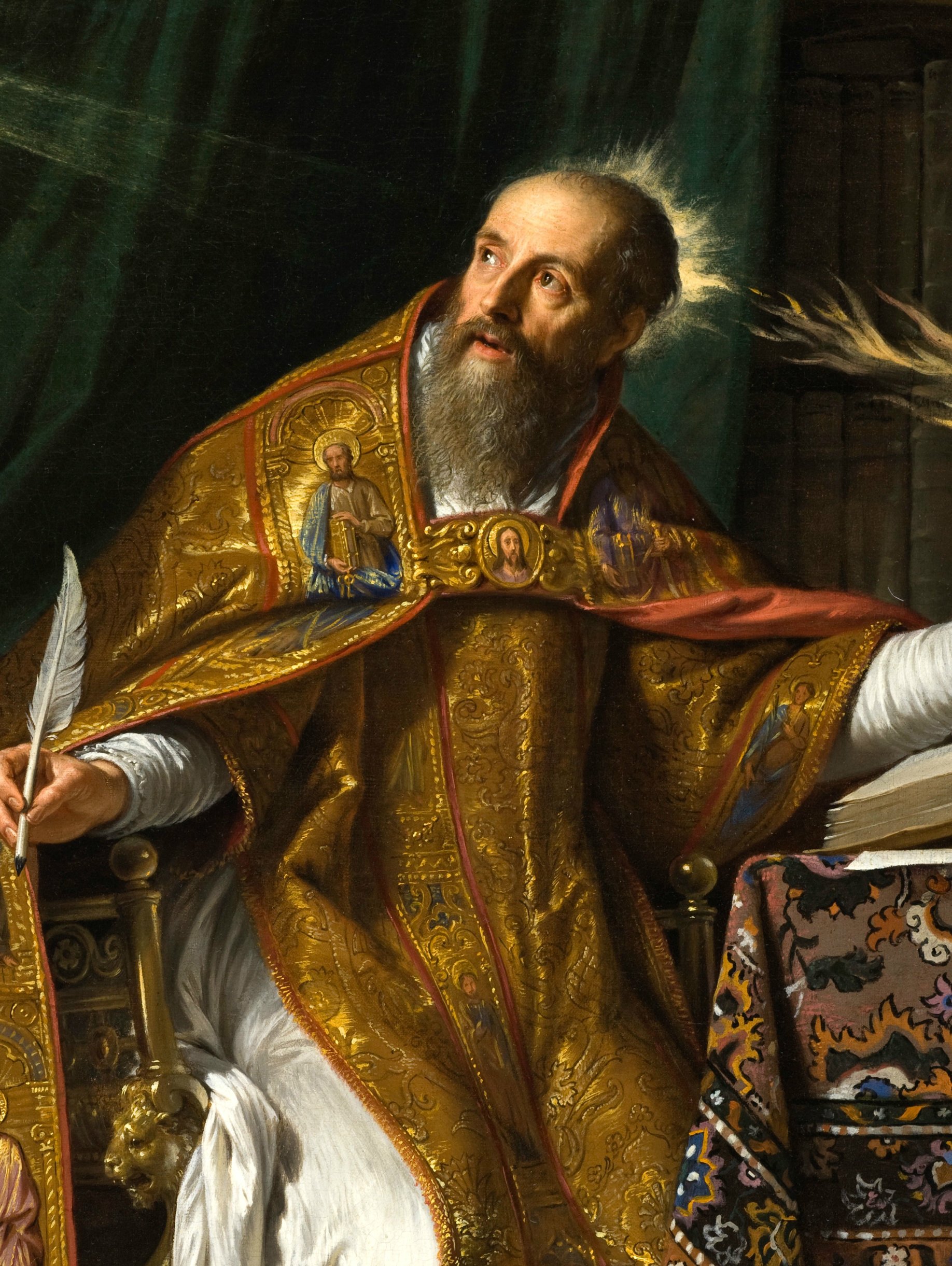
Saint Augustine of Hippo Prayer Card — Patron of Conversion, Restless Hearts & Seekers of Truth
Saint Augustine of Hippo was a bishop, theologian, philosopher, Church Father, and Doctor of the Church whose conversion became one of Christianity’s greatest testimonies to the patience and mercy of God. After spending years pursuing intellectual recognition, worldly pleasure, false religion, and personal ambition, Augustine surrendered his life to Christ and became one of the most influential Christian thinkers in history. His feast is celebrated on August 28.
Born in AD 354 in Thagaste, North Africa, Augustine possessed an extraordinary intellect and became a gifted teacher of rhetoric. Although his mother, Saint Monica, raised him in the shadow of the Christian faith, Augustine resisted conversion. He entered a long relationship with a woman outside of marriage, fathered a son named Adeodatus, and spent approximately nine years following Manichaeism, a religion that claimed to explain the struggle between good and evil.
Throughout these years, Saint Monica continued to pray for him. She watched her son wander through sin, pride, and spiritual confusion, but she never surrendered her hope that God would bring him home. Augustine eventually traveled to Milan, where the preaching and example of Saint Ambrose helped him recognize the intellectual and spiritual depth of Christianity. His objections to the Catholic faith gradually fell away, but he still struggled to surrender the desires and habits that controlled his life.
In AD 386, while weeping in a garden over his divided heart, Augustine heard what sounded like a child’s voice saying, “Take up and read.” He opened the writings of Saint Paul and read Romans 13:13–14, a passage calling him to leave behind impurity and put on the Lord Jesus Christ. Augustine later wrote that he needed to read no further. The darkness of hesitation disappeared, and he finally gave himself completely to God.
Saint Ambrose baptized Augustine during the Easter Vigil of AD 387. Augustine returned to North Africa, embraced a life of prayer and Christian community, became a priest, and was eventually appointed Bishop of Hippo. The man who had spent years resisting Christianity became one of the Church’s greatest teachers and defenders.
Today, Saint Augustine is especially invoked by people seeking conversion, freedom from habitual or sexual sin, wisdom, understanding, humility, perseverance in prayer, and peace for a restless heart. He is also a powerful intercessor for parents praying for children who have wandered from the faith and for anyone who fears that they have waited too long to return to God.
This prayer card honors a saint whose life reveals that God is neither exhausted by our wandering nor defeated by the hardness of our hearts. Augustine searched for happiness in knowledge, pleasure, success, and human love, but he discovered that the deepest longing of the human soul can be satisfied only by God.
Each card is handmade in Austin and created to order. We do not keep stock, because every prayer card is treated as a unique devotional offering. They are printed on museum-quality photo paper, not cardstock, and each one is made during prayer. The saints are venerated throughout the entire process, and prayers are intentionally offered for the person who will receive the card. These are not mass-produced items. They are created slowly, reverently, and with spiritual intention, because every soul and every prayer matters.
The Life & Story
Saint Augustine was born Aurelius Augustinus on November 13, AD 354, in Thagaste, located in what is now Algeria. His father, Patricius, was initially a pagan who later became a Christian, while his mother, Saint Monica, was a devoted believer who desired above all else to see her son united with Christ and His Church.
Augustine received an excellent education and quickly distinguished himself through his intelligence and command of language. As a young man studying in Carthage, however, he pursued sexual pleasure and worldly recognition. He entered a relationship with a woman whose name has not been preserved, and they remained together for many years. Their son, Adeodatus, was exceptionally intelligent and deeply loved by Augustine.
At nineteen, Augustine became involved with the Manichaeans because he believed they could provide rational answers to his questions about God, matter, suffering, and the origin of evil. He remained associated with them for approximately nine years before becoming disappointed by their inability to answer his deepest questions. He then passed through a period of skepticism, uncertain whether truth could be known at all.
Augustine’s career as a teacher of rhetoric took him from Carthage to Rome and eventually to Milan. There he began listening to Saint Ambrose, initially because he admired the bishop’s eloquence. Over time, however, Augustine became increasingly affected by what Ambrose taught. He began to understand that many of his objections to Christianity came from misunderstandings of Scripture rather than from Christianity itself.
Although Augustine’s intellectual resistance weakened, his attachment to his former way of life remained strong. He wanted to know God, but he feared surrendering the desires and ambitions that had shaped him. His Confessions describes this struggle with unusual honesty, showing a man who could recognize the truth before he was willing to obey it.
The decisive moment came in a garden in Milan in AD 386. Overcome by sorrow for his divided life, Augustine withdrew from his friend Alypius and wept beneath a fig tree. He then heard a childlike voice repeatedly saying, “Take up and read.” Augustine opened a book containing Saint Paul’s writings and read Romans 13:13–14:
“Let us behave properly as in the day, not in carousing and drunkenness, not in sexual immorality and sensuality, not in strife and jealousy. But put on the Lord Jesus Christ, and make no provision for the flesh in regard to its lusts.”
Augustine understood the passage as God’s direct answer to his struggle. He later wrote that a light of certainty entered his heart and caused the darkness of doubt to disappear.
Saint Ambrose baptized Augustine, Adeodatus, and Alypius during the Easter Vigil of AD 387. Augustine abandoned his career in rhetoric and returned to North Africa, intending to live quietly in prayer, study, and Christian community. In AD 391, however, the people of Hippo pressed for him to be ordained a priest. He was later consecrated bishop and served the Church of Hippo for more than thirty years.
As bishop, Augustine preached, cared for the poor, administered the Church, defended Catholic teaching, and wrote extensively about Scripture, grace, free will, original sin, the Trinity, the sacraments, human desire, and the nature of the Church. His most influential works include Confessions, The City of God, On the Trinity, and On Christian Doctrine.
In AD 430, the Vandals laid siege to Hippo. Augustine became ill during the siege and prepared carefully for death. According to his friend and biographer Saint Possidius, Augustine had the penitential Psalms placed where he could read them and spent his final days praying, repenting, and weeping before God. He died on August 28, AD 430, at the age of seventy-five.
The brilliant young man who once believed that Christianity could not satisfy his intellect died as one of its greatest teachers. The sinner who repeatedly delayed surrender became the Doctor of Grace, and the restless heart that searched through so many false promises finally found its rest in God.
Legacy & Patronage
Saint Augustine is regarded as one of the four great Latin Fathers of the Church, together with Saint Ambrose, Saint Jerome, and Saint Gregory the Great. His writings profoundly shaped Catholic theology and influenced Christian thought concerning grace, salvation, the human will, the nature of evil, the interpretation of Scripture, and the soul’s longing for God.
He is frequently called the Doctor of Grace because of his teaching that human beings cannot save or transform themselves without the grace of God. Augustine understood grace not as an abstract theological idea but as the power that had entered his own wounded life, freed him from slavery to sin, and made him capable of loving God.
Patron Saint Of
Saint Augustine is traditionally honored as a patron of theologians, philosophers, printers, publishers, brewers, students, teachers, converts, and those suffering from sore eyes. He is also commonly invoked by those searching for truth, struggling with sexual temptation, seeking freedom from habitual sin, or praying for someone who has left the Christian faith.
Conversion and Ongoing Intercession
Saint Augustine’s conversion remains one of the clearest examples of how patiently God pursues the human soul. His story offers hope to those who feel divided between their desire for God and their attachment to sin. It also encourages parents, spouses, and friends who have prayed for years without seeing the conversion of someone they love.
Many people seek his intercession for freedom from pornography and sexual sin, courage to make a sincere confession, clarity during religious doubt, wisdom in theological study, humility in intellectual life, peace after years of spiritual searching, and the return of fallen-away Christians. His life is particularly meaningful to those who continue telling themselves that they will surrender to God later.
Augustine’s witness reminds us that conversion is not merely a change in opinion. It is the surrender of the whole person—mind, desires, memories, ambitions, wounds, and future—to the transforming grace of Jesus Christ.
Prayers & Traditional Devotion
Prayer of Saint Augustine from The Confessions
Late have I loved Thee, O Beauty ever ancient, ever new, late have I loved Thee. Thou wert within, and I was in the external world and sought Thee there. In my unloveliness, I plunged into the lovely things which Thou created. Thou wert with me, but I was not with Thee.
Created things kept me from Thee, yet if they had not been in Thee, they would not have been at all. Thou didst call and shout and burst through my deafness. Thou didst flash and shine and scatter my blindness. Thou didst breathe fragrance, and I drew in my breath, and now I pant for Thee. I tasted Thee, and now I hunger and thirst. Thou didst touch me, and I burned for Thy peace.
Prayer to Saint Augustine
O great Saint Augustine, our father and teacher, you searched for truth until your restless heart found its peace in God. Pray for us, that we may reject every false promise and seek the Lord with sincerity, humility, and perseverance.
Through your intercession, obtain for us clarity in confusion, strength against temptation, courage to repent, and a deeper love for Sacred Scripture. Pray especially for those who have wandered from the faith and for the families who continue to await their return.
Help us place our minds at the service of truth and our hearts at the service of love. May we never despair because of our past or delay the conversion God asks of us today. Lead us toward Christ, in whom every restless heart finds its true and eternal rest.
Amen.
Common Questions (FAQ)
Q: What is Saint Augustine of Hippo known for?
Saint Augustine is known for his dramatic conversion from a life of sin and spiritual confusion, his service as Bishop of Hippo, and his enormous influence on Christian theology. His best-known writings include Confessions and The City of God.
Q: When is Saint Augustine’s feast day?
The Roman Catholic Church celebrates the feast of Saint Augustine on August 28. The feast of his mother, Saint Monica, is celebrated one day earlier on August 27.
Q: Why do people pray to Saint Augustine?
People seek his intercession for conversion, wisdom, theological understanding, freedom from habitual and sexual sin, peace for restless hearts, and the return of loved ones who have wandered from the faith.
Q: Who was Saint Augustine’s mother?
Saint Monica was Augustine’s mother. She prayed persistently for his conversion and followed him through years of spiritual wandering without surrendering her trust in God.
Q: What does “Our heart is restless until it rests in You” mean?
The words express Augustine’s realization that no created pleasure, achievement, possession, or human relationship can completely satisfy the soul. Human beings were created for communion with God, and the heart remains restless until it finds its ultimate good in Him.
Q: What did Saint Augustine hear during his conversion?
While weeping in a garden, Augustine heard what sounded like a child’s voice saying, “Take up and read.” He opened the writings of Saint Paul to Romans 13:13–14 and understood the passage as God’s call to abandon his former life and follow Christ.
Q: Was Saint Augustine always a Christian?
Although his mother raised him under Christian influence, Augustine resisted baptism and spent years following Manichaeism and exploring different philosophies. He was baptized by Saint Ambrose in AD 387 after his conversion in Milan.
Q: Did Saint Augustine have a child?
Yes. Augustine had a son named Adeodatus before his conversion. Adeodatus was baptized with his father and was remembered by Augustine as an exceptionally gifted young man. He died while still young.
Q: Is Saint Augustine a Doctor of the Church?
Yes. Saint Augustine is one of the most influential Fathers and Doctors of the Church. He is commonly called the Doctor of Grace because of his teaching on humanity’s complete need for the grace of God.
Saint Augustine of Hippo was a bishop, theologian, philosopher, Church Father, and Doctor of the Church whose conversion became one of Christianity’s greatest testimonies to the patience and mercy of God. After spending years pursuing intellectual recognition, worldly pleasure, false religion, and personal ambition, Augustine surrendered his life to Christ and became one of the most influential Christian thinkers in history. His feast is celebrated on August 28.
Born in AD 354 in Thagaste, North Africa, Augustine possessed an extraordinary intellect and became a gifted teacher of rhetoric. Although his mother, Saint Monica, raised him in the shadow of the Christian faith, Augustine resisted conversion. He entered a long relationship with a woman outside of marriage, fathered a son named Adeodatus, and spent approximately nine years following Manichaeism, a religion that claimed to explain the struggle between good and evil.
Throughout these years, Saint Monica continued to pray for him. She watched her son wander through sin, pride, and spiritual confusion, but she never surrendered her hope that God would bring him home. Augustine eventually traveled to Milan, where the preaching and example of Saint Ambrose helped him recognize the intellectual and spiritual depth of Christianity. His objections to the Catholic faith gradually fell away, but he still struggled to surrender the desires and habits that controlled his life.
In AD 386, while weeping in a garden over his divided heart, Augustine heard what sounded like a child’s voice saying, “Take up and read.” He opened the writings of Saint Paul and read Romans 13:13–14, a passage calling him to leave behind impurity and put on the Lord Jesus Christ. Augustine later wrote that he needed to read no further. The darkness of hesitation disappeared, and he finally gave himself completely to God.
Saint Ambrose baptized Augustine during the Easter Vigil of AD 387. Augustine returned to North Africa, embraced a life of prayer and Christian community, became a priest, and was eventually appointed Bishop of Hippo. The man who had spent years resisting Christianity became one of the Church’s greatest teachers and defenders.
Today, Saint Augustine is especially invoked by people seeking conversion, freedom from habitual or sexual sin, wisdom, understanding, humility, perseverance in prayer, and peace for a restless heart. He is also a powerful intercessor for parents praying for children who have wandered from the faith and for anyone who fears that they have waited too long to return to God.
This prayer card honors a saint whose life reveals that God is neither exhausted by our wandering nor defeated by the hardness of our hearts. Augustine searched for happiness in knowledge, pleasure, success, and human love, but he discovered that the deepest longing of the human soul can be satisfied only by God.
Each card is handmade in Austin and created to order. We do not keep stock, because every prayer card is treated as a unique devotional offering. They are printed on museum-quality photo paper, not cardstock, and each one is made during prayer. The saints are venerated throughout the entire process, and prayers are intentionally offered for the person who will receive the card. These are not mass-produced items. They are created slowly, reverently, and with spiritual intention, because every soul and every prayer matters.
The Life & Story
Saint Augustine was born Aurelius Augustinus on November 13, AD 354, in Thagaste, located in what is now Algeria. His father, Patricius, was initially a pagan who later became a Christian, while his mother, Saint Monica, was a devoted believer who desired above all else to see her son united with Christ and His Church.
Augustine received an excellent education and quickly distinguished himself through his intelligence and command of language. As a young man studying in Carthage, however, he pursued sexual pleasure and worldly recognition. He entered a relationship with a woman whose name has not been preserved, and they remained together for many years. Their son, Adeodatus, was exceptionally intelligent and deeply loved by Augustine.
At nineteen, Augustine became involved with the Manichaeans because he believed they could provide rational answers to his questions about God, matter, suffering, and the origin of evil. He remained associated with them for approximately nine years before becoming disappointed by their inability to answer his deepest questions. He then passed through a period of skepticism, uncertain whether truth could be known at all.
Augustine’s career as a teacher of rhetoric took him from Carthage to Rome and eventually to Milan. There he began listening to Saint Ambrose, initially because he admired the bishop’s eloquence. Over time, however, Augustine became increasingly affected by what Ambrose taught. He began to understand that many of his objections to Christianity came from misunderstandings of Scripture rather than from Christianity itself.
Although Augustine’s intellectual resistance weakened, his attachment to his former way of life remained strong. He wanted to know God, but he feared surrendering the desires and ambitions that had shaped him. His Confessions describes this struggle with unusual honesty, showing a man who could recognize the truth before he was willing to obey it.
The decisive moment came in a garden in Milan in AD 386. Overcome by sorrow for his divided life, Augustine withdrew from his friend Alypius and wept beneath a fig tree. He then heard a childlike voice repeatedly saying, “Take up and read.” Augustine opened a book containing Saint Paul’s writings and read Romans 13:13–14:
“Let us behave properly as in the day, not in carousing and drunkenness, not in sexual immorality and sensuality, not in strife and jealousy. But put on the Lord Jesus Christ, and make no provision for the flesh in regard to its lusts.”
Augustine understood the passage as God’s direct answer to his struggle. He later wrote that a light of certainty entered his heart and caused the darkness of doubt to disappear.
Saint Ambrose baptized Augustine, Adeodatus, and Alypius during the Easter Vigil of AD 387. Augustine abandoned his career in rhetoric and returned to North Africa, intending to live quietly in prayer, study, and Christian community. In AD 391, however, the people of Hippo pressed for him to be ordained a priest. He was later consecrated bishop and served the Church of Hippo for more than thirty years.
As bishop, Augustine preached, cared for the poor, administered the Church, defended Catholic teaching, and wrote extensively about Scripture, grace, free will, original sin, the Trinity, the sacraments, human desire, and the nature of the Church. His most influential works include Confessions, The City of God, On the Trinity, and On Christian Doctrine.
In AD 430, the Vandals laid siege to Hippo. Augustine became ill during the siege and prepared carefully for death. According to his friend and biographer Saint Possidius, Augustine had the penitential Psalms placed where he could read them and spent his final days praying, repenting, and weeping before God. He died on August 28, AD 430, at the age of seventy-five.
The brilliant young man who once believed that Christianity could not satisfy his intellect died as one of its greatest teachers. The sinner who repeatedly delayed surrender became the Doctor of Grace, and the restless heart that searched through so many false promises finally found its rest in God.
Legacy & Patronage
Saint Augustine is regarded as one of the four great Latin Fathers of the Church, together with Saint Ambrose, Saint Jerome, and Saint Gregory the Great. His writings profoundly shaped Catholic theology and influenced Christian thought concerning grace, salvation, the human will, the nature of evil, the interpretation of Scripture, and the soul’s longing for God.
He is frequently called the Doctor of Grace because of his teaching that human beings cannot save or transform themselves without the grace of God. Augustine understood grace not as an abstract theological idea but as the power that had entered his own wounded life, freed him from slavery to sin, and made him capable of loving God.
Patron Saint Of
Saint Augustine is traditionally honored as a patron of theologians, philosophers, printers, publishers, brewers, students, teachers, converts, and those suffering from sore eyes. He is also commonly invoked by those searching for truth, struggling with sexual temptation, seeking freedom from habitual sin, or praying for someone who has left the Christian faith.
Conversion and Ongoing Intercession
Saint Augustine’s conversion remains one of the clearest examples of how patiently God pursues the human soul. His story offers hope to those who feel divided between their desire for God and their attachment to sin. It also encourages parents, spouses, and friends who have prayed for years without seeing the conversion of someone they love.
Many people seek his intercession for freedom from pornography and sexual sin, courage to make a sincere confession, clarity during religious doubt, wisdom in theological study, humility in intellectual life, peace after years of spiritual searching, and the return of fallen-away Christians. His life is particularly meaningful to those who continue telling themselves that they will surrender to God later.
Augustine’s witness reminds us that conversion is not merely a change in opinion. It is the surrender of the whole person—mind, desires, memories, ambitions, wounds, and future—to the transforming grace of Jesus Christ.
Prayers & Traditional Devotion
Prayer of Saint Augustine from The Confessions
Late have I loved Thee, O Beauty ever ancient, ever new, late have I loved Thee. Thou wert within, and I was in the external world and sought Thee there. In my unloveliness, I plunged into the lovely things which Thou created. Thou wert with me, but I was not with Thee.
Created things kept me from Thee, yet if they had not been in Thee, they would not have been at all. Thou didst call and shout and burst through my deafness. Thou didst flash and shine and scatter my blindness. Thou didst breathe fragrance, and I drew in my breath, and now I pant for Thee. I tasted Thee, and now I hunger and thirst. Thou didst touch me, and I burned for Thy peace.
Prayer to Saint Augustine
O great Saint Augustine, our father and teacher, you searched for truth until your restless heart found its peace in God. Pray for us, that we may reject every false promise and seek the Lord with sincerity, humility, and perseverance.
Through your intercession, obtain for us clarity in confusion, strength against temptation, courage to repent, and a deeper love for Sacred Scripture. Pray especially for those who have wandered from the faith and for the families who continue to await their return.
Help us place our minds at the service of truth and our hearts at the service of love. May we never despair because of our past or delay the conversion God asks of us today. Lead us toward Christ, in whom every restless heart finds its true and eternal rest.
Amen.
Common Questions (FAQ)
Q: What is Saint Augustine of Hippo known for?
Saint Augustine is known for his dramatic conversion from a life of sin and spiritual confusion, his service as Bishop of Hippo, and his enormous influence on Christian theology. His best-known writings include Confessions and The City of God.
Q: When is Saint Augustine’s feast day?
The Roman Catholic Church celebrates the feast of Saint Augustine on August 28. The feast of his mother, Saint Monica, is celebrated one day earlier on August 27.
Q: Why do people pray to Saint Augustine?
People seek his intercession for conversion, wisdom, theological understanding, freedom from habitual and sexual sin, peace for restless hearts, and the return of loved ones who have wandered from the faith.
Q: Who was Saint Augustine’s mother?
Saint Monica was Augustine’s mother. She prayed persistently for his conversion and followed him through years of spiritual wandering without surrendering her trust in God.
Q: What does “Our heart is restless until it rests in You” mean?
The words express Augustine’s realization that no created pleasure, achievement, possession, or human relationship can completely satisfy the soul. Human beings were created for communion with God, and the heart remains restless until it finds its ultimate good in Him.
Q: What did Saint Augustine hear during his conversion?
While weeping in a garden, Augustine heard what sounded like a child’s voice saying, “Take up and read.” He opened the writings of Saint Paul to Romans 13:13–14 and understood the passage as God’s call to abandon his former life and follow Christ.
Q: Was Saint Augustine always a Christian?
Although his mother raised him under Christian influence, Augustine resisted baptism and spent years following Manichaeism and exploring different philosophies. He was baptized by Saint Ambrose in AD 387 after his conversion in Milan.
Q: Did Saint Augustine have a child?
Yes. Augustine had a son named Adeodatus before his conversion. Adeodatus was baptized with his father and was remembered by Augustine as an exceptionally gifted young man. He died while still young.
Q: Is Saint Augustine a Doctor of the Church?
Yes. Saint Augustine is one of the most influential Fathers and Doctors of the Church. He is commonly called the Doctor of Grace because of his teaching on humanity’s complete need for the grace of God.