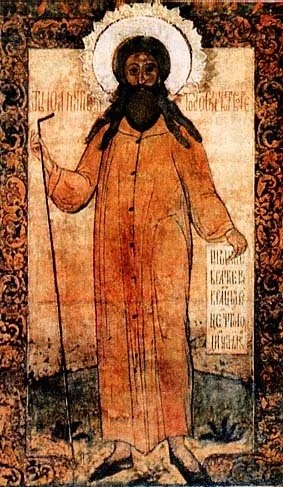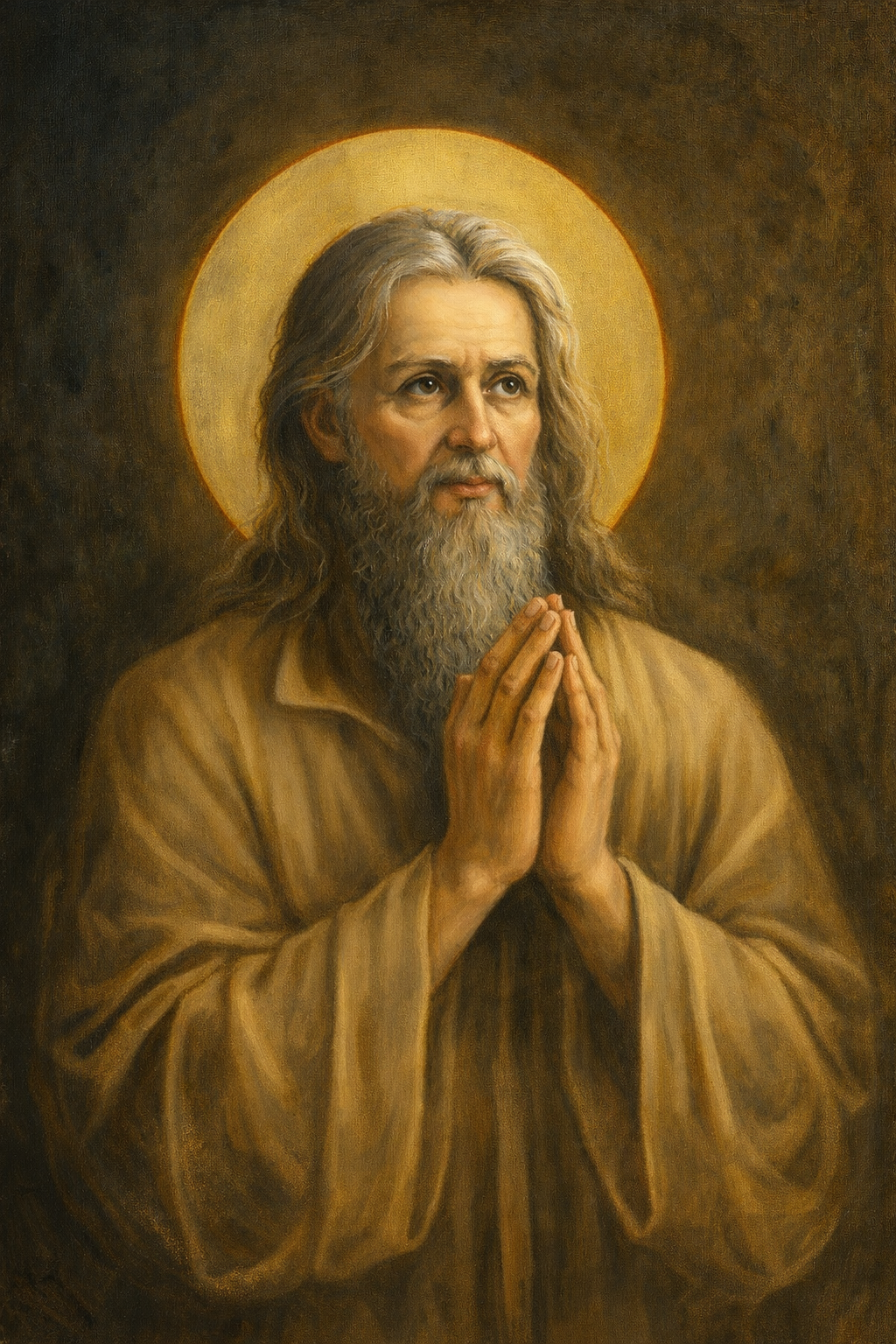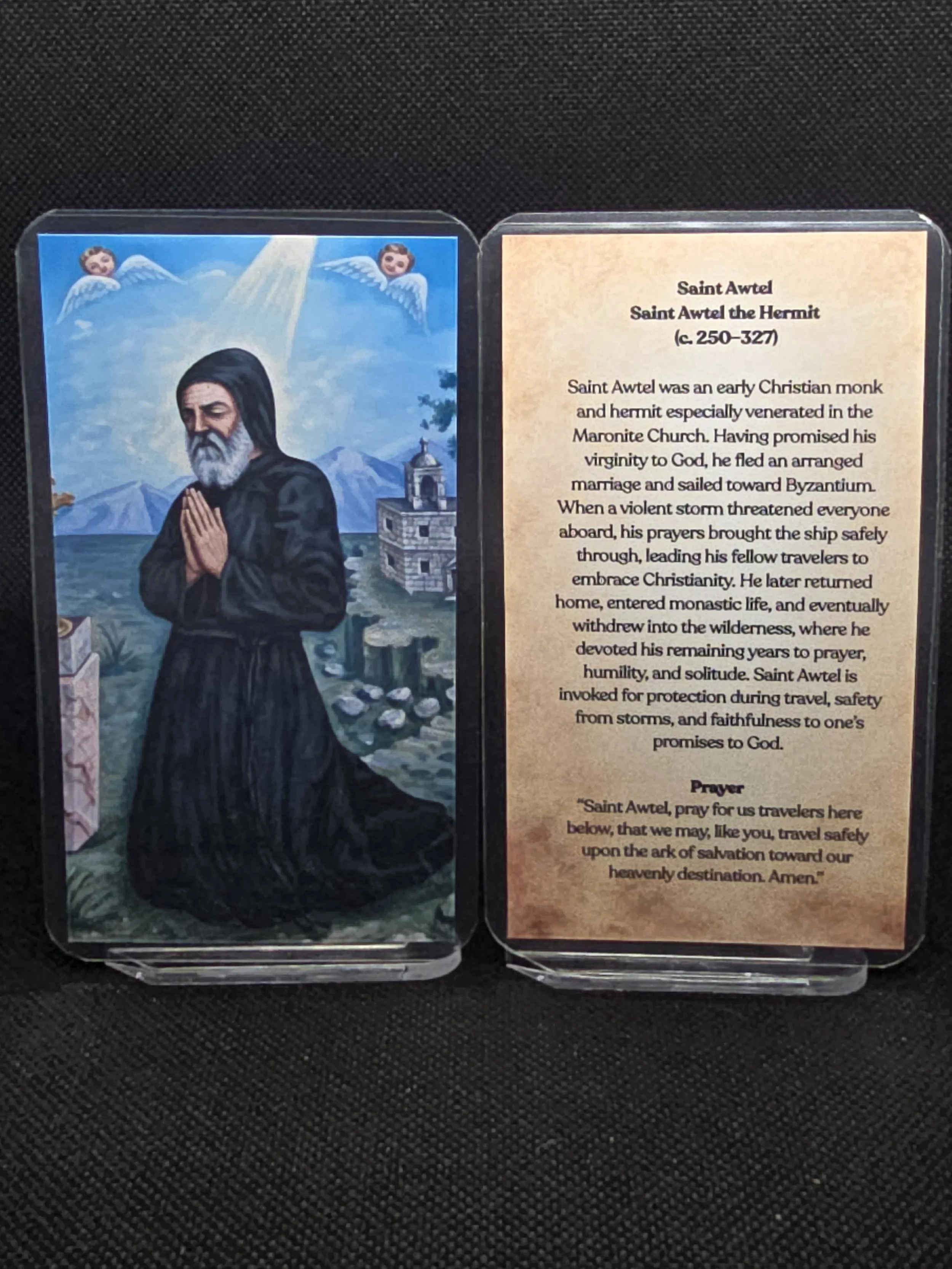
Saint Awtel Prayer Card – Patron for Physical Healing, Nervous System Disorders & Desperate Medical Situations
$3.00

Saint Awtel was a quiet Maronite hermit whose hidden life became a wellspring of healing for countless suffering people. Venerated in the Maronite Catholic Church and honored throughout Eastern Christianity, Saint Awtel is remembered not for sermons or writings, but for the mercy that flowed through his prayers. His feast day is traditionally observed on June 10 in the Maronite calendar.

People come to Saint Awtel when medical answers run out, when paralysis or nerve disorders steal movement and dignity, and when chronic illness reshapes daily life into something unrecognizable. They come when pain has lasted too long, when fear settles into the body, and when hope feels fragile after repeated diagnoses. They come when they are exhausted from appointments, medications, and uncertainty, and they need divine intervention that reaches deeper than treatment plans.

Saint Awtel understands this suffering because he lived close to the sick, the forgotten, and the poor.

He chose obscurity over recognition. He chose solitude over comfort. He chose prayer over explanation. From his small hermitage in Lebanon, people began arriving quietly, one by one, carrying bodies that would not cooperate and hearts worn thin by long battles. Through his intercession, many experienced healing from paralysis, relief from neurological afflictions, and restoration after years of physical decline.

Today, Saint Awtel is prayed to by those facing desperate medical situations, nervous system disorders, and chronic pain. He is especially sought by families caring for loved ones who cannot walk, speak clearly, or live independently. He is also beloved by those who feel unseen in their suffering and need reassurance that God still notices quiet pain.

This prayer card honors a saint who teaches that hidden holiness can release visible miracles.

Each card is handmade in Austin, TX and created to order. We do not keep stock, because every prayer card is treated as a unique devotional offering. They are printed on museum-quality photo paper, not cardstock, and each one is made during prayer. The saints are venerated throughout the entire process, and prayers are intentionally offered for the person who will receive the card. These are not mass-produced items. They are created slowly, reverently, and with spiritual intention, because every soul and every prayer matters.

Saint Awtel was a quiet Maronite hermit whose hidden life became a wellspring of healing for countless suffering people. Venerated in the Maronite Catholic Church and honored throughout Eastern Christianity, Saint Awtel is remembered not for sermons or writings, but for the mercy that flowed through his prayers. His feast day is traditionally observed on June 10 in the Maronite calendar.

People come to Saint Awtel when medical answers run out, when paralysis or nerve disorders steal movement and dignity, and when chronic illness reshapes daily life into something unrecognizable. They come when pain has lasted too long, when fear settles into the body, and when hope feels fragile after repeated diagnoses. They come when they are exhausted from appointments, medications, and uncertainty, and they need divine intervention that reaches deeper than treatment plans.

Saint Awtel understands this suffering because he lived close to the sick, the forgotten, and the poor.

He chose obscurity over recognition. He chose solitude over comfort. He chose prayer over explanation. From his small hermitage in Lebanon, people began arriving quietly, one by one, carrying bodies that would not cooperate and hearts worn thin by long battles. Through his intercession, many experienced healing from paralysis, relief from neurological afflictions, and restoration after years of physical decline.

Today, Saint Awtel is prayed to by those facing desperate medical situations, nervous system disorders, and chronic pain. He is especially sought by families caring for loved ones who cannot walk, speak clearly, or live independently. He is also beloved by those who feel unseen in their suffering and need reassurance that God still notices quiet pain.

This prayer card honors a saint who teaches that hidden holiness can release visible miracles.

Each card is handmade in Austin, TX and created to order. We do not keep stock, because every prayer card is treated as a unique devotional offering. They are printed on museum-quality photo paper, not cardstock, and each one is made during prayer. The saints are venerated throughout the entire process, and prayers are intentionally offered for the person who will receive the card. These are not mass-produced items. They are created slowly, reverently, and with spiritual intention, because every soul and every prayer matters.

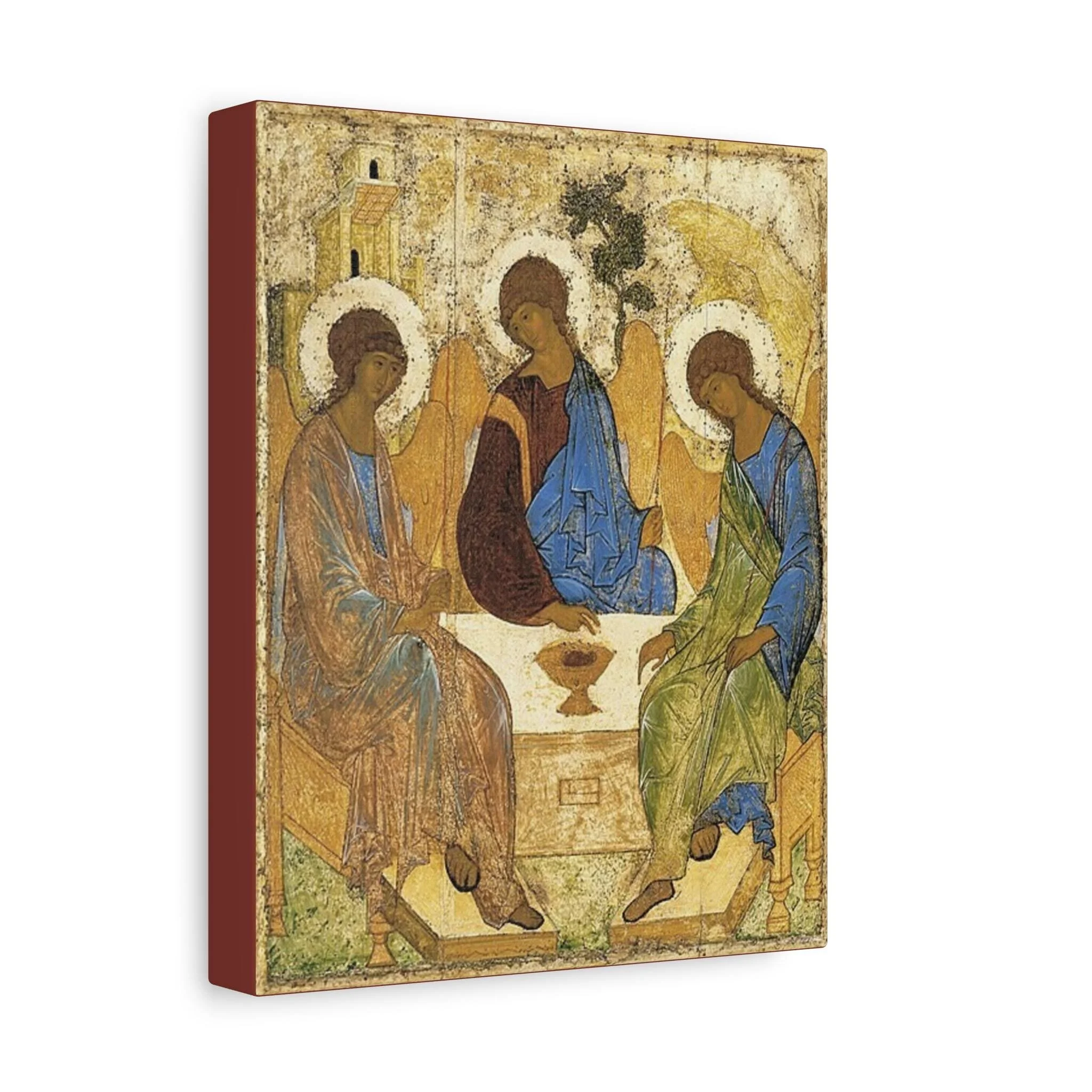
Rublev Holy Trinity Icon Canvas | Orthodox Christian Art Rublev Holy Trinity Icon Canvas | Orthodox Christian Art Rublev Holy Trinity Icon Canvas | Orthodox Christian Art Rublev Holy Trinity Icon Canvas | Orthodox Christian Art Rublev Holy Trinity Icon Canvas | Orthodox Christian Art Rublev Holy Trinity Icon Canvas | Orthodox Christian Art Rublev Holy Trinity Icon Canvas | Orthodox Christian Art Rublev Holy Trinity Icon Canvas | Orthodox Christian Art Rublev Holy Trinity Icon Canvas | Orthodox Christian Art Rublev Holy Trinity Icon Canvas | Orthodox Christian Art Rublev Holy Trinity Icon Canvas | Orthodox Christian Art Rublev Holy Trinity Icon Canvas | Orthodox Christian Art
Sizes:
Our Lady of Elige Icon Canvas | Maronite Virgin Mary Art Our Lady of Elige Icon Canvas | Maronite Virgin Mary Art Our Lady of Elige Icon Canvas | Maronite Virgin Mary Art Our Lady of Elige Icon Canvas | Maronite Virgin Mary Art Our Lady of Elige Icon Canvas | Maronite Virgin Mary Art Our Lady of Elige Icon Canvas | Maronite Virgin Mary Art Our Lady of Elige Icon Canvas | Maronite Virgin Mary Art
Sizes:
  • The Life & Story

    Saint Awtel lived in Lebanon during the nineteenth century, emerging from the deep Maronite monastic tradition that valued silence, fasting, and radical trust in God. Very little is recorded about his early childhood, which itself reflects the humility of his path. He did not seek to be remembered. He sought only to belong entirely to Christ.

    As a young man, he felt called to the solitary life and withdrew into the mountains, embracing the hidden discipline of prayer and ascetic struggle. His days were simple and demanding. He lived with minimal possessions, fasting often, praying constantly, and offering his body as a living sacrifice to God.

    His turning point was not a public conversion or dramatic event.

    It was perseverance.

    He remained faithful in obscurity, allowing solitude to reshape his heart. Over time, his compassion deepened, and his prayer life became intense and unbroken. He carried interior battles quietly, wrestling with loneliness, physical fatigue, and spiritual dryness like every hermit does. Instead of fleeing these struggles, he offered them to Christ.

    Word eventually spread that something unusual was happening near his hermitage.

    People began arriving with loved ones who could not walk, children who could not move their limbs, and adults whose nervous systems had betrayed them. Some came carried on stretchers. Others arrived barely able to stand. Saint Awtel did not advertise healing. He prayed.

    He anointed.

    He listened.

    He placed suffering people before God with childlike trust.

    Reports multiplied of paralyzed limbs regaining movement, of long-standing neurological conditions easing, and of pain lifting after prayer. These were not staged miracles. They happened quietly, often witnessed only by families who returned home astonished and grateful.

    Saint Awtel never claimed credit.

    He attributed everything to Christ.

    He continued living simply, welcoming whoever arrived and sending them away with prayer and hope. His hermitage became a refuge for the physically broken and emotionally exhausted. Even those who were not healed physically spoke of deep peace settling over them after meeting him.

    He reposed peacefully, leaving behind no writings and no institutional legacy.

    He left healing.

    After his death, devotion to Saint Awtel grew steadily. Pilgrims continued visiting his tomb, and testimonies of physical recovery and inner consolation persisted. His life stands as a reminder that some of God’s greatest servants remain unknown to history while transforming lives in silence.

  • Miracles & Patronage

    Saint Awtel is remembered primarily as a healer of the body and a comforter of those facing medical despair.

    He is especially beloved by families navigating long-term illness.

    Patron Saint Of:

    • Physical healing

    • Paralysis recovery

    • Nervous system disorders

    • Chronic illness relief

    • Desperate medical situations

    • Caregivers of the seriously ill

    • Hope when doctors have no answers

    Miracles and Ongoing Intercession

    During his lifetime, Saint Awtel became known for miraculous recoveries involving paralysis and neurological conditions. Many testified that movement returned to limbs that had been immobile for years. Others described pain disappearing after prayer and emotional strength returning after long seasons of medical struggle.

    After his death, pilgrims continued reporting healings at his tomb and through his intercession. Families speak of sudden improvement in mobility. Caregivers describe renewed endurance. Some experience deep peace even when physical healing does not arrive immediately.

    His miracles arrive quietly.

    They come as bodies remembering how to move.
    They come as courage returning to exhausted caregivers.
    They come as hope re-entering rooms that had grown heavy with fear.

    Saint Awtel teaches that God still touches suffering bodies through humble servants.

  • Prayers & Traditional Devotion

    Traditional Prayer

    Holy Saint Awtel, faithful servant of Christ and healer of the afflicted, pray for us. Intercede for our physical healing, strengthen us in illness, and lead us into God’s mercy. Amen.

    Personal Prayer

    Saint Awtel, gentle hermit and quiet healer of broken bodies, pray for me.

    You welcomed the suffering without hesitation. You placed the sick before God with trust that did not need explanation.

    I bring you my illness.

    If my body feels unreliable, ask Christ for healing.
    If pain has become familiar, ask Christ for relief.
    If fear surrounds medical uncertainty, ask Christ for peace.

    Teach me how to trust when progress feels slow. Teach me how to hope when answers are unclear. Teach me how to place my body into God’s hands without panic.

    Stand beside those living with paralysis.
    Stand beside families caring for chronically ill loved ones.
    Stand beside anyone waiting for a miracle while trying to remain strong.

    Saint Awtel, you saw Christ in wounded bodies.

    By your intercession, may Christ restore what is damaged, calm what is inflamed, and surround my suffering with mercy.

    Amen.

  • Common Questions (FAQ)

    Q: What is Saint Awtel known for?
    He is known for miraculous healings, especially involving paralysis, nervous system disorders, and chronic illness, as well as for his hidden life of prayer and compassion.

    Q: When is Saint Awtel’s feast day?
    He is traditionally commemorated on June 10 in the Maronite Catholic calendar.

    Q: Which Christian traditions venerate Saint Awtel?
    He is honored primarily in the Maronite Catholic Church and respected across Eastern Christian communities.

    Q: Why do people pray to Saint Awtel for physical healing?
    Because he devoted his life to prayer for the sick and became known for intercession in cases of paralysis and serious medical conditions. Many seek his prayers when facing long-term illness or desperate health situations.