 Image 1 of 2
 Image 2 of 2
-
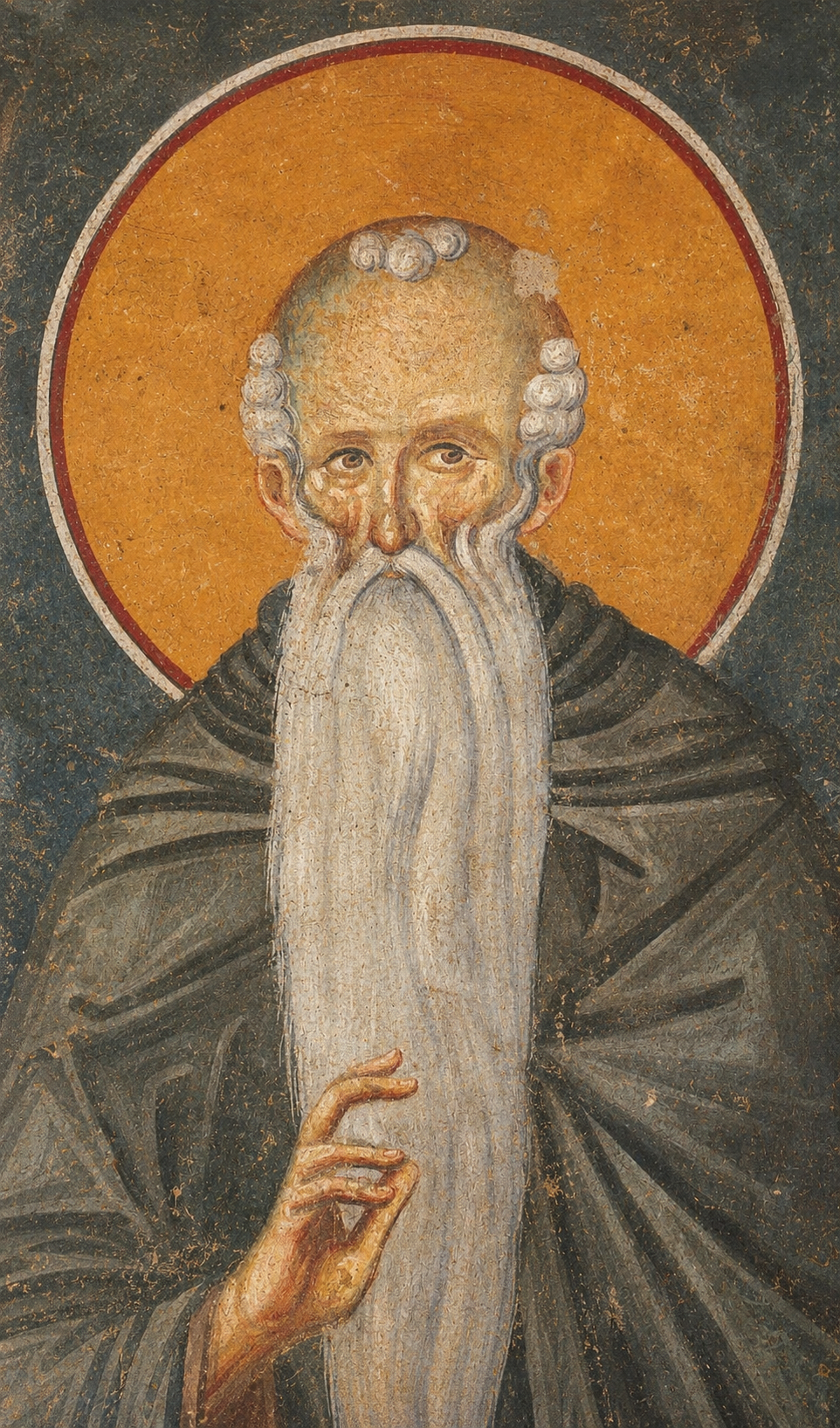
A Shepherd Who Chose Silence
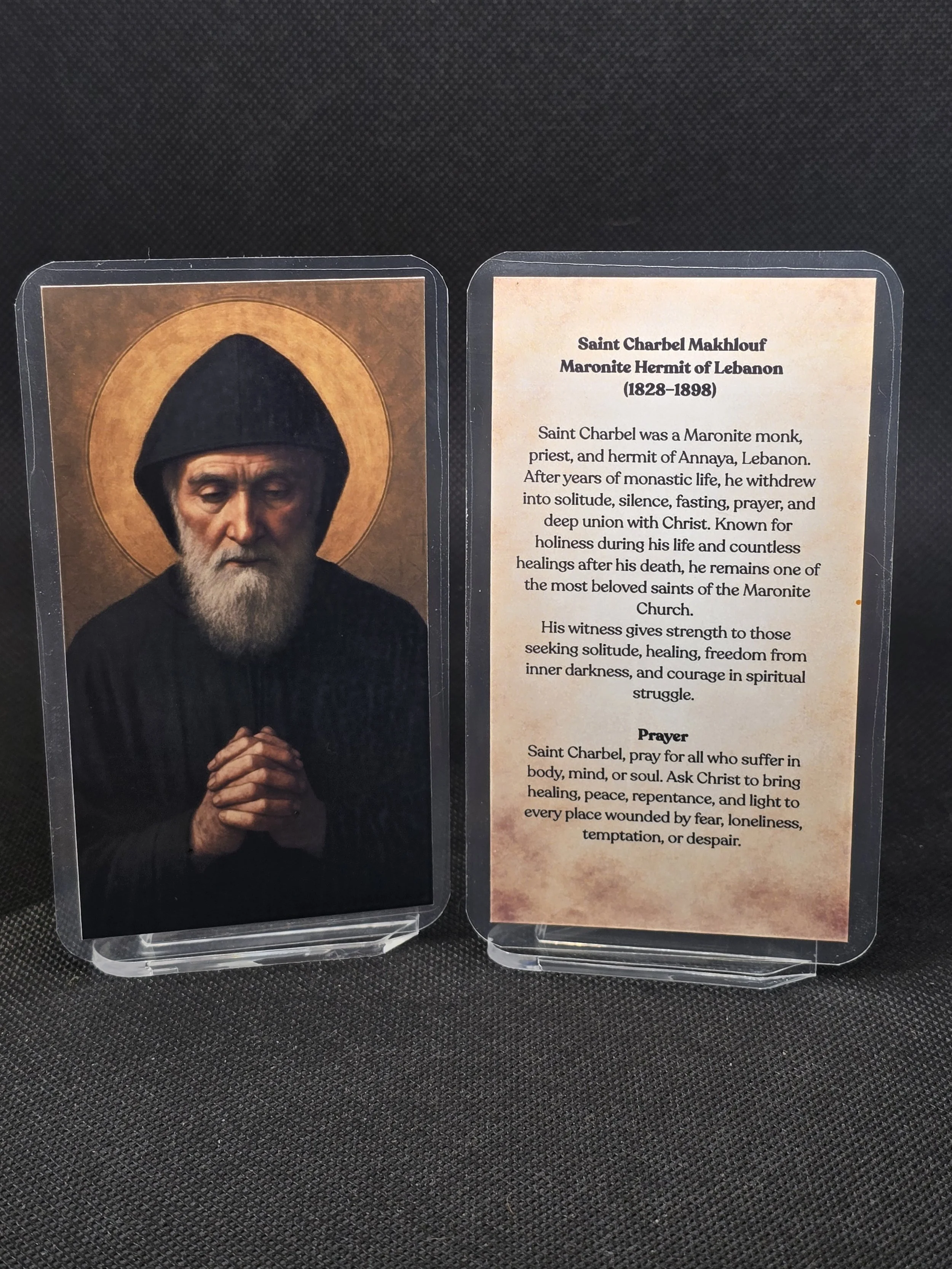
Saint Charbel was born Youssef Antoun Makhlouf in a small Lebanese village. As a child, he worked as a shepherd and often slipped away to pray alone in mountain caves. Even then, he was drawn to solitude.
At age twenty-three, he entered the Maronite monastery of Our Lady of Mayfouq, later transferring to the Monastery of Saint Maron in Annaya. There he received the name Charbel, after an early Christian martyr.
He embraced monastic life completely.
He fasted rigorously.
He slept little.
He prayed constantly.
He spoke only when necessary.
After sixteen years in community life, Charbel was granted permission to live as a hermit in a remote stone cell above the monastery. There he spent the rest of his life in near-total silence, celebrating the Divine Liturgy daily and offering himself entirely to God.
Death That Opened Heaven
In 1898, while celebrating Mass, Charbel collapsed at the altar. He lingered for eight days, repeating only fragments of prayer before dying quietly.
He was buried without ceremony.
Months later, monks noticed a strange light emanating from his grave. When his tomb was opened, his body was found incorrupt, flexible, and exuding a reddish fluid later referred to as “the oil of Saint Charbel.”
For decades, his body remained preserved.
And miracles began.
A Global Saint Without Words
Charbel never preached publicly.
He never wrote books.
He never led movements.
Yet today he is one of the most beloved saints in the Middle East and beyond.
People of every background report healings after praying at his tomb or invoking his name. Hospitals in Lebanon document medically verified recoveries attributed to his intercession.
Charbel evangelizes through silence.
His life teaches that holiness does not need noise.
-
Saint Charbel is especially invoked for severe physical conditions and medical situations beyond human explanation.
Patron Saint Of:
Physical healing and medical miracles
Paralysis, nerve damage, and mobility disorders
Impossible or terminal diagnoses
Those awaiting surgery
People with chronic neurological illness
Families praying for loved ones in crisis
Anyone seeking supernatural intervention
Miracles and Ongoing Intercession
Thousands of documented miracles are attributed to Saint Charbel, including:
restoration of movement to paralyzed limbs
disappearance of malignant tumors
recovery from spinal injuries
healing of blindness and deafness
sudden relief from chronic pain
unexplained postoperative recoveries
Some of the most striking cases involve visible surgical scars appearing on healed bodies, corresponding to procedures performed in dreams or visions attributed to Saint Charbel.
Devotees regularly report:
dramatic improvement after anointing with oil
unexpected medical reversals
peace replacing fear during treatment
renewed strength in long recovery
Saint Charbel works quietly, deeply, and decisively.
-
Traditional Maronite Prayer
O Saint Charbel, martyr of monastic life, you who spent your days in silence and prayer, intercede for us. Obtain healing for the sick, strength for the weak, and peace for troubled hearts.
Personal Prayer
Holy Saint Charbel, silent servant of Christ and wonderworker of Lebanon, pray for me.
Intercede for healing in my body and peace in my soul. Bring relief to those suffering paralysis, nerve damage, chronic pain, and serious illness. Stand beside families waiting for medical answers.
You who offered everything in hidden prayer, teach me how to trust God when outcomes are uncertain. Obtain miracles where healing is possible, and courage where suffering remains.
Guide doctors’ hands. Calm anxious hearts. Restore what is broken.
By your powerful intercession, may Christ be glorified in every recovery, every endurance, and every act of faith. Amen.
-
Q: What is Saint Charbel known for?
Saint Charbel is known for extraordinary physical healings, especially involving paralysis, neurological disorders, and terminal illness. He is one of the most prolific miracle-working saints of modern times.Q: When is Saint Charbel’s feast day?
Saint Charbel is commemorated on July 24.Q: Which Christian traditions venerate Saint Charbel?
Saint Charbel is venerated in the Maronite Catholic Church and throughout the wider Catholic world, with strong devotion across the Middle East.Q: Why is Saint Charbel often shown in a black monastic habit?
The habit represents his life of radical poverty, silence, and obedience. It reflects his hidden spirituality and total dedication to prayer.